Wednesday, March 26, 2025


Shipping Company Blames “Captain’s Carelessness” as LPG Carrier Strands

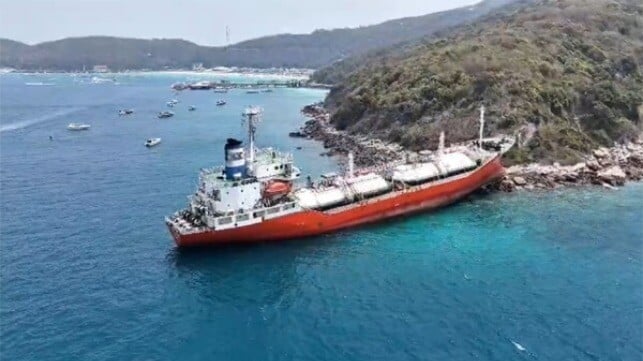
grounded LPG carrier
Captain said her attempted to avoid a fishing boat (Thailand TV)

Published Mar 25, 2025 5:24 PM by The Maritime Executive


Residents in the area around Pattaya City, Thailand panicked when they saw a gas tanker stranded on the shoreline at daybreak. There were rumors that the vessel was releasing gas, but it was quickly stopped by the authorities which announced the vessel’s tanks were empty and there was no immediate danger.

According to media reports, the captain of the LPG carrier NP Bangpakong (3,996 dwt) told the authorities he had served the vessel in an attempt to avoid a fishing boat. The shipping company SC Group Holding later issued a statement confirming the vessel grounded at approximately 0225 on March 25. It was traveling between two ports in Thailand when it stranded in the south of the country in an area known as the Eastern Gulf Coast.

The vessel was built in 1991 and has been operating in Thailand since 2013. It is 100 meters (328 feet in length).


The shipping company reported that it has dispatched engineers to inspect the vessel and a tug to aid in its refloating. At the same time, it issued a statement saying the grounding was “due to the employee’s negligence in his duties.” The company said it accepted responsibility for the incident and promised to implement stricter “preventive measures.”

Officials report that the first survey showed possible damage to the ballast tanks. They said it is a double-hull vessel which prevented damage to the tanks.

ALT.FUEL   

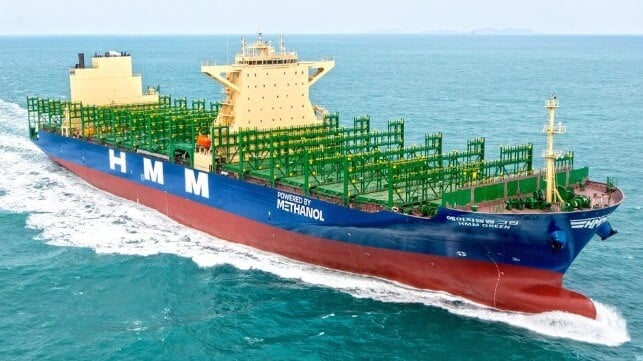
HMM Joins Pioneers with its First Methanol-Fueled Containership

methanol fueled containership
HMM Green is entering service as HMM's first methanol-fueled containership (HMM)

Published Mar 25, 2025 6:40 PM by The Maritime Executive


The ranks of container shipping companies employing methanol-fueled vessels continue to grow with HMM becoming the latest among the early adopters of the fuel. DNV calculates there are just 26 methanol-fueled containerships in service currently with orders for 200 more vessels having been placed. By comparison, there are 166 containerships fueled by LNG currently in service.

HMM ordered its first methanol vessels in February 2023 with seven to be built by HD Hyundai Samho Heavy Industries and two additional vessels at HJ Shipbuilding & Construction. The deliveries are coming this year as part of the company’s expansion and environmental plans.

The first ship, named HMM Green was delivered and is due to arrive in Busan on March 26. The vessels are 100,000 dwt with a capacity of 9,000 TEU. Their length is 274 meters (899 feet), which HMM highlights as a versatile class of ships. To maximize their ability to dock in ports around the world the company highlights a range of environmental technologies that were incorporated into the design. In addition to the methanol-fueled propulsion system, the vessel is equipped for shore power and has a ballast water treatment system.

HMM reports the new vessel will bunker with bio-methanol at the port of Shanghai. The bio-methanol is derived from waste resources. The company reports it can reduce carbon emissions by up to 65 percent, eliminate sulfur oxide (SOx) emissions, and cut nitrogen oxide (Nox) emissions by up to 80 percent compared to conventional bunker fuel.

The new vessel will be deployed on HMM’s independently operated route between Far East Asia, India, and the Mediterranean. It is part of a drive by the company which expects to reach the 1 million TEU capacity mark later this year. HMM is currently the eighth largest container carrier with a capacity of approximately 922,000 TEU. 


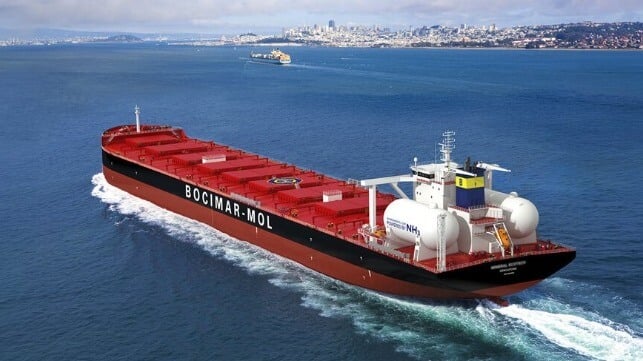
Mitsui OSK Partners with CMB.Tech for First Ammonia-Fueled Vessels

ammonia-fueled dry bulk carrier
MOL is partnering with CMB.Tech for the first ammonia-fueled large dry bulk carriers (CMB.TECH)

Published Mar 24, 2025 2:32 PM by The Maritime Executive


Japan’s Mitsui O.S.K. Lines is moving forward to become one of the first of the major carriers to incorporate ammonia-fueled vessels into its fleet. MOL is joining with CMB.Tech which launched a project in 2023 to build the first ammonia-fueled large dry bulker carriers and will also expand ammonia as a fuel to its chemical tanker segment.

MOL and CMB.Tech have agreed to joint ownership of three ammonia-fitted 210,000 dwt Newcastle bulk carriers. The vessels have already been ordered at Qingdao Beihai Shipyard due for delivery in 2026 and 2027. CMB.Tech launched the project in 2023 working with WinGD to develop a 72-bore ammonia-fueled engine. After nine months of work, they announced good progress as CSSC Qingdao-Beihai Shipbuilding and CSSC Engine Company joined the project.

The vessels which were being developed for CMB’s Bocimar and were anticipated to be the first large ammonia-fueled vessels in the commercial industry. Under the terms of the new agreement, CMB.Tech and MOL will jointly own the vessels. The Japanese company will charter the three vessels each for 12 years.

The companies are expanding ammonia-fueled installations reporting a new order with China Merchants Jinling Shipyard (Yangzhou) for a total of six chemical tankers. Two of the vessels will be ammonia-fitted on delivery and the other four will be built ammonia-ready. CMB.Tech will own the vessels, which are due for delivery in 2028 and 2029, and charter the two ammonia vessels to MOL Chemical Tankers for 10 years. The Japanese company will have 7-year charters on the ammonia-ready vessels.

The MOL Group reports it intends to adopt ammonia and integrate it into the corporate environmental vision initiative. MOL’s goal is to achieve net-zero GHG emissions by 2050.

WinGD has reported that it is making solid progress in the testing of its first ammonia-fueled engines. The company has said the first engines could be ready for delivery this year.

While there is strong interest in ammonia due to its ability to eliminate carbon emissions, the shipping industry has been waiting for progress with the engines. DNV calculates that there are 31 vessels on order for delivery by 2027 that would be built for ammonia, but so far only three vessels have been retrofitted for ammonia operations. Australia’s Fortescue completed certification in Singapore for an offshore vessel while Japan’s NYK Group converted its LNG-fueled tugboat to operate with ammonia.

Alexander Saverys, CEO of CMB.Tech has been a strong proponent of ammonia as one of the tools to decarbonize shipping. He noted with these orders, CMB.Tech has increased its contract backlog by $921 million to a total of $2.94 billion. He says it demonstrates the progress on their vision of fleet rejuvenation, decarbonization, and diversification.


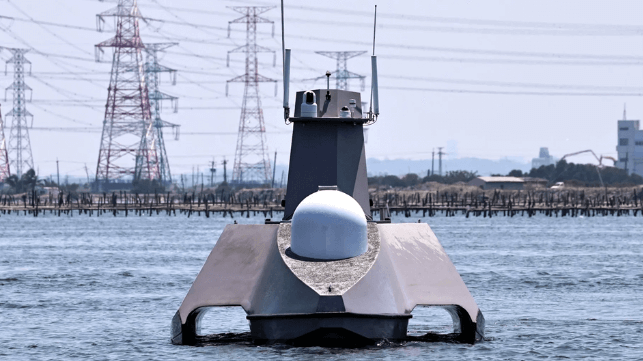
aiwan Develops Stealthy Attack Drone Boat

Drone boat
Courtesy Taiwan Ministry of National Defense

Published Mar 25, 2025 11:25 PM by The Maritime Executive


Inspired by Ukraine's success with unmanned drone boats in the Black Sea, Taiwan has built an unmanned attack boat of its own, with modifications. 

The new "Endeavor Manta" drone is a fiberglass-hull trimaran measuring 28 feet long. In its prototype configuration, it is powered by two outboard motors, an unusual but economical choice for a military vessel. It displaces about five tonnes with weapons loadout and fuel, and it can make more than 35 knots, according to manufacturer CSBC. Its small size and light weight make it possible to launch from small ports or even unimproved beaches, making deployments harder to interdict. 

Ukraine's drone boats are smaller monohull designs with inboard propulsion. Initially they were one-way attack drones only, designed to deliver an explosive warhead directly to the hull of a target ship and detonate by ramming. They have gradually evolved to include reusable variants that carry FPV drone aircraft and antiaircraft missiles, among other payloads. 

The Taiwanese design is expected to carry and use lightweight torpedoes, allowing it to make more than one attack run in a surface warfare role. It is equipped for ramming and detonation as well. 

In initial configuration, the Manta has a cockpit for a human crewmember; it is unknown whether this would be removed for the final version. According to CSBC, it is capable of autonomous navigation, and will be able to return to port on its own if its command-and-control connectivity is interrupted. 

The prototype aligns with U.S. war planning for a Taiwan Strait conflict: U.S. Indo-Pacific Command chief Adm. Sam Paparo has called for building the technology for a "hellscape" of unmanned systems in the strait, which could fend off a Chinese invasion force long enough for a conventional response. 


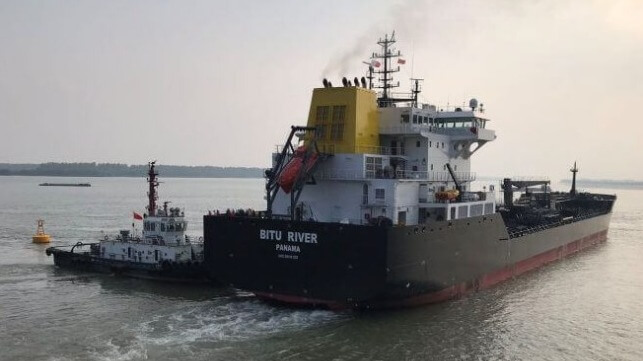
Appeals for Diplomacy for Crew Kidnapped by Pirates off Central Africa

product tanker
Pirates kidnapped 10 crewmembers from the tanker off Central Africa according to family members (Rubis file photo)

Published Mar 25, 2025 1:46 PM by The Maritime Executive


Frustrated by a lack of information, the family members of crewmembers kidnapped last week from a product tanker off Africa have gone public with their appeals for assistance. Calling for aid from the Indian government, the family members revealed that 10 crewmembers were abducted from the BITU River last week in an incident off the west coast of Africa.

The Maritime Domain Awareness for Trade – Gulf of Guinea (MDAT-GoG) recorded the incident on March 18 but provided few details other than saying the pirates had ultimately abandoned the vessel. The vessel was the BITU River, a Panama-flagged bitumen tanker operated by Rubis Asphalt, a company that sources bitumen at the refinery and distributes it across West and Central Africa. At the time, no details were released on the status of the crew.

Family members speaking to Indian newspapers revealed the attack took place around 1930 on March 17 while the tanker was approximately 40 nautical miles southeast of Santo Antonio do Príncipe, on the island of Príncipe in the island nation of São Tomé and Príncipe off the west coast of Central Africa. The 15,500 dwt vessel had departed the anchorage at Lomé, Togo, and was proceeding to Douala in Cameroon.

The crew retreated into the vessel’s citadel and others hid in the engine room with family members saying they had lost contact with the crew at around 2330. The crew reportedly surrendered when the pirates forcefully breached the citadel and broke into the engine room. Earlier it was said the pirates were armed and there were reports of gunfire when they boarded the vessel.

A total of 10 crewmembers were kidnapped from the vessel, including seven from India and three from Romania. The remaining crew were threatened with violence and confined to a cabin on the tanker. Before leaving the vessel, the pirates also stole personal belongings from the crew including gold, phones, and a laptop.

The families said the company informed them of the kidnappings the following day while assuring them the crewmembers were unharmed. The families are appealing to the Indian government citing the need for swift diplomatic efforts. The authorities have not commented further on the situation. 

MDAT-GoG said the company’s safety officer had advised that after the pirates left the vessel, it was proceeding to Libreville in Gabon for refuge. The tanker’s AIS signal shows that it arrived in the Owendo Anchorage in Gabon on March 18 where it remains.


Burnt-Out Containership Solong to be Towed into UK Port

burnt-out containership Solong
Solong is being held stationary by a towline (Havariekommando)

Published Mar 25, 2025 12:01 PM by The Maritime Executive


More than two weeks after the devastating incident on March 10 in which the Portuguese-flagged containership Solong hit the anchored tanker Stena Immaculate, the UK’s HM Coastguard reports preparations are being made to tow the containership to port. The operation is expected later this week.

After hitting the tanker which started fires aboard both ships, Solong was abandoned and her crew was brought to shore by an offshore service vessel working at a wind farm in the area. One crewmember, a resident of the Philippines, was lost with reports saying he had been working near the bow of the vessel when it hit the tanker. HM Coastguard led an unsuccessful search to locate the missing seafarer.

After initially drifting in the North Sea, salvage teams were able to attach a tow line to hold the still-burning vessel. It took more than a week for the fires to be put out.

“Salvage of the Solong has progressed to enable its relocation to the Port of Aberdeen for safe berthing,” Chief Coastguard Paddy O’Callaghan announced today. “Tug and tow are scheduled to arrive at Aberdeen later this week,” the Coastguard announced

The plan calls for Solong to be towed by one of the salvage tugs and accompanied by another tug. In addition, a vessel with counter pollution measures will be accompanying the tow. HM Coastguard said the pollution measures would be available if needed during the tow.

At the same time, the local authorities report the cleanup is continuing along the coastline as nurdles (plastic beads) have washed up following the incident. The Coastguard has said that it is likely that the nurdles entered the water at the point of collision, but the vessel’s owners through a spokesperson said that it believes no containers holding nurdles were thought to have been lost over the side of the ship. It speculates that some of the plastic beads were released during the fires which ruptured some of the containers.

The situation for the Stena Immaculate remains unchanged with the tanker still at anchor. U.S. ship operator Crowley reported salvage teams determined only one of the tanks holding jet fuel had been ruptured and fed the fire. The remainder of the jet fuel is stable aboard the tanker. No details have been announced for the salvage which is being conducted by Boskalis’ SMIT group.

The crews from the two vessels were repatriated to the United States and the Philippines. However, the master of the Solong remains in a UK jail having been arrested on a count of gross negligent manslaughter. It came out in the initial court hearing that he had been on the bridge of the containership standing watch when it hit the tanker. His next hearing is scheduled for April 14 and the judge has set a tentative trial date of January 12, 2026.


Two Killed as Bulker Runs Over Tug’s Towline in the Philippines

capsized tugboat
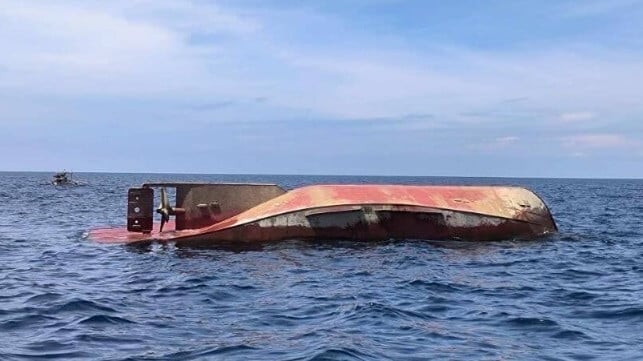
Philippines'; tugboat capsized when the bulker hit its towline (PCG)

Published Mar 25, 2025 12:32 PM by The Maritime Executive


The Philippines Coast Guard is reporting it rescued six crewmembers, but that two others including the captain were killed when a bulker ran over a tugboat’s towline. The tug registered in the Philippines capsized when the vessel struck the towline.

The incident happened at 0420 local time today, March 25, in the waters near Maasim, Sarangani Province, in the southern Philippines. The Coast Guard reports it dispatched four boats with rescue divers and response teams to the scene.

The Chinese-owned bulker Universe Kiza (28,388 dwt) has been detained. It was sent to the anchorage at General Santos City. The Coast Guard reports it has instructed its legal officers to handle the filing of appropriate charges against the master and crew of Universe Kiza. The vessel built in 2004 and registered in Panama was transporting a load of concrete from Vietnam. 

According to the survivors from the tug, they were towing a barge with approximately 50 to 100 meters of towline. The bulker attempted to pass in between the tug Sadong 33 and the barge LCT Sea Asia

The tug had a crew of eight aboard and capsized from the impact. The Coast Guard was able to recover six seafarers from the water while search teams later recovered the two deceased crewmembers. One is identified as the captain of the tug and the other was working as an oiler. The six were provided medical attention and reported not to be seriously injured.

The Coast Guard has placed oil booms around the tug as a precaution. A salvage company is working to recover the tug.


Conservationists Sue BOEM to Restore OSV Speed Limits for Rice's Whale

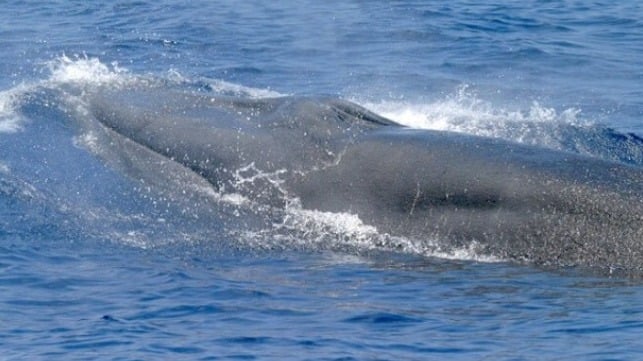
A rare image of a Rice's whale in the wild (NOAA)

Published Mar 25, 2025 8:09 PM by The Maritime Executive


A group of U.S. environmental NGOs are suing the Trump administration over the rollback of guidance that was intended to protect the endangered Rice's whale, an ultra-rare species found only in the U.S. Gulf. Only an estimated 50 individuals remain, and conservationists believe that without protection, it could become the first whale species ever to go extinct due to human activity - possibly even before the North Atlantic right whale

"[Rice's whales] are on the brink of extinction and the few dozen left alive desperately need more protections from speeding vessels and other offshore oil drilling activity, not less," said Kristen Monsell, oceans legal director at the Centre for Biological Diversity. 

The Rice's whale is a relative of the Bryde's whale, and was first identified as a separate species in 2021. In 2022, more than 100 marine scientists called for "excluding leasing and other [oil and gas] activities from the whale's habitat."

In response, BOEM removed lease blocks in Rice's whale habitat areas from a federal lease auction, and it asked offshore oil and gas operators to incorporate whale-protection measures when transiting specific water depths, including all areas between the 100-400 meter depth contours - the areas where the whale is known to feed. These protective measures included a halt to nighttime OSV navigation and a 10-knot speed limit across the depth contour band. 

Pushback from oil majors came swiftly, and a federal judge prohibited BOEM from incorporating the restrictions into the requirements of a 2023 lease auction. On February 20, 2025, BOEM rescinded the guidance altogether, citing the Interior Department's new guidance for "Unleashing American Energy." 

In a letter to BOEM this week, the NGOs Friends of the Earth, Centre for Biological Diversity, the Sierra Club, and the Turtle Island Restoration Network said that they plan to sue to restore the recommendations. BOEM's guidance on Rice's whale protection never became mandatory, but the nonprofits want the agency to make it official policy once more. 

"It cannot be overstated: Trump is dealing a death blow to the critically endangered Rice’s whale in the name of Big Oil handouts," said Hallie Templeton, legal director for Friends of the Earth. 


First LR1 Tanker Fitted with Scrubber and Carbon Capture Dual System

tanker with CO2 capture system
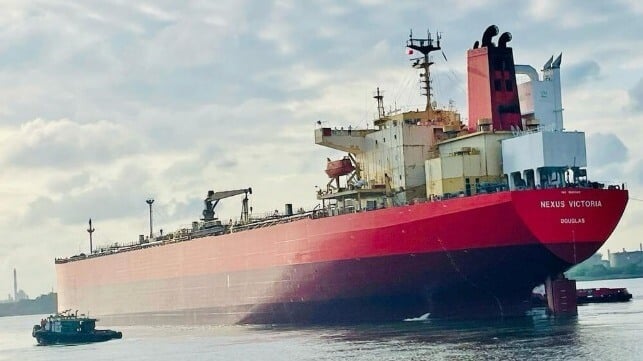
Nexus Victoria fitted wit hthe subber and CO2 capture system (Value Maritime)

Published Mar 24, 2025 3:50 PM by The Maritime Executive


The first LR1 tanker has been fitted with a combined system from Value Maritime to capture carbon emissions while also scrubbing exhaust gas for particulate matter. The tanker, Nexus Victoria (75,000 dwt) is also reported to be the largest vessel to incorporate Value Marine’s SOx scrubber with advanced carbon capture technology.

The installation was recently completed in Singapore aboard the tanker, which is owned by Mitsui O.S.K. Lines and registered in the Isle of Man. The tanker, which is managed by Synergy Maritime, was built in Japan and runs with a single two-stroke six-cylinder diesel engine from Mitsui Engineering.

“This system represents a crucial step in decarbonizing vessels that cannot yet transition to next-generation fuels,” said Hiroyoshi Kubo, Executive Officer – Tanker Unit at MOL. “Together with Value Maritime, we are committed to advancing carbon capture solutions and building a CO2 value chain that contributes to a sustainable, carbon-neutral industry.”

VM’s Filtree system is designed to filter sulfur, CO2, and (ultra) fine particulate matter from the vessel’s exhaust stream. The company was started in 2017 focusing on scrubbers but has now developed a system that combines the two functions. The system’s plug-and-play design includes onboard CO2 capture and storage capabilities, enabling captured CO2 to be offloaded onshore for reuse in greenhouse cultivation, methanol production, or the food industry. 

The system consists of two elements, including a small prefabricated, pre-installed, “plug and play” gas cleaning system in a road transportable housing. This system filters the sulfur, 99 percent of the particulate matter (fine dust), and CO? from the exhaust gases of ships. The second stage is equipped with a filter that cleans the washing water. Oil residues and particulate matter are removed from the washing water and fed to the sludge tank.

According to the company, its VM 15MW next-generation EGCS Filtree system will capture 10 percent of the tanker’s CO2 emissions. It is potentially scalable to 30 percent.

This project was agreed to in April 2024 as the company’s first in Japan. Value Maritime aims to expand its partnerships across Asia and enhance its carbon logistics.

Eastern Pacific Shipping installed onboard its MR tanker Pacific Cobalt a first-of-its-kind fully integrated carbon capture solution developed by Value Maritime in February 2023. At the time they reported the system would be capable of capturing up to 40 percent of CO2 emissions from the vessel’s main and auxiliary engines as well as 99 percent of SOx emissions. Ardmore Shipping in September 2023 also began fitting the first of nine systems aboard its tankers at a shipyard in China.

The shipping industry is showing increasing interest in the technology. It could become a key tool in addressing the emissions of the in-service fleet extending the life and financial performance of these vessels.


The Importance of Monitoring Indoor Air Quality Onboard Ships

iStock
iStock

Published Mar 25, 2025 2:13 PM by Guillaume Drillet, Khairul Irfan, Umid Joshi and Lisa Drake


Looking to land-based environmental health and safety, extensive research from the 1980s and 1990s has demonstrated the negative impacts of "sick buildings" on employee health and productivity. Research studies have established a link between exposure to poor indoor air quality (IAQ) and a range of respiratory issues, including cough, asthma, and heart arrhythmia, even in otherwise healthy individuals. Not surprisingly, general allergens—particulate matter, volatile organic carbon, mold, and bacteria—have been identified as key causes for such issues. Given this knowledge, maintaining healthy air quality on ships is crucial not only for improving seafarers’ happiness, wellbeing, and productivity, but also for reducing the risk of workplace accidents.

To ensure decent living conditions that support seafarer safety as well as decent living and working conditions, international organizations have developed guidelines and requirements to protect seafarers, such as the International Maritime Organization Code on noise levels on board ships (Resolution MSC.337(91), 2012) and the International Labour Convention Maritime Labour Convention (MLC, 2006). The MLC sets high-level standards for provisions like drinking water, food, and ventilation. That said, the MLC leaves the specific prescriptive monitoring limits to individual parties to determine.

Many countries have regulations and guidelines in place to set limits on a variety of IAQ parameters, with a handful of countries enforcing the regulations (Dimitroulopoulou et al., 2022; e.g., ANSI/ASHARE Standard 62.1, 2021, which sets requirements for ventilation). In practice, administrations—apart from Brazil—tend not to require strict IAQ monitoring on board ships. More often, such requirements are generated through requirements from Classification societies, for example, the Comfort Class notation from DNV. Here, comfort is evaluated to achieve ratings from “acceptable” to “high” based on noise and vibration (COMF-V) and indoor climate (COMF-C; DNV, 2014). However, the requirement is not widely implemented, nor are ships’ compliance with it reviewed in an ongoing basis by an independent third-party testing organization.

To assess IAQ, we sampled 13 vessels, collecting 530 measurements across 12 physical, chemical, and biological parameters. The results revealed concerning findings when benchmarked against Singapore's IAQ standards (SS554, 2021). While ships met the limits for carbon dioxide and carbon monoxide levels, 5% of the measurements exceeded the limits for total volatile organic compounds.

Temperature can be more difficult to control on ships compared to buildings, and, indeed, the limits were not always met in this dataset (70% noncompliance). Likewise, particulate matter (PM) values were too high in some cases: respirable dust (PM 4 µm) showed 15% noncompliance, and PM2.5 (PM 2.5 µm) showed 8% noncompliance. Finally, 11% of the samples tested for total airborne bacteria were above the limits, although no mold values exceeded the limit.

These results indicate that in most cases, at least one parameter for IAQ on ships exceeded the recommended occupational and public health standards. This highlights the need for proactive air-quality maintenance to ensure the well-being of crew members who are can be exposed to unfavorable or unhealthy for extended periods.

Regular monitoring can help ship owners and managers make informed decisions about ventilation and living conditions, benchmark air quality across their fleet, and incorporate air quality into their corporate sustainability goals and key performance indicators.

Guillaume Drillet (PhD) is the Regional Manager of Marine Services for Asia and Pacific at SGS, the world's leading testing, inspection and certification company. He has 20 years of experience in public and private sectors dealing with Environmental Health and Safety issues.

Khairul Irfan is the Operation Manager of the Environmental Health and safety teams of SGS Singapore and has >10 years of experience monitoring worker’s exposures to environmental stressors such as air quality and noise.

Umid Joshi (PhD) is the Technical Manager of the Environmental Health and Safety teams of SGS Singapore and has >20 years of experience monitoring workers’ exposures to environmental stressors such as air quality and noise.

Lisa Drake (PhD) manages SGS Marine Services for the Americas. She—along with a team of experts—guides this work in >600 ports worldwide. Her career addressing marine, global environmental issues has spanned academia, government, and the private sector.

The opinions expressed herein are the author's and not necessarily those of The Maritime Executive.
On Anniversary of Baltimore Bridge Collapse, Study Says More Hits Coming

Dali bridge strike
Courtesy U.S. Army Corps of Engineers

Published Mar 24, 2025 11:22 PM by The Maritime Executive


Days after the National Transportation Safety Board took state highway agencies to task for unassessed bridge strike risks, a team at Johns Hopkins University has published a comprehensive list of the bridge spans that are most exposed to the hazard. The Francis Scott Key Bridge in Baltimore, which was struck and destroyed by the boxship Dali last year, emerged in the top-10 list for bridges most likely to be hit. 

“With this investigation we wanted to know if what happened to the Key Bridge was a rare occurrence. Was it an aberration? We found it’s really not,” said Michael Shields, Johns Hopkins associate professor and lead author. “In fact, it's something we should expect to happen every few years.”

The study suggests that the likelihood of ships alliding with bridges has been greatly underestimated, and that we should all expect to see more bridge strikes in our lifetimes. Owing to the dramatic increase in the size of ships, and the fact that most bridges are witnessing an unprecedented increase in vessel traffic, future allisions are virtually certain - though the severity will vary, and there are engineering interventions to reduce harm. For example, the group calculated that the Huey P. Long Bridge outside New Orleans and the San Francisco-Oakland Bay Bridge are likely to be hit by a ship within two decades.

Johns Hopkins is releasing the preliminary findings of the study on the first anniversary of the Key Bridge collapse after it was struck by the boxship Dali, killing six people who were carrying out roadway repairs on the bridge deck. While investigations are still ongoing on the cause of the allision, the reality is that the chances of another similar incident are much higher. Ship strikes should be extremely rare, with bridge design standards stipulating that the annual chances of a bridge collapse from ship allisions should be less than 1 in 10,000 years. But after collecting, mining and analyzing 16 years of U.S. Coast Guard data, the team concluded the next allision could be in the pipeline. Notably, even iconic bridges like San Francisco's Golden Gate Bridge and Maryland's Chesapeake Bay Bridge are not immune to allisions.

The team based its study on AIS tracking, port data and bridge data from the National Bridge Inventory to determine which large ships passed under which bridges. Using the traffic data, along with average mishap rates from the American Association of State Highway and Transportation Officials, the team was able to estimate the probability of very large ships hitting the piers of major bridges across the U.S. (Bridges without in-water piers were excluded from the study.)

The Key Bridge allision provided an unfortunate confirmation of their methods: the team predicted it would have likely been hit by a ship within 48 years. The bridge was 46 years old when it fell, having sustained a minor hit from a ship previously.

The study identifies the bridges facing the highest risks of allision over the next five decades or less. These include the Huey P. Long Bridge (17 years), the San Francisco-Oakland Bay Bridge (22 years), the Crescent City Connection in New Orleans (34 years) and the Beltway 8 Bridge in Houston (35 years). Others include the Hale Boggs Memorial Bridge west of New Orleans (37 years), Bayonne Bridge, N.Y./N.J (43 years) and Fred Hartman Bridge, Texas (47 years).

“There's still a lot of uncertainty in predicting the frequency of ship collisions, even with the best data we have,” said Shields. “But the important point is not whether it will occur every 17 years or every 75 years. It's that it's happening way too often.”


PHOTO ESSAY

Year after horrific Key Bridge collapse, Baltimore's trauma is 'still very real'

Christopher Cann, 
USA TODAY
Wed, March 26, 2025 

BALTIMORE – When Bobby LaPin was a young boy, his grandfather took him on his rickety boat to fish for bass and trout in the Patapsco River. Their route took them under the Francis Scott Key Bridge, where LaPin listened to the rumble of vehicles above and waves washing against its massive support columns.

For LaPin, the bridge symbolized cherished afternoons spent with his grandfather. Perhaps for that reason, he has struggled to get used to a Baltimore skyline without the steel truss bridge.

“It’s eerie not to see it out there anymore,” LaPin, 46, said. “When you grow up with something and it’s gone, it’s devastating.”

When a container vessel the size of a Manhattan skyscraper rammed into the Key Bridge one year ago, it was far more than a symbolic loss for the city. The maritime disaster killed six construction workers, temporarily shuttered one of the nation's busiest ports, and spotlighted the vulnerabilities of aged bridges against increasingly larger cargo ships.

Now, a year later, the reality of the disaster still weighs on Baltimore and its residents, especially those in the working-class neighborhoods near where the four-lane bridge once stood.

Daily traffic delays plague east-west interstates, frustrating commuters. And businesses in neighborhoods isolated by the loss of the bridge are grappling with a sustained decline in revenue.

Still, many marvel at the pace of the recovery effort. The port of Baltimore rebounded after a seven-week closure and reported one of its most financially successful years. Meanwhile, authorities are preparing controlled demolitions to get rid of the remaining sections of the original bridge before starting construction on the new one.

“This time last year, I don’t think anyone thought things would be where they are today," LaPin said.
The collapse of the Francis Scott Key Bridge

On the frigid night of March 26, 2024, the Dali, a 984-foot-long cargo ship, lost power while departing Baltimore’s harbor. The electrical breakers that fed most of the vessel’s equipment had tripped, according to the National Transportation Safety Board.

An emergency generator came online and the senior pilot steering the ship ordered the anchor dropped. But less than a quarter mile from the bridge, the ship lost power again. Police quickly closed both sides of the bridge – a decision credited with saving lives.

Less than three minutes later, the Singapore-flagged ship smashed into one of the bridge’s piers.

While the NTSB has yet to release its final report on the incident, the agency has faulted the state of Maryland for failing to conduct a risk assessment on the Key Bridge. The NTSB, which says the assessment would have shown the bridge's vulnerabilities to such a strike, has since called for reviewing dozens of bridges across the country to reduce the chances of another major collapse.

More: Span of disaster: US bridges face deadly risk of ship ramming, study finds


John Flansburg of Dundalk, Md. shares his experience seeing the immediate aftermath of the Francis Scott Key Bridge after it was struck by the Singapore-flagged container ship. Campion says he could hear and feel the immediate crash and collapse from his home, which is situated near the bridge.More

John Flansburg, who could once see the Key Bridge from his front yard in Dundalk, Maryland, recalls being shaken from his sleep by the crash.

“The house shook,” Flansburg, 66, said. Outside, he could see police lights flashing on both sides of the river, but the bridge was gone.

At dawn, he saw the devastation: 50,000 tons of twisted steel and concrete lay across the river and atop the deck of the ship. A streetlight protruded eerily from the water.

“This is the worst tragedy that has happened here in my lifetime,” Flansburg said.
The disaster left wounds that will never heal

Eight construction workers were on the bridge when the Dali collided with the pier. An inspector ran out of harm’s way, but the others were in their vehicles and plunged into the frigid water. Only one survived.

Those killed include: Alejandro Hernandez Fuentes, 35; Dorlian Ronial Castillo Cabrera, 26; Maynor Yasir Suazo Sandoval, 38; Carlos Daniel Hernández, 24; Miguel Angel Luna Gonzalez, 49; and José Mynor López, 37.

All immigrants from Latina America, the men were beloved fathers, grandfathers, husbands, brothers and sons. They had dreams of owning their own businesses, worked long hours to send money to their families back home and even contributed donations to help fund youth soccer leagues.


A photograph of Miguel Luna is visible along with others at a memorial honoring the lives of those who died after the Francis Scott Key Bridge in Baltimore collapsed last year Thursday, March 20, 2025. The bridge collapsed after it was struck by the Singapore-flagged container ship, killing six road workers who were on the bridge at the time.More

Relatives of three of the men – Cabrera, Suazo Sandoval and Gonzalez – last year filed a lawsuit against the owner and operator of the Dali, Grace Ocean Private Ltd. and Synergy Marine Pte. Ltd., for unspecified damages.

In court records, the families claim the companies allowed the ship to depart despite knowing it had mechanical issues. The companies, which have repeatedly denied responsibility for the crash, did not respond to USA TODAY's request for comment.

The families have pledged to fight for justice not only for their relatives, but for all immigrants working in dangerous conditions. The lawsuit remains pending in court.

Over the last year, the Baltimore Mayor’s Office of Immigrant Affairs and the Baltimore Civic Fund raised over $1.1 million to help support the families of the victims. The payments, which are dispersed on a monthly basis, have been used to cover expenses like rent, food, utilities, childcare and funeral costs.

The city said half the funds have so far been released, and it expects to continue disbursing payments through the end of the year.


A memorial honoring the lives of those who died after the Francis Scott Key Bridge in Baltimore collapsed last year is visible Thursday, March 20, 2025. The bridge collapsed after it was struck by the Singapore-flagged container ship, killing six road workers who were on the bridge at the time.


Economic toll and recovery

For nearly two months, the port of Baltimore was shut down, putting thousands out of work and stirring fears the closure could hike good prices.

Richard Krueger, the president of the International Longshoremen's Association Local 953 in Baltimore, said it was a stressful time rife with uncertainty.

“It was devastating because there was a complete halt to everything,” the union leader said. “We went from 60 to zero in one day.”


A member of the Army Corp. of Engineers and a journalist assess the wreckage of the cargo ship Dali after it collided with the Francis Scott Key Bridge on April 04, 2024 in Baltimore, Maryland.

Local businesses also felt the pinch.

Joel Schlossberg, the general manager of Lighthouse Point Marina, which opened a few months before the disaster, said the collapse of the bridge killed the momentum they had going into their first busy spring season.

“It had a major impact on us,” Schlossberg, 58, said. “We hired less dock hands, we hired less restaurant workers because everything pretty much stopped on the water.”

LaPin, who runs a boat tour business on the Patapsco River, said the closure shut down his operations completely for about two months.

Joel Schlossberg, general manager at Lighthouse Point Marina, poses for a portrait near one of the docks that was temporarily closed after the Francis Scott Key Bridge, a major span over the Patapsco River in Baltimore, collapsed on March 26, 2024.More

“I was terrified,” he said. “We work off such a small margin and the future looked really dire.”

But the pain was more temporary than people expected. By mid-June, the main shipping channel reopened and allowed the port of Baltimore to resume operations.

Krueger said the union's workers were hired back to near pre-collapse levels. Local businesses – thousands of which received low-interest loans – began to regain some of their losses. And even after a weekslong closure, the port of Baltimore had its second best year in history, handling 45.9 million tons of cargo at state-owned marine terminals.

"The recovery beat everyone's expectations," Schlossberg said.


Shipping containers are pictured at the Port of Baltimore, in Baltimore, Maryland, U.S., March 29, 2024.


Traffic plagues Baltimore

A year after the collapse of the Key Bridge, one issue still disrupts the lives of millions of Marylanders: traffic gridlock.

From April to September 2024, vehicles on three major interstates spent 2.5 million extra hours commuting than the year prior, according to a study by the University of Maryland.

Alex Delsordo, co-owner of the Hard Yacht Cafe, said his commute to work has gone from 35 minutes to over an hour and a half. At the same time, business has shrunk 12% year-over-year – a decline he links to the loss of the bridge.

Located in Dundalk, a blue-collar town southeast of Baltimore, Hard Yacht Cafe is one of many businesses in the area who lost its customers across the Patapsco River.


Alex Delsordo, owner of Anchor Bay Marina and Hard Yacht Cafe, poses for a portrait at his business Thursday, March 20, 2025. Delsordo opened up his fueling station and provided meals and lodging for first responders the night the Francis Scott Key Bridge, a major span over the Patapsco River in Baltimore, collapsed on March 26, 2024 after it was struck by the Singapore-flagged container ship.

Once an easy drive over the Key Bridge, many of its customers now have to brave snarled traffic in the Baltimore Harbor Tunnel to enjoy the restaurant’s beloved “Fisherman’s Grilled Cheese.”

“I can’t say woe is me but it’s a huge inconvenience for everybody,” he said. “It’s all you hear people talk about.”

For the trucking industry, delays add up. A study by University of Maryland and Morgan State University researchers found average travel times for trucks driving through Baltimore have jumped 58% following the collapse. The added time on the road is expected to surge operating costs for carriers by $92 million in 2025.

Louis Campion, the president and CEO of the Maryland Trucking Association, said companies have begun implementing delivery surcharges and the higher costs will likely be passed to consumers.

“There’s no doubt that the trickle down effect will be absorbed by consumers through price increases,” he said.


A truck drives past containers at Consol Marine Terminal in Baltimore, Maryland, U.S., April 8, 2024.


Legal battles and rebuilding

In the wake of the bridge collapse, the FBI opened a criminal probe, dozens of lawsuits have been filed and both companies affiliated with the ship as well as Maryland state government have faced fierce criticisms.

Last year, Grace Ocean Private Ltd. and Synergy Marine Pte. Ltd. agreed to pay over $100 million to settle a civil lawsuit brought by the U.S. Department of Justice. The lawsuit came after the companies attempted to limit their liability to $44 million, claiming the crash was a result of circumstances outside their control.

The Justice Department disputed this in its filings, saying the companies were aware of the ship’s power issues and “recklessly chose to send an unseaworthy vessel” into a critical waterway. Other lawsuits have been filed by the state of Maryland, the city of Baltimore and scores of longshoremen who lost work when the harbor shut down.

Meanwhile, NTSB Chairwoman ​​​​​​​​​​​​Jennifer L. Homendy last week said the Maryland Transportation Authority should have known the Key Bridge's risk of collapse due to collision was 30 times above the accepted federal threshold. Had the state conducted a risk assessment of the bridge, Homendy said, "the collapse could have been prevented.”

More: Maryland officials should have known Key Bridge was vulnerable: NTSB


View of the Dali cargo vessel which crashed into the Francis Scott Key Bridge causing it to collapse in Baltimore, Maryland, U.S., April 4, 2024.

In a statement, the Maryland Transportation Authority said it "maintains the catastrophe and the tragic loss of life was the sole fault of the Dali and the gross negligence of her owners and operators who put profits above safety."

As the lawsuits move through the court system and investigations into the collapse continue, officials are moving forward with construction plans.

Last month, Maryland’s governor unveiled a digital rendering of the new bridge, which promises to modernize Baltimore’s skyline, trading the old truss design with an updated cable system.

The structure will be taller than the original bridge and will feature state-of-the-art pier protection, officials said. The new bridge will cost nearly $2 billion, which the federal government has agreed to pay. Construction is expected to be completed by October 2028.


The Maryland Transportation Authority revealed the new design of Baltimore's Francis Scott Key Bridge that collapsed into the Patapsco River March, 26, 2025 killing six construction workers.


Memorial on the Patapsco

On Tuesday, government officials and family members of the victims traveled by boat to the collapse site. There, among the remnants of the Key Bridge, they laid six floral wreaths on the waves of the Patapsco River.

Standing at the back of a Baltimore fire department vessel, some of the relatives embraced while others stood and watched as the current carried the white and yellow flowers downstream.

“For these families, that trauma is still very real and that pain is still very apparent,” Maryland Gov. Wes Moore said after the memorial.


Family members of the six men who died in the collapse of the Francis Scott Key Bridge participate in a memorial service marking the anniversary of the maritime disaster, March 25, 2025.

Baltimore Mayor Brandon Scott, who had planned the service, said he spoke with several of the victim’s children aboard the boat, including a young girl preparing to start high school.

“Even in the midst of having to face this bridge head on, you could see these folks are so strong and loved their loved ones,” he said.

After the new bridge is built and the lives of most Baltimoreans returns to normal, Scott said the city will remember those six men, "and the families who lost someone and will never be the same.”