Wednesday, March 26, 2025


Ecosystem disrupted following the disappearance of Great white sharks, new study finds


Known for their powerful ability to launch out of the water in pursuit of prey, the loss of Great white sharks from False Bay in South Africa has scientists and conservationists concerned about the rippling effects on the ecosystem


Peer-Reviewed Publication

University of Miami Rosenstiel School of Marine, Atmospheric, and Earth Science

Ecosystem disrupted following the disappearance of Great white sharks, new study finds 

image: 

Great white shark breaches the surface in pursuit of its prey in False Bay, South Africa.

view more 

Credit: Chris Fallows, Apex Shark Expeditions


Miami, Florida – A new study published in the journal Frontiers in Marine Science, has uncovered evidence of far-reaching ecosystem consequences following the disappearance of Great white sharks (Carcharodon carcharias) from False Bay, South Africa. The research, conducted by scientists at the University of Miami Rosenstiel School of Marine, Atmospheric and Earth Science, spans over two decades and documents cascading ecological disruptions, underscoring the crucial role apex predators play in maintaining ocean health.

Key Findings:

  • Decline of Great white sharks: Historically abundant in False Bay, Great white sharks have experienced a dramatic decline and subsequent disappearance. Potential factors contributing to their loss include decades of unsustainable captures in nets intended to protect bathers and some recent instances of predation by Orcas.
  • Ecosystem Disruption: The absence of Great White sharks has led to an increase in Cape fur seals (Arctocephalus pusillus) and sevengill sharks (Notorynchus cepedianus) and an associated decline in fish that the seals feed on and smaller shark species that the sevengills prey on, illustrating the ripple effect of losing an ocean top predator.
  • Empirical Evidence: The study provides real-world evidence of food web cascades driven by the loss of top-down predation pressure from great white sharks, consistent with ecological theory and laboratory experiments.

Using a combination of long-term boat-based surveys of shark sightings, citizen science observations on Cape fur seals, and Baited Remote Underwater Video Surveys (BRUVS) of fishes and small sharks, the study provides evidence that the absence of Great white sharks has triggered significant shifts in the marine food web.

“The loss of this iconic apex predator has led to an increase in sightings of Cape fur seals and sevengill sharks, which in turn has coincided with a decline in the species that they rely on for food,” said Neil Hammerschlag, Ph.D., the study’s lead author. Hammerschlag conducted the research while at the Shark Research and Conservation Program at the University of Miami Rosenstiel School. “These changes align with long established ecological theories that predict the removal of a top predator, leads to cascading effects on the marine food web.”

“The use of underwater video surveys conducted more than a decade apart provided us with a snapshot of the food web both before and after the disappearance of white sharks from False Bay,” said Yakira Herskowitz, a co-author of the study and a Rosenstiel School former graduate student that analyzed underwater video data. “The number of individuals of a given species recorded on the videos not only informs us about their numerical abundance, but also their behavior, as species under increased predation risk often become more elusive and are thus less likely to be detected on our cameras”

The researchers say the study provides empirical evidence that the disappearance of Great white sharks creates profound consequences for marine ecosystems. “Without these apex predators to regulate populations, we are seeing measurable changes that could have long-term effects on ocean health.” Hammerschlag added.

The findings emphasize the importance of global shark conservation efforts, as their loss could have long term consequences on marine ecosystems. Given the global reliance on healthy oceans for food, recreation, and ecosystem services, protecting large sharks is essential to maintaining biodiversity.

Funding for this study was provided by the Isermann Family Foundation and the Shark Research Foundation. The study, titled Evidence of cascading ecosystem effects following the loss of white sharks from False Bay, South Africa, was published on March 25, 2025 as an open-access paper in Frontiers in Marine Science. The authors include Neil Hammerschlag and Yakira Herskowitz from the University of Miami Rosenstiel School of Marine, Atmospheric, and Earth Science, Chris Fallows from Apex Shark Expeditions, and Thiago B.A. Couto, from Lancaster Environment Centre, Lancaster University.

About the University of Miami

The University of Miami is a private research university and academic health system with a distinct geographic capacity to connect institutions, individuals, and ideas across the hemisphere and around the world. The University’s vibrant and diverse academic community comprises 12 schools and colleges serving more than 17,000 undergraduate and graduate students in more than 180 majors and programs. Located within one of the most dynamic and multicultural cities in the world, the University is building new bridges across geographic, cultural, and intellectual borders, bringing a passion for scholarly excellence, a spirit of innovation, a respect for including and elevating diverse voices, and a commitment to tackling the challenges facing our world. Founded in the 1940’s, the Rosenstiel School of Marine, Atmospheric, and Earth Science has grown into one of the world’s premier marine and atmospheric research institutions. Offering dynamic interdisciplinary academics, the Rosenstiel School is dedicated to helping communities to better understand the planet, participating in the establishment of environmental policies, and aiding in the improvement of society and quality of life. www.earth.miami.edu.


Yakira Herskowitz, a co-author of the study and a Rosenstiel School former graduate student analyzes underwater video data collected for the study.

Credit

Yakira Herskowitz


TRUMP ABANDONS UKRAINE & NATO


U.S. Agrees to Help Russia Increase Ag Exports, Lift Bank Restrictions

Rosselkhozbank (HJBC / iStock)
Rosselkhozbank headquarters. The bank was cut off from the SWIFT interbank messaging system in 2022 to prevent its use for war financing (HJBC / iStock)

Published Mar 25, 2025 3:47 PM by The Maritime Executive


Russia and the United States have agreed to the outlines of a tentative ceasefire deal in the Black Sea, allowing most combat on shore in Ukraine to continue. The contours of the agreement largely align with past Russian demands, and Ukrainian leaders said that they would watch Moscow's compliance closely in the days to come.

According to the Kremlin, the agreement must allow state-owned Russian Agricultural Bank (Rosselkhozbank) to relink to the international SWIFT bank messaging system, a key demand of Russian negotiators since at least 2023. The bank is under EU, UK and U.S. sanctions, and the agreement would require participation from European regulators to reconnect it to SWIFT. 

The U.S. has agreed to help Russia restore its "access to the world market for agricultural and fertilizer exports," according to a White House readout, including ports, "payment systems," and reduced maritime insurance costs. The White House did not describe any clear benefits for Ukraine.

After the announcement, Ukraine's defense minister said that the success of the deal requires Russia to keep its military vessels in the eastern half of the Black Sea, continuing the status quo. Ukraine's military has damaged, destroyed or sunk about one third of the Russian Black Sea Fleet using missiles and drones, and as a practical matter, Russia's surviving warships have been largely confined to the safety of the eastern half the sea since last year. If the Russian Navy uses the ceasefire to transit near Ukraine's shores again, Ukraine will have "full right to exercise right to self-defense," said Ukrainian defense minister Rustem Umerov.

The three sides are still working out the details of the deal, along with a parallel agreement to stop attacks on "energy infrastructure." Russia has had considerable success in destroying Ukraine's electrical grid with drones and missiles; for its part, Ukraine has been making strides in long-range suicide drone technology, and has been targeting oil refineries and pipelines deep within Russian territory. In talks with the White House last week, Russian President Vladimir Putin secured a U.S. agreement for an energy infrastructure ceasefire, which would allow Russia's refining industry time to recover from the damage.

Long-range sea drone and aerial drone attacks have been Ukraine's primary areas of success in the conflict over the past year, and these operations would cease under the twin agreements. Russia has gained a strong upper hand in front-line ground combat, which was not addressed in the talks and will continue as before. Even though the deal favors Russia's comparative military strengths, Ukrainian leaders expressed little certainty that the Kremlin would adhere to the terms.  

"The behavior of the Russian Federation in the coming days will show a lot, if not everything," said Ukrainian President Volodymyr Zelensky. "If there are air alarms again, if there is military activity in the Black Sea again, if there are Russian manipulations and threats again, then we will have to take new measures - specifically against Moscow."

The details remain under discussion, and a full-spectrum pause in the fighting appears unlikely in the near term. Russian diplomats told The Moscow Times this week that the Kremlin's negotiators have been instructed to stall for time in meetings with the U.S. side so that Russian troops can continue to take more Ukrainian territory. "These guys know the Ukraine talks inside and out. They’ve been tasked with nitpicking every comma," one source told Moscow Times. In an interview Tuesday, President Trump acknowledged the possibility that Russian negotiators could be "dragging their feet," and noted that he had used stalling tactics himself earlier in his business career.

"Things are unfolding more according to Russia’s scenario. Whether this [Black Sea limited ceasefire] will happen is still unclear,” Fyodor Lukyanov, a prominent pro-Russian journal editor, told Moscow Times. "But even if it’s implemented, it won’t directly change the situation on the battlefield, where the initiative currently belongs to Russia."


U.S.-Russian Talks on Black Sea Ceasefire Wrap Up in Riyadh

Damage to shoreside infrastructure near Odesa after a drifting sea mine detonated in the surf zone (Operational Command South)

Published Mar 24, 2025 7:17 PM by The Maritime Executive


U.S. and Russian negotiators have wrapped up their first day of talks on a Black Sea ceasefire, according to Russian media. The Saudi-hosted conversation in Riyadh lasted 12 hours, and the details of the results should be released tomorrow in a joint statement. Diplomats from most Black Sea nations were not present, but Ukrainian representatives gave their input to the U.S. delegation on Sunday and were on hand nearby for consultation on Monday. 

The outlines of a ceasefire deal have begun to emerge, though so far it appears that most hostilities will be allowed to continue on shore, where Russia is making steady gains on the front line. On the ground, the ceasefire solely covers attacks on "energy infrastructure," leaving ports and railways unprotected despite a Ukrainian proposal to include them. The details of the Black Sea ceasefire will likely be known Tuesday. Steve Witkoff, Trump's envoy to Russia and Ukraine, spoke optimistically about the talks and told reporters there were signs of "real progress."

Bulgarian and Romanian diplomats have expressed unease, according to the FT, as any deal is likely to provide a new military advantage to Russia after a year of comparatively peaceful navigation in the western Black Sea. Recent Russian attacks on Odesa have killed as many seafarers as the last year of Houthi violence in the Red Sea, but merchant vessels have recently enjoyed unhindered access to the ports of NATO's member states in the region (Turkey, Bulgaria and Romania). This was not always so: until Ukraine's missiles and suicide drone boats drove the Russian Navy out of the western Black Sea, mines and missile attacks were a near-constant threat. 

In three years, Ukraine has yet to attack a foreign merchant ship in the Black Sea, though it has struck several civilian-crewed, Russian-flagged vessels used for military logistics. It has focused instead on the Russian Black Sea Fleet, and so far it has damaged, disabled or sunk about one third of the Russian Navy's warships in the region, including the fleet flagship Moskva and the Kilo-class attack sub Rostov-on-Don. The remainder of the fleet has been withdrawn to the relative safety of Novorossiysk and the northeastern Black Sea - but it c

WHITE GUYS

U.S. Senate Confirms Navy Secretary John Phelan

Pentagon
File image courtesy DOD

Published Mar 25, 2025 9:23 PM by The Maritime Executive


The U.S. Senate has confirmed the appointment of President Donald Trump's nominee for the next Secretary of the Navy, the financier, political donor and art collector John Phelan. He was confirmed by a vote of 62-30, securing more than a dozen votes from senators in the political opposition. 

Phelan has no prior professional connections with the armed forces, but in confirmation hearings, the U.S. Senate Armed Services Committee appeared satisfied with his command of the policy issues facing the Navy - and his willingness to tap the subject matter expertise of his subordinates. He emphasized his skills as a manager and organizational leader, acknowledged that he was not a naval expert, and pledged to make the service more efficient and effective as an enterprise. 

"The Navy and the Marine Corps already possess extraordinary operational expertise within their ranks," he told the committee last month. "My role is to utilize that expertise and strengthen it, step outside the status quo and take decisive action with a results-oriented approach."

Phelan pledged to delve into the Navy's intractable problems with shipbuilding, rein in costs and get hulls delivered on time. "I would push for a more agile, accountable and flexible shipbuilding strategy by streamlining procurement, enhancing budget flexibility, strengthening partnerships with the defense industrial base, and holding con


White House Nominates Navy Submariner to Run Maritime Administration

DOT
File image courtesy DOT

Published Mar 25, 2025 7:13 PM by The Maritime Executive


Former submarine officer Capt. Brent Sadler (USN) has been nominated to run the U.S. Maritime Administration, the unit of the Department of Transportation responsible for the Ready Reserve, the Maritime Security Program, the U.S. Merchant Marine Academy and several other maritime-related programs. MARAD has been without a nominated leader since former administrator Adm. Ann Phillips' resignation in mid-January.  

Capt. Sadler is a Navy veteran with 26 years of experience, and currently works as a researcher with the conservative Heritage Foundation. He is an engineer by training and a graduate of the U.S. Naval Academy, with multiple Indo-Pacific submarine tours on his resume. As a policy leader at Indo-Pacific Command, he helped pass a program for maritime security training for Southeast Asian partners in FY2016, and helped direct $12 billion in defense funding to the Asia-Pacific under the "rebalance" initiative in 2013-15. 

When confirmed, he will help lead the drafting of new legislation to create a "strategic commercial fleet" focused on ensuring "adequate cubed footage," according to a White House draft executive order obtained by USNI. This unit of measurement applies to ro/ro capacity, the most frequently-discussed element of the U.S. strategic sealift fleet. 

When confirmed, Sadler will have wide latitude to remake MARAD or reduce its size, an administration priority across government. High staff turnover and high retirement eligibility have left MARAD with more than 100 vacant positions (as of last September). In the fall, the agency had openings for 12 percent of all authorized positions, according to GAO - long before the White House's Department of Government Efficiency (DOGE) offered all federal employees a voluntary buyout. MARAD officials told GAO last year that the staff shortages made it hard to accomplish missions, and that the problem was worsening. 


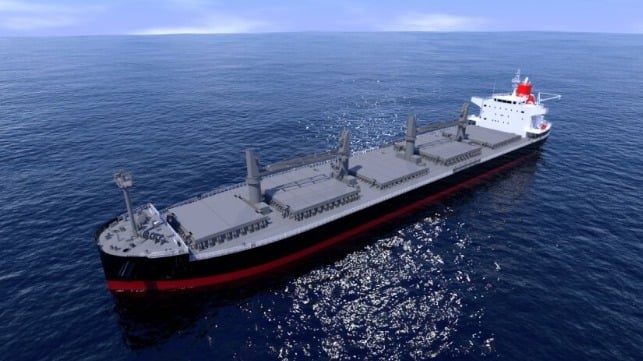
Competing Japanese Yards Partner for Efficiency and Improved Bulker Design

dry bulker carrier concept
Japanese shipyards worked together to develop a more efficient dry bulk carrier (nomichi/Tsuneishi)

Published Mar 24, 2025 4:30 PM by The Maritime Executive


Two of Japan’s leading shipbuilders, Onomichi Dockyard and Tsuneishi Shipbuilding, have taken the unusual step of partnering to develop designs for a new dry bulk carrier. The project sought to leverage the experience and expertise of each yard to advance the design concepts for a vessel they are calling Bingo 42 (Beyond Innovation, Navigating Green Ocean).

The shipyards highlight that traditionally each yard undertakes all stages of design from basic design to production. They note it creates a substantial design workload which they expect will be further increased in the future as yards seek to develop and deliver alternative fuel vessels.

Both companies produce handy size bulkers. The Bingo 42 project sought to leverage shared experience, development ideas, and strategies based on each yard’s previous work. They focused on a 42,000 dwt dry bulk carrier. The goal was to enhance the productivity of the design process and to potentially increase market share through orders and construction under the same brand. The structural design, construction, and sales will be carried out independently by each company.

One of the key focuses of the project was to enhance each other’s conventional hull forms. Working together, the designers lengthened the conventional hull by 3 meters (nearly 10 feet). By optimizing the hull form they were able to improve cargo capacity and fuel efficiency with the design being incorporated into Onomichi and Tsuneishi’s standard dry bulk carrier designs.

The design also incorporates the MT-Fast energy-saving device first developed by MTI and NYK Group. It improves propulsion efficiency by up to four percent by regulating water flow through the installation of multiple fins in front of the propeller. It is designed to be a methanol0dual fueled vessel/

The companies report that Bingo 42 design has achieved a reduction of more than 35 percent from their reference line under the EEDI index established by the IMO.


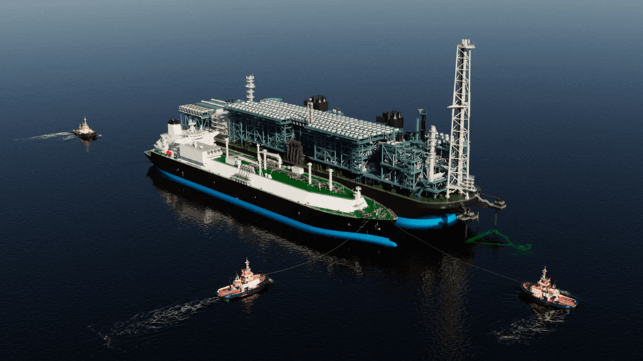
Delfin Receives MARAD Approval for FLNG Export Terminal in U.S. Gulf

FLNG
Courtesy Delfin LNG

Published Mar 23, 2025 10:15 PM by The Maritime Executive


FLNG developer Delfin has secured a long-sought license from the Maritime Administration to install a three-unit FLNG liquefaction hub in the U.S. Gulf, based around existing infrastructure. 

Its proposed Delfin LNG project centers on the UTOS pipeline, or U-T Offshore System. The pipeline runs from Cameron Parish out into the U.S. Gulf, and was originally built to bring gas from offshore wells back to land for processing and sale. Former owner Enbridge shut down the pipeline in 2011 as gas flows reduced to levels that were no longer commercially viable; Delfin bought it in 2014 and filed an application with the Department of Energy to use it as an export line for an FLNG complex.

Delfin's plan is to reverse the direction of flow in the existing line and sell now-abundant supplies of U.S. natural gas to foreign buyers via a floating export terminal. At the seaward end would be as many as three anchored FLNGs, capable of up to 13 million tonnes per annum of output, and situated in water deep enough to accommodate fully laden LNG carriers alongside. 

Delfin has already arranged long-term offtake contracts with trading house Gunvor and with Chesapeake Energy, and has explored additional options with Chinese buyers. Two years ago, it entered into an agreement with Wison Offshore for the design and engineering of the FLNG units, and said that market conditions were prompting an acceleration of project plans. At the time, the objective was to be ready to begin construction on the first of the planned FLNG units by mid-2024. 

Delfin had applied for an operating license from MARAD in 2015, and MARAD confirmed Friday that this piece of the puzzle has now fallen into place after a 10-year review. The license is now in hand, and it lets Delfin own, build and operate a deepwater port for LNG export purposes. Paired with its Federal Energy Regulatory Commission approval for exports to non-free trade agreement countries, it is now one step closer to moving forward.

For future expansion, Delfin has rights to a second, adjacent subsea gas pipeline system that could be used for a parallel development, Avocet LNG. It believes that permitting would be easier for this expansion because of the work previously done for MARAD's Delfin LNG approval. 

The company is also a partner in the Haisla LNG project, a small-scale FLNG project with the Haisla Nation in British Columbia. 


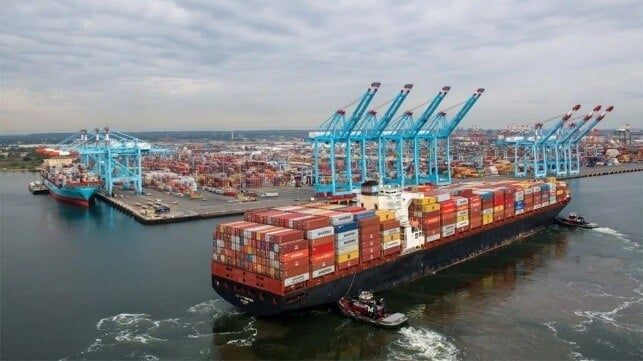
Maersk Will Invest Over $500M as Part of 33-Year Port NY/NJ Lease Extension

AMP Terminal Elizabeth New Jersey
APM Terminals will make signficiant investments as part of its long-term lease extension (Port of NY/NJ)

Published Mar 24, 2025 4:58 PM by The Maritime Executive


The Port Authority of New York and New Jersey and Maersk’s APM Terminals have agreed to a 33-year lease extension for the port’s second-largest container terminal. The company plans to make significant investments in the terminal located in Elizabeth, New Jersey in support of the port’s long-term growth plan.

According to the port, the lease extension which will be voted on by the Porth Authority’s board on March 27, takes a unique, nontraditional approach of incorporating performance, infrastructure, and sustainability requirements into the contract. The port says this will ensure steps are taken to enable the terminal to handle growing cargo volumes while prioritizing customer service and sustainability. The port has also recently reached similar long-term extensions with other terminal operators.

“This lease extension secures transformative infrastructure and capacity enhancements at the second-largest container terminal in the East Coast’s busiest port,” said Port Authority Executive Director Rick Cotton. “These commitments will enable the Port of New York and New Jersey to move more goods, create more jobs, and further cement its role as an essential driver of our region’s economy and our nation’s supply chain.”

Maersk’s current lease was due to expire in December 2029. The extension extends the term through December 2062. APM Terminals highlights that the terminal currently handles over 25 percent of the annual container throughput in the port. The company has already been investing in the complex including four new gantry cranes which arrived in November 2024.

As part of the agreement, APM Terminals will invest over $500 million over the coming years to enhance cargo-handling capacity at its 350-acre terminal. APM Terminals has also committed to the replacement and maintenance of all wharf and berth structures. Additionally, the Port Authority and APM Terminals will expand the lease to include portions of an adjacent parcel of land to APM Terminals for enhanced productivity. APM Terminals has also committed to future capacity enhancements driven by demand.

Under the new agreement, APM Terminals will also invest in zero-emission cargo-handling equipment over the coming years. As a Port Authority lessee, the terminal operator is also subject to the Port Authority’s marine terminal tariff, which incentivizes the adoption of cleaner equipment as new technology becomes commercially available. It is in keeping with the Port Authority’s goal of reaching net zero agency-wide by 2050.

According to the Port Authority, the investments covered under the new agreement are in keeping with its Port Master Plan 2050. The strategy anticipates cargo volumes doubling or tripling by mid-century. 

Houthis Claim "Hours-Long" Exchange of Fire With U.S. Carrier Strike Group

Operations aboard USS Harry S. Truman, March 24, 2025 (USN)

Published Mar 24, 2025 10:40 PM by The Maritime Executive


On Monday, Yemen's Houthi rebels claimed that they had engaged in an hours-long exchange of fire with U.S. Navy forces in the Red Sea, disrupting American strikes on Houthi-controlled areas of Yemen. The claims could not be confirmed, but Houthi forces have exaggerated their attempted attacks in the past. 

Houthi forces claimed to have targeted "several enemy destroyers, in addition to the aircraft carrier Truman," using a combination of ballistic missiles, cruise missiles and drones.

"This combat, the second in 24 hours, lasted for several hours, during which an enemy air attack against our country was thwarted," said Houthi spokesman Yahya Saree. 

Saree also claimed that Houthi missile forces had targeted Israel's Ben Gurion Airport with another two ballistic missiles, the latest in a series of attempted attacks on Israeli territory. 

The Truman and other assets in the Mideast have been carrying out heavy strikes on Houthi positions since March 15. U.S. national security leaders have told media that multiple Houthi decisionmakers have been killed in the airstrikes, and that the toll on the group's military capabilities has been substantial. "We've hit their headquarters," National Security Advisor Michael Waltz told media on Sunday. "We’ve hit communications nodes, weapons factories and even some of their over-the-water drone production facilities."

Saudi outlet Al-Hadath reports that another Houthi leader was killed on Sunday night. Houthi media sources have reported an airstrike on a residential block in Sanaa, resulting in a claimed casualty count of one dead and 15 wounded. 

Both sides are working on improving operational security and comms. According to the Institute for the Study of War (ISW), Houthi leaders claim to have improved the encryption and security of their communications systems since the start of the strikes. U.S. officials are having similar discussions after the U.S. defense leadership team accidentally leaked detailed Yemen war plans to a journalist on a commercial messaging app.


UK Launches Maritime Strategy with Emission Pricing and Fuel Regulations

UK maritime decarbonization
UK outlined the next phase of its efforts to drive maritime decarbonization (file photo)

Published Mar 25, 2025 3:41 PM by The Maritime Executive


The UK’s Maritime Minister, Mike Kane, outlined a new detailed plan for the next stages of the efforts toward maritime decarbonization. While the policy presented to the House of Commons in Parliament builds off the efforts of the International Maritime Organization, it also launches a focus on smaller vessels and targeted subsectors which it says must also participate to reach the goals.

The policy highlights that the UK domestic maritime sector produced around eight million tonnes of CO2 equivalents, on a full lifecycle basis, in 2019. The government has already launched a sweeping Plan for Change and now it looks to bring more parts of the maritime sector in line with the broader policies. Following the IMO’s lead, the UK is setting its goal for the domestic maritime sector aiming for zero fuel lifecycle GHG emissions by 2050. The interim steps are at least a 30 percent reduction by 2030 and an 80 percent reduction by 2040, relative to 2008 levels.

The elements of the strategy call for expanding the UK’s Emission Trading Scheme to include domestic UK maritime GHG emissions starting in 2026. At the same time, the UK says it will advocate at the IMO for the introduction in 2027 of global emission pricing. As part of this, the government says subject to further consultation next year, it will introduce domestic fuel regulations to drive the update of zero and net-zero GHG emission fuels and energy sources. It will also consider further actions at the port vessel to reduce at berth emissions.

The UK also looks to expand its policies to smaller vessels, i.e. sub-400 gross tons. It points out that it will be difficult for some sectors such as fishing vessels while others such as offshore wind support vessels could lead the sector. The government is issuing a call for evidence to begin this policy development.

The government will also launch a further exploration of the efforts at the port level. It will look at whether ports are planning decarbonization and the strategies for wider environmental considerations.

While recognizing that the efforts will be challenging for the sector, the government also cites opportunities for investment and creating new economic opportunities. They note that conservative estimates show that decarbonization of the UK maritime sector could support £130 to £180 million (US$168 to $233 million) of gross value added and around 1,400 to 2,100 jobs in the UK on average each year to 2050.

The UK Chamber of Shipping hailed the release of the new strategy saying it welcomed the Government’s publication of the Maritime Decarbonization Strategy, as a much-needed successor to the 2019 Clean Maritime Plan.

“The Government’s strategy must now be matched by delivering the regulatory framework, technology and infrastructure, including a shore power revolution, required to support the green transition for UK maritime, bringing benefits to maritime communities and the UK economy,” said UK Chamber CEO Rhett Hatcher.  “We look forward to working collaboratively alongside government to progress this important agenda and reach our shared goals of a cleaner, more resilient maritime sector in the UK.”


Op-Ed: FuelEU Maritime Has Teeth, But is the Industry Equipped to Meet It?

Carrier
iStock

Published Mar 24, 2025 2:52 PM by Suba Sivandran


The introduction of FuelEU Maritime (FEUM) in January 2025 represents one of the most comprehensive pieces of regulation designed to directly mitigate the carbon intensity of maritime operations. Working in tandem with the EU’s existing ETS regulation, FEUM comes with significant penalties for non-compliance and has the ability to make a tangible impact on the maritime industry’s carbon emissions while incentivizing the acceleration in low-carbon alternative fuel development.
As of January 2025, vessels are required to decrease the average greenhouse gas intensity of their fuel use by 2% relative to the industry average for vessels above 5,000 GT. This requirement will continue to increase gradually over the coming years to reach an 80% decrease by 2050.

The regulation also imposes detailed reporting obligations, which require companies to monitor and report the lifecycle GHG intensity of their fuel mix. This data must be verified by an accredited third party and submitted to the FEUM database, creating a further layer of administrative complexity to ensure compliance.

Ultimately, the goal of FEUM is to promote the increased use of low-carbon alternative fuels as a means of drastically curtailing the industry’s carbon emissions in order to achieve the IMO’s GHG reduction strategy. However, the industry is still faced with significant challenges when it comes to establishing alternative fuel viability at scale. Biofuels currently lack the required feedstocks needed to promote development, fuel technologies such as methanol and ammonia bring with them a significant risk profile due to their volatile composition, and the increase in e-fuel development is hampered by the lack of onshore infrastructure to support the necessary supply of green electricity. Furthermore, the CAPEX implications, not just of the fuels themselves, but in committing to retrofit and newbuild development to future-proof the global fleet, represents a significant barrier.

Despite these challenges, Bureau Veritas (BV) remains steadfast in its efforts to support the safe development and integration of alternative fuels into maritime operations. With longstanding expertise in supporting the development of viable alternative fuels, particularly within Liquefied Natural Gas (LNG) bunkering vessels, BV has been developing rules and guidelines for LNG bunkering and has awarded AiPs of ship designs dedicated to ship-to-ship bunkering since 2012. To enhance safety, BV introduced the Rule for LNG Bunkering Ships, which focused on a transfer system to prevent leaks and boil-off gas handling systems for ships that aren’t sailing continuously but waiting for fuel delivery. Today, BV covers all units in the LNG segment, having classified around 35% of the world’s bunkering ships in service and 50% of the orderbook to date.

Whilst LNG remains an important part of the current energy landscape, the development of greener alternatives – such as ammonia, methanol, and green hydrogen – are vital to establishing a robust, multifuel environment. Using our experience in LNG, BV has developed Rules (NR671) and notations to support the adoption of ammonia as a fuel onboard, whilst having recently announced that it would be classifying the first of four newbuild dual-fuel methanol chemical IMO II medium-range (MR) tankers, built at Guangzhou Shipyard International for owner Socatra and its joint-venture partner Hafnia.

However, despite the significant emissions reductions that can be unlocked by the delivery of viable and scalable alternative fuel options, if shipping is to achieve its interim emissions targets in 2030 and 2040, all energy efficiency and wider green technologies must be engaged in order to decarbonize the global fleet. FEUM has adopted a technology-agnostic approach to achieving compliance that provides the flexibility for shipowners and operators to engage with a variety of green solutions that support emissions reductions. These solutions focus particularly on fuel cells, onboard electrical energy storage, as well as onboard power generation from wind and solar energy.

When considering the use of wind propulsion systems (WPS), FEUM represents the only emissions regulation to include a specific reward mechanism to promote the use of WPS. The Wind Reward Factor (WRF) offers up to a 5% reduction on the GHG calculation of energy used onboard for those vessels where wind assisted propulsion accounts for 15% or more of the propulsive power used onboard.

As of February 2025, more than 125 wind propulsion systems have been installed on over 57 ships, in addition to 17 ships that are already prepared for potential installation of wind propulsion systems. In fact, a recent study suggested that over 1,600 ships will be ordered by 2030, and by 2050, it is estimated that 30% of the entire global fleet will have engaged with wind propulsion technology. These statistics make clear that, while the industry grapples to develop alternative low-carbon fuel viability, wind propulsion systems provide a proven and readily available solution that can make a significant impact on owners' and operators' compliance efforts.

Furthermore, BV’s own modeling has confirmed the potential cumulative impact that operational and technical efficiency measures will make to ensuring shipping stays within its “GHG budget” to 2050. BV’s simulations, outlined in its decarbonization trajectories technical paper, show that without action to reduce speed or waiting time while ocean transportation volumes grow moderately to reach a 50% increase by 2050, GHG emissions would be 92% higher in 2050, with 44% more emissions over the period from a GHG budget perspective, than if these levers had been actioned.

As we edge closer to the IMO’s 2030 checkpoint, which will require the industry to evidence a GHG emissions reduction of at least 20 – and striving for 30% – the pressure on the industry to make meaningful impacts on their carbon emissions continues to increase. The introduction of new regional regulation is having a positive impact on reducing shipping’s carbon emissions. However, such regulation will always be subject to dynamic carbon credit prices, a volatile political landscape, and the emergence of compliance incentives and mechanisms that may inhibit or support their efficacy.

Meanwhile, the industry is waiting for the upcoming IMO MEPC83 meeting in April, where mid-term measures, including a potential codified global carbon levy, are expected to be announced. If the levy introduced is sufficiently robust, such a measure holds great promise for the next phase in the industry’s decarbonization efforts. If effective, a global carbon levy could provide a level of financial certainty to incentivize further investment in low-carbon fuel production, narrow the price gap between fossil and alternative fuels, and generate the revenue required to achieve sector-wide low-carbon fuel viability.

Suba Sivandran is Director of Strategy, M&A and Advanced Services at BV.

The opinions expressed herein are the author's and not necessarily those of The Maritime Executive.


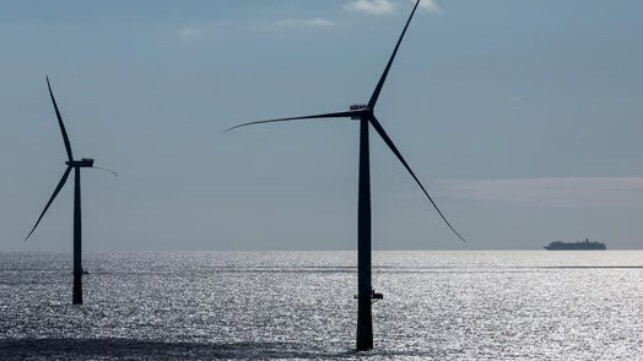
Vattenfall Approves Construction of Germany’s Largest Offshore Wind Farm

offshore wind farm
Vattenfall is moving forward building Germany's largest offshorewind farm (Vattenfall)

Published Mar 25, 2025 4:50 PM by The Maritime Executive


Swedish offshore wind developer Vattenfall announced that it has taken the final investment decision to proceed with the construction of Germany’s largest offshore wind farm. The announcement was seen as a vote of confidence for the sector and comes as Germany is embroiled in a political debate about its offshore wind policy.

The final investment decision for the Nordlicht 1 and 2 offshore wind farms signals that construction will begin on the first phase in 2026 with a capacity of 980 MW. The wind farm will be located approximately 53 miles north of Borkum in the German North Sea. The final investment decision for the second phase was made on a conditional basis pending the receipt of permits.

As part of the decision, Vattenfall has also agreed to re-acquire 49 percent ownership in the project from German chemical company BASF. It acquired the portion of the project in April 2024 but says it has decided to streamline its current portfolio of renewable power projects. BASF however secured an agreement for long-term supply of renewable electricity from the project.

“The Nordlicht offshore wind cluster makes a significant milestone in the path to enabling fossil freedom,” said Helene Biström, Head of Business Area Wind at Vattenfall. “By accelerating Germany’s energy transition and supporting industrial decarbonization, it will provide clean, reliable energy while driving innovation and sustainability in the sector.”

Vattenfall also said it would use low-emission steel for the wind turbine towers at both wind farms to lower their carbon footprint by 16 percent. When completed the full project will produce more than 1.6 GW with the first phase expected to be operational in 2028.

Last week, however, RWE’s CEO Markus Krebber called for Germany to lower its total target for offshore wind due to concerns about efficiency and rising grid connection costs. He expressed concerns about crowding and its impact on maximizing wind yields.

Germany currently has approximately 9 MW installed but the government mapped out an ambitious plan to grow to 70GW by 2045 to ensure its economy achieves climate neutrality. Krebber called for a more realistic target of just over 50 GW but others in the industry quickly rejected his suggestions. It comes as Germany is looking to reinvigorate offshore development and drive the growth of the sector after years of slow growth.