Saturday, March 29, 2025

Yazidis call attention to nearly 3,000 captives still missing a decade later

(RNS) — Jamileh Naso, president of the Canadian Yazidi Association, said the global Yazidi community has meticulously documented and tracked the names of those abducted, but their efforts need international support.
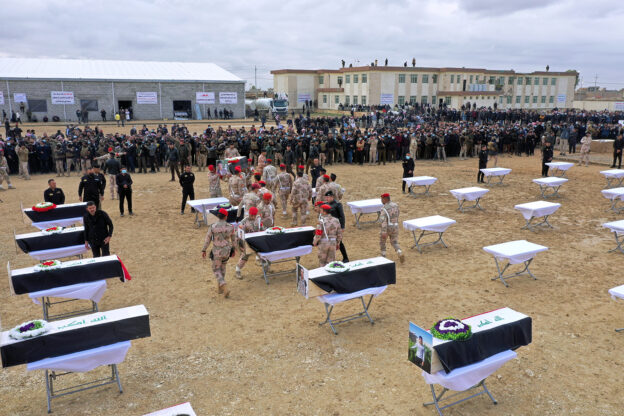

FILE - Mourners prepare to bury the remains of Yazidi victims in a cemetery in Sinjar, Iraq, Saturday, Feb. 6, 2021. (AP Photo/Farid Abdulwahed)
David I. Klein
March 24, 2025

ISTANBUL (RNS) — The fate of nearly 3,000 Yazidis taken captive by the Islamic State group in Iraq remains unknown, officials from Iraq’s Kurdistan Regional Government announced earlier this month. And with a resurgence of ethnic violence in Syria and funding cuts to U.S. international aid by President Donald Trump, rescues are becoming increasingly difficult, Yazidi leaders said.

Jamileh Naso, president of the Canadian Yazidi Association, told RNS the global Yazidi community has meticulously documented and tracked the names of those abducted — many over a decade ago when the Islamic State invaded their region — but their efforts can only go so far without international support.

The main organization active in rescuing Yazidi captives has been Iraqi Kurdistan’s Office of Rescuing Abducted Yazidis, which announced the most recent numbers in early March.

“One of the primary concerns is the lack of transparency in the process,” Naso said. “Families are often left without clear updates or information about their missing loved ones. Many have had to rely on smugglers or personal contacts to obtain any news, which should not be the case when an official government office is tasked with these efforts.”

Yazidis are an ethnic and religious minority in the Middle East, with the largest population concentrated in northern Iraq. The centuries-old monotheistic faith blends teachings and beliefs from other religions including Gnostic Christianity, Judaism, Sufi Islam and Zoroastrianism with ancient local traditions.

In 2014, the Islamic State captured the Sinjar region, a Yazidi refuge in Northern Iraq, and began massacring and enslaving residents. As a non-Muslim minority group, the Islamic State viewed Yazidis as outside the Sharia law it was imposing on the fledgling state it carved out of Iraq and Syria.


FILE – In this photo taken Saturday, Jan. 10, 2015, internally displaced Yazidi women bake bread at a refugee camp in Bamarny village in Dahuk of the Kurdistan region, 260 miles northwest of Baghdad, Iraq. (AP Photo/Seivan Salim)

During its brief but brutal rule over parts of Iraq, Yazidis faced harsh repression. Thousands were killed and thousands more kidnapped and subjected to torture, indoctrination and sexual slavery. Yazidi women and girls were particularly targeted by the Islamic State.

“The enslavement of Yazidi women by (the Islamic State group) in 2014 was not just an atrocity, it was an attempt to annihilate a people,” said Omar Mohammed, a senior research fellow on extremism at George Washington University. “When ISIS overran Sinjar, it marked the beginning of a genocide. Men were executed en masse, young boys were taken and indoctrinated as fighters, and thousands of women and girls were abducted, sold and subjected to systematic rape and abuse. They were trafficked like commodities across ISIS territories, their identities erased and their suffering normalized by a twisted ideology that justified their enslavement.”

In 2016, the United Nations ruled the atrocities committed by the Islamic State group as an act of genocide, and a decade on, Yazidi communities around the world are still hopeful loved ones will be found.

RELATED: Islamic State’s genocide was not limited to killing and enslaving Yazidis, Christians and other communities − it also erased their heritage

However, Naso noted, in several cases, rescues led by the Kurdistan Regional Government have been delayed due to political disputes and funding battles, driving families to take dangerous personal actions.

“While their work is commendable, there are significant challenges and limitations that must be acknowledged. The rescue operations outside the officials are heavily reliant on ransoms, forcing Yazidi families — many of whom live in extreme poverty — to pay thousands of dollars to retrieve their loved ones,” she said.

Bureaucracy isn’t the only thing inhibiting rescues. As of 2023, the al-Hol refugee camp in northeastern Syria was home to some nearly 50,000 people, a large portion of whom are surrendered Islamic State group fighters and their families. However, among them are believed to be hundreds to thousands of Yazidi captives.

While the camp is guarded by the Syrian Democratic Forces, within it, observers have reported former Islamic State fighters still hold significant power. And with the ouster of Bashar al-Assad’s regime in Syria in December 2024, recent outbreaks of violence have left a vacuum of authority for coordinating rescues.

“We don’t even know who to negotiate with at this point. … But I hope we can find a way to do something,” Khairi Bozani, an adviser for Yazidi affairs to the Kurdistan Region Presidency, told Kurdish media in late February, noting no one has been rescued from al-Hol since Assad’s fall.

Though the recent outbreak of ethnic violence in Syria, which saw massacres of Alawites and some Christians, was largely focused on the western coast and far from al-Hol, there are fears the instability will create an opening for Islamic State cells to regroup.


Jamileh Naso, president of the Canadian Yazidi Association. (Courtesy photo)

“The resurgence of ISIS-linked attacks in parts of Syria means that Yazidis who returned to the region remain at risk,” Naso said. “Women and children who escaped captivity are now living in areas that are once again becoming unsafe. Many Yazidis in Syria remain displaced in refugee camps, and with ongoing conflict, they have even fewer options for return or resettlement. Food shortages, medical crises and lack of humanitarian access have made conditions worse.”

“Until Syria is fully stabilized and governed by actors committed to justice and security, Yazidis cannot safely live there, let alone expect meaningful efforts to find and rescue those still missing,” she added.

Syria isn’t the only focus point. In one highly publicized case, a 21-year-old Yazidi woman, Fawzia Amin Sido, was rescued from Gaza amid the Israel-Hamas war in Oct. 2024, more than a decade after she was captured in Sinjar as an 11-year-old.

“The case of the Yazidi woman found in Gaza should have been a wake-up call to the international community,” Naso said. “It proved what many of us have known for years — that Yazidi captives have been trafficked beyond Iraq and Syria. There is strong evidence that Yazidis have been taken to Turkey, Lebanon, Libya and even the Gulf states. Some were sold into domestic servitude, others were forced into marriage under false identities and some were simply disappeared into underground trafficking networks.”

It’s all the more reason international cooperation is need to expand the search beyond just Iraq and Syria, she added.

“Countries that have influence in these regions — including Turkey, the UAE and Qatar — must be pressured to conduct investigations and assist in rescues. There must be diplomatic consequences for countries that fail to take action against human trafficking networks that still hold Yazidis captive,” Naso said.

Alongside advocating for more resources for Yazidi refugees in Canada, Naso is also seeking more involvement from western states in the rescue of Yazidi captives and the prosecution of Islamic State war criminals. Under the Biden administration, U.S. Secretary of State Antony Blinken met with Yazidi leaders and reiterated American support for Iraqi Yazidis and rescuing captives. However, little effort has been made under the new Trump administration, she said.

“The shift in U.S. administrations has directly impacted efforts to assist Yazidis, both in terms of funding for rescue operations and political priorities,” Naso said. “The decline in U.S. leadership on this issue has meant that Yazidis have had to rely on grassroots efforts, NGOs and community-driven initiatives to search for missing loved ones. This is unacceptable. The U.S. played a key role in dismantling ISIS militarily, and it must play an equal role in bringing justice to the survivors.

“The world has said ‘never again’ too many times. Now, we need them to prove it,” she said.
Brazilian Muslims seek return of enslaved uprising leader's skull from Harvard

SÃO PAULO (RNS) — The skull is among thousands of human remains the university has said it will return to their original Native American communities or descendants.


The Brazilian flag. (Photo by Rafaela Biazi/Unsplash/Creative Commons)
Eduardo Campos Lima
March 26, 2025

SÃO PAULO (RNS) — After more than two years of struggle, the Muslim community of Salvador, Bahia State, still waits for Harvard University to give back the skull of an enslaved African man who allegedly took part in a major uprising in 19th-century Brazil.

In 2022, historian João José Reis learned of two Brazilian skulls being kept in Harvard museums. One belonged to an unidentified person in Rio de Janeiro, the other supposedly to a leader of the Malê Revolt, an 1835 rebellion of enslaved Yoruba Muslims, or Malês as they were known at the time, in Salvador. Reis, who authored a study on the uprising, along with colleagues in Brazil and the U.S. have since been campaigning for the repatriation of the second skull.

Two of the university’s museums — Peabody and Warren — have faced pressure for several years to return almost 7,000 human remains to their original Native American communities or descendants. The discovery of the Brazilian skulls brought the struggle to the South American region.

Reis and his colleague Hannah Bellini, a scholar who has studied Muslims in Salvador, formed a working group with the local Islamic community to facilitate the return of the skull.

“Islam establishes that the human body must be respected in life and after death,” Nigerian-born Sheikh Abdul Ahmad, who heads the Islamic Cultural Center of Bahia (known by the Portuguese acronym CCIB) in Salvador, told RNS.

Ahmad, who first arrived in Brazil in 1992 — and decided to remain in the country after discovering more about the Malês’ history — explained that the human body and its parts cannot be put on display.

“The Quran says that from earth we came, to the earth we shall go back, and from earth we will resurrect,” he added.

A deceased person must have an adequate mortuary treatment, in which the body is washed and perfumed with nonalcoholic fragrances. Then, a special prayer is directed by the community leader, asking God to forgive the person’s sins. No coffins are used, only white tissues must cover the body, and nothing can be put over the tomb.

“We will deal with that skull that same way. Of course we won’t wash it, but we’ll conduct the entire rite, especially the prayer, and we’ll bury it in the soil,” Ahmad explained.

As soon as a Muslim knows that the body of a fellow member of the Islamic community has not been properly buried, it becomes his or her religious obligation to do everything possible to promote the necessary honors for the deceased.

“We’ve been waiting for that and we’re hopeful the skull will be sent back to us. Our community has to do its part,” the sheikh affirmed.

Ahmad is especially eager to perform the prayers and ask for God’s forgiveness.

“No matter if it was 190 years ago, God still can accept our requests and forgive the deceased. And then he will be like a sinless child,” he said.


The Harvard Medical School campus in Boston. (Photo by Nathan Forget/Flickr/CC BY 2.0)

Harvard told RNS in an email that it is not opposed to the repatriation of the remains.

“We are working in collaboration with Brazilian authorities towards that shared goal,” a spokesperson said, pointing to a 2022 report by the Steering Committee on Human Remains in University Museum Collections and quoting its commitment to “employ provenance research and appropriate consultation with communities or lineal descendants, to implement interment, reinterment, return to descendant communities, or repatriation of remains.”

There’s not much available information about the skull, which was obtained before 1847 by a U.S. citizen living in Brazil. It had first been donated to the Boston Society for Medical Improvement before being acquired by Harvard’s Warren Anatomical Museum as part of a collection in 1889. Its accompanying note alleges it belonged to a Malê who fought during the uprising, although a DNA test still has to be conducted to confirm its origin.

The Malês, a name derived from the Yorubá word for Muslim, imale, were well-respected among enslaved Africans in Salvador. They primarily came from a region known as Yorubaland, which corresponds today to parts of Nigeria, Benin and Togo. They tended to be more educated than other groups of enslaved people — and than whites, in general. Many knew how to read and write (especially in Arabic) and were often assigned to more prestigious work.

At that time, there were about 4,000 African Muslims in Salvador and a total of 22,000 Africans, most of them enslaved people, in a city with an overall population of 65,000. Though the Brazilian Empire had declared Catholicism the established religion, Muslims were able to discreetly practice their religion, with some limitations.

For many Brazilian descendants of enslaved Africans, the Malê rebellion is a celebrated moment of heroism.

The Muslim Africans had been planning the rebellion for Jan. 25, at the beginning of Ramadan, but someone alerted the governor the day before and he deployed policemen to several points of the city. The Malês had to improvise and about 600 of them grabbed mostly knives and spears, with only a handful of firearms. Ultimately, the rebellion was quickly quashed, and backlash was swift. Four of the leaders were publicly executed, while others were either flogged or deported to Africa.

After the uprising, Islam was fiercely persecuted and mostly vanished from Salvador, until its resurgence with Arab immigrants in the 20th century.

Reis expressed frustration that, more than two years since the Harvard report was issued, the skull remains at the university.

“I never thought things would happen like that. They first argued that the process would involve an ethics committee that was deciding over that and other cases. We have never been informed of such decisions,” said Reis. “Then a delegate of the Brazilian Foreign Ministry took part in the last meeting between us and Harvard, in November 2024. We were told that now the university had finally met a valid interlocutor, the Brazilian government.”

While the dialogue has been apparently more fluid since then, there’s no news on when the skull is being repatriated. That CCIB, made up of about 700 Muslims, was disregarded as a “valid interlocutor” was also a bit shocking for the people involved in the process.

“Historical reparation should be something happening on the community level. That’s very important for that community, whose right to perform funeral rites has been denied in the past,” said Bellini.

“That community wants to make visible the connection between Bahia and Islamic Africa again,” Bellini said, adding they may decide to build a memorial after burying the skull.

The first feature film about the uprising is being released this year in Brazil. Directed by Antônio Pitanga, an 85-year-old legend of Brazilian cinema and television, “Malês” combines fictional and historical characters. Reis worked as a consultant for the film and, along with Pitanga, participated in a few exhibitions of it in U.S. universities.

“I’m very excited about the great reception the movie had in some African countries,” Pitanga told RNS from Ouagadougou, Burkina Faso, where he was taking part in a festival. “I hope it will incentivize more and more Brazilians and also international spectators to study about the Malês, which is a fundamental part of our history,” he concluded.
Sudanese Christians pray in secret, plead for end to war and religious attacks

(RNS) — Christians are hiding due to threats from both warring factions of Sudan’s military government.


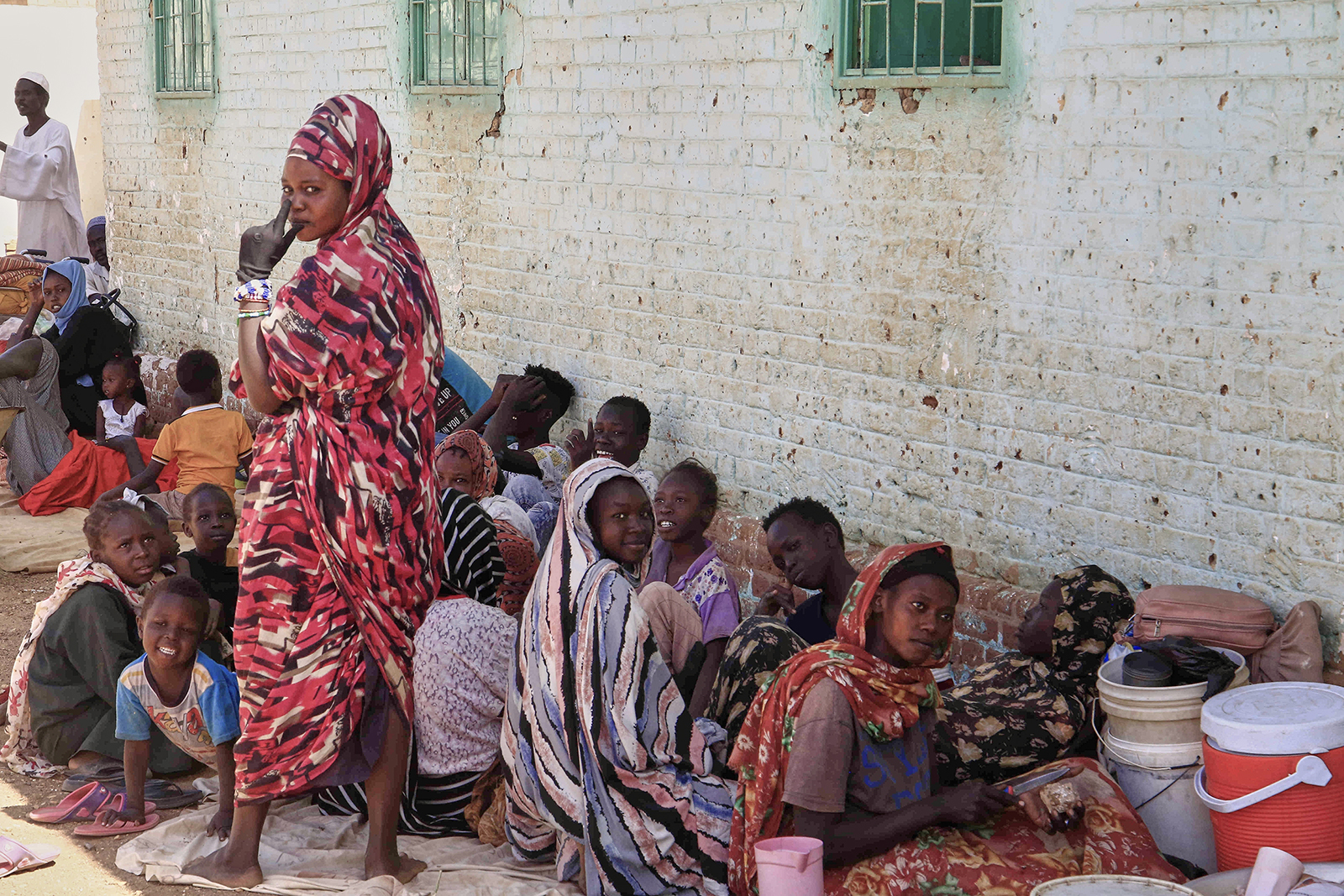
Sudanese displaced families take shelter in a school after being evacuated by the Sudanese army from areas once controlled by the paramilitary Rapid Support Forces in Omdurman, Sudan, located across the Nile River from Khartoum, on March 23, 2025. (AP Photo)


Tonny Onyulo
March 26, 2025


KHARTOUM, Sudan (RNS) — In the Al Jazirah state of central-southeast Sudan, Peter and dozens of his neighbors hold secret prayer services whenever they can.

They’ve had to hide their Christian worship services amid the civil war in the country, especially after an attack by the Rapid Support Forces, a paramilitary organization formerly operated by the Sudanese government, on the Sudanese Church of Christ in Al Jazirah on Dec. 30, 2024. The attack left at least 14 people, including women and children, seriously injured.

“The soldiers destroyed our church and vowed to eliminate all Christians,” Peter told RNS via phone. He is being identified by a pseudonym due to fears for his safety. “They warned us against gathering for worship, so we have been doing it in secret to prevent their agents from reporting us.”

Peter said Christians face threats from both rival factions of the military government currently at war. Both have vowed to eliminate all Christians in the northeastern African country, which has a population of over 49 million. Approximately 5.4% of the population identifies as Christian, while 91% are Muslim, and a small percentage follow Indigenous religions.

Attacks on Christians’ and other faiths’ places of worship, including mosques, have escalated across the country. The U.S. Commission on International Religious Freedom reported in April 2024 that more than 150 churches have been damaged since the war began in 2023. These attacks have prompted condemnation from the international community, faith-based organizations, human rights groups and religious leaders.

The Sudanese Armed Forces, led by Gen. Abdel Fattah al-Burhan, and the RSF, commanded by Gen. Mohamed Hamdan Dagalo, who was previously al-Burhan’s deputy, are engaged in a fierce power struggle to control the country’s valuable resources, including gold and oil. The conflict has claimed an estimated 150,000 lives and displaced over 13 million Sudanese, with 4 million fleeing the country. Civilians face a dire lack of food, health care and hope for peace.


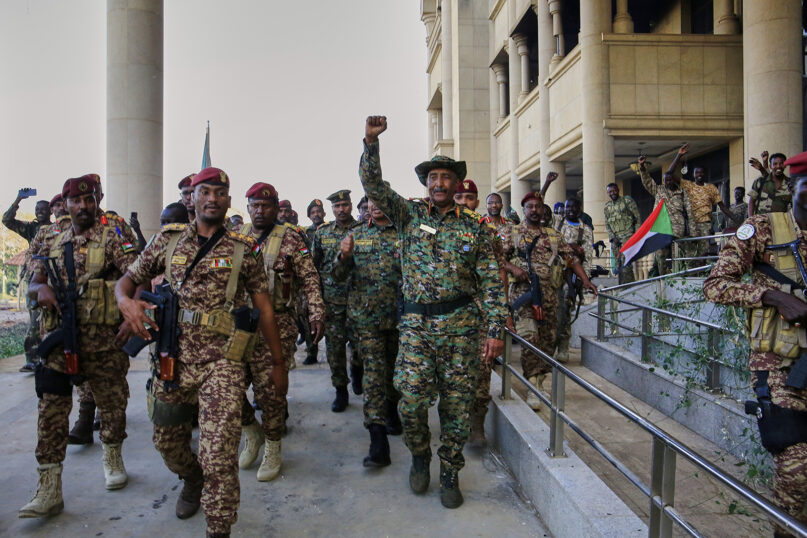
Sudan’s military chief Gen. Abdel Fattah al-Burhan, center, is greeted by troops as he arrives at the Republican Palace, recently recaptured from the Rapid Support Forces paramilitary group, in Khartoum, Sudan, March 26, 2025. (AP Photo)

On Aug. 16, 2024, the United States began peace talks in Geneva. Although representatives from the RSF participated, the SAF boycotted the talks — a decision that raised concerns about the possibility of achieving lasting peace and stability in the region.

RELATED: South Sudanese refugees, fleeing a second civil war in Sudan, return home to bleak prospects

RSF fighters began withdrawing from the capital of Khartoum on March 26, The New York Times reported, as SAF gained control of the city, marking an inflection point in the war. RSF is likely to withdraw forces in Darfur in western Sudan as well, the report said.

Soldiers have been preventing Christians from attending church, from holding weekly fellowship meetings in their homes, from openly expressing their faith and from converting from Islam to Christianity, Peter said.

Evangelical pastor Ibrahim Okot said the war has significantly impacted the Christian community in the country. The Khartoum-based pastor said soldiers have targeted Christians who had previously been protected by the constitution before the nation descended into civil war.


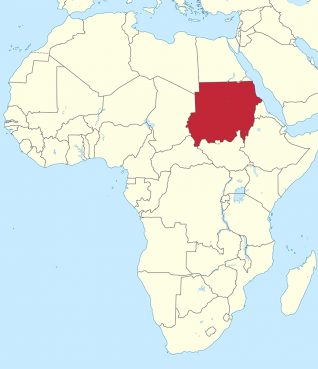
Sudan, red, in northeast Africa. (Map courtesy of Creative Commons)

“We lived together as brothers and sisters, but the war has taken on a religious aspect with soldiers now targeting Christians and places of worship,” Okot said. “They do not want anything to do with God or spirituality, which is harmful for any country.

“We are praying for an end to the war to save Christianity and the lives of millions of innocent people,” he added. “It’s now hard to be a Christian in this country. You can’t carry your Bible openly, pray, gather to worship or identify yourself as a Christian.”

Christian Solidarity Worldwide, a U.K.-based human rights organization, recently raised concerns about the daily threats faced by Christians in Sudan. Soldiers continue to attack areas where they live, posing a serious risk of violence and the potential elimination of their communities.

“The targeting of places of worship violates both domestic and international law, and, in the context of conflict, international humanitarian law,” said Mervyn Thomas, founder and president of CSW, earlier this year. “We call on the international community, including the UN Fact-Finding Mission on Sudan, to document these attacks thoroughly with a view towards ensuring accountability.”

Pastor Philemon Hassan of Al Ezba Baptist Church in Khartoum North — whose church was attacked by an SAF airstrike that killed 11 people on Dec. 20, 2024 — said many people are dying, suffering and lacking basic humanitarian necessities for survival. He emphasized that lasting peace between the warring factions is essential to halt the continuous attacks on Christians and their places of worship.

RELATED: In war-torn Sudan, Anglican primate asks for a ‘silencing of guns’ for Christmas

“Our prayer to God is for this war to end as soon as possible,” Hassan said.

Simon Umar, a church elder at a Pentecostal church in Khartoum, also said that without peace, Christians will continue to suffer from attacks and will live hiding in fear. He said the Christian communities in Khartoum and other areas have tried to gather in small congregations to worship and support one another during the war. However, these efforts have not been successful as they have faced attacks that resulted in fatalities, he said.

“We attempted to gather, but it was impossible because nowhere is safe,” he said, urging both warring parties to consider the suffering of the people in Sudan and stop the war. “Christianity can only thrive in an environment of peace and stable government that protects everyone’s rights, including the right to worship and gather.”

Thomas also urged “the warring parties to agree to an immediate ceasefire” and “the international community to increase efforts to ensure the protection of civilians in Sudan.”

Meanwhile, Peter emphasized his neighbors’ commitment to gathering secretly as they seek spiritual nourishment and pray for a swift resolution to the conflict.

“We cannot stop praying, as that is the key to resolving the ongoing conflict,” he said. “I urge both RSF and SAF soldiers to refrain from targeting Christians and places of worship. Our prayers are crucial for achieving lasting peace.”

Ameen Auwalii contributed to this report from Khartoum, Sudan.
How Japanese anime draws on religious traditions to explore themes of destiny, sacrifice and the struggle between desire and duty

(The Conversation) — ‘Demon Slayer: Mugen Train’ blends Buddhist impermanence, Shinto philosophy and samurai ethics into a lesson on courage and suffering.


Kyojuro Rengoku, also known as the Flame Hashira, is a central character in the 'Demon Slayer' series. (Deviant Art, CC BY-ND)

Ronald S. Green
March 25, 2025

(The Conversation) — I have spent years studying and teaching Japanese anime, exploring how its narratives intertwine with cultural, philosophical and religious traditions. One of the most compelling aspects of Japanese anime is its ability to merge thrilling action with deep spiritual and ethical questions.

“Demon Slayer: Mugen Train,” which shattered Japanese box-office records for earnings and ended up as 2020’s highest-grossing film in the world, is a prime example of how anime engages with these profound themes. With “Demon Slayer” continuing its global success, it is an opportune time to examine how it intertwines Buddhist, Shinto and samurai traditions into a narrative of heroism, impermanence and moral struggle.
Spiritual themes in anime

Anime often explores spiritual and philosophical questions by drawing on Japan’s religious traditions to examine themes of fate, self-sacrifice and the struggle between desire and duty.

Hayao Miyazaki’s “Princess Mononoke,” for example, follows Prince Ashitaka, who is cursed by a demon and must journey to find a cure. His quest leads him into a conflict between the industrialized Irontown, which seeks to expand by clearing forests, and the spirits of the natural world, including the Deer God, a divine being that governs life and death.

The film reflects Shinto principles by portraying nature as sacred and inhabited by “kami,” or spiritual beings. It emphasizes harmony between humans and the environment and the consequences of disrupting this balance.

Scholar Melissa Croteau, in her book “Transcendence and Spirituality in Japanese Cinema,” notes how Miyazaki’s films use nature spirits to critique modernity’s detachment from the sacredness of the environment.


A still from ‘Spirited Away’ in which 10-year-old Chihiro must learn to navigate an unseen world.
GoodFon.com, CC BY-NC

Similarly, his 2001 animated film “Spirited Away” reflects animist ideas in Japanese culture, where spirits are believed to inhabit natural elements and even everyday objects. Set in a mysterious Japanese bathhouse filled with “kami,” 10-year-old Chihiro, once shy and afraid of change, learns to navigate this hidden world and transforms along the way.

A key moment in the film is the arrival of a polluted river spirit, which appears as a filthy, sludge-covered creature but is revealed to be a once-pristine river god, burdened by human waste. This scene embodies the animist belief that natural entities have their own spirit and must be respected. It also reinforces an environmental message: When nature is polluted or mistreated, it loses its vitality, but with care and reverence it can be restored.

Neon Genesis Evangelion,” a landmark Japanese anime television series that aired from 1995 to 1996, engages with deep philosophical ideas, particularly existentialist questions of identity and purpose. Set in a postapocalyptic world, the series follows 14-year-old Shinji Ikari, who is recruited to pilot a giant biomechanical weapon called an evangelion to defend humanity against mysterious beings known as Angels.

As Shinji and his fellow pilots struggle with their roles, the series explores themes of isolation, self-worth and the challenges of forming close, meaningful relationships. It draws from both Buddhist and Gnostic thought, which emphasize a focus on inner spiritual knowledge and the belief that clinging too tightly to the material world causes suffering. Evangelion portrays suffering as arising from attachment and the inability to form meaningful relationships.
Rengoku: The embodiment of selfless heroism

What sets “Mugen Train” apart is its focus on the internal conflicts of its characters, symbolized by their battles with demons. These demons represent human suffering and attachment, themes deeply influenced by Buddhist thought. At the heart of the film is Kyojuro Rengoku, a demon slayer who embodies unwavering selflessness and honor.


Rengoku’s flame-breathing forms.

Rengoku’s fire-based fighting style is deeply symbolic. In Japanese culture, fire represents both destruction and renewal. The Kurama Fire Festival, held annually on Oct. 22 in Kyoto, is a Shinto ritual where large torches are carried through the streets to ward off evil and purify the land.

Similarly, Buddhist goma fire ceremonies involve priests burning wooden sticks in sacred flames to symbolize the eradication of ignorance and desire. Rengoku’s own techniques reflect this duality: His flames cleanse the world of evil while signifying his unwavering spirit.


Goma fire ritual.

Bushido, the samurai code of honor, underpins Rengoku’s character. Rooted in Confucian ethics, Zen Buddhism and Shinto beliefs, this code emphasizes loyalty, self-sacrifice and duty to protect others. His mother’s teaching – “The strong must protect the weak” – guides his every action, reflecting the Confucian value of filial piety and the moral obligation to serve society.

Bushido’s connection to Zen Buddhism, with its focus on discipline and acceptance of impermanence, further shapes Rengoku’s unwavering resolve, while its Shinto influences reinforce his role as a guardian upholding a sacred duty.

Even approaching death, Rengoku remains steadfast, accepting impermanence, or “mujō,” a fundamental Buddhist principle that sees beauty in life’s transience. His sacrifice teaches that true strength lies in selflessness and moral integrity.
Akaza: A manifestation of attachment and suffering

Opposing Rengoku is Akaza, a demon who embodies the destructive consequences of clinging to power and immortality. Once human, Akaza became a demon in his obsession with strength, unable to accept the impermanence of life.

His refusal to acknowledge death aligns with Buddhist teachings that suffering arises from attachment and desire. Scholars such as Jacqueline Stone have explored how Buddhist texts portray clinging to existence as a fundamental source of suffering, a theme vividly reflected in Akaza’s character.

Visual elements reinforce Akaza’s symbolism. His body is covered in tattoos reminiscent of “irezumi,” traditional Japanese body art historically associated with crime and hardship. In Edo-period Japan, tattoos were often used to mark criminals, branding them as outcasts from society. Even today, irezumi remains stigmatized in many parts of Japan, with some public bathhouses, gyms and swimming pools barring individuals with visible tattoos due to their historical association with the yakuza. In contemporary anime, tattooed characters frequently symbolize a troubled past or inner turmoil, reinforcing Akaza’s role as a figure trapped by his own suffering and destructive path.

Akaza’s irezumi visually conveys his entrapment in cycles of suffering, reinforcing his contrast with Rengoku’s liberating flames.

A battle about human struggles

The battle between Rengoku and Akaza is more than a fight between good and evil; it is a clash between two worldviews – selflessness versus egoism, acceptance versus attachment. “Mugen Train” taps into universal human struggles, making its themes resonate far beyond Japan.

The film’s exploration of impermanence, moral duty and the pursuit of meaning contributes to anime’s broader legacy as a medium that entertains while provoking deep philosophical reflection.

As “Demon Slayer” continues to captivate audiences worldwide, evidenced by social media buzz around its new projects and the ongoing enthusiasm of fans, its success underscores anime’s ability to blend action with profound themes.

Whether through Rengoku’s selfless courage or Akaza’s tragic downfall, “Mugen Train” offers a timeless meditation on what it means to live with purpose and integrity.

(Ronald S. Green, Professor and Chair of the Department of Philosophy and Religious Studies, Coastal Carolina University. The views expressed in this commentary do not necessarily reflect those of Religion News Service.)


The Conversation religion coverage receives support through the AP’s collaboration with The Conversation US, with funding from Lilly Endowment Inc. The Conversation is solely responsible for this content.

New survey explores challenges women face in Jewish divorce system

(RNS) — Almost half of Jewish women surveyed said their experience in rabbinical court for a divorce harmed their mental health.


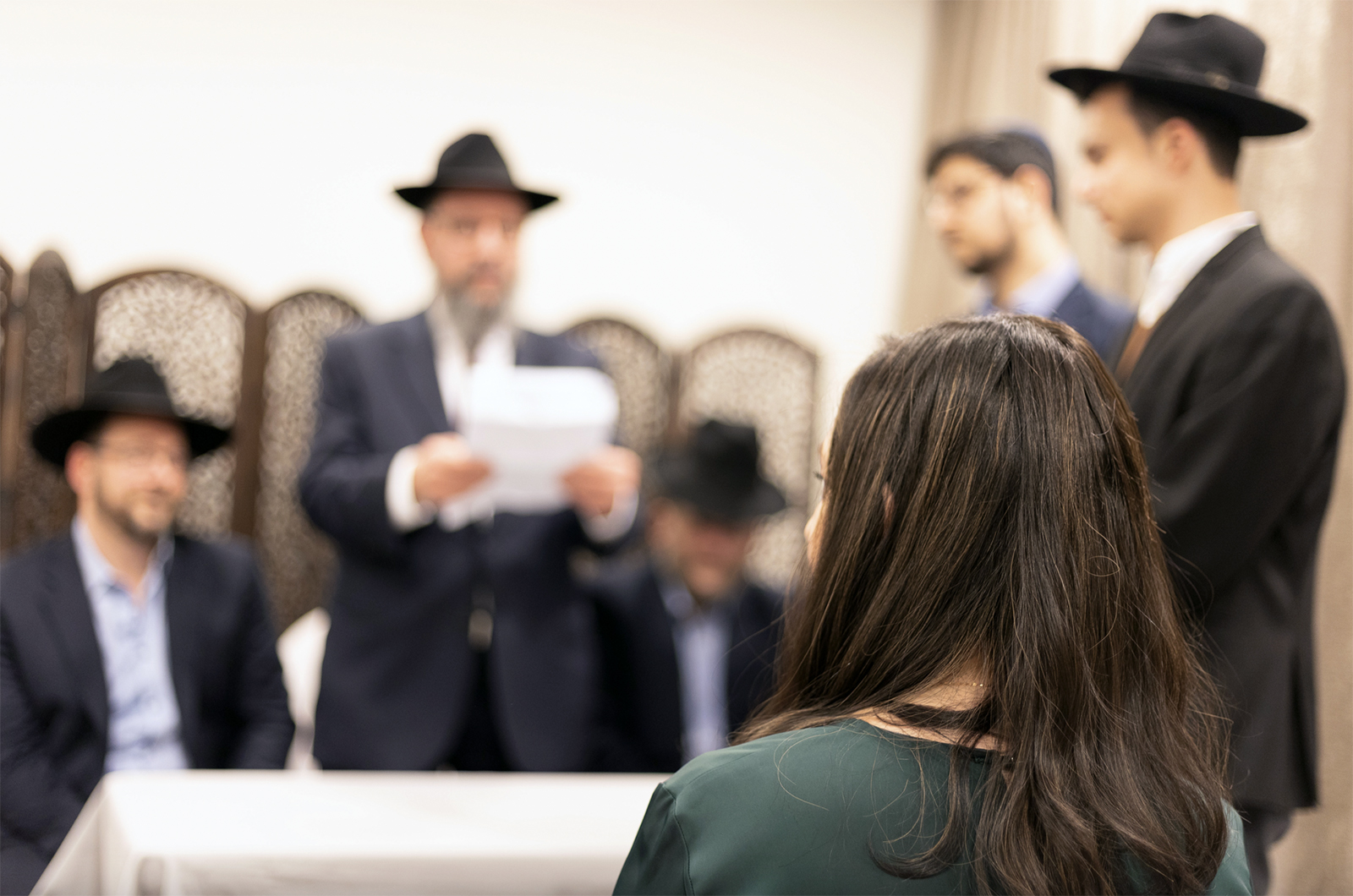
(Photo by Laura Ben David/The Jewish Life Photo Bank)
Michele Chabin
March 27, 2025


(RNS) — Women around the world who seek Jewish divorces under religious law face “significant systematic challenges that extend far beyond isolated cases,” according to a recently released survey of 450 women from 11 countries who have undergone the process.

The survey, conducted by the Israeli women’s advocacy organization Chochmat Nashim in collaboration with several other Jewish women’s organizations between 2022 and 2024, aims to quantify rabbinical court, or beth din, obstacles in the path of women during divorce court proceedings, the organization said in a statement.

Overall, 48% women surveyed said their experience in rabbinical court harmed their mental health.

“Divorce is painful, but the focus of this survey was to find out if the system itself, the process of being in rabbinical court, made a painful situation that much worse,” Shoshanna Keats Jaskoll, co-founder and director of Chochmat Nashim, told RNS. “We wanted to learn what needs fixing.”


Shoshanna Keats Jaskoll. (Photo courtesy of Chochmat Nashim)

To dissolve a Jewish marriage under religious law, a husband must give his wife a divorce decree, called a get. While many men grant a get within a reasonable amount of time, some do not, leading to a drawn-out process.

In Israel, no civil marriage or divorce exists, so all Jewish divorces must go through the rabbinical court system, although issues with property and custody can often be handled civilly. When it comes to religious marriages outside Israel, even when civil divorce is an option, a wife whose husband refuses to provide a get must rely on the rabbinical court to extricate her from her Jewish marriage.

Without a get, a Jewish woman is not free to remarry or have another man’s children, according to Jewish law.

In Israel, the law permits rabbinical courts to prevent a recalcitrant husband from having a bank account or leaving the country, but only after the court has designated him a get-refuser and his wife as an agunah, or a chained woman. And often, judges consider divorce a last resort, which can leave a woman who is unsuccessful in receiving a get stuck in the marriage for years — and in rare cases, decades.

RELATED: Divorced from her husband and her faith, Tova Mirvis finds freedom

Jaskoll estimates 2,000 to 3,000 women around the world are currently agunot, or chained women. She said much of what’s wrong with the system “has nothing to do with Jewish law and everything to do with the lack of professionalism and (with) disrespect for women in the divorce system.”

“There are things that rabbinical court judges can do to immediately improve the situation,” she said.

The survey, which had participants with experiences in 54 Orthodox rabbinical courts, found women seeking Jewish divorces face numerous challenges, regardless of where they live. Women in Argentina, Australia, Brazil, Canada, Chile, France, Germany, Israel, South Africa, the United States and the United Kingdom participated in the survey.


To dissolve a Jewish marriage under religious law, a husband must give his wife a divorce decree, called a get. (Photo by Laura Ben David/The Jewish Life Photo Bank)

Overall, at least 30% of the respondents said they experienced get refusal.

One-third of respondents said they were pressured to relinquish something, such as legal representation or child support, to obtain their divorce. And on average, 40% waited more than a year for a get, with 16% waiting more than three years.

However, Jaskoll said she believes most divorce cases could be quickly resolved if rabbinical judges — who in Orthodox communities are all men — made a conscious effort to listen to what wives were saying and were trained to identify and deal with manipulative husbands.

“The first pain point is how many judges don’t believe or respect a woman’s experience,” she said. “Divorce is one of the most painful moments of their lives, and the wife is in a room full of men.”

Aside from in Israel, where women can represent wives in court, very few women work in the rabbinical court system, she added.

“I know several women who explained that their husbands cheated on them or went to prostitutes. It didn’t matter to the judges,” Jaskoll said.

The second problem is the lack of an established timeline to dissolve a marriage.

“When someone is chained and their fate isn’t in their own hands, every day is an eternity,” Jaskoll said. As a divorce proceeding drags on, often with rabbinical judges insisting the couple engage in marriage counseling even in cases of infidelity or spousal abuse, “the wife feels pressured” to relinquish her rights to jointly owned property, child support payments or custody, she added.

“Sarah,” a modern Orthodox woman who asked to be identified anonymously because she feared her ex-husband’s reprisals, first filed for a civil divorce in a U.S. court in 2021. Her then-husband countersued in a local rabbinical court.

She ended up relinquishing most of the child support the civil court had granted her, receiving her get three years later.

“In contrast to some rabbinical courts, this one had no transparency when it came to what was Jewish law and what wasn’t,” she told RNS by phone. “They refused to provide their policies in writing. Speaking for myself, the court seemed paternalistic, as if a woman’s autonomy could be leveraged.”

Fainy Sukenik, an Israel-based social activist and founder of Ba’asher Telchi, an organization that assists ultra-Orthodox women in the midst of divorce, praised the survey.

“It is the first survey I’ve seen about the divorcing woman’s experience,” she said. “Most of the judges don’t consider this point of view. My hope is that when they see the statistics showing how women’s mental health is suffering, they will say, ‘I didn’t mean it. I was trying to do my best,’ and will ask themselves, ‘How can I do better?’”

Sukenik, who was herself an agunah more than a decade ago, said she still feels anxious whenever an official letter from a government office arrives in her mailbox due to her experience with the divorce process.

“It was 13 years ago,” she said. “I’m remarried with a beautiful family, but when I was in divorce court, every letter they sent was bad news. The dayanim (rabbinical court judges) should know how their actions affect the women who have gone through their court system, even years later.”

While rabbinic court judges are experts in Jewish divorce law, the vast majority have never been trained to identify factors such as spousal abuse, addiction or mental illness, Jaskoll said.

“Modern marriages have modern social issues, including mental illness,” she said. “On the outside, husbands may be charming, but behind doors, they can be abusive. But all too often, the court doesn’t listen to the wife. That needs to change.”

Chochmat Nashim will share the survey’s findings with rabbinical courts around the world, Jaskoll said. It also recently created a website with reviews of various rabbinical courts around the world. People can rate and review their own experiences in the courts, aiming to improve the systems and transparency.


“My belief is that we all want the same thing: a holy Jewish marriage and, when necessary, a dignified divorce,” Jaskoll said. “We want the system to see where they’re going wrong.”
Abortion fight won, conservative Christians mimic Dobbs tactics to go after same-sex marriage

(RNS) — A multistate effort is spitting out legislation and lawsuits aimed at testing the Supreme Court justices’ commitment to Obergefell v. Hodges.


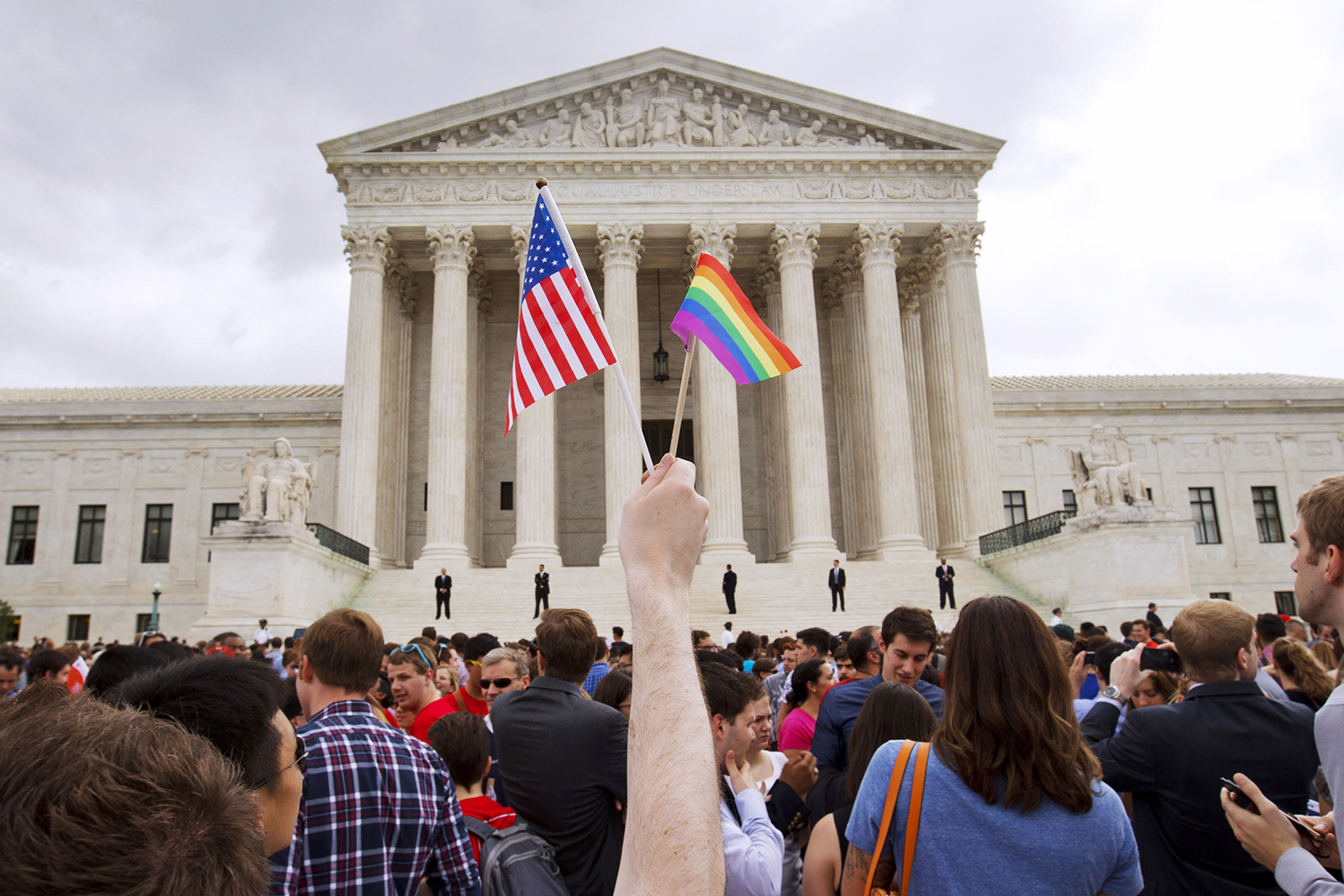
In this June 26, 2015, file photo, a man holds a U.S. flag and a pride flag outside the Supreme Court in Washington after the court legalized gay marriage nationwide. (AP Photo/Jacquelyn Martin, File)

Jack Jenkins
March 26, 2025

(RNS) — If you listened closely at a meeting of mostly evangelical Christian communicators, activists and lawyers that took place in Dallas in February, you could hear more than a few panel discussions and hallway conversations repeatedly circle back to the same topic: same-sex marriage.

Having helped to engineer the demise of Roe v. Wade after half a century of anti-abortion activism, attendees at the National Religious Broadcasters conference openly discussed plans to make shorter work of Obergefell v. Hodges, the landmark 2015 Supreme Court ruling that legalized same-sex marriage nationwide.

“Obergefell is on very shaky ground,” Mathew Staver, founder of the conservative Christian nonprofit legal group Liberty Counsel, which leaders describe as a ministry, told the audience of one panel at the conference. “It’s not a matter of, in my opinion, if it will eventually be overturned, but when it’ll be overturned.”

It’s a brazen claim critics and legal analysts have dismissed as unlikely in the short term. But conservative Christian advocates say they are emboldened by President Donald Trump’s election and the Supreme Court’s decision to overturn Roe v. Wade in 2022, and hope justices will eventually respond to a growing list of efforts to overturn Obergefell cropping up across the country.

Among them is the legal case surrounding Kentucky county clerk Kim Davis, who made headlines after Obergefell was decided when she refused to grant a marriage license to a same-sex couple, citing her conservative Christian faith. She has lost repeatedly in court and even spent time in jail for her defiance. But in July 2024, the Staver and the Liberty Counsel filed an appeal on her behalf arguing the Supreme Court overstepped in Obergefell, only to be denied in early March.


Micah Schwartzman. (Photo courtesy of UVA)

Staver has vowed to press on, but Micah Schwartzman, professor at University of Virginia Law School and director of the Karsh Center for Law and Democracy, said the prospects for a Davis victory remain thin.

“That case is going nowhere, as best I can tell,” Schwartzman told RNS.

While Justice Clarence Thomas left room in his concurring opinion in Dobbs v. Jackson Women’s Health Organization for the court to reconsider the Obergefell decision, no other justices joined him, and Justice Brett Kavanaugh declared in his own concurrence that “overruling Roe does not mean the overruling of those precedents, and does not threaten or cast doubt on those precedents,” referring specifically to Obergefell.

Support for same-sex marriage remains high among Americans, according to a 2024 report by Public Religion Research Institute, which showed that about 67% agreed it should be legal. Solid majorities of white mainline Protestants, white Catholics and Hispanic Catholics back same-sex marriage, as do high percentages of Jewish Americans (80%), Buddhists (82%) and religiously unaffiliated Americans (86%).

But Schwartzman said those who depend on or support LGBTQ rights still have reason to be concerned. “There are political constituencies that want to see Obergefell reversed, and they know that a majority of the justices, at least with respect to writing on a blank slate, objected to Obergefell and thought Obergefell was wrongly decided — including the chief justice, John Roberts, who dissented in Obergefell,” he said.

Lawsuits aren’t the only route to getting Obergfell back in front of the justices. Speaking on a panel to the religious broadcasters the day before Staver’s, Katy Faust, who founded the activist organization Them Before Us, suggested her group was focused on a legislative challenge.

“Just because gay marriage was legalized in 2015 that does not mean this is a dead issue,” she said. “We have to fight against it, because five Supreme Court justices do not determine whether or not children deserve, need or have a right to their own mother and father.”

In an interview, Faust pointed to legislative efforts intended to chip away at Obergefell that are already underway. Oklahoma state Sen. Dusty Deevers, a Calvinist Southern Baptist pastor who co-authored a 2023 statement in support of Christian nationalism that defined “marriage as the covenant union of a biological male and a biological female” as a core value, introduced two bills in January seen as targeting Obergefell.

The first, the “Covenant Marriage Act,” would create a $2,500 state tax credit for people who opted in to “covenant marriages” that are “based on the traditional understanding of marriage” and could only be dissolved “in cases of abuse, adultery, or abandonment.” The tax credit could be carried forward for up to five years.

The effect of the bill, Schwartzman said, would be to create “two classes of marriage, one that’s privileged and one that’s treated as second class or disadvantaged.”

In the last few months, similar bills have been introduced in Tennessee, Missouri and Texas. Versions of covenant marriage are already legal in Arizona, Arkansas and Louisiana, where House Speaker Mike Johnson married his wife in a covenant ceremony in 1999, according to The Associated Press. (Deever’s bill, which died in committee last month, appears to be unusual for its inclusion of a tax credit for covenant marriages.)

Less attention has been paid to another bill introduced by Deevers: the Promote Child Thriving Act, which creates a $500 annual state tax credit per child for a mother and father filing jointly and escalates to $1,000 if the child was born after the marriage of the parents.

Faust suggested Deevers’ bill appears patterned after a template produced by her group whose aim is to create a “competing track” that focuses on “biological connections between parents and child, and rewarding that family formation.”


Katy Faust. (Photo via Amazon)

“It takes the focus off of the adults and their relationship, and their own identification and romantic bonds, and puts it on to what marriage is and historically has been — which is an institution that is responsible for the procreation and raising of the next generation,” she said.

The legislation is not an end in itself. If the Promote Child Thriving Act or a bill like it is signed into law and faces a constitutional challenge, “that could create the kind of live issue that the justices could then rule on,” Faust said. Staver agreed the strategy “certainly has legs” and could constitute a “direct challenge” to Obergefell if passed.

Staver and Faust also pointed to a resolution passed in January by Idaho’s lower house asking the U.S. Supreme Court to reverse its 2015 ruling. The resolution, known as a memorial, argued the ruling misunderstands “liberty” to mean people should “seek dignity from the state” instead of God, and that the result causes “collateral damage” to other liberties “including religious liberty.”

In South Dakota, a seemingly identical resolution recently passed out of committee, while a North Dakota version passed that state’s House but failed to win approval in its Senate. A version in Montana was recently tabled by the state Senate, and another in Michigan is currently languishing in committee.

While Staver admitted the resolutions are largely symbolic — “If you filed suit against it, there’s no enforcement aspect to it,” he said — the movement “sets the tone” for other efforts.

Introduced by state Rep. Heather Scott, who has argued that the U.S. is a “Judeo-Christian based country” and sometimes described as “the Marjorie Taylor Greene of Idaho,” Idaho’s resolution also called Obergefell “illegitimate overreach” and asked the justices to restore the “natural definition of marriage, a union of one man and one woman.”

During debate, state Rep. Clint Hostetler repeatedly quoted the Bible, saying, “We could go hours and hours pointing to Bible verses in Scripture that validates the institution of marriage given by God and how it’s between a man and a woman.”

The tone has not been unified, however. Rep. Ilana Rubel, a Democrat representing Boise and the minority leader of the Idaho House, later fired back: “We talked about Scripture — we don’t legislate according to Scripture.”


(Photo by Jose Pablo Garcia/Unsplash/Creative Commons)

In many cases, locals, including one United Church of Christ pastor, have testified against the resolutions, objecting that they don’t represent all religious Americans or even all Christians. In South Dakota, Sioux Falls resident Christine Morgan told a committee hearing: “My church and many other churches are open, supportive and welcoming of LGBTQ+ couples. This feels like a very pointed attack from one specific subset of a large belief system.”

Schwartzman said the raw number of cases challenging same-sex marriage is more determinative than any individual effort. “One of the strategies that led to Dobbs was that states were willing to ping the court repeatedly to test whether the court’s commitment to Roe was sound,” he said. “It’s not just that there was one case that did it — there were many cases over many years asking the court to reconsider its earlier decision.”

According to Schwartzman, the combined activism he’s seen so far resembles the “early stages” of the campaign to overturn Roe v. Wade. Their success “doesn’t turn on whether any of those particular efforts win or lose,” Schwartzman said. Instead, “it turns on whether they gain momentum and show that they have sufficient public support to give the justices enough reason to reconsider the earlier decision.”

Overturning Roe, of course, took decades. Yet Staver and his allies insist they’re working on a shorter timeline. Asked when he thinks Obergefell will be reversed, Staver initially said “within my lifetime” before clarifying he had an even smaller window in mind.

“Within the next four years,” he said. “I think we’re close. We just need the right case.”
From ancient emperors to modern presidents, leaders have used libraries to cement their legacies

(The Conversation) — Several libraries in the ancient world blended learning and books with memorials to their sponsors.


The Library of Celsus was a famous landmark in its time – and today. 


Myrsini Mamoli
March 27, 2025

(The Conversation) — Here in Atlanta, the Jimmy Carter Presidential Library and Museum has been part of my daily life for years. Parks and trails surrounding the center connect my neighborhood to the Martin Luther King Jr. National Historical Park downtown and everything in between.

At the end of December 2024, thousands of people walked to the library to pay their respects to the former president as he lay in repose. The cold, snow and darkness of the evening were a stark contrast to the warmth of the volunteers who welcomed us in. Our visit spiraled through galleries exhibiting records of Carter’s life, achievements and lifelong work promoting democracy around the world.

U.S. presidents have been building libraries for more than 100 years, starting with Rutherford B. Hayes. But the urge to shape one’s legacy by building a library runs much deeper. As a scholar of libraries in the Greek and Roman world, I was struck by the similarities between presidential and ancient libraries – some of which were explicitly designed to honor deceased sponsors and played a significant role in their cities.

Trajan’s library

The Ulpian Library, a great library in the center of Rome, was founded by Emperor Trajan, who ruled around the turn of the second century C.E. Referenced often by ancient authors, it could have been the first such memorial library.


Trajan’s Column now stands at the center of Rome.
AP Photo/Pier Paolo Cito

Today, someone visiting Rome can visit Trajan’s Column, a roughly 100-foot monument to his military and engineering achievements after conquering Dacia, part of present-day Romania. A frieze spirals from bottom to top of the column, depicting his exploits. The monument now stands on its own. Originally, however, it was nestled in a courtyard between two halls of the Ulpian Library complex.

Most of what scholars know about the library’s architecture comes from remains of the west hall, an elongated room almost 80 feet long, whose walls were lined with rectangular niches and framed by a colonnade. The niches were lined with marble and appear to have had doors; this is where the books would have been placed. Writers from the first few centuries C.E. describe the library having archival documents about the emperor and the empire, including books made of linen and books bound with ivory.

Trajan dedicated the column in 113 C.E. but died four years later, before the library was complete. Hadrian, his adoptive son and successor, oversaw the shipment of Trajan’s cremated remains back to Rome, where they were placed in Trajan’s Column. Hadrian completed the surrounding library complex in 128 C.E. and dedicated it with two identical funerary inscriptions to his adopted parents, Trajan and Plotina. Scholars Roberto Egidi and Silvia Orlandi have argued that Trajan’s remains could later have been transferred from the column into the library hall.
Memorial model

Either way, I would argue that Trajan’s decision to have his remains included in the library complex, instead of in an imperial mausoleum, established a model adopted by other officials at a smaller scale. In the eastern side of the Roman empire – what is now Turkey – at least two other library-mausoleum buildings have been identified.

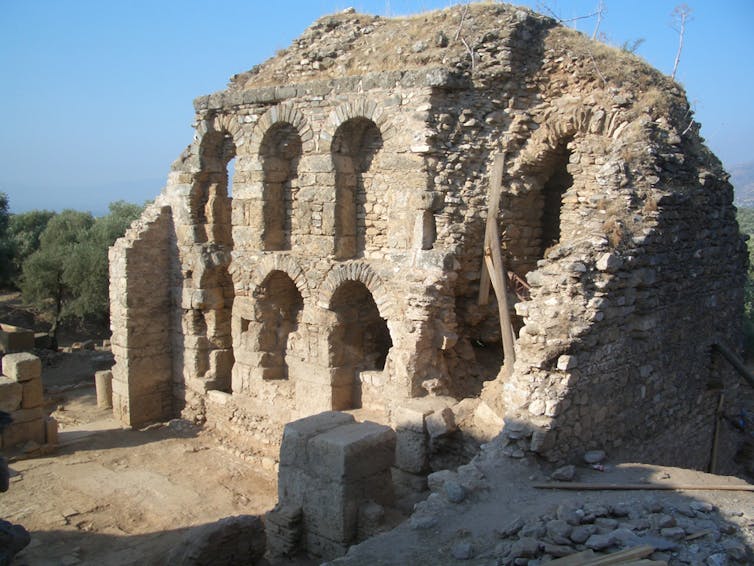
One is the library at Nysa on the Maeander, a Hellenistic city named for the nearby river. Under the floor of its entry porch is a sarcophagus with the remains of a man and a woman, possibly the dedicators, that dates to the second century C.E., the time of Hadrian’s reign.


The ruins of the library at Nysa on the Maeander.
Myrsini Mamoli

Another is the Library of Celsus, the most recognizable ancient library today, found in the ancient city of Ephesus. Named after a regional Roman consul and proconsul during the reign of Trajan, the building was founded by Celsus’ son, designed as both a place of learning and a mausoleum.

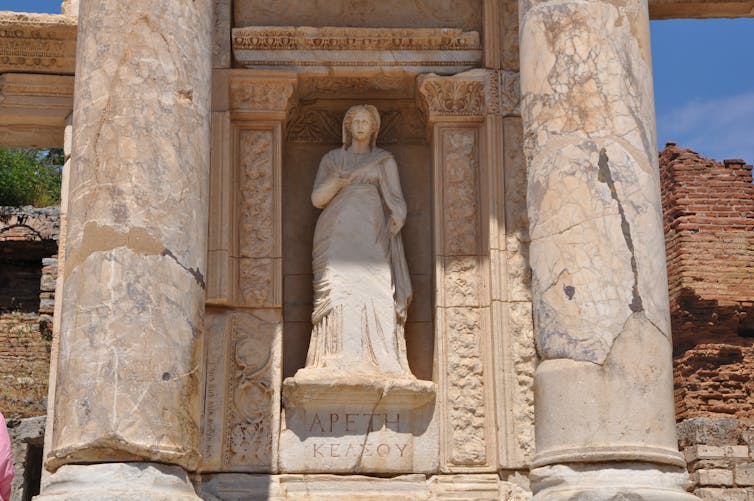
The library’s ornate, sculpted facade contained life-size female statues, making it an immediately recognizable landmark. Inscriptions identify the statues as the personifications of Celsus’ character, elevating him into a role model: virtue, intelligence, knowledge and wisdom.

Upon entering the room, the funerary character of the library became quite literal. The hall was designed like the Ulpian Library, but a door gave access to a crypt underneath. This held the marble sarcophagus with the remains of Celsus, the patron of the library. The sarcophagus itself was visible from the hall, if one stood in front of the central apse and looked down through two slits in the podium.

An endowment covered the library’s operational expenses in ancient times, as well as annual commemorations on Celsus’ birthday, including the wreathing of the busts and statues and the purchasing of additional books.

The life-size statues on the facade of the Library of Celsus.
Myrsini Mamoli


Power and knowledge

These two provincial libraries highlight how sponsors hoped to be associated with the virtues a library fosters. Books represent knowledge, and by dedicating a library, one asserted his possession of it. Providing access to learning was an instrument of power on its own.

Beyond the handful of memorial libraries, many other ancient Roman public libraries were great cultural centers, including the Forum of Peace in Rome, dedicated by Emperor Vespasian; the Library of Hadrian in Athens; and the Gymnasium in Side, a city in present-day Turkey.

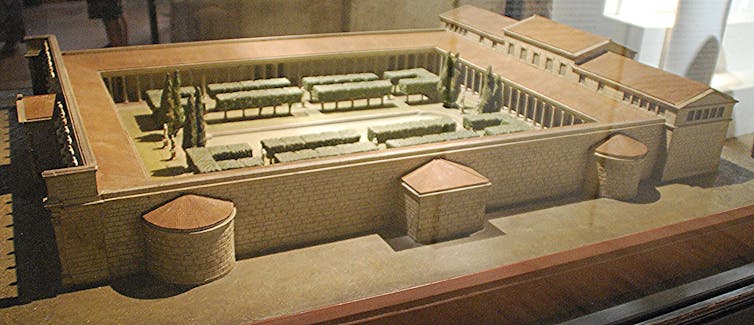
The most magnificent libraries combined access to manuscripts and artworks with spaces for meetings and lectures. Several had great leisure areas, including landscaped sculptural gardens with elaborate water features and colonnaded walkways. Literary sources and material evidence testify to the treasures that were held there: busts of philosophers, poets and other accomplished literary figures; statues of gods, heroes and emperors; treasures confiscated as spoils of war and exhibited in Rome.


A model of how Hadrian’s Library may have looked, complete with a landscaped courtyard.
Joris/Wikimedia Commons, CC BY-SA

Like the Ulpian Library itself, they continued the long tradition of Hellenistic public libraries, established by the most famous library of antiquity: the Library of Alexandria. Founded and lavishly endowed by the Hellenistic kings of Egypt, the Ptolemies, the building was meant to portray the king as a patron of intellectual activities and a powerful ruler, collecting knowledge from conquered civilizations.

In ancient Greece and Rome, anybody who could read had access to public libraries. Rules of use varied: For example, literary sources imply that the Ulpian Library in Rome was a borrowing library, whereas an inscription from the Library of Pantainos in Athens explicitly forbid any book to be taken out.

But these buildings were also meant to shape their sponsors’ legacies, portraying them as benevolent and learned. Presidential libraries in the United States today follow the same principle: They become monuments to the former presidents, while giving back to their local communities.

(Myrsini Mamoli, Lecturer of Architecture, Georgia Institute of Technology. The views expressed in this commentary do not necessarily reflect those of Religion News Service.)


The Conversation religion coverage receives support through the AP’s collaboration with The Conversation US, with funding from Lilly Endowment Inc. The Conversation is solely responsible for this content.
Opinion

A springtime for moral courage

(RNS) — There are countless actions we can take to uphold our democracy.


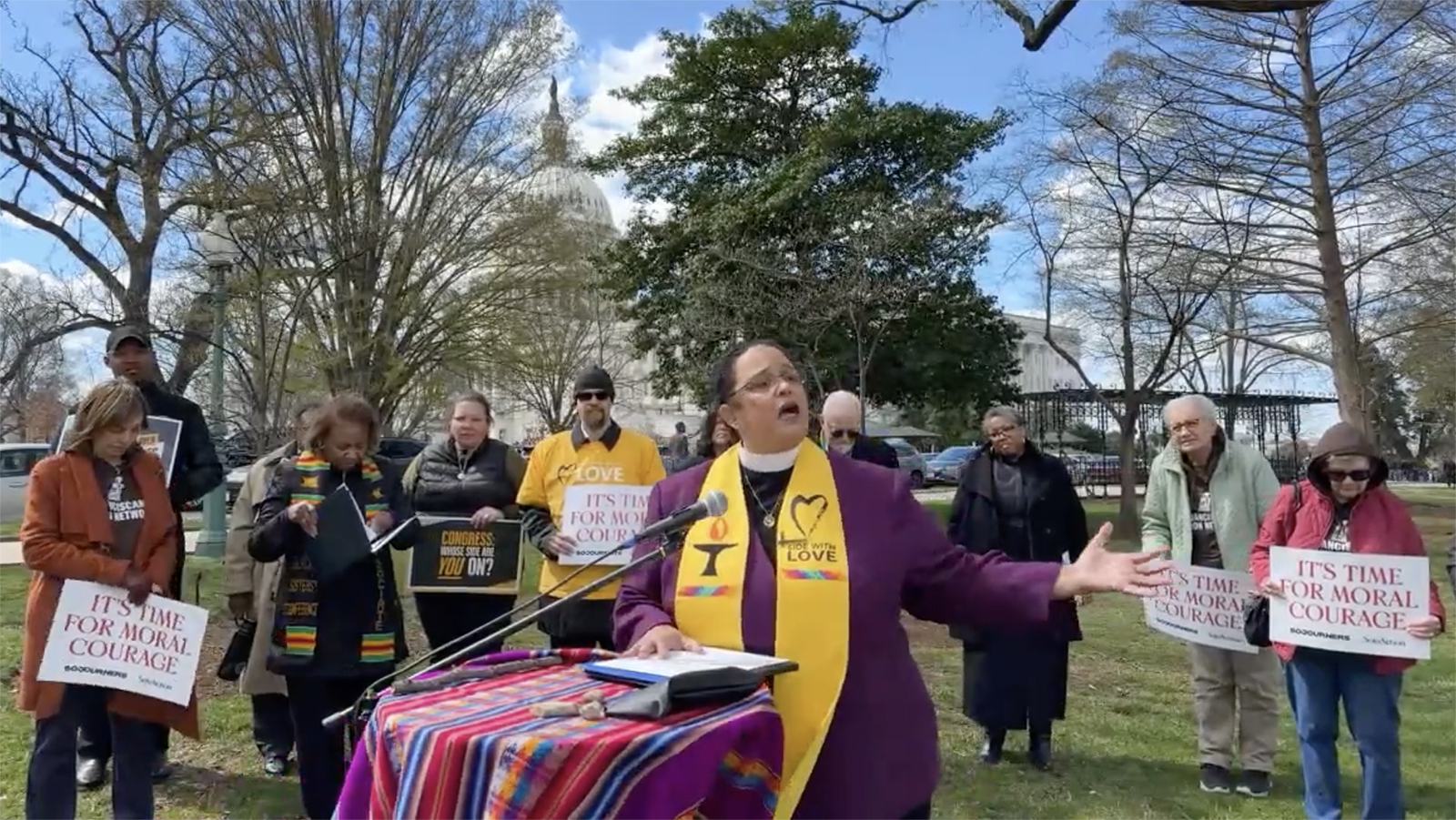
The Rev. Sofía Betancourt addresses an interfaith “Faithful Witness Wednesdays” vigil near the U.S. Capitol, March 26, 2025, in Washington.
(Video screen grab)


Bridget Moix
March 27, 2025


(RNS) — As Christians mark Lent, Muslims mark Ramadan and Jews mark Passover, leaders from numerous faith traditions are gathering each week in front of the Capitol. They are calling on Congress to show moral courage and act in the face of growing authoritarianism and devastating attacks on our democracy.

These spring vigils, “Faithful Witness Wednesdays,” provide opportunities for people of faith to speak out and stand up while too many remain silent. They are a time for conservative, progressive and mainstream religious leaders to raise a common call for all congressional leaders to follow the Constitution and their conscience above any president or party allegiance.

The resounding vigil chant directed toward Congress each week is simple: “What time is it?” asks Sojourners’ the Rev. Adam Taylor. “Time for moral courage,” we all chant back.

Chanting it can be easier than practicing it.

As each day brings a new “shock and awe” tactic from President Donald Trump and Elon Musk, our own moral courage is being tested. My spirit feels battered from the immense harm and devastation wrought over just two months. The administration’s self-proclaimed strategy of overwhelming any opposition to its agenda with a relentless onslaught of radical actions can feel like it is working.

My sister admitted to me recently that many of her friends are simply too paralyzed by fear and horror to be politically active right now. It’s understandable.

Countless lives and livelihoods are being lost by reckless, ignorant cuts to vital funding at home and abroad. Migrants are being dehumanized, identities erased and students deported. Decades of work making our country and communities safer, healthier and more educated are being destroyed by the sweep of the president’s pen and the whoosh of mass emails from Musk’s Department of Government Efficiency team.


President Donald Trump speaks as he is joined by Elon Musk in the Oval Office at the White House, Feb. 11, 2025, in Washington. (AP Photo/Alex Brandon)

While the courts are beginning to push back, many are asking: Where is Congress? Some are standing up. But far too few of our legislators are showing the kind of moral courage their constituents and our country need from them right now. The Constitution balances federal powers across the three co-equal branches of government for a reason: to prevent the very abuses we are currently witnessing.

Court challenges to some of the worst edicts — such as trying to leverage the 1798 Alien Enemies Act to deport people without any due process — will, hopefully, prevail. An anticipated travel ban affecting many Muslim-majority countries should likewise be challenged. But Congress must begin acting like an independent branch representing the American people in all our diversity. This is no time to pander to a president intent on dismantling our democracy or strike a devil’s compromise for political gain. This is the time to stand up, speak out and use the powers given to Congress to prevent further abuse.

Luckily, moral courage is contagious. And we are beginning to see it spread. More judges are issuing orders to stop illegal actions. Some in Congress are beginning to speak out more often, and more openly. The State Department’s dissent channel has been used by more than 700 officials and counting. Likewise, people power is gearing up.

Last week, as I walked to the Faithful Witness Wednesday vigil, I found myself weaving through large groups converging on Capitol Hill from various directions, heading into congressional offices or setting up their own rallies. Entrance lines wrapped around sidewalks as more people than I had ever witnessed in my 30 years in Washington sought to meet their Congress members.

While the first Trump administration saw mass street protests, the strategies this time are focused on advocacy and moving Congress to do its job.

As our faith vigil started, nurses exited buses intent on saving Medicaid while music fired up a crowd at an event to protect LGBTQ+ rights. The next day, young children, families and teachers from D.C. public schools showed up with crayons and art supplies to deliver signs urging Congress not to cut their education. The energy was infectious, and it reminded me of the late Rep. John Lewis, who said: “Democracy is not a state. It is an act.”

There are countless actions we can take to uphold our democracy. Emails, letters, phone calls and visits to Congress help keep our representatives accountable. We need to encourage them to stand up, speak out and do more. Gathering with our neighbors for town halls, advocacy actions and vigils helps open space for us to build more power together. Rest, joy, humor and time with loved ones are also vital forms of resistance that will build our resilience for the journey ahead.

In the face of tyranny, every act of democratic participation is an act of moral courage, and every one of us can be a part of the change we need. So, what time is it? Time for moral courage.

(Bridget Moix is general secretary of the Friends Committee on National Legislation and its associated Quaker hospitality center, Friends Place on Capitol Hill. The views expressed in this commentary do not necessarily reflect those of RNS.)
What ‘The White Lotus’ gets wrong about the meaning and goals of common Buddhist practices

(The Conversation) — A scholar of Buddhism explains authentic ways to engage deeply with the tradition, ranging from short meditation retreats to full ordination as a monastic.


Thai men can be ordained from a few days to the rest of their lives. (Pakin Songmor/Moment via Getty Images)


Brooke Schedneck
March 28, 2025

(The Conversation) — The new season of “The White Lotus” is set on a luxury resort on the Thai island of Koh Samui. This comedy-drama series, which critiques wealthy tourists, focuses one plotline on foreigners who arrive in Thailand with an interest in engaging with its Buddhist traditions.

It depicts a young American woman who is interested in joining a yearlong meditation program at a Buddhist temple, even though Thai temples do not offer such programs. It also portrays a temple environment with many foreigners staying there long term, not dressed in typical clothing for residents of a temple – unusual in Thailand – and inaccurately describes the Buddhist view of the afterlife.

I have studied Buddhism in Thailand for over a decade, including the diverse ways in which Thai Buddhists practice their religion. While the Thai Buddhism depicted in The White Lotus is not completely realistic, there are several authentic ways to engage deeply with Buddhism, ranging from offering donations to short meditation retreats to ordination as a monastic.

Generosity and Buddhist laity


Without donations, Buddhist temples and monastic institutions could not exist.

The lay community provides for monks and temples, in exchange for the spiritual currency of merit, which is believed to turn into good karma. This good karma is believed to produce favorable conditions in this life and the next life, such as attaining wealth or being reborn into a privileged family.

Some laypeople might give food to monks as they walk on their alms rounds every morning, while others may visit the temple only on most Buddhist holidays. The main intention behind interacting with a monk or visiting a temple is to make merit. Each temple has donation boxes for specific funds it needs, such as paying the electricity bill, completing renovation projects, providing education for young monks and funding the monastic community’s health care.

People can take home blessed objects such as a lucky candle or small amulet in exchange for a small donation. In some temples, a monk’s duty is to sit inside one of the main halls and wait until the laity comes to receive offerings and give blessings.
Meditation retreats

Participants in the 21-day program aim to reach the first of the four stages of enlightenment within Thai Theravada Buddhism. Buddhists believe that those who attain the first stage have “entered the stream” of enlightenment and are guaranteed to attain it within seven lifetimes.

Contrary to popular Western beliefs about Buddhist meditation, it is not viewed as a secular practice. Thai Buddhists believe that meditation is a meritorious activity, helping them not only to ultimately leave the cycle of rebirth but also to accumulate merit and good karma along the way – in this life and future ones.

At a meditation center, every moment is spent in mindfulness of every action, along with periods of formal walking or sitting meditation. All meditation centers have a structured program and schedule that practitioners, typically dressed in white pants and top, must follow individually or in group periods of meditation.

Ordination of men and women


Ordination is an important part of the Buddhist life course. Thai Buddhists often enter a monastery for a short period of time, temporarily being ordained as a monk or nun. Even for those who intended to enter for life but choose to leave the monastic life, the process is simple; it usually carries no shame or disappointment. However, if a monk was well known for his teaching, his followers would likely feel upset.

In Theravada Buddhism, the kind of Buddhism practiced in Thailand, there are two levels of ordination: novice and full “bhikkhu” – the term for a fully ordained male. Males under the age of 20 may pursue only novice ordination, while those over 20 can become fully ordained monks.

It is often considered a rite of passage, or at least a sign of discipline and maturity, for a male to have been ordained at some point in his life. Temporary ordination is seen as a way for men to make merit for their parents, especially their mothers, who sacrificed so much for their existence.

Women are generally not allowed to be ordained in Thai Buddhism, but some have received ordination in Sri Lanka, where they are allowed to be monks, and set up communities in Thailand, which are gaining in popularity. These female monastic practice centers have initiated temporary ordination programs for female monks, or “bhikkhuni.”

These centers host special programs once or twice a year, where up to 100 women, including international visitors, can ordain as novice female monks for a short period. During this time, they learn what it is like to wear the robes, receive offerings and study the Buddhist texts.

Many women find this opportunity meaningful because they can offer merit to their parents, which was previously only available to a male.


Thai women fighting to be ordained.

Women can also ordain temporarily or long term as a “mae chi” in Thailand, or a precept nun. They usually follow Eight Precepts, including celibacy, wearing white robes and shaving their head. Although more accepted today in Thailand as a role for Buddhist women than bhikkhuni, this category of ordination was not initiated by the Buddha. Precept nuns are believed to have existed for centuries, but without a clear origin.

These are some common ways in which Thai Buddhists practice Buddhism, often with the goal of achieving prosperity in this life and a better rebirth. Such practices, Buddhists believe, may also get them closer to the ultimate aspiration of enlightenment.

(Brooke Schedneck, Associate Professor of Religious Studies, Rhodes College. The views expressed in this commentary do not necessarily reflect those of Religion News Service.)


The Conversation religion coverage receives support through the AP’s collaboration with The Conversation US, with funding from Lilly Endowment Inc. The Conversation is solely responsible for this content.

Pope Francis' plans to reform the church are alive and well
(RNS) — It was a close call, but Francis’ emergence from Gemelli Hospital ensures that implementation of the Synod on Synodality's goals will outlast him.

Pope Francis leaves the Agostino Gemelli Polyclinic in Rome, Sunday, March 23, 2025, where he was admitted on Feb. 14 for bilateral pneumonia. (AP Photo/Marco Ravagli)
Phyllis Zagano
March 28, 2025

(RNS) — Just when it looked like the anti-Francis forces would have their chance to “fix” the Catholic Church, Pope Francis left Gemelli Hospital. It was a close call, but Francis’ reforms will outlast him.

That includes his major reform, the Synod on Synodality, the worldwide program of prayer and conversation about how the church can live its mission going forward. Over the past three years, hundreds of thousands of Catholics have spent countless hours in their parishes, dioceses, religious orders, schools and other organizations talking about church — what it is, what it means, how best to spread the gospel.

Hundreds of thousands of others did not. That is, too many bishops and pastors thought the exercise a waste of time and either paid lip service or ignored it completely. They know who they are, and so does everyone else.

Now their media proxies say the synod’s next phase is worse.

Why? Could it be that the pope’s synodal vision works?

Just when the most conservative Catholics thought all this talking would end, and when certain clerics thought the church would be able to return to a more sensible (and efficient) methodology of pray-pay-obey, Francis has announced a three-year implementation phase of synodality leading up to a final “ecclesial assembly” in October 2028.

This is in keeping with the synod’s October 2024 final document that called for the kind of participation that strikes at the heart of clericalism and all its trappings. Synodality, it held, is central to the church’s mission, which means greater lay participation. Pastoral councils should be mandatory. Seminary formation needs a close examination. Oh, and let’s talk a little more about women in ministry


Participants attend a session of the 16th General Assembly of the Synod of Bishops at the Paul VI Hall at the Vatican, Oct. 7, 2024. (AP Photo/Andrew Medichini)

Needless to say, there were a lot of clerics wringing their cinctures over all that.

Over at Eternal Word Television Network, the Rev. Gerald Murray, a New York pastor, decried the entire event. On a network that reaches some 435 million households in more than 160 countries, Murray complained that this time around there will be too many non-bishops in the mix. In an accompanying analysis in his column on “The Catholic Thing,” he notes correctly, “The Ecclesial Assembly will more or less mirror the demographics of the Ecclesia (Church) in which the clergy, let alone the bishops, make up a tiny fraction of the number of baptized Catholics.”

Is letting non-bishops see what is behind the curtain such a bad thing?

Despite the specter of — heaven forfend — Protestantism that Murray warns of, there has not been, nor can there be, any attack on magisterial Catholic teaching resulting from the synod or its ongoing applications. No one is recommending a vote on the Trinity. Folks are only sitting with bishops trying to make the church better.

Requiring pastoral councils is a great start; requiring they be consulted would be even better. That means oversight, transparency, accountability.

A closer look at seminary programs could eventuate in better formed priests, who are not infected with the sort of clericalism that turns people away.

And recognizing the need to restore women to formal ordained ministry as deacons does not endanger any doctrine.

The blueprints for the next three synodal years are due in a few months. Whether Francis or someone else will lead the effort remains to be seen. But it cannot be stopped.