Wednesday, May 21, 2025

MAY 18
International Museum Day:
Discover Europe’s most eccentric museums

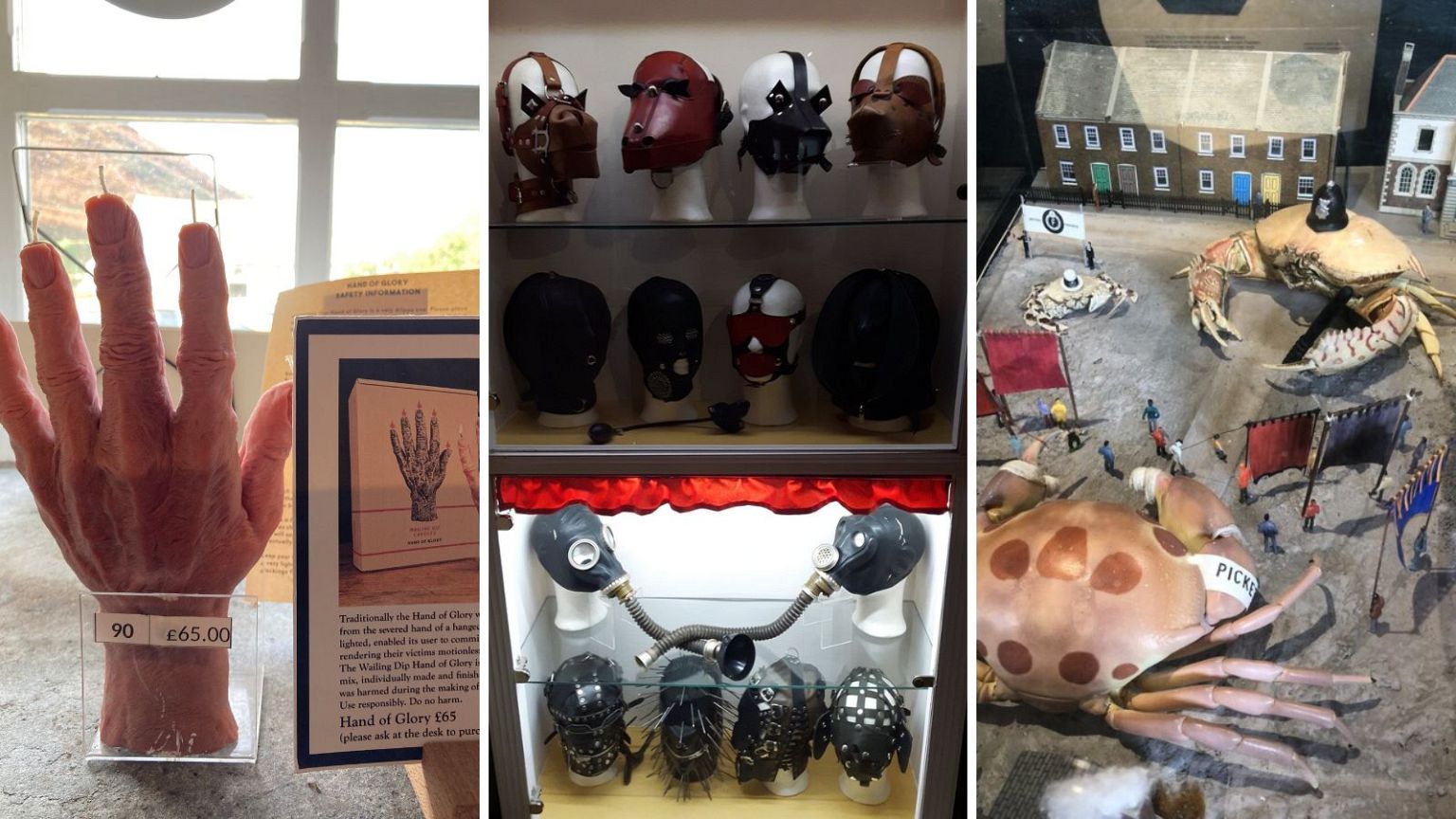
Witchcraft, sex machines and crabs... If you’re looking to get off the beaten track when it comes to museums, Europe has plenty of quirky alternatives. On International Museum Day, Euronews Culture selects six unique galleries that offer eccentric replacements to the traditional museum experience.


Copyright Museum of Witchcraft and Magic - David Mouriquand - Jon Agar (Flickr)

By David Mouriquand, Amber Bryce, Theo Farrant
Published on 18/05/2025

Had enough of the classic style museums? Looking for something stranger and altogether more eccentric during your next city break? We’ve got your covered.

Europe houses some big hitters when it comes to museums, but there are some terrifically quirky ones too. From the London’s God’s Own Junkyard to Zagreb’s Museum of Broken Relationships, via Barcelona’s controversial new Museum of Forbidden Art, there’s no shortage of excellent alternatives.

Euronews Culture writers Amber Bryce, David Mouriquand and Theo Farrant share their top picks for the museums you may not have heard of... but should definitely make a priority.

Museum of Witchcraft and Magic (Cornwall, UK)
Museum of Witchcraft and MagicMuseum of Witchcraft and Magic

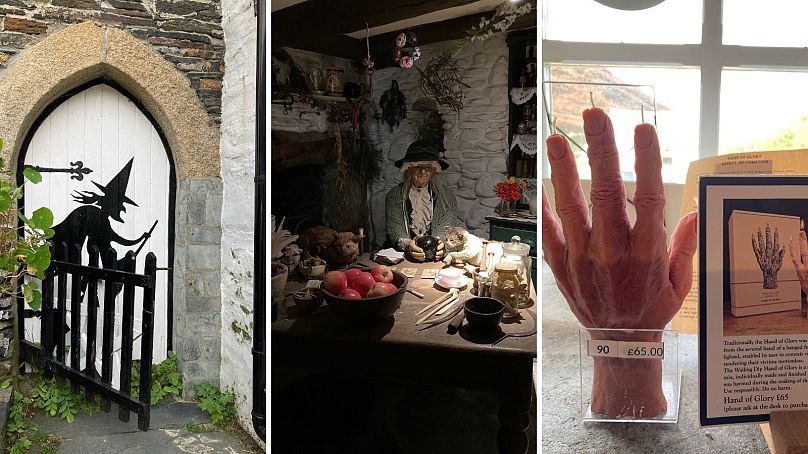
Boscastle Harbour is a scenic haven of cottage inns and ceramic shops — but nestled amongst it all is something even more bewitching: A museum containing cursed dolls, dismembered hands and phallic stones.

The folkloric artefacts on display were collected by Cecil Williamson, a fascinating man who founded the Witchcraft Research Center in 1947 after being hired by MI6 to investigate the Nazis’ potential occult influences. He moved the Museum of Witchcraft and Magic to its current location in 1960, saying: “In this quiet corner of England there is a strange feeling that we are not alone and that the shades of persons passed on and over into the world of spirit are very close.”

Indeed, the ghosts of the past feel ever present as you peruse the crystal balls, scrying mirrors and moon-shaped talismans; relics of human imagination that sought to bridge the physical and spiritual worlds. There are also cats, cauldrons and cocks made from rocks in a box — alongside much darker displays, including a rusted weighing chair once used in witch trials.

It’s a creepy yet oddly cosy little place, filled with magic and morbidity. But if that’s not enough encouragement to hop on your broomstick for a trip, there’s also an excellent gift shop where you can buy such delights as a Hand of Glory wax candle — once made from the pickled hands of hanged men. Just don’t go getting any ideas about knitting voodoo dolls. 
AB

Icelandic Phallological Museum (Reykjavík, Iceland)
Icelandic Phallological Museum Icelandic Phallological Museum

The pocket rocket. The Dallas dangler. The one-eyed monster. The bald Avenger. Long Dong Silver. Lady Gaga’s disco stick.

There are countless ways to refer to a penis. Those who aren't able to come to terms with the fact sex organs are a common occurance - as well as the cornerstone of most jokes - and prefer to remain sclerosed in their prudishness instead need not apply for a ticket to The Icelandic Phallological Museum in Reykjavík.

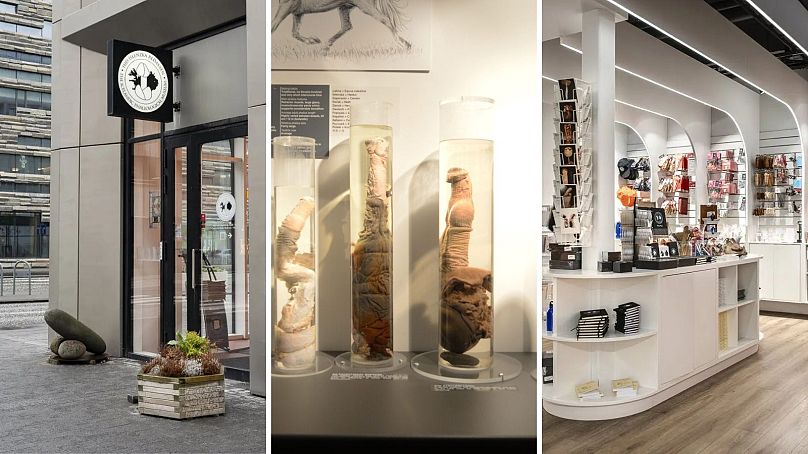
This family-owned cultural institution is the world’s only museum dedicated to phallology and proudly displays an extensive collection of penis specimens – from human to mammal.

Some are miniscule. Others, more on the mammoth end of the size chart.

It began as a personal collection of the founder, Sigurður Hjartarson, who was given a bull penis as a joke by his teaching staff when he worked as a headmaster. Sigurður ran with it and over the course of more than 40 years, has added to his now massive collection. Detailed descriptions accompany each specimen, providing scientific information and historical context – in case you thought it was just going to be about giggling at cocks.

Once you’ve marveled at the hanging mirror-balled willy, you can feast your eyes on exhibits which include the penises of whales, seals, reindeer, foxes, and even phallological information about elves and mermen for those who are fond of folklore. Or just curious about that sort of thing. No one’s judging.

Whatever you do, don’t leave before swinging by the gift shop, which is brilliantly curated and offers a wide variety of unique souvenirs – including educational books, for those still not convinced this is a tasteful cultural excursion. Speaking of which, don’t forget to head to the on-site Phallic Café & Bistro, which has some one-of-a-kind snacks ranging from delicious bananas and caramel delights to penis-shaped waffles covered in wild reindeer meat. You may want to wash that last one down with a phallic-themed beer.

And if schwing-schwongs aren’t your bag, you can always go to the picturesque fishing village of Bildudalur in the Westfjords to visit the Icelandic Museum of Sea Monsters, which is also great fun. It’s housed within a 19th-century former herring factory, and we can guarantee that there isn’t much focus on the genitalia of mythical creatures there. Shame, really. 
DM


Crab Museum (Margate, UK)
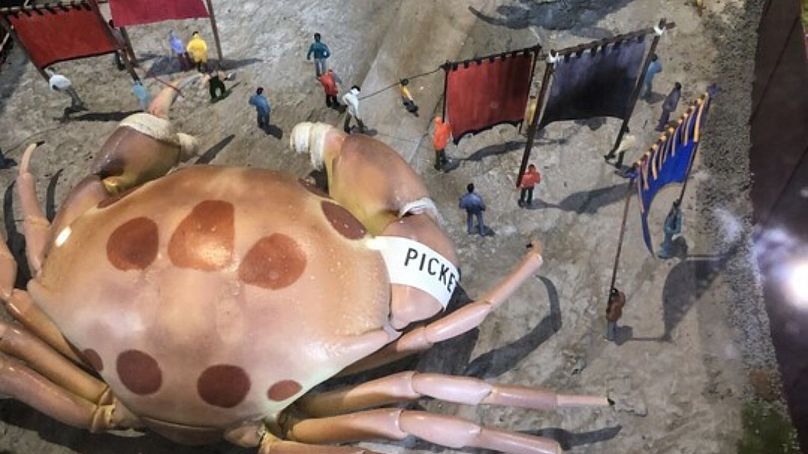
Crab Museum Jon Agar (Flickr)

In 1862, Margate fisherman Thomas Gaskell made the catch of a lifetime: a giant, two-and-a-half metre crab. Instead of selling it, he took it home, where it reportedly dined on chopped eels and showed a curious fascination with human life. But the peaceful cohabitation didn’t last...

What followed was a grim tale of angry mobs, travelling freak shows, and the mysterious death of a drunken circus master.

This extraordinary story is just one of many told at Margate’s Crab Museum - Europe’s first and only museum dedicated to the decapod. Founded in 2021 by three friends in their twenties, the free, eccentric space, located in a former pie factory, turns the seemingly humble crab into a surprising gateway to big ideas: biodiversity, capitalism, colonialism, climate change, trans rights and everything in between.

Inside, you’ll find playfully curated exhibits on crab evolution, weird crustacean mating rituals, and the global history of humans eating, worshipping, and mythologising crabs.

Standout displays include the ‘Crabton-on-Tyne’ diorama - a miniature Marxist melodrama village starring crabs in flat caps, engaged in a crustacean class struggle in 1926 England, as well as the enormous claw said to have belonged to Gaskell’s legendary (and possibly murderous) crab companion. It’s weird, it’s wonderful and well worth a visit if you’re ever visiting the seaside town. 
TF


Museum of the Holy Souls in Purgatory (Rome, Italy)
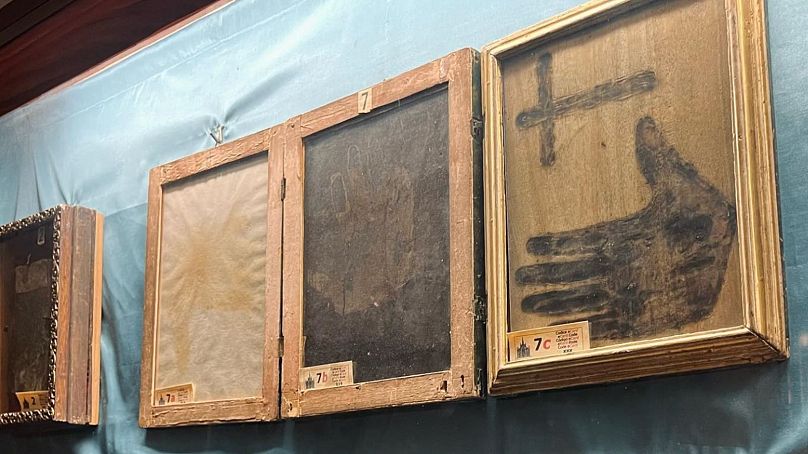
Museum of the Holy Souls in Purgatory Instagram/@lauquinn

According to Catholicism, purgatory is a limbo state for souls in the afterlife that are awaiting purification before they can enter heaven. Not exactly a pleasant-sounding experience — but an alluringly spooky one for a museum.

Although small in scope, the Museum of the Holy Souls in Purgatory is abundant in unsettling vibes. It was founded by a priest named Victor Jouët after a fire broke out in a chapel in 1897, during which he claimed to have seen a tortured face singed on the wall. Believing this to be a symbol of a soul crying out from purgatory, Jouët travelled the continent in search of more artefacts from the afterlife (everyone needs a hobby.)

His collection remains housed in a room opposite the Neo-Gothic Chiesa del Sacro Cuore del Suffragio, and includes scorched imprints on fabric, books and wooden tablets, along with a reproduced image of the original ‘suffering face’ that kickstarted Jouët’s mission.

While macabre in tone, it’s a hidden gem for the spiritually curious that captures the eerie ambience of Rome’s religious past. And sometimes that’s all you’re really looking for in a museum — an off-kilter feeling, or fleeting insight into the eccentricities of its curator. Besides, whether you believe in it all or not, seeing a burnt handprint on a Bible is just damn creepy — visitors’ souls may need to be purified with gelato afterwards.
 AB


The Sex Machines Museum (Prague, Czech Republic)
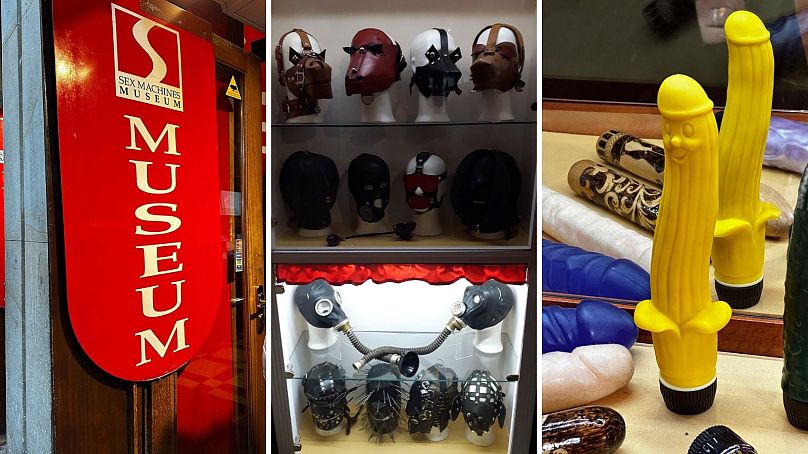
The Sex Machines Museum
David Mouriquand - The Sex Machines Museum

Prague boasts some terrific galleries which celebrate odd and eccentric things. The Museum of Alchemy, the Book Tunnel at the Municipal Library... And then there’s the Sex Machines Museum (SMM).

Established in 2002 and located in the heart of the gorgeous Old Town, this unique three-story attraction is the only sex museum in the world solely dedicated to sex machines.

The official website of the Sex Machines Museum describes itself as "an exposition of mechanical erotic appliances, the purpose of which is to bring pleasure and allow extraordinary and unusual positions during intercourse."

Indeed, SMM showcases a wide range of historical and contemporary devices related to human sexuality – always with an educational spin to better provide an in-depth look at the evolution of sexual aids through the ages, as well as the diverse perceptions of sexuality across cultures. Some of the gadgets are even accompanied by flexible dummies – just in case your virginal mind can’t wrap itself around the mechanics of certain machines and their... appplication.

From 16th-century body harnesses and finger spikes to “copulation tables” and 1920s anti-masturbation appliances, all the way to dildos and the modern vibrator, this is a pretty eye-opening experience. But it’s far from gimmicky, as it shows to what extent humanity has always been incredibly (sometimes terrifyingly) creative when it comes to sex – something which can not only be seen with the various appliances on display, but also in the art gallery and the small theatre which screens some of the world’s earliest pornographic films.

Obviously, the museum is only for those 18 and over, and while it was controversial when it opened - with city officials criticising it - SMM has always been a (historically valuable, we promise) hit among tourists. So, why resist? 
DM


KattenKabinet (Amsterdam, Netherlands)
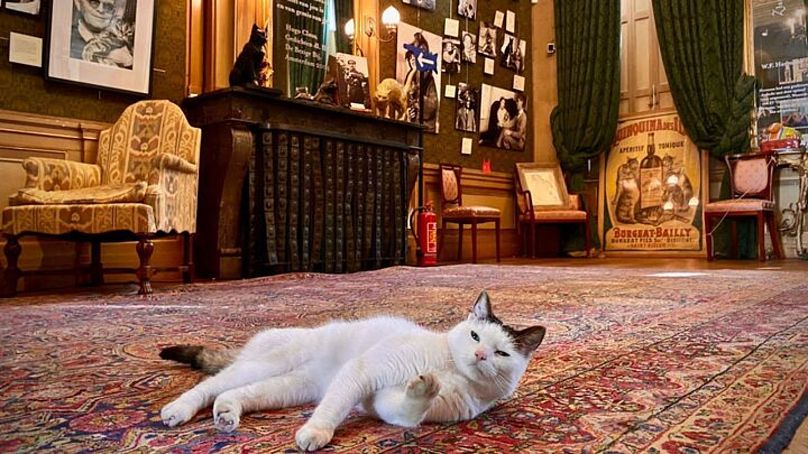
KattenKabinetfotorené (Flickr)

If the aforementioned crabs aren't quite your thing, how about cats?

Tucked away in a charming 17th-century canal house in Amsterdam, the KattenKabinet (Cat Cabinet) is a one-of-a-kind museum entirely devoted to the artistic celebration of our feline overlords.

Inside, you’ll find an eclectic and impressively curated collection of cat-inspired art: paintings, sketches, sculptures, rare artefacts, and even a mummified Egyptian cat from around 200 BC. Works by art powerhouses like Picasso, Rembrandt, Toulouse-Lautrec, Corneille, Sal Meijer, and Théophile Steinlen proudly take their place. One wall showcases a gallery of iconic artists, writers, and movie stars pictured with their feline companions. Audrey Hepburn is snapped alongside Orangey (one of the few cats to win an acting award, for Breakfast at Tiffany’s), Salvador Dalí poses with his pet ocelot Babou, and Andy Warhol’s legendary 25 cats - all named Sam - also grace the display.

But the museum's origin story is as heartwarming as its collection is unique. The KattenKabinet was founded in 1990, in memory of J.P. Morgan - not the banker, but a beloved ginger tomcat who passed away in 1983. His grieving owner, Dutch businessman Bob Meijer, began collecting cat-related art as a way of coping with the loss. The collection grew so large that it eventually transformed into the museum we see today.

And if you're lucky, you might bump into one of the museum's resident cats, who lounge about like living exhibits. Come for the art, stay for the purring kitties. 
TF
How the pontificate of Pope Leo XIV could influence the world economy

The first US pontiff in the Catholic Church's history has spoken about his namesake Pope Leo XIII's social policies, economics, and theological doctrines, which opened the Church to modernity in the late 19th century.


Copyright Domenico Stinellis/Copyright 2025 The AP. All rights reserved

By Sergio Cantone
Published on 18/05/2025 

Numerous world leaders and more than 250,000 people  attended this Sunday's inauguration ceremony of Pope Leo XIV, the first US supreme pontiff in the history of the Catholic Church.

The new Leonine era will begin, officially bringing to a close the pontificate of Pope Francis.

Thanks to his choice of pontifical name and his mathematical and legal training, Pope Leo XIV has awakened hope and curiosity among the faithful and the more secular world about the influence the Catholic Church could exert on the economic world during his pontificate.

For many observers and experts on Vatican affairs, Pope Leo XIV could bring doctrinal order to his predecessor Francis' outbursts against poverty, which resulted from social injustice and environmental devastation.

As the Holy Father said in his first address to the College of Cardinals last Saturday, "I thought of taking the name of Leo XIV for several reasons, however, principally because of Pope Leo XIII, who, with his historic encyclical Rerum Novarum, addressed the social question in the context of the first great industrial revolution,"

Pope Leo XIII propagated the encyclical Rerum Novarum in 1891. Historians regard it as the Church's first step into modernity.

With Rerum Novarum, the Church called for workers' rights without resorting to the class struggle promoted by Marxist doctrine, but through the balance of fair wages and equal economic relations.


Rerum Novarum laid the foundations of the social doctrine of the Church that inspired Catholic trade unionism, and some 30 years later, the creation of the Christian Democratic parties that contributed decisively to the civil and material reconstruction of Europe after World War II.

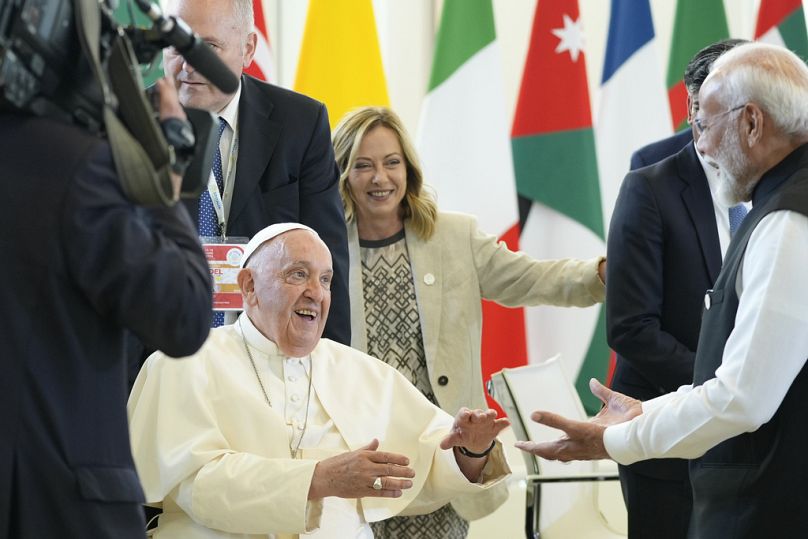
Indian Prime Minister Narendra Modi greets Pope Francis during a working session on AI, energy, Africa and the Middle East, at the G7, Friday, 14 June 2024,Alex Brandon/Copyright 2024 The AP. All rights reserved


The social doctrine of the Church

For Ettore Gotti Tedeschi, banker and former president of the Institute for Religious Works (IOR) the great Vatican financial institution, Pope Leo XIII was "a prophetic pope" because the debate on the preparation of the new encyclical, which had begun a few years earlier, conditioned the ideas of the economic powers of the Belle Époque, especially the young United States in full growth.

"Pope Leo XIII questioned the concentrations of economic industrial power and was immediately attacked, but after six months the United States passed the Sherman Act on monopolies and elaborated the basis of antitrust agencies to regulate competition," Gotti Tedeschi told Euronews.

The US administration passed the Sherman Act in 1890 to curb the power of cartels that had created a near-monopoly regime with serious social repercussions.

"Today the Church offers to all its patrimony of social doctrine to respond to another industrial revolution and to developments in artificial intelligence that bring new challenges for the defence of human dignity, justice and work," the new Pope Leo XIV reminded the cardinals in his recent address.

The European Union and the public authorities of our time are measured against the dominant positions of the large US technological companies, aka Big-Tech, while economic data show growing economic crises and imbalances between average incomes and the cost of living on opposite sides of the Atlantic.

If the pontiff's words have clarified the question of a new social doctrine of the Church, it is still unclear how the new pope will launch the evangelising action necessary to persuade the leading economic and political players of the value of a new encyclical on the social duties of capital.
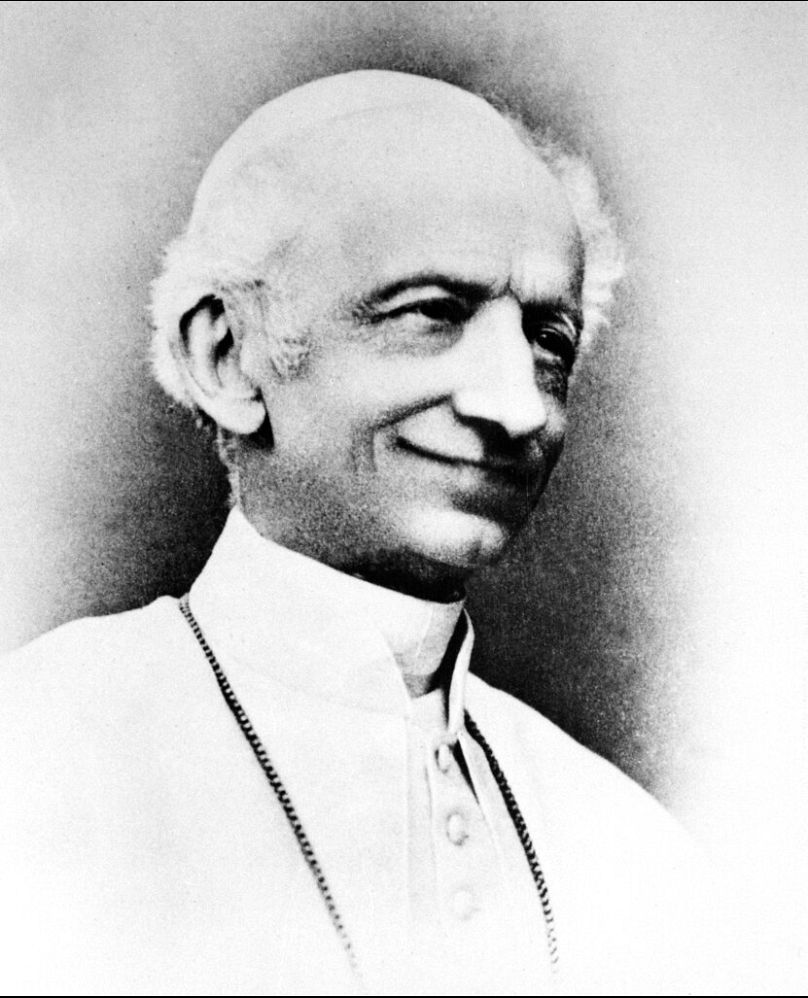
Pope Leo XIII in an undated photo. He was head of the Catholic Church from 1878 to 1903. (AP Photo)AP/

A new missionary work in finance and high technology?

Will the new pontiff have to confront the great oligarchs as the Church fathers did with pagan princes and rulers in the first centuries of Christianity?

According to Gotti Tedeschi, "evangelisation in the world of finance that seems so indifferent or even needs to have certain values explained to it."

"We need to reread Benedict XVI's Caritas in Veritate, the encyclical of globalisation and technological progress", Gotti Tedeschi said, drafted and amended during the debt crisis that shook Europe and the United States between 2008 and the early 2010s, the worst financial collapse since the Wall Street crash of 1929.

Gotti Tedeschi co-authored Caritas in Veritate with Pope Benedict XVI. In this encyclical, Pope Benedict XVI emphasised the importance of defining the economy and its ultimate goals, with a profound revision of the development models imposed by globalisation and digitalisation.

 
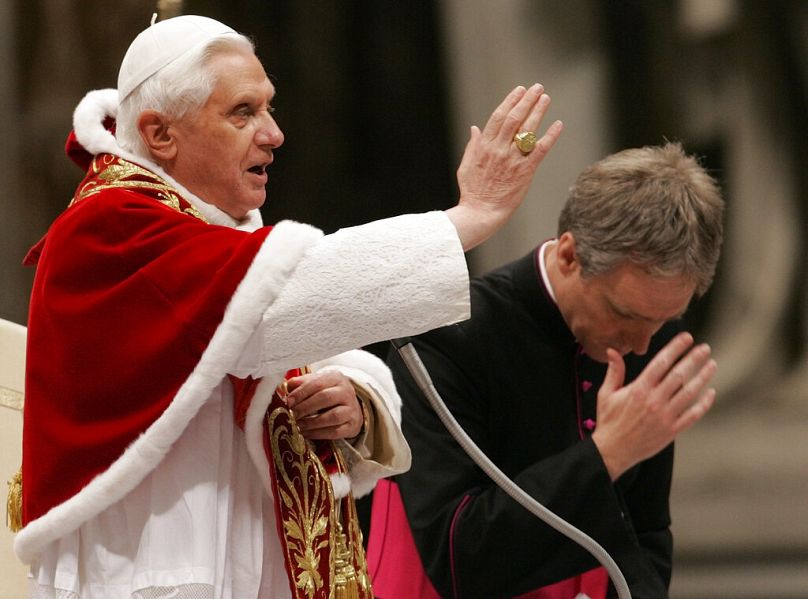
Pope Benedict XVI blesses as his personal assistant, the Rev. Georg Gaenswein, makes the sign of the cross at the end of the candle Mass.PIER PAOLO CITO/AP

This work was continued and reinterpreted by Pope Francis, who, in addition to fighting economic injustice, also engaged with the topic of artificial intelligence.

In 2024, he gave a speech at the G7 summit in Italy, saying, "Artificial intelligence is a product of human creative potential, a gift from God". He also spoke of "algoethics", the morality of the algorithm.

"Pope Francis' priority on artificial intelligence is that technology be understood for its social impact, since it represents a form of power that redefines relations between people," Paolo Benanti, a Franciscan, a scholar of the ethics of technology and professor at the Pontifical Gregorian University, recently told Wired magazine.

Father Benanti was considered to be Pope Francis' designated person on all AI matters, and is the only Italian member of the UN Committee on Artificial Intelligence, as well as chairperson of the Commission on Artificial Intelligence for Information of the Department for Information and Publishing of the Presidency of the Council of Ministers.


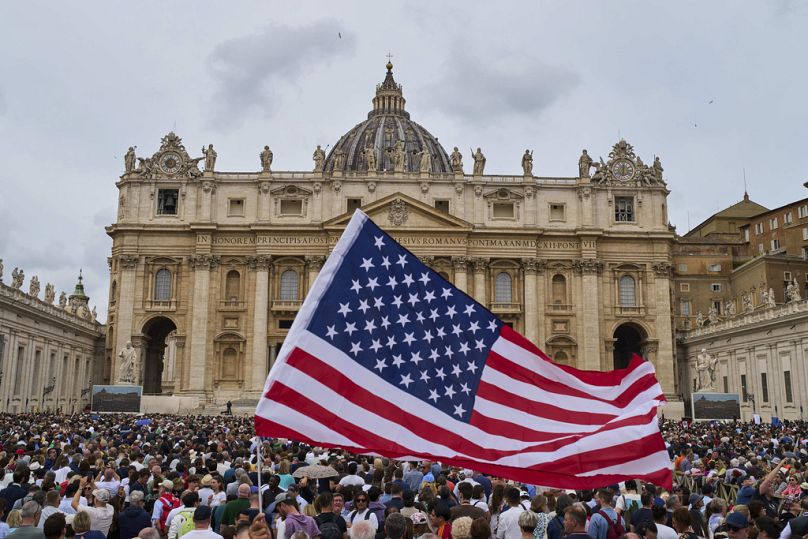
A US flag in the crowd as Pope Leo XIV appears at the central balcony of St. Peter's Basilica for his first Sunday blessing.
Bernat Armangue/Copyright 2025 The AP. All rights reserved

The new financial and doctrinal role of the US


Pope Leo XIV is the first US pontiff in the history of the Church.

His election in the Holy See has awakened hopes that the new pope can help fix the Vatican's strained finances by attracting new dollars.

St Peter's obolus is historically the financial lung of the Catholic Church, representing the flow of money from all the world's alms.

"Fifty per cent of St Peter's obolus traditionally came from the United States. From what I have read, St Peter's obolus has plummeted to about 50% in the last decade," Gotti Tedeschi said

"What can (Pope Leo XIV) do? Set about revangelising and reaffirming the truths that influence the Catholic world. In six months, he will balance the budget," Ettore Gotti Tedeschi explained,* concluding that US Vice President JD Vance affirmed those truths and laid down his conditions in Munich last February, explaining, "reconfirm the values and we will be totally on your side."

Pope Leo XIV seems to have sent messages that are, for the time being, both socially sensitive from an economic point of view and more traditional in terms of aesthetic or symbolic presence and the content of doctrinal values.
Hungarian minority plays key role in Nicușor Dan's Romanian presidential win

High voter turnout, especially among young people and women, helped Bucharest Mayor Nicușor Dan win Romania's presidential runoff, defeating the hard-right George Simion.


Copyright AP Photo

By Gavin Blackburn & Gábor Tanács
Published on 21/05/2025 -


High voter turnout, including many young people and women heading to the ballot box, was one of the decisive factors that overturned the first round score and propelled Bucharest Mayor Nicușor Dan across the line to win Sunday's presidential runoff in Romania.

The Romanian Hungarian minority also played a strong part, as in both rounds, the counties where they live were overwhelmingly in favour of Dan.

That's according to István Székely, the vice president of the Democratic Alliance of Hungarians in Romania (RMDSZ), who said those factors meant a victory for Dan rather than "the extremist and anti-Hungarian George Simion."

Székely told Euronews that Dan could launch a centre-right presidential movement, similar to that of Emmanuel Macron in France, but he does not believe that the country's current party structure will allow for immediate change.

The leader of the Hungarian minority group noted that both candidates represented radical change.

"It's true that they wanted to take the country in opposite directions, but the need for radical change unites them", Székely said.

"With the current composition of the parliament, it will be difficult to meet this demand, but at the same time, I think early elections are out of the question for various reasons."

But regarding what happened at the polls, Székely admitted that the presidential election did finish according to the RMDSZ's predictions. He said the alternative candidate they supported against George Simion did not win, but voters understood the election's stakes and chose instead to back the pro-Europe Dan.

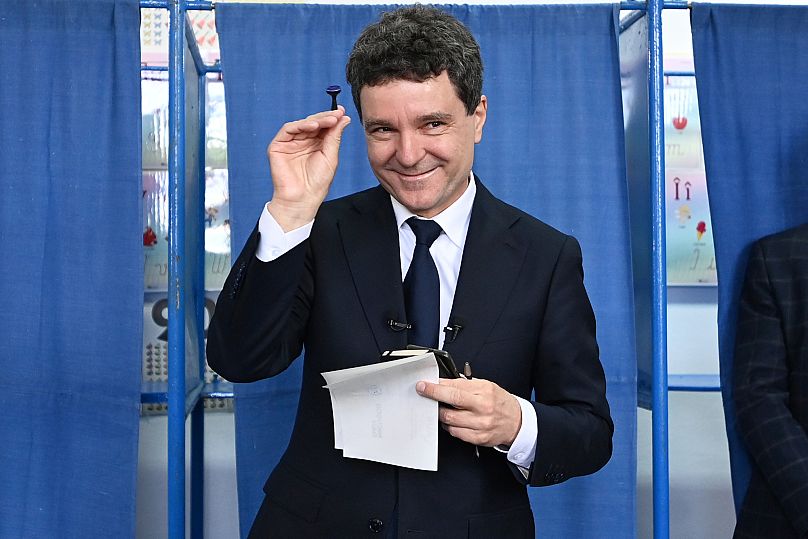
Presidential candidate Nicușor Dan smiles while holding a stamp before casting his ballot in the second round of the country's presidential election redo in Fagaras, 18 May, 2AP Photo

Former Romanian-Hungarian MP: 'Orbán shot himself in the foot'

"A victory for George Simion would have been dangerous in any case, given his record and aggressiveness," said analyst and lawyer, Péter Eckstein-Kovács, a well-respected minister and former senator in the Romanian parliament.

"This danger was felt by the vast majority of Hungarians in Transylvania. They voted for Nicușor not out of fear, but out of common sense. If there is a dangerous person, let's shoot him," the former RMDSZ politician said when asked if Hungarians in Transylvania had anything to fear.

"We will be left with about five million xenophobes in the future. It is not easy to digest."

George Simion, the hard-right, nationalist leader of the Alliance for the Union of Romanians (AUR), had election flyers printed with a photo of himself alongside one of Hungarian Prime Minister Viktor Orbán with the slogan "The Romanians can count on the Hungarians in their fight for Christianity and sovereignty."

While saying he does not interfere in Romania’s election, Orbán appeared to support Simion in the runoff, while the Romanian nationalist candidate repeatedly tried to obtain the Hungarian prime minister’s endorsement and thus his influence on the Romanian Hungarian voters for the battle in which every ballot counted.

As part of his strategy, Simion recalibrated his nationalist political platform in the second round, appealing to the Hungarian community — known for its disciplined approach to voting — and their party.

During the campaign for the second round, political sources in Budapest told Euronews that emissaries from Simion’s campaign had been in contact with Orbán's government, ahead of the decisive vote last Sunday

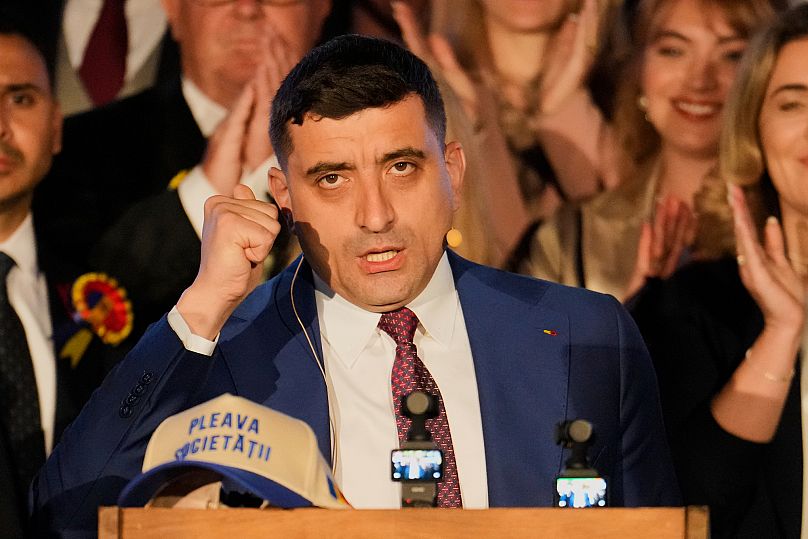
Presidential candidate George Simion speaks to media after polls closed for the second round of the country's presidential election in Bucharest, 18 May, 2025AP Photo

Just as the runoff campaign began, Orbán referenced Simion in a speech in the Hungarian town of Tihany and then on social media saying that while “Romania’s elections are none of our business ... we assure the Romanian people and their future president: Hungary stands for unity, not division."

"We will not support any form of political isolation against Romania or its leaders. Romanians can count on Hungarians in their fight for Christianity and sovereignty,” Orbán emphasised.

Yet Orbán's statement drew immediate backlash from UDMR/RMDSZ President Kelemen Hunor, who responded in a Facebook video that “Simion is not a friend of the Hungarians — and never will be.”

“George Simion is not a sovereignist; he is a charlatan. Each cell (in his body) represents the principle that Hungarians don’t have a place in Romania,” Hunor said.

Orbán then spoke with Hunor by phone, reiterating that Hungary does not interfere in Romania’s election and that ultimately the Hungarian party’s position prevails in this debate: “the Hungarian government deems that Romania’s Hungarian Democratic Party’s position to be decisive, the interest of the Transylvanian Hungarians is indicative."

"We have always cooperated with all Romanian leaders, of all times, for the progress of the Transylvanian Hungarians’ life and existence," Orbán said.

On Tuesday, Eckstein-Kovács told Euronews that "Orbán shot himself in the foot with his pro-Simion comments in Tihany,"

"He did so after the RMDSZ, the civil sector, and church leaders had all urged support for Nicușor. He believed that Transylvanians loved him so much that they were unthinkingly following his recommendations and growing the anti-EU far-right party group. Well, it didn't work," Eckstein-Kovács added.

"The Transylvanians voted against Simion in their own well-perceived interest. But very much so. The Orbán effect has been shattered," he said.

Orbán has since congratulated Dan on his victory in the Romanian presidential elections, saying in a post on X he looked forward to "working together on strengthening the cooperation between Hungary and Romania, to the benefit of our peoples."
No second chance for Romanian democracy?

Historian Stefano Bottoni believes the RMDSZ found it challenging to walk the tightrope and satisfy both Budapest and Bucharest after Orbán seemed to pledge support for Simion.

Bottoni described the Hungarian prime minister's move not so much an international violation but rather a political mistake.

"It's a transnational space; everybody interferes in everything. I don't see a serious sovereignty problem here," Bottoni told Euronews.

According to Bottoni, Orbán's mistake was in thinking that what works in Hungary will also work in Romania.

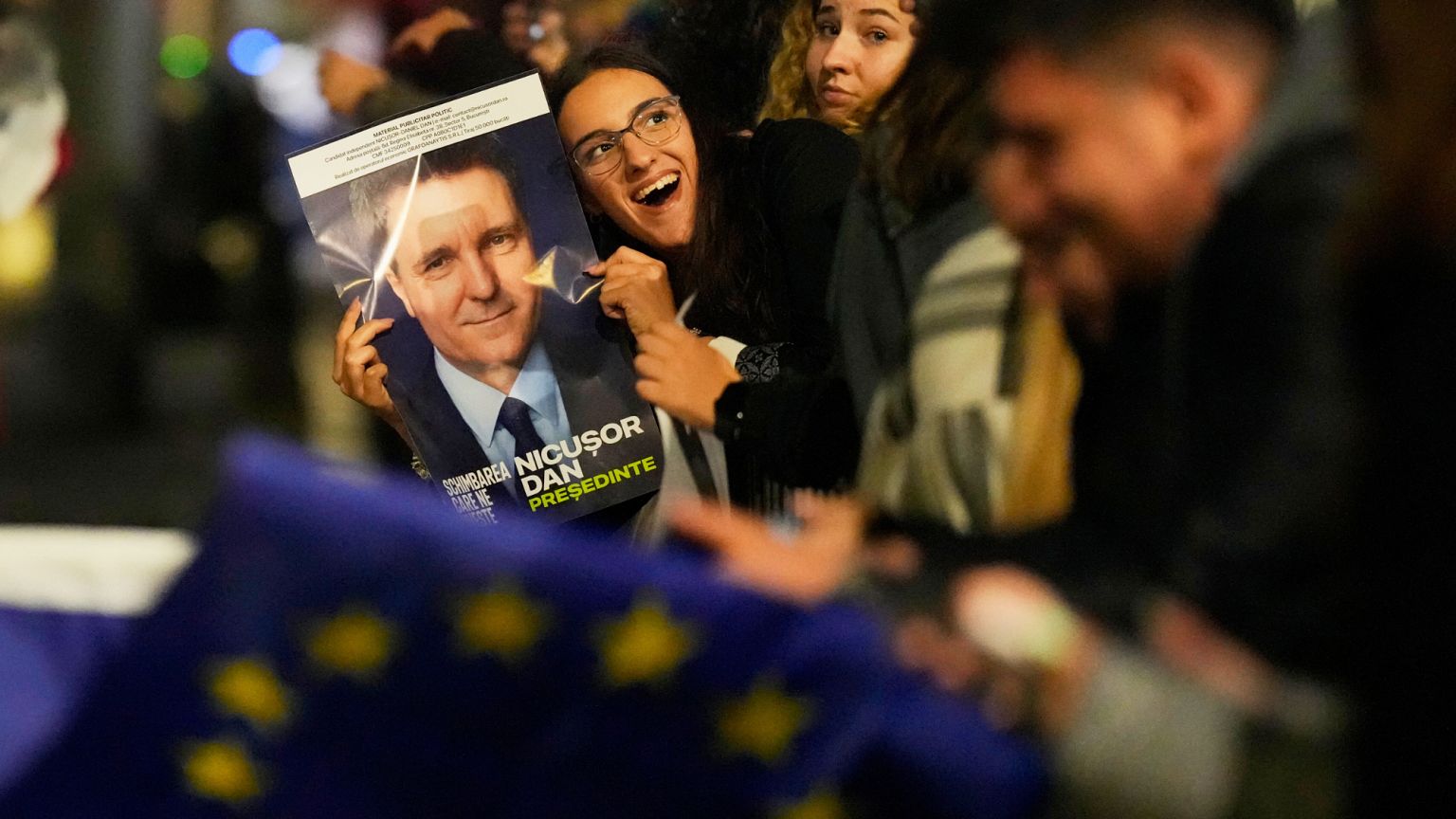
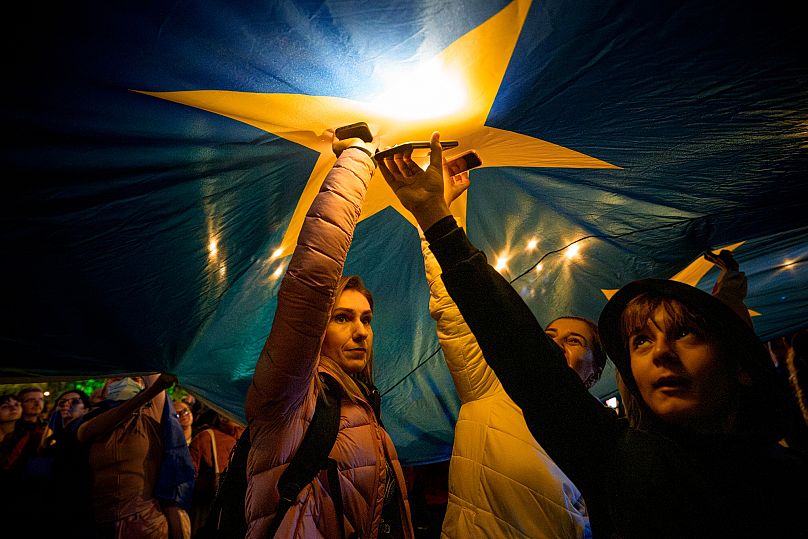
Demonstrators shine the lights of their mobile phones as they stand under a large EU flag in Bucharest, 9 May, 2025AP Photo

"The RMDSZ has found itself between two seats: there is Bucharest, where it is part of a government and a long-established member of the political elite, and there is Budapest, where it has very different expectations and it cannot meet both," Bottoni explained.

Bottoni stressed that what Orbán offered was an alliance that would have been critical for Romania's Hungarian community.

"The fact that the Hungarian prime minister did not see this or did not care is a cause for reflection, because it has been a long time since Viktor Orbán made such a serious political mistake in Hungarian-Hungarian political relations," he said.

The fact that two candidates critical of the political system made it to the second round also shows that mainstream parties failed to take advantage of the reprieve offered by the runoff.

"It is clear that something has to change," Bottoni added.

Related

Romania’s pro-West candidate Nicușor Dan wins presidential election in dramatic comeback

"The only way for the democratic political system to survive this crisis is to come up with something: whether it's a new coalition, new formations, new ideas, a new style of governance. I think that Romanian democracy has a chance now and it is very important not to miss it, because there may not be a second one."

In Romania, the president's office is more than just ceremonial. In addition to approving laws passed by parliament and heading the military, the president is also in charge of foreign policy, representing the country at the European Council.
Eddie Vedder and Neil Young speak out in support of Bruce Springsteen amid Trump attacks


Copyright AP Photo

By David Mouriquand
Published on 21/05/2025 

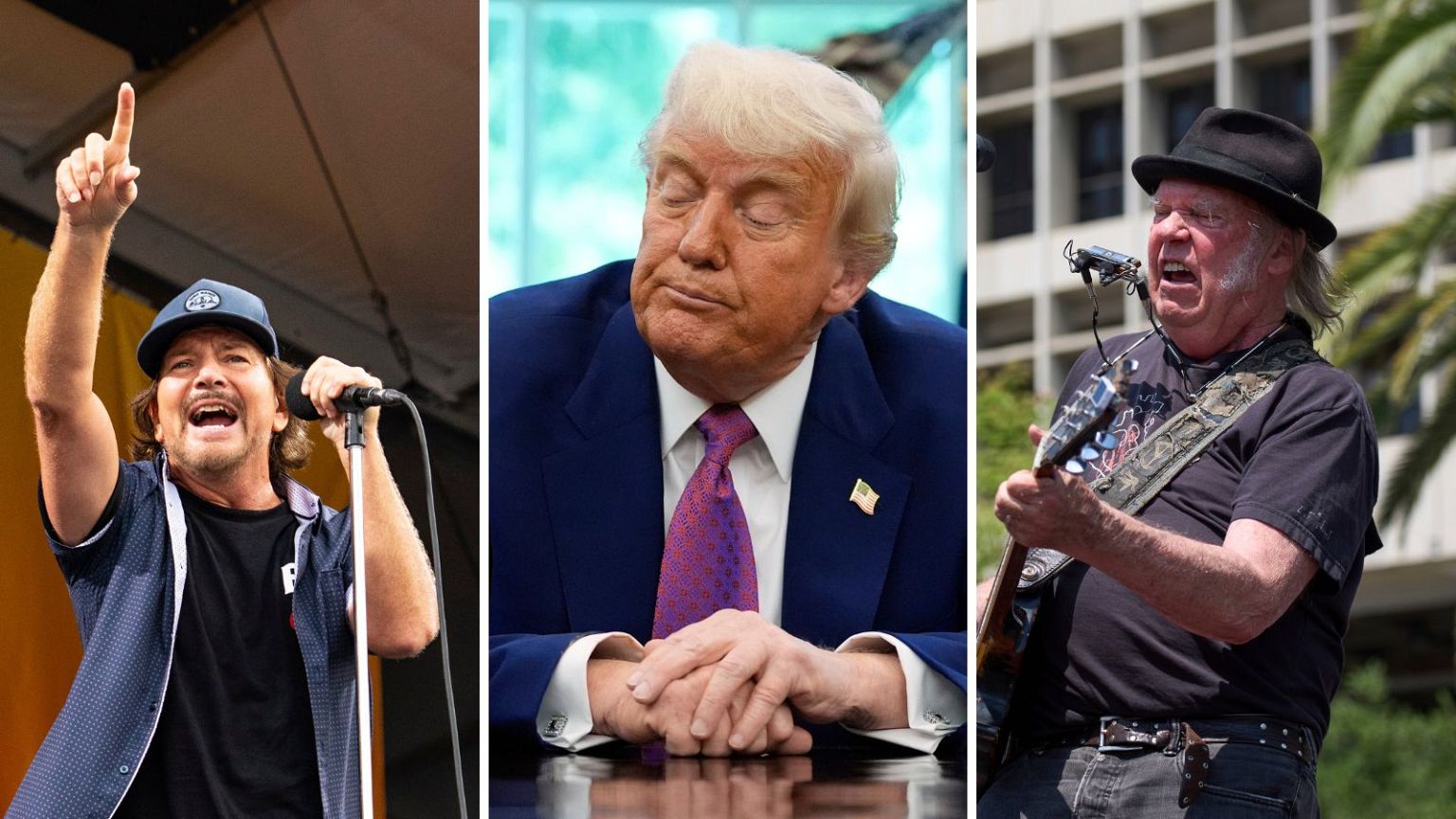
Musicians are coming to the defence of Bruce Springsteen and Taylor Swift, both of whom Donald Trump has criticised and threatened. “Part of free speech is open discussion. Part of democracy is healthy public discourse. The name-calling is so beneath us,” said Pearl Jam frontman Eddie Vedder.

Pearl Jam frontman Eddie Vedder has defended Bruce Springsteen during a concert amid attacks by Donald Trump on the legendary singer.

Vedder spoke out in support of Springsteen during the band’s show at PPG Paints Arena in Pittsburgh, Pennsylvania, saying: “(Trump’s) response had nothing to do with the issues. They didn’t talk about one of those issues, they didn’t have a conversation about one of those issues. They didn’t debate about any one of those issues. All that we heard were personal attacks and threats that nobody else should try to use their microphones or voice in public or they’ll be shut down.”

He continued: “Now that’s not allowed in this country that we call America. Part of free speech is open discussion. Part of democracy is healthy public discourse. The name-calling is so beneath us. Bruce has always been as pro-American with his values and liberty, and his justice has always remained intact. And I’m saying this now to be sure this freedom to speak will still exist in a year or two when we come back to this microphone.”


Springsteen previously called Trump’s administration “corrupt, incompetent, and treasonous” during the opening night of his European tour on 14 May.

In response, Trump ranted online about Springsteen, calling The Boss a “dried out prune” and threatened the musician by saying Springsteen “ought to KEEP HIS MOUTH SHUT until he gets back into the Country.”

The American Federation of Musicians responded to Trump’s comments, with the organisation’s president Tino Gagliardi saying: “Musicians have the right to freedom of expression, and we stand in solidarity with all our members.”

Since then, Trump has called for an investigation into Springsteen and his support for Kamala Harris. He also criticised Beyoncé and Bono.

Adding his name to list of Springsteen defenders is veteran American legend Neil Young, who previously shared his fears about being barred from returning to the US after criticising Trump.


Yesterday (20 May), Young shared a new blog post on the Neil Young Archives website, where he defended Springsteen and Taylor Swift, who Trump has also slammed.

“Bruce and thousands of musicians think you are ruining America. You worry about that instead of the dyin’ kids in Gaza. That’s your problem. I am not scared of you. Neither are the rest of us.”

He continued: “You shut down FEMA when we needed it most. That’s your problem Trump. STOP THINKING ABOUT WHAT ROCKERS ARE SAYING. Think about saving America from the mess you made.”

“Taylor Swift is right. So is Bruce. You know how I feel. You are more worried about yourself than AMERICA. Wake up Trump!! Remember what the White House is?”

He finished his blog entry by writing: “You are forgetting your real job. You work for us. Wake up Republicans! This guy is out of control. We need a real president!”

Neil Young is set to return to Europe this summer as part of his ‘Love Earth’ world tour, which includes dates at Glastonbury and a headline slot at BST Hyde Park.

Harry Styles and Olivia Rodrigo join Springsteen to stand up against Trump


Adam Nichols
May 21, 2025 
RAW STORY


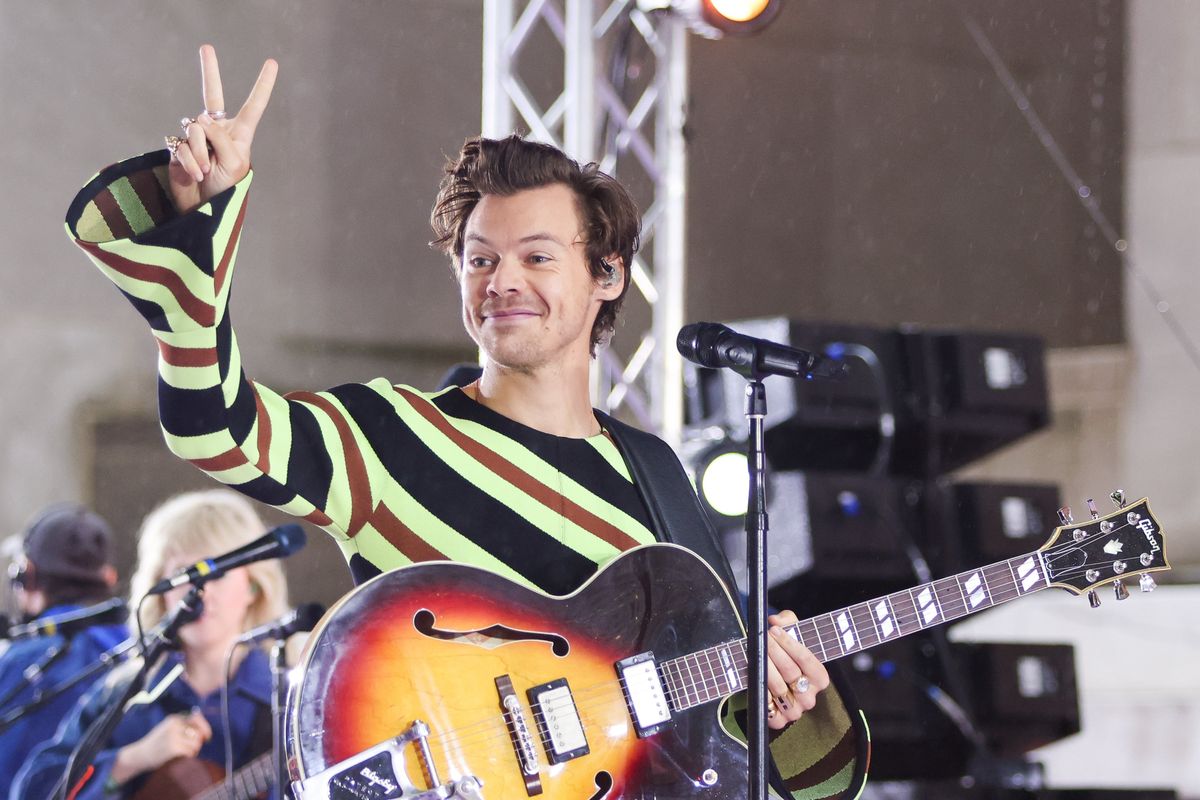
Harry Styles. (Shutterstock)

Harry Styles and Olivia Rodrigo have become the latest mega-celebrities to join rocker Bruce Springsteen in standing up against President Donald Trump.

Just days after Springsteen called Trump "corrupt, incompetent and treasonous" from an English stage — and got hit by a veiled threat in return — the two singers joined 250 others in putting their name to opposition to the president’s policies.

In an advert posted in the New York Times, first reported by Rolling Stone, they stood up against Trump’s plan to crush Planned Parenthood by slashing its funding grants.

The ad reads, “I’m for Planned Parenthood because I’m for freedom… because I’m for healthcare… because I’m for you and me — not the government — deciding what care we need and where we can get it."

Other stars publicly endorsing it included Pedro Pascal, Addison Rae, Megan Thee Stallion, Billie Eilish, Meghan Trainor and Cyndi Lauper.

The full list can be found here.

Trump has been furious over celebrity criticism of himself and his policies in recent days, launching a war of words on Springsteen and threatening investigations into Beyoncé and Oprah Winfrey for their endorsements of his election opponent Kamala Harris.

Last week, Springsteen told a crowd during his United Kingdom tour: “In my home America, the America I've written about that has been a beacon of hope and liberty for 250 years, it is currently in the hands of a corrupt, incompetent and treasonous administration.”

Trump clapped back: “This dried out ‘prune’ of a rocker (his skin is all atrophied!) ought to KEEP HIS MOUTH SHUT until he gets back into the Country, that’s just ‘standard fare.”

“Then we’ll all see how it goes for him!”

Springsteen’s stance has been backed by Pearl Jam’s Eddie Vedder and singer Neil Young.
Scientists believe blood and urine markers may reveal how much ultra-processed food we eat


Copyright Canva

By Euronews with AP
Published on 21/05/2025 - 

Ultra-processed foods (UPFs) are linked to a host of health problems. It may now be easy to detect how much of these foods a person eats from their blood and urine.

Molecules in blood and urine may reveal how much energy a person consumes from ultra-processed foods, a key step to understanding their health impact, a new study has found.


It’s the first time that scientists have identified biological markers that can indicate higher or lower intake of the foods, which are linked to a host of health problems, said Erikka Loftfield, a researcher at the National Cancer Institute in the United States who led the study published Tuesday in the journal PLOS Medicine.


"It can potentially give us some clues as to what the underlying biology might be between an ultra-processed food association and a health outcome," Loftfield said.
RelatedDiets rich in ultra-processed foods linked to higher risk of early death, new study warns

Ultra-processed foods – sugary cereals, sodas, crisps, frozen pizzas, and more – are created through industrial processes with ingredients such as additives, colours, and preservatives not found in home kitchens.

They’re ubiquitous in high-income countries, but studying their health impacts is hard because it’s difficult to accurately track what people eat.

For the new analysis, Loftfield and her colleagues examined data from an existing study of more than 1,000 older US adults. More than 700 of them had provided blood and urine samples, as well as detailed dietary recall reports, collected over a year.

The scientists found that hundreds of metabolites – products of digestion and other processes – corresponded to the percentage of energy a person consumes from ultra-processed foods.

Related
Ultra-processed foods account for nearly half of calories eaten by UK toddlers, study finds

From those, they devised a score of 28 blood markers and up to 33 urine markers that reliably predicted ultra-processed food intake in people who had typical diets.

"We found this signature that was sort of predictive of this dietary pattern that’s high in ultra-processed food and not just a specific food item here and there," she said.

A few of the markers, notably two amino acids and a carbohydrate, showed up at least 60 times out of 100 testing iterations. One marker showed a potential link between a diet high in ultra-processed foods and type 2 diabetes, the study found.
Unraveling ultra-processed food’s impact on health

It’s still early research, but identifying blood and urine markers to predict ultra-processed foods consumption is "a major scientific advance," said Dr Dariush Mozaffarian, who directs the Food Is Medicine Institute at Tufts University in the US and was not involved in the study.

Related
Eating high amounts of ultra-processed foods could make you biologically older, study finds

"With more research, these metabolic signatures can begin to untangle the biologic pathways and harms of UPF and also differences in health effects of specific UPF food groups, processing methods, and additives," he said.

Loftfield said she hopes to apply the tool to existing studies where blood and urine samples are available to track, for instance, the effect of consuming ultra-processed foods on cancer risk.

"There’s a lot of interest across the board – scientifically, public interest, political interest – in the question of: Does ultra-processed food impact health and, if so, how?" she said.
West Nile virus detected in UK mosquitoes for first time as climate change linked to spread

Copyright Canva

By Gabriela Galvin
Published on 21/05/2025 -


The virus has emerged in northern and western Europe in recent years as a result of warmer temperatures.


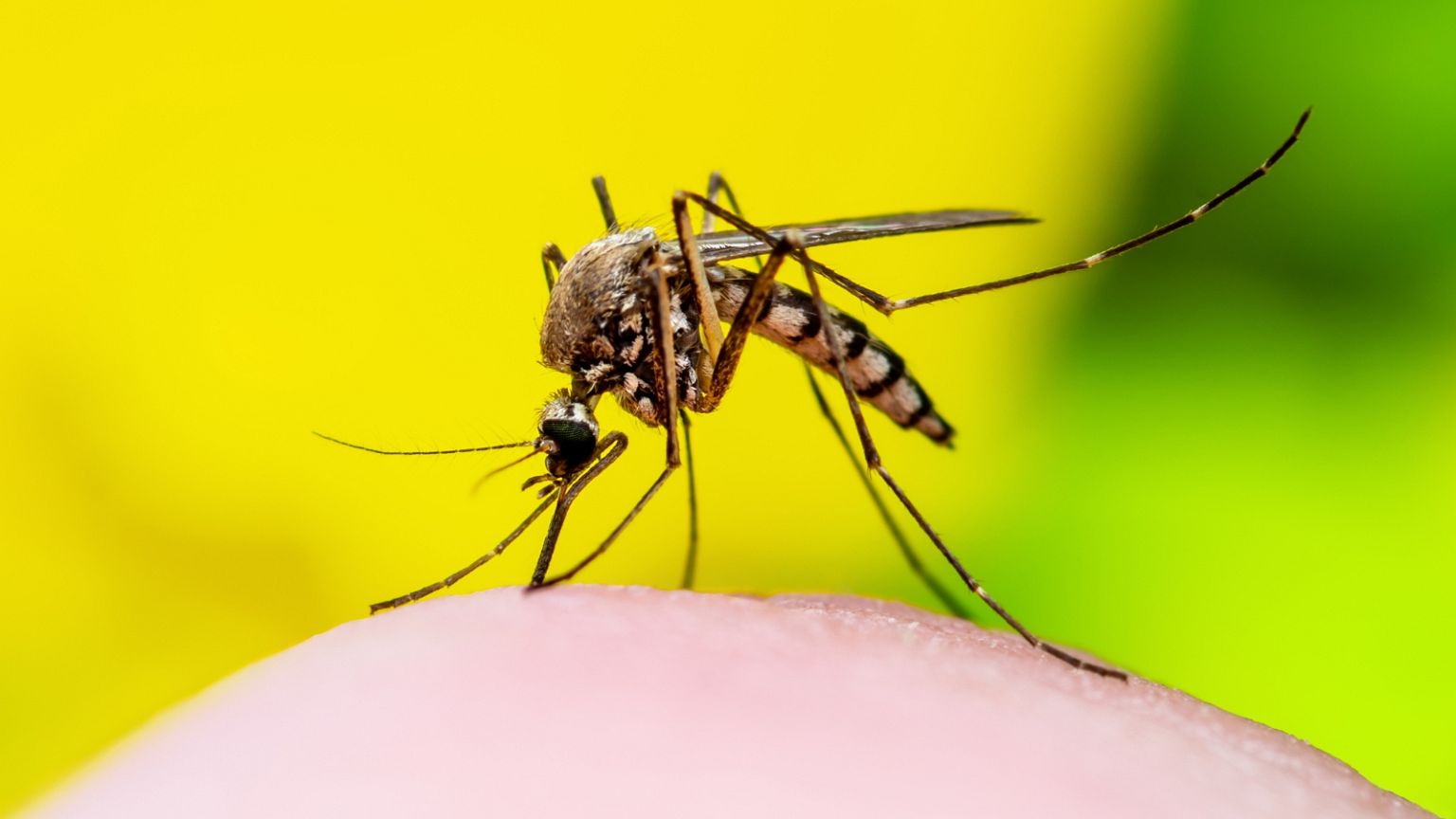
West Nile virus has been detected in mosquitoes in the United Kingdom for the first time, as rising temperatures raise the risk that vector-borne diseases will become more common in Europe.

There have been no human infections in the UK so far, and the risk to the general public is "very low," according to the UK Health Security Agency (UKHSA).

But the agency is ramping up surveillance and advising doctors to test certain patients whose health issues could be linked to the virus.

Fragments of West Nile virus were found in two groups of mosquitoes collected in wetlands in Nottinghamshire in July 2023, the agency said. Another 198 pools of mosquito samples collected in the same area tested negative for the virus.

Related What is West Nile virus and should travellers in Europe be worried following recent deaths in Spain?

"While this is the first detection of West Nile virus in mosquitoes in the UK so far, it is not unexpected as the virus is already widespread in Europe," Dr Meera Chand, UKHSA’s deputy director for travel health, zoonoses, emerging infections, respiratory and tuberculosis, said in a statement.

West Nile, which is in the same family of viruses as dengue and yellow fever, is often found in birds and spreads through mosquito bites. People can also be infected, though about 80 per cent will have no symptoms.

The virus was first identified in Uganda in 1937, and it’s commonly found in Africa, the Middle East, North America, and West Asia.

Spread linked to climate change


It has appeared more frequently in northern and western Europe in recent years as warmer weather tied to climate change makes the region more hospitable for mosquitoes.

We are entering an era where we must learn to live smarter in a bug’s world.
James Logan
London School of Hygiene and Tropical Medicine professor

"The detection of West Nile virus in the UK is part of a wider changing landscape, where, in the wake of climate change mosquito-borne diseases are expanding to new areas," Dr Arran Folly, an arbovirologist at the UK’s Animal and Plant Health Agency (APHA), said in a statement.

In places where West Nile virus is more common, people tend to be infected in the summer months. Most people either have no or mild, flu-like symptoms, but in rare cases it can lead to neurological issues, such as brain swelling or meningitis.

In light of the virus' detection in the UK, doctors are being advised "as a precaution" to run additional tests on people with unexplained brain swelling, or encephalitis, the UKHSA said.

Related West Nile virus vaccine still 'years away' as disease spreads in Spain

There is no vaccine or targeted treatment for West Nile virus.

James Logan, a professor of medical entomology at the London School of Hygiene and Tropical Medicine, called on public health and veterinary authorities to boost their surveillance to "stay one step ahead" of the virus.

"This is a moment to recognise that the UK is no longer immune to some diseases once considered 'tropical,'" Logan said in a statement.

"We are entering an era where we must learn to live smarter in a bug’s world".
Climate killer methane: On the hunt for natural gas leaks with Theo

Euronews
By Hans von der Brelie
Published on 21/05/2025 

I'm travelling in Croatia, looking for leaks in the natural gas network from which methane is escaping, one of the most dangerous climate killers of all. The European Union wants to reduce emissions.

Théophile Humann-Guilleminot grabs his 100,000 euro suitcase, a special high-tech camera: "Today we are going on the hunt for methane emissions in Croatia. We analyse oil and natural gas plants." Thermal imaging technician Theo works for the international climate protection organisation CATF and has already undertaken 500 "methane hunts" from Romania to Spain. He always found what he was looking for!

Methane is responsible for a third of global warming. In a 20-year comparison, methane is even 80 times more harmful to the climate than CO2. Agriculture, poorly sealed landfill sites and the use of fossil fuels are the main man-made sources.

Compared to pre-industrial levels, the methane content in the atmosphere has risen by 260 per cent. Since 2000, so much methane has been added every year that the climate damage is as great as that caused by 350 million cars. If nothing changes, the Earth could become up to four degrees Celsius hotter by the end of the century.

Methane escapes particularly during the extraction, processing, transport, distribution and storage of natural gas. The climate killer is released into the air from boreholes and flaring, as well as from leaking pipelines and compressor stations.

Together with 159 partner countries, the European Union has committed to reducing methane emissions worldwide by a third between 2020 and 2030. The EU Methane Regulation, which has been in force since summer 2024, is intended to help with this: Companies need to monitor their systems better.

All methane emissions must be accurately recorded.

Routine flaring is prohibited.

Leaks must be repaired immediately.

Theo has set up his special camera in front of a processing plant in Velika Ludina, right on the edge of the village: "I'm afraid we'll discover leaks in the storage tanks, they look dilapidated."

Instead of feeding methane back into the system, some companies prefer to invest in new oil and gas fields, which brings higher profits in the short term. The problem often lies with subcontractors - or there is a lack of technical knowledge and goodwill.

Workers wearing gas masks move between the valve wheels and tanks. Théophile looks at his detector: "A leak! This is madness! That's intentional, they know they're releasing this gas." One of the tank caps has been opened, "they want to let the oil breathe", explains CATF expert Theo, the system is "ventilated", the methane is released into the ambient air. "The new methane regulation in Europe states that this practice is prohibited," emphasises Theo.

A few kilometres further on, in the middle of the small town of Dugo Selo, we discover a flame, a kind of "waste product" of oil extraction and processing. Suddenly we hear a hiss, and the flame is now several metres high. "This practice of flaring is prohibited in the EU," says Theo. "We have had the EU Methane Regulation since August 2024, and burning gas in this way is not legal."

In Paris, I meet the methane expert from the International Energy Agency, Tomás de Oliveira Bredariol. How can methane emissions be prevented from being concealed? "There is satellite data. We also need measurements on the ground," says de Oliveira. Independent supervisory authorities should be involved here.

But aren't methane emissions completely inadequately recorded? De Oliveira agrees: "If we combine all officially reported emissions, we arrive at 40 million tonnes of methane emissions from the oil and gas sector. Our own IEA estimate is 80 million tonnes of methane, which is twice as much!"

And why is methane so dangerous? De Oliveira: "Methane is responsible for around 30 per cent of global warming to date. Methane emissions from fossil fuels are expected to fall by 25 % by 2030. That is a far cry from what we need, namely a reduction of 75 per cent."
More tornadoes and fewer meterologists make for a dangerous mix that is worrying US weather experts


Copyright AP Photo/Carolyn Kaster

By Seth Borenstein with AP
Published on 21/05/2025 -


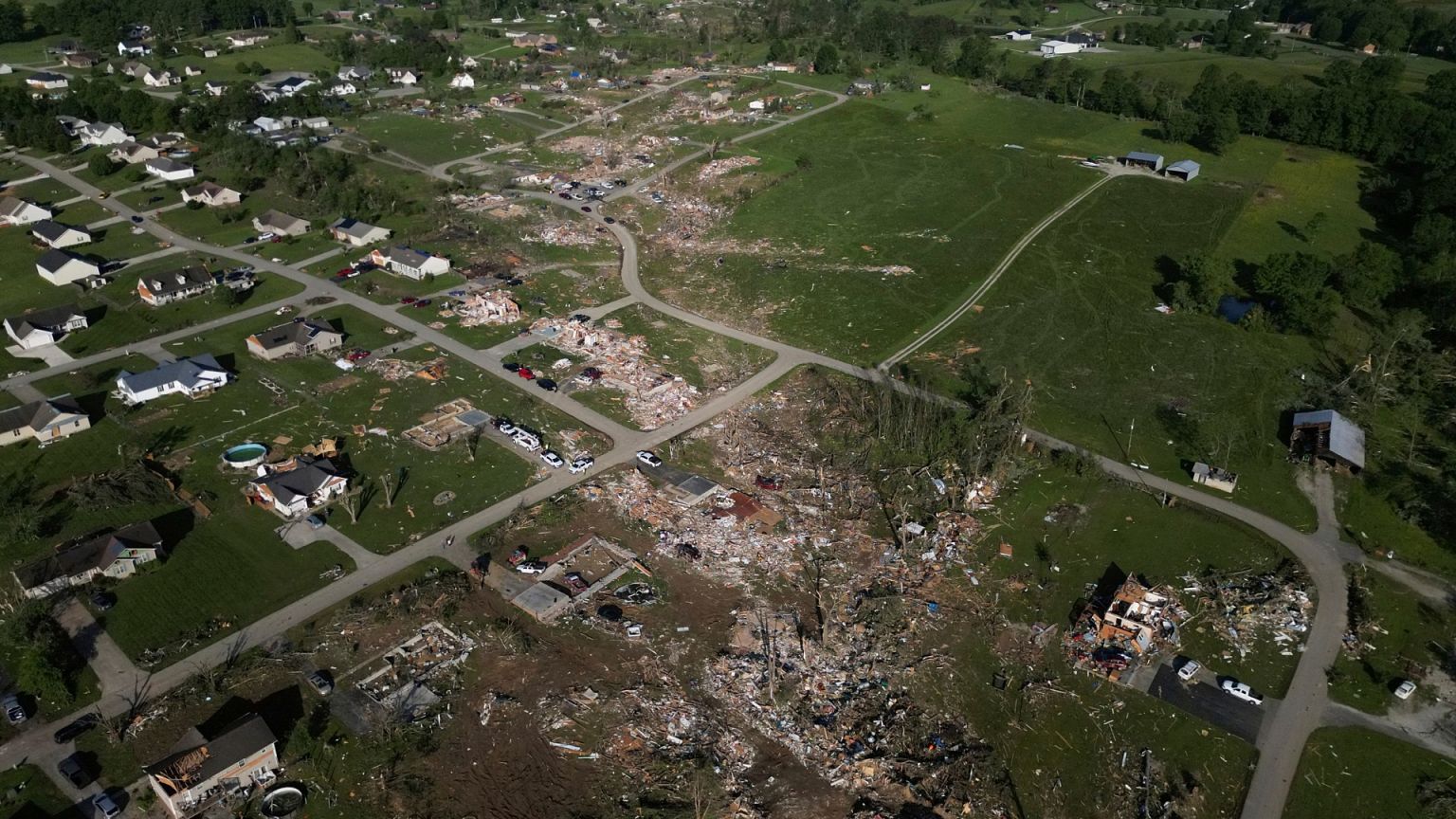
The Storm Prediction Center had tallied 883 local tornado reports this year as of Monday - 35 per cent higher than average for this time of year.

As nasty tornadoes popped up from Kansas to Kentucky, a depleted National Weather Service was in scramble mode.


The agency's office in Jackson, Kentucky, had begun closing nightly as deep cuts by Elon Musk's Department of Government Efficiency began hitting. But the weather service kept staffers on overtime Friday night to stay on top of the deadly storms, which killed nearly 20 people in the Jackson office's forecast area.

It's a scenario likely to be repeated as the US is on track to see more tornadoes this year than in 2024, which was the second-busiest tornado year on record.

Forecasters said there was at least a 10 per cent risk of tornadoes Tuesday for 10.6 million people in parts of Missouri, Arkansas, Oklahoma and Texas. Weather service veterans expressed concern about the agency's ability to keep up in the face of the cuts.

Rich Thompson, lead operations forecaster at the NWS Storm Prediction Center in Norman, Oklahoma, said the job is getting done. But he acknowledged that staffing cuts have “made it harder on us.”

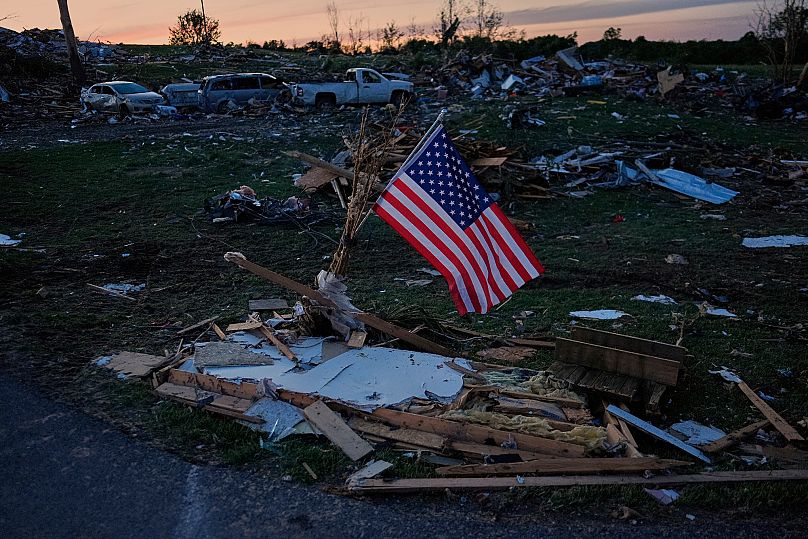
An American flag is posted near destroyed homes after a tornado passed through London, Kentucky. AP Photo/Carolyn Kaster, File

"It has made it hard on the local offices just to make sure that we have all of our important duties covered. But, I mean, most of the people take those important duties seriously, so we’re going to do what it takes to cover it,” Thompson said.

“I hope we’re not in the same staffing situation long term. ... It would be hard to sustain this for months or years.”

NWS spokesperson Erica Grow Cei said the Jackson office “remained fully staffed through the duration of the event using surge staffing” and had support from neighboring offices.

Fewer meterologists and more extreme weather


The Storm Prediction Center had tallied 883 local tornado reports this year as of Monday, which was 35 per cent higher than average for this time of year.

Many former weather service employees, especially those fired by the Trump administration, remain connected to the agency’s inner workings. They describe an agency that's somehow getting forecasts and warnings out in time, but is also near the breaking point.

“They’ll continue to answer the bell as long as they can, but you can only ask people to work 80 hours or 120 hours a week, you know for so long,” said Elbert “Joe” Friday, a former weather service director. “They may be so bleary-eyed, they can’t identify what’s going on on the radar.”

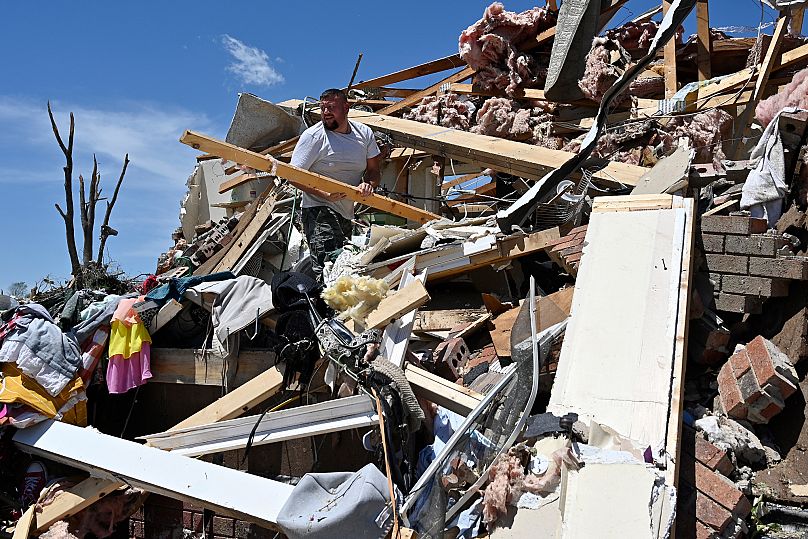
Anthony Broughton stands amid his destroyed home following severe weather in the Sunshine Hill neighborhood of London, Kentucky.AP Photo/Timothy D. Easley

Tom DiLiberto, a weather service meteorologist and spokesman who was fired in earlier rounds of the job cuts, said the situation is like a boat with leaks “and you have a certain amount of pieces of duct tape and you keep moving duct tape to different holes. At some point, you can't.”

As of March, some of the weather service offices issuing tornado warnings Friday and Sunday were above the 20 per cent vacancy levels that outside experts have said is a critical threshold. Those include Jackson, with a 25 per cent vacancy rate, Louisville, Kentucky, with a 29 per cent vacancy rate, and Wichita, Kansas, with a 32 per cent vacancy rate, according to data compiled by weather service employees and obtained by the AP.

Technologies used to predict tornadoes have significantly improved, but radar can't replace a well-rested staff that has to figure out how nasty or long-lasting storms will be and how to get information to the public, said Karen Kosiba, managing director of the Flexible Array of Mesonets and Radars (FARM) facility, a network of weather equipment used for research.

“There really are not enough people to handle everything,” said University of Oklahoma meteorology professor Howard Bluestein, who chased six tornadoes Sunday. “If the station is understaffed, that could affect the quality of forecasts."

Former weather service Director Louis Uccellini said budget cuts have drastically reduced the number of weather balloon launches, which provide critical information for forecasts.

And weather service workers aren't being allowed to travel to help train local disaster officials for what to do when they get dangerous weather warnings, he said.
Is climate change to blame for the record pace of tornadoes?

Though the number of tornadoes is nearly at a record pace, Thompson and other experts said the tornado outbreak of the last few days is mostly normal for this time of year.

For tornadoes to form, the atmosphere needs a collision of warm moist air from the Gulf of Mexico and storm systems chugging through via the jet stream, the river of air that brings weather fronts from west to east, said Thompson, Bluestein and Harold Brooks of the weather service's National Severe Storm Laboratory.

“The moisture that we're getting from the Gulf of Mexico is a lot more than we used to get,” said Bluestein. “That makes the likelihood that we're getting a stronger storm higher and that's pretty unusual.”

Temperatures in the Gulf are a couple of degrees warmer than usual for this time of year, according to the weather service.

Under the climate change scenario, we’re kind of supercharging the atmosphere on some days and then actually reducing the favorability on others.

Jana Houser
Ohio State University atmospheric sciences professor


The connection between climate change and tornadoes is not as well understood as the links between other types of extreme weather such as heavy rainfall and heat waves, experts say.

“Under the climate change scenario, we’re kind of supercharging the atmosphere on some days and then actually reducing the favorability on others,” said Ohio State University atmospheric sciences professor Jana Houser.

Scientists are also seeing more tornadoes in January, February, March and other times when it used to be too cold for twisters to form, especially in Alabama, Georgia, Mississippi and Tennessee, she said.

More people are also living in harm's way, Brooks said. That's why Uccellini and others see increasing risks to people and property.

“When you have this kind of threat and you’re understaffed at some point, something’s going to slip through the cracks," Uccellini said. “I can’t tell you when it’s going to happen.”
Poland intervenes after Russian 'shadow fleet' ship detected near Baltic Sea cable


Copyright Hendrik Osula/AP

By Tamsin Paternoster
Published on 21/05/2025 

A Russian "shadow fleet" ship performed suspicious manoeuvres near the cable connecting Poland and Sweden, Poland's PM Donald Tusk said.

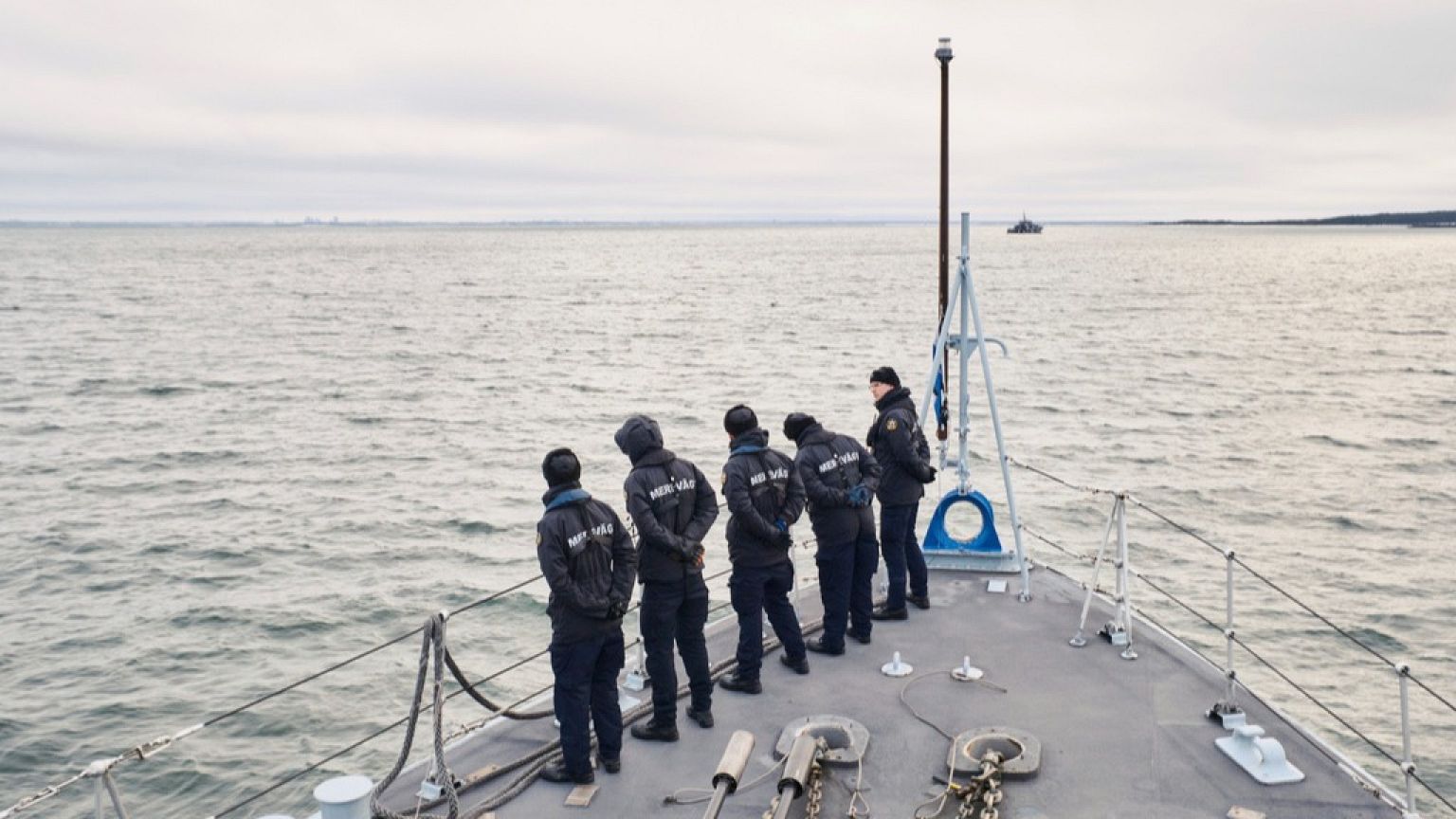
The Polish military intervened in the Baltic Sea after a Russian ship carried out "suspicious manoeuvres" near a power cable connecting Poland and Sweden, Poland's Prime Minister Donald Tusk said on Wednesday.

"A Russian ship from the 'shadow fleet' covered by sanctions performed suspicious maneuvers near the power cable connecting Poland with Sweden," Tusk wrote on X.

"After the effective intervention of our military, the ship sailed to one of the Russian ports."

The term "shadow fleet" is used to describe ships Russia operates under concealed means to evade sanctions.

Western countries say that Moscow is using hundreds of tankers under opaque ownership to ferry Russian oil around the world despite Western sanctions against them.

Related
Russia may use military force to protect shadow fleet, Estonia warns
Russia releases Greek-owned oil tanker after brief detention near Estonia

Polish Defence Minister Wladyslaw Kosiniak-Kamysz told reporters later on Wednesday that a patrol flight scared the Russian ship away, and that the Polish navy's ORP Heweliusz sailed to the scene to investigate further, according to local media.

An emergency meeting will be held on Thursday with Tusk in attendance, reports said.

"This shows how dangerous the times we live in are, how serious the situation in the Baltic Sea is," Kosiniak-Kamysz told a news conference.

Moscow has publicly not commented on the incident.

The 600-megawatt undersea cable targeted links Poland and Sweden and allows electricity grids in both countries to benefit from cheap cross-border power supplies.

Some of the vessels Russia's "shadow fleet" have been implicated in previous damage to undersea cables in the Baltic Sea.

In December 2024, Finnish police seized the Eagle S, a tanker thought to be part of the fleet, on suspicion it used its anchor to damage an undersea power cable supplying electricity from Finland to Estonia. Russia has denied any role in the damage.

Nevertheless, NATO has stepped up its security in the region following a string of incidents in which power cables and gas pipelines have been damaged in the wake of Russia's full-scale invasion of Ukraine in 2022.

Estonia warned last week that Russia was willing to protect its shadow fleet of ageing tankers with military force. That came after Estonia recently intercepted a suspicious vessel in its waters.

Kremlin spokesman Dmitry Peskov on Wednesday said that Russia would defend its ships in the Baltic Sea using "all means" at its disposal.
Which European countries are the most and least progressive when it comes to LGBTQ+ rights?

Copyright Euronews

By Inês Trindade Pereira & video by Maud Zaba
Published on 21/05/2025

A new ranking shows how European countries are progressing when it comes to LGBTQ+ rights, with the UK and Hungary seeing the biggest drops.

Malta, Belgium, Iceland, Denmark and Spain are the top five countries in this year's LGBTQ+ rights ranking, according to this year's ILGA-Europe's Rainbow Map.

Malta has been at the top of the ranking for the last decade, with a score of 88,83%.

With 85 points, Belgium jumped to second place after adopting policies tackling hatred based on sexual orientation, gender identity and sex characteristics.

Despite Belgium jumping to second place in the index over Iceland, the latest figures from Belgium's Centre for Equal Opportunities Unia and the Institute for the Equality of Women and Men reported "worrying" cases of violence and discrimination against LGBTQ+ people.

Unia reported 136 cases related to sexual orientation.

More than a third of these cases involved assaults with assault and battery, and a similar proportion of serious cases of harassment.

These attacks are often committed by young men, sometimes in groups, and especially against other men.

ILGA-Europe's Rainbow Map scores countries in seven categories: equality and non-discrimination, family, hate crime and hate speech, legal gender recognition, intersex bodily integrity, civil society space and asylum.

Austria, Latvia, Germany, Czechia and Poland also recorded the biggest jumps in their rankings.

Austria and Latvia rose four places, while Germany, Czechia, and Poland climbed three.

The EU's average score is 51.13%, while Europe's is 41.85%.


Which countries are performing the worst?


In 2025, some countries across Europe saw a rollback in LGBTQ+ rights.

Romania has been at the end of the EU ranking with a score of just 19%, followed by Poland and Bulgaria, both with 21%.

"Centre and far-right actors in the EU are targeting NGO funding to weaken organisations that defend rights, while at the national level, we are seeing laws introduced that do not address any genuine societal need but are designed purely to marginalise," said ILGA-Europe’s Advocacy Director, Katrin Hugendubel.

The United Kingdom also dropped six places to 22nd.

That drop was partially blamed on a Supreme Court decision to redefine the legal understanding of "woman" strictly as "biological sex," impacting the recognition and rights of transgender individuals.

Hungary dropped seven places after the first Pride march ban in the EU, criminalising participation and organisation of such events.

Attending a banned event would carry fines up to 200,000 Hungarian forints (€503), which the state must forward to "child protection," according to the text of the law.

"Similar moves in the UK, Hungary, Georgia and beyond signal not just isolated regressions, but a coordinated global backlash aimed at erasing LGBTI rights, cynically framed as the defence of tradition or public stability, but in reality designed to entrench discrimination and suppress dissent," said Hugendubel.