Wednesday, May 21, 2025


Evo Morales barred from 2025 Bolivian election amid legal and political turmoil
Evo Morales barred from 2025 Bolivian election amid legal and political turmoil
The former president’s political future is further complicated by unresolved accusations of sexual abuse involving minors, dating back over a decade.]Feedly
By Alek Buttermann May 21, 2025

In a dramatic turn ahead of Bolivia’s 2025 general elections, former president Evo Morales has been officially excluded from the race, marking a critical moment in the country’s increasingly fraught political landscape. The decision, rooted in both procedural technicalities and deeper political fractures, underscores the volatile interplay between legal legitimacy and power in Bolivia.

The Supreme Electoral Tribunal (TSE) confirmed on May 20 that Morales was not among the ten presidential candidates officially registered for the upcoming election. This followed failed attempts by the leftist firebrand to enter the race through an alliance with the Bolivian National Action Party (PAN-BOL), a party that lost its legal status earlier this year for not securing the minimum three per cent of votes in the 2020 elections.

Although Morales’ own political vehicle, Evo Pueblo, lacks formal recognition, he tried to use PAN-BOL as a proxy platform. However, the TSE rejected the late submission of his candidacy, citing the party’s disqualification and procedural violations. As reported by Prensa Latina, his running mate, former Minister of Culture Wilma Alanoca, denounced the move as a “blow to democracy,” accusing the TSE of orchestrating an exclusion through “illegal obstacles”.

This exclusion is far from isolated. Morales had earlier attempted a similar alliance with the Frente Para la Victoria (FPV), but that pact also collapsed. The electoral authority maintains that the registration process was strictly digital and accessible only to legally recognised parties, a system PAN-BOL no longer had access to by the time Morales’ team attempted to submit their documentation.

The former president’s political future is further complicated by unresolved accusations of sexual abuse involving minors, dating back over a decade. Despite multiple allegations, including statutory rape and human trafficking, Morales has never faced formal judicial proceedings. Critics argue this reflects the politicised nature of Bolivia’s justice system. Feminist voices within the country, including María Galindo, have long decried the institutional silencing of victims, suggesting Morales benefited from political shielding during his time in power.

Yet the exclusion of Morales has not quelled political tensions; it has only intensified them. Supporters from his stronghold in Chapare, a coca farming region, have threatened mass mobilisation, and Morales himself warned that protests could escalate if he is permanently blocked. Indeed, the week leading up to the deadline was marked by road blockades and violent street clashes, as his followers attempted to pressure electoral authorities.

The broader context reveals a fractured political field. Bolivian President Luis Arce, a former ally who succeeded Morales under the same MAS party banner, has long distanced himself from his predecessor amid personal and political rows, backing former interior minister Eduardo del Castillo as the MAS candidate. Bloomberg Linea reported that the split has left the left-wing vote divided between Del Castillo and Andrónico Rodríguez, another Morales protégé now leading the breakaway Alianza Popular. Meanwhile, centrist and conservative candidates like Samuel Doria Medina and Manfred Reyes Villa round out a crowded and ideologically diverse field.

The TSE is set to publish the final list of approved candidates on June 6. For now, Morales remains a potent, if polarising, figure, absent from the ballot but omnipresent in the political discourse. His legal woes, combined with Bolivia’s weakened institutions and spiralling financial woes, point to a deeper systemic issue: the struggle between democratic norms and entrenched power dynamics. Whether Morales’ exclusion will bring closure or further chaos remains to be seen, but the shadow he casts over the country's future is undeniable.

US poised to extend Chevron's Venezuela operations as detained American veteran freed

US poised to extend Chevron's Venezuela operations as detained American veteran freed
The original deadline for Chevron, granted by the US Treasury, was April 3, but the deadline had already been extended once to allow the company to maintain its presence amid ongoing negotiations.]]]]]Feedly
By bne intellinews May 21, 2025

The Trump administration is poised to prolong Chevron Corp.'s authorised operations in Venezuela by an additional 60 days, as Washington continues sensitive talks with President Nicolás Maduro’s government regarding American detainees, a source familiar with the matter said, Bloomberg reported. 

The extension had been expected to be announced on May 20, said Bloomberg's source, coinciding with a visit by Richard Grenell, President Donald Trump’s envoy, to Antigua for discussions with Venezuelan officials, according to the source who requested anonymity due to the confidential nature of the talks. But no announcement was made on May 20.

During a previous meeting with Venezuelan leaders in January, the US envoy had achieved the resumption of repatriation flights between the two countries.

The original deadline for Chevron, granted by the US Treasury, was April 3, but the deadline had already been extended to May 27 once to allow the company to maintain its presence amid ongoing negotiations. 

Last February, the US president said the permits, originally granted by the Biden administration in November 2022, would be terminated with "no option for renewal."

And a month later, Trump announced a sweeping 25% tariff on any country purchasing oil or gas from Venezuela, ramping up pressure on the South American country and its international trading partners.

Following the news of the anticipated extension, Venezuelan government and state oil company bonds rallied, with 2031 dollar-denominated sovereign bonds gaining 0.5 cents at their session peak.

Chevron, operating a number of joint ventures with Venezuelan state oil company PDVSA under a Treasury exemption despite broader sanctions, has become a critical pillar of the oil-rich country's faltering economy. 

The company’s recent output increases now account for roughly 20% of national oil production, injecting much-needed foreign currency into Venezuela’s private sector. 

Meanwhile, Joseph St. Clair, a former US Air Force technical sergeant, was freed after several months in Venezuelan custody, his family confirmed in a statement, AP reported. 

Detained in November while seeking treatment for post-traumatic stress disorder, St. Clair was handed over to Richard Grenell in Antigua, marking a diplomatic breakthrough. 

"Joe St. Clair is back in America," Grenell wrote on X, confirming he had met Venezuelan officials in a neutral country earlier in the day to carry out negotiations.

The 33-year-old veteran had crossed the Colombia-Venezuela border with a friend when Venezuelan authorities arrested him. 

His father, Scott St. Clair, described the detention as effectively a kidnapping and accused Venezuelan officials of exploiting American detainees as leverage to gain concessions and soften US sanctions. 

St. Clair served nine years in the Air Force, including four deployments to Afghanistan, before retiring honourably in 2019.

The family publicly acknowledged the critical role played by the Trump administration and envoys Richard Grenell and Sebastian Gorka in securing his release. 

“This news came suddenly, and we are still processing it, but we are overwhelmed with joy and gratitude,” Scott and Patti St. Clair said, as quoted by CNN.


Mexico's oil champion Pemex grows isolated amid mounting ecological damage

Mexico's oil champion Pemex grows isolated amid mounting ecological damage
Pemex oil infrastructure looms over Mexico's coastline as contamination spreads at an alarming rate, with the state-owned giant responsible for nearly 80% of the country's 1,146 oil spills since 2008. / Carlos Jairo


By Alek Buttermann May 21, 2025

Petróleos Mexicanos (Pemex), Mexico’s state-owned oil company, is facing growing criticism for its significant role in hydrocarbon-related environmental damage and its apparent lack of sufficient response. With mounting pressure from environmental advocates, regulatory bodies, and the insurance sector, Pemex finds itself increasingly isolated in a world shifting towards sustainable energy practices.

Between 2008 and 2024, Mexico documented 1,146 hydrocarbon contamination incidents impacting over 17mn cubic metres of soil. Of these, 79%—equivalent to 13.6mn cubic metres—were attributed to Pemex alone, according to official figures from the Secretariat of Environment and Natural Resources (Semarnat), as reported by El Economista. The same report points out that 259 cases, or 22.6% of the total, still lack an approved environmental remediation plan, suggesting major gaps in the company’s environmental governance.

The distribution of these contamination events spans multiple administrations. During Felipe Calderón’s presidency (2008–2012), 620 cases were reported—the highest to date. This figure dropped to 259 under Enrique Peña Nieto (2013–2018), but rose again to 267 under former president Andrés Manuel López Obrador (2019–2024), indicating a recent uptick in incidents, as documented by El Economista.

Particularly concerning is the situation in Mexico’s coastal states. Environmental organisations have warned of severe ecological and human health risks.

Juan Manuel Orozco of Conexiones Climáticas stated in an interview with La Jornada that over 270 moderate to severe oil spills linked to Pemex occurred between December 2018 and July 2024, with 70 in Tabasco and 62 in Veracruz alone. These spills have disrupted local ecosystems and undermined economies reliant on fishing and tourism.

Orozco also criticised Pemex’s response to a recent spill involving a pipeline between the Akal-C platform and the Dos Bocas terminal. Although the event was reported to the Agency for Safety, Energy and Environment on April 26, the delay in public disclosure and lack of transparent investigation demonstrate the company’s persistent operational opacity.

Environmental remediation efforts have also come under scrutiny. According to La Jornada, Pemex’s approach to cleaning up marine spills often involves sinking contaminated residues—including dangerous heavy metals—into seabeds, resulting in bioaccumulation in fish, shellfish, and other marine species. This not only affects biodiversity but also the health and income of coastal communities.

In parallel, Pemex’s environmental liabilities are beginning to dent its financial credibility. Swiss Re, a major reinsurance provider, recently announced it would no longer support oil companies contributing significantly to global CO₂ emissions.

During the “Adaptación Climática” forum, Francisco Díaz of Swiss Re said that projects lacking adequate environmental impact assessments, including new oil platforms and pipelines, would be excluded from coverage, as reported by El Financiero. Although Pemex was not named directly, the implications are clear given its carbon-intensive operations.

Swiss Re’s decision reflects a broader shift in the insurance industry, which is increasingly prioritising sustainability. As noted by consultant René Ríos, majors like Pemex will need to adapt their business models to integrate climate risk and environmental responsibility or face shrinking access to essential insurance services.

Years of environmental damage, growing public health risks, and shrinking financial backing have exposed serious flaws in Pemex's operations. Without urgent and concrete reforms, the already cash-strapped company is heading towards deeper ecological harm, further financial instability, and a damaged reputation it may not recover from.

Coral gardens and volcano vents: See what scientists found in the icy depths of the Southern Ocean

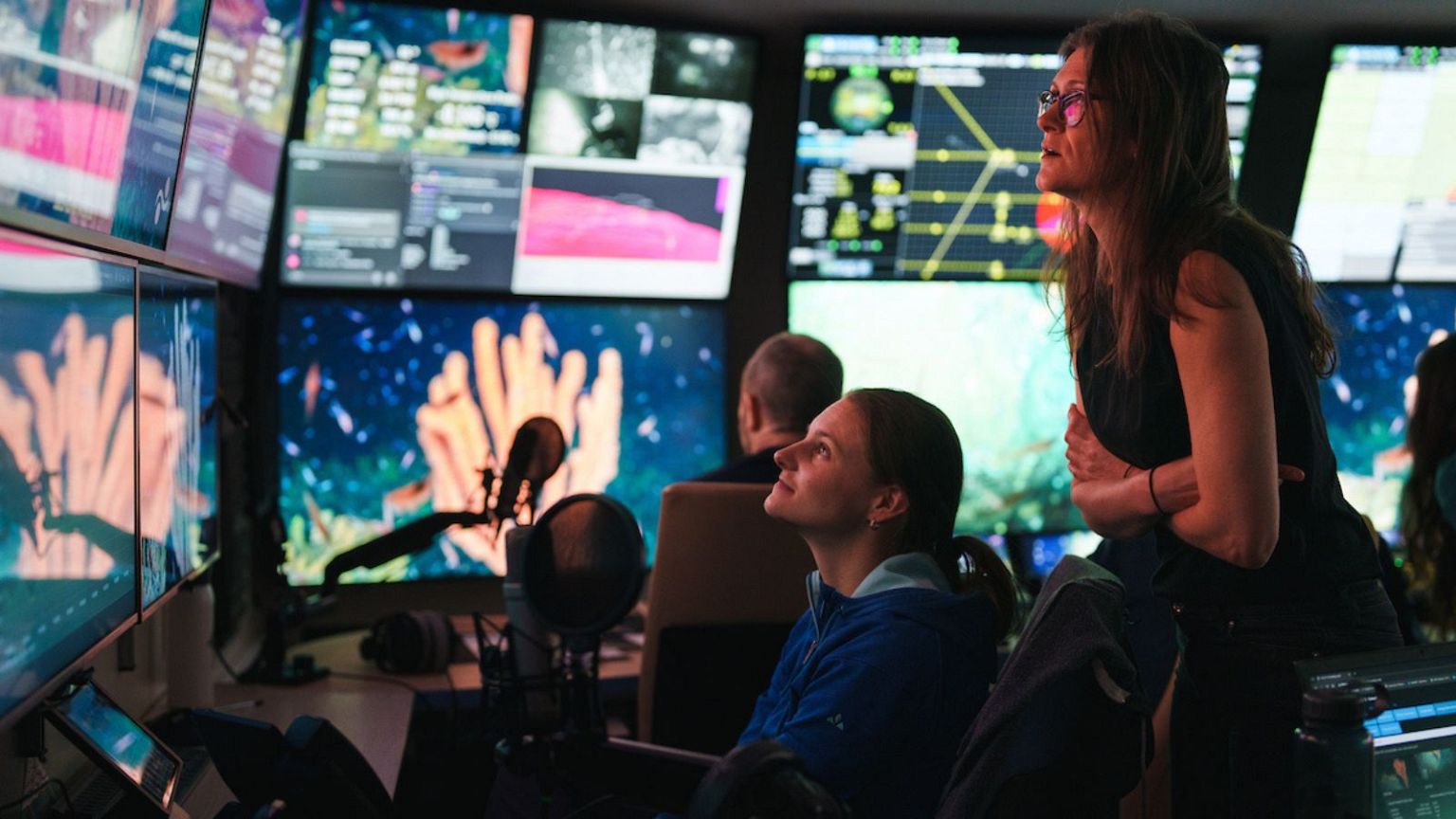
The mission was so remote that often the closest humans to the vessel were on the International Space Station.


Copyright Alex Ingle / Schmidt Ocean Institute

By Lottie Limb
Published on 18/05/2025 

Scientists on board a deep-sea expedition to the South Sandwich Islands near Antarctica have returned with a treasure trove of photos of previously unseen marine life.

They found coral gardens, hydrothermal vents and many suspected new species while exploring around the island chain, including in the deepest trench in the Southern Ocean.

The same international team, aboard Schmidt Ocean Institute’s research vessel Falkor (too), made headlines last month with their world-first footage of a colossal squid. And in January, they were in the right place at the right time to explore the seafloor when a Chicago-sized iceberg broke away from an ice shelf in Antarctica.


But there were many more “magic moments” on the 35-day deep-sea expedition to this extremely biodiverse part of the ocean.


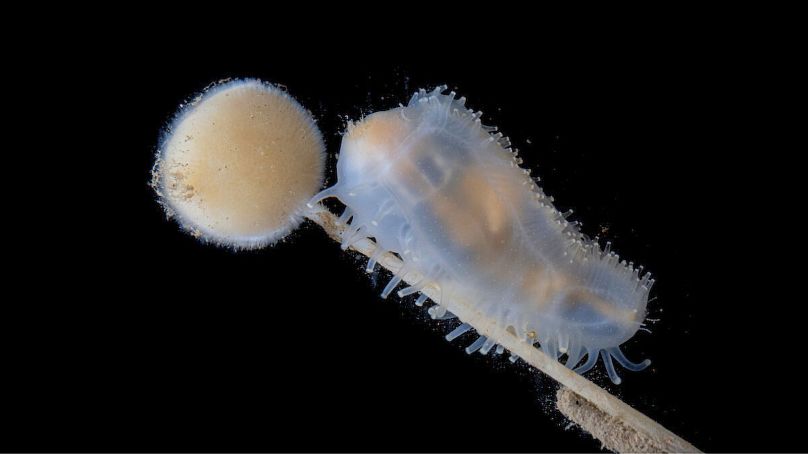
A sea cucumber recorded at 649 metres at Saunders East, in waters measuring +0.51°C. These creatures provide a crucial ecosystem service by recycling nutrients. Jialing Cai / The Nippon Foundation – Nekton Ocean Census / Schmidt Ocean Institute

“The 35 days at sea were an exciting rollercoaster of scientific discovery; the implications of which will be felt for many years to come as discoveries filter into management action,” says Dr Michelle Taylor, head of science and expedition principal investigator at the Ocean Census - the world’s largest initiative to accelerate the discovery of ocean life.

These remarkable photos take us along for the ride.


Where are the South Sandwich Islands?

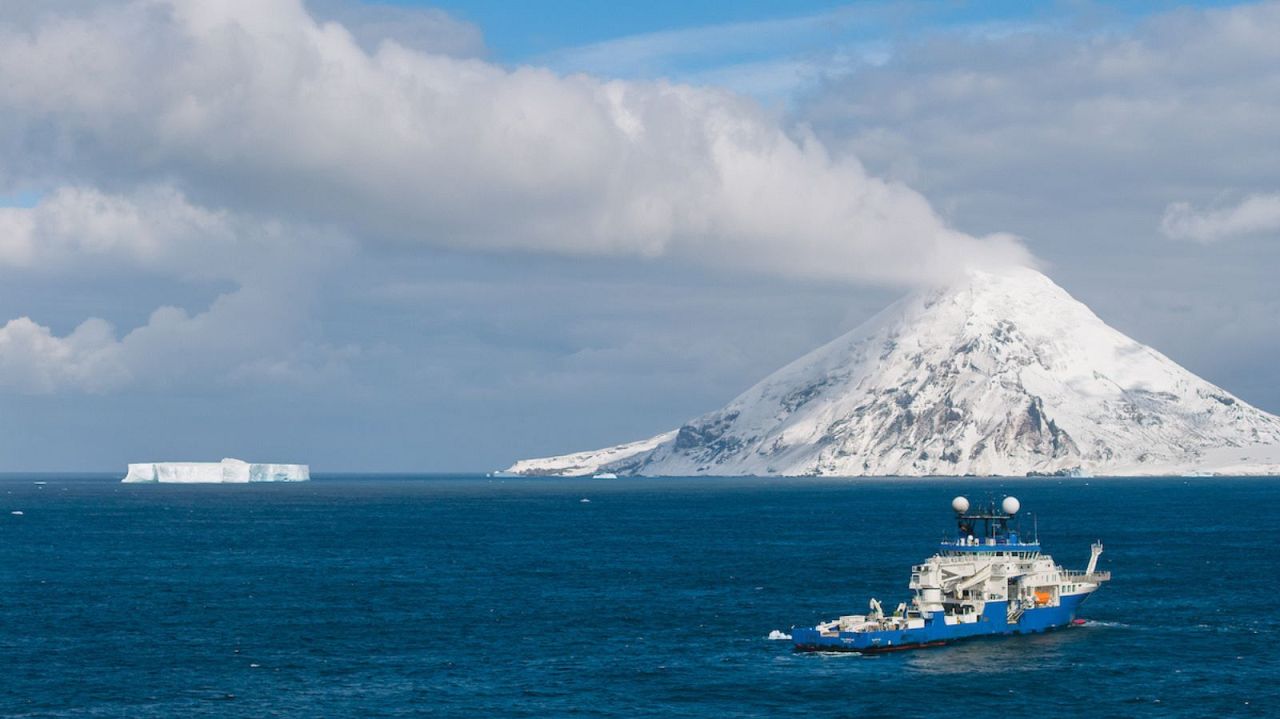
Research Vessel Falkor (too) conducts studies off the South Sandwich Islands, including a site close to Montagu Island.Alex Ingle / Schmidt Ocean Institute

Located in the South Atlantic, the South Sandwich Islands are part of a rich mosaic of geologic features.

These include hadal zone trenches (the deepest region of the ocean), underwater volcanoes, and spreading centres - features created by tectonic forces that have supported the evolution of species found nowhere else on the planet.

It took eight days for the research vessel to travel to the islands from the port of Punta Arenas, Chile.

On board were Ocean Census scientists, who led efforts to discover new species, and researchers from GoSouth, a collaboration between the UK’s University of Plymouth, the British Antarctic Survey and Germany’s GEOMAR, tasked with investigating the effects of geohazards, including tsunamis, volcanoes, and earthquakes.
RelatedRare snail that can ‘slurp up earthworms like noodles’ caught on camera laying an egg from its neck

New hydrothermal vents discovered


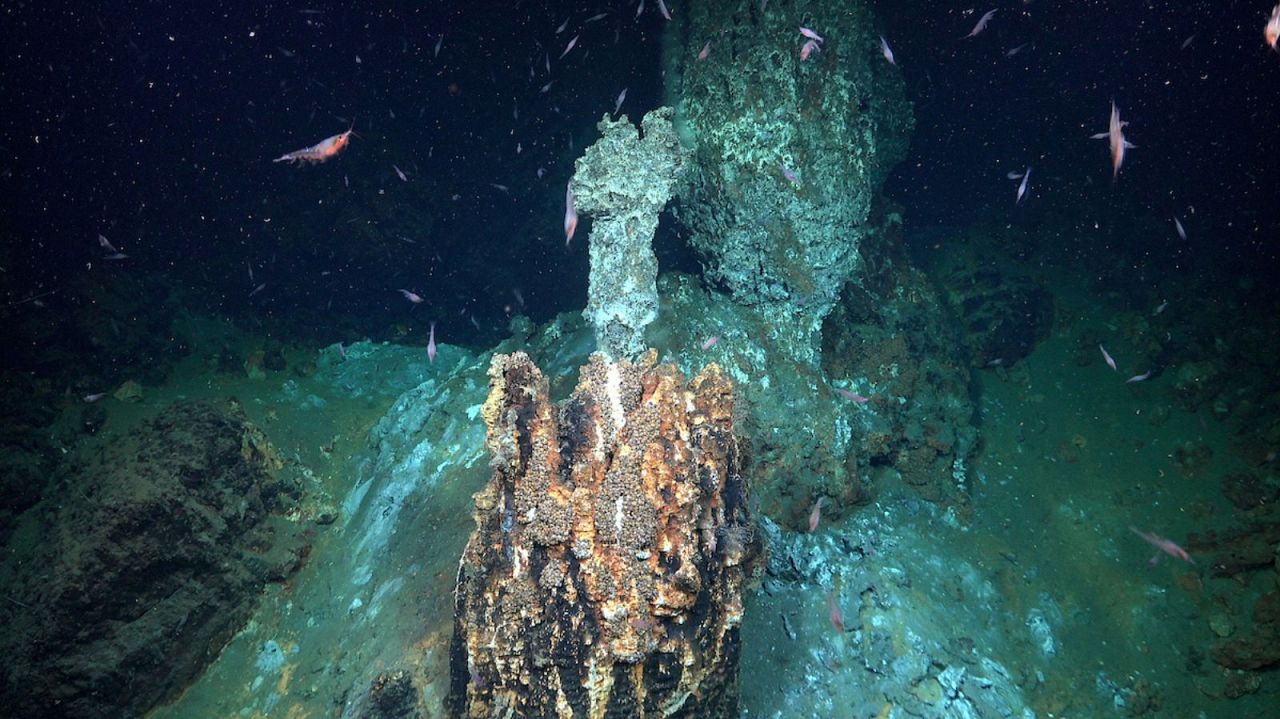
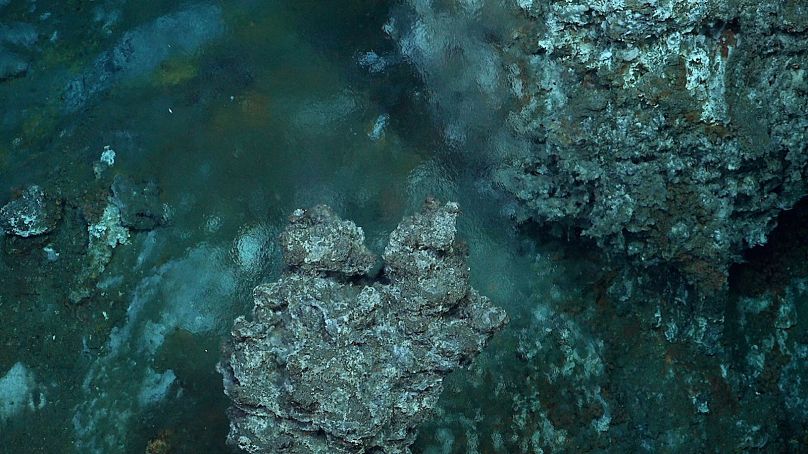
Researchers discovered hydrothermal vents at 700 metres depth on the northeast side of Quest Caldera, off the South Sandwich Islands. ROV SuBastian / Schmidt Ocean Institute

The GoSouth team, led by co-chief scientist Dr Jenny Gales, discovered two pockmarks in the mapping data of an underwater caldera - a bowl-shaped depression in the seafloor, left after a volcano erupts.

Since pockmarks can indicate hydrothermal activity, the team deployed the vessel’s remotely operated vehicle (ROV) SuBastian to map the pockmarks at a higher resolution.

The robot confirmed the presence of hydrothermal vents - fissures from which geothermally heated water rises - finding three on the larger pockmark, and one on the smaller one.

Scientists observed shimmering hot water emerging from a chimney at 710 metres during a dive on the north-east side of Quest Caldera. ROV SuBastian / Schmidt Ocean Institute

Located at a depth of 700 metres, they are some of the shallowest hydrothermal vents to have been discovered near the South Sandwich Islands. The tallest vent chimney was four metres - about as tall as a basketball hoop.

“Discovering these hydrothermal vents was a magical moment, as they have never been seen here before,” says Dr Gales, an associate professor in Ocean Exploration at the University of Plymouth.

“It’s an incredible discovery that provides valuable insights into the area’s tectonic activity. Making such a discovery is rare. It highlights the importance of ocean exploration and seafloor mapping.”

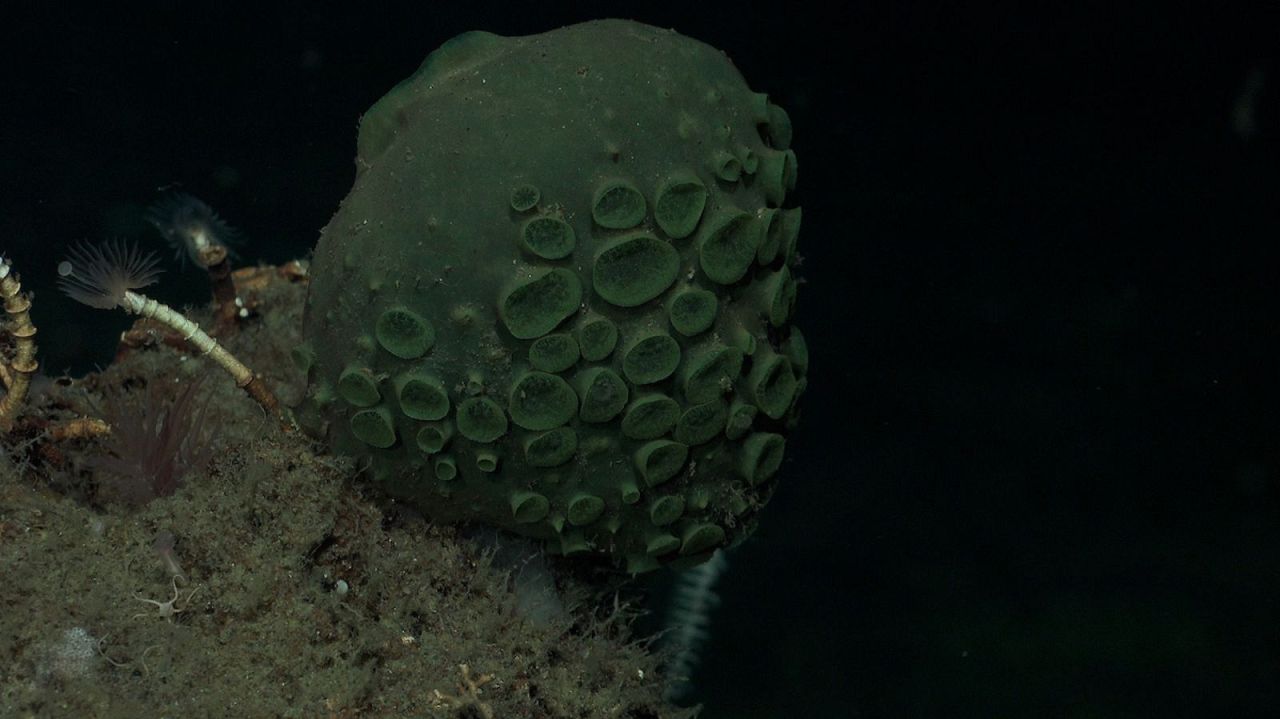
The science team observed this green deep-sea sponge at 974 metres on the north-east side of Quest Caldera. ROV SuBastian / Schmidt Ocean Institute

Each vent was covered with an array of life dependent on chemosynthesis (producing food using inorganic substances without sunlight), including sea snails and barnacles.

Thriving coral gardens and large sponges were also found in close proximity to the vents - an unusual observation, according to Dr Taylor.

Coral gardens and new species found far from human eyes

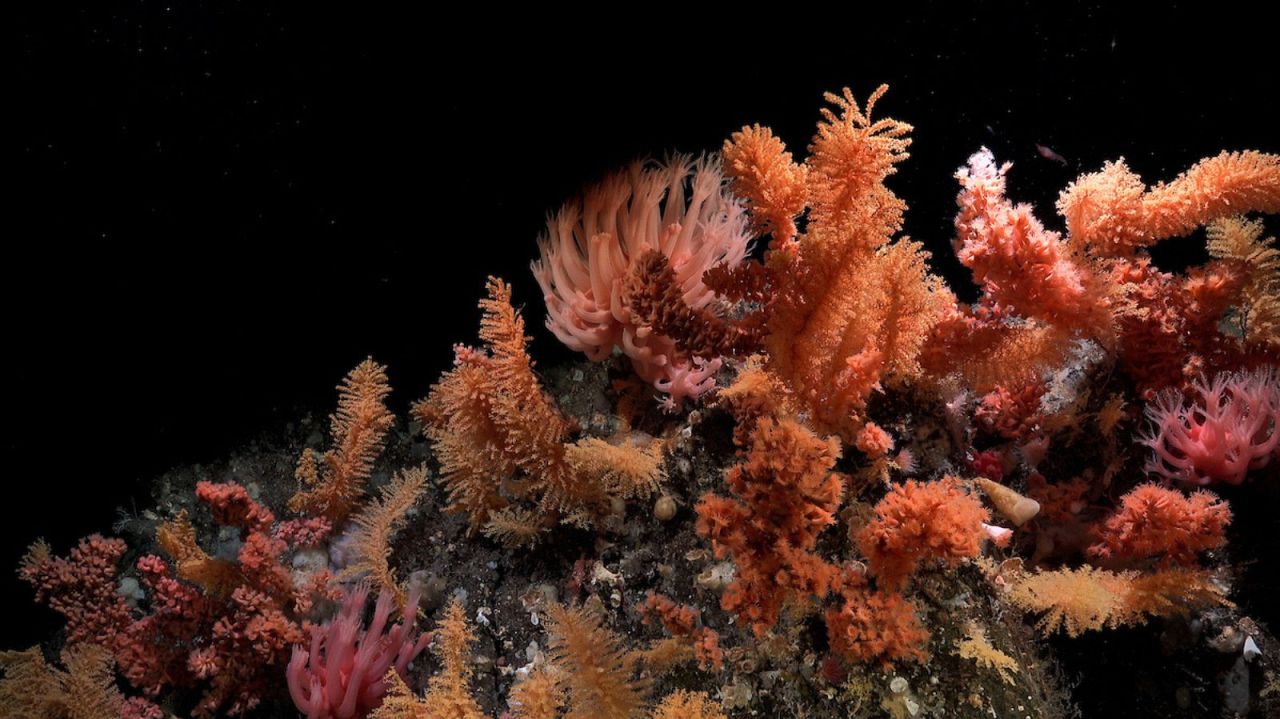
A vibrant grouping of coral, documented on Humpback Seamount. ROV SuBastian / Schmidt Ocean Institute

Meanwhile, Ocean Census scientists uncovered a range of potentially new marine life - including corals, sponges, snails, sea urchins, sea stars and benthic (sea bottom) ctenophores, which have gelatinous bodies.

A thriving coral garden located west of Saunders Island at a depth of 120 metres is pictured in one of the most breathtaking photos from the expedition.

The exact number of new species will be announced later this year when experts have had time to formally assess and catalogue the findings.

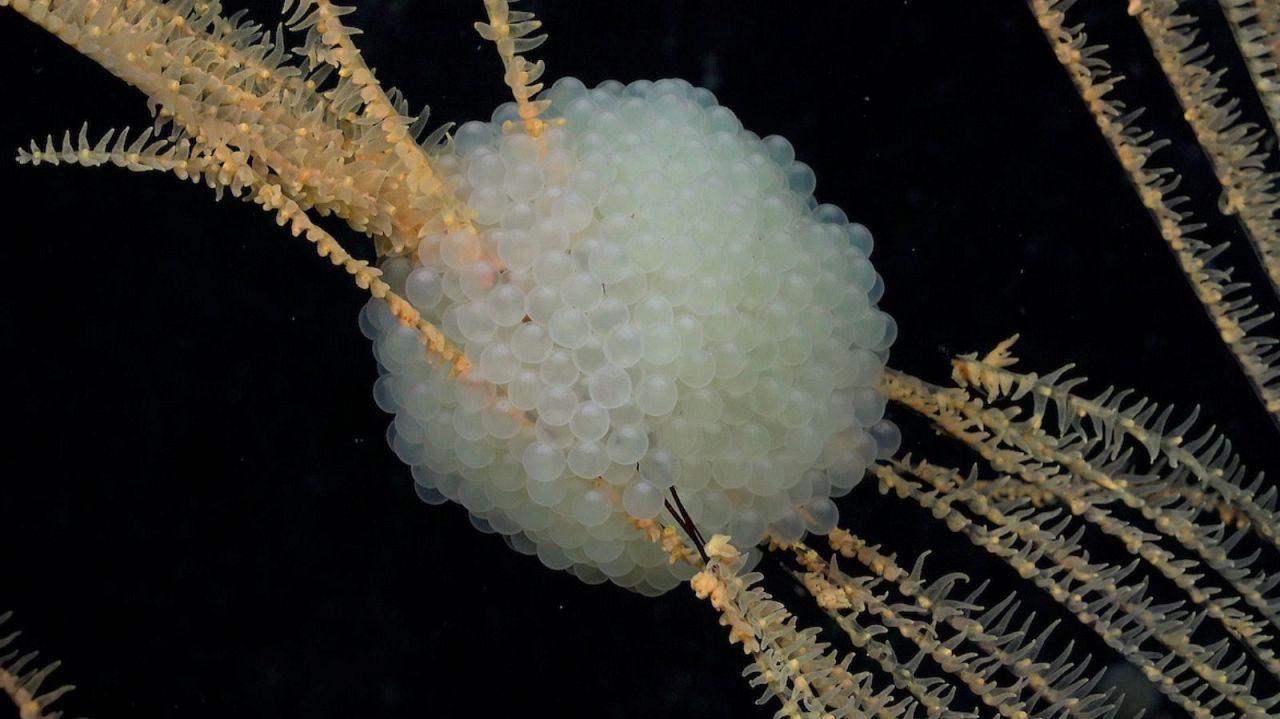
While exploring underwater mountains and the South Sandwich Trench, researchers found these snailfish eggs had been laid on a black coral. ROV SuBastian / Schmidt Ocean Institute

But they include a possible new sea cucumber species - marine invertebrates so-named for their soft cylindrical bodies. These creatures play a crucial role in benthic ecosystems by recycling nutrients, and are well-adapted to the cold Antarctic environment.

During a dive in the South Sandwich Trench - one of the coldest and most isolated submarine trenches on the planet - the team also spotted snailfish eggs laid on a black coral, a previously unknown behaviour.

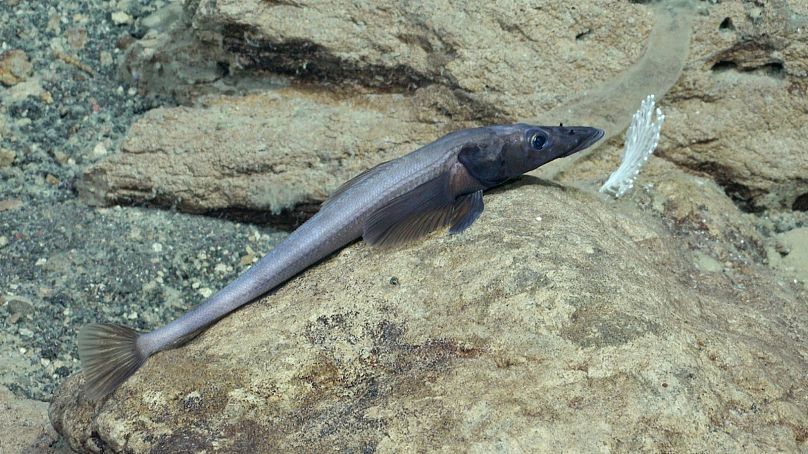
They also captured the first footage of Akarotaxis aff. gouldae, a species of dragonfish that was discovered only two years ago. And found large pumice blocks, indicating that the South Sandwich Islands are capable of explosive volcanism.

The first-ever footage of the newly-discovered dragonfish species. Its documentation provides valuable insight into the deep-sea biodiversity of this remote region. ROV SuBastian / Schmidt Ocean Institute

Mother Nature threw everything she had at the expedition, says Dr Taylor, including a subsea earthquake, tropical storm force winds with hurricane-level gusts, eight-metre waves, and icebergs to navigate.

“The challenging ocean and weather conditions and the isolated location of the South Sandwich Islands capture the imagination of the boldest explorers - often the closest humans to the vessel were on the International Space Station,” says Schmidt Ocean Institute’s executive director, Dr Jyotika Virmani.


Israel recovers archive belonging to spy Eli Cohen, hanged in Syria in 1965

Eli Cohen, who was born in Egypt, is one of Israeli most famous ever operatives. He is widely credited with helping Israel to prepare for the Six-Day War.

In this undated photo released by the Israeli Prime Minister's Office, identity documents of Eli Cohen are displayed
Copyright AP Photo
By Gavin Blackburn with AP
Published on 

Israel has retrieved thousands of items belonging to the country's most famous spy after a covert operation in Syria, authorities said.

Prime Minister Benjamin Netanyahu shared some of the 2,500 items from the Syrian archive relating to Eli Cohen on Sunday, a spy for the national intelligence agency Mossad who infiltrated the political echelon in the neighbouring country.

Sunday marked 60 years since he was hanged in a square in Damascus.

The items recently spirited into Israel include documents, recordings, photos, and items collected by Syrian intelligence after his capture in January 1965, letters in his own handwriting to his family in Israel, photographs of his activity during his operational mission in Syria and personal objects that were taken from his home after his capture.

Suitcases of items brought to Israel included folders filled with handwritten notes, keys to his apartment in Damascus, passports and false identification documents, instructions from Mossad to monitor specific people and places and documentation of all the efforts of his widow, Nadia Cohen, begging world leaders for his release from prison.


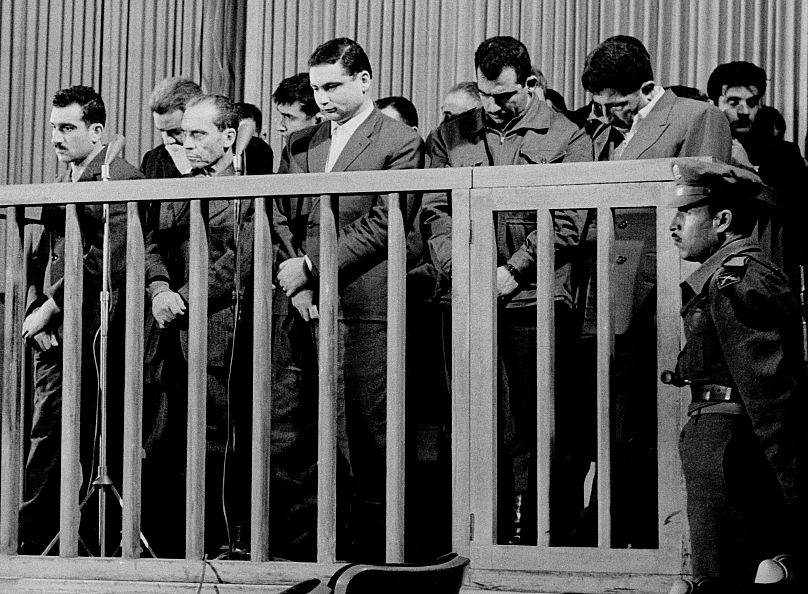
Elie Cohen, far left, listens as he is sentenced to death by a special military court in Damascus, 8 May, 1965AP Photo

Cohen's success in Syria was one of the Mossad spy agency's first significant achievements, and the top-secret intelligence he obtained is widely credited with helping Israel prepare for its swift victory in the 1967 Middle East War.

Cohen managed to forge close contacts within the political and military hierarchy of Israel’s archenemy in the early 1960s, ultimately rising to become a top adviser to Syria's defence minister.

In 1965, Cohen was caught radioing information to Israel. He was tried and hanged in a Damascus square on 18 May 1965.

Whereabouts of Cohen's body still a mystery

His remains have yet to be returned to Israel, where he is regarded as a national hero.

In 2019, actor Sacha Baron Cohen (no relation) portrayed Eli Cohen in a six-episode Netflix series called "The Spy."

"We conducted a special operation by the Mossad, by the State of Israel, to bring (Eli Cohen’s) archive, which had been in the safes of the Syrian intelligence for 60 years," Netanyahu said in Jerusalem.

Ahead of viewing the items, Cohen's widow Nadia told Netanyahu that the most important thing was to bring her husband's body back to Israel.

Netanyahu said Israel was continuing to work on locating his remains.


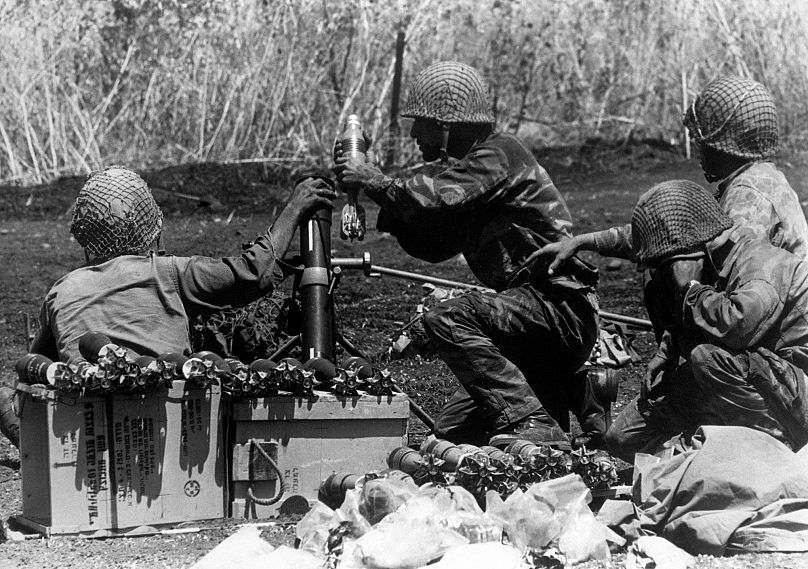
An Israeli mortar team is seen in action pounding Syrian hill positions during the fighting of the Six-Day War, 10 June, 1967AP Photo

"Eli is an Israeli legend. He's the greatest agent Israeli intelligence has had in the years the state existed. There was no one like him," Netanyahu said.

The Israeli daily Maariv reported on Friday that senior officials from Syria's new interim government reportedly offered to return the remains of Cohen to Israel during reconciliation talks in Tel Aviv.

Syria's transitional government was sworn in in March, almost four months after a lightning rebel offensive in December forced long-time ruler Bashar al-Assad from power, forcing him to flee to Moscow.

Since then, interim president and former rebel leader Ahmed al-Sharaa has sought to normalise ties with both regional countries and Western powers, including the US and the EU, with the aim of removing crippling economic sanctions placed on Syria during the al-Assad dictatorship.

Shifting sands: Who can the Middle East turn to after USAID funding cuts?

As USAID moves its regional bureau to Cairo, Euronews asks how the Trump administration’s gutting of humanitarian — but not military — assistance to Egypt and Jordan could affect the region’s stability, and open it up to other powers.


Copyright AP Photo/Amr Nabil

LONG READ

By Gregory Holyoke
Published on 19/05/2025 

The last post on the US Agency for International Development’s (USAID) Middle East Facebook page was published on 17 January. “We are hiring," it said enthusiastically.

Three days later, Donald Trump assumed the US presidency. That same day, he signed an executive order freezing all foreign aid pending a 90-day review.

It took just five weeks for the administration and the Elon Musk-led Department of Government Efficiency, or DOGE, to cut 90% of the USAID foreign aid contracts and $60 billion (€53.4bn) in overall US assistance worldwide.

The decision — labelled as “one of the most sweeping rollbacks of US humanitarian and development funding in history” — immediately caused reverberations across the globe, not least in the Middle East and North Africa.

The US has long been by far the largest funder of the United Nations, providing over $13 billion (€11.6bn) in 2023, which accounted for more than a quarter of its total budget. This figure inflated to over half for agencies like the World Food Programme. All gone, with the stroke of a pen.

A former USAID employee who spoke on the condition of anonymity in fear of reprisals said the decision would “put lives in jeopardy”. Privately, UN employees told Euronews of lights and heating being permanently cut off in the office in the middle of winter, even at headquarters in Geneva.

The administration has also introduced stringent — and some believe highly politicised — conditions for the little money available.

A US-funding document shared with Euronews by a UN official included questions asking applicants to “confirm that your organisation does not work with entities associated with communist, socialist, or totalitarian parties, or any party that espouses anti-American beliefs.”

Another condition demands that projects “reinforce US sovereignty by limiting reliance on international organisations or global governance,” singling out the UN.

The changes were felt acutely on the ground in Egypt and Jordan. The US has long been the most significant international benefactor to both.

Without even taking into account the indirect humanitarian aid from US-funded international agencies, Cairo and Amman are the third and fourth biggest recipients of US international financing, amounting to over $3 billion (nearly €2.7bn) a year.

As former Egyptian diplomat and Assistant Minister of Foreign Affairs Dr Ezzat Saad told Euronews from his office in Cairo, “we’re living in a turbulent and tense climate that the Trump administration has created”.

However, Washington has made a crucial distinction in what aid it is gutting and what will be retained.


Much ado about Rafah

Amidst the cuts and chaos, the US government announced in March that it would set up a brand-new USAID regional bureau in Cairo: an incongruous and widely overlooked decision. Even US officials on the ground admitted to Euronews that they did not know about the decision, let alone the reasons behind it.

Closer inspection of what constitutes aid in Jordan and Egypt could explain at least part of the reasoning. While 75% of US assistance to Jordan is humanitarian, that number tumbles to just 20% in Egypt.

The rest goes on military assistance, or providing weapons, of which Egypt is the second biggest recipient after neighbouring Israel. Washington has signalled that this form of support will not be affected by recent cuts.

Some see the reason for retaining such aid as relating to a common border between the two and the Egypt-controlled Rafah crossing into the Gaza Strip.

“Egypt’s primary issue now is making sure that Gazans stay in Gaza and they need the support of the US for this,” Ben Fishman explained to Euronews from Washington.

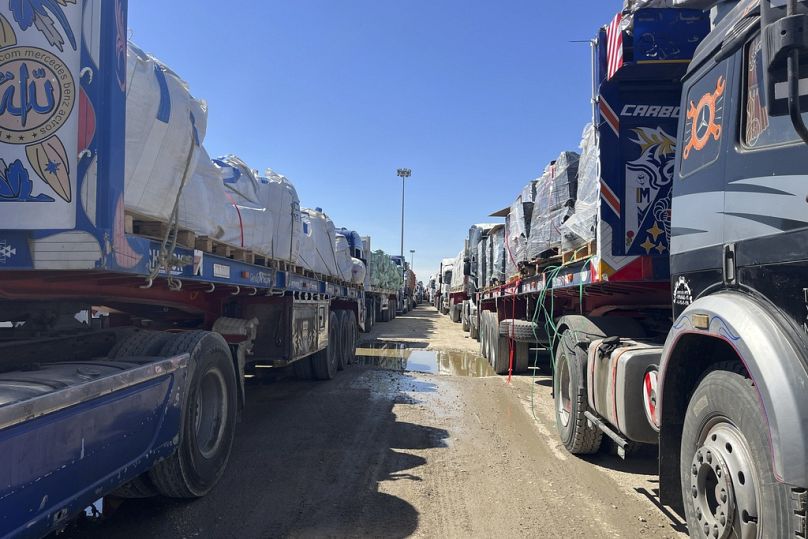
FILE: Trucks line up at the Egyptian side of the Rafah border crossing between Egypt and the Gaza Strip, 2 March 2025AP Photo/Mohamed Arafat

Fishman is a senior fellow at the Washington Institute think-tank, having previously worked supporting the Obama administration on Middle East policy, including on aid packages.

Since the start of Israel’s campaign against Hamas in Gaza, some, including Israeli ministers, have posited the idea of opening the Rafah border crossing into Sinai to empty out the tract of land of an increasingly desperate civilian population as it attempts to rid the Strip of the militant group.

More recently, the US president himself echoed the idea.

Egypt has suffered years of successive economic crises, exacerbated by a regional conflict that has led to a fall in tourism and a 60% decline in income from Egypt’s biggest single source of revenue, the Suez Canal.

It seems the last thing Cairo wants is more people to look after, especially in North Sinai, a strategic territory in the Middle East that makes Egypt one of the few countries in the world stretching across two continents.

Last year, it was reported that the Egyptian authorities were quietly constructing a kilometres-long and five-metre-high wall set back from the Rafah crossing.

Related
Egypt, Tunisia and Morocco in EU list of safe countries of origin
Arab leaders endorse Egypt's €50bn plan to rebuild Gaza, countering Trump's proposal

However, former Egyptian opposition MP and political analyst Amr El-Shobaki questioned Fishman’s analysis of the reasons behind the continuation of US military aid to Egypt during an interview with Euronews in Cairo.

Referencing the decision to move the USAID bureau to the Egyptian capital, El-Shobaki said, “With the headquarters here in Egypt, maybe they think that it's still possible to convince Egypt to accept at least some of the Palestinians from Gaza.”

Jumping between English, French and Arabic, the ex-politician quickly clarified: “This is what America is thinking. The Egyptian government has refused.”

Yet continued US assistance has not extended to Jordan, which already houses more Palestinian registered refugees than the entire population of Gaza, accounting for over 20% of the country’s population.

Jordanian Professor Ayman Al-Barasneh is deeply concerned about the loss of US funding for refugee populations.

“This will put pressure on essential public services, such as healthcare and education and supporting refugees," he told Euronews from Jordan University. "All these sectors rely heavily on US aid.”

Professor Al-Barasneh also warned that the cuts will have a dangerous ripple effect, perhaps even beyond his country's borders.

“American continued support has become essential for Jordan to maintain its internal stability, accelerate development, and manage its precarious geopolitical situation amid the Middle East wars,” he explained.
Who are you going to call?

The US retreat in Jordan, and to a lesser extent in Egypt, is opening the door for new powers, including the EU, to replace the US aid dominance.

In April, the EU approved a landmark €4.5 billion financial assistance package to Jordan and Egypt, with the vast majority going to the latter.

It came just months after EU Commission President Ursula Von der Leyen and Jordan’s King Abdullah II signed a separate support deal worth €3 billion, amid handshakes and beaming smiles.

Von der Leyen described Jordan as “a key partner and pillar of regional stability”.

Professor Al-Barasneh hailed the deal as a “contribution to reducing the financial deficit by using $1.32 billion (€1.17bn) to compensate for the loss of US aid.”

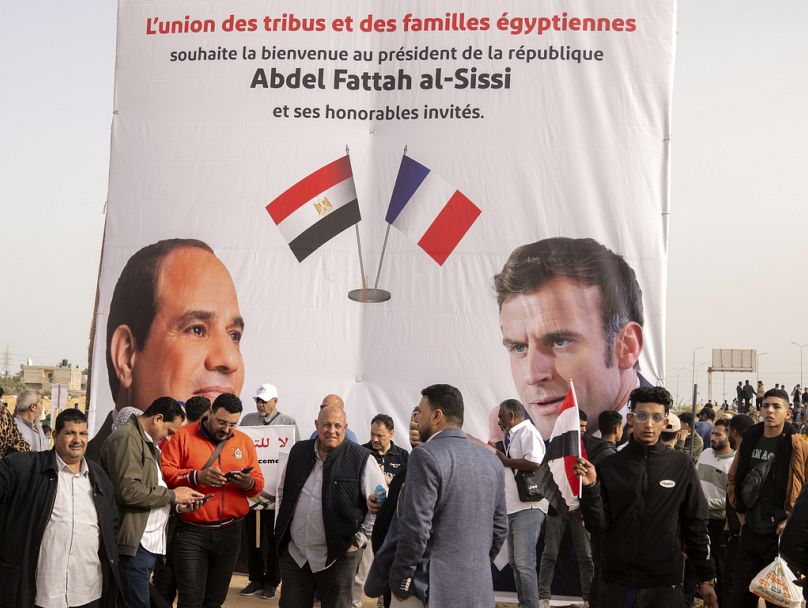
Egyptians walk in front of a banner featuring Egyptian President Abdel-Fattah el-Sissi and his French counterpart Emmanuel Macron, during their visit to Arish, 8 April 2025
AP Photo/Mohammed Arafat

Meanwhile, Dr Saad pointed out that stability in Egypt and Jordan directly benefited the EU, a political union plagued by debates over illegal migration across the Mediterranean.

“Any reduction in the role of Washington on problems in the Middle East places an additional burden on the Europeans,” he said.

“We always tell the European ambassadors who visit us here that we are closer to you than you think and you must think about having an active political role in solving the problems of the region,” explained Dr Saad, who also served as Egypt's ambassador to Indonesia, Russia and Turkmenistan, among others.

However, for El-Shobaky, it is the existence of these debates and the lack of unity in Europe which stymies its ability to take on the role that the US seems to be relinquishing.

“The problem is still the division inside Europe. They don't have a common political system,” the now-director of the Arab-European unit at the Al-Ahram Centre for Political and Strategic Studies explained.

“Europe as an economic partner is amazing. It is, I think, the fairest economic partner with Egypt. But we cannot rely on Europe to solve things like the Palestinian issue”.
'Alternatives that rise to the challenge'

Away from the US and EU, China and Russia are becoming increasingly intertwined with Egypt and Jordan, especially the former.

Western countries and Israel recently reacted with consternation as Egypt held joint naval exercises with China and Russia in the Mediterranean, codenamed operation "Bridge of Friendship 2025".

Then, last Tuesday, it was reported that a Chinese Il-76MF, a Soviet-designed heavy transport aircraft, had landed in Egypt, raising speculation about fresh Chinese military equipment arriving in the country. It was the latest in a series of Chinese military flights destined for Egypt.

El-Shobaky explained matter-of-factly that despite US assurances on military aid to Egypt, “we need to build alternatives that rise to the challenge, either with Europe, or perhaps Russia. If its war (in Ukraine) stops, then of course, its role will increase. And China is already progressing technically.”

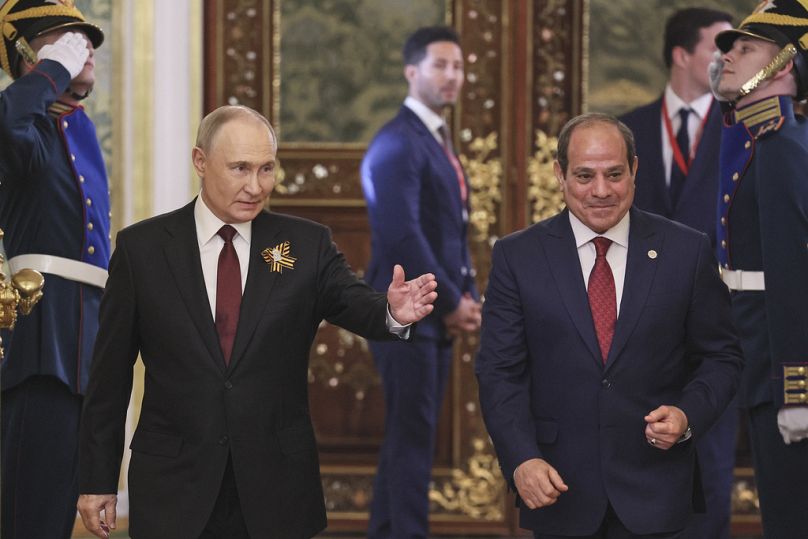
Russian President Vladimir Putin and Egyptian President Abdel Fattah el-Sissi enter the hall during their meeting in Kremlin, 9 May 2025Yuri Kochetkov/AP

His concerns fit into a wider global conversation about the reliability – or lack thereof – of a country once seen as the single dominant world power.

But don’t write off the US too quickly, El-Shobaky countered towards the end of the interview with Euronews.

“I don't see that American domination will disappear in just a few years,” he said, adding that Egypt is not at heart “part of the axis of Iran, Russia (and) China.”

“Sure, Egypt has good relations with Russia and China, but we try to make a balance, we have very good relations with Europe. Egypt is integrated into an international system, and who leads this international system? The US.”

The Trump administration also recently rolled back some of its more extreme aid cuts.

However, El-Shobaky contended that his country and those in the wider region will just have to deal with these constantly shifting sands.

“They continue to do what they do,” he concludes, referring to the US, EU, Russia and China, closing the door and shaking his head ever so slightly.

“We try to just manage and survive”.


China's new 'drone mothership' expected to launch for first test flight within days

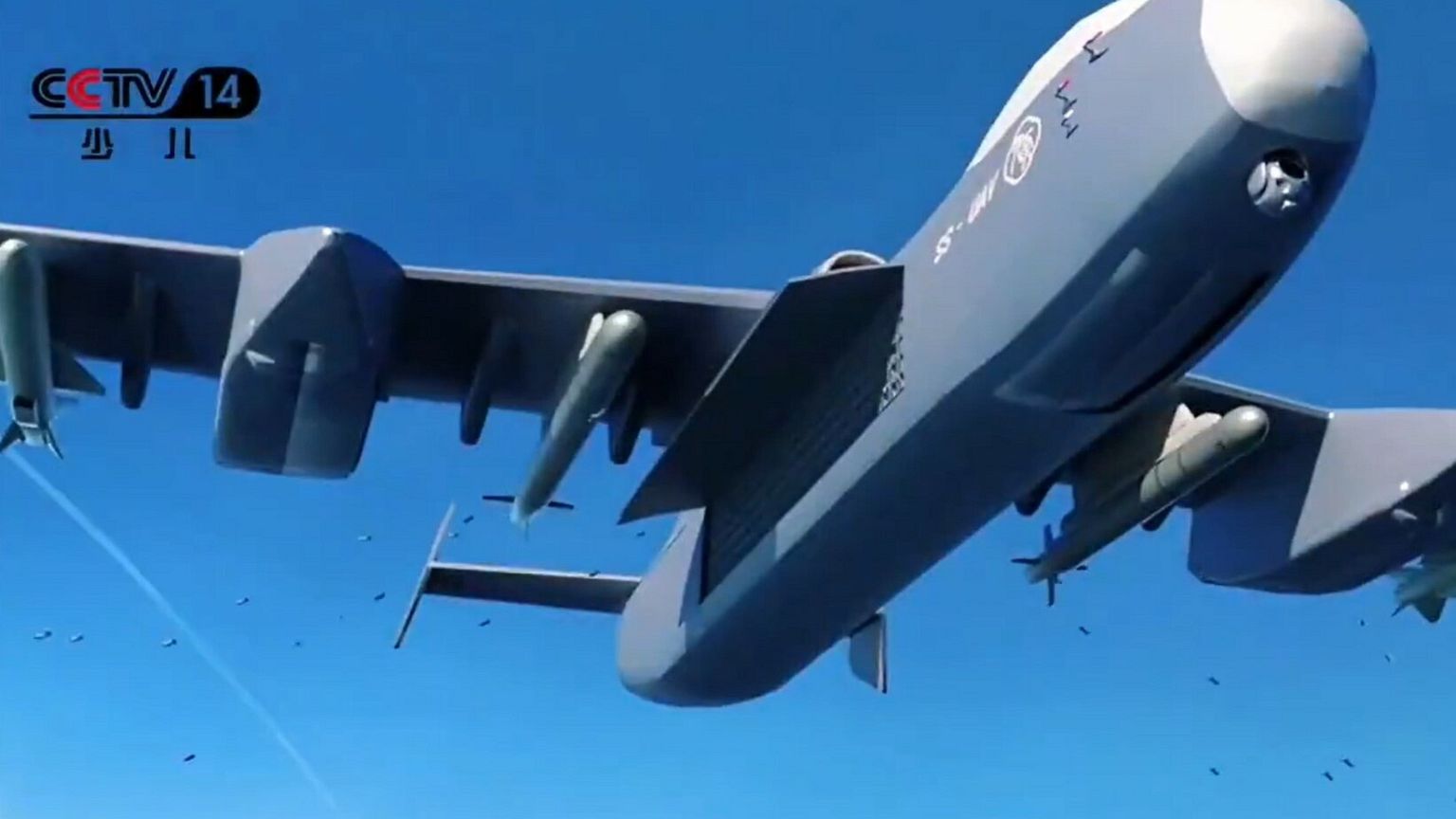
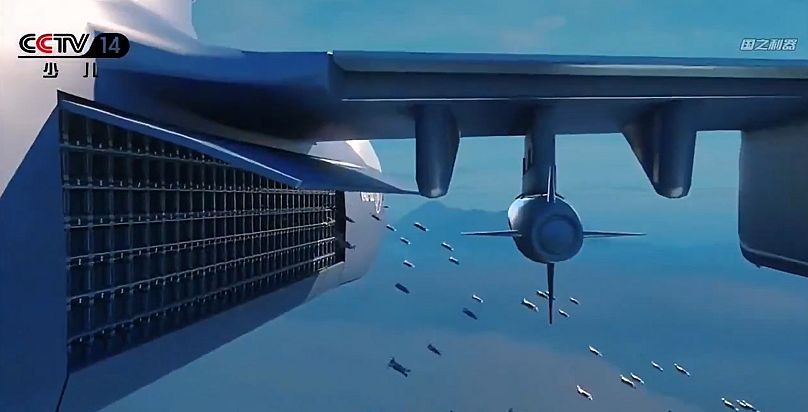
A screenshot from a CCTV 14 video showing a visualisation of the Jiu Tian drone mothership
Copyright Screenshot
By Gavin Blackburn
Published on 

When it is fully operational, Jiu Tian will release a vast swarm of up to 100 smaller drones that would work together to overwhelm an enemy's air defence systems.

A new Chinese drone carrier that can release up to 100 smaller drones at a time could take to the skies for a test flight within days, state broadcaster CCTV has said.

The unmanned "drone mothership," known as Jiu Tian or Nine Heavens, will be deployed by the People's Liberation Army (PLA) air force and aims to lay the groundwork to expand the reach of aerial combat.

When it is fully operational, Jiu Tian will release vast swarms of drones that would work together to overwhelm an enemy's air defence systems.

A video circulating on X shows a visualisation of Jiu Tian’s capabilities and its ability to deploy several drones at the same time from both sides of its fuselage.

The jet-powered drone will first undergo a series of tests before it is fully deployed by the Chinese air force.


A screenshot from a CCTV 14 video showing a visualisation of the Jiu Tian drone mothership 

The super-high altitude Jiu Tian can carry up to six tonnes of ammunition and smaller drones, the UAV has a maximum range of 7,000 kilometres.

Jiu Tian is the latest addition to China's rapidly developing arsenal of advanced drone technology, with unmanned aerial vehicles (UAV) becoming increasingly critical on the modern battlefield.

The new Chinese "drone mothership" is being seen as a rival to established US models like the RQ-4 Global Hawk and the MQ-9 Reaper, according to an article published in the South China Morning Post.

Jiu Tian was designed by the state-owned Aviation Industry Corporation of China and constructed by Xi’an Chida Aircraft Parts Manufacturing.

The manufacturer says Jiu Tian's design allows the drone to carry out several differentfunctions such as high-security transport, border defence and emergency rescue operations.

Its announcement comes as China seeks to ramp up its military capabilities, a military build-up that has been closely watched around the world, particularly following repeated threats to annex Taiwan.

China sees democratically-ruled Taiwan as a breakaway province that must be brought under mainland control, by force if necessary.

Marking the 80th anniversary of the end of World War II, Taiwan's President Lai Ching-te said, "Today, 80 years later, we share the same values ​​and face similar challenges as many of the democracies that participated in the European war."


Trading bots are evolving: What happens when AI cheats the market?

Canva.
Copyright Canva.

By Eleanor Butler
Published on 

Algorithms have been used in trading for decades, but recent advancements could throw up new challenges for regulators.

Malevolent trading practices aren’t new. Struggles against insider trading, as well as different forms of market manipulation, represent a long-running battle for regulators.

In recent years — however — experts have been warning of new threats to our financial systems. Developments in AI mean that automated trading bots are not only smarter, but they’re more independent too. While basic algorithms respond to programmed commands, new bots are able to learn from experience, quickly synthesise vast amounts of information, and act autonomously when making trades.

According to academics, one risk scenario involves collaboration between AI bots. Just imagine: hundreds of AI-driven social media profiles begin to pop up online, weaving narratives about certain companies. The information spread isn’t necessarily fake, but may just be the amplification of existing news. In response, real social media users start to react, highlighting the bots’ chosen message.

As the market is tipped by the crafted narrative, one investor's roboadvisor rakes in profits, having coordinated with the gossiping bots. Other investors, who didn’t have the insider information, lose out by badly timing the market. The problem is, the investor profiting may not even be aware of the scheme. This means that charges of market manipulation can’t necessarily be effective, even if authorities can see that a trader has benefitted from distortive practices.

Social platforms are changing trading

Alessio Azzutti, assistant professor in law & technology (FinTech) at the University of Glasgow, told Euronews that the above scenario is still a hypothesis — as there’s not enough evidence to prove it’s happening. Even so, he explains that similar, less sophisticated schemes are taking place, particularly in “crypto asset markets and decentralised finance markets”.

“Malicious actors… can be very active on social media platforms and messaging platforms such as Telegram, where they may encourage members to invest their money in DeFi or in a given crypto asset, to suit themselves,” Azzutti explained.

“We can observe the direct activity of human malicious actors but also those who deploy AI bots.”

He added that the agents spreading misinformation may not necessarily be very sophisticated, but they still have the power to “pollute chats through fake news to mislead retail investors”.

“And so the question is, if a layman, if a youngster on his own in his home office is able to achieve these types of manipulations, what are the limits for the bigger players to achieve the same effect, in even more sophisticated markets?”

The way that market information now spreads online, in a widespread, rapid, and uncoordinated fashion, is also fostering different types of trading. Retail investors are more likely to follow crazes, rather than relying on their own analysis, which can destabilise the market and potentially be exploited by AI bots.

The widely-cited GameStop saga is a good example of herd trading, when users on a Reddit forum decided to buy up stock in the video game company en masse. Big hedge funds were betting that the price would fall, and subsequently lost out when it skyrocketed. Many experts say this wasn’t a case of collusion as no official agreement was created.

A spokesperson from ESMA, the European Securities and Markets Authority, told Euronews that the potential for AI bots to manipulate markets and profit off the movements is "a realistic concern", although they stressed that they don't have "specific information or statistics on this already happening".

"These risks are further intensified by the role of social media, which can act as a rapid transmission channel for false or misleading narratives that influence market dynamics. A key issue is the degree of human control over these systems, as traditional oversight mechanisms may be insufficient," said the spokesperson.

ESMA highlighted that it was "actively monitoring" AI developments.

Is regulation ready?

One challenge for regulators is that collaboration between AI agents can't be easily traced.

“They’re not sending emails, they’re not meeting with each other. They just learn over time the best strategy and so the traditional way to detect collusion doesn’t work with AI,” Itay Goldstein, professor of finance and economy at the Wharton School of the University of Pennsylvania, told Euronews.

“Regulation has to step up and find new strategies to deal with that,” he argued, adding that there is a lack of reliable data on exactly how traders are using AI.

Filippo Annunziata, professor of financial markets and banking legislation at Bocconi University, told Euronews that the current EU rules “shouldn’t be revised”, referring to the Regulation on Market Abuse (MAR) and the Markets in Financial Instruments Directive II (MiFID II).

Even so, he argued that “supervisors need to be equipped with more sophisticated tools for identifying possible market manipulation”.

He added:  “I even suggest that we ask people who develop AI tools for trading on markets and so on to include circuit breakers in these AI tools. This would force it to stop even before the risk of manipulation occurs.”

In terms of the current legal framework, there’s also the issue of responsibility when an AI agent acts in a malicious way, independent of human intent.

This is especially relevant in the case of so-called black box trading, where a bot executes trades without revealing its inner workings. To tackle this, Some experts believe that AI should be designed to be more transparent, so that regulators can understand the rationale behind decisions.

Another idea is to create new laws around liability, so that actors responsible for AI deployment could be held responsible for market manipulation. This could apply in cases where they didn’t intend to mislead investors.

"It's a bit like the tortoise and the hare," said Annunziata.

"Supervisors tend to be tortoises, but manipulators that use algorithms are hares, and it's difficult to catch up with them."