Saturday, May 24, 2025


Poland Checks Baltic for Explosives as Tensions Continue Over Shadow Fleet
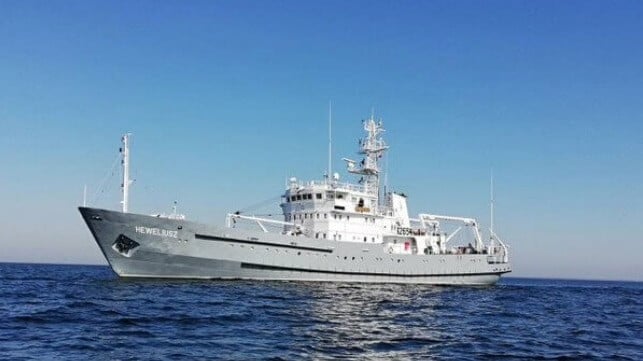
Polish survey ship
Polish Navy's survey ship ORP Heweliusz is surveying the area around the electric cable looking for explosives said the Polish Prime Minister (Minister of Defense)

Published May 22, 2025 6:01 PM by The Maritime Executive


The governments of Poland and Estonia continue to highlight the dangers in the Baltic coming from the shadow fleet and asserting their rights to inspect vessels. This comes as Russian officials have stepped up their verbal attacks on the EU’s efforts to reign in the activity of the so-called shadow fleet of tankers supporting Russia’s oil and gas trade.

After revealing that it had used its military to chase away a tanker acting suspiciously in the Baltic, Poland’s Prime Minister Donald Tusk told reporters on Thursday, May 22, “Not everyone realizes how often critical infrastructure facilities lying on the bottom of the Baltic Sea are the target of sabotage or even terrorist activities.” He was speaking during a follow-up meeting to Tuesday’s incident taking place at the Maritime Operations Center in Gdynia.

Tusk said that the shadow tanker acting suspiciously near the power cable connecting Poland and Sweden was “not the first such situation that we have encountered.” He said he was very satisfied that in a very effective, discreet manner, it was possible to discourage the ship from any actions that could have caused damage to the power cable.

However, he also told reporters, “We are still investigating whether any explosives were planted.” Poland reported that the Navy’s survey vessel ORP Heweliusz had been sent to the area after the incident. Tusk said there were currently no alarming signals but the process was proceeding. He also reported that during the meeting they decided to purchase surveillance drones for the Polish Navy.

At the same time, Estonia’s Prime Minister was questioned by the country’s parliament (Riigikogu) about the incident last week when Estonia attempted to inspect another shadow tanker that it suspected was operating without a valid registration. Prime Minister Kristen Michal cited the mandate given to the Estonian Defense Forces, the Police, and the Border Guard, asserting that “Estonia had legal grounds to inspect the vessel.” 

He said the Navy and the other sections of the government would take steps to protect Estonia’s maritime space, including critical infrastructure. ERR news reports he told parliament that “the inspections will continue.”

The Prime Minister said Estonia was ready to board the tanker if it had entered Estonian waters. Instead, the decision had been made to escort the vessel away from Estonian waters. A Russian fighter jet had briefly entered Estonia’s airspace and NATO planes were also observing. Russia however contended at a UN meeting of the Security Council that Estonia was trying to seize the tanker, attempted to board the ship, and tried to ram the tanker when it failed to gain control of the tanker.

Russia’s Permanent Representative to the United Nations Vassily Nebenzia told the Security Council, “This habit of using NATO naval forces and assets for such illegal actions will do nothing but pave the way to military escalation and creation of serious challenges to maritime security.” He called the efforts “pirates of the Baltic Sea.” He also asserted that NATO and West was blocking the investigation to find the terrorists that damaged the Nord 2 pipeline.

Speaking to the media in Moscow on Wednesday, presidential spokesperson Dmitry Peskov said according to Interfax that Russia would use all means available within the framework of international law to defend its ships in the Baltic Sea. 

"As the latest events related to the attempted pirate attack on one of the tankers have shown, Russia has shown that it is capable of responding quite harshly," Interfax reports Peskov said.

Fueling the tensions are moves by the European Union and the UK expanding the sanctions against shadow fleet tankers. The EU highlighted that it more than doubled the number of sanctioned vessels this week after previously authorizing inspections of documentation and insurance for all ships passing through EU waters even if they were not making a port stop in the EU.


Panama Registry Cracks Down on STS Actions to Stop Shadow Fleet
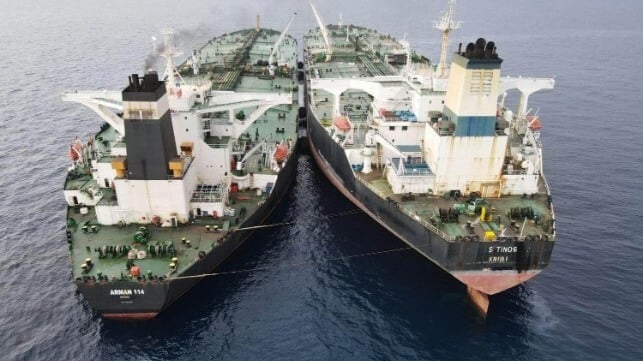
tankers in STS transfer
STS is a common technique in an attempt to hide the originals of oil coming from Iran and elsewhere (Bakamla)

Published May 23, 2025 5:49 PM by The Maritime Executive


The Panama Maritime Authority (PMA) is taking further actions to crack down on suspicious tankers by establishing new rules for ship-to-ship oil transfers for vessels in its registry. It is the latest in a series of steps responding to international pressure to stop the notorious technique used by vessels trying to hide transactions of Russian and Iranian oil.

“This new regulation reinforces Panama’s role as a flag state committed to maritime safety, operational transparency, and the prevention of fraudulent use of its registry, in full alignment with IMO regulations and the MARPOL Convention,” explained DGMM Acting Director, Engineer Rina Berrocal. “This is not just about safeguarding the reputation of the Panamanian registry,” she warned, “but about ensuring that our vessels are not used as platforms for illicit activities that undermine global trade and harm the environment.”

Under a resolution published this month, the PMA introduced rules it says are designed to create stricter controls and mandatory traceability for offshore STS transfers of hydrocarbons. Effective immediately, all Panama-flagged vessels with a gross tonnage of 150 or more must notify the flag state at least 48 hours in advance of any planned STS operation, providing detailed technical, logistical, and operational information.

“This initiative addresses the growing use of opaque vessels to circumvent international sanctions, transport undeclared crude, or evade environmental safety regulations—practices commonly associated with what is known as the shadow or dark fleet,” said Berrocal.

Ships are required to provide details on the other ship involved in the transfer including its IMO number and flag. They must also declare where and how the transfer will be performed and confirm that it has a plan in accordance with the MARPOL convention.

Last year, the PMA took steps to clean its registry and make the process of removing violators simpler. As the largest registry by the number of ships, Panama also had the greatest number of ships identified by watchdog groups as involved in the oil trade for Iran and Russia. Registry officials said they were making an effort to purge their ranks of suspect vessels and also have worked with other leading registries to identify vessels attempting to flag hop to avoid detection


Western Sanctions Take Big Bite Out of Sovcomflot’s Results
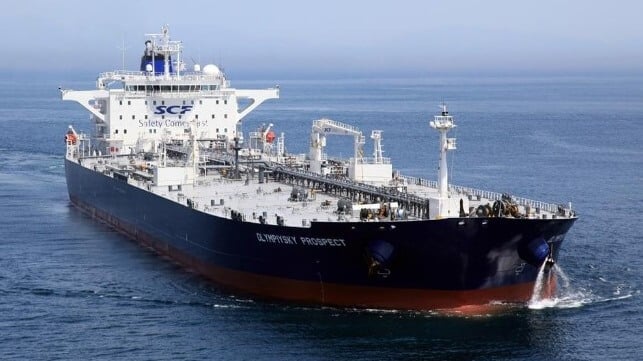
Sovcomflot tanker
Sovcomflot reported a financial loss and took an impairment charge due to the pressure from Western sanctions (SCF file photo)

Published May 23, 2025 4:35 PM by The Maritime Executive


Russia’s tanker operator PAO Sovcomflot is citing the impact of the Western sanctions on the company’s results. It reported a significant drop in revenues and a loss for the first quarter of 2025 along with recording a non-cash impairment related to the fleet.

The U.S., UK, and EU have all stepped up their efforts targeting the shadow tanker fleet and Russia’s income from the oil and gas sectors. In announcing its financial results the company cited the impact and warned investors that the board of directors would be taking into account “significant changes in the external business conditions that have a direct impact on the current financial performance of the company” as it considers dividends. They said future decisions would be guided by the principle of capital adequacy.

Sovcomflot has previously acknowledged the sanctions, which it calls illegal, and early on after the start of the sanctions regime took steps selling ships and moving management to Dubai and elsewhere. It was also moving ships to registries such as Gabon but later flag hopping. Some returned to the Russian registry.

In today’s financial announcement, the company acknowledged that some vessels are now idled by the sanction. During the first quarter, it took a non-cash impairment charge of $322 million against the value of the fleet.

“During the reporting period, unprecedented sanctions were imposed on the company and its vessels, which created additional commercial and operational difficulties in the operation of the fleet,” the company writes in its results announcement. “The company continues to work systematically to minimize the negative impact of sanctions restrictions on its activities, consistently adhering to high standards of maritime safety and the quality of maritime operations.”

Despite the efforts, the company reported first quarter revenues were down by nearly a third (30 percent) to $278 million versus the previous quarter, or nearly by half versus the first quarter of 2024. Earnings were down 45 percent (EBITDA) versus last quarter driving the company’s bottom line to a loss of $104 million in the first quarter of 2025.

“Despite these events, the company's business model demonstrates high stability due to the portfolio of existing long-term contracts and a diversified fleet structure,” Sovcomflot states in its report. It says the company has sufficient cash liquidity and a balanced capital structure that also allows it to maintain a stable financial position.

Both the UK and EU vowed this month to further increase the pressure on the Russian oil sector in an effort to reduce revenues and support to the Russian economy. The EU noted it doubled the number of tankers it had sanctioned to over 300 vessels while the UK added another 100 to its listing. The UK also said it was in discussion with Western allies about lowering the price cap the G7 imposed on the sale of Russian oil. The EU has pledged to make an effort to end its imports of Russian gas giving countries the tools to break long-standing contracts and dramatically reduce imports by 2027. The EU has pledged to break free of its Russian imports.

 

LNG Tanker Briefly Grounds Sparking New Criticism of Germany’s LNG Imports

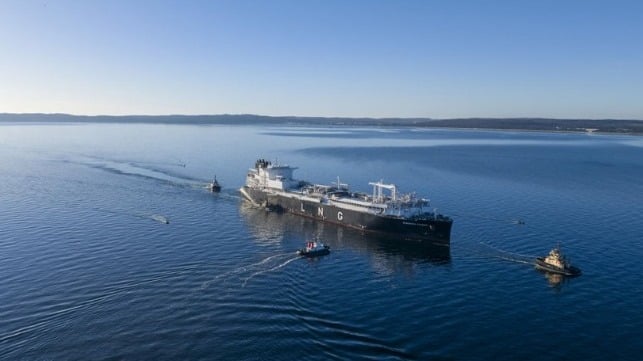
LNG carrier
Deutsche ReGas operates the LNG terminal in Murkan to receive LNG imports (Deutsche ReGas file photo)

Published May 23, 2025 6:06 PM by The Maritime Executive


A Norwegian LNG tanker, Iberica Knutsen, briefly grounded on Thursday morning May 22, outside the German port of Murkan, but while the vessel quickly recovered environmentalists and other activists have locked on to the event to criticize Germany’s LNG import terminals. Germany moved quickly after Russia attacked Ukraine to establish FSRU terminals so that it could begin gas imports from the United States and elsewhere.

The vessel which was built in 2006 and operated by Knutsen Group was inbound from the U.S.’s Sabine Pass loaded with natural gas. It has a capacity of 138,000 cubic meters and is a standard-size vessel at 909 feet (277 meters) and an operating draft of 37 feet (11.4 meters).

A local resident told a German reporter he was making his morning coffee shortly after 6:00 am on Thursday and looking out the window he noticed “that the tanker was in a place where it shouldn’t be and that it was moving strangely,” reports Berliner Zeitung. “I immediately suspected it was stuck.”

The resident said he watched over the next hour as three tugs worked to free the LNG tanker. The German water police (Wasserschutzpolizei) were also on the scene. After about an hour, the tugs escorted the vessel into the nearby anchorage. The water police report the vessel has been ordered to remain there while they investigate. It cannot move until a survey is completed of the hull.

While, overall, it was a minor incident it sparked new calls for Germany to end its imports of LNG. Critics argue the terminals were rushed in response to the efforts to stop Russian imports. In the case of the terminal at Murkan, it is near the popular German resort area of Rügen Island. It was the only privately developed terminal set up by Deutsche ReGas.

“Today's incident demonstrates that there is an urgent need to catch up on Rügen. We have long been pointing out the safety risks associated with LNG delivery and the operation of the terminal,” said Sascha Müller-Kraenner, Federal Managing Director of DUH (German Environmental Aid). “We demand an immediate halt to further deliveries and an independent review of the safety concepts at this site."

Critics argue the terminal is underutilized and not necessary, especially because of its location. They point to data that said it was operating at just five percent of capacity. Deutsche ReGas has said part of the problem was unfair competition from the state-sponsored terminals. The company cut back on the operations ending the charter of an FSRU terminal.

Germany however needs the import capabilities to replace gas imports from Russia, which previously came in via pipelines. The country was able to stockpile gas, especially imported from the U.S. to meet its strong demands during the winter heating season. It has promised to end Russian imports but that makes the FSRU terminals an even more important part of the energy supply.


Little Ships Re-Enact Dunkirk Rescue Mission on 85th Anniversary

Dunkirk re-enactment
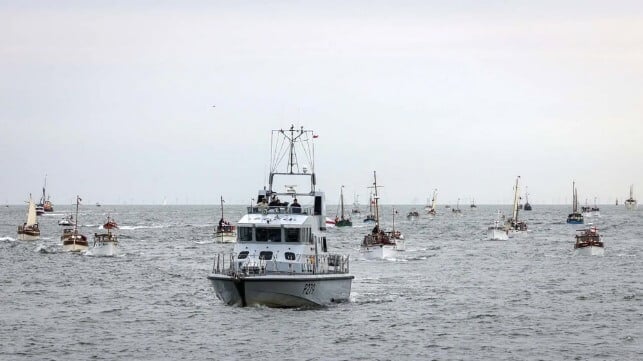
Royal Navy took the lead brining 66 historic ships across the English Channel along with many pleasure craft to celebrate the 1940 rescue mission (UK Royal Navy)

Published May 23, 2025 7:16 PM by The Maritime Executive


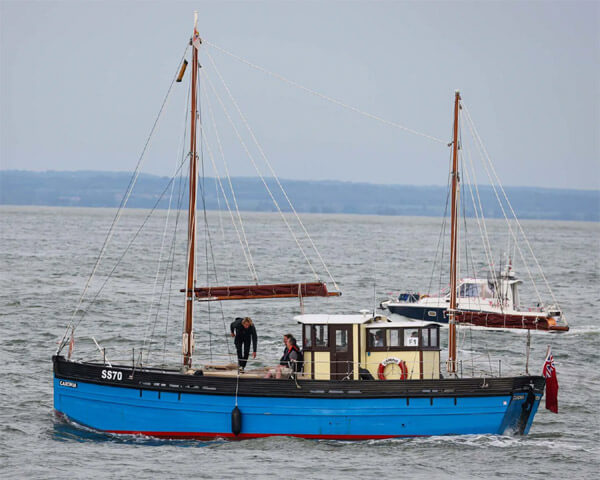
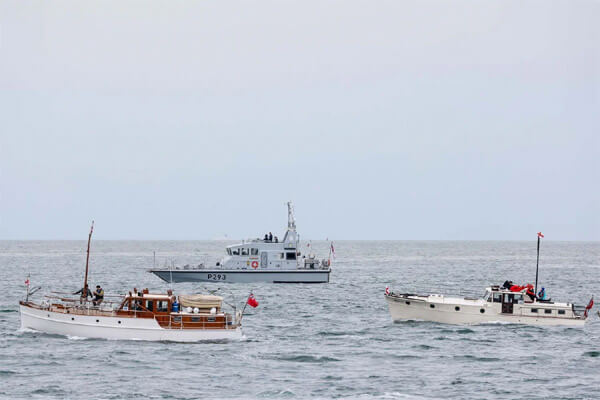
The United Kingdom is reliving the memories of World War II’s bravest evacuation mission with a flotilla of 66 “little ships” that sailed to Dunkirk in France for the commemoration of the 85th anniversary of Operation Dynamo. The Royal Navy escorted the original ships that took part in the daring 1940 rescue mission along with other pleasure crafts that celebrated the anniversary event.

The flotilla of the Little Ships of Dunkirk which included a diverse fleet of historic vessels departed Ramsgate Royal harbor crossing the English Channel to Dunkirk where they will re-enact the heroic Operation Dynamo voyage that occurred between May 26 to June 4, 1940, days described by historians as Britain’s show of heroism at her darkest hour.

Over the 10-day period in 1940, about 850 private boats of all shapes and sizes sailed from United Kingdom shores through heavy enemy fire on a rescue mission to save Allied troops stranded on the beaches and harbor at Dunkirk as the Nazis swept through France. While the hope was that the ships would help rescue at least 40,000 soldiers, they achieved an incredible feat rescuing more than 338,000 soldiers. The operation saw more than 250 ships lost at Dunkirk.

Historical accounts by the Association of Dunkirk Little Ships highlights that for every seven soldiers who escaped through Dunkirk, one man was left behind as a prisoner of war. The majority of the prisoners were sent on forced marches into Germany and Poland where they were brutally treated including beatings, starvation, and murder. The rescue operation by the “little ships” is credited for turning a military disaster into a story of heroism, which served to raise the morale of the British soldiers during WWII.

While the official name of the evacuation mission was Operation Dynamo, the historic event is today better known as the “Miracle of Dunkirk,” a name coined by wartime Prime Minister Winston Churchill. On the 85th anniversary of the mission, the UK is witnessing the largest gathering of the small ships, fishing vessels, yachts, and pleasure cruisers accompanying the original 66 “little ships” to Dunkirk to commemorate the historic event. This marks the first time the “little ships” are recreating the historic journey since 2015.


The iconic ships were escorted across the English Channel by seven Royal Navy P2000 patrol boats. The Archer class vessels are attached to the Coastal Forces Squadron and are primarily designed for training and inshore patrol tasks. Organizers called this year's event the largest gathering of small ships, fishing vessels, yachts, and private pleasure crafts since Operation Dynamo in May-June 1940.

Commemoration of the 1940 events was, however, darkened by the death of the last surviving and known naval Dunkirk veteran. Duncan McInnes, who was a telegraphist and served on Admiralty S-class destroyer HMS Saladin, died at the age of 105 last week in Australia.

“This will be the first time when we’ve gone over when there are no veterans,” said Ian Gilbert, Honorary Vice Admiral, Association of Dunkirk Little Ships. “The little ships are the veterans because the living link has now gone and we have to keep these boats alive to keep the memory alive.”

The Association of Dunkirk Little Ships, which was established in 1966, is determined to preserve the memory and identity of the brave vessels by honoring their legacy. It does this by maintaining a present-day fleet and upholding the "Spirit of Dunkirk." Every five years, the association commemorates the events of May 1940 by retracing the original route taken by many of the heroic little ships.


Police Arrest Second Officer Reporting He Was Asleep When Ship Grounded

grounded containership
NCL Salten remains aground while the officer navigating admitted he was asleep (Trondheim Rescue Company)

Published May 23, 2025 12:22 PM by The Maritime Executive


The local police in Norway, the Trøndelag Police District, report that they have arrested the second officer of the feeder ship that grounded on Thursday morning nearly hitting a house along the fjord. The police said that the second officer who was alone on the bridge of the NCL Salten admitted during questioning that he had fallen asleep while navigating the vessel.

The individual is being identified as a Ukrainian citizen in his 30s who was on watch at the time of the incident. He has been charged under Norwegian law with “negligent navigation,” with the police stating that the law requires a ship to be navigated in such a way that there is no danger to life and health, the environment, or material assets.

AIS signals tracking the vessel show that it entered Trondheim fjord normally with unconfirmed information that it was traveling at 16 knots. However, at the appointed spot where the vessel should have made a turn to starboard to enter Orkanger, it proceeded forward grounding after 0500 Thursday morning.

The police report the investigation is proceeding looking at additional issues including whether the vessel was adhering to the work and rest requirements for the crew. The captain of the vessel as part of the standard procedure in the investigation has also been listed as a suspect in the case.

"On Friday, parts of the crew on board were interviewed. The focus of the investigation is to establish the sequence of events and determine how this incident could occur, as well as to assess whether the bridge was manned in accordance with applicable regulations," said Kjetil Bruland Sørensen, the prosecutor in Trøndelag Police District.

The police reported yesterday that they had taken control of documents from the vessel and its log for review. The Norwegian Coastal Administration is also being kept apprised of the investigation while it is also responsible for monitoring the vessel and the salvage efforts.

Efforts to refloat the 443-foot containership were unsuccessful on Thursday with the Norwegian Coastal Authority reporting that geotechnical investigations had been ordered after media reports that there was a landslide along the coastline possibly linked to the grounding. One home was reportedly also ordered evacuated near the area where the ground collapsed to the left of the vessel.

Media reports are quoting the Norwegian Coastal Administration on Friday saying that a survey has also found damage to the vessel’s forecastle and some ballast tanks. They are saying the damage is not too severe that it will make the rescue more difficult but all the factors need to be accounted for in the plan. Also, the damaged tanks are only filled with seawater so there is no immediate threat of pollution but the Administration has a pollution control vessel standing by near the site of the grounding.

The shipping company is responsible for arranging the salvage but the Administration will review the plan. It is noting that it can ask the shipping company for additional measures as necessary to ensure preparedness to prevent pollution or damage.

The Administration expects the planning to require some time and it would then review the information. No timeline has been offered for when the vessel will be refloated.
 

Friday, May 23, 2025

Israel’s Final Solution for Gaza


 May 23, 2025
Facebook

Photograph by Nathaniel St. Clair

In early May, the security cabinet of Israel’s Prime Minister Benjamin Netanyahu met and agreed that Israel would ‘capture’ Gaza and remove its Palestinian population ‘to protect it’. To achieve this policy of annexation of Gaza, the Israelis tightened their siege by preventing the entry of food, water, electricity, and other humanitarian aid (they had already enforced a blockade of aid since 2 March 2025). Then, the Israelis began to bomb Gaza with increased ferocity, with Israeli ground forces gathering at the edge of Gaza and entering in short bursts. By 18 May, these Israeli ground forces began measured entries into Gaza. After intense pressure, the Netanyahu cabinet agreed to allow ‘basic amounts’ of food into Gaza. Meanwhile, the Israeli army released a ‘forced displacement’ order for the people in Khan Younis.

There is a tangle of war crimes in the paragraph above: 1. Population transfer in an occupied territory is illegal. 2. Deprival of food, water, and electricity for civilians is illegal. 3. Annexation of an occupied territory is illegal. 4. Deliberately killing civilians in a war zone is illegal.

It would be meaningless to recite chapter and verse to prove this, since it is by now well known that the Israelis have violated every single one of the laws of war and that their violations have been meticulously documented by the United Nations Special Rapporteur on the situation of human rights in the Palestinian territory occupied since 1967 Francesca Albanese in her annual report (and in recent statements, where she has spoken of a ‘[tragedy] foretold and [a] stain on our collective humanity’) and by Amnesty International in their report, ‘You Feel Like You Are Subhuman: Israel’s Genocide Against Palestinians in Gaza’. In Amnesty’s recent annual report, there is the chilling sentence: ‘the world has been made audience to a live-streamed genocide’.

Eradication

The bombardments to prepare the way for the annexation have been ferocious. The Israeli bombs have eradicated entire families of Palestinians. The word ‘eradicate’ is generally used in reference to pests or diseases. It is an ugly word. I am using it here deliberately. It comes from the Latin word eradicare, which means ‘to pull out from the roots’, a botanical meaning that now has far more sinister meanings when used in reference to humans. Eradicate sounds clinical when it refers to weeds, but horrendous when applied to humanity, just as clinical and bureaucratic as the term ‘The Final Solution’ (when used to refer to the horrendous genocide of the Jews in Europe). Hitler used the terms ‘annihilation’ (Vernichtung) and ‘eradicate’ or ‘exterminate’ (ausrotten) when he spoke of Jews in the 1930s, and then when he spoke of the Final Solution (Endlösung) in the 1940s. Language is cruel, already bearing the implications of the deed.

Consider the deed.

19 May 2025.

At 6 am, a group of Israeli special forces (mista’arvim) entered Khan Younis disguised as Palestinian women. They came under the cover of F-16 airstrikes and quadcopter drone strikes. The special forces soldiers executed Ahmad Kamel Sarhan in front of his family. Then they kidnapped his wife, his son Mohammed (age 12), and other, older children. No one knows where they have been taken. At least sixteen civilians died in the operation. Their names are:

Abeer Salah Khamis Ayyash

Ahmad Akram Mohammad al-Dali

Ahmad Kamel Hamdan Sarhan

Ahmad Mohammad Abu al-Rous

Ahmad Mohammad Kawarea

Elin Ashraf Hamdan Shalouf

Hasan Mahmoud al-Astal

Ibrahim Hamed Hussein al-Aqqad

Laila Fadi Naeem Ayyash

Malak Youssef Qeshta (Shalouf)

Mohammad Mahmoud Kawarea

Muhannad Mohammad Kawarea

Nabila Abd Wafi (Abu al-Rous)

Saja Salim Ibrahim Asleeh

Samira Abdel-Majid Ahmad al-Qarra

Tawfiq Ali Hamdan al-Qarra

An Israeli tank fired a shell at a home in the al-Amour neighbourhood in al-Fakhari, to the east of Khan Younis, and wiped out Safa Alyan Saleem al-Amour and her six daughters, Sama Rashad Omar al-Amour, Lama Rashad Omar al-Amour, Saja Rashad Omar al-Amour, Leen Rashad Omar al-Amour, Nada Rashad Omar al-Amour, and Layan Rashad Omar al-Amour.

Israeli artillery shellfire hit a house in al-Fakhari, killing five members of a family: Jumana Kamal Muhammad Abu Daqqa, Wassim Muhammad Ali Abu Daqqa, Siraj Muhammed Ali Abu Daqqa, Jolan Muhammad Ali Abu Daqqa, and Jilan Muhamed Ali Abu Daqqa.

These are a few of the attacks that took place on one day in one part of Gaza, from where I was merely able to get reports from people on the ground as well as press reports. The attacks took place as well in Gaza City, near the Indonesian Hospital, which had been targeted the day before. Other names could be filled in here for others killed by other deliberate acts of violence.

These attacks come at the same time as a severe crisis of hunger inflicts itself upon the people of Gaza, with children hardest hit. At least fifty-seven children have already died of malnutrition in Gaza, while 71,000 Palestinian children struggle to eat. The World Health Organisation warns of stunted growth, impaired cognitive development, and poor long-term health for the children who do not die. The Food and Agriculture Organisation warns of ‘famine looming’ in Gaza. Everyone warns about this or that. But these warnings amount to nothing. The UN Emergency Relief Coordinator Thomas Fletcher condemns Israel’s ‘cruel collective punishment’ of the Palestinians. He knows that ‘collective punishment’ is a war crime.

Consider the warnings. Consider the deed.

Consider the genocide.

 This article was produced by Globetrotter and No Cold War.

Vijay Prashad’s most recent book (with Noam Chomsky) is The Withdrawal: Iraq, Libya, Afghanistan and the Fragility of US Power (New Press, August 2022).