Saturday, May 24, 2025


Carnival Cruise Ship Rescues Four People and Three Dogs from Disabled Boat
rescue
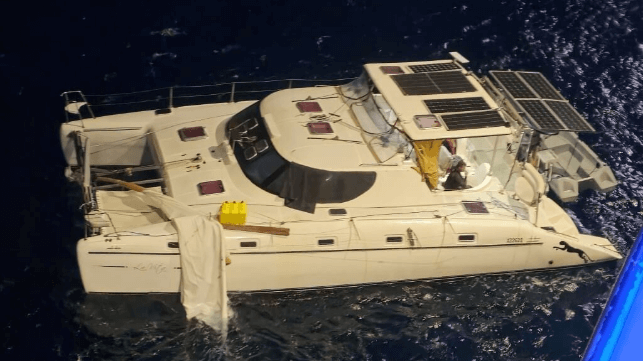
Carnival rescued four people and three dogs from a disabled catamaran (photos courtesy of Carnival Australia)

Published May 22, 2025 7:56 PM by The Maritime Executive


Carnival Cruise Line’s Carnival Splendor (113,300 gross tons) homeported in Sydney, Australia has taken aboard some unusual passengers in the form of three dogs rescued along with their human companions from a disabled sailboat in the South Pacific. All are doing well and the dogs, which have turned into sailors, are getting some extra attention while aboard the cruise.

The cruise ship departed Sydney on May 19 for an 8-night trip to Vanuatu and New Caledonia with a reported 3,300 passengers aboard. Overnight it received instructions from the Maritime Rescue Coordination Center in Noumea about a distress call.
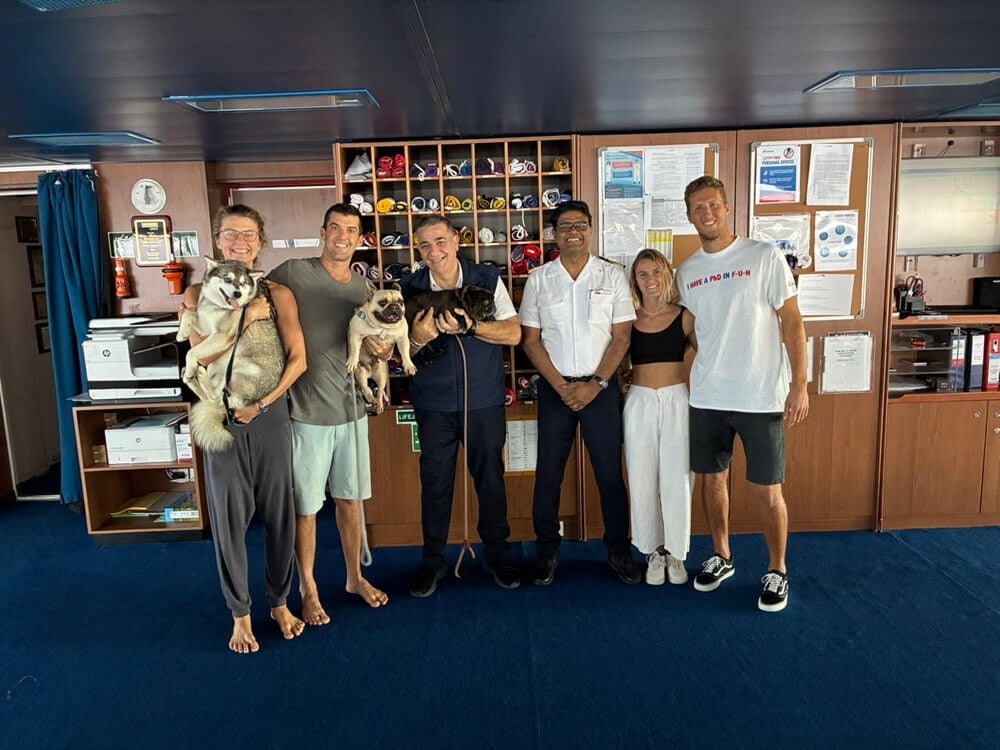
 

All the survivors aboard the Carnival Splendor


Four sailors from Australia, Germany, and Italy issued the distress call around midnight on Wednesday, May 21, reporting that their vessel, a catamaran, was disabled in heavy seas. They said that the mast of the vessel had broken and that its motor was also disabled. The boat was off the coast of New Caledonia.

Carnival reports its cruise ship immediately headed toward the location of the disabled boat. It was able to reach the vessel five hours later and completed the rescue.

The two couples and their three dogs were safely transferred to the Carnival Splendor. They are reported to be in good condition and receiving food, water, and medical assistance. They are also being given a cabin to rest after their ordeal.
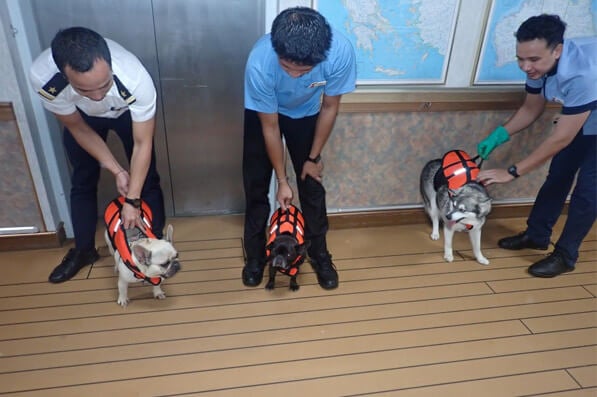
 

Three special "passengers" are getting a little extra attention on the Carnival Splendor


The reports said the catamaran had departed on May 14. The four people were intending to circle Australia and then travel to Fiji. They said the dogs were becoming seasoned sailors. One couple was living aboard the catamaran with the three dogs and intended to sail around the world. 

A spokesperson for Carnival told the Australian media that it was always a priority to respond to emergencies and they were glad the ship was in the right place at the right time to help. They were happy to welcome the people and their dogs aboard.

The cruise ship resumed its trip and the four survivors (and their dogs) are getting a short cruise. On Friday, the Carnival Splendor is stopping at an uninhabited island that the cruise line calls Mystery Island (Inyeug Island) in Vanuatu. The ship will then continue to Noumea on Saturday, where they expect to disembark the people and their dogs.

Birdon Starts Production of ASC-M Prototypes for United States Marine Corps

Birdon

Published May 23, 2025 9:20 PM by The Maritime Executive


[By: Birdon]

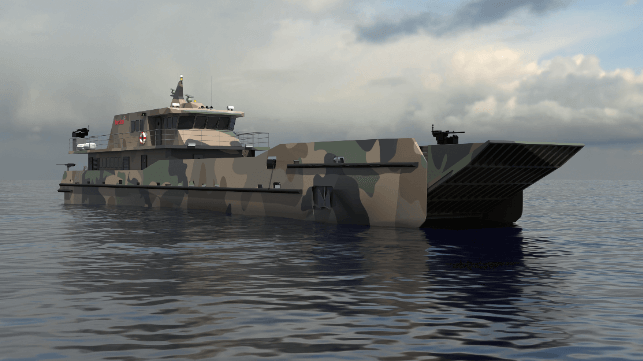
The U.S. Marine Corps Warfighting Laboratory (MCWL) selected maritime engineering leader Birdon to design and build two prototype vessels to demonstrate emerging concepts under the Marine Corps’ Force Modernization objectives.  The resultant Birdon Ancillary Surface Craft (ASC), marks a critical step forward in delivering next-generation landing craft solutions to inform future capabilities, tactics, and procedures.

MCWL and Birdon collaborated to balance requirements, operational capabilities, cost, and producibility.  The team focused on advanced design concepts to improve production automation, requiring fewer hours to build each craft.  The collaboration resulted in moving from concept to an affordable, production friendly design, ready for construction in less than 12 months.  The incorporation of automated production features allows for the rapid scaling of output to meet future demands.

Birdon CEO Jamie Bruce said Birdon’s ASC design was selected for its superior capabilities and ability to be customized for the unique challenges of the U.S. Marine Corps operating environments. “Our naval architects and marine engineers designed this craft from the ground up, integrating cutting-edge sonar and fuel systems to enhance operational success,” he added.

The ASC is designed to carry up to 40 embarked troops and 54 tons of cargo, with exceptional maneuverability, stability, and long-range ocean transit capability. To ensure safe landings on uncharted beaches, Birdon worked with a specialist sonar company to develop and integrate an advanced forward-looking sonar system, allowing operators to detect obstacles and assess beach gradients well ahead of the vessel. The vessel is designed to beach and de-beach in gradients significantly shallower than existing landing craft can support, providing enhanced, safe amphibious operations capability.

Birdon’s ASC design also features a cutting-edge fuel delivery and transfer system that allows for efficient vessel-to-vessel or vessel-to-land fuel transfer, supporting extended operational range and flexibility in challenging environments.

Birdon has partnered with C&C Marine and Repair (C&C) to build two vessels at their Belle Chasse, LA facilities. Construction on the first vessel is set to begin in the summer of 2025, with delivery scheduled one year later, demonstrating Birdon’s commitment to expediting capability to the warfighter, and a collaborative approach in defense and maritime manufacturing.

Tony Ardito, Birdon President said the partnership offers other strategic advantages, stating, “C&C’s capabilities and proximity to Birdon’s New Orleans operations make them the ideal partner for this project. Their ability to scale production gives us the flexibility to meet future demands.”

This collaboration with the U.S. Marine Corps underscores Birdon’s position as a trusted partner to the U.S. Department of Defense. With five U.S.-based facilities and a focus on strengthening the local shipbuilding industrial base, Birdon continues to deliver innovative and reliable maritime solutions that enhance U.S. defense capabilities.

The products and services herein described in this press release are not endorsed by The Maritime Executive.


Fincantieri & Enra Energy Solutions Sign Strategic Collaboration Agreement

Fincantieri

Published May 23, 2025 8:42 PM by The Maritime Executive


[By: Fiincantieri]

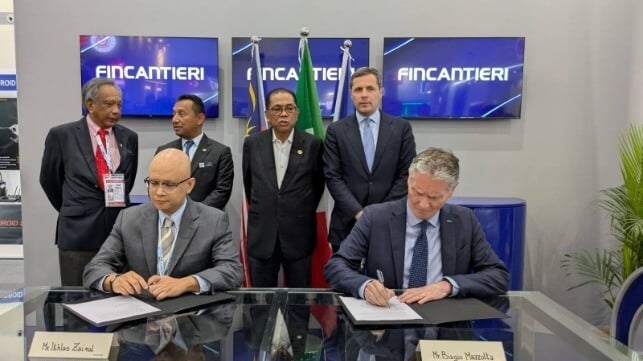
On the occasion of the Langkawi International Maritime and Aerospace Exhibition (LIMA), currently ongoing, Fincantieri and Enra Energy Solutions (EES) signed a Technical Collaboration Agreement to support the Royal Malaysian Navy’s “15 to 5” strategic fleet renewal program. The signing took place in the presence of the Malaysian Minister of Defence, H.E. Dato’ Seri Mohamed Khaled bin Nordin, and the Italian Undersecretary of State to the Ministry of Defence, Hon. Matteo Perego di Cremnago, and wasformalized by Biagio Mazzotta, Chairman of Fincantieri, and Ikhlas Zainal, Chief Executive Officer of Enra Energy Solutions.

The initiative marks a key step in enhancing Malaysia’s naval capabilities while fostering significant national industrial participation. The agreement paves the way for a partnership focused on delivering and supporting next-generation naval vessels, including Multi Role Support Ships and Littoral Mission Ships batch 3. These platforms are designed to improve operational readiness and resilience amid an evolving regional security landscape.

Fincantieri, one of the world’s leading shipbuilding groups and a reference partner for the Italian and US navies, brings extensive expertise in high-tech naval platforms. The Group plays a pivotal role in international defence cooperation initiatives, contributing to programs across multiple allied nations. EES is a prominent Malaysian company with a proven track record in maintenance, repair, and logistical support services. Through this collaboration, EES will play a vital role in strengthening the local ecosystem of maritime defence solutions.

This partnership underlines Fincantieri’s broader commitment to developing long-term industrial cooperation with national players in strategic regions. It aims to integrate local capabilities into advanced defence programmes, generating added value through the transfer of technology, know-how, and industrial skills.

Biagio Mazzotta, Chairman of Fincantieri, commented: "Southeast Asia represents a key geography for the future of the maritime defence industry. Our collaboration with Enra Energy Solutions in Malaysia is a concrete step in building a robust industrial partnership that combines global experience with local excellence. We are proud to contribute to the Royal Malaysian Navy’s strategic vision and to support the development of a resilient local defence ecosystem."

The products and services herein described in this press release are not endorsed by The Maritime Executive.


ABS Approves First of Its Kind LCO2 Barge for U.S. Operation

CCS barge

Published May 23, 2025 9:47 PM by The Maritime Executive


[By ABS]

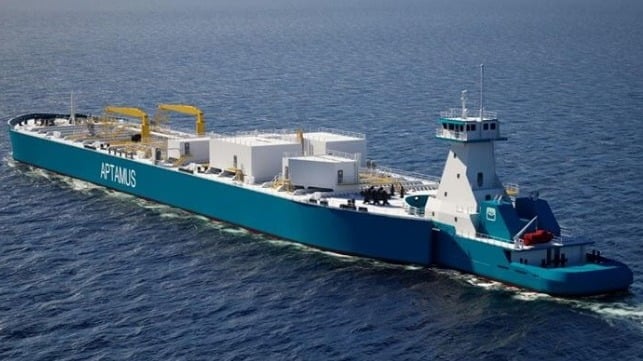
ABS awarded approval in principle (AIP) to Overseas Shipholding Group, Inc. (OSG), the parent company of Aptamus Carbon Solutions, for its preliminary design of a liquefied carbon dioxide (LCO2) barge.

The development of the barge design is a core component of the Tampa Regional Intermodal Carbon Hub (T-RICH) project to receive, store and process emissions from Florida industries for transport to regional sequestration sites.

The articulated tug and barge unit (ATB) is a first-of-its-kind to service carbon capture projects in the U.S. The cargo handling system design is based on medium pressure LCO2 Type-C tanks and is capable of transporting 20,000 mt of cargo. Maximum operating pressure has been determined by track record studies and market trends, and with consideration of loading capacity and holding time.

ABS completed design reviews based on class requirements, specifically including the latest ABS requirements for building and classing liquefied gas tank barges. 

“The safe transportation of CO2 plays a vital role in the carbon value chain, and ABS is proud to use our expertise as the world’s leading classification society for gas carriers to support this milestone project for U.S. operations,” said Gareth Burton, ABS Senior Vice President, Global Engineering.

“This AiP represents another historic milestone in Aptamus’ journey to lead the development of CO2 storage and marine transportation in the United States,” said Jeffrey Ross Williams, Aptamus President. This ABS AiP is another big step in our journey to lead the U.S. maritime industry in designing the technology required for success in our nation’s emission reduction goals and in pursuing new and expanding business opportunities in the global energy transition,” said Williams.

“Aptamus is proud to have developed the first known LCO2 vessel specifically designed for operation in the coastal waters of the United States,” said Kent Merrill, Aptamus Vice President of Marine Projects. “Articulated tugs and barges (ATBs) are popular and effective in the U.S. for the carriage of petroleum products for several reasons, and those advantages hold true for LCO2 vessels as well. We look forward to the continued detailed development of the design, including designing the tug to utilize green methanol or other green fuels and technologies. We thank ABS for their valued partnership on this project, as well as other engineering contributors like Corban Energy Group and Herbert Engineering Corporation.”

The products and services herein described in this press release are not endorsed by The Maritime Executive.

ICYMI

Baltic Feeder Ship Runs Aground Feet from Norwegian’s Bedroom

containership aground
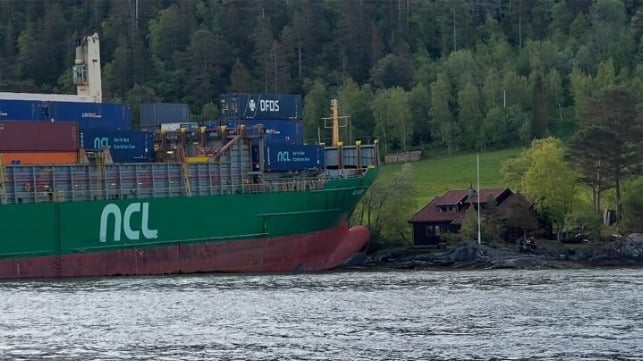
Containership ended up just feet from a home on the Norwegian fjord (Trondheim Rescue Company)

Published May 22, 2025 2:35 PM by The Maritime Executive


A Baltic feeder containership maneuvering in the fjord near Trondheim, Norway grounded on Thursday morning, May 21, ending up just feet from a resident’s home. The authorities are reporting no one on the ship (or shore) was injured and so far, there have been no oil spills reported but resident Johan Helberg has a ship on his coastline.

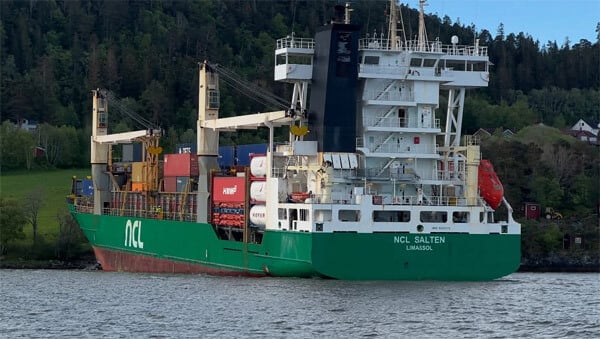
The NCL Salten (11,135 dwt) owned by Baltnautic, and chartered by North Sea Container Line, was sailing for the port of Orkanger at 0500 local time when the vessel appeared to miss a turn in the waterway and continued toward shore and grounded. A neighbor witnessed the grounding reporting that it was “a soft landing.” He ran to his neighbor’s home and awakened the sleeping resident Johan Helberg. He later told Norwegian TV that if the vessel was 15 feet to the right it would have ended up in his bedroom. Helberg said he was sleeping about seven meters (23 feet) from where the bow came to rest. 

After one attempt to refloat the 439-foot (134-meter) containership, the Norwegian authorities reported the vessel’s operator had retained a tug to aid with the effort. They were conducting a ground survey which delayed a planned attempt to refloat the ship at high tide Thursday night. The NCL Salten remains grounded in Byneset, Norway west of Trondheim with the Norwegian Coastal Administration saying the survey and analysis to determine if "special considerations need to be taken when the ship is to be pulled off," is expected to take "some time."


The police told the news outlet VG that they had conducted a breath test for the crewmember on the bridge and there was no suspicion of intoxication. The police have collected the vessel’s documents and log but said a more detailed investigation would wait till the ship is refloated.

Reports indicate that the weather was good and at this time of the year, 0500 is already daylight in Norway. The Norwegian Coastal Administration is monitoring the situation and reports the oil spill response vessel OV Hekkingen is standing by and the Coast Guard vessel KV Njord is en route to the scene.

“This is a serious incident, and we are grateful that nobody was injured in the grounding,” said NCL’s Managing Director Bente Hetland. “We are currently assessing the damage to the ship and have initiated an internal investigation into the root causes of the incident.”


(Trondheim Rescue Company)


Built in 2002, the vessel is registered in Cyprus and operates a Norwegian coastal route with connections to Bremerhaven and Rotterdam. It has a capacity of 886 TEU. The crew numbers 16 and is reported to consist of Norwegians, Russians, and Ukrainians.

VG is reporting the ship has been involved in four incidents in less than three years. The newspaper is saying the ship ran aground in Tømmervika in October 2023 but was able to free itself.  In April 2024, it made contact with a pier while maneuvering in Alesund and had a six-meter (16-foot) gash in its hull. In January 2023 the ship was stranded at sea for five hours while the crew replaced a fuel pipe.


NTSB: Mississippi Towboat Grounded When Pilot Took a Bathroom Break

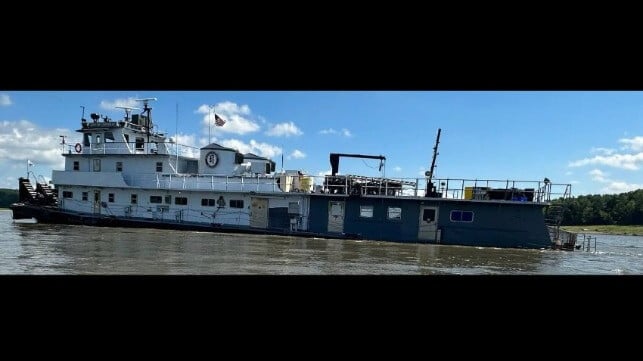
City of Louisville aground (NTSB/USCG)

Published May 22, 2025 3:56 PM by The Maritime Executive


A Mississippi River towboat went aground and sustained hull damage because the pilot left the helm for five minutes, according to the NTSB. It adds to a long line of human-error casualties on the Mississippi, where there is little room for error given the close quarters, strong currents and hidden shoals.  

On July 29, 2023, towboat City of Louisville was under way on the Mississippi near Thebes, Illinois pushing a tow of 11 empty hopper barges. The overall length of the tow was nearly 740 feet long. The pilot - a 24-year veteran of the towing industry - took over the watch at 1100 hours, and the tow proceeded upriver at a leisurely speed of about four knots. River conditions were low, with the nearest river gage registering 7.4 feet. 

At about 1442, the pilot got up and walked over to the port side of the wheelhouse, where he "relieved himself into a bag" while looking out the port side window. Once done, he threw the bag overboard and returned to the helm, arriving back at his position at about 1447, he told investigators. 

During the five minutes he was away from the controls, City of Louisville missed a turn and began passing west of her intended trackline. By 1447, the towboat was 95 yards too far to the west and headed about 10 degrees to port of the intended course.

The pilot put the rudders hard over 30 degrees to starboard, and the head of the tow began to swing. At the same time, the stern swung to port, further towards the west. The towboat - which was drawing about six feet more water than the empty barges - grounded on a rocky shoal at a position about 150 yards to the west of the intended trackline. 

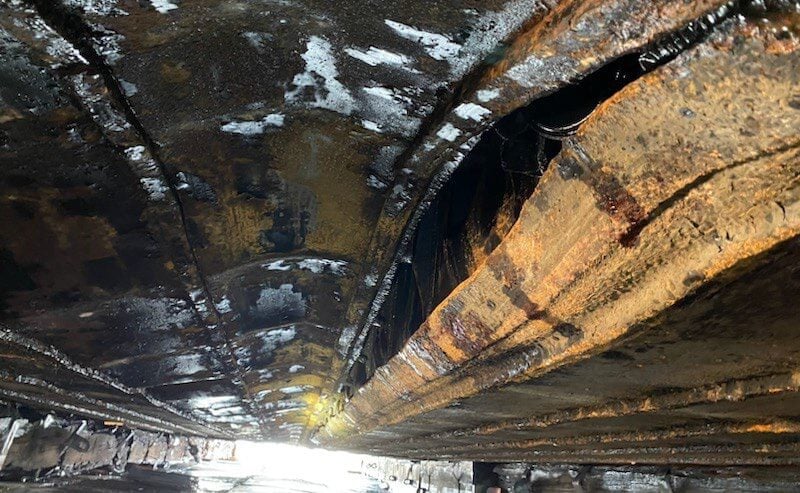
The hull of the towboat was breached in the grounding, and the engine room began to flood. The tow remained intact, but the towboat settled further in the water, and the crew could not move it off the rocks. 

Damage to City of Louisville's bottom plating (NTSB)

At about 1800 hours, an incoming thunderstorm prompted the crew to abandon ship, with assistance from first responders. Heavy rainfall caused the river stage to gradually rise, flooding the towboat's rudder compartment and the mess area. 

City of Louisville was refloated and towed off for repairs in August, and inspections found that large sections of the bottom plating were badly damaged. The total cost of repairs came to more than $2 million. The vessel was later resold, then scrapped. 

According to NTSB, City of Louisville had a pilothouse alerter system that was designed to set off an alarm if the pilot did not move the rudder controls for a set period of time, adjustable between about 1.5 minutes and 10 minutes. NTSB only learned of the casualty seven weeks after the fact, and when agency inspectors finally arrived, they found that the power adapter for the alerter system was missing.  

The last recorded check of the alerter occurred in January 2023, and the pilot told investigators that he was not aware that it existed; he had never heard it go off. NTSB could not determine whether the system was working at the time of the casualty, nor what time interval it may have been set for.

"A pilothouse alerter, when used as intended, is an effective tool that can help ensure a towing vessel operator remains awake and vigilant while on duty," NTSB advised. "Established procedures for the operation and use of the system should be outlined in the company safety management system and should include the time interval for reset of the alerter system."


Groundbreaking Electric Tour Vessel Evacuates All Passengers Over Smoke

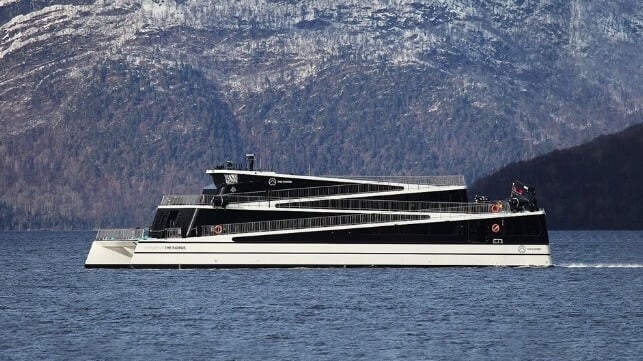
Future of the Fjords (Saertex / CC BY SA 4.0)

Published May 22, 2025 11:04 PM by The Maritime Executive


The world's first all-electric, zero-emissions passenger vessel conducted an emergency evacuation of hundreds of passengers on Tuesday after smoke was spotted coming from a battery compartment. No one was injured, and the operator believes that it has identified the fault. 

On Tuesday afternoon, the all-electric tour boat Future of the Fjords was under way on the Aurlandsfjord, near Onstad, Norway. At about 1533 hours, the crew notified the regional emergency response center that there was smoke coming from a battery room. As a precautionary measure, the crew returned to the pier and began evacuating all 300 passengers on board. The vessel was emptied out by 1600, according to NRK, with no injuries reported.

The local fire department responded to the scene and treated it as a high-priority incident, given the risk of serious escalation if a lithium-ion battery bank were to catch on fire. Battery fires produce noxious smoke and high heat, and they are difficult to extinguish. A firefighting team entered the compartment and determined that the situation was under control, and they ventilated the space to clear out smoke. 

“The potential in such incidents is dramatic,” fire team leader Tor Mikkel Tokvam told state radio outlet NRK. “When something like this happens, we take it very seriously.”

On Wednesday, the vessel's operator told local outlet Firda that the problem had been identified: a capacitor in an electrical panel had shorted out and overheated, producing smoke without starting a substantial fire. 

Future of the Fjords is a 2018-built, carbon fiber-hulled tour vessel with a capacity of 400 passengers. It was the first all-electric passenger vessel ever delivered. On a full charge, it is capable of speeds of up to 16 knots for up to 2.5 hours. It recharges with shore power in as little as 20 minutes (with a specialized docking system).

Top image: Future of the Fjords (Saertex / CC BY SA 4.0)

ECOCIDE

Fire on Offshore Oil Platform at Vietnam’s First Decommissioning Project

oil platform fire
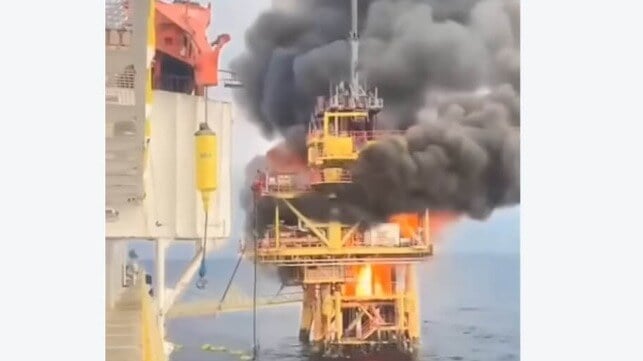
Fire during the decommission of a platform off Vietnam (YouTube)

Published May 23, 2025 1:51 PM by The Maritime Executive


Vietnamese officials confirmed that there was a devastating fire at the Song Doc offshore oil platform on Wednesday. The platform is the country’s first decommissioning project. 

An unconfirmed report in the Viet Nam News and appearing in the other local outlets says that one person was killed in the fire. Seven others were being reported as injured, although the official reports did not include mention of a death or injuries. Officials emphasized the fire was brought under control in 30 minutes.

The Song Doc oil platform was an important offshore development for the country discovered in 2006 and brought into production in 2008 by the national company PVEP POC, a subsidiary of Petrovietnam Exploration Production Corporation along with two investment partners. It was a relatively small site producing at its maximum around 28,000 barrels per day.

For the last decade of the operations, PVEP POC was the sole owner after the two investors left the project in 2013. They cited high costs which were said to make the well uneconomical. PVEP POC was assigned to continue the operations and deplete the well, which it reported happened in 2023.

The site officially ceased production in February 2024 with the company reporting it was capped. They submitted a plan for decommissioning and removal of the platform, which was approved by the regulators.


Work was underway on the decommissioning with the reports saying a subcontractor was conducting a cleaning process at the site when the fire began on Wednesday afternoon. It is unclear how many workers were on the platform. The videos show a fireboat working to control the fire.

The company is reporting there was no pollution and the fire did not affect normal operations and production at the other oil and gas projects in the area. They said there would be an investigation into the cause of the fire.

Song Doc is located approximately 125 miles south of Ca Mau Cape at the southernmost tip of Vietnam. It is in the Gulf of Thailand.

Philippines Completes Deal for 40 Fast Patrol Boats from France’s OCEA

Philippine Coast Guard's new patrol boat
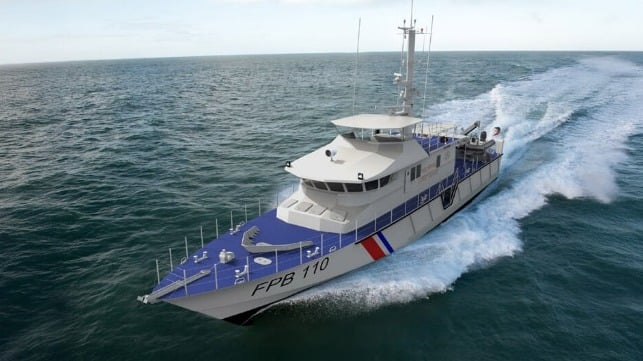
France's OCEA will build 40 fast patrol boats for the Philippine Coast Guard (OCEA)

Published May 23, 2025 3:19 PM by The Maritime Executive


The Philippine Coast Guard reports that the Department of Transportation has completed a deal to dramatically expand its capabilities with 40 new French-designed fast patrol boats. It is part of a broad effort designed to modernize and expand the capabilities of the Philippines Coast Guard.

President Ferdinand Marco Jr. issued a directive to expand the operations of the Philippine Coast Guard in response to the emerging “complex maritime challenges.” The President cited the growth in maritime traffic, the rise of incidents of illegal activity at sea, and the tensions with China. With international support for the Philippines to increase its security, both France and Japan committed to the expansion of the Coast Guard. France and the Philippines reached an agreement in November 2024 which called for the new patrol boats.

The Coast Guard currently has 13 ocean-going patrol boats. Government officials have said with over 7,600 islands the Coast Guard is currently stretched thin. With international support, they seek to correct this and expand the effectiveness of the Coast Guard.

The contract was signed in Manila on May 22, calling for the construction of 40 fast patrol boats designed by OCEA Group based on the company’s successful FPB 110 MKII design. The vessels will be built of aluminum, 35 meters (115 feet) in length, and approximately 110 tons. The company reports the class operates at maximum speeds between 28 and 35 knots and at a cruising speed of 12 knots, has a 700 nautical mile radius. They are designed to operate with a crew of 17.

OCEA reports the deal is valued at more than €400 million ($454 million). Under the agreement, the company will build the first 20 boats in France while it will also create a joint shipbuilding operation for 20 additional boats to be built in the Philippines. The contract is supported through a government-to-government agreement between France and the Philippines.

The Philippines and OCEA have an established working relationship. The company built four smaller 24-meter (79-foot) patrol boats on its FPB 72 design which started delivery to the Philippines in 2017. They are currently deployed for coastal operations. OCEA established a maintenance office in the Philippines and recently signed a 5-year renewal of the maintenance contract with the Coast Guard.

OCEA also built the 84-meter (275-foot) BRP Gabriela Silang, which when it was delivered in 2019 was the largest and most capable vessel in the Philippine Coast Guard. The company also has a contract with the Philippines for integrated logistic support and maintenance services for the patrol boat.

The Philippine Coast Guard says the new vessels are expected to enhance its maritime presence and rapid response capabilities. They expect the vessels will be used to respond to maritime threats, such as illegal fishing, smuggling, piracy, and maritime terrorism, as well as emergency response and relief during natural disasters and maritime incidents. The new boats will also enhance interoperability with the Philippines’ military, the Bureau of Fisheries, and international partners.

Japan has also committed to expand its support for the Philippine Coast Guard. Previously Japan had provided 12 patrol vessels. It also supported the construction of the current largest vessel in the fleet the BRP Teresa Magbanua (97 meters / 318 feet) which entered service in 2022. Japan will provide five additional vessels to the Philippines between 2027 and 2028.


New Zealand’s Troubled Interisland Ferry Aratere to Retire Early

Aratere New Zealand ferry
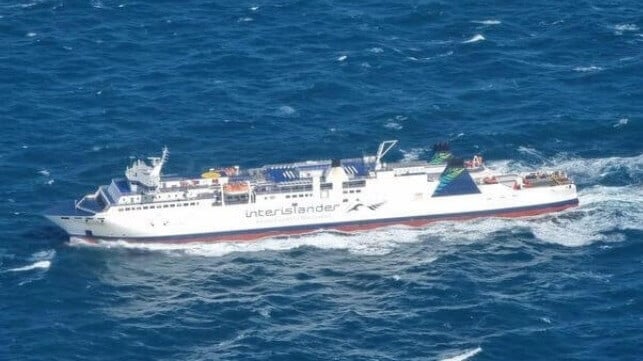
The 26-year old Aratere will be retired without a replacement at New Zealand prepares for new ferries (ZiwiRail)

Published May 23, 2025 5:03 PM by The Maritime Executive


After a troubled career spanning a quarter of a century, New Zealand’s workhorse RoRo ferry Aratere is set to retire in August. Operator KiwiRail is reporting that after being a familiar part of the Cook Strait crossing for 25 years, the ferry will be removed from service at the end of August, a decision necessitated by plans to carry out extensive infrastructure redevelopment in Picton. However, it will reduce the company’s capacity for possibly four years until new ferries can be introduced.

Having entered service in 1999, Aratere has been Interislander’s only rail-enabled ferry making 24 crossings on the Cook Strait route per week. The 184-meter (604-foot) ferry has a capacity of?600 passengers, 30 trucks or 230 cars, and 28 rail cars.

Originally, the ferry was built at a 150-meter (492-foot) length but underwent a NZ$52 million refit at the Sembawang shipyard in Singapore in 2011. The refit, which involved cutting the vessel in half to insert a new 30-meter (98-foot) midsection resulted in her capacity being increased from 360 to 600 passengers. Her gross tonnage increased from 12,595 tonnes to 17,816 tonnes.

Despite being synonymous with Cook Strait crossing for years, Aratere has had a troubled career characterized by several technical problems, engine failures, and a grounding in June last year. Over the years, the ferry has experienced at least eight major incidents, including a breakdown due to engine failure during its delivery run from its Spanish shipbuilder to New Zealand. Due to her troubled history, speculations have been rife that the ferry is jinxed, resulting in the nickname “El Lemon.”

The most frightening incident occurred on June 21 last year when Aratere grounded while departing Picton ostensibly because the crew did not know how to turn off the vessel’s autopilot when they realized she was heading towards the shore. The previous month, the vessel had received a new steering control system to work with the autopilot and integrated bridge navigation system. Investigators termed the grounding as a serious incident, but none of the 47 passengers and crew aboard were injured.

KiwiRail has now confirmed that Aratere will retire no later than August 30 to make way for infrastructure redevelopments in Picton in readiness for two new ferries that are expected to arrive in 2029. Apart from its troubled history, one of the other key factors in the ferry’s retirement is that she requires specific loading and unloading infrastructure, meaning she cannot use the other wharf in Picton. Building a temporary berth for her has been deemed too expensive and risks delaying the necessary infrastructure works. The government has previously stated that it would cost NZ$120 million to keep Aratere in service.

Demolition of Aratere’s wharf is expected to begin as soon as October this year, and no later than March next year to facilitate the construction of new infrastructure for the two new rail-enabled ferries planned by the New Zealand government. The replacement project however has been fraught with problems and cancelations causing controversy in New Zealand. The decision to acquire the new, identical ships was made after KiwiRail did an international search and failed to identify suitable second-hand ships to buy or lease. The company said it could not find vessels that would meet modern safety and environmental standards and the demands of the run.

The retirement of Aratere means that until the new ferries arrive in 2029, KiwiRail will be operating only two ferries on the Cook Strait route, Kaitaki and Kaiarahi. In late June, Kaiarahi is set to go to dry dock in Singapore for major works before returning to New Zealand in mid to late August. Although Aratere is currently Interislander’s only rail-enabled ferry, the operator will be able to carry rail freight on the other two ferries using a road bridging process.

KiwiRail has warned that the retirement of Aratere is bound to lead to job losses but is yet to determine the exact numbers. “Interislander’s transition from a three to two-ship fleet has a number of implications for the company and for our customers. The first impact is on our dedicated team and a formal consultation will begin with them,” said Duncan Roy, Interislander Executive General Manager.