Sunday, May 25, 2025


“Childish” Adolescence


Not one to enter discussion on the cultural relevance of television shows often, it is hard to miss the fervour surrounding Netflix’s Adolescence, which recounts the dramatized events surrounding the investigation of a brutal teenage murder of a young female by the protagonist Jamie, a 13-year-old boy. Not wishing to belabour the extent analysis on this drama, it is striking the level of psychological analysis – levied by both psychologists and non-psychologist alike — which permeates the broad discourse and stark warnings for the future of teens worldwide. The show certainly portrays the complexity, even turbulence, associated with this period of development, showcasing the confused, exploratory, contradictory, emotive, and essential nature of peer-relationships core to this epoch. However, in doing so it also risks essentialising classical stereotyped conceptualisations of adolescence now replete in vernacular and vocational use of psychological language. One could also ask whether any of the characteristics I have just nominated are restricted to the adolescent, or in truth also capable of naming adult behaviours also? The idea of adolescence as a period of tumultuousness traces a lineage of developmental psychology back to the start of the 20th century, where Stanley Hall coined the construct of ‘storm and stress’ to describe the ostensible reality of adolescent development. In his large volumes on the matter, he writes that:

Adolescence is a new birth, for the higher and more completely human traits are now born. The qualities of body and soul that now emerge are far newer. The child comes from and harks back to a remoter past; the adolescent is neo-atavistic, and in him the later acquisitions of the race slowly become prepotent. Development is less gradual and more saltatory, suggestive of some ancient period of storm and stress when old moorings were broken and a higher level attained1

The consequence of this theory remains with us today, where colloquial understandings of adolescence evoke images of angry, disobedient, stressful, conflicted images of the contemporary teenager, now, arguably, augmented by the fallout of social analyses of the present Netflix show and of course represented within the fictionalised telling on Netflix.

An often undiscussed yet remarkably salient feature of developmental psychology, as well as general psychology for that matter, is the historical roots of this mode of inquiry and its evolution towards the status of a ‘science’. Studying a typical psychology degree, as I have, one would be under the impression of the field’s scientific standing, having evolved from a steady progress of empirical knowledge production, theorisation by notable individuals such as Jean Piaget and Eric Eriksson, collation of large scale observational and quantified data on adolescent maturation, and the visualisation of a notion of normally expected developmental trajectories for the adolescent, both male and female alike. I’ll bypass the dime store reduction of constructs of sex and gender replete in psychological research momentarily and for the purposes of this contribution.

Reading some of the articles that the show has stimulated, such as a piece in the Conversation by Martina Calçada Kohatsu, reveals a number of developmentally infused warnings surrounding the negative impact of technology on the maturing adolescent brain, ultimately beleeing the inability to understand and interrogate the broader patriarchal and toxic masculine forces at play. Although Kohatsu ultimately points towards the importance of parent-child relationality; an undoubtedly important focus, other insertions into the debate, such as Niamh Delmar, a counselling psychologist in Ireland, excoriate the affordance of mobile phones in schools and advance a tacit necessity for close adult guidance to avoid ‘adultification’ (her words).

Now, risking the associated obloquy, I’m sure I can’t be the only one that can see the essentialising politics at the core of some of these positions, which construct the intractability of the adolescent psyche with these larger social forces and hence justifying, for many, the calls for mobile phone bans in school and depoliticising educational spaces. Reminiscent of a Kafka-like absurdity where we can pretend that by ignoring these broader sociopolitics in our classrooms, children will be spared the anguish of the wider society. Apart from the obvious negation of adolescent agency in these assumptions — as if banning the technology deals with the fact that the social worlds of teenagers today straddle an increasingly complex assemblage of virtual and physical spaces — the notion of developmentally appropriate measures of ‘managing’ adolescence relies on a supposed scientific understanding of the psychological growth of the ‘normal’ adolescent male. However, in order for this strategy to be robustly defended, one would have to demonstrate that psychology itself developed in a sociohistorical context that allowed for a neutral or depoliticised conceptualisation of this form of social science. I hate to break it to you, the reader, and must admit if you are what I term a ‘mainstream’ psychologist, especially with an educational specialism, I’m somewhat less concerned about the feathers which may be ruffled, but this cannot be further from the case. Kingsley Amis once said, I think, that “If you can’t annoy somebody with what you write, I think there’s little point in writing”, so I will, if you allow me, continue my disruption.

While of course in writing this piece I do not have space to do justice to a comprehensive telling of the historical developments of psychology or developmental psychology as a specialism, taking the period of adolescent development and its sociohistorical founding as a subject of inquiry, deserves a short commentary. It is not a simple feat to isolate the causal historic mechanisms by which this field of science emerges, an initial assumption from which we must proceed is that no matter the specific field of scientific endeavour we are concerned with, all fields of inquiry emanate from a particular assembly of social, cultural and political forces and of course a convocation — and/or synod in some cases — of people. During the emergence of the psychology of development, Stanley Hall and his book Adolescence, as I alluded to earlier, is a particularly salient influence on how we conceptualise this developmental period today. Of interest to me is the manner in which Hall achieved a remarkable act of synthesis where he layered the notion of the adolescent psyche upon biological and evolutionary ideas of the time. In an enormous metaphorical splicing, Hall writes that:

While his bodily form is comparatively stable, his soul is in a transition stage, and all that we call progress is more and more rapid. Old moorings are constantly broken adaptive plasticity to new environments—somatic, economic, industrial, social, moral and religious—was never so great; and in the changes which we hope are on the whole truly progressive, more and more human traits are too partially acquired to be permanently inherited. All this suggests that man is not a permanent type but an organism in a very active stage of evolution toward a more permanent form.2

In this master stroke is claimed the development of adolescents is key to forming the appropriate trajectory for the entirety of masculine (perhaps human) progress.

In Gabrielle Owen’s, A Queer History of Adolescence, she writes that the theories of Hall effect both an objectification of adolescence and a recall to the logics of recapitulation theory – itself thoroughly discredited in biology at the time3. Ernest Haeckel developed the theory of recapitulation most extensively in his “Biogenetic Law of 1866” and in arguing that embryonic development (ontogeny) mimics the evolutionary history of a species (phylogeny), effectively imposed an idea of ‘time as progress’ onto the idea of development. The reverberations of Hall’s move to socialise recapitulation theory meant that development, as a psychological construct, began to be tacitly associated with a directional and linear form of progress. Moreover, this recapitulative objectification of adolescence, along with childhood, facilitated the elevation of this period of human development as a vessel for the adult hopes and desires of humankind. Of course, saying all of this is not intended to avoid the obvious racial inflections in Hall’s theory, which as Owen reminds exacts an ideologically interdependent construction of progress with whiteness4. Take Hall’s words once again:

Along with the sense of the immense importance of further coordinating childhood and youth with the development of the race, has grown the conviction that only here can we hope to find true norms against the tendencies to precocity in home, school, church, and civilization generally, and also to establish criteria by which to both diagnose and measure arrest and retardation in the individual and the race.5

We see in Hall’s work not only the preponderance of concerns for the race and establishment of normalities from which to measure deviations, but also an urge to effect some form of control over the pace at which certain characteristics emerge. These logics of surveillance and control are perhaps connected to Hall’s arguments for a prolonged period of adolescence, reflective of the phylogenic distension of developmental epochs. This he argues in comparative analyses of the ‘savage’:

Indeed, the boy of ten or eleven is tolerably well adjusted to the environment of savage life in a warm country where he could readily live independently of his parents, discharging all the functions necessary to his personal life, but lacking only the reproductive function. In his instincts, amusements, and associations, his adjustment to such an environment is quite stable; his activity is at its greatest both in amount and variety, as studies to be later considered show. We shall later also see in how many of his ways he resembles the savage and how each furnishes the key for understanding both the good and bad points in the other’s character6

Here Hall asserts the advanced status of the white European in comparing the developmental superiority of white male children to that of indigenous peoples, stating outright that such a child/early adolescent would be more than capable of thriving in such a society. For those of us that direct a critical eye on the field of psychology, this implicit whiteness of theory is no surprise when we consider the extremely narrow range of diversity attributed to the majority of research samples throughout the field — predominantly comprising participants from Western, Educated, Industrialised, Rich and Democratic contexts. At a minimum, I trust that we can agree such research is not capable of universal status, and, I hope, that we might start observing the racist and colonial constructions inherent within this field of inquiry, as is the case in many fields of study. The point is that professing psychological knowledge as objective does not bear out — Quamvis dicas, non fit.

Adolescence — the Netflix show — in many ways showcases some important forces at play within an adolescent male’s lifeworld, albeit within a dramatized and extreme fictional account. The portrayal of engagement with various social media outlets, the codified use of pictorials in vernacular forms of communication, and out of touch adults are naturally quite easily relatable for many. However, the discussions that have followed have largely emphasised what I term as a ‘childish adolescence’ where adolescent boys must be saved from themselves and ultimately kept from the influence of the Andrew Tates of the worldvii. This is, as I have emphasised earlier, not a new feature of the ‘adult’ treatment of adolescence, the developmental period. Adolescence, and childhood for that matter, fulfil a function for the adult world of discourse and that is somewhat of a vessel, or even dumping ground, for the fears of society — after all, this period will determine “the future of humanity”. In this way it operates as a repository for a great deal of undeserving suspicion and the treatment of the adolescent male, in the context of this article, as inherently incapable of advocating or realising their best interests. What a dehumanising thought. Moreover, and I can confirm a keen-eyed scan of some social media threads on this matter will reveal, the Netflix series has become a target for right-wing actors and their attendant hate. This has not been helped by the show’s actor Stephen Graham’s assertion that the reason the show has sparked such interest is due to its “representation of a normal family”. This simultaneously normalises the notion of white middle-class family units as a datum but also aligns with both the psychological and capitalist beacon of the (white) nuclear family as the referent for normality. The comments observed from right-wing and conservative discourses, across various platforms, reveals a depositing of anti-immigrant fears veiled within a delusional narrative of discrimination against white people. In this way, and not by any means a novel occurence, adolescence, the developmental construct, can be included among those receptacles for right wing and conservative ire, similar to Judith Butler’s observations regarding the use of the concept of ‘gender’ within a larger “phantasm” exculpated in her latest book, Gender Trouble.

Clearly this is not an argument for discounting the behaviours, context and sociocultural phenomena on show in the Netfilx show, which capture a great deal of complexity about adolescent lives and do indeed provide some stimuli for productive discussions. However, let us not kid ourselves that these issues are confined to the adolescent. Instead let us critically reflect upon the social and political motives infused within psychological theorising around this developmental period, resist a dehumanising and deficit treatment of this age as suspect, and consider the very real normality of gender-based violence and patriarchal domination, replete within the capitalist worldview. I mean has anyone actually thought to ask the adolescent male community if they can resonate with the series? I think you will find that the supposedly expert discourse thus far, has not.

ENDNOTES:

1 Hall, Adolescence, xiii

2 —, Adolescence, vii

3 Owens, A Queer History of Adolescence, 51

4 —, A Queer History of Adolescence, 52

5 Hall, Adolescence, vii

6 Hall, Adolescence, 44

7 To be clear, I am not arguing that the focus on ‘incel’ culture and toxic masculinity rampant across the world currently is not of concern or should not be taken seriously, my position instead focuses on the suspect nature with which the idea of adolescence and adolescent self-knowledge is often treated.

Thomas (Tom) Delahunty is an academic in the Department of Education at Maynooth University, Ireland. His research interests are in the areas of educational policy, critical psychology, and politics, particularly the rise of right-wing conservative discourses and their potential impact on educational discourses. He has published widely in peer-reviewed outlets and is an active writer on issues related to education and cultural critique. Read other articles by Thomas.

Getting Bogged Down: 

The State and the Natural Environment in Art


We have no prairies
To slice a big sun at evening–
Everywhere the eye concedes to
Encrouching horizon,

Is wooed into the cyclops’ eye
Of a tarn. Our unfenced country
Is bog that keeps crusting
Between the sights of the sun

“Bogland” by Seamus Heaney

A fascinating exhibition called BogSkin has just finished in the RHA (Royal Hibernian Academy of Arts) in Dublin celebrating the long relationship between the Irish people and their changing perceptions of the many bogs in Ireland.

The exhibition looked at our changing perceptions of the bogs:  as a source of fuel, as Romantic and mysterious, as a damaged and unique form of our environment, as a source of scientific knowledge about sensitive ecosystems, and as potential for recovery in the future.

The bog(n.) [“wet, soft, spongy ground with soil chiefly composed of decaying vegetable matter,” c. 1500, from Gaelic ] in Dublin slang means the W.C. but in general has been a source of fuel for centuries as locals with Turbary rights, that is, the legal entitlement to cut and collect turf or peat from a specific area of bogland for personal use, primarily as fuel. The bog is cut from banks with a slane or sleán and dried in footings whereby the long pieces of wet turf are leaned up against each other to dry out for winter fuel.

This tradition can be seen clearly in Amelia Stein’s four black and white photographs from 2015.

Amelia Stein’s four black and white photographs: Turf DryingTurf BagsKilgalliganCut Turf, Portacloy.

Bogs are a relatively unique heritage of Ireland in Europe now, as so much bogland was destroyed in other countries. Their accompanying ecosystems have fallen under the state protection of the EU Habitats Directive which “aims to protect over a thousand species, including mammals, reptiles, amphibians, fish invertebrates, and plants, and 230 characteristic habitat types.

The overall objective is to ensure that these species and habitat types are maintained, or restored, to a favourable conservation status within the EU.”

Unfortunately it is believed that just 1% of Ireland’s active raised bogs are left now after centuries of turf cutting. The bogs are mainly found “in the midlands and it is estimated they once covered almost a million acres of land.”

Last year (2024) the Irish state was criticised by the European Commission over its failure to protect the bogs and is facing legal action. Stopping the turf cutting is a sensitive issue for local politicians who are facing the wrath of the locals for ending their Turbary rights and source of free winter fuel despite the National Parks and Wildlife Service compensating “land owners and turbary right holders affected by the restriction on turf cutting on 36 raised bog Natural Heritage Areas (NHAs).”

The cutting has had other benefits over the years. Many artefacts in the National Museums that have been found in the bogs were dumped, hidden, or buried. For example:

The anaerobic environment and presence of tannic acids within bogs can result in the remarkable preservation of organic material. Finds of such material have been made in Slovenia, Denmark, Germany, Ireland, Russia, and the United Kingdom. Some bogs have preserved bog-wood, such as ancient oak logs useful in dendrochronology. They have yielded extremely well-preserved bog bodies, with hair, organs, and skin intact, buried there thousands of years ago after apparent Germanic and Celtic human sacrifice.

The bogs have yielded up a variety of artefacts such as the Faddan More Psalter (circa AD 800),  Coggalbeg hoard (two gold (sun) discs and a gold lunula (crescent-shaped collar)) dating to the Early Bronze Age, the eight century Derrynaflan hoard (ornate chalice, silver paten, and a liturgical strainer), etc.

The mythological aspect of such old finds is represented, for example, in Barrie Cooke’s, Megaceros Hibernicus, (1983), the ancient elk bones and mysterious shapes that stand for the yet undiscovered. Maybe it also represents an anxiety about our rapid destruction of the bogs both locally and nationally.

Barrie Cooke, Megaceros Hibernicus

Veronica Bolay, Time Stole Away

Hughie O’Donoghue, The LeaveTaking

This anxiety relates to the mechanised, industrialised aspect of turf-cutting. Bord na Móna (The Peat Board) a semi-state company in Ireland, was created in 1946 by the Turf Development Act 1946. The company began developing the peatlands by the mechanised harvesting of peat, which took place primarily in the Midlands of Ireland. However in 2015, Bord na Móna announced that the harvesting of peat for power generation was to be “phased out” by 2030, and replaced with “renewable energy development, domestic fuels, biomass development, waste recovery, horticulture, eco-tourism, and community amenities.”

Shane Hynan, Derrinlough Briquette Factory

Shane Hynans, Recently Rehabilitated Esker Bog with Mount Lucas Wind Farm in the Distance

This changing attitude by the state towards the bogs can also be seen in the later artworks that emphasize scientific exploration of the bogs in terms of their ecosystems, flora, and geology.

Fiona Mc Donald, We Share the Same Air

Tina Claffey, Feathery Bog Moss (Sphagnum cuspidatum)

Nigel Rolfe’s Into the Mire demonstrates the physicality of the bog, its muddy, rich texture, and our temporary existence compared to the thousands of years of dead nature soaked up under its living green cover.

Nigel Rolfe, Into the Mire

The reclamation of the bogs in Ireland is an unacceptable level of rapid change for some as pressure comes on the state from below as well as from above (the EU). However, any movement these days away from the destruction of nature is rapidly rewarded. In the last few years Common Cranes have been seen nesting on a rewetted bog for the first time in 300 years. According to Mark McCorry, Lead Ecologist at Bord na Móna:

Pairs of Common Cranes usually take several years to successfully fledge chicks. This is why this sighting is particularly significant. Not only are we actually seeing these birds nesting in Ireland for the first time in 300 years, but we are very optimistic that this third attempt may yield the first crane born here in centuries.

The demise of these large birds is attributed to their being hunted by people and foxes alike for food, and the draining of the bogs over the centuries.
Common Cranes in a rewetted bog

The necessity for a changing attitude towards nature is made clear by the levels of Ireland’s deforestation and is symbolised by the regular finding of dead tree stumps in the bogs. It is believed that just 10% of Ireland is under forest cover and that just 1% of that is made-up of native Irish trees. According to Global Forest Watch: “From 2001 to 2023, Ireland lost 154 kha of tree cover, equivalent to a 18% decrease in tree cover since 2000.” Therefore the efforts of the state seem to be lacking in both reclamation of the bogs and afforestation of the countryside. A strange situation considering Ireland’s green image. The lackadaisical attitude of the Irish government on these issues has provoked a frustrated European Commission to take action:

While the European Commission noted that some restoration work has been undertaken on raised bog sites, it said no action has been taken “regarding blanket bog sites where Ireland has failed to put in place an effective regulatory regime to protect these unique bog sites”. As a result, the Commission sent an additional “reasoned opinion” to Ireland September 2022. A reasoned opinion outlines why the Commission considers a country is breaching EU law and requests that the country informs the Commission of the measures taken to rectify the issue. The Commission today said that it doesn’t deem Irish efforts to date to be sufficient and is therefore referring Ireland to the Court of Justice of the European Union.

Taking strong action on issues of reclamation and afforestation will have many benefits in the future in the same way that whale-watching has had many benefits over whale-killing. Trees and wetlands are a perfect combination for the growth of ecosystems. By providing shelter and water we will create the best environment for natural complexity, from the most basic plant life to the renewed prevalence of birds of prey that were hunted out of existence in the last century.

Photos by Caoimhghin Ó Croidheáin unless otherwise linked.

Caoimhghin Ó Croidheáin is an Irish artist, lecturer and writer. His artwork consists of paintings based on contemporary geopolitical themes as well as Irish history and cityscapes of Dublin. His blog of critical writing based on cinema, art and politics along with research on a database of Realist and Social Realist art from around the world can be viewed country by country here. Caoimhghin has just published his new book – Against Romanticism: From Enlightenment to Enfrightenment and the Culture of Slavery, which looks at philosophy, politics and the history of 10 different art forms arguing that Romanticism is dominating modern culture to the detriment of Enlightenment ideals. It is available on Amazon (amazon.co.uk) and the info page is hereRead other articles by Caoimhghin.


Making Sense of Schrodinger’s Cat


Review of "The Midnight Library"


How can a cat be alive and dead at the same time?

I love how science has rediscovered religion. Leaving aside the Big Bang theory of the origin of the universe, the universe itself is conscious. In the beginning was consciousness — inner light. Then there was outer light, etc. Mind you it took billions of years, but what’s that in divine reckoning? Religion was the first ‘science’, followed by astrology. Now both despised. How times have changed.

The scientific method, induction, deduction, math/physics, Darwin are all latecomers, though Darwin marks the beginning of the return to metaphysics. His theory was turned into a mindless, machine-like Nature, to be deconstructed, dissected (gruesomely for billions of guinea pigs), but a careful reading shows he was not so scientistic as the Darwinian Establishment that followed him. He admitted we’ll never understand the peacock. Beauty.

Henri Bergson started from there and developed a more lively ‘creative evolution‘ which was more or less politely ignored by science, though the Nobel committee awarded him the prize for literature in 1927, ‘in recognition of his rich and vitalizing ideas and the brilliant skill with which they have been presented.’ For a conscious being to exist is to change, to mature, i.e. to go on creating oneself endlessly. Realizing that, Bergson asked: Is it the same for existence in general? Nature is the epitome of creative change, leading to a dazzling, even outrageous variety and beauty.

Is beauty the end goal of a divine process that started with pure consciousness? We bemoan species extinction (rightly as we are here as stewards of Nature), but already 99% of species over time have gone extinct, replaced by others, better adapted to the changing environment (at least until humans starting wiping them out like a house on fire).

I’m okay with the idea of antimatter, dark matter, dark energy, quantum theory, being in two places at the same time, time slowing down the faster you go, everyone ‘marching to their own tune’, but I could never get a grip on multiverses, Schrodinger’s cat being alive and dead at the same time. I’d given up until today, finishing The Mindight Library (2020) by Matt Haig.

Who was that? Oh, just someone I knew in another life.

It starts with Nora’s countdown to her decision to commit suicide. Everything she wanted or tried to do seemed to lead to failure and when she backed out of her marriage, was fired and then her cat died (outside in the rain by the road, retrieved and buried by Ash) and when no one answered her texts/ phone – all this in a dank flat in dreary Bedford, she swallowed sleeping pills and passed out. Nora enters a twilight zone, a library run by her high-school librarian Mrs Elm, a soulmate that had seen her through parental death and her own depressive state.

Mrs Elm gives her The Book of Regrets, Nora’s own missed opportunities in life, roads not taken, and Nora begins her adventures, seeking out her one ‘true’ happy, successful life journey, which she can try out, as each missed opportunity represents an alternate universe in what science now insists is a multiverse, though no one really understands what that means.

Haig seems to, and puts meat on Schrodinger’s bones. Nora wants a live where she took better care of Voltaire, her rescue kitty, so it would live longer. Suddenly she’s lying in bed again, awake, calling for Volts, finally finding him under the bed, cold and dead. He’s still dead! Not the life she wants, so she’s spirited back to the library to try again.

Mrs Elm explains that Volts had a weak heart and no doubt knew its time was near, asked to go out and die alone in peace, i.e., it wasn’t her fault. ‘Some regrets,’ the prim librarian tells Nora, ‘are a load of bullshit. The only way to learn that is to live.’ So one regret down, many to go. In another alt-life, Voltaire, aka Schrodinger’s Cat, is still alive, a healthy Siamese.

The novel really just describes Nora’s last minutes before death as an out-of-body event, a fact that is well-documented. There are many instances of people who have experienced a near- or after-death experience (NDE), an alternate reality, where they could choose to stay or return to the ‘real’ world (though that would be painful).

Coppola’s Youth without Youth (1976) is based on Mircea Eliade’s eponymous novel explaining time, consciousness, and the fantastic foundations of reality. Protagonist Dominic manages to live a few alternate realities after lightning gave him a new life. This is also a take on Nietzsche’s eternal recurrence. I like Haig’s variation on this theme because, well, consciousness is enough of a miracle for me.

So the original Voltaire is dead in one universe and alive in another. Nora standing up her fiance turns out to have been a very wise decision, as were all but one of her alt-lives, where she is happily married to Ash, but …

You are the library card

I won’t ruin the plot for you, but I don’t think it’s a spoiler alert to say she felt each time it was like she had joined the movie halfway. And the prison wasn’t the place, but the perspective. The bluebird of happiness is actually you-know-where. Most/all of these alternate lives turned out to be what others thought Nora should do, not her ‘root life’, making her lose any sense of who she was.

I’ve been doing this sort of musing for a few years now, as I get closer to the end. I like the pro-activeness of The Book of Regrets. You work through each of your alternate universes in your mind, fantasizing happier alt-lives, realizing they wouldn’t ‘be me’, that I wouldn’t be who I am if, say, I had become a musician, or sportsman, or teacher. Probably no books written, no extreme travels, near deaths, polyglot/ polymath (even if half-assed).

I don’t know if these alt-lives exist in some multiverse, with angels and djinn from them occasionally making a visit ‘here’, but like much of science, they are useful constructs to help explain the mystery of consciousness, the mind. You don’t exist because of the library; this library exists because of you. This is just your brain translating something significant. I remember the sense of a new beginning after a near-death experience. I wasn’t in a library, but when I recovered, I had my blank library book to write in, and I’m slowly burning up my Book of Regrets. That’s freedom.

In old age, you must learn to travel, have adventures in you mind. You are only limited by your imagination. You don’t need booze or drugs like in your salad days. The real world experience is too much work and so often disappointing. Your time is short, precious.

Suicide comes a poor second. Nora thinks she wants to die, but you don’t go to death. Death comes to you. You are the library card. So long as there are still books on the shelves, you are never trapped. Every book is a possible escape. That’s what NDEs are all about. Coming back from one is like getting the only book left in your library, one with blank pages. Mrs Elm: That’s the beauty, isn’t it? You just never know how it ends.

Eric Walberg is a journalist who worked in Uzbekistan and is now writing for Al-Ahram Weekly in Cairo. He is the author of From Postmodernism to Postsecularism and Postmodern Imperialism. His most recent book is Islamic Resistance to ImperialismRead other articles by Eric, or visit Eric's website.
iPhones will never be US-made — even if Trump sprinkles 'pixie dust': expert

Sarah K. Burris
May 23, 2025 
RAW STORY

FILE PHOTO: The Apple Inc logo is seen at the entrance to the Apple store in Brussels, Belgium November 28, 2022. REUTERS/Yves Herman/File Photo

President Donald Trump has no chance of getting Apple to make iPhones in the United States, even if he deploys supernatural powers.

NBC News senior business correspondent Christine Romans told MSNBC host Nicolle Wallace on Friday that one analyst told her even Trump's threats of a tariff wouldn't result in new Apple manufacturing in the U.S.

Speaking to "Deadline: White House" on Friday, University of Michigan economist Justin Wolfers and Romans attacked both the targeting of Apple and the threats of a 50% tariff on European Union countries.

He explained that it isn't merely wine and cheese coming from Europe, but "one of the most important imports" from the EU is precision machinery. That's machinery used in factories to do highly detailed jobs using advanced tools.

But it was Romans who explained that the "profit motive in the United States is the best and sharpest in the world." She means that corporations will do whatever makes the best financial sense. So, in the case of Apple, making an iPhone in the U.S. would dramatically increase the price of the product.

In April, Mashable cited "Wedbush Securities' head of technology research Dan Ives, who says that a modern iPhone manufactured in the U.S. would cost around $3,500 (he didn't mention a specific model)."

It means it might be more cost-effective to endure a 25% tariff than to relocate iPhone manufacturing to the U.S.

Romans cited an analyst who called it a "fairy tale" that the iPhone would ever be made in the United States.

"Even if you, you know, sprinkle the pixie dust on there, you wouldn't be able to get them made here in the United States."

She also noted, "Companies are just trying to figure out, how do you continue to make money and pursue, you know, your shareholder return in this very complicated —"

Wallace cut in, asking, "Can I answer that for you in case they ask you? You do it by having checks and balances on a flagrantly corrupt and autocratic president, by making sure that Democrats win in big ways. I mean, are they giving more money to Democrats?"

Romans said that hearing Trump talk about controlling corporations sometimes "sounds more like a big government moving the levers and picking the winners and losers in some cases." She compared it to Sen. Bernie Sanders (I-VT).

See the comments below or at the link here.
Experts warn Trump’s nuclear blitz could trigger ‘Next Three Mile Island’

Brett Wilkins,
 Common Dreams
May 24, 2025 

U.S. President Donald Trump holds a signed executive order on AI, in the Oval Office of the White House, in Washington, U.S., January 23, 2025. REUTERS/Kevin Lamarque TPX IMAGES OF THE DAY

U.S. President Donald Trump on Friday signed a series of executive orders that will overhaul the independent federal agency that regulates the nation's nuclear power plants in order to speed the construction of new fissile reactors—a move that experts warned will increase safety risks.

According to a White House statement, Trump's directives "will usher in a nuclear energy renaissance," in part by allowing Department of Energy laboratories to conduct nuclear reactor design testing, green-lighting reactor construction on federal lands, and lifting regulatory barriers "by requiring the Nuclear Regulatory Commission (NRC) to issue timely licensing decisions."

The Trump administration is seeking to shorten the yearslong NRC process of approving new licenses for nuclear power plants and reactors to within 18 months.

White House Office of Science and Technology Director Michael Kratsios said Friday that "over the last 30 years, we stopped building nuclear reactors in America—that ends now."

"We are restoring a strong American nuclear industrial base, rebuilding a secure and sovereign domestic nuclear fuel supply chain, and leading the world towards a future fueled by American nuclear energy," he added.

However, the Union of Concerned Scientists (UCS) warned that the executive orders will result in "all but nullifying" the NRC's regulatory process, "undermining the independent federal agency's ability to develop and enforce safety and security requirements for commercial nuclear facilities."

"This push by the Trump administration to usurp much of the agency's autonomy as they seek to fast-track the construction of nuclear plants will weaken critical, independent oversight of the U.S. nuclear industry and poses significant safety and security risks to the public," UCS added.


Edwin Lyman, director of nuclear power safety at the UCS, said, "Simply put, the U.S. nuclear industry will fail if safety is not made a priority."

"By fatally compromising the independence and integrity of the NRC, and by encouraging pathways for nuclear deployment that bypass the regulator entirely, the Trump administration is virtually guaranteeing that this country will see a serious accident or other radiological release that will affect the health, safety, and livelihoods of millions," Lyman added. "Such a disaster will destroy public trust in nuclear power and cause other nations to reject U.S. nuclear technology for decades to come."

Friday's executive orders follow reporting earlier this month by NPR that revealed the Trump administration has tightened control over the NRC, in part by compelling the agency to send proposed reactor safety rules to the White House for review and possible editing.

Allison Macfarlane, who was nominated to head the NRC during the Obama administration, called the move "the end of independence of the agency."

"If you aren't independent of political and industry influence, then you are at risk of an accident," Macfarlane warned.

On the first day of his second term, Trump also signed executive orders declaring a dubious "national energy emergency" and directing federal agencies to find ways to reduce regulatory roadblocks to "unleashing American energy," including by boosting fossil fuels and nuclear power.

The rapid advancement and adoption of artificial intelligence systems is creating a tremendous need for energy that proponents say can be met by nuclear power. The Three Mile Island nuclear plant—the site of the worst nuclear accident in U.S. history—is being revived with funding from Microsoft, while Google parent company Alphabet, online retail giant Amazon, and Facebook owner Meta are among the competitors also investing in nuclear energy.

"Do we really want to create more radioactive waste to power the often dubious and questionable uses of AI?" Johanna Neumann, Environment America Research & Policy Center's senior director of the Campaign for 100% Renewable Energy, asked in December.

"Big Tech should recommit to solutions that not only work but pose less risk to our environment and health," Neumann added.

Saturday, May 24, 2025


Why Do Kurds Lack a Free Kurdistan?

Infographic about recent Turkish attacks in Iraqi Kurdistan

By Suare B:

Internal Fragmentation and KDP’s Complicity with Regional Powers Undermine Kurdish Aspirations

The dream of a free and independent Kurdistan remains elusive, despite the Kurds’ enduring struggle across generations and borders. While external forces—particularly the hostility of regional powers like Turkey, Iran, Iraq, and Syria—have undeniably suppressed Kurdish aspirations, internal dynamics within the Kurdish movement are equally responsible for its fragmentation and setbacks.

A Culture of Deflection: The KDP and the Politics of Blame

The Kurdistan Democratic Party (KDP), led by the Barzani family, has long dominated the political landscape of the Kurdistan Regional Government (KRG) in Iraq. However, instead of addressing systemic issues such as corruption and weak governance, KDP leadership often deflects responsibility by blaming an “external hand”—be it foreign states, international actors, or rival Kurdish factions. This strategy fosters a culture of denial, eroding public trust and stifling meaningful reform.

The KRG’s complicity in covering up atrocities committed by the Turkish regime exemplifies this deflection. Nearly 1,000 civilians have reportedly been killed by Turkish bombardments in Iraqi Kurdistan, yet the KRG, under Barzani control, has allegedly falsified death certificates, attributing these deaths to “explosions” without acknowledging Turkish aggression. This refusal to confront Turkey’s actions not only undermines justice for victims but also signals a troubling alignment with a state historically hostile to Kurdish identity.

Collaboration with Turkey: A Strategic Betrayal

The BBC documentary The Forbidden Zone exposes the extent of the KDP’s collaboration with Turkey. Hoshiar Zebari, a senior KDP spokesperson and Barzani family member, defends the party’s coordination with Turkish military operations in Iraqi Kurdistan. Zebari’s admission that the KDP possesses superior intelligence and knowledge of Kurdish terrain suggests a level of cooperation that facilitates Turkey’s campaigns against Kurdish fighters and civilians.

Under KDP leadership, Turkey has established over 160 military bases in the mountains of Iraqi Kurdistan—a feat even Saddam Hussein’s regime could not accomplish. This unprecedented Turkish presence raises a critical question: Why does the Barzani family facilitate Turkey’s invasion, given Turkey’s historical denial of Kurdish identity and rights? In contrast, the Iraqi regime, despite its own conflicts with Kurds, at least acknowledges their existence as a distinct people. The KDP’s willingness to align with Turkey over Iraq reveals a prioritization of political expediency over Kurdish unity and sovereignty.

Rojava wheat harvest expected to reach 350k tons amid drought

22-05-2025
Rudaw

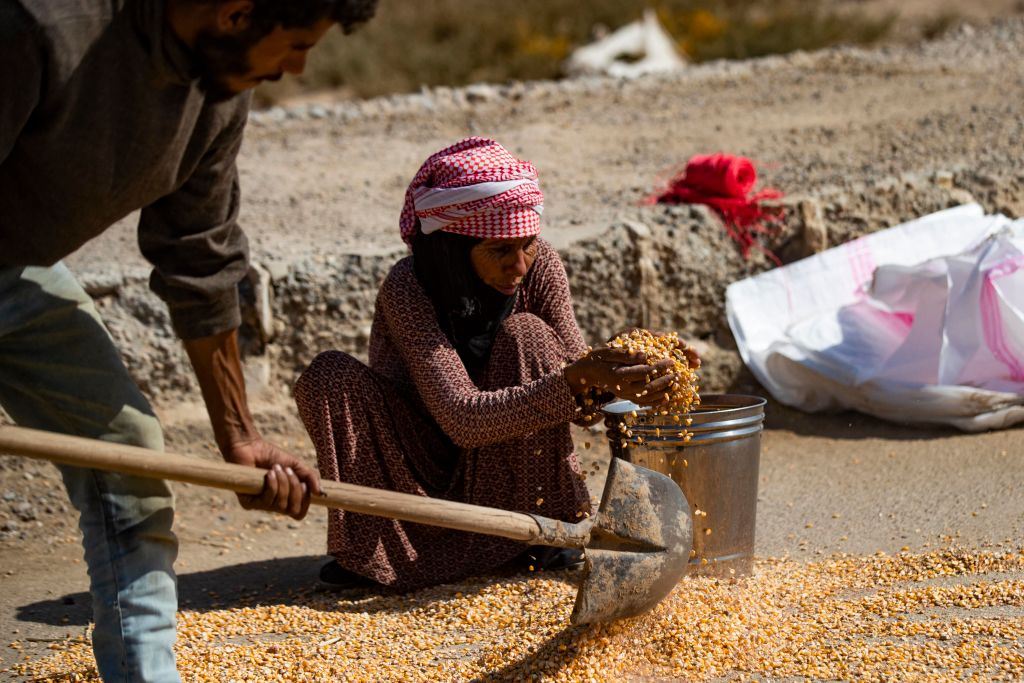
Farmers take part in the corn harvest in the Syria's Raqqa, on October 16, 2022.
 Photo: Delil Souleiman/AFP

ERBIL, Kurdistan Region - The Kurdish-led administration in northeast Syria (Rojava) anticipated on Thursday a wheat harvest of 350,000 tons for the 2025 agricultural season. The announcement comes at a critical time, as Syria faces a worsening drought and a projected drop in local wheat crops.

The Democratic Autonomous Administration of North and East Syria (DAANES) quoted the co-chair of Rojava’s General Silos and Mills Authority, Ghassan Tammo, as stating that “the expected wheat production this year is estimated at 350,000 tons” in the predominantly Kurdish region.

Tammo elaborated that 150,000 tons of wheat are expected to be produced by the al-Jazira region, which stretches across parts of Hasakah near the Turkish and Iraqi borders.

Meanwhile, DAANES-administered regions in Deir ez-Zor, Tabqa and Raqqa are expected to produce a combined total of 200,000 tons of wheat.

Tammo further emphasized the implementation of fire prevention measures to safeguard the harvest - critical in light of past fires that devastated crops and farmers’ livelihoods.

For his part, the co-chair of the Economy and Agriculture Authority in Raqqa, Ibrahim al-Shahin, added that a crisis response team has been formed under the supervision of the local council to
“ensure a rapid response to any incidents.”

The announcement comes as Syria is in the grips of a severe drought, prompting urgent warning from the United Nations Food and Agriculture Organization (FAO) that an "estimated 75 percent of local wheat crops" could fail in 2025.

The expected shortfall could result in a wheat deficit of 2.7 million metric tons, enough to feed approximately 16.3 million people for a year, Reuters quoted a FAO official as noting on Wednesday.

In recent weeks both the European Union and the United States decided to lift sanctions on Syria. These sanctions were originally imposed during the tenure of former Syrian dictator Bashar al-Assad, who was ousted in December by a coalition of opposition forces.

Syria’s new leadership is now taking steps to mitigate the crisis, including restricting water-intensive crops and promoting more efficient agricultural practices.

While the removal of sanctions won’t directly solve the drought, it opens the door for modernizing irrigation systems, increasing agricultural productivity, and improving food security.

This is especially crucial given Syria’s previous reliance on Russia, a longtime ally of Assad, for emergency wheat imports during past droughts. Reducing economic dependence on Moscow is a key goal of the new leadership’s push for sanctions relief.
Rojava delegation seeks international support in meeting with French MPs

yesterday 
Rudaw

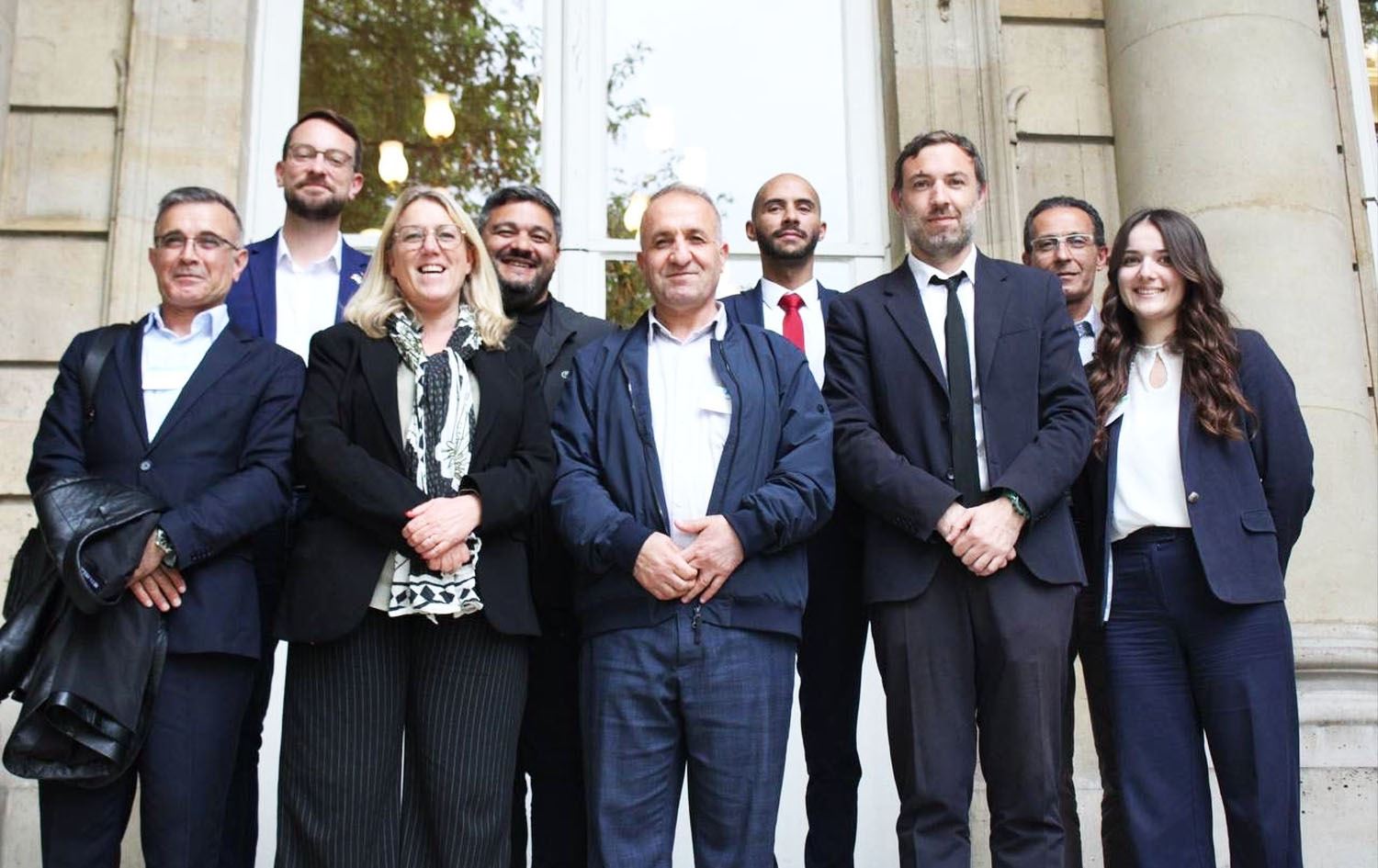
A delegation from the Kurdish administration in northeast Syria (Rojava) after a meeting with French lawmakers in Paris on May 21, 2025. Photo: Danielle Simonnet/X


ERBIL, Kurdistan Region - A delegation from the Kurdish administration in northeast Syria (Rojava) met with French lawmakers in Paris this week to strengthen support for negotiations with Damascus, according to Rojava-affiliated media.

The delegation included Bedran Ciya Kurd, an advisor to the Democratic Autonomous Administration of North and East Syria (DAANES), Karim Qamar, DAANES representative in France, and Faner Jajan, a member of the administration’s representation office in Europe, according to Hawar News Agency (ANHA).

Kurd said the meeting was part of the Rojava administration’s broader efforts to “mobilize international support to bring Syria to safety through decentralized, pluralistic democracy,” according to ANHA.

French lawmaker Danielle Simonnet, who attended the meeting, said in a post on X that Ahmad al-Omar, co-chair of the Tabqa provincial council under DAANES, told them that any lifting of sanctions against Syria “must be conditional on: the integration of all communities into the new Syria and in pursuit of all crimes recently committed against the Alawite and Druze minorities.”

The French parliamentarians called on their government to support the dialogue efforts, according to ANHA.

The Kurdish authorities have been engaged in negotiations with the interim Syrian government about their future in the country.

In late April, Kurdish political groups in Syria, in a rare unified statement, called for a decentralized, democratic system that guarantees Kurdish rights and paves the way for national dialogue.

The Syrian presidency condemned the declaration, arguing it contradicted a March 10 agreement signed by interim President Ahmed al-Sharaa and Mazloum Abdi, commander of Rojava’s de facto army the Syrian Democratic Forces (SDF), that recognizes the Kurds as an integral part of Syria, includes a nationwide ceasefire, and outlines steps to integrate the SDF into Syria’s official military and administrative structures.

Ongoing French engagement with Rojava and Syria

France has taken an active role in supporting Syria’s transition following the fall of the former regime in December.

In April, French Foreign Minister Jean-Noel Barrot met with Abdi and Elham Ahmed, co-chair of DAANES’s foreign relations office. Discussions reportedly focused on regional stability and support for dialogue between the Kurdish administration and the Syrian government.

Earlier in May, French President Emmanuel Macron received Sharaa in Paris on his first visit to Europe since taking office. The meeting reaffirmed France’s support for Syria’s political transition and respect for its territorial integrity.

Macron also said that the European Union would begin gradually lifting sanctions on Syria, contingent on progress in forming an inclusive government and safeguarding minority rights.

While maintaining cautious optimism, Paris has emphasized the need for inclusive governance and accountability for recent violence targeting minority groups.

In April, France condemned sectarian clashes south of Damascus that left over 100 dead, mostly from the Druze community.

Several Western countries, including France and Germany, have warned that the easing of sanctions must be tied to political reforms and power-sharing agreements that ensure equal representation for all ethnic and religious groups in Syria.
Rojava institutions to come under Damascus oversight: Official

yesterday 
Rudaw


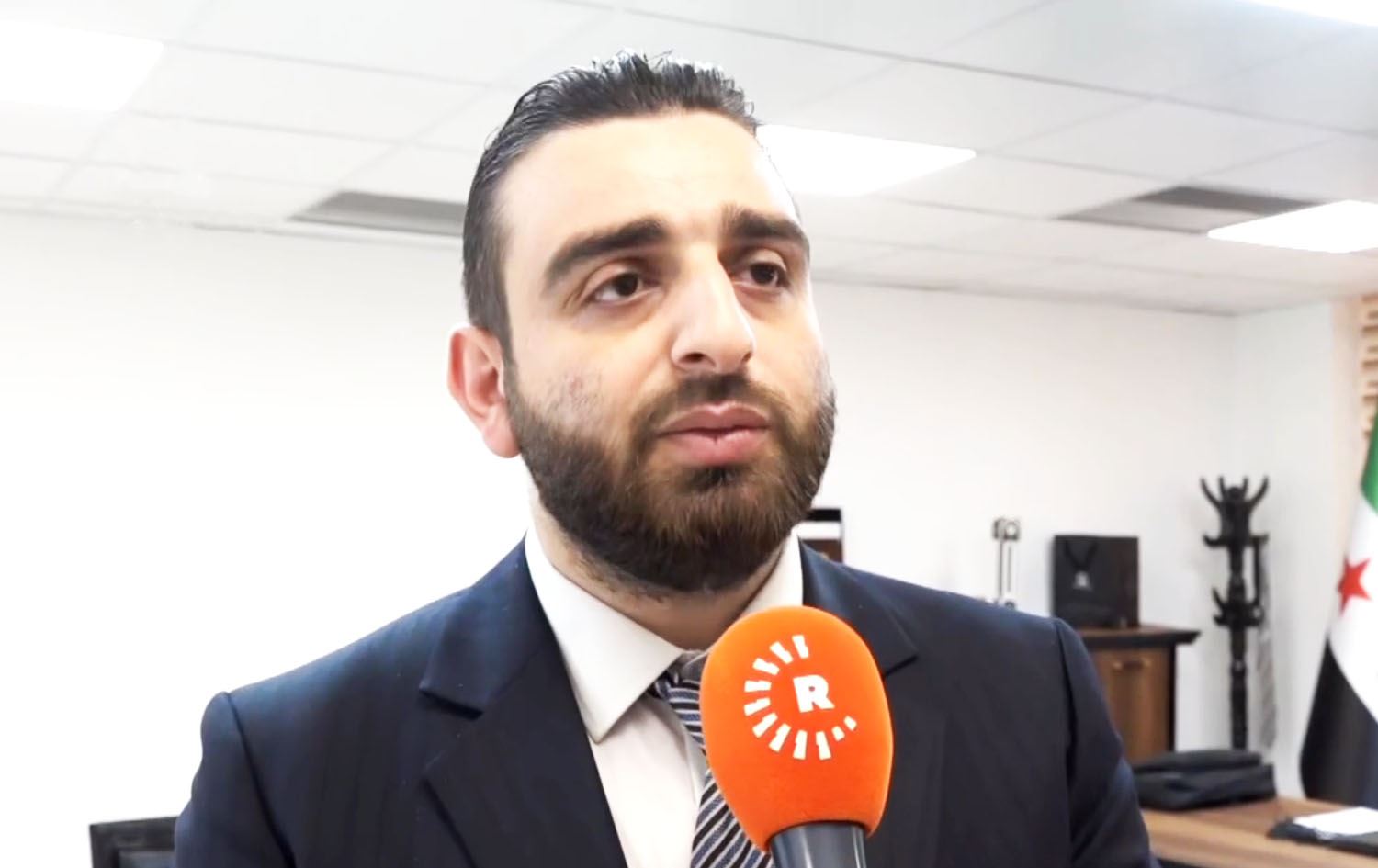
Ahmad Suleiman, public relations manager at the Syrian energy ministry, speaking to Rudaw on May 23, 2025. Photo: screengrab/Rudaw

ERBIL, Kurdistan Region - Institutions in the Kurdish-led northeast of Syria (Rojava) will remain in place but come under the supervision of relevant Syrian ministries following the expected finalization of a landmark agreement between Damascus and the Syrian Democratic Forces (SDF), a senior government official said.

"Currently, there is a central committee formed by the Presidency of the Syrian Arab Republic that is in communication to finalize the agreement between the president of the republic, Ahmad al-Sharaa, and [SDF] chief Mazloum Abdi," Ahmad Suleiman, public relations manager at the Syrian energy ministry, told Rudaw on Thursday.

He noted that the existing institutions in Rojava “will remain as they are,” but oversight will be transferred to the appropriate federal ministries.

“There will be committees from the Energy Ministry and other ministries to take over the institutions and all matters relevant to each ministry,” he said.

On March 10, Sharaa and Abdi signed an agreement that outlines steps to integrate Rojava’s civil and military institutions into the federal administration.

In early April, the SDF and Damascus reached a separate agreement that included a prisoner swap and laid the foundation for joint security oversight in Kurdish-majority neighborhoods of Aleppo previously held by the People’s Protection Units (YPG), the backbone of the SDF.