Wednesday, July 02, 2025


Cannes Moves to Limit Cruise Ships Following Similar Efforts in Nice
cruise ship French Riviera
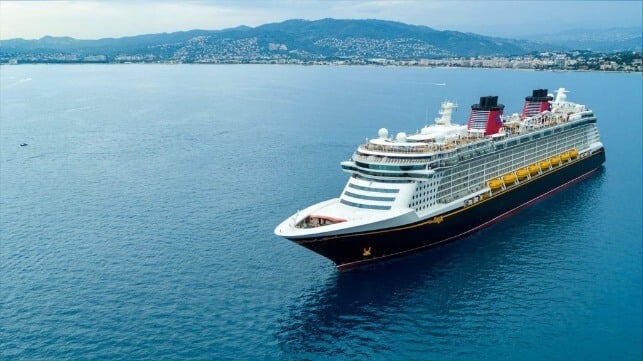
Disney cruise ship making a port call to Cannes (DCL file photo)

Published Jun 30, 2025 3:15 PM by The Maritime Executive


The efforts to control the mega-cruise ships along the French Riviera continue with the city of Cannes announcing it would implement new restrictions at the end of the year. It follows a similar effort by Nice and Villefranche, which was aimed at forcing large ships to move to Cannes or possibly Marseilles, and the broader trend of major destinations to stop overtourism.

"Cannes has become a major cruise ship destination, with real economic benefits,” wrote the long-time mayor of the city David Lisnard in a statement. “It's not about banning cruise ships, but about regulating, organizing, setting guidelines for their navigation." He highlighted that they were responding to concerns about crowd management and environmental issues.

The city has worked to expand its image as a chic destination along the French Riviera. In addition to the world-famous film festival, it also hosts yachting events and concerts. 

The City Council voted on June 27 to adopt new regulations that limit the size of cruise ships to a maximum capacity of 1,000 passengers as of January 1, 2026. In addition, it is imposing a cap of 6,000 cruise passengers a day arriving in the city, and they are shifting the anchorage for large cruise ships further out to sea and away from the beaches and famous cove. Large cruise ships will be required to tender their passengers ashore, which has already been the practice because there are no docks for the largest cruise ships on the Riviera.

Nice started a similar effort after multiple protests by environmental and other groups. The outspoken mayor of Nice proposed at the beginning of the year a total ban on cruise ships. Nice and Villefranche settled on a compromise due to go into effect July 1 that calls for permitting cruise ships with up to 2,500 passengers to anchor in the bay and tender passengers ashore. Only cruise ships with under 450 passengers are permitted into Nice and they are limiting it to one ship per day. The goal was to move large cruise ships to Cannes or further away on the coastline. Marseille is approximately a two-hour drive to the west of the Riviera.

France is a popular cruise and tourist destination. Last year, it was reported to have received over 100 million visitors. The growth in tourism and the large number of passengers on the new large cruise ships are creating concerns in many cities and ports.

Venice implemented a ban in 2021 for large cruise ships entering the lagoon after protests from environmentalists and preservationists. Recently, plans were announced for a new regional cruise center in the industrial port to the east of Venice, while both Amsterdam and Barcelona have adopted rules to shift cruise ships out of the city center.

 

Norway Provides $76M in Grants to Advance Hydrogen and Ammonia Ships

hydrogen fueled vessel
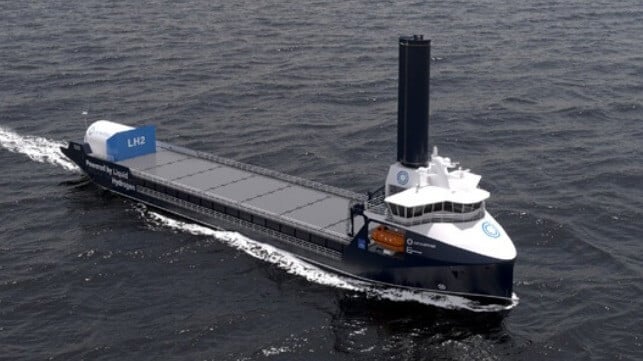
LH2 Shipping looks to leverage the first pilots in hydrogen to longer range ships (LH2 Shipping)

Published Jul 1, 2025 7:57 PM by The Maritime Executive


Norway continues to support the advancement of a broad range of new technologies that it points out will both contribute to maritime decarbonization while also creating new industries and jobs for Norway. The Enova program announced its fourth round of grants, providing a total of approximately $76 million for projects advancing hydrogen and ammonia as fuels for ships, as well as the establishment of facilities for storing ammonia.

Enova SF is owned by Norway’s Ministry of Climate and Environment, and is focused on technology and market development, digitalization, supporting communities, and business management. Shipping has been one of its key focuses as an industry that is vital to Norway and provides strong opportunities for the future.

“Norway must be at the forefront of the transition at sea,” said Minister for Climate and Environment Andreas Bjelland Eriksen. “When we support the development of such projects in the maritime sector, we enable them to take the lead in implementing new solutions globally.”

In this award round, Enova reports it selected four hydrogen-powered and two ammonia-powered ships to receive support. A total of approximately NOK 510 million ($50 million) is being allocated to hydrogen projects and NOK 253 million ($25 million) to ammonia projects. 

The projects include LH2 Shipping and Møre Maritime, each of which is working on developing two hydrogen-powered vessels. Amon Maritime announced in June that it was launching a bulk shipping operation, and it is receiving grants for two ammonia ships from Enova.


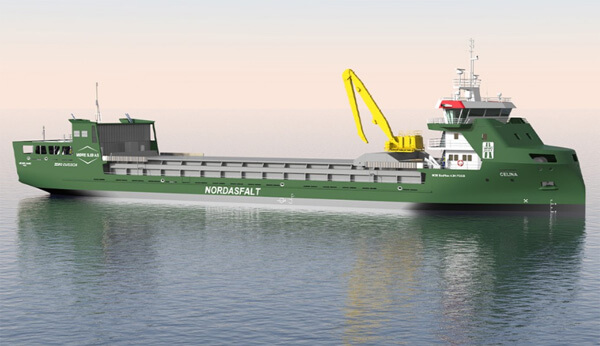
Møre Maritime is receiving grants for its project for two hydrogen powered short sea bulkers (Enova)


Operations using liquid hydrogen have already been demonstrated over the last two years with Norled’s M/F Hydra pilot project, a ferry operating in Norway. LH2 Shipping reports that its personnel worked as project managers for the Norled project, and its goal is to use this experience to begin to scale up hydrogen operations. Its first project focuses on short sea shipping as it looks to increase the range and move hydrogen into open sea operations. LH2 is receiving $23.5 million from Enova to advance its concepts for liquid-hydrogen ships.

LH2 notes that it is critical to also focus on the infrastructure required to support hydrogen. It says that as hydrogen facilities are developed along the coast, it will enable shipowners to move forward with investment decisions for liquid hydrogen-powered vessels. At the same time, LH2 is also scaling up and expanding into new ship segments where fuel cells and batteries work together in hybrid systems for vessels.


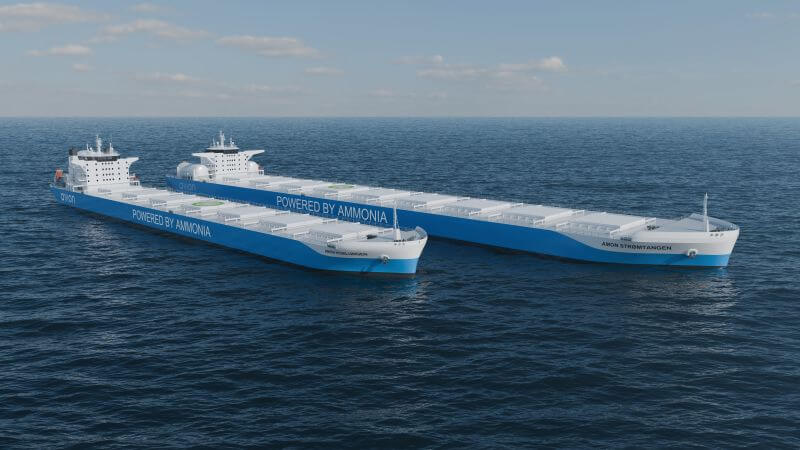
Amon Maritime reports it is seeking construction bids for two large ammonia-fueled bulkers (Amon Maritime)


Amon Maritime is more advanced as it works with ammonia, which is approaching commercial operations. It has developed plans for two bulk carriers, one approximately 180,000 dwt (Capresize) and the other at 85,000 dwt (Kamsarmax). It reports that it has entered a shipyard evaluation and tendering process for these vessels and aims to order the vessels for delivery by 2029. Amon is receiving $25 million from Enova.

Amon Maritime’s CTO Steinar Kostøl highlights that medium sized gas carriers (MGC) are large vessels with a high fuel consumption. As such, they are a strong target for adopting ammonia-fueled propulsion. Because the ship is already designed for transporting ammonia, Amon notes that the relative additional cost of ammonia-fueled propulsion compared to conventional ships will be less than most other segments. It believes its design concept can help to support the development of the category and drive investment in ammonia storage and bunkering.

Enova reports that it supports a wide range of measures and technologies within energy and climate, and works technology-neutrally to contribute where the need is greatest and the support has the most effect, also within shipping. In addition to the focus on hydrogen and ammonia, support is provided for battery electrification, biogas production, and the development of technology for other energy carriers in maritime transport.


Ukraine's Navy Gifted Two Minehunters to Boost Black Sea Security

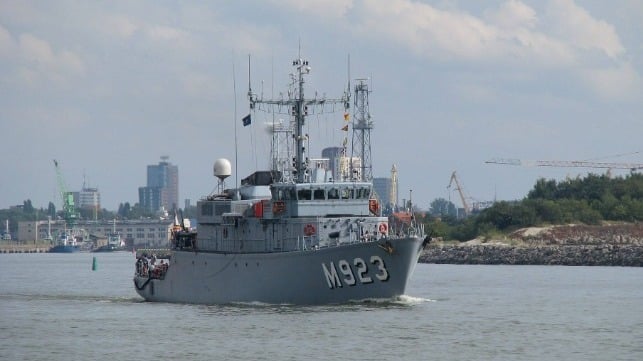
The minehunter Narcis, now renamed Mariupol (file image courtesy Lithuanian Defense Ministry)

Published Jun 29, 2025 9:23 PM by The Maritime Executive


The Dutch and Belgian governments have moved to strengthen Ukraine's mine countermeasures capabilities with the donation of two minehunter vessels. The development comes soon after NATO allies committed to continue providing support to Ukraine in its war with Russia following the conclusion of the alliance’s annual summit in The Hague.

The Ministry of Defense in the Netherlands is announcing that its decommissioned minehunter Zr.Ms. Vlaardingen together with Belgian minehunter BNS Narcis were recently transferred to the Ukrainian Navy. The donation of the two vessels is intended to enhance the war-ravaged nation’s ability to protect key infrastructure, safeguard trade routes and protect the global grain supply. When eventually transferred through the Bosporus, they will enhance the Ukrainian Navy’s abilities to clear explosives from the Black Sea.

Following the donation, Vlaardingen has since undergone name change and now bears the name of a Ukrainian city, Melitopol. Narcis has been named Mariupol, after the Ukrainian city that fell to a Russian siege early in the war. The Dutch government has also announced it will be donating another decommissioned minehunter, Zr.Ms. Makkum, which will be transferred to Ukraine by the end of the year. The ship will be named after the Ukrainian city of Henichesk. (All of these namesake cities are currently in Russian-occupied territory.)

Both Vlaardingen and Makkum are Alkmaar-class ships that served the Royal Dutch Royal Navy before being decommissioned last year. Both ships have a maximum displacement of 588 tonnes, and their hulls are made from polyester reinforced with fiberglass. The material minimizes the magnetic signature of the ships, helping them to avoid the detonation of underwater magnetic mines.

Narcis is a Tripartite-class minehunter that has been part of the Belgian Navy fleet since 1990 and remained in active duty before its donation. Belgium intends to donate a total of three ships of the class to Ukraine. Transfer of Vlaardingen and Narcis to the Ukrainian navy came after the two aging ships underwent thorough maintenance and conducted a training period with their new crews.

“The major ports of Odessa and the shipping lanes in the Black Sea are the lifeblood of the Ukrainian economy,” said Dutch Defense Minister Ruben Brekelmans. “And it is constantly threatened. Ukraine may not win the war at sea, but the country can certainly lose the war there. We simply cannot let that happen. That is why it is so important for maritime security and free passage that Ukraine can use the minehunters.”

The Netherlands and Belgium are the latest NATO allies to donate warships to Ukraine. In 2023, the UK government transferred two decommissioned minehunters to the country as part of efforts to help Ukraine detect and disable sea mines.

The Turkish government has closed the Bosporus to warships of combatant nations, as is its right under the Montreux Convention. The UK's gifted minehunters have not been allowed to pass through. 

At the just concluded NATO Summit 2025, leaders of the alliance have committed to continue supporting Ukraine in its war with Russia. The allies agreed to invest five percent of gross domestic product annually on core defense requirements as well as defense-and security-related spending by 2035. Part of the spending will include direct contributions towards Ukraine’s defense and its defense industry.


Ukraine May Pursue Sanctions Against Bangladeshi Buyers of Stolen Grain

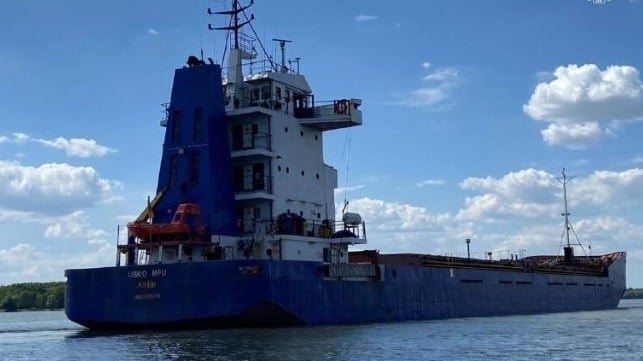
Usko MFU, a small bulker seized by Ukraine last year for allegedly carrying stolen wheat (State Security Service of Ukraine)

Published Jun 29, 2025 10:07 PM by The Maritime Executive


The government of Ukraine may seek EU sanctions on firms and public officials in Bangladesh for allegedly importing cargoes of grain that are partially sourced from occupied territory. 

Exporters in Russia's Black Sea region routinely mix grain from Russia with grain from parts of Ukraine that are currently under Russian occupation. Ukraine considers agricultural goods from occupied areas to be stolen, and officials in Kyiv regularly pursue foreign buyers to discourage the practice. The former government of Syria was a major customer, before the collapse of the Assad regime, but other nations' importers now buy it as well - including traders in Bangladesh, according to Ukrainian diplomats. 

Reuters obtained several letters that Ukraine's embassy in New Delhi sent to the Bangladeshi foreign ministry about the matter. The correspondence suggests that as much as 150,000 tonnes of stolen grain was shipped from Kavkaz to Bangladeshi ports, mixed in with "legitimate" Russian grain and undetectable to the buyer. The Ukrainian ambassador to India, Oleksandr Polishchuk, told Reuters that officials in Dhaka had not responded - even when threatened the possibility of sanctions and provided with a specific list of vessel names. 

The vessels are not currently under sanctions. To date, the EU, UK and U.S. have focused on sanctioning tankers, which account for the majority of Russia's export shipments by value. 

Ukraine has seized two ships for allegedly carrying stolen grain from Russian loading ports, and is planning to auction off one of them. 


Russian Attack Sub Surfaces Right Next to French Trawler off Brittany

Russian attack sub
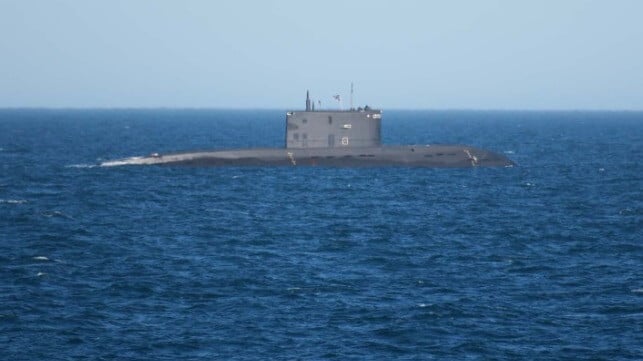
Kilo-class sub (file image courtesy Royal Navy)

Published Jul 1, 2025 4:07 PM by The Maritime Executive


The crew of a French trawler had an unsettling experience while transiting near Guernsey last weekend: a Russian submarine surfaced within sight, then continued on its way on a transit of the English Channel.

The fishing vessel Belenos was under way off the coast of Finisterre on Saturday when an unidentified attack sub surfaced nearby. It was close enough that the trawler's crew were able to capture detailed images of the hull and conning tower. According to Premar Atlantique, the Russian sub was in transit northbound and was being accompanied by the frigate Normandie. The movement was routine and fully monitored by French authorities, and it "did not cause any concern." 

The sub was en route to its home port after departing Russia's base in Syria, according to Le Telegramme. Based on photos, it was a Kilo-class, but the exact name of the sub remains confidential for now; the task of tracking was passed off to the UK Royal Navy, which typically reveals the identity of Russian vessels several days after each operation.

While there is no indication that the crew of the Belenos was in danger, fatal accidents have occurred during submarine surfacing and near-surface operations in the past. The most infamous disaster was an emergency-blow surfacing test carried out aboard the U.S. Navy sub USS Greeneville. The sub struck and punctured the hull of the Japanese fishery training ship Ehime Maru, and nine people were killed, including four high school students.


Germany and Sweden Join in Crackdown on Shadow Fleet Vessels in Baltic

seized shadow fleet tanker
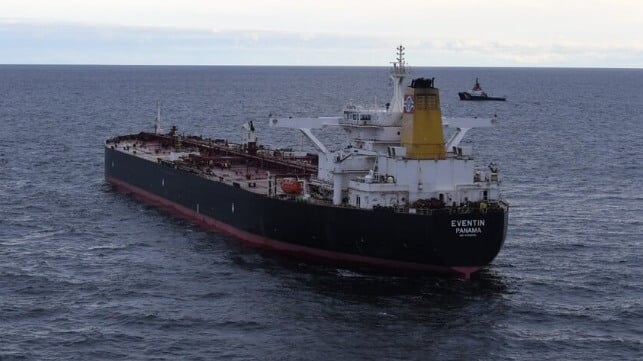
Germany previously seized the tanker Eventin and its cargo for violations (Havariekommando)

Published Jul 1, 2025 6:38 PM by The Maritime Executive


The efforts to identify and crack down on shadow fleet vessels breaking maritime regulations are increasing with Germany announcing that along with Sweden it will begin asking passing vessels about insurance coverage. It is joining with other Baltic and Scandinavian countries and the European Union, which have all launched efforts despite strong criticism from Russia to enforce rules on suspect vessels.

"The new inquiries will help further intensify coordination with our friends and partners in the region,” said Germany’s Foreign Minister, Dr. Johann Wadephul. “Our goal is very clear: We will increase the pressure on the Russian shadow fleet and protect the Baltic Sea habitat."

German authorities starting today, July 1, are immediately asking passing tankers about their insurance coverage to protect against oil pollution. They said the effort would be focused on vessels off Fehmarn, a German island alongside the key shipping lane, which is just 12 miles across to Sweden.

We must increase our vigilance in the Baltic Sea regarding the shadow fleet,” said German Transport Minister Patrick Schnieder. "By querying the insurance status of the traffic control centers, we are adding another piece to our situational picture. The more complete the picture, the sooner we can take measures together with our partner countries in the Baltic Sea region, including listing the ships for sanctions."

Unlike Estonia and Finland, Germany is not threatening to stop the vessels for inspections. However, it warns that irregularities may lead to Europe-wide monitoring or actions by the vessel’s flag state. It would also be considered as a basis for future listing under the sanction programs.

Germany in January 2025 took more direct action detaining the Panama-flagged tanker Eventin (152,000 dwt) after the vessel blacked out and had to be rescued in the Baltic. It later moved to seize the vessel and its cargo after saying it was a shadow fleet tanker in violation of regulations. Germany took control of the tanker, which continues at anchor, while the case was to be reviewed by the German courts.

Sweden also said at the end of May that it planned to increase its surveillance of suspect vessels targeting the shadow fleet. Denmark recently tracked and reported a deception by a shadow fleet tanker entering and exiting the Baltic. However, it decided not to attempt to detain the vessel, referencing the legal complications of a seizure.

Russia has said it would take steps to protect the tankers in its oil trade, including several recent incidents where Russian warships have been seen sailing near tankers. In May, a Russian warplane briefly entered Estonia's airspace as the country was confronting a suspicious tanker. 

Speaking at the United Nations, Russia has called the efforts of the European Union and specific countries in the Baltic piracy. It demanded adherence to maritime rules and free navigation, while the countries have cited the subsea cable incidents and the dangers of pollution from the unregulated tankers.

The European Union and the UK have been aggressive in expanding their sanctions against the shadow fleet and a crackdown on the Russian energy sector, while the United States under Trump has lagged. Australia recently joined the efforts by launching its first sanctions against the shadow fleet, but more vessels continue to support the Russian oil trade. Estimates have said that at least 800 tankers have been involved in moving Russian oil, many in violations of the G7 price cap on Russian crude.


New book Terraglossia reclaims language, Country and culture


University of South Australia


Award-winning author and University of South Australia academic Dr Debra Dank has unveiled her latest work, Terraglossia, a powerful response to colonial oppression that invites all Australians to reimagine how we engage with the world’s oldest living culture.

Dr Dank, a Gudanji/Wakaja and Kalkadoon woman from the Barkley Tablelands in the Northern Territory, launched the compelling follow-up to her acclaimed memoir, We Come With This Place, to challenge entrenched narratives and celebrate the richness of First Nations language and culture.

The title of the small hardback, Terraglossia, is a word coined by Dr Dank herself in response to the colonial notion of terra nullius – a concept used by British colonisers to assert the land of Australia was unoccupied and available to claim and settle.

“There is no result to be found if you Google the term ‘terraglossia’ and you won’t find it in a dictionary yet, or perhaps not ever,” she writes in the book.

“It is a word I have coined because in making the untruth visible, populating the great Australian silence with the sounds that have been yarning here for thousands of years, we must identify the words that illustrate or define Aboriginal and Islander ways of knowing, being, doing and seeing as defined by us through our concepts and not merely non-Aboriginal concepts massaged into something that is close enough.”

Dr Dank, who is based on the Sunshine Coast, has spent 40 years working in primary, secondary and tertiary education roles in urban and remote areas across Queensland, New South Wales, Victoria, South Australia and Northern Territory.

She also helped establish the Indigenous Literacy Foundation, a charity dedicated to improving literacy among Aboriginal children and young people, especially in remote and isolated communities.

Throughout the new book, Dr Dank explores how an uncritiqued English language – evolved from a comparatively young language literally on the other side of the world ­– continues to silence First Nations’ voices and suppress more-than-ancient knowledges.

She draws on several experiences throughout her childhood and teaching career where she has witnessed firsthand the impact of language loss and cultural disconnection.

“I once worked with a non-Aboriginal teaching colleague who was from a non-English speaking European ancestry. I entered her classroom and found her shaking a small child and saying most aggressively, ‘You will not speak that gobbledygook in my classroom.’ The child, five years old, had spoken their own Aboriginal language,” Dr Dank says.

“In my almost 40 years of working in a range of educational institutions and contexts throughout much of Australia, I have never once by connotation or by explicit statement, heard anyone voice disquiet about English speaking children speaking their own language in the classroom.

“It's time to disrupt a very erroneous narrative that started here when Cook claimed Country that was never his or open for claiming. We need to begin the business of being able to at least communicate a little more effectively.”

Dr Dank’s first book We Come With This Place, a memoir of sorts of her Gudanji/Wakaja family’s connection to Country and culture, won numerous awards in 2023, including four NSW Premier’s Awards, three Queensland Literacy Awards and the Australian Literature Society Gold Medal.

“I’m still a bit befuddled and bemused by the whole thing,” she says. “I didn’t set out to write books, I’m perplexed by the success of it but I am deeply honoured.”

Dr Dank has already started work on her third book, expected to hit the printers before the end of 2025.

Terraglossia, published by Echo Publishing, is available online and at major Australian booksellers.


Seasonal allergies caused by fungal spores now start three weeks earlier under climate change


A first-of-its-kind study led by the University of Michigan has 'implications for both ecosystem processes and human health'


University of Michigan

Map of fungal spore allergy season change 

image: 

Research led by the University of Michigan showed how the timing of fungal spore allergy season has changed across the country over the past two decades, driven by climate change. Although the trend varies across areas, the spore allergy season on average has started 22 days earlier over two decades.

view more 

Credit: R. Wu et al., GeoHealth, 2025, DOI: 10.1029/2024GH001323


Although many of us spend allergy season cursing out plant pollen, spores from mold and other fungi also deserve some of that same disdain. These invisibly small agitators tend to fly under the radar, despite being capable of causing the same sneezes, sniffles and, in some cases, severe respiratory issues. 

And these stealthy allergens are sneaking up on us earlier than ever before, according to new research led by the University of Michigan and published in the journal GeoHealth

"Over the past two decades, fungal spore seasons in the U.S. have shifted significantly due to climate change. This has implications for both ecosystem processes and human health," said Ruoyu Wu, a leader of the research project while earning her master's degree at the U-M School for Environment and Sustainability. She is now pursuing her doctoral degree at the University of Florida.

Against a backdrop of changing temperatures and precipitation patterns, Wu and her colleagues performed the first large-scale systematic study of outdoor fungal spore abundance across the continental United States between 2003 and 2022. This was made possible by data collected at 55 pollen counting stations associated with the U.S. National Allergy Bureau.

The researchers found that, on average, spore allergy season was kicking off 22 days earlier in 2022 than it had been in 2003.

"This is the first time that we've been able to show that the fungal spore seasons have changed, and the change is pretty big. That's three weeks over the past two decades," said study senior author Kai Zhu, U-M associate professor of sustainability and environment and of ecology and evolutionary biology.

A 2023 epidemiological study found that, out of clinical samples collected from more than 1.6 million patients in the U.S., roughly 1 in 5 showed signs of sensitivity to fungal allergens. 

That means folks who have suspected their respiratory distress is creeping up in the calendar likely aren't imagining things and may want to start their remedies sooner, the researchers said. This finding is also important for doctors and health care professionals who offer guidance to patients and the public on preparations for allergy season.

"We also know that buildings and vegetation are huge sources of fungal spores in the air," said Yiluan Song, another leader of the study and a postdoctoral fellow at the Michigan Institute for Data and AI in Society. That means another practical action item, beyond people preparing earlier for the "natural" spore season, is alleviating and preventing mold in our built environments.

In addition to its public health implications, the study also revealed ecological concerns. Beyond looking at when spore concentrations reached a threshold that would trigger allergic reactions in people, the team also examined a flexible threshold based on the accumulated spore count in the year, which might be more relevant to the timing of fungal reproduction.

Through the lens of that ecological threshold, the team still observed a season shift in spore season: Ecological spore season starts an average of 11 days earlier in 2022 across the U.S. compared with 2003.

Nevertheless, the study found that the accumulated spore count declined over the survey period. Spores are microscopic particles that fungi use to reproduce and fungi are a vital link in many of nature's food webs, as both a food source and decomposers of organic material. As climate change affects the production of these tiny organisms, it could have outsize impacts on broader ecosystems.

It appears that warming temperatures are driving the advance of spore season, while drought conditions may be responsible for decreasing spore production, Song said.

"Here, we see a very visible fingerprint of climate change," she said. "So another key action item is to try to curb climate change."

Collaborators at U-M included Jennifer Head, assistant professor of epidemiology, and Kerby Shedden, professor of statistics. Daniel Katz, assistant professor at Cornell University, and Kabir Peay, professor at Stanford University, also contributed to the study. The research was supported by the U.S. National Science Foundation, the U.S Department of Energy, Michigan Institute for Data and AI in Society, and the Schmidt Sciences program.


Promising solution for detecting money-laundering and collusion in transaction webs


Boost accuracy and cut false alarms in credit-card, insurance, and supply-chain fraud detection


Higher Education Press


A review by researchers at Tongji University and the University of Technology Sydney highlights the powerful role of Graph Neural Networks (GNNs) in exposing financial fraud. By revealing intricate relational patterns in transaction networks, GNNs significantly outperform traditional rule-based and classic machine learning methods. The study presents a unified framework to guide the understanding and application of GNNs across various fraud scenarios, paving the way for both implementation and future breakthroughs.

GNNs Tackle Complex Fraud Tactics by Mapping Transactional Relationships

As financial fraud grows in both scale and sophistication, it continues to erode confidence in global banking, payments, and insurance systems. GNN-based systems, however, are able to unravel the complex web of interactions between accounts, entities, and behaviors—making them adept at detecting money-laundering schemes, collusion networks, and unusual device usage that often evade conventional detection tools. Broad adoption of GNNs could mean tighter security for consumers, fewer losses for businesses, and more robust oversight for regulators—addressing an urgent need for advanced fraud defenses.

Actionable Benefits for Financial Institutions, Policymakers, and Researchers

This comprehensive review offers practical insights for multiple stakeholders. For financial institutions, embedding GNN modules into existing fraud-detection pipelines can sharpen detection accuracy and cut down on false positives, ultimately enhancing both operational efficiency and customer satisfaction. Policymakers may find value in GNN-driven analytics to shape smarter data-sharing regulations and transparency standards, while balancing privacy with security. Meanwhile, the research community benefits from a clear roadmap that identifies key challenges—like scalability, interpretability, and adaptability—that will shape the next wave of fraud-detection innovation.

In-Depth Analysis of GNN Types and Real-World Performance

The authors examined over 100 top-tier studies, identifying four primary types of GNNs—convolutional, attention-based, temporal, and heterogeneous—and exploring how each contributes to fraud detection. Their analysis shows that GNNs consistently outperform older methods across diverse scenarios, including credit-card fraud, insurance scams, and supply-chain anomalies. Real-world examples, such as the open-source AntiFraud project on GitHub, demonstrate the tangible benefits of GNNs—while also revealing practical challenges, like the high computational costs of processing large graphs, the need for clear model outputs, and the difficulty of keeping pace with ever-evolving fraud tactics.

A Unified Framework Backed by Rigorous Evaluation and Best Practices

To ensure both scientific rigor and real-world relevance, the researchers conducted a systematic literature review and introduced a unified analytical framework. This framework organizes GNN methodologies by architecture and fraud-detection task. The study also includes evaluations of real-world case studies, performance comparisons against traditional methods, and distilled best practices for building financial graphs—including transaction, relationship, behavioral, and information-flow graphs—and for effective feature engineering.

In short, GNNs offer a powerful and adaptable approach to detecting financial fraud, capable of learning subtle patterns that traditional models often overlook. As fraud tactics become more elaborate, the integration of scalable and interpretable GNN solutions will be critical to protecting economic systems and rebuilding public trust. This review provides a solid foundation for future research and deployment, urging collaboration between academia, industry, and regulators to unlock the full promise of graph-based fraud detection.  The complete study is accessible via DOI: 10.1007/s11704-024-40474-y.