Monday, July 21, 2025

Democrats laugh off Trump attempts to blame them for Epstein fallout

Democrats ignore Trump’s attempts to pin his newest scandal on them

John Bowden
in Washington, D.C.
Sunday 20 July 2025
THE INDEPENDENT

Trump on Epstein: Stupid Republicans are falling for a 'Democrat hoax'

From reproductive rights to climate change to Big Tech, The Independent is on the ground when the story is developing. Whether it's investigating the financials of Elon Musk's pro-Trump PAC or producing our latest documentary, 'The A Word', which shines a light on the American women fighting for reproductive rights, we know how important it is to parse out the facts from the messaging.

At such a critical moment in US history, we need reporters on the ground. Your donation allows us to keep sending journalists to speak to both sides of the story.

The Independent is trusted by Americans across the entire political spectrum. And unlike many other quality news outlets, we choose not to lock Americans out of our reporting and analysis with paywalls. We believe quality journalism should be available to everyone, paid for by those who can afford it.Your support makes all the difference.Read more

Donald Trump’s political rivals seemed unshaken by his attempts to pin blame on them for the fallout over his administration’s handling of the Jeffrey Epstein investigation this weekend.

As the president and his allies leveled allegations about the Biden Justice Department supposedly tampering with evidence to link Trump to the convicted pedophile, Democrats remained fixed on calling for the full release of the Justice Department’s cache of evidence and investigation.

Even as news broke this past week that Trump had instructed Attorney General Pam Bondi to release grand jury testimony from the investigations into Epstein and his mistress, those same Democrats called the move an attempt to cover up the president’s involvement, given that it constituted less than full transparency.

On Sunday, Sen. Amy Klobuchar laughed off a suggestion made by Trump on Wednesday in an interview with a MAGA-supporting channel, Real America’s Voice: “I can imagine what they put into files, just like they did with the others.”

“The president blaming Democrats for this disaster, Jake, is like that CEO that got caught on camera blaming Coldplay, okay?” Klobuchar joked to CNN’s Jake Tapper on State of the Union, referencing a now-viral clip that made the rounds last week. “This is a problem of his own making.”

Senator Amy Klobuchar responded to Donald Trump's attempts to accuse Democrats of tampering with the investigation (Twitter - CNN State of the Union)

Eric Swalwell, a congressman from California, also discussed the president’s response and call for the release of the Epstein grand jury testimony.

“If you’re Donald Trump and you have Elon Musk saying you’re in the files, and Mick Mulvaney, your former chief of staff, saying you’re in the files, and Michael Wolff, your biographer saying that you’re not just in the files but that there’s some pretty disturbing things you did with underaged girls, wouldn’t you want to clear your name?” he asked during an appearance Saturday evening.

“I think that’s why his supporters are scratching their heads,” Swalwell continued, adding that the president was “willing to throw his supporters overboard to keep these files buried.”

Numerous other Democrats across the ideological spectrum joined in on the calls for the files’ release this past week, bridging across the party’s ideological spectrum and revealing a generational divide more than a policy gap. Senior Democrats, like Nancy Pelosi, have referred to the controversy as a “distraction”.

But younger Democrats roll their eyes at the notion of letting Republicans off easy on the first issue that has truly divided the MAGA base in years.

“This is Donald Trump’s effort…to gaslight you into thinking they’re turning over the Epstein files, when in reality, they’re turning over nothing that is relevant to what everybody deserves to know,” Congressman Dan Goldman said on Friday. “The grand jury testimony of course will only relate to Jeffrey Epstein and Ghislaine Maxwell — the two people who were charged in the case.”

The Justice Department moved this past week to unseal grand jury transcripts from the prosecutions of Jeffrey Epstein and his girlfriend/accomplice, Ghislaine Maxwell. Epstein died in federal custody in 2019 while Maxwell remains in prison.

Any transcripts released from those grand jury proceedings would relate solely to Maxwell and Epstein themselves, and would not likely contain any mention of Trump or other powerful men known to have cultivated relationships with the billionaire financier who was set to face trial for sex trafficking underage girls when he died.

The motions were filed in court a day after the Epstein story again blew up with a bombshell story from Rupert Murdoch’s Wall Street Journal.

The Journal published the text of a note that was allegedly penned by Trump to Epstein as part of a 50th birthday card. The note itself was framed with the silhouette of a naked woman, Trump’s signature in place of pubic hair; the contents alluding to a “secret” that Trump wrote the two men shared.

Trump has fiercely denied the authenticity of all parts of the Journal’s reporting, from the drawing to the contents of the note.

On Friday and Saturday, Trump launched lawsuits against the newspaper as well as unaffiliated journalists who shared it on social media.


Pam Bondi ‘could have tried Epstein’ while Florida AG, law professor says

Bondi served as Florida’s first female attorney general from 2011 to 2019

Rhian Lubin
in New York
The Independent 
Saturday 19 July 2025

Epstein's ex-girlfriend says he was once 'very close' with Trump

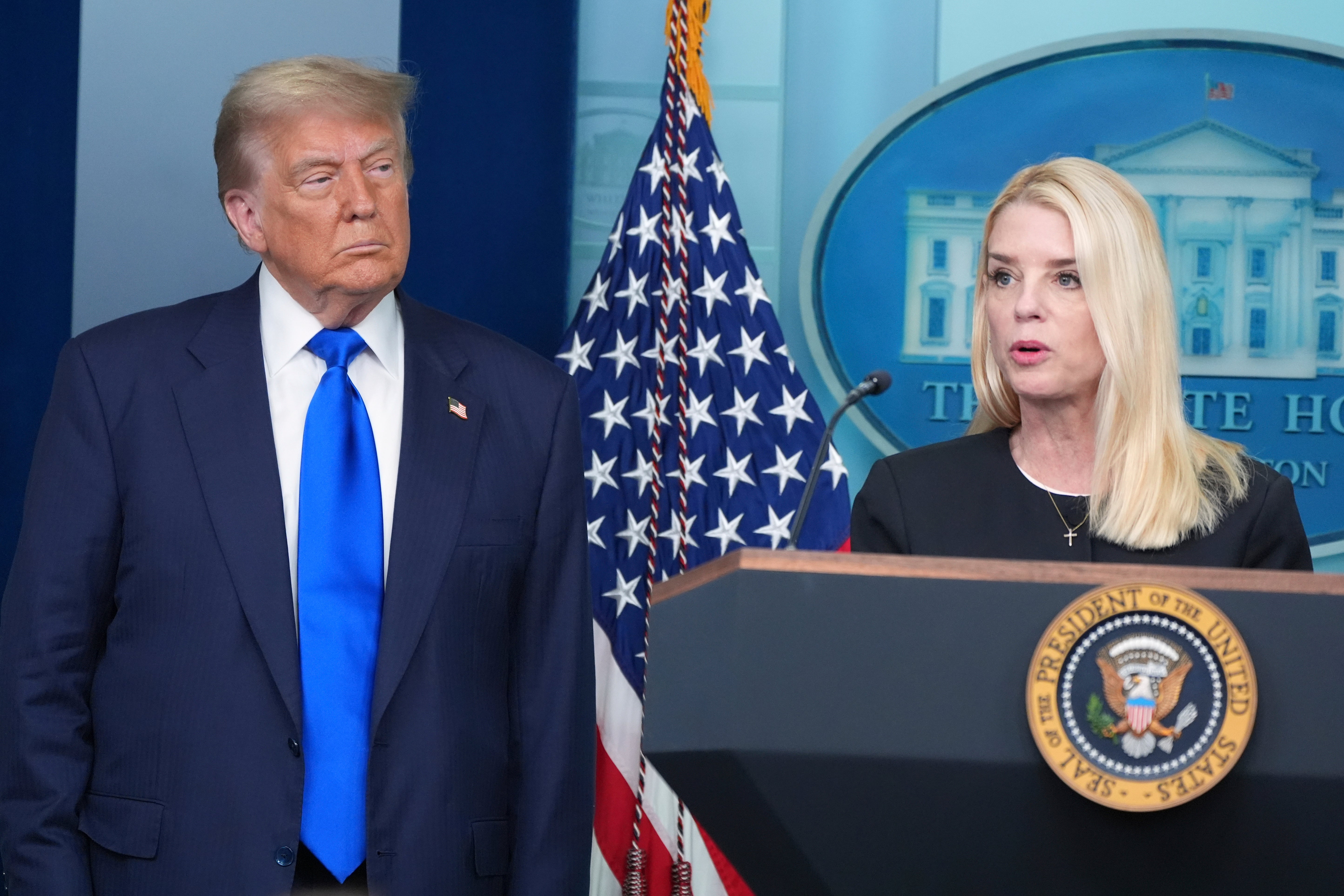
President Donald Trump’s embattled Attorney General has been mired in controversy over the release of the Epstein files, which she claimed were sitting on her desk in February.

The Department of Justice announced on July 6 that no more evidence in the case would be released and that the disgraced financier did not have a “client list.”

Following widespread outrage from MAGA, Trump ordered Bondi to release certain Epstein files and relevant grand jury testimony “subject to court approval.”

Before joining the Trump administration, Bondi, who represented Trump during his first impeachment proceedings in 2019, served as Florida’s first female attorney general.

The Palm Beach Post asked the question: “Should Bondi have looked into Epstein's crimes between the time of his jail release in 2009 and the filing of the criminal charges in 2019, when many have alleged that he sexually assaulted hundreds more?”

open image in galleryBefore joining the Trump administration Bondi, who represented Trump during his first impeachment proceedings in 2019, served as Florida’s first female attorney general. (AP)

Theoretically, she could have, said Nova Southeastern University law professor Robert Jarvis.

“The federal government and the state government, of course, are two different political entities, and both have the power to try the same person for the same crime, using their respective laws,” Jarvis told the Post. “Thus, Pam Bondi could have tried Epstein.”

The Independent has contacted Bondi’s office for comment.

Jarvis, however, added that Bondi would not necessarily have had cause to initiate a new investigation unless someone had specifically brought a case to her attention.


“I would not criticize her for not doing anything for what seem[s] to be a case that had already been adjudicated and dealt with and punishment handed out,” Jarvis told the outlet.


open image in galleryAuthorities in Palm Beach started investigating Epstein in Florida in 2005 (Florida Department of Law Enforc)

Authorities in Palm Beach started investigating Epstein in Florida in 2005. A grand jury charged him with one count of solicitation of prostitution in 2006 as accounts of sexual abuse from his island mansion began to come to light.


In 2008, despite an overwhelming amount of evidence, Epstein was given the “deal of the century” that saw him serve 13 months out of an 18-month sentence for only two prostitution-related felonies. He was released in July 2009.

Federal prosecutors in New York brought sex trafficking charges against Epstein a decade later.

Bondi said a motion to release grand jury testimony in the Epstein case was filed on Friday in a post on X.


How the French Left is Winning

Europe’s Crisis Is Only Just Beginning | Aaron Bastani Meets Jean-Luc Mélenchon

Illegal: Russia's biggest oil producer slams EU sanctions on India's refinery

Rosneft accused the EU of ignoring international law and interfering with the sovereignty of third countries like India. The Russian oil giant called the sanctions part of a broader attempt to destabilise global energy markets and create unfair competition.


Nayara Energy's refinery in Vadinar. (Source: nayaraenergy.com)

India Today World Desk
New Delhi,
 Jul 21, 2025 
Written By: Satyam Singh

In Short

Rosneft says sanctions violate international law and threaten India's energy security

India rejects unilateral EU sanctions, supports UN-based measures only

Nayara Energy is a key Indian refinery partly owned by Rosneft


Rosneft, Russia's biggest oil producer, condemned the European Union's sanctions on Nayara Energy, an Indian oil refinery partly owned by Rosneft. The company called the EU’s move "unjustified" and "illegal," warning that these restrictions threaten India's energy security and could hurt its economy.

The EU announced the sanctions on Friday as part of its 18th package of restrictions against Russia, targeting its oil trade to pressure Moscow over the Ukraine invasion. Nayara Energy, located in Gujarat, processes crude oil and is partly owned by Rosneft, which holds 49.13% of the refinery. The EU’s goal is to cut Kremlin revenues by limiting Russia’s crude exports to countries like India.

Rosneft said in a statement that Nayara Energy is an "important asset" that ensures a steady supply of petroleum products to India’s domestic market.

Rosneft also clarified that it holds less than half of Nayara and does not control the company, which is run by an independent board. The company called the EU’s reasons for the sanctions "far-fetched and false." It pointed out that Nayara is an Indian legal entity focused on developing its assets and reinvesting profits to grow the refinery and its petrochemical operations.

Nayara Energy runs a large refinery with a capacity of 400,000 barrels per day and owns nearly 7,000 fuel outlets across India. It is also working on a new petrochemical plant near its refinery to expand its production capabilities.

INDIA REJECTS EU SANCTIONS


India’s Ministry of External Affairs (MEA) has also criticised the EU sanctions. MEA spokesperson Randhir Jaiswal said that India "does not subscribe to any unilateral sanction measures" and reaffirmed that India only recognises sanctions decided within the United Nations framework.

"We have noted the latest sanctions announced by the European Union. India does not subscribe to any unilateral sanction measures. We are a responsible actor and remain fully committed to our legal obligations," Jaiswal said in a statement posted on X.

ROSNEFT BLAMES EU FOR VIOLATING INTERNATIONAL LAW


Rosneft accused the EU of ignoring international law and interfering with the sovereignty of third countries like India. The Russian oil giant called the sanctions part of a broader attempt to destabilise global energy markets and create unfair competition.

The ownership of Nayara Energy is shared between Rosneft and the Indian investment group SPV Kesani Enterprises, along with other retail investors. Reports suggest Rosneft is looking to exit the Indian venture because sanctions have made it difficult to send its earnings out of India.

Rosneft said it expects Nayara to protect the interests of its shareholders and customers. It also said that Russia and India’s governments would support the company in dealing with these challenges.
Far-right Israelis assault Arab lawmaker Ayman Odeh near Tel Aviv

Far-right mob attacks Odeh’s car with stones, sticks and curses as he heads to anti-war event

Said Amouri and Tarek Chouiref |19.07.2025 - TRT/AA


JERUSALEM/ISTANBUL

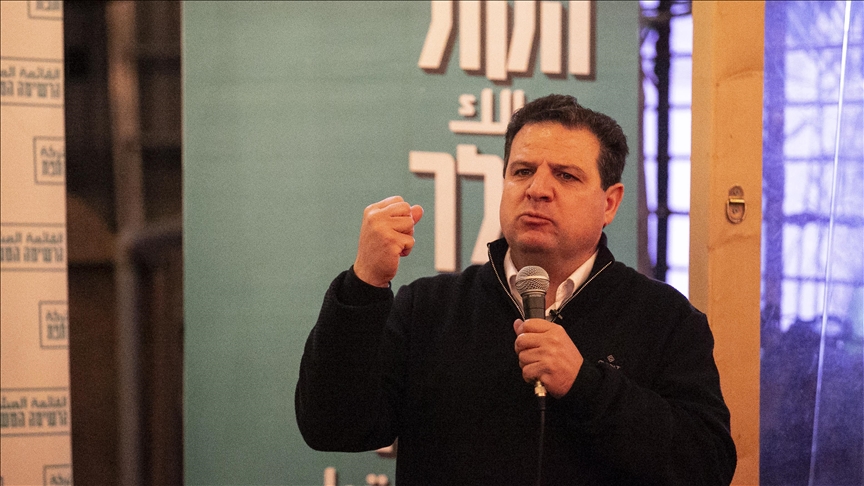
Far-right Israelis physically assaulted Arab lawmaker Ayman Odeh on Saturday in the town of Ness Ziona, just south of Tel Aviv, his office said.

Odeh, who heads the Hadash–Ta’al alliance in the Knesset, was on his way to speak at a rally against the war on Gaza when a group of far-right Israelis surrounded his car.

“They smashed the windows while he was inside. They spat at him, cursed him, hit the vehicle with sticks, and threw stones,” his office said in a statement.

Despite the assault, Odeh continued to the event and delivered his speech.

“This war must end. A prisoner swap must be reached now,” he told the crowd.

His office accused Israeli police of “total complicity,” saying officers stood by and did nothing to stop the attack, even as extremists chased and hit the lawmaker in broad daylight.

No injuries were reported, but the incident sparked outrage among human rights groups and political allies.

The attack came just days after a failed Knesset vote to expel Odeh from parliament over a social media post supporting a prisoner exchange with the Palestinian group Hamas.

“I’m staying,” he wrote defiantly after the vote. “This fascist campaign has failed. We will keep fighting for equality, peace and democracy.”

Odeh, one of the most prominent Arab voices inside Israel, has faced growing threats over his criticism of the Gaza war.

At a rally in Haifa in northern Israel last month, he declared: “Gaza has won — and Gaza will win.”

Rejecting international calls for a ceasefire, the Israeli army has pursued a brutal offensive on the Gaza Strip since October 2023, killing nearly 59,000 Palestinians so far, most of them women and children.

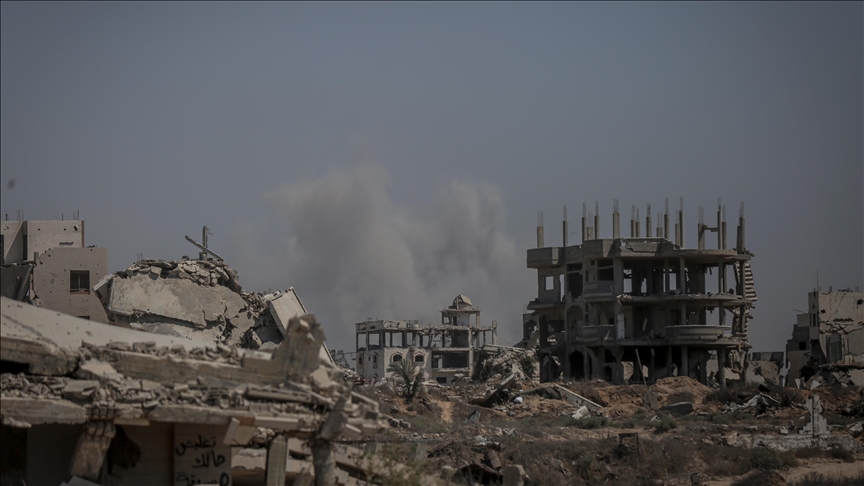
The relentless bombardment has destroyed the enclave and led to food shortages and spread of disease.

Last November, the International Criminal Court issued arrest warrants for Israeli Prime Minister Benjamin Netanyahu and his former Defense Minister Yoav Gallant for war crimes and crimes against humanity in Gaza.

Israel also faces a genocide case at the International Court of Justice for its war on the enclave.
Israeli tanks kill 59 people in Gaza crowd trying to get food aid, medics say

21 July 2025 - 
By Nidal al-Mughrabi and Hatem Khaled
TIMES LIVE,  SOUTH AFRICA


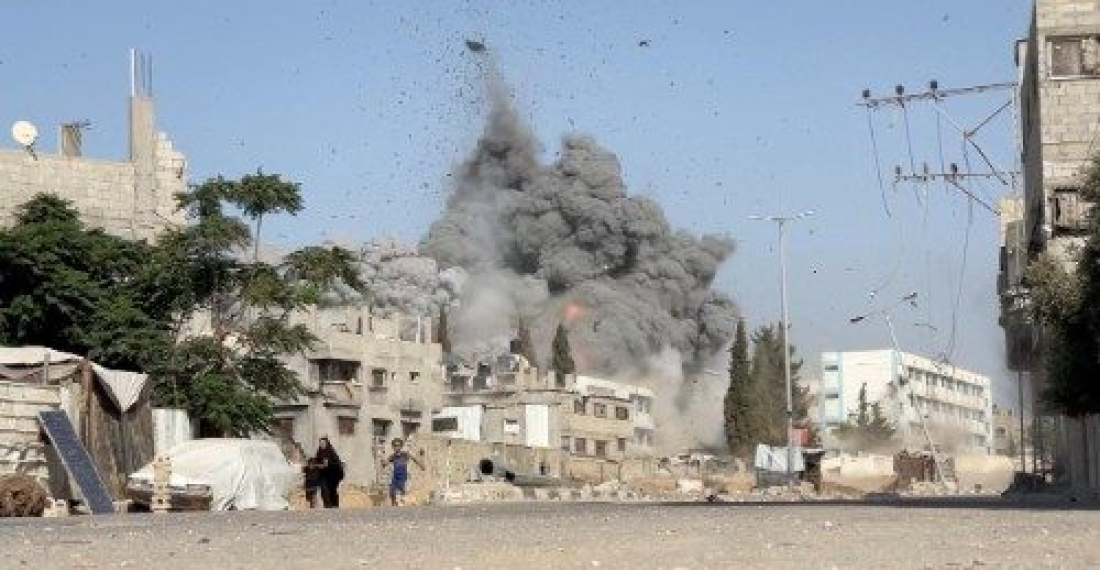
A combination of screen grabs from video obtained by Reuters shows a girl running from the scene during Israeli strikes on a school sheltering displaced people at the Bureij refugee camp in the central Gaza Strip on July 17 2025
Image: Reuters TV/via REUTERS


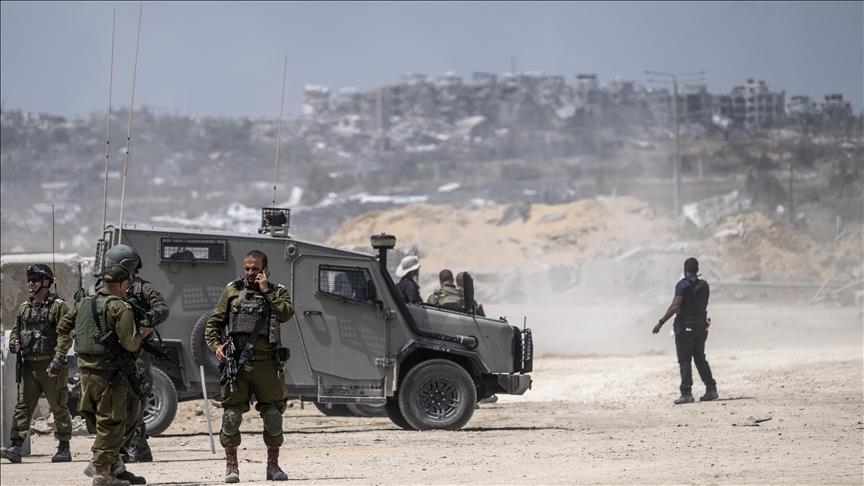
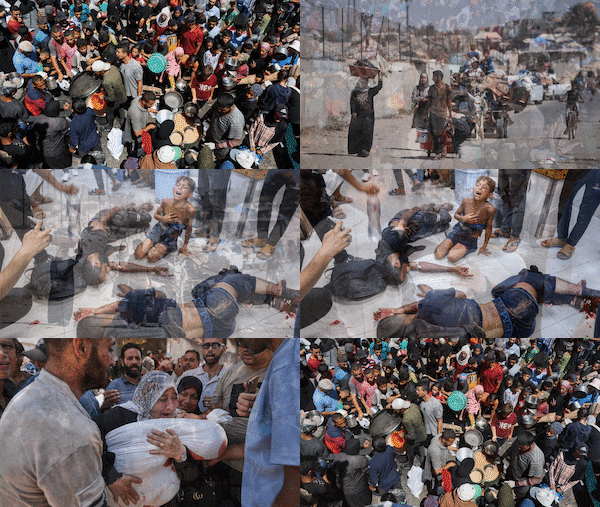
Israeli tanks fired into a crowd trying to get aid from trucks in Gaza on Tuesday, killing at least 59 people, according to medics, in one of the bloodiest incidents yet in mounting violence as desperate residents struggle for food.

Video shared on social media showed around a dozen mangled bodies lying in a street in Khan Younis in the southern Gaza Strip. The Israeli military, at war with Hamas-led Palestinian militants in Gaza since October 2023, acknowledged firing in the area and said it was looking into the incident.

Witnesses interviewed by Reuters said Israeli tanks had launched at least two shells at a crowd of thousands who had gathered on the main eastern road through Khan Younis in the hope of obtaining food from aid trucks that use the route.

"All of a sudden, they let us move forward and made everyone gather, and then shells started falling, tank shells," said Alaa, an eyewitness interviewed by Reuters at Nasser Hospital, where wounded victims lay sprawled on the floor and in corridors due to the lack of space.

"No one is looking at these people with mercy. The people are dying, they are being torn apart, to get food for their children. Look at these people. All these people are torn to get flour to feed their children."


Israel issues new evacuation orders in central Gaza as hunger worsens

Palestinian medics said at least 59 people were killed and 221 wounded in the incident, at least 20 of them in critical condition. Casualties were rushed into the hospital in civilian cars, rickshaws and donkey carts. It was the worst death toll in a single day since aid resumed in Gaza in May.

In a statement, the Israel Defence Forces (IDF) said: "Earlier today, a gathering was identified adjacent to an aid distribution truck that got stuck in the area of Khan Younis, and in proximity to IDF troops operating in the area.

"The IDF is aware of reports regarding a number of injured individuals from IDF fire after the crowd’s approach. The details of the incident are under review. The IDF regrets any harm to uninvolved individuals and operates to minimise harm as much as possible to them while maintaining the safety of our troops."

Medics said at least 14 other people were also killed by Israeli gunfire and airstrikes elsewhere in the densely populated enclave, taking Tuesday's overall death toll to at least 73.

The health ministry said 397 Palestinians, among those trying to get food aid, had been killed and more than 3,000 were wounded since late May.

The incident was the latest in nearly daily large-scale killings of Palestinians seeking aid in the three weeks since Israel partially lifted a total blockade on the territory it had imposed for nearly three months.

Israel has been channelling much of the aid it is allowing into Gaza through a new US- and Israeli-backed group, the Gaza Humanitarian Foundation (GHF), which operates a handful of distribution sites in areas guarded by Israeli forces.


"The incident in question did not occur at a GHF site, but rather near a UN World Food Programme location," the foundation said about the incident on Tuesday.

The UN rejects the GHF delivery system as inadequate, dangerous and a violation of humanitarian impartiality rules. Israel said it is needed to prevent Hamas fighters from diverting aid, which Hamas denied.

Gaza authorities said hundreds of Palestinians have been killed trying to reach GHF sites.

The GHF said in a press release on Monday it had distributed more than three million meals at its four distribution sites without incident. The Gaza war was triggered in October 2023 when Palestinian Hamas militants attacked Israel, killing 1,200 people and taking 251 hostages, according to Israeli tallies. Israel's subsequent military assault on Gaza has killed nearly 55,000 Palestinians, according to Gaza's health ministry, while displacing nearly the entire population of 2.3-million and causing a hunger crisis. Since last week, Gaza Palestinians have kept an eye on the new air war between Israel and Iran, which has long been a major supporter of Hamas.

Gaza residents have circulated images of buildings in Israel wrecked by Iranian missiles, some saying they are happy to see Israelis experiencing a measure of the fear of airstrikes that they have endured for 20 months.

Reuters


Gaza killings denounced as ‘disgrace to humanity’ by Belgian king

The EU’s top brass has not publicly responded to the reported deaths of over 100 aid seekers in Gaza over the weekend.


King Philippe of Belgium delivered a speech ahead of the country's national day. 
| Thierry Monasse/Getty Images


July 21, 2025 
By Tom Nicholson
POLITICO EU

Belgium’s King Philippe said Europe “must show stronger leadership” on the crisis in Gaza, adding that “the current situation has gone on far too long” and “is a disgrace to humanity.”

Belgium’s head of state made the comments in a speech on Sunday ahead of the country’s July 21 national holiday. He said Belgium supports a call by U.N. Secretary-General António Guterres’ for “an immediate end to this unbearable crisis.”

At least 73 people were killed on Sunday while attempting to obtain aid across Gaza, the enclave’s health ministry said, scores of them at the Zikim crossing with Israel in the north of the territory. More than 150 people were reportedly wounded.


That followed the deaths of at least 32 people on Saturday as witnesses said Israeli troops shot at Palestinians seeking food from distribution outlets run by the Gaza Humanitarian Foundation. The group is backed by the U.S. and Israel and has led humanitarian efforts in Gaza since May, but according to the United Nations human rights office, 674 people have been killed near its distribution sites as of July 13.

Pope Leo XIV added his voice to the outcry on Sunday, saying after a prayer ceremony that “I once again call for an immediate end to the barbarity of this war.” The previous Thursday, Israeli shelling hit the only Catholic church in Gaza, killing three and prompting the pope to call for “the prohibition of collective punishment [and] the indiscriminate use of force.”

The weekend violence in Gaza did not draw a public response from the EU’s top brass, however. On the previous Tuesday, EU foreign ministers meeting in Brussels had declined to sanction Israel over its conduct in the war despite a human rights situation in Gaza described by the EU’s High Representative Kaja Kallas as “catastrophic.”

“We don’t have a ceasefire, and that’s why it is so much harder to provide that aid,” Kallas said after the July 15 Foreign Affairs Council. “But we really need to work for that to help the people because we don’t know how far the ceasefire really is [from being agreed].”


World Food Program condemns Israeli attack on Gaza food aid convoy

UN agency calls attack 'completely unacceptable,' urging safe and unhindered access to life-saving food as hunger and malnutrition surge in enclave

Gizem Nisa Demir |21.07.2025 - TRT/AA


The World Food Program (WFP) condemned the Israeli military for firing on a humanitarian convoy delivering food aid to northern Gaza on Sunday morning, calling the attack “completely unacceptable” and urging an immediate end to violence against civilians seeking life-saving assistance.

The 25-truck convoy had entered Gaza through the Zikim crossing carrying vital supplies when “the surrounding crowd came under fire from Israeli tanks, snipers and other gunfire,” the UN agency said in a statement.

“These people were simply trying to access food to feed themselves and their families on the brink of starvation,” it said, expressing deep sorrow over “the loss of countless lives” and many more suffering life-threatening injuries.

The WFP criticized the breach of prior assurances by Israeli authorities that humanitarian convoys would not face military engagement.

“There should never, ever, be armed groups near or on our aid convoys,” it stressed. “Shootings near humanitarian missions, convoys and food distributions must stop immediately.”

The agency warned that without safer conditions for aid operations, it may be forced to suspend deliveries across Gaza.

“WFP teams accompanying convoys should not have to risk their own lives in the effort to save others,” the statement said.

Highlighting Gaza’s deepening hunger crisis, the WFP said nearly one in three people are going days without food, with malnutrition surging among 90,000 women and children urgently needing treatment.

“We urgently call on the international community and all parties to advocate for, and facilitate, the delivery of life-saving food aid to starving populations inside Gaza -- safely, securely, wherever families are, and without obstruction,” it added.

Malnutrition reaches new heights in Gaza, children most affected

AFP/Nuseirat
 July 21, 2025


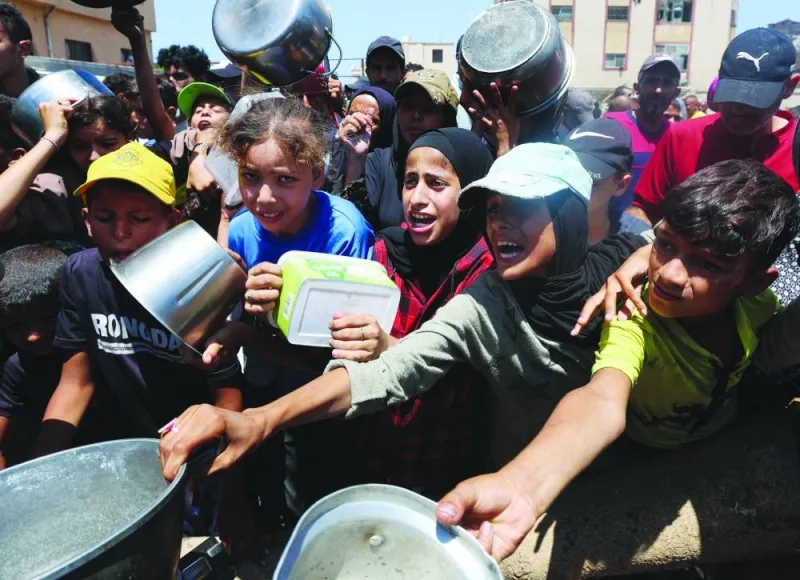
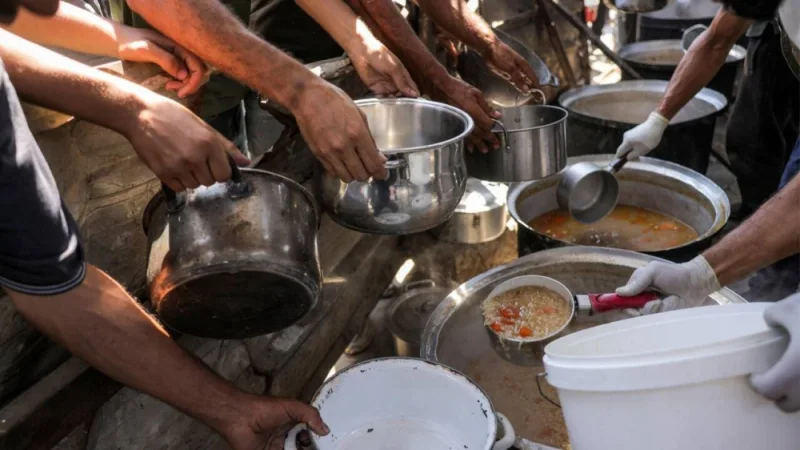
Palestinians gather to receive food from a charity kitchen, amid a hunger crisis, in Nuseirat, central Gaza Strip, yesterday.


Palestinians gather to receive food from a charity kitchen, amid a hunger crisis, in Nuseirat, central Gaza Strip, yesterday.

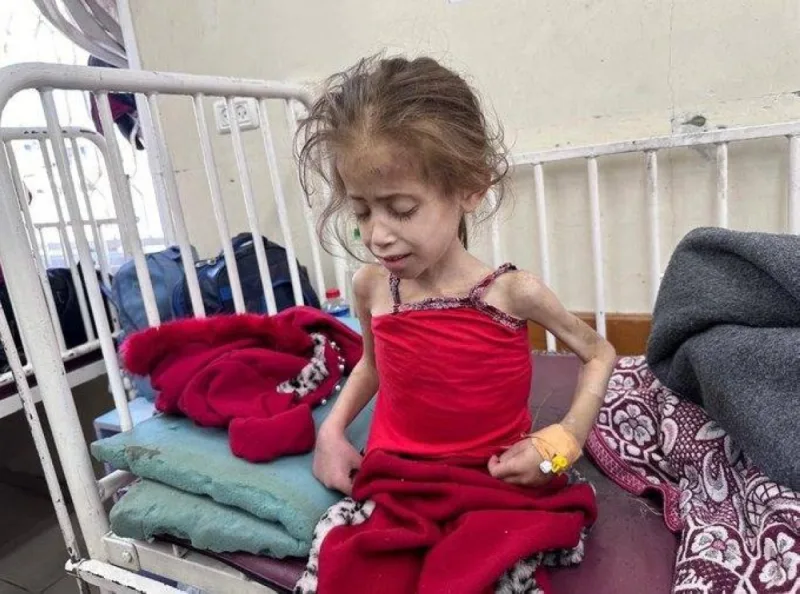
As malnutrition surges in war-torn Gaza, tens of thousands of children and women require urgent treatment, according to the UN, while aid enters the blockaded Palestinian territory at a trickle.

Gaza’s civil defence agency told AFP it has noted a rising number of infant deaths caused by “severe hunger and malnutrition”, reporting at least three such deaths in the past week.

“These heartbreaking cases were not caused by direct bombing but by starvation, the lack of baby formula and the absence of basic healthcare,” civil defence spokesman Mahmud Bassal said.

Ziad Musleh, a 45-year-old father displaced from Gaza’s north to the central city of Nuseirat, told AFP: “We are dying, our children are dying and we can’t do anything to stop it.”

“Our children cry and scream for food. They go to sleep in pain, in hunger, with empty stomachs. There is absolutely no food.

“And if by chance a small amount appears in the market, the prices are outrageous – no one can afford it.”

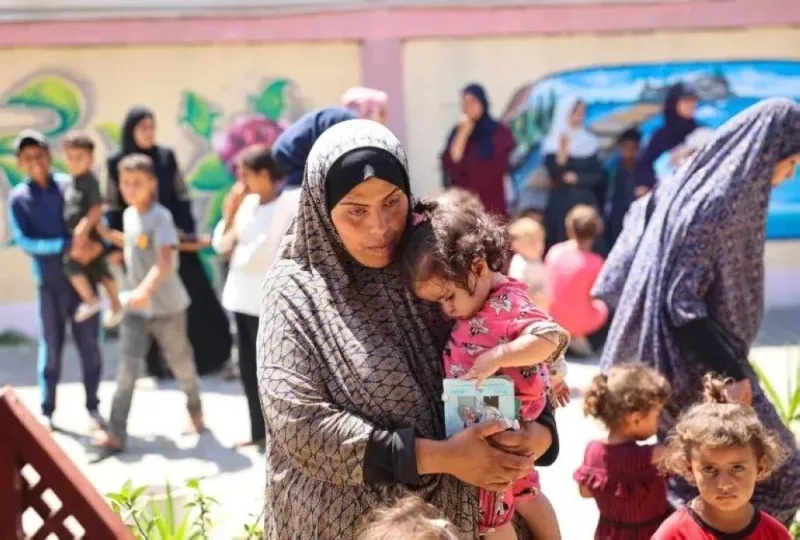
At a food distribution site in a UN-school-turned-shelter in Nuseirat yesterday, children entertained themselves by banging on their plates as they waited for their turn.

Several of them had faces stretched thin by hunger, an AFP journalist reported.
Umm Sameh Abu Zeina, whose cheekbones protruded from her thin face as she waited for food in Nuseirat, said she had lost 35 kilograms.

“We do not eat enough. I don’t eat, I leave the food I receive for my daughter,” she said, adding that she had a range of health conditions, including high blood pressure and diabetes. Gazans as well as the UN and aid organisations frequently complain that depleted stocks have sent prices skyrocketing for what little food is available in the markets.

The UN’s World Food Programme (WFP) warned in early July that the price of flour for bread was 3,000 times more expensive than before the war began more than 21 months ago.

WFP director Carl Skau, who visited Gaza City in early July, described the situation as “the worst I’ve ever seen”.

“A father I met had lost 25 kilograms in the past two months. People are starving, while we have food just across the border,” he said in a statement.

After talks to extend a six-week ceasefire broke down, Israel im
posed a full blockade on Gaza on March 2, allowing nothing in until trucks were again permitted at a trickle in late May.

As stocks accumulated during the ceasefire gradually depleted, the Palestinian territory experienced the worst shortages since the start of the war. “Our kitchens are empty; they are now serving hot water with a bit of pasta floating in it,” said Skau. The effects of malnutrition on children and pregnant women can be particularly dire.

Medical charity Doctors Without Borders (MSF) said last week that its teams are seeing the highest number of malnutrition cases ever recorded by its teams in Gaza.

“Due to widespread malnutrition among pregnant women and poor water and sanitation levels, many babies are being born prematurely,” said Joanne Perry, an MSF doctor in Gaza.

“Our neonatal intensive care unit is severely overcrowded, with four to five babies sharing a single incubator.

Amina Wafi, a 10-year-old girl from the southern Gaza city of Khan Yunis, said she thinks of food constantly. MSF said that patients at its Gaza clinics do not heal properly from their wounds due to protein deficiency, and that the lack of food causes infections to last longer than they would in healthy individual


‘They went out hungry, they came back dead’: Gazan parents mourn children killed during aid distribution

‘They were clearly children. The Israeli military could see that. But they didn’t hesitate,’ says mother of children killed by Israel

Nour Abuaisha and Ikram Kouachi |20.07.2025 - TRT/AA


GAZA CITY, Palestine/ANKARA

A routine trip to collect food in Gaza has turned into a tragedy for the family of Palestinian father Hatem al-Nouri.

His two-year-old son Seraj went with his two brothers and a niece to a US-run aid distribution point in central Gaza last week in the hope of getting some food for the family.

As they reached the site, an Israeli warplane hit the four and other aid-seeking Palestinians, severely injuring Seraj while his two brothers – Omar and Amir – and niece Sama died, all under the age of 10.

“What was the crime of these children? Hatem asked, holding back his tears. “They were just hungry.”

The helpless father and his wife, Iman, sit by their son’s side at Al-Aqsa Martyrs Hospital, consumed with fear and heartbreak.

“They were hungry, just hoping for something sweet to eat,” said Iman, recounting how the four children left their home in Deir al-Balah to collect food and nutritional supplements from the aid site, run by US-based NGO Project HOPE.

“Seraj was crying for something sweet,” Iman said. “Five minutes later, they were bombed.”

Famine


Gaza has been teetering on the brink of famine under Israel’s stifling blockade.

According to Gaza’s government media office, over 650,000 children under five are now at risk of death by starvation amid the ongoing Israeli blockade, which has cut off food, fuel, and medical aid for months.

Due to fuel shortages, no ambulances could reach the four children after the Israeli attack. Instead, neighbors loaded their shattered bodies onto donkey carts to take them to the hospital.

According to Gaza’s Health Ministry, fuel shortages have forced hospitals to cut electricity to entire departments, and blood bank refrigerators have stopped working, threatening the lives of patients in need of urgent transfusions.

“When we brought Omar in, he was still breathing,” recalled his mother. “But no ambulance, no blood, and no emergency team could reach him in time.”

She believes her son could have been saved.

“They went to get food. That’s all. They came back as martyrs,” said their father, Hatem. “Seraj is between life and death… for the sake of something sweet-tasting.”

Deliberate targeting

The family are now pleading for their two-year-old son to be included in evacuation lists for medical treatment abroad, as Gaza’s few remaining hospitals are overwhelmed and critically under-equipped.

“I can’t lose him too,” said Iman. “Omar and Amir are already gone. My heart can’t take losing another.”

According to eyewitnesses and relatives, the children were sitting on the sidewalk outside the aid point when they were struck.

“They were clearly children,” Iman said. “The Israeli military could see that. But they didn’t hesitate.”

The attack was the latest in a pattern of Israeli strikes that have hit crowds of civilians waiting for food aid as famine and disease spread rapidly across the Gaza Strip.

According to official sources, the total death toll of those killed while seeking humanitarian aid has reached 922, with over 5,861 others injured since May 27.

With Israel's blockade choking off essential supplies and its continued bombardment devastating civilian life, calls for international intervention are growing louder, but Gaza’s families say help is coming too late.

Rejecting international calls for a ceasefire, the Israeli army has pursued a brutal offensive on Gaza since Oct. 7, 2023, killing nearly 59,000 Palestinians, most of them women and children.

The relentless bombardment has destroyed the enclave and led to food shortages and a spread of disease.

Last November, the International Criminal Court issued arrest warrants for Israeli Prime Minister Benjamin Netanyahu and his former Defense Minister Yoav Gallant for war crimes and crimes against humanity in Gaza.

Israel also faces a genocide case at the International Court of Justice for its war on the enclave.


Deir al-Balah Ordered to Evacuate: Is Israel Carving a New Military Corridor?


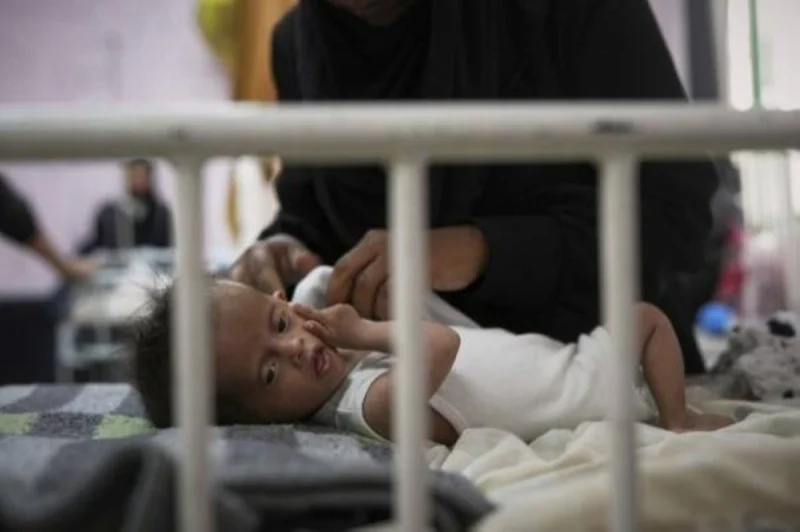
Palestinian mother Alaa Al-Najjar mourns her three-month-old baby Yehia, who died due to malnutrition amid a hunger crisis, according to medics, at Nasser Hospital in Khan Younis, in the southern Gaza Strip July 20, 2025. REUTERS/Hatem Khaled

Gaza: Asharq Al Awsat
21 July 2025
 AD Ù€ 26 Muharram 1447 AH

Israeli forces have issued evacuation orders for parts of Deir al-Balah, a central Gaza area previously designated as a “safe humanitarian zone.” Residents, many of whom had fled there under Israeli direction earlier in the war, were told to vacate the southwestern parts of the city amid claims of militant activity in the area.

This marks the first Israeli military operation in Deir al-Balah since the war began, with officials citing efforts to “intensify operations to dismantle enemy capabilities and terrorist infrastructure.”

The Israeli army’s directive included the evacuation of displaced persons living in makeshift tents. Leaflets were dropped and electronic notices distributed, requesting residents to head south toward Al-Mawasi, an already overcrowded strip.

The region under evacuation lies between central Deir al-Balah and southern Khan Younis. It houses nearly 100,000 people, many displaced multiple times, and includes Gaza’s largest EU-funded desalination plant, which has been out of service for months due to Israeli power cuts. If Israel advances on the ground here, it could mean the loss of another stretch of critical farmland, deepening the already catastrophic famine in the Strip.

A New Military Corridor in the Making?

Sources told Asharq Al-Awsat that Israel may be seeking to carve out a new military corridor, effectively separating Khan Younis from Gaza’s central region. Similar divisions were previously enacted when Rafah was isolated from Khan Younis. Observers now anticipate the same pattern could unfold between Khan Younis and Deir al-Balah.

Reports suggest Israeli troops might approach from northern Khan Younis to storm the southwestern flank of Deir al-Balah, thereby severing the area from the rest of the city. A comparable strategy was previously employed in the east-west split of Khan Younis through the so-called “Magin Oz Axis.”

Sources further warned that, blocking a ceasefire agreement, Israeli forces may attempt full control of the Netzarim Corridor, effectively dividing northern Gaza from the center. Currently, Israel controls the corridor’s eastern flank but has left the western side, Al-Rashid Street, accessible since the last ceasefire ended on March 18.

Such fragmentation of the Gaza Strip into isolated zones would grant Israel near-total operational control while pushing civilians into ever-smaller, overcrowded pockets, primarily along the coastline.

From Israel’s perspective, these military pressures are aimed at squeezing Hamas into more concessions in the ongoing indirect negotiations hosted by Qatar.

Sunday saw one of the deadliest days in recent weeks. Over 70 Palestinians were killed in northern Gaza as they gathered near the Zikim military zone, hoping to receive flour from a rare delivery of eight trucks, allowed in for the first time in over a week.

Witnesses say Israeli drone fire and artillery struck the crowd, leaving more than 150 injured, many of them children, teenagers, and women.

The Gaza Health Ministry confirmed 73 deaths, 67 of them in the north, and warned that many injuries were critical. The tragedy came just a day after 30 others were killed in southern Gaza on Saturday.

The incident brings the total number of civilians killed at or near aid distribution points - many of them backed by US humanitarian programs - to more than 1,000 since the end of May.

Hamas described the attacks as “escalation in the genocidal war,” accusing Israel of using food and aid as bait to target vulnerable civilians. “What’s happening in Gaza is a deliberate strategy of ethnic cleansing through hunger, thirst, and violence,” the group stated, urging immediate international intervention.

The humanitarian crisis in Gaza continues to spiral. In recent days, at least seven children have died from malnutrition. The Health Ministry reported 18 famine-related deaths within just the past 24 hours.


Pope Leo calls for end to 'barbarity of war' after strike on Gaza church


Pope Leo XIV leads the Angelus prayer in Castel Gandolfo, Italy on July 20.
PHOTO: Reuters

July 20, 2025 

CASTEL GANDOLFO, Italy — Pope Leo called for an end to the 'barbarity of war' on Sunday (July 20) as he spoke of his profound pain over an Israeli strike on the sole Catholic church in Gaza.

Three people died and several were injured, including the parish priest, in the strike on the Holy Family Church compound in Gaza City on Thursday. Photos show its roof has been hit close to the main cross, scorching the stone facade, and shattering windows.

Speaking after his Angelus prayer, Leo read out the names of those killed in the incident.

"I appeal to the international community to observe humanitarian law and respect the obligation to protect civilians as well as the prohibition of collective punishment, of indiscriminate use of force and forced displacement of the population," he said.


Pope calls out Gaza parish victims by name, demands ‘humanitarian law’ be observed

Leo XIV's sorrow over the tragic news from Gaza runs "deep". In his Angelus appeal in Castel Gandolfo, he calls for the “prohibition of collective punishment" and “forced displacement of the population.”


July 20, 2025 

Rome (AsiaNews) – This morning, at the Angelus in Piazza della Libertà, Castel Gandolfo, Pope Leo XIV focused on the “Tragic news [that] continues to arrive [. . .] from the Middle East”, his sorrow running “deep" over Israel's attack on the Holy Family Parish in Gaza City, which Bishop William Shomali described to AsiaNews as "terrible and scandalous."

“I am particularly close to their families and to all the parishioners,” said Pope Leo repeating the name of the three victims: “Saad Issa Kostandi Salameh, Foumia Issa Latif Ayyad, Najwa Ibrahim Latif Abu Daoud”.

“Sadly, this act adds to the continuous military attacks against the civilian population and places of worship in Gaza,” he said. “I again call for an immediate halt to the barbarism of the war and for a peaceful resolution of the conflict.”

The pontiff renewed his appeal to the international community that the parties “observe humanitarian law and to respect the obligation to protect civilians, as well as the prohibition of collective punishment, the indiscriminate use of force and the forced displacement of the population.”

In an address to the Christian communities of the Middle East, he said: “I deeply sympathise with your feeling that you can do little in the face of this grave situation. You are in the heart of the Pope and of the whole Church. Thank you for your witness of faith.” Calling on the Virgin Mary, may she “protect you always and accompany the world towards the dawn of peace.”

Before the Angelus, the pontiff greeted the faithful in the streets as he made his way from the Pontifical Villas in Castel Gandolfo, where he has been staying for the past two weeks resting, to the Cathedral of Albano Laziale, dedicated to Saint Pancras the Martyr, where he celebrated Mass at 9:30 am.

Speaking to reporters present, he stated: “The world can no longer tolerate this; there is so much conflict, so many wars; we must truly work for peace.” Like last Sunday, he described the current situation as “a significant moment of ecclesial communion and encounter with the diocesan community.”

Today's readings focused on “hospitality, service, and listening," the pope said at the start of his homily. In Luke (10:38-42), where Jesus is a guest in the home of the sisters Martha and Mary, one "welcomes him by serving him, while the other sits at his feet, listening to him”.

Here, “Jesus responds to the first sister’s complaints [. . .] by inviting her to recognize the value of listening”. At the same time, the attitudes of the two women are not to be seen as "mutually exclusive," but as “twin dimensions of hospitality.” First and foremost, toward God.

“Although it is true that we must live out our faith through concrete actions, faithfully carrying out our duties [...] it is essential that we do so only after meditating,” the pontiff explained. This is one aspect that “we particularly need to reclaim today.”

Indeed, the summer months are a “providential time” for this; hence, “Let us make good use of this, by leaving behind the whirlwind of commitments and worries in order to savour a few moments of peace, of reflection, taking time as well to visit other places and share in the joy of seeing others.”

A “culture of peace” can be promoted helping us “overcome divisions and hostility and to build communion between individuals, peoples and religions,” Leo said in his homily.

He also cited Pope Francis, who at the Angelus on 21 July 2019, stressed two key attitudes for “savoring life with joy.” A few months into the pandemic, Francis highlighted “‘being at the feet of Jesus’, in order to listen to him as he reveals to us the secret of everything,” and “being attentive and ready in hospitality, when he passes and knocks at our door”.

Sucha actions certainly require a certain “effort”, Leo XIV emphasised. “But it is precisely by making an effort that something worthwhile can be built in life; it is the only way to form and nurture strong and genuine relationships between people. Thus, with the foundations of everyday life, the Kingdom of God grows and manifests its presence.”

In the end, like Abraham in the first reading (Gen 18:1-10a), Mary and Martha remind us that “listening and service are two complementary attitudes that enable us to open ourselves and our lives to the blessings of the Lord.”

Vatican loosing patience with Israel


Source: commonspace.eu with Radio Vaticana (Vatican City)
20 July 2025

The Vatican appears to be loosing patience with Israel. On Saturday (19 July), Pope Leo spoke to Israel prime minister Benyamin Netanyahu on the phone, but the Pope used strong language when referring to Gaza in his speech after the Angelus on Sunday.

Pope Leo XIV expressed his “deep sorrow” over the recent Israeli attack on the Catholic parish in Gaza, and called for “an immediate halt to the barbarity” in the Strip.

After the Holy Family church was struck on Thursday morning, three of the approximately 600 Gazans sheltering there were killed, and several others, including the parish priest Fr Gabriel Romanelli, were injured.

Speaking on Sunday after reciting the Angelus prayer at his summer residence in Castel Gandolfo, the Pope named the three victims – Saad Issa Kostandi Salameh, Foumia Issa Latif Ayyad, and Najwa Ibrahim Latif Abu Daoud – and said he was “close” to them and their families.

Pope Leo then stressed that the attack “is just one of the continuous military attacks against the civilian population and places of worship in Gaza”.

The Pope appealed for “an immediate halt to the barbarity of the war” and for “a peaceful resolution of the conflict”. He urged the international community to observe humanitarian law and respect the obligation to protect civilians, “as well as the prohibition of collective punishment, indiscriminate use of force and forced displacement of the population”.

Pope Leo brought his appeal to a close with a message to “our beloved” Christian communities in the Middle East, saying he understood they felt they could “do little, in the face of this tragic situation”.

The head of Vatican diplomacy, Cardinal Pietro Pasolin, in an interview with RAI 2 described Gaza as a war without limits.

Radio Vaticana said in editorial by its director Andrea Tornieeli, that the images of the strike's aftermath speak volumes: a shell fired from an Israeli army tank directly hit the Holy Family Church, the only Catholic parish in Gaza.

"Five hundred people—families who have lost their homes—have taken refuge in the compound comprising two churches and a school for almost two years.

Three people lost their lives, and another ten are injured. One of those injured, Suhail, contributes to L’Osservatore Romano with his small column: “I write to you from Gaza.”

The most recent, on July 8, was titled “Love Is Stronger Than War” and concluded as follows: “Let us pray that not only Gaza, but the whole world may one day live in peace, through mutual forgiveness and reconciliation. A day when there will be no more wars, because love is stronger than war.”

Israeli authorities have apologized, stating that it was a mistake, that Israel respects places of worship, and that an investigation will be conducted into the incident.

Such statements can hardly be reassuring. Not only because they are contradicted by the images of mosques reduced to rubble and churches attacked—the raid on the Orthodox church of Saint Porphyrius cost dozens of lives, for example—but also because, after a year and a half, there are still no results from the investigation into the killing of two Christian women shot by a sniper in the Gaza parish.

Particularly significant in this regard are the words spoken by the Israeli Ambassador to Italy, Jonathan Peled: "We have no intention of endangering civilian institutions. But the terrorists are everywhere, even in public buildings like schools and, unfortunately, places of worship."

These statements are striking because, in some way, they provide the context for what has been described as a "mistake." Five hundred unarmed people—many of whom regularly gather to pray the rosary—unwittingly became collateral targets because, as Ambassador Peled says, "these are sometimes the consequences of war."


As readers and listeners of Vatican News know well, we did not wait for Christian deaths to talk about the daily massacres in Gaza, where dozens of innocent children, women, and men are killed every week as collateral victims of raids or strikes by those who are supposed to ensure the safe distribution of food.

We do not report on the victims in Gaza only now that they are Christians or because Suhail was injured.

All innocent victims cry out for vengeance in the sight of God, every life is sacred, and Christians of every denomination in Gaza share in all things the fate of their people, the martyred Palestinian people.

The inhumane massacre against Israel perpetrated by Hamas terrorists on October 7, 2023, was condemned by the Holy See with unambiguous words, while calling for the release of all hostages and recognizing Israel's right to defend itself.

However, that inhuman massacre—to the detriment of so many innocent civilians—cannot justify 60,000 dead and cities razed to the ground. It cannot justify the silence and inanity of so many who pretend not to see.

This is why we will never tire of denouncing the absurdity of this war by repeating the words Pope Leo XIV addressed to the Reunion of Aid Agencies for the Oriental Churches (ROACO) on June 26. “All of us, by virtue of our humanity, are called upon to examine the causes of these conflicts, to identify those that are real, and to attempt to resolve them. But also to reject those that are false, the result of emotional manipulation and rhetoric, and to make every effort to bring them to light. People must not die because of fake news.”

We are called to overcome that globalization of alternating stages of indifference, which makes us rightly indignant about some victims while overlooking others.

We are called to look realistically at the situation in the Middle East and the absurd escalation of war. New fronts are continuously opened, as if the survival of the ruling leaders, both in terrorist organizations and in states, depended on the endless perpetuation of wars instead of peace.

It is time for the international community to finally regain the courage to intervene with all the tools that the law makes available: to silence weapons, to stop the massacres, and to put an end to power games whose price is paid by thousands of innocent victims.


Taybeh: a Christian community in Palestine besieged by Israeli settlers
By Fr. Ibrahim Faltas
20 July 2025
COMMONSPACE EU


Following weeks of settler attacks on the last entirely Christian village in Palestine, the Vicar of the Custody of the Holy Land, Fr. Ibrahim Faltas, makes an impassioned plea for peace.

In Arabic, Taybeh means “good”. But lately, nothing good has been happening in this Palestinian village, entirely inhabited by Christians.

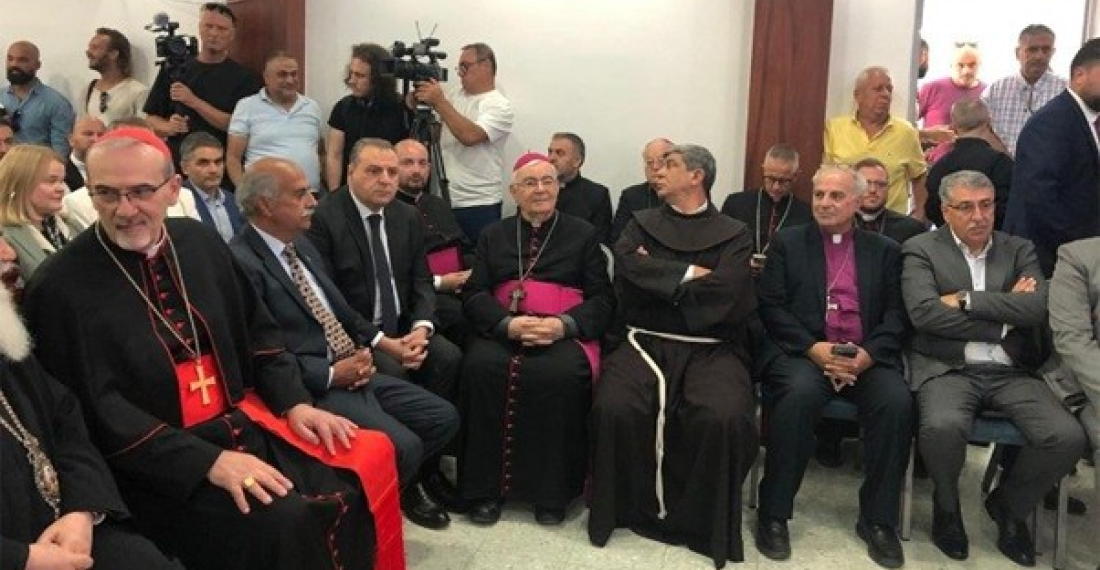
On Monday, July 14, the heads of the Christian Churches of the Holy Land, together with ambassadors and consuls, came to express their closeness and solidarity with the residents and clergy of Taybeh, who for weeks have been facing severe attacks by hundreds of Israeli settlers. These settlers are violently trying to seize their homes and lands.

Taybeh has around 1,500 residents, all belonging to different Christian denominations: Latin, Greek Orthodox, and Melkite. Yesterday morning, everyone was there—religious leaders, residents, and even people from neighboring villages—grateful for the fraternal support from those who truly understand their suffering.

As you approach Taybeh from the north of Jerusalem, the village presents a familiar and welcoming sight: the bell towers of the three churches rise above the landscape, watching over a peaceful and united community. And from the voices of the people—adults, elders, and children—you could hear their fear, their pain, and the tension of the past weeks.

There have been deaths in the area. Many have been injured. People have been forced from their homes. Buildings have been demolished. Fields set on fire. These are cowardly attacks against unarmed civilians—people who for hundreds of years have remained faithful to the religion of their ancestors in a land that still holds the traditions of Jesus’ time.

And yet, not a single word of hatred or revenge has been spoken—only a heartfelt plea for help, to be allowed to live in peace on their land.

source: This article was prepared by Fr Ibrahim Faltas, Vicar of the Custody of the Holy Land, and was published by the website of Radio Vaticana (Vatican City).

photo: Christian leaders meet in Taybeh on 15 July 2025 (picture courtesy of Radio Vaticana (Vatican City)
France's campaigning 'Lady Gaza' rallies support for a one-state vision

Rima Hassan tells The National how she thinks Israelis and Palestinians can forge a future


Sunniva Rose
July 20, 2025
THE NATIONAL

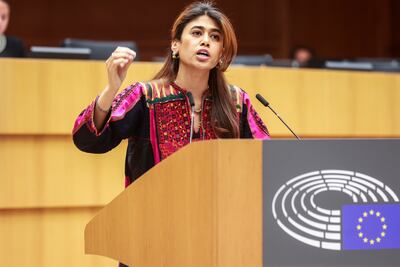
In a sea of political grey suits, Rima Hassan, a 33-year old migration lawyer and firebrand member of the European Parliament, has come to embody France's pro-Palestinian movement.

Establishment views on her rise have mostly been sharply critical. Few in France's political mainstream are receptive to her post-colonial politics and campaigning for the application of international law to Israeli actions. Interior Minister Bruno Retailleau has filed a complaint accusing her of supporting terrorism. A prominent comedian has derisively dubbed her “Lady Gaza”.


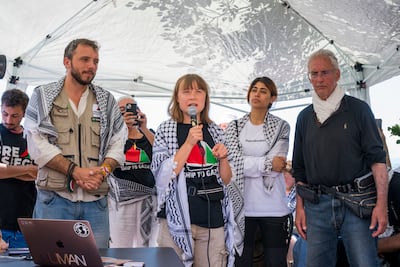
In June, the France Unbowed politician gained international visibility by joining a Gaza flotilla alongside climate activist Greta Thunberg. She was held and then deported after the Israel military boarded the boat off the Palestinian enclave. Days later, this boost in profile saw Ms Hassan ranked 44th in a Ifop-Fiducial poll of France's 50 most popular figures.


Israel launches ground operation in Gaza's Deir Al Balah for first time
Read More


In an interview with The National, Ms Hassan said she sees her role as a voice for the voiceless amid a rupture where, she says, those in power are not in sync with the new generation.

“I'm indeed very alone in [the European] Parliament, when you look at the average age and career path,” Ms Hassan said. “I come from civil society. I am not shaped by politics. It's really a question of what kind of platform people have access to.”

It's about re-framing the struggle
Former Israeli negotiator,
Daniel Levy

On Instagram, where she is wearing the traditional Palestinian keffiyeh in her profile picture, Ms Hassan has amassed one million followers. That makes the left-wing politician more popular on the platform than 29-year old far-right leader Jordan Bardella, whose National Rally party came first in last year's parliamentary election.

She uses her growing profile to push for a one-state solution that recognises both the Jewish and Palestinian Arab national identities, such as a Swiss-style confederation or a new type of umbrella state for two distinct nationalities.

It is a proposal often dismissed as a heresy that imperils the existence of the Jewish state. “There is nothing more pragmatic than the one-state solution,” Ms Hassan bats back. “The question of a [one] state is a demand which for me is the most progressive. There is a generational rupture in the understanding of the Palestinian cause.”

Ms Hassan said that the post-Oslo Accords generation, born in the 1990s like her, is rethinking what peace and justice must look like. “There's a lack of understanding about the new generation and its ideals,” Ms Hassan said.

“It goes beyond nationalist causes. It's about equality of rights and freedom of movement.”


Before her deportation in June, Ms Hassan cut an olive branch to carry back as a reminder of the land from which her grandparents were expelled during the Nakba, after the formation of Israel in 1948.

Born stateless in a Palestinian refugee camp in Syria, Ms Hassan moved with her mother to France as a child. She is often referred to as Syrian though she only holds French citizenship − a framing some see as an effort to erase her Palestinian identity.

The olive branch memento now represents a personal triumph for Ms Hassan, who shed tears of rage when she failed to gain entry to Israel at age 18 having obtained French citizenship. Israeli security refused to let her on-board the plane at Charles de Gaulle Airport. She was not pro
minent at the time, though Israel often bars pro-Palestinians from travel.

From the margins

A one-state solution is an old idea first championed in the 1920s and later resurrected by the Palestine Liberation Organisation.

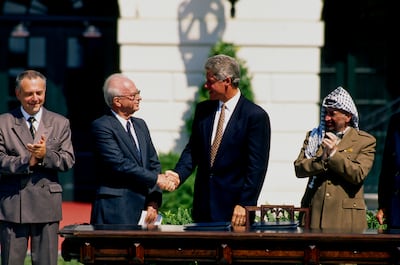
The concept was seemingly eclipsed by the global recognition of the Oslo Accords in 1993, though even at the time there was criticism these did not impose the creation of a Palestinian state. While the Palestinian Authority fell short, it was the first-ever recognition by Israeli leadership of the existence of a Palestinian people.

The rapid expansion of Israeli settlements and the increasing encroachment on the territorial integrity of that Palestinian entity, ultimately saw the Second Intifada break out in 2000. Years of stalemate and reverses on the ground, culminating in the Gaza war, has seen a groundswell among intellectuals and the younger Palestinian generation for a one-state pathway.

“I belong to a generation that starts from the observation that Oslo did not work,” says Ms Hassan. “And that there is a new paradigm which is that of apartheid," she added, referring to a notion backed by rights organisations that rules applied to Palestinians and Arab Israelis regarding freedom of movement and treatment by the judiciary amount to systemic discrimination.

Ms Hassan acknowledges that her vision remains marginal in UN and diplomatic circles. French President Emmanuel Macron has in fact promised a boost to a two-state solution with French recognition of a Palestinian state soon. Foreign Affairs spokesman Christophe Lemoine told The National the term “one state” was legally vague and politically impractical.

Behind closed doors, Ms Hassan said, some European diplomats privately concede that the two-state solution is no longer viable. “They tell me: I am obliged to support the two-state solution because it is the policy supported by the EU. But as a diplomat, my personal opinion is that it is not possible,” she said. “We have to get out of this paralysis.”

She points at Jewish organisations around the world that share her vision. Current Israeli cabinet members oppose both a one-state and a two-state solution, and a number have called for the expulsion of Gazans to unspecified destinations. The country is currently negotiating a Gaza ceasefire, but it has not meaningfully engaged with the Palestinian authority in Prime Minister Benjamin Netanyahu's present term. Ms Hassan believes in severe international pressure in response. An arms embargo and an end to privileged trade relations between the EU and Israel are among her main demands.

Former Israeli negotiator Daniel Levy argued Ms Hassan's self-proclaimed radical approach is essential to change power dynamics and become a worthy adversary to Israel – even if it takes a long time.

“It's about reframing the struggle,” Mr Levy told The National. “This is not about a solution that gets implemented tomorrow, because tomorrow you're not going to have two states. You're not going to have one state.”

“You frame the conflict in the way that Israel has now framed it, which is to create an apartheid state. And you challenge that. Then once Israelis realise there's a cost to it, they may change their position.”


We have to get out of this paralysis.
French MEP Rima Hassan

Others are less generous. Mr Bardella has described her as the “Hamas ambassador at the EU,” a label rooted in her assertion that Palestinians have the right to armed resistance under international law.

While she has condemned as war crimes the October 7, 2023 Hamas-led attacks on Israeli communities in which about 1,200 people were killed and 240 abducted, Ms Hassan's output on X is a succession of sharply worded posts describing Israel as a terrorist and genocidal state.

Almost 58,670 Palestinians have been killed in Israel's Gaza strikes and ground offensive since the war began.

When asked, Ms Hassan says her focus on Palestinian rights during the explosive post-October 7 period is unapologetic. She has unsettled a political consensus that has seen relative disengagement of French diplomacy in the Middle East since late president Jacques Chirac left power in 2007. She has also been criticised for her muted criticism of the crimes of the former Assad regime.

Historic juncture


Ms Hassan's voice is part of a broader generational shift, said Leila Farsakh, professor of political science at the University of Massachusetts Boston. The brutal images coming out of Gaza are changing the global narrative. “The one-state solution's moment has arrived,” Ms Farsakh, a specialist of the Palestinian statehood question, told The National.

“We are today at a historic juncture − as important as 1948 or 1967 − and Israel is trying to reassert the supremacy of Jewish rights,” she said. “But Palestinians are much more vocal and present than in 1948 or 1967. They are able to articulate their rights and refuse subjugation.”


In French academia, scepticism is strong. Jean-Paul Chagnollaud, president of the Institute for Mediterranean and Middle East Research and Studies think tank in Paris, called a one-state model an “absurd dream”.

“The nature of a Jewish state entails a Jewish majority,” he said, pointing at demographics of seven million Palestinians, including Arab Israelis, and seven million Jews. “That means that even the most moderate Israelis would reject the idea of a Palestinian majority state.”


Like Ms Farsakh, Ms Hassan often cites the views of Palestinian intellectual Edward Said that Israeli state policy as “apartheid” was comparable with South Africa's historic racial segregation.

Israel rejects the use of the word apartheid and says separate legal and permitting measures or designations are linked to security concerns. Western countries, including France, resist using the term “apartheid” in relation to Israel.

For Ms Hassan however, it is the fundamental reality that must drive a solution to the conflict with her lifetime. “It is the paradigm of apartheid that really makes us understand demands to put forward a one-state solution,” she said.

“I don't see what's difficult to understand. The Oslo agreements were perhaps relevant at the time they were signed. What is the relevance of still referring to agreements that have constantly shown us that they have failed for the past 30 or 40 years?”


Updated: July 21, 2025

US chip giant Intel downsizing in Israel amid mass layoffs, falling revenue


July 20, 2025

A picture taken in Jerusalem on March 13, 2017, shows the offices of the Israeli branch of US computer chip giant Intel. [THOMAS COEX/AFP via Getty Images]

US chip giant Intel has launched a major downsizing campaign in Israel, slashing jobs and scaling back operations at its flagship manufacturing site in the southern city of Kiryat Gat, in a move signaling deeper structural challenges facing the company both locally and globally, Anadolu reports.

According to a detailed report by Israel’s Globes business daily, Intel has reduced its workforce at the Kiryat Gat plant from around 5,000 employees in 2019 to 4,000 by the end of 2023.

The company is undergoing a global restructuring after a sharp decline in annual revenue — from $78 billion in 2020 to $53 billion in 2023 — and a net loss of $18.7 billion during the same period.

Intel’s restructuring includes automating production lines at its Fab 28 plant, leading to the dismissal of some 200 manufacturing workers and around 10% of its research and development staff. Fab 28, which opened in 1996, had been a model of industrial performance, with cumulative exports worth $86 billion – contributing 3–3.5% of Israel’s total annual exports.

The report highlighted rising pressure on Intel from Taiwan’s TSMC, which now dominates advanced chip production for clients like Apple, Nvidia, and Amazon.

Uncertain returns


Globes noted that Intel has received an estimated $1.5 billion in government grants over the years. More recently, the Israeli government approved an additional $3.2 billion grant package for the construction of a new facility – Fab 38 – which has since been frozen amid the company’s retrenchment.

Despite halted construction and widespread layoffs, Israel’s Finance Ministry and Investment Authority have taken no punitive measures against Intel, as funding remains tied to pre-agreed benchmarks.

Intel’s contraction coincides with the rise of US rival Nvidia, which recently announced a $540 million plan to build a major development center in northern Israel, aiming to hire 5,000 employees.

Observers say this marks a broader shift in Israel’s tech landscape – from traditional manufacturing to AI-driven R&D.

The future of Intel’s presence in Israel remains unclear.

In Kiryat Gat, where many Israelis depend on Intel either directly or through contractors, the mood is increasingly tense. With construction on Fab 38 suspended and investments scaled back, locals fear long-term damage to the city’s economy.

Although Intel continues to offer generous benefits — including extended paid leave and severance packages that can exceed $238,000 — many employees, particularly older staff, are anxious about finding new employment in a shrinking job market.
Israel is deliberately starving millions, killing children in Gaza: UN expert

Francesca Albanese says Israeli actions in Gaza are Nazi-like, calling them ‘new abyss of cruelty’ after disabled Gazan dies from hunger

Mohammad Sio |20.07.2025 - TRT/AA


ISTANBUL

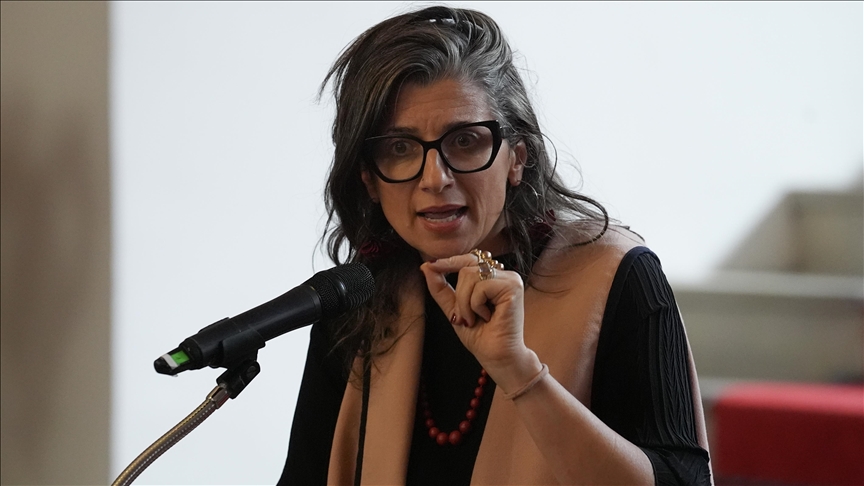
Israel is deliberately starving millions and killing children in Gaza, the UN special rapporteur on the situation of human rights in the Palestinian territories said Sunday.

Francesca Albanese’s remarks came in response to reports of a disabled Palestinian named Mohammad al-Sawafiri dying from hunger in the besieged enclave.

“My generation was taught Nazism was the greatest evil; and it was; and colonial crimes should've not been omitted,” Albanese wrote on X.

“Today,” she continued, “a state (Israel) starving millions/shooting children for sport, shielded by democracies & dictators alike, is the new abyss of cruelty.”

Albanese concluded with a pointed question: “How will we survive this??”

Earlier Sunday, the Gaza Health Ministry said Israel’s starvation policy in the besieged enclave has killed 86 Palestinians -- 76 of them children -- due to hunger and malnutrition caused by Israel’s blockade, which has prevented the entry of aid since October 2023.

The ministry described in a statement the situation as a “silent massacre” against the population of Gaza, which has been under a blockade for years.

It noted that 18 people had starved to death in Gaza in the last 24 hours, calling for the immediate reopening of the enclave’s border crossings to allow the entry of food and medicine.

Israel has sealed all crossings with Gaza since March 2, effectively cutting off access to humanitarian aid and accelerating the spread of famine.

Israel has killed nearly 59,000 Palestinians, most of them women and children, in Gaza since October 2023. Relentless bombing has destroyed the enclave, almost collapsed the health system, and created famine-like conditions.

Last November, the International Criminal Court issued arrest warrants for Israeli Prime Minister Benjamin Netanyahu and his former Defense Minister Yoav Gallant for war crimes and crimes against humanity in Gaza.

Israel also faces a genocide case at the International Court of Justice for its war on the enclave.
Scuffle on stage at London opera as performer unfurls Palestinian flag


Last updated: July 20, 2025 | 


Cast member tussles with a person backstage for a Palestinian flag at the Royal Opera House in Covent Garden in London.

London's Royal Opera House on Sunday condemned as "wholly inappropriate" the actions of a performer who held up a Palestinian flag onstage at the end of a performance.

Video footage posted online shows a brief scuffle at the edge of the stage as a figure dressed in a shirt and tie unsuccessfully attempts to stop the performer.

The incident in the British capital on Saturday during the curtain call came on the closing night of an 11-night run of Il Trovatore, a four-act opera by Giuseppe Verdi.

"Extraordinary scenes at the Royal Opera House tonight," a person who claimed to have been in the audience posted on X.

"During the curtain call for Il Trovatore one of the background artists came on stage waving a Palestine flag. Just stood there, no bowing or shouting. Someone off stage kept trying to take it off him. Incredible."

A spokesperson for the Royal Ballet and Opera in London's Covent Garden said the "display of the flag was an unauthorised action by the artist".

The incident comes after numerous artists including Kneecap, Bob Vylan, Wolf Alice, and Amyl and The Sniffers offered messages of support for people in Gaza at this year's Glastonbury festival.

Police are still investigating duo Bob Vylan, whose frontman led a chant against the Israeli army at the festival.

Kneecap's Liam O'Hanna, known by his stage name Mo Chara, has also been charged with a "terror" offence over alleged support for banned organisations Hamas and Hezbollah in connection with an earlier performance.

Agence France-PresseCast member tussles with a person backstage for a Palestinian flag at the Royal Opera House in Covent Garden in London.