Wednesday, August 13, 2025

 Russia To Look Into Details Of ‘Trump Route’
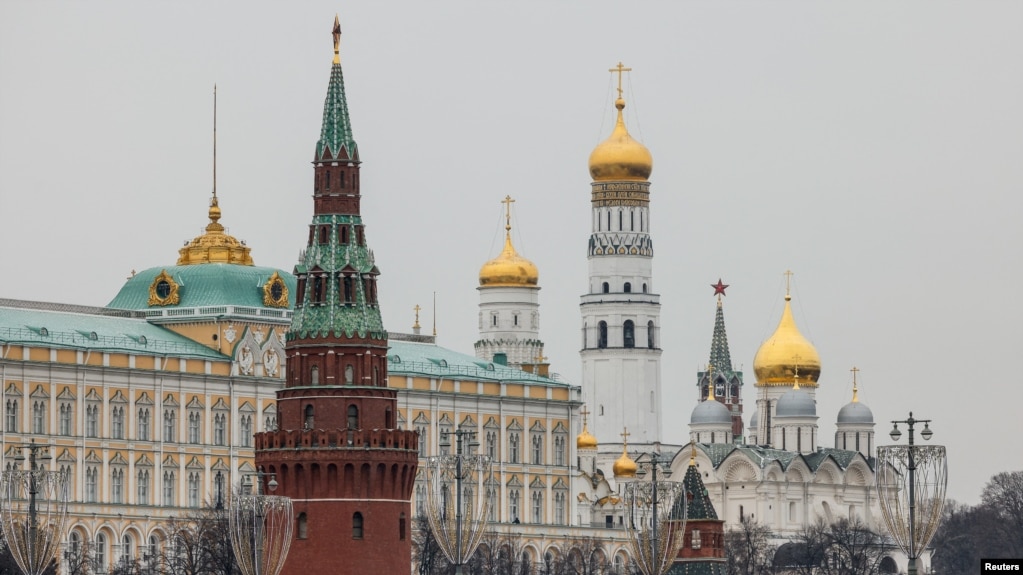

Moscow will examine the details of a proposed transport corridor project between Armenia and Azerbaijan, a senior Russian diplomat has said.


Aleksey Fadeyev, Deputy Director of the Information and Press Department of the Russian Foreign Ministry, told reporters at a news briefing in Moscow on Tuesday that the specifics of the project, named the “Trump Route for International Peace and Prosperity” (TRIPP), have not yet been made public.

“As we have already stated, the involvement of non-regional powers in the South Caucasus should promote a peace agenda rather than create new problems and new dividing lines,” he said, as quoted by Russia’s TASS news agency.

Fadeyev reiterated Russia’s position that any connectivity initiative must take into account Armenia’s membership in the Moscow-led Eurasian Economic Union as well as the presence of Russian border guards in Armenia’s Syunik province.

“These factors should be considered when working out decisions on unblocking transport communications in the region,” he added.

During a meeting in Washington on August 8, the leaders of Armenia, Azerbaijan, and the United States signed a joint declaration that, among other provisions, establishes a U.S. role in overseeing a transit route through Armenia, which Azerbaijan has demanded as a link to its Nakhichevan exclave.

The Washington accords received broad international support, including endorsements from Western and regional leaders, but Russia as well as Iran immediately expressed concern over the U.S. involvement in the proposed project.

Armenian Prime Minister Nikol Pashinian on Monday held phone calls with the presidents of Iran and Russia, Masoud Pezeshkian and Vladimir Putin, to brief them on the outcome of the Washington meetings. He assured both leaders that regional communication channels will operate under the principles of territorial integrity, sovereignty, and jurisdiction of countries, and on the basis of reciprocity. Pashinian also highlighted opportunities for broader regional cooperation.


The Armenia-Azerbaijan Agreement: Experts Offer Analysis

13.08.2025 (Caucasian JournalThe recent breakthrough agreement between Armenia and Azerbaijan, brokered with the assistance of the U.S. President, which establishes the "Trump Route for International Peace and Prosperity (TRIPP)"—also known unofficially as the Zangezur Corridor— has prompted a range of mixed reactions. 

In Georgia, the deal has caused a particular divide. While political rivals like current Prime Minister Irakli Kobakhidze and former President Salome Zourabichvili have found a rare moment of unity in welcoming the development, former President Mikheil Saakashvili has called it "the most serious geopolitical catastrophe for Georgia."

Today, the Caucasian Journal is presenting the opinions of international experts. We reached out to them to answer the following two questions:

▶ What are the likely long-term political and economic consequences of this agreement for Georgia?

 With a renewed and visible U.S. diplomatic presence in the region, do you believe the South Caucasus will ultimately benefit from this changed geopolitical situation both in the region and beyond?

Zangezur - TRIPP map


Fady Asly Caucasian Journal Quote

Fady ASLY, Chairman, International Chamber of Commerce in Georgia (ICC Georgia):

Already several years ago I posted on Facebook saying that this would be a terrible threat for Georgia, because already when Azerbaijan recovered the territories and started speaking of a corridor that will go from Azerbaijan directly through the border with Armenia to Turkey. So, this was obviously terrible economic news for Georgia, because the only competitive advantage Georgia has is that it serves as an entry gate to the Caucasus and Central Asia. Whether it is the Poti port, the Batumi port, or the Anaklia port, all were developed with this idea in mind.  Now this new corridor from Azerbaijan to Turkey being in the pipeline deprives Georgia of a very strong economic and transit card in its hand and will weaken the position of any Georgian government in any negotiation regarding any issue, because Georgia would be losing. 

So, this is a catastrophe, definitely - not a catastrophe per se, but it's very bad news and it will weaken Georgia greatly, economically and geopolitically. 

Regarding the second question, it's very difficult to anticipate what could happen because the Caucasus is pretty small and Russia can strangle any transit that would go to Armenia from Georgia and from Armenia to Russia as well. So I don't think that this can be considered a victory of the West geopolitically because Russia still has a lot of power of destabilization. It is easier to destabilize than to stabilize, and the Russians will do everything in their power to keep their influence in the Caucasus.

"This new corridor from Azerbaijan to Turkey deprives Georgia of a very strong economic and transit card in its hand... So, this is a catastrophe, very bad news, and it will weaken Georgia greatly, economically and geopolitically.

But definitely, having two countries of the Caucasus aligning with the United States gives Azerbaijan and Armenia some more leverage, since they are two countries, unlike when Georgia was alone opening its doors to the West and extending its arm to the West.  Azerbaijan and Armenia were at that time really playing in Russia's backyard. So it is difficult to forecast what can happen, and I believe that it is very much linked to a solution in Ukraine, and how the solution will happen. Will there be a trade-off where Russia will let Armenia, Azerbaijan, and Georgia go, against keeping the occupied territories in Ukraine, or not? 

Definitely, Russia will play the Caucasus card in the negotiations regarding a settlement in Ukraine. But the situation is pretty dangerous because it's very volatile, and we still don't know how it can turn. And also let's keep in mind that this agreement in Washington between Armenia and Azerbaijan is not a peace deal - it is a kind of peace roadmap. It's not cast in iron, and we will have to wait and see what can happen.


Lukas Beglinger Caucasian Journal Quote


Lukas BEGLINGER, former Ambassador of Switzerland to Georgia:

A lasting peace agreement between Armenia and Azerbaijan and a subsequent normalization of Armenian-Turkish relations would clearly reduce Russia‘s political and economic influence in the South Caucasus and offer new opportunities for trade and economic development in the region and beyond. Whilst such a major stimulus towards diversified political and economic ties is fundamentally also in Georgia‘s interest, the latter’s geopolitical position as a critical corridor between East and West might be weakened - depending on its future strategic orientation and policies.

Both the US and Europe have an interest to support the political and economic emancipation of post-Soviet countries in the region; without doubt, such emancipation will be even more beneficial for the countries concerned.


Alkis DRAKINOS Caucasian Journal Quote


Alkis Vryenios DRAKINOS, Director and Regional Head of the Caucasus for the European Bank for Reconstruction and Development (EBRD):

I warmly welcome the prospect of a lasting, resilient, and permanent peace settlement among Armenia and Azerbaijan. Once achieved—bearing in mind that several important milestones remain before a fully signed peace deal and the establishment of a trusting relationship among the two countries—the populations of Armenia and Azerbaijan will benefit from the opening of regional trade opportunities, as well as new transport and energy routes that reflect the potential of the Caucasus region, including its role as a bridge linking Europe with Central and East Asia.

In this context, I also see opportunities for Georgia. The post-peace deal potential growth in trade between Europe and Central & East Asia via the Caucasus, along with improved intraregional exchanges, could be a decisive catalyst—boosting the bankability of major energy and transport infrastructure projects across all three Caucasus countries. The EBRD has long expressed readiness to consider Middle Corridor projects in support of Caucasus countries energy, transport and digital connectivity, and private sector development.


Tedo Japaridze Caucasian Journal Quote


Tedo JAPARIDZE, former Secretary of the National Security Council, Minister of Foreign Affairs and chairman of the parliamentary Committee for Foreign Affairs of Georgia:

Any agreement that will strengthen peace, stability, security, and perspectives of economic cooperation is supposed to be beneficial for Georgia if Georgia itself is stable and predictable for its partners in the immediate neighborhood and far beyond it.

I cannot believe but just only hope that the South Caucasus, Georgia as its essential component, will benefit from a renewed and refreshed engagement of the United States in the region. Again, Georgia will benefit if it overcomes its internal squabbles and imbalances.

"Georgia will benefit if it overcomes its internal squabbles and imbalances".


Tracey German Caucasian Journal Quote


Tracey GERMAN, Professor in Conflict and Security, King’s College London | Defence Academy

An increased US influence and presence in the South Caucasus, particularly if the so-called Trump Route for International Peace and Prosperity comes off, raises the danger of further isolation for Georgia. Tbilisi has increasingly aligned itself with Moscow and Ankara (as well as Beijing), isolating itself from the political West.  It has been hoping to benefit from the Middle Corridor – Georgian President Mikheil Kavelashvili has been in Türkiye in recent days reaffirming the strategic partnership between the two and emphasising the importance of the Middle Corridor and key infrastructure projects for regional cooperation (timing of this coincidence?). If the agreement between Armenia and Azerbaijan leads to genuine change (and it is a big if, as the agreement signed last week contains more aspiration than substantive change), it could lead to a significant reconfiguration of geopolitics in the Caucasus, which would influence the trajectory of Georgia’s domestic and foreign policy developments for the foreseeable future.

"An increased US influence and presence in the South Caucasus, particularly if the so-called Trump Route for International Peace and Prosperity comes off, raises the danger of further isolation for Georgia".

If US presence and influence increase, this will upset the regional powers of Russia and Iran. It could be a significant benefit if it leads to long-term, sustainable peace between Armenia and Azerbaijan, ending Armenia’s regional isolation. However, if it triggers increased geopolitical competition between the US, Russia, and Iran for influence, this could ultimately undermine security across the wider region. Shifting geopolitical realities across the region have already been intensified by Russia’s war in Ukraine, leading to a rise in the influence and engagement of Türkiye, China and Iran, as well as the EU, threatening Russia’s hitherto dominant position.
 

Ekaterine Metreveli  Caucasian Journal Quote


Dr. Ekaterine METREVELI, President of Georgian Foundation for Strategic and International Studies (Rondeli Foundation)

The joint declaration signed in Washington, D.C., between President Ilham Aliyev of Azerbaijan and Prime Minister Nikol Pashinyan of Armenia — facilitated by President Donald Trump — marks a turning point in the region’s history. It not only sets the stage for a peace agreement but also signals deeper U.S. involvement in developing transit routes, including a corridor connecting Azerbaijan with Nakhchivan. Calling this event “historic” is no exaggeration.

This agreement opens a new chapter for the South Caucasus, one that could reshape both its immediate security environment and long-term geopolitical trajectory. In the short run, it reduces the risk of renewed conflict. In the long run, it strengthens the U.S. role in a region where Russia has traditionally held sway.

The most consequential outcome is the shift in the guarantor role for security and economic cooperation between Azerbaijan and Armenia — from Russia to the United States. For decades, Moscow was the primary mediator in post-Soviet conflicts, often using them as leverage over both sides. Now, with Russia’s influence waning, the U.S. has stepped into the vacuum. The planned Zangezur Corridor — already dubbed the “Trump Corridor” — will be controlled by American authorities, not Russia’s FSB, signaling a major geopolitical change. 

This shift also sidelines Iran, another former imperial player in the region. Tehran benefited from the previous status quo, acting as a transit route for Azerbaijan and an economic partner for Armenia. The new arrangement, which opens direct links between Azerbaijan, Armenia, and Turkey, bypasses Iran entirely. Moreover, increased Western — and especially U.S. — presence in the region runs counter to Iranian strategic interests.

Over time, Armenia’s membership in Russian-led structures like the CSTO and the Eurasian Economic Union may lose relevance, potentially paving the way for a gradual withdrawal. While Russia still has tools to destabilize both Armenia and Azerbaijan, its capacity to dictate the regional agenda is shrinking. Attempts to strike Azerbaijani-linked infrastructure, even in far-off theatres like Ukraine, reflect the desperation of a weakening power.

A Strategic Opening for Georgia

For Georgia, the agreement brings clear advantages. A stronger U.S. role in the South Caucasus serves its national security interests far more than relying solely on its current position as the main transit route in the region. Since regaining independence, Georgia’s greatest national security threat has been Russian aggression and interference impeding its sovereignty. Any development that weakens Moscow’s influence — especially in its immediate neighborhood — is a strategic gain for Tbilisi.


Nestan Tsitsishvili Caucasian Journal Quote


Dr. Nestan TSITSISHVILI, Dean, School of Social Sciences,  Georgian Institute of Public Affairs (GIPA)

The historic deal signed between Armenia and Azerbaijan in DC with the active participation of the US President, Donald Trump, is extremely important in terms of peace, stability, security, economic, and infrastructure cooperation in the South Caucasus region. 

What are the political and economic consequences of this agreement for Georgia - no doubt that peace and security in the region are crucial for Georgia and its development.

On the other hand, according to the US administration's arguments (based on the complicated relations between the Georgian government and the US), it's necessary to create a new political base in the South Caucasus, and this agreement is one of the proofs of this. Politically, in my view, it’s decreasing Georgia's presence in the region. Hope Georgia will be able to regain its political position in the near future. 

Regarding economic issues - at a glance it seems that Georgia may lose its transit revenues, but in case of Will, and if managed smartly, Georgia can benefit from the new corridor by turning it into a complementary route. In addition to this, Azerbaijan's oil and gas have been passing through Georgia to the world markets for years; huge amounts of money have been invested in Baku-Tbilisi-Ceyhan and  Baku–Tbilisi–Erzurum, and this route will continue. 

In my view US diplomatic presence in the South Caucasus region will be extremely important in many cases: peace, security, and stability; economic and infrastructure investments;

On the other hand, it will be crucial for the US to take into account the national interests of the South Caucasus countries alongside their characteristics and peculiarities.

The best scenario for me - South Caucasus countries working with the US and EU to keep peace and stability, develop economic corridors, increase revenues, support democratic reforms, etc.

Borrowing from Erdoğan’s playbook

Assaults on academic freedoms in the US mirror those happening in Turkey for the past decade. Erdoğan’s silence about clampdowns on pro-Palestinian speech at US universities, even when Turkish scholars are directly affected, is particularly telling.

On 5 February 2025, two weeks after Donald Trump assumed the role of US president, Argonotlar (“Argonauts”), a queer art publication in Turkey, issued an urgent letter to its readers.

“Last week, we were going to apply for a fund from the United States Embassy, which aims to develop cultural co-operation between Turkey and the United States,” the letter began. “We drafted our application on Monday, made revisions, and while we were working on the budget on Wednesday evening, we came across a statement by US President Donald Trump on the fund’s official website, stating that the funds abroad had been annulled.

International funds and support mechanisms have long been a lifeline for progressive publications in Turkey such as Argonotlar. They have been particularly vital since 2014, the year Recep Tayyip Erdoğan became president and his government began waging a culture war on anyone it deemed marginal and deviant. Leftist activists, LGBTQ+ groups, feminists, secularist Kurds, journalists and scholars are among the targeted groups.

Through scholarships, endowments and funds from abroad, journalistic and publishing initiatives and institutions could retain some form of independence.

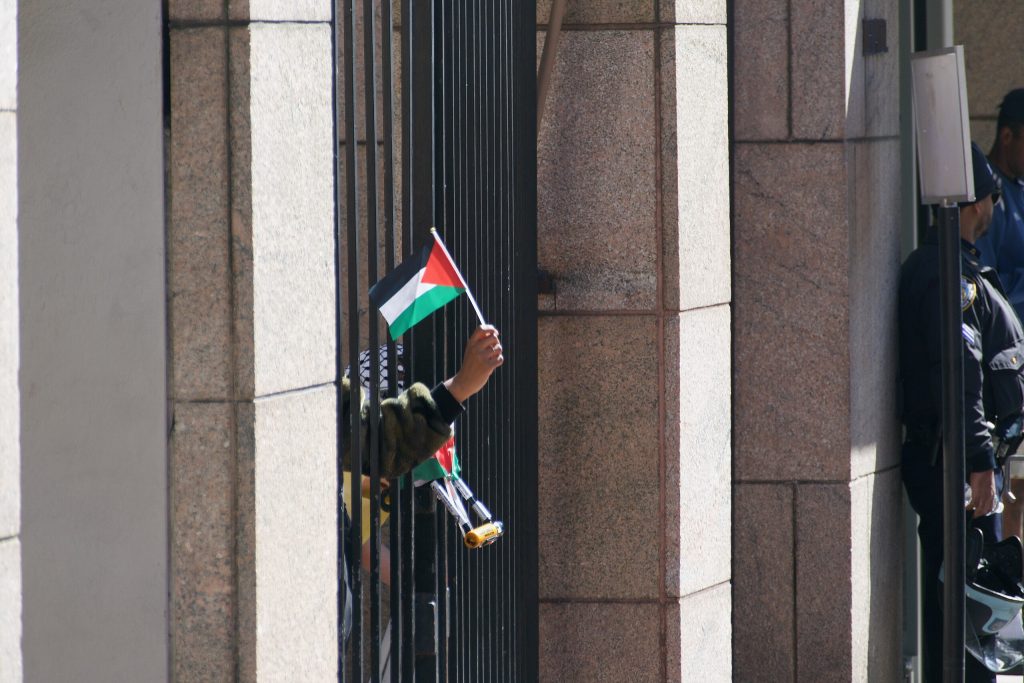
Columbia University, 22 April 2024. Image: SWinxy / Source: Wikimedia Commons

In their letter, Argonotlar’s editors warned that US financial support for Turkey’s marginalised sectors was “shrinking one by one”. It went on to say: “This situation is crushing on civil society and niche publications like Argonotlar, which rely on financial support.”

Kültigin Kağan Akbulut, the publication’s founding editor, told Index that Turkey’s independent media and NGO sectors entered “a new era” after the coup attempt on 15 July 2016, which Erdoğan used to criminalise various sectors of society that opposed his regime. Trump’s second term, according to Akbulut, will initiate a similarly devastating era for these institutions, with only those that are financially supported by subscriptions or their readers able to weather the storm.

“Now we’re entering a completely different phase, one that we’re completely unfamiliar with,” he said. “Independent media outlets and NGOs that rely on their readers, their circles and their [own work] will survive while others will, unfortunately, bid farewell to readers.”

A few weeks after Argonotlar issued its plea, Gazete Duvar (“The Wall Newspaper”), which was launched in 2016, ceased publication, citing financial difficulties. Turkey’s government-controlled media was jubilant. Takvim, a newspaper owned by a pro-government business group, wrote: “The decision to close down Gazete Duvar came in the wake of the abolition of the United States Agency for International Development (USAID). This structure, which stirred social fault lines and fed internal conflicts in various countries, is also known in Turkey for the media organisations it has been funding.”

Takvim claimed it was “the CIA’s field operational tool for many years”, cheered how “the Wall is taken down!” and noted how Trump’s former political adviser, Elon Musk, described USAID as a “criminal organisation”.

While Trump’s actions, such as his decision to formally shutter USAID in March, have received similar acclaim among Erdoğan’s network, his attempts to deport international students who have voiced pro-Palestinian views have been met with relative silence in Ankara.

On 25 March, after six masked plainclothes agents from US Immigration and Customs Enforcement (ICE) detained 30-year-old Tufts University student Rümeysa Öztürk, a Turkish government spokesperson said it was “an open regression for American democracy”; but Erdoğan, who under normal circumstances would be infuriated by such a move, didn’t comment.

“In general, Erdoğan is enraged with [the] repression of pro-Palestinian speech in the West – that is his meat and potatoes,” said Howard Eissenstat, chair of the history department at St Lawrence University in New York and a scholar at Stockholm University’s Institute for Turkish Studies.

“These are the sorts of issues Erdoğan loves to talk about: the perfidy and the hypocrisy of the West. ‘Whenever they criticise us, they are being hypocritical!’ That’s part of his brand. [But] he has manifestly not done that,” he said.

Eissenstat analysed the coverage by Anadolu, the state news agency, where such stories would usually be front and centre. This time, he said, “they have been very delicate”.

“I think that boils down to geopolitics. The government doesn’t want to pick a fight with Trump. They’re thinking, ‘We are hoping for better deals; we are hoping to buy F35s; we are not going to bite that apple’.”

In March, Eissenstat and two other Turkey experts – Lisel Hintz and Nick Danforth – published an essay in The Atlantic headlined “We Study Repression in Turkey. Now We See it Here”. They warned readers: “As Americans who follow Turkish politics closely, we have spent the past two decades decrying the rise of authoritarianism in Turkey. We have pointed to repeated crackdowns on free speech, including the regular use of security forces to arrest and intimidate students. So we watched with particular horror as our government sent masked agents to arrest a Turkish student because of her political opinions.”

Amid Trump intensifying his attacks on US colleges for alleged antisemitic bias, Harvard University dismissed Cemal Kafadar, the Turkish director of its Centre for Middle Eastern Studies, in March after the centre faced criticism that some of its programming had failed to represent Israeli perspectives. Following this, a Turkish government spokesperson accused Harvard of “openly assaulting scientific thought”.

But the assault on Harvard carried echoes of the attack on academic freedom in Turkey. Since 2021, Istanbul’s Boğaziçi University, one of the country’s most prestigious colleges, has witnessed widespread protests against its government-appointed rector, who shut down its progressive LGBTQ+ club, fired scholars who were critical of Erdoğan, and allowed a police presence on the campus to detain any student he deemed a threat to safety. Students say even kissing on campus has become problematic.

In a 2021 conference, Kafadar noted how his colleagues at Boğaziçi were suffering under these circumstances and defined the events as a “constant state of oppression, a state of torment that is gradually increasing in dose with a sense of revenge”. He recounted how his colleagues at Harvard had told him that Trump was “currently studying Erdoğan, Modi and Orbán on the issue of how to deal with universities and the media, trying to learn what he can swiftly [do to] tackle them if he wins the 2024 election”.

Efe Murad Balıkçıoğlu, a research associate at Harvard’s Centre for Middle Eastern Studies, said the situation for humanities departments in general is dire in the USA. Schools have been cutting back on hiring and closing or freezing jobs. Six jobs which Balıkçıoğlu applied for have closed or been put on hold, including tenure-track (which offers a path of progression at a university), non-tenure-track, part-time and lecturer positions.

“It doesn’t look like there will be any tenure-track positions in the next few years,” he said. “Middle Eastern studies is the one getting [hit the hardest]. From now on, international students will have to think twice about entering or leaving the country because the government is threatening to revoke visas. It’s also possible, even likely, that they’ll be blocked if they take part in political activities.”

Balıkçıoğlu predicted this could trigger a migration of US-based academics to Europe. “Columbia’s history department, which has a student body of around 20 [PhD students] every year, accepted fewer than 10 for its doctoral programme this year,” he said.

“Similarly, fewer international students were accepted this year [across US universities] due to visa problems, and the number of students, especially in the humanities, has decreased. It may be difficult for Turkish academics to find tenure-track jobs or research grants if their research focuses on the Middle East and if they do not glorify Israel.”

US-based artists from Turkey are also evaluating their situations. The Kurdish artist Şener Özmen, who won a grant in 2016 from the Institute of International Education’s Artist Protection Fund, an American initiative that provides grants to threatened artists, said he was concerned by how the USA “can and does deport you without question”.

Özmen, who now lives in Wilmette, Illinois, pointed to similarities between Erdoğan and Trump’s hostility toward the media. “Trump targeted the mainstream media through the discourse of ‘fake news’ while Erdoğan targeted the antigovernment media through the discourse of treason and hostility to religion.”

However, he said there was a difference between the free speech landscapes in Turkey and the USA. So far, despite Trump’s pressures, the media in the USA has largely remained independent, academic freedom has been widely maintained, and universities have retained their autonomy (although Trump’s latest threat to remove federal funding from universities that do not comply with his demands is eroding that independence).

In Erdoğan’s Turkey, in contrast, “a large portion of media outlets have been transferred to capital groups with ties to the government. Institutions like the Council of Higher Education [a government agency] have established direct political control over universities. More importantly, during Trump’s first presidential term, opposition journalists or academics were not subject to criminal prosecution or dismissed from their posts”.

The Turkish government has dismissed thousands of academics through statutory decree investigations and had dozens of them arrested.

Fatma Göçek is among these persecuted Turkish scholars. A tenured professor at the University of Michigan, in January 2016 the esteemed sociologist signed a peace petition alongside 1,127 other scholars titled “We Will Not Be a Party to This Crime”, in order to draw the public’s attention to violence in Turkey.

Since then, Göçek has been unable to travel to the country. “They said that there was a list of 40 people in the Ministry of Justice regarding scholars and that I was 14th on that list,” she told Index. “I haven’t been coming to Turkey for the past decade. I have few opportunities to visit Turkey; I can only meet with Turks virtually.”

Over the past decade, Göçek has worked with professor Kader Konuk, who founded the Academy in Exile in 2017. The initiative offers fellowships to scholars from around the world who are at-risk so that they can continue their research in Germany. Göçek also contributes to Scholars at Risk, a US-based network of 530 higher education institutions across 42 countries.

“I’m working with all those scholars who are trying to come to the USA from Turkey,” Göçek said. “Will they be able to stay here or not? I don’t know.”

Recently, she invited a Fulbright Scholar who focuses on the political activities of Ottoman Kurds to conduct research at her university, but said that he would likely not go to Michigan because of the bureaucratic hurdles and would instead head to England to do his research at Oxford University.

Sarphan Uzunoğlu, an assistant professor at Izmir University of Economics, said the current assault on academic freedoms in the USA was a litmus test for freedom of expression in the West. Countries that were once concerned with Turkey’s trajectory towards authoritarianism are now undergoing a similar transition.

“The fact that countries that said ‘We are concerned’ when these things were happening in Turkey are experiencing the same situation is directly related to the harsh turn in the global political climate,” he said.

“As for how this makes me feel, as a former immigrant who later returned to his country, it is frightening even to imagine the fear Rümeysa Öztürk experienced,” he said, referencing the recently detained Tufts student. “Being detained in an immigration detention centre in another country is not an ordinary situation.”

Eissenstat, the professor at St. Lawrence University in New York, has taught three classes on Palestine this year. “I wouldn’t be teaching them if I were a green card holder,” he said. “Not because I feel I am saying anything offensive or doing anything wrong, but rather because we don’t know why the people are selected for targeting, which is meant to intimidate all of us.”

He compared the situation in the USA to Turkey’s own academic crisis that intensified in the mid-2010s, when the red lines about what one could say and write became unclear.

“Arbitrary arrests – and the arbitrary punishment or targeting of one person, putting them in jail – is key to authoritarian rule,” he said. “The authoritarian rule doesn’t try to punish everybody. It tries to create these singular cases that make everybody pause.”

The authoritarian tactics of the Turkish and US governments are increasingly resembling each other. As Erdoğan and Trump borrow from each other’s playbooks on multiple fronts, students, scholars, journalists and any citizens willing to voice their views could be facing the ominous prospect of a fine-tuned, unified and globally accepted autocracy in the near future.

Published 13 August 2025
Original in English

  WHITE MAN'S KULTURKAMPF  

White House orders Smithsonian review to promote 'American exceptionalism'

Trump administration targets 8 major museums, including African American History and Air and Space, seeking to remove ‘divisive’ language ahead of US semiquincentennial


Gizem Nisa Demir |13.08.2025 -  TRT/AA


ISTANBUL

The White House has launched a sweeping review of eight Smithsonian Institution museums, aiming to "celebrate American exceptionalism" and remove "divisive or ideologically driven language," according to a letter sent Tuesday to Smithsonian Secretary Lonnie Bunch.

The directive, signed by Office of Management and Budget Director Russell Vought and two other senior aides, follows President Donald Trump's March executive order, which directed Vice President JD Vance, a member of the Smithsonian Board of Regents, to oversee changes at the museums, including the removal of "improper ideology."

The review is being timed with next year’s 250th anniversary of the Declaration of Independence, according to a CBS News report.

"This initiative aims to ensure alignment with the President’s directive to celebrate American exceptionalism, remove divisive or partisan narratives, and restore confidence in our shared cultural institutions," the White House letter stated.

Independence concerns

Initial targets include the National Museum of African American History and Culture, which was singled out in the order for allegedly promoting "race-centered ideology," as well as the Air and Space Museum, the National Museum of American History, and the National Portrait Gallery.

Museums have been asked to provide exhibit content, plans, and collections information within 30 days, with "content corrections" expected within 120 days.

The Smithsonian reaffirmed its "deep commitment to scholarly excellence, rigorous research, and the accurate, factual presentation of history" in a statement to CBS News and said it would review the letter "with this commitment in mind" while working with the White House and Congress.

Democratic lawmakers have condemned the effort, warning it could undermine the Smithsonian’s independence.

"Unfortunately, we now stand at the brink of seeing the Smithsonian at its worst: shaped solely by the views and ideology of one individual as a means of expanding his political power," four Democratic members of the House Administration Committee wrote in an open letter.

Wife of South Korea’s jailed ex-President Yoon Suk Yeol arrested over corruption allegations

South Korea's former first lady Kim Keon Hee, arrives at a court to attend a hearing to review her arrest warrant requested by special prosecutors, in Seoul, South Korea, Tues
Copyright AP

By Jerry Fisayo-Bambi
Published on 

Investigators are seeking to charge Kim over alleged crimes in one of three probes launched under Seoul’s new liberal government, targeting the presidency of Yoon, a conservative who was removed from office in April.

The wife of South Korea’s jailed former President Yoon Suk Yeol was arrested on Tuesday over allegations of bribery, stock manipulation, and meddling in the selection of a candidate, local media reported late Tuesday.

According to state prosecutors, Kim Keon Hee is currently being held at a detention centre in southern Seoul, separate from the facility holding Yoon, her husband.

Investigators in Seoul are seeking to charge the former first lady over alleged crimes in one of three special prosecutor probes launched under South Korea’s new liberal government, targeting the presidency of Yoon, a conservative who was removed from office in April before being rearrested and jailed.

In granting a special prosecutor’s request for an arrest warrant late Tuesday, the Seoul Central District Court said Kim Keon Hee posed a risk of destroying evidence

Kim did not speak to reporters as she arrived at the Seoul court Tuesday for an hours-long hearing on the warrant request. She is expected to face further questioning on Thursday by investigators, who can extend her detention for up to 20 days before formally filing charges.

Her husband's surprising power grab attempt on 3 December, which sent South Korea into political turmoil, came amid a seemingly routine standoff with the liberals, who the former president described as “anti-state” forces abusing their legislative majority to block his agenda.

Some political opponents have questioned whether Yoon’s actions were at least partly motivated by growing allegations against his wife, which hurt his approval ratings and gave political ammunition to his rivals.

Kim Keon Hee: I am “someone insignificant”

The investigation team, led by Special Prosecutor Min Joong-ki, who was appointed in June by new liberal President Lee Jae Myung, initially questioned Kim for about seven hours on Wednesday last week before deciding to seek her arrest.

Kim spoke briefly to reporters as she appeared for last week’s questioning, issuing a vague apology for causing public concern but also hinting that she would deny the allegations against her, portraying herself as “someone insignificant.”

South Korea's former first lady Kim Keon Hee, center, wife of impeached former president Yoon Suk Yeol, arrives at a court to attend a hearing to review her arrest warrant req AP

Investigators suspect that Kim and Yoon exerted undue influence on the conservative People Power Party to nominate a specific candidate in a 2022 legislative by-election, allegedly at the request of election broker Myung Tae-kyun.

In particular, Kim is separately linked to multiple corruption allegations, including claims that she received luxury gifts via a fortuneteller acting as an intermediary for a Unification Church official seeking business favours, and possible involvement in a stock price manipulation scheme tied to a local BMW dealership company.

Earlier on Tuesday, one of Kim's close allies was arrested by Min's investigative team after he arrived from Vietnam. Investigators say they are looking into allegations that he leveraged his relationship with the former first lady to obtain millions of dollars in business investments for his financially troubled company.

While in office, Yoon dismissed calls to investigate his wife as baseless political attacks and vetoed multiple bills from the liberal-led legislature seeking independent probes into the allegations.

However, new President Lee Jae Myung signed legislation in June to begin extensive special investigations into Yoon's martial law fiasco, the accusations against his wife, and the drowning death of a marine during a flood rescue operation in 2023—an incident that liberals say Yoon's government attempted to cover up.