Friday, August 29, 2025

Wildfire on Cyprus caused by 'carelessly discarded cigarette,' ATF report finds
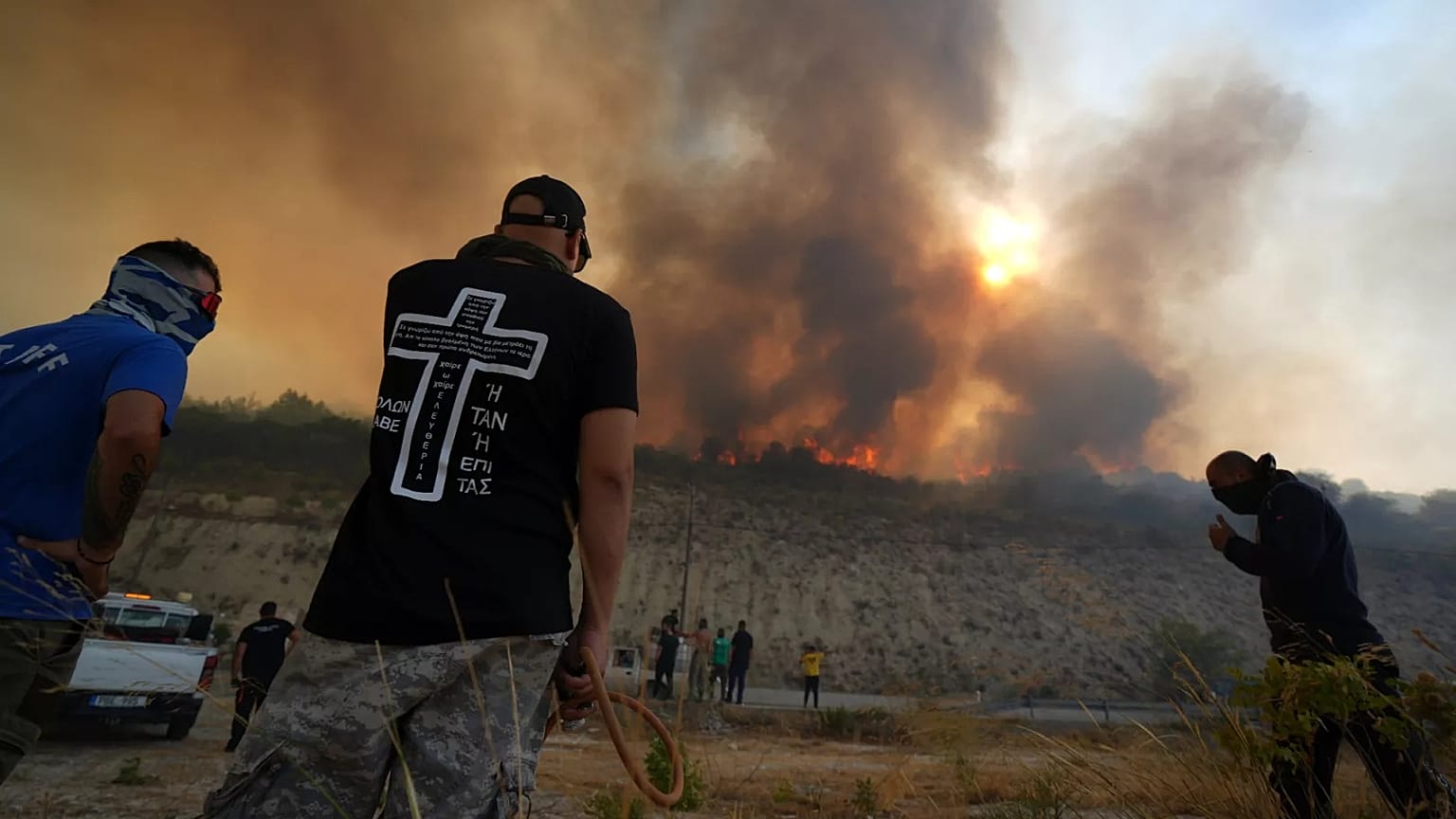
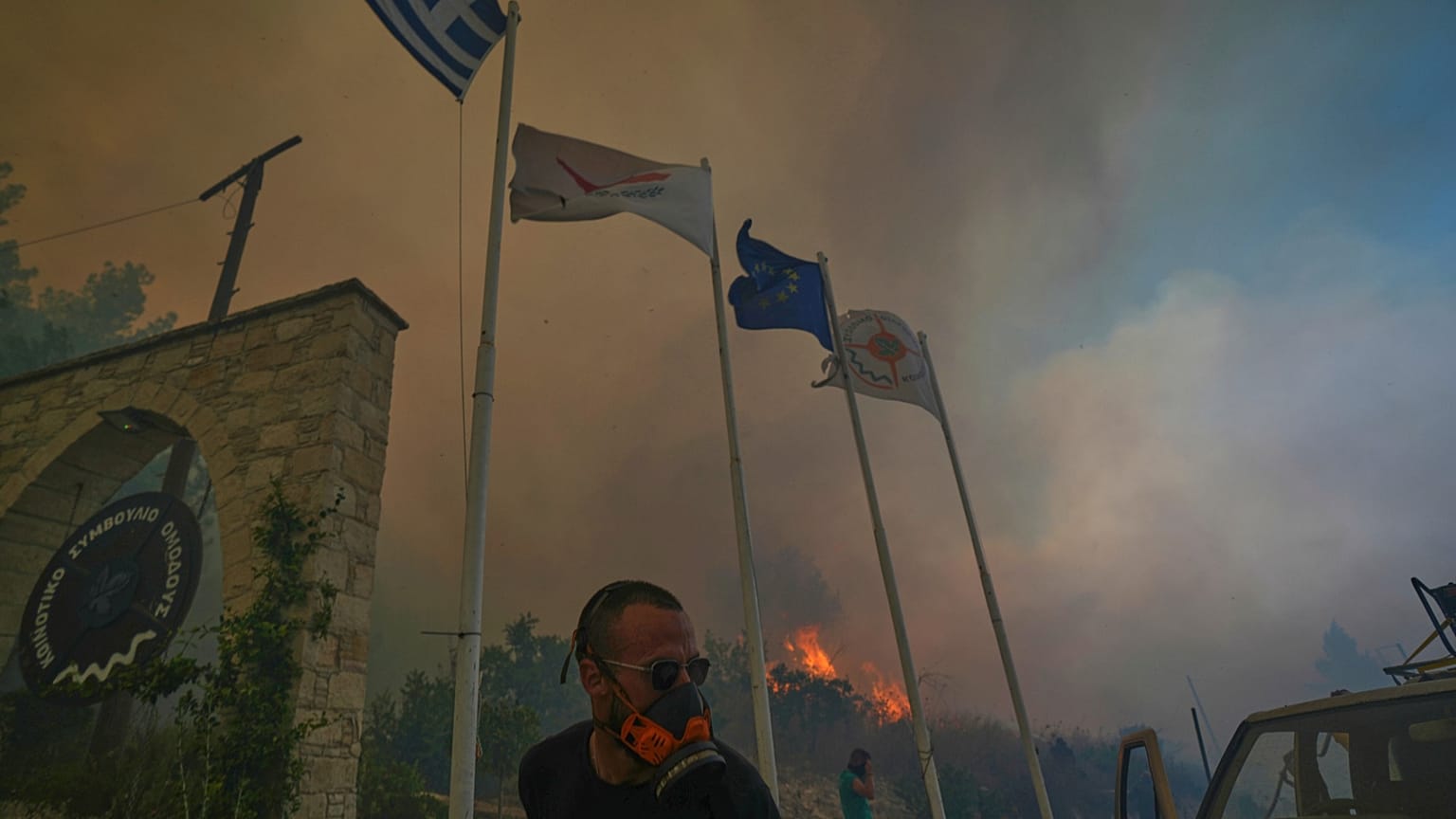
Residents gather to battle the fire at Omodos village, 24 July 2025
Copyright AP Photo


By Gavin Blackburn
Published on 

The fire in July near the coastal town of Limassol claimed the lives of two people, wrecked 700 structures and scorched more than 100 square kilometres of land.

One of Cyprus' most devastating wildfires in recent memory was caused by a cigarette discarded by the side of a mountain road, a report by US experts said on Thursday.

The report by the Bureau of Alcohol, Tobacco, Firearms and Explosives (ATF) concluded that the "accidental" cause of the fire was a "carelessly discarded cigarette coming into contact with dry vegetation."

The fire in July near the coastal town of Limassol claimed the lives of two people, wrecked 700 structures and scorched more than 100 square kilometres of land.

The ATF report said that a search of the area where the wildfire initially ignited revealed several cigarette butts strewn on the ground by the side of a road connecting the mountain villages of Malia and Arsos.

Investigators noted that the environmental conditions at the time were “extremely favourable to any ignition, including the ignition from carelessly discarded smoking materials.”
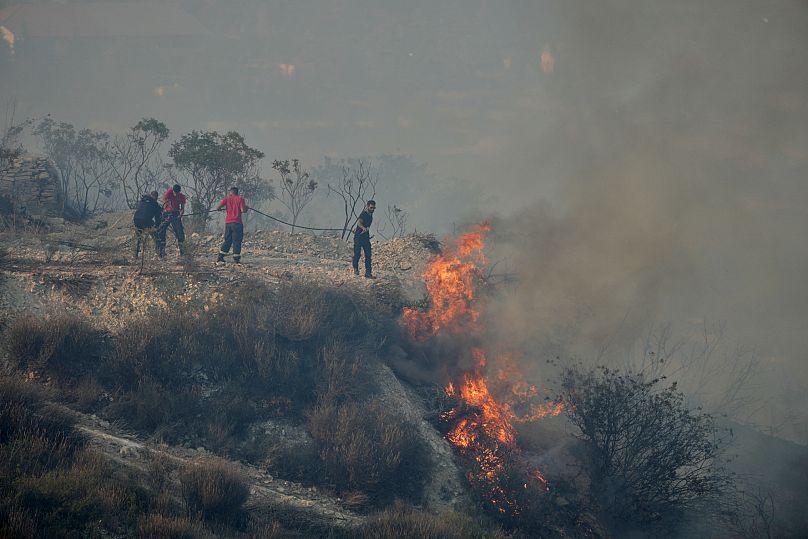
Residents gather to battle the fire at Omodos village, 24 July 2025 AP Photo

Strong winds, low humidity and temperatures reaching 39 degrees Celsius at the time had made the likelihood of ignition 100%, according to the experts who also took into account witness statements, video and photographs as well as the input of Cyprus Fire Service investigators.

The ATF team visited the east Mediterranean island to conduct their 10-day investigation at the request of President Nikos Christodoulides.

More than 250 firefighters and 14 aircraft struggled to contain the wildfire that burned across multiple fronts on hilly terrain over two days.

At the time, the government said the combination of strong winds, high temperatures and very arid conditions after three winters of minimal rainfall created a perfect storm at the wildfire’s peak.

An elderly couple died while trying to flee the fast-moving flames in their car that fire crews found at the side of a mountain road leading to Limassol.

Publication of the ATF report coincided with the release of a study showing how climate change that has driven scorching temperatures and dwindling rainfall made wildfires in Turkey, Greece and Cyprus this summer burn much more fiercely.

The World Weather Attribution study said the fires that killed 20 people, forced 80,000 to evacuate and burned more than 10,000 square kilometres were 22% more intense in 2025, Europe's worst recorded year of wildfires.

Record amount of wildfire destruction marks dark year for Europe
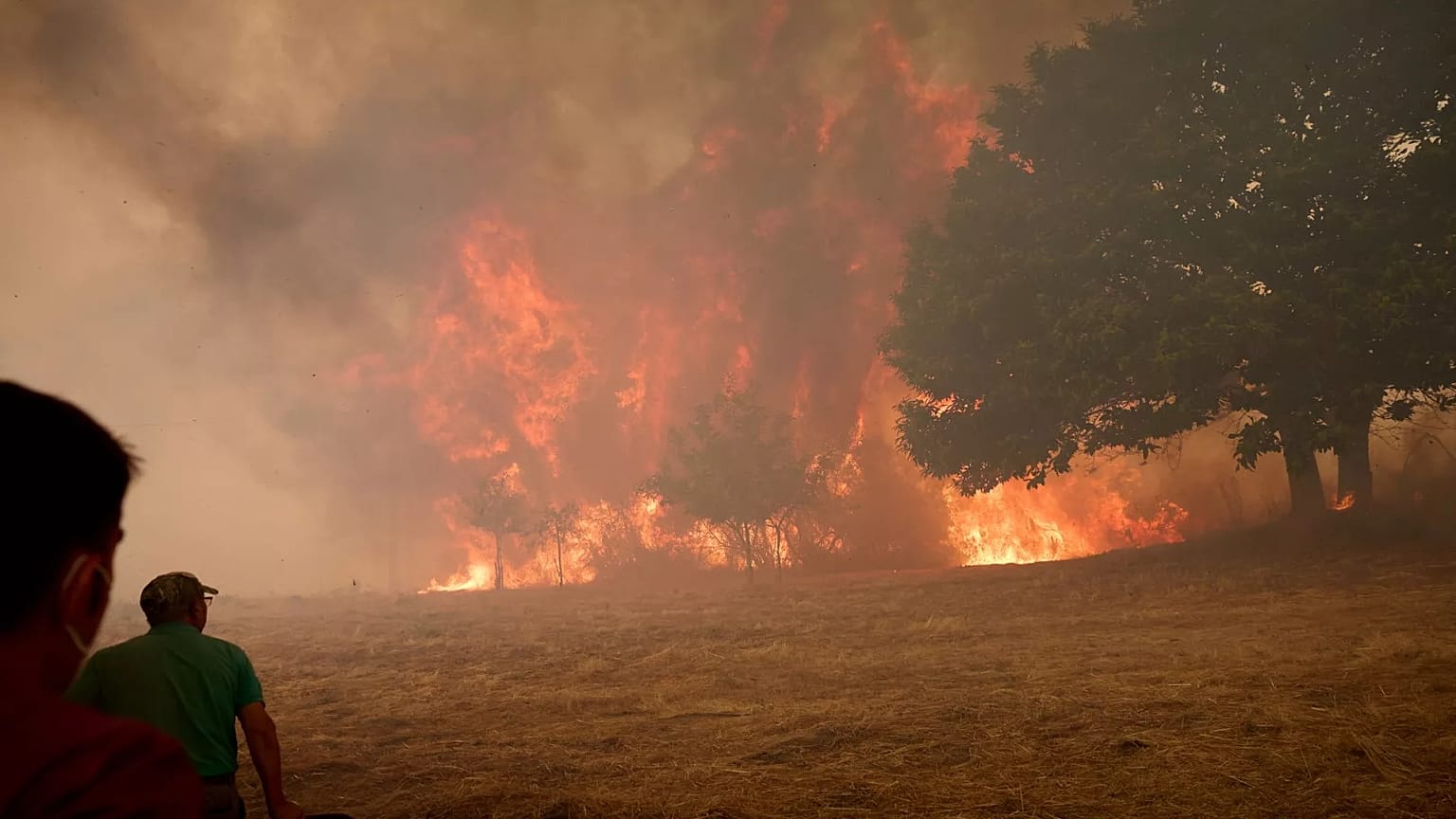
Residents fight a forest fire advancing towards the village of Rebordondo, near Ourense, in north-west Spain, on Monday 18 August 2025.
Copyright Photo AP/Pablo Garcia


By Amandine Hess
Published on 

Experts say that the higher temperatures and lower rainfall brought by climate change are making forest fires worse.

In Europe, the 2025 wildfire season has broken records for the amount of land burnt.

More than a million hectares has gone up in flames in the EU so far this year, a larger surface area than the entirety of Corsica. That's more than four times as much as last year.

In total, more than 1,800 forest fires have been declared, emitting more than 38 million tonnes of CO₂.

Out of the European Union's 27 member states, only the Czech Republic, Estonia, Lithuania, Luxembourg and Malta have reported no wildfires.

At the top of the list, Italy and Romania recorded more than 450 blazes each.
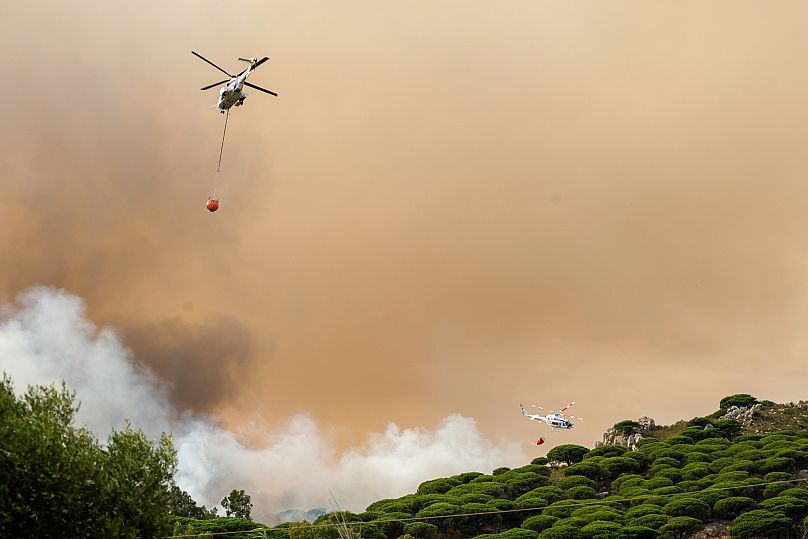
Firefighting helicopters drop water to extinguish a blaze in Torre de la Peña, southern Spain, Tuesday, Aug. 5, 2025. AP Photo

However, the countries that have suffered the most damage are not necessarily those that reported the most fires.

Cyprus, for example, reported only three fires, but they were particularly devastating.

Since the first of January, more than 400,000 hectares have burnt in Spain and more than 260,000 hectares in Portugal. That is equivalent to 3% of Portugal and 0.8% of Spain's total land mass.

"Many of the fires we have monitored and observed are occurring where climate anomalies show that it is much drier than average and warmer than average," Mark Parrington, a scientist at the European Centre for Medium-Range Weather, told Euronews.

"Where hot, dry winds are blowing, any ignition can ignite very quickly on a large scale and become very intense," Parrington added.

Climate change fuels fire risk

Experts have sounded the alarm that climate change is to blame for this year's more aggressive wildfire season.

Alexander Held, a fire management specialist at the European Forest Institute, explained that a combination of different factors are needed to spark a fire, including weather conditions, topography, vegetation, biomass and fuel.

However, Held stressed that "the prerequisite for everything to happen is the weather".

"Climate change scenarios provide the perfect envelope for all the other factors to work together to produce a perfect fire day or a perfect firestorm," Held told Euronews.
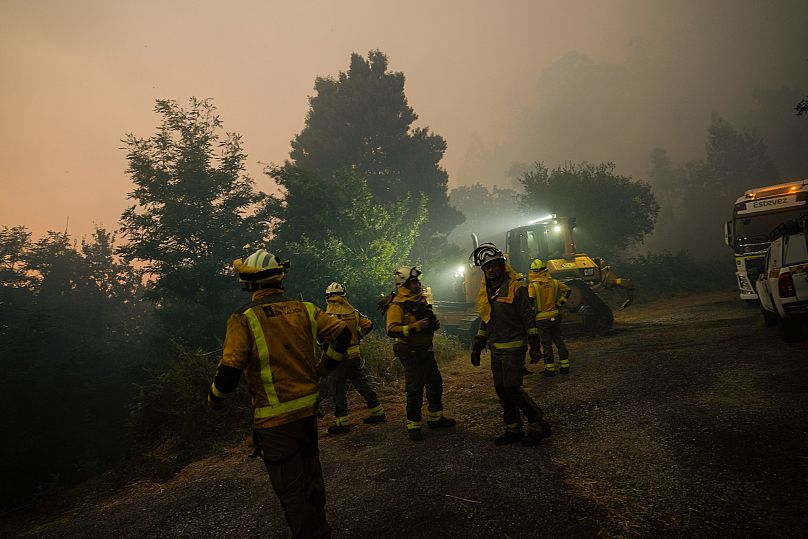
Firefighters work as the fire progresses in A Cañiza, Pontevedra province, northwest Spain on Wednesday, July 30, 2025. Adrián Irago/Europa Press via AP

Such conditions are only set to become more common in the future, Held warned, putting strain on firefighting resources

"Our fire-fighting system is reaching its limits, and the only thing we can do is prepare the landscape, making it more resilient and better prepared. That way, firefighters will have a chance to work safely and efficiently," Held said.

One technique is to reduce vegetation through clearing, grazing or controlled burning.

Other approaches include agroforestry systems that combine agricultural production and trees in the same location.


No, Spain’s wildfires were not started on


purpose to clear land for construction


projects

Copyright AP Photo


By  Leticia Batista Cabanas

Published on 28/08/2025 - 


Spain has battled several devastating wildfires. The disaster is prompting claims that the fires were deliberately caused to make way for construction projects. Here is why these claims are false.


Spain is facing its worst wildfire season in 30 years. Fuelled by the severe summer heatwave, these fires have already destroyed over 150,000 hectares of land, mainly in the regions of Galicia and Castilla y León in the northwest. 

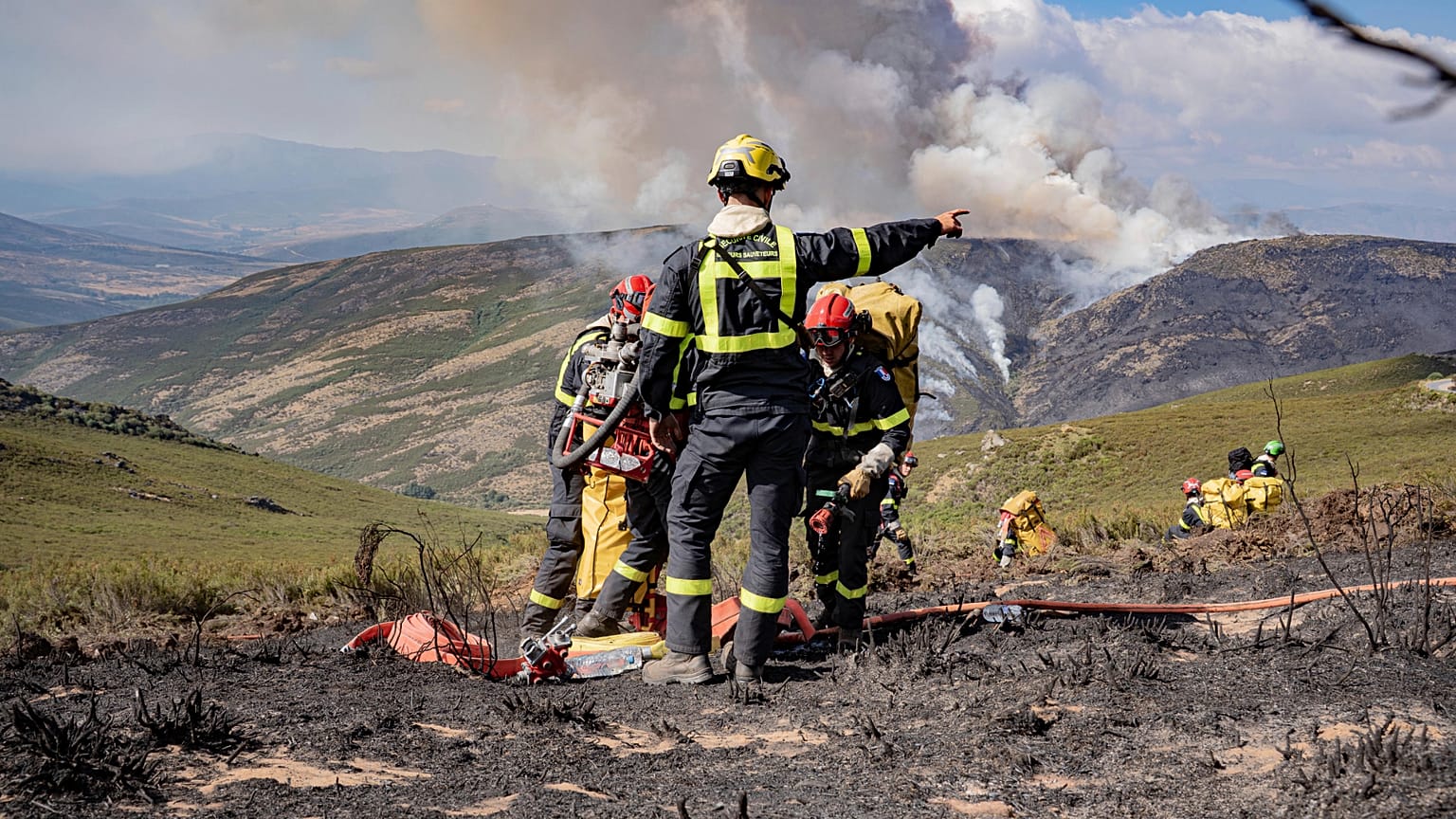
Firefighters are battling the blazes with support from military forces deployed by the Spanish government. Meanwhile, around 30,000 people have been evacuated, with residents urged to wear face masks and stay indoors to avoid the smoke and ash.

As the blaze ravages forests and natural areas, it often clears vegetation and makes land easier and cheaper to develop. Because of this, a social media wave of disinformation content is claiming that the wildfires were caused on purpose, to clear land for construction projects.

Misleading projects in Canarias and Madrid

Viral posts suggest that the wildfires in Spain were deliberately set so developers can later build on the burned land, but this is untrue. Spain’s Law of Montes explicitly bans changing the use of forest land for 30 years after a fire to prevent intentional burning for profit.

The law was tightened in 2006 under Spain’s prime minister at the time, José Luis Rodríguez Zapatero (PSOE), to enforce the 30-year ban nationwide and only allowed one exception: if the change of use (like turning forest into urban land) was already approved before the fire. 

In 2015, under former PM Mariano Rajoy (PP), a second exception was added, but only for cases where a new law declares the change necessary for “reasons of overriding public interest”, like building essential infrastructure. But it’s a complex that requires parliamentary or regional legislation, not something a private developer can trigger independently.

So, as per these legal safeguards, fires do not open the door to real estate development because new projects cannot bypass the 30-year restriction.

The supposed “loopholes” circulated online (like the idea that selling the land or burning it allows instant requalification) do not exist in the law. 

Any project seeking to change land use must have been planned and approved long before a fire, or it must go through lengthy legal and environmental procedures, making arson an ineffective and illegal path to development.

In that same vein, another set of posts claims that the August 2025 fires in Tarifa (Cádiz, Andalusia) were started to enable coastal urban developments, but the facts don’t support this.

Viral claims, including headlines from established Spanish media, like El Español, mention “more than eight projects” and suggest the fires would allow land to be reclassified for construction.

The fire near Atlanterra in Tarifa indeed passed close to two housing developments, but the plots were already designated as urban land in the local planning documents (PGOU) and were not damaged by the fire. 

Another rumour points to a luxury tourism project in El Lentiscal, but this site is inside the Parque Natural del Estrecho, and is far from the burned area. It also faces strict environmental protections, with no application for construction submitted as of August 2025.

Another claim says that the wildfire in Tres Cantos, a neighbourhood in the Madrid district, was linked to a nearby solar farm project – the GR Mandarín photovoltaic project. 

But in reality, the solar plant’s panels will be installed in Soto del Real, a different municipality 12 km from the burned area, while Tres Cantos only hosts part of the transmission line. 

The project had already secured its environmental clearance in May 2023 and received its construction permit from the Ministry for the Ecological Transition in November 2024, months before the fire.

The posts also misrepresent an early 2022 draft of the project to claim that Tres Cantos was the planned installation site, ignoring the updated, approved plans that show otherwise. 

But sources from the Tres Cantos city council told Spanish fact-checker Maldita.es that the municipality has no additional permits pending for the project, which means that construction could proceed regardless of the local fires. 


Climate change intensified weather that


fuelled deadly wildfires in Türkiye, Greece


and Cyprus


Copyright AP Photo/Petros Karadjias

By Rosie Frost
Published on 28/08/2025 - 


Researchers found that weather conditions which drove deadly fires in Türkiye, Greece and Cyprus were made more intense by climate change. They expect similar results from their ongoing analysis of blazes in Spain.

Weather conditions that fuelled deadly wildfires in Türkiye, Greece and Cyprus were made more intense by climate change, new research has found.

The rapid analysis from World Weather Attribution (WWA) shows that the hot, dry and windy conditions, which drove the spread of blazes in the three countries, were around 22 per cent more intense because of human-caused climate change.

The findings follow data confirming that 2025 has become Europe’s worst year on record for wildfires, with more than a million hectares of land burned. As of 26 August, an area bigger than Cyprus and higher than the total for any other year on record has been ravaged by blazes, according to data from the European Forest Fire Information System (EFFIS).

Researchers warn that the risk of larger, harder-to-control fires will continue to increase if the world continues to burn fossil fuels. These simultaneous blazes are already stretching firefighting resources with more intense events outpacing efforts to adapt.

“These results are concerning. Today, with 1.3°C of warming, we are seeing new extremes in wildfire behaviour that has pushed firefighters to their limit,” says Theodore Keeping, researcher at the Centre for Environmental Policy, Imperial College London.

“But we are heading for up to 3°C this century unless countries more rapidly transition away from fossil fuels.”

Climate change set the scene for deadly wildfires

In June and July, hundreds of wildfires broke out in the eastern Mediterranean.

Türkiye was hardest hit with 17 people killed, among them firefighters who died when winds suddenly changed direction, leaving them trapped by the flames. Two people were killed in Cyprus and one in Greece. Across the three countries, more than 80,000 people were forced to evacuate.

Climate change, researchers say, set the scene for these fires in Türkiye, Greece and Cyprus by influencing the weather in the months, weeks and days leading up to them.
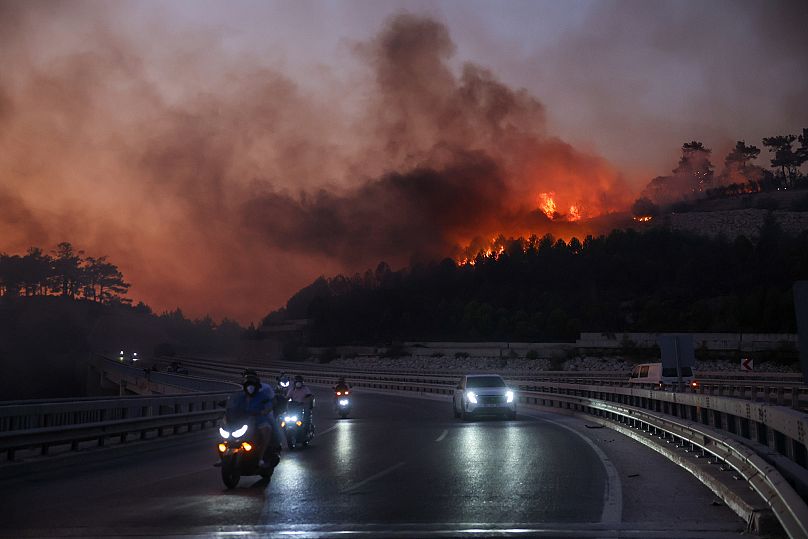
People drive their vehicles past a wildfire raging near Canakkale, northwest Turkey. Berkman Ulutin/Dia Photo via AP

Total rainfall during winter in the region has decreased by around 14 per cent since the pre-industrial era, before humans began burning fossil fuels. This has led to drier conditions in the summer which, combined with intense dry heat, primed plants to burn.

A week of “highly evaporative” conditions that cause plants to dry out is now around 18 per cent more intense and 13 times more likely due to climate change, the analysis found.

Next, researchers looked at the combination of hot, dry and windy conditions that drove the chaotic spread of the fires. Without climate change, similar events would only occur about once every 100 years. But today, with 1.3°C of warming, they are expected about once every 20 years.

These fire-prone conditions were overall made about 10 times more likely and 22 per cent more intense by climate change.

Lastly, they looked at extreme northerly winds known as the Etesian winds. They found an increase in the intensity of high-pressure weather systems, like the one that drove the devastating fires. The findings agree with previous research from the region, which shows that these fire-fanning Etesian winds are becoming stronger.

Europe’s blazes risk overwhelming firefighting efforts

WWA warns that, with hundreds of wildfires occurring at the same time across Europe, firefighting resources are already strained at 1.3°C of global warming.

As of 21 August, the EU Civil Protection Mechanism, which coordinates support during emergencies, had been activated 17 times for wildfires this year, including by Greece, Spain, Bulgaria, Montenegro and Albania over the course of just one week.

“The fire season still has weeks to go in Europe, but it is already the continent’s worst ever recorded with more than a million hectares burned,” says Dr Clair Barnes, researcher at the Centre for Environmental Policy, Imperial College London.

Spain and Portugal have been the hardest hit, together making up around two-thirds of the EU’s total burnt area this year. A sharp increase occurred between 5 and 19 August according to EFFIS data - a period which overlapped with a 16-day heatwave in the Iberian Peninsula.
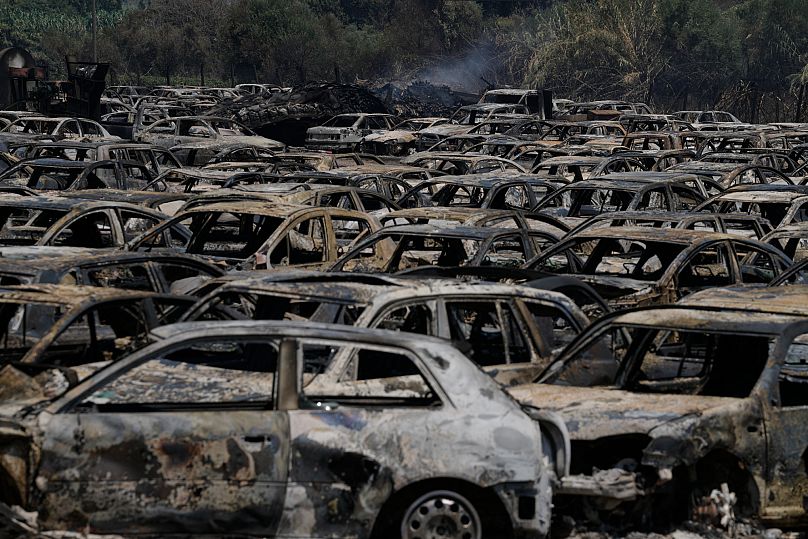
Burned cars are seen at an impound lot in Kato Achaia, during a wildfire near Patras city, western Greece. AP Photo/Thanassis Stavrakis

Dr Barnes adds that WWA has already started a rapid analysis on the wildfires in Spain, and are expecting to find the fingerprints of climate change there, too.

As the climate warms, researchers say more countries across Europe will need to tackle wildfires that stretch resources. In some places, they say there is a risk that extreme fires could overwhelm efforts to adapt.

In Türkiye, Greece and Cyprus, warming of 2.6°C, which is expected under current global climate policies, would see periods of intense hot, dry and windy conditions become nine times more likely and 25 per cent more intense.

Dr Bikem Ekberzade, researcher at the Eurasia Institute of Earth Sciences, Istanbul Technical University, explains that wildfires in Türkiye peaked unexpectedly in June this year, when the season usually falls within the four weeks from mid-July to mid-August.

“Human ignitions were the primary cause, while meteorological conditions – especially high surface wind speeds – contributed to the rapid spread and severity of the fires.”

When vegetation is dry and winds are strong, a single ignition can rapidly turn into a large, hard-to-control wildfire, Dr Ekberzade adds.

“And in a warming world, with more overlap between urban and wildland areas, larger, more severe and fatal fires could soon become the norm.”

Can Europe adapt to increasing wildfire risks?

The study highlights the need for forward-looking efforts to decrease the risk of wildfires starting and spreading.

Currently, strategies in Türkiye, Greece and Cyprus focus on fire suppression with large forces of firefighters and fleets of water bombing planes and helicopters. Nearly 650 firefighters from 14 different countries were deployed ahead of fire season in high-risk areas.
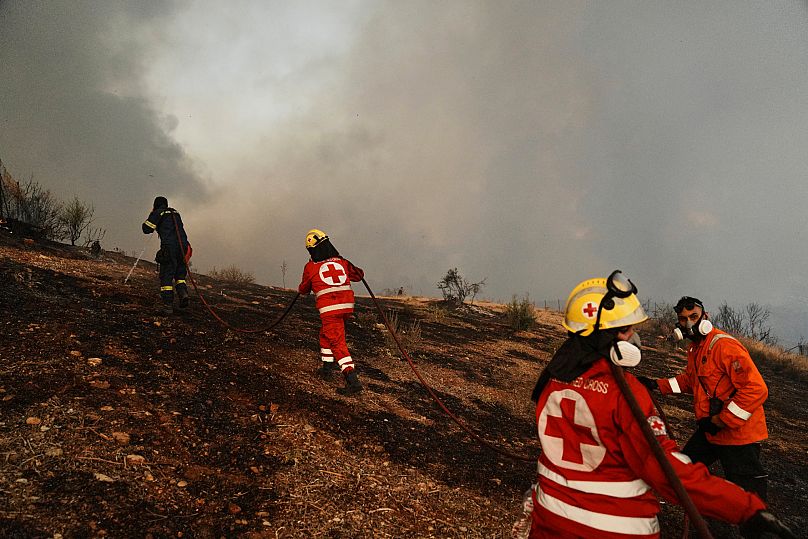
A firefighter and members of the Red Cross try to control a wildfire in Patras city, western Greece. AP Photo/Thanassis Stavrakis

“Even with hundreds of pre-deployed firefighters, reinforcements from neighbouring countries, and water-dropping planes, the blazes have been devastating,” says Maja Vahlberg, technical advisor at the Red Cross and Red Crescent Climate Centre

WWA says that while international deployments like this will still be needed, more focus needs to be placed on preventing fires. That includes efforts like improving community fire risk awareness and strategies to manage fuel for blazes, such as removing or altering vegetation.

“The hard work to implement long-term wildfire management strategies that proactively manage fuel availability and empower communities to prepare for wildfires must continue to help keep people safe,” Vahlberg adds.

 

Deforestation linked to thousands of heat-related deaths each year, study warns

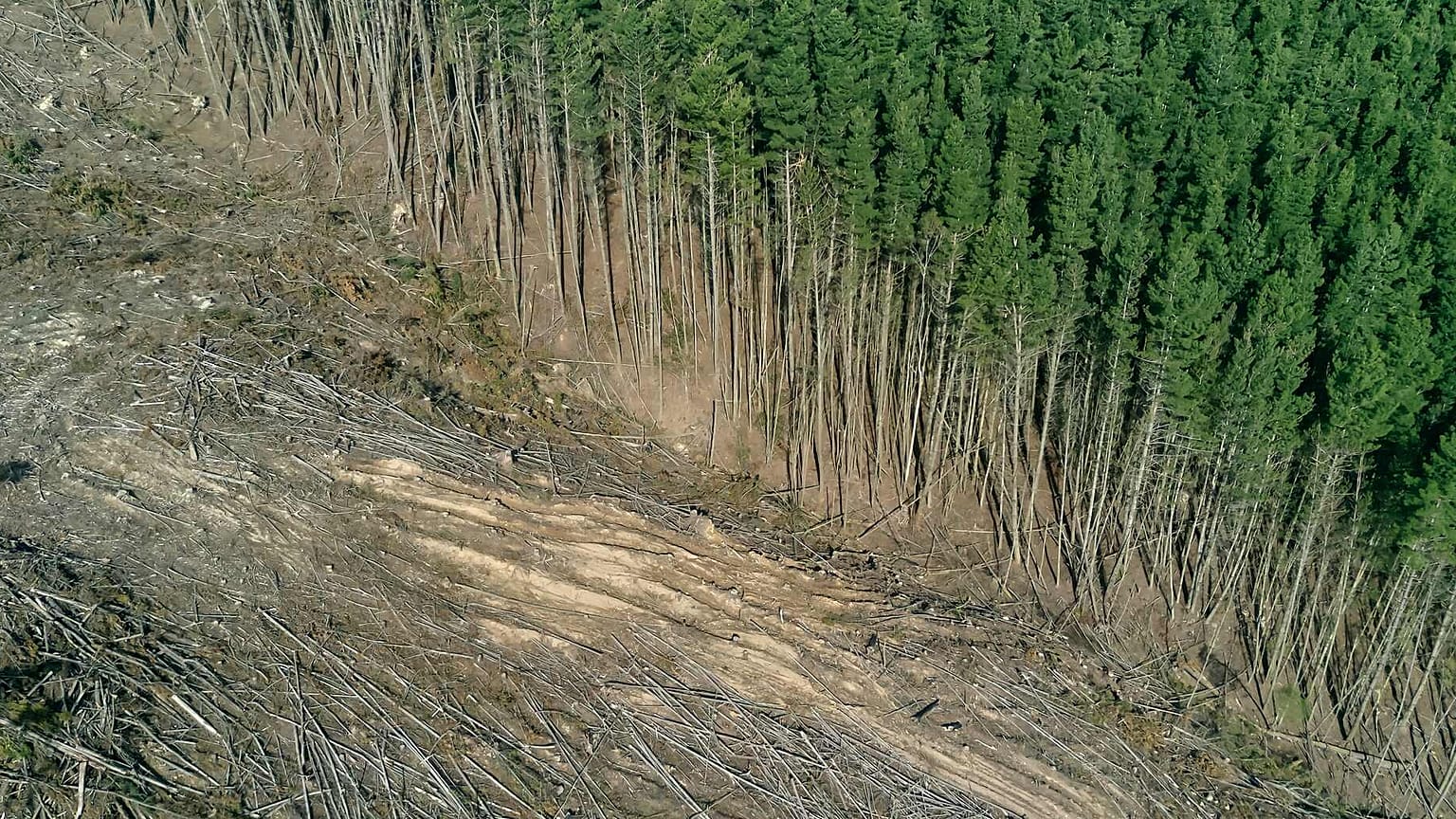
Forest loss could be to blame for thousands of excess deaths.
Copyright Gryffyn M/Unsplash

By Craig Saueurs
Published on 

New research links tropical deforestation to 28,000 annual heat-related deaths.

Deforestation in tropical regions is leading to a surge in heat-related deaths, according to a new study that highlights the growing human cost of forest clearance.

Published this week in Nature Climate Change, the research finds that local warming caused by tropical deforestation has already exposed more than 300 million people to higher temperatures and is associated with around 28,000 excess deaths every year – about half a million in the past 20 years.

In areas where forests were cleared close to population centres, the impacts were especially stark. Around 48 million people in Indonesia, 42 million in the Democratic Republic of Congo and 21 million in Brazil are already exposed to higher temperatures linked to forest loss.

Forest loss and rising heat risks

The study, led by Dr Carly Reddington and Professor Dominick Spracklen of the University of Leeds, analysed deforestation across Central and South America, Africa and South-East Asia. It found that removing tropical trees, which cool the climate through shade, moisture release and carbon storage, has exposed more than 300 million people to higher local temperatures.

“In areas of tropical forest loss, more than one third of all heat-related deaths were associated with deforestation,” the authors wrote.

And the impacts are “almost immediate – within days of the forests being cleared,” according to Spracklen.

“Forests keep the local climate cooler by pumping water from the soil to the atmosphere. When this water evaporates, it cools the local climate,” he explains.

“This is a bit like the body sweating on a hot day – when sweat evaporates, it cools the skin. When we cut down the trees, we stop this sweating process, and the local climate warms up. People living nearby will then start to experience this warmer climate immediately.”

How fast forests are disappearing

The findings add a new dimension to concerns over accelerating forest loss.

Earlier this year, a report from the World Resources Institute (WRI) and Google DeepMind found that 34 per cent of forest land – about 177 million hectares – lost between 2001 and 2024 is now permanent, as those areas are unlikely to regenerate naturally.

The largest cause of it was agriculture, which accounts for 95 per cent of permanent forest loss.

Europe’s delayed response

Europe is also under pressure to tackle its role in global forest loss. As farms, mines and infrastructure projects erase forests at alarming rates, the EU has struggled to enforce laws designed to keep products linked to deforestation off shelves. Last year, it postponed the introduction of its long-awaited Deforestation Regulation for 12 months.

The law was meant to take effect at the end of 2024, requiring suppliers of commodities such as palm oil, beef, timber and coffee to prove their production was not linked to deforestation. Non-compliant producers would have been barred from accessing the EU’s vast single market.

The rollout has been pushed back to the end of this year for large corporations and until 2026 for small- and medium-sized enterprises. That delay has raised concerns that deforestation-linked goods will continue flowing into Europe unchecked – a quietly recurring problem.

An investigation by the Bureau of Investigative Journalism last year revealed that five shipping companies were responsible for transporting over half a million tonnes of beef and leather products from Brazilian abattoirs linked to deforestation between 2021 and 2022 alone.

Forests as a health shield

The emerging science highlights how tropical forests act as a natural shield against deadly heat, plus a range of connected diseases.

Deforestation is associated with an array of problems detrimental to human health. According to the authors, smoke pollution from fires in deforested areas degrades regional air quality and has been linked to an increased risk of malaria.

Without stronger protection of existing forests, communities in the tropics face harsher living conditions, strained health systems and rising mortality from more than just heat.

“Our findings underscore the urgent need to reduce tropical deforestation,” Spacklen said. 


Five-million-year-old fissure discovered off Portugal could explain Lisbon's major earthquakes

Lisbon
Copyright Armando Franca/AP


By Inês dos Santos Cardoso
Published on 

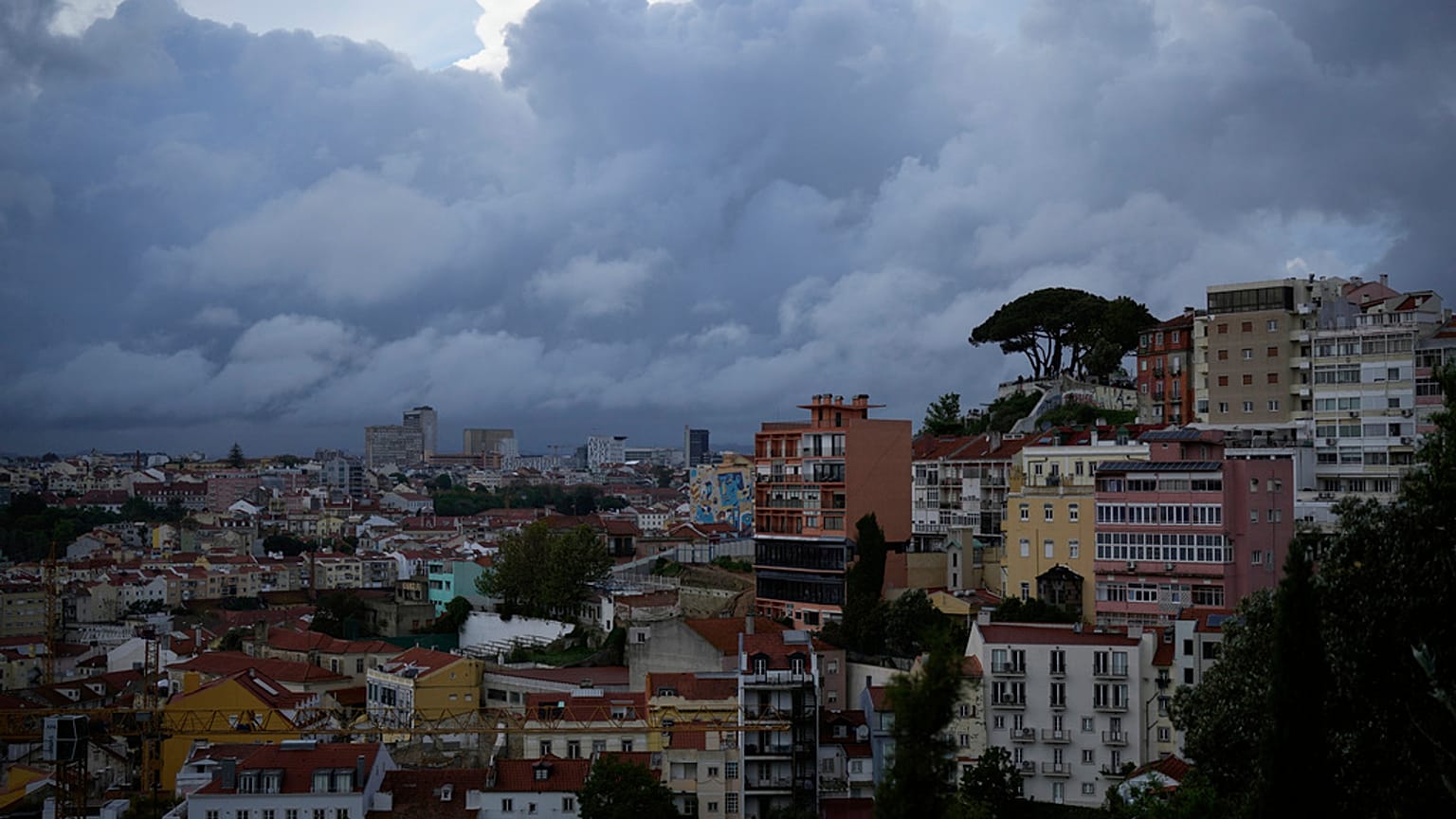
A fissure in the tectonic plate 200 kilometres off the coast of Cabo de São Vicente (Sagres) may be the cause of major Lisbon earthquakes, like the one in 1755.

For decades, geologists have struggled to explain the massive earthquakes which struck Lisbon in 1755 and 1969. Now a fissure in the tectonic plate 200 kilometres off the coast of Cabo de São Vicente (Sagres) may finally offer a clue to the forces behind earthquakes in the Portuguese capital.

This fissure, which has only just been discovered, has been forming for at least five million years, according to a study by the Faculty of Sciences of the University of Lisbon recently published in the journal Nature Geosciences.

The 1969 earthquake that shook Lisbon and other regions of Portugal and the 1755 'Great Earthquake' originated in the Ferradura Abyssal Plain, a geological formation in the Atlantic Ocean not far from the Gorringe Bank submarine mountain, on the border between the Eurasian and African tectonic plates.

As it is a flat geological formation with no known seismic faults, the origin of these quakes and others like them in Lisbon has always puzzled scientists

However, the discovery of "a portion of the tectonic plate that is separating" in a process known as "delamination" may begin to explain this phenomenon, says João Duarte, co-author of the study, geologist, and professor at the University of Lisbon’s Faculty of Sciences, as well as a researcher at the Dom Luiz Institute, speaking to Lusa.

What does the delamination process involve?

Delamination is occurring because the tectonic plate is undergoing a horizontal fracture, as if the rock were separated by a blade. It opens up a fissure that causes the lower part to sink. This lower part of the plate has already reached a depth of 200 kilometres into the Earth's mantle, when it is normally 100 kilometres.

The fact that the upper part of the plate remained in an unchanged horizontal position made it difficult to observe the seabed and therefore to discover this geological change.

This phenomenon was only discovered due to a kind of "Earth ultrasound", explained João Duarte, through which it was possible to see the process of plate separation that has been taking place slowly for between five and 10 million years.

"We carried out a study that placed seismometers on the seabed for eight months to record small earthquakes. We realised that in that area there was a 'cluster', a group of small earthquakes at great depth, around 30 to 40 kilometres deep, which is a bit abnormal," the researcher explains.

"And so there is a combination of various observations here that point to a process taking place there that is generating seismicity."

The researchers also used computer models to simulate the so-called delamination process.

How are earthquakes formed?

Earthquakes are caused by friction and the release of energy as tectonic plates shift. While the geological structure described in the study isn’t a traditional fault line, it still has the potential to trigger seismic activity. That’s because the split occurring within the plate doesn’t leave a void. Instead, the space is filled, allowing stress to build up and eventually be released as an earthquake.

Speaking to Lusa, João Duarte said the installation of a new generation of undersea communications cables, connecting both sides of the Atlantic and passing through the Azores, Madeira, and the Horseshoe Abyssal Plain, presents an opportunity to improve earthquake monitoring.

The most recent earthquake felt in Lisbon and the surrounding region occurred on 17 February 2025, with its epicentre located about 14 km southwest of Seixal. It registered a magnitude of 4.7 on the Richter scale.

PALEONTOLOGY

New fossils show how “bizarre” armoured dinosaur, Spicomellus afer, had 1 metre spikes sticking out from its neck


Research fossils show that the famous tail weapons of ankylosaurs evolved much earlier than previously thought


University of Birmingham

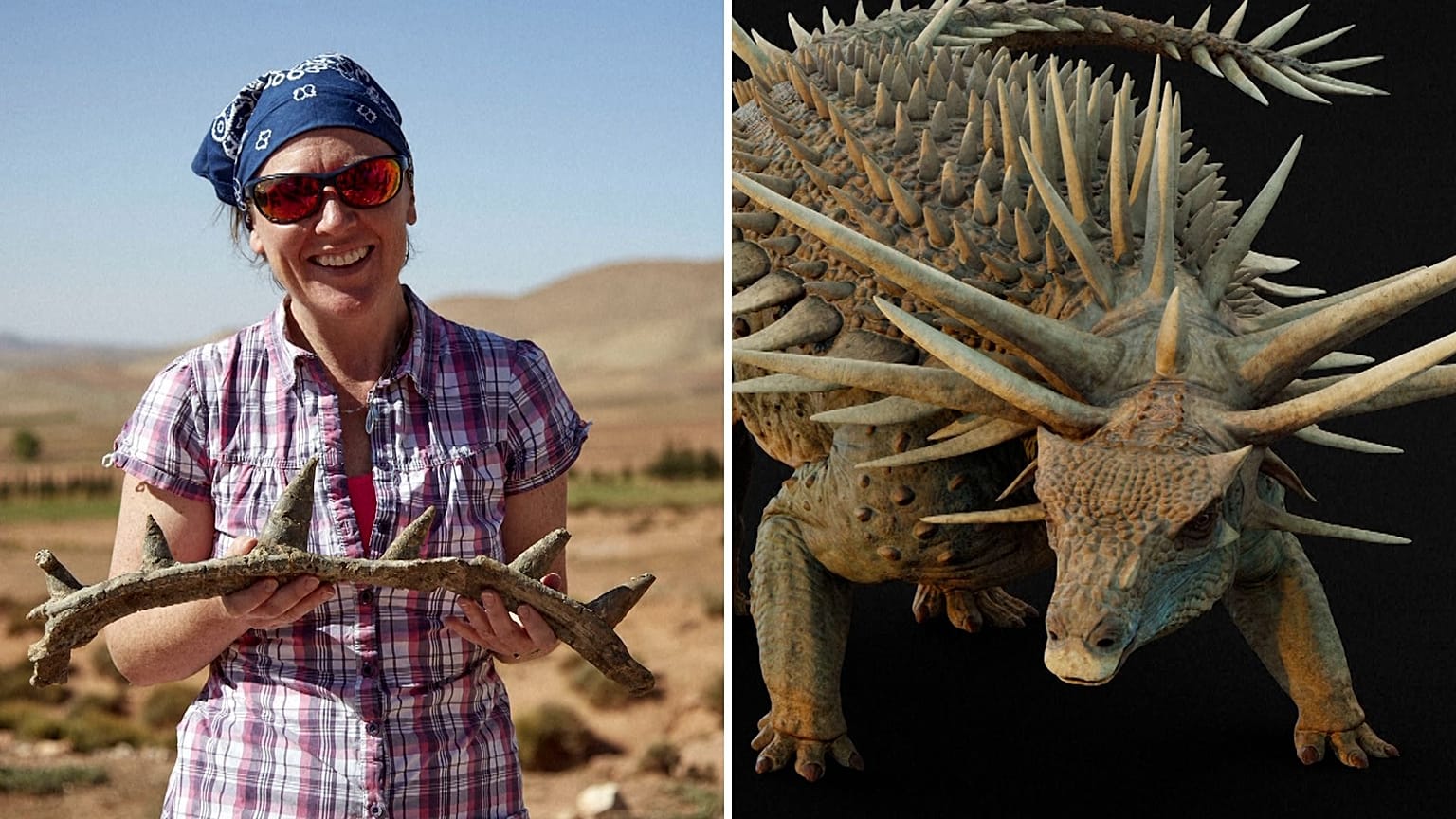
A life reconstruction of Spicomellus afer 

image: 

An artistic reconstruction of the Spicomellus after, whose skeleton was covered in spikes, some fused to the animal’s skeleton, measuring as much as a metre long

view more 

Credit: Matthew Dempsey


The world’s most unusual dinosaur is even stranger than first realised...

Today, research published in Nature [link] reports that Spicomellus afer had a tail weapon more than 30 million years before any other ankylosaur, as well as a unique bony collar ringed with metre-long spikes sticking out from either side of its neck.

Spicomellus is the world’s oldest ankylosaur, having lived more than 165 million years ago in the Middle Jurassic near what is now the Moroccan town of Boulemane. It was the first ankylosaur to be found on the African continent.

New remains of Spicomellus found by a team of palaeontologists have helped to build upon the original description of the unusual animal. The initial description of the species was published in 2021 and was based on one rib bone. The team now know that the animal had bony spikes fused onto and projecting from all of its ribs, a feature not seen in any other vertebrate species living or extinct. It had long spikes, measuring 87 centimetres, which authors believe would have been even longer during the animal’s life, that emerged from a bony collar that sat around its neck.

Prof Susannah Maidment of Natural History Museum, London, and the University of Birmingham, who co-led the team of researchers said, To find such elaborate armour in an early ankylosaur changes our understanding of how these dinosaurs evolved. It shows just how significant Africa’s dinosaurs are, and how important it is to improve our understanding of them.”

Spicomellus had a diversity of plates and spikes extending from all over its body, including metre-long neck spikes, huge upwards-projecting spikes over the hips, and a whole range of long, blade-like spikes, pieces of armour made up of two long spikes, and plates down the shoulder. We’ve never seen anything like this in any animal before”

“It’s particularly strange as this is the oldest known ankylosaur, so we might expect that a later species might have inherited similar features, but they haven’t.”

Project co-lead, Professor Richard Butler of the University of Birmingham, said, “Seeing and studying the Spicomellus fossils for the first time was spine-tingling. We just couldn’t believe how weird it was and how unlike any other dinosaur, or indeed any other animal we know of alive or extinct. It turns much of what we thought we knew about ankylosaurs and their evolution on its head and demonstrates just how much there still is to learn about dinosaurs”. 

Authors postulate that this array of spikes would have been used for attracting mates and showing off to rivals. Interestingly, similar display armour has not yet been found in any other ankylosaur, with later species possessing armour that probably functioned more for defence.   

One explanation for this is that as larger predatory dinosaurs evolved in the Cretaceous, as well as bigger carnivorous mammals, crocodiles and snakes, the rising risk of predation could have driven ankylosaur armour to become simpler and more defensive.

One feature of early ankylosaurs that may have survived, however, is their tail weaponry. While the end of Spicomellus’ tail hasn’t been found, the bones that do survive suggest that it had a club or a similar tail weapon.

Some of the tail vertebrae are fused together to form a structure known as a handle, which has only been found in ankylosaurs with a tail club. However, all these animals lived millions of years later in the Cretaceous.

Authors of the study believe that the combination of a tail weapon and an armoured shield that protected the hips suggest that many of the ankylosaurs’ key adaptations already existed by the time of Spicomellus.

The discovery reinforces the importance of the fossil record in solving evolutionary puzzles and deepening our understanding of the geographic distribution of dinosaurs. It also helps to spark public imagination in dinosaurs as we learn more about the baffling characteristics of species like Spicomellus.

Professor Driss Ouarhache, lead of the Moroccan team from the Université Sidi Mohamed Ben Abdellah who co-developed the research, says, “This study is helping to drive forward Moroccan science. We’ve never seen dinosaurs like this before, and there’s still a lot more this region has to offer.”

The Spicomellus afer remains that form the basis of this study were cleaned and prepared at the Department of Geology of the Dhar El Mahraz Faculty of Sciences in Fez, Morocco, using scientific equipment provided by the University of Birmingham’s Research England International Strategy and Partnership Fund. The fossils are now catalogued and stored on this site.

The paper ‘Extreme armour in the world’s oldest ankylosaur’ is available now in Nature.

This research is part of the Natural History Museum’s Evolution of Life Research Theme that seeks to reveal the causes and consequences of evolutionary and environmental change, which is central to understanding life on Earth. It is also a contribution from the Earth Heritage Network at the University of Birmingham, which seeks to develop new ways to use palaeontological resources for the benefit of society.

 Oil Industry of Serbia (NIS)

US grants Serbia’s NIS sixth sanctions waiver

US grants Serbia’s NIS sixth sanctions waiver
/ NIS
By bne IntelliNews August 27, 2025

The United States has extended a sanctions waiver for the Oil Industry of Serbia (NIS) until September 26, the Serbian government said on August 27.

This is the sixth postponement of restrictions against the company. The waiver, issued by the US Treasury’s Office of Foreign Assets Control (OFAC), allows NIS to continue operating despite sanctions targeting Russia’s energy sector. Gazprom and its subsidiary Gazprom Neft together hold a majority stake in the Serbian oil firm.

The delay follows recent US-Russia talks in Alaska, which may have influenced Washington’s decision.

As bne IntelliNews has argued, the rapprochement between Washington and Moscow means it is unlikely that US President Donald Trump will move forward with sanctions affecting Russia’s energy partners such as Serbia.

Energy Minister Dubravka Dedovic Handanovic said NIS would continue to secure stable fuel supplies. “The ultimate goal is to remove NIS from the sanctions list... We hope that high-level talks between the US and Russia will contribute to progress,” she told state broadcaster RTS.

NIS formally requested removal from OFAC’s Specially Designated Nationals (SDN) list in March, but the process is expected to take time. The US imposed sanctions on Russia’s oil sector in January to curb Moscow’s revenue from the war in Ukraine.

Dusan Bajatovic, head of state-owned gas company Srbijagas, said on August 26 that NIS operations remained stable and that Serbia had fuel reserves for six to eight months. He ruled out immediate risks of shortages or price spikes


Drone flyover finds no sign of life in search for Russian climber stranded on Kyrgyzstan’s highest mountain

Drone flyover finds no sign of life in search for Russian climber stranded on Kyrgyzstan’s highest mountain
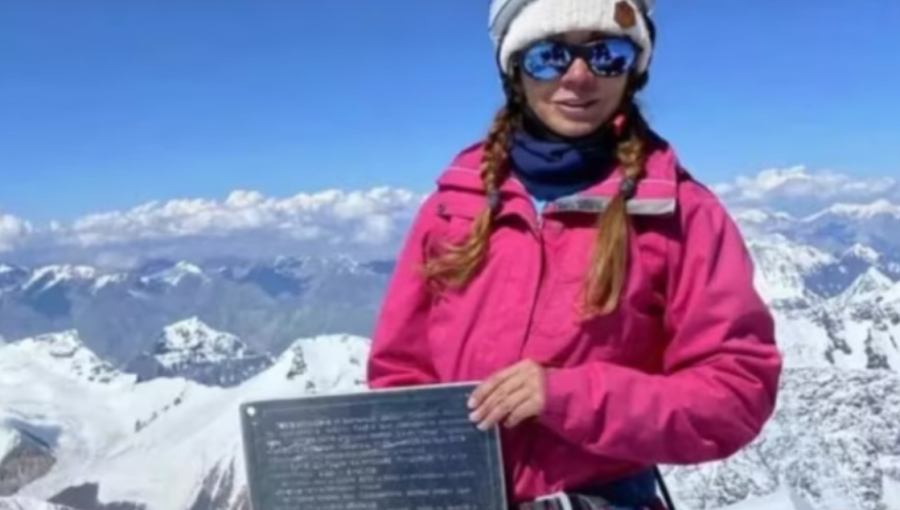
Natalia Nagovitsyna became stranded after breaking her leg while descending the mountain. / Natalia Nagovitsyna, social media page
By bne IntelliNews August 27, 2025

Officials in Kyrgyzstan on August 27 said no signs of life were found by a thermal-imaging drone flyover mounted as part of the search for Russian climber Natalia Nagovitsyna, stranded near the top of the country’s highest mountain for more than two weeks with a broken leg.

In a statement, Kyrgyzstan's state security agency said: "Based on analysis of the data obtained and taking into account a combination of factors, including extreme weather conditions and the specifics of the area, no signs of life were found at Nagovitsyna's location."

Previous drone footage obtained on August 19 showed that, while Nagovitsyna was still alive, the small orange tent of the 47-year-old mountaineer had been torn apart by icy, gusting winds.

bne IntelliNews reported late on August 26 that the race to save Nagovitsyna from the icy summit of Jengish Chokusu, or Victory Peak, a mountain near the border with China with a height of 7,439 metres (24,406 feet), was still on.

Russia’s chief investigator Alexander Bastrykin, responding to an appeal from Nagovitsyna’s son Mikhail, ordered urgent coordination with Kyrgyz emergency officials to organise an attempt at rescuing the climber.

The effort to save Nagovitsyna has been made all the more poignant by the fact that four years ago her husband, Sergei Nagovitsyn, perished after he became paralysed and incapacitated during an expedition on the mountain of Khan-Tengri, located on the Kazakhstan-Kyrgyzstan-China tri-point. Also, on August 15 Italian mountaineer Luca Sinigaglia died during an attempt to evacuate Nagovitsyna.

Bastrykin’s August 25 order to his staff to pursue “comprehensive measures” with Russia’s Emergency Situations Ministry was reported by The Moscow Times on August 26.

Jengish Chokusu is widely regarded as one of the 10 most difficult mountains to climb in the world, with around a third of people who attempt the feat dying in the process

During repeated attempts to save Nagovitsyna, a helicopter was forced into a hard landing, with several aboard suffering injuries as a result.

Both Jengish Chokusu and Khan-Tengri are members of the so-called Snow Leopard group of mountains, five 7,000-ft-plus peaks found across the former Soviet Union. Only around 700 people, including 30 women, have accomplished the feat of climbing all five.


Kyrgyzstan starts underground gold mining at nationalised Kumtor deposit

Kyrgyzstan starts underground gold mining at nationalised Kumtor deposit
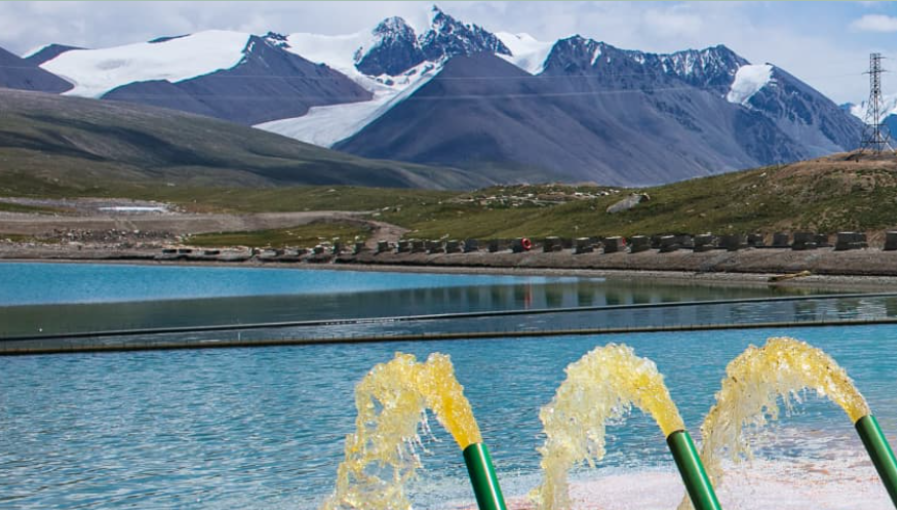
There are environmental and transparency issues when it comes to gold mining at the nationalised Kumtor deposit set high up in the Tian Shan mountains of Kyrgyzstan near the Chinese border. / Centerra Gold sustainability reportFacebookBy bne IntelliNews August 27, 2025


Kyrgyzstan on August 27 launched underground gold mining at its high-altitude Kumtor deposit. Announcing the move, government officials added geological reserves of 147 tonnes of gold to the state balance sheet.

In 2021, the newly installed populist-nationalist Japarov presidency controversially seized the then solely open-pit mining operation from Canada’s Centerra Gold. Establishing state control over the mine had for many years been a political goal of Kyrgyzstan’s leader Sadyr Japarov, prior to the late 2020 revolution that opened his path to the presidency.`

In a statement, the presidential press office said around 1,600 metres of tunnels had so far been dug at Kumtor – located at 13,000 feet (almost 4,000 metres) near the Chinese border in the Tian Shan mountains. Kumtor is very important to the economy of Kyrgyzstan, Central Asia’s second poorest country. In recent years, it has produced around 10% of its GDP.

The underground project is expected to operate for 17 years, the presidency added.

The world gold price has lately been setting records above $3,000 a troy ounce.

Kyrgyzstan also proposes to start processing the Kumtor pond of tailings, leftovers from ground mining for gold. The government says the pond could contain more than 100 tonnes of gold, though experts question how much of this can be recovered, given the technology available.

Centerra Gold began mining at Kumtor in 1997.

After the state seizure of the mine, an agreement for the transfer of the mine to the government was eventually struck with Centerra, but not before, in late 2021, the company raised anxieties that the mine under the new government-appointed management, was falling into operational difficulties. One claim was that glacial water was flowing uncontrolled into a mine pit. The government denied there were any such problems.

A difficulty with the Kumtor deposit is that a substantial amount of its gold is situated under glaciers, which environmentalists do not want to see disturbed.

Radio Azattyk on August 27 quoted Japarov as saying: "Well, Kumtor has a future ahead of it, it will continue to work for the benefit of the country and the people for another 40-50 years. What I mean by the benefit of the people is that in the last three years you have witnessed the delivery of state mortgage houses to ordinary people. You should know that all the money spent on those constructions comes from Kumtor.

“The money from Kumtor is being spent on roads being built, schools, kindergartens, increasing salaries, pensions and benefits, purchasing military and other modern equipment, and all the good things that are happening in the country."

Kumtor has produced 54 tonnes of gold and generated $3.45bn in revenue since May 2021, with $891.6mn received in taxes and other payments, according to the presidency.

Some MPs have claimed transparency on Kumtor gold sales and profits has deteriorated since the government took over the mine via state company Kyrgyzaltyn.

Lawmaker Iskhak Masaliev, told Radio Azattyk: “We [Kyrgyzstan] make a good profit from selling gold. Now details on this is classified information, so unless you specifically request it, they won't release it publicly.

He added: “The MPs are still monitoring things, and they've stopped asking where the money came from and where it went.”