Monday, September 08, 2025

At least 10 killed in Nepal protest over social media ban

Kathmandu (AFP) – At least 10 protesters were killed Monday after Nepal police fired rubber bullets, tear gas and water cannon to disperse demonstrators in Kathmandu demanding the government lift its ban on social media and tackle corruption.

Issued on: 08/09/2025 - RFI

]
Nepal police and demonstrators clashed during protests against a government ban on social media sites © Prabin RANABHAT / AFP

Several social media sites -- including Facebook, YouTube and X -- have been inaccessible in Nepal since Friday after the government blocked 26 unregistered platforms, leaving users angry and confused.


"Until now 10 protesters have died and 87 are injured," Shekhar Khanal, spokesman for the Kathmandu valley police, told AFP.

"The crowds are still in the streets".

Many of the injured were being treated at the nearby Civil Hospital, according to its information officer Ranjana Nepal.

"I have never seen such a disturbing situation at the hospital," she told AFP.

"Tear gas entered the hospital area as well, making it difficult for doctors to work".

Waving national flags, young demonstrators in the capital Kathmandu started the protest with the national anthem before unleashing chants against the social media prohibitions and corruption.

The crowd swelled as it crossed into a restricted area close to the parliament, and pushed through barbed wire.

Violence erupted in the streets as police baton-charged protesters, some of whom climbed over the wall into the parliament premises.

The district administration imposed a curfew in several key areas of the city, including the parliament, the president's residence and Singha Durbar, which houses the prime minister's office.

Similar protests were organised in other districts across the country.

Popular platforms such as Instagram have millions of users in Nepal who rely on them for entertainment, news and business.

"We were triggered by the social media ban but that is not the only reason we are gathered here," said student Yujan Rajbhandari, 24.
'We want to see change'

"We are protesting against corruption that has been institutionalised in Nepal."

Another student, Ikshama Tumrok, 20, said she was protesting against the "authoritarian attitude" of the government.

Protesters gather outside parliament in Kathmandu, with similar demonstrations in other parts of the country © Prabin RANABHAT / AFP

"We want to see change. Others have endured this, but it has to end with our generation," she told AFP.

Since the ban, videos contrasting the struggles of ordinary Nepalis with the children of politicians flaunting luxury goods and expensive vacations have gone viral on TikTok, which is still operating.

"There have been movements abroad against corruption and they (the government) are afraid that might happen here as well," said protester Bhumika Bharati.

The cabinet decided last month to give the affected companies seven days to register in Nepal, establish a point of contact and designate a resident grievance handling officer and compliance officer.

The decision came after a Supreme Court order in September last year.

In a statement on Sunday, the government said it respected freedom of thought and expression and was committed to "creating an environment for their protection and unfettered use".

The government blocked access to the Telegram messaging app in July, citing a rise in online fraud and money laundering.

It lifted a nine-month ban on TikTok in August last year after the platform agreed to comply with Nepali regulations.

© 2025 AFP


French actress Adèle Haenel joins the Global Sumud flotilla to Gaza from Tunis

French actress Adèle Haenel joining the flotilla to Gaza from Tunis
Copyright AP Photo

By David Mouriquand
Published on 

The celebrated French actress, who announced two years ago that she was stepping away from the world of film for “political reasons”, has said she will set sail for the Gaza Strip from Tunis aboard the Global Sumud flotilla - the biggest attempt yet to break the Israeli blockade of Gaza.

French actress Adèle Haenel has announced that she will set sail for the Gaza Strip from Tunis aboard the Global Sumud flotilla. 

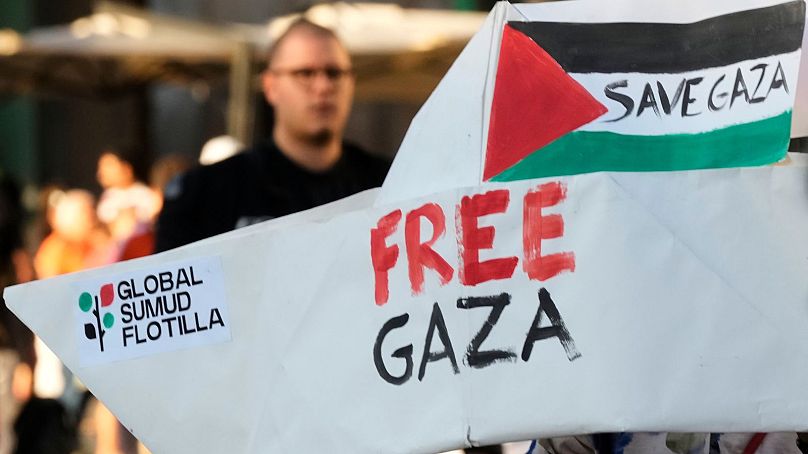
The ships of the Global Sumud Flotilla (‘sumud’ means ‘resilience’ in Arabic) are scheduled to reach Gaza mid-September to deliver humanitarian aid, after two attempts were blocked by Israel in June and July

“At this dramatic moment in history, I decided to board one of the ships participating in the Global Sumud Flotilla humanitarian mission,” explained actress and activist. “Our goal is to bring food and medicine to the people of Gaza, who are suffering from a famine deliberately orchestrated by the Israeli government,” she denounced. 

Haenel, who rose to fame in the critically acclaimed films Portrait of a Lady on Fire and Deerskin, arrived in Tunisia last weekend and took part in two days of training to prepare for the operation. 

“We are united by the desire to act peacefully to open a humanitarian corridor and break the illegal blockade imposed by the Israeli state on Gaza,” added the actress. 

More than a hundred people are expected to embark from Tunisia on Sunday. Initially planned for last Thursday, the departure was postponed due to weather conditions and delays affecting the flotilla that left Barcelona

Among the activists from dozens of countries on board the flotilla's ships are Swedish environmental activist Greta Thunberg, as well as European elected officials like La France Insoumise MEP Emma Fourreau and former Barcelona mayor Ada Colau.  

Haenel, 36, made her mark on the French film world by storming out of the 45th César Awards ceremony in 2020, outraged by the awarding of an honour to Roman Polanski, who has been accused of rape and sexual assault by several women. 

In 2023, the actress announced she was stepping away from the world of film for “political reasons”, sending a letter to French magazine Télérama in which she explained her reasons, denouncing the “general complacency” toward “sexual aggressors” like Gérard Depardieu and Roman Polanski. 

“I decided to politicise my retirement from cinema to denounce the general complacency of the profession towards sexual aggressors and more generally the way in which this sphere collaborates with the mortal, ecocidal, racist order of the world such as it is,” she wrote. 

The actress had previously shared that she had been abused by the director Christophe Ruggia between the ages of 12 and 15, added that the French film industry had reacted with indifference to #MeToo accusations. 

Demonstration in support of Palestinians and the Global Sumud Flottilla, Milan, Italy - Wednesday 3 September 2025 AP Photo

Last month, the Integrated Food Security Phase Classification announced that people in the Gaza Strip are officially facing “a man-made” famine in the territory – despite what the Israeli government has said.  

Since Hamas’ attack on Israeli citizens on October 7, 2023, multiple UN human rights experts have stated that Israel’s military actions in Gaza amount to genocide, with the International Court of Justice finding claims of genocide plausible. 

Israel has rejected the genocide accusations and maintain that its operations are lawful acts of self-defence.


Spain, Israel spar after Madrid moves 'to stop Gaza genocide'

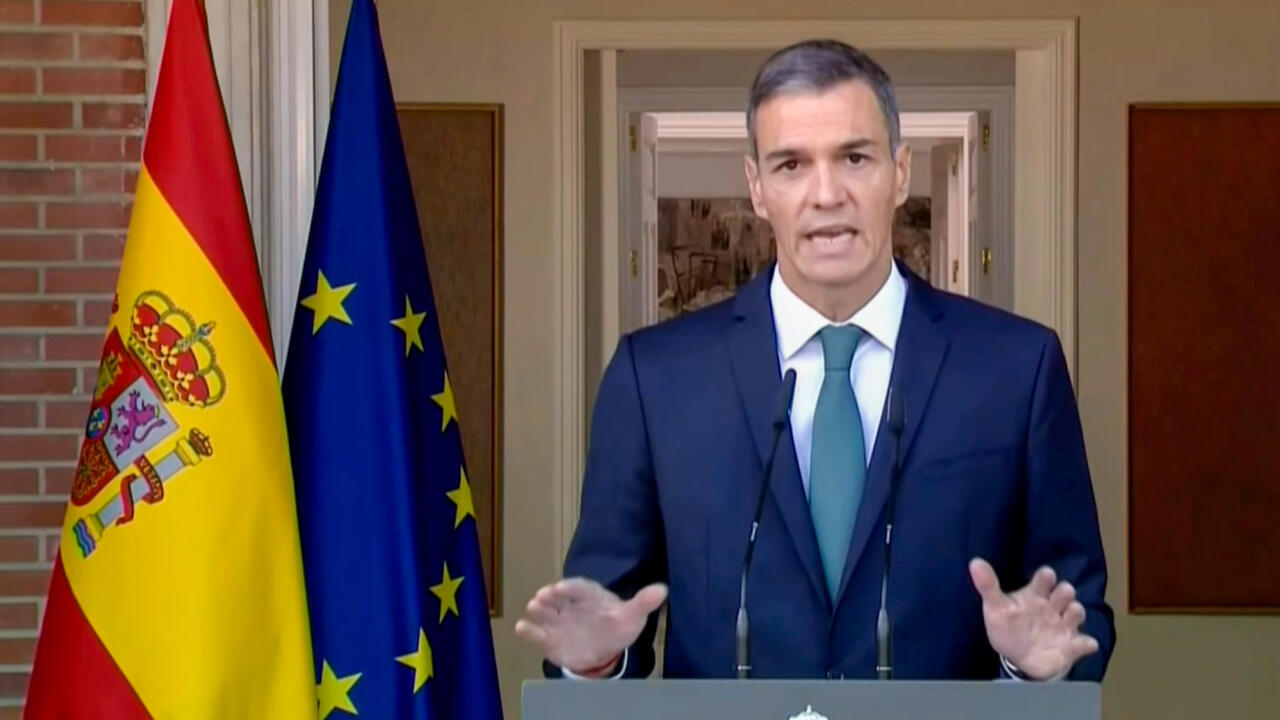
Madrid (AFP) – Israel on Monday accused Spain of antisemitism and barred two government ministers from entry after Spanish leader Pedro Sanchez announced measures aimed at stopping what he called "the genocide in Gaza".


Issued on: 08/09/2025 - FRANCE24

Sanchez is an outspoken critic of the Israeli military offensive in Gaza 
© HANDOUT / LA MONCLOA/AFP


The spat marks a new low in relations over the devastating Israeli offensive in the Palestinian territory, launched after an unprecedented Hamas attack in Israel in 2023.

Sanchez, one of the most virulent critics of Israel's military campaign, said the nine measures aimed to "stop the genocide in Gaza, pursue its perpetrators and support the Palestinian population".

The Socialist prime minister said his government would approve a decree to "consolidate in law" a ban on military equipment sales or purchases with Israel, a measure it had applied since the start of the conflict.

Boats carrying fuel destined for the Israeli military will be barred from Spanish ports and Spain will act to reduce the transport of military equipment to Israel by air, Sanchez said in a televised address.

"All those people participating directly in the genocide, the violation of human rights and war crimes in the Gaza Strip" will be banned from entering Spanish territory, he added.

Spain will also ban the importation of products from "illegal settlements" in the occupied Palestinian territories with the aim of stopping "the forced displacement of the Palestinian population" and keeping alive the two-state solution, Sanchez continued.

Consular services for Spanish citizens residing in those settlements will be limited "to the legally obligatory minimum assistance", he said.

Sanchez also announced new collaboration projects in agriculture, food security and medical aid to support the Palestinian Authority and additional humanitarian funds for Palestinians.

'Divert attention'

Israeli Foreign Minister Gideon Saar lashed out at Spain after the announcement, accusing Sanchez on X of trying "to divert attention from serious corruption scandals through a continuous anti-Israel and antisemitic campaign".

Saar announced that Deputy Prime Minister Yolanda Diaz and Youth Minister Sira Rego, both members of the Socialists' far-left junior coalition partner Sumar, would be banned from entering Israel.

"Today we put a red line here, demonstrating we will not take it from them anymore," Saar added during a press conference in Budapest with his Hungarian counterpart Peter Szijjarto.

The Spanish foreign ministry responded that it "strongly rejects the false and slanderous accusations of antisemitism" as well as the entry bans on Diaz and Rego.

"Spain will not be intimidated in its defence of peace, international law and human rights," it added in a statement.

Diaz said on social network Bluesky that it was a cause for "pride that a state that perpetrates a genocide denies us entry", calling for the withdrawal of the Spanish ambassador from Israel.

Sanchez is the most senior European leader to refer to the conflict as a "genocide".

His government broke with European Union allies last year by recognising a Palestinian state, infuriating Israel.

The Hamas attack on Israel on October 7, 2023, resulted in the deaths of 1,219 people, mostly civilians, according to an AFP tally of official figures.

Palestinian militants also seized 251 hostages on that day, with the Israeli military saying 47 remain in Gaza, including 25 believed to be dead.

Israel's retaliatory offensive has killed at least 64,522 Palestinians, most of them civilians, according to figures from Gaza's Hamas-run health ministry that the United Nations considers reliable.

© 2025 AFP

Spain rejects Israel's accusations of anti-Semitism as unfounded

Spain forcefully rejected Israeli accusations of anti-Semitism as "false and slanderous", after Prime Minister Pedro Sanchez unveiled new measures targeting Israel over its war in Gaza, including an arms embargo and port restrictions.


Issued on: 08/09/2025 - 
By: FRANCE 24


Spain said Monday it "strongly rejects the false and slanderous accusations of antisemitism" made by Israel after Prime Minister Pedro Sanchez announced nine measures aimed at stopping what he called "the genocide in Gaza".

The foreign ministry also condemned Israel for barring two far-left government ministers from entering the country, saying Spain "would not be intimidated in its defence of peace, international law and human rights".

Israeli Foreign Minister Gideon Saar said on X that Sanchez's criticism of the war was an attempt "to divert attention from serious corruption scandals through a continuous anti-Israel and antisemitic campaign".

Saar also announced entry bans on Deputy Prime Minister Yolanda Diaz and Youth Minister Sira Rego, both members of the far-left Sumar group that is the junior partner of Sanchez's coalition government.

Rego is of Palestinian descent on her father's side and spent part of her early childhood in the occupied West Bank.

Among the measures announced by Sanchez was an arms embargo on Israel and a ban on vessels carrying fuel for the Israeli military from using Spanish ports.

Spain is one of the most outspoken European critics of Israel's devastating war in Gaza, which was sparked by the unprecedented Hamas attack on October 7, 2023, and recognised a Palestinian state last year.

(FRANCE 24 with AFP)


'Complicit silence': BDS movement call for boycott of Radiohead’s 2025 tour

BDS movement call for boycott of Radiohead’s 2025 tour
Copyright AP Photo

By David Mouriquand
Published on 

The pro-Palestine campaign group BDS has said Radiohead “continues with its complicit silence” and has criticised the band's guitarist, Jonny Greenwood, for his recent performances with Israeli musician Dudu Tassa. They are calling for a boycott of the band’s recently announced UK and EU tour.

The pro-Palestine Boycott, Divestment, Sanctions (BDS) movement has called for the boycott of Radiohead’s newly announced 2025 tour. 

The acclaimed British band has confirmed a run of shows in the UK and EU in November and December. These are their first live dates in over seven years.

The BDS movement’s social media page shared a message from the Palestinian Campaign for the Academic and Cultural Boycott of Israel (PACBI), which argued that the band’s “complicit silence” and support of Israeli performers during the “genocide against Palestinians in Gaza” should be met with the boycott of the shows.

“Even as Israel’s genocide against Palestinians in Gaza reaches its latest, most brutal and depraved phase of induced starvation, Radiohead continues with its complicit silence, while one member repeatedly crosses our picket line, performing a short drive away from a livestreamed genocide, alongside an Israeli artist that entertains genocidal Israeli forces,” the Instagram post read. 

“Palestinians reiterate our call for the boycott of Radiohead concerts, including its rumoured tour, until the group convincingly distances itself, at a minimum, from Jonny Greenwood’s crossing of our peaceful picket line during Israel’s genocide against Palestinians in Gaza.” 

The statement makes reference to Greenwood playing shows with Israeli musician Dudu Tassa in Tel Aviv last year. In June 2025, a pair of performances from the duo were cancelled following backlash from pro-Palestinian campaigners.  

PACBI welcomed the cancellations, claiming the performances would have "whitewashed" the war in Gaza.

Greenwood and Tassa posted a joint statement addressing the cancellations: “Forcing musicians not to perform and denying people who want to hear them an opportunity to do so is self-evidently a method of censorship and silencing,” continued the statement by Greenwood and Tassa. “Intimidating venues into pulling our shows won’t help achieve the peace and justice everyone in the Middle East deserves. This cancellation will be hailed as a victory by the campaigners behind it, but we see nothing to celebrate and don’t find that anything positive has been achieved.”

The statement continued: “We believe art exists above and beyond politics; that art seeks to establish the common identity of musicians across borders in the Middle East should be encouraged, not decried; and that artists should be free to express themselves regardless of their citizenship or their religion – and certainly regardless of the decisions made by their governments.”

This not the first time Radiohead has encountered backlash.  

In 2017, they played a show in Tel Aviv despite protests urging them not to. Today, PACBI said Radiohead had “yet to apologise” for playing the show. 

Radiohead frontman Thom Yorke responded to the controversy by stating: “Playing in a country isn’t the same as endorsing its government. We don’t endorse Netanyahu any more than Trump.” 

He added: “We’ve played in Israel for over 20 years through a succession of governments, some more liberal than others. As we have in America. Music, art and academia is about crossing borders not building them, about open minds not closed ones, about shared humanity, dialogue and freedom of expression.” 

Yorke also clashed with a heckler in Australia last year, temporarily halting his performance when someone at the show shouted at Yorke to “condemn the Israeli genocide of Gaza.” 

In May 2025, Yorke shared a post in which he explained his stance on the Israel-Palestine conflict: “That silence, my attempt to show respect for all those who are suffering and those who have died, and to not trivialise it in a few words, has allowed other opportunistic groups to use intimidation and defamation to fill in the blanks, and I regret giving them this chance. This has had a heavy toll on my mental health.” 

He added that his music should be enough of an indication to prove he “could not possibly support any form of extremism or dehumanisation of others”.

Radiohead are scheduled to play multiple dates in Madrid, Bologna, London, Copenhagen and Berlin. Fans can apply for tickets by registering on Radiohead’s website here from tomorrow. Or not, depending on where you stand regarding BDS’ call for boycott.

Tens of thousands of protesters draw the Red Line for Gaza in Brussels


Copyright AP Photo/Geert Vanden Wijngaert
EURONEWS
Published on 07/09/2025 


It comes days after Belgium announced it would impose sanctions against Israel and recognise Palestine at the UN General Assembly later this month, protest organisers say this is the result of public pressure, and urge demonstrators to keep taking to the streets.

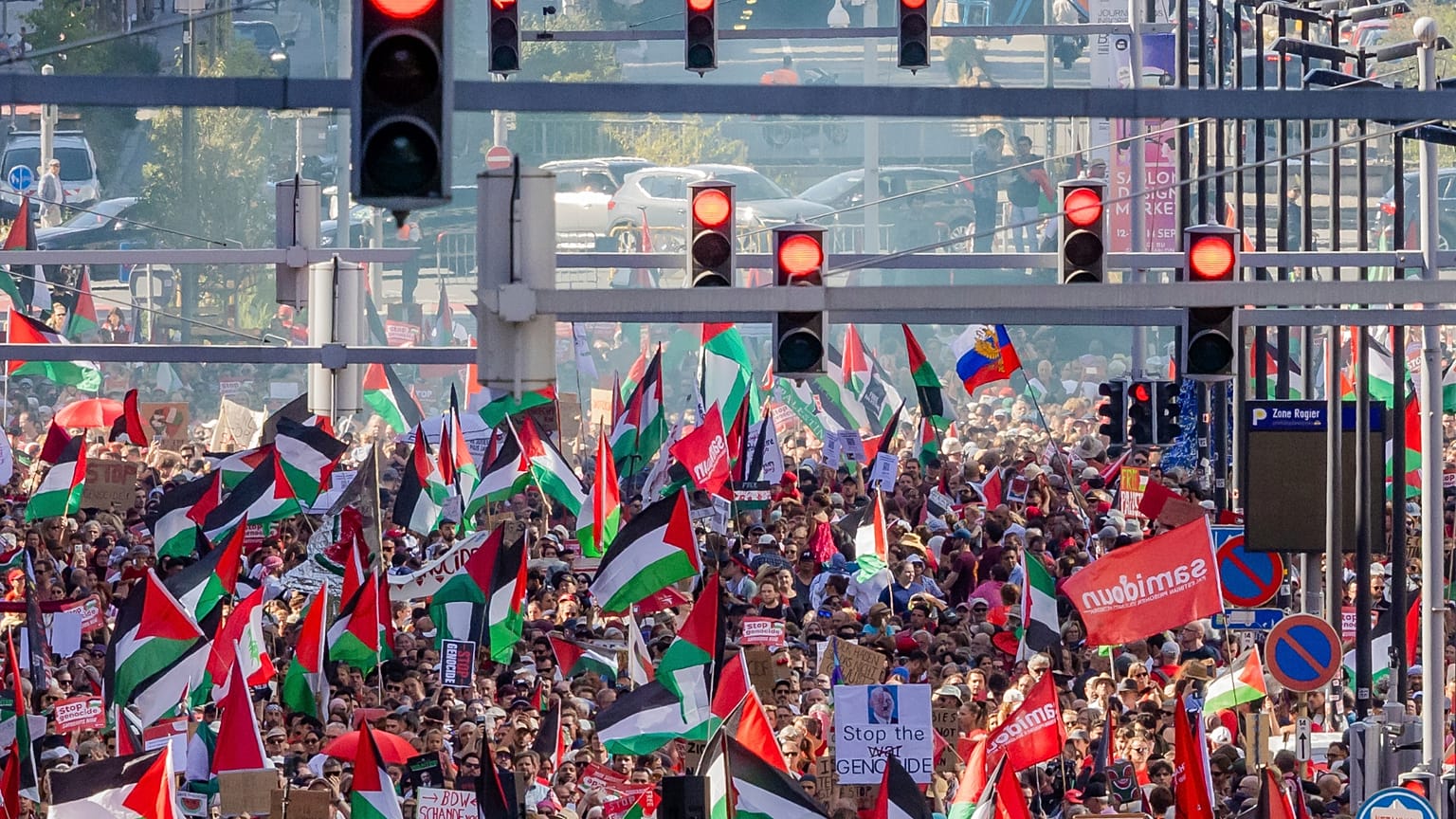
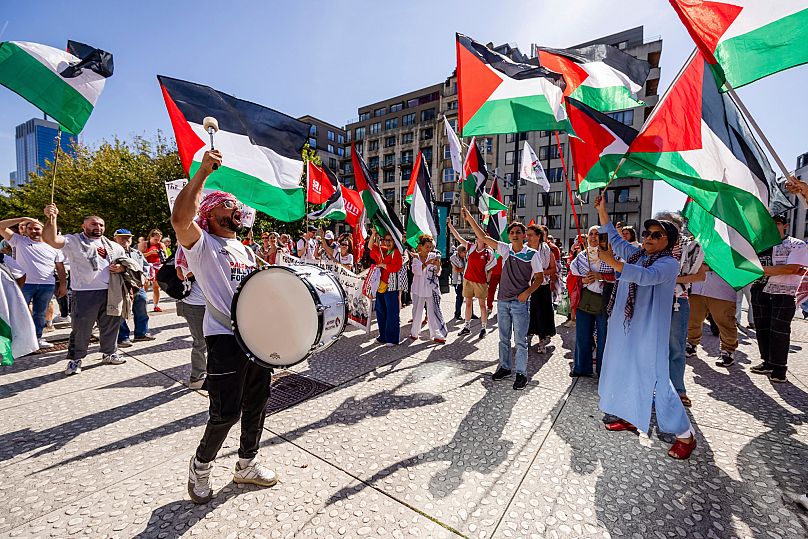
Tens of thousands of demonstrators wearing red gathered in Brussels on Sunday to protest against the Israeli government and to draw a symbolic red line against its war in Gaza. Protesters are also calling on EU member states to take a tougher stance and impose firm sanctions against Israel.

Local police estimated around 70,000 demonstrators took part in the second edition of Brussels' 'Red Line for Gaza' march, but protest organisers estimate 110,000 people attended the march across the Belgian capital, which was 3.5 kilometres long.

More than 200 human rights groups and aid agencies, including Oxfam, Doctors without Borders, Amnesty International, Greenpeace, Save the Children, and more, participated and are drawing the red line.

The protest comes days after Belgium announced it would join the United Kingdom and France in recognising a Palestinian state at the United Nations General Assembly later this month, and would impose sanctions against Israel, under certain conditions.


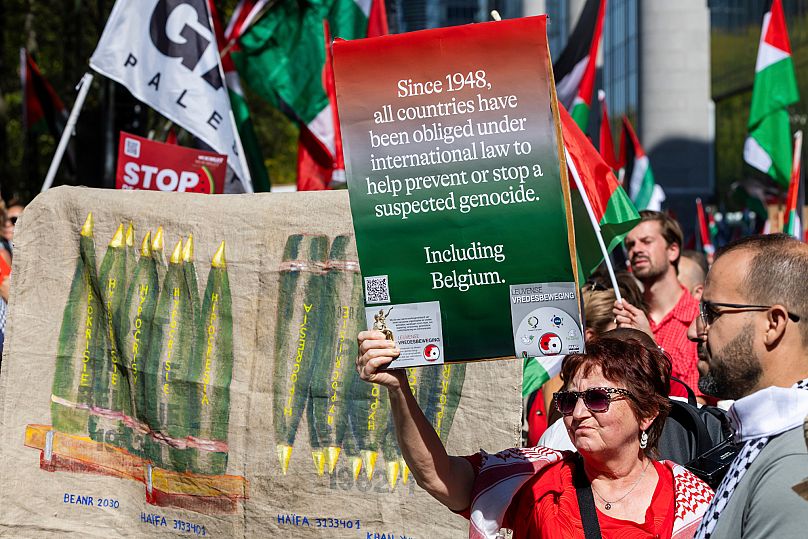
A woman holds a placard as she marches during the Red Line for Gaza demonstration in the center of Brussels, Sunday, Sept. 7, 2025. AP Photo/Geert Vanden Wijngaert

"The compromise that the government reached would never have been there if we would not have had the previous march and launched Oxfam's 'Speak up for Palestine' campaign, now with 100,000 signatures," Katrien Van der Heyden, Teamleader Education at Oxfam Belgium told Euronews, emphasising the importance maintaining public pressure on EU politicians.

Oxfam Belgium teamed up with hundreds of Flemish actors, artists and influencers in launching the 'Speak up for Palestine' action. The campaign has already raised 100,000 signatures calling for a permanent ceasefire and an end to the violence and illegal occupation in Palestinian territories, safe and unrestricted access to humanitarian aid for Palestinian civilians, and the introduction of economic sanctions on Israel.

While many demonstrators in Brussels acknowledged it is a step forward, they are not satisfied with the compromise that was reached, and want to see Belgium further toughen its stance against Israel, with uncompromised sanctions, and for EU member states and the European Union itself to follow suit.

"You don't compromise about children's lives, people's lives," Van der Heyden said. "You don't compromise as a government. You have to draw a red line, which is non-negotiable."

Van der Heyden, pointed out that a standing discrepancy divides the public and EU politicians, with a stark contrast "between the rage that people feel and the feeling of injustice and then the extreme immobility of politicians."

People wave Palestinian flags as they attend the Red Line for Gaza march in the center of Brussels, Sunday, Sept. 7, 2025. AP Photo/Geert Vanden Wijngaert

"We have been asking our politicians for two years to intervene in Palestine," Isja Puissant, spokesperson for the Global Movement to Gaza in Belgium told Euronews, "they are still just discussing about the recognition of a Palestinian state by the end of September, when in reality, there might not be any Palestinians left by that time."

The Global Movement to Gaza is a grassroots coalition consisting of 44 countries that are dedicated to ending the blockade of Gaza.

Last week, twenty ships with more than 300 crew members as part of the Global Sumud Flotilla departed from the port of Barcelona in an effort to establish a humanitarian corridor, ships from other countries, including Tunisia and Italy, will join efforts to break the siege.

Earlier this week, a convoy from Italy's Genoa joined the flotilla. After several delays, the Gaza-bound boats are now expected to set sail from Tunisia on Wednesday.

European solidarity movement

In recent weeks, numerous pro-Palestine demonstrations took place across the continent, including in Ireland, Italy, Germany, the United Kingdom and Spain. The rise in European solidarity comes in response to Israel's expanded offensive in Gaza, which had drawn international condemnation, and the catastrophic humanitarian conditions in the Strip.

In June, the first edition of the march in Brussels took place, where at least 75,000 people took to the streets of the Belgian capital. The 'Red Line for Gaza' march has also already twice been held in the Netherlands, which resulted in a massive turnout both times.

Red lines have also been appearing in various shop windows in major Belgian cities, a way for retailers to show their solidarity with the movement.

SYRIA
Suwayda violence: Head of Israel's Druze calls on Europe to act and defends Israeli strikes

SYRIAN DRUZE ARE AUTONOMOUS


Copyright Euronews

By Samia Mekki
Published on 04/09/2025 -


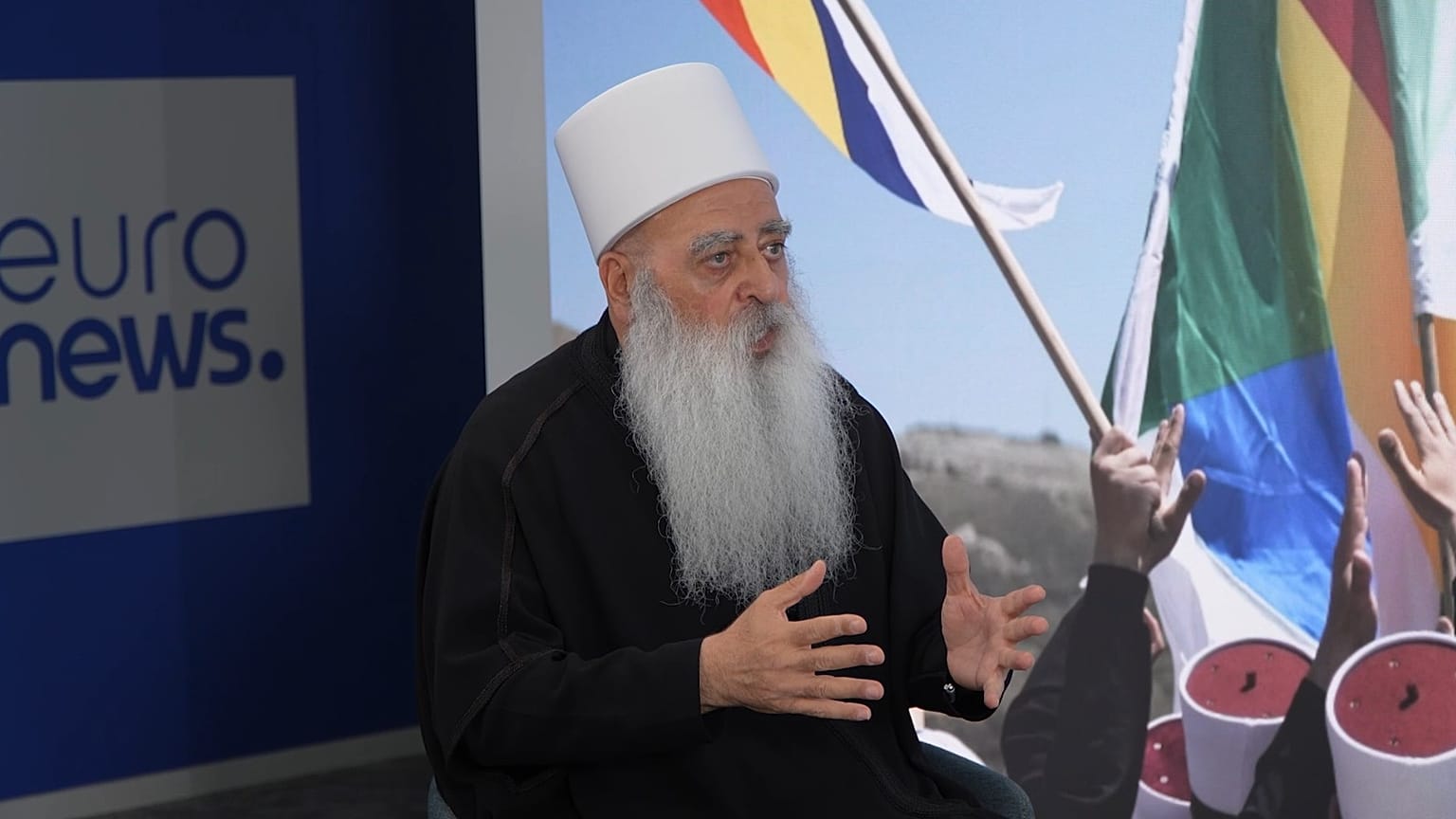
Speaking to Euronews about clashes in Syria, Sheikh Tarif said that "if there had been no Israeli intervention, the Druze community in Suwayda would have been wiped out."

The leader of the Druze community in Israel, Sheikh Muwafaq Tarif, visited Brussels on Tuesday where he met with the President of the European Parliament, Roberta Metsola, and several other European officials to discuss recent clashes in Suwayda.

"We came to raise our voices and those of our people in Syria, in Jabal al-Arab, Jabal al-Druze. This was necessary given the situation that has developed there, and the events and massacres that have taken place," he told Euronews in an interview.

Syria has experienced a wave of violence between the Druze and Bedouins since July, leaving thousands dead or injured.

The clashes began with tit-for-tat kidnappings and attacks between members of local Sunni Bedouins and Druze armed factions in Suwayda, a hub of the Druze community in the south of the country.

That violence threatened to derail a fragile security situation after rebels ousted former President Bashar al-Assad in a lightning offensive in December, effectively ending more than 14 years of devastating civil war.

"It has become clear that the whole world, including the European Union and America, must act. We demand the return of those kidnapped as soon as possible. They must return the displaced to their homes and villages, restore normal life and bring humanitarian aid to our people in Suwayda."

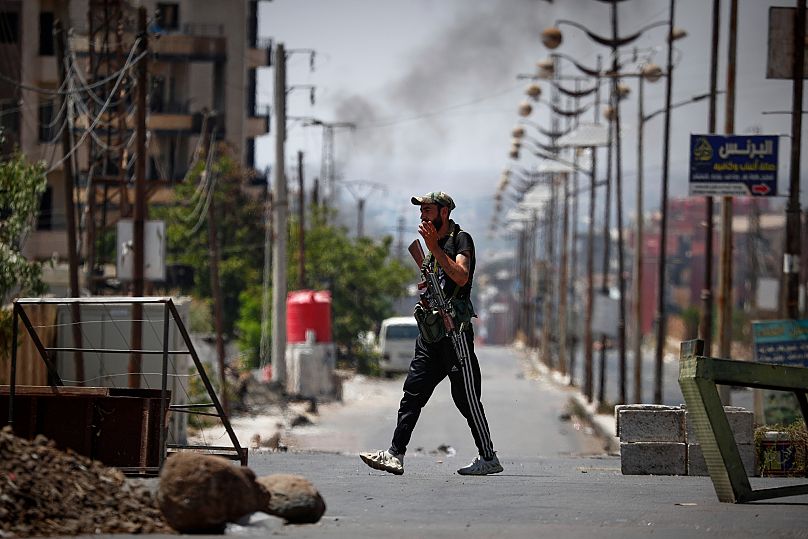
A Druze militiaman mans a checkpoint following last week's sectarian clashes in the Druze-majority town of Suwayda, 25 July, 2025 AP Photo

There have also been cases of looting, robbery, rape and forced displacement of tens of thousands of people.

Alawites loyal to al-Assad, who belongs to the same ethnoreligious group, were the first community to suffer as part of the violence.

Christians, and more recently Druze, whose religion is an offshoot of Shia Islam, have also been targeted.

In a report issued last month, the UN Commission on Syria stated that "the violence that took place on the coast in March was systematic and widespread" and that it "may amount to war crimes."

According to the independent war monitor, the Syrian Observatory for Human Rights, 2,000 Druze were killed in clashes with Sunni Bedouin tribes backed by forces loyal to interim president Ahmad al-Sharaa.

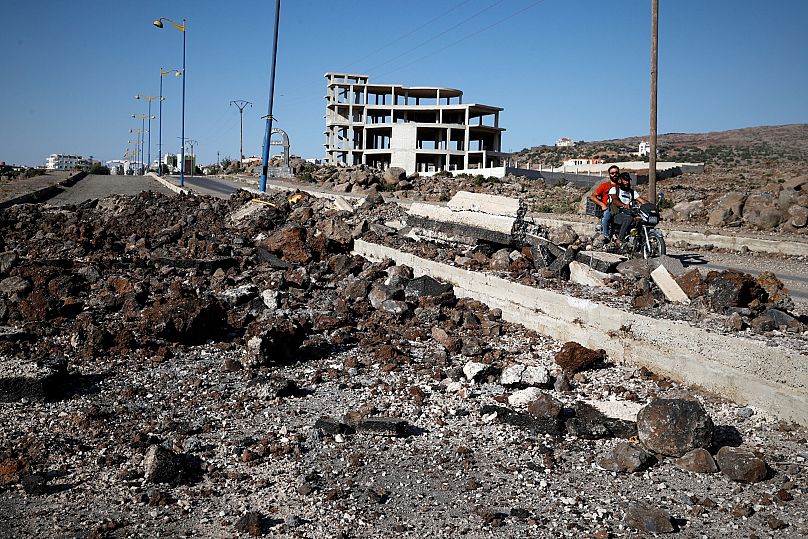
Druze militiamen ride a motorcycle past the site of an alleged Israeli army strike last week on the main road outside Suwayda, 25 July, 2025 AP Photo

In mid-August, the UN Security Council unanimously issued a statement condemning the atrocities and acts of violence against civilians.

"The Syrian Interim Authority must ensure that all perpetrators of violence are held accountable and brought to justice, regardless of their affiliations. The Council also noted the decision of the Ministry of Defence of the Syrian Interim Government to establish a commission to verify the affiliations and backgrounds of individuals involved in acts of violence. The Council stressed the importance of inclusiveness and transparency in the justice and reconciliation processes, emphasising their urgent necessity for the establishment of sustainable peace in Syria," a statement read.

Sheikh Muwafaq Tarif listed the violations that have occurred in Syria against several communities, noting that the situation remains tense.

"There were attacks on the Alawites and large-scale massacres, followed by attacks on our Christian brothers. Then came the attacks and massacres in Suwayda and its suburbs. Killing, rape, looting, pillaging and theft. More than 230,000 people have been displaced from their villages. Today, there is a siege. A major siege of Suwayda. There is no electricity. There is no water. There is no medicine. There is no milk for the children," he said.

Amid this atmosphere and the deteriorating security situation and growing sectarian tensions, Israel then launched strikes on government convoys in Suwayda and on the Defence Ministry headquarters in Damascus, saying it was acting to protect the Druze.

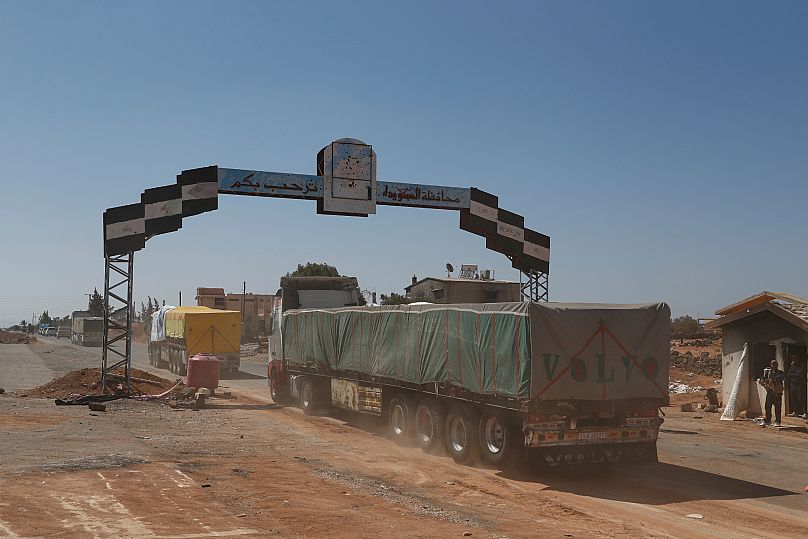
A convoy of trucks carrying UN humanitarian aid enters Suwayda city, 28 August, 2025 AP Photo

Tarif defended the strikes. "We do not represent the Israeli government. We came here for the sake of the Druze community," he said.

Tarif concluded that "if there had been no Israeli intervention, the Druze community in Suwayda would have been wiped out."

In Israel, there are an estimated 150,000 Druze, most of whom have Israeli citizenship and serve in the Israeli army. Some have reached senior military and political positions and are often presented as an example of coexistence and tolerance within the Jewish state.


Worst drought in decades threatens Syria's fragile recovery from years of civil war

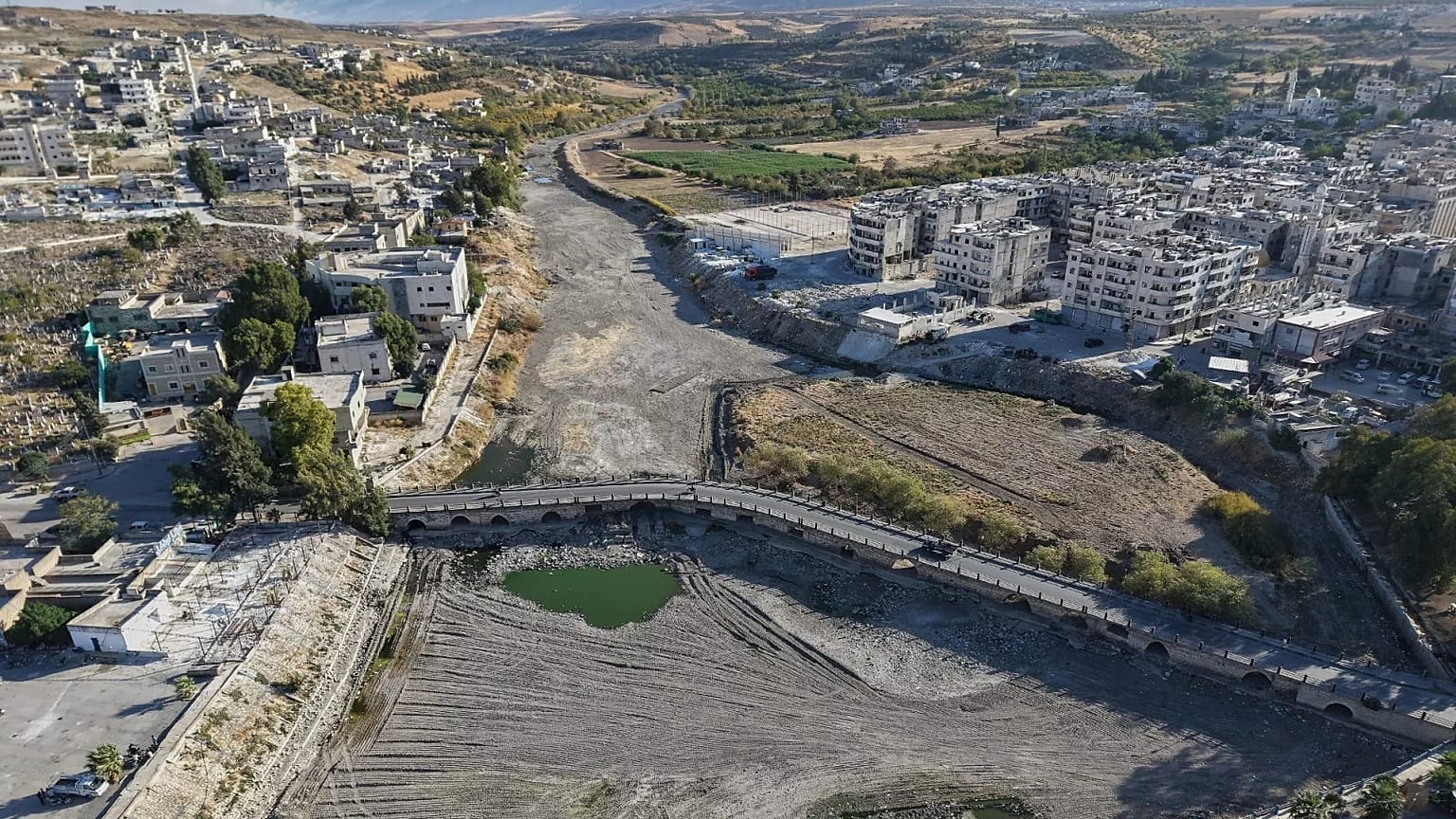
A drone view shows the dried up Orontes River in Jisr al-Shughur, west of Idlib, Syria.
Copyright AP Photo/Omar Albam

By ABBY SEWELL and OMAR SANADIKI with AP
Published on 

Experts say rainfall has been declining for decades in Syria, where a fledgling government is trying to stitch the country back together following 14 years of civil war.

The worst drought in decades is gripping much of the Eastern Mediterranean and Middle East, drying out rivers and lakes, shrivelling crops and leading to dayslong tap water cutoffs in major cities.

The situation is particularly dire in Syria, where experts say rainfall has been declining for decades and where the fledgling government is trying to stitch the country back together following a 14-year civil war that left millions impoverished and reliant on foreign aid.

Small-farmer Mansour Mahmoud al-Khatib said that during the war, he couldn't reach his fields in the Damascus suburb of Sayyida Zeinab some days because militants from the Lebanese Hezbollah militia allied with then-President Bashar Assad would block the roads. That problem vanished when Hezbollah withdrew after Assad fell in a December rebel offensive, but the drought has devastated his farm, drying up the wells that irrigate it.

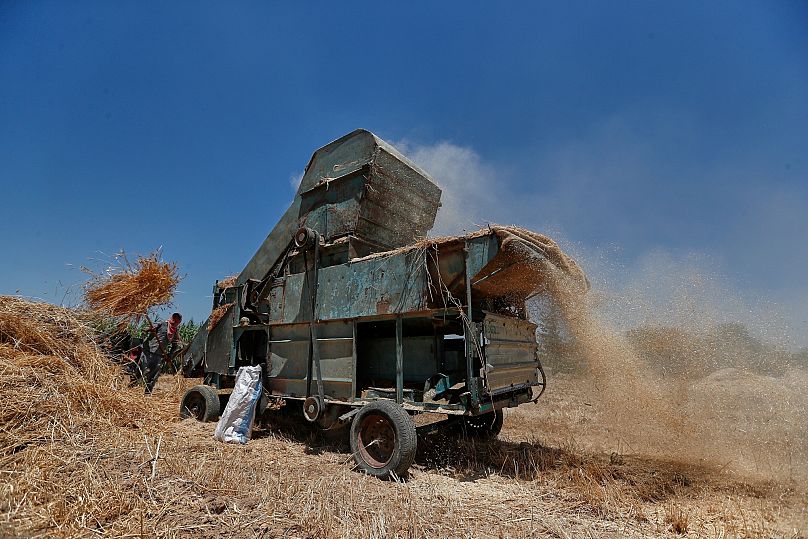
“The land is missing the water,” al-Khatib told The Associated Press recently as he watched workers feed the wheat he did manage to harvest into a threshing machine. “This season is weak; you could call it half a season. Some years are better and some years are worse, but this year is harsh.”

In a good year, his land could produce as much as 800 to 900 kilograms of wheat per dunam, an area equal to 0.1 hectares. This year, it yielded about a quarter that much, he said. He hired only six or seven workers this harvest season instead of last year’s 15.

Syria's withering crops

Because the drought followed a prolonged war, farmers who were already financially stretched have had little ability to cope with its effects, said Jalal Al Hamoud, national food security officer for the UN’s Food and Agriculture Organisation in Syria.

Before the uprising-turned-civil war that began in 2011, Syrian farmers produced an average of 3.5 million to 4.5 million tonnes of wheat per year, which was enough to meet the country’s domestic needs, according to Saeed Ibrahim, director of agricultural planning and economics in Syria’s Agriculture Ministry.

That annual yield dropped to 2.2 million to 2.6 million tonnes during the war, and in recent years, the government has had to import 60 to 70 per cent of its wheat to feed its roughly 23 million people. This year's harvest is expected to yield only 1 million tonnes, forcing the country to spend even more of its strained resources on imports.

Syrian farmers thresh their wheat in the outskirts of Damascus, Syria. AP Photo/Omar Sanadiki

Mudar Dayoub, a spokesperson for Syria's Ministry of Internal Trade and Consumer Protection, said this year’s wheat crop will only last for two or three months and that the government is "currently relying on signing contracts to import wheat from abroad” and on donations, including from neighbouring Iraq.

But in a country where the World Food Program estimates that half the population is food-insecure, Ibrahim warned that “total reliance on imports and aid threatens food security” and is “unsustainable.”

The drought isn't the only major issue facing Syria, where postwar reconstruction is projected to cost hundreds of billions of dollars. Since Assad fled, the country has been rattled by outbreaks of sectarian violence, and there's growing doubt about whether the new authorities will be able to hold it together. Without jobs or stability, millions of refugees who fled during the war are unlikely to come home.

Interconnected crises

A dam on the Litani River in neighbouring Lebanon's fertile Bekaa Valley forms Lake Qaraoun, a reservoir that spans about 12 square kilometres.

Over the years, climate change has led to a gradual decline in the water flowing into the reservoir, said Sami Alawieh, head of the Litani River National Authority.

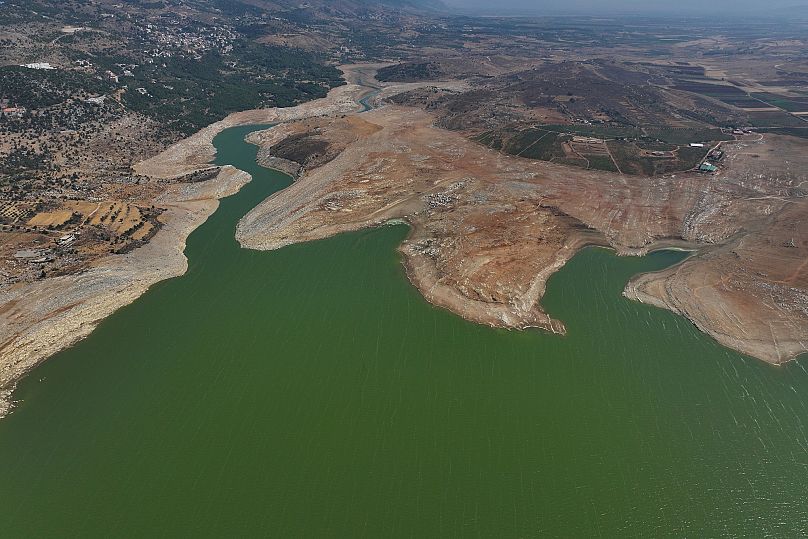
This summer, after an unusually dry winter left Lebanon without the water reserves it usually banks through snow and rainfall, it has shrunk to the size of a pond, surrounded by a vast expanse of parched land.

Although an average of 350 million cubic metres of water flows into the lake during the rainy season each year, meeting about one-third of Lebanon's annual demand, this year the incoming water didn't exceed 45 million cubic metres, he said.

A drone view shows dramatically low water levels at Lake Qaraoun, one of the Lebanon's largest reservoirs, in Qaraoun village, eastern Lebanon. AP Photo/Hussein Malla

Lebanon’s water woes have further exacerbated the drought in Syria, which partially relies on rivers flowing in from its western neighbour.

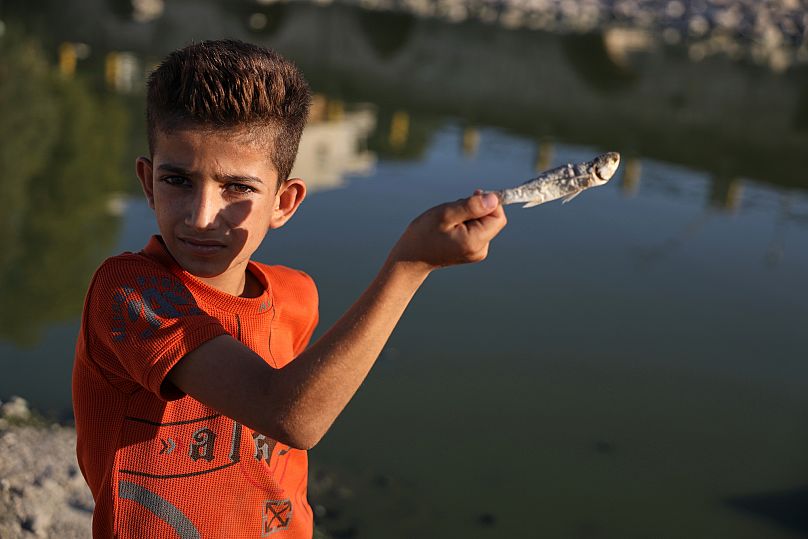
The largest of those is the Orontes, also known as the Assi. In Syria’s Idlib province, the river is an important source of irrigation water, and fishermen make their living from its banks. This year, dead fish littered the dried-out river bed.

“This is the first time it’s happened that there was no water at all,” said Dureid Haj Salah, a farmer in Idlib’s Jisour al-Shugour. Many farmers can't afford to dig wells for irrigation, and the drought destroyed not only summer vegetable crops but decades-old trees in orchards, he said.

“There is no compensation for the loss of crops," Haj Salah said. "And you know the farmers make just enough to get by."

Mostafa Summaq, director of water resources in Idlib province, said the groundwater dropped by more than 10 metres in three months in some monitoring wells, which he attributed to farmers overpumping due to a lack of rain.

Local officials are considering installing metered irrigation systems, but it would be too expensive to do without assistance, he said.

Climate shocks bring a drier climate

Most experts agree that Syria and the broader region appear headed toward worse climate shocks, which they aren't prepared to absorb.

Climate change makes some regions wetter and others drier, and the Middle East and Mediterranean are among those that are drying out, said Matti Kummu, a professor at Aalto University in Finland who specializes in global food and water issues. Syria, specifically, has shown a trend of reduced rainfall over the past 40 years, while it has been using water at an unsustainable rate.

A Syrian boy holds a dead fish in the dried up Orontes River in Jisr al-Shughur, west of Idlib, Syria. AP Photo/Omar Albam

“There’s not enough water from rainfall or from snowmelt in the mountains to recharge the groundwater,” Kummu said. Due to increasing irrigation needs, he said, "the groundwater table is going lower and lower, which means that it’s less accessible and requires more energy (to pump)." At some point, the groundwater might run out

Even with limited means, the country could take measures to mitigate the impacts, such as increased rainwater harvesting, switching to more drought-tolerant crops and trying to put more effective irrigation systems in place, even simple ones.

But “in the long term, if the situation in terms of the climate change impacts continues" as currently projected, how much of the croplands will be arable in the coming decades is an open question, Kummu said.