Wednesday, September 17, 2025


ABB To Power Singapore’s First Floating LNG Terminal

ABB
Singapore's first FSRU – image credit: SLNG

Published Sep 16, 2025 8:47 AM by The Maritime Executive


[By: ABB]

Hanwha Ocean, one of the leading shipbuilders in South Korea, has awarded ABB the contract to supply a complete electric power and propulsion system for Singapore’s first floating liquefied natural gas (LNG) terminal. The contract is the latest milestone in the long-standing collaboration between ABB and Hanwha Ocean.

ABB ’s integrated electrical system on board the Floating Storage and Regasification Unit (FSRU) will comprise a medium voltage generator, 6.6kV switchboards for cargo and regasification, and the motor, transformer and drive for propulsion. The floating terminal will also feature ABB’s remote control and remote diagnostics system, its proven condition monitoring solution and an enhanced power protection system (EPPS).

The FSRU will be delivered to owner Mitsui O.S.K. Lines (MOL) in 2027 and contracted for long-term charter by Singapore LNG Corporation Pte Ltd (Singapore LNG). With capacity for 200,000 cubic meters of LNG, the FSRU will be moored at Jurong Port and connected to the gas network in 2030, under the management of MOL.

The new FSRU is a strategic investment in Singapore’s energy infrastructure and a key part of the city state’s energy transition toward net-zero emissions. Singapore LNG has signed contracts to process five million tons of LNG per annum at a floating facility, adding flexibility and increasing Singapore’s LNG importing capacity by 50 percent compared to the current single landside terminal in Jurong.

“We are proud to continue our long-lasting collaboration with Hanwha Ocean by supplying an integrated electrical system for Singapore’s first FSRU,” said Rune Braastad, Global Business Line Manager, Marine Systems, ABB’s Marine & Ports division. “This collaboration underscores our shared commitment to innovation, reliability, and sustainability, and is ABB’s latest contribution to the critical infrastructure supporting Singapore’s position as an important LNG hub in Asia.”

Wood Mackenzie notes that Asia Pacific accounted for two-thirds of global LNG demand in 2024, and anticipates the high level of activity to continue as stakeholders balance energy security with economic realities. The strong outlook highlights the significance of the enduring and growing relationship between Hanwha Ocean and ABB – as well as ABB’s continued contribution to infrastructure development in Singapore, where it began operating in 1971.

Hanwha Ocean has delivered 23.4 percent of the global gas fleet and recently became the first shipbuilder to complete its 200th LNG carrier. It is also one of the leading builders of FSRUs in the world.

The products and services herein described in this press release are not endorsed by The Maritime Executive.

WWIII

China - Philippines Vessels Collide as Water Cannons Used on Supply Mission

collision China Coast Guard Philippines supply vessel
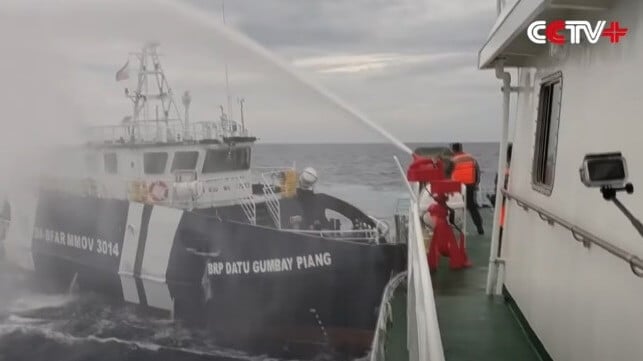
Philippines supply vessel and China Coast Guard (CCTV)

Published Sep 16, 2025 5:50 PM by The Maritime Executive


The Philippines’ monthly supply mission to the disputed area in the South China Sea near the Scarborough Shoal resulted in another incident between the two countries, with accusations of illegal activity from both sides. While the versions of the incident differ, both sides highlighted the use of water cannons against one Filipino vessel, while China released video of the ship hitting one of its Coast Guard vessels.

The Philippines Coast Guard and the Department of Agriculture - Bureau of Fisheries and Aquatic Resources highlighted it as a regular resupply mission to more than 35 Filipino fishing boats operating in the area around the shoal. At least three Coast Guard vessels, two bureau vessels with the supplies, and a government-owned fish processing vessel, Mamalakaya, were on the mission. They were bringing essential fuel and ice to the fishermen, according to the Philippine authorities.

The Chinese broadcast announcements early this morning, September 16, of a live fire exercise in the region, and shortly after 0900 local time, the vessels began to interact. They were at various positions ranging between 17, 14, and 10 nautical miles from the shoal.


The Philippines says a China Coast Guard vessel began blasting one of the bureau’s boats with its water cannon in an incident that lasted for 29 minutes. Another vessel had begun using its water cannon when the Filipino vessel was 17 miles from the shoal. A third vessel later attempted to block the ship when it was 10 miles from the shoal and to use its water cannon, but the Philippines says its vessel was able to execute safety maneuvers.

The spokesperson for the Philippine Coast Guard, Jay Tarriela, released a statement saying the bureau’s boat sustained significant damage, including shattered windows on the bridge, damage to the captain’s cabin, and electrical short circuits. The glass from the windows injured one sailor aboard the vessel.


The Chinese released the video showing the collision while calling the actions by the Philippines “illegal activities” and a “deliberate provocation.” They asserted the Philippines “intentionally rammed” the China Coast Guard vessel and was acting in “an unprofessional and dangerous manner.” They said regulatory measures were enforced, reporting the broadcasting of warnings via loudspeakers and using water cannons.

The vessels ultimately disengaged, and the Filipino boat rejoined the others and completed the resupply mission. China is contending that the Philippines sent more than 10 vessels into the area, coming from various directions.

There have been frequent confrontations between the Chinese and the Filipinos during these resupply missions. Tensions were further raised last week when China announced it was designating a nature reserve in parts of the area.  The Philippines filed a formal protest, continuing to assert that the area is recognized as part of its EEZ.


Wärtsilä & GigaMare Sign Deal to Boost Crew Skills In The Philippines

Wärtsilä
Wärtsilä has signed a strategic training partnership agreement with GigaMare Inc., making GigaMare an official Wärtsilä training partner

Published Sep 16, 2025 8:36 AM by The Maritime Executive


[By: Wärtsilä]

Technology group Wärtsilä has signed a strategic training partnership agreement with GigaMare Inc., a leading provider of tailor-made training in maritime operations, repairs and maintenance. The agreement makes GigaMare an official Wärtsilä training partner with the right to deliver crew training on selected Wärtsilä engines in the Philippines.

The Philippines plays a significant role in the global maritime industry, home to a large percentage of the world's seafarers. By partnering with Wärtsilä’s Land and Sea Academy (WLSA), GigaMare can re-skill and up-skill crews in the latest marine engine technologies as shipping moves towards more efficient and sustainable operations.

“As the industry evolves, it is vital that seafaring crews are well equipped with the skills needed to operate vessels efficiently. They not only need the technical skills, but also the ability to lead, adapt, and succeed in today’s global maritime environment,” says Jari Ullakonoja, CEO & President, GigaMare. 

WLSA will train and certify GigaMare instructors to deliver training that meet Wärtsilä’s quality standards. The programmes are designed to address practical, real-life challenges using the latest insights from Wärtsilä’s technical experts and field service engineers, while meeting Standards of Training, Certification and Watchkeeping (STCW) requirements and the International Safety Management (ISM) code. 

“This new training partnership is a significant step towards establishing highly competent ship crews that are capable of operating and maintaining vessels efficiently, safely and cost-effectively. Most importantly, by bringing Wärtsilä-certified training directly to the Philippines, we ensure that seafarers and ship operators have convenient and timely access to the latest expertise, tailored to the realities of their local context, which makes upskilling more accessible and impactful than ever before,” comments Tomi Urho, Director, Training Services at Wärtsilä. 

GigaMare Inc., established in 2013, has over a decade of experience. Under this new agreement, it can now sell Wärtsilä product training directly to local customers as an authorised Wärtsilä Training Partner.

The products and services herein described in this press release are not endorsed by The Maritime Executive


 PRIVATIZATION

U.S. Coast Guard Invests $50M to Revamp Mariner Licensing System

Alt
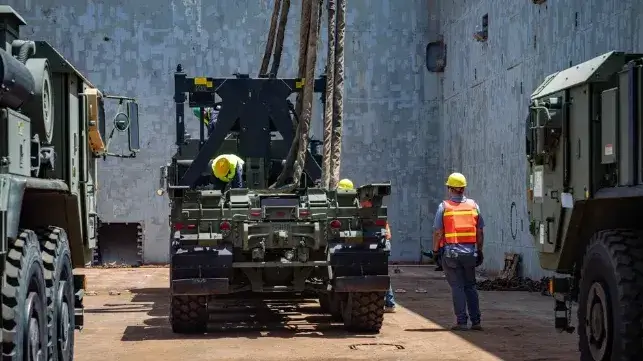
U.S. merchant mariners offload U.S. military vehicles in Saudi Arabia, 2024 (USMC)

Published Sep 16, 2025 7:14 PM by The Maritime Executive


American mariners are used to dealing with an extended and time-consuming administrative process whenever they go for a license upgrade or renewal. The U.S. Coast Guard's credentialing system works, but only slowly, and with considerable friction - a known impediment to creating new mariners and keeping current ones working in the industry. The service is aware of the difficulties and frustrations of the existing process, and with the giant cash infusion it received under the One Big Beautiful Bill Act, it is making a landmark investment in its IT infrastructure. 

To revamp the process, the service awarded Salesforce consultancy Stealth Solutions Inc. a contract worth up to $50 million over five years. The scope covers everything related to updating and streamlining the credentialing process and mariner credentialing requirements. Stealth is in Sterling, Virginia, just an hour's drive from the Coast Guard's credentialing headquarters in the small country town of Martinsburg, West Virginia. 

The project also includes work on the web platform Navita, the Latin word for "mariner," a planned public-facing portal for applicants and employee-facing database for mariner documents and approvals. It is intended to replace manual processes that slow down credential review and issuance. Navita was initiated last year with funds in the 2024 Department of Homeland Security Appropriation Act. The Coast Guard has now ordered the development of the platform's first release, worth $3.8 million. 

"The Navita system represents a transformative leap forward in supporting America’s maritime industry, providing our merchant mariners—who are vital to our nation’s economy and security—with a streamlined process to receive their credentials with speed and focus," said Rear Adm. Wayne Arguin, Assistant Commandant for Prevention Policy. "By improving our service delivery, we are advancing the effort to Restore American Maritime Dominance."

COLONIALIST SINOPHOBIC PARANOIA

Dangers of the UK's Surrender of the Chagos Islands Begin to Crystallize

B-2 Spirit strategic bomber at Diego Garcia, Chagos Islands, 2020 (USAF file image)

Published Sep 16, 2025 9:43 PM by The Maritime Executive


The UK government’s plan to surrender sovereignty of the Chagos Islands to Mauritius took a major step forward this week when the bill passed its Second Reading in the House of Commons, its primary legislative hurdle. The Bill now goes to the House of Lords, where there could be delays. But the most likely obstacle to the deal going through would be a change of heart in the United States – which will be the ultimate loser when the arrangements in the deal unwind and its true character emerges.

The deal envisages continued US use of the Diego Garcia Naval Support Facility, but under a lease-back arrangement, once the UK has surrendered sovereignty over the British Indian Ocean Territory.

The deal was originally promoted in the UK by a group of progressive human rights lawyers (with Starmer a core member), who believed the UK’s national interest would best be served by giving primacy to international law. The mood in Britain has changed significantly since then, and Sir Kier Starmer’s involvement in forcing the deal has not helped his prospects. The Reform party, which leads in the UK polls, has promised to reverse the deal if it gets into office.

A more realistic assessment is that the deal will be completed, and sovereignty will be transferred to Mauritius. However, even before completion, the dangers of the deal are becoming evident.

The most likely adverse occurrence would be the Mauritian government exploiting its rights under the deal to obstruct American use of the base, thereby reducing its value as a strategic asset. The requirement to notify the Mauritius government of any impending attack on a third party, and the right of Mauritius to maintain a presence on Diego Garcia - able in effect to spy on American activity - are the most obvious levers which could be exploited. The Mauritian government and its opposition are far more aligned with Chinese and Indian interests than those of the United States and the United Kingdom. Once the deal is signed, these antagonisms will emerge. The deal has not bought the friendship or loyalty of Mauritius.

Mauritius PM Navin Ramgoolam meets Chinese Ambassador Dr Huang Shifang, May 14 (Instagram)

India, seen as a friend by the United States several months ago but last seen standing alongside Russia, China, Iran and North Korea at the recent military parade in Beijing, has already made an unsolicited offer to ‘help’ Mauritius patrol the Chagos Islands Maritime Protection Area. While greeting the deal as a victory for anti-colonialism, the Indian government has already in effect annexed the Mauritian islands of Agaléga to construct a military base, despite strong opposition from the island’s inhabitants. The Mauritian economy is tied closely to that of India, which has strong leverage over the island.

If India does not use its muscle in favor of anti-American interests, the Chinese are waiting in the wings to do so. At a meeting on May 14, the Chinese Ambassador Dr Huang Shifang pledged to strengthen Mauritius-Chinese relation, particularly in light of the ‘strategic advantages’ which Mauritius enjoys, and that there would be ‘broad prospects for future collaboration’. The Mauritian Prime Minister has had close personal links with China since his father established China-Mauritian diplomatic ties in April 1972. Both China and Russia have welcomed the deal.

The deal could also potentially collapse if a future United Kingdom not supportive of the surrender decided to renege on its payment schedule. The UK government is committed to paying Mauritius an annual rent of $220 million for each of the first three years, $160 million for the next ten years, and then $160 million rising with inflation thereafter. The deal was originally lifetime-costed in the House of Commons at $5 billion, a figure subsequently raised using government accounting protocols to $47 billion. Given the UK’s budget deficit, any future government might be tempted to stop paying the annual cost for the privilege of having surrendered the sovereignty of the British Indian Ocean Territory in 2025.

It is difficult to predict accurately what consequence will occur and when, but most of them threaten the United States’ continued use of the Diego Garcia Naval Support Facility - at best guess, within the next ten years.

Former US Secretary of State Mike Pompeo has recently described the UK National Security Adviser Jonathan Powell who negotiated the deal as “strategically an absolute fool”, adding his opinion that “Mauritius is a close ally of the Chinese Communist Party and not only will we lose Diego Garcia, but you will have Chinese power projection from Diego Garcia.”


Italian Court Approves Extradition of Suspect in Nord Stream Attack Case

istock
iStock / Greenleaf123

Published Sep 16, 2025 11:25 PM by The Maritime Executive


A Ukrainian national who was arrested last month on charges of plotting the 2022 Nord Stream pipeline attack is one step closer to extradition. A court in Bologna, Italy has approved his extradition to Germany to stand trial, moving the process on to the appeals phase. 

In late August, Italian police have detained Ukrainian military veteran Serhii Kuznietsov in Rimini, a resort destination on the Adriatic coast. Kuznietsov had an outstanding warrant issued by German authorities, who suspect that he played a role in the complex attack on Nord Stream 1 and Nord Stream 2. The 2022 subsea sabotage operation destroyed three out of four lines in the network, resulting in the largest manmade methane release in history (and a serious impediment to any future restart of the Russian-controlled pipeline system). 

If extradited to stand trial, Kuznietsov faces charges of anti-constitutional sabotage, destroying infrastructure and causing an explosion. Italy's extradition process takes time, but it is moving forward: on Tuesday, the Bologna district-level court ruled that he could be handed over to German authorities. He will appeal to a higher court, his lawyer told AFP. 

Kuznietsov denies any role in the attack, and has a three-part defense. First, he asserts that he was in Ukraine at the time of the blasts in September 2022. Second, his counsel points out that he was a member of the Ukrainian military during the period in question, which would grant him immunity. And third, he claims due process violations during the initial trial, including incomplete access to German prosecutors' files. 

German investigators have identified six suspects in the attack, and have issued a warrant for at least one of Kuznietsov's alleged co-conspirators. Denmark and Sweden, which also have jurisdiction over the sabotage attack, have both dropped their inquiries. 


Report: Ukraine's Port Strikes May Force Russia to Curtail Oil Output

Primorsk
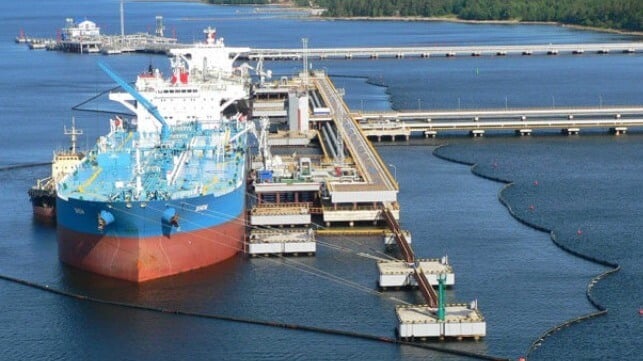
Courtesy Primorsk Oil Terminal LLC

Published Sep 16, 2025 8:23 PM by The Maritime Executive


After a series of damaging attacks by Ukrainian drones, Russia's oil refining and export infrastructure may not have the capacity to handle - or even store - the full output of Russian oil wells, according to new reports. 

Transneft, the dominant Russian pipeline operator, has put limits on the quantity of storage that producers can use in its pipeline network, Reuters reports. The midstream operator has warned oil companies that if the damage continues and demand drops at the receiving end of the pipeline network, it may have to accept less crude, several industry insiders told the news agency. (Transneft vehemently denied the report and protested that this "fake news" could damage its image.)

If true, hitting the limits of pipeline transit and storage capacity would mean that Russia would be forced to curtail production - meaning shutting-in wells, a process that can reduce a formation's ability to produce oil when restarted. A forced cut in pumping is among Ukraine's top strategic objectives, because Russia funds its ongoing war in large part with oil export revenue. 

The reported restrictions are a result of a concerted campaign of long-distance mass drone attacks. Ukraine has targeted Russia's largest refineries, and some have been hit repeatedly since the start of 2025. Drone operators hit at least 10 Russian refineries since the start of August alone. In recent weeks, Ukrainian intelligence services have broadened the scope of their target list to include Russia's two Baltic loading ports, Primorsk and Ust-Luga, causing limited damage at both facilities.

The impact of any one strike is transitory, as Russian energy companies are capable of making repairs. But the cumulative effect has taken as much as 20 percent of Russia's refining infrastructure offline at a time, and the attacks continue at a rapid pace. Strikes on loading terminals have a multiplier effect: the terminals are a critical backup destination for barrels that have no domestic takers - and there are many such barrels because of the refinery attacks. 

The strike at Primorsk damaged two sanctioned tankers, the Cai Yun and the Kusto, as well as pumping equipment at the facility. Ukrainian analysts have estimated that the damage at Primorsk could reduce its loading capacity by half; it is not fully offline, however, and has already restarted at least some of its waterside operations at a slower pace.  

Russia produces nine percent of the world's crude oil, and the prospect of a slowdown could impact oil prices. So far the market is unperturbed: crude prices are up 3.5 percent over the past month, averaging about $68 rather than $66.  


ITF London Staff Start First-Ever Strike Against the Union Federation

union employee strike
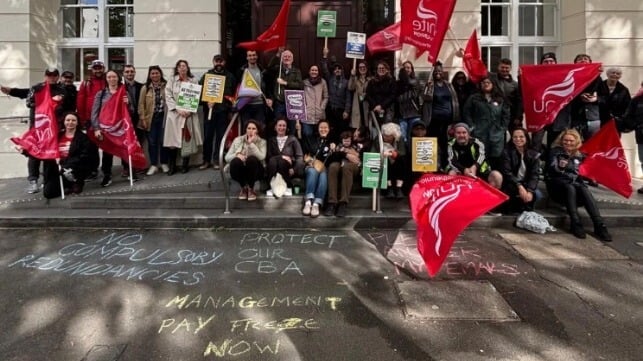
Employees of the union federation went on strike over a reorganization plan for the London office (Unite)

Published Sep 16, 2025 8:42 PM by The Maritime Executive


The unionized office staff of the International Transport Workers’ Federation, represented by the union Unite, has taken the unusual step of going on strike against their union employer. More than 100 workers at the London headquarters walked off the job on Monday, September 15, and are saying they will remain on strike at least through September 18 after negotiations broke down with the leadership of the ITF.

The employees had taken their first-ever strike vote in July 2025, with 89 percent supporting a full strike and 90 percent an action short of a full strike. This came after the workers strongly rejected (72 percent voted against) a new proposal from management of the ITF. Unite the Union at the time responded on July 17 with a new series of work rules for the ITF workers, including a ban on overtime. They had planned one-day work stoppages on July 22 and 29, but agreed to postpone the walkout after gaining a new negotiation pledge from management.

An actual picket line went up in front of the London headquarters of the ITF, which is a federation of international transport workers' unions. The workers who are normally working to protect the rights of seafarers worldwide find themselves on the picket line this time. A virtual picket line was also set up elsewhere, including the ITF’s current Maritime Roundtable in Cyprus.

Unite is also saying that unless there is progress, the industrial action will continue. The union reports that management has informed them it was canceling a planned September 17 negotiation meeting.

At issue is a planned reorganization of the ITF and its operations. The organization, which traces its origins to its founding in London in 1896, has announced it would be reorganizing its London-based staff, although Unite says the changes could also involve regional employees. Unite reports that the ITF planned cuts for a quarter of the workforce this year. According to their report, half the ITF employees ultimately applied for a voluntary separation scheme, but Unite says others are still at risk.

“Our members have been clear that the restructuring process has been a poorly managed disaster from start to finish,” Unite wrote announcing the strike. Unite is demanding consultations and protections for the remaining employees. They also cite the stress and anxiety the process has created in the employees.

Also at issue is a plan to restructure pay at the ITF. The federation says it is working on a fair, transparent, and competitive compensation program. Unite contends that the ITF management also proposed a pay freeze for most staff members. They assert the federation, however, was planning to increase the minimum and maximum pay rates of senior management, something the ITF denies.

The ITF workers represented by Unite voted down a new proposal last week from ITF management. They said the strike is necessary to make progress on the negotiations.


AI predicts complications from surgery better than doctors


Model trained on routine ECG data calculates risk for patients


Johns Hopkins University

ECG data predicts deadly surgical complications 

image: 

Dr. Robert Stevens, chief of the Division of Informatics, Integration and Innovation at Johns Hopkins Medicine,  observes an electrocardiogram monitor.

Stevens’ team used artificial intelligence to extract previously undetected signals in these routine heart tests that strongly predict which patients will suffer potentially deadly complications after surgery.

view more 

Credit: Will Kirk/Johns Hopkins University


A new artificial intelligence model found previously undetected signals in routine heart tests that strongly predict which patients will suffer potentially deadly complications after surgery. The model significantly outperformed risk scores currently relied upon by doctors.

The federally-funded work by Johns Hopkins University researchers, which turns standard and inexpensive test results into a potentially life-saving tool, could transform decision-making and risk calculation for both patients and surgeons.

“We demonstrate that a basic electrocardiogram contains important prognostic information not identifiable by the naked eye,” said senior author Robert D. Stevens, chief of the Division of Informatics, Integration and Innovation at Johns Hopkins Medicine. “We can only extract it with machine learning techniques.”

The findings are published today in the British Journal of Anaesthesia.

A substantial portion of people develop life-threatening complications after major surgery. The risk scores relied upon by doctors to identify who is at risk for complications are only accurate in about 60% of cases.

Hoping to create a more accurate way to predict these health risks, the Johns Hopkins team turned to the electrocardiogram (ECG), a standard, pre-surgical heart test widely obtained before major surgery. It’s a fast, non-invasive way to evaluate cardiac activity through electric signals, and it can signal heart disease.

But ECG signals also pick up on other, more subtle physiological information, Stevens said, and the Hopkins team suspected they might find a treasure trove of rich predictive data—if AI could help them see it.

“The ECG contains a lot of really interesting information not just about the heart but about the cardiovascular system,” Stevens said. “Inflammation, the endocrine system, metabolism, fluids, electrolytes— all of these factors shape the morphology of the ECG. If we could get really big dataset of ECG results, and analyze it with deep learning, we reasoned we could get valuable information not currently available to clinicians.”

The team analyzed preoperative ECG data from 37,000 patients who had surgery at Beth Israel Deaconess Medical Center in Boston.

The team trained two AI models to identify patients likely to have a heart attack, a stroke, or die within 30 days after their surgery. One model was trained on just ECG data. The other, which the team called a “fusion” model, combined the ECG information with more details from patient medical records such as age, gender, and existing medical conditions.

The ECG-only model predicted complications better than current risk scores, but the fusion model was even better, able to predict which patients would suffer post-surgical complications with 85% accuracy.

“Surprising that we can take this routine diagnostic, this 10 second worth of data and predict really well if someone will die after surgery,” said lead author Carl Harris, a PhD student in biomedical engineering. “We have a really meaningful finding that can can improve the assessment of surgical risk.”

The team also developed a method to explain which ECG features might be associated with  a heart attack or a stroke after an operation.

“You can imagine if you’re undergoing major surgery, instead of just having your ECG put in your records where no one will look at it, it’s run thru a model and you get a risk assessment and can talk with your doctor about the risks and benefits of surgery,” Stevens said. “It’s a transformative step forward in how we assess risk for patients.”

Next the team will further test the model on datasets from more patients. They would also like to test the model prospectively with patients about to undergo surgery.

The team would also like to determine what other information might be extracted from ECG results through AI.

Authors, all from Johns Hopkins Johns Hopkins School of Medicine and the Whiting School of Engineering, include: Anway Pimpalkar, Ataes Aggarwal, Jiyuan Yang, Xiaojian Chen, Samuel Schmidgall, Sampath Rapuri, Joseph L. Greenstein and Casey O. Taylor.


New CRISPR test could make tuberculosis screening as simple as a mouth swab


Tulane University


Tulane University researchers have developed an enhanced CRISPR-based tuberculosis test that works with a simple tongue swab, a potential breakthrough that could allow easier, community-based screenings for the world’s deadliest infectious disease.

Current TB tests rely on sputum, mucus collected from the lungs and lower respiratory system. While rich in TB bacteria required for testing, collecting sputum is difficult, making it inefficient for large-scale community testing. Sputum testing is also unfeasible in about 25% of symptomatic cases and nearly 90% of asymptomatic cases, a gap which contributes to an estimated 4 million tuberculosis cases going undiagnosed annually.

In a study published in Nature Communications, Tulane researchers worked to address that gap by refining a previously developed CRISPR-based assay to better detect TB in samples with very low levels of bacteria, such as stool, spinal fluid and tongue swabs.

Clinical testing showed markedly enhanced detection of TB in tongue swabs over traditional testing (74% compared to 56%).

The test also showed high sensitivity in detecting TB in respiratory (93%), pediatric stool (83%) and adult spinal fluid samples (93%). With children, HIV patients and those with extrapulmonary TB unable to produce sputum, the research marks a significant step forward toward offering effective diagnoses via a variety of samples.

“More than 10 million people worldwide fall ill with tuberculosis every year, but 40% of those cases are considered missing as people go undiagnosed,” said corresponding author Tony Hu, PhD, Weatherhead Presidential Chair in Biotechnology Innovation and director of the Tulane Center for Cellular & Molecular Diagnostics. “To find those missing cases, testing needs to be less invasive and more accessible to reach as many people as possible who may not otherwise be tested.”

Lead author Zhen Huang, an assistant professor at Tulane University School of Medicine, said developing a viable tuberculosis tongue swab test could transform testing in low-resource communities. “Tongue swabs are painless, easy to collect, and don’t require trained medical staff,” Huang said. “That opens the door to large-scale screenings.”

The new CRISPR method, called the ActCRISPR-TB, increases amplification and detection of genetic signals from TB bacteria DNA and offers a rapid, streamlined approach that can return a diagnosis in under an hour.  

To administer the test without need for a lab or trained medical staff, researchers developed a “one pot” approach. Like a COVID-19 test, a swabbed sample is added to a tube pre-loaded with a test strip and reagent. That tube is incubated, and after 45 minutes, colored bands on the strip will indicate presence of an infection.

While there is a clear need for developing non-sputum based detection methods, clinical testing also showed the test to be faster and more accurate than traditional tests when testing for TB in sputum nucleic acid.

The study marks the latest step in Hu’s effort to move TB testing out of the lab and into the community.  In addition to showing TB can be detected from simple samples beyond sputum, Hu’s lab has also developed rapid tests that deliver results in less than an hour on portable devices, one the size of a smartphone and another that requires no electricity. His team has also used artificial intelligence to flag drug resistance so patients get the right medicines faster. Together, these advances outline a practical pathway for fighting TB: screen widely, confirm quickly at the point of care and connect positive results to effective treatment.

While more research and development is needed, Hu and Huang said this study represents significant progress.

“If we want to end TB, we need tools that work outside the lab and in the communities where the disease spreads,” Hu said.