Wednesday, September 17, 2025

AU - GOLD

Barrick focused on internal growth after shedding gold assets
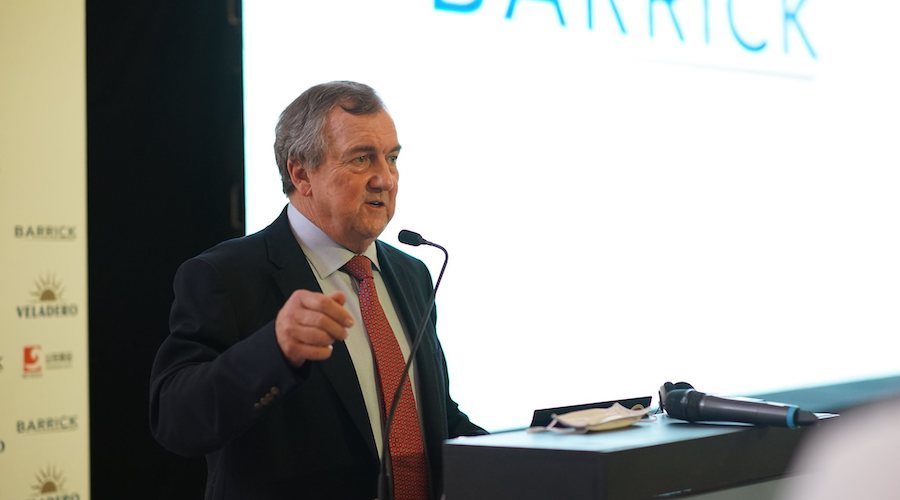
Mark Bristow, Barrick Gold’s chief executive. (Image by Barrick Gold, Facebook.)

Barrick Mining Corp. is focused on expanding gold and copper projects after shedding some legacy assets, as deal-making heats up in the global mining industry.

“We’re in a growth phase,” chief executive officer Mark Bristow said on the sidelines of the Mining Forum Americas in Colorado Springs, Colorado.

Barrick sold its last Canadian gold mine last week and, in April, sold a stake in an Alaskan gold project. The company, which changed its name from Barrick Gold this year, has also sought buyers for its Tongon gold mine in the Ivory Coast as Bristow prioritizes copper production. While Barrick said the company is open to taking positions in junior companies, he’s not planning any major deals.


This month’s tie-up between Teck Resources and Anglo American Plc is fueling expectations of more mergers and acquisitions across the mining industry. Now, amid an unprecedented rally in gold prices that’s attracted new capital, some small and mid-tier producers will be forced to consolidate, said Bristow.

(By Yvonne Yue Li)

Indonesia’s United Tractors seeks expansion with gold miner acquisition
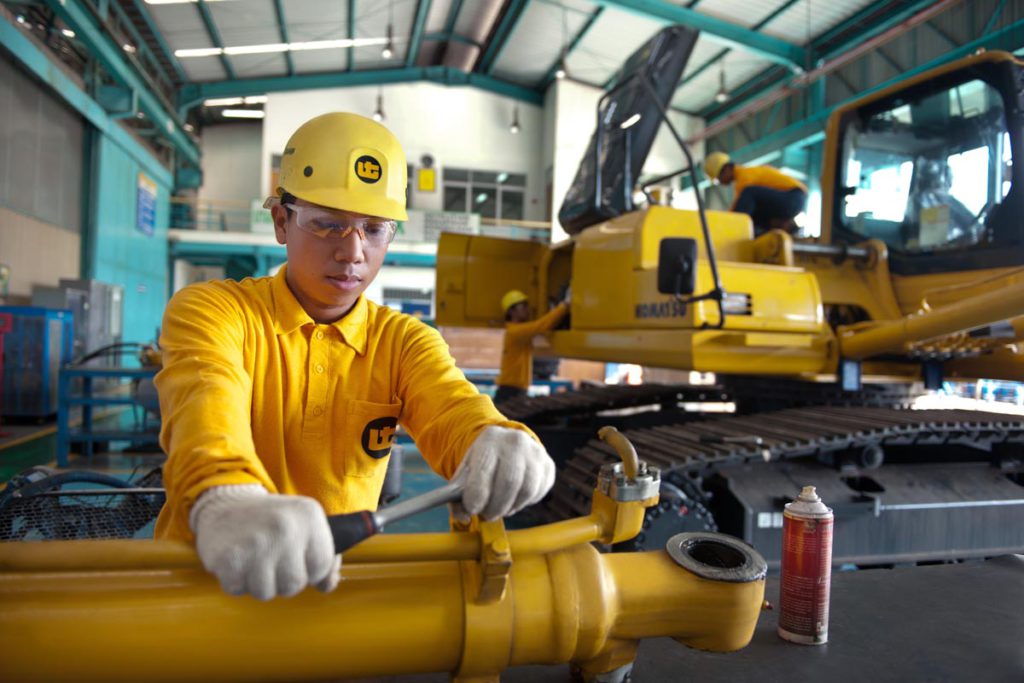

Indonesian heavy machinery distributor PT United Tractors seeks to expand its businesses by acquiring a gold miner, according to a filing. Its shares rose.

The company to purchase 100% stake in PT Arafura Surya Alam through conditional sale and purchase agreements signed on Sep. 12 by its subsidiaries with PT J Resources Nusantara and Jimmy Budiarto.

J Resources Nusantara is a unit of PT J Resources Asia Pasifik, while Budiarto is listed as the ultimate beneficiary of the two firms, according to information on the latter’s website.

Shares of United Tractors rose as much as 2.3% on Monday, reversing a decline in the previous session. J Resources Asia Pasifik extended gain to surge 7.8%.

The transaction also involved the purchase of 0.2% stake in entity PT Mulia Bumi Persada from Budiarto. The total enterprise value is listed as $540 million, the filing said.

United Tractors, part of Indonesian conglomerate PT Astra International, specializes in heavy equipment and distributes machineries under the Kubota and Komatsu brands. Its operations also include electric power generation as well as coal and gold mining.

It expects to finalize the transaction no later than Dec. 23, the filing said.

If United Tractors successfully consolidates production from the new gold mine, it could enhance its overall profitability by approximately 10%, with the group’s gold output rising close to around 300,000 ounces, Fauzan Djamal, an analyst at RHB Sekuritas Indonesia, wrote in a note on Monday.

“This contribution is expected to be fully reflected in financials starting in 2027,” he said. The company’s valuation remains attractive, trading at around 5.5 times of price-to-earnings ratio, below its five-year average of around 7 times, he added.

(By Prima Wirayani)


Agnico focuses on internal growth even as mining deals heat up
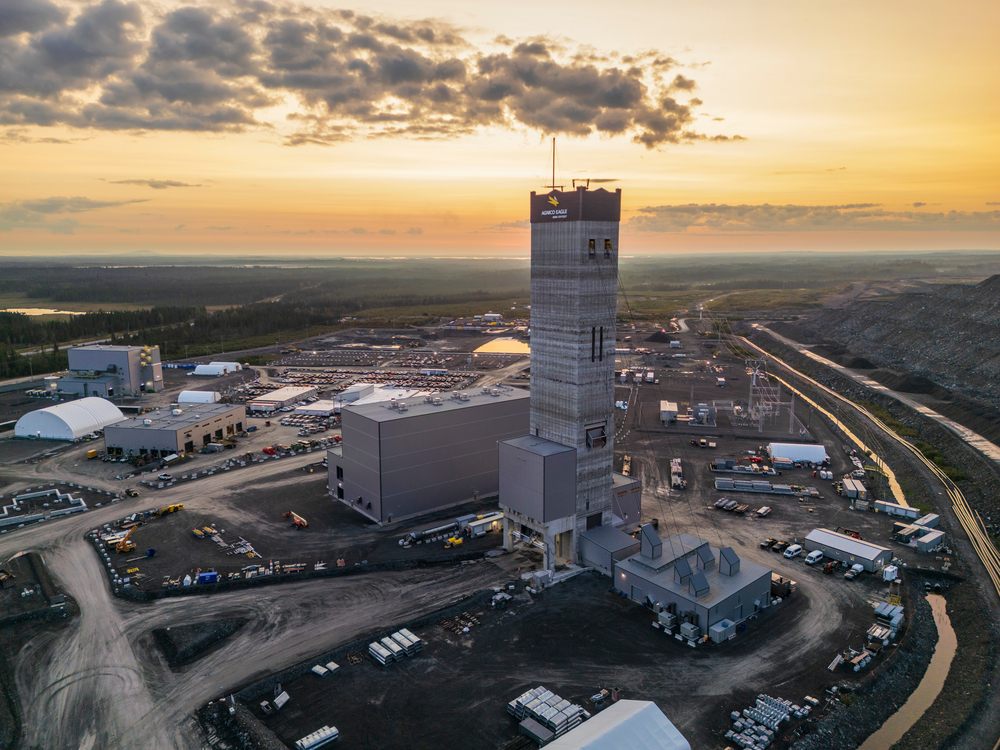

The merger between Anglo America Plc and Teck Resources Ltd may have set the scene for more major deals, but Agnico Eagle Mines Ltd. is focusing on growing from within.

“We’ve never had a better internal profile. We’re focused on that,” said chief executive officer Ammar Al-Joundi on the sidelines of Mining Forum Americas in Colorado Springs.

While the industry will see more consolidation following the Anglo-Teck deal, according to Al-Joundi, “what we don’t want to see is irresponsible M&A just because the gold price is high. That’s not good for anybody.”

Miners including gold producers have stayed financially disciplined for the past decade after aggressive deal-making at the peak of the China-led commodity super-cycle led to billions of dollars in write-downs and infuriated investors.

Gold mergers and acquisitions could generate a better internal rate of return for miners if the metal holds at $3,000 an ounce, according to Bloomberg Intelligence. BI’s gold mine investment model showed higher scope from buying a mine at average acquisition metrics compared with building an equivalent one from scratch.

Bullion prices have repeatedly hit record highs this year, with the spot price in London reaching a fresh peak of $3,685.64 an ounce on Monday.

“Just with organic growth, we are going to add tremendous value per share,” said Al-Joundi. When the company does decide to do mergers and acquisitions, they are “with a focus on per share value increase rather than just getting bigger,” he added.

(By Yvonne Yue Li)

INDIA

Vedanta to keep coal as base energy source amid clean energy push


Indian mining and metals conglomerate Vedanta Ltd will continue to rely on coal as its primary energy source for mining operations, while aiming to increase the share of renewable sources in its energy mix, a top executive said on Tuesday.

Coal accounts for nearly 70% of Vedanta’s energy mix, Deshnee Naidoo, chief executive officer of Vedanta Resources, said in an interview on the sidelines of FT Live Energy Transition Summit India.

“Coal will be, for us in Vedanta, the baseload contributor,” Naidoo said.

The company, however, plans to raise the share of renewable energy in its operations by reducing its dependence on coal-based power to around 50–60% over the next three to four years, Naidoo said.

Vedanta is targeting a shift towards non-fossil sources, including solar, wind and hybrid models, to support its decarbonization goals.

It is also investing in low-carbon products, including aluminum and zinc, leveraging renewable energy and hydrogen in its manufacturing processes.

The low-carbon products are less than 20% of the company’s total output, but Vedanta is scaling up their production, Naidoo said.

The company is exploring similar energy transitions in its overseas operations.

In Zambia, where Vedanta faces up to 20 hours of daily power cuts, it plans to build a 300-megawatt power facility – split equally between coal and renewables – to support its mining expansion.

Zambia copper unit, lithium mining

Vedanta Resources has restored copper production at its Zambian unit to around 180,000-200,000 metric tons, levels last seen in 2018, Naidoo said. The company aims to ramp up output to 300,000 metric tons over the next three years.

“We’re absolutely in production,” the executive said.

However, the company does not have a timeline for listing the unit, Naidoo said.

Back in India, the company has no plans to venture into lithium mining, Naidoo said, adding that the country is yet to showcase its exploration potential.

(By Sethuraman NR; Editing by Jacqueline Wong and Shinjini Ganguli)


India’s silver imports to gain momentum from strong investment demand


Stock image.

India’s silver imports are expected to gather momentum in the coming months, supported by stronger investment and industrial demand that has already absorbed the surplus from last year’s elevated shipments, industry officials told Reuters.

Higher imports by the world’s biggest silver consumer could give further support to global prices that are close to their highest level in 14 years.

“With prices going up, investment demand has shot up, too — nearly twice as much as before,” Chirag Thakkar, CEO of silver importer Amrapali Group Gujarat, said on the sidelines of the India Gold Conference in New Delhi.

Silver imports are set to pick up in the coming months, with the annual total likely to be between 5,500 and 6,000 metric tons, Thakkar said.

The industry had expected a sharp drop in India’s 2025 imports after shipments more than doubled in 2024 to 7,669 tons.

India’s silver imports in the first eight months of 2025 more than halved to 2,580 tons from 5,695 tons a year earlier, provisional trade ministry data showed.

However, strong demand in recent months has depleted stocks, prompting banks and dealers to step up imports, Thakkar said.

Local silver futures hit a record high of 129,878 Indian rupees ($1,474.75) per kilogram on Tuesday and are up nearly 49% this year, outpacing a 44% jump in gold prices.

Despite the price rally, silver is trading at a slight premium over official domestic rates, which include a 6% import duty and 3% sales levy, as demand remains strong from industrial users and investors, said one Mumbai-based dealer with a private bank.

“Usually, when prices shoot up, a ton of scrap hits the market because investors cash out. But this time they’re so bullish on the outlook that hardly any scrap is showing up,” he said.

Inflows into silver exchange-traded funds reached 17.59 billion rupees in July and 19.04 billion rupees in August, well above the last fiscal year’s monthly average of 6.7 billion rupees, data from the Association of Mutual Funds in India showed.

India imports silver mainly from the United Arab Emirates, Britain and China.

($1 = 88.0680 Indian rupees)

(By Rajendra Jadhav and Brijesh Patel; Editing by Joe Bavier)


CU  -  COPPER

BHP, Lundin Mining bet $400M on Argentina copper hub


The Vicuña JV controls Filo del Sol deposit on the Argentina-Chile border and the Josemaría project in San Juan, Argentina. (Image courtesy of Lundin Mining.)

BHP (ASX, NYSE: BHP) and Lundin Mining’s (TSX: LUN) joint venture in Argentina is investing more than $400 million near the Chilean border, aiming to develop a multibillion-dollar copper project that could become the country’s next major production hub.

The venture, Vicuña Corp, was created in January after the partners acquired Filo Corp. It controls both the Filo del Sol deposit in straddling the border Argentina-Chile and the Josemaría deposit in Argentina’s San Juan province. 

Since the acquisition, Vicuña has carried out tests and pre-construction work at Josemaría, with plans to seek approvals and begin production in 2030. The company also extended the mine’s useful life from 19 to 25 years after confirming higher-than-expected resources and set ore processing capacity at 175,000 tonnes per day.


The budget already places Vicuña among Argentina’s largest foreign investors this year, even as final development costs are still being calculated, Vicuña’s senior country manager for Argentina and Chile told Bloomberg News.

The company is also preparing an application for tax, customs, and currency exchange benefits under Argentina’s large investment incentives program, known as RIGI.

“RIGI is critical,” Morea said. “It levels the playing field and allows for the project to be competitive in tax terms when compared to other jurisdictions in Latin America and across the world.”

CEO appointed

Vicuña expects to submit a technical report to its board by March, outlining timelines, production forecasts, and processing methods.

To guide the next phase, the company appointed this week mining veteran Ron Hochstein as chief executive officer. Hochstein, who brings more than three decades of industry experience, most recently serving as Chair and CEO of Lundin Gold, will take the helm on November 7.

Argentina has not produced copper since 2018, but a growing pipeline of projects could elevate the country into the world’s top 10 producers.


Anglo, Codelco seal pact to unlock $5B in Chilean copper


Los Bronces copper mine in Chile. (Image courtesy of Anglo American | Flickr.)

Anglo American (LON: AAL) and Chile’s state-owned copper miner Codelco have sealed a landmark deal to jointly operate their neighbouring mines in central Chile, unlocking at least $5 billion in value.

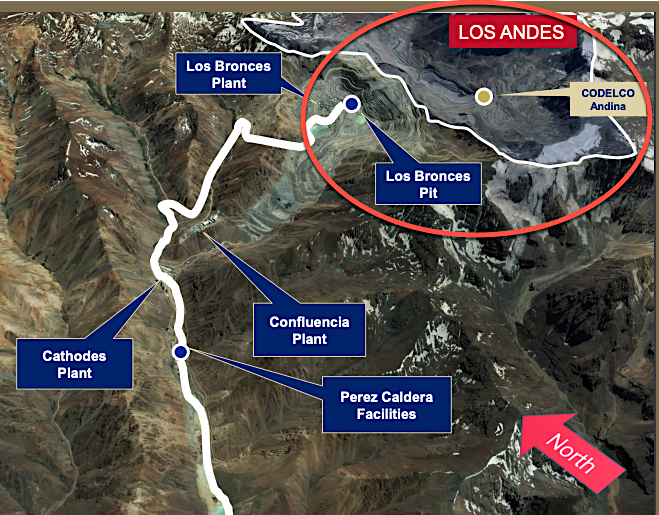
The agreement combines Anglo’s Los Bronces and Codelco’s Andina mines, creating a new mining district outside Santiago. The partnership is expected to generate an additional 2.7 million tonnes of copper over 21 years, once permits are secured. They are anticipated by 2030.

Andina, one of Codelco’s smaller operations, produced 181,600 tonnes of copper last year. Los Bronces, a key operation for Anglo American, yielded 172,400 tonnes.

Codelco already holds a 20% stake in Anglo American Sur, which operates Los Bronces, El Soldado, and the Chagres smelter.

The combination effectively creates a new mining district in Chile: Andina – Los Bronces. A jointly owned new company will run the merged assets, with each partner retaining ownership of its respective mines. 

Anglo American and Codelco strike $5B copper deal
Los Bronces and Andina pits location. (Image: Anglo American.)

“Together, we are demonstrating what is possible when two leading copper mining companies work together with a shared purpose and commitment to excellence,” Anglo American CEO Duncan Wanblad said in the statement

Codelco Chairman Máximo Pacheco said the arrangement will maximize the potential of the district without major new investment.

The deal also embeds sustainability principles and flexibility to align with each company’s environmental commitments.

Chile’s National Mining Association (Sonami) welcomed the news. It said that clustering projects into mining districts could help streamline the permitting process.

Growth through partnerships

Codelco has a long record of private partnerships. It holds 49% of El Abra with Freeport-McMoRan and 42.3% of the Agua de la Falda project with Rio Tinto.

Last year, it acquired 10% of Teck’s (TSX: TECK.A, TECK.B)(NYSE: TECK) Quebrada Blanca copper mine, expected to boost its annual output by up to 30,000 tonnes. That agreement remains intact despite the planned $53 billion merger between Anglo and Teck, announced in early September.

Separately, Anglo continues to advance the Los Bronces Integrated Project, approved in 2023 after initial rejection and criticism over its potential impact on glaciers and water supply. Production ramp-up is expected to begin in 2027.


Orion Minerals signs deal with Glencore unit for up to $250M funding


Prieska copper-zinc project in South Africa. Image from Orion Minerals.

Australia’s Orion Minerals said on Wednesday it has signed a non-binding term sheet with a unit of global miner Glencore for $200 million–$250 million funding for its Prieska copper-zinc project in South Africa.

The diversified metal developer said that the deal includes an offtake agreement with Glencore to sell 100% of zinc and copper concentrates, among others, from the mine for a period ranging between five and 10 years.

Orion will receive the funding in two tranches for the construction and commencement of early works at the mine, with the first drawdown targeted in November.

The company said the first tranche of the funding will enable Orion to move swiftly into first production and first cash flow from the project.

Conditions for the provision of funding include a completion of satisfactory due diligence, which Glencore has already commenced, Orion added.

“In parallel with the due diligence process with Glencore, we will continue discussions with our current funding partners,” the company’s chief executive Tony Lennox said.

(By Nikita Maria Jino; Editing by Shinjini Ganguli and Alan Barona)


Chile’s ENAMI attracts interest from miners, traders for smelter financing


Stock image.

Chile’s state-run mining body ENAMI has received interest from 15 entities, including major miners and traders, to finance a $1.7 billion smelter modernization project, it said in a statement on Monday.

ENAMI said interested entities include mining companies (Rio Tinto), commodities traders (Mercuria, Hartree Partners, Vitol, Javelin Global Commodities), investment funds (Orion Resource Partners) and banks (Sumitomo Mitsui Bank Limited, Macquarie Bank, Societe Generale).

Japanese conglomerate Mitsui, Indian copper producer Indo Asia Copper and China Nonferrous Metal Industry’s Foreign Engineering and Construction also expressed interest, ENAMI said.

“It has been very gratifying to see the market’s interest in this mega-project … it’s a sign of investor confidence in the company,” said ENAMI’s head, Ivan Mlynarz, in a statement.

ENAMI in August kicked off a process to seek investors for a smelter modernization in exchange for copper cathode supply. The Hernan Videla Lira smelter in the Atacama region is undergoing renovations that will give it the capacity to process 850,000 metric tons of copper concentrate a year and produce 240,000 tons of copper cathodes.

Initial offers are due by the end of October, after which ENAMI will proceed to a binding offer stage, the company said.

(By Daina Beth Solomon; Editing by Rosalba O’Brien)


BHP flags organic copper growth, US allure, silent on big buyouts

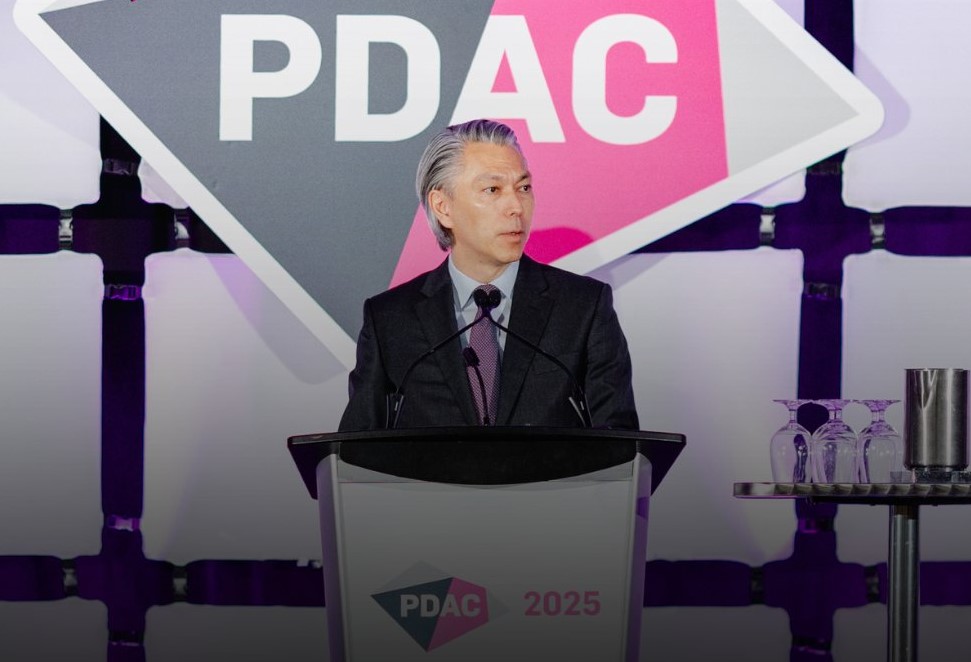
BHP CEO Mike Henry (Image: PDAC 2025)

The world’s biggest mining company, BHP, touted its solid copper potential and flagged the investment appeal of the United States on Monday, but was silent on the prospect of major buyouts, as top executives briefed shareholders.

CEO Mike Henry and chief financial officer Vandita Pant answered select questions in the first major opportunity to talk to investors since last week’s blockbuster tie-up of one-time target Anglo American and Teck Resources.

Their answers focused on growth potential from BHP’s Argentinian copper assets, the United States’ investment allure, and production delays at BHP’s Jansen potash project in Canada.

It was unclear if all questions submitted by shareholders were asked. BHP did not immediately reply to a request for comment on how it chose the questions to answer.

“The copper growth story for BHP is one of the big stories,” Henry said. “We have made so much progress…We now have four big copper growth basins on top of the 28% copper growth that we have seen in recent years.”

Those basins include the Vicuna 50-50 joint venture with Lundin Mining in Argentina, the US Resolution tie-up with Rio Tinto, Escondida in Chile and BHP’s South Australian copper operations.

Henry sidestepped a question whether the miner was interested in buying Toronto-listed NGEX Minerals, which is also active in Argentina’s Vicuna district. NGEX did not respond to a request for comment outside office hours.

The question of big ticket mergers and acquisitions was not tackled. The $53-billion Ango-Teck tie-up announced last week is widely expected to spur more M&A action, in a breakthrough after years of failed consolidation efforts in the mining sector.

The deal came just over a year after BHP scrapped a $49-billion bid for Anglo that would in a single acquisition have beefed up the Australian miner’s holding in copper, seen as essential to the energy transition.

Investors and bankers told Reuters last week that they did not expect BHP to gatecrash the current deal, since it is focusing on expanding its own copper assets during a time of leadership renewal.

Henry also said the United States, with half the power costs of Australia, was focused on drawing in mining investment, as Australia reviews productivity.

He also conceded that BHP’s anticipated internal rate of return from its Jansen investment would come under pressure after it raised capital expenditure estimates in July and pushed back first production.

(By Melanie Burton; Editing by Clarence Fernandez)


Real-Time Visibility Transforms Barge Operations

OpenTug’s BargeOS platform delivers operational intelligence that drives revenue optimization and customer satisfaction

Barges

Published Sep 16, 2025 11:37 PM by Jason Aristides, CEO, OpenTug


 \

The inland barge industry stands at a critical juncture. While we've long known that barges move cargo more efficiently than trucks or rail—past studies have shown 647 ton-miles per gallon compared to rail's 477 and trucking's 145—our operational visibility has lagged behind other transportation modes. This disconnect between our mode's advantages and technological capabilities has cost operators millions while the larger conversation around supply chain digitization has only intensified. Ocean carriers and trucking companies alike have embraced real-time tracking as table stakes. Shippers increasingly expect the same level of visibility from their barge operators. Those who can't provide it risk losing customers to modes that can, regardless of cost or environmental impact.

The Hidden Cost of Operational Blind Spots

Operational efficiency challenges in inland maritime are intensified by increasingly volatile conditions. Weather conditions, variables locking time, and river levels can all introduce significant delays and financial consequences to voyages, while rate volatility adds another layer of complexity. For example, look at the impact of recent weather-related disruptions on the Mississippi River. In 2022, a backup of more than 2000 barges was reported due to low water levels. In 2023, record-low levels returned for the second year in a row and weather fluctuations again significantly impacted barge rates for major commodities. Looking at these dramatic fluctuations, it is easy to see how many operators struggle to predict revenue and optimize their operations without access to real-time data.

Consider a typical scenario: a barge carrying agricultural commodities approaches a grain terminal without advance notice of its precise arrival time. The terminal, unable to predict the exact timing, schedules conservatively, resulting in a scramble for a berth or adequate labor. The result? Even small delays can lead to demurrage charges or have downstream impacts on scheduled services such as cleaning and maintenance for the operator. With real-time visibility, terminals can optimize berth assignments and labor scheduling while carriers avoid costly delays and better coordinate their fleet operations—a win-win that reduces costs and improves service reliability for all parties.  

BargeOS: Transforming Operations Through Intelligence

BargeOS addresses these challenges by providing real-time intelligence across tracking, 3rd party data integration, and AI-driven predictive analytics to transform how barge operators manage their fleets.

Visibility goes beyond traditional AIS with satellite-connected GPS tracking devices for maximum coverage, while BargeOS Autopilot introduces a breakthrough way to enable precise tracking without installing hardware. By ingesting email nominations and traffic updates, BargeOS Autopilot converts unstructured communications into structured voyage data inputted directly into the dashboard giving operators full visibility into fleet movements. This means stakeholders can instantly monitor barge positions and status,eliminating hours of manual entry and providing a reliable single source of truth.

BargeOS also simplifies voyage planning and quoting processes. By analyzing historical voyage data, real-time lock conditions, water levels, weather, and other external factors, the tool leverages powerful AI to predict potential disruptions and suggest optimal routing. Operators can proactively adjust schedules and resources to reduce idle time, optimize throughput, and better serve customers leading to efficiency gains across the supply chain.

Revenue Optimization Through Asset Intelligence

The financial impact of improved visibility extends well beyond customer satisfaction. Faster turnaround times directly increase asset utilization. For a typical barge operator, even small improvements in efficiency could translate to additional voyages, with each additional voyage representing increased revenue.

The platform also enables operators to optimize voyage planning through historical performance data. By analyzing patterns in transit times, weather impacts, and terminal efficiency, operators can continue to make more informed decisions about routing, scheduling, and capacity allocation.

Building Customer Trust Through Transparency

In today's competitive transportation market, trust has become a differentiating factor. Customers increasingly value transparency and reliability over purely cost-based considerations. BargeOS enables operators to more effectively support those long-term customer partnerships. For example, the platform allows carriers to give customers access to monitor their shipments in real-time, and receive automated status updates. This transparency reduces the amount of direct communication required between shipper and carrier while simultaneously improving customer confidence in service reliability.

When customers can see exactly where their cargo is and when it will arrive, they're more likely to choose barge transportation for future shipments. This customer loyalty translates directly into revenue stability and growth opportunities.

Competitive Advantage in Digital Supply Chains

Customer system integration plays a critical role in digital supply chains. BargeOS provides APIs that allow customers to incorporate barge tracking data directly into their own logistics management systems. The platform offers a single source of truth for all documents, allowing for faster auditing and payment of invoices. With enhanced back office processing and new integration capabilities, operators are positioned as sophisticated supply chain partners rather than simply transportation providers.

Data analytics capabilities also help operators identify new business opportunities for growth. By analyzing cargo flows and customer patterns, operators can identify opportunities for improved lane efficiency, discover new potential market segments or optimize their service offerings to meet emerging demand. With financial performance analysis, operators can easily monitor costs, see revenue per voyage, track demurrage and better understand asset and portfolio utilization.

Implementation and ROI

Deploying BargeOS requires minimal disruption. The platform's hardware can be installed quickly on existing vessels, and the cloud-based software requires no on-site IT infrastructure. Most operators achieve full functionality within weeks and ROI typically manifests within the first year through improved asset utilization and reduced operational costs. Enhanced customer satisfaction and retention provide additional long-term value for the business.

The Future of Barge Operations

As we look toward the future, operational intelligence will become increasingly critical to success. The operators who embrace these technologies today will be best positioned to capitalize on the growing demand for efficient, sustainable freight transportation.

BargeOS transforms how operators manage their assets, serve their customers, and compete in the modern logistics landscape. For operators ready to maximize their potential, a comprehensive solution is available today.

Jason Aristides is CEO of OpenTug, the technology company behind BargeOS. For more information about BargeOS, visit OpenTug.com.

The opinions expressed herein are the author's and not necessarily those of The Maritime Executive.


DNV Says Shipping is Moving from “Ambition to Action” on Decarbonization

containership at sea
DNV explored the implications of the IMO's framework and the steps to decarbonization

Published Sep 16, 2025 5:07 PM by The Maritime Executive


Momentum is building in the shipping industry with a growing number of initiatives to address decarbonization, concludes DNV. The group launched the ninth edition of its Maritime Forecast to 2050 with the Energy Transition Outlook 2025 during the London International Shipping Week.

“The industry is moving from ambition to action,” said DNV, pointing to the growing number of orders for dual-fuel vessels and the emergence of new technologies. They, however, note that supply and infrastructure are falling far behind, but reiterated the industry’s long-held belief that there will be no one singular solution to the challenges that lie ahead.

Introducing the study and providing his annual view on the state of the industry, Knut Ørbeck-Nilssen, CEO Maritime of DNV, highlighted three important shifts that he sees as currently shaping the industry. He pointed to the geopolitical challenges, such as the Red Sea and Ukraine, which have driven tonnage miles “through the roof,” decarbonization, and technology in all its forms, from wind propulsion to the growing discussion about Artificial Intelligence (AI). 

The anticipated adoption of the IMO’s Net-Zero Framework will shape the future, and DNV has focused the new report on exploring the implications of the regulation and the status of the fuel transition. It also used the opportunity to present new concepts, which DNV believes could play a key role in helping its overall goals.

One of the key challenges that has been repeatedly highlighted is the lack of supply of zero-carbon fuels. DNV reports the supply will have to grow twentyfold based on its estimates. Based on the lack of production capacity, Ørbeck-Nilssen called for keeping all pathways open, including LNG. He points out that despite the challenges of a carbon-based fuel and concerns about well-to-tank emissions, that the growth of biomethane has the opportunity to transition LNG, which itself is viewed as a transitional fuel. He also points out that one of the methods required is reducing overall fuel consumption.

DNV is proposing “Carbon Capture Corridors,” similar to the concept for Green Shipping Corridors. As part of their research, they looked at the opportunity for the largest bulkers, tankers, and containerships to employ onboard carbon capture. They call for the development of the offloading/storage capabilities in 20 ports key to the trade of these large vessels, highlighting that this could reduce emissions by 20 percent.

Among the concerns that the industry will have to confront is DNV’s conclusion that the IMO framework will double costs, but they point out that it is manageable through a range of strategies. Exploring a case study of an 18,000 dwt chemical tanker, they looked at biofuels versus the option of paying the penalties in the IMO regime. They concluded that biofuels, which are easy to use, will also be more cost-efficient. 

During the industry leaders’ discussion, it was also pointed out that adapting larger vessels to the new standards will be easier than adapting smaller ships. The expectation is that operators will start with their biggest ships, while it was also pointed out that shipbuilders do not have the capacity for what some have proposed with large-scale scrapping and replacement tonnage.

Arsenio Dominguez, Secretary-General of IMO, spoke confidentially of the coming adoption of the framework at the upcoming meeting in October. He said there are negotiations, but it will proceed with DNV concluding that adoption would provide greater certainty to the industry and hopefully spur more investments in the infrastructure and technology needed to achieve the goals. Also contributing is DNV’s estimate that the Net-Zero Fund created by the IMO will receive $10 to $15 billion annually. They note that work has yet to be done on the guidelines and how the funding will be used, but believe it could be a major factor in helping the industry toward the IMO’s goals for decarbonization.


Sanctioned Tankers Begin to React to Adani’s Ban from Indian Ports

tanker
iStock / SHansche

Published Sep 16, 2025 3:06 PM by The Maritime Executive


Days after India’s large private port operator, Adani Group, was reported to have issued a ban on handling sanctioned tankers, it appears to have impacted one vessel. Others, however, are still proceeding to India and Adani’s Mundra port in northwest India.
 
Mundra is a major economic gateway that Adani reports caters to northern India with multimodal connectivity. The deep draft, all-weather port is the largest commercial port in India, and it includes the MPT-1 terminal, which is equipped with four dedicated berths specifically designed for the handling of liquid cargoes. It plays a key role in India’s oil imports and contributed to India becoming the largest buyer of seaborne Russian oil. Mundra, according to media reports, handles around 180,000 barrels of oil per day.

Media reports revealed that Adani Group had sent a memorandum last week informing all customers and port agents that it had decided to ban all sanctioned tankers from its terminals. The group said it would be observing the sanctions imposed by the United States, the United Kingdom, and the European Union.

Analysts have been watching closely to see if the ban would be enforced, and over the weekend, Reuters reported that one tanker proceeded to the terminal, but another shadow fleet tanker appeared to be diverting from Adani’s Mundra terminal. Asked by the Indian media, a spokesperson for Adani said the ban was in effect for future sailings and that they would still accept tankers that were en route when the ban was announced.

The crude oil tanker Spartan (158,070 dwt) reached Mundra and offloaded a reported 1 million barrels. The ship, which was built in 2010, departed Mundra on September 16 bound for the Suez Canal. The ship is now registered in Oman and managed from Dubai. It previously sailed for Sovcomflot SCF. The tanker was sanctioned in December 2024 by the United Kingdom, European Union, and Switzerland for its involvement in the Russian oil trade.

Another tanker operating since July as the Noble Walker, however, has changed destinations away from Mundra. The vessel departed Primorsk, Russia, on August 21. Built in 2004, it is owned by a Chinese company but reports sailing under the flag of Aruba. Equisis lists it as a false flag. The ship was sanctioned by the UK at the end of 2024 and by the EU and Canada in 2025. Its AIS signal switched and now shows the tanker bound for Vadinar, India, which is a state-run port.

India continues to be under pressure from the West to curtail its imports of Russian oil. Last month, Donald Trump doubled the US’s tariff on India to 50 percent as punishment for its purchases of Russian oil. The U.S. is holding out the prospects of a new tariff deal with India, with reports that representatives of the two countries were meeting today, September 16, to lay the groundwork for the next round of negotiations.


Israel Strikes Port of Hodeidah in Yemen in Response to Houthi Attacks

explosion Yemen
Israeli has continued to strike targets in Yemen in response to the Houthis' attacks (Al Masirah TV)

Published Sep 16, 2025 4:07 PM by The Maritime Executive


Israeli fighters hit the Port of Hodeidah, Yemen, in a targeted attack in response to the ongoing missile and drone launches from the Houthis targeting Israel. The attack came just two hours after a spokesperson for the Israel Defense Force posted a message warning civilians and ships anchored in the port to evacuate the area immediately.

Reports on the Houthi-controlled Al Masirah TV said that 12 Israeli strikes targeted the docks in the port. Three docks were reportedly damaged, with Israeli media saying it was designed to keep the facilities out of service for several more weeks. Israel has repeatedly struck the port facilities as well as other targets in Yemen. Reuters is quoting residents as saying the attack lasted for about 10 minutes. 

The Israelis said the attack was in response to the repeated attacks by the Houthis using drones and missiles. They said the port was targeted because it used to transfer combat materials, including imports from Iran.

While Israel has been successful at intercepting many of the Houthis’ drones and missiles, reports said the Israeli authorities were angered by a drone that breached security and damaged an airport in southern Israel. One person was reportedly injured when the windows were blown out at the Eilat airport.

The Houthis’ spokesperson, Yahya Saree, posted a message on social media claiming that their air defense had been activated and disrupted the Israeli attack. He claimed they had been able to “cause great confusion” and that some of the Israeli formations were forced to leave Yemeni airspace before carrying out their attacks.

Several hours after the Israelis struck, the Houthis said they had launched a hypersonic ballistic missile directed toward Tel-Aviv.  Israeli media said it was intercepted. They claimed a second launch toward the airport in Eilat.

The Israelis have become more aggressive in their attacks on Houthi positions. In addition to targeting the ports and fuel storage, they recently killed the Houthis’ prime minister and several ministers. Last week, the Israelis said they had struck a “public relations department responsible for distributing propaganda messages in the media.”