Wednesday, September 17, 2025


Breakthrough advances sodium-based battery design


By stabilizing a metastable form of sodium solid electrolyte, a new technique creates all-solid-state sodium batteries that retain performance down to subzero temperatures


University of Chicago

UChicago Pritzker School of Molecular Engineering Prof. Y. Shirley Meng 

image: 

New research from the lab of UChicago Pritzker School of Molecular Engineering Liew Family Professor of Molecular Engineering Y. Shirley Meng raises the benchmark for sodium-based all-solid-state batteries as an alternative to lithium-based batteries.

view more 

Credit: UChicago Pritzker School of Molecular Engineering / Jason Smith


All-solid-state batteries are safe, powerful ways to power EVs and electronics and store electricity from the energy grid, but the lithium used to build them is rare, expensive and can be environmentally devastating to extract.

Sodium is an inexpensive, plentiful, less-destructive alternative, but the all-solid-state batteries they create currently don’t work as well at room temperature. 

“It’s not a matter of sodium versus lithium. We need both. When we think about tomorrow’s energy storage solutions, we should imagine the same gigafactory can produce products based on both lithium and sodium chemistries,” said Y. Shirley Meng, Liew Family Professor in Molecular Engineering at the UChicago Pritzker School of Molecular Engineering (UChicago PME). “This new research gets us closer to that ultimate goal while advancing basic science along the way.”

A paper from Meng’s lab, published this week in Joule, helps rectify that problem. Their research raises the benchmark for sodium-based all-solid-state batteries, demonstrating thick cathodes that retain performance at room temperature down to subzero conditions.

The research helps put sodium on a more equal playing field with lithium for electrochemical performance, said first author Sam Oh of the A*STAR Institute of Materials Research and Engineering in Singapore, a visiting scholar at Meng’s Laboratory for Energy Storage and Conversion during the research.

How they accomplished that goal represents an advance in pure science. 

“The breakthrough that we have is that we are actually stabilizing a metastable structure that has not been reported,” Oh said. “This metastable structure of sodium hydridoborate has a very high ionic conductivity, at least one order of magnitude higher than the one reported in the literature, and three to four orders of magnitude higher than the precursor itself.”

Established technique, new field

The team heated a metastable form of sodium hydridoborate up to the point it starts to crystalize, then rapidly cooled it to kinetically stabilize the crystal structure. It’s a well-established technique, but one that has not previously been applied to solid electrolytes, Oh said. 

That familiarity could, down the road, help turn this lab innovation into a real-world product.

“Since this technique is established, we are better able to scale up in future,” Oh said. “If you are proposing something new or if there’s a need to change or establish processes, then industry will be more reluctant to accept it.”

Pairing that metastable phase with a O3-type cathode that has been coated with a chloride-based solid electrolyte can create thick, high-areal-loading cathodes that puts this new design beyond previous sodium batteries. Unlike design strategies with a thin cathode, this thick cathode would pack less of the inactive materials and more cathode “meat.”

“The thicker the cathode is, the theoretical energy density of the battery – the amount of energy being held within a specific area – improves,” Oh said.

The current research advances sodium as a viable alternative for batteries, a vital step to combat the rarity and environmental damage of lithium. It’s one of many steps ahead.

“It's still a long journey, but what we have done with this research will help open up this opportunity,” Oh said.

Citation: “Metastable sodium closo-hydridoborates for all-solid-state batteries with thick cathodes,” Oh et al. Joule, Sept. 16, 2025. DOI: 10.1016/j.joule.2025.102130


Germany and the Netherlands to Overhaul Subsidies for Renewable Energy

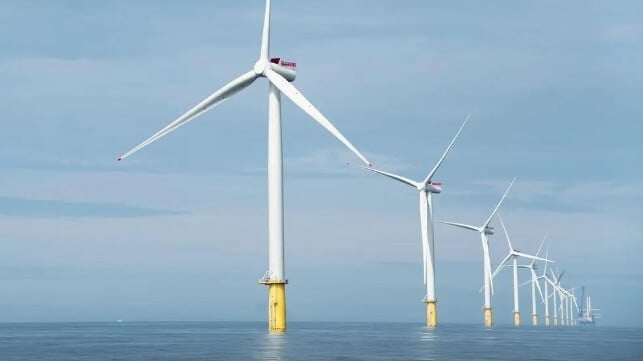
offshore wind farm
Germany and the Netherlands are working to change their subsidy programs and heading toward CfD for offshore wind (file photo)

Published Sep 16, 2025 7:54 PM by The Maritime Executive


The governments of both Germany and the Netherlands are examining how they structure renewable energy subsidies, looking to spur the industry while managing costs for the end users. Both countries faced disappointments earlier this year when planned auctions for offshore wind failed to generate interest, and they have been working on new plans for their industries.

“In various parts of the world and in Europe, the sector is struggling with rising costs, rising interest rates, and uncertainty about sufficient demand,” said the Netherlands’ Deputy Prime Minister and Minister of Climate Policy and Green Growth, Sophie Hermans. “Without intervention, the rollout of wind farms is at risk of grinding to a halt. The Offshore Wind Energy Action Plan offers additional support for the sector in the coming period and details several additional measures. This will enable the next cabinet to make swift decisions on these matters.”?

Hermans highlighted the danger that, going forward, the pace of offshore wind farm rollout is slower than in recent years. In May, the Netherlands delayed an offshore wind license auction when it became clear that the developers required subsidies to go forward. The Netherlands has 4.7 GW of installed capacity. Its goal for 21 GW was delayed from 2030 to 2032.

The Netherlands continues to see offshore wind energy as a driving force in the Dutch energy transition. It will also help the Dutch to locally source more of their power.

To prevent a slowdown from jeopardizing the country’s long-term plans, Hermans said the new action plan calls for allocating €1 billion to support the construction of 2 GW of new offshore wind farms next year. The plan also anticipates longer-term support efforts for the sector.

In the short term, in addition to the subsidy for the construction projects, the Netherlands government is also extending its Indirect Compensation Cost program by one year with an additional €150 million. This will also improve the future business case for offshore wind farms, according to Hermans. They also plan to work on the demand side of the power market. 

In the longer term, the Dutch cabinet is preparing a bill to enable the Contracts for Difference approach for wind farms, which is already in use in the United Kingdom. Operators receive a subsidy if their revenues fall below a certain level and pay the state when electricity prices are high. The cabinet is also exploring a guarantee fund to support long-term energy contracts.

Another step will consider the timeline for the required construction for wind farms for the developers. The cabinet is also exploring reorganizing the plans for the Ten Noorden van de Waddeneilanden site to possibly incorporate it with the Doordewind energy zone, which would Herman said lead to higher revenue per turbine.

Germany faced similar challenges after it failed to receive bids in its most recent round. The new government’s Economy Minister, Katherina Reiche, on Monday, September 15, said they needed to address bringing down the cost of energy to make the shift to renewable energy successful.

Germany can still achieve its goal of climate neutrality by 2045, but the energy supply must be made more efficient so as not to overburden industry and consumers with the costs of the transition, the minister said.  Expansion must be better managed, and a new subsidy plan will be announced. 

Germany’s goal is to systematically lower its subsidies. For example, the minister called for abolishing a fixed rate for solar power from new installations. For wind power, Germany is also considering CfDs as well as a system of revenue recovery.

Reiche notes that German industry is slowly moving away from oil, gas, and coal. However, they highlight that 54 percent of Germany’s electricity was generated from renewables in the first half of 2025. As part of the new plan, the ministry said it believes the prior government overestimated demand. Working on a revised plan, they asserted that Germany remains on track to source 80 percent of its electricity from renewables by 2030.


GE Vernova Lands Wind Turbine Order With Prokon in Germany

GE Vernova Inc. (NYSE: GEV) has signed a deal with German cooperative Prokon Regenerative Energien eG to repower a wind farm in Fleetmark, Saxony-Anhalt, with eight of its 6MW-164m onshore turbines manufactured in Salzbergen, Germany.

The agreement, booked in Q2 2025, underscores the success of GE Vernova’s “Workhorse Product Strategy,” which focuses on reliable and high-availability turbines designed for Europe’s maturing wind market. The project supports Germany’s push to accelerate onshore wind deployment as the country targets sourcing 80% of its power from renewables by 2030. Germany added around 3.2 GW of onshore wind capacity in 2024.

For Prokon—one of Europe’s largest energy cooperatives with more than 40,000 members—the order builds on earlier projects in Friedersdorf and Langenbach, where GE Vernova turbines have already demonstrated stable yields. Prokon said the Fleetmark project reflects both its commitment to transparency with local communities and its strategy to expand citizen-oriented renewable generation.

GE Vernova, which operates a 70,000-square-meter manufacturing facility in Salzbergen, producing drivetrains and hubs, has nearly 120 GW of wind capacity installed globally across 57,000 turbines. The company has positioned its next-generation platforms to deliver affordable, reliable, clean power at scale.

For Prokon, the deal extends its wind portfolio of 77 projects totaling more than 1 GW across Germany, Poland, and Finland, while also complementing its expansion into solar, storage, and biomethane.


Secret Talks Hint at Exxon's Re-entry into Russia’s Sakhalin 1 Oil Project

The United States and Russia continue to discuss economic cooperation, including in the Sakhalin 1 oil project, Russian Deputy Foreign Minister, Sergey Ryabkov, said on Wednesday. 

Vladimir Putin’s special envoy for investment and economic cooperation, Kirill Dmitriev, is working on these issues with the U.S., Russia’s news agency Intefax quoted Ryabkov as telling reporters in Moscow. 

“I can mention Sakhalin-1 as the most obvious example of discussions that have started,” Ryabkov said, adding there are other areas in which talks have been held.

“We are ready to deepen these discussions and are open specifically to practical cooperation,” the Russian official said. 

Ahead of the Trump-Putin meeting in mid-August, Russia and the United States had reportedly discussed Exxon returning to the Sakhalin-1 oil and gas development project. 

The potential energy agreements between the U.S. and Russia were proposed as an incentive for Putin to agree to peace in Ukraine and a path forward for the United States to ease sanctions on Moscow.  

In the weeks following the Trump-Putin summit, no breakthrough has been achieved toward peace and President Trump has again expressed frustration with Putin.  

Exxon quit the Sakhalin-1 project after the Russian invasion of Ukraine, which triggered an exodus of foreign oil firms and service providers. 

To coincide with the Trump-Putin meeting, Vladimir Putin amended his decree from 2022 giving full Russian ownership to Sakhlain-1, and opened the door to a return of foreign companies to the oil and gas project.  

Back in 2022, Putin signed a decree to seize the Sakhalin-1 project, in which Exxon held a 30% stake. 

Senior executives from Exxon discussed a potential return to the Sakhalin-1 project in secret talks with Russia’s oil giant Rosneft earlier this year, The Wall Street Journal reported at the end of August, quoting sources with knowledge of the talks.    

By Tsvetana Paraskova for Oilprice.com


Morgan Stanley Reshapes Energy Investment Banking

Morgan Stanley is merging its Global Energy and Global Power & Utilities investment banking teams into a single worldwide unit, a move aimed at sharpening its coverage of clients across oil, gas, electricity, and renewables, Reuters reported on Wednesday. 

According to an internal memo seen by Reuters, the bank will operate the new Global Power and Energy group under a dual leadership model. John Jameson, previously head of Global Power & Utilities, and Andrew Ward, head of Global Energy, will serve as co-heads. The memo framed the decision as a response to the rapidly evolving energy landscape and the growing intersection of traditional hydrocarbons, renewable power, and infrastructure finance.

The reorganization comes as investment banks compete for mandates in both fossil fuels and clean energy. 

Global energy deal flow has stayed robust through 2025, with consolidation in U.S. shale, Middle East capital raising, and multibillion-dollar renewable projects all demanding advisory services. Combining the two teams positions Morgan Stanley to pursue cross-sector transactions, such as integrated LNG-to-power ventures or financing for grid-scale storage.

The new structure is expected to give clients a unified point of coverage across upstream oil producers, utilities, and renewable developers, at a time when many companies straddle multiple segments. 

The bank has not disclosed whether the shift involves staffing changes or cost reductions.

Morgan Stanley has played a role in several headline transactions this year, including advisory work on North American shale consolidation and debt financing for European offshore wind projects. By combining its coverage, the bank is indicating that it fully intends to take a more aggressive stance, particularly in venues that represent both fossil fuels and renewable combined plays. 

Morgan Stanley joins other Wall Street firms in recalibrating their energy franchises. Competitors, including Goldman Sachs and JPMorgan have highlighted energy transition deals as a growth market, even as traditional oil and gas transactions continue to generate fees.

By Charles Kennedy for Oilprice.com