Saturday, September 20, 2025


COMMENT: Billionaire Ivanishvili’s shadow rule pushes Georgia toward autocracy

COMMENT: Billionaire Ivanishvili’s shadow rule pushes Georgia toward autocracy
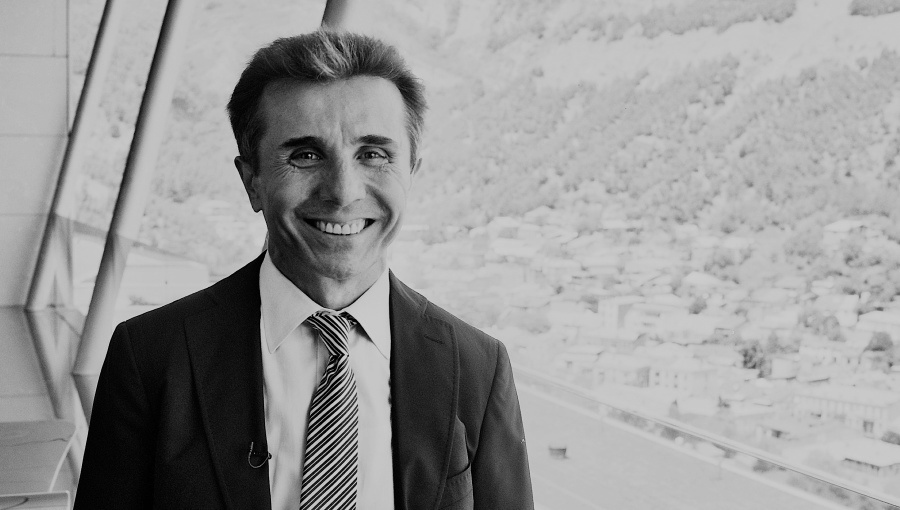
Bidzina Ivanishvili resigned as prime minister of Georgia in 2013, but never relinquished control.
By bne IntelliNews September 19, 2025

Georgia, once celebrated as a post-Soviet democratic success story, has quietly slipped into authoritarianism under the stewardship of its elusive billionaire puppet master, Bidzina Ivanishvili.

In their recent report published by the Central Asia-Caucasus Institute, Bidzina Ivanishvili: Governing from the Shadows, scholars Gabriel Chubinidze and Stephen F. Jones argue that Ivanishvili has engineered a regime in Georgia that now bears more resemblance to President Alexander Lukashenko’s Belarus than Prime Minister Viktor Orbán’s Hungary.

The ruling Georgian Dream (GD) party, which Ivanishvili founded in 2011 and led to power in 2012, has undergone a transformation from democratic coalition at its formation, to vehicle for personal rule, the authors state.

The current situation in the Caucasus country can be likened to what Chubinidze and Jones call a “quasi-dictatorship”, where formal institutions are little more than façades and civil society is under siege.

At the heart of this transformation is Ivanishvili himself, a man who, the report states, “has created an illiberal and anti-European system which leaves no political space for either party opponents or civil society activists.”

Though he resigned as prime minister of Georgia in 2013, Ivanishvili never relinquished control. Instead, he opted for shadow rule — “a dark box, a camera obscura”, as Chubinidze and Jones put it — governing invisibly and with no official position, yet with total authority.

New levels of authoritarianism

Though Georgia has long suffered from democratic weaknesses and strongman politics, Chubinidze and Jones argue Ivanishvili has taken authoritarianism to new levels.

The country’s three post-Soviet leaders — Eduard Shevardnadze, Mikheil Saakashvili and Ivanishvili himself when he entered politics in 2011 — each began their rule by promising democratic, pro-European reform.

Yet, as Chubinidze and Jones point out, “none of these leaders left democracy any stronger than when they arrived.”

While Shevardnadze brought post-independence stability and Saakashvili launched bold anti-corruption reforms, both men ultimately centralised power.

Ivanishvili, the authors argue, has gone further, hollowing out formal institutions and replacing them with an opaque, loyalty-based structure that functions without democratic oversight.

As the report notes, “there is no public accountability to the citizenry, nor to the goals of democracy or liberal pressures from abroad.”

It is not his authoritarianism, Chubinidze and Jones point out, that sets Ivanishvili apart from his predecessors, but his “ideological transformation from pro-Western reformer to anti-European strongman”, a pivot the authors say has brought Georgia to a new political juncture.

“Neither Shevardnadze nor Saakashvili imprisoned the entirety of the political opposition or condemned the European Union as harmful. Ivanishvili has done both. He has established an authoritarian system in his own image,” state Chubinidze and Jones.

The billionaire behind the veil

“Political personalities play an outsized role in Georgian politics,” write Chubinidze and Jones; “to understand the system, you need to know the personalities who run it, their psychology, where they came from, and who their associates are”.

Yet Ivanishvili’s power is not rooted in public presence or charisma. Chubinidze and Jones describe him as “a difficult case” who, unlike Shevardnadze or Saakashvili, “has little charisma and shuns interviews”. “His power comes from his wealth,” the report declares.

Born in 1956 in the small mining town Chorvila in western Georgia and educated in Moscow, Ivanishvili made his fortune amid the lawless capitalism of 1990s Russia, where he amassed a fortune through ventures like Rossiyskiy Kredit and shares in Gazprom and Rusal.

“Protectionism, patronage, extortion and murder were instruments of survival and the skills required for success,” Chubinidze and Jones note, drawing a connection between Ivanishvili’s formative experiences in the world of Russian business in the 90s and what came to be his style of governance.

A Soviet-formed, Russia-fortified worldview still shapes his politics, the authors argue. According to the report, “for the genus homo sovieticus, to which Ivanishvili belongs, political and economic power are indivisible.”

His fortune, Chubinidze and Jones note, is equivalent to 25% of Georgia’s GDP, and “his money underwrites his political power”.

Further, Ivanishvili’s “own moral concerns and financial needs are interwoven into Georgian state policy,” the report states.

A prolonged legal dispute with Credit Suisse in 2020, which resulted in hundreds of millions in frozen assets, hardened the billionaire’s deep distrust of Europe and, more broadly, the West, and spawned his allegations of “a Western conspiracy aimed at blackmailing him, undermining his political position and his financial interests”.

Former GD prime minister turned opposition leader Giorgi Gakharia argues it is these two interrelated concerns – money and power – that drive much of Ivanishvili’s anti-Western stance and prompt what analysts describe as his paranoid governing style.

This paranoia extends to his daily life: Ivanishvili is selective about his drinking water, fears poisoning and rarely appears in public. He is also eccentric, an owner of pet sharks, importer of fine art and collector of rare trees.

Behind closed doors, Ivanishvili sees NGOs and opposition figures not as rivals in a democratic contest but as existential threats to his own grip on power and position as puppeteer.

As Chubinidze and Jones put it, “he believes in conspiracy theories. He is paranoid about his security and is in a pathological pursuit of the [former-ruling United National Movement] UNM as an enemy of the state.”

This obsession with the UNM, the party of ex-president Saakashvili, has become a defining feature of GD’s system of rule.

The entire “collective National Movement” – as the ruling party refers to Georgia’s pro-Western opposition – is now framed as treasonous, with many high-profile leaders in jail, and state resources are mobilised to suppress dissent both on and off the streets.

Loyalists, not leaders

Chubinidze and Jones argue that, through “artfully planned philanthropy”, and rooted in his innate need for self-preservation, Ivanishvili has created a “stratum of officials, journalists, and lawyers privately indebted to him”.

Within the GD party, real leadership is non-existent. According to Chubinidze and Jones “Ivanishvili is the linchpin of the Georgian political system.”

Those who hold power around him serve not as political actors but as loyal executors — often former employees, bodyguards or personal acquaintances. One of his dentists and a former security detail have held senior political positions in the past.

Chubinidze and Jones employ the term “patrimonialism”, writing: “in the absence of established state institutions, a ruler controls government through personal loyalties, patron-client relations, business allegiances, and kinship.”

GD’s anti-European turn

Russia’s invasion of Ukraine in 2022 simultaneously gave Ivanishvili justification and cover for both a complete break with the West and authoritarian consolidation at home, the authors state.

GD’s two-strand offensive, employing both domestic and foreign policy, has successfully sabotaged Georgia’s prospective membership in the European Union, an aspiration polls consistently show is supported by the majority of the population.

Ivanishvili – who once insisted that a businessman cannot be successful “if he is not liberal and if he runs his business autocratically” – has, since his re-entry into public life as GD chair in 2018, become central to Georgia’s anti-Western, anti-democratic realignment.

A swathe of pro-European, progressive reforms, endorsed by Ivanishvili during his early years in power, have now been reversed, state Chubinidze and Jones.

In November 2024, GD suspended Georgia's EU accession negotiations, drawing hundreds of thousands of pro-European Georgians out onto the street in protest.

Georgia’s ideological transformation under Ivanishvili has taken the form of repressive legislation targeting civil society, consolidation of political power over state institutions, regression on social issues such as LGBT, erosion of democratic structures, smearing of Western leaders and government opponents at home and – crucially – an anti-Western narrative to match.

Since the full-scale war in Ukraine began, Ivanishvili has led the charge against what GD calls a subversive “deep state” network or “Global War Party”, which it alleges are plotting to open a second front of the Ukraine conflict in Georgia, an assertion the report dismisses as baseless fearmongering.

Further, Ivanishvili smeared the domestic opposition with the same brush, claiming the former ruling UNM was not a democratically elected government, but “an externally appointed revolutionary committee, a foreign agency” under the instruction of foreign “masters”.

In a rare, televised interview in October 2024, Ivanishvili declared: “You have to ban that which is the people's enemy and the country's enemy.”

It was upon this premise that GD moved to totally ban all opposition earlier this year, using the findings of its controversial commission as a basis of evidence upon which to “issue a strict political and legal condemnation to the collective UNM”, as Ivanishvili put it. The power – essentially – to outlaw all his opponents from politics.

“Ivanishvili has reached a new apogee of power and has the ability to end all opposition in Georgia, whether it is political parties, NGOs, the media, or external Western leverage,” declare Chubinidze and Jones.

“This resembles the Lukashenko school of authoritarianism,” the authors continue, “It surpasses Viktor Orbán’s authoritarian strategy, which controls the judiciary and monopolises the media, but permits an (admittedly severely constrained) opposition to exist.”

Chubinidze and Jones also note Ivanishvili’s rhetoric in relation to his party’s political opponents. “Using the language of homo sovieticus, Ivanishvili demonizes his rivals as enemies,” state the scholars.

By denouncing the domestic opposition and NGOs as “alien” to Georgian traditional values and “agents serving foreign forces”, Ivanishvili is able to engineer public consent around the measures GD is taking to eliminate them.

In line with its Eurosceptic rhetoric, GD has also introduced the hugely controversial “foreign agents” law targeting NGOs and independent media, branding them as “a pseudo-elite nurtured by a foreign country”.

Many in Georgia dub this bill the “Russian law”, likening it to similar legislation the Kremlin passed in 2013. Ivanishvili's critics accuse him of steering Georgia away from the liberal West and towards authoritarian Russia, using the GD party as the instrument to do so.

“Ivanishvili has consistently promoted normalisation of relations with Russia,” state Chubinidze and Jones, adding that “a significant portion” of the billionaire’s financial assets remain in Russia. Here again the authors draw attention to how Ivanishvili’s personal interests act as a key determiner of Georgia’s geopolitical fate.

Chubinidze and Jones highlight Moscow’s “powerful role” in Georgia’s social media, combined with the outsized influence of the Georgian Orthodox church, the emergence of populist allies in Europe, the EU's policy failures in Georgia and the election and re-election of US President Donald Trump as factors which, alongside Ivanishvili, explain the country’s “turn to political illiberalism”.

Georgia is heading into a local election on October 4 – a vote already mired in controversy amid a partial opposition boycott and mounting state repression.

Chubinidze and Jones warn that, amid GD’s “monopoly of political and economic power”, elections have lost all meaning.

The authors argue GD now operates not within a democratic framework but under a set of guiding principles dictated solely by Ivanishvili: “There is no law, only ‘the general line’—the only source of legitimacy is the will of the leader.”

The West reacts, tentatively

“Ivanishvili is unpopular with all manner of European and US leaders,” argue Chubinidze and Jones.

In response to Georgia’s democratic decline under GD, Brussels froze the country’s EU candidacy negotiations in late 2024.

The European Parliament passed multiple resolutions condemning democratic backsliding and the Georgian government’s “anti-European course”, with some MEPs calling for sanctions against Ivanishvili personally.

But the EU remains divided. Hungary and Slovakia have shielded Tbilisi from harsher measures, while other member states fear pushing Georgia closer to Russia.

The US, however, has taken a firmer stance. In December 2024, the Treasury Department imposed financial sanctions on Ivanishvili and several Georgian officials, accusing them of “undermining Georgia’s Euro-Atlantic trajectory”.

In May 2025, the House passed the MEGOBARI Act, which could mandate expanded sanctions pending a decision by the new US administration.

Despite these measures, Chubinidze and Jones warn the Ivanishvili regime is now doubling down — not retreating.

Inevitable collapse?

For all its control, the scholars suggest the system Ivanishvili has built may be inherently unstable.

“The Ivanishvili system has no social base, and in a crisis when it comes (and it will), the Ivanishvili system will quickly crumble,” they argue.

Georgia’s formal institutions — courts, parliament, electoral commissions — function only to serve the regime, offering the appearance of democracy without the substance. “Democracy needs citizens, accountable state structures, independent public servants, and honest elections. Ivanishvili has made sure Georgia has none of them,” Chubinidze and Jones state.

Ivanishvili’s grip on Georgia may appear unshakeable, but the authors believe that, “ultimately, the separation of Georgia from the West will not only damage the Georgian economy – the regime’s greatest weakness – but will alienate the regime from citizens who hold the deep conviction that Europe is their natural home.”

Further, the ruling elite stands increasingly isolated from the society it claims to represent, amid ongoing anti-government protests in Tbilisi.

While Chubinidze and Jones do not predict when or how the GD regime will collapse, they are clear about the stakes. “Creeping authoritarianism, not democratic backsliding, is a better description of Georgia’s political tradition over the last three decades,” the report declares.

With Ivanishvili now dismantling the last remnants of that tradition, Georgia’s Western allies may soon face a reckoning of their own: accept the country’s descent into full autocracy, or finally call time on the quiet, Ivanishvili-led coup that has brought it there.

China rejects US "bullying" over Latin American partnerships

China rejects US
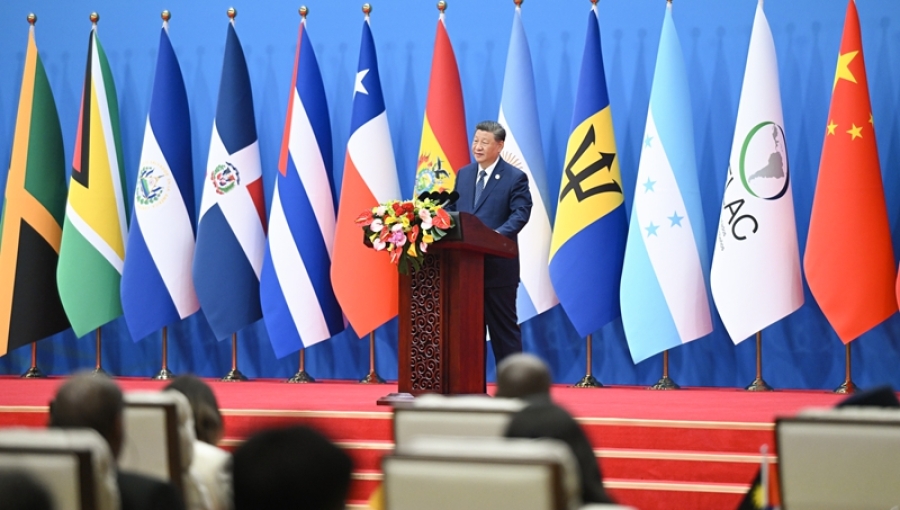
At the fourth China-CELAC Forum in Beijing in May, President Xi Jinping announced a $9.2bn credit line for Latin American and Caribbean countries, in a significant escalation of Beijing's regional outreach. / xinhua
By bnl editorial staff September 19, 2025

China has once again rejected American efforts to pressure Latin American nations into reducing ties with Beijing, with a foreign ministry spokesperson asserting the region's right to choose its own development partners independently, Xinhua reported.

The rebuke comes months after Beijing significantly expanded its presence in the region through a comprehensive cooperation package worth billions of dollars.

Speaking at a regular briefing on September 18, foreign ministry spokesperson Lin Jian responded to recent media reports suggesting the Trump administration has intensified pressure on regional governments to limit Chinese engagement throughout the year.

"Latin America is no one's backyard and has the right to independently choose development path and cooperation partners," Lin stated, addressing what he characterised as coercive American tactics.

The spokesperson's remarks followed reporting by major international publications indicating the United States has pursued what observers describe as an aggressive approach towards the region, citing concerns over Chinese influence whilst offering limited alternatives to regional partners.

According to these accounts, American sanctions, tariffs and military posturing have paradoxically driven Latin American nations closer to Beijing rather than achieving Washington's stated objectives of countering what it terms China's "exploitative practices."

"The commentary yet again shows that coercion and pressuring as well as bullying only serve to push countries away and will increasingly not work," Lin observed.

The Chinese official emphasised Beijing's balanced approach to regional partnerships, describing China and Latin America as "good friends and good partners for equality, mutual benefit and common development."

He characterised Chinese engagement with Latin American and Caribbean nations as based on "openness, inclusiveness and win-win cooperation," arguing that strengthened ties serve mutual interests.

The spokesperson welcomed other nations developing cooperative relationships with the region, provided they were "based on equality and respect," whilst criticising American tactics.

Lin called on Washington to "stop forcing them to choose sides, stop interfering in their domestic affairs and do more to contribute to their development and prosperity, instead of meddling and sowing discord."

Concluding his remarks, the spokesperson dismissed American efforts to disrupt Chinese-Latin American cooperation: "No attempt to disrupt China's friendship and mutually beneficial cooperation with Latin America will ever succeed."

The diplomatic row unfolds against the backdrop of China's rapidly expanding engagement with the region. At the fourth China-CELAC Forum in Beijing in May, President Xi Jinping announced a CNY66bn ($9.2bn) credit line for Latin American and Caribbean countries, marking a significant escalation in Beijing's regional outreach.

Bilateral trade between China and CELAC nations ballooned to $515bn in 2024, a dramatic surge from merely $12bn in 2000. China has now overtaken the United States as the primary trading partner for several major regional economies, including Brazil, Peru and Chile.

The comprehensive cooperation package Xi unveiled included programmes spanning political cooperation, economic development, security cooperation and cultural exchanges. Beijing pledged to facilitate visa-free travel for five Latin American countries initially, provide law enforcement training, and offer 3,500 government scholarships.

Notably, the credit line's denomination in yuan rather than dollars reflects China's strategic push to reduce dependence on the US currency in international trade. Two-thirds of Latin American countries have already joined China's Belt and Road Initiative, with Colombia formally announcing its participation during the May summit.

The latest statement from Beijing reflects growing tensions with Washington over influence in what the United States has historically considered its sphere of influence, as Latin American nations juggle competing great power interests with their sovereign right to diversify partnerships.


$23bn windfall for Kazakhstan as Beijing shifts up a gear on New Silk Road

$23bn windfall for Kazakhstan as Beijing shifts up a gear on New Silk Road
BRI has shown a decisive pivot to Central Asia, most particularly Kazakhstan. / yidaiyilu.gov.cn
By Nizom Khodjayev in Almaty September 19, 2025

Beijing’s Belt and Road Initiative (BRI) is undergoing a transformation in both scale and geography. This is occurring amid complexities brought about by US President Donald Trump's tariffs and issues with chronic overcapacity versus the market in China’s metals processing. Kazakhstan increasingly finds itself standing at the centre of this shift. 

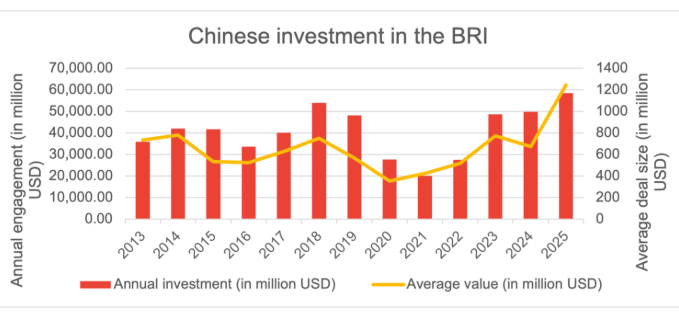
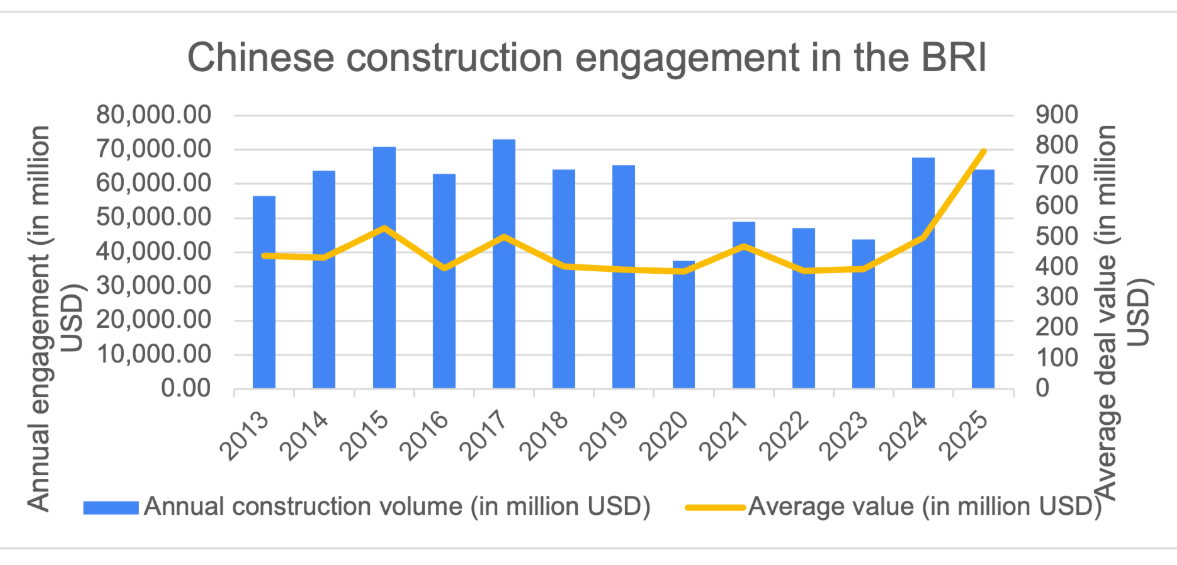
In the first six months of this year alone, Chinese companies committed to a record $124bn in new projects across countries participating in BRI, according to a report by Australia’s Griffith Asia Institute. Made up of $66.2bn in construction contracts and $57.1bn in investments, the figure surpasses the $122bn registered over the entirety of 2024. And it is a surge under BRI (also known as One Belt One Road (OBOR), the Silk Road Economic Belt and the 21st-century Maritime Silk Road, or just the New Silk Road) that illustrates the way in which Beijing is reorienting its overseas engagement towards resource security and industrial capacity at a time of international trade frictions and global supply uncertainty.

The fact that these spheres often lead to megaprojects “is bucking the [Beijing] ambition to have ‘small yet beautiful projects’ in the BRI propagated through official channels,” observes Griffith, adding: “However, it is important to note… that most large infrastructure projects are resource-backed deals (e.g., oil, gas) rather than fiscal spending deals (e.g., road construction), with relatively low financial risks for Chinese counterparts.”

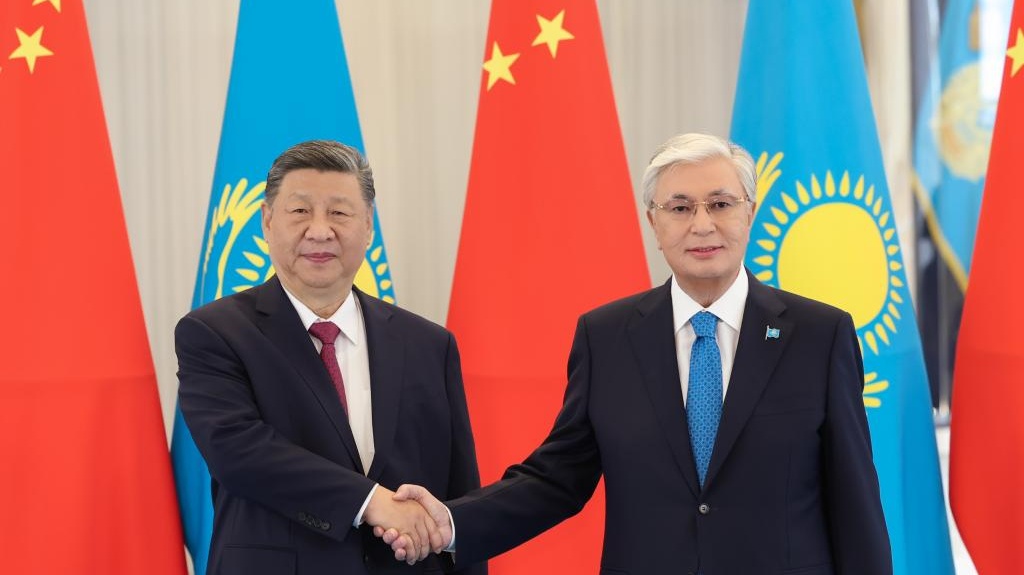
Chinese President Xi Jinping met his Kazakh counterpart Kassym-Jomart Tokayev at the Second China-Central Asia Summit held in Astana in June (Credit: yidaiyilu.gov.cn)

The composition of the BRI spending points to a sharp upturn in favour of energy and metals. Chinese oil and gas projects reached $30bn in the first half of the year. They include a $20bn gas processing park in Nigeria, according to the Griffith Asia Institute report. Green energy, long a showcase sector for BRI, registered almost $10bn in new commitments. That’s the highest ever such figure recorded in a half-year period. 

But perhaps the most dramatic expansion came in metals and mining. With nearly $25bn committed to aluminium and copper ventures, Chinese entities have invested more in the sector in six months than in any previous full year, the report said. This reflects not only Beijing’s appetite for critical raw materials (CRM), but also pressures posed by overcapacity at home and the challenges of rising tariffs in key export markets.

Looking at investment models currently favoured by Chinese companies pursuing BRI projects, Griffith assesses that “when comparing construction and investment in different sectors, it becomes clear that in mining and technology, Chinese firms are increasingly prioritising equity investments, despite the higher risks involved; meanwhile, energy investments continue to be dominated by construction deals rather than equity-based investments”.

Credit: Green Finance &Development Center, Fanhai International School of Finance (FISF), Fudan University, Shanghai.

What makes 2025 especially noteworthy for BRI so far is the geographic distribution of the capital. While earlier waves of BRI emphasised the Middle East, South Asia and maritime corridors in East Asia, the current capital surge shows a decisive pivot into Central Asia. Resource-rich Kazakhstan, in particular, has emerged as the standout destination for Chinese investment.

In January to June alone, Central Asia’s largest economy attracted an estimated $23bn in BRI-linked commitments, making it the single largest capital recipient worldwide, according to figures cited by the Griffith Asia Institute. To put this into perspective, the next highest recipients—Thailand with $7.4bn and Egypt with $4.8bn—pale in comparison to the scale of Chinese engagement in Kazakhstan.

"Green" aluminium production chain

This inflow of investment from China includes a $12bn plan by the privately held East Hope Group, one of China’s largest aluminium producers, to create an integrated “green” aluminium complex in Kazakhstan’s Kostanay and Aktobe regions, the China Global South Project reported in August. This undertaking is designed not as a simple extraction venture, but as a vertically integrated industrial hub that spans the entire aluminium production chain. 

East Hope’s blueprint involves developing 11 deposits of bauxite and coal, constructing a mining and processing plant capable of handling 6mn tonnes of ore annually, and building a smelter that can produce 3mn tonnes of aluminium per year once fully operational, China Global South Project’s report said. Supporting this industrial ecosystem will be a massive 4.5-gigawatt power station.

The project, which is being marketed as environmentally sustainable thanks to its circular-economy design, is expected to provide employment for over 10,000 people at its peak. Phase one alone envisions the processing of 2mn tonnes of alumina and the smelting of 1mn tonnes of finished aluminium annually, with subsequent stages expanding capacity to the full planned scale by 2030, Kazakhstan’s Ministry of Industry and Construction said in a statement.

This aluminium complex demonstrates a dual rationale behind China’s industrial push in BRI countries. On the one hand, it reflects the domestic reality of a saturated aluminium sector in China, where years of rapid expansion have led to chronic overcapacity, depressed prices and thin margins, the China Global South Project argues. Relocating production abroad provides a release valve for this surplus capacity.

On the other hand, it serves as a strategic manoeuvre to evade rising trade barriers, the report posits. Chinese aluminium has been subject to increasingly punitive tariffs in the US, the EU and elsewhere, the report notes. By producing aluminium in Kazakhstan, Chinese companies can rebrand exports as Kazakh rather than Chinese, thereby sidestepping restrictions and maintaining competitiveness in key markets. 

Credit: Green Finance &Development Center, Fanhai International School of Finance (FISF), Fudan University, Shanghai.

For Kazakhstan, the attraction is obvious: instead of simply exporting raw input bauxite, the country secures foreign capital to build domestic processing and manufacturing capacity, gaining jobs, technology and industrial expertise in the process. This is line with the Kazakh government’s long-running aim to switch to value-added production instead of simply exporting raw materials. 

Copper another pillar of engagement

If aluminium is one pillar of this deepening engagement, copper is the other. In the first half of 2025, Chinese investments in Kazakhstan’s copper industry totalled some $7.5bn, with the flagship project a $1.5bn smelting complex planned for near the Aktogai deposit in Abai Region. Led by the state-owned China Nonferrous Metal Industry’s Foreign Engineering and Construction Company (NFC), this initiative represents a full-fledged industrial cluster. The new smelter, designed to handle 300,000 tonnes of copper annually, will be tightly integrated with some of Kazakhstan’s largest copper mines, operated by Kazakhmys and KAZ Minerals.

The facility will produce not only copper cathode but also valuable byproducts such as refined gold, silver and sulfuric acid. Scheduled to begin operations by 2028, the project is expected to employ more than 1,000 workers and position Kazakhstan as a significant hub for copper refining as well as mining.

Globally, copper supply has tightened due to setbacks in Chile and Peru, which traditionally dominate global production, China Global South Project noted in a separate report. At the same time, China’s own smelting sector has expanded so aggressively that refiners are facing acute shortages of concentrate feedstock. Treatment and refining charges—the fees smelters receive for processing ore—have fallen to unsustainable lows, forcing producers to consider output cuts.

By investing directly in Kazakhstan, China not only secures a reliable stream of ore, it also relocates some of its overbuilt smelting capacity to a more favourable jurisdiction. For Kazakhstan, the upside mirrors that of the aluminium deal: rather than exporting unprocessed ore, the country gains value-added industries and the chance to climb higher up the global supply chain.

China’s investment drive in Kazakhstan is beginning to move beyond aluminium and copper, extending into other strategically important minerals. The country holds significant reserves of CRM, and the government in Astana has been actively encouraging new projects in these areas.

In early 2025, officials announced the launch of exploration programmes for lithium at the Akhmetkino deposit, along with fresh initiatives in tungsten. A German company has already committed $8mn to develop the Akhmetkino lithium site, with the possibility of expanding its investment to as much as $500mn if commercially viable reserves are confirmed, The Astana Times reported.

At the same time, Kazakhstan has been expanding its tungsten industry, having inaugurated a $300mn processing facility in November 2024. It is preparing new mining operations to feed it.

These developments have not gone unnoticed in Beijing, where Chinese companies—driven by their own ambitions in the battery supply chain and rare metals—have shown growing interest in participating in Kazakhstan’s lithium and tungsten sectors.

Risk of dependence

On the one hand, the arrival of this capital from China bodes well for Kazakhstan, as the government in Astana has made it clear in recent years that foreign investors must go beyond extraction and commit to on-site processing, joint ventures and technology transfer. Both the East Hope aluminium complex and the NFC copper smelter were structured with these conditions in mind. They are not merely mines but integrated industrial ecosystems designed to create jobs, infrastructure and local expertise. Officials have touted them as evidence that Kazakhstan can leverage global demand for resources to drive its own economic diversification.

On the other hand, long-term dependence on one dominant partner for investment will inevitably come with risks. China’s overwhelming role as Kazakhstan’s top source of foreign investment could potentially limit Astana’s bargaining power in the long run.

The Griffith report predicts that the trend in BRI investment growth in Kazakhstan will continue through the rest of 2025, with sustained investment in mining, green energy and advanced manufacturing. Only time will tell whether Kazakhstan will successfully balance its investment and capital partnerships. 

In the wider conclusions at the end of the report, Griffith forecasts “for 2025, a further expansion of BRI investments and construction contracts seems possible despite (or because of) global economic headwinds driven by US-led trade impositions.

“On the one hand, there is a clear need for investments to green boost growth to support the green transition, both in China and in BRI countries. This provides continued opportunities for mining and minerals processing deals, technology deals (e.g., EV manufacturing, battery manufacturing) and green energy (e.g., energy production and transmission). China refers to these industries (electric vehicles, batteries and renewable energy) as the ‘New Three’.

“Furthermore, global trade volatilities and uncertainties can spur investments in supply chain resilience and exploration of new markets by Chinese companies. However, risks emerge due to the uncertainty of possible activities by global financial institutions with strong US board presence (e.g., World Bank Group, Asian Development Bank), while China-dominated development banks (e.g., AIIB, NDB) should provide infrastructure development opportunities for Chinese contractors.

“Nevertheless, we do expect Chinese BRI engagement to reach lower levels in the second half of 2025 with fewer megadeals.

“In line with our previous predictions, we continue to see deal numbers increasing. With strong engagement in sectors requiring significant investment (e.g., mining, manufacturing), compared to sectors with variable engagement (e.g., renewable energy), we can expect deal size to also remain larger than in 2022 and 2023.”

* The author of the Griffith report is Dr Christoph Nedopil, Director of the Griffith Asia Institute and a Professor at Griffith University in Brisbane, Australia. He is also a Visiting Professor at FISF Fudan University, Shanghai, Acting Director of the Green Finance & Development Center at FISF Fudan University, and a Visiting Faculty at Singapore Management University (SMU).

South Sudan officials diverted $2.2bn from Oil for Roads scheme, UN report finds, citing “systemic” corruption

South Sudan officials diverted $2.2bn from Oil for Roads scheme, UN report finds, citing “systemic” corruption
$1.7bn in contracts awarded to firms linked to VP Benjamin Bol Mel / bne IntelliNews
By bne IntelliNews September 20, 2025

A United Nations commission this week alleged that South Sudan’s “Oil for Roads” programme – launched shortly after independence in 2011 to use crude oil revenues directly to finance infrastructure – misallocated about $2.2bn between 2021 and 2024, with more than 90% of planned infrastructure projects never completed as a result.

About $1.7bn in contracts were awarded to firms connected to Vice President Benjamin Bol Mel for road construction work that was never done, the UN Commission on Human Rights in South Sudan said in a 101-page report.

It described corruption in the world’s newest country as “rampant and systemic” and accused a “predatory elite” of systematic and institutionalised looting of the nation’s wealth for private gain.

“Our report tells the story of the plundering of a nation: corruption is not incidental, it is the engine of South Sudan’s decline,” Commission chairperson Yasmin Sooka said. “It is driving hunger, collapsing health systems, and causing preventable deaths, as well as fuelling deadly armed conflict over resources.”

In 2017, the US government sanctioned Bol Mel and two companies associated with him, alleging that one of the firms had received preferential treatment from high-level government officials to do road work in the country, Reuters reported. Washington sanctioned two more of his companies in 2021.

The UN findings are expected to intensify scrutiny from donors and multilateral agencies, possibly resulting in further sanctions, unless reforms are implemented. Human Rights Watch (HRW) and other watchdog groups have urged donors to tighten oversight of South Sudan’s oil revenues.

FACTBOX – UN report on South Sudan oil corruption

  • $2.2bn misallocated (2021–24): Most funds from “Oil for Roads” siphoned off; over 90% of projects never finished.
  • $1.7bn to VP-linked firms: Companies tied to Vice President Benjamin Bol Mel won major contracts but failed to deliver.
  • Systemic corruption: UN calls graft “rampant and systemic,” driven by a “predatory elite.”
  • Humanitarian toll: Corruption blamed for hunger, collapsing health services, preventable deaths, and fuelling conflict.
  • Oil dependence: Oil provides >90% of revenue; reserves ~3.5bn barrels. Output fell from 350k bpd (2011) to 150k bpd (2024).
  • Economic collapse: GDP shrank from $12bn in 2011 to $5.4bn in 2024 (World Bank).
  • Donor pressure: ICG warns sanctions likely; HRW urges tighter oversight of oil revenues.

South Sudan has proven reserves of about 3.5bn barrels – the third largest in sub-Saharan Africa after Nigeria and Angola. Output peaked near 350,000 barrels per day (bpd) at independence in 2011. By 2024, production was down by 57% to 150,000 bpd, owing to years of civil war, underinvestment and insecurity.

Oil revenues still provide more than 90% of government income and export earnings, the UN report said, creating extreme dependence on global price movements. South Sudan’s GDP stood at about $12bn in 2011, according to World Bank data, but as of 2024 it had fallen by 55% to $5.4bn.

Loan-backed oil deals, where future barrels are mortgaged for immediate financing, have further constrained fiscal space and tied South Sudan’s state budget to volatile oil markets.

In addition, all crude exports flow north through Sudan to Port Sudan on the Red Sea, leaving South Sudan vulnerable to disruptions from transit fee disputes and Sudan’s own internal conflict. Repeated shutdowns have exposed the country’s reliance on its neighbour’s infrastructure, with no alternative pipeline routes available despite years of proposals.

In 2019, the government signed agreements with investors to build two refineries (one in Bentiu, Unity State; another near Paloch, Upper Nile State), each designed for around 5,000–10,000 bpd, but financing and insecurity have delayed progress.

The IMF and World Bank warn that South Sudan’s narrow dependence on oil revenues reflects a “resource curse” dynamic, underscoring the urgent need for economic diversification and stronger oversight of revenue flows. Without reform and renewed investment, oil output will continue to decline, threatening fiscal stability and deepening humanitarian crises.

Guterres Pushes Leaders To ‘Turn The Tide’ On Global Crises During High-Stakes UNGA Week

September 19, 2025 0 Comments
By UN News


Secretary-General António Guterres has issued a stark call to world leaders on the eve of the United Nations General Assembly’s high-level week, warning that a “global crisis” of war, climate change, inequality and technological risk demands urgent, coordinated action.

“We are facing a global crisis. Conflicts are multiplying in the context in which geopolitical divides do not allow to effectively address them,” Mr. Guterres told UN News in an interview with Global Communications chief, Melissa Fleming.

“There is a sense of impunity – every country believes they can do whatever they want. On the other hand, we see that developing countries are facing enormous difficulties. Many of them drowning in debt without access to concessional funding that they require to redress their economies. Inequality is growing.”

Global cooperation is a must

The Secretary-General highlighted the multiple fronts on which the UN is seeking to mobilise global cooperation.

“Climate change is not yet under control. And we have several signals that it will probably be very difficult to maintain our central objective, which is to keep global warming below 1.5° Celsius,” he said, referring to the threshold agreed under the 2015 Paris Agreement on Climate Change.

He also warned that while cutting edge technology such as Artificial Intelligence offers promise, it can amplify polarisation and hate speech, so governance must “ensure that human agency is preserved and that they become a force for good.”

Mr. Guterres said next week’s assembly must yield commitments across key areas: carbon emissions reduction, international financial reform and strengthening multilateralism.

He urged leaders to “turn the tide” and accept reforms of the international financial architecture for greater justice and equality.

Focus on the Middle East

Peace and security will also be at the centre of discussions. The Secretary-General said he expects clear support for a two-State solution to end the Israel-Palestine conflict and immediate measures to address the humanitarian crisis in Gaza.

“The carnage that is happening in Gaza has to end…we need a ceasefire immediately with the release of all hostages immediately too,” he said.

He also highlighted Sudan and other so-called “forgotten conflicts”, urging unified Security Council action to prevent further suffering.

Climate action now

Mr. Guterres told Under-Secretary-General Fleming that his commitment to fighting climate change through urgent action, was undimmed.

“Every Member State must present its new climate plan…which bring a dramatic reduction of emissions…to avoid irreversibility that would lead to a disaster of enormous proportions for people around the world,” he said, noting that the most vulnerable countries, including small island developing States and Africa, face disproportionate risks.
‘I am determined’

On a personal note, he rejected any counsel of despair.


“I am not optimistic nor pessimistic, I am determined…we must build hope and never give up until our objectives are achieved.”
After cuts to food stamps, Trump administration ends government's annual report on hunger in America


PAUL WISEMAN
Sat, September 20, 2025
\

On Tuesdays, volunteers at Neighbor's Cupboard unload boxes of dry goods and sort fresh produce in Winterport, Maine, on Aug. 26, 2025. (Katherine Emery/The Maine Monitor via AP)

WASHINGTON (AP) — The Trump administration is ending the federal government's annual report on hunger in America, stating that it had become “overly politicized” and “rife with inaccuracies.”

The decision comes two and a half months after President Donald Trump signed legislation sharply reducing food aid to the poor. The Congressional Budget Office has estimated that the tax and spending cuts bill Republicans muscled through Congress in July means 3 million people would not qualify for food stamps, also known as SNAP benefits.

The decision to scrap the U.S. Department of Agriculture's Household Food Security Report was first reported by The Wall Street Journal.

In a press release Saturday, the USDA said the 2024 report, to be released Oct. 22, would be the last.

“The questions used to collect the data are entirely subjective and do not present an accurate picture of actual food security,'' the USDA said. ”The data is rife with inaccuracies slanted to create a narrative that is not representative of what is actually happening in the countryside as we are currently experiencing lower poverty rates, increasing wages, and job growth under the Trump Administration.''

The Census Bureau reported earlier this month that the U.S. poverty rate dipped from 11% in 2023 to 10.6% last year, before Trump took office.

Critics were quick to accuse the administration of deliberately making it harder to measure hunger and assess the impact of its cuts to food stamps.