Thursday, October 02, 2025

Opinion

Meloni’s Gaza challenge: The people vs. Netanyahu’s cronies

October 2, 2025 


Italian Prime Minister Giorgia Meloni attends informal meeting of European Union leaders at Christiansborg Palace in Copenhagen, Denmark on October 01, 2025.
 [Dursun Aydemir – Anadolu Agency]

by Dr Ramzy Baroud

What is happening in Italy regarding Gaza is unprecedented in the history of solidarity between the country and any other international cause anywhere. A popular uprising is underway, the consequences of which are likely to alter, not only Rome’s position on the Israeli genocide in the Strip, but the country’s own political structure altogether.

To understand why such a conclusion is a rational one, we must consider two important factors: the popular mobilisation throughout the country and the historical context of Italy’s political attitude towards Palestine and the Middle East.

When the Israeli genocide in Gaza started, the language and political posturing of the far-right government of Giorgia Meloni were more or less consistent with the political positions adopted by other European leaders.

In her visit to Israel on 21 October 2023, Meloni’s language was that of unconditional condemnation of Palestinians for the 7 October attack and equally unconditional support of Israel and its ‘right to defend itself’.

That position remained consistent throughout the war until a few months ago, when the Israeli genocide reached levels too extreme even for Meloni to ignore. This was expressed in the words of Italian Defence Minister Guido Crosetto, who stated, last August, that Israel “lost its sanity and humanity.”

Despite this, Italian weapons continued to flow into Israel. Even when Rome decided not to ship new weapons to Tel Aviv, old military contracts previously signed with the Italian arms giant Leonardo were still being honored, despite the fact that these weapons were used directly in the Israeli genocide in Gaza.

Not only did Meloni ‘honor’ the country’s commitment to Israel at the expense of hundreds of thousands of innocent Palestinians in Gaza, but also at the expense of Italy’s progressive constitution, which states that “Italy rejects war as an instrument of aggression against the freedom of other peoples”.

On the other side, Italian society, at least for a while, remained confused and apparently docile in the face of the Israeli crimes and the support of their government for the ongoing genocide.

Their apparent docility did not necessarily reflect the Italian people’s lack of interest in events outside of their borders. Instead, it was a reflection of three major political and historical factors that are worth noting:

One, Italian media has, as of late, been divided into two main groups: private media, owned largely by the family of the late Prime Minister Silvio Berlusconi – a far-right media mogul and close ally of Israeli Prime Minister Benjamin Netanyahu; and public media, beholden to the diktats of the government. Expectedly, both remained committed to the Israeli hasbara line that criminalised the Palestinians and absolved Israel.

READ: Sumud Flotilla accuses Italy of sabotaging Gaza aid mission instead of protecting it

Two, the lack of organisational platforms in Italy, which in the past have been positioned within the activities of popular-based unions. Historically, Italy’s powerful unions were directly linked to political parties that had substantial representation in the Italian parliament. Together, they have managed not only to pull political strings but even to influence policies, nationally and internationally.

Three, all of the above is related to the major repositioning of Italian politics between the post-WWII First Republic (1948-1992) and the Second Republic, from 1992 to the present. That major realignment was directly related to the collapse of the Soviet Union, the dismantling of Italy’s communist party – once the West’s most powerful and relevant communist party – and the rise of center-right politics.

The latter event not only forced a dramatic change in Italy’s domestic politics, but also its foreign policy’s attitude, thus moving away from the far more balanced position regarding the Israeli occupation of Palestine, for example, to the near embrace of Israel’s most far-right politicians in later years.

This embrace became most apparent during the years of Berlusconi, but even more accentuated in Matteo Salvini’s Lega party, known even among Italians for being the natural inheritor of Italy’s fascist legacy.

But things began changing, thanks to the extent of Israel’s criminality in Gaza, the rising global solidarity for Palestine and the elaborate grassroots mobilisation within Italy itself since the start of the genocide.

On 22 September, Italian dockworkers led a nationwide strike against the war on Gaza and arms shipments to Israel. The action drew on a long history of worker resistance to militarisation, especially in ports repeatedly used to transport weapons. Organised by grassroots unions and solidarity networks, the mobilisation underscored a broad refusal among workers to be complicit in government policies that sustain war and genocide.

Suddenly, Italian unions are back on the streets, not simply to negotiate better wages, but to reclaim their position as a vanguard of solidarity at home and abroad. The consequences of this event alone could usher in a major change in the political attitude of the Italian people.

As Meloni’s government refuses to recognise the state of Palestine, she positions herself in direct opposition to the aspirations of her own people, from all political and ideological backgrounds. This could cost her dearly in future elections.

Italy is now on the cusp of another historical moment, the outcome of which could either entrench the country further in the far-right camp or take it back to a position that is far more consistent with its radical history of anti-fascism, social mobilisation, and internationalist resistance.

Regardless of where the pendulum of history will swing, there is no denying that what is happening in Italy at the moment is no less than an actual political uprising, an Intifada.
US-Israel plan: 'With international admin in Gaza, Palestine & Palestinians are going to disappear'


Issued on: 01/10/2025 - 

In this in-depth interview for Top Story, Italian journalist for La Repubblica, Francesca Borri offers much-needed context on the geopolitical calculus behind the US-Israel postwar plan for Gaza. She argues the proposal lacks any enforceable commitments and risks turning Gaza into an internationally administered zone, effectively sidelining Palestinian sovereignty. With Arab regimes largely aligned out of fatigue or strategic interest, and European donors complicit in sustaining a corrupt, deeply unpopular Palestinian Authority, Borri warns that symbolic solidarity is no longer enough. She says the real danger is the definitive end to Palestine through diplomacy.


Video by:  François PICARD


Ireland denounces Israeli attack on Gaza aid flotilla as 'breach of international maritime law'

'It's a humanitarian mission, no threat to anybody,' Taoiseach says

Ilayda Cakirtekin |02.10.2025 - TRT/ AA

Irish Prime Minister Micheál Martin

ISTANBUL

Ireland's Prime Minister (Taoiseach) Micheal Martin denounced Israel's attack on Gaza-bound Global Sumud Flotilla as a "breach of international maritime law," speaking ahead of the European Political Community meeting in Copenhagen on Thursday.

Asked whether Israel's attack on the flotilla constitutes a "breach of international maritime law," Martin agreed, emphasizing: "If it happened in international waters, then yes."

"It's a humanitarian mission, no threat to anybody other than to highlight and also to bring humanitarian aid into the people of Gaza and it underlines the absolute imperative of getting humanitarian aid into Gaza as quickly as possible," he said.

Martin also reaffirmed that consular assistance will be provided to those detained, emphasizing the "importance" of them being treated "properly."

The Israeli naval forces attacked the international aid flotilla bound for the besieged Gaza Strip and detained 223 activists on board, the organizers said on Thursday.

The Global Sumud Flotilla shared on the US social media company Instagram the names and nationalities of 223 activists aboard the 15 attacked vessels.

The activists aboard the ships attacked by Israel were of various nationalities, including Spaniards, Italians, Brazilians, Turks, Greeks, Americans, Germans, Swedes, British, and French citizens, and many others.

The Israeli Foreign Ministry said on the US social media company X that the detained activists were on their way to Israel's Ashdod Port, from which they will be deported to Europe.

The official flotilla tracker showed that 21 vessels have been attacked by the Israeli forces, with 23 others were en route to Gaza.


Türkiye labels Israeli attack on Gaza flotilla a 'terrorist act'

Attack on flotilla shows 'Netanyahu’s genocidal, militarist policies' extend beyond 
Palestinians, targeting all who oppose Israel’s oppression, Foreign Ministry says


Esra Tekin |02.10.2025 - TRT/AA


ISTANBUL

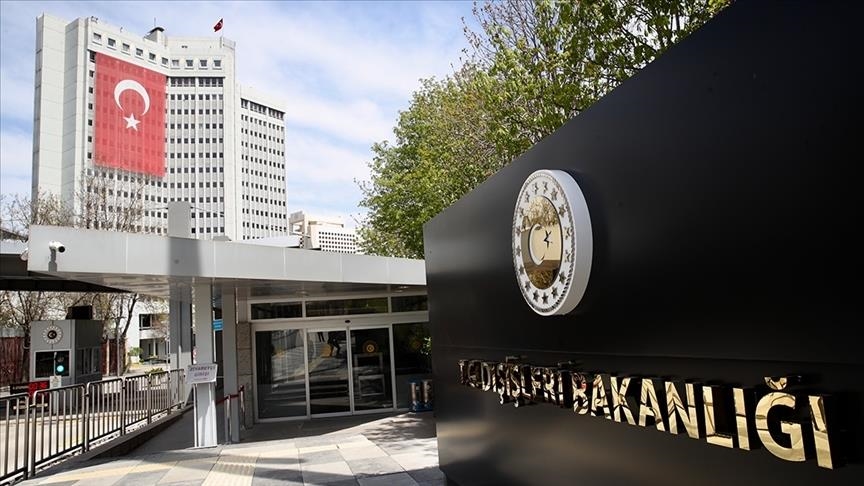
Türkiye slammed Israel’s attacks Wednesday of the Global Sumud Flotilla which was en route to Gaza to deliver humanitarian aid, calling it a "terrorist act” that endangers the lives of innocent civilians.

“This attack, which targeted civilians acting peacefully without resorting to violence, is proof that the fascist and militarist policies implemented by the genocidal Netanyahu government, which has condemned Gaza to famine, are not limited to Palestinians but target everyone who struggles against the oppression imposed by Israel,” a Foreign Ministry statement said.

The statement said that since the beginning of the voyage, coordination has been maintained with other countries whose citizens are among the participants in the fleet.

"All necessary steps are being taken to secure the immediate release of our citizens, other passengers detained by Israeli forces," it added.

The statement expressed hope that the attack would not undermine efforts to achieve a ceasefire in Gaza.

It announced that legal action will also be taken to hold "the perpetrators of the attack accountable."

"We call on the UN and all relevant international organizations to take immediate action to lift the unlawful blockade on Gaza, allow humanitarian aid to enter the region, and ensure freedom of navigation," it concluded.

Turkish Vice President Cevdet Yilmaz condemned the attack, saying "Israel’s unlawful and barbaric attack on the Sumud Fleet in international waters is unacceptable. I condemn this assault on the collective conscience of humanity.”

Turkish parliament speaker Numan Kurtulmus also slammed the attack, calling it "a clear violation of international law and a crime."

Türkiye’s Communications Director Burhanettin Duran, also denouncing the attack, said that Israel’s intervention will go down in history as a "dark stain."


Israel to deport intercepted flotilla activists, including Greta Thunberg, to Europe


Israel said it would begin deportation proceedings for the activists aboard vessels from the Gaza aid flotilla, with organisers saying Thursday that 39 of the flotilla's boats had been halted, leaving only one vessel still sailing towards Gaza. The activists – including Swedish environmental campaigner Greta Thunberg – will be sent to Europe.


Issued on: 02/10/2025 
By: FRANCE 24

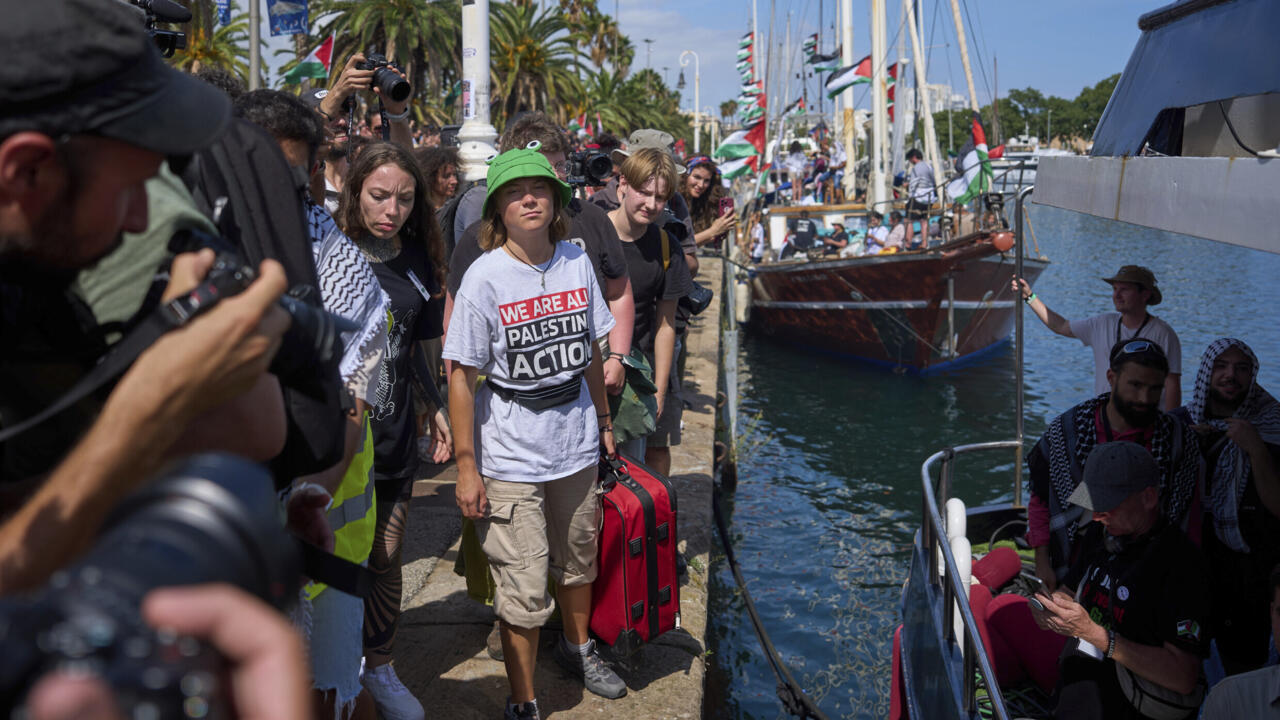
Swedish climate activist Greta Thunberg arrives to board a boat taking part in a civilian flotilla bound for Gaza, aiming to break the Israeli blockade and deliver humanitarian aid. © Emilio Morenatti, A


“Hamas-Sumud passengers on their yachts are making their way safely and peacefully to Israel, where their deportation procedures to Europe will begin. The passengers are safe and in good health,” the foreign ministry said on X after Israeli naval forces intercepted several vessels sailing towards Gaza.

On Wednesday, a video from the Israeli foreign ministry showed the flotilla’s most prominent passenger – Swedish climate activist Greta Thunberg – sitting on a deck surrounded by soldiers.

“Several vessels of the Hamas-Sumud flotilla have been safely stopped and their passengers are being transferred to an Israeli port,” the ministry said on X. “Greta and her friends are safe and healthy.”

Organisers said Israeli forces had stopped 39 of the flotilla's boats, leaving only one vessel still sailing towards Gaza.


The Global Sumud Flotilla, which is carrying medicine and food to the war-ravaged enclave, consists of more than 500 parliamentarians, lawyers and activists.

Its progress across the Mediterranean had drawn international attention as countries including Turkey, Spain and Italy deployed boats or drones in case their nationals required assistance – even as Israel repeatedly warned the flotilla to turn back.

Turkey’s foreign ministry denounced Israel’s “attack” on the flotilla as “an act of terror” that endangered the lives of innocent civilians. Spontaneous protests broke out in Italy in response to the raid.

Read more UN urges probe into Gaza-bound flotilla drone ‘attacks’ as Italy sends warship

Boats intercepted inside zone policed by Israel

The flotilla is the latest sea-borne attempt to breach Israel’s blockade of Gaza, much of which has been devastated by almost two years of war.

Organisers condemned Wednesday’s raid as a “war crime”, alleging the military used aggressive tactics including water cannon, though no injuries were reported.

“Multiple vessels … were illegally intercepted and boarded by Israeli Occupation Forces in international waters,” the organisers said in a statement.

The flotilla also accused Israel’s navy of attempting to sink the Maria Cristina. Reuters could not independently verify the claim, and the Israeli military did not immediately respond to a request for comment.

Ankara said it had begun steps to secure the release of Turkish and other nationals on board, while Spain urged Israel to respect the safety and rights of the activists.

“Tonight’s reports are very concerning. This is a peaceful mission to shine a light on a horrific humanitarian catastrophe,” Ireland’s Foreign Minister Simon Harris said on X.

The first boats were about 70 nautical miles from Gaza when they were intercepted, inside a zone Israel polices to prevent any vessels approaching the enclave. Organisers said their communications had been scrambled, including a live camera feed from some boats.

In a Telegram post early Thursday, the flotilla reported that another vessel, Adara, had also been boarded, with the fate of those on board unconfirmed. According to the flotilla’s own ship-tracking data, nine boats in total had been intercepted or stopped. Organisers vowed the mission “will continue undeterred”.

Israel’s navy had earlier warned that the flotilla was entering an active combat zone and violating a lawful blockade, offering instead to transfer any aid through official channels into Gaza.

Trying to break the blockade

The flotilla had hoped to arrive in Gaza on Thursday morning if not intercepted.

It was the second confrontation that day. Before dawn, organisers said two Israeli warships encircled flotilla boats and scrambled their communications.

Last week, the mission reported being attacked by drones dropping stun grenades and itching powder, which caused damage but no injuries. Israel did not comment, but has said it will use all means to stop the boats, insisting its naval blockade is legal as it battles Hamas in Gaza.

Italy and Spain deployed naval vessels in case of rescue or humanitarian needs, but halted their shadowing once the flotilla came within 150 nautical miles (278km) of Gaza. Turkish drones also monitored the convoy.

Italy and Greece issued a joint appeal urging Israel not to harm activists and asked the flotilla to hand its cargo to the Catholic Church for indirect delivery to Gaza – a plea the organisers rejected.

Israeli officials dismissed the mission as a stunt. “This systematic refusal [to hand over the aid] demonstrates that the objective is not humanitarian but provocative,” Jonathan Peled, Israel’s ambassador to Italy, wrote on X.


Past attempts to deliver aid

At a press conference on Wednesday, Francesca Albanese, the UN’s special rapporteur on the Palestinian Territories, said any interception of the flotilla would constitute “a violation of international law” since Israel had no jurisdiction over waters off Gaza.

Israel has imposed a naval blockade since Hamas seized Gaza in 2007, and several previous attempts to deliver aid by sea have been mounted.

In 2010, nine activists were killed when Israeli forces stormed a flotilla of six ships carrying 700 pro-Palestinian activists from 50 countries.

In June this year, Israeli naval forces detained Thunberg and 11 crew members from a small ship organised by the Freedom Flotilla Coalition as it neared Gaza.

Israel launched its current offensive in Gaza after the Hamas-led attack of October 7, 2023, in which some 1,200 people were killed and 251 taken hostage, according to Israeli figures. The war has since killed over 65,000 people in Gaza, local health authorities say.

(FRANCE 24 with Reuters)
Breakaway boat of Global Sumud Flotilla enters Gaza's waters

Mikeno vessel an hour away from Gaza, flotilla Gaza organizer says

Efe Ozkan |02.10.2025 - TRT/AA


ISTANBUL

The breakaway Mikeno vessel of the Global Sumud humanitarian aid flotilla reached Gaza’s territorial waters on Thursday morning.

According to the official flotilla tracker, the vessel has entered Gaza’s territorial waters, however, the tracking signal was lost with the vessel when it was about 9.3 nautical miles from Gaza.

There has been no clear information on whether the vessel has been attacked and towed, evaded the Israeli forces, or if there is an error with the tracker.

Ramazan Tunc, a member of the Global Sumud Flotilla Türkiye Delegation, told Anadolu that Mikeno had broken the blockade by entering Gaza's territorial waters.

“This means that the blockade has been broken in practice. I want to share with you the joy of bringing our ship Mikeno into Gaza, which for years, people said could not be broken, and which Israel has blockaded with great force from land and sea,” Tunc said.

He also emphasized that this situation meant that “Israel is a paper tiger,” adding: “Most importantly, we have broken the blockade in our minds. I greet everyone, hoping that the days when we will embrace our brothers and sisters in a free Gaza, in a Gaza where the blockade has been broken, are near.”

Tulay Gokcimen, a member of the Global Sumud Flotilla Delegation, also said there had been no attack on Mikeno, but that the activists threw their phones after the Israeli boat approached and that the ship continued on its way because it was small.

Noelia Fernandez, the fleet's Gaza organizer, told the Spanish press that they had received news that Mikeno was approximately 7 miles from the Gaza coast, a little less than an hour away.

Meanwhile, some activists reportedly told various media outlets that Mikeno was attacked by Israeli naval forces after entering Gaza waters, but no information about the attack was shared on the official Sumud Flotilla social media account.

- Global Sumud Flotilla


The Israeli naval forces attacked the international aid flotilla bound for the besieged Gaza Strip and detained 317 activists on board, organizers said on Thursday.

The activists aboard the ships attacked by Israel were of various nationalities, including Spaniards, Italians, Brazilians, Turks, Greeks, Americans, Germans, Swedes, British, and French citizens, and many others.

The Israeli Foreign Ministry said through the US social media company X that the detained activists are on their way to Israel's Ashdod Port, from which they will be deported to Europe.

The official flotilla tracker showed that 21 vessels have been attacked by the Israeli forces, with 23 others en route to Gaza
Palestine condemns Israeli attacks on Global Sumud flotilla as violation of international law

Foreign Ministry says Israel has no authority over Palestine’s territorial waters, as they extend from Gaza

Betul Yilmaz |02.10.2025 -


ISTANBUL

Palestine denounced on Thursday the Israeli attacks that targeted a global Gaza-bound aid convoy in international waters.

“The State of Palestine condemns Israel’s attack and aggression against the Global Sumud Flotilla, in violation of international law and norms, including the Convention on the Law of the Sea, other humanitarian principles, and the human rights of the participants on board,” according to a Foreign Ministry statement.

The ministry expressed Palestine’s grave concern about the safety of the over 470 participants, holding Israel “responsible for their security and well-being as they deliver humanitarian aid to a besieged, starved, and bombed population under genocide.

The statement reiterated that the global humanitarian mission is a peaceful and civilian-led initiative and has the right of free passage in international waters.

Israel “has no authority nor sovereignty over Palestine’s territorial waters, as it extends from the Gaza Strip, and over international waters,” the ministry said, underlining the International Court of Justice’s (ICJ) declaration of Israeli occupation as illegal.

Palestine called on the international community to provide protection for “the courageous participants” of the Global Sumud Flotilla.

Israeli naval forces attacked 21 vessels of the Global Sumud Flotilla since late Wednesday and detained at least 317 activists aboard, according to the official flotilla tracker.

The detained activists are being transported to Israel’s Ashdod Port, from which they will be deported to Europe, according to the Israeli Foreign Ministry.

The flotilla, loaded mainly with humanitarian aid and medical supplies, set sail several days ago to break the Israeli blockade.

This marks the first time in years that dozens of ships have sailed together toward Gaza and managed to approach the enclave this closely, which has been under Israeli blockade for roughly 18 years.

Israel tightened the siege further this March by closing all border crossings and blocking food, medicine, and aid, pushing Gaza into famine despite aid trucks piling up at its borders.

The Israeli army has killed over 66,100 Palestinians, most of them women and children, in Gaza since October 2023. The relentless bombardment has rendered the enclave all but uninhabitable and led to starvation and the spread of disease
Israeli Navy attacks Gaza aid flotilla, detains 223 activists


October 2, 2025 


A screen grab shows activists aboard a Global Sumud Flotilla vessel raising their hands to prove they were unarmed, as Israeli naval forces continue attack vessels of the Global Sumud Flotilla sailing toward Gaza to break the blockade and deliver humanitarian aid, in the Mediterranean Sea on November 02, 2025. [Global Sumud Flotilla – Anadolu Agency]


Israeli naval forces attacked an international aid flotilla bound for the besieged Gaza Strip and detained 223 activists on board, organizers said on Thursday, Anadolu reports.

The Global Sumud Flotilla shared on the US social media company Instagram the names and nationalities of 223 activists aboard the 15 of attacked vessels.

The activists aboard the ships attacked by Israel were of various nationalities, including Spaniards, Italians, Brazilians, Turks, Greeks, Americans, Germans, Swedes, British, and French citizens, and many others.

The Israeli Foreign Ministry said through the US social media company X that the detained activists are on their way to Israel’s Ashdod Port, from which they will be deported to Europe.

The official flotilla tracker showed that 21 vessels have been attacked by the Israeli forces, as 23 others continue their way to Gaza.

According to the tracker, the Mikeno vessel has entered Gaza’s territorial waters, however, the tracking signal was lost with the vessel when it was about 9.3 nautical miles from Gaza.

According to Erdem Ozveren, a Turkish activist from the global mission, their vessel is less than 30 nautical miles (55 kilometers) away from Gaza.

The Global Sumud Flotilla said Israeli forces surrounded the vessels as they sailed toward Gaza to challenge a years-long Israeli blockade. Activists reported signal jamming and communication cut aboard most of the boats.

Several activists posted videos on social media showing Israeli naval boats approaching the convoy and ordering them to change course.

“We are being attacked right now by the Zionist (Israeli) army,” the International Committee for Breaking the Siege on Gaza (ICBSG) said on the US social media company X’s platform. “Some ships have already been intercepted and a state of emergency has been declared aboard all vessels.

“High Alert. Our vessels are being illegally intercepted. Cameras are offline, and vessels have been boarded by military personnel.”

Violence

The committee accused Israel of using violence against the activists, saying naval forces rammed one ship, deployed water cannons, and forcibly boarded vessels while “brutally mistreating peaceful detainees from 50 countries around the world.”

The Israeli Foreign Ministry confirmed that some activists were detained and would be moved to an Israeli port.

The ministry said naval forces had reached the flotilla and ordered activists to divert to the port of Ashdod in southern Israel for inspection before aid could be transferred into Gaza.

Israel’s Channel 13, citing sources, said the operation to seize the flotilla would continue until Thursday.

Aid mission


The aid flotilla reached less than 80 nautical miles (148 kilometers) from Gaza before being attacked by the Israeli Navy.

Activists spotted more than 20 Israeli naval boats approaching the convoy, with the navy ordering them to change course.

A spokesman said the approaching Israeli boats were clearly moving to impose a blockade on the flotilla.

The attack came as the convoy already passed the point at which the Madleen and Handala ships were also attacked by Israel in June and July.

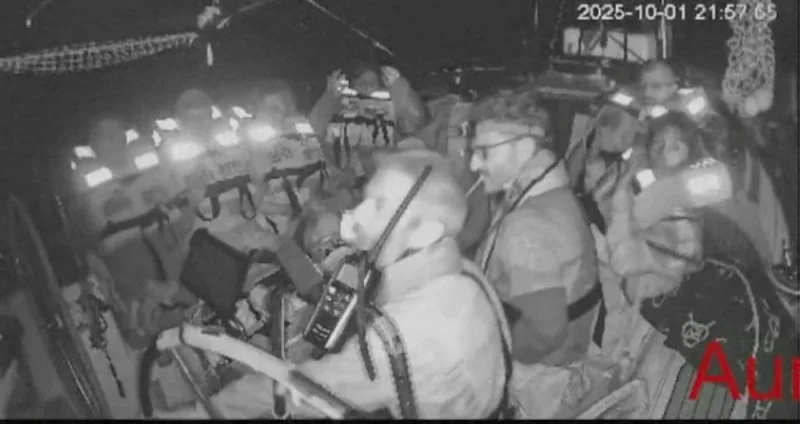
Livestream footage from the flotilla showed activists donning life vests as the Israeli boats approached the vessels.

The Israeli raid came despite appeals by international organizations, including Amnesty International, for the protection of the aid flotilla. The UN also warned that any attack on the convoy would be unacceptable.

Israel, as the occupying power, has previously attacked Gaza-bound ships, seized their cargo, and deported activists on board.

The flotilla, loaded mainly with humanitarian aid and medical supplies, set sail at the end of August. It was the first time in years that more than 50 ships have sailed together toward Gaza, carrying 532 civilian supporters from over 45 countries.

Israel has maintained a blockade on Gaza, home to nearly 2.4 million, for nearly 18 years, and further tightened the siege in March when it closed border crossings and blocked food and medicine deliveries, pushing the enclave into famine.

Since October 2023, Israeli bombardment has killed more than 66,000 Palestinians, most of them women and children. The UN and rights groups have repeatedly warned that the enclave is being rendered uninhabitable, with starvation and disease spreading rapidly.


Israeli navy storms ships from Gaza-bound aid flotilla

October 2, 2025 


A screen grab shows Israeli soldiers boarding a vessel from the Global Sumud Flotilla, as Israeli naval forces continue attack vessels of the Global Sumud Flotilla sailing toward Gaza to break the blockade and deliver humanitarian aid, in the Mediterranean Sea on September  02, 2025. [Global Sumud Flotilla – Anadolu Agency]


The organisers of the Global Sumud Flotilla, carrying humanitarian aid to Gaza, said on Wednesday evening that the Israeli navy stormed six ships, assaulted activists, and arrested dozens as some vessels neared the enclave’s coast.

This was stated by the International Committee to Break the Siege of Gaza and the flotilla organisers through their accounts on X and Facebook, up to 21:30 GMT.

Around 50 ships are taking part in the flotilla, moving in groups separated by a few nautical miles. Activists on board said that the distance between the leading vessels and those at the rear reached about 20 miles.

According to the organisers, the Israeli navy had boarded six ships by 21:30 GMT. These included vessels at the front of the flotilla that were closest to the Gaza coast.

Four of the seized ships were named as Alma, Surius, Adara and Deir Yassin. Organisers said they were raided illegally in international waters after their communication systems were deliberately damaged.

Turkey condemned the Israeli operation, describing it as a “war crime”. Turkish officials said the raid on civilian vessels in international waters violated international law and pledged to raise the issue with the United Nations and other international bodies.

Meanwhile, Spain announced that it had set up a special monitoring unit to follow developments related to the flotilla. The Spanish government said the unit would observe the situation closely and coordinate with international partners to ensure the safety of civilians on board.

Israeli military intercepts Gaza aid flotilla

Reuters/Rome/Athens
Published on October 01, 2025


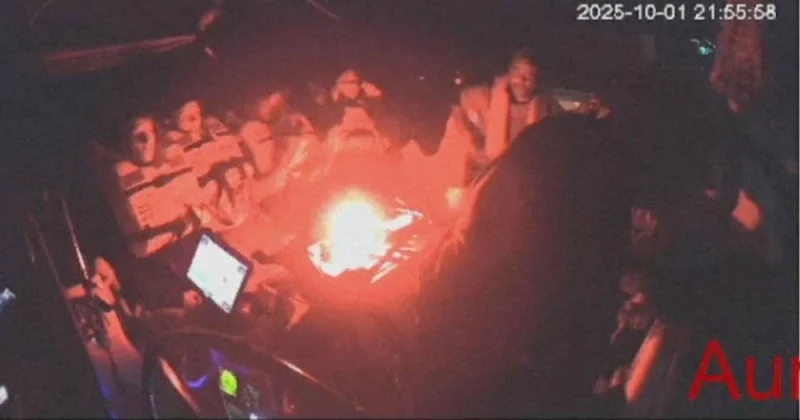
A screengrab from a live video footage shows crew members sitting aboard the Gaza-bound Aurora vessel, part of the Global Sumud Flotilla, October 1, 2025. Global Sumud Flotilla/Handout via REUTERS

A screengrab from a live video footage shows crew members sitting aboard the Gaza-bound Aurora vessel, part of the Global Sumud Flotilla, October 1, 2025. Global Sumud Flotilla/Handout via REUTERS

A screengrab from a live footage video shows crew of a Gaza-bound vessel, part of the Global Sumud Flotilla, put their hands up as they are intercepted by Israeli security forces, on Wednesday. Global Sumud Flotilla/Handout via REUTERS

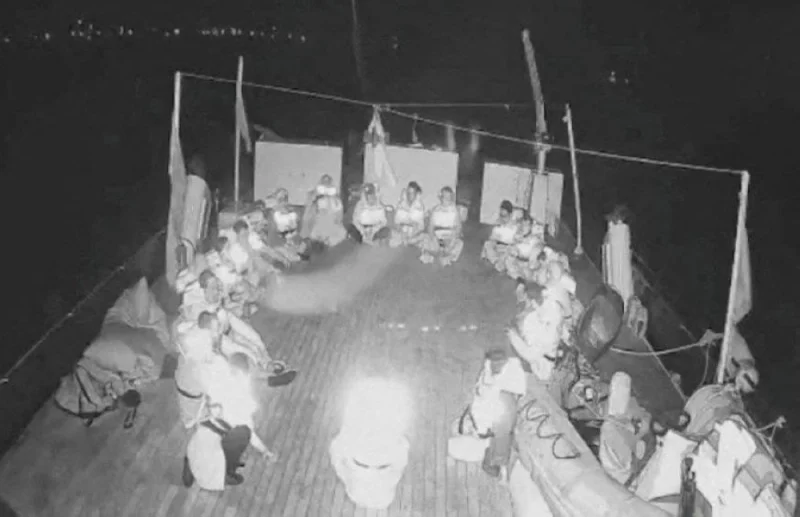
A screengrab from a live video footage shows crew members sitting in a circle aboard the Gaza-bound Alma vessel, part of the Global Sumud Flotilla, on Wednesday. Global Sumud Flotilla/Handout via REUTERS

Flotilla is latest attempt to break Israel's blockade of Gaza

Organisers say unidentified vessels approached, military came on board

Boats had expected to reach Gaza on Thursday

Israeli military personnel intercepted an international flotilla trying to deliver medicine and food to Gaza and boarded its boats as it approached the war-ravaged enclave.

Some 20 unidentified vessels were seen approaching the flotilla earlier on Wednesday night, multiple people on board said, as passengers put on life vests and braced for a takeover.

"Our vessels are being illegally intercepted. Cameras are offline and vessels have been boarded by military personnel. We are actively working to confirm the safety and status of all participants on board," organisers of the flotilla said in a post on X.

The Global Sumud Flotilla, which consists of more than 40 civilian boats carrying about 500 parliamentarians, lawyers and activists including Swedish climate campaigner Greta Thunberg, is trying to break Israel's blockade of Gaza, despite repeated warnings from Israel to turn back. It is within 90 nautical miles of the war-ravaged Strip, inside a zone that Israel is policing to stop any boats approaching.

A live video feed from one of the boats in the flotilla showed passengers in life vests sitting on deck.

It is not clear if all the boats had been intercepted or stopped. Some passengers said their vessels continued to advance.

Organisers remained defiant. "We will not be intimidated by threats, harassment, or efforts to protect Israel's illegal siege on Gaza," they said in an earlier statement.

The Israeli military did not respond to a request for comment about intercepting the vessels.

The Israeli foreign ministry earlier said its navy had reached out to the flotilla to warn it was approaching an active combat zone and violating a lawful blockade, and asked them to change course.

The ministry said that it reiterated the offer to transfer any aid peacefully through safe channels to Gaza.

It is the latest sea-borne attempt to break Israel's blockade of Gaza, much of which has been turned into a wasteland by almost two years of war. The flotilla had been hoping to arrive in Gaza on Thursday morning if it was not intercepted.

This was the second time the flotilla was approached on Wednesday. Before dawn, the mission's organisers said two Israeli "warships" had approached fast and encircled two of the flotilla's boats. All navigation and communication devices went down in what one organiser on board described as a "cyber attack". A video post on the flotilla's Instagram page showed the silhouette of what appeared to be a military vessel with a gun turret near the civilian boats.

Reuters confirmed that the video was filmed from the flotilla, but could not confirm the identity of the other vessel in the video or when the video was taken. Last week the flotilla was attacked by drones, which dropped stun grenades and itching powder on the vessels, causing damage but no injuries. Israel did not comment on that attack, but has said it will use any means to prevent the boats from reaching Gaza, arguing that its naval blockade is legal as it battles Hamas in the coastal enclave. Italy and Spain deployed naval ships to help with any rescue or humanitarian needs but stopped following the flotilla once it got within 150 nautical miles of Gaza for safety reasons. Turkish drones have also followed the boats.

Italy and Greece on Wednesday jointly called on Israel not to hurt the activists aboard and called on the flotilla to hand over its aid to the Catholic Church for indirect delivery to Gaza - a plea the flotilla has previously rejected.

At the press conference held by organisers on Wednesday, Francesca Albanese, the top UN expert on Palestinian rights, said any interception of the flotilla "would be yet another violation of international law, the law of the sea" since Israel had no legal jurisdiction on waters off Gaza.

Israel has imposed a naval blockade on Gaza since Hamas took control of the coastal enclave in 2007 and there have been several previous attempts by activists to deliver aid by sea.

In 2010, nine activists were killed after Israeli soldiers boarded a flotilla of six ships manned by 700 pro-Palestinian activists from 50 countries. In June this year, Israeli naval forces detained Thunberg and 11 crew members from a small ship organised by a pro-Palestinian group called the Freedom Flotilla Coalition as they approached Gaza.

Israel intercepts 39 aid boats heading for Gaza, sparking criticism


A screengrab from a live stream video shows crew of a Gaza-bound vessel, part of the Global Sumud Flotilla, raise their hands as they are surrounded by Israel Defense Forces on Oct. 2, 2025. (Global Sumud Flotilla via Reuters)

VIDEO
https://arab.news/pfst4

Reuters
October 02, 2025


Israeli forces have intercepted 39 boats carrying aid and foreign activists, including Swedish campaigner Greta Thunberg, to Gaza, leaving only one vessel still sailing toward the Palestinian enclave, the flotilla organizers said on Thursday.

Cameras broadcasting live feeds from the boats, verified by Reuters, showed Israeli soldiers sporting helmets and night vision goggles boarding the ships, while passengers huddled together in life vests with their hands up.

A video from the Israeli foreign ministry showed Thunberg, the most prominent of the flotilla’s passengers, sitting on a deck surrounded by soldiers.

Passengers diverted to an Israeli port


According to a tracker on the organizer, Global Sumud Flotilla’s website, one boat was still sailing. “Several vessels of the Hamas-Sumud flotilla have been safely stopped and their passengers are being transferred to an Israeli port,” the Israeli foreign ministry said on X. “Greta and her friends are safe and healthy.”

The flotilla, which set sail in late August, is transporting medicine and food to Gaza and consists of more than 40 civilian vessels with about 500 parliamentarians, lawyers and activists. It’s the highest-profile symbol of opposition to Israel’s blockade of Gaza.

The flotilla’s progress across the Mediterranean Sea garnered international attention as nations including Turkiye, Spain and Italy sent boats or drones in case their nationals required assistance, even as it triggered repeated warnings from Israel to turn back.

Turkiye’s foreign ministry called Israel’s “attack” on the flotilla “an act of terror” that endangered the lives of innocent civilians.

The Istanbul chief prosecutor’s office said it had launched an investigation into the detention of 24 Turkish citizens on the vessels on charges including deprivation of liberty, seizure of transport vehicles and damage to property, Turkiye’s state-owned Anadolu news agency reported.

Colombian President Gustavo Petro ordered the expulsion of Israel’s entire diplomatic delegation on Wednesday following the detention of two Colombians in the flotilla and terminated Colombia’s free trade agreement with Israel. Malaysian Prime Minister Anwar Ibrahim condemned Israel’s actions and said Israeli forces had detained 23 Malaysians.

Interception triggers global protests

Israel’s interception of the flotilla sparked protests in Italy and Colombia, while protests were also called in Greece, Ireland and Turkiye. Italian unions called a general strike for Friday.

Israel’s navy had previously warned the flotilla it was approaching an active combat zone and violating a lawful blockade, and asked organizers to change course.

It had offered to transfer any aid peacefully through safe channels to Gaza.

The flotilla is the latest seaborne attempt to break Israel’s blockade of Gaza, much of which has been turned into a wasteland by almost two years of war. In a statement, Hamas expressed support for the activists and called Israel’s interception of the flotilla a “criminal act,” calling for public protests to condemn Israel.

The boats were about 70 nautical miles off Gaza when they were intercepted, inside a zone that Israel is policing to stop any boats approaching. The organizers said their communications, including the use of a live camera feed from some of the boats, had been scrambled.

Greece said it has been informed that 39 boats from the flotilla are sailing to the Israeli port of Ashdod and that everyone onboard is safe, no violence was exerted, the Greek public broadcaster reported.

The flotilla had hoped to arrive in Gaza on Thursday morning if it was not intercepted.

Israeli officials have repeatedly denounced the mission as a stunt.

“This systematic refusal (to hand over the aid) demonstrates that the objective is not humanitarian, but provocative,” Jonathan Peled, the Israeli ambassador to Italy, said in a post on X.

Prior attempts aid by sea

Israel has imposed a naval blockade on Gaza since Hamas took control of the coastal enclave in 2007 and there have been several previous attempts by activists to deliver aid by sea.

In 2010, nine activists were killed after Israeli soldiers boarded a flotilla of six ships manned by 700 pro-Palestinian activists from 50 countries.

In June this year, Israeli naval forces detained Thunberg and 11 crew members from a small ship organized by a pro-Palestinian group called the Freedom Flotilla Coalition as they approached Gaza.

Israel began its Gaza offensive after the October 7, 2023, Hamas-led attack on Israel in which some 1,200 people were killed and 251 taken as hostages back to Gaza, according to Israeli tallies. The offensive has killed over 65,000 people in Gaza, Palestinian health authorities say.

Gaza flotilla boarded by Israeli navy amid calls to lift blockade

Multiple vessels of the Global Sumud Flotilla, a humanitarian convoy sailing towards Gaza, were intercepted and boarded by Israeli forces overnight Wednesday as they attempted to push through the naval blockade. RFI spoke to a French surgeon on board one of the 44 ships and the wife of a UK activist whose boat was intercepted.


Issued on: 02/10/2025 - RFI

Video grab taken from a livestream broadcasted on 1 October 2025 by the Global Sumud Flotilla shows Meteque, one the boats intercepted by the Israeli Forces. The crew, hands raised, adopt this position to show that they are unarmed and pose no threat. © Handout / Global Sumud Flotilla / AFP
By:Zeenat HansrodFollow
Advertising


“The Israeli military is trying to terrorise us by relentlessly attacking us with water cannons, blasting bright flashing lights and shrilling sirens,” Yacine Haffaf, a French surgeon on board the Jeannot III told RFI this morning.

He is one of the 450 people from over 40 countries sailing on the 44 boats of the Global Sumud Flotilla (GSF), which set sail for Gaza at the beginning of September to bring humanitarian aid to Gaza.

Last night, several GSF vessels were intercepted by the Israeli Occupation Forces (IOF) while they were hours away from the shores of Gaza.

Haffaf, 69, heads Waves of Freedom, the French contingent of the flotilla.


He told RFI – before the ship was intercepted – that his morale was still high even though he is drenched and “the Israeli boats are dangerously close”.

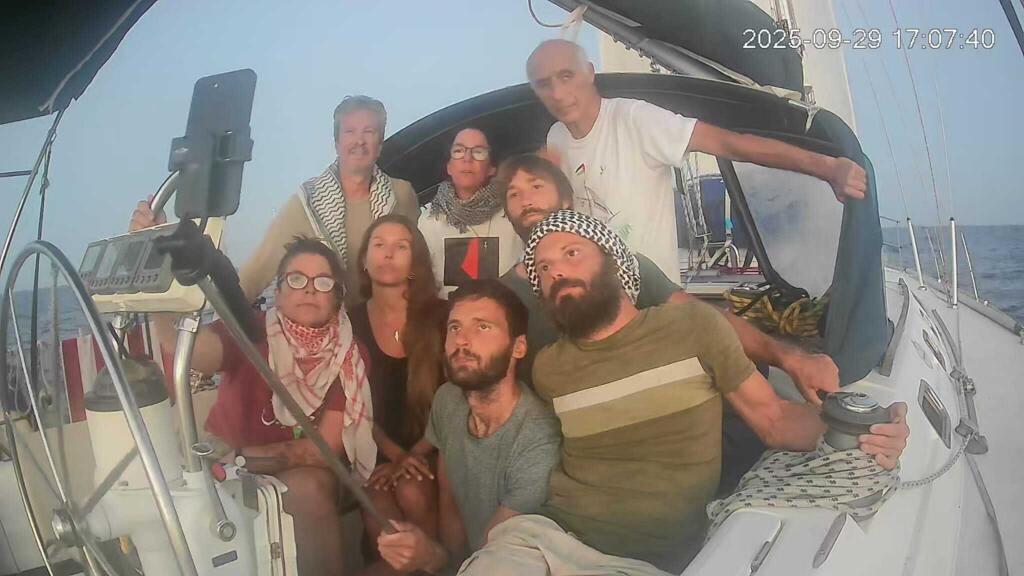
The crew of Jeannot III vessel of the Global Sumud Flotilla: Anne (Spain), Rafael (Spain), Eric (United States), Lotta (Sweden), Andrea (Italy), Alexis (Belgium), Anita (Uruguay), Yacine (France). © RFI/Yacine Haffaf

Live-streamed footage of the Jeannot III has shown the eight activists on board with their hands held high, fingers spread apart to indicate that they are unarmed and not posing a threat.

The civilians on board have been trained to adopt this attitude to present themselves as non-violent individuals.

A GSF activist reported that the Israeli military said “if you stop the engine, we stop the water”.

Israeli forces reportedly ordered the flotilla to halt before it reached the blockade off Gaza.

“You are instructed to change your course. Approaching the naval blockade violates international law and poses a direct security threat to Israel and its citizens,” the navy told one of the GSF vessels.

Francesca Albanese, the United Nations special rapporteur on the occupied Palestinian territories, dismissed the claim.

“The flotilla has not entered Israel’s territorial waters, this is Palestine’s waters and Israel has no authority over it,” she said on Wednesday in a press conference.

“Therefore, any intervention by Israel in these waters is unlawful. Furthermore, the International Court of Justice has ordered Israel to dismantle the occupation and withdraw its troops outside Palestine.

"This does not only mean the land – Gaza, the occupied territory – it also includes the territorial waters.”


'He's my hero'


Another vessel, Adara – carrying 22 people from several countries – was intercepted and boarded by the IOF on Wednesday night.

Sid Khan, a 48-year-old banker from Glasgow, was on board the Adara. His wife Isma told RFI that she has had no news of her husband since the interception. Her last conversation with him was late Wednesday afternoon.

“He was in good spirits even though he knew that they were going to be captured, jailed even,” she said.

“Sid told me that it is likely the Israeli forces will force them to sign a document to say that they’ve breached Israeli territory. But they haven’t – they are in Palestinian waters.”

She said her husband believed going to jail for a few days was nothing compared to what Palestinians face.

“He’s my hero,” Isma said. “I am crying because it is hard, but it is also admirable, his determination to stand up for the Palestinians so that they can live a life of dignity and not live in an open prison.”

Isma and Sid are no stranger to humanitarian activities. Isma Khan, a Scottish Pakistani optometrist, does charity work for remote populations in the Himalayas by providing eye health and preventing avoidable blindness.

“Sid believes that the humanitarian mission has achieved its goal in opening the eyes of the world to Gaza,” said Isma.

Enforcing international laws

Meanwhile, Albanese has underlined that the humanitarian aid the flotilla is carrying is just a drop in the ocean.

“More importantly, what the flotilla is carrying is the courage to enforce international laws,” she said.


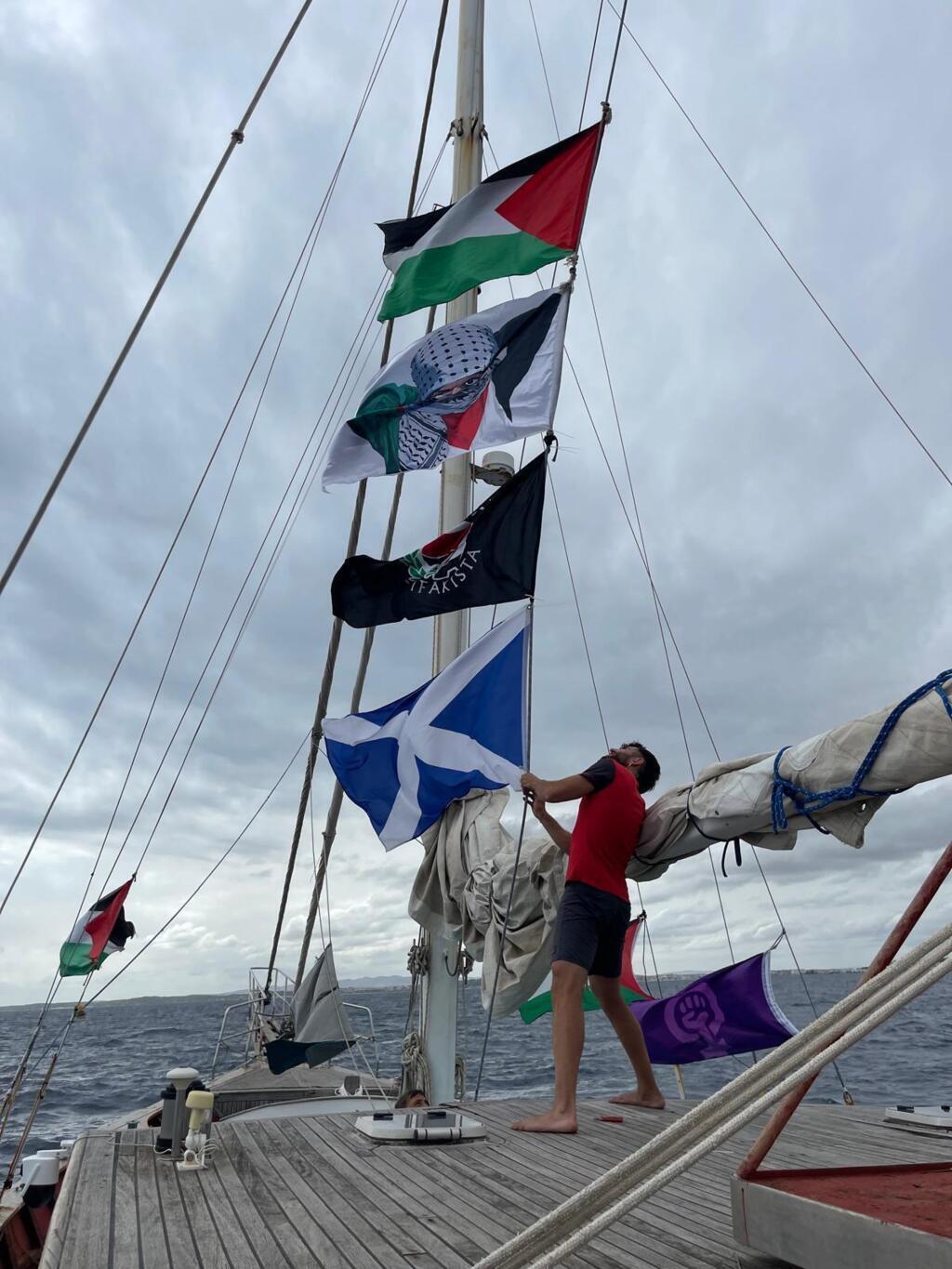
The flags raised on the Adara vessel of the Global Sumud Flotilla. 
Adara was intercepted and boarded by Israeli forces. © RFI/Sid Khan

In one of the videos released overnight by GSF, Thiago Avila on board the Alma was responding to the Israeli navy’s close presence by asking them to keep clear of the flotilla.

“Please keep a minimum of one nautical mile away from the Global Sumud Flotilla,” he said. “All vessels … our mission is a non-violent humanitarian solidarity mission for the Palestinian people in Gaza. Any attempt to block or hinder this mission is illegal by international law.”

Israel regards attempts to breach the naval blockade as a violation of international law and links the flotilla to Hamas.

Israel’s foreign ministry said on X that “several vessels of the Hamas-Sumud flotilla have been safely stopped and their passengers are being transferred to an Israeli port”.

GSF spokesperson Saif Abukeshek said the group was ready to pursue legal action.

“This is land and sea mobilisation. Any violation of international law and human rights that Israel is going to commit we will take all legal actions, whether through our participants or also the flags of the ships,” he said.


Citizen mobilisation


Haffaf said he hoped public pressure would help secure the activists’ release.

“I hope our citizens will put pressure on all the governments to stop the apartheid, to stop the famine, to stop the genocide. Because it is indeed a genocide even though the French President – who finally recognised the state of Palestine – refuses to say the word,” he added.

He criticised France for offering nothing more than consular protection for its citizens in the flotilla.

Isma Khan said ordinary people were taking on a task that governments had failed to shoulder.

“In this day and age, there shouldn't be the need for a Global Sumud Flotilla, our governments should stand up to a genocide which is now recognised by everyone,” she said.

“But we’re still watching 20,000 children being murdered. It’s our governments who should be breaking the siege.”


Opinion...

Freedom Flotilla: How Detained Activists Become Powerful Global Ambassadors for Palestine


October 2, 2025 


A screen grab shows activists aboard the ship are seen raising their hands to prove they were unarmed, as Israeli naval forces continue attacking vessels of the Global Sumud Flotilla sailing toward Gaza to break the blockade and deliver humanitarian aid, in the Mediterranean Sea on November 02, 2025. [Global Sumud Flotilla – Anadolu Agency]

by Adnan Hmidan


When the latest Freedom Flotilla set sail to break the siege on Gaza, it was never just about whether the ships would reach the shoreline. It was about sending a message across seas and continents — that Gaza is not alone, and that hundreds of men and women are willing to risk arrest, deportation, and confrontation with one of the world’s most aggressive military occupations, in order to stand with a besieged people.

What unfolded in the Mediterranean was not simply a naval interception; it was the birth of a new chapter in the international solidarity movement. Every activist on those ships, whether Arab or foreign, carried with them a determination that transcends borders. And while Israel may succeed in blocking the ships, it cannot block the voices that will echo far louder once these activists return home.

Witnesses, not just supporters

What distinguishes flotilla participants from other campaigners is the authenticity of lived experience. They are no longer distant advocates relying on reports or statistics. They have seen the Israeli blockade machinery at work. They have felt the hand of occupation reaching into international waters to silence a peaceful mission. This personal testimony is impossible to dismiss — and it gives these activists unparalleled authority when they speak in their communities, parliaments, universities, and media outlets.

Multiplying circles of influence

Once back home, these activists become more than allies; they become part of the story itself. Their arrest, mistreatment, or deportation becomes a living narrative that can mobilise audiences otherwise untouched by Palestine’s plight. Every platform they speak on — from a local radio show to a national parliament — becomes an extension of Gaza’s voice. In this way, a single flotilla can ripple into thousands of conversations across continents.


The strategic miscalculation of repression


Israel often assumes that by stopping the ships it ends the mission. In reality, it fuels the very momentum it seeks to suppress. Each confrontation does not bury the story, but multiplies it — producing new ambassadors for Palestine who carry the struggle into fresh spaces and languages. This cumulative effect ensures that solidarity with Gaza is not seasonal, but enduring.

Rethinking the measure of success

The true question is not “Did the flotilla reach Gaza?” but rather: “How many new ambassadors for Palestine emerged from this voyage?” Framing it this way transforms each attempt — whether intercepted or not — into a strategic gain. It reframes the flotilla as not only a humanitarian mission, but also a political and moral campaign that expands the global constituency for Palestinian rights.

After more than 17 years of blockade, Gaza’s greatest need is not only the lifting of material restrictions, but also the breaking of the silence and complicity that sustain them. The Freedom Flotilla, and those who dare to board it, achieve precisely that: turning the sea into a pulpit, the voyage into testimony, and activists into ambassadors. This is, at its core, a battle of conscience — and as long as ships continue to sail, the Palestinian story will continue to find new shores.

The views expressed in this article belong to the author and do not necessarily reflect the editorial policy of Middle East Monitor.


Wednesday, October 01, 2025


Index unlocks a market for nature recovery work


University of Queensland
Yandina Creek wetland, Queensland, Australia. 

image: 

Yandina Creek wetland in Queensland, a coastal area under restoration at The Blue Heart research site.

view more 

Credit: Dr Valerie Hagger


Research has opened the door for coastal wetland restoration projects to potentially earn tradeable biodiversity certificates.

Dr Valerie Hagger from The University of Queensland’s School of the Environment has led a project to develop a multi-diversity index (MDI) specific to coastal wetlands to help support biodiversity certification methods being developed by the Australian Government.

“A scientifically robust way to quantify biodiversity gains from coastal wetland restoration would mean the work of landholders and communities could earn certificates with a market value, helping to attract private finance for projects,” Dr Hagger said.

“So far in Australia there has been a lot of focus on tree planting for carbon credits.

“But with the establishment of a Nature Repair Market under legislation in 2023, there is potential for value to be realised in high-integrity restoration projects if we have a standardised measure of biodiversity gains.

“Ecosystems such as mangroves, salt marshes and supratidal wetlands are hotspots of biodiversity for land and water-dwelling species, but restoration is expensive.

“A method to quantify biodiversity recovery means the emerging nature market can be an incentive to generate money to finance restoration projects.”

The project conducted surveys at 2 coastal wetland restoration sites with very different climates, vegetation and fauna communities – The Blue Heart on Queensland’s Sunshine Coast and Webb Beach on South Australia’s Upper Gulf St Vincent.

“The goals of these restoration projects were to reinstate tidal flows to allow natural recovery of mangroves, saltmarshes, and/or supratidal wetlands,” Dr Hagger said. 

“At The Blue Heart, we compared the partially restored site to local undisturbed ecosystems and to an adjacent disturbed site before restoration.

“The good news is we confirmed clear biodiversity gains for plants, invertebrates, birds and bats.

“The index we developed called MDI is a way to combine data on multiple indicators of biodiversity to give a single score of health.

“The higher the score, the closer the restored site is to a healthy, natural ecosystem, helping to quantify restoration outcomes in a clear and consistent way.

“The use of MDI could also increase the value of blue carbon projects by enabling biodiversity benefits to be bundled with carbon credits to attract higher carbon prices.”

Dr Hagger is presenting the research at the 11th World Conference on Ecological Restoration in Denver.

The project at UQ’s School of the Environment was supported by the CSIRO-BHP Program Coastal carbon – Australia’s blue forest future and the AXA Research Fund and with help from The Nature Conservancy Australia, Flinders University, The University of the Sunshine Coast, and Sunshine Coast Regional Council.

The research paper has been published in Ecological Indicators.