Friday, October 10, 2025

Gurugram Floods Underscore The Case For Traditional Planning – Analysis
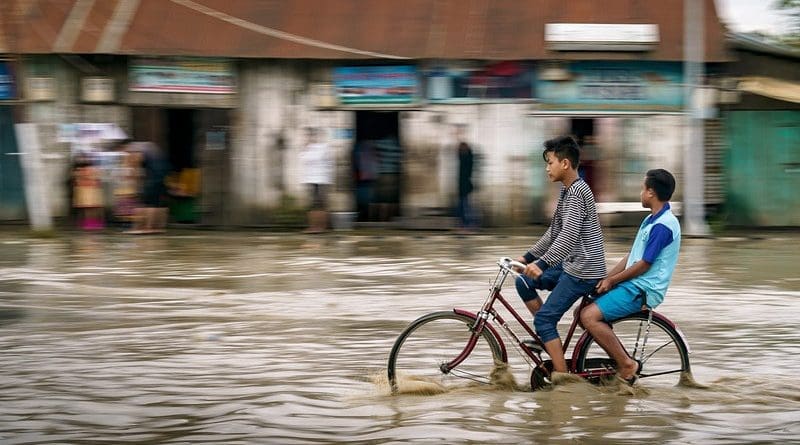
Poverty Flood Kids Cycle Street Bike Kid Child Bicycle


By 

By Aparna Roy and Piyush Patel


This monsoon, Gurugram once again witnessed large-scale flooding after intense bouts of rainfall, turning roads into rivers, office complexes into waterlogged islands, and commuters into marooned victims of urban mismanagement.

The images of luxury cars submerged on Golf Course Road and tech parks surrounded by knee-deep water are by now an annual ritual, exposing the mismatch between Gurugram’s global aspirations and its fragile foundations. While the immediate blame often falls on clogged drains or excessive construction, the reality runs deeper. The city’s design has fundamentally ignored its ecological base—its aquifers, natural drains, wetlands, and soils. In this neglect lies a lesson not just for Gurugram but for every Indian city: climate-resilient urbanisation cannot be built by copying glass-and-steel skylines from Singapore or Dubai. Instead, India must rediscover its own knowledge systems of living in balance with nature.

One such system is the Panchamabhuta philosophy—the ancient Indian principle of designing human settlements in harmony with the five elements of nature: water (jal), earth (prithvi), fire (agni), air (vayu), and space (akash). Far from being abstract or spiritual, Panchabhuta offers a practical blueprint for climate-smart cities. It helps urban planners ask the right questions: Is water being respected as a resource and risk? Is land being used in line with its ecological capacity? Is energy being generated and consumed sustainably? Is the air being kept breathable? Is space being designed for community resilience and inclusion? Applied to Gurugram, these principles can help redefine how we think of urban development in the age of the climate crisis.

Water (Jal): The most visible of Gurugram’s challenges. The city was historically dotted with lakes, wetlands, and natural drainage channels linked to the Najafgarh jheel, acting as sponges for monsoon rain. However, real estate expansion has wiped out many of these buffers. A 2018 district administration studyfound that more than half of Gurugram’s blue cover has vanished over the past four decades.

Combined with concretisation, this means rainwater has nowhere to go except to flood roads and basements. Panchabhuta compels us to treat water as both a lifeline and a threat. Gurugram must restore its lost lakes, revive stormwater drains, and integrate blue infrastructure—urban wetlands, recharge ponds, bioswales—into its masterplan. Singapore’s ABC Waters Programme shows how stormwater can be turned into public assets. Gurugram has its own models: the revival of Wazirabad lake by citizen groups demonstrates great promise here. What is missing is scale and institutionalisation. A city-level Urban Water Authority, equipped with flood-risk maps and aquifer data, could align all agencies around a single water vision.

\

Earth (Prithvi): Gurugram’s real estate boom has treated land as a blank slate, ignoring its ecological logic. The Aravallis—Delhi NCR’s green lungs—have been relentlessly mined and encroached, weakening the region’s natural defences against floods, heatwaves, and dust storms. Analyses of land use dynamics have found a 41 percent reduction in forest cover of the Aravallis between 1999 and 2019. Panchabhuta demands we reconnect with the earth by respecting its carrying capacity.

Gurugram cannot afford to keep expanding outward into fragile zones. Instead, it should adopt principles of compact, vertical growth while ring-fencing the Aravallis as no-go ecological zones. Peri-urban agriculture must be preserved as floodplains and carbon sinks, not paved over. Cities like Curitiba in Brazil have shown how restricting growth in ecologically sensitive zones creates long-term resilience. Gurugram must follow suit by strictly enforcing the Supreme Court’s ban on Aravalli construction and incentivising developers to build within existing urban footprints.

Fire (Agni): In today’s context, fire represents energy—how cities power themselves. Gurugram, with its sprawling malls, data centres, and gated societies, has one of the highest per-capita energy footprints in India. During heatwaves, power demand surges, straining grids and increasing fossil fuel use. Panchabhuta envisions fire as a force to be harnessed, not consumed recklessly. Gurugram can lead by mandating rooftop solar for all new buildings, incentivising energy-efficient cooling, and building microgrids for critical services. The Haryana Solar Policy 2023 already sets a target of 6 GW by 2030; Gurugram, as the state’s economic hub, can be its testing ground. Equally, the city must address energy equity: thousands of informal settlements in Gurugram face frequent outages while glitzy high-rises glow uninterrupted. A just energy transition—where slums are prioritised for clean cooking fuels, solar rooftops, and resilient grids—is essential for making Agni a source of balance, not inequality.

Air (Vayu): Air quality in Gurugram routinely crosses hazardous levels, especially in winter, making it one of the world’s most polluted cities. A study by the Centre for Research on Energy and Clean Air found that Gurugram’s PM2.5 levels averaged nearly 75 µg/m³ for the first half of 2025, which is 15 times the safe limitprescribed by the WHO. Panchabhuta calls for a city that breathes. Reducing vehicular emissions through mass transit, pedestrian-first street design, and cycling infrastructure must be urgent priorities.

The Regional Rapid Transit System (RRTS) between Delhi and Alwar, if extended and integrated with Gurugram’s metro, could cut thousands of car trips daily. Equally, industries and construction sites must be regulated with real-time emissions monitoring. Cities like Medellín, Colombia, have successfully reduced pollution by creating “green corridors” along roads—linear forests that cool air and absorb particulates. Gurugram can adopt similar approaches by reforesting arterial roads and using its corporate hubs to sponsor urban afforestation drives.

Space (Akash): Beyond the physical, Akash signifies the social and cultural space of a city—how inclusive, accessible, and resilient it is. Gurugram is notorious for its gated communities and segregated living, where migrant workers live in precarious colonies with little access to sanitation, healthcare, or safe housing.

During the 2020 COVID-19 lockdown, thousands of workers were stranded without livelihoods, exposing this structural exclusion. Panchabhuta insists that space be shared and equitable. Gurugram must invest in affordable rental housing, strengthen primary healthcare in worker-dominated areas, and create public commons—parks, plazas, cultural spaces—that foster community resilience. Akash also implies digital space: as Gurugram positions itself as a tech hub, bridging the digital divide through affordable broadband and e-governance platforms becomes essential. Cities are resilient only when all residents—not just the affluent—are part of the safety net.

Seen through the Panchabhuta lens, Gurugram’s floods are not just about broken drains but about a broken philosophy of urbanisation. The city’s planners have tried to import global models of urban growth while ignoring the ecological wisdom embedded in India’s traditions. Panchabhuta offers a way to root modern planning in this wisdom—balancing water, land, energy, air, and social space in an integrated framework.

The crisis in Gurugram is a warning for every Indian city. From Mumbai’s chronic flooding to Bengaluru’s vanishing lakes, the pattern is clear: climate change is intensifying the vulnerabilities created by reckless urbanisation. India is expected to add 400 million new urban residents by 2050. The choice is stark—either we continue building cities as islands of aspiration that crumble under every extreme event, or we create settlements anchored in ecological resilience and cultural inclusivity. Gurugram, with its corporate clout, young population, and visibility, can be the test case. If it can embrace Panchabhuta, it can inspire a new model of Indian urbanism—one that is modern yet rooted, ambitious yet balanced, and, above all, resilient to the climate shocks of the future.


About the authors:

  • Aparna Roy is a Fellow and Lead, Climate Change and Energy, at the Centre for New Economic Diplomacy at the Observer Research Foundation. 
  • Piyush Patel is a Research Intern at the Observer Research Foundation.

Source: This article was published by the Observer Research Foundatio\


Observer Research Foundation

ORF was established on 5 September 1990 as a private, not for profit, ’think tank’ to influence public policy formulation. The Foundation brought together, for the first time, leading Indian economists and policymakers to present An Agenda for Economic Reforms in India. The idea was to help develop a consensus in favour of economic reforms.

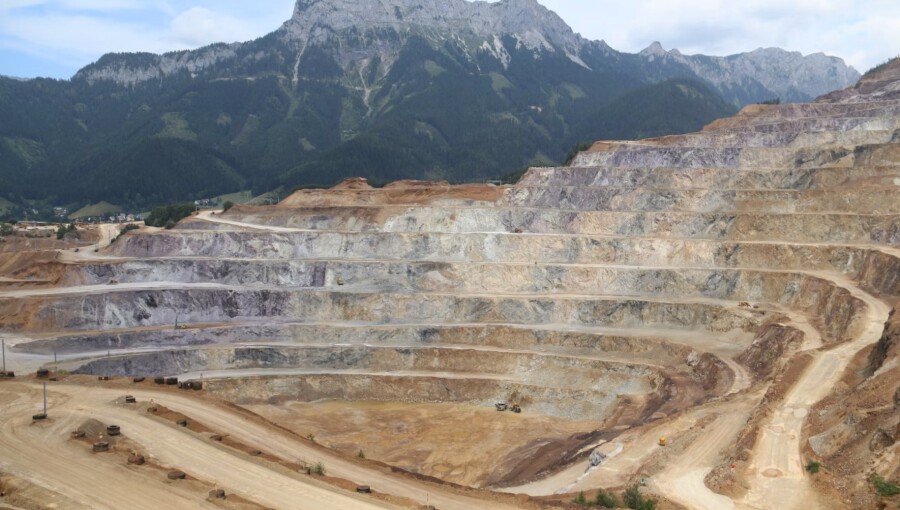
 

Ore wars – and the US dollar’s waning influence

Ore wars – and the US dollar’s waning influence
/ Chris - Unsplash
By bno - Taipei Office October 10, 2025

What is unfolding between Australia’s mining giants and Beijing is not a simple trade dispute. It is a quiet war over who sets the rules of one of the world’s most economically important commodities, and in which currency.

Iron ore underpins almost all modern industrial economies; it is the raw material from which steel is forged, and China remains its dominant consumer. For decades, Australian producers such as BHP and Rio Tinto have supplied much of that demand under pricing arrangements pegged to international indices and denominated in US dollars. Beijing now wants to rewrite that script.

At the heart of the confrontation lies a fundamental question of pricing sovereignty. Australia’s mining giants have long preferred the predictability of index-based, dollar-denominated contracts, which anchor their revenues and appeal to global investors.

China, however, views this system as a relic of Western control, and an arrangement that subjects its own vast steel sector to the volatility of spot markets - and the hitherto unchallenged supremacy of the dollar.

This uneasy balance began to tilt over the past decade, however, as mining firm shifted from long-term contracts to shorter, spot-linked agreements. In doing so, they captured higher margins during commodity booms but left Chinese buyers more exposed to swings in price.

Beijing’s response was, as ever, structural. In 2022, it established the China Mineral Resources Group (CMRG), a state-backed entity tasked with consolidating iron-ore imports and negotiating on behalf of the nation’s steel mills. In effect, China created a buyers’ cartel to counter the market power of Australia.

The tension has now reached a peak, and as of October 2025, more and more reports are surfacing that point to Beijing instructing steel mills and traders to pause purchases of BHP ore amid a deadlock over pricing terms.

At issue is BHP’s own insistence on maintaining US dollar-denominated contracts and Beijing’s demand for greater use of yuan settlement - a move that would align the commodity trade more closely with China’s own financial system, but one that will work towards the increased undermining of all things dollar denominated.

The apparent suspension of some imports was a clear signal that Beijing is willing to weaponise its purchasing power to both force a shift in market norms, and also open another front on its anti-dollar campaign of recent months.

Canberra, caught between commercial interest and geopolitical risk as well as close links to Washington, has been drawn into the standoff. Australian Prime Minister Anthony Albanese urged China to resume normal trade, attempting to call President Xi Jinping back to the negotiating table by stressing the need for stability in the sector.

For now though, China is having none of it.

The reality of the situation is that both sides have leverage, albeit with China in a slightly better position.

Australia’s miners enjoy the world’s lowest production costs and a product quality that Chinese mills struggle to replace at short notice. China, meanwhile, controls demand and as it so often does in times of stand-off, is developing alternative supply chains, most notably through the Simandou project in Guinea, West Africa.

Behind the economics though lies the all-important deeper face-off - Beijing’s push for yuan-based commodity settlement.

In pushing for Australia to use the yuan, China is looking to exert its own dominance on another industry as part of its broader efforts to erode dollar dominance and to set benchmarks that reflect its own market weight.

For Canberra, the stakes are equally existential: iron ore is Australia’s single largest export with, according to economics and geopolitics commentator Arnaud Bertrand in a post on X, “5% of Australia’s GDP depend(ing) on iron ore exports to China.” Bertrand adds that Australia “exports 85% of their iron to the country” and “as for China, 60% of their iron ore imports come from Australia.” As such, on paper at least, neither side can afford a full rupture, but neither seems ready to yet concede ground.

What follows therefore, may be a messy compromise at best but it is more than likely to be one in which China comes out on top in the form of partial yuan settlement here, index adjustments there.

Globally financial and sector analysts are watching closely, however, as this struggle is not just about contracts or currency; it is about who defines the architecture of global trade in an era when economic influence and political intent are increasingly inseparable.

Whether the next benchmark is priced in dollars or yuan will signal more than market preference. It will reveal whose rules the world’s raw materials will obey.


Turkey tops Europe in income inequality, union report warns

Turkey tops Europe in income inequality, union report warns
Millions are struggling to meet basis needs in Turkey. / Moyan Brenn (Italy), cc-by-sa 2.0
By bne IntelliNews October 7, 2025

Turkey has emerged as the most unequal country in Europe in terms of income distribution.

The troubling conclusion is reached by a new report released by trade union confederation DISK/Genel-Is. The study highlights deepening social and economic divides, with millions struggling to meet basic needs despite the official figures showing growth.

The report cites Eurostat data showing Turkey’s Gini coefficient at 0.461, far above the European Union average of 0.344. No other European country records such a high level of inequality, said the study.

The Gini coefficient is a statistical measure of the inequality of a distribution. It is most commonly used to represent income, wealth or consumption. It ranges from 0 to 1 (or 0 to 100), where 0 signifies perfect equality (everyone has the same income) and 1 signifies perfect inequality.

The findings in the report suggest that while the economy continues to expand on paper, the benefits are not reaching large segments of society.

Turkish GDP growth officially accelerated from 2.3% y/y in 1Q to 4.8% y/y in 2Q. 

According to the study, two out of every 10 people in Turkey live in poverty, while six in 10 are in debt. The minimum wage, set at Turkish lira (TRY) 22,104 ($530), falls short of the official hunger threshold of TRY 26,149, underscoring the erosion of purchasing power.

Per capita income stands at $15,463, less than half the European average of $36,590, placing Turkey at the bottom of the continent by this measure.

The report also points to a shrinking share of labour in national income, rising household indebtedness and a widening gap between the rich and poor. The wealthiest 20% of the population earn nearly nine times more than the poorest 20%.

Only 39% of the population is not in debt, while 12.5% of people are struggling greatly to repay their debts. For 43.3% of the population, debts represent a moderate burden, whereas for 5.2% they pose no burden at all, according to the study.

Union officials argue that the current trajectory risks not only worsening economic hardship but also the fuelling of broader social and political instability. They are calling for urgent reforms, including fairer taxation, stronger public services and wage policies that ensure workers receive a just share of the value they create.


Tiny architects, titanic climate impact: scientists call for October 10 to become International Coccolithophore Day


Microscopic plankton that regulate Earth’s climate and sustain ocean ecosystems take center stage in a new awareness campaign


Ruđer Bošković Institute

Coccolithophore - Syracosphaera mediterranea 

image: 

Microscopic view of a coccolithophore (Syracosphaera pulchra), a single-celled ocean alga which intricate calcium plates (coccoliths) play a role in the global carbon cycle.


view more 

Credit: Dr Jelena Godrijan, Ruđer Bošković Institute


Smaller than a speck of dust and shaped like tiny discs, coccolithophores are microscopic ocean organisms with a big climate job. They draw carbon out of seawater, help produce oxygen, and their calcite plates sink to form chalk and limestone that preserve Earth’s climate history. Today, five European research organisations launched an initiative to make 10 October International Coccolithophore Day, highlighting their crucial role in regulating the planet’s carbon balance, producing oxygen, and sustaining the ocean ecosystems that underpin all life.

The campaign is led by the Ruđer Bošković Institute (Zagreb, Croatia), the Lyell Centre at Heriot-Watt University (Edinburgh, UK), NORCE Norwegian Research Centre (Bergen, Norway), Marine and Environmental Sciences Centre (MARE) of the University of Lisbon (Portugal), and the International Nannoplankton Association (INA).

A Delicate Balance Under Threat

Most people have never heard of coccolithophores, yet without them, Earth’s climate and oceans would be profoundly different. These single-celled, chlorophyll-containing organisms drift in the sunlit surface waters, adorned with calcium carbonate plates called coccoliths.

Despite their microscopic size, coccolithophores are among the planet’s most powerful carbon processors. Each year, they produce more than 1.5 billion tonnes of calcium carbonate, removing carbon dioxide from the atmosphere and helping to store carbon in deep-sea sediments. They also produce oxygen, support marine food webs, and influence global climate by helping to regulate our planet's greenhouse effect.

Coccolithophores thrive and often dominate vast areas of the ocean. But climate change is altering water temperature, pH chemistry, and nutrient flows, threatening their survival and the ecosystems they support. 

Why Coccolithophores?

Coccolithophores are unique among plankton due to both their role in regulating the global carbon cycle and the ability to track their long-term impact. “Unlike other groups, they build intricate calcium carbonate plates that not only help draw down carbon dioxide from the atmosphere, but also transport it into deep ocean sediments, where it can be locked away for millennia. This biomineralisation leaves behind an exceptional geological record, allowing us to study how they’ve responded to past climate shifts and better predict their future role. In short, their dual role as carbon pumps and climate archives makes them irreplaceable in understanding and tackling climate change,” says Professor Alex Poulton of the Lyell Centre.

“They are the ocean’s invisible architects, crafting the tiny plates that become vast archives of Earth’s climate,” says Dr Jelena Godrijan, a leading coccolithophore researcher at the Ruđer Bošković Institute. “By studying their past and current responses to changes in the ocean, we can better understand how marine ecosystems function and explore how natural processes might help us tackle climate change.''

Cutting-Edge Science: From Plankton to Planetary Processes

The launch of International Coccolithophore Day spotlights the tiny ocean plankton that quietly help regulate atmospheric carbon dioxide.

At the Lyell Centre in Scotland, the OceanCANDY team, led by Prof. Alex Poulton, studies how these plankton pull CO₂ from the air and store it in the sea, and tests how warmer, more acidic oceans could alter this process. Computer forecasts compare which species do this job best, today and tomorrow.

In Norway, scientists at NORCE Research, led by Dr Kyle Mayers and his team, track coccolithophore life stories, how they grow, who eats them, and the viruses that infect and ultimately kill them, to show how carbon moves through the ocean. Ancient DNA in seafloor mud adds a long view of past climate shifts. “Coccolithophore interactions with viruses and grazers matter,” says Dr Kyle Mayers of NORCE. “These links shape food webs and how the ocean stores carbon.”

In Croatia, the Cocco team at the Ruđer Bošković Institute study how they shape the ocean’s carbon cycle, from the decay of organic matter to bacterial interactions that influence seawater chemistry and CO₂ uptake. “In understanding coccolithophores, we’re really uncovering the living engine of the ocean’s carbon balance,” says Dr. Jelena Godrijan “Their interactions with bacteria determine how carbon moves and transforms - processes that connect the microscopic scale of plankton to the stability of our planet’s climate.” 

At MARE, University of Lisbon, Dr Catarina V. Guerreiro leads studies to trace how aerosol-driven fertilisation shapes the distribution of coccolithophores across the Atlantic into the Southern Ocean, and what that means for the ocean’s carbon pumps today and in recent times. Her approach consists of combining aerosol and seawater samples with sediment records, satellite data and lab microcosms to pin down cause and effect. “We’re connecting tiny chalky organisms to planetary carbon flows,” says Dr Guerreiro.

At INA, scientists connect living coccolithophores to their fossil record, using their microscopic plates to date rocks and trace Earth’s climate history. By refining global biostratigraphic frameworks and calibrating species’ evolutionary timelines, INA researchers transform fossils of coccolithophores into precise tools for reconstructing ancient oceans, linking modern plankton ecology with the geological record of climate change.

Why Coccolithophore Day Matters?

Designating a day for Coccolithophores may seem like a small gesture, but its advocates argue it could have a big impact. “This could contribute to changing the way we see the ocean. “We most often talk about whales, coral reefs, and ice caps, but coccolithophores are a vital part of the planet’s climate system. They remind us that the smallest organisms can have the biggest impact, and that microscopic life plays a crucial role in shaping our planet’s future, “ says Dr Sarah Cryer from the CHALKY project and OceanCANDY team.

The campaign to establish October 10 as International Coccolithophore Day is a call to action. By highlighting the profound, yet often overlooked, role of coccolithophores, scientists want to inspire a new wave of ocean literacy, policy focus, and public engagement.

Fieldwork with Dr Catarina V. Guerreiro (MARE) aboard RV Pelagia, tropical North Atlantic.

Credit

Dr Catarina V. Guerreiro MARE – Marine and Environmental Sciences Centre