It’s possible that I shall make an ass of myself. But in that case one can always get out of it with a little dialectic. I have, of course, so worded my proposition as to be right either way (K.Marx, Letter to F.Engels on the Indian Mutiny)
Tuesday, October 14, 2025
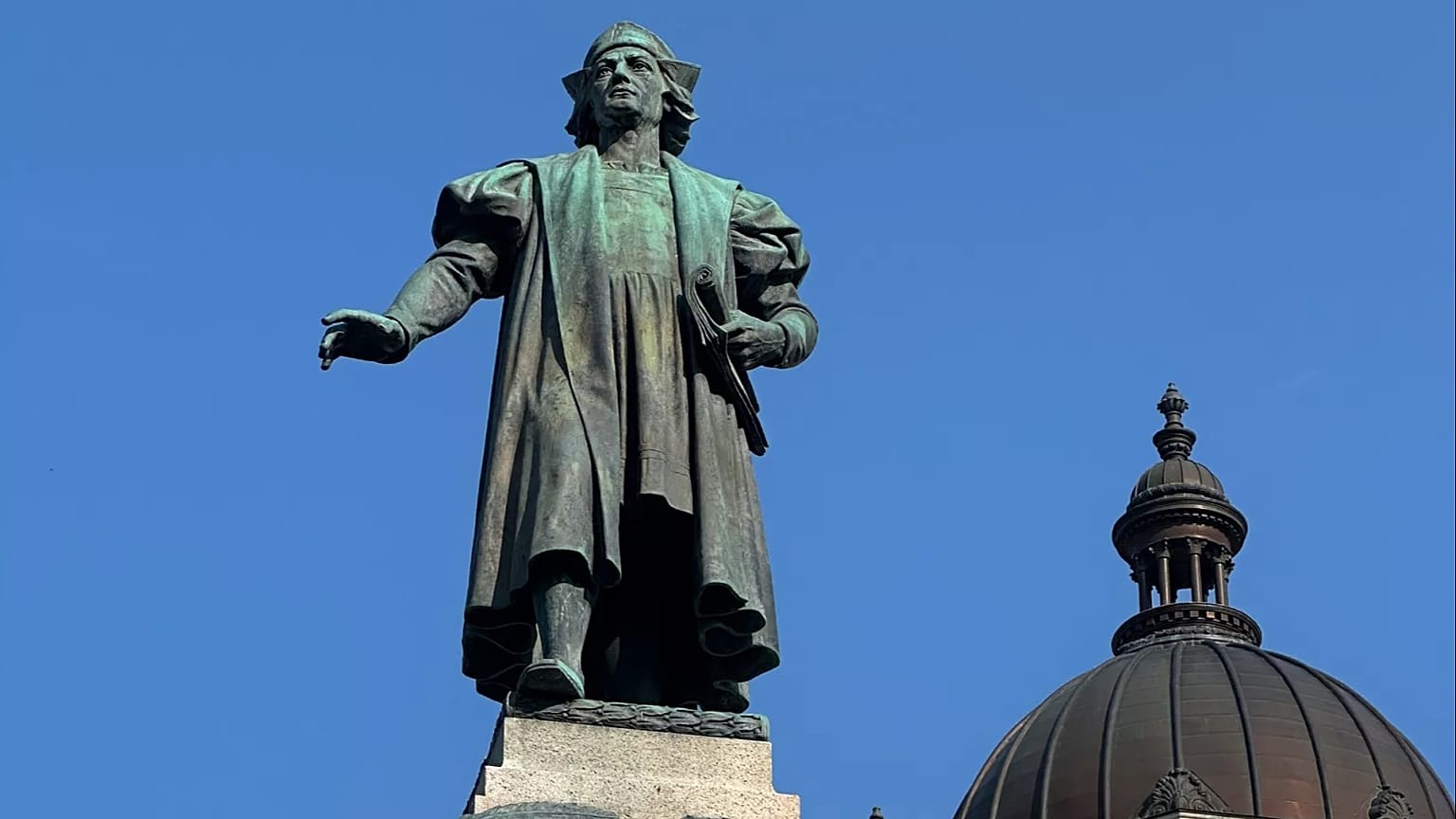
Two activists arrested for vandalising a painting of Columbus at Madrid's Naval Museum
Two members of Futuro Vegetal have been charged with a crime against heritage after allegedly throwing biodegradable red paint on a work by José Garnelo at Madrid's Naval Museum on Spain's National Day. The Naval Museum says the artwork has now been restored.
Police in Spain have charged two women activists from the Futuro Vegetal movement who are accused of throwing red paint over a historical artwork at Madrid's Naval Museum
The demonstrators targeted José Garnelo's 'Primer homenaje a Cristóbal Colón' (First tribute to Christopher Columbus), on Sunday during an act of protest against the celebration of Spain's National Holiday.
The work, which bears witness to a highly symbolic episode in Spanish maritime history, was restored a few hours later thanks to the actions of the museum's staff.
The incident has sparked fresh debate about the protection of items deemed to illustrate Spain's history and artistic heritage.
Police sources reported that both women were arrested for a crime against heritage after being detained by a museum worker until authorities arrived.
Visitors were evicted during the intervention but hours later, the Navy announced on its social networks that the painting had been restored and that the work was once again on display.
The rapid restoration of the canvas allowed not only the painting to be recovered, but also part of the serenity of the space that surrounds it.
According to a statement from the Futuro Vegetal collective, the activists were carrying a banner with the slogan "12 October, nothing to celebrate**.** Ecosocial justice" and sought to denounce the consequences of historical and current colonialism
Madrid's Reina Sofia Museum also targeted
On the same day, some twenty activists from the group Marea Palestina staged a sit-in in front of Guernicain the Reina Sofía Museum, holding signs with the phrase "Stop genocide".
The action forced the room to be cleared for a few minutes. The group explained that their protest was aimed at calling for a halt to the offensive in Gaza and demanding an arms embargo and the opening of humanitarian corridors. After about 40 minutes, the participants left the venue chanting "Long live free Palestine".
'America's original hero': Trump sparks anger by making Columbus Day an Italian-American celebration
HE LANDED IN CUBA NOT NORTH AMERICA, THAT WAS JOHN CABOT!
The US president has reinstated Columbus Day as a national holiday to honour the explorer's legacy but the move has also reignited the debate about the origins of Columbus and the importance of Indigenous Peoples' Day.
US President Donald Trump has issued an official proclamation to reinstate Columbus Day, which falls on Monday, as a national holiday across the country, presenting it as atribute to" America's original hero" and the contributions of the Italian-American community.
The decision marks a cultural and political shift in a country where, in recent years, many states and cities had replaced this date with Indigenous Peoples' Day in recognition of native populations affected by the arrival of Europeans on the continent.
The proclamation, signed on 9 October, describes Christopher Columbus as a "giant of Western civilisation" and accuses "left-wing radicals" of trying to erase his figure from public space byremoving statuesand changing the name of this bank holidays .
Trump urges "reclaiming his legacy of faith, courage and perseverance", omitting any mention of historical criticisms that point to the consequences of his expeditions, including violence, colonisation and diseases that devastated native peoples.
The move comes at a time of intense political polarisation and division across the States. Between 2020 and 2024, movements grew to promote Indigenous Peoples' Day as an alternative, with the aim of empowering the voices of native communities and scholars who question the heroic narrative about Columbus.
For many, celebrating him means ignoring the fact that his arrival in America marked the beginning of centuries of colonial domination. As Kerri Malloy, professor of Native American Studies, told NPR last week: "You can't tell the story of exploration without telling the story of exploitation.
Columbus, Italian or Spanish?
Moreover, Columbus' origin has historically been the subject of debate. Although Trump's proclamation describes him without qualification as Genoese, numerous studies and theories have suggested other possible origins - Catalan, Portuguese and even Galician - arguing that his identity may have been deliberately concealed.
This ambiguity about his background has for decades fuelled both academic and popular discussions that go far beyond contemporary American politics.
Columbus Day was first institutionalised in 1892, following the lynching of 11 Italian immigrants in New Orleans, as a gesture of reconciliation towards the Italian-American community. Later, in 1934, it became a bank holiday.
However, its meaning has evolved, torn between the pride of an immigrant community and the historical memory of native peoples. In 2021, US President Joe Biden was the first to officially recognise Indigenous Peoples' Day on the same date.
Colonial 'myths and lies'
Trump is banking on a nationalist narrative that identifies Columbus with America's founding values, despite the fact that the navigator never set foot on what is now US territory.
His proclamation presents the arrival of 1492 as an act of "faith" and "courage", glorifying the Atlantic crossing as a prelude to American independence in 1776. "More than 500 years after Columbus arrived in the New World, we follow his example, echo his determination and offer our gratitude for his life of courage and valor," the text reads.
Various indigenous organisations were quick to denounce the presidential message as perpetuating a "colonial myth" and celebrated the fact that, even if Trump officially reclaims Columbus Day, more than 17 states and numerous cities have unofficially adopted Indigenous Peoples' Day and will continue to celebrate it, regardless of the proclamation.
Ultimately, the revival of Columbus Day reopens a debate that these days seems fundamental in the United States: Is it possible to celebrate cultural heritage without confronting the shadows of the past? Trump has responded, once again, in a resounding manner.
His 1497 voyage to the coast of North America under the commission of Henry VII, King of England is the earliest known European exploration of coastal North ...
19th Century Interpretation of John Cabot's Discovery of North America. Over ... "Discovery of North America, by John and Sebastian Cabot" drawn by A.S. ...
While Christopher Columbus' monumentally bad sense of direction in 1492, which led to his discovery of the Americas, has been celebrated down the centuries ...
Psychedelics offer new therapeutic framework for stress-related psychiatric disorders
CHANGCHUN, Jilin, CHINA, 14 October 2025 -- A peer-reviewed viewpoint article published today in Psychedelics by Prof. Xiaohui Wang and colleagues examines the therapeutic potential of psychedelic substances for treating stress-related psychiatric disorders through novel neurobiological mechanisms. The analysis synthesizes current evidence on how compounds like psilocybin, lysergic acid diethylamide (LSD), and MDMA could fundamentally alter treatment paradigms for depression, anxiety, and posttraumatic stress disorder (PTSD).
Addressing Chronic Stress Impact
The authors emphasize that chronic stress represents a major contributor to psychiatric illness worldwide, with persistent activation of the hypothalamic-pituitary-adrenal (HPA) axis leading to structural brain changes. Traditional treatments including selective serotonin reuptake inhibitors and cognitive behavioral therapy, while helpful for some patients, leave many with residual symptoms or significant side effects. This treatment gap has renewed scientific interest in psychedelics, substances that were extensively studied before regulatory restrictions in the 1970s halted most research.
Prof. Wang and colleagues outline how psychedelics primarily act through serotonin 2A (5-HT2A) receptors, highly expressed in brain regions controlling mood, emotion, and cognition. This receptor activation promotes neuroplasticity and functional connectivity that could counteract structural damage from chronic stress exposure. The authors note that preclinical studies demonstrate psilocybin can upregulate brain-derived neurotrophic factor and enhance dendritic arborization in the prefrontal cortex, processes critical for mood regulation.
Clinical Evidence Accumulating
The viewpoint highlights mounting clinical evidence across multiple conditions. For depression, the authors cite studies where single psilocybin doses produced significant symptom reductions lasting weeks to months in treatment-resistant patients. One pivotal study showed approximately 67% of PTSD patients no longer met diagnostic criteria after MDMA-assisted psychotherapy, though recent FDA advisory committee concerns about methodological limitations underscore the need for refined trial designs.
"Psychedelics offer a potential in counteracting the damaging effects from prolonged exposure to stress," the authors write, noting these substances foster neuroplasticity that may allow recovery of brain regions impacted by cortisol. Unlike conventional treatments targeting symptoms, psychedelic therapy addresses underlying causes, potentially enabling sustained relief through confronting and integrating unresolved stressors.
Beyond Serotonin: Multiple Mechanisms
The analysis extends beyond serotonergic effects to examine anti-inflammatory properties that may provide additional therapeutic benefit. Preliminary evidence suggests psilocybin decreases pro-inflammatory cytokines, offering potential protection against stress-related brain changes. The authors propose that concurrent monitoring of immune markers and cortisol could clarify whether these mechanisms work synergistically.
MDMA presents a distinct profile as an entactogenic agent, functioning as a monoamine-releasing compound that promotes emotional openness and reduces fear responses. The authors emphasize its therapeutic signal derives from acute prosociality and enhanced memory reconsolidation during psychotherapy sessions, rather than classical psychedelic phenomenology. This pharmacological state enables patients to access traumatic memories without overwhelming fear responses.
Challenges Requiring Resolution
The viewpoint acknowledges substantial hurdles before mainstream integration becomes feasible. Current Schedule I classification severely restricts research and therapeutic implementation, though evolving policy experiments in Oregon and Colorado suggest regulatory frameworks may emerge. The authors stress the need for specialized therapist training, noting psychedelic therapy differs qualitatively from traditional verbal psychotherapy approaches.
Safety considerations include predictable adverse effects like nausea, headache, and cardiovascular changes requiring careful medical screening and monitoring. The authors advocate for standardized protocols, enhanced safety reporting, and strategies to manage expectancy effects that complicate efficacy interpretations. Longitudinal studies comparing psychedelic-assisted therapy with conventional treatments across psychiatric diagnoses remain essential.
Future Research Priorities
Prof. Wang and colleagues identify critical research needs including biomarker development for personalizing treatment, optimization of dosing regimens, and investigation of genetic factors influencing response. They emphasize interdisciplinary collaboration across neuroscience, psychology, engineering, and pharmacology will advance understanding of stress-activated neural circuits and plasticity mechanisms.
This viewpoint article represents a critical synthesis of the current state of knowledge in psychedelic therapeutics, providing researchers, clinicians, and policymakers with a comprehensive framework for understanding these substances' therapeutic potential. By systematically analyzing and integrating findings from across the literature, the authors offer both a historical perspective on how the field has evolved and a roadmap for future investigations. Such comprehensive reviews are essential for identifying patterns that may not be apparent in individual studies, resolving apparent contradictions in the literature, and highlighting the most promising avenues for advancing the field. The synthesis presented here serves as a valuable resource for both newcomers seeking to understand the field and experienced researchers looking to contextualize their work within the broader scientific landscape.
The peer-reviewed Viewpoint in Psychedelics titled "Psychedelics in the context of stress and psychiatric disorders: A new horizon in mental health treatment," is freely available via Open Access on 29 September 2025 in Psychedelics at the following hyperlink: https://doi.org/10.61373/pp025v.0038.
About Psychedelics: Psychedelics: The Journal of Psychedelic and Psychoactive Drug Research (ISSN: 2997-2671, online and 2997-268X, print) is a peer-reviewed medical research journal published by Genomic Press, New York. Psychedelics is dedicated to advancing knowledge across the full spectrum of consciousness altering substances, from classical psychedelics to stimulants, cannabinoids, entactogens, dissociatives, plant derived compounds, and novel compounds including drug discovery approaches. Our multidisciplinary approach encompasses molecular mechanisms, therapeutic applications, neuroscientific discoveries, and sociocultural analyses. We welcome diverse methodologies and perspectives from fundamental pharmacology and clinical studies to psychological investigations and societal-historical contexts that enhance our understanding of how these substances interact with human biology, psychology, and society.
Visit the Genomic Press Virtual Library: https://issues.genomicpress.com/bookcase/gtvov/
Our full website is at: https://genomicpress.kglmeridian.com/
Psychedelics in the context of stress and psychiatric disorders: A new horizon in mental health treatment
Article Publication Date
14-Oct-2025
Psychedelics activate the 5-HT2A receptor, upregulate brain-derived neurotrophic factor, and enhance synaptic plasticity, leading to therapeutic potential for stress and psychiatric disorders.
Credit: XiaohuiWang
Psychedelics in the context of stress and psychiatric disorders: A new horizon in mental health treatment
Vagus-dependent gut–brain signaling inMDMA-induced stress resilience. MDMA elevates central 5-HT and stimulates peripheral release of 5-HT from enterochromaffin cells, alongside oxytocin from enteroendocrine cells and the posterior pituitary. These gut-derived signals—together with bile acid changes— activate vagal afferents in the intestinal wall, relaying to brainstem nuclei. Downstream modulation of limbic and cortical circuits enhances neuroplasticity, stress resilience, and adaptive behaviors.
CHIBA, JAPAN, 14 October 2025 -- A comprehensive peer-reviewed invited review published today in Psychedelics by Dr. Kenji Hashimoto and colleagues (Dr. Mingming Zhao and Dr. Jianjun Yang) synthesizes the evolving landscape of MDMA-assisted psychotherapy, examining robust clinical evidence in treatment-resistant posttraumatic stress disorder while identifying promising applications in autism spectrum disorder, eating disorders, and existential distress. The review traces the complex journey from early therapeutic promise through prohibition to current regulatory challenges, providing critical analysis of safety profiles and novel resilience mechanisms mediated by the gut-brain axis.
Bridging Seven Decades of Research
The review encompasses MDMA research spanning from its 1912 synthesis at Merck through contemporary Phase III clinical trials. Dr. Hashimoto and colleagues systematically analyze how this distinctive entactogen reverses the serotonin transporter to massively increase synaptic serotonin while simultaneously engaging oxytocin and catecholaminergic pathways. The authors examine 126 primary sources to construct a comprehensive narrative of how MDMA produces its unique prosocial and therapeutic effects through multiple neurobiological systems.
This synthesis arrives at a critical juncture following the FDA's August 2024 decision requesting additional Phase III trials despite earlier Breakthrough Therapy designation. The review methodically addresses concerns about functional unblinding and protocol standardization that contributed to regulatory delays while maintaining focus on the substantial therapeutic potential demonstrated across multiple psychiatric conditions.
Convergent Evidence Across Psychiatric Indications
The authors identify consistent patterns across diverse clinical applications, with PTSD trials showing particularly robust outcomes. Phase II and III studies demonstrated remission rates approaching 80 percent in treatment-resistant cases, with benefits persisting for years following treatment. The synthesis reveals how MDMA-assisted therapy achieved significant symptom reductions where conventional approaches failed, though regulatory approval remains pending due to methodological concerns about blinding integrity and psychotherapeutic protocol standardization.
Beyond PTSD, the review synthesizes emerging evidence in autism spectrum disorder, where controlled trials demonstrated significant reductions in social anxiety. The authors analyze how MDMA's oxytocin-mediated effects may specifically address core social deficits in autism. Similarly promising signals emerge from studies in eating disorders with comorbid PTSD and in patients experiencing existential distress from life-threatening illness.
Novel Gut-Brain Mechanisms of Resilience
A particularly innovative contribution involves the authors' synthesis of recent discoveries regarding MDMA-induced resilience through vagus nerve-dependent gut-brain signaling. The review integrates findings from multiple preclinical studies demonstrating that MDMA pretreatment prevents stress-induced behavioral and neurobiological changes through modulation of gut microbiota composition and bile acid metabolism. These mechanisms appear distinct from acute therapeutic effects, suggesting MDMA may confer lasting stress resilience through peripheral as well as central pathways.
Dr. Hashimoto and colleagues analyze how subdiaphragmatic vagotomy abolishes both MDMA-induced oxytocin release and its resilience-enhancing effects, establishing the vagus nerve as critical for therapeutic action. The synthesis connects these findings to epidemiological data associating MDMA use with reduced depression and suicidality at population levels, though the authors carefully note limitations in establishing causality from observational studies.
Critical Safety Considerations and Risk Mitigation
The review provides comprehensive analysis of acute and chronic safety concerns, synthesizing evidence on hyperthermia, hyponatremia, sympathomimetic overstimulation, and potential neurotoxicity. The authors detail how controlled trials demonstrate an average 3 milliequivalent per liter sodium reduction with unrestricted fluids, with approximately 31 percent developing hyponatremia. They identify oxytocin-mediated antidiuresis as the primary mechanism while noting arginine vasopressin contributions under specific conditions.
Regarding neurotoxicity concerns, the synthesis examines convergent evidence from human neuroimaging, cognitive studies, and animal models demonstrating selective serotonergic terminal injury amplified by hyperthermia and oxidative stress. The authors emphasize how controlled clinical settings with temperature monitoring, fluid restriction, and dosing limits can substantially mitigate these risks while preserving therapeutic benefits.
Framework for Clinical Translation
The review proposes specific strategies for advancing MDMA-assisted therapy toward clinical implementation. The authors advocate for incorporating biomarkers including threat-evoked functional magnetic resonance imaging and oxytocin receptor genotyping to guide patient selection. They emphasize standardizing both pharmacological protocols and psychotherapeutic components while developing consensus on acceptable unblinding thresholds in controlled trials.
Dr. Hashimoto, Professor at Chiba University Center for Forensic Mental Health, brings extensive expertise in neuropharmacology and stress resilience mechanisms. The international team combines clinical psychiatry experience with fundamental neuroscience perspectives, positioning them uniquely to synthesize this complex, multidisciplinary field.
This comprehensive peer-reviewed review article represents a critical synthesis of the current state of knowledge in MDMA-assisted psychotherapy, providing researchers, clinicians, and policymakers with a comprehensive framework for understanding this emerging therapeutic modality. By systematically analyzing and integrating findings from across the literature, the authors offer both a historical perspective on how the field has evolved and a roadmap for future investigations. Such comprehensive reviews are essential for identifying patterns that may not be apparent in individual studies, resolving apparent contradictions in the literature, and highlighting the most promising avenues for advancing the field. The synthesis presented here serves as a valuable resource for both newcomers seeking to understand the field and experienced researchers looking to contextualize their work within the broader scientific landscape.
The peer-reviewed Thought Leaders Invited Review in Psychedelics titled "MDMA in Psychiatry: From PTSD to emerging indications, safety, and future directions," is freely available via Open Access on 14 October 2025 in Psychedelics at the following hyperlink: https://doi.org/10.61373/pp025i.0035.
About Psychedelics: Psychedelics: The Journal of Psychedelic and Psychoactive Drug Research (ISSN: 2997-2671, online and 2997-268X, print) is a peer reviewed medical research journal published by Genomic Press, New York. Psychedelics is dedicated to advancing knowledge across the full spectrum of consciousness altering substances, from classical psychedelics to stimulants, cannabinoids, entactogens, dissociatives, plant derived compounds, and novel compounds including drug discovery approaches. Our multidisciplinary approach encompasses molecular mechanisms, therapeutic applications, neuroscientific discoveries, and sociocultural analyses. We welcome diverse methodologies and perspectives from fundamental pharmacology and clinical studies to psychological investigations and societal-historical contexts that enhance our understanding of how these substances interact with human biology, psychology, and society.
MDMA in Psychiatry: From PTSD to emerging indications, safety, and future directions
Article Publication Date
14-Oct-2025
Sympathetic activation and thermoregulatory dysregulation in MDMA-induced hyperthermia. MDMA acutely elevates central monoamines (serotonin, norepinephrine, and dopamine), producing sympathetic hyperactivation that increases heart rate and blood pressure, induces peripheral vasoconstriction, and amplifies muscle activity (e.g., jaw clenching and tremor), thereby raising metabolic heat production. Concurrent thermoregulatory impairment—including reduced sweating and cutaneous heat loss—combined with environmental/behavioral stressors (crowded, warm venues; prolonged exertion) limits heat dissipation and precipitates hyperthermia. Emerging evidence also links MDMA to gut microbiota dysbiosis and altered bile acid profiles, which may further influence thermogenesis and heat clearance
Credit
Kenji Hashimoto
MDMA in Psychiatry: From PTSD to emerging indications, safety, and future directions



.jpg)