Friday, December 05, 2025

The Trump Peace Plan: A Study in Diplomatic Malfeasance

PUTIN'S MAN IN AMERIKA


 December 3, 2025

Image by charlesdeluvio.

Coaching Russia

The official US line on how the peace plan to end the Ukraine war emerged has Steve Witkoff, Trump’s special envoy, and Jared Kushner developing it, Marco Rubio endorsing it, and then Russia assenting to it. But that story does not hold up.

First, Rubio told two Senators that the plan was made in Moscow and was one-sided. Later, having been told this was Trump’s plan, he changed his story to say he was all aboard.

Then Bloomberg reported on a telephone conversation between Witkoff and Yuri Ushakov, a foreign policy aide to Vladimir Putin. In it, Witkoff tells Yuri, “here’s what I would do.” Yuri is all ears. Witkoff advises that the Russians compliment Trump on his peace initiative and say Russia supports it. Then “maybe we set out like a 20-point peace proposal, just like we did in Gaza.”

Don Bacon, a Republican congressman, said of Witkoff: “Would a Russian paid agent do less than he? He should be fired.”

He won’t be, of course. Asked about the conversation, Trump said: “I haven’t heard it, but it’s a standard thing. That’s what a deal maker does.”

In other words, he knew all about it and supported Witkoff. Why not? These are real estate guys, and that’s the way they always operate. In fact, Trump said he had “thought this [deal] would be one of the easier ones because of my relationship with President Putin. But this is probably one of the more difficult ones because there’s a lot of hatred.”

Well, not just hatred but kickback from all the parties, including the Russians, who continue to believe that they can bomb their way to victory, notwithstanding the enormous benefits for them of the 28-point peace proposal. Putin said the plan “forms the basis for future agreements,” but “if they [the Ukrainians] don’t withdraw” from all the territory in eastern Ukraine, “we will achieve this through military means.” As usual, the Russians haven’t abandoned their maximalist goals at all.

A Recipe for Failure

Little wonder that the Ukrainians and other Europeans reacted so negatively to the peace plan and devised their own. The Trump-Russia plan was as partial to Moscow as the Gaza plan is to Israel’s far right. The European and Ukrainian opposition has forced Trump to move from a take-it-or-leave-it demand to not-my-final-offer. Trump must feel deflated; his usual optimism about a quick agreement has proven unwarranted. He and his advisers refused to consult with all the parties to the conflict—a recipe for failure.

The other notable thing about the administration’s conduct is its chaotic, self-interested diplomacy. The Secretary of State/National Security Adviser isn’t in charge. Instead, it’s Witkoff and Kushner (wasn’t he supposed to be out of this business?), wheeling and dealing.

Their eyes, and probably Trump’s as well, are on the potential financial rewards from an agreement with Moscow, as Anne Applebaum suggests: the investment opportunities in energy, rare earth minerals in the Arctic, Russian infrastructure, and resources, according to the plan document.

That approach, which ignores Ukraine’s and Europe’s security, must leave heads spinning, particularly among Russia and Europe experts in the State Department and the intelligence community. But then, that’s Trumpworld, where the personal interest is the national interest.

Mel Gurtov is Professor Emeritus of Political Science at Portland State University, Editor-in-Chief of Asian Perspective, an international affairs quarterly and blogs at In the Human Interest.


Most Brits believe Trump is a hindrance to

peace in Ukraine – not a help


Gabrielle Pickard-Whitehead 
30 November, 2025 


The President has insisted he could end the war in a single day, an assertion that has fuelled scepticism.


Another deadly Russian barrage of missiles and drones struck Kyiv this week, killing at least seven people and injuring 20 more.

The attack came as the Trump administration sought to maintain diplomatic momentum behind its efforts to end the nearly four-year-old war.

American and Russian officials met on Tuesday in Abu Dhabi, to discuss a proposed peace deal. The plan, which initially heavily favoured Russia, was revised and streamlined during talks between Ukraine and the Trump administration over the weekend. President Zelensky said Moscow’s assault on Kyiv directly contradicted ongoing efforts to secure peace.

After presenting a 28-point peace plan, Donald Trump claimed Russia was “making concessions” in negotiations to end the war and that Kyiv was “happy” with the progress.

But for many in Britain, Trump’s optimism rings hollow. The President has insisted he could end the war in a single day, an assertion that has fuelled scepticism.

Polling by More in Common, published this week, found that nearly half (47 percent) of British voters view the US president as a hindrance to efforts to stop the fighting in Ukraine. Only 21 percent believe he is helping, while another 21 percent say he is neither a help nor a hindrance. Eleven percent are unsure.

The survey also showed there is overwhelming British support for Ukraine’s sovereignty. 75 percent of voters believe it is important for the UK to stand by Kyiv, compared with just 8 percent who think it is not.

The poll was conducted among 2,062 British adults between November 22 and 24, as US and Ukrainian officials worked on a peace agreement in Geneva, almost four years after Russia launched its full-scale invasion.

British voters have consistently backed aiding Ukraine, a position shared across much of Britain’s political spectrum.

“One rare public opinion constant since Russia’s invasion of Ukraine has been Brits steadfast support for Ukraine and belief that Ukraine’s future matters not just for the country itself but for the UK today,” said More in Common’s Executive Director Luke Tryl.

“As Zelenskyy faces pressure to adopt a peace plan, Brits continue to say that concessions on Russia’s terms are unacceptable and want our leaders to help secure a better deal.”


France and Germany warn US could 'betray' Ukraine in push for peace, Speigel reports


French President Emmanuel Macron and German Chancellor Friedrich Merz warned Ukraine that the US might "betray" Kyiv during peace negotiations with Russia, according to a confidential call reported by German magazine Spiegel.


Issued on: 04/12/2025 
By: FRANCE 24

French President Emmanuel Macron and German Chancellor Friedrich Merz have voiced severe scepticism about efforts by the US government and its envoys to negotiate a peace between Ukraine and Russia, according to a transcript of a confidential call cited by German magazine Spiegel.

In a report on Thursday, Spiegel said that during the call with Ukrainian President Volodymyr Zelensky and other European leaders, Macron warned that the United States could "betray" Kyiv when it comes to territorial concessions and guarantees to secure any deal.

"There is a chance that the US will betray Ukraine on territory without clarity on security guarantees," he said, according to the magazine.

In the call that took place on Monday, Merz warned Zelensky that US negotiators are "playing games" and that he should be "very careful" for the next few days, the Spiegel report said.


Berlin declined to comment, while the French president's office did not immediately respond to a request for comment.

European leaders on Monday rallied to show support for Zelensky after US-Ukrainian talks to revise a peace proposal that initially favoured Russia.

Russian President Vladimir Putin received US envoys Steve Witkoff and Jared Kushner in the Kremlin on Tuesday.

(FRANCE 24 with Reuters)


The Global impact of the war in Ukraine – Kate Hudson, CND


“According to the UN World Food Programme figure, just in the war’s first year the number of people suffering from acute food insecurity in the 81 countries they monitor jumped by 17%”

CND Vice President Kate Hudson spoke at the CND conference a few days after Trump’s 28-point peace plan was made public, setting out why the world could be on course for war in Europe and the dangerous possibility of a nuclear conflict. You can read an edited version of her speech published below:

There is not only a European element to the war in Ukraine, it also has a global impact. I want to touch on a few of those global elements, including the economy and the climate crisis.

The war is pushing the cost of living up
There is an enormous impact on the global economy. That’s what’s making our energy and food prices higher here in the UK. But of course, it’s making them higher and scarcer across the world as well, resulting in increased inflation, slower growth, disruption of supply chains, and economic uncertainty. Actually, these cone on top of the negative aspects of the COVID-19 economic experience which we saw resulted in the massive inflation at the time. The war, coming almost directly after, has doubled down on a lot of those economic problems.

The Ukraine war is making a big contribution to de-globalisation, which is something we’ve seen over the last few years, and a fragmentation of the global political economy. This kind of economic flux is affecting more than Europe; it’s having an effect worldwide. In some countries of course, which are very heavily reliant on imports, things like food and fuel are very much more expensive. In fact, we’ve seen a major increase in global food insecurity, with medium to long-term impacts on malnutrition and social unrest.

According to the UN World Food Programme figure, just in the war’s first year the number of people suffering from acute food insecurity in the 81 countries they monitor jumped by 17% –   from 276 million to 323 million. That figure has increased by another 10% every year. So it’s an escalating problem, particularly for countries in the global south.

The war has generated more greenhouse gas emissions than several EU countries combined
As well as the economic impact, there is a climate impact as well. I’m sure we’ve all got a general impression about that. There are massively increased greenhouse gas emissions, over 230 million tonnes of carbon dioxide in the first three years of the conflict. That’s equivalent to the combined emissions of Austria, Hungary, the Czech Republic and Slovakia.

The source of those is the war itself, the military activity taking place. There is also the destruction of the infrastructure and subsequent need for reconstruction. In the reconstruction process, there will be carbon emissions too. There are terrible fires both from military action and damage to facilities like oil refineries. They are really pumping out carbon emissions too. There is also direct environmental damage like pollution, oil spills, threats to biodiversity and so on. Those have long-lasting effects on Russia and Ukraine, but their impact obviously spills out beyond.

The third impact I want to talk about is the very immediate risks that result from global polarisation. We see this all the time: the US and Europe on the one side, the ‘liberal democracies’, posed against an increasing alliance between Russia and China. That is the kind of global polarization narrative we are seeing. The world is in a state of flux over this.

Trump’s 28-point peace plan includes asset stripping and war profiteering
One of the things that really struck me about the new peace plan is the possibility of improving US-Russian cooperation. It looks like Trump or his advisors are building in the kind of cooperation and reconstruction that is based on asset stripping and making profits from Ukraine! That is embedded within the 28 point plan. The narrative we have, which I think is correct, is that Trump wants Europe to deal with the problem of Russia, while he deals with the problem of China. That is an underlying dynamic within the peace plan.

At the same time, Trump seem to want to hedge his bets by doing deals and get better relations with Russia for himself and the US. Of course, that’s annoying Europe. It is not only a kind of flux in the global political economy, but in international relations. as well.

And finally, to touch on the wider global dynamic of the peace plan – as unfortunately, we tend always to focus on what’s happening in Europe and North America, a kind of western Eurocentric perspective. The attitudes from the global South are very interesting on this, I’m sure you’ve all have been aware of this. The approach of the global South has generally been one of active non-alignment or neutrality in the war. They have refused to sign up to the US condemn-and-attack approach to Russia or to participate in sanctions.

The global South is not buying into the US narrative
I think it’s pretty obvious to this audience why: there is a big element of distrust of western motives, double standards, based on the experience of colonialism. The global South has a preference, as does CND, for a multipolar world, so they’re not buying into the US narrative. Many see BRICS as a route to a more just order.

For CND, the issue of how to move forward as a movement is a difficult question. As you probably know, CND has opposed NATO since 1960s when the great intellectual Stuart Hall moved a motion at CND conference. That’s been our position ever since, and it’s correct one for the reasons that we all know.

In my experience in CND, the Ukraine war has been the most difficult point for us. We are anti-war and pro-peace as is the peace movement and our allies across Europe. But the US and NATO does affects what you call the peace periphery and some of our allies too. There are two obvious examples. The Green Party, whom CND has always worked well with, have changed their position on NATO, I think largely in response to the government narrative.

The second is the TUC. Three years ago, we saw pro-military spending and strong support for Ukraine coming up. This has now been somewhat reversed at the recent TUC. As you probably know that there was a for the peace and anti-war movement with a motion against military spending. Nevertheless, that win was based on a welfare not warfare argument, not on the principled issue of NATO, and not about being against the Ukraine war continuing and getting a peace settlement.

CND has to get all the political implications across
So in conclusion, although we’ve made some headway, and there is a growing desire for a settlement particularly among the people of Ukraine, we have to do a lot of work to do, to make sure the politics is understood.

So although we’ve made some headway and as people, as the speakers have said, the kind of strong desire, particularly in Ukraine for a settlement, we have to do a lot of work to fight to make sure the politics of it is understood. Because if we don’t understand and fight on the politics of it, then things will keep on going wrong.


  • Kate Hudson is the Vice-President of the Campaign for Nuclear Disarmament (CND). 
  • You can follow Kate on Twitter/X; and follow the CND on Facebook, Instagram and Twitter/X.
  • Kate’s speech was originally published by Labour CND here.


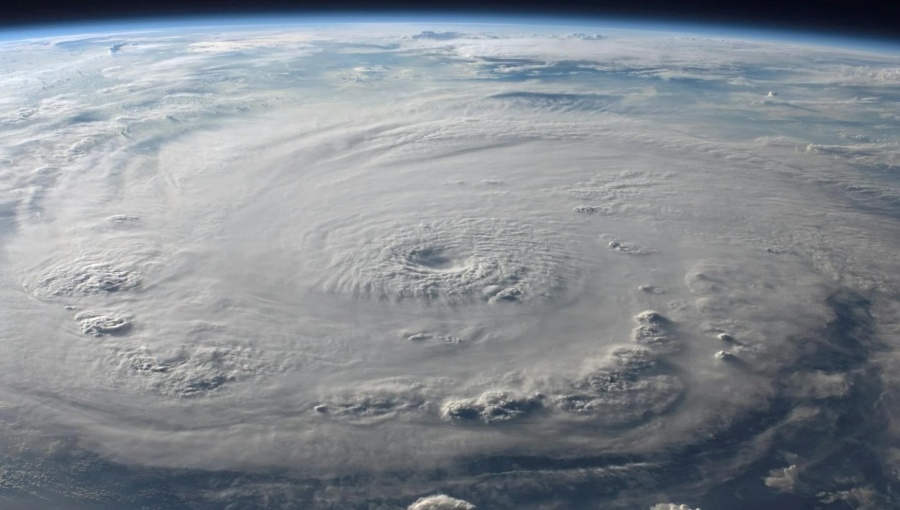
Examining the financial repercussions of recent tropical cyclones

Examining the financial repercussions of recent tropical cyclones
/ Pexels - CC - Earth Planet
By bno - Surabaya Office December 5, 2025

The recent onslaught of tropical storms across portions of South and South East Asia has tragically resulted in considerable loss of life and extensive disruption. While the humanitarian toll is devastating, the overall financial impact on the region is forecast to be relatively contained, primarily because the major industrial and commercial heartlands were largely spared from the worst destruction, according to Capital Economics.

Key Areas of concern and economic channels

In recent weeks, a succession of tropical cyclones has swept through the area, with Vietnam, the Philippines, Indonesia, Thailand, Malaysia, and Sri Lanka all reporting substantial damage. The death toll has surpassed 1,000, affecting hundreds of thousands of residents. The importance of this story lies in the region's reliance on agriculture and the risk that widespread crop destruction, even without hitting industrial centres, could still push up food inflation, adding pressure to household budgets already strained by other economic factors.

Natural catastrophes influence a nation's Gross Domestic Product (GDP) via several mechanisms. Initially, there is an immediate impediment as production, trade, and supply chains are interrupted, and the tourism sector suffers. This short-term negative shock is often followed by a recovery phase fuelled by deferred consumer demand. Furthermore, the necessary rebuilding efforts can stimulate subsequent economic expansion.

Asia has frequently endured such disasters. Historically, the repercussions on GDP have usually been minor and brief. For instance, despite Typhoon Haiyan causing over 10,000 fatalities in the Philippines in 2013, the effect on the nation's overall economic output was limited. Even the catastrophic 2004 tsunami, which claimed over 230,000 lives, had only a modest impact on the wider regional growth figures. As Gary Leather from Capital Economics observed, the economic impact in most cases has been short-lived and modest.

An important counterexample is the 2011 floods in Thailand, which caused a significant economic downturn. GDP plunged by a double-digit percentage as manufacturing (particularly the automotive industry), exports, and tourism all suffered major blows. This severity was due to the disruption being concentrated in the industrial zones surrounding Bangkok, where numerous automotive and electronics plants were inundated and forced to halt operations. Though manufacturing quickly resumed within a few months, the floods generated substantial global supply chain ripples, slowing production and exports globally.

Limited impact on major economic hubs

This latest series of events differs in scope. Despite affecting a broad geographical area, the region's main commercial and industrial centres seem to be mostly undamaged.

  • In Indonesia, the harm is concentrated in northern Sumatra and parts of Kalimantan, primarily impacting rural communities and transport networks rather than significant industrial areas.

  • Sri Lanka has experienced the worst damage in its rural, elevated districts, where crop losses and infrastructure damage are most severe.

  • In the Philippines, the areas most affected are in the Visayas and Mindanao, with landslides and flooding disrupting local services and transport links. Of additional note in the Philippines is the political context: the floods have coincided with a corruption investigation related to flood-management initiatives, which could intensify public discontent and potentially force a more robust government intervention.

Overall, while there might be some temporary interruption to manufacturing and supply chains, the reduction in overall activity is expected to be minimal and temporary. The assessment by Capital Economics' Gary Leather is that the hit to activity is likely to be small and temporary, aligning with the pattern seen when major industrial areas are not severely affected.

The agricultural sector is predicted to absorb the greatest impact. Extensive flooding and crop failures are anticipated to drive food prices higher, posing an upside risk to future inflation forecasts. The encouraging news is that current inflation across most of the region is already very low, sitting near or below target levels. Consequently, Gary Leather and his team at Capital Economics project that central banks will likely retain an accommodative monetary policy, with further interest rate reductions probable in the coming months.


Flooding kills two as Vietnam hit by dozens of landslides


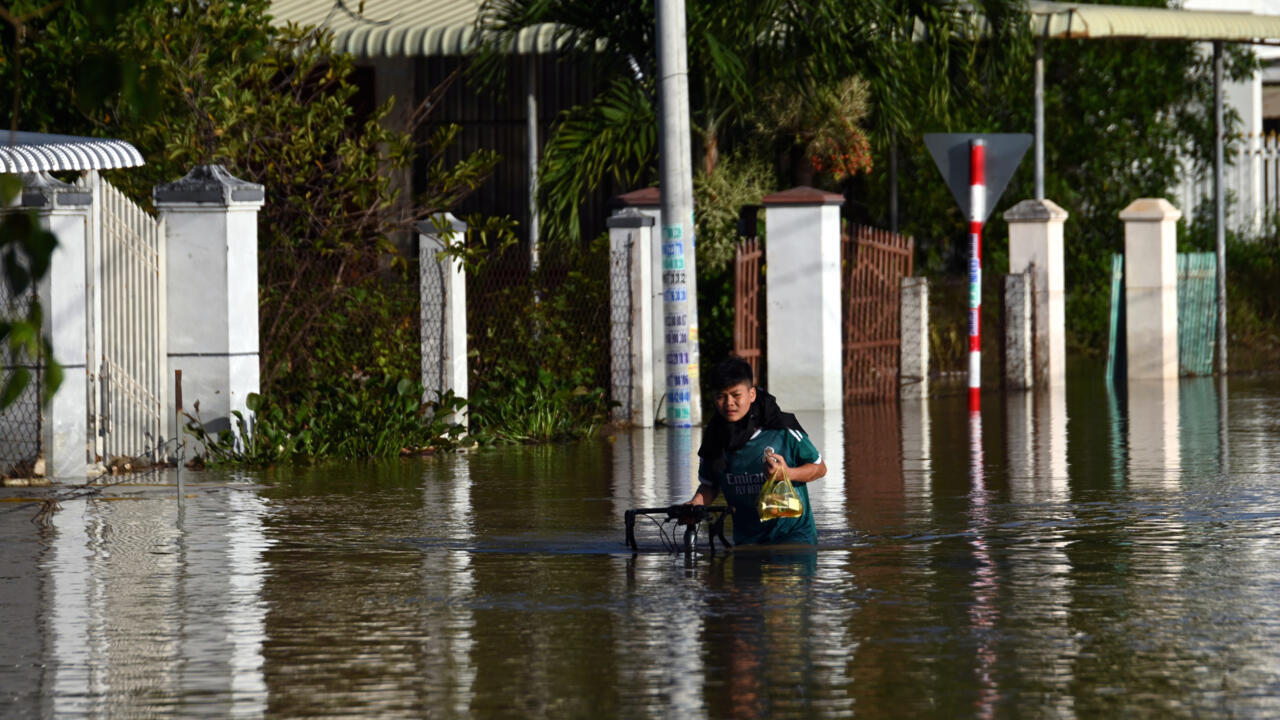
Lâm Đông (Vietnam) (AFP) – Heavy rain in Vietnam triggered flooding that killed at least two people and caused more than a dozen landslides, state media said Friday, adding to what authorities called the "most unusual" year of natural disasters in the country's history.


Issued on: 05/12/2025 - FRANCE24

Deadly flooding inundated thousands of homes in Vietnam's Lam Dong province in what authorities say is a record-breaking year of natural disasters. © Quoc Nguyen / AFP

South-central Vietnam has been lashed by weeks of heavy rain, submerging hundreds of thousands of homes in coastal tourism hotspots and causing deadly landslides in mountainous regions.

Downpours inundated thousands more homes in Lam Dong province on Thursday and killed at least two people, the Voice of Vietnam news outlet reported.

It added that 16 landslides struck the province, damaging roads and bridges and forcing the evacuation of hundreds of homes.

Floodwaters up to two-metres deep were still sloshing through Ham Thang commune in Lam Dong on Friday, resident Pham Thi Ngoc Yen told AFP, adding authorities were delivering food and water by boat.

"Our province has always been very safe from floods or typhoons. This year was so weird," she said.

"I hope that the water will recede a lot in the next two days so that our life can get back to normal."

Record year

"2025 has been the year with the most unusual natural disasters in history," Hoang Duc Cuong, deputy director of the environment ministry's meteorology and hydrology department, said in a statement Friday.


A total of 21 storms, including 15 typhoons and 6 tropical depressions, have affected Vietnam this year, the highest number since records began in 1961, according to the environment ministry's statement.

Vietnam is in one of the most active tropical cyclone regions on Earth, but in a typical year it is affected by around 10 typhoons or storms.

The country has also experienced extreme rainfall and widespread flooding this year, with rivers setting new high-water marks from the northern regions through central and down to the lower Mekong Delta.

"Never before have such exceptionally large and historical floods occurred simultaneously in one year on 20 rivers," the environment ministry said.

One area of central Vietnam recorded up to 1,739 millimetres (5.7 feet) of rain in just 24 hours.

Elsewhere in Asia, devastating floods in recent days have killed more than 1,500 people and displaced hundreds of thousands across four countries, including Indonesia and Sri Lanka.

In Vietnam, natural disasters have left more than 400 people dead or missing this year and caused more than $3.6 billion in damage, according to the ministry.

The Southeast Asian nation is prone to heavy rain between June and September, but scientists have identified a pattern of human-driven climate change making extreme weather more frequent and destructive.

© 2025 AFP

The Circular Battery Economy Set to Surge to Nearly $78 Billion

  • The global circular battery economy is projected to grow from $23.29 billion in 2024 to nearly $78 billion by 2032, driven by the need to secure critical minerals.

  • Battery recycling has evolved from an environmental initiative to a geopolitical necessity, with Western nations pushing to localize supply chains to reduce dependence on foreign processing.

  • The sector is currently navigating a "feedstock gap" where recycling capacity is expanding faster than the immediate supply of end-of-life batteries, but government policies like the IRA are providing crucial support and incentivizing domestic recovery.

As the global energy transition accelerates, the race to secure critical minerals is shifting from remote mines to battery recycling facilities. 

A new report projects the global circular battery economy will surge from $23.29 billion in 2024 to nearly $78 billion by 2032. However, this aggressive growth forecast comes amid a turbulent period for the industry, characterized by volatile commodity prices and a race to build infrastructure before a tidal wave of spent electric vehicle (EV) batteries hits the market.

From Environmental Niche to Strategic Necessity

The shift toward a circular battery economy, where materials are recovered, recycled, and reintroduced into the supply chain—,  no longer viewed merely as an environmental initiative. It has become a geopolitical imperative.

With more than 70 percent of the world’s cobalt and 60 percent of lithium processing concentrated in a handful of countries, Western nations are increasingly viewing recycling as a matter of national security. The United States and European Union are aggressively pushing to localize supply chains to reduce dependence on foreign processing.

According to the report, this "urban mining" sector is expected to grow at a compound annual growth rate (CAGR) of 16.28 percent through 2032. The primary driver is the urgent need to bridge the widening gap between the soaring demand for EV batteries and the finite supply of virgin raw materials like lithium, nickel, and cobalt.

The Feedstock Gap and Industry Growing Pains

While the long-term trajectory is bullish, the industry faces immediate hurdles. The sector is currently navigating a "chicken-and-egg" dilemma: recycling capacity is expanding rapidly, often outpacing the current availability of feedstock.

Most EVs currently on the road are relatively new, meaning the anticipated deluge of end-of-life batteries has not yet fully materialized. Data indicates that by 2030, approximately 1.4 million tons of EV battery waste will enter the recycling stream, a figure expected to balloon to 8 million tons by 2040. Until then, recyclers are fighting for limited scrap material, squeezing margins.

This volatility has impacted major players.

For instance, Li-Cycle Holdings Corp., a prominent name in the sector, paused construction on its massive Rochester Hub in New York amidst rising costs, highlighting the capital-intensive nature of scaling these technologies. Meanwhile, competitors like Redwood Materials and Glencore plc continue to scale operations, securing partnerships with major automakers to lock in future feedstock.

Policy Tailwinds Driving Investment

Despite short-term headwinds, government policy is providing a massive floor for the market. In the United States, the Inflation Reduction Act (IRA) has allocated billions to clean tech manufacturing, explicitly incentivizing domestic material recovery.

The U.S. market alone contributed 38 percent of the global circular battery economy in 2024, valued at $8.8 billion. With federal incentives pushing for domestic content in EV batteries, automakers like Tesla, BMW, and Toyota are mandating minimum recycled content targets. This regulatory pressure is forcing a rapid maturation of the "black mass" market—the intermediate product resulting from shredded batteries that contains valuable metals.

Technological Evolution: Closing the Loop

Technologically, the market is dominated by lithium-ion battery recycling, which accounted for 64 percent of total revenue in 2024. As the industry matures, the focus is shifting toward hydrometallurgical processes (chemical leaching). Unlike older smelting methods, hydrometallurgy allows for recovery rates of up to 95 percent of critical minerals, making it the preferred route for producing battery-grade materials that can compete with virgin mining.

Future Outlook

The circular battery economy is poised to define the next decade of the energy transition. By 2032, recycled materials are expected to supply a significant portion of global demand, with some projections suggesting recycled lithium could meet a quarter of the world’s needs.

As the first generation of mass-market EVs begins to retire in the coming years, the recycling sector will face its true test: proving it can scale efficiently enough to turn a mounting waste problem into a sustainable energy solution.

By Michael Kern for Oilprice.com 


Australia relying on luck over strategy, mining veteran says

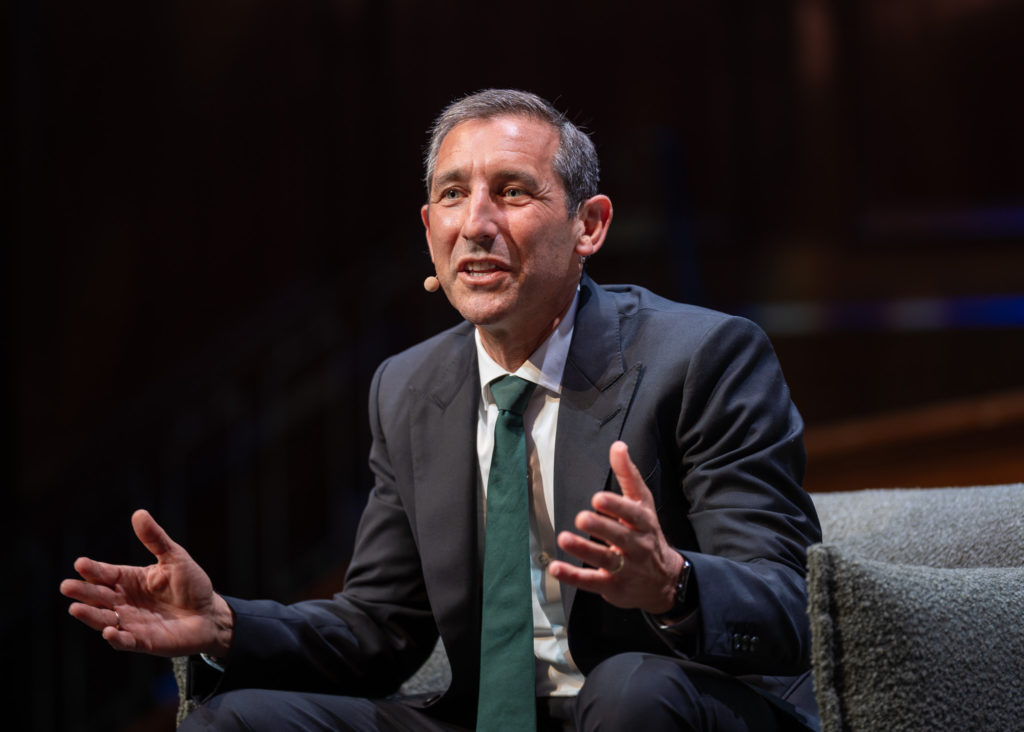
Jake Klein. Image courtesy of Melbourne Mining Club.

Mining veteran Jake Klein says Australia missed a huge opportunity to become a leader in the rare earths space.

Best known as the founder and chairman of gold producer Evolution Mining (ASX: EVN), Klein also sat on the board of Lynas Rare Earths (ASX: LYC) for many years when it was trying to establish itself as a producer.

Speaking at the Melbourne Mining Club on Wednesday, Klein pointed to China’s successful multi-decade strategy to secure raw materials.

“When I reflect on Australia’s success over the last 30 years, it was largely founded on the back of some very bold reform in the ‘90s, which laid the groundwork for our economic success, which has been phenomenal,” he said.

“This country has got rich because of those reforms, and because of China’s growth and their appetite for iron ore and coal.

“In the ‘90s, we were match fit. We had real competitive advantages. We were the premier place for the mining industry, and it kind of feels to me that we’re a team that’s now relying on luck rather than good strategy.”

The Lynas example

Klein said even in 2004, Lynas founder Nic Curtis had a vision and an understanding of the importance of rare earths.

“He spent six years trying to convince Australian capital markets and government that rare earths are really important and it was a struggle to do that,” Klein said.

“He certainly couldn’t get government support during that time, and it just wasn’t considered strategic.

“Malaysia, on the other hand, offered us a 10-year tax holiday. They offered us gas to the site, and a lot of infrastructure benefits, which effectively resulted in the plant being built in Malaysia.” Today, the ore from Lynas’ Mt Weld mine in Western Australia is shipped to Malaysia.

Klein said Australia missed an opportunity to lead the rare earths sector 15 year ago.

“All of that IP is now in Malaysia,” he said.

“Australia is now talking about needing to participate in critical minerals, but we’re part of the crowd now. We could have been a leader, and it’s a huge missed opportunity, and it

comes back to this need for real strategic thinking, vision and courageous strategy if we’re going to be successful as a country.”

Lynas has subsequently built a rare earths cracking facility in Kalgoorlie, WA, but it has been plagued by issues due to unreliable power. Klein noted the recent critical minerals deal between Australia and the US but suggested rare earths had become a good political soundbite for politicians.

“But the actual, practical reality of building a rare earths industry is much more complicated than a headline and a grant to a company,” he said.

“You’ve got to think about the knowledge and the IP. It still irks me that this is a country that has built itself off resources, and yet today, there are fewer places that are training people for university positions for the mining industry than there was a decade ago.

“If you want to be a leader in the rare earth space and the critical mineral space, you need to be investing in the technology. You need to be investing in the education as well as supporting the industry and laying the framework that allows them to be successful.”

The opportunity

Klein slammed Australia’s short federal election cycle of three years as contributing to a loss of competitiveness.

“If you think about the resource sector, the need to think and have a vision for the mines of the future in Australia, it’s going to require multi-decade reform,” he said.

“It cannot be something that changes between each election cycle. I think doing the same thing that we did for the last 30 years and hoping that it will result in the same level of success over the next 30 years is a recipe for failure.” This week, the Australian government released a National AI Plan, which focused on artificial intelligence infrastructure, training and regulatory frameworks.

The Minerals Council of Australia welcomed the plan but called for a “dynamic and light touch approach” to regulation.

Klein said Australia should lean into AI.

“Because if you think about repositioning the mining industry, it doesn’t seem like we’re going to get low power costs soon. Our labor cost is expensive, so I don’t think we should expect people to take a wage cut, but we need to make ourselves more productive and more efficient,” he said.

“If you imagine a mine of the future, something that could put us into a different league and make ourselves more competitive, is [the solution] embracing AI and really using it in a different way than the mining industry is using it today?”

US, Congo eye minerals pact amid peace deal with Rwanda

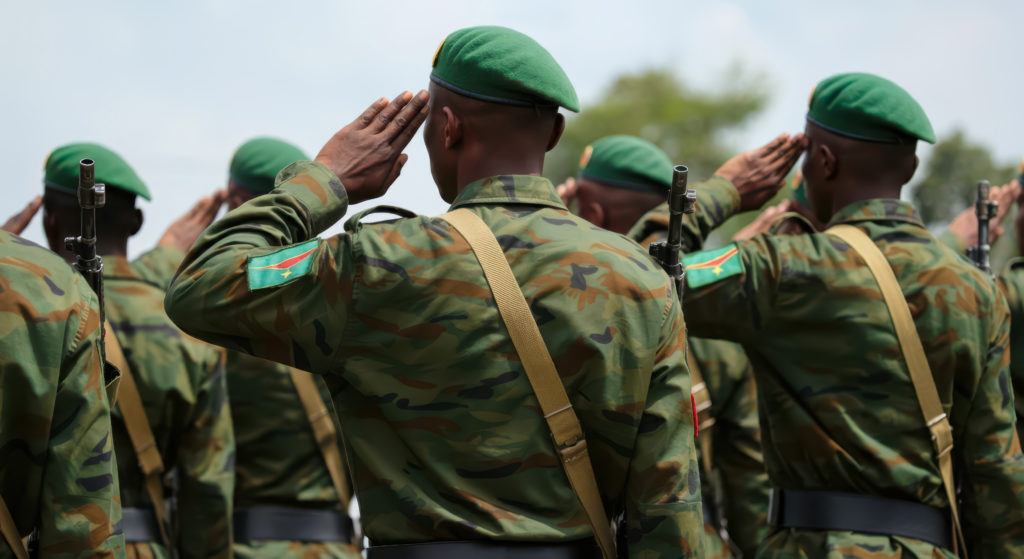
Congolese soldiers. Stock image.

The Democratic Republic of Congo aims to sign a minerals and infrastructure partnership with the Trump administration on Thursday as part of a series of deals targeted at ending a long-running conflict in the eastern part of the resource-rich African nation.

President Donald Trump is scheduled to meet with the presidents of Congo and Rwanda in Washington on Thursday to oversee the signature of a peace accord between the two countries.

The three-decade-long conflict is one of several that Trump has claimed to end as part of his global dealmaking, despite ongoing fighting between the Congolese army and Rwanda-backed fighters.

The central African nations will also sign an economic agreement, while the US and the Congo are expected to ink their own partnership.

Through the deal with the US, “the DRC will become a continental energy hub, a kind of logistical, strategic hub, but also an indispensable player in the critical mineral supply chains,” Tina Salama, a spokesperson for Congolese President Felix Tshisekedi, told reporters in Washington on Wednesday.

The US has been targeting Congo’s minerals to secure key inputs for technology, energy and defense and as a way of diminishing China’s dominance over the trade.

Congo is the biggest nation by landmass in sub-Saharan Africa and rich in strategic metals including cobalt, copper, tantalum, lithium and gold.

The deal with the US will support local mineral production and job creation, and offer US companies the chance to invest in resource, energy and infrastructure projects, Salama said.

This will include the development of a $1.8 billion connection to Angola’s Lobito railway corridor to the Atlantic Ocean and the Grand Inga dam, which would be the biggest hydropower plant in the world, she said.

But the investments will only move forward if Rwanda stops supporting rebel groups in Congo’s east, Salama said.

Rwanda-backed M23 rebels have occupied the region’s two biggest cities since early this year. In recent days, M23 has clashed with the Congolese army in South Kivu province.

“It’s a proof that Rwanda doesn’t want peace,” Congolese government spokesman Patrick Muyaya said alongside Salama in Washington. “Peace for us means withdrawal of Rwandan troops.”

Rwanda denies supporting the M23 and says its troops have only been taking “defensive measures” to secure its borders, in particular against a rebel group with ties to the perpetrators of the 1994 Rwandan genocide against Tutsis.

Congo has agreed to “neutralize” the group, known as the FDLR, as part of the US-backed peace agreement.

“It’s up to the DRC to show how much and how quickly they want peace,” Rwandan government spokesperson Yolande Makolo told Bloomberg Wednesday.

“Achieving peace is tied to the DRC ending all state support to the FDLR as well as other forces hostile to Rwanda, which will allow us to relax our defensive measures, but this hasn’t happened yet,” she said.

(By Michael J. Kavanagh)


Rwanda's Kagame and Tshisekedi of the DRC sign peace deal at the White House


Rwandan President Paul Kagame and DR Congo's President Felix Tshisekedi signed a peace accord in the presence of US President Donald Trump at the White House on Thursday aimed at ending the conflict between their countries. Meanwhile, fighting in eastern DR Congo continues amid a rapid advance by Rwanda-backed M23 rebels.


Issued on: 04/12/2025 
By: FRANCE 24


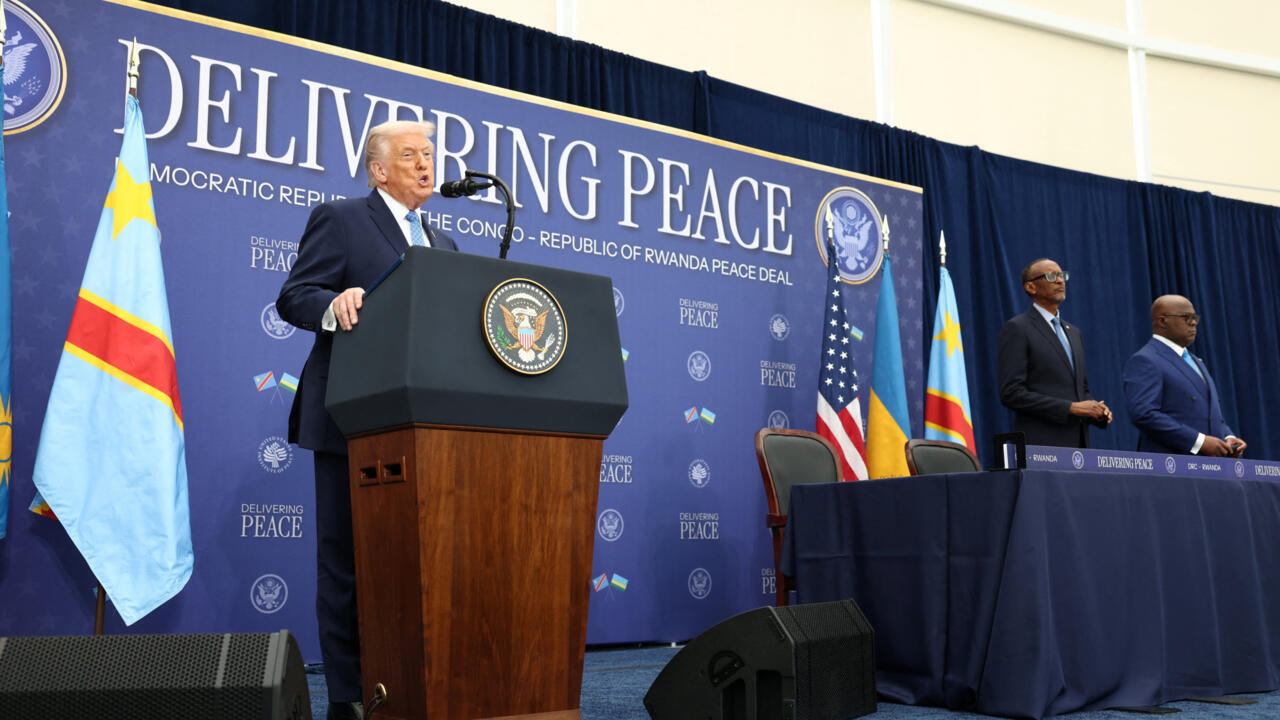
US President Donald Trump speaks next to President of the Democratic Republic of the Congo Felix Tshisekedi and President of Rwanda Paul Kagame © Kevin Lamarque, AFP


US President Donald Trump and the leaders of Rwanda and the Democratic Republic of Congo signed a peace deal Thursday, even as fresh violence raised questions about the accord to end one of Africa's longest wars.

Trump said the United States was also signing deals on critical minerals with the two countries as he hosted Paul Kagame, the longtime president of Rwanda, and Congolese President Felix Tshisekedi in Washington.

"I think it's going to be a great miracle," Trump said after the signing – held in a peace institute which his administration has just renamed after him.

Speaking of the two leaders, he added: "They spent a lot of time killing each other, and now they are going to spend a lot of time hugging, holding hands and taking advantage of the United States of America economically, like every other country does."

But the African leaders both took a more cautious tone, as fighting raged in eastern DRC, where the M23 armed group – which the UN says is backed by Rwanda – has been gaining ground in recent weeks against Kinshasa's forces.

"There will be ups and downs on the road ahead, there is no doubt about it," said Kagame, whose allies have taken a decisive edge on the ground against his country's turbulent neighbour.

The DRC's Tshisekedi called it the "beginning of a new path, a demanding path."


'There isn't peace in Eastern Congo': Fighting rages between M23 and Congolese army


© France 24
05:08


'A lot of money'

Trump has boasted that the eastern DRC conflict, where hundreds of thousands of people have died over several decades, is among eight wars he has ended since he returned to office in January.

The US president has made no secret of his desire to win the Nobel Peace Prize.

Trump said the agreement will pave the way for the United States to gain access to critical minerals in both countries. The violence-torn eastern DRC, in particular, has reserves of many of the key ingredients in modern technologies, such as electric cars.

It is the latest in a series of deals in which the billionaire Republican has negotiated a stake for US firms to extract rare earth minerals, including in Ukraine.

"We're going take out some of the rare earth," Trump said. "And everybody's going to make a lot of money."

The signing comes more than five months after the countries' foreign ministers also met Trump and announced another deal to end the conflict.

The long-simmering conflict exploded in late January as the M23 captured the major cities of Goma and Bukavu.

After the June agreement, the M23 – which denies links to Rwanda – and the Kinshasa government pledged a ceasefire following mediation by US partner Qatar, but both sides have since accused the other of violations.


'Many dead'

Violence continued on the ground even on the day of the signing.

An AFP journalist at the scene heard weapon fire ring out on the outskirts of Kamanyola, an M23-controlled town in South Kivu province near the borders with Rwanda and Burundi.

"Many houses have been bombed, and there are many dead," said Rene Chubaka Kalembire, an administrative official in Kaziba, a town also under M23 control, on the eve of the signing.

After several days of clashes around Kaziba, fighter jets bombarded the town again on Thursday morning, a local civil society representative who requested anonymity told AFP.

Explosions could also be heard coming from the Bugarama border post in Rwanda across the border in neighbouring Burundi, with Rwandan police temporarily shutting the frontier post on Thursday.

AFP was unable to obtain a verifiable toll from the fighting from independent sources.

Local sources reported a massive build-up of M23 reinforcements, accompanied by armoured cars, in the high plateau of South Kivu.

Passage through the mountainous region would allow its troops to encircle Uvira, the last major town in South Kivu to evade the M23's capture.

The Trump-brokered deal meanwhile comes as both countries are in talks with his administration on its priority of taking in migrants amid the president's sweeping deportation drive.

(FRANCE 24 with AFP)