Friday, December 05, 2025

Social justice should not be tokenistic but at the heart of global restoration efforts


University of East Anglia


Social justice must be at the heart of global restoration initiatives - and not “superficial” or “tokenistic” - if ecosystem degradation is to be addressed effectively, according to new research.

Led by researchers the University of East Anglia (UEA) the study sought to explore what can make restoration effective for people and nature. Publishing their findings today in Nature Sustainability, they argue that placing social justice at the centre of restoration practice remains vital to success, with ecological targets aligned to local social, economic and cultural ones.

Around the world, almost all kinds of ecosystems have been degraded and converted, eroding both the biological and cultural foundations of human wellbeing. It is estimated that 3.2 billion people have already been adversely affected by land degradation and there are growing concerns for the future food security of all.

This crisis has driven pledges, funding and programs for wide-scale ecological restoration, often as part of biodiversity and climate policy.

The team, led by Prof Adrian MartinDr Neil Dawson and Prof Iokiñe Rodriguez of UEA’s School of Global Development, reviewed the published literature on restoration in theory and case studies of practice worldwide. They found a need to reflect on, and reframe how, restoration is defined and implemented. 

“In the face of the climate and biodiversity crisis, global targets for the restoration of degraded lands have become ever more ambitious and urgent,” said Prof Martin. “Whilst placing justice at the heart of restoration practice is increasingly accepted, there is an unfortunate tendency to address justice in superficial ways, through tokenistic forms of participation and benefit-sharing.

“Restoration projects are often very short-term and ecologically focused. Many different initiatives are being labelled restoration and it is often assumed all must be doing good, but the core focus tends to be ensuring in the short term that the ecosystem is restored in some way - replanted, reforested, rewetted, species reintroduced etc.

“We know from many years of experience that externally led forms of conservation can have negative impacts on communities, so safeguarding rights, securing land tenure, ensuring consent and protecting cultural identity is important.”

The UN Decade on Restoration 2021-2030 - which has influenced pledges to restore a billion hectares of degraded land - and other major programmes have principles for engaging local communities and providing fair benefits, with projects often including incentives or compensations such as resources and training for alternative livelihood options.

However the team, which included researchers at the IUCN Commission on Environmental, Economic and Social Policy, Queen Mary University of London and the University of Sheffield, found there is a significant gap between what is considered good practice in global guidelines and what is happening on the ground. 

There is growing evidence that this inadequate attention to social dimensions is undermining ecological outcomes, while major global reviews have consistently found that restoration is more successful where governance is based around local institutions and leadership.

Based on the results of their analysis, the authors propose a categorisation of the extent to which justice is integrated into restoration practice, from shallow to deep forms of engagement.

Specifically, they say designing and implementing transformative restoration projects requires a reorientation of focus to the relationships, knowledge systems and structures that are foundational to restoration practice. There should be increased attention to revitalising communities, their knowledge and institutions and ensuring their stewardship is central to more holistic and long-term thinking and approaches.

Prof Rodriguez said: “Success will depend on how implementation programmes are designed and, in particular, whether ecological targets are aligned with local social, economic and cultural ones.

“We are concerned that progress made in gaining global commitments, securing billions in funding, and developing ecological know-how has not been matched by progress in how to meaningfully incorporate social justice into restoration practice.

“Too often there is a superficial consideration of justice, creating unjust interactions and outcomes which impede the effective long-term restoration and protection of both nature and human wellbeing.

“However, there are increasing numbers of ‘bright spots’ of just and transformative restoration, many involving Indigenous Peoples, and these case studies provide evidence of what works and illustrate how deeper justice leverage points are actionable in practice.”

The authors cite the successful example of kelp forest restoration initiatives in the Haida Gwaii archipelago of British Columbia. This saw external conservation scientists working with local communities to identify Indigenous values of nature, then adapting the design of the intervention to focus on local norms such as respect, responsibility, interconnectedness, balance and seeking wise council. 

'Towards just and transformative social–ecological restoration’, Adrian Martin, Neil Dawson, Iokiñe Rodríguez, Rajanya Bose and Isabel Cotton, is published in Nature Sustainability on December 12.  


When you’re happy, your dog might look sad


ASU study reveals surprising twist in how we read canine emotions


Arizona State University

Study dogs 

image: 

The three dogs used in the study videos, from left to right: Canyon, Henry and Oliver.

view more 

Credit: Arizona State University


When people are feeling happy, they’re more likely to see other people as happy. If they’re feeling down, they tend to view other people as sad. But when dealing with dogs, this well-established psychological effect ceases to work as expected.

That’s according to a new study by behavioral scientists at Arizona State University. In one experiment, nudging people into positive emotional states by showing them pictures that usually cheer people up did not significantly impact how they perceived dog emotions. In a modified experiment, the effect actually worked in reverse: people prompted to feel upbeat tended to rate dogs as being sadder. Those nudged into a negative mood deemed dogs to be happier.

“In this domain of how people understand dog's emotions, I'm continuously surprised,” said study co-author Clive Wynne, a professor of psychology and director of the Canine Science Collaboratory at ASU. “I feel like we are just scratching at the surface of what is turning out to be quite a big mystery.”

The research is part of a broader effort to uncover the biases of the human mind that shape our perceptions of animal emotions.

“If we can better understand how we perceive animal emotions, we can better care for them,” said first author Holly Molinaro, president and senior animal welfare scientist at Animal Wellbeing Solutions. She and Wynne published their findings in the journal PeerJ.

The researchers recruited a trio of dogs to help with the work: Oliver, a 14-year-old mixed-breed; Canyon, a one-year-old Catahoula dog; and Henry, a three-year-old French bulldog. They needed videos of the canines reacting in a positive, neutral or negative state, so they asked the dogs’ owners to prompt their pets with emotional cues.

For the positive nudge, a treat worked for Oliver and a toy for Canyon. Henry only had to hear he was going to see “Grandma.” To kill the mood, Oliver was shown a cat. Viewing a vacuum cleaner did it for Canyon and Henry. Neutral mood videos showed the dogs resting or waiting for their owner to present another prompt. The researchers edited the video clips so that only the dog was visible on a black background.

In the first experiment, 300 undergraduate students viewed images from a standardized set used by psychologists to bring about a positive, neutral, or negative mood. After watching short video clips of the dogs in positive, neutral, or negative states, the participants rated how happy or sad each dog looked, and how calm or excited it seemed.

While the priming successfully shifted people’s moods, it did not affect how people rated the emotional state of dogs.

“It just didn't work the way that it does when you do this with humans,” Wynne said.

To make sense of the surprising result, the researchers decided to run a second experiment. The wanted to find out if the priming didn’t work as expected because it relied largely on pictures of people.

“We thought what if we use priming images that were actually dogs – a dog playing in the park, a puppy in a teacup, for example, or a dog that looks sad behind bars or a dog left on the side of the street,” Molinaro said.

They recruited another 300 undergraduates to repeat the experiment with dog-only images used to prime their mood.

“This time what we found was an effect, but in the opposite direction,” she said. “All those that saw the happy dog images rated the dogs as more sad. And all those who saw the sad dog images rated the dogs in the videos as happier.”

Also noteworthy, the researchers found that merely watching the videos of dogs against a black background – even dogs shown in negative mood – lifted the emotional state of study participants.

In all, the remarkable findings highlight how much remains to be learned about our relations with dogs.

“People and dogs have been living intimately with each other for at least 14,000 years. And in that time, dogs have learned plenty of things about how to get along with human beings,” Wynne said. “And yet our research suggests that there are quite big gaps in how we understand what dogs are feeling.”

That matters because misreading or overlooking emotional cues can lead to inappropriate handling, delayed intervention, or unmet behavioral and psychological needs for animals in human care. Molinaro and Wynne believe their research can improve human-animal interaction and support more accurate, empathetic, and welfare-conscious care.

ASU Psychology Professor Clive Wynne poses for a portrait with his greyhound Ginger at his home in Tempe on Nov. 4, 2025.

Credit

Photo by Samantha Chow/Arizona State University

 SCI-FI-TEK 70 YRS IN THE MAKING


TAE, UKAEA create joint venture


US private fusion energy company TAE Technologies and the UK Atomic Energy Authority have announced a bilateral and reciprocal investment commitment to commercialise TAE's proprietary particle accelerator technology for the global market.
 
TAE Technologies' neutral beam (Image: TAE Technologies)

At the centre of the partnership is the new joint venture TAE Beam UK – a collaborative entity that will harness the partners' collective scientific leadership, commercialisation experience and market innovation to develop this highly versatile advanced particle accelerator technology, beginning with neutral beams for fusion. The venture aims to design, develop, and ultimately manufacture and service neutral beams for a wide range of fusion approaches, as well as adapt the accelerator technology for state-of-the-art cancer therapeutics, and other applications like food safety and homeland security.

TAE's approach to fusion combines advanced accelerator and plasma physics, and uses abundant, non-radioactive hydrogen-boron (p-B11) as a fuel source. The proprietary magnetic beam-driven field-reversed configuration (FRC) technology injects high-energy hydrogen atoms into the plasma to make the system more stable and better confined. This solution is compact and energy efficient, California-based TAE says.

For a fusion machine to produce electricity, it must keep plasma steadily confined at fusion-relevant conditions. On TAE's current fusion machine, eight powerful neutral beams are placed at precise angles to meet those requirements. Inside each neutral beam canister, protons are accelerated and then combined with electrons to create a stream of neutral, high-energy hydrogen atoms (the 'neutral beam'). Because the particles have no charge, they can bypass the fusion reactor's magnetic field to provide heating, current drive and plasma stability. TAE is the first to use neutral beams for both FRC plasma formation and high-quality plasma sustainment – resulting in a streamlined design that is smaller, more efficient and more cost-effective.

The same accelerator technology that produced TAE's sophisticated neutral beam system for fusion has also been adapted for TAE's medical technology subsidiary, TAE Life Sciences, to provide a non-invasive, targeted treatment for complex and often inoperable cancers.

The new TAE Beam UK joint venture will operate out of UKAEA's Culham Campus, in Oxfordshire, UK. UKAEA - which carries out fusion energy research on behalf of the UK government - plans to make an equity investment of GBP5.6 million (USD7.4 million) in this new venture, including engaging some of the world's best scientists to work on this critical fusion technology and leverage expertise built up over decades of operating JET. TAE Beam UK is supported by TAE's own nine-figure investment in the technology due to TAE's own usage requirements over the next several years. The project aims to deliver the first short-pulse beams within 18-24 months of the start of work. The transaction remains subject to customary regulatory approvals.

"The UK has long been at the forefront of fusion innovation, and we're proud to deepen our partnership with UKAEA," said TAE Technologies CEO Michl Binderbauer. "The UK's world-class scientific talent and unwavering commitment to commercialising fusion energy make the country an ideal partner as we scale neutral beam technology from lab to market. Together, we're building critical infrastructure for the fusion supply chain and ensuring that the US-UK partnership can together remain central to the fusion economy of the future."

UKAEA CEO Tim Bestwick added: "UKAEA is very much looking forward to working in partnership with TAE Technologies on developing neutral beams and commercialising this exciting technology, bringing jobs and growth to the UK. They have shown the way as a global leader in applying fusion technologies to other markets, and TAE Beam UK will join TAE Life Sciences and TAE Power Solutions as great examples of this innovation in action."

World Nuclear News

World Nuclear News


First fuel produced for molten salt reactor experiment


Idaho National Laboratory has launched full-scale production of enriched fuel salt for the world's first test of a molten chloride salt fast reactor - technology that could be deployed as soon as the 2030s for both terrestrial and maritime applications.
 

Salt crystals produced at INL for the MCRE (Image: INL)

The Molten Chloride Reactor Experiment (MCRE) project - a public-private collaboration between Southern Company, TerraPower, CORE POWER, and the US Department of Energy (DOE) - is planned to be the first reactor experiment hosted at the Laboratory for Operation and Testing in the United States (LOTUS) test bed being built at the lab by the DOE's National Reactor Innovation Center. It uses liquid salt as the fuel and the coolant, allowing for high operating temperatures to efficiently produce heat or electricity.

The Molten Chloride Reactor Experiment will need 72 to 75 batches of fuel salt to enable it to go critical - giving Idaho National Laboratory (INL) its largest fuel production challenge in 30 years, according to the DOE Office of Nuclear Energy. The fuel salt production process began in 2020, but early attempts yielded far below the goal of 90% conversion of uranium metal into uranium chloride and production of 18 kg of fuel salt per batch. But a breakthrough in 2024 - when the team developed a new step to improve uranium utilisation - eventually led to the achievement of 95% conversion and full-batch production. They have since demonstrated they can produce a batch in as little as one day, according to INL.

The first fuel salt production batch was delivered at the end of September, with four further batches to be produced by March 2026, supporting a key national goal to advance nuclear energy outlined in an executive order issued earlier this year by President Donald Trump, the lab said.

"This is the first time in history that chloride-based molten salt fuel has been produced for a fast reactor," said Bill Phillips, INL's technical lead for salt synthesis. "It's a major milestone for American innovation and a clear signal of our national commitment to advanced nuclear energy."

The US Department of Energy released a final environmental assessment and draft finding of no significant impact for the design, construction, and operation of the MCRE, to be built at INL by Southern Company, in 2023.

Results from the Molten Chloride Reactor Experiment will help inform the commercial deployment of TerraPower and Southern Company's Molten Chloride Fast Reactor that could be deployed in the 2030s. But it also has significant implications for the maritime industry, according to Don Wood, senior technical advisor for MCRE. "Molten salt reactors could provide ships with highly efficient, low-maintenance nuclear power, reducing emissions and enabling long-range, uninterrupted travel. The technology could spark the rise of a new nuclear sector - one that is mobile, scalable and globally transformative," he said.

Deep Isolation completes three-year waste canister project

Project UPWARDS has culminated in the manufacture, physical testing and validation of a disposal-ready Universal Canister System for used nuclear fuel and high-level radioactive waste from advanced reactors.
 

Deep borehole testing of a similar canister (Image: Deep Isolation)

The project's name stands for Universal Performance Criteria and Canister for Advanced Reactor Waste Form Acceptance in Borehole and Mined Repositories Considering Design Safety. It included the development of waste form acceptance criteria, and integrated safety and performance assessments across multiple repository types. The project was carried out by Deep Isolation in partnership with the University of California, Berkeley, Lawrence Berkeley National Laboratory, and NAC International, with grant funding from the US Department of Energy's ARPA-E initiative.

The first prototype canister was fabricated in conjunction with Pennsylvania-based R-V Industries, Inc. Testing of the Universal Canister System at the Deep Borehole Demonstration Center in Texas has provided evidence of mechanical integrity and operational viability in simulated real-world geologic conditions which Deep Isolation said has provided a rare level of physical validation for a nuclear waste disposal system.

The Universal Canister System is designed to accommodate a range of advanced reactor waste streams, including vitrified waste from reprocessing, TRISO spent fuel, and halide salts from molten salt reactors. It is compatible with modern dry storage and transport infrastructure, and meets performance and safety requirements across both borehole and mined repository options, which gives greater flexibility and reduced uncertainty in future waste disposition, the company says.

The results from Project UPWARDS provide a strong technical foundation which is expected to support future regulatory engagement, pilot deployment, and commercialisation efforts, the company said.

"By fabricating and testing a universal, triple-purpose canister that is engineered for storage, transportation, and disposal of nuclear waste in multiple repository types, we have delivered a flexible and technically robust solution that has undergone extensive testing and is intended to support future real-world deployment," said Jesse Sloane, Executive Vice President of Engineering at Deep Isolation.

The Universal Canister System has been developed by Deep Isolation in collaboration with NAC International Inc. NAC CEO Kent Cole said the company is "eager to advance the integration of this exciting innovation into our existing licensed systems for storage and transportation of spent nuclear fuel and to partner with Deep Isolation in commercialising it around the world".

‘Philanthropy can help nuclear energy growth in emerging economies’

A Rockefeller Foundation study sees nuclear potentially delivering 20% of electricity generation in eight key emerging economies by 2050 - and says that philanthropy can play a "catalytic role" in making it happen.
 
(Image: The Rockefeller Foundation)

The Role of Nuclear Energy in Powering Universal Energy Abundance for Emerging Economies, carried out by Bayesian Energy and Radiant Energy for the US-based Rockefeller Foundation, included Brazil, Ghana, India, Nigeria, the Philippines, Rwanda and South Africa in its assessment.

Ashvin Dayal, Senior Vice President, Power, at the Rockefeller Foundation, said it "offers an empirically grounded perspective on the conditions under which investing in nuclear power makes economic sense, and specific actions that philanthropy can take to spur the adoption of nuclear technologies, including small modular reactors (SMRs), within the global energy system".

The report says that "under the right policy and regulatory conditions, nuclear power - including small modular reactors - could play a more meaningful role in these countries' energy futures than previously assumed".

"Rather than solely focusing on Levelised Cost of Energy, we use a comprehensive energy systems modelling framework that evaluates total system costs. Our modelling shows that by 2050 nuclear energy represents 10-20% of generation in cost-optimal pathways, lowering total system costs by 2-31% compared to renewables only trajectories," the report says.

It adds that "the firm output of nuclear power lessens the need to overbuild solar and storage to reach a zero-carbon system. Compared with pathways that rely solely on renewables, scenarios with nuclear decrease the total rollout of solar, storage, and transmission by 9-26%, 19-38%, and 12-27%, respectively, across all eight countries. This is a critical point for EMDE (Emerging Markets and Developing Economies) facing land, finance, and supply chain constraints".

Rajiv J Shah, President of the Rockefeller Foundation, said: "As global energy demand grows, it's never been more urgent to explore new technological pathways for emerging economies to access power and unlock opportunity for their people. This report demonstrates how nuclear energy can play a critical role in meeting that need with clean, continuous power."

The study combined Bayesian Energy’s systems modelling "with structured qualitative research and expert interviews to assess the potential for nuclear deployment" across the eight countries which have a combined population of more than two billion people. The models looked at power systems scenarios with and without nuclear.

Key findings included that renewables and nuclear are complementary technologies rather than rivals and that enabling factors are needed to tackle financial, institutional and social barriers that may be identified.

It also said philanthropy in this field had been "long overlooked" but there was a "catalytic role that philanthropy could play - despite its historical absence from this sector - in enabling early adoption, including supporting regulatory readiness, strengthening public engagement, facilitating access to international expertise, and helping governments de-risk investment decisions".

It said nuclear technology "delivers broader socio-environmental benefits, aligning closely with philanthropy's many development and climate objectives" and said philanthropy could target the main obstacles identified, which "fall under the categories of government efficacy, public engagement, and nuclear financing - in the broader energy ecosystem, philanthropy has a proven track record of delivering strong impact in these areas".

Aman Majid, co-founder of Bayesian Energy, said: "Our modelling shows that nuclear can work with renewables and storage, not against them. Pathways with nuclear still rely on major renewable buildouts, but require far less storage and transmission. That means billions of dollars in avoided costs for countries where every dollar counts - along with less land use, fewer transmission lines, and fewer permitting challenges. But those benefits only materialise if nuclear projects can be built on time and on budget and that’s where the hard work begins."

Bilibino’s units being shut down for decommissioning


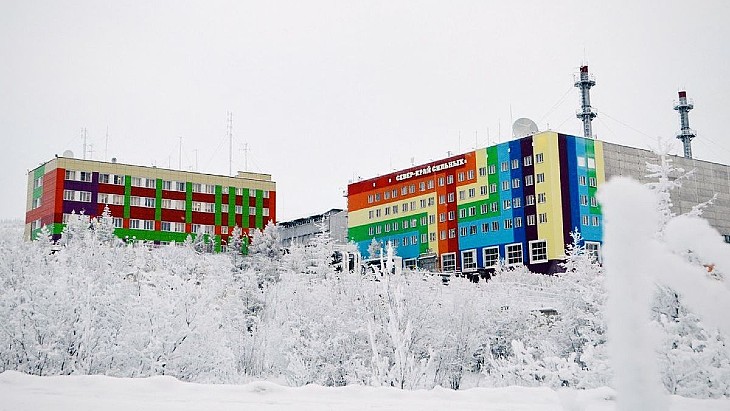
The three operable units at the Bilibino Nuclear Power Plant in Chukotka, Russia, are all to be permanently shut down by the end of the year.
 
(Image: Rosatom)

The first of the three 12 MWe EGP-6 light water graphite-moderated reactors to be taken offline was Bilibino Unit 2. Unit 3 is scheduled to be shut down on 11 December, with Unit 4 following on 22 December. The first unit was shut down in 2018 and its used nuclear fuel removed to a storage pool.

Bilibino Nuclear Power Plant, in Russia’s Arctic north east, has been operating for 50 years in the permafrost zone, with its reactors operating for a combined 190 reactor-years, generating 11.6 billion kWh of electricity.

Decommissioning is expected to last about eight years, with Andrey Kuznetsov, Chief Engineer of Bilibino NPP, saying: "It will begin with obtaining a Rostekhnadzor licence and will conclude with the full implementation of the work in accordance with the design documentation. Specialists will need to carry out a comprehensive range of operations, including spent fuel removal, dismantling equipment and structures, and waste management - all of which will require decades of work."

The beginning of full site rehabilitation is expected to occur from around 2054.

Rosatom said that Bilibino's decommissioning experience will be unique, in terms of both the northern conditions and also because it is the first such Russian site to shut down its power units simultaneously. Unloading of the used nuclear fuel is expected to last about two years.

Its capacity has been replaced by the floating nuclear power plant (FNPP), the Akademik Lomonosov, which has a capacity of 70MW and which will be providing electricity and heat to the region.

Konstantin Kholopov, Director of the Bilibino NPP, said: "We've been preparing for the transition to this new reality for the NPP and the town of Bilibino for years: a replacement power centre and other infrastructure have been built and are already operational. Furthermore, electricity will be supplied to us from Pevek, where the FNPP is located: even during the site selection stage, its capacity was planned to be used to supply power to Bilibino, among other cities."

ExxonMobil Prepares to Permanently Close Singapore Petrochemical Unit

U.S. supermajor ExxonMobil plans to permanently shut down one of two steam crackers at its huge Singaporean refining and petrochemical complex, Reuters reported on Thursday, citing anonymous sources with knowledge of the plans. 

Exxon owns and operates a 592,000-barrel-per-day (bpd) refinery in Jurong, which is fully integrated with the Singapore Chemical Plant (SCP). The petrochemical complex was first commissioned in 2001 and was further expanded to more than double its capacity in 2013. The chemical plant has an ethylene production capacity of 1.9 million tonnes per year, Exxon says.  

However, the reported closure of the older of two steam crackers would be in line with a global reshuffling of capacity as excess petrochemicals capacities have threatened profitability in recent years. 

The petrochemicals industry has been grappling with razor-thin margins and losses for months, due to the global overcapacity mostly coming from the huge overbuild in China. 

The petrochemical overcapacity in China has affected Asian markets and South Korea has also urged its struggling petrochemicals sector to slash excess capacity and restructure operations amid a global glut that has depressed petrochemicals margins and threatened the industry in many Asian and European countries. 

Amid the persistent global glut, the South Korean government in August said that the 10 largest domestic companies have agreed to restructuring, including by slashing their naphtha-cracking capacity by up to 25%. 

Naphtha is processed in steam crackers to produce ethylene, propylene, and other monomers used in the production of various plastics and synthetic products.

An ExxonMobil spokesperson told Reuters the company doesn’t comment “on market rumors or speculation” regarding the reported plans for a permanent closure of one steam cracker, expected to be completed by June 2026. 

Exxon plans to reduce the number of employees by 10-15% by 2027 as part of global restructuring. 

In October, the U.S. supermajor agreed to sell its Esso-branded retail fuel station network in Singapore to Indonesia’s Chandra Asri Group.  

By Tsvetana Paraskova for Oilprice.com