Sunday, December 14, 2025

They were almost American - then Trump cancelled their citizenship ceremonies

Grace Eliza Goodwin
and
Leyla Khodabakhshi
BBC

AFP via Getty Images


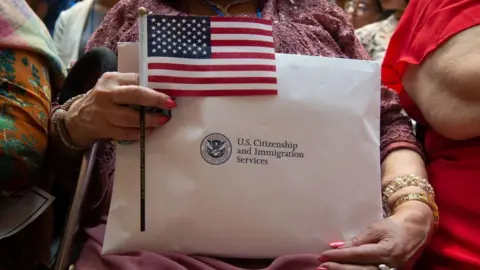
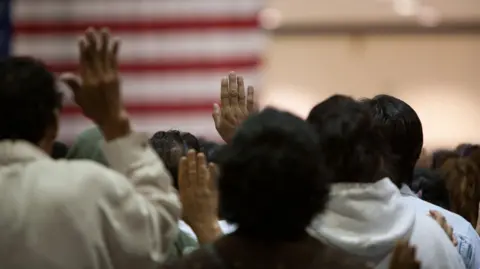
Sanam, an Iranian immigrant who came to the US over a decade ago, was finally about to become a US citizen. Years of navigating paperwork, approvals, tests, and security vetting, had brought her to the last step: a naturalization ceremony.

But then, just two days before she was to take her oath on 3 December, the US government abruptly cancelled it.

Sanam was shocked and confused at first – there was no explanation. She didn't understand why the ceremony was cancelled when she hadn't done anything wrong, she told the BBC.

Later, she found out it was because of where she was born, and sadness and frustration crept in.

"It's been just years and just feeling drained and feeling like, can I even keep going with this process? Because it's been so hard," Sanam said. "It's just very heartbreaking."
Getty Images

Sanam - who wishes to remain anonymous for fear of retaliation but who chose to share her nickname - lives in Oregon with her husband, a US citizen from Kansas. Her identity has been verified by the BBC.

Her case is one of many – earlier this month the Trump administration began cancelling the citizenship ceremonies of immigrants from 19 countries already subject to a travel ban, including Iran.

That controversial decision left some legal permanent residents like Sanam – people who already had passed through every step of the process to become US citizens and were only awaiting the final formality – in an indefinite state of uncertainty.

"It just feels like our life is kind of in this limbo state, unstable," Sanam said, adding that she and her husband feel like they are "at the mercy of what the government decides".

This experience has led Sanam to start reconsidering whether it's worth it to stay in the US. She still has family in Iran, including her aging parents, and she doesn't know when she'll be able to see them again.

"It's hard to think about hope at this point," she said. "It's a really scary time and unfortunately as we approach the holidays, it's just really sad that people are going through this, and it's supposed to be a season of joy and getting together with your family."


19 countries affected by travel ban


The cancelling of oath ceremonies is just one part of the Trump administration's latest efforts to tighten immigration rules. Migrants from the 19 countries already subject to a travel ban have had their immigration processing halted no matter where they are in the process, not just those at the final step.

The move, and others like it, came in the days after an Afghan national opened fire on National Guard members in Washington DC on 26 November, killing one and critically injuring another. The Trump administration has used the shooting as justification for a number of new efforts to tamp down immigration, including sending an additional 500 National Guard troops to DC, reducing the work visa validity period from five years to 18 months, and pausing all asylum claim decisions.

US Citizenship and Immigration Services has said the restrictions are necessary to safeguard national security, protect American lives, and ensure public safety.

But Mario Bruzzone, vice president of policy at the New York Immigration Coalition, a nonprofit that represents hundreds of immigrant rights groups, said the restrictions put immigrants who are in need of protection in dangerous situations.

"An indefinite pause is a ban, plain and simple, and they're using the recent shooting in DC as a pretext for an escalation in attacks on immigrants and refugees," Mr Bruzzone told the BBC.

One Venezuelan immigrant, Jorge, was also on the cusp of becoming a US citizen when suddenly, less than 24 hours before his ceremony on 2 December, he was told it had been cancelled without explanation.

"I had everything prepared, including attending the ceremony with my son. To have it cancelled the day before, without any clear reason, left us with no clarity about the next steps," Jorge said.

Jorge, which is not his real name, has asked to remain anonymous, but his identity and experience have been verified by the BBC. He said he obtained permanent residency in 2017 through the "extraordinary ability" category, which is reserved for professionals at the top of their field.

Jorge agrees with the Trump administration that there should be "stricter reviews" of immigrants, he told the BBC. He blames the Biden administration for allowing too many immigrants into the country, and added that if he had been able to vote, he would have supported President Donald Trump.

What concerns him, he said, is that long-term residents with no criminal history are now being "generalised" alongside people who he believes do require deeper scrutiny.

"I just want those of us who have followed every rule to be able to move forward with our cases — and for those who have committed fraud or crimes to face the appropriate legal consequences," Jorge said.
AFP via Getty Images
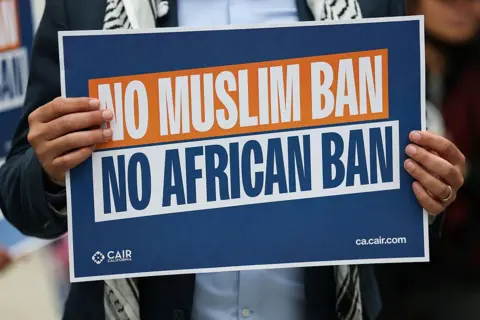
President Trump has expanded his previous travel ban to include 19 countries, mostly from Muslim-majority or African countries

Mr Bruzzone of the NYIC said many immigrants from the 19 countries - including refugees, asylum seekers, and legal permanent residents like Sanam and Jorge - have already gone through extensive vetting that takes years and has multiple layers of security checks and health checks.

Living in New York state alone, there were an estimated 132,000 Venezuelan-born people in 2023, according to data gathered by the New York Immigration Coalition.

The halt has disrupted the lives of people at every stage of the immigration process, leaving them to wait it out in a "huge amount of uncertainty", Mr Bruzzone said.

Sanam's husband, who chose not to share his name for fear of retaliation, told the BBC that the timeline of events feels astounding.

"If those National Guard members weren't attacked last week, but this week, [my wife] would be a citizen right now," he told the BBC the day after Sanam's oath ceremony was supposed to happen.

"Your mind goes a little bit wild about how quick the mechanism for changing all of these policies came on," he said. "It just feels like the administration clearly didn't let a good crisis go to waste in this case. And it's pretty tough to be underneath that."
US to begin social media screening of H-1B, H-4 visa applicants from December 15

In a new directive, the US State Department said it would review the online presence of all H-1B applicants and those applying for H-4 dependent visas. Until now, mandatory social media screening applied mainly to students and exchange visitors.


The State Department stressed that visas are granted at the discretion of the US government. (File Photo)

India Today World Desk
New Delhi,
Dec 15, 2025 
Written By: Satyam Singh

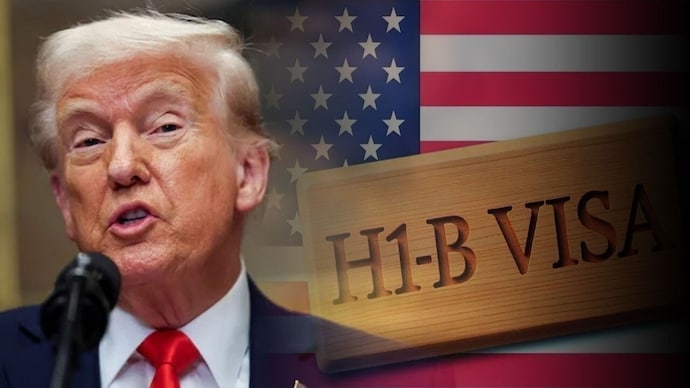
The US will begin enhanced screening of H-1B work visa applicants and their dependents H-4 visa applicants from December 15, expanding social media checks as part of the Trump administration's immigration crackdown, according to news agency PTI.

In a new directive, the US State Department said it would review the online presence of all H-1B applicants and those applying for H-4 dependent visas. Until now, mandatory social media screening applied mainly to students and exchange visitors. The change brings skilled foreign workers and their families under the same level of scrutiny.
advertisement

The State Department said applicants will be required to make their social media profiles publicly accessible to allow officials to conduct background checks.

"To facilitate this vetting, all applicants for H-1B and their dependents (H-4), F, M, and J nonimmigrant visas are instructed to adjust the privacy settings on all of their social media profiles to ‘public'," the department said.

F, M and J visas are commonly used by international students and exchange visitors entering the US. The department said these categories were already subject to online screening and that the policy has now been extended to include H-1B and H-4 applicants.

In view of the postponement of H-1B visa interviews in India, H-1B and H-4 visa holders in the US reportedly received emails from the consulate informing them that temporary working visas had been "prudentially revoked".


'VISA IS A PRIVILEGE, NOT A RIGHT'

The State Department stressed that visas are granted at the discretion of the US government and form part of a wider national security process.

"Every visa adjudication is a national security decision," the department said.

"We conduct thorough vetting of all visa applicants, including online presence review of all student and exchange visitor applicants in the F, M, and J nonimmigrant classifications," it added.

The department said it uses "all available information" to identify applicants who may be inadmissible to the US, including individuals who could pose a risk to national security or public safety.

"The United States must be vigilant during the visa issuance process to ensure that those applying for admission into the United States do not intend to harm Americans and our national interests," it said, adding that applicants must clearly establish they intend to follow the terms of their visa.

The new directive will affect Indian nationals, who make up one of the largest groups of H-1B visa holders. The programme is mostly used by US technology firms and healthcare providers to hire skilled foreign workers, including software engineers and doctors.

The latest order follows a series of steps by the Trump administration to tighten rules around temporary work visas. Officials have argued that the H-1B system has been misused and needs reform to protect American jobs.

TRUMP'S IMMIGRATION CRACKDOWN

In September, President Donald Trump issued a proclamation titled "Restriction on Entry of Certain Nonimmigrant Workers," describing it as an initial step to overhaul the H-1B programme. Under that order, the administration announced a one-time fee of $100,000 for new H-1B work visas, a measure likely to affect Indian professionals seeking jobs in the US.

Washington recently paused green card, US citizenship and other immigration applications from nationals of 19 "countries of concern" following a shooting involving an Afghan national and National Guard soldiers.

Earlier this month, a policy memorandum directed US Citizenship and Immigration Services to place all asylum applications on hold, regardless of nationality, pending a comprehensive review. These countries were previously covered under a travel ban announced by Trump in June.

- Ends

WWIII

U.S. prepares for potential drone war over Taiwan

Posted December. 15, 2025

U.S. prepares for potential drone war over Taiwan

The United States is overhauling its equipment and tactics in preparation for a potential drone war that could emerge from a Chinese invasion of Taiwan, The Wall Street Journal reported on Dec. 12 local time. The initiative reflects a broader shift within the U.S. military toward readiness for real combat scenarios, as the war in Ukraine has underscored the growing strategic importance of drone warfare.

According to the Journal, the U.S. military recently released footage of high-intensity combat training exercises conducted in Hawaii that incorporated extensive drone operations. In the video, U.S. forces carried out drills in which reconnaissance drones were deployed to assess the size and positioning of simulated enemy units, followed by strike drones executing surprise attacks on enemy hideouts. During the two-week training exercise, the military also unveiled newly developed drone systems. The footage included scenes showing low-cost kamikaze drones being manufactured within hours using three-dimensional, or 3D, printers.

“The drone system is dominating the nature of combat on the Ukraine-Russia battlefield,” the Journal reported. It added that the United States, which has long relied on costly and highly sophisticated combat platforms, is entering a new phase of military planning focused on highly mobile, relatively inexpensive and expendable systems.

The expectation that a potential military confrontation between the United States and China would be concentrated along the first island chain linking Japan and Taiwan has also shaped the overhaul. In such a conflict, prolonged attritional warfare could spread across jungle-covered islands in the Pacific. While U.S. forces have accumulated extensive combat experience in desert and mountainous environments such as Iraq and Afghanistan, warfare in the Pacific would pose fundamentally different operational challenges. The administration of U.S. President Donald Trump has also launched a broad initiative to revive the shipbuilding industry as part of its effort to strengthen U.S. naval power.

One of the two brigades of the U.S. Army’s 25th Infantry Division that participated in the training plans to hold new exercises next year in the Philippines, a key part of the first island chain. The move signals an intent to test newly developed drone capabilities in realistic, combat-oriented training environments closer to China.


Seong-Mo Kim mo@donga.com
Donald Trump’s Influence Is Redrawing Latin America’s Map to the Right


DEC 14, 2025

By Jesus Mesa
Politics Reporter
Newsweek 


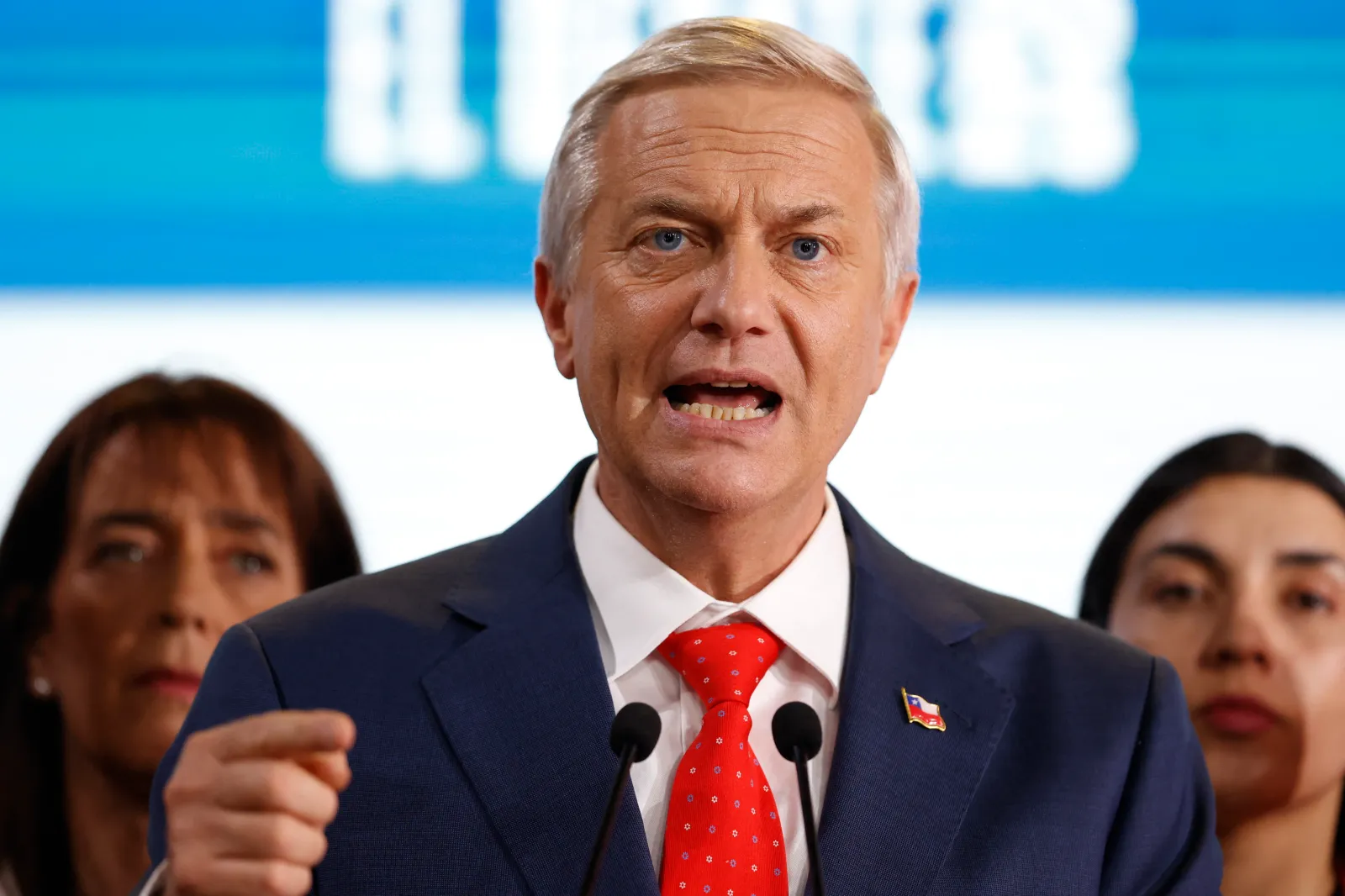
As José Antonio Kast emerged victorious in Chile’s presidential election this week, analysts across the region pointed to a defining feature of his campaign—the growing influence of U.S. President Donald Trump’s political playbook across Latin America.

The rhetoric was familiar—tough on crime, hostile to undocumented migrants, heavy on nationalism—and so was the strategy, built on populist messaging and rejection of establishment politics.

Kast, a 58-year-old lawyer and founder of Chile’s far-right Republican Party, has long positioned himself as a cultural conservative and law-and-order hardliner. His admiration for Trump is matched by his well-documented praise for former Chilean dictator Augusto Pinochet whose regime he has defended as necessary to restore order.

This election, Kast leaned heavily on those themes—security, sovereignty, and the promise of control.

Experts consulted by Newsweek said Kast’s victory was less a shock than the culmination of Chile’s political shift over the past several years.

“This result has nothing to do with the incumbent government,” Marta Lagos, director of Latinobarómetro, a regional polling firm, said. “The Chilean electorate had already shifted to the right during the constitutional referendums, and that shift was confirmed in the 2024 municipal elections. For Chileans, this outcome was expected. It’s only surprising to the outside world.”


Chile's presidential candidate Jose Antonio Kast of the Republican Party is seen in Santiago on October 26. (Photo by Raul BRAVO / AFP) (Photo by RAUL...Read More

Lagos cited a mix of unfulfilled promises from the 2019 social uprising, deepening distrust in institutions, and growing public anxiety about crime and migration—even as Chile maintains one of the lowest homicide rates in Latin America.

“There’s a contradiction between reality and fiction,” she said. “Ninety percent of the population says they’re afraid to go outside, but the numbers don’t justify that fear. It’s the narrative that wins, not the data.”

Migration has become a central force in shaping Chile’s political mood. Drawn by the country’s economic stability, tens of thousands of Haitians and Venezuelans arrived over the past decade in search of better opportunities. Today, Venezuelans are the largest foreign-born population in Chile, numbering around 669,000—roughly 38 percent of the country’s 1.9 million immigrants, according to the latest census.

As in other countries across the region—Peru, Ecuador, Argentina and Colombia—the influx has triggered a backlash. On the campaign trail, Kast seized on those tensions. In one viral video, he confronted a Venezuelan migrant and told him to “leave the country and come back the right way,” a moment that echoed Trump-era immigration politics and spread quickly across Chilean social media.

A Region Tilting Right


Kast’s win may have happened in Santiago, but the political shift he embodies is regional. Across Latin America, a new class of conservative leaders is rising on a wave of voter frustration, channeling public anger over crime, corruption, and migration into decisive electoral wins.

“There are signs that the political winds in Latin America are blowing to the right,” Michael Shifter, former president of the Inter-American Dialogue, a Washington, D.C.-based think tank, said. “Trump is lucky that more leaders and governments are becoming more closely aligned with his administration and its policies.”

In Bolivia, Rodrigo Paz ended nearly two decades of leftist rule by defeating the ruling socialist party. In Ecuador, Daniel Noboa secured reelection in April with a tough-on-crime platform focused on military crackdowns. And in Argentina, President Javier Milei not only held on to power but expanded it—after the Trump administration conditioned a $20 billion U.S.-Argentina currency swap and broader financial support on the success of his party in the October midterm elections.


Argentina's President Javier Milei (right) gestures next to El Salvador's President Nayib Bukele on the balcony of the Casa Rosada presidential palace...Read More | Luis Robayo/AFP via Getty Images

“The lurch to the right is real,” Benjamin Gedan, director of the Latin America Program at the Wilson Center, told Newsweek. “For now, the region’s political trends favor the United States. That will make it easier to compete with China for influence and in the scramble for minerals.”

While electoral trends matter, U.S. policy is also reinforcing the shift. Trump’s second term has deepened American engagement across Latin America, driven in large part by Secretary of State Marco Rubio.

Rubio, long a hawk on the region, has pushed for an aggressive posture—embracing military strikes on suspected drug boats, deportation deals with authoritarian leaders, and the designation of criminal groups as terrorist organizations. His admiration for El Salvador’s Nayib Bukele has helped elevate Bukele’s hardline security policies into a regional model.

After visiting Bukele in February, Rubio praised the Salvadoran president for turning a nation “known for violence” into “one of the most secure in the hemisphere.” That endorsement has resonated among leaders across Latin America facing similar crime concerns—and looking for U.S. backing.

In the words of the White House's own new National Security Strategy, "we want to ensure that the Western Hemisphere remains reasonably stable and well-governed enough to prevent and discourage mass migration to the United States; we want a Hemisphere whose governments cooperate with us against narco-terrorists, cartels, and other transnational criminal organizations; we want a Hemisphere that remains free of hostile foreign incursion or ownership of key assets, and that supports critical supply chains; and we want to ensure our continued access to key strategic locations."

Momentum Meets Uncertainty

Kast learning from his previous two failed presidential runs, managed to avoid topics that fire up his critics such as his German-born father’s Nazi past, nostalgia for Pinochet’s dictatorship and opposition to same-sex marriage and abortion.

Instead, he leaned into immigration and security-heavy messaging, floating proposals modeled on Bukele’s mass incarceration campaign and backing stricter enforcement against migrants, particularly Venezuelans. And while Chile’s homicide rate has declined in recent years—now roughly on par with the United States—public fear remains high. Only 39 percent of Chileans say they feel safe walking alone at night, according to a recent Gallup survey.

Analysts, meanwhile, warn that the regional shift may reflect a cycle of voter backlash rather than a deep, lasting realignment to the right.


President Donald Trump makes remarks as he meets with Prime Minister Anthony Albanese of Australia in the Cabinet Room of the White House in Washingto...Read More


“Trumpism can help in some circumstances, but these new governments will have to perform effectively—on crime, on the economy, on governance. If they don’t, the left will come back,” Shifter said.

That volatility will be tested again soon. Colombia and Brazil, two of Latin America’s largest democracies, hold elections next year. In both countries, leaders have positioned themselves in direct opposition to Trumpism.

Colombian President Gustavo Petro and Brazilian President Luiz Inácio Lula da Silva have leaned into anti-Trump messaging, portraying themselves as bulwarks against authoritarianism and economic chaos. And recent polling suggests their strategy may be paying off. Petro’s approval ratings, once sagging, have rebounded amid a wave of nationalist sentiment. Lula retains a strong lead over potential right-wing challengers, buoyed by expanded social programs and grassroots support.

“The lurch to the right has momentum,” Gedan said. “But it’s not inevitable. These are volatile electorates. A misstep or a stalled economy can change the political winds fast.”
PRO ISRAEL NAZI

Pro-Israel candidate Kast, son of Nazi official, wins Chilean presidential elections

Son of a Nazi official, Kast will replace a Chilean administration led by Gabriel Boric, a vocal critic of Israel and the government of Prime Minister Benjamin Netanyahu.

Jose Antonio Kast, presidential candidate of the far-right Republican Party of Chile, and his wife Maria Pia Adriasola Barroilhet, arrive at a polling station to vote during a presidential runoff election, in Santiago, Chile, December 14, 2025.(photo credit: REUTERS/Juan Gonzalez)

DECEMBER 15, 2025 
JERUSALEM POST

Far-right, pro-Israel candidate José Antonio Kast will become the next president of Chile after winning the second-round voting on Sunday with 60% of the votes.

Son of a former Nazi official, Kast will replace a Chilean administration led by Gabriel Boric, a vocal critic of Israel and the government of Prime Minister Benjamin Netanyahu, to the point of stopping diplomatic relations months after the October 7 attacks.

Kast was one of the main opponents of Boric’s foreign affairs policy, and promised during his campaign that he “would rectify the mistakes made by Boric,” which he called “whims” and “tantrums” on more than one occasion.

“Chile's foreign relations are too relevant to prioritize the whims of a President over the interests of the Nation. Boric, once again, evidences his antisemitism by leaving Israel out of FIDAE [Santiago’s international air show], in an irresponsible and markedly ideological decision,” he posted on X in March 2024.


His pro-Israel stance was seen once again on October 7, when he assured that the Hamas attack “deserves our complete and unequivocal condemnation. No cause justifies these brutal crimes.”

Jose Antonio Kast, presidential candidate of the far-right Republican Party of Chile, greets supporters after voting during a presidential runoff election, in Santiago, Chile, December 14, 2025. (credit: REUTERS/Juan Gonzalez)

He also called “Boric’s decision to recall the Israeli ambassador to Chile for consultations a new shame for Chile,” pointing out that the Hamas terrorist group celebrated the decision.

After Iran's attack on Israel in April of 2024, Kast said, "Iran launches a drone and missile attack on Israel. They could be the same drones that it gifted to Bolivia to monitor our borders. Chile has a serious national security problem, and we have a weak and inexperienced government to face it."


Finally, in September 2022, he warned that “Chile's foreign relations are in serious jeopardy thanks to the President's tantrums,” after Boric “insulted Israel over the death of a guerrilla terrorist who died in a confrontation.”

Chilean media reported that in 2008, Kast was part of the delegation of Chilean politicians that traveled to Israel and even visited the holocaust memorial museum of Yad Vashem.

Kast managed to win the elections in Chile while keeping his pro-Israel advocacy in a country known for having the biggest Palestinian diaspora outside of the Middle East, with an estimated 500,000 Palestinians and their descendants living nowadays in Chile.
Kast's family and his father’s role as a Nazi officialMichael Kast's, father of the Chilean president-elect, role as a Nazi official was already known in Chile, but gained international interest after his son went on to become one of the main candidates to take the presidency in the country.


A report by the Associated Press (AP) showed documents that proved Michael Kast’s (Kast's father) military service under Nazism during the Second World War.

An ID card shared by AP showed that an 18-year-old named Michael Kast joined the National Socialist German Workers’ Party, or NSDAP, in September 1942, at the height of Hitler’s war on the Soviet Union.

An 18-year-old Michael Kast joined the National Socialist German Workers’ Party, or NSDAP, in September 1942 (credit: WIKIMEDIA COMMONS/Berlin Document Center, NSDAP


 Mitgliederkartei)German officials confirmed the card's authenticity to The Guardian. The report also mentioned that Kast himself rejected the claims that his father was part of the Nazi party, saying instead that he joined the army under forced conscription.

“When there is a war and [military] enrollment is mandatory, a 17 or 18 year old doesn’t have the option to say, ‘I’m not going,’ because they will be court martialed and shot to death the very next day,” The Guardian reported that he said in 2018.

Kast’s father emigrated to Chile after the Second World War and lived there for the rest of his life, until he passed away in 2014 at the age of 90.

Far-right candidate Jose Antonio Kast wins Chile’s presidential election

Kast’s victory is seen as part of a recent trend of right-wing victories across Latin America, including in Argentina and Ecuador.

Jose Antonio Kast, presidential candidate for the Republican Party, takes a selfie after voting in Santiago, Chile, on December 14 [Esteban Felix/AP Photo]


By Al Jazeera Staff
Published On 14 Dec 2025

Far-right candidate Jose Antonio Kast has won a run-off election to become Chile’s 38th president, ousting the centre-left government currently in power.

On Sunday, with nearly all the ballots counted, Kast prevailed with nearly 58 percent of the vote, defeating former Labour Minister Jeannette Jara, a Communist Party politician who represented the governing centre-left coalition.

Jara and her coalition, Unity for Chile, conceded defeat shortly after the polls closed in the South American country.

“Democracy has spoken loud and clear. I have just spoken with President-elect [Kast] to wish him success for the good of Chile,” Jara wrote on social media.

“To those who supported us and were inspired by our candidacy, rest assured that we will continue working to build a better life in our country. Together and standing strong, as we always have.”

The result marks the latest victory for the far right in Latin America, which has seen a streak of right-wing leaders once considered political outsiders rise to power in countries like Argentina and Ecuador.

The tally also marks a significant comeback for Kast himself, the 59-year-old leader of the Republican Party. The 2025 election marks his third attempt to win the presidency — and his first successful bid.

During the last election, in 2021, he was trounced by outgoing President Gabriel Boric, who won by nearly a 10-point margin.

But Boric, a former student leader who became Chile’s youngest president, had seen his popularity slump to about 30 percent by the end of his four-year term. He was also ineligible to run for a second term under Chilean law.

In public opinion polls, voters also expressed frustration with recent spikes in crime and immigration, as well as a softening of Chile’s economy

Kast, meanwhile, campaigned on the promise of change. He said he would address voter concerns by carrying out crackdowns on crime and immigration, including through a campaign of mass deportation, similar to what United States President Donald Trump has done in North America.

His security platform — dubbed the “Implacable Plan” — also proposes stiffer mandatory minimum sentencing, incarcerating more criminals in maximum security facilities, and putting cartel leaders in “total isolation” to cut them off from any communication with the outside world.

“Today, while criminals and drug traffickers walk freely through the streets, committing crimes and intimidating people, honest Chileans are locked in their homes, paralyzed by fear,” Kast writes in his security plan.

Kast has also taken a hard right stance towards social and health issues, including abortion, which he opposes even in cases of rape.

But those hardline policies earned Kast criticism on the campaign trail. Critics have also seized upon his own sympathetic comments about Chile’s former dictator, military leader Augusto Pinochet.

In 1973, Pinochet oversaw a right-wing military coup that ousted the democratically elected leader, Salvador Allende. He proceeded to rule the country until 1990. His government became known for its widespread human rights abuses and brutal oppression of political dissent, with thousands executed and tens of thousands tortured.

While Kast has rejected the label “far right”, he has repeatedly defended Pinochet’s government. Of Pinochet, Kast famously quipped, “If he were alive, he would vote for me.”

Opponents also sought to draw attention to Kast’s family ties: His father, Michael Martin Kast, was born in Germany and had been a member of the Nazi Party. The elder Kast immigrated to Chile in 1950.

Reporting from a polling site in the capital of Santiago, Al Jazeera correspondent Lucia Newman noted that Sunday’s victory was a historic one for Chile’s far right. But, she noted, Kast has sought to moderate his platform to better appeal to voters in the current election cycle.

“This is the first time since 1990 — since the military dictatorship before 1990, when Chile returned to democracy — that such a conservative government will be in power,” Newman explained.

“It’s really not certain just how conservative it will be. Jose Antonio Kast was a supporter of former dictator General Augusto Pinochet. He has shirked away from that in recent years, and certainly in this campaign.”

In the wake of Kast’s election victory, right-wing leaders from across the Americas offered their congratulations in statements on social media.

“Congratulations to Chilean President-Elect [Jose Antonio Kast] on his victory,” Trump’s Secretary of State Marco Rubio wrote. “The United States looks forward to partnering with his administration to strengthen regional security and revitalize our trade relationship.”

Argentina’s libertarian leader Javier Milei likewise chimed in, hailing it as a major win for his conservative political movement.

“FREEDOM IS ADVANCING,” Milei wrote, echoing his own campaign rallying cry.

“Enormous joy at the overwhelming victory of my friend [Jose Antonio Kast] in the Chilean presidential elections! One more step for our region in defense of life, liberty, and private property. I am sure that we will work together so that America embraces the ideas of freedom and we can free ourselves from the oppressive yoke of 21st-century socialism…!!!”

Ecuador’s right-wing President Daniel Noboa, meanwhile, said that “a new era is beginning for Chile and for the region”.

This year’s presidential race was the first time since 2012 that voting had been compulsory in the country. There are approximately 15.7 million eligible voters in the South American country.

Kast originally came in second place during the first round of voting on November 16. He scored about 23.9 percent of the vote, compared with Jara’s 26.8 percent.

But polls had widely favoured him to win in the run-off. While Chile’s left wing held a primary in June and coalesced around its victor, Jara, right-wing parties did not hold a primary to choose a coalition nominee.

The result was a fractured right in the first round of voting. But in the final contest, Kast was able to sweep up votes that had previously gone to his right-leaning adversaries, earning him a comfortable win.

Still, Kast faces a divided National Congress, which is expected to blunt some of his more hardline proposals. Kast will be sworn in on March 11.


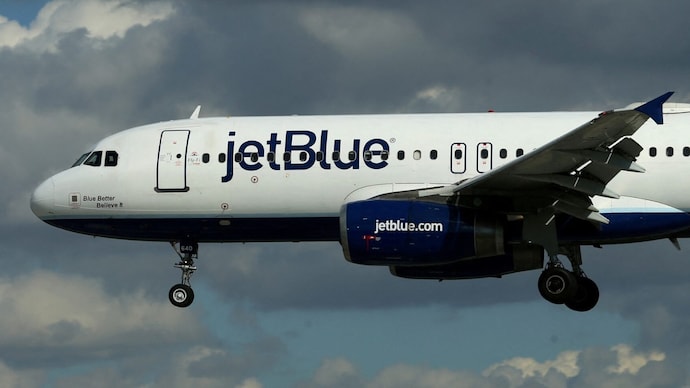
JetBlue plane avoids midair collision with US Air Force aircraft near Venezuela


The JetBlue aircraft, Flight 1112, had departed from Curaao, a small Caribbean island just off the coast of Venezuela, and was bound for New York's John F. Kennedy International Airport when the incident occurred.


There were no reports of injuries, and the JetBlue flight continued safely to its destination after the climb was halted. (File Photo: Reuters)


India Today World Desk
New Delhi,
UPDATED: Dec 15, 2025

A JetBlue passenger flight narrowly avoided a midair collision with a US air force refuelling aircraft near Venezuelan airspace on Friday, forcing the commercial jet to halt its climb, The Guardian reported, citing air traffic control recordings.

The JetBlue aircraft, Flight 1112, had departed from Curaao, a small Caribbean island just off the coast of Venezuela, and was bound for New York's John F. Kennedy International Airport when the incident occurred.

During the flight, the JetBlue pilot alerted air traffic control that a US military aircraft had crossed directly into the jet's flight path at the same altitude.

"We almost had a midair collision up here," the pilot said, according to a recording of the exchange reported by The Guardian. "They passed directly in our flight path ... They don't have their transponder turned on, it's outrageous."

In a later transmission, the pilot added, "We just had traffic pass directly in front of us within 5 miles of us – maybe 2 or 3 miles – but it was an air-to air-refueler from the United States air force and he was at our altitude. We had to stop our climb."

The pilot also said the military aircraft then moved into Venezuelan airspace.

AIR TRAFFIC CONTROL CONFIRMS CONCERN

Air traffic controllers acknowledged the danger during the exchange, with one controller responding: "It has been outrageous with the unidentified aircraft within our air."

The recordings flagged concern among both pilots and controllers about unidentified or untracked aircraft operating in a busy flight corridor near Venezuela, an area that has seen increased military activity in recent months.

JetBlue confirmed the incident and said it had been formally reported to authorities.

"We have reported this incident to federal authorities and will participate in any investigation," said Derek Dombrowski, as per The Guardian.

He added, "Our crew members are trained on proper procedures for various flight situations, and we appreciate our crew for promptly reporting this situation to our leadership team."

There were no reports of injuries, and the JetBlue flight continued safely to its destination after the climb was halted.

The incident comes amid heightened US military operations in the Caribbean region, including airstrikes targeting suspected drug smugglers. At the same time, Washington has stepped up pressure on Venezuela's government.

Last month, the US Federal Aviation Administration issued a warning advising American aircraft to "exercise caution" when operating in or near Venezuelan airspace, citing "the worsening security situation and heightened military activity in or around Venezuela."
Germany’s Big Lithium Find – a Geoeconomic Game Changer in China-Europe Relations?
December 15, 2025

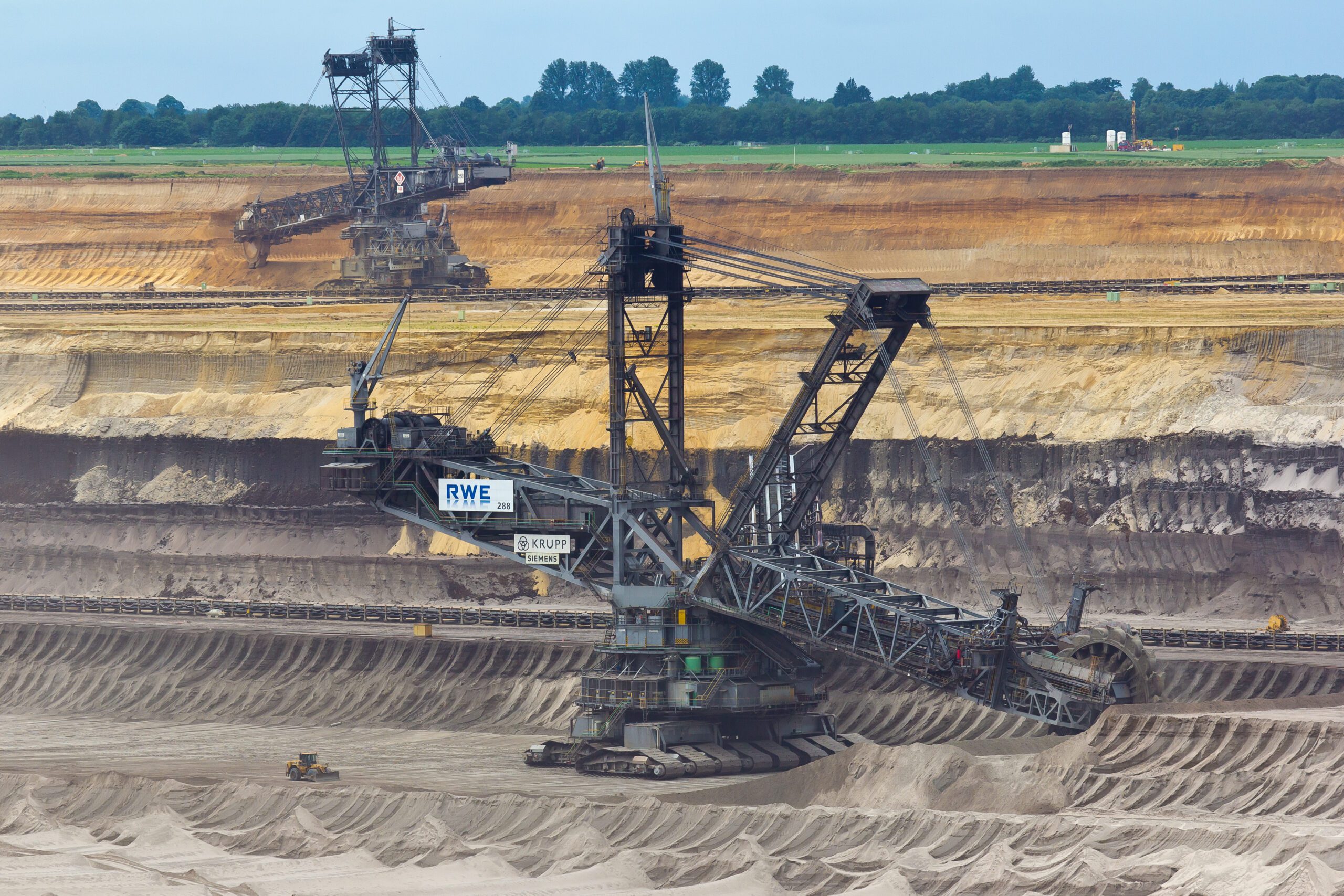
Garzweiler Tagebau

The recent confirmation that 43 million tons of Lithium Carbonate Equivalent (LCE) lie beneath the Altmark region in Germany’s state of Saxony Anhalt sparked a wave of enthusiasm about the prospect of German and EU resource independence, especially from China. Lithium is a critical component in lithium-ion batteries used, for instance, in electric vehicles (EVs). It is therefore crucial for reaching the transport-related 90 percent emissions reductions by 2050 anchored in the European Green Deal.

China together with Australia and Chile – part of the “lithium triangle” in South America with Argentina and Bolivia – account for over 90 percent of global lithium mining. The EU imports 81 percent of raw lithium and 100 percent of processed lithium, making it highly dependent on external sources and supply chains. The lithium find in Germany is considered one of the largest worldwide but will it be the holy grail that allows the EU to de-risk and re-balance its trade relations with China? Two caveats need to be considered.

Economic and Technical Feasibility

First, there is a difference between lithium resources and reserves. While the first are the overall amounts of deposits in the ground, mineable or not, the reserves are the actual amounts that are extractable with the available technology and in an economically viable way. The British company Neptune Energy, which announced the latest assessment of the lithium potential in Germany, has described the 43 million tons as a “potential resource”, not reserves. Accordingly, experts caution about the lack of evidence that these will be extractable and promise economic gains.

Whether the generated lithium carbonate would be cheap enough for the German EV industry to be competitive against China is still an open question. Expert Michael Schmidt from the German Mineral Resources Agency outlined that production costs in Europe are significantly higher because of higher wages, stricter environmental regulations, and longer licensing processes.

Furthermore, global lithium prices might fall given the current trend towards more lithium extraction. A 2024 report by IRENA (International Renewable Energy Agency) highlights that current supply capacity of processed lithium will likely meet demand up to 2030; and afterwards, battery recycling, battery size reduction, and potentially increased use of sodium-ion batteries might ease demand for lithium.

These factors combined might limit an economically beneficial extraction in the Altmark and thereby greater independence from China. Higher production costs would lower profit margins, making it harder to compete with imports from China or other lower-cost producers. Future global supply and demand trajectories risk further reducing revenues, and thereby potential return on investment. Germany faces a limited window in which global demand is strong enough to justify large investments – but this window might be too limited if commercial production in the Altmark only kicks off at scale from 2029 onwards, as planned by Neptune Energy.


Supply Chain Independence


Second, resource extraction does not equal supply chain independence. Much of the euphoria about Germany’s lithium resources is about independence from other suppliers. As Neptune Energy highlights: “our project contributes directly to the goals of the German government’s raw materials strategy, which calls for a strengthening of domestic raw materials security and extraction.” Especially after China restricted rare earths exports to the US this year, which also hit the EU, Germany experienced a “rare earths shock”. Hence, the overall purpose of the strategy is to improve the competitiveness of German industry and reduce dependencies on China.

However, as Elaine Dezenski (Foundation for Defense of Democracies) pointed out, having the raw material is good news but the big question is how and where the lithium will be processed to make it useable in EV batteries. With the EU importing 100 percent of processed lithium, it is still dependent on China’s dominance in the lithium refining part of the supply chain. Moreover, the actual manufacturing of cells and batteries is another part of the supply chain where China is concentrating manufacturing in its own borders. This also includes other materials needed for battery cell production, such as graphite, copper, nickel, cobalt, and manganese. Hence, even though China is not the dominant exporter of lithium as a raw material, it is a critical node in the midstream and downstream supply chain for lithium-ion batteries and EVs: over 50 percent of the global final EV production takes place in China.

The Potential

Still, there is potential for the German lithium find to influence the balance in the battery and EV supply chain between the EU and China. It opened a window of opportunity for Germany to invest heavily in the needed infrastructure for lithium processing and to integrate this infrastructure with the battery cell production industry as well as with EV manufacturing. Different lithium extraction techniques influence where the lithium can be processed. Lithium extracted from rock can be shipped to other countries for processing. For instance, 99 percent of Australia’s lithium is processed in China. Lithium extracted from brine with DLE technology – as planned in Germany’s Altmark – allows for integrated extraction and refining processes that can be done in situ. This requires investments in the technology, research and development, and infrastructure.

In the federal state of Hesse, Vulcan Energy is already building a conversion plant for turning the raw material into battery-grade lithium. Hesse’s Minister of Economic Affairs, Kaweh Mansoori (SPD), signaled political support: “with this technology, we are setting a milestone for more independence, sustainability, and competitiveness in battery cell production”. In Saxony Anhalt, the Minister of Economic Affairs, Sven Schulze (CDU), acknowledges the potential of the Bundesland regarding its raw materials – and a historically already developed extraction industry. But he also cautioned that “there won’t be lithium mining in the Altmark from tomorrow on” because there are many questions still unanswered, especially environmental and economic ones.

Regarding battery and EV production, Germany-based cell production capacity (Northvolt, PowerCo (Volkswagen), ACC, Cellforce Group (Porsche)) is currently either planned or under construction – here again, the one big player already operating in Germany is Chinese company CATL. However, BMW owns a stake in CATL and has a battery cell order of the magnitude of €7.3 billion from the manufacturer until 2030. Tesla promised to build the “world’s largest” battery cell factory in Brandeburg; now put on hold due to tax breaks for shifting production to North America under the US Inflation Reduction Act. Volkswagen is starting to produce cells this year at its Lower Saxony EV engine plant to develop the required integration capacity.

The EV car-making ecosystem is evolving fast. The German lithium find could mean reliable local raw material provision for European battery manufacturers, thereby reducing dependence on other suppliers – though China is not the biggest one here. In this sense, it is less about possessing the raw material but more about how and where it gets processed to battery-grade lithium, where the batteries components are made, assembled to cells and the final battery product, as well as integrated into EV engines.

Headwinds in the battery industry in Germany could also be countered by diversifying within Europe, for instance, by processing German-mined lithium in France (conversion and refinery plants are planned by Imerys), and importing more battery cells from intra-EU suppliers like Slovakia, Poland and Hungary. The latter are logistically well-placed and gaining traction due to fast-developing production bases. LG Energy Poland has the EU’s largest cell production facility, while SK Innovation Hungary is expanding its capacity to supply VW and BMW. In Slovakia, a large-scale EV battery production facility is currently built – though majority-owned by Chinese company Gotion High-Tech.

A Gamechanger?

Germany’s lithium discovery has certainly increased hopes for altering Europe’s strategic vulnerabilities, but it does not fundamentally change the EU’s dependencies on China in the near term. Germany’s lithium offers a more sustainable raw material supply within Europe, very much in line with the objectives of the EU’s Critical Raw Materials Act. Yet the true geoeconomic bottleneck vis-à-vis China lies not in the availability of raw lithium, but in China’s long-standing dominance of midstream and downstream segments in refinement, battery, and EV manufacturing.

Germany’s 2024 battery imports had a value of US$9.41 billion (€8.14 billion), of which the largest share – almost 37 percent – was imported from China. Reducing this amount would already make a dent in the current €305.8 billion EU trade deficit with China. But Germany and Europe are on a tight schedule and need to deliver fast if they want to be competitive against China. Unless Europe rapidly builds competitive refining capacity, scales up battery production, and secures alternative supplies of graphite and other raw materials, the Altmark find will do little to erode China’s central position in global battery supply chains. In other words, lithium in the ground will not automatically translate into strategic autonomy. The German lithium should therefore be viewed less as a “geoeconomic gamechanger” but more as a strategic opening for a rapid and aggressive value chain development in Europe.


Written by


Kim Vender
Dr Kim Vender is an Affiliated Researcher at the Centre for EU-Asia Connectivity (CEAC) at Ruhr University Bochum, Germany. Her research interests encompass the complexities of climate change and biodiversity governance, climate finance (especially Loss and Damage), development cooperation, the concept of international leadership, and China’s engagement with the EU and Latin America. Kim holds a PhD in Politics and International Relations from the University of Edinburgh, an MA in East Asian Politics from Ruhr University Bochum, and a BA in China Studies from the Free University of Berlin. She recently published her book "China and Climate Leadership: A Role Theory Analysis" with Routledge.
South Korean police raid offices of the Unification Church


Han Hak-ja, the leader of the Unification Church, arrives at a court to attend a hearing to review her arrest warrant requested by special prosecutors in Seoul, South Korea, Sept 22, 2025.
PHOTO: Reuters file


December 14, 2025 

SEOUL — South Korean police launched a raid on Monday (Dec 15) to search the offices and compounds of the Unification Church in and near Seoul, including an imposing palace northeast of the capital that serves as its international headquarters, police said.

The search is being done at 10 locations of the church, police said in a text message sent to reporters. Police officials could not be reached for further details.

The search is related to allegations of illegal payments by the church to some cabinet members and current and former lawmakers that involved the leader of the religious group, Han Hak-ja, the Yonhap News Agency reported.

The oceans and fisheries minister stepped down last week to focus on disproving the allegations, which he said were false, and to avoid the affair from tainting the work of President Lee Jae-myung's government.

The church said in a statement last week it had no involvement in what it said were "transgressions" committed by a single former church official.

Unification Church leader Han is on trial on charges that she bribed former first lady Kim Keon Hee in return for business favours. Han has denied the allegations.
How Trump uses 'Christian values' to win over Evangelicals while living like Emperor Nero

Rev. Dr. Liz Theoharis
December 14, 2025 


As more of the Epstein files are released, reminding us of President Donald Trump’s close association with Jeffrey Epstein and the young people he abused and trafficked, as well as the president’s ongoing array of misogynist insults and actions (like calling journalist Catherine Lucey “piggy” and name-calling Marjorie Taylor Greene to the point where she jumped ship), what keeps coming to my mind are the sexual exploits of authoritarians throughout history. As a scholar of the New Testament and the origins of Christianity, I have a special interest in the lives of the Roman emperors—in particular, the notorious Emperor Nero.

According to historians of antiquity (trigger warning here!), Emperor Nero was known to use and abuse many people, especially women, allegedly murdering two of his wives and his aunt while sleeping with a Vestal Virgin and—yes!—his mother before he killed her. Roman politicians and historians held back remarkably little when considering Nero’s excesses. Perhaps the most famous of those writers, Tacitus, shared how Nero “polluted himself by every lawful or lawless indulgence.” Cassius Dio, author of 80 volumes of Roman history, describes Nero skulking around Rome at night “insulting women,” “practicing lewdness on boys,” and “beating, wounding, and murdering” others. And Suetonius, the most famous biographer of the Caesars, claimed that Nero had invented a perversion all his own. At public games he was hosting, he would put on an animal skin and “assail with violence the private parts both of men and women, while they were bound to stakes.


While such vivid horrors may be particular to Nero (and his own sense of depravity), Donald Trump’s posture on gender and sexuality does all too grimly echo that of many powerful men throughout history, including those Roman emperors. His sense of comfort in objectifying and demeaning women, whether through his “p----” dig from the 2016 election or his comments about his friendship with Jeffrey Epstein, who “likes beautiful women as much as I do, and many of them are on the younger side,” is definitely well-documented.

As Soraya Chemaly, feminist writer and author of All We Want Is Everything: How We Dismantle Male Supremacy, pointed out at Salon: “Right after the grab ‘em by the p---- tape, we should have [had accountability]… and that’s not what happened. And then after the more than two dozen women came forward with detailed stories that were similar, we should have seen it grind to a halt. But the fact is we don’t care about that kind of predation… we just don’t care. And that’s a function of sexualized violence as a tool of male supremacist oppression in the home, in the street, in politics.”

Sex and Authoritarianism


The behavior of Emperor Nero and President Trump may be reminiscent of each other (and, for that matter, of so many other kings and tyrants throughout history) because using and abusing sex by those in power has been a pillar of past authoritarian systems. Full stop.

Bring up the way sexual predators tend to act with impunity, and you don’t have to go far to find examples. In recent years in the US, there was the genesis of the #MeToo movement—the sexual harassment perpetrated by those in the entertainment industry, higher education, Supreme Court justices, and politicians. And such leaders have learned from the best of them. Scratch under the surface of any authoritarian ruler, in fact, and you’re likely to find cases of harassment and abuse.

Rather than condoning the actions of any tyrants, including the man who today is eager to be one in Washington, DC, the Bible talks about pulling them down from their thrones and lifting up the lowly.


For Rome, those in power dominated the people and nations they subjugated not just economically, militarily, and politically, but sexually, too. Rape and prostitution were central aspects of what it meant to be conquered by Rome. And just as that empire used sexuality (depicting in public art and monuments distinctly gendered conquered nations) to expand its control and territory, the Caesars themselves regulated the sexual behavior of those they had already conquered as a way to further consolidate power. They passed or upheld marriage laws, naming and regulating who could (and could not) marry whom in an effort to promote what they considered proper social order. Although Nero himself broke some of those laws (especially when he castrated someone enslaved to him and proceeded to marry that person, and when he dressed as a woman and married a freedman, violating laws against men marrying men and anyone marrying someone of lower status), it was clear that such laws were easily circumventable by those in power, even while still being fiercely enforced for Roman subjects. (Doesn’t such a double standard still hold true?)

Indeed, in the ways that an emphasis on morality and family values as an ideology helped establish and maintain the social climate and political and economic order of the Roman Empire (while those in power often acted so differently), there are uncanny parallels to the United States today.

Fiddling While America Burns


Sex and sexuality are important ways to understand both Nero’s and Trump’s uses and abuses of power, but the parallels (and the abuses) don’t stop there. Nero is infamous for burning Rome to make way for new building projects and blaming the fires on a marginalized population of his time (Christians) in what may be one of the earliest recorded forms of scapegoating. In Trump’s case, you hardly need look far to find poor and marginalized communities he’s scapegoating: immigrants, trans youth, the unhoused, and the list goes on (and on and on).

Back to Rome, though. Accounts tell us that, while the city burned, Nero sang. (From that, of course, came the phrase that classically describes people in power abdicating all responsibility for helping others in the midst of a crisis: “fiddling while Rome burns.”) While I haven’t heard of Donald Trump singing or playing an instrument recently, certainly destroying the East Wing of the White House to build a “presidential ballroom” while cutting tens of millions of people from food assistance could be considered a modern equivalent.

And a charge against that particularly corrupt emperor that has stood the test of time is that the reference to 666 (sometimes known as the devil or the anti-Christ) from the Book of Revelation is actually a code for Nero, indicating that in biblical lore he was a central adversary of the Jesus movement. Therefore, when President Trump or any of the Christian nationalists in power today try to liken themselves to the protagonists in biblical stories, we should stop in our tracks and remember that, if there are such parallels, it’s certainly between the Caesars and Trump, the emperors and tyrants of thousands of years ago and today’s all too rich and ever more authoritarian ruler.


After all, rather than condoning the actions of any tyrants, including the man who today is eager to be one in Washington, DC, the Bible talks about pulling them down from their thrones and lifting up the lowly. Have you seen the T-shirts at some of the Chicago immigrant-justice protests in recent weeks with quotes from Mary’s Magnificat, that hymn of praise from the gospel of Luke? They’re amazing! (And their quotes from sacred texts and traditions to call out the powerful and defend the immigrant, heal the sick, and feed the hungry are historically and contextually aligned with the arc of the Bible.)

What the Bible Says About Sexuality

Bishop William J. Barber II poses this powerful question about the use and abuse of religion in our day: “Why is it that some who call themselves Christians are so loud about things that the Bible says so little about and so quiet about the things the Bible says so much about like justice and kindness?” Indeed, Jesus and the Bible really had very little (in some cases nothing) to say about issues like same-sex marriage and abortion. It is a fact, however, that when there is a message in the Bible’s text about sex and sexuality or gender expression and moral values, that message is always about justice, inclusion, and love.


For instance, the Apostle Paul’s letters are often used these days to prop up homophobia and misogyny—messages like good Christians aren’t LGBTQIA or don’t enjoy sex or that people are all too often poor because they’ve had too many babies, or that they’re lazy or drug-addicted, and so are sinners. As it happens, though, what’s truly sinful, according to such Biblical passages, is not homosexuality, or being transgender, or having consensual sex, but greed and exploitation, the unholy alliance between the wealthy and those who make laws to deny people their rights. Yes, Paul’s letters are indeed among a few biblical texts often quoted to condemn abortion or deny the rights and bodily autonomy of people. So, consider it a distinct irony that, at the core of Paul’s writings aren’t the behaviors of the poor or women or LGBTQ people, but the vices of empire.

Indeed, if there is a biblical critique of sex and sexuality, it’s one to be levied against the wealthy and powerful, the Trumps and Epsteins of this world.

One Greek word the Apostle Paul is concerned with is sarkas, usually translated as “works of flesh.” Paul defines such fleshy “works,” however, as: sexual immorality, lewdness, idolatry, hatred, discord, jealousy, fits of rage, selfish ambition, envy, gluttony, and the like. At first, it may indeed sound like a list of personal behaviors and characteristics. But notice that idolatry, hatred, discord, and gluttony are not just individual behaviors, especially not those of the poor and powerless. Instead, they are acts of an unequal and exploitative world that actually uses and abuses the poor and marginalized.


Indeed, if there is a biblical critique of sex and sexuality, it’s one to be levied against the wealthy and powerful, the Trumps and Epsteins of this world, not teenagers and their families seeking gender-affirming care, women seeking abortions, or transgender people seeking a place in sports or the military. And it’s surely not a polemic with same-gender loving couples or poor trans love.

Trump’s Distorted Morality

Since taking office (and as part of what catapulted him into the White House in the first place), President Trump has been continually raising alarms about the supposed moral crises besetting this country and the need for a strong man to resolve them. In this, he’s been following in the path laid out by the Nero-like authoritarians and tyrants of history. He’s been issuing regular executive orders aimed at doing everything from banning transgender women in sports and transgender troops in the military to punishing the unhoused and immigrants, while cutting families in need off from lifesaving food.

And his executive actions are only the tip of the spear of a significantly larger legislative attempt to target and scapegoat others (while distracting attention from the Epstein files and other controversies surrounding him). This year, 1,012 anti-trans bills have been introduced in American legislative bodies at both the state and federal levels. Trump’s “Big Beautiful Bill” cut millions of dollars in food and healthcare, but included $45 billion to detain adult immigrants and their families, as well as an additional $32 billion for immigration agents to pursue enforcement and deportation policies.


Trump’s attacks on abortion, same-sex marriage, and trans youth in the name of family values and “morality,” his efforts to cut welfare, healthcare, wages, and other life-sustaining programs, and his emphasis on policing and militarizing communities (allowing guns to proliferate) while talking about peace and security, may be covered by Christian nationalism but they are not in any sense biblical.

After all, the Bible’s authors, living through the world of imperial Rome, agreed that there was a moral crisis occurring. People were losing their land, had turned away from the God of liberation and justice, and were generally complying with a system of subjugation and oppression. Meanwhile, the emperors were trampling on all too many of their hopes and values, including by sexually exploiting them. And none of that was to be tolerated.

There is a similar moral crisis occurring today, and Donald Trump is at its very heart. Jackson Katz, creator of the 2024 film The Man Card: 50 Years of Gender, Power, and the American Presidency, raises the ultimate “moral” question about Trump’s complicity in sexual predator Jeffrey Epstein’s abuses and what will come of his own sexual predations, then and now. He writes, “It’s still far from clear whether Trump ultimately will be held accountable for his actions—or inactions—over the course of his long friendship with the convicted sex trafficker Jeffrey Epstein, our era’s most notorious and prolific sexual abuser of girls. Will this finally be the moment when Trump pays a real price for his misogyny?”

If we are to channel the Apostle Paul and the message of Jesus, time’s up. As the gospel tradition makes all too clear for Emperor Nero (aka the anti-Christ or Satan), President Trump, “Your kingdom must come down!”


Trump poses with a photo from his assassination attempt after a wave of deadly shootings

Robert Davis
December 14, 2025 
RAW STORY


Truth Social

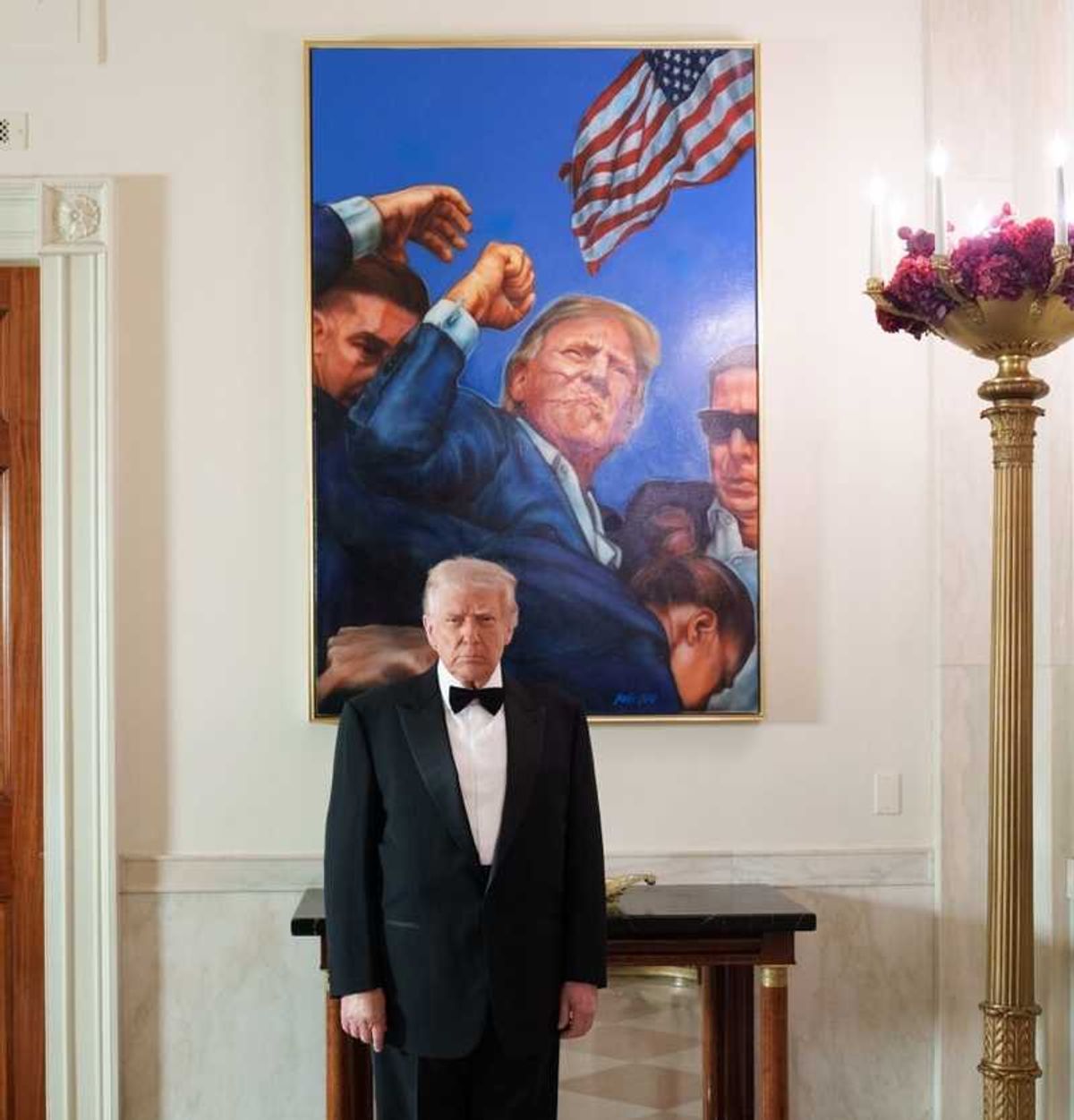
President Donald Trump authored a post on Truth Social on Sunday that included a photo of the president posing in front of a large painting of the assassination attempt against his life in Butler, Pennsylvania, in 2024, after a wave of deadly shootings over the weekend.

Three mass shootings took place over the weekend. In Australia, two gunmen killed 15 people and wounded 40 others at a Hanukkah celebration outside of Sydney. Another gunman killed two students and wounded nine others at Brown University. Meanwhile, a shooter in Syria who is believed to be an ISIS infiltrator killed two American soldiers and one citizen.

Trump addressed the shootings during a speech he made at a Christmas party at the White House on Sunday.

“I want to pay my respects to the people,” Trumpo said during the speech, adding that the deceased were “looking down on us right now from heaven.”

A few hours after the speech, Trump posed in front of the painting of his assassination attempt, painted by Florida artist Marc Lipp.

"In the lobby of our beautiful White House!" the post reads.