Monday, February 23, 2026

Andes Iron’s $2.5B Dominga project in Chile hits fresh snag
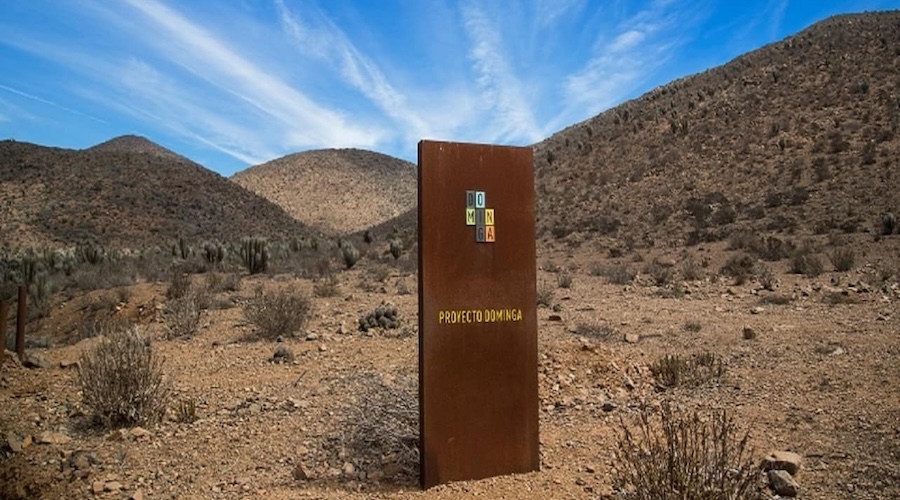
The project has been stalled on concerns over biodiversity impacts and lack of a mitigation plan for potential spills. (Image courtesy of Dominga Project site.)

A Chilean court of appeals has overturned a favourable court ruling in the long-running dispute over Andes Iron’s $2.5 billion Dominga iron ore and copper project, effectively sending the development back into legal limbo.

The Antofagasta Court of Appeals on Saturday unanimously annulled a ruling by the First Environmental Court that had ordered a committee of ministers to hold a new vote on the proposed mine and port in the central Coquimbo region, calling the move inadmissible and procedurally flawed. 

The court did not assess the project’s merits, focusing instead on whether the enforcement vote process was valid.

It said the earlier judgment did not create an enforceable right or resolve the core dispute. Because the Supreme Court had previously instructed the Committee of Ministers to issue a new decision rather than approve or reject Dominga outright, there was no final ruling to enforce, the appeals court found.

The decision send the case back to the special Committee of Ministers, which has already rejected Dominga three times, most recently in January last year. Andes Iron appealed that rejection, and in September the Supreme Court revived the project and ordered ministers to vote again.

Two pits and a port

Dominga, first submitted in 2013, would include two open-pit mines, North and South, and a port, with an estimated 26.5-year lifespan. The project is designed to produce 12 million tonnes a year of high-grade, low-impurity iron concentrate and 150,000 tonnes a year of copper concentrate. Andes Iron says it would create 30,000 jobs and meet strict environmental standards after years of review.

The site lies about 500 km north of the capital, Santiago, near the Humboldt Penguin National Reserve and other protected areas. Environmental groups and President Gabriel Boric’s government oppose the project, arguing its proximity to ecologically sensitive zones poses unacceptable risks to protected species. The location has turned Dominga into a flashpoint in Chile’s broader debate over resource development and conservation.

Andes Iron called the decision disappointing but stressed it was procedural and did not address the project’s technical or environmental merits. “This decision in no way discourages us or alters our commitment to move forward with the Dominga project,” the company told Emol.com, adding that Dominga has passed rigorous reviews and complies with regulations.

Billions in stalled projects

The drawn-out dispute has made Dominga a symbol of the complex permitting system in one of the world’s leading mining jurisdictions. Business groups and conservative politicians argue political considerations have weighed too heavily on major investment decisions.

Chile faces an estimated $105 billion backlog in mining investments, according to industry estimates, as companies push for reforms to environmental assessment and permitting rules they say have slowed approvals and raised costs.


Discover more
Commodity futures trading course
Critical minerals supply chain data
communication


Andes Iron’s $2.5B Dominga project in Chile hits fresh snag


The project has been stalled on concerns over biodiversity impacts and lack of a mitigation plan for potential spills. (Image courtesy of Dominga Project site.)

A Chilean court of appeals has overturned a favourable court ruling in the long-running dispute over Andes Iron’s $2.5 billion Dominga iron ore and copper project, effectively sending the development back into legal limbo.

The Antofagasta Court of Appeals on Saturday unanimously annulled a ruling by the First Environmental Court that had ordered a committee of ministers to hold a new vote on the proposed mine and port in the central Coquimbo region, calling the move inadmissible and procedurally flawed. 

The court did not assess the project’s merits, focusing instead on whether the enforcement vote process was valid.

It said the earlier judgment did not create an enforceable right or resolve the core dispute. Because the Supreme Court had previously instructed the Committee of Ministers to issue a new decision rather than approve or reject Dominga outright, there was no final ruling to enforce, the appeals court found.

The decision send the case back to the special Committee of Ministers, which has already rejected Dominga three times, most recently in January last year. Andes Iron appealed that rejection, and in September the Supreme Court revived the project and ordered ministers to vote again.

Two pits and a port

Dominga, first submitted in 2013, would include two open-pit mines, North and South, and a port, with an estimated 26.5-year lifespan. The project is designed to produce 12 million tonnes a year of high-grade, low-impurity iron concentrate and 150,000 tonnes a year of copper concentrate. Andes Iron says it would create 30,000 jobs and meet strict environmental standards after years of review.

The site lies about 500 km north of the capital, Santiago, near the Humboldt Penguin National Reserve and other protected areas. Environmental groups and President Gabriel Boric’s government oppose the project, arguing its proximity to ecologically sensitive zones poses unacceptable risks to protected species. The location has turned Dominga into a flashpoint in Chile’s broader debate over resource development and conservation.

Andes Iron called the decision disappointing but stressed it was procedural and did not address the project’s technical or environmental merits. “This decision in no way discourages us or alters our commitment to move forward with the Dominga project,” the company told Emol.com, adding that Dominga has passed rigorous reviews and complies with regulations.

Billions in stalled projects

The drawn-out dispute has made Dominga a symbol of the complex permitting system in one of the world’s leading mining jurisdictions. Business groups and conservative politicians argue political considerations have weighed too heavily on major investment decisions.

Chile faces an estimated $105 billion backlog in mining investments, according to industry estimates, as companies push for reforms to environmental assessment and permitting rules they say have slowed approvals and raised costs.

Expectations are growing that President-elect José Antonio Kast, who takes office March 11, could move to accelerate major projects.

Expectations are growing that President-elect José Antonio Kast, who takes office March 11, could move to accelerate major projects.
Tungsten crunch can be fixed before prices spike further: BMO


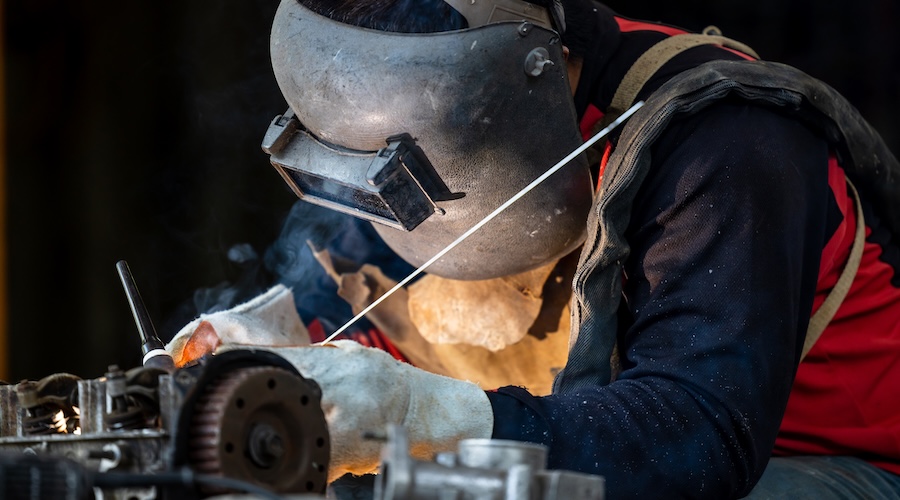
Tungsten is a cornerstone of heavy industries, though it often receives little public attention. (Stock image by Kalyakan.)

Tungsten prices have surged fivefold over the past year as prolonged underinvestment and tightening Chinese supply push the market toward what analysts warn could become a severe global shortage.

In a note published on Monday, BMO Global Commodities Research analysts George Heppel and Helen Amos say the world has “sleepwalked” into a tungsten crunch, driven by persistent ore grade decline, environmental restrictions and a lack of new mining investment. With global inventories critically low and another deficit forecast for 2026, they expect tightness to persist.

Tungsten is a cornerstone of heavy industry, though it often receives little public attention. Tungsten carbide, prized for its extreme hardness and density, is essential in machine parts, drill bits and hard-facing materials. In many applications, it is close to irreplaceable, making the metal a key enabler of manufacturing, mining and defence.

China dominates the market, accounting for roughly 75% of global supply. Production has stagnated in recent years as ore grades decline, environmental controls tighten and Beijing has moved to restrict exports of dual-use tungsten. As of early 2026, Chinese, exports have plummeted, with some, such as Ammonium Paratungstate (APT), falling to zero in late 2025. As a result, ammonium paratungstate prices broke out of their long-term average of about $300/t in 2025 and now trade around $1,775/t, according to Fastmarkets.

BMO expects 2026 to be a pivotal year. With stocks depleted and supply growth constrained, the market appears headed for another deficit. That dynamic, the analysts argue, is likely to keep prices elevated.

Five options

The bank outlines five potential mechanisms that could eventually rebalance the market, though none offers a quick fix.

A meaningful expansion of Chinese mine supply appears unlikely in the near term due to grade challenges and environmental limits, although projects such as Dahutang could add material volumes over time. Outside China, several projects are advancing, but new mines typically take years to permit, finance and build.

Artisanal mining, which accounts for about 6% of global supply, may respond to higher prices. BMO expects some short-term growth in this segment, but not enough to materially replenish depleted inventories.

Recycling presents another avenue. While there is limited scope to significantly increase recycling rates in western markets, China could expand secondary supply over time if it builds out collection and processing infrastructure. Even so, this would require investment and time.

Demand destruction is also possible, particularly at current price levels. However, substitution is challenging because of tungsten’s unique properties. The analysts identify limited areas where users might switch materials, but they do not expect widespread replacement.

High price cure

In the near term, BMO believes the market will balance through a mix of artisanal supply growth and some demand destruction. That adjustment, however, will not be enough to restore comfortable inventory levels. Over the longer term, the analysts argue that sustained higher prices will be required to incentivize new mine development.

“The cure for high prices is high prices,” they write, adding that meaningful investment in mined supply will likely occur only at price levels well above historical norms.

With reindustrialization and defence spending accelerating in the US and elsewhere, tungsten demand is set to grow. BMO expects the metal’s supply challenges to keep it firmly in the spotlight of critical minerals strategies in the years ahead.


Anglo American posts $3.7B loss on fresh De Beers write-down


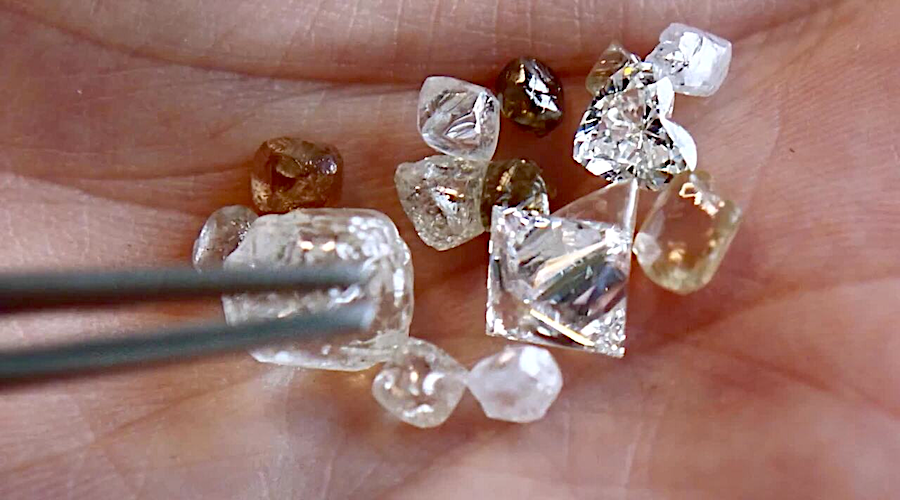
Anglo’s total writedowns on De Beers reached $6.8 billion in 2025. (Image courtesy of De Beers Group.)

Anglo American (LON: AAL) posted a $3.7 billion loss on Friday after taking a fresh $2.3 billion writedown on De Beers, as a deepening crisis in the global diamond market continues to weigh on the miner’s bottom line.

The pre-tax impairment cut De Beers’ carrying value to $2.3 billion from more than $4 billion. Anglo has written down the unit to $6.8 billion over the past year, as weak demand and high inventories weighed on prices.

Despite the hit, underlying earnings from continuing operations rose 2% to $6.4 billion. The miner declared a dividend of $0.23 per share, about $200 million, down 64% from $0.64 per share, or roughly $800 million, a year earlier. Net debt fell to $8.6 billion.

Copper and iron ore remained Anglo’s main profit drivers and are expected to underpin earnings once its restructuring is complete.

The company is reshaping its portfolio after fending off an approach from BHP (ASX: BHP) in 2024. It revealed at the time plans to exit diamonds, coal and platinum. Since then it has struck a merger deal with Teck Resources (TSX: TECK.A TECK.B) (NYSE: TECK) to create one of the world’s largest copper miners. Shareholders of both Anglo and Teck have approved the transaction, and the companies are seeking regulatory clearance.

For now, Anglo still owns its diamond and coal businesses. The diamond sector remains under pressure and two of the company’s flagship coal mines are halted due to fires.

The Teck deal will expand Anglo’s copper footprint, adding assets including the Quebrada Blanca mine in northern Chile, near Anglo’s Collahuasi operation.

De Beers’ value review

Anglo reassessed De Beers after the unit reported a third straight annual drop in production and cut its 2026 output forecast. “There is at the moment a plentiful supply of rough diamonds in the market,” CEO Duncan Wanblad told reporters.

The sale process is at an advanced stage, Wanblad said, adding the company must secure final binding bids and select a partner in consultation with stakeholders, including the government of Botswana.

De Beers has drawn interest from multiple consortia. Botswana, which holds a 15% stake and supplies about 70% of annual rough diamond output, has signalled it wants to increase its shareholding. Angola is pursuing a 20% to 30% stake and is discussing the proposal with other African producers.

Wanblad said he is optimistic a deal will be signed this year.

Woodsmith revival?

Anglo also announced a potential partnership with Mitsubishi Corp for its Woodsmith fertilizer project in northern England, which had been placed on care and maintenance as the company prioritized copper and iron ore.

Woodsmith hosts the world’s largest known deposit of polyhalite, a naturally occurring mineral containing potassium, calcium, magnesium and sulphur, marketed as POLY4. Production to date has been limited and the market remains unproven at scale, but Anglo says polyhalite could lift crop yields by 3% to 5%.