Thursday, March 12, 2026

How US-Israel War On Iran Exposes Weaknesses In Gulf Missile Defense Systems – Analysis

March 12, 2026 
Arab News
By Dr. Turki Faisal Al-Rasheed

As US President Barack Obama left his country’s embassy in Dublin in his fully armored limousine, his convoy hit an unexpected snag. The vehicle’s underside scraped on a simple ramp and became stuck at the gate — a multimillion dollar machine defeated by an ordinary piece of pavement. The image is hard to forget — enormous investment, but poor design for real world conditions. Our region risks making the same mistake if we pour money into “exquisite” defenses that fail at the critical moment.

The US Defense Innovation Unit, created in 2015 by then Defense Secretary Ash Carter, was meant to prevent exactly that kind of failure in the military domain. It was designed to break through Pentagon bureaucracy and connect the armed forces with fast-moving technologies from Silicon Valley, shifting from slow, traditional contractors to agile private firms. In reality, this has meant experimenting with autonomous systems, microsatellites, and artificial intelligence, while fighting the inertia, over-centralization, and rent-seeking that often plague big defense programs. The core lesson is simple: if you do not reform how you buy and use technology, you end up with very expensive systems that are not fit for the next war.

That next war is now unfolding over our heads. The ongoing US–Israel war on Iran has exposed a dangerous vulnerability in the US-led missile-defense architecture in the Middle East. Iran has executed a sequenced, systems-level campaign that, in a matter of days, blinded and degraded core elements of the US missile-defense network in our region. By destroying the Qatar-based AN/FPS 132 early-warning radar and at least three AN/TPY 2 X band radars linked to THAAD batteries in Saudi Arabia, the UAE and Jordan, Tehran has turned what was designed as a layered, redundant sensor web into a patchwork with serious gaps.

This tactical success has strategic consequences. It accelerates the depletion of high-end interceptors, exposes critical bases and energy infrastructure, and destabilizes key partners such as Jordan. It also erodes US deterrence credibility in the Indo Pacific, because the same finite interceptor stockpile is supposed to help defend Taiwan and Japan. In other words, the Middle East is consuming systems that Washington also counts on for other theaters — a risk Gulf policymakers must factor into any calculation about escalation.

Iran’s approach follows a three-step logic familiar from suppression of enemy air defenses, but applied to missile defense. First, “kill the eyes” by striking early warning radars. Second, “kill the aim” by targeting fire control radars that guide interceptors. Third, “destroy the batteries” by hitting the launchers themselves. Each step attacks a different dependency in an integrated system. Once enough eyes and aim points are removed, the remaining batteries operate in a fog, with compressed and uneven timelines for detection, classification, and engagement. There is no safe “rear area” if long range missiles and drones can reach radars in places like Jordan, which many once assumed were relatively secure.

For years, the US doctrinal concept in the Gulf has been layered missile defense: early warning from the AN/FPS 132 in Qatar and space-based sensors; upper tier defense by THAAD guided by AN/TPY 2 radars; lower tier coverage by Patriot PAC 3; and a maritime layer from Aegis equipped destroyers. On paper, this looked robust. In reality, Iran has shown how quickly a determined adversary can degrade it, especially when it can attack multiple layers at once.

Worse, Tehran is exploiting a cost exchange crisis. Cheap drones and relatively low-cost ballistic missiles are being mixed in large salvos, forcing defenders to fire interceptors that cost millions of dollars per shot at any track that might be lethal. The political and moral cost of a single “leaker” — a missile that gets through and causes mass casualties — pushes commanders to “engage everything.” Over time, that is a losing game, especially for states that rely heavily on imported interceptors and have limited local production capacity.

For Saudi Arabia, this is not an abstract debate. Vision 2030 rests on three interlinked pillars: diversifying the economy, transforming the Kingdom into a global investment hub, and building an “ambitious nation” with secure, resilient infrastructure. At the same time, Saudi Arabia is pursuing an ambitious energy transition, aiming to source around half of its power from renewables by 2030 and to build more than 100 GW of new solar and wind capacity while maintaining its role in oil and gas. All of this depends on the basic condition: physical security for legacy oil facilities, new gas and petrochemical projects, and a rapidly expanding network of renewable plants, industrial zones, and transmission corridors.

The 2019 Abqaiq–Khurais attacks were an early warning. Iran and its proxies temporarily knocked out roughly half of Saudi crude production and about 5 percent of global daily supply, despite existing air defenses. Today, the Kingdom’s new “air defense shield” — a mix of Patriot, THAAD, and AN/TPY 2 radars to protect Riyadh, Eastern Province oil facilities, and key military sites — is partly dependent on the same regional sensor and interceptor web that Iran is now degrading. As US high-end interceptors are consumed to defend bases across the Gulf, there is growing pressure on the availability and prioritization of defensive assets for Saudi energy and power infrastructure, especially if the conflict widens.

This creates a dangerous trap for the Gulf Cooperation Council. A scheme appears to be unfolding in which the US and Israel, driven by their confrontation with Iran, risk pulling the Gulf deeper into a direct clash with Tehran without fully accounting for our long-term security and development priorities. External actors know that their war with Iran will, one way or another, eventually end. They also know that a prolonged Gulf–Iran confrontation would drain our resources, destabilize our societies, and open the door to deeper foreign intervention under the pretext of “assistance.”

We have seen this movie before. During the Iran–Iraq war, “disaster capitalism” thrived on chaos, arms sales and reconstruction contracts, while regional states paid the human and economic cost. The most dangerous outcome of escalation today is not necessarily regime change in Tehran, but the possible disintegration of the Iranian state into prolonged anarchy. That would unleash refugee flows, militia spillover and sustained disruption in energy markets, directly threatening Saudi stability, Vision 2030, and the security of the entire Gulf.

In this context, the GCC has no choice but to close ranks. The recent GCC positions on the Iran–Israel war has emphasized de-escalation and diplomacy, reflecting a growing recognition that war on Iran’s territory would pose an existential risk to regional stability. Saudi Arabia’s clear declaration of support for Kuwait against potential Iraqi threats has shown what principled solidarity can look like; that spirit must extend to every GCC member and every emerging crisis. Unity is not a slogan. It is our first line of defense against being pressured, divided and targeted one by one.


What should a Saudi-centered response look like? First, we need more autonomous sensor coverage and command and control networks that do not collapse if a handful of US owned radars are destroyed. Second, we must protect and, where possible, localize stocks of critical interceptors, while investing in layered defenses that combine high-end systems with cheaper interceptors and passive protection (hardening, dispersal, deception). Third, we must deliberately shield key Vision 2030 assets — oil, gas and power infrastructure, as well as strategic industrial zones — as priority targets for defense planning, not afterthoughts.

At the same time, the GCC must resist being dragged into a direct US–Israel war on Iran. This does not mean accepting aggression or remaining silent in the face of violations of our sovereignty. It means insisting that any response serves our security, our economies, and our long-term vision for regional stability, rather than the short-term agendas of others. It means rejecting blackmail, hidden agendas and opaque “coalitions” that treat Gulf states as logistics hubs and targets rather than partners.

We stand at a fork in the road. One path leads to escalation, exhaustion and dependence — a future where our defense budgets balloon while our development goals shrink, and where Vision 2030 becomes a casualty of someone else’s war. The other path demands courage, discipline and regional unity: saying “no” to being used, “yes” to self-reliant defense innovation, and “always” to protecting our people and our development first.

In the end, the choice before the GCC is stark: either we become the ramp that wrecks someone else’s armored car, or we build the road that safely carries our own future forward.


• Dr. Turki Faisal Al-Rasheed is an adjunct professor at the University of Arizona’s College of Agriculture, Life & Environmental Sciences, in the Department of Biosystems Engineering. He is the author of “Agricultural Development Strategies: The Saudi Experience.” X: @TurkiFRasheed

Arab News

Arab News is Saudi Arabia's first English-language newspaper. It was founded in 1975 by Hisham and Mohammed Ali Hafiz. Today, it is one of 29 publications produced by Saudi Research & Publishing Company (SRPC), a subsidiary of Saudi Research & Marketing Group (SRMG).

 

Tanker Burns in Arabian Gulf After Suspected Strike

Basra
Courtesy UKMTO

Published Mar 11, 2026 10:33 PM by The Maritime Executive


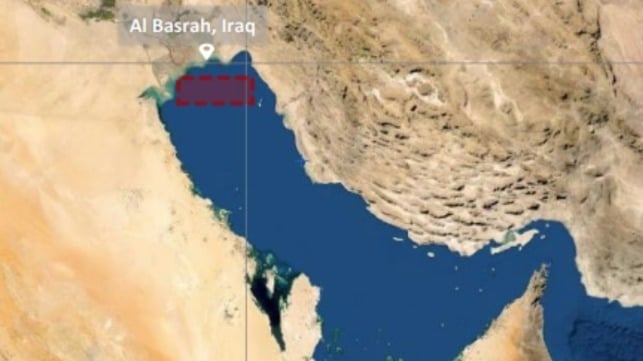
[Breaking] Two tankers have reportedly been hit by unknown projectiles in the Arabian Gulf, according to UK Maritime Trade Operations (UKMTO).

A third party reported that two ships had been struck at a position south of Basrah, Iraq. Aboard at least one of the ships, the strike started a fire; the crew of the burning tanker evacuated safely, and no injuries were reported, according to the operator's company security officer (CSO).  

The status of the second reported vessel is as-yet unknown, and it has not been identified. No pollution effects have been reported.

The strike would align with a pattern of Iranian attacks on merchant shipping in the Arabian Gulf; more than a dozen vessels have been hit so far, resulting in multiple fatalities. 

This story will be updated as more information comes in.


The Strait Is Closed, the Story Keeps Changing, and You're Paying for It All

  • The effective closure of the Strait of Hormuz, through which 20 percent of global oil supply normally flows, has driven tanker traffic down roughly 90 percent, created a net daily supply shortfall of approximately 15 million barrels, and pushed U.S. gasoline prices to their highest level under either of Trump's terms in office.

  • Proposed fixes including a Strategic Petroleum Reserve release, Russia sanctions relief, and naval tanker escorts are temporary measures that do not address the underlying problem, which is a war with no fixed objective, no coalition, and a partner in Israel whose war aims extend well beyond what Washington has publicly committed to.

  • Iran's strategy of horizontal escalation, widening the conflict across nine countries rather than fighting to win militarily, mirrors historical playbooks from Vietnam and Kosovo that cost the United States dearly, and every week the war continues without a defined endgame locks more inflation into the global economy through energy, LNG, fertilizer, and food supply chains.

There's a particular kind of dread that sets in when you're watching an official tweet get deleted in real time.

On Tuesday, the Energy Secretary posted that the U.S. Navy had successfully escorted an oil tanker through the Strait of Hormuz.

Markets moved on it... 


Brent crude swung 17 percent in a single session, briefly crashing below $80. 

The White House press secretary then clarified: no armed escort had actually taken place. The tweet disappeared. Brent recovered toward $90. And somewhere, a few hundred traders made a lot of money on that gap.

This is where we are on Day 12 of Operation Epic Fury. 

The war that started February 28 with the assassination of Supreme Leader Khamenei and a series of precision strikes the administration described as a "decisive blow" to Iran's command structure is, twelve days later, still producing: daily waves of Iranian missiles aimed at nine countries, a global oil shock that briefly hit $120 a barrel, and a White House that cannot decide what the goal of the war actually is.

Let me try to explain what this means for your wallet. And I'm warning you upfront: it's a lot.

The Math That Doesn't Care About Press Briefings

The Strait of Hormuz is 21 nautical miles wide at its narrowest point. That is roughly the distance from Midtown Manhattan to JFK Airport. 

Through that gap flows more than 20 million barrels of oil per day, one-fifth of global petroleum consumption, one-quarter of all oil traded by sea. It also carries a meaningful share of global LNG and a third of the world's seaborne fertilizer exports.

 In other words, it isn't just an oil route. It's the circulatory system of the global food and energy economy.

Before February 28, roughly 138 vessels transited the Strait on an average day. Right now, that number is approximately two

Not because Iran built a wall across it. Because it didn't need to. 

War-risk insurers pulled coverage. Without insurance, no shipowner sends a vessel through. It's not the missiles that closed the Strait. It's the actuarial tables.

The result: 150 tankers sitting at anchor in open Gulf waters, 147 container ships trapped inside the Persian Gulf with nowhere to exit, and every major container line, Maersk, CMA CGM, Hapag-Lloyd, MSC, suspending operations entirely. 

Goldman Sachs estimates tanker traffic has fallen roughly 90%, temporarily removing about 18 percent of global oil supply from the market.

The bypass options that get thrown around in briefings sound good until you look at the numbers. 

Saudi Aramco's East-West pipeline and the UAE's Fujairah pipeline together offer alternative capacity of about 4.7 million barrels per day. But of the 7.2 million barrels Saudi Arabia exported in February, 6.38 million relied on the Strait. 

Gavekal Research estimates Gulf exporters could reroute at most an additional 3.5 million barrels per day to terminals outside the strait. Which means the world is still staring at a net shortfall of around 15 million barrels a day with nowhere to go.

To put that in context: the entire daily oil output of Russia is about 10 million barrels. We have a missing-Russia-sized hole in global supply.

And it isn't just oil. 

Qatar's LNG production halt, combined with the effective Hormuz closure, has removed roughly 20 percent of global LNG supply from the market. Asia is getting hit first given its dependence on Qatari LNG, but Europe is feeling the secondary shock as Asian buyers outbid Europeans for every available spot cargo. 

The JKM-TTF spread, which measures the Asian premium over European gas prices, just hit multi-year highs. LNG freight rates recorded their largest single-day jump ever. And as analysts at Wood Mackenzie noted, U.S. LNG export infrastructure is already running at capacity, meaning there is no American cavalry coming to fill that 20 percent gap.

The IMF has a formula for what oil price shocks do to economies: every 10 percent rise in oil prices equals a 0.4 percent increase in inflation and a 0.15 percent reduction in economic growth. 

Oil is still about 17 percent above pre-war levels, after briefly touching 50 percent higher. That means we've already imported roughly 0.68 additional points of inflation into the system... and that's a floor, not a ceiling, if the disruption continues. 

WTI posted its biggest weekly gain in the entire recorded history of oil futures trading, dating back to 1983. Diesel jumped 17 percent in a single session. The national average price of gasoline has already surged to $3.262 per gallon, the highest recorded under either of Trump's terms in office, with the number of states averaging above $3 jumping from 8 to 33 in less than a week.

Grocery prices follow energy prices with a lag of roughly six to eight weeks. 

The fertilizer that grows the food, the diesel that moves it, the plastic that packages it, the refrigeration that preserves it... all of it is downstream of this. 

Fears of stagflation are not fringe analysis anymore. Every significant oil shock since 1973 has been followed, in some form, by a global recession. 

Plugging a Dam With Scotch Tape

Here's the thing about the solutions being offered. They are not solutions. They are buying time with money we don't have.

The Strategic Petroleum Reserve currently holds 415.4 million barrels, about 20 days of normal American consumption, and roughly 310 million barrels below maximum capacity. 

The IEA dropped a bombshell earlier today, releasing 400 million barrels from its 1.24 billion barrels in public emergency stocks. 

That is the largest reserve release in history. And it didn’t really push prices down, because the Strait of Hormuz is still contested. The war doesn't end because we opened a valve in Louisiana.

The Russia sanctions relief idea is its own kind of theater. 

Trump has floated easing sanctions on Russian oil exports to flood the market. Russia produces about 10 million barrels a day, some of it still constrained by Western pressure. Unlocking even a fraction would move prices. 

But consider: Russia is the single country benefiting most directly from skyrocketing fossil fuel prices right now. Russia's state budget breaks even at around $70-80 per barrel. Prices are sitting well above that. 

We started a war that is actively enriching the country we've been sanctioning for four years, and now we're considering giving them a sanctions pass to help clean up the mess.

The tanker escort program? Analysts were quick to note that escorting a single tanker doesn't materially change the supply equation when well over a hundred vessels typically move through the strait on a normal day. 

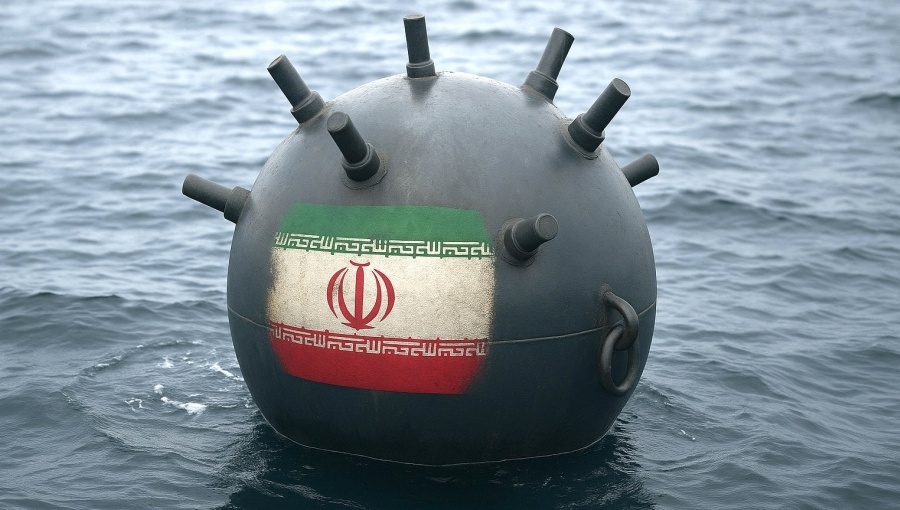
And even that framing is now outdated: Iran has begun actively laying naval mines in the Strait, a development intelligence officials say could extend the effective blockade for weeks beyond any ceasefire. Tehran still possesses 80 to 90 percent of its mine-laying craft. It can deploy hundreds more. A destroyer escort means very little when the floor of the channel could be a minefield.

Meanwhile, OPEC+ agreed to raise output by a modest 206,000 barrels per day in April, a number analysts dismissed as largely symbolic given the scale of the Hormuz disruption. 

Traders said prices would depend less on quota decisions and more on whether oil can physically move through the Gulf. It cannot.

A War Still Looking for Its Own Reason

Conservative estimates from congressional sources put the cost of this war at roughly $1 billion a day. That's on top of a federal budget already structurally stressed. 

Seven American service members have been killed, approximately 140 have been wounded, per the Pentagon. 

Iran says U.S. and Israeli forces have bombed nearly 10,000 civilian sites and killed more than 1,300 Iranian civilians. 

More than 43,000 American citizens have been evacuated from the Middle East on commercial and State Department-chartered flights.

All of that is the cost column. The benefit column is genuinely hard to identify... because the goals keep changing.

Trump started the war by calling for regime change, urging the Iranian people to seize power. Within days, Pete Hegseth said this was "not about regime change." The White House press secretary didn't mention regime change when listing the war's aims. Then Trump said the goal was "unconditional surrender." Then he hinted at being open to negotiations with Tehran's current leadership. Then he said the war was "very complete, pretty much." Then he said attacks would continue "until the enemy is totally and decisively defeated."

All of that happened in less than two weeks.

Here's the structural problem underneath all the messaging chaos… Iran's foreign minister has said publicly that Tehran sees no reason to negotiate with the U.S., pointing out that two previous negotiations were used as cover for attacks. So Iran's definition of winning is narrow and achievable: the regime survives. America and Israel's definition of winning is unconditional surrender. 

Those two definitions are not compatible with a short war. 

Every time the stated objective shifts in Washington, the market has to reprice the timeline for resolution. Resolution is when the Strait reopens. Resolution is when tankers move. Resolution is when insurance premiums fall back down and the fertilizer ships and the grocery bill stops climbing. Every contradictory statement from the administration is a small tax on that timeline. Every deleted tweet is a few more hours of uncertainty baked into futures contracts.

The Partner Who Controls the War

Here's the thing about having one partner in a coalition. You don't control the war. Your partner controls the war.

U.S. officials have essentially acknowledged this. 

As the Economist has reported, American and Israeli war aims are already diverging, and the American position in that divergence is the weaker one. Netanyahu came into this conflict with regional ambitions that extend well beyond Iran's nuclear program. He sees a generational opportunity to reshape the Middle East's power structure. 

That's a much longer war than the one Trump is describing.

The U.S. reportedly informed Israel that it was "not happy" with Israeli strikes on Iranian energy infrastructure and asked them to stop without Washington's approval. That request arrived after the Ruwais refinery in Abu Dhabi, one of the world's largest, had already been forced to halt operations following a drone attack on the facility. 

Iran's Revolutionary Guard has now launched 37 waves of attacks since the war began, including strikes on U.S. bases in Erbil, Manama, and Bahrain, while the UAE intercepted 26 drones in a single day, nine of which fell inside its territory.

Iran's strategy is not to win militarily. It can’t. The strategy is to widen the conflict until the political costs become intolerable for everyone who isn't Iran. 

Strike the Gulf. Shut the airports. Burn the hotels. Make Dubai feel unsafe. Make Kuwait nervous. Make Saudi Arabia choose, visibly, between Washington and domestic stability. 

Iran earned somewhere between $46 and $65 billion in oil revenues in 2024-2025... but even a crippled Iran with a contested strait has shown it can inflict global economic costs that vastly exceed its own.

The comparison that keeps surfacing is Vietnam. By 1967, the U.S. had dropped three times the bomb tonnage used in all of World War II on North Vietnam. They had total air superiority. 

Then Tet happened anyway, coordinated attacks on more than 100 cities, a breach of the U.S. embassy compound in Saigon, weeks of fighting in Hue. The United States never lost a single battle in Vietnam. It lost the war.

The decisive arena was never the battlefield. It was the politics of an expanding conflict that had no clear endpoint. 

Twelve days in, the U.S. has struck more than 5,000 targets in Iran per the White House. Iran is on its 37th wave of retaliatory strikes. There are friendly-fire incidents under review. And the administration is still workshopping the rationale for why the war started in the first place.

What This Means, Specifically, For Your Life

The war is costing America $1 billion a day. Oil hit $119 a barrel during the peak of the disruption. Gas is at its highest price of Trump's entire presidency. Diesel, the fuel that moves food across America, jumped 17 percent in a single session. 

The IMF formula puts us at 0.68 additional points of inflation already locked in at current prices... and again, that's a floor, not a ceiling, if the disruption continues.

The 1973 oil shock produced a recession that lasted 16 months and permanently restructured the American relationship with energy. The 1978-79 shock contributed to double-digit inflation and the Volcker rate hikes that crushed the economy to kill it. We got out of that by raising rates to 20 percent. The Fed funds rate right now is nowhere near equipped for that kind of fight. And that was before we had $38 trillion in federal debt on the balance sheet.

Trump was reelected in 2024 largely because people were angry about inflation. He promised to bring prices down. He promised to avoid forever wars. He promised cheap energy.

The Strait of Hormuz is mined.

The war's goals change daily.

The Energy Secretary is deleting tweets.

And somewhere, a trader is watching the gap between what we're being told and what the tanker data actually shows... and making a lot of money on the difference. The market, at least, has no illusions. The rest of us are still catching up.

By Michael Kern for Oilprice.com 


Iran is sending more oil through Straits of Hormuz than before the war, sets anti-ship mines

Iran is sending more oil through Straits of Hormuz than before the war, sets anti-ship mines
Iran has shipped more than 11mn barrels of crude through the Strait of Hormuz since the war began, largely bound for China, even as most tanker traffic has halted and the strategic waterway remains under threat from strikes and naval mines, and now naval mines. / bne IntelliNews
By Ben Aris in Berlin March 11, 2026

Iran has reportedly sent more than 11mn barrels of oil through the Strait of Hormuz since the war began, all bound for China, CNBC reported on March 11, citing shipping data.

Shipping through the Strait of Hormuz remains mostly suspended, but vessel-tracking data shows a slight uptick in Iran- and China-linked traffic, including two sanctioned VLCCs fully loaded with crude.

Eight commercial transits were recorded on March 10, with four more the next day. But sailing in or near the Straits remains perilous as three more ships were struck on March 11, bringing the number of reported strikes on oil tankers to 17 as of the eleventh day of the war.

As bne IntelliNews reported, flows of tankers through the straits have slowed to a trickle, but a few ships – Greek and Chinese owned – have passed through since the IRGC closed the straits on March 2. Pre-war over 100 ships a day would traverse the narrow waterway.

While most of the world’s tankers float idly by, Iran has resumed exports using its own shadow fleet. Iran is exporting roughly 1.7–1.9mn barrels of oil per day (b/d) through the Strait of Hormuz, slightly higher than its export levels before the current conflict, according to details reported by The Wall Street Journal.

Since the start of the conflict on February 28, a total of 13.7mn barrels of Iranian oil have passed the strait, though many ships avoid AIS tracking, making full monitoring difficult according to reports.

Iran is exporting more oil through the Strait of Hormuz than before the war, showing it is in control of a strategic waterway that it has closed off to the rest of the region’s oil producers, the Wall Street Journal reports.

The bulk of the oil is bound for China which has been in back-channel talks to resume its oil trade with Iran under a commercial deal that bypasses the need to do a US-led security or ceasefire deal.

Hormuz bottleneck remains

US President Donald Trump boasted that he would reopen traffic by providing a naval escort. However, the Wall Street Journal reported that the US navy has been getting daily requests for US naval protection from shipping companies on a daily basis since the conflict began and has been turning them all down as it considers the passage through the straits too dangerous.

Trump also claimed that the Persian navy has been destroyed. However, the IRGC released a video showing underground naval tunnels packed with fast-attack boats, anti-ship missiles, and naval mines. Iran also has an extensive fleet of submarines including three advanced Russian-made Kilo class submarines none of which have been reportedly damaged so far.

The continued flow of Iranian oil underscores Tehran’s de facto control of the flow of traffic through the Straits and represents a strategic defeat for the US, which admits it has underestimated Iran’s naval and missile power.

The Iranian Head of the National Security Council, Ali Larijani, called Trump out in defiant televised remarks, saying that Iran would send oil prices up to $200 in defiance of the US assault.

“Tonight we received messages from the US president, through the Omani mediator, requesting that we negotiate a ceasefire. Our response is that we will not accept any negotiations as long as an entity called Israel exists. Not a single litre of oil will pass through the Strait of Hormuz if it benefits the US, Israel and their allies. Prepare for $200 per barrel.”

Towards the end of the Iran–Iraq War in the 1980s, the US escorted several hundred tankers, two at a time every few days, through the straits during the so-called “tanker war” phase of that conflict in what was called Operation Earnest Will. After Iranian attacks on Kuwaiti tankers, Kuwait asked outside powers for protection, and the United States agreed to escort ships.

However, if Operation Earnest Will were reactivated, a rate of two tankers sailing through the straits a day would make little difference to the flow of oil onto the international markets. Pre-war 20mn barrels a day was leaving the Gulf for customers around the world.

China has emerged as a key ally for Tehran. While speculation is rife that Russia is providing military and intelligence to Tehran, little proof has been presented so far. However, China is openly providing Iran with high quality satellite intelligence which has allowed the IRGC to accurately target key US military assets in the region, including four impossible-to-replace THAAD radar stations. Iran has also dumped reliance on the US GPS satellite network to guide drones and missiles and switched to China’s BeiDou satellite navigation system has neutered Israeli electronic warfare advantages by making drones and missiles harder to jam and more accurate.

Iran mines the Straits

Separately, Iran has begun laying mines in the Strait of Hormuz, two US intelligence sources told CBS News on March 10. Iran is deploying mines using small crafts carrying 2 to 3 mines each. CNN separately confirmed the same intelligence.

As bne IntelliNews reported last year, Iran has built up a significant stockpile of naval mines that it can use to pepper the Straits and make them impassable. Moreover, it also has a fleet of submarines to deploy them largely undetected. For its part, despite the sophisticated radar and early warning equipment on US warships, they cannot detect Iran mines floating just three meters below sea level. The US does not have extensive mine clearing equipment in the Gulf and local Arab allies have a total of five mine clearing ships between them.

Iran has an estimated mine stockpile of between 2,000 to 6,000 naval mines — Iranian, Chinese and Russian-made variants.

US forces have managed to destroy 16 Iranian minelaying vessels near the Strait on March 10, confirmed in a video posted by CENTCOM on X.

"If Iran has put out any mines in the Hormuz Strait, and we have no reports of them doing so, we want them removed, IMMEDIATELY!" Trump said in a social media post. "If for any reason mines were placed, and they are not removed forthwith, the Military consequences to Iran will be at a level never seen before."

Col. Ali Razmjou, spokesperson for Khatam al-Anbiya, the joint command headquarters that controls all of Iran’s armed forces, said in a statement any tanker bound for western allies nations is now a “legitimate target.” In the same statement, Khatam al-Anbiya announced that Tehran’s policy of “reciprocal hits,” the tit-for-tat cycle where Iran responded proportionally to each American or Israeli strike, has ended.


U.S. Container Volumes had Normalized Before Iran Despite Uncertainties

container offloading
Container volumes are expected to fluctuate before the impact of the conflict in Iran (Port of Long Beach file photo)

Published Mar 11, 2026 8:17 PM by The Maritime Executive


Reports indicate the U.S. import container volume was down significantly in February 2026, but despite the uncertainties in trade, the view was that the volumes were beginning to normalize. Descartes Systems Global, in its monthly report, highlighted that February 2026 was ranked as the fourth-strongest February on record, but the impact from the conflict in Iran adds new uncertainty.

“While February volumes suggest underlying demand remains relatively stable, the military conflict in the Middle East, evolving U.S. tariffs, and ongoing trade tensions have increased routing, cost and policy uncertainty for importers,” said Jackson Wood, Director of Industry Strategy at Descartes.

February volumes Descartes calculates at just under 2.1 million TEU, which is down more than nine percent month-over-month and 6.5 percent versus February 2025. Last year, importers, it believes, were frontloading volumes ahead of the anticipated tariffs. Timing also comes into play with the post-holiday/winter period and the closures in Asia around the Lunar New Year holiday.

The strongest declines in February 2026 came not from China, which was down 5.5 percent, but from Thailand (19.9 percent), India (17.5 percent), South Korea (17 percent), and Indonesia (15.1 percent). Only Germany was up (5.5 percent) among the top 10 countries, with the overall average down 9.4 percent.

“Unlike February 2025, when frontloading likely inflated volumes, February 2026 activity suggests a normalized trade environment, with importers operating within ongoing policy uncertainty rather than accelerating shipments in anticipation of it,” reports Descartes.

The trade group for retailers, the National Retail Federation, in its monthly Global Port Tracker, says it, however, expects container volumes to remain below last year’s levels for the first half of 2026. It points to the continued trade uncertainties while saying it is too soon to gauge the impact of the conflict in Iran.

“The Supreme Court has struck down IEEPA tariffs, but other tariffs have already been announced, and others will be coming, so uncertainty continues for retailers,” said Jonathan Gold, NRF Vice President for Supply Chain and Customs Policy. “The need for clear and predictable trade policy remains, and long-term planning continues to be difficult for merchants and other businesses.”

The NRF’s forecast predicts that after a relatively stable February, there will be steeper declines starting in March, with a negative 11 percent, followed by April, down over eight percent versus last year. It sees a pickup in May and June, but forecasts another decline in July. The NRF projects an overall decline of 2.5 percent for the first six months of 2026, resulting in a total volume of 12.21 million TEUs.

“The immediate impact on containerized traffic to the United States is not likely to be substantial since little U.S.-bound container cargo is sourced from the region,” said Ben Hackett, Founder of Hackett Associates. “While it is too early to measure in the monthly data, increasing oil and gasoline prices will inevitably drive structural inflation if the conflict persists. That, in turn, could squeeze consumer discretionary spending and U.S. manufacturing, and ultimately drive down import volumes in the longer term.”

While the U.S. has limited imports from the Persian Gulf region, the concern is the amount of shipping volume stuck in the Middle East. In addition, analysts have forecast that as the conflict continues, container volumes will begin to pile up at other ports around the world. They expect port congestion to grow while also noting that countries such as China lack large amounts of storage space for manufacturers. They foresee a cascading impact all along the supply chain, the longer the disruptions continue.