Tuesday, March 24, 2026

The Logistics War: The Middle Corridor And The Return To Land Power – OpEd


 Trans-Caspian International Transport Route (Middle Corridor)


By 

For centuries, global trade has worshipped at the altar of maritime routes. Today, that system is being dismantled by asymmetric warfare and geopolitical gridlock. The world is witnessing a forced transition from the “Sea Power” of Alfred Mahan to the “Heartland” theories of Halford Mackinder.

The Middle Corridor: Eurasia’s New Spine

With Hormuz becoming a tool for blackmail and the Northern Russian route choked by sanctions, the Middle Corridor and the Zengezur axis are no longer options they are necessities. Stretching from Türkiye to Baku and across the Caspian to Central Asia, this route is the most secure “buffer zone” for China’s access to Europe. As instability grows in the Gwadar-Pakistan corridor, the strategic value of the Middle Corridor rises exponentially.

The Arctic: The Coldest New Front

Melting ice is not just a climatic event; it is the opening of a new logistical front. The U.S. push into Greenland is an attempt to digitally seal the trade routes of the future before they even fully thaw. But against the massive icebreaker fleets of Russia and China, Washington’s “Northern Gamble” remains a high-risk venture with diminishing returns.

Conclusion: Logistical Sovereignty

The wars of the future will not be fought for territory, but for the control of flow. Türkiye and its regional partners must build the Middle Corridor not just as a transit path, but as a “Digital and Secure Integration” protected by their own asymmetric defense doctrines. This artery is too vital to be left to the mercy of either the West or the Far East.

Gulf Security In The Crosshairs: Energy Vulnerabilities, Missile Threats, And Turkey NATO Strategic Integration – Analysis


By 

Over time, the Gulf countries have spent large amounts of money to build modern defense systems, especially missile protection. They have also improved their security relations with the United States and increased cooperation in the region. At the same time, they tried to develop better relations with Iran because they clearly wanted to lower the risk of conflict and reduce the chances of Iran attacking them. The Gulf countries became involved in the war itself, even though they publicly did not support an attack on Iran not because they thought it was wrong, but because they expected that the war would cost them a lot and bring serious negative effects for them. Their resistance might also have come from worries that reaching the desired outcome would be very difficult, or even not possible at all namely, creating a major shift in Iran’s behavior, especially on the matters they care about most: missile capabilities and affiliated armed groups or bringing a different leadership to power in Tehran. For this reason, the Gulf countries aimed to push forward a deal that would place restrictions on Iran while also stopping tensions from rising further. They avoided making public comments about the internal protests in Iran. In addition, they tried to present themselves as neutral and clearly stated that they would not permit any attacks against Iran to be launched from their land.

But right from the start of the conflict, Iran decided to strike the Gulf countries, even hitting civilian places. Still, up to now, this situation has not pushed them to clearly take part in the military operations against Iran. Instead, they continued their balancing approach: they kept communication channels open with Iran and stayed away from actions that could draw them into a larger clash with it. This behavior comes from their comparatively limited military strength and fragile economic situation, as well as their doubts about the goals of the United States in the war and whether those goals can be reached. The Gulf countries would rather see Iran, by the end of the operation, become less powerful, controlled, and busy with its own domestic issues, without its people uniting strongly behind the government.

Because of that, the Gulf countries want to prevent a drawn-out and draining confrontation, which would create greater problems for the region’s financial system and energy security and damage the foundation needed for progress, which their large-scale national visions depend on. The fighting has already created an appearance of unity, at least in public, among the Gulf countries that are part of the Gulf Cooperation Council (GCC). Still, this sense of togetherness is not expected to remain for long; tensions especially between the United Arab Emirates (UAE) and Saudi Arabia are likely to come back after the fighting stops, and possibly even earlier if the conflict continues.

Saudi Arabia’s situation is especially significant for grasping how Iran interacts with its neighboring states. Treating Iran as a primary strategic threat especially after Iranian attacks hit its territory the kingdom has in fact stepped up talks with Tehran and aimed to prevent a direct military clash. This strategy arose from worries about fighting on multiple fronts, including assaults coming from Yemen, alongside threats from Iran and Iraq. In the eyes of Riyadh, actively joining an offensive against Iran carries far more danger than the potential gains it might offer. Taking such a step would not radically transform the conflict itself, but it could certainly trigger harsher Iranian countermeasures. Like its neighbors in the Gulf, Saudi Arabia, after being targeted, has let the United States operate from its facilities, yet up to now has avoided active engagement in the fighting. For the smaller Gulf nations, Riyadh’s approach was a strong signal: Even amid a serious regional clash, it is safer to hold back from aggressive action toward Iran and minimize participation.

The Gulf nations view the strike against Iran as a pivotal moment experts portray the assaults on their territory as a critical point that might force them to rethink their entire security strategy. Yet, it is important to consider whether this will really bring substantial change. The conflict does not uncover a new situation but instead makes more visible a reality that has long been recognized. For years, it has been evident that Iran possesses an uneven military advantage in the Gulf, especially regarding missiles and unmanned aerial vehicles. Iran’s weapons stock was specifically designed to confront adversaries armed with advanced conventional forces. Indeed, the war revealed major weaknesses in interceptor supplies and in the capacity to defend against large-scale missile and drone strikes weaknesses also experienced by other Middle Eastern powers, including the United States and Israel. Still, this reflects a structural feature of modern warfare: It is simpler and less expensive to manufacture basic offensive weapons than to develop defenses capable of stopping them. This disparity is expected to remain a factor in the regional security landscape for the foreseeable future.

Up until now, since the onset of the conflict, the Gulf nations have seen little benefit in taking open and aggressive measures against Iran, worried that eventually they would face a hurt yet retaliatory Iranian leadership alone. The cost of openly aligning with the United States and Israel has been considered too steep, especially given doubts about the longevity of American support. As a result, they try to back the military campaign, including limited attacks on Iran, while staying below the level of full-scale war and maintaining diplomatic ties with Tehran. Persisting with this cautious approach during the conflict does not stem from underestimating Iran’s intentions but from a practical assessment of the situation. In this context, Iranian strikes on the Gulf countries do not reveal a flaw in their security framework but rather confirm that their strategy is essentially effective while also showing its constraints. At the same time, it must be understood that ongoing restraint carries consequences, and refraining from retaliation can signal vulnerability.

Trends and public opinion in the United Arab Emirates are also essential for grasping the regional situation during the war, given its close connection with Israel and its role as a leading state in the Gulf. The UAE experienced a higher number of Iranian strikes than any of its neighbors, even more than those targeting Israel. One plausible reason is the federation’s strong bond with Israel, which Tehran sees as a threat. After the fighting, Gulf states may increasingly conclude that ties with Israel involve costs that must be considered when deciding whether to expand relations or make them more publicly visible. Within Emirati discussions, many called for a swift end to the conflict and even offered indirect criticism of Israel: “This is not our fight. We did not choose this war, yet we are bearing the cost to our security and economy. A matter of even greater importance now facing the Gulf countries is whether Israel and the United States previously viewed as stabilizing forces protecting the existing order have become actors that challenge it, sometimes in unexpected ways, and thus represent potential threats to regional stability. At the same time, other perspectives within the Gulf focus on Iran’s declining military capacity and see it as a historic chance to improve the regional balance. From this perspective, even if the Iranian government remains in place, its weakened condition will lower the danger it poses to the Gulf states

According to the Pentagon and the United States, regardless of the situation, for the Gulf countries, the long-term effects of the ongoing struggle will be evaluated not just by the level of destruction suffered by Iran’s forces but also by whether that destruction is turned into a stable regional and international system that prevents Iran from regaining power and posing a renewed threat. Historical patterns show that battlefield victories without solid political backing quickly lose their impact. As a result, their top priority is to ensure that the conflict concludes with arrangements that place enduring limits on Iran’s military potential particularly in the areas of missile programs and allied proxy networks. A key question is whether the Gulf nations will adjust their cautious balancing approach once the war concludes. From their perspective, if the Iranian government remains in power, it would suggest that the strategic landscape in the Gulf has stayed largely the same. In that scenario, they are expected to keep following a risk-avoidance strategy to prevent future conflicts. Concerns about Iran could even grow stronger, meaning initiatives to ease tensions with Tehran will persist, alongside increased spending on defense and efforts to broaden both regional and global alliances.

A number of Gulf countries also perceive that the United States entered the war despite their hesitations and, so far, has been unable to stop assaults targeting them. Consequently, if the Iranian leadership stays in place after the conflict, this could motivate the Gulf states to resume a strategy of balancing the region’s main powers also because they want to avoid a scenario where Israel dominates as the regional superpower. At least some Gulf nations are likely to attempt to offset Israel’s influence by expanding strategic ties, potentially through stronger cooperation with Pakistan and, in certain cases, Turkey.

The deployment of NATO Patriot air defence systems including Spanish batteries already at İncirlik Air Base and additional systems coordinated from Ramstein, Germany underscores how Turkey’s southern airspace has become a focal point of collective defence in the face of Iranian missile threats, with NATO successfully intercepting multiple ballistic missiles over Turkish skies. While İncirlik remains under Turkish ownership and command, even as it hosts multinational personnel including U.S., Spanish, Polish, and Qatari forces, its operational integration within NATO’s Eastern Mediterranean defence network exemplifies Ankara’s reliance on allied capabilities to safeguard its territory. This alliance‑based protective umbrella also conveys reassurance to energy‑rich Gulf states, whose security calculus increasingly factors in regional deterrence architectures that extend beyond their own borders. In this environment, bolstered air defences and NATO’s protective mantle can serve as a confidence‑building element for Gulf‑Turkish security cooperation, helping bridge Ankara’s strategic role as a frontline NATO member with the Gulf states’ interests in containing shared threats while avoiding direct entanglement in wider conflict dynamics.

Historically, İncirlik Air Base has been pivotal not only for NATO but also as a lynchpin in Western military operations that intersect with Gulf security most notably during the 1991 Gulf War, when it functioned as a staging and logistics hub supporting coalition air missions against Iraq. This legacy of strategic facilitation informs current efforts to build a more interconnected defence posture linking Turkey, NATO, and Gulf partners. Gulf Cooperation Council (GCC) states, which have been deepening ties with Ankara in areas ranging from energy to defence partnerships, may increasingly view Türkiye’s integrated air defence role as complementary to broader regional risk management frameworks. Under such a concept, Turkey’s geostrategic position combining NATO‑enabled air defence, shared threat perceptions with Gulf countries, and historically proven operational platforms like İncirlik positions Ankara as a nodal node for future collective security collaborations. Such collaborations could see expanded joint exercises, intelligence sharing, and air defence interoperability that bind Turkish and Gulf strategic interests more closely, while also balancing Gulf investment in indigenous missile defence with alliance‑backed protective infrastructures.

The conflict with Iran has starkly revealed how fragile the Gulf’s hydrocarbon‑dependent economies are when exposed to prolonged hostilities. Because oil and gas exports constitute the lifeblood of these states, disruptions in maritime transit especially through the Strait of Hormuz rapidly translated into logistical bottlenecks. Local storage terminals filled to capacity, forcing some producers to throttle back output due to limited buffer space. For instance, Saudi Arabia curtailed crude shipments by approximately two million barrels per day after key installations were knocked offline, even as it rerouted fuel through the East–West Pipeline to Red Sea export points. Although Gulf governments had contingency plans for trade interruptions, the hostilities demonstrated that their safeguards are inadequate for extensive, enduring disturbances in critical energy corridors. This vulnerability directly pressures Washington to push for a de‑escalation, not only to stabilize global energy markets but also to prevent a spillover that would jeopardize U.S. and allied security commitments in the region. Moreover, reliance on NATO‑integrated air defence platforms with assets deployed at Turkey’s strategically located İncirlik Air Base has become part of the broader deterrent architecture that Gulf capitals are simultaneously encouraging and assessing for gaps.

In parallel, the conflict is damaging the Gulf’s coveted reputation as a reliable global investment destination. The United Arab Emirates, among others, has long branded itself as a stable nexus for finance, logistics, and trade. Yet ongoing warfare, recurrent missile threats, and instability perceptions are prompting multinational corporations to reevaluate operational footprints in the region. Firms may increasingly hedge geopolitical risk by relocating functions to jurisdictions deemed safer, which could inadvertently shift commercial momentum toward larger markets like Saudi Arabia if it appears comparatively insulated. In addition, cyber intrusions against data centers in the UAE and Bahrain highlight the increasing targeting of digital systems, undermining ambitions to cultivate knowledge‑economy hubs. These attacks not only cause immediate service disruptions but also erode investor confidence in cloud, storage, and secure infrastructure, compelling Gulf governments to allocate more fiscal resources toward cyber‑hardening and resilience at the expense of other development goals.

While the Gulf states continue to regard the United States as the principal guarantor of their defence, the war has exposed limits to U.S. capacity to intercept every threat, even with advanced Patriot batteries and Aegis systems in play. At the same time, the nexus between Ankara, Washington, has become more significant. İncirlik Air Base historically a pivotal staging ground in the 1991 Gulf War now functions as a node linking NATO, U.S., Turkish, and regional air defence coordination, which Gulf governments view as a hedge against Iranian escalation. However, Turkey’s ownership of the installation, its independent foreign policy orientation, and its complex bilateral ties with both Washington and Gulf capitals also introduce strategic ambiguity that energy‑rich states must factor into their security calculus. Similarly, Israel’s advanced missile defence and airpower projection contribute to Gulf deterrence narratives, but Gulf states are wary of being drawn fully into Israeli‑Iranian antagonisms.

Given these intersecting dynamics, a strategically significant recommendation emerging from Gulf capitals would be to target the Iranian long‑range strike platforms that are inflicting damage on energy and civilian infrastructure thereby creating operational “breathing room,” reducing the urgency of diplomatic pressure on Washington, and strengthening the credibility of both regional deterrence and collective defence frameworks involving NATO components, allied partners and Türkiye.

The emerging debate over new trade corridors reflects a broader geopolitical tension tied to regional exclusion and shifting power balances. In this context, the Eastern Mediterranean has increasingly become a multidimensional arena where economic competition overlaps with security concerns. The continued militarization of Aegean islands by Greece despite longstanding legal disputes alongside growing military activity in Southern Cyprus, reinforces Ankara’s perception of strategic encirclement. At the same time, the reported incident of a missile allegedly launched from Iran and landing in Southern Cyprus demonstrates how conflicts originating in the Middle East are increasingly extending into the Eastern Mediterranean. This spillover effect is reshaping the regional threat environment and forcing actors to reassess their security postures.

Within this evolving landscape, Turkey’s deployment of F-16 Fighting Falcon jets to Cyprus should be interpreted as part of a broader strategic adjustment rather than a purely tactical move. The deployment strengthens rapid response capabilities against aerial and missile threats while also signaling an intent to preserve deterrence in a shifting regional order influenced by actors such as the United States and Israel. In addition, it serves as a countermeasure to Greece’s expanding military presence in disputed zones. Taken together, these developments indicate that Ankara is advancing an integrated defence concept linking forward operational areas like Cyprus with key strategic hubs such as İncirlik Air Base. This approach aims not only to reinforce national security but also to secure critical energy routes, emerging trade corridors, and the stability of NATO’s southern flank amid increasing regional volatility.

The war, particularly in the context of disruptions around the Strait of Hormuz, has significantly reshaped perceptions of regional power distribution and exposed long-term strategic advantages for Israel. Israel’s demonstrated military-technological edge—especially in missile defense and precision strike capabilities—has shifted the regional balance in its favor, while the depth of its strategic alignment with the United States has been reinforced through high-level coordination and operational cooperation. This dual advantage not only strengthens Israel’s deterrence posture but also elevates its status as a uniquely capable security actor in the region. For the Gulf states, whose energy security has been directly threatened by instability in maritime routes such as Hormuz, Israel’s capabilities may appear increasingly relevant. However, while interest in Israeli defense systems—particularly missile interception technologies—may grow, political sensitivities tied to the Palestinian issue will continue to constrain overt normalization. Furthermore, if Iran emerges from the conflict in a weakened state, the urgency driving Gulf-Israel security convergence may gradually decline.

At the same time, the conflict has opened new geopolitical maneuvering space, particularly regarding Qatar’s positioning between regional actors. Iranian strikes targeting Qatar could incentivize Doha to explore more cautious and indirect engagement channels with Israel, even if a fundamental policy shift remains unlikely. From Israel’s perspective, this presents a strategic opportunity to weaken the alignment between Qatar and Hamas, which maintains close ties with Iran. By leveraging the broader security environment and offering conditional cooperation potentially in areas such as de-escalation or technological support Israel may attempt to create political distance between these actors. In the longer term, Israel’s strategic gains from the conflict extend beyond immediate battlefield outcomes: the erosion of Iran’s deterrence, the strain on Gulf economic and security resilience, and the gradual repositioning of Gulf states toward diversified partnerships all contribute to a regional order in which Israel’s role as a central security provider becomes more pronounced, albeit still contested and politically constrained.


Mehmet Bildik

Mehmet Bildik is a political scientist and an expert on military and strategic affairs.

BONE SAW ADVISES BONE SPURS
Saudi prince privately urges Trump to continue bombardment of Iran: insiders

Tom Boggioni
March 24, 2026 
RAW STORY


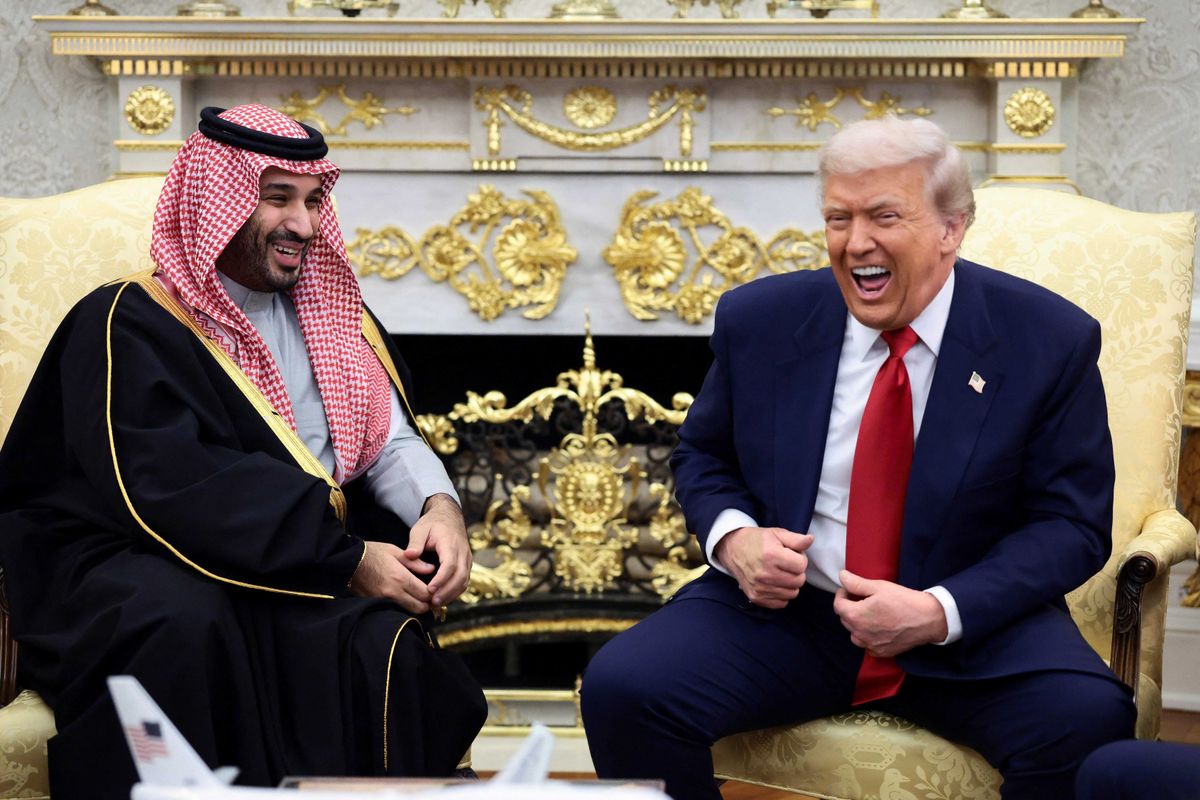
Donald Trump and Saudi Crown Prince Mohammed bin Salman laugh. 
REUTERS/Evelyn Hockstein

Donald Trump is searching for an exit strategy from his increasingly unpopular war with Iran, but Saudi Arabia's de facto leader is pushing hard in the opposite direction — pressuring the president to view the conflict as an opportunity to reshape the entire Middle East.

According to the New York Times, controversial Prince Mohammed bin Salman has been aggressively urging Trump to intensify the war against Iran, according to people briefed by American officials on the private conversations.

In discussions over the past week, Prince Mohammed has told Trump that he must accelerate efforts toward dismantling Iran's hard-line government, according to those familiar with the talks.

Prince Mohammed contends that Iran represents an existential long-term threat to the Gulf region that cannot be adequately addressed without regime change, the sources said.

Israeli Prime Minister Benjamin Netanyahu similarly regards Iran as a long-term threat, though the two allies have divergent strategic interests. Analysts note that Israeli officials would likely view a destabilized Iranian state consumed by internal chaos as a strategic victory, whereas Saudi Arabia sees a failed Iranian state as a direct and immediate security catastrophe.

Yet senior officials within both Saudi and American governments harbor serious concerns about prolonged conflict. They fear Iran will unleash increasingly devastating strikes against Saudi oil infrastructure while the United States becomes mired in an indefinite war.

Trump's public messaging has been erratic, oscillating between declarations that the war could end imminently and suggestions of escalation. On Monday, the president wrote on social media that his administration and Iran had engaged in "productive conversations regarding a complete and total resolution of our hostilities," though Iran denied that any negotiations were taking place.

The war's toll on Saudi Arabia — economically and strategically — has been severe. Iranian drone and missile strikes, launched in response to American and Israeli military action against Iran, have already triggered significant disruptions throughout global energy markets.

Saudi Arabia's government flatly disputed claims that Prince Mohammed has advocated for prolonging the conflict.

"The kingdom of Saudi Arabia has always supported a peaceful resolution to this conflict, even before it began," the Saudi government said in a statement, adding that officials "remain in close contact with the Trump administration and our commitment remains unchanged."

Saudi Crown Prince Reportedly Urges Trump To Intensify Strikes On Iran


By 

By Mansour Al-Maswari


(Albawaba) — Saudi Crown Prince Mohammed bin Salman has privately urged US President Donald Trump to intensify military strikes against Iran, according to a report by The New York Times, even as Riyadh publicly emphasizes de-escalation.

Citing senior White House officials, the report said the crown prince has maintained frequent contact with Trump since the US-Israeli war began on February 28, encouraging sustained military pressure to neutralize Iranian capabilities. The stance echoes that of the late King Abdullah, who once urged Washington to “cut off the head of the snake.”

Saudi Arabia’s position appears to have hardened following Iranian missile and drone attacks earlier this month targeting US assets and Saudi territory. On March 23, three ballistic missiles aimed at Riyadh were intercepted by Saudi and US air defences.

Foreign Minister Faisal bin Farhan said trust with Tehran had been “completely shattered,” citing repeated attacks on Gulf states. In response, Riyadh has granted expanded US access to military facilities, including King Fahd Air Force Base, to support operations.

Saudi Arabia already hosts significant foreign military deployments, with the United States maintaining a major presence at Prince Sultan Air Base, alongside smaller European training and advisory missions.

The reported private position aligns with earlier remarks by the crown prince, including a 2019 interview in which he accused Iran of targeting Gulf shipping and warned that Saudi Arabia would not hesitate to confront threats directly.

However, Saudi officials have denied the report, insisting that the kingdom remains committed to regional stability and diplomatic de-escalation. The developments come as back-channel mediation efforts led by Pakistan and other regional actors are expected to lead to preliminary talks in Islamabad, even as fighting continues.


Al Bawaba News

Al Bawaba provides top stories and breaking news about the Middle East and the world. 

The Al Bawaba network consists of several web portals and media platforms.

Pakistan Emerges As A Quiet Hub In Evolving US-Iran Backchannel – OpEd


Pakistan's Prime Minister Shehbaz Sharif with Iran's President Masoud Pezeshkian.
 Photo Credit: Tasnim News Agency


March 24, 2026 

By Dure Akram

That Pakistan is among a small group of capitals being considered as a possible venue for contacts between U.S. and Iranian officials, even as both sides continue to deny that formal negotiations are underway, should not have come as a surprise to those with a finger on the region’s pulse.

Officials familiar with the discussions indicate that Islamabad has remained in sustained contact with Tehran over the past year, including engagements involving Iran’s foreign minister, Abbas Araghchi and senior Pakistani leadership, while also maintaining a working line to Washington. Pakistan’s additional role in representing Iranian diplomatic interests in the United States has further reinforced its utility in any indirect process.

One need not look further than the fact that Pakistan was one of the first countries to officially denounce strikes on Iran, as it constantly rallied for an end to attacks on civilians in global peacekeeping organisations. An Urdu tweet from Mr Araghchi, not of acknowledgement from Iran’s ambassador in the UN and constant rounds of shutter diplomacy between Deputy Foreign Minister Ishaq Dar and his counterparts in the Gulf are enough to further convince the international community about where Pakistan actually stands on the spectrum.

Analysts following the region note that Pakistan’s emergence is not unexpected. Michael Kugelman, for instance, has publicly argued that Pakistan is “far from an unlikely US-Iran mediator,” citing a steady pattern of Pakistan-Iran engagement alongside a perceptible warming of ties between Islamabad and Washington. Some officials in Washington policy circles have also suggested that President Donald Trump views Pakistan as a pragmatic interlocutor, and has spoken favourably of Pakistan’s military leadership—particularly Field Marshall Asim Munir—as having a deeper understanding of Iran than many of his counterparts.

That broader context has fed into what appears to be an expanding, though still opaque, diplomatic effort.


Media reports say Pakistan, Turkey and Egypt are among the countries relaying messages between Washington and Tehran. Islamabad has publicly stated that it is ready to host talks if both parties agree, a position officials describe as procedural rather than aspirational. People briefed on the matter say that this offer has been conveyed quietly through multiple channels.

At the same time, the contours of the effort remain fluid.

Diplomatic chatter in Islamabad suggests that Gulf foreign ministers could visit Pakistan in the coming days as consultations intensify, though no official schedule has been announced. Separate reports circulating in diplomatic and media circles indicate that senior U.S. envoys, including Steve Witkoff and Jared Kushner, have figured in backchannel contacts linked to Islamabad, with some accounts placing them in the city for discussions with Iranian-linked interlocutors. These claims may not have been formally confirmed. Yet, a reassuring silence from the White House is the signal we need to read between the lines.

There is also increasing talk of a possible summit format, with one senior regional official cited in media discussions as saying that preliminary contacts are underway to explore an eventual meeting in Islamabad between U.S. and Iranian representatives. Names are already being floated in this context. U.S. Vice President J. D. Vance has been mentioned in several accounts as a potential representative if talks advance, while Mohammad Bagher Ghalibaf has appeared in political chatter as one of several possible Iranian participants. Of course, anyone thinking of him as Iran’s version of Delcy Rodríguez — someone ready to talk business with President Trump — needs to think again: far from a pliable interlocutor, Ghalibaf is a product of Iran’s hardline security establishment, operating within a system where ultimate authority lies elsewhere and where even perceived pragmatism does not translate into political latitude.


Sources familiar with Iranian internal discussions also note that any delegation from Tehran would likely include multiple senior figures rather than a single negotiator, reflecting the political sensitivity of the process. Public denials from Iranian officials, including Ghalibaf, underscore that no formal configuration has yet been agreed.

Alongside these developments, a parallel stream of more tentative reporting has added to the sense of movement.

According to Al Arabiya News Channel’s bureau chief in South and East Asia, Baker Atyani, Pakistan may have been positioning itself for a mediatory role since the early days of the crisis, with indications of a quiet visit by Iranian officials to Pakistan roughly ten days ago. Other accounts, including commentary from former Pakistani ambassador to Oman, Imran Chaudhry, point to similar contacts in Oman involving Munir, Witkoff and Kushner, described as a possible prelude to Munir’s subsequent telephonic engagement with Trump and discussions around Islamabad as a venue.

These claims remain unverified in official terms, but they broadly align with the pattern of incremental, deniable contacts that typically characterise early-stage conflict diplomacy.

What is clearer is the underlying logic driving Pakistan’s role.

Officials say Islamabad has strong incentives to prevent further escalation, given its geographic proximity to Iran, economic exposure to Gulf instability, and domestic sensitivity to regional tensions. At the same time, its maintained ties with Tehran, working relationships with Gulf capitals, and renewed access in Washington give it a degree of diplomatic flexibility that is currently in short supply.


Even so, people familiar with the discussions caution that the process remains at an exploratory stage. Tehran has continued publicly to reject the idea of direct negotiations while setting out firm conditions for any engagement, while Washington has signalled openness to dialogue without easing pressure.

In that environment, officials in Islamabad say, any role played by Pakistan is likely to remain informal and incremental, focused on facilitating contact rather than brokering a comprehensive settlement.

Diplomats involved in regional consultations stress that early-stage mediation often unfolds in precisely this manner, with overlapping channels, partial disclosures and public denials running in parallel until a clearer political opening emerges.

For now, Pakistan appears to have positioned itself as a credible and useful node in that evolving network.

Whether that role develops into a formal mediation effort—or remains a quieter exercise in message-carrying—will at the end of the day depend on the willingness of Washington and Tehran to move beyond the current phase of guarded engagement.

Dure Akram

Dure Akram is a journalist based in Pakistan with a decade of experience in print and digital media, and at present, heads Daily Times, one of the leading and oldest English newspapers in Pakistan, as opinion and consulting editor.


Pakistan’s Balancing Act In The US-Israel War On Iran – Analysis

March 24, 2026 
Observer Research Foundation
By Mohammed Sinan Siyech

With the US-Israel war on Iran now entering its third week, several countries have seen their foreign policies put to the test. Among those facing the greatest challenges is Pakistan. A close ally of Saudi Arabia and a neighbour of Iran — sharing hundreds of kilometres of border with it — Pakistan has found itself stuck between a rock and a hard place. Given its Strategic Mutual Defence Agreement (SMDA) with Saudi Arabia, which necessitates a military response to any act of aggression against either party, Pakistan’s foreign policy calculations require significant recalibration.

Pakistan has maintained a long-standing relationship with Saudi Arabia, having provided military support to the kingdom for decades. In addition, a significant number of Pakistani nationals work in Saudi Arabia, sending home crucial remittances that support Pakistan’s domestic economy. Pakistan’s trade volume with Saudi Arabia amounts to nearly US$5 billion, constituting a substantial share of its external trade.

Moreover, Saudi Arabia has long been a provider of financial assistance to Pakistan, which has struggled with persistent economic challenges. In recent years, Saudi Arabia has also invested in Pakistan’s mineral sector and other key infrastructure projects, including electricity, further increasing its strategic importance to Islamabad. The SMDA emerged in the immediate aftermath of an Israeli missile attack on Qatar, signalling Saudi Arabia’s growing uncertainty about the United States’ commitment to the security of its Gulf partners. This arrangement benefited Pakistan as well, as it translated into increased Saudi investments in the country.

On the other hand, Pakistan and Iran also share a long and complex history. Bilateral trade between the two stands at roughly US$3 billion, with both sides aiming to increase it to US$10 billion. Prior to the war, ties had been gradually improving, evidenced by 25 high-level bilateral visits between officials from both countries over the past two years. At the same time, tensions have periodically surfaced, with 2024 witnessing a brief tit-for-tat exchange of missile strikes between the two nations. Nonetheless, the geographic proximity of the two countries makes their relationship important.

Pakistan’s Limitations

In the current scenario, with Saudi Arabia sustaining multiple strikes from Iran, there is a possibility that Riyadh may turn to Pakistan for military support. Pakistan’s Prime Minister Shehbaz Sharif has already expressed his country’s “full solidarity and support” for Saudi Arabia. At the same time, Sharif placed a call to Iranian President Masoud Pezeshkian following the announcement of Mojtaba Khamenei as Iran’s new supreme leader. The central question, therefore, is: what considerations must Pakistan weigh if it were to come to Saudi Arabia’s defence?

For Islamabad, several constraints complicate any decision to become directly involved in the conflict. First, while Pakistan may be obligated under the SMDA to support Saudi Arabia, it is already engaged in ongoing hostilities with Afghanistan, an issue that has received comparatively little attention amid news coverage dominated by the Iran conflict. Tensions with Afghanistan have imposed significant military and operational costs on Pakistan, requiring Islamabad to concentrate substantial security resources on that front. Entering a second conflict against another state would severely strain Pakistan’s military capabilities and resources.


Second, Pakistan cannot afford to ignore its geography and open a sustained war front with Iran. Iran has demonstrated its military capabilities, challenging American, Israeli, and Gulf defence systems alike. In addition, Tehran has shown a strong willingness to strike its adversaries forcefully. For Pakistan, the risk of prolonged tensions with neighbouring Iran is especially unattractive, given its simultaneous security challenges with Afghanistan and India.

Third, Pakistan must also factor in domestic political sensitivities, including a sizeable segment of its population that is sympathetic towards Iran. Pakistan’s Shia population constitutes roughly 20 percent of the country, at approximately 35 million people, with longstanding religious and social ties to Iran. Many Pakistani Shias regularly travel to Iran, and some have previously fought alongside Iran-backed forces in Syria. Alienating this constituency by participating in a conflict against Iran could prove destabilising for Pakistan, which has historically experienced significant sectarian violence between Sunni and Shia communities.
Difficult Decisions

For Pakistan, as for many other countries, including India and several Gulf states, there are no easy answers in this war. Despite the constraints outlined above, Pakistan remains heavily reliant on Saudi Arabia for aid and economic support, particularly at a time when its domestic economic situation remains fragile. Moreover, Pakistan cannot afford disruptions to fuel imports from Gulf nations, which supply a significant share of its energy requirements.

The fact that Pakistan has negotiated with Iran to ensure safe passage for fuel shipments through the Strait of Hormuz demonstrates that, despite offering political support to Saudi Arabia, it continues to engage pragmatically with Iran to safeguard its energy security. Another factor working in Pakistan’s favour is the presence of substantial Chinese investments under the China-Pakistan Economic Corridor (CPEC). For Iran, which exports most of its oil to China and has reportedly received intelligence support from Beijing during the conflict, targeting Chinese investments in Pakistan and alienating a key partner would be counterproductive. This is particularly true at a time when Tehran faces increasingly strained regional relations following its attacks on several states across the Middle East.


Ultimately, Pakistan appears to be pursuing a cautious and calibrated approach towards both Iran and Saudi Arabia. Islamabad is likely to avoid escalation, particularly as it has introduced domestic austerity measures to conserve energy resources. Direct military involvement is therefore an outcome Pakistan would prefer to avoid, opting instead for diplomatic engagement aimed at easing tensions. Saudi Arabia, too, appears hesitant to formally invoke the defence agreement, as doing so would require a declaration of war — an escalation Riyadh is keen to avoid in order to prevent deeper entanglement in US-Israeli military action against Iran.


About the author: Mohammed Sinan Siyech is a Non–Resident Associate Fellow at the Observer Research Foundation.

Source: This article was published by the Observer Research Foundation.

Observer Research Foundation

ORF was established on 5 September 1990 as a private, not for profit, ’think tank’ to influence public policy formulation. The Foundation brought together, for the first time, leading Indian economists and policymakers to present An Agenda for Economic Reforms in India. The idea was to help develop a consensus in favour of economic reforms.


How The Afghan-Pakistan Conflict Impacts Central Asia’s Trade Ambitions For The Region – Analysis

March 24, 2026 

By Charles Walsh


The on-going conflict between Pakistan and the Taliban government of Afghanistan threatens to disrupt the efforts of the Central Asian states to develop a trade crescent stretching from the Black Sea in the west to the Arabian Sea in the south. However, conflict between the two South Asian states could also lead to trade benefits for Central Asia, specifically Uzbekistan. The conflict, which the Pakistani Defense Minister described as an “open war,” centers on Afghan-support for Tehrik-e-Taliban Pakistan (TTP), a militant group operating in the Afghanistan-Pakistan border region that seeks to overthrow the Pakistani government and has long-standing ties to the ruling Taliban in Afghanistan.


A Set Back for Burgeoning Regional Relations

Since independence from the Soviet Union in 1991, the Central Asia states have engaged in a policy of strategic balancing when it comes to trade relations, especially when it comes to building trade links with its southerly neighbors. Turkmenistan has invested heavily in the Turkmenistan–Afghanistan–Pakistan–India (TAPI) Pipeline, a transport route to get the country’s abundant supply of natural gas to global consumers. Both Uzbekistan and Kazakhstan have also invested in ambitious railway projects linking Central Asia to Pakistani ports on the Arabian Sea. The Presidents of Kyrgyzstan, Kazakhstan, and Uzbekistan have also made recent, high-profile visits to Pakistan aimed at strengthening bilateral trade relationships.

With the Taliban and Pakistan now coming to major blows these projects have been significantly set back, at least in the immediate term. All of these projects aim to access Pakistan via Afghanistan and as such rely on a stable and peaceful situation on the border. While the conflict continues, the prospects of any serious cross-border infrastructure development – much less at the scale these projects envision – is near-impossible. This leaves billions of $ of investment from Central Asia essentially in limbo.

The potential concerns related to this conflict are not just economic. There is an ever increasing possibility of escalation, which in turn could present a security challenge for the Central Asian states, particularly those that border Afghanistan. The Islamic State – Khorasan Province (ISKP), the local ISIS affiliate in the region, has been fighting the Taliban since before their return to power in 2021 and their continued insurgency had already raised concerns about the Taliban’s ability to provide security for regional infrastructure. A sustained Pakistani air campaign or further escalation in the war has the possibility to destabilize Afghanistan and thus provide more space for ISKP to operate as well as possibly resulting in an internal refugee crisis. Instability could also spill over into Central Asia itself, with the Afghan-Tajik border being of particular concern if instability increases.

Opportunity in the Face of Chaos

Admittedly, Central Asia lacks the ability to solve the immediate conflict between Pakistan and Afghanistan and until the dispute can be settled permanently there will be challenges and risks associated with a southern trade corridor through the two countries to Central Asia. The cyclical nature of conflict in the region, with periods of intense conflict followed by periods of relative calm, means that without a permanent solution violence could erupt at any moment over the slightest provocation from either side. This will become more of a challenge as cross-regional infrastructure continues to develop. As such, the long-term concern for Central Asia is not necessarily with the immediate round of fighting, but rather the possibility of successive periods of violence. This threat will not just be a hindrance for existing trade and infrastructure plans, but could also turn off potential investors in the West who do not want to invest in projects that could be disrupted by new rounds of conflict.

One option is to simply push forward with what parts of these plans remain realistic given the current circumstances on the ground. Pakistani airstrikes have so far remained concentrated in the east and south of Afghanistan, relatively far from the borders with Central Asia. By developing the parts of existing projects that can be built in the northwest of the country, Central Asia can both show that it is still committed to these projects and remains proactive in their construction. Showing progress on existing infrastructure projects also makes them more tangible, perhaps changing the calculus for regional actors who seek to benefit from the influx of trade from causing disruptions through armed conflict. More infrastructure and trade development might also help in stabilizing the internal situation within Afghanistan, as local communities start to see the results of greater regional trade connections brought by, even incomplete, infrastructure.

Another option is to shift emphasis on to other proposed trade routes, such as the Middle Corridor. The Middle Corridor, a mostly land-based route that connects Central Asia to Europe via the Caspian Sea, is another trade route that the Central Asian states have been heavily investing in. However, while the Middle Corridor concept is more developed, it too faces its own challenges. As recent Iranian-Azerbaijani tensions have shown, critical sections of the route are still under threat from regional instability. The Middle Corridor is also longer in both length and travel time compared to the Afghanistan-Pakistan route and has bottlenecks of its own that are worth considering.

While the prospects for global trade along the southern “Afgh-Pak” route seem grim, the conflict might present an opportunity for the Central Asians – particularly Uzbekistan – to reap regional trade benefits. Several of Afghanistan’s key trade routes have been complicated by recent conflict. Afghan-Pakistan trade has been shuttered due to the fighting and trade with Iran has faced serious disruptions due to the on-going US-Israeli bombardment of the country. This means that Afghanistan could increasingly turn to Central Asia as an outlet for trade. There has already been movement in that direction, with Ministers from Uzbekistan and Afghanistan previously agreeing on a goal for increasing bilateral trade to $5bn, a significant increase from roughly $1bn of trade value at the end of 2025. Deepening the trade relationship between the two states now would provide a large benefit to both economies in the short-term, potentially reaching the $5bn target much sooner than anticipated. Stronger bilateral trade relationships between Uzbekistan and Afghanistan could also provide the foundation for stronger cross-regional trade to and from Pakistan and global markets, when conditions on the ground finally allow.


Until the fighting ends, Central Asia’s grand plans for a new trade corridor through Afghanistan and Pakistan remain in limbo, with the enduring consequences varying on how long the fighting continues. The ultimate conclusion of the war in Iran is also a factor to consider, with the outcome having the potential to alter existing plans and color whatever settlement, permanent or otherwise, comes out of the conflict between Pakistan and the Taliban. Central Asia will invariably still look to new frontiers, like in South Asia, for the opportunity to expand trade with global markets. A goal that the current conflict can only delay, not derail.


Charles Walsh

Charles Walsh is an Analyst at the New Lines Institute for Strategy and Policy, where he works at the Institute's Central Asia Center as well as leads the transnational Repression Initiative.