Tuesday, April 07, 2026

 Pentagon-Linked REalloys Secures U.S. Rare Earth Supply Ahead of China Ban


REalloys (NASDAQ: ALOY) has signed an agreement to secure supply from one of the highest-grade rare earth deposits in the United States, with just nine months remaining before U.S. defense rules force the removal of Chinese material from the supply chain.

The memorandum of understanding with U.S. Critical Materials Corp. gives REalloys access to up to 10% of production from the Sheep Creek project in Montana, with confirmed dysprosium, terbium, yttrium, and NdPr, the rare earth elements used in high-performance magnets for fighter aircraft, missile guidance systems, radar platforms, and other advanced defense hardware.

REalloys will convert rare earth oxides into metals and magnet-grade alloys, and is building one of the only integrated manufacturing platform in North America capable of producing heavy rare earth metals at an industrial scale.

The Sheep Creek agreement adds a domestic source of dysprosium and terbium into that system, reducing reliance on foreign feedstock and tightening control over a supply chain that does not yet exist at scale inside the United States. 

The timeline is tight. As of January 2027, rare earth materials of Chinese origin will be banned from use in American military defense systems. That deadline looms large; not only because of a raging conflict in the Middle East that is consuming multitudes of weapons that depend on rare earth metals, but because these magnet-grade alloys are where the U.S. supply chain completely breaks down. 

“Metallization is one of the least developed parts of the value chain outside China,” REalloys co-founder Tim Johnston said previously. “Even with strong execution and capital, you are looking at a multi-year timeline to build that capability.”

THE LOOMING GAP IN AMERICAN DEFENSE

While rare earth elements themselves aren’t actually that rare, with deposits across North America, Europe, and Australia, downstream is a more serious bottleneck. 

“Rare earth elements are relatively widespread geologically; what is scarce is the industrial capability to economically separate them into high-purity oxides and then convert them into metals and alloys at scale,” REAlloys co-founder Tim Johnston explained in an interview with Oilprice.

China controls the vast majority of global rare earth processing and metallization capacity. While mining operations exist around the world, the conversion of those materials into finished metals and magnets has remained heavily concentrated within China’s industrial ecosystem.

That’s where we hit the critical chokepoint.

“If China said we’re not going to give you rare earths,” said Saskatchewan Research Council CEO Mike Crabtree in a separate interview, “that means no F-35s, no missiles.”

Washington is moving fast, now, to secure this supply chain for American defense. 

The Defense Logistics Agency recently awarded a contract to Terves LLC, whose technology is now part of the REAlloys platform, to advance metallothermal production of samarium and gadolinium metals. The project includes engineering design work for a modular facility capable of producing roughly 300 tons per year, a structure intended to be replicated as demand expands.

Federal financing channels are opening at the same time. The Export-Import Bank of the United States has issued a letter of interest for up to $200 million tied to rare earth processing expansion connected to the REAlloys platform, signaling potential large-scale backing for domestic midstream and metallization capacity.

Now, REalloys is moving ahead with its commercial-scale heavy rare earth metallization facility for a fully allied, zero-China supply chain for defense-critical materials, and in 2027. 

The Big Defense Names Behind It All

Earlier this week, REalloys brought in Joe Kasper, former Chief of Staff to the U.S. Secretary of Defense, adding a senior Pentagon supply chain official to its advisory board.

He joins General Jack Keane, former Vice Chief of Staff of the U.S. Army, and Stephen duMont, president of GM Defense.

This is not a typical advisory group. These are people who know defense procurement really well, and have led the programs that decide who gets qualified, who gets funded, and who actually supplies material into weapons systems.

Behind that layer is an operating platform already producing material.

REalloys will run metallization out of Euclid, Ohio, converting rare earth oxides into finished metals and magnet-grade alloys, the form required by defense contractors. That step remains limited in the United States.

The rest of the system is already connected. The Saskatchewan Research Council will produce separated oxides in Canada (first commercial production expected by the end 2026/ early 2027). Those materials move to Ohio, where they are converted into metals and alloys, creating a mine-to-metal chain aligned with U.S. procurement requirements.

REalloys (NASDAQ: ALOY) has secured most of that flow. The company holds offtake on roughly 80% of SRC’s output, giving it control over one of the few non-Chinese streams of heavy rare earth supply.

Phase 1 targets roughly 525 tonnes per year of NdPr metal, with dysprosium and terbium feeding through the same system. Phase 2 expands that to about 3,000 tonnes of NdPr metal, 200 tonnes of dysprosium metal, 45 tonnes of terbium metal, and roughly 20,000 tonnes of finished magnets.

WAR IS MOVING FASTER THAN THE SUPPLY CHAIN

The cost of the Iran conflict reached $11.3 billion by day six and $16.5 billion by day 12, with a large share tied to precision-guided munitions. They’re blowing through weapons systems run on rare earth metals. And at the same time, pressure is building on the supply side.

That burn rate runs straight through contractors like Raytheon (NYSE: RTX), where missile systems such as Patriot and AMRAAM rely on rare earth-dependent guidance and control systems. These aren’t stockpiled inputs you can easily replenish. Once inventories tighten, production lines begin to feel it almost immediately.

And at the same time, pressure is building on the supply side.

Recent reporting from Reuters and coverage in Asian media point to tightening availability of key rare earth materials, with some defense-linked inventories potentially measured in months if disruptions deepen. These materials sit inside missile guidance systems, drones, radar, and fighter aircraft electronics.

“You can’t fight a 21st-century war with twentieth-century supply chains,” said Lipi Sternheim, CEO of REalloys. “Modern weapons rely on materials that are difficult to source, difficult to process, and difficult to replace once inventories begin to tighten.”

And the West is already paying a premium, with European buyers already paying 2-3X more for usable material than the prices quoted inside China. Supply is limited, buyers step in only when they have no choice, and transactions are clearing at elevated levels, while China’s domestic market remains controlled.

And it doesn’t stop at missiles and fighter jets.

Across the broader industrial base, companies like General Electric (NYSE: GE), through its aerospace division, are scaling production of jet engines and avionics systems that rely on the same class of rare earth materials for high-performance components. The overlap between commercial aviation recovery and defense demand is tightening the same supply pool from multiple directions.

That convergence matters. It means rare earth constraints are not just isolated to defense procurement - they are a shared bottleneck across critical manufacturing systems.

REalloys is stepping into this critical setup with a fully funded commercial buildout of the most challenging part of America’s rare earths metals supply chain, and it’s got the Who’s Who of defense behind it, along with Pentagon contracts and a looming deadline that gives defense contractors no choice but to buy American.

By. Charles Kennedy


White House taps Highland Copper in local supply push


Road construction at the Copperwood project. (Image courtesy of Highland Copper.)

The US administration has named Highland Copper (TSX-V: HI) as a contributor to expanding domestic copper supply, highlighting the Canadian miner’s growing strategic relevance.

The recognition follows President Donald Trump’s move last week to adjust national security tariffs on steel, aluminum and copper imports, lowering duties on derivative products, simplifying compliance and addressing under-reporting of import values. 

The White House document highlights Highland alongside Ivanhoe Electric (TSX,NYSEAMERICAN: IE) Rio Tinto (ASX, LON, NYSE: RIO) and Wieland as part of a broader effort to expand US mining, smelting and fabrication capacity.

“I am grateful that the White House recognized Highland Copper as important to the expansion of US domestic copper mining,” Congressman Jack Bergman said in a statement. “Highland’s Copperwood project aims to responsibly produce copper in Michigan to help support the American economy and national defence.”

The acknowledgement places Highland’s Copperwood project at the centre of a wider policy shift to secure domestic supplies of critical minerals, as Washington leans on tariffs and financing tools to reduce reliance on imports and strengthen industrial resilience.

Highland is advancing Copperwood toward a construction decision, supported by a 2023 feasibility study outlining an approximately 11-year mine life with annual production of about 64.6 million pounds of copper and 107,000 ounces of silver. The fully permitted project is designed as an underground room-and-pillar operation processing roughly 6,800 tonnes per day. 

The US Export-Import Bank has already signalled support with a $250 million letter of interest, covering a significant portion of the project’s estimated $391 million initial capital cost.

Shares in Highland Copper gained 7.4% by mid-Monday in Toronto to 14¢ apiece, valuing the company at C$103 million ($74 million). 

Chile lithium dispute tied to Cold War-era nukes 


Altosandinos project in Chile. (Image courtesy of Enami.)

France’s Eramet (Euronext: ERA) and Chile’s state mining company Empresa Nacional de Minería (ENAMI) are headed to court in a dispute that could delay development of one of the world’s largest lithium deposits.

ENAMI plans to invest more than $3 billion with mining giant Rio Tinto (LSE, NYSE, ASX: RIO) to develop the Salares Altoandinos project. It is estimated to host about a quarter of Chile’s lithium resource, could produce enough of the battery metal for about 1.5 million electric vehicles a year, and is expected to become a cornerstone of new President Jose Antonio Kast’s development agenda.

Complicating matters, Eramet acquired all the area’s mining rights in 2023 in a bid to secure the special licence required to produce lithium under Chile’s Cold War-era legislation, drafted when the metal was considered vital for nuclear arms. The French company doesn’t hold the licence but is seeking to leverage its land position for a stake in the development.

“Eramet has begun a series of abusive administrative and court actions,” ENAMI’s lawyers wrote in a pretrial document that became public in March. “[They] seek to hinder or block the development causing compensable damages to our clients.”

Filed appeals

The French company filed appeals against Chile’s selection of Rio Tinto’s $415 million bid in last year’s competitive process. Eramet has publicly called on ENAMI to open negotiations on the award, due to close this year, while filing multiple applications for easements and water extraction sites at the site.

“As the holder of mining concessions, we remain open to constructive solutions that allow Altoandinos to move forward on a solid footing,” Eramet Chile chairman Hubert Porte said in a March 16 column in the Santiago-based Diario Financiero newspaper. “But we continue to defend our rights as a mining concessionaire.”

If neither side is willing to cede, the dispute could take at least two years to work through the courts and potentially proceed to international arbitration. Some mining lawyers in Chile are concerned that ENAMI’s respect for mining claims borders on expropriation.

“ENAMI has taken somewhat of a risk by not requiring that its strategic partner holds mining claims over the area,” Ignacio Errazquin of Santiago law firm CMS Carey & Allende told MINING.COM‘s sister publication, The Northern Miner.

Atacama region

Eramet holds 1,200 sq. km of claims covering 99% of the La Isla and Aguilar salt flats in northern Chile’s Atacama region as part of a long-planned shift towards energy metals. It wants to capture synergies with its $900 million Centenario facility across the Andes in northwest Argentina, which entered production in late 2024.

The Salar Aguilar, part of Enami’s Altosandinos project in Chile. (Credit: Enami)

Chile has estimated Salares Altoandinos to host about 4.5 million tonnes of lithium following 2025 exploration, though no formal resource statement has been released.

“Today we can say with certainty that this is a world-class project,” ENAMI CEO Ivan Mlynarz said in March following the latest exploration results.

The project is the latest tie-up between the Chilean state and private investors as the country seeks to double lithium output to about 500,000 tonnes annually by 2035.

“After an exhaustive analysis, we concluded that Rio Tinto’s was the proposal that provided most value to ENAMI,” Mlynarz said at the time.

Rio Tinto’s offer includes cash as well as its direct lithium extraction process and access to the pilot plant at its Rincon operation in Argentina. It was Rio Tinto’s second win in less than two months after signing a similar deal with state copper giant Codelco for Maricunga.

Court wrangling

The risk now is that the legal dispute with Eramet could tie up the Altoandinos project in years of court wrangling.

“Having participated in a process where it was not selected, Eramet is now questioning its whole basis,” ENAMI said in the court filing. “The mining properties which it thought to use as an advantage to be selected, it now plans to use to obstruct the project.”

And having focused solely on lithium, Eramet has now raised the possibility of extracting other elements present in the brines such as boron, iodine and potassium.

ENAMI has called on judges to force Eramet to hand over internal emails and other documents that would show when management shifted its focus to non-metallic minerals, among other issues.

CEOLs

Regardless of the intentions when claims were staked or acquired, they give the holder the right to exploit any minerals in the ground, except lithium, which needs that special permit, known as a CEOL from its initials in Spanish. In 2023, holding mining claims over the production area became a requirement.

This month, the Chilean government granted the first CEOL to a private company — CleanTech Lithium (LSE-A: CLT) – largely on the strength of its extensive holdings at its Laguna Verde project.

“We own almost 100% of the claims . . . which was a requirement under this process,” CleanTech CEO Ignacio Mehech told MINING.COM‘s sister publication, The Northern Miner.

A prolonged dispute over Altoandinos would represent a major setback for President Kast who took office March 11. He’s looking to the mining industry to attract foreign investment and support the economy.

“We want companies to have the certainty to carry out their investments and reach production in the short term,” Economy and Mining Minister Daniel Mas told journalists March 13. “So we will see how to make this strategy coincide with our aims.”


Panama moves to unlock copper from First Quantum mine

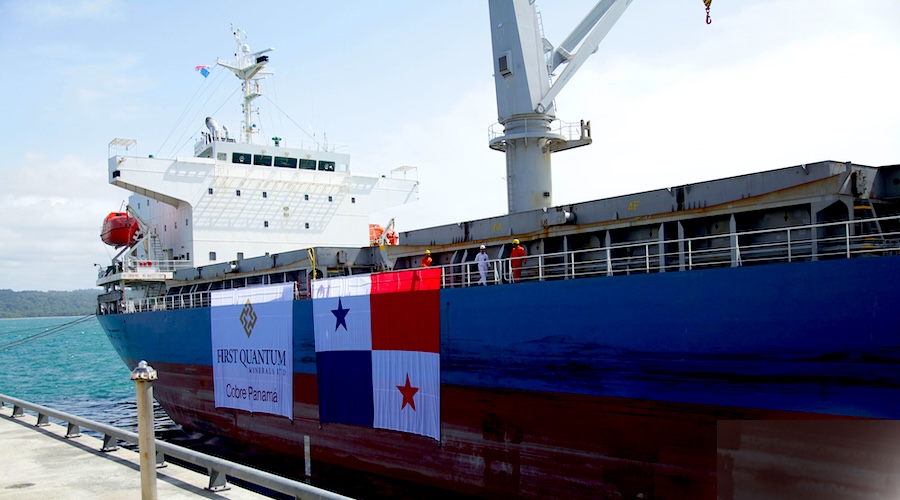
The Cobre Panama mining complex includes two open pits, a processing facility, two power plants and a port. (Image courtesy of Cobre Panama.)

Panama is set to authorize the removal and processing of stockpiled ore at First Quantum’s (TSX: FM) shuttered Cobre Panama copper mine, marking a key step in managing the idled operation.

Commerce and Industries Minister Julio Moltó said the government expects to issue a resolution by Tuesday at the latest, allowing the company to extract and export material already mined and stored on site. The document is in its final stage within the ministry and would enable First Quantum to begin shipping the ore out of the country, La Estrella de Panamá reported.

“We are ready to take the next step,” Moltó said. “Between today and tomorrow, we should issue the resolution that will allow the company to begin removing this material so that it can be taken out of the country.”

BMO analyst Matt Murphy said a formal approval for stockpile processing would align with earlier government signals and market expectations. He said the resumption of mill operations, even on a limited basis, would mark an incremental positive step, with the mine already working to hire about 1,000 employees ahead of restarting processing.

The move advances Panama’s broader effort to manage roughly 38 million tonnes of ore mined before the operation was halted in 2023, part of a care and maintenance plan launched last year. 

The stockpile is expected to yield about 70,000 tonnes of copper, with proceeds from concentrate sales potentially offsetting preservation costs in 2026, depending on regulatory timing.

Processing could begin about three months after approval and take roughly a year to complete, creating about 700 direct jobs on top of the current workforce of 1,600, along with indirect employment in logistics and services.

Murphy noted that First Quantum previously guided that processing could begin about three months after regulatory approval and run for about a year, producing roughly 70,000 tonnes of copper.

Almost $30M in royalties

The effort builds on a series of measures under President Jose Raul Mulino’s administration to extract value from the suspended mine. Authorities have already sold more than 122,000 tonnes of copper concentrate, generating nearly $30 million in royalties directed to public infrastructure projects, while restarting a 150-megawatt power unit to support site maintenance and supply the national grid.

Officials say removing and processing the stockpiled ore would reduce environmental risks tied to long-term storage, including acid rock drainage, while supporting the site’s tailings management system.

The mine, which once accounted for about 1% of global copper supply and roughly 5% of Panama’s GDP, has weighed on both the national economy and First Quantum’s outlook since its closure. 

Before being shut down, Cobre Panama produced 350,000 tonnes of copper in 2022. The government aims to decide on the project’s long-term future by June


Ukraine Strikes Frigate and Oil Terminal in Massive Attack on Novorossiysk

Russian frigate under attack by drones
Admiral Makarov frigate was one of the targets in Novorossiysk

Published Apr 6, 2026 2:54 PM by The Maritime Executive


In what is being called one of the most ambitious attacks staged on the Russian Black Sea port of Novorossiysk, Ukraine claimed a successful hit on one of the Russian frigates homeported in the region, as well as reports of extensive damage once again at the oil terminal. Russia is claiming to have shot down nearly 150 drones over a three-hour period, while reports said the frigate also used its air-defense missile systems.

Ukrainian officials leaked a series of videos showing the attack on the frigate, the Admiral Makarov, of the Project 11356 class. The 3,260-ton displacement frigate was commissioned in 2018 and had previously been ported at Sevastopol. It is 125 meters (409 feet) in length, with reports that it has a normal complement of 200 sailors. Ukraine claimed to have damaged the warship in a 2022 attack on Sevastopol and again in March of this year.

Images circulating online appear to show some damage to the vessel. The crew can also be seen on deck.


Ukrainian officials did not release full details on the attack and said damage assessments were still underway. They also reported targeting the Syvash, a self-elevating oil drilling platform that was in the Black Sea. Unconfirmed reports said Russia was using the platform for surveillance, communication, and intelligence gathering since the occupation of Crimea.

Ukraine did not confirm the latest attack on the oil terminal at Novorossiysk, but several videos are circulating online, reportedly showing large fires at the terminal. Ukraine has struck it four times in the past, starting last November, and the most recent was a month ago. Unconfirmed reports are saying the first pier is heavily damaged and that the second pier also sustained damage in the attack, which took place over about 1.5 hours.


It is a key oil terminal and would factor in Ukraine’s recent efforts to dramatically impact Russia’s oil economy. The terminals in the Baltic came under repeated attack at the end of March. Novorossiysk is the terminus for the Caspian Pipeline Consortium. It is reported to represent as much as a quarter of Russia’s oil exports, handling the oil from the Urals, Siberia, and Kazakhstan. 

Reports are saying Ukraine launched at least 50 drones toward the oil terminal overnight. Russia has not confirmed the attack.

The Russian-installed governor of the region posted online, reporting power outages from the attack, and said at least eight people were injured. He claimed Ukraine had struck a residential building.


Miners escape from attacked coal mine in Russian-controlled Ukraine, official says


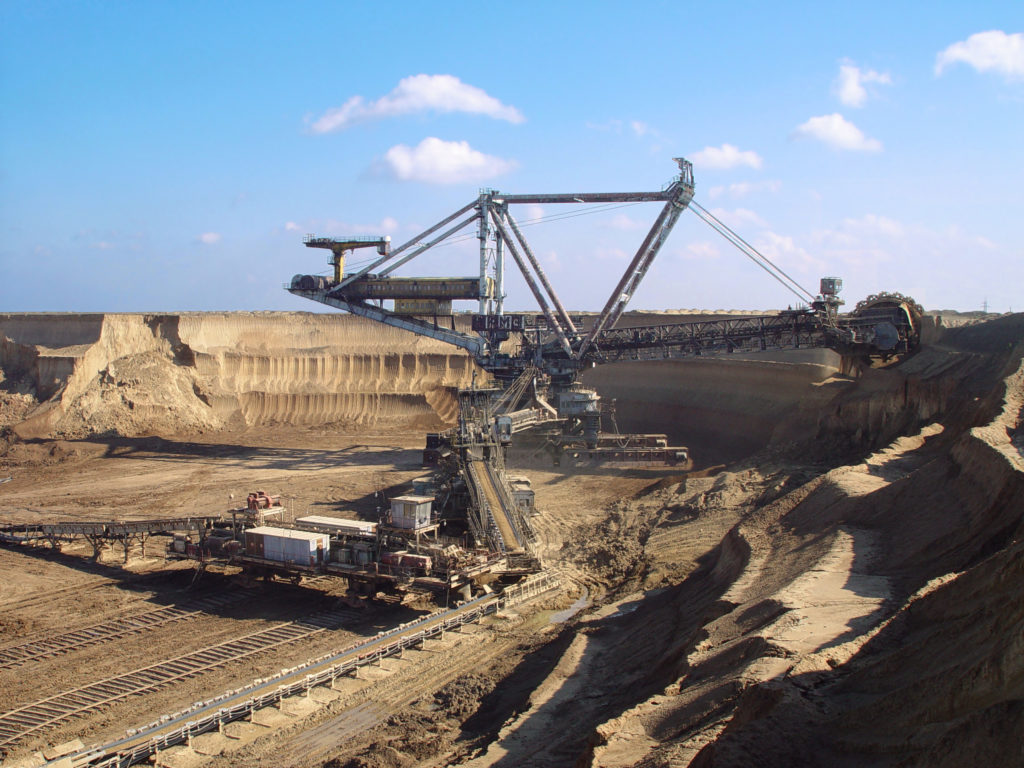
State mining and metallurgical plant in the Ukraine. Reference image by Khorzhevska, adobe stock.

All ​41 miners who were trapped ‌underground after Ukraine struck the Bilorechenska coal mine in ​the Russian‑controlled Luhansk ​region have been evacuated and ⁠are safe, a Russian‑installed ​official said on Monday.

Leonid Pasechnik, ​the Moscow‑appointed head of the region, said power had been ​restored to the mine ​and the workers brought to the ‌surface.

He ⁠added none of the miners was injured and that no one required ​medical assistance.

Earlier, ​Pasechnik ⁠said a Ukrainian strike had damaged a ​power substation supplying ​the ⁠mine, leaving workers trapped underground while rescue operations ⁠were ​under way.

Kyiv has ​not commented on the incident.

(Editing by Guy Faulconbridge)


Novatek Starts Shipbuilder to Address Shortage of Ice-Class LNG Carriers

Zvezda shipyard Russia ice-class lng carriers
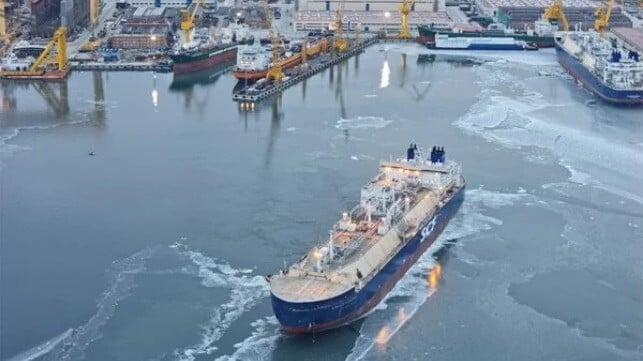
Zvezda delivered the first Arc7 vessel and a second is visible fitting out (Zvezda)

Published Apr 6, 2026 6:43 PM by The Maritime Executive


A listing of companies established in Russia during March revealed that PAO Novatek, the country’s largest gas producer, established a new shipbuilder. The company declined to comment to TASS or Reuters, but the speculation is that, frustrated by the lack of suitable LNG carriers, it is looking to accelerate the shipbuilding efforts.

Named Severny Inzhiniring (Northern Engineering), the company was officially filed on March 25. The records indicate that it is 100 percent owned by Novatek. Its primary business is listed as the construction of ships, vessels, and floating structures. It, however, lists other potential activities, including the production of refrigeration and ventilation equipment, engineering surveys, engineering and technical design, and technical consulting.

Russia faces a limited supply of ice-class tankers to transport the gas from the far north facilities of Noatek in the Arctic. It had announced plans years ago to build a fleet of ice-class gas carriers at the Zvezda shipyard that was established under the tutelage of Vladimir Putin. Zvezda, however, has been slow in its efforts to turn out the Arc-7 ice-class vessels, which are able to handle ice up to two meters (6.6 feet)

Zvezda was working in partnership with the South Korean shipyards that were supplying hulls and component blocks to be assembled at the yard in Russia. The war in Ukraine brought sanctions that forced the Koreas to suspend the projects, while other sanctions have limited Russia’s ability to import key components needed for the ships.

The shipyard delivered the first Arc7 tankerAlexey Kosygin, in December 2025, specifically built to transport gas from the Arctic LNG 2 project. The vessel is 300 meters (984 feet) with a capacity of 172,000 cbm. At the time, Sovcomflot, which manages the vessel, said it expected the delivery of two more Arc7 ice-class tankers from the yard in 2026.

Novatek and Zvezda said the plan called for the construction of a total of 15 ice-class gas carriers and a total of 21 tankers. Industry and Trade Minister Anton Alikhanov announced in February 2026 that Russia would be developing the technical designs for the ships domestically in the future, while reporting that work was already underway.

Novatek owns 60 percent of the Arctic LNG 2 project. The project and gas carriers have encountered increased sanctions as the war continues in Ukraine.

The shortage of Arctic ice-class LNG carriers was further apparent in early December, when it appeared that the middle-class Arc4 carriers were unable to reach the terminal due to an early onset of thick ice. One of the vessels appeared to turn back and abandon an effort to reach the terminal for Arctic LNG 2.

No details were announced on the timing of the project or the expectations of how the new company could contribute to the need for ice-class gas carriers. 


Polar Max Project Reaches Milestone with Start of Construction Ceremony

ALMACO Group

Published Apr 6, 2026 8:51 AM by The Maritime Executive


[By: ALMACO Group]

Polar Max is a next?generation icebreaking vessel designed to strengthen Canada’s Arctic and maritime capabilities. Developed as part of the National Shipbuilding Strategy, the project aims to deliver a highly capable modern work ship able to operate in demanding northern conditions, while supporting long?term industrial development and shipbuilding expertise in Canada.

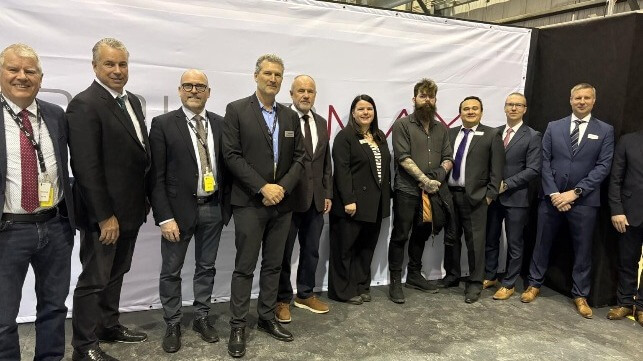
The ceremony brought together representatives from Davie, ALMACO, project partners, government authorities, industry stakeholders, neutral development organizations and media representatives to mark the importance and national relevance of the program.

Full Scale Mock-up Cabins on Display
The event featured a series of inspiring speeches by key dignitaries, Mélanie Joly, Minister of Foreign Affairs; Bernard Drainville, Minister for Lévis; George Pirie, Minister of Mines (Ontario); Steven Blaney, Mayor of Lévis; James Davies, CEO, and Lindsey Kettel, President of Davie; as well as Vilhelm Roberts, Executive Chairman of ALMACO Group. During the presentations, guests were also treated to a live video stream presented by Davie, which captured the start of the steel welding process in real-time.

Following these presentations, participants were invited to tour the full-scale mock-up cabins on display at the shipyard. These mock-ups, complemented by a 3Drendered flythrough video, offered an early and tangible perspective on the accommodation spaces being developed for Polar Max. The displays highlighted modern work ship accommodation design and functionality, allowing stakeholders to see firsthand how the interior spaces will support crew comfort and operational efficiency in northern conditions.

The exhibition allowed stakeholders to experience key interior solutions first?hand, supporting early alignment on design, layout and technical solutions before fabrication advances further.

From Plans to Execution
“Starting construction of Polar Max in Lévis marks an important new phase in a project that is already moving at an exceptional pace. Polar Max shows what can be achieved when trusted allies work together to deliver strategically vital projects when they are needed most. We are proud that work is now moving forward in Canada, where this program will strengthen long-term shipbuilding capacity while helping deliver this ship on time and on budget.” James Davies, Chief Executive Officer, Davie.”

From Le Groupe ALMACO’s perspective, the kickoff represents both a technical and symbolic milestone as the mock-up cabins have been completed and presented to the customer.

The hull is being constructed at Davie-owned Helsinki Shipyard, with Le Groupe ALMACO delivering interior accommodation spaces and other essential areas during this stage. In parallel, in Québec, Davie’s skilled shipbuilders and Le Groupe ALMACO lead the design, procurement, and fabrication of the 1,400-ton superstructure – the top part of the ship.

“Seeing Polar Max move into active construction is a proud moment for our entire organization,” said Vilhelm Roberts, Executive Chairman of the Board of ALMACO Group. “This project builds on our long?standing collaboration with Davie and reflects our shared commitment to delivering world?class ships through close, hands?on cooperation between Canada and Finland.”

Toni Urpilainen, Project Manager at ALMACO, highlighted the value of early engagement and on?site collaboration.

“The kickoff event and the mock-up cabins give everyone a concrete understanding of what we are building and how the spaces will function in real life,” he said. “This early alignment is essential for quality, safety and efficiency as the project progresses into fabrication.”

An International Collaboration Under the National Shipbuilding Strategy
The Polar Max project is being executed as a close international collaboration, with work taking place in both Canada and Finland. As part of the National Shipbuilding Strategy, the program plays a key role in renewing Canada’s federal fleet while reinforcing domestic shipbuilding capacity through long?term partnerships, skilled employment and industrial innovation.

Today’s start of construction ceremony marks the beginning of an intensified execution phase, supported by close coordination between Canadian and Finnish project teams.

The products and services herein described in this press release are not endorsed by The Maritime Executive.


Pirates Abandon Iranian Dhow After Being Hounded by EUNAVFOR for a Week

warship and dhow
EUNAVFOR assets pressured the pirates which finally abandoned the Iranian-flagged show (Atalanta)

Published Apr 6, 2026 4:46 PM by The Maritime Executive


EUNAVFOR Atalanta is reporting that its forces confirmed that the suspected Somali pirates abandoned the Iranian-flagged dhow Al Waseemi after having held the vessel and its crew for nearly two weeks. Assets deployed to the EUNAVFOR operation had been tracking the vessel and pressuring the pirates while not moving in because of concerns for the safety of the hostage crew.

EUNAVFOR Atalanta currently has deployed the Italian frigate Emilio Bianchi and the Spanish frigate Canarias as part of its monitoring operations in the Western Indian Ocean. The first of their vessels had located the dhow approximately 480 nautical miles southwest of Mogadishu on March 27, 48 hours after they received the first report of the hijacking.

The warships closed the distance, with one beginning the surveillance using air assets on March 27 and the second warship arriving on March 30. At that point, EUNAVFOR reported the dhow had been isolated, and they believed it was no longer a threat to shipping. When the vessel was taken on March 24, they warned that the modus operandi reflected a high likelihood that the pirates planned to use the fishing boat as a mothership in an attempt to pirate larger vessels.

The teams continued to monitor the dhow and coordinated with the Somali maritime police forces ashore. Using surface and air assets, EUNAVFOR says it continued to pressure the hijackers with its presence, and they finally abandoned the dhow.

The naval forces boarded the dhow on April 5 to ensure the security of the crew. They provided food, water, and medical care. 

EUNAVFOR Atalanta has been in place since 2008 in the Western Indian Ocean to assist with security and develop the regional resources. Since 2009, it estimates that over 2,600 hostages have been held along with 139 vessels. It reports a window of opportunity between about March and June during a lull in the monsoon seasons, and while the threat has been reduced, it continues to warn vessels to maintain security measures while transiting the region.


Iran Continues Strikes on UAE Ports and Claims Hit on “Israeli Ship”

UAE port
Four people were injured in Khor Fakkan and the master of a ship reported splashes no Sunday (Sharjah Customers)

Published Apr 6, 2026 12:46 PM by The Maritime Executive


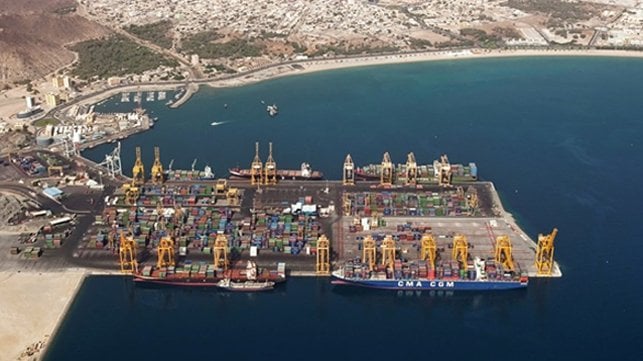
Iran continues to strike out at ports in the UAE in what the Islamic Revolutionary Guard Corps (IRGC) is calling Operation Wave 97. Reports indicated a fire and damage at the Khor Fakkan Port, followed by claims that an “Israeli ship” was burning near the Jebel Ali port.

One of the official media outlets in the UAE, Sharjah Media, issued a series of reports on April 5 confirming the fire at Khor Fakkan on the western side of the UAE in the Emirate of Sharjah. It said the incident was due to debris from a missile intercept.

The official report said three individuals from Pakistan and one from Nepal were injured, with the Nepalese suffering a severe injury. The three Pakistanis were reported to have minor to moderate injuries. It resulted in a message of “deep concern” and new calls for de-escalation from Pakistan’s Prime Minister Shehbaz Sharif.

The report said the debris had caused a fire in the port. Later reports said the fire was contained and cooling operations were underway.

UK Maritime Trade Operations also reported that the master of a vessel alongside in the Khor Fakkan Port witnessed multiple splashes near the unnamed vessel. There were no reports of injuries or damage to the vessel.

The IRGC, however, in an unconfirmed report, that it had targeted an “Israeli ship” with a cruise missile near Jebel Ali. It claimed the ship, which they identified as “King Dao Star” (sic), was currently burning. Other reports said the ship was using an international identity to hide its association with Israel.

The likely vessel was the Qingdao Star (IMO: 9318163), commented Martin Kelly, Head of Advisory at EOS Risk Group. The 4,253 TEU vessel was built in 2006 and operated for Zim as the Zim Qingdao until 2023. The vessel (50,689 dwt) is now registered in the Marshall Islands and shows on Maersk’s schedule in the Gulf region.

Iran also claimed an attack on an MSC containership on Saturday near Bahrain. It also associated the company with Israel.

The attacks are part of the ongoing targeting of sites in the UAE with a total of nine ballistic missiles, one cruise missile, and 50 drones launched from Iran on Sunday and engaged by the UAE. On Friday, the UAE reported one person was killed, and four were injured by shrapnel at the Habshan gas facilities. Since the start of hostilities, the UAE reports it has intercepted over 500 ballistic missiles, 24 cruise missiles, and over 2,100 drones.

Traffic Through Strait of Hormuz Ticks Up, But Iran Retains Control

Omani corridor
An Omani corridor takes shape: vessels transit close to Oman's waters in the new southern corridor (Windward Maritime AI Platform)

Published Apr 6, 2026 10:29 PM by The Maritime Executive


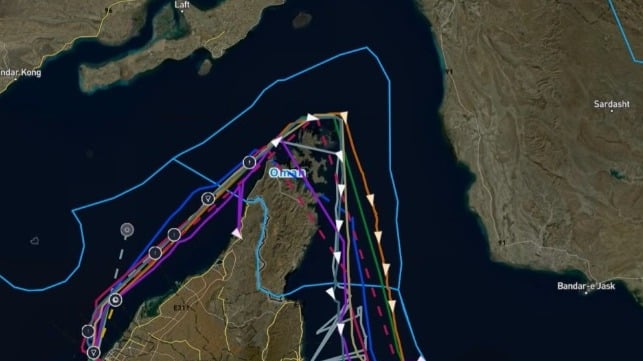
Transit volume through the Strait of Hormuz remains a fraction of what it was before the Iran conflict, but there are signs that outbound movement is picking up, according to maritime data consultancy Windward. In particular, a new trickle of transits through Omani waters appears to be holding steady at several vessels per day, suggesting that there may be a stable alternative to the "Tehran toll booth" at the north side of the waterway. 

Windward's independent analysts counted 11 ships passing through the Strait on April 5. Fars News Agency - the outlet of the Islamic Revolutionary Guard Corps, which now controls traffic in the Strait - put the number somewhat higher at 15 vessels for the day. 

Outbound transits continue to dominate traffic, according to Windward, suggesting that most IRGC transit permits are granted to allow ships trapped in the Arabian Gulf to leave. Much of the "tollbooth" tanker traffic is Iran's own energy commerce, as Iran continues to sell oil into global markets and profit from the tight supply environment.

The new Omani corridor is showing signs of life. Two to four vessels have used the route every day since April 2 - a meaningful change. The functional route appears to be a rare sign of diplomatic progress: an Iranian official claimed last week that Iran was coordinating with Muscat on a "monitoring" protocol for the strait, and the Omani foreign ministry confirmed Sunday that staff talks had been held with Iranian counterparts on "smooth passage through the Strait of Hormuz." Omani and Iranian technical staff "presented a number of visions and proposals" to each other for how to operate the strait, the ministry said. 

However, traffic remains limited to a small fraction of normal amounts, says Sparta analyst Hoa Nguyen. "First, it is a drop in the ocean compared to pre-war levels. Second, lots of ships being included in the trackers are bulk carriers or containers. Third, the vast majority being outbound traffic with a tiny portion being inbound with links to Iran," he said in a research note Monday. "Only when inbound traffic [crosses] can we have any confidence in any normalization scenario." 

For this reason, Iranian control is a strategic disadvantage for the GCC states, which have a high degree of economic dependence on the waterway. On Monday, top UAE diplomat Anwar Gargash told Reuters that "the Strait of Hormuz cannot be held hostage by any country," and he insisted that freedom of navigation must "be part and parcel of the settlement of any ?conflict" between Iran and the United States. The White House and Tehran continue to exchange threats and peace proposals; the most recent updated White House deadline for Iran to reopen the waterway expires at 2000 hours on Tuesday, at which point the U.S. and Iran may choose to escalate the conflict.

Multiple defense analysts predict that Iran will remain in control of the strait for an extended period, even in the event of escalation. For now, Tehran continues to demonstrate its de facto authority over navigation: it claimed Sunday that it has given permission for "brotherly Iraq" to use the strait unhindered; on the same day, Iranian authorities ordered two Qatari LNG carriers that were headed for the "toll booth" route to turn around and go back.

The traffic restriction has sent oil prices (and backwardation) soaring, specifically for deliverable barrels. Trading sources told Reuters Monday that traders are selling WTI Midland into Asia for July delivery at a premium of up to $30-40 over dated Brent, a sign of the tight market in the Gulf-dependent Far East. 

Diesel prices have soared as heavier Arabian Gulf barrels exit the Asian refining mix and middle distillate output falls. In Singapore, diesel prices are running in the range of US$13 per gallon at the pump. In California, where energy prices are exposed to demand from the Asian market, retail diesel exceeded $7.50 per gallon statewide and breached the $8 mark in San Francisco - a national record. 


Are Naval Forces Ready to Keep the Bab el Mandeb Open?

EU
Courtesy EUNAVFOR

Published Apr 6, 2026 6:48 PM by The Maritime Executive


The Houthis' leaders have made their position clear. They stand alongside Iran and the Palestinians, and have demonstrated the Houthi ideological position by launching two drone and four missile attacks against Israel up until April 4, all successfully intercepted without causing any damage. The Houthis appear set on continuing these nuisance attacks designed to express solidarity, which in all likelihood will continue until the war against Iran comes to a conclusion. Alternatively, when the inevitable Israeli retaliation hits the Houthis, they may be tempted to try and increase the scale of their attacks.

In the meantime, the Houthis have advertised they are ready to resume attacks on shipping in the Red Sea and Gulf of Aden, at a time of the Houthi leadership’s own choosing, factoring in (but not determined by) appeals from Iran for support or by the clamor of popular sentiment.

If the Houthi leadership does decide to resume the attacks, then the impact on global energy supplies will be potentially even greater than the impact of the closure of the Strait of Hormuz – because the estimated five million barrels per day-plus of Saudi crude being shipped south from Yanbu through the Bab el Mandeb would cut into the bare minimum needed to keep critical services in Asia functioning.

So how would the world react to a resumption of Houthi attacks against shipping?

Unlike in the Strait of Hormuz, it has already been demonstrated that with a sufficiently strong naval presence, merchant shipping can get through the danger area, albeit admittedly with some casualties. 

The threat, if it emerged, would no longer be one that Saudi Arabia could ignore, as it would compromise the Kingdom’s last open shipping route. This certainty would be one reason why the Houthis might not resume their attacks, because it would not only bring the Saudi Western Fleet into action, it would threaten the general ceasefire between the Houthis and Saudis which has been in place since March 2022. Since then, the Saudi Western Fleet has also been considerably strengthened with the addition of five Avante Class corvettes ordered by Royal Saudi Navy in 2018. These modern corvettes are each equipped with 64 Evolved Sea Sparrow Missile (ESSM) medium-range, surface-to-air missiles for engaging anti-ship cruise missiles and drones. Any Saudi involvement would also likely bring with it as well the Egyptian Navy, with whom the Saudis have had a very active bilateral naval support agreement since September 2025.

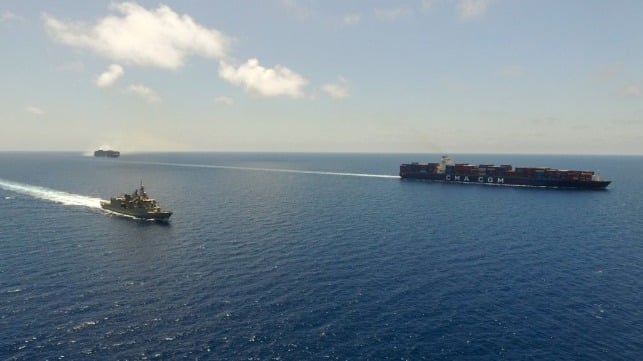
Already in place, patrolling the danger area from a base in Djibouti, are ships of the European Union’s Operation Aspides. Operation Aspides already has a mandate until February 2027 to intervene should there be a threat to civilian shipping, removing the lack-of-political-cover issue which often delays EU deployments. Currently the force is commanded by Rear Admiral Vasileios Gryparis from Greece, with tactical command afloat exercised by Italian Rear Admiral Milos Argenton from the Carlo Bergamini Class frigate Luigi Rizzo (F595).

As well as the Greek MECO 2000 Class frigate HS Hydra (F542), there are also probably two French vessels in the force, their identities as is normal not disclosed by the French, and the force is likely to also be able to call upon the Spanish Air Force CN-235 maritime patrol aircraft normally based in Djibouti. This experienced force could probably be quickly reinforced by the large numbers of European naval vessels defending the Republic of Cyprus, as only the British Sovereign Base Area in Cyprus has been threatened by Iran, rather than the Republic itself.

Asian navies might also be keen to join in, as a closure of the Bab el Mandeb would have direct and significant economic impact on Asian countries heavily dependent on Middle Eastern crude.

Although the United States Central Command would wish to assist in an operation to keep the Bab el Mandeb open, the mission to do so is formally allocated to Destroyer Squadron 50; DESRON 50 is heavily engaged elsewhere and might not have the resources to join in. Without DESRON 50 in the force, there would be a deficit both of tactical and overhead intelligence resources, but also of command and control capability.

Unlike for any potential operation in the Strait of Hormuz, there is a large enough potential naval force available to help keep the Red Sea and Gulf of Aden open to the merchant marine. The principal problem is that from a force command perspective, the Americans are unlikely to have the bandwidth to provide some key functionality. This deficit can probably be overcome, but only if someone is currently stepping up and working out how the leadership and coordination role is to be filled – because the requirement to act, in what would be a very complex air defense environment, could come soon and at very short notice.