Tuesday, April 07, 2026

Trump's Iran ultimatum: When does it expire and how serious is his threat to 'blow up everything'?


LEONARD COHEN


By Stefan Grobe
Published on 

US president warns a civilisation could be about to disappear if the regime in Tehran does not respond to his ultimatum after six weeks of war by Tuesday night. What are the possible scenarios? Euronews explains:

US President Donald Trump warned on Tuesday that a “whole civilisation” could die tonight to “never to be brought back again” if Iran fails to respond to his ultimatum. He has threatened to bomb bridges and energy infrastructure, sending the country “back to the Stone Age”, unless Tehran reopens the Strait of Hormuz and agrees to a deal.

Euronews explains what's at stake as the conflict enters a dramatic phase.

Is Trump serious?

Trump has issued ultimatums before, only to back down at the last minute.

On 21 March, he threatened to “obliterate” Iranian oil installations if Tehran did not fully reopen the Strait of Hormuz within 48 hours.

When that deadline expired, however, Trump did not order strikes.

Instead, he announced a five-day pause in air strikes and said he had held “very good and productive conversations” with Iran, revealing for the first time indirect contacts with Tehran.

Trump has a tendency to shift policy positions, but he has now publicly and repeatedly committed to a stance that may be difficult to reverse without losing face.

This leaves him facing what is likely his most consequential decision since the start of the war.

“We have a plan, because of the power of our military, where every bridge in Iran will be decimated … where every power plant in Iran will be out of business, burning, exploding, and never to be used again,” he said.

Critics, however, argue that this is not a credible military option capable of forcing Iran into submission.

“Even significant strikes on Iran’s infrastructure would not produce capitulation,” Danny Citrinowicz, a former Israeli intelligence operative, wrote on X.

“The assumption that pressure alone can break Tehran is not strategy, it is wishful thinking.”

How did Iran react?

Iran flatly rejected Trump’s ultimatum. Tehran’s response was defiant and escalatory rather than conciliatory. Officials said the ultimatum was unacceptable and emphasised Iran’s right to control the waterway.

General Ali Abdollahi Aliabadi of Iran’s central military command described Trump’s threat as a “helpless, nervous, unbalanced and stupid action”. Echoing the US president’s rhetoric, he added: “the gates of hell will open for you”.

A spokesperson for Iran’s military headquarters said: “The illusion of defeating the Islamic Republic of Iran will become a quagmire into which [the US] will sink.”

Before Trump’s ultimatum, Iran had repeatedly demanded broader conditions beyond reopening the Strait of Hormuz, including an end to hostilities, the lifting of sanctions and security guarantees

What has the EU said so far?

European Council President Antonio Costa said Monday that "any targeting of civilian infrastructure, namely energy facilities, is illegal and unacceptable" drawing parallels to the war in Ukraine where Russia has pounded its electricity grid.

Costa said the EU applies the same standards across all conflicts and said the people of Iran are the main victims on an escalation that risks costing the lives of more civilians.

For the rest, most EU leaders have remained on the sidelines and EU Commission President Ursula von der Leyen has not yet commented, although she is expected to participate at an awards ceremony on Tuesday evening in her native Germany.

Would a massive bombing campaign reopen the Strait of Hormuz?

So far, Trump’s threats appear to have made Iran more uncompromising and, at least rhetorically, prepared to retaliate forcefully.

As Trump himself has noted, Iran could use mines, drones and missiles launched from small boats to keep the Strait unsafe. Even after a large-scale bombing campaign targeting key infrastructure, shipping may not resume quickly.

If Tehran were to reopen the Strait in exchange for an end to US bombing, “it would mean a return to the pre-war status quo, falling far short not just of Trump’s shifting demands but even the prospects under negotiation before Washington started the war,” the Washington-based think tank Defense Priorities said in a research note to Euronews.

However, it would represent the best outcome for US interests, while more ambitious goals such as regime change or ending Iran’s nuclear programme “are only loosely related”, the note added.

Iran is also unlikely to leave the Strait fully open in exchange for a US ceasefire alone. Israel would probably also need to halt its strikes, which could require Trump to pressure Prime Minister Benjamin Netanyahu — something he has previously been reluctant to do.

Is last-minute diplomacy still possible?

The chances appear slim. Iranian officials have so far declined to accept even a temporary ceasefire in exchange for reopening the Strait.

However, mediators from Egypt, Pakistan and Turkey continue to push for at least a short-term ceasefire and reopening deal

Whether these efforts will succeed remains unclear.

At Monday’s press conference, Trump did not sound particularly optimistic, pointing to the frustration of his envoys Steve Witkoff and Jared Kushner.

Yet he also spoke of “significant” and imminent prospects for peace, saying negotiations were “going fine” and that there was “an active, willing participant on the other side” negotiating “in good faith”.

Asked whether he was escalating the war or winding it down, Trump replied: “I can’t tell you.”

Some observers question his willingness to pursue diplomacy at all, describing his approach as “the obliteration of diplomacy”.

His “disregard for diplomacy was evident in the weeks preceding the 28 February start of the war,” said David Cortright, a visiting scholar at Cornell University’s Reppy Institute for Peace and Conflict Studies.

“Discussions were underway, with significant Iranian concessions on the table. Mediators and close observers believed progress was being made, but the US and Israel proceeded with military action,” he added.

What would be the domestic fallout in the US?

The domestic fallout could be severe and multi-layered, according to early polling and political signals.

Public opinion, already negative, could turn more sharply against the war. A recent PBS News/NPR/Marist poll found that 56% of Americans oppose US military action in Iran, while 54% disapprove of Trump’s handling of the issue.

A major escalation could also lead to more US casualties and economic strain, creating political risks for Trump and the Republican Party ahead of the midterm elections.

For many Americans, the most immediate impact is rising fuel prices. The average price at the pump has exceeded $4 per gallon for the first time in nearly four years.

Trump, who made lower petrol prices a key campaign pledge in 2024, has described the increase as temporary.

However, analysts warn that sustained high prices could reduce household spending and increase the risk of broader economic damage.

Politically, Republican leaders have largely backed Trump so far, but divisions are beginning to emerge within his MAGA base, which tends to favour a strong stance but is wary of foreign interventions.

Some religious leaders have also criticised the strikes. US-born Pope Leo said God “does not listen to the prayers of those who wage war” and urged Trump to end the conflict.

Meanwhile, Trump ally-turned-critic Marjorie Taylor Greene, a former Republican congresswoman, criticised the president’s rhetoric.

“Our president is not a Christian, and his words and actions should not be supported by Christians,” she wrote on X.


Trump threatens to wipe out Iranian civilization in social media post

07.04.2026, DPA


Photo: Kay Nietfeld/dpa


US President Donald Trump has threatened to wipe out Iranian civilization in a post on his Truth Social platform on Tuesday as a deadline he set for Iran to make a deal with him looms.

"A whole civilization will die tonight, never to be brought back again," Trump posted. "I don’t want that to happen, but it probably will."

"However, now that we have Complete and Total Regime Change, where different, smarter, and less radicalized minds prevail, maybe something revolutionarily wonderful can happen, WHO KNOWS?

"We will find out tonight, one of the most important moments in the long and complex history of the World."

The United States and Israel launched their latest war on Iran on February 28. Trump's ultimatum for Iran to make a deal or face massive attacks on its energy infrastructure is set to expire on Tuesday evening (0000 GMT).


France opposes US-Israeli attacks on Iranian infrastructure

07.04.2026, DPA


Photo: Michael Kappeler/dpa


The attacks on Iran's civil infrastructure threatened by US President Donald Trump would constitute a violation of international law and lead to escalation and retaliation, French Foreign Minister Jean-Noël Barrot warned on Tuesday.

Barrot was speaking to broadcaster France Info hours before a deadline set by Trump for Iran to open the Strait of Hormuz or face a massive bombardment expires.

"If we all speak out against attacks on civil and energy infrastructure, then we do so primarily because they are ruled out according to the rules of war and international law, and secondly because in the case of the war in Iran they will undoubtedly lead to a new phase of escalation and retaliatory measures," Barrot said.

This would plunge the region and the global economy into a vicious circle, he predicted.

"We are currently experiencing a rapid rise in fuel prices. If the energy infrastructure in Iran is attacked, retaliatory measures by the Iranian regime can be counted on that would further exacerbate the already worrying situation," Barrot added.

France and other European powers have largely stayed out of the conflict, which was launched by the United States and Israel on February 28.

Trump on Monday threatened the "complete demolition" of Iran's civilian infrastructure, setting a deadline of 8 pm on Tuesday (0000 GMT Wednesday) for the Iranian leadership to make a deal.

Ahead of the deadline, Iranian media reported nationwide attacks on the country's transport network on Tuesday, with railway bridges and motorways hit.

Don't commit war crimes in Iran, EU urges Trump as deadline looms

António Costa, the president of the European Council.
Copyright European Union, 2026.

By Jorge Liboreiro
Published on 

Donald Trump's threat to strike Iran's bridges and power plants has raised the prospect of war crimes. The EU insists all sides should respect international law and exercise "maximum restraint".

The European Union has urged United States President Donald Trump to refrain from bombing civilian infrastructure in Iran — which could be considered war crimes under international law — and exercise "maximum restraint" to achieve a negotiated settlement.

"Diplomacy is the answer," Anitta Hipper, the European Commission's spokesperson for foreign affairs, said on Tuesday in response to an Euronews question.

"From our side, we reject any threats also to attacks regarding critical civilian infrastructure. Such attacks risk impacting millions of people across the Middle East and beyond, and also may lead to further dangerous escalation."

The priority, Hipper said, should be "maximum restraint, the protection of civilians and civilian infrastructure, and full respect for international law and international humanitarian law by all parties".

The Commission's plea comes after Trump drastically ratcheted up his rhetoric over the past few days, threatening to "blow up" bridges and power plants across Iran and send it "back to the Stone Ages" if the country fails to meet his deadline to reopen the Strait of Hormuz, a vital passage that used to carry a fifth of the world's oil and gas supplies. Only a handful of ships have crossed it since the start of the US-Israeli strikes on 28 February.

So far, the strongest reaction to Trump's threats has come from António Costa, the president of the European Council, who warned on Monday that striking civilian infrastructure, like energy facilities, would be "illegal and unacceptable".

"This applies to Russia's war in Ukraine and it applies everywhere. The Iranian civilian population is the main victim of the Iranian regime. It would also be the main victim of a widening of the military campaign," Costa said.

"Escalation will not achieve a ceasefire and peace. Only negotiations will, namely the ongoing efforts led by regional partners," he added.

Although the US barely gets any of its energy from the Middle East, the near-total blockage of the waterway has pushed the price of Brent crude past $110 per barrel, roiling financial markets and prompting fears of stagflation.

Trump has imposed a deadline on Tehran to reopen the Strait of Hormuz by Tuesday, 8 pm Eastern Time (ET), which for Brussels will be 2 am on Wednesday.

"The entire country can be taken out in one night – and that night might be tomorrow night," Trump said on Monday. "They're going to have no bridges. They're going to have no power plants. Stone Ages."

Meanwhile, Iran has rejected a proposed 45-day ceasefire and is instead calling for a permanent end to the war, according to the state news agency IRNA.

Trump doubles down

The prohibition on attacking civilian infrastructure is one of the bedrock principles of international law and has been codified in the Hague and Geneva Conventions.

The concept of civilian infrastructure is understood in a broad sense to cover objects not used for military purposes, such as residential buildings, hospitals, schools, churches, power plants, electricity grids, bridges, railways and cell towers.

Asked if he was concerned about the potential commission of war crimes at the hands of American forces, Trump said: "No, not at all. I am not. I hope I don't have to do it.

It is unclear if the US president will stick to his cut-off date of Tuesday, 8 pm ET or change his mind at the last minute, as he has frequently done in the past.

On Tuesday morning, as Americans headed to work, he doubled down on his threat.

"A whole civilization will die tonight, never to be brought back again. I don't want that to happen, but it probably will," he wrote on Truth Social. "47 years of extortion, corruption, and death will finally end."

Europeans are watching the escalation with alarm, fearing that any attacks on power plants may further embolden Tehran and deepen the energy crisis.

Since the start of hostilities, European leaders have struggled to make sense of Trump's ever-shifting messaging on the war, which has included broadsides against NATO allies for refusing to send their warships to the Strait of Hormuz.

Last week, French President Emmanuel Macron issued a pointed rebuke, reflecting a growing sense of exasperation among capitals.

"When you want to be serious, you don't say every day the opposite of what you said the day before," Macron said during a visit to South Korea. "And maybe you shouldn't be speaking every day. You should just let things quieten down.



Serbia starts trial run of desulphurisation plant at key coal power station

Serbia starts trial run of desulphurisation plant at key coal power station
/ EPS.rsFacebook
By Tatyana Kekic in Belgrade April 6, 2026

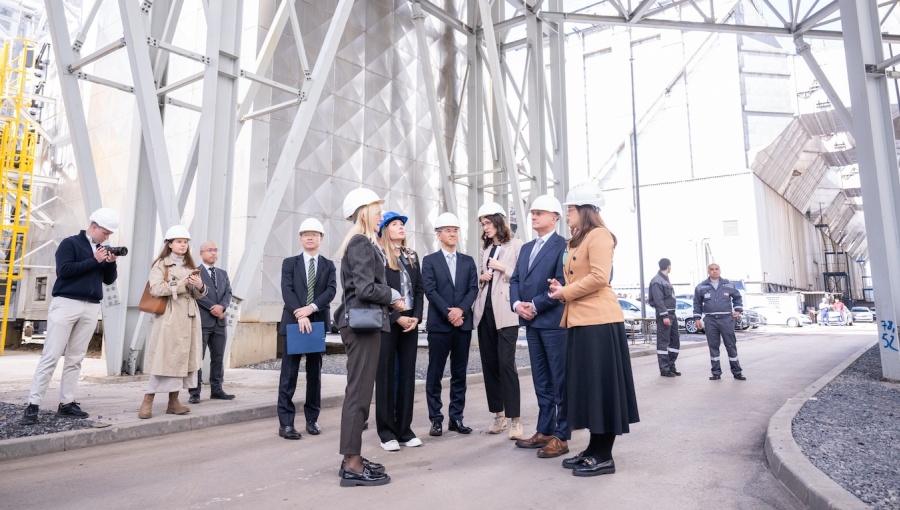
Serbia’s state power utility EPS said on April 6 it has begun trial operations of a flue gas desulphurisation unit at its Nikola Tesla B (TENT B) coal-fired power plant, part of efforts to curb emissions and align with European environmental standards.

The project, valued at around €250mn, is one of the largest environmental investments in the country’s energy sector and was completed with support from Japanese partners, including Mitsubishi Heavy Industries.

EPS said sulphur dioxide emissions at the Obrenovac-based plant are expected to fall by up to 30 times following the installation of the new system, while particulate emissions will remain within prescribed limits.

Speaking at the commissioning ceremony, Serbia’s Minister of Mining and Energy Dubravka Dedovic Handanovic said the project would significantly improve air quality in Belgrade and surrounding areas.

“Now our largest thermal capacities meet not only domestic but also European environmental standards,” she said, Tanjug reported, adding that more than €420mn has been invested in desulphurisation systems at TENT A and TENT B combined.

The facility uses wet limestone technology to remove sulphur from flue gases, producing gypsum as a by-product. EPS expects annual gypsum output of around 200,000 tonnes, which it said would support circular economy efforts.

EPS chief executive Dusan Zivkovic said the plant had already produced about 20,000 tonnes of gypsum during initial trial operations, which began in December.

Serbia, which relies heavily on coal for power generation, has been under increasing pressure to cut emissions and modernise its ageing energy infrastructure. Projects such as the TENT B upgrade are seen as key to extending the lifespan and efficiency of existing plants while reducing their environmental impact.

EPS is also expanding its renewable energy portfolio, targeting 45% of electricity generation from renewable sources by 2030 as part of a broader strategy to diversify supply and attract investment.


Somalia poised to begin its first offshore oil drilling operations with Turkey’s help

Somalia poised to begin its first offshore oil drilling operations with Turkey’s help
/ bne IntelliNewsFacebook
By bne IntelliNews April 7, 2026

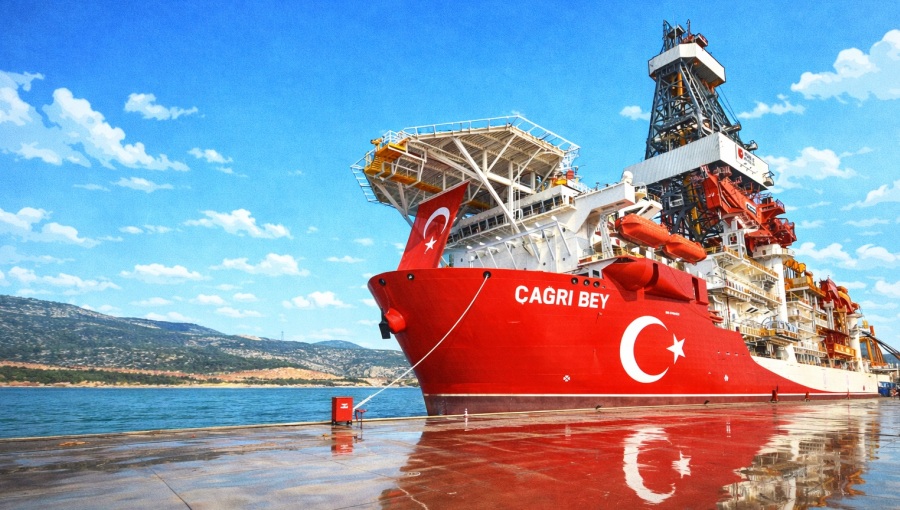
Somalia is set to begin its first offshore drilling campaign this month, with Turkey’s state-backed deepwater drillship “Çağrı Bey” due to arrive off the Horn of Africa country’s coast on April 10, marking Ankara’s first overseas deepwater drilling operation.

The drilling push follows the completion of 3D seismic work by the “Oruç Reis” research vessel, which Turkey’s energy ministry said surveyed three offshore blocks covering nearly 5,000km² in Somali waters. Turkish officials described the acreage as three offshore blocks, two located about 50km from the Somali coast and a third roughly 100km offshore.

Somalia’s petroleum minister, Dahir Shire, described the start of drilling as a “historic milestone in our offshore energy journey,” while Somali foreign affairs minister Ali Omar said the campaign could support resource-led growth and deepen Turkey’s role as a long-term development partner if commercially viable volumes are found. Anadolu Agency said the comments reflect Mogadishu’s effort to frame the project not only as an exploration event but as part of a broader economic recovery strategy.

The offshore campaign rests on a formal bilateral framework signed in March 2024, when Turkey and Somalia concluded an intergovernmental agreement and MoU covering onshore and offshore oil and gas cooperation. The deal spans exploration, evaluation, development and production, as well as midstream and downstream activities, including transport, refining and sales.

Turkey’s energy ministry said at the time that the aim was to help bring Somalia’s resources “to the Somali people” while strengthening Ankara’s energy presence in the Horn of Africa.

Resource estimates remain highly uncertain because Somalia is still a frontier basin with minimal drilling history, but several widely cited industry and Somali government-linked sources point to significant upside.

TGS says offshore Somalia is one of the world’s last frontier basins and notes that only two exploration wells have ever been drilled along its roughly 1,000km offshore margin. A Somali National Economic Council paper, citing Spectrum/TGS, said un-risked resources in the Somali Basin could exceed 30bn barrels of oil, while more recent industry estimates cite that figure for offshore Somalia as a whole.

That 30bn-barrel figure refers to un-risked or prospective resources inferred from seismic and geological modelling, not booked commercial reserves. In practical terms, the significance of the “Çağrı Bey” mission is that it begins the process of testing whether the seismic structures identified in the survey phase actually contain recoverable hydrocarbons in commercial quantities.

The first well has been identified as Curad-1, according to specialised industry reporting. Energy Capital & Power reported that the target depth could reach 12,000 metres, with drilling at Curad-1 planned in water depths associated with Somalia’s deepwater margin.

The strategic significance extends beyond hydrocarbons. Turkey has been one of Somalia’s closest external partners for more than a decade, investing in infrastructure, education and health, and maintaining a military presence that includes a major training base established in 2017. The energy partnership followed a separate defence and maritime cooperation accord, and Turkish naval protection has accompanied parts of the seismic campaign.

For Somalia, the economic prize is potentially large but remains speculative. Commercial production would require not only a discovery but also appraisal drilling, development planning, export or domestic market infrastructure, fiscal and regulatory clarity, and continued security support.

Turkey has accelerated upstream engagement since early 2026, signing exploration agreements with ExxonMobil (NYSE:XOM), Chevron (NYSE:CVX) and BP (LSE:BP), with another international partnership expected to be announced.

With the recent addition of the “Çağrı Bey” and the “Yıldırım”, Turkey’s fleet now includes six drillships, alongside seismic vessels “Oruç Reis” and “Barbaros Hayrettin Paşa”, placing it among the world’s larger offshore exploration fleets.

Beyond Somalia, Turkey plans further expansion. Seismic studies are scheduled in Pakistan’s maritime zones this year, while in Libya it has secured exploration rights in two fields—one offshore and one onshore—in partnership with Repsol (BME:REP), holding a 40% stake.

Turkey aims to raise output from its national oil operations to around 500,000bpd by 2028, with a longer-term target of 1mnbpd, as part of efforts to strengthen energy security and expand its global upstream footprint.


Gas discovery off Egypt's coast comes at a critical moment for Iran war

FILE - Eni's Bouri Offshore oil terminal is seen off the Libyan coast, in the Mediterranean sea, 1 August, 2015.
Copyright Gregorio Borgia/AP

By Una Hajdari with AFP
Published on 

ENI and Egypt have announced a significant gas discovery in the Eastern Mediterranean — a potential boost for Cairo as the Iran war sends energy import costs rocketing.

Italian energy giant ENI and Egypt have announced a significant natural gas discovery in the Eastern Mediterranean, offering Cairo and the wider European continent a potential lifeline as the Iran war sends energy import costs soaring.

Preliminary estimates point to around 2 trillion cubic feet of gas in the Temsah field off Egypt's Mediterranean coast, ENI said in a statement on Tuesday.

The discovery also includes 130 million barrels of petroleum condensates, according to Egypt's petroleum ministry, which it said forms part of a broader push to boost domestic production and cut the country's import bill.

The Denise W well is now being prepared for testing. Once complete, more wells will be drilled and an offshore production platform built before the field can be brought online.

Denise W 1 is an exploratory well drilled within the Temsah Concession, sitting 70 kilometres offshore in 95 metres of water depth and less than 10 kilometres from existing infrastructure.

ENI operates it with a 50% working interest alongside BP, which holds the remaining 50%, through their joint venture Petrobel.

Iran war's toll on Egyptian energy bills

The timing could hardly be more pressing. Egypt's natural gas supplies from Qatar and Israel have been severely disrupted since the Iran war escalated, forcing Cairo to introduce a raft of energy-saving measures — among them a business curfew, higher fuel prices and slower government spending.

Prime Minister Mostafa Madbouly said last month the conflict had nearly tripled Egypt's natural gas import bill, from $560 million (€515mn) to $1.65 billion (€1.52bn,) per month.

The discovery revives memories of Egypt's last major offshore breakthrough.

In 2015 the Zohr field, the largest on the Mediterranean and holding an estimated 30 trillion cubic feet, raised hopes that Egypt could become energy self-sufficient and a major exporter.

Those ambitions have since been scaled back. Egypt has pivoted towards positioning itself as a regional processing and transit hub, using its liquefaction terminals to route gas from neighbouring countries, including Cyprus.

Last month brought another discovery, this time onshore — Egypt and Apache Corporation announced a find in the Western Desert expected to yield 26 million cubic feet per day.

Whether the Temsah find proves large enough to meaningfully ease Egypt's energy crunch will depend on how quickly it can be brought into production and how long the war drags on.


Russia's Yamal LNG Ships First Cargo to China in Months as EU Ban Nears

The Yamal LNG export plant in Russia has shipped its first cargo to China in five months as the EU launches in a few weeks a stepwise plan of banning imports of Russian natural gas.  

Yamal LNG, operated by Russia’s top LNG producer and exporter Novatek, had the Geneva carrier loaded in recent days and en route to China with an estimated time of arrival May 15, according to LSEG data cited by Reuters.

Yamal LNG shipments would be allowed into the EU for a few more months as the export facility is not under sanctions, unlike Arctic LNG 2, which is confined to selling into China in defiance of U.S., EU, and UK sanctions.  


The cargo on the Geneva carrier would be the first shipment of Yamal LNG to China since November 2025. So far this year, Yamal LNG shipments have all gone out to Europe, according to LSEG data quoted by Reuters.   

Russia raised its LNG exports in the first quarter of 2026 from a year earlier, as shipments to Europe rose ahead of the April 25 start date for the EU ban on short-term spot LNG supply from Russia. 

The EU is banning, effective April 25, imports of LNG from Russia under spot contracts as part of its wider stepwise ban on all Russian gas imports by the end of 2027. A full ban will take effect for LNG imports from the beginning of 2027 and for pipeline gas imports from the autumn of 2027.  

Top Russian officials said last month that Moscow would redirect LNG exports away from the EU without waiting for the full ban to take effect. 

“A decision was made that part of the LNG currently supplied to Europe will be redirected to other markets where constructive, pragmatic relations are being built with our country, where there is demand and [where there is] the opportunity to conclude long-term contracts,” Russia’s Deputy Prime Minister Alexander Novak said in early March, as quoted by the Interfax news agency. 

Yet, analysts have told Reuters that logistics challenges, shipping costs, and the structure of long-term contracts would restrict Russia’s ability to swiftly pivot to markets outside the EU. 

By Tsvetana Paraskova for Oilprice.com 

CRIMINAL CAPITALI$M

Suspicious Oil Bets Before Trump’s Iran Announcement Under Scrutiny


  • Large trades placed minutes before a major policy announcement generated significant profits, prompting insider trading concerns.

  • New York’s Martin Act could enable prosecution without proving intent, giving state authorities unusual leverage.

  • The case highlights broader concerns about financial markets benefiting from geopolitical events and regulatory gaps.

Currently unknown investors netted tens of millions of dollars in profit by placing huge trades in the oil futures markets just 15 minutes before President Donald Trump announced he was extending the deadline for strikes on Iran's energy infrastructure by five days to allow for nonexistent "negotiations" (which then turned into an additional 10 days—which meant little since U.S. and Israeli bombing simply continued). Because these investors bet on a fall in oil prices, they made money when the price of oil dropped sharply after the announcement.

The same or other investors traded heavily in stock index futures before the Iran announcement and profited handsomely as stock futures soared. All these investors could end up in legal jeopardy for engaging in insider trading if they were somehow given a heads-up about the announcement. Were their trades just coincidental to the announcement? It seems unlikely, but that's the big question an investigation would answer.

Those traders may have imagined that they would never have to answer for their conduct. The U.S. Department of Justice under any Trump-appointed attorney general won't investigate any matter involving possible illegal conduct linked to Trump. And, the traders may believe they would likely escape prosecution by a future administration as it struggles to investigate and bring charges before prosecutors run out of time. The statute of limitations—that is, the deadline for bringing charges in such matters at the federal level—is five years

But those traders may have miscalculated. It turns out New York state has a powerful and effective tool for prosecuting securities fraud called the Martin Act. And, Letitia James, attorney general for New York state, has actually been on the case for months. (Yes, it's the same Letitia James who successfully sued Trump for fraud and who has been targeted through bogus, unsuccessful indictments by the Justice Department.)

What a minute, you must be saying, how can it be possible for James to have been on the case for months when the suspicious trades took place a couple of weeks ago? The answer is that James started investigating highly profitable, impeccably timed trades linked to Trump announcements after Trump's reversal on tariffs last April. While there has been no information about whether these latest trading incidents will be included in the New York investigation, it's hard to imagine that investigators will just ignore them.

But how can New York state have jurisdiction? Isn't this a federal matter? First, states have securities fraud laws. Some laws are lax, but New York's Martin Act is expansive and powerful. Second, of those suspicious trades, the biggest trade in oil took place on the New York Mercantile Exchange. I'll bet you can guess where that's located. Actually, it turns out that all of the trades took place on exchanges that have offices in New York City. It seems the traders involved weren't thinking about the legal jurisdiction under which their trades would fall.

Perhaps the most powerful element of the Martin Act is that prosecutors do NOT need to prove intent. That is, they don't need to demonstrate what was going on in the mind of the defendant. Federal securities fraud cases are much harder to make because intent must be established. In Martin Act prosecutions, the prosecutor needs only to prove that the result was deceptive or fraudulent, regardless of what was in the mind of the perpetrator.

Maybe you're wondering why anyone other than wealthy traders ought to be concerned with such matters, especially with a war raging in the Persian Gulf and a vital link to world energy exports, the Strait of Hormuz, closed, thereby depriving global industrial society of a huge portion of its fossil fuel energy needs. My answer is that the ever-increasing power of the rigged casino of international finance de-emphasizes the world of physical resources and production, the things that actually matter to our physical wealth and well-being. Instead, the wealthy make themselves richer by manipulating the symbols of wealth (stocks, bonds, and other financial instruments such as futures contracts) while the material circumstances of the poor and middle classes are undermined with every passing day.

If there are no rules for the rich, only the rest of us, then everything in society becomes optimized for the rich, including the fighting of expensive and, as it turns out, for some, highly profitable wars, regardless of the consequences for society as a whole.

By Kurt Cobb via Resource Insights

The UK; Next Battleground for Robotaxis

  • Waymo is expanding its robotaxi service to London, testing whether autonomous driving can scale profitably outside the U.S.

  • The company’s model prioritizes software and data over manufacturing, but high costs and uncertain demand remain major hurdles.

  • Regulatory challenges, urban complexity, and consumer trust will determine whether driverless mobility becomes mainstream.

A black Jaguar SUV with no one behind the wheel pulls up on a London street. It’s electric and equipped with Waymo’s autonomous driving system. A passenger gets in, selects a destination on their phone, and the car pulls smoothly into traffic. Within the next few years, this scene could move from novelty to normality as Waymo, Google’s parent company Alphabet’s self-driving car division, plans to launch its robotaxi service in the UK capital, with testing already underway and a pilot service scheduled for April 2026.

The arrival of driverless ride-hailing would not simply mark a technological milestone. It could also test whether autonomous mobility can ever become a profitable business. London is already one of Europe’s largest markets for app-based transport: Transport for London licenses more than 100,000 private-hire drivers, while millions of journeys are booked each week through platforms such as Uber and Bolt.

Waymo’s expansion reflects a broader industrial shift already visible in parts of the United States. In cities such as San Francisco and Phoenix, robotaxis are already carrying fare-paying passengers on digitally booked journeys. Each trip is not just a ride but a real-world test of whether its business model holds up.

Vehicles or software?


At stake is a bigger question about where the value sits: in the companies that build the vehicles, or those that write the software that drives them? And the question is not confined to cars. When software becomes the core of a product, the balance of power tends to move with it — as smartphone makers learned when profits flowed to the firms behind the operating systems.

Waymo’s story is a lesson in digital strategy. When software becomes the core of a product, the winners are not necessarily the best manufacturers. They are the ones with the best code, and the most data to improve it. That can change who leads in any industry.

In car manufacturing, firms have long competed on engineering, scale and brand. Autonomous driving challenges all three. Waymo does not manufacture cars; it builds the system that drives them — and it is delivering that system at a vast scale. The company expects to deliver about 1 million rides a week this year in cities such as San Francisco, Los Angeles, Phoenix and Miami. In total, its vehicles have logged more than 125 million fully autonomous miles on U.S. roads, with few reported safety incidents.

Waymo now generates more than $350 million in annual recurring revenue. But it has yet to prove it can deliver sustained profits. For Alphabet, the question is: how long will it keep funding a business that has yet to prove its returns?

The sums are large. So is the potential upside. If autonomous mobility reaches mass adoption, the auto industry could look very different indeed. Instead of owning cars, more people might pay for rides. Fewer cars would then be needed, but they would be used more intensively. And revenue would shift from one-off car sales to recurring income from selling rides.

The same pattern is playing out in other industries as products become services. Waymo is betting on that shift. The company has chosen to operate its own ride-hailing service rather than simply supply its driving system to carmakers. In several U.S. cities, it runs fleets directly through its Waymo One service.

That brings control — but also cost. It means owning the vehicles, managing the service and dealing directly with riders. That is not cheap. In 2021, a vehicle equipped with Waymo Driver was estimated to cost between $130,000 and $150,000 — far more than a conventional car. It is a far more costly model than that of Uber or Lyft, which provide the app and leave drivers to supply the vehicles.

Adoption, meanwhile, remains uncertain — in part because the technology still has limits. In clear weather and predictable traffic, autonomous vehicles perform well. In tougher conditions — like heavy rain, sudden obstacles or broken traffic lights — the system struggles. The final 5 per cent of the driving challenge can require 95% of the engineering effort.

The technology is only one risk. There is also demand: will people trust a driverless car enough to give up owning one? Regulation is another uncertainty. Cities can slow or block expansion. A serious accident can halt operations overnight. And because rollouts happen one city at a time, progress can stall just as quickly as it begins.

Waymo’s planned arrival in London will bring these questions to Europe’s mobility market. European regulators and city authorities will have to decide how autonomous services fit within existing transport systems. The economic model may also face a different test: Europe’s dense historic centres and narrow streets could make scaling autonomous fleets harder than in the wide, grid-based cities where the technology has expanded in the United States.

For now, that makes the economics of driverless cars hard to pin down. As with many new technologies, the early years are messy. Money pours in. Companies expand quickly. Losses mount. Then, weaker players fall away. Autonomous vehicles still look to be in that early stretch, so by the time the dust settles, the sector could look very different from today.

But when software runs the product, being big is not enough. What matters is who can build the better system — and improve it faster than everyone else. That will decide who wins, in mobility and in other industries facing the same shift.

By CityAM