Saturday, April 11, 2026

Exaggeration Of Real Ocean Climate Risks To Ireland Disrupts Future Planning
Cliffs of Moher in Ireland

April 11, 2026
By Eurasia Review


The real climate risks to Ireland from changes to the Atlantic currents that sustain our mild climate are obscured by exaggerated claims in media headlines and movies.

That’s according to Dr Gerard McCarthy, a Maynooth University (MU) oceanographer at the Irish Climate Analysis and Research UnitS (ICARUS) in the Department of Geography, who has led a new article for Nature Climate Change.

The latest paper is a retrospective on a landmark 2015 study led by Professor Stefan Rahmstorf, which identified long-term Atlantic cooling as a sign that the Atlantic Meridional Circulation (AMOC) was weakening.

“The extreme climate collapse scenarios depicted in the Hollywood film, The Day After Tomorrow, and even in headlines of reputable mainstream media are often not grounded in scientific reality, but the genuine risks for Ireland are still significant and require proper planning,” said Dr McCarthy.

“It has happened that a new paper comes out, you get headlines saying the AMOC is going to collapse in the next few years. What we need to do is bring together a broader scientific voice to properly assess all the existing AMOC research literature, rather than having these seesawing headlines that concern and confuse our policymakers,” said Dr McCarthy.


Dr McCarthy added, “the study led by Stefan Rahmstorf—one of the most influential studies of AMOC—used changes in sea surface temperature records stretching back over a century to build its case. The records show that the stretch of ocean lying between Ireland and Canada is the only region on Earth that has systematically cooled while almost everywhere else warmed.”

This retrospective paper – co-authored by Professor Hans-Otto Pörtner of the Alfred Wegener Institute in Bremerhaven – considered the questions raised by the Rahmstorf paper and highlighted the need for a clearer scientific consensus, setting the stage for a larger international research project called the AMOC in Focus assessment report, which Dr McCarthy is co-leading and is sponsored by JPI Ocean and JPI Climate.

This project is a 60-scientist, 14-country initiative aimed at producing authoritative, usable guidance for policymakers in Europe and around the world.

Regarding what AMOC changes mean for Ireland’s future, Dr McCarthy said it’s likely we will see relative cooling in the Atlantic.

“Cooling is not really what I’m worried about. What concerns me is changes in precipitation patterns and storminess. A weakening AMOC tightens the temperature gradient that fuels Atlantic storms, like a taut elastic band – and then more of those storms get catapulted towards Ireland. Ireland sits right at the end of this system. We are hugely dependent on the heat it transports, so we need a clear consensus voice, grounded in science, to plan properly,” said Dr McCarthy.

Dr McCarthy is an expert on AMOC; the system of ocean currents, sometimes known as the Gulf Stream System, that is critical to Ireland’s temperate climate, despite it being at a similar latitude to southern Alaska.

He also co-chairs the ongoing AMOC in Focus assessment, which brings together leading scientists from across Europe, Canada, and the USA to assess the likelihood and risks of a potential disruption to the Atlantic Ocean’s circulation system and its associated implications for climate, ecosystems, people, and the economy.


Exaggeration of real ocean climate risks to ireland disrupts future planning, says Maynooth University oceanographer


The real climate risks to Ireland from changes to the Atlantic currents that sustain our mild climate are obscured by exaggerated claims in media headlines and movies.


Maynooth University

Dr Gerard McCarthy 

image: 

Dr Gerard McCarthy, oceanographer at the Irish Climate Analysis and Research UnitS (ICARUS) in the Department of Geography, Maynooth University

view more 

Credit: Maynooth University


The real climate risks to Ireland from changes to the Atlantic currents that sustain our mild climate are obscured by exaggerated claims in media headlines and movies.

That’s according to Dr Gerard McCarthy, a Maynooth University (MU) oceanographer at the Irish Climate Analysis and Research UnitS (ICARUS) in the Department of Geography, who has led a new article for Nature Climate Change.

The latest paper is a retrospective on a landmark 2015 study led by Professor Stefan Rahmstorf, which identified long-term Atlantic cooling as a sign that the Atlantic Meridional Circulation (AMOC) was weakening.

“The extreme climate collapse scenarios depicted in the Hollywood film, The Day After Tomorrow, and even in headlines of reputable mainstream media are often not grounded in scientific reality, but the genuine risks for Ireland are still significant and require proper planning,” said Dr McCarthy.

“It has happened that a new paper comes out, you get headlines saying the AMOC is going to collapse in the next few years. What we need to do is bring together a broader scientific voice to properly assess all the existing AMOC research literature, rather than having these seesawing headlines that concern and confuse our policymakers,” said Dr McCarthy.  

Dr McCarthy added, “the study led by Stefan Rahmstorf—one of the most influential studies of AMOC—used changes in sea surface temperature records stretching back over a century to build its case. The records show that the stretch of ocean lying between Ireland and Canada is the only region on Earth that has systematically cooled while almost everywhere else warmed.”

This retrospective paper - co-authored by Professor Hans-Otto Pörtner of the Alfred Wegener Institute in Bremerhaven – considered the questions raised by the Rahmstorf paper and highlighted the need for a clearer scientific consensus, setting the stage for a larger international research project called the AMOC in Focus assessment report, which Dr McCarthy is co-leading and is sponsored by JPI Ocean and JPI Climate.

This project is a 60-scientist, 14-country initiative aimed at producing authoritative, usable guidance for policymakers in Europe and around the world.

Regarding what AMOC changes mean for Ireland’s future, Dr McCarthy said it’s likely we will see relative cooling in the Atlantic.

“Cooling is not really what I’m worried about. What concerns me is changes in precipitation patterns and storminess. A weakening AMOC tightens the temperature gradient that fuels Atlantic storms, like a taut elastic band – and then more of those storms get catapulted towards Ireland. Ireland sits right at the end of this system. We are hugely dependent on the heat it transports, so we need a clear consensus voice, grounded in science, to plan properly,” said Dr McCarthy.

Dr McCarthy is an expert on AMOC; the system of ocean currents, sometimes known as the Gulf Stream System, that is critical to Ireland’s temperate climate, despite it being at a similar latitude to southern Alaska.

He also co-chairs the ongoing AMOC in Focus assessment, which brings together leading scientists from across Europe, Canada, and the USA to assess the likelihood and risks of a potential disruption to the Atlantic Ocean’s circulation system and its associated implications for climate, ecosystems, people, and the economy.

UPDATE

Argentina eases glacier protection in $40bn mining push despite environmental fears

Argentina eases glacier protection in $40bn mining push despite environmental fears
Argentina hosts nearly 17,000 glaciers covering about 8,484 square kilometres, and these formations play a critical role in regulating freshwater supplies. / CC / Vasiq Eqbal
By bnl editorial staff April 10, 2026

Argentina’s Congress has approved a reform to the country’s glacier protection law, relaxing restrictions on mining in high-altitude regions in a move aimed at attracting billions in investment, while drawing criticism from environmental groups concerned about water security.

Lawmakers on April 9 passed the bill with 137 votes in favour, 111 against and three abstentions, clearing the final legislative hurdle after Senate approval in February.

The measure, backed by President Javier Milei, modifies the 2010 Glacier Law to allow mining activity in certain periglacial zones previously off-limits.

The reform is expected to unlock significant capital flows into Argentina’s mining sector. Industry estimates suggest the new framework could attract more than $30bn in investment over the next decade, largely targeting copper, gold and silver projects, AP reported.

Local industry group CAEM, cited by Clarín, put the potential higher at about $40bn, with Economy Minister Luis Caputo projecting export revenues of up to $165bn by 2035.

Government officials and industry representatives argue the changes reduce regulatory uncertainty that had delayed large-scale projects. CAEM said the update “contributes to clarifying ambiguities that for years generated uncertainty,” while maintaining environmental protections. Mining Secretary Luis Lucero told local media that previous rules imposed “absolute prohibitions without room for exceptions or environmental impact studies,” discouraging investment.

Under the revised framework, only glaciers and landforms with a “specific hydrological function” will receive strict protection, with provincial governments tasked with defining and updating protected areas. 

Argentina is home to nearly 17,000 glaciers covering about 8,484 square kilometres, and these formations play a critical role in regulating freshwater supplies. Environmental groups, including Greenpeace, have vowed to challenge the law in court, warning it could threaten water access and fragile ecosystems.

“If they refuse to listen in Congress, they will be forced to listen in the courts,” a coalition of advocacy groups said in a joint statement, announcing plans for legal action.

Critics, including opposition lawmakers, have described the reform as unconstitutional and argued it weakens national safeguards.

Experts also raised concerns about long-term environmental risks. Enrique Viale, president of the Argentine Association of Environmental Lawyers, warned the changes could affect water resources relied upon by a large portion of the population, while analysts highlighted the technical challenges of mining in periglacial zones.

According to environmental groups cited by The Guardian, glaciers support 7mn Argentines, or 16% of the population. Beyond feeding rivers, they buffer fragile ecosystems already imperiled by climate change. In the north-west, scientists have measured a 17% shrinkage over the past 10 years.

Despite the backlash, government officials maintain the reform strikes a balance between environmental protection and economic development. Milei said the measure would help boost investment, job creation and growth, positioning Argentina to capitalise on rising global demand for critical minerals such as copper and lithium. The country hosts the world's third-largest lithium reserves (4mn tonnes, behind Chile and Australia) and the sixth-largest copper reserves (9.1mn tonnes), according to the US Geological Survey.


Two new studies could change critics’ opinions about how many birds die from wind turbines

How many birds die from wind turbines? Surprising results
Copyright AP Photo


By Diana Resnik
Published on 


Critics say wind turbines endanger birds but two new studies have now analysed the risk in more detail. What they have found could change the debate.

Two recent studies have re-examined the risk of birds entering in collision with rotor blades of wind turbines.

Study by Vattenfall and Spoor shows not a single collision

The energy company Vattenfall and the tech company Spoor have analysed the extent to which wind turbines endanger birds at the offshore wind farm in Aberdeen. Over a period of 19 months - from June 2023 to December 2024 - video recordings of a wind turbine were made with the help of AI-supported analyses. A total of 2,007 bird flight paths near the monitored turbine were examined.

"By combining AI-powered detection and detailed expert analysis, we can replace assumptions with concrete observations and measure actual behaviour in the immediate vicinity of wind turbines," says Ask Helseth, Chief Executive Officer and co-founder of Spoor.

The study found that there was not a single collision, "The results from Aberdeen Bay show that modern offshore wind farms can be operated with low risk to wildlife," says Dr Eva Julius-Philipp, Director Environment and Sustainability BU Wind at Vattenfall.

German Offshore Wind Energy Association (BWO) study: Over 99 per cent of migratory birds avoid wind turbines

A study by the German Offshore Wind Energy Association (BWO) also shows that migratory birds almost completely avoid wind turbines.

For one and a half years, researchers analysed over four million bird movements with the help of radar and AI-based cameras. The result showed that over 99.8 per cent of migratory birds reliably avoided the wind turbines.

"The new study shows that migratory birds avoid wind turbines. This confirms that the environmentally friendly expansion of offshore wind energy works in harmony with these birds and not against them," says BWO Managing Director Stefan Thimm.

"We used state-of-the-art methods. AI-controlled stereo cameras determined the flight activity in the rotor area, while a specialised bird radar recorded the migration patterns. By comparing the two data sets, we were able to precisely calculate avoidance rates," says Dr Jorg Welcker, Head of Research and Development at BioConsult SH GmbH & Co.

Conservationists nevertheless warn of risks

Despite the results, nature and animal protection organisations warn of the danger of wind turbines for many birds. The German Wildlife Foundation considers wind turbines to be an important tool for climate protection. Nevertheless, the organisation warns that wind turbines with their heavy rotor blades would threaten many native breeding bird species.

The German Wildlife Foundation expressly welcomes the expansion of renewable energies, but it must not be at the expense of species conservation. The urgency of biodiversity protection is in no way inferior to that of climate protection," says Dr Andreas Kinser, Head of Nature and Species Conservation at the German Wildlife Foundation.

In order to better protect birds, the study commissioned by the German Wildlife Foundation calls for clear minimum rules for nature conservation.

The most important basis for this is the so-called "Helgoland Paper" with recommendations from experts. It states, for example, that there should be a distance of at least 6,000 metres between the nest of a lesser spotted eagle and a wind turbine.

The study commissioned by the German Wildlife Foundation criticises the fact that the legal regulations for the protection of birds fall well short of the scientific recommendations.

The new studies suggest that many bird species collide with wind turbines less frequently than often feared. At the same time, the data situation has not yet been fully clarified. It therefore remains important to provide special protection for sensitive habitats during the further expansion of wind energy.


SoCal honeybees can fend off deadly mites


Hybrid species exhibits unusual defenses


University of California - Riverside

Wild hive 

image: 

Southern California hybrid honeybee hive hanging from a tree in the wild. 

view more 

Credit: Boris Baer/UCR


Southern California is home to a flying black and yellow treasure. While commercial honeybee hives nationwide are collapsing under attack from deadly parasites, a unique hybrid bee found only in this part of the state has demonstrated the ability to survive.

U.S. beekeepers reported losing up to 62% of their managed honeybee colonies in 2025, which threatens our food supply. The losses are driven by a combination of pesticides, climate pressure, habitat loss, and parasites, with the Varroa mite among the most destructive of these factors.

Varroa mites feed on honeybees’ fat body tissue, which weakens their immune systems, reduces their body weight, and shortens their lives. The fat body is an organ in bees that, if you were comparing it to human biology, performs the functions of the liver, pancreas, and immune system.

The mites also act as vectors for deadly viruses like Deformed Wing Virus and Acute Bee Paralysis Virus, which they transmit directly into a bee’s bloodstream. Beekeepers rely on chemical treatments for suppression that can lose effectiveness over time.

A new study from UC Riverside published in Scientific Reports is the first to show that a locally adapted population of honeybees can naturally and consistently suppress the mites.

“We kept hearing anecdotally that these Californian honeybees were surviving with way fewer treatments. I wanted to test them rigorously and understand the driving force behind what the beekeepers were seeing,” said Genesis Chong-Echavez, a UCR graduate student and lead author of the study.

Alongside entomologists from UCR’s Center for Integrative Bee Research (CIBER), Chong-Echavez monitored 236 honeybee colonies between 2019 and 2022.

The Californian bees were not entirely immune to the mites. However, colonies headed by locally raised Californian hybrid honeybee queens had about 68% fewer mites on average than colonies headed by commercial honeybee queens. They were also more than five times less likely to cross the threshold at which chemical treatments become necessary.

The bees in the study are not a commercial breed. They come from a genetically mixed population of honeybees established in Southern California, often from feral colonies living in trees. Recent research shows they are a hybrid population with ancestry from at least four honeybee lineages, including African, Eastern European, Middle Eastern, and Western European bees.

To more fully understand the bees’ resistance to the mites, the researchers also ran laboratory experiments with developing honeybee larvae. Varroa mites must enter brood cells to reproduce, so the team tested whether mites were equally drawn to larvae from commercial and Californian hybrid honeybee colonies.

They were not.

Mites were less attracted to the Californian hybrid honeybee larvae, especially at seven days old, the stage when mites are normally most likely to invade. The finding suggests the bees’ secret to fending off mites lies in early development, before any adult worker behaviors might come into play.

“What surprised me most was the differences showed up even at the larval stage,” Chong-Echavez said. “This suggests the resistance mechanism may go deeper than some kind of behavior and may be genetically built into the bees themselves.”

The findings could have implications beyond Southern California. Honeybees pollinate crops worth billions of dollars and are under growing pressure from multiple environmental stressors. The research suggests that part of the answer to improving honeybee health may lie in the biology of these bees.

Boris Baer, UCR entomology professor and co-author of the study, said the study also highlights the value of listening to working beekeepers.

“This question did not start in the lab. It started in conversations with beekeepers,” Baer said. “They were not just observers; they helped shape the questions behind this research.”

The researchers caution that the Californian hybrid honeybees are not entirely mite-free, and they do not suggest abandoning current management practices. Instead, they hope to learn which traits help these honeybees keep mite levels lower, and whether those traits could support future breeding programs or reduce dependence on chemicals.

Next, the team plans to investigate the genetic, behavioral, and chemical signals that may make the larvae less attractive to mites.

“At a time when pollinators are facing global decline, this work offers a hopeful message: solutions may already be emerging in the field, and we just need to understand them,” Chong-Echavez said.


A Varroa mite on a developing honeybee larva inside a brood cell. 

Researchers inspecting honeybee colonies as part of long-term monitoring of Varroa mite infestations. 

Credit

Genesis Chong-Echavez/UCR

The Local Universe’s Expansion Rate Is Clearer Than Ever, But Still Doesn’t Add Up


Artist’s interpretation of the cosmic distance ladder — a succession of overlapping methods used to measure distances across the Universe, where each rung of the ladder provides information that can be used to determine the distances at the next higher rung. Methods include observations of pulsating Cepheid variable stars, red giant stars that shine with a known brightness, Type Ia supernovae, and certain types of galaxies. In this illustration, the distance ladder begins at the Coma Cluster, which is the nearest extremely rich galaxy cluster to us. The distance to the Coma Cluster can be measured directly using observations of Type Ia supernovae within the cluster. Type Ia supernovae have a predictable luminosity that makes them reliable objects for distance calculations. 
CREDIT: CTIO/NOIRLab/DOE/NSF/AURA/J. Pollard Image Processing: D. de Martin & M. Zamani (NSF NOIRLab)

April 11, 2026
By Eurasia Review


An international collaboration of astronomers has produced one of the most precise measurements yet of how fast the local Universe is expanding. The result deepens one of the most significant challenges in modern cosmology. John Blakeslee, astronomer at NSF NOIRLab, funded by the U.S. National Science Foundation, is a member of the collaboration, and telescopes across two NSF NOIRLab Programs contributed data.

Astronomers have sought to measure the expansion rate of the Universe using two fundamentally different approaches. One method relies on measuring distances to stars and galaxies in the nearby Universe. The other uses measurements of the cosmic microwave background to predict what the expansion rate would be today under the standard model of cosmology.

These two approaches are expected to yield the same result, but they don’t. Measurements based on the nearby Universe consistently indicate a higher expansion rate — around 73 kilometers per second per megaparsec — while predictions derived from the early Universe yield a lower value, closer to 67 or 68. Although the numerical difference is modest, it is far larger than can be explained by statistical uncertainty. This persistent disagreement, known as the Hubble tension, has now been observed across multiple independent studies and techniques.

By bringing together decades of independent observations into a single, unified framework, an international collaboration of astronomers has achieved the most precise direct measurement to date of the expansion rate of the nearby Universe. In a paper published in Astronomy & Astrophysics, the H0 Distance Network (H0DN) Collaboration reports a value of the Hubble constant of 73.50 ± 0.81 kilometers per second per megaparsec, corresponding to a precision of just over 1%.

The study, “The Local Distance Network: a community consensus report on the measurement of the Hubble constant at ∼1% precision,” is the outcome of a broad community effort launched at the International Space Science Institute (ISSI) Breakthrough Workshop, “What’s under the H0od?”, held at ISSI in Bern, Switzerland, in March 2025.

“This isn’t just a new value of the Hubble constant,” the collaboration notes, “it’s a community-built framework that brings decades of independent distance measurements together, transparently and accessibly.”

NSF NOIRLab contributed both expertise and observational data to this effort. John Blakeslee, astronomer and Director of Research and Science Services at NSF NOIRLab, is a member of the collaboration. The study includes data from telescopes at NSF Cerro Tololo Inter-American Observatory (CTIO) in Chile and NSF Kitt Peak National Observatory (KPNO) in Arizona, both Programs of NSF NOIRLab. Those data were incorporated into a broader, collaborative framework spanning both ground and space-based observatories, helping to strengthen the overall result.

Rather than relying on a single method, the team constructed a “distance network” that links many overlapping techniques for measuring distances across the local Universe. These include observations of pulsating Cepheid variable stars, red giant stars that shine with a known brightness, Type Ia supernovae, and certain types of galaxies. This approach enables multiple independent paths to the same final result, and allows for a critical test: is the discrepancy caused by an error within a single method? The results indicate that this is unlikely. Even when individual techniques are removed from the analysis, the overall result changes only minimally. Independent measurements remain consistent with one another, reinforcing the robustness of the locally measured expansion rate.

“This work effectively rules out explanations of the Hubble tension that rely on a single overlooked error in local distance measurements,” the authors conclude. “If the tension is real, as the growing body of evidence suggests, it may point to new physics beyond the standard cosmological model.”

The implications are significant. The lower expansion rate inferred from the early Universe depends on the standard model of cosmology, which describes how the Universe has evolved since the Big Bang. If that model is incomplete — for example, if it does not fully account for the behavior of dark energy, new particles, or modifications to gravity — its predictions for the present-day expansion rate would be affected.

In that case, the Hubble tension may not be the result of measurement error, but rather evidence that the current model of the Universe is missing a key component. The local distance network also establishes a framework for future investigations. By making its methods and data openly available, the collaboration has created a foundation that can be expanded with new observations. With next-generation observatories expected to provide even more precise measurements, astronomers aim to determine whether this discrepancy will ultimately be resolved or continue to point toward new physics.


The local universe’s expansion rate is clearer than ever, but still doesn’t add up


A new synthesis of astronomical measurements confirms a persistent mismatch that could point to physics beyond current models


Association of Universities for Research in Astronomy (AURA)

Artist’s interpretation of the cosmic distance ladder 

image: 

Artist’s interpretation of the cosmic distance ladder — a succession of overlapping methods used to measure distances across the Universe, where each rung of the ladder provides information that can be used to determine the distances at the next higher rung. Methods include observations of pulsating Cepheid variable starsred giant stars that shine with a known brightness, Type Ia supernovae, and certain types of galaxies.

In this illustration, the distance ladder begins at the Coma Cluster, which is the nearest extremely rich galaxy cluster to us. The distance to the Coma Cluster can be measured directly using observations of Type Ia supernovae within the cluster. Type Ia supernovae have a predictable luminosity that makes them reliable objects for distance calculations.

view more 

Credit: CTIO/NOIRLab/DOE/NSF/AURA/J. Pollard Image Processing: D. de Martin & M. Zamani (NSF NOIRLab)


An international collaboration of astronomers has produced one of the most precise measurements yet of how fast the local Universe is expanding. The result deepens one of the most significant challenges in modern cosmology. John Blakeslee, astronomer at NSF NOIRLab, funded by the U.S. National Science Foundation, is a member of the collaboration, and telescopes across two NSF NOIRLab Programs contributed data.

Astronomers have sought to measure the expansion rate of the Universe using two fundamentally different approaches. One method relies on measuring distances to stars and galaxies in the nearby Universe. The other uses measurements of the cosmic microwave background to predict what the expansion rate would be today under the standard model of cosmology.

These two approaches are expected to yield the same result, but they don’t. Measurements based on the nearby Universe consistently indicate a higher expansion rate — around 73 kilometers per second per megaparsec — while predictions derived from the early Universe yield a lower value, closer to 67 or 68. Although the numerical difference is modest, it is far larger than can be explained by statistical uncertainty. This persistent disagreement, known as the Hubble tension, has now been observed across multiple independent studies and techniques.

By bringing together decades of independent observations into a single, unified framework, an international collaboration of astronomers has achieved the most precise direct measurement to date of the expansion rate of the nearby Universe. In a paper published on 10 April in Astronomy & Astrophysics, the H0 Distance Network (H0DN) Collaboration reports a value of the Hubble constant of 73.50 ± 0.81 kilometers per second per megaparsec, corresponding to a precision of just over 1%.

The study, “The Local Distance Network: a community consensus report on the measurement of the Hubble constant at ∼1% precision,” is the outcome of a broad community effort launched at the International Space Science Institute (ISSI) Breakthrough Workshop, “What’s under the H0od?”, held at ISSI in Bern, Switzerland, in March 2025.

“This isn’t just a new value of the Hubble constant,” the collaboration notes, “it’s a community-built framework that brings decades of independent distance measurements together, transparently and accessibly.”

NSF NOIRLab contributed both expertise and observational data to this effort. John Blakeslee, astronomer and Director of Research and Science Services at NSF NOIRLab, is a member of the collaboration. The study includes data from telescopes at NSF Cerro Tololo Inter-American Observatory (CTIO) in Chile and NSF Kitt Peak National Observatory (KPNO) in Arizona, both Programs of NSF NOIRLab. Those data were incorporated into a broader, collaborative framework spanning both ground and space-based observatories, helping to strengthen the overall result.

Rather than relying on a single method, the team constructed a “distance network” that links many overlapping techniques for measuring distances across the local Universe. These include observations of pulsating Cepheid variable starsred giant stars that shine with a known brightness, Type Ia supernovae, and certain types of galaxies. This approach enables multiple independent paths to the same final result, and allows for a critical test: is the discrepancy caused by an error within a single method? The results indicate that this is unlikely. Even when individual techniques are removed from the analysis, the overall result changes only minimally. Independent measurements remain consistent with one another, reinforcing the robustness of the locally measured expansion rate.

“This work effectively rules out explanations of the Hubble tension that rely on a single overlooked error in local distance measurements,” the authors conclude. “If the tension is real, as the growing body of evidence suggests, it may point to new physics beyond the standard cosmological model.”

The implications are significant. The lower expansion rate inferred from the early Universe depends on the standard model of cosmology, which describes how the Universe has evolved since the Big Bang. If that model is incomplete — for example, if it does not fully account for the behavior of dark energy, new particles, or modifications to gravity — its predictions for the present-day expansion rate would be affected.

In that case, the Hubble tension may not be the result of measurement error, but rather evidence that the current model of the Universe is missing a key component. The local distance network also establishes a framework for future investigations. By making its methods and data openly available, the collaboration has created a foundation that can be expanded with new observations. With next-generation observatories expected to provide even more precise measurements, astronomers aim to determine whether this discrepancy will ultimately be resolved or continue to point toward new physics.

More information

This research is presented in a paper titled “The Local Distance Network: A community consensus report on the measurement of the Hubble constant at ∼1% precision” to appear in Astronomy & Astrophysics. DOI: 10.1051/0004-6361/202557993

The results are presented by the H0DN Collaboration.

NSF NOIRLab, the U.S. National Science Foundation center for ground-based optical-infrared astronomy, operates the International Gemini Observatory (a facility of NSFNRC–CanadaANID–ChileMCTIC–BrazilMINCyT–Argentina, and KASI–Republic of Korea), NSF Kitt Peak National Observatory (KPNO), NSF Cerro Tololo Inter-American Observatory (CTIO), the Community Science and Data Center (CSDC), and NSF–DOE Vera C. Rubin Observatory (in cooperation with DOE’s SLAC National Accelerator Laboratory). It is managed by the Association of Universities for Research in Astronomy (AURA) under a cooperative agreement with NSF and is headquartered in Tucson, Arizona. 

The scientific community is honored to have the opportunity to conduct astronomical research on I’oligam Du’ag (Kitt Peak) in Arizona, on Maunakea in Hawai‘i, and on Cerro Tololo and Cerro Pachón in Chile. We recognize and acknowledge the very significant cultural role and reverence of I’oligam Du’ag to the Tohono O’odham Nation, and Maunakea to the Kanaka Maoli (Native Hawaiians) community.

The International Space Science Institute (ISSI) is an Institute of Advanced Studies, where scientists from all over the world meet in a neutral, welcoming, and multi-disciplinary setting to discuss and publish about relevant and compelling topics related to four Disciplines: Astrophysics, Heliophysics, Planetary Science and Earth Science. ISSI’s mission is to advance science by facilitating scientific community interactions, meetings, discussions, and publications aimed at a deeper understanding of results from different space missions, ground-based observations, and theory. This is achieved through a broad portfolio of scientific opportunities that include: International Teams, Workshops, Working Groups, Fora, or visits of individual Visiting Scientists. For additional information related to ISSI and to the opportunities it offers, see: www.issibern.ch.

Links


Bill Nye blasts Trump's NASA plan as ‘illogical’: ‘We cannot allow this’

Erik De La Garza
April 10, 2026 
RAW STORY


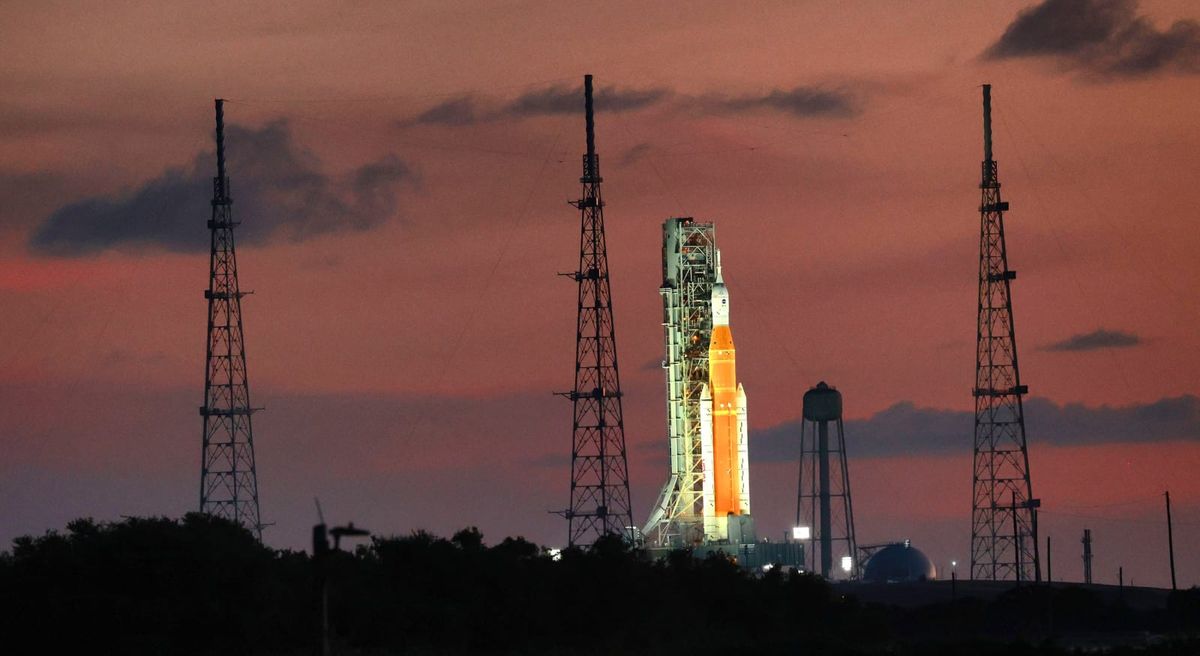
The sun rises behind Artemis I, NASA's heavy-lift lunar rocket system, as it sits temporarily grounded at pad 39- B at Kennedy Space Center, Florida, on Sept. 6, 2022. - Joe Burbank/Orlando Sentinel/TNS

Science educator Bill Nye came out swinging at President Donald Trump on Friday, blasting his administration’s proposed cuts to NASA as “surprising, illogical and very troubling” in a scathing new opinion piece.

Writing for MSNOW in the wake of the historic return of the Artemis II crew – the first mission to the moon since 1972 – Nye argued the moment of celebration is being overshadowed by Trump’s plans to slash funding for space science.

“The proposed cuts would terminate 53 NASA Science missions, throwing away more than $13 billion in taxpayer investment and halting the development of nearly every future NASA Science mission,” according to Nye, best known for hosting the hit educational show “Bill Nye the Science Guy.” He added that such reductions would be “an insult to our astronauts and entire NASA workforce.”

Nye also took aim at proposed cuts to STEM education, calling efforts to eliminate NASA’s outreach programs “quite personal” and warning they would damage the nation’s long-term scientific leadership.

“We cannot allow this,” Nye declared, urging Americans to push back against the MAGA administration’s “draconian cuts.” He pointed to a growing global competition in space, particularly with China, and questioned why the U.S. would “cede the lead” at such a pivotal moment.

“NASA is the best brand our nation has,” Nye told readers Friday. He argued that space exploration reflects America “at its best” – and warned that abandoning scientific investment “would be an unworthy choice.”

“If Artemis II has showed us anything, it’s that the public, across the political spectrum, strongly supports space exploration, scientific discovery and a deeper understanding of the universe and our place within it,” he concluded.

Trump, for his part, on Friday congratulated the Artemis crew in a Truth Social post, praising their trip as "spectacular," and the landing as "perfect."

"I could not be more proud!" Trump wrote.

The president who once said space wasn't important now wants to remake it in his image


Illustration of Donald Trump as an astronaut (Roxanne Cooper/MidJourney)

March 31, 2026
ALTERNET

President Trump is positioning the upcoming Artemis II moon mission as a potential centerpiece of his second-term legacy, according to a New York Times report by Peter Baker. The mission, scheduled to launch this week, will send four astronauts farther from Earth than any humans have traveled since the Apollo program ended more than 50 years ago.

Trump's enthusiasm for space exploration marks a dramatic reversal from his 2015 campaign stance. When asked about space during a New Hampshire campaign stop, Trump dismissed the subject, saying: "Right now, we have bigger problems — you understand that? We've got to fix our potholes." By the time he entered office, however, he had embraced space exploration as integral to American greatness, and no president since Kennedy and Johnson has pushed NASA as aggressively.

Trump's ambitions extend well beyond Artemis II. Shortly after Jared Isaacman became NASA administrator in January, Trump called to ask about Mars missions and nuclear rockets, inquiring: "Are we doing something in the 2028 window for Mars? What do you think about the nuclear rocket?" Isaacman indicated that Trump envisions sustained lunar presence and infrastructure rather than brief visits. Trump emphasized: "We better be doing more than getting rocks this time."

Trump's public attention to the Artemis II launch has been notably limited. Though the four astronauts were seated in the gallery during his February State of the Union address, Trump did not acknowledge them or mention the mission. He has said little about it in recent days despite the launch's imminence.

Trump's space agenda faces fiscal constraints. The Trump administration proposed cutting NASA funding by 24 percent last year, a reduction that would have terminated more than 40 missions. Though Congress protected the Artemis program through budget legislation, nearly 4,000 NASA employees are departing through federal workforce reductions.

Questions remain about Trump's sustained commitment to the long-term program. Retired astronaut Cady Coleman expressed concerns about losing experienced personnel, while Apollo 17 moon walker Harrison H. Schmitt stressed the importance of presidential leadership. Schmitt noted: "You have to have the White House and the president acting as the spokesman for it. There's just no question about that."