It’s possible that I shall make an ass of myself. But in that case one can always get out of it with a little dialectic. I have, of course, so worded my proposition as to be right either way (K.Marx, Letter to F.Engels on the Indian Mutiny)
Monday, April 27, 2026
Workboat Hits and Damages Moored Fast Ferry Near Trondheim
[Brief] On Friday, a service vessel struck a moored fast ferry at a small port on the island of Froya, northwest of Trondheim, penetrating the ferry's hull.
Video from the scene shows that a service vessel - identified by AIS as the Multi Power - approached the port side of the moored fast-ferry catamaran Froyfart at low speed, then made contact.
Local outlet Hitra-Froya obtained imagery showing the hull damage to the fast ferry from the inside. The impact tore open a large gash at the waterline and partially flooded the port-side catamaran hull. The rails and deck plating of the upper deck were also significantly damaged next to the pilothouse, photos show.
Salvage operations began later the same day and managed to quickly stabilize the vessel, operator Oya Shipping told local media. The situation is under control, but Oya said that it would be canceling an upcoming voyage due to the damage.
Multi Power is a small 90-foot workboat with twin deck cranes and a deadweight capacity of 200 tonnes. She is part of a large fleet that serves the region's thriving aquaculture industry.
As of Sunday, Multi Power was under way and operating in the island archipelago northwest of Trondheim.
Car Carrier Damaged in Allision With Bridge Pier at Bremerhaven
Last week, a car carrier hit a pier at the site of a decommissioned bridge at the port of Bremerhaven, tearing a long gash in the vessel's starboard side.
Early on Tuesday, the 2024-built car carrier CMA CGM Monza departed her berth in the Kaiserhafen Zwei. As the vessel proceeded to the harbor, the master requested the assistance of an additional tug, as conditions were windy and gusty.
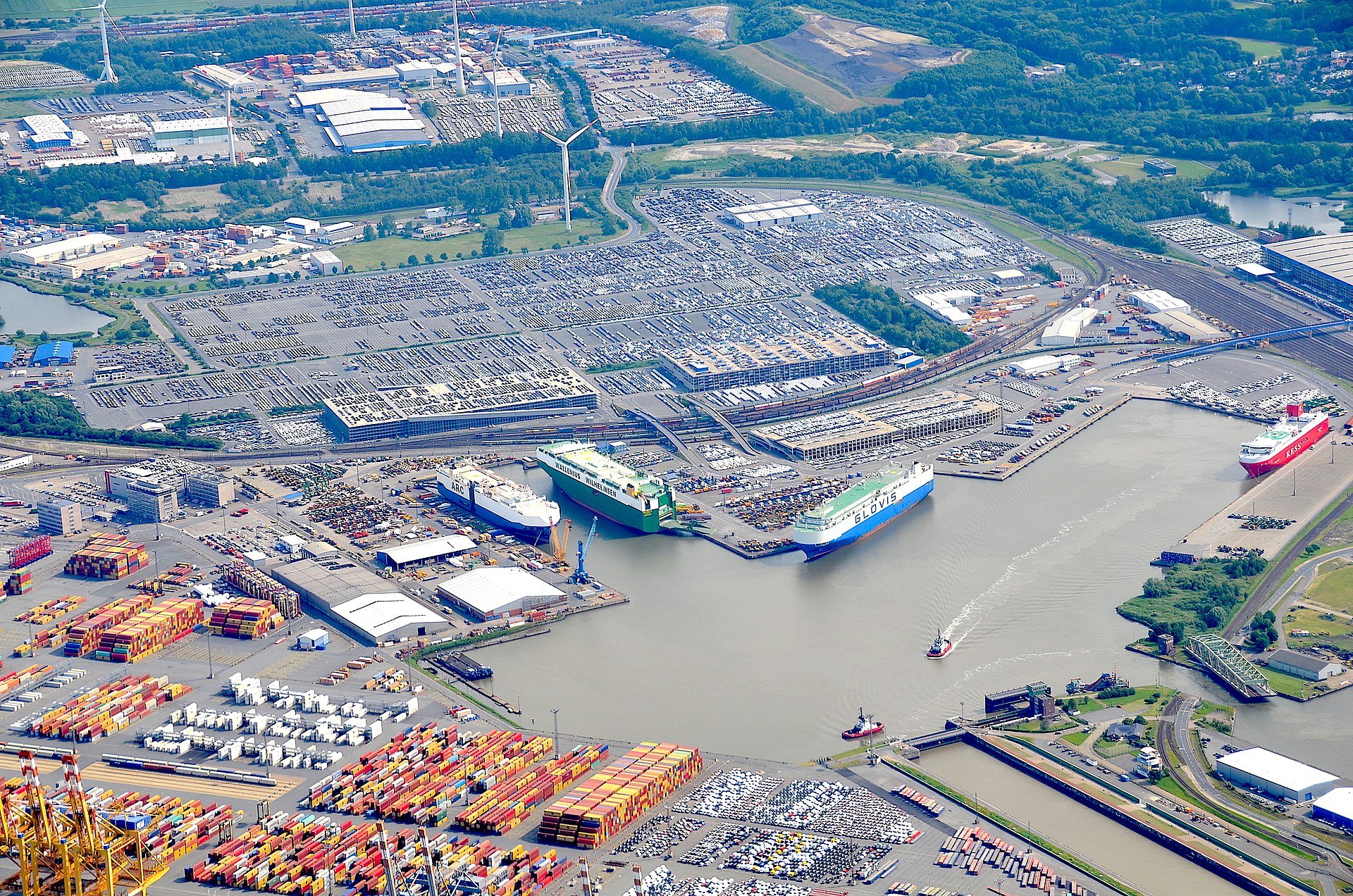
She passed by Lloyd Werft Bremerhaven yard, headed northbound. At about 0230 GMT, the Monza transited past the location of a former swing bridge (previously decommissioned and removed). At this location, the harbor channel narrows, leaving little room for a ship of CMA CGM Monza's size to pass.
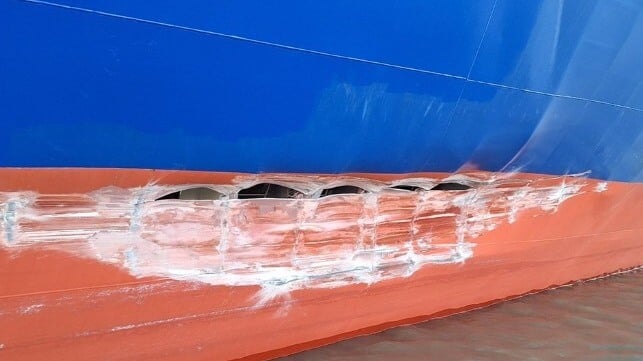
Despite the additional tug assistance, the winds were too strong and the ship's starboard side made contact with the edge of the pier. The impact tore open a hole of about eight feet in length in the ro/ro's hull. Luckily, all of the damage was above the waterline, and no pollution or injuries were reported.
Bremen's water police have imposed a sailing ban on the vessel, and have initiated administrative proceedings against the vessel's master.
As of Sunday evening, CMA CGM Monza remained in Bremerhaven's inner harbor.
Autoport Bremerhaven. The swing bridge (since decommissioned) is visible at lower right, to the right of the lock complex (Olga Ernst / CC BY SA 4.0)
MOL Adds Wind Propulsion to In-Service Coal Carrier and LCO2 Carrier Design
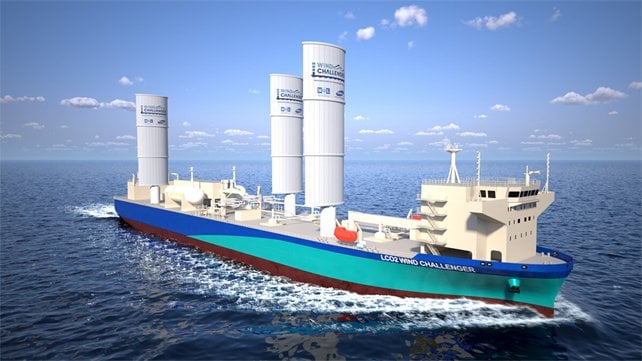
MOL received a design AiP for its LCO2 carrier with three hard sails (MOL)
Continuing to build on the interest in wind-assisted propulsion, Mitsui O.S.K. Lines (MOL) is highlighting two further advancements for its solid sail “Wind Challenger.” It worked in partnership to develop the commercial designs for the sail and has begun its deployment as part of its overall strategy to reduce GHG emissions.
Developed by MOL and Oshima Shipbuilding, the Wind Challenger is a rigid sail system that can sense wind direction and speed in real time and provides fully automatic control of sail extension, contraction, and rotation.
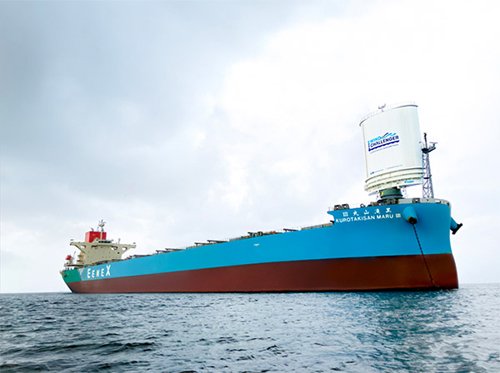
Having installed the system on two newbuilds, the company has now completed its first retrofit for the hard-sail wind propulsion system onto the Kurotakisan Maru III, an 89,999 dwt coal carrier delivered in 2021. The vessel, which is 235 meters (770 feet), transports coal for Electric Power Development (J-Power). It was the first of the ‘EeneX’ series, which are next-generation coal carriers that the company is building, and which adopted a double-hull structure that eliminates the need to fill cargo holds with ballast water. It is also equipped with an SOx scrubber.
MOL announced plans in May 2024 to retrofit the hard sail to this vessel. At the time, it said it expected to reduce greenhouse gas (GHG) emissions by about five percent on a Japan-Australia voyage and about eight percent on a Japan-North America West Coast voyage, compared to a conventional vessel of the same type.
Hard wind sail retrofitted to the coal carrier (MOL)
The first installation was on the 100,000 dwt coal carrier, Shofu Maru, in October 2022. In the next 18 months through April 2024, the ship transported coal on a total of seven round-trip voyages to Japan, mainly from Australia, Indonesia, and North America, with daily fuel consumption reducing by up to 17 percent.
The second installation was on the 64,000 dwt Ultramax bulk carrier Green Winds, which was delivered in July 2024. With the system, the vessel was expected to reduce fuel consumption and GHG emissions by about 7 to 16 percent, depending on the ship route and other conditions.
MOL also announced its next concept design for a 40,000 cbm liquefied CO2 carrier intended for cross-border CO2 transport. The design, which was developed in partnership with Samsung Heavy Industries, features three Wind Challenger units.
The new LCO2 carrier concept with the Wind Challenge installation obtained Approval in Principle from ClassNK (Nippon Kaiji Kyokai) on April 14. MOL highlights that the vessel design arranges the navigation bridge and accommodation spaces toward the bow to ensure improved visibility required for ship handling while enabling the installation of three Wind Challenger units. Moreover, the vessel design incorporates various safety considerations, including a safety passage between the engine room and accommodation, optimized arrangements of navigation lights, and placement of lifeboats.
MOL, which has set a target of achieving net-zero GHG emissions by 2050, has announced plans to install the wind-assisted propulsion system on 25 vessels by 2030 and 80 vessels by 2035.
Has the Strait of Hormuz Emerged as Iran’s Most Powerful Form of Deterrence?
Image by Pascal/Wikimediacommons, in public domain
One of the US and Israel’s justifications for launching the war on Iran was to ensure the regime in Tehran could never possess nuclear weapons, the ultimate deterrent against external attack. But the main lesson that has been taken from the war, according to some commentators, is that Iran’s own geography already provides it with all the deterrent it needs.
The US-Israeli strikes have inflicted massive damage on Iran’s leadership and have destroyed billions of US dollars worth of military and civilian infrastructure. However, this display of force has proved unable to stop Iran from controlling who enters the Strait of Hormuz, a maritime chokepoint through which around 20% of the world’s oil supply flows.
This has led to the suggestion that Iran could emerge from the conflict with a new blueprint for shielding itself against future threats, regardless of whether it agrees to US demands to dismantle or severely limit its nuclear programme.
Geography is arguably Iran’s greatest strategic asset. The Strait of Hormuz is shallow and narrow, with just two-mile-wide navigable shipping channels. There are also a huge number of coves and inlets along Iran’s southern coastline, providing cover for launching small boats to attack shipping or lay mines, as well as anti-ship missiles and drones.
And there is a vast belt of rugged mountains running from Iran’s north-western border with Turkey all the way down to the Strait of Hormuz. Iran can store, conceal, produce and launch more drones and missiles here than it would ever need to threaten Gulf shipping.
However, Iran’s capacity to close the strait is not new. For decades, Iran has repeatedly threatened to respond to any external attack by closing the strait. It has also, albeit in a more measured way, demonstrated the capability to make the strait commercially unusable.
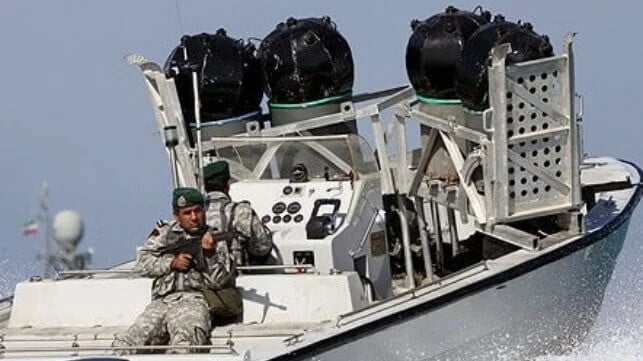
In response to Donald Trump’s “maximum pressure” policy across both his first and second terms as US president, Iran has harassed shipping with fast boats, rehearsed loading mines on to vessels, test-fired anti-ship ballistic missiles and even seized a British tanker. These are all classic forms of deterrence signalling.
Multiple analysts had warned of the catastrophic economic consequences of full-scale war with Iran precisely because of Iran’s ability to close the Strait of Hormuz. The only person who seems not to have understood this is Trump.
When pressed in March on whether Trump had been briefed before the war that Iran would seek to block Hormuz, his director of national intelligence, Tulsi Gabbard, would not be drawn. But she acknowledged that it “has long been an assessment of the intelligence community that Iran would likely hold the Strait of Hormuz hostage”.
Another challenge to the claim that geography may replace nuclear weapons as Iran’s primary source of deterrence is that its nuclear programme was never a core part of its deterrence. A 2019 report by Chatham House determined that Iran saw its asymmetric capabilities – particularly ballistic missiles and its ability to mobilise its proxy groups in the region – as essential to its national security. Iran’s ability to exercise control of the Strait of Hormuz is another pillar of this strategy.
There is ample reason to believe Iran was engaged in nuclear “hedging” – preserving the option to build a weapon at some point without crossing the line in a verifiable way. But if nuclear deterrence was the core aim, it is unlikely that Iran would have committed to a 2015 nuclear deal that most of the international community argued blocked its path to a bomb.
Regional implications
If a country is attacked, by definition its deterrence has failed. But the perception of restored deterrence can help create conditions for deescalation by justifying an end to the fighting and convincing an adversary that costs can still be imposed. In this sense, Iran’s control of Hormuz may help bring the current war to an end.
Iran’s confidence in having proven its ability to blockade Hormuz may also provide cover for dialling down its nuclear ambiguity posture. And it could compensate for the degradation of its network of proxies that has enabled Iran to project influence across Lebanon, Syria, Iraq, Yemen and Gaza.
The weakening of this so-called “Axis of Resistance” in recent years has reduced (though far from eliminated) Tehran’s ability to raise the regional cost of any direct attack on Iran. And Hezbollah, which is widely considered the strongest group in this proxy network, has paid a high price for defending Iran since the start of the war.
Iran is highly unlikely to abandon its proxies completely. However, it may now conclude that using them as a form of forward deterrence to avoid being directly attacked has manifestly failed and roll back on the strategy. This would be an extremely positive move for regional stability.
Iran’s demonstrated capacity to close the strait is likely to shape the regional order for some time. But Iran is unlikely to be willing to rely on this single pillar of deterrence.
Its sustained missile strikes on neighbouring Gulf states, and damage to critical infrastructure, had already created an appetite for a negotiated end to the conflict among the US’s Arab allies. Trump himself admitted he did not anticipate this reaction.
This makes forcing Iran to suspend its ballistic missile capability extremely difficult in upcoming negotiations, which will leave its neighbours nervous and anxious about their own lack of any deterrence capacities.
This article was originally published by The Conversation; please consider supporting the original publication, and read the original version at the link above.
Hormuz Traffic Ticks Up With More Vessels Outbound
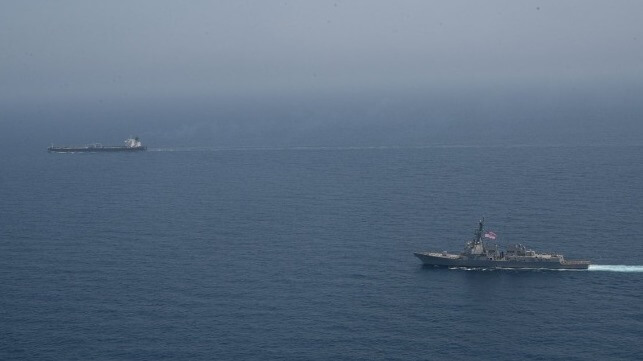
A U.S. Navy destroyer intercepts an Iranian tanker near the Strait of Hormuz (Central Command)
Traffic is picking up again in the Strait of Hormuz, despite dueling blockades by U.S. and Iranian forces, according to maritime security consultancy Windward. 19 vessels made the transit throught the waterway on April 25, most outbound and all of them broadcasting AIS - a possible sign of recovery, at least for one day. The number would have been higher if Iranian shipping interests had been unimpeded, but the U.S. Navy is working on making its naval cordon more efficient, with some success.
The most noteworthy crossing was the megayacht Nord, linked to Russia's wealthiest businessman, the sanctioned steel and mining magnate Alexey Mordashov. Iran has a friendly relationship with Moscow, based on defense ties, and has an incentive to allow Russian traffic to use the strait. Nord is immediately recognizable: she is an iconic Lurssen yacht, ranking among the largest in the world, and has a distinctive and imposing appearance designed to "cause strong emotions in every observer." The 460-foot yacht passed through the Iranian side of the waterway at about 0900 local time Saturday, and she is now in port at Muscat, Oman.
Other noteworthy transits included the sanctioned tankers Oceanjet and Lumina Ocean, both linked to Iran's petroleum industry. Other Iranian or Iranian-chartered vessels were not so lucky: 37 vessels have been intercepted and redirected since the start of the blockade, and three more have been seized. TankerTrackers.com assesses that $380 million worth of crude is in U.S. custody and under way for the United States, and another $1 billion in oil is back in Iran aboard tankers that were turned around by the blockade. The U.S. Treasury has assisted the campaign, placing sanctions on at least one vessel - the LPG carrier LPG Sevan - the day before it was interdicted and sent back to Iran under escort.
Full restoration of normal traffic levels will require a durable conclusion to the conflict, followed by a mine countermeasures effort to remove the naval mines that Iran has deposited near the strait's designated sea lanes. In a press conference Friday, Defense Secretary Pete Hegseth said that "we are confident in our ability" to clear mines from the waterway. He said that U.S. forces are already working on that task - but he acknowledged that the mines are a danger, and that the risks of transiting the strait are higher now than would be desired.
While waiting for the risk to abate, about 20,000 seafarers are trapped aboard the vessels that were caught inside the Gulf when the conflict began. The ordeal has been challenging for these crewmembers, who have had to endure uncertainty, food rationing, communications blackouts and the risk of attack. In a video message released Friday, IMO Secretary General Arsenio Dominguez said that his agency will redouble its efforts to make sure that seafarers are put first.
Report: Removing Mines From Strait of Hormuz Could Take Six Months
An IRGC minelaying boat. Iran possessed thousands of mines before the war, some deployable from civilian small craft (IRGC)
Reopening the Strait of Hormuz is a top-of-mind objective for the White House, but it may take more than a deal with Iran to get the situation back to normal in the waterway, according to the Washington Post. The Pentagon's internal assessment is that it could take six months to complete minesweeping operations in the strait after hostilities have ceased, the Post's Dan Lamothe reports - even with the advanced minesweeping and minehunting equipment embarked on three Independence-class littoral combat ships deployed in the region. The timeline would extend the lingering energy-price effects of the conflict out until the midterm elections, an undesirable outcome for the administration.
Based on accounts from three officials, the House Armed Services Committee was briefed on the status of the Strait of Hormuz shutdown on Tuesday. At the briefing, a senior official from the Pentagon told lawmakers that it could be half a year before all the mines are removed - far longer than any other official estimate. The administration has not issued a direct denial, according to the Post.
The six month time estimate is based on the total number of mines that are believe to be currently in the strait, estimated at 20 individual devices; but the number needing clearance depends on the evolution of the conflict. Iran retains access to military and civilian small craft, and has the ability to emplace more mines if desired. The size of its surviving stockpile is not publicly known, but it numbered in the thousands before the war - suggesting that the difficulty of the problem could rise if Iran chooses.
The location of the mines is not definitively known, but Iran has published a "danger zone" chart warning shipping to stay out of the area of the traffic separation scheme (TSS) in the center of the strait. Many ships have transited through Omani waters at the southern edge of this designated "danger zone" without encountering mines, including a convoy of MSC boxships on Monday night. On the north side of the waterway, dozens of ships have passed without incident through Iran's territorial waters near the islands of Larak, Qeshm and Hormuz. Iran's own tankers periodically evade the American blockade using this territorial-seas route, albeit in small numbers, according to the FT and TankerTrackers.com. No mine strikes have yet been reported on any of these routes.
The timeline for demining will be of concern to many other stakeholders, since the waterway ordinarily handles about 20 percent of all global crude oil trade. Asia's energy economy, geared to rely on Arabian crude oil grades, has been particularly affected. On Monday, Chinese leader Xi Jinping called for the strait to be reopened, an implicit criticism of China-aligned Iran and the first such statement he has released. “The Strait of Hormuz should remain open to normal navigation, which is in the common interest of regional countries and the international community,” Xi said in comments carried by state media.
With the Ceasefire on the Brink, Gulf States Prepare
U.S. efforts are focusing on the blockade hoping to pressure Iran into a deal (CENTCOM)
With the ceasefire between Iran and its adversaries hanging in the balance, a lack of substantial progress in the negotiations taking place in Islamabad, and domestic mid-term pressures on President Trump to bring the war to an end, Gulf states are preparing for the worst.
But they are at least hoping for the best. Their priorities are different from those of Israel and the United States, but at a minimum they need the Strait of Hormuz open to traffic without hindrance or, more simply, without a tolling system. They probably place the displacement of hardliner influence in the Iranian government a close second, knowing that without a change of heart in Iranian politics, the threat to a toll-free Strait will not go away in the medium- to long-term.
The Gulf states are encouraged by the clear American build-up of forces in the region, notwithstanding the ceasefire. With the arrival of the USS George H.W. Bush (CVN-77), and the return of the USS Gerald R. Ford (CVN-78), there are now three carrier strike groups within the Central Command (CENTCOM) region, the most since 2003 and a force far greater than needed to enforce a blockade. There is even a fourth carrier, the USS Nimitz (CVN-68), which will soon be off the eastern coast of South America, and which could get to the CENTCOM region quickly if needed. These are only the most visible elements of the U.S. military reinforcement package.
Nonetheless, the most likely outcome of the war is a long, drawn-out negotiation in Islamabad, with the Iranians conceding little, perhaps a short resumption of the war, before a settlement is reached that leaves the Gulf states without the freedom of access through the Strait of Hormuz, which is the bare minimum they need before business can return to normal.
Notwithstanding the Iranian attacks on their countries, so far the GCC countries have invested in restraint, not retaliation. But the time may come when they need to act, with a broader and deeper air campaign than the United States has mounted hitherto. With most of the Iranian air defense network degraded by air attacks since February 28, they might hope they can take advantage of the freedom to operate an air campaign of their own without serious opposition. Together , the Gulf states can muster about 675 strike aircraft, mostly provided by Saudi Arabia and the UAE, whose air forces have already acquired battle experience over Yemen. Gulf states may be testing Iranian defenses already, with drone flights over Tehran reported by the Mehr News Agency, which the United States and Israel have denied they are responsible for.
In the first instance, though, the GCC countries have been reinforcing their security links with allied nations, which has seen, for example, the deployment of Pakistani F-16s to Saudi Arabia and additional British Typhoons and French Rafales sent forward to operate from Gulf airbases. Qatari C-17s have been seen moving military supplies from Karachi to Sharurah on the Saudi border with Yemen, illustrating the breadth of the alliances that Gulf states are calling upon.
Not that any linkage or a joint mission would ever be acknowledged, the Gulf states will note recent comments from Israeli Defense Minister Israel Katz that his country is preparing to renew its war on Iran, and that when it does so, “the attack will be different and deadly and will add devastating blows in the most painful places that will shake and collapse its foundations, following the enormous blows the Iranian terror regime has already suffered so far.” He went on in similarly restrained fashion to describe Israel’s intention “first and foremost to complete the elimination of the Khamenei dynasty... and additionally to return Iran to the Dark Age and the Stone Age by destroying key energy and electricity facilities, and dismantling its national economic infrastructure.”
Iranian naval visitors to the UAE, alongside in Sharjah’s Mina Khalid, February 3, 2025 (Iranian MoD)
Attempts to engage the Iranians diplomatically have for the moment apparently been largely abandoned. Most of the Gulf countries made efforts to improve relations with the Iranians in the months leading up to the war, with the UAE, for example, hosting an Iranian naval visit in February 2025 from the IRGC Navy’s Shahid Soleimani Class missile corvette Shahid Rais Ali Delvari (FS313-04) and missile corvette Abu Mahdi al-Muhandis (PC313-01) and the regular Navy’s Sina Class fast attack craft IRINS Zereh (P235). As late as February this year, a UAE Foreign Ministry travelled to Tehran and met the Iranian Foreign Minister Abbas Araghchi. The Saudis attempted likewise, exchanging ambassadors once again with Iran in the summer of 2023; their respective armed forces chiefs of staff met in November 2024. These attempts at diplomatic rapprochement made the Iranian attacks on civilian infrastructure all the more difficult to stomach. The UAE President Sheikh Mohammed bin Zayed is now describing Iran as the enemy, and that “the UAE’s hand can reach and is strong, its flesh is bitter, and we are not easy prey.”
While the GCC countries strengthen their defenses as the ceasefire holds and negotiations stagger on, they are broadening their preparations. Bahrain has detained four separate IRGC-trained terrorist cells. The UAE has arrested a 27-strong Sharjah-based IRGC-aligned network, and a widespread campaign is underway to close down businesses with Iranian links. Closure of the Strait also, of course, impacts Iran itself, particularly as prior to the war the UAE was still the primary source of imports, estimated to be valued at some $20 billion annually, into Iran via re-export container terminals, in particular through Jebel Ali. These trade links, and the financial networks to support them, are now being dismantled.
Where the war will lead is still, of course, uncertain - which is what those who sought to avoid the war were primarily afraid of. But the GCC states, while currently exercising restraint, despite the attacks upon them, and standing back from the conflict, are clearly angry and readying themselves for an intensification of the conflict.
The opinions expressed herein are the author's and not necessarily those of The Maritime Executive.
Churn in Horn of Africa Political Alliances
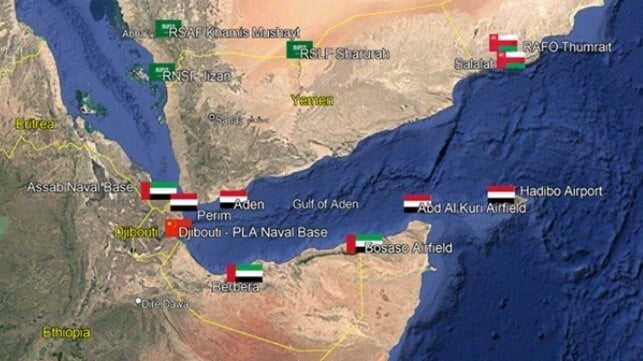
The Horn of Africa, with principal military bases and logistic hubs (Google Earth/CJRC)
The Horn of Africa, embracing Eritrea with its Red Sea coastline, Djibouti and the component parts of what used to be Somalia, is in a state of flux, buffeted by the changing political situation in the neighborhood. How matters settle will have a direct impact on the safety and flow of merchant traffic through the Suez Canal and the Bab el Mandeb, a trade route using the Maritime Security Transit Corridor (MSTC) which recently carried just under 15% of world trade, and now, with the Hormuz War still a live issue, probably carrying rather more.
There are a number of dynamics at play.
Firstly, any potential interruption of traffic through the Bab el Mandeb has become a far more serious concern since the blockage of sea traffic through the Strait of Hormuz. More than 50% of Saudi oil is now being exported southwards from the East-West pipeline terminal at Yanbu through the Bab el Mandeb, up previously from about 20%. The United Arab Emirates likewise is reduced to exporting crude through the ADCOP pipeline to Fujairah on the Gulf of Oman. General cargo and container traffic is a little more flexible, and traffic through Salalah, Duqm, Sohar, Fujairah and Khor Fakkan reflects the upsurge in shipments to the Gulf States completing with a final land leg. The blockage of the Strait of Hormuz makes the Bab el Mandeb even more important.
The second major development has been the resurgence of the Internationally Recognized Government (IRG) in Yemen at the expense of the separatist Southern Transition Council (STC). Following its failed attempt to move forward with its secessionist position in December, the STC’s primary backer the United Arab Emirates announced its withdrawal from what it had described as its counter-terrorist operation in southern Yemen. Since then the IRG has consolidated its position, and support for the STC has further waned.
The UAE withdrawal has resulted in a number of bases covering the sea lanes in the Red Sea and Gulf of Aden being deactivated. Some mystery surrounds which bases retain a presence, notwithstanding the UAE announcement of its withdrawal, and how some of these bases used to operate. The UAE still retains positions in Eritrea and Somaliland, but probably no longer for example the EL/M-2084 coastal surveillance radar which used to operate from Bosaso. With the UAE no longer quite so present, it can be concluded that surveillance, and consequently the defense of Red Sea and Gulf of Aden sea lanes, has probably been degraded.
Given the growing disparity between military need and capability, it is no surprise that a number of diplomatic moves are afoot to address this issue.
For several months, reports from Washington think-tanks, Trump insiders and Massad Boulos, the State Department’s Advisor on African Affairs himself, have talked up a potential US-Eritrean rapprochement. Though opposed vocally in Congress on account for what has been described as Eritrea’s similarities politically to North Korea, the Eritrean embassy in Washington have said that Massad Boulos and Eritrean Foreign Minister Osman Saleh have had a “cautious but hopeful” dialogue. If anything useful were to emerge from these initial moves, it would be a triumph of pragmatism over political differences, especially as Eritrea still has a confrontational relationship with Ethiopia, with whom the United States enjoys a productive relationship. Eritrean ports nonetheless would be useful for maintaining over-watch over the southern Red Sea.
Recent weeks have seen a resurgence of Somaliland’s efforts to be internationally recognized, after the first such recognition was granted by Israel on December 26, 2025. Somaliland has enjoyed a successful and stable existence post its unilateral declaration of independence in 1991, in many respects one of Africa’s most successful democratic systems. With DP World having upgraded its container port, the harbor and 4,140-meter airfield in Berbera offer advantages over Djibouti’s rather over-crowded basing facilities, and its government is both stable and avowedly pro-Western. The Somaliland government might be willing to trade international recognition for the grant of basing facilities, as it is working towards with landlocked-Ethiopia, which is seeking a port where it can re-establish its navy.
The entry of Somaliland onto the world stage has predictably enraged Somalia, from whom it has seceded. Turkey has established a substantial presence at Warsheikh. Egypt too has strengthened ties with Somalia in Mogadishu, worried about Ethiopia’s bid to regain access to the sea and its control of Nile waters, even though now in operation the Grand Ethiopian Renaissance Dam has merely better regulated seasonal Nile flooding rather than reduced water flow.
Eritrea ought to be considered too inflammable to build up a secure long-term relationship with. But Berbera in Somaliland is different, and rather like Diego Garcia is close enough from which to deploy influence in regional hotspots without being too close to be vulnerable. Facilities and basing rights, as has been seen in the Gulf, can be a double-edged sword and proximity does not necessarily translate into tactical dominance.
But rather than substantially pulling back from the region, which has been the policy of successive US administrations, Central Command and Africa Command may be looking for an alternative, less intrusive footprint. Others are interested too. Closer US relationships in the Horn of Africa might help maintain stability and freedom of navigation in the area.
The opinions expressed herein are the author's and not necessarily those of The Maritime Executive.
Houthis Remain on the Sideline While Iran Threatens to Widen Conflict
Houthis continue to say they are supporting Palestine and have not renewed the attacks in the Red Sea (file photo)
Senior political figures associated with the IRGC-dominated hardliner faction in the Iranian leadership continue to make escalatory threats in an attempt to pressure the United States to loosen its blockade on traffic entering Iranian ports.
The IRGC-linked semi-official news agency Fars has hinted that undersea cables may be at risk of attack, although Iran is short of the capability to carry out such a threat. A deputy to Iranian President Masoud Pezeshkian, Esmail Saqab Esfahani, has also threatened that if the ceasefire breaks down and attacks on Iran are widened to include infrastructure targets, then Iran has a prepared list of Saudi oil-related targets that it will attack.
Speaking on Iranian state television, Major General Ali Abdollahi Aliabadi said that he considered the interception of Iranian merchant traffic on the high seas to be a breach of the ceasefire, and that if such interceptions continued, then Iran would “not allow any exports or imports to continue in the Red Sea,” presumably making the presumption that the Houthis would respond to any IRGC demand that attacks should resume on merchant traffic in the Red Sea and Gulf of Aden. General Aliabadi, in his post as commander of Khatam-al Anbiya Central Headquarters, the joint headquarters exercising operational control of all Iran’s forces, has been in post since September 2025, the third incumbent since June 2025.
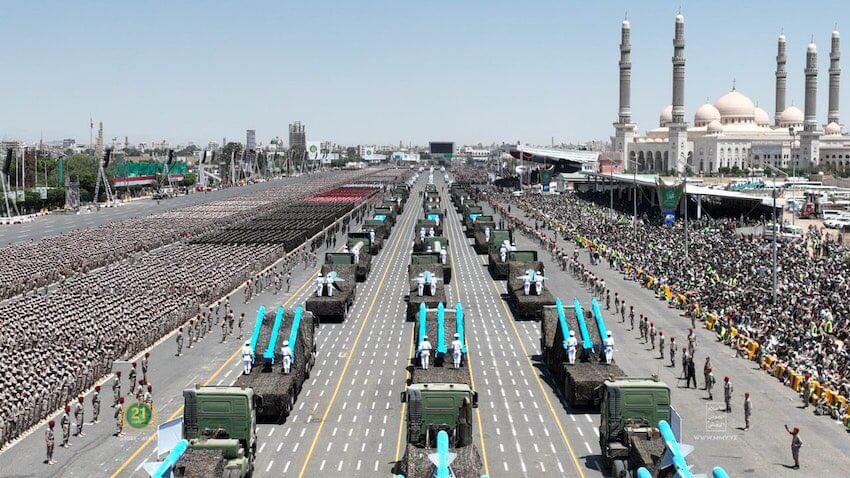
The Houthis have made their position on a resumption of attacks in the Red Sea very clear, although their position is nuanced. The Houthis' leader, Abdul-Malik Al Houthi, has made several speeches in which he has said his movement stands ready to undertake such attacks, but that the emphasis for the Houthis was the plight of the Palestinian people. In this context, the Houthis have carried out several “demonstration” drone and missile attacks on Israel, all of which were safely intercepted but which have not been repeated. But the decision to resume attacks in the Red Sea would be his alone, and for the moment, Abdul-Malik Al Houthi appears to be focused on maintaining the successful ceasefire with Saudi Arabia, which was agreed upon in March 2022, with the aim of fostering an environment in which the Houthis and Saudis can reach a final settlement to the war between them, which broke out in 2015.
Notwithstanding the pressures facing the Iranians, the Houthis appear to be sticking to their position, as evident, for example, in the face-to-face Saudi-Houthi engagement in the Military Coordination Committee held under UN aegis last weekend in Riyadh. Moreover, the Houthis have not made a fuss over the reappearance of USS Gerald R. Ford carrier strike group back in the Red Sea off Al Wajh after laundry and toilet repairs, noting that the carrier strike group is being kept well to the north in the Red Sea.
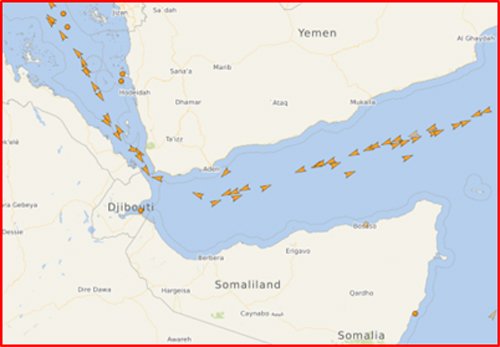
Tanker traffic in the southern Red Sea and Gulf of Aden still going strong, April 24 (VesselFinder)
While there appears to be no immediate desire on the Houthis’ part to resume Red Sea attacks, this intent could change very quickly, and those who might be impacted are making contingency preparations accordingly. Besides the presence of USS Gerald R. Ford carrier strike group within striking distance, Saudi Arabia has been reinforcing its forces on the Yemeni border. Qatari C-17s appear to have been lending a hand with this operation, probably flying in Bayraktar drones direct from Turkey to the primary border garrison station at Sharurah. The Qatari reinforcement is particularly significant, indicating that Saudi-Qatari military cooperation is once again active after a decade of political tension between the two countries.
The Houthis will also be aware that should they provoke further problems, the Saudi interest in fighting back is hugely magnified, now that Saudi oil exports to Asia from Yanbu are moving south through the Red Sea. Cutting off the bare minimum needed to keep critical services going in countries such as Korea and Japan would motivate others to join in as well. The Houthis also know that the United States is thinking of developing its political-military presence both with Somaliland and Eritrea, a development in their immediate neighborhood that the Houthis would not wish to nurture by being provocative at this juncture.
By going back to war, the Houthis risk more of the punishment that they suffered during the U.S. bombing called Operation Rough Rider. They also risk the Saudis moving from a policy of containment to one of resolution through the application of force.
Liberia Tables a Pragmatic Net Zero Proposal for the IMO
Marco Sylvester, the US Deputy Assistant Secretary for Transportation Affairs and IMO Secretary-General Arsenio Dominguez (IMO)
Liberia, supported by co-sponsors Argentina and Panama, is to present a new emissions proposal to the IMO Marine Environmental Protection Committee for consideration at the MEPC’s forthcoming 84th Session.
When the previous Net Zero Framework was presented last year, it heavily polarized IMO delegates and was met with stiff opposition, led by the United States. After one of the most contentious sessions in the IMO’s history, culminating in a vote on October 17 last year, the proposal failed to attract a decisive result, members voting instead for an adjournment to rework the framework for fresh presentation. The IMO takes pride in achieving broad-based consensus for the measures it proposes, knowing that unless this is achieved measures will lack moral force – necessary for effective implementation when international law lacks enforcement mechanisms.
The most obvious change in the Liberian draft is the removal of the proposed IMO fund into which fines for non-compliance were to be paid. This was seen by some member states as unnecessarily punitive, and weighted against smaller shipowners and tramp vessels. It was unclear how fines levied on “dirty” ships would be beneficially spent, and under whose oversight. In effect, it would have been a tax levied on shipping, but not directly on those who benefit from shipping services.
The Liberian proposal shifts away from a focus on penalties, and moves towards creating encouragements and incentives to speed adoption of improved, less polluting fuels. The proposal aligns targets to the availability of new fuels and take-up, and also aims to incentivize new methods of reducing emissions – not restricted to fuel types, but embracing well-to-wake emission reductions regardless of the energy source. It also supports emission-reducing technologies such as such as onboard carbon capture systems and wind?assisted propulsion, a key goal of shipowners’ associations. Targets would be set on a five-year cycle to reflect the availability of emission reduction fuels and technologies, but also to enable shipowners to plan changes to their fleet configurations in a cost-effective manner.
IMO delegates are anxiously waiting to see how United States representative Marco Sylvester, the US Deputy Assistant Secretary for Transportation Affairs, views the new proposals - and whether the new approach represents a basis on which negotiations and consensus-building can now be taken forward. While Sylvester appears to still be vehemently opposed, three previous opponents – Liberia, Argentina and Panama – are sponsoring the new proposal, and Saudi Arabia and other Gulf countries, which likewise had opposed the previous proposals, are now backing this pragmatic approach.
With a number of senior national representatives attending the MEPC session, discussion will inevitably extend to the situation in the Strait of Hormuz. The Traffic Separation Scheme in the Strait - which Iran is seeking to supersede by introducing controls and tolls - was adopted by the IMO with broad consensus approval in 1968. All nations who are signatories to the IMO’s Convention on Safety of Life and Sea are obliged to follow the 1968 Traffic Separation Scheme, and the convention has been signed by 164 nations, including the United States, Iran, Oman plus the remainder of the GCC countries. Singapore’s Foreign Minister Vivian Balakrishnan recently observed that even if states had not ratified the Convention on Safety of Life and Sea, freedom of transit passage was historically well-established and part of customary international law.
IMO Passes Major Reform of Ship Registration Process
Changed guidelines are expected to help fight fraud
The International Maritime Organization (IMO) has moved to seal a regulatory gap that has enabled the rise of false flagging in the shipping industry, enacting new guidelines that will determine how ships are registered.
In recent years, the shipping industry has witnessed a significant surge in the number of ships flying a false flag, with Russia’s shadow fleet tankers being the main culprits. The shadow fleet employs many regulatory loopholes in order to circumvent sanctions on Russian crude oil, and one of the recently-adopted techniques is the falsification of flag registry status.
According to the IMO, the number of ships flying a false flag has increased substantially over the period from April 2025 to April this year, with 529 ships falsely flying the flag of a country. During the period, nearly 40 member states had seen cases of their flags being fraudulently used without their knowledge or consent.
To deal with the rising problem and to streamline ship registration, the IMO’s Legal Committee has approved a new set of guidelines that are aimed at improving transparency and due diligence. The guidelines are intended to close a key regulatory gap, considering that currently there is no binding international framework to regulate the registration of ships.
The guidelines, which were approved during the just-concluded 113th session of the committee, will henceforth assist new and existing flag state ship registries in the process of registering of ships. Specifically, they will provide registries with practical measures to strengthen verification and due diligence, ensure accurate ownership records, and improve oversight of registration procedures.
“This is a welcome step towards ensuring due diligence in ship registration systems for the benefit of safety, protection of the marine environment and the well-being of seafarers, essential for the safety and security of international shipping. The guidelines will also aid in eliminating cases of fraudulent registration,” said Arsenio Dominguez, IMO Secretary-General.
In November last year, the Centre for Research on Energy and Clean Air (CREA) revealed that between January and September 2025, it was established that a total of 113 shadow vessels sailed under a false flag. The net effect of their activities enabled the transport of 11 million tonnes of oil valued at $5.4 billion.
The IMO reckons that African flags are the most notorious when it comes to false flags, accounting for more than half of all reported cases. Regulatory gaps including weak oversight, simplified procedures, lower fees and lighter compliance burdens have given rise to the use of false flags of countries like Malawi, Benin, The Gambia, Comoros, Guinea, Sierra Leone among others.



.jpg)