US Department of Energy unveils “Nuclear Dominance — 3 by 33” campaign
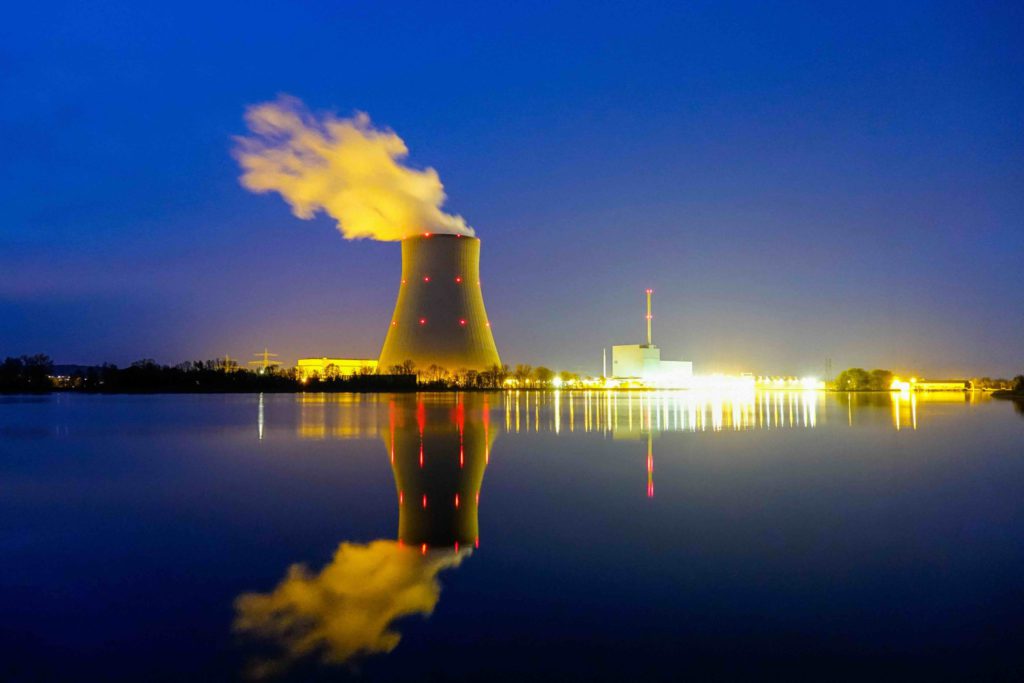
The U.S Department of Energy’s (DOE) Office of Nuclear Energy announced Thursday it is kicking off an ambitious new initiative to secure the nation’s nuclear fuel supply chain.

The country’s need for secure and reliable energy is projected to rise in the coming years, driven in part by growth in industrial manufacturing, as well as the power needs of data centers to support artificial intelligence.
Nuclear energy currently provides the country with nearly 20% of its power. The long-term success of efforts to put more power on the grid through nuclear power plant uprates, restarts and the commercial deployment of advanced reactors will all depend on the availability of nuclear fuel.
Through the Defense Production Act (DPA) Nuclear Fuel Cycle Consortium, the federal government will work with the domestic nuclear industry to ensure that the United States continues to have enough nuclear fuel to power the current nuclear reactor fleet as well as future advanced reactors.
Comprised of representatives from more than 90 companies spanning the nuclear industrial base, the initiative will address all facets of the nuclear fuel supply chain including milling, conversion, enrichment, deconversion, fabrication, recycling, and reprocessing, the DOE said.
At the Ronald Reagan Building and International Trade Center with partners and the public present, the Consortium on Thursday said it will focus its efforts on three goals to support the nuclear energy sector.
Under the “Nuclear Dominance — 3 by 33” campaign, the Consortium aims to by 2033: catalyze a secure and cost-competitive domestic fuel supply chain; accelerate advanced reactor deployment and close the fuel cycle and explore how the DPA framework can be activated to grow and align workforce, finance, innovation and collaboration in support of nuclear build out.
The initiative will begin a series of 60-day sprints designed to make rapid progress on the Consortium’s goals, the DOE said.
“The Consortium’s work comes at a pivotal time for nuclear energy growth in our country,” Assistant Secretary of Nuclear Energy Ted Garrish said in a news release. “I’m pleased with the dedication of the Committee and am looking forward to rapid progress on near term goals to achieve a robust American-made supply of nuclear fuel.”
In May of 2025, US President Donald Trump released four executive orders to catalyze a nuclear energy resurgence. Within months, DOE announced the creation of the DPA Consortium to seek voluntary agreements with US companies focused on increasing fuel availability, providing more access to reliable power, and ending America’s reliance on foreign sources of enriched uranium and critical materials.
French nuclear supply chain boosting capacity
_58396.jpg)
Orano Projects, a subsidiary of Orano, inaugurated its new building on Friday. The ceremony took place in the presence of state representatives, local elected officials, institutional and economic stakeholders from the region, industrial partners, and employees.
"This event marks a key milestone in a major modernisation programme for the Pierrelatte site, launched in September 2024," Orano said. "This programme includes the construction of a new building, the complete renovation of a second building, and, by 2027, the renovation of a third building, ultimately providing a fully modernised engineering platform. Its capacity has been doubled, increasing from 300 to 600 employees."
Established in Pierrelatte since 1986, Orano's engineering department now benefits from a modernised site. Covering an area of more than 5,600 square metres, it offers a functional working environment, organised into open-plan areas promoting collaboration between teams, quality of working life and fully meeting accessibility requirements.
Orano said the 'Le Gardon' building - named after its location - exemplifies the group's strong local ties. The EUR7 million (USD8.2 million) project, carried out between 2024 and early 2026, was awarded to local companies, contributing to the region's economic vitality.
"Safety was a top priority throughout the entire construction process, which was completed without incident," said Denis Lyonnet, Director of Orano's Southeast Engineering division. "We opted for a sustainable building, incorporating concrete solutions to reduce our environmental footprint: photovoltaic electricity generation panels, eco-mobility solutions, optimised energy consumption management, a permeable parking lot, and a rainwater harvesting system. It was designed by an architect from Pierrelatte and built with local companies. This project, developed collaboratively with our employees, is deeply rooted in its local community and supports a rapidly growing engineering division."
Guillaume Dureau, Director of Engineering, Innovation, R&D and New Business Activities at the Orano Group, added: "I am proud to inaugurate this new building in Pierrelatte today. It brings together teams that are currently working at the heart of the Group's major projects. To meet our challenges and support the growth of our activities, we are aiming for 600 new engineering hires in France by 2026."
The Pierrelatte site is part of a broader real estate investment programme undertaken by Orano to support the significant expansion of its engineering activities, linked to the revitalisation of the nuclear sector. This momentum supports the implementation of strategic projects such as the expansion of the Georges Besse II enrichment plant, the extension of the lifespan of the back-end fuel cycle plants, and their modernisation as part of the 'Future Back-Cycle' programme. This programme entails an unprecedented increase in skills: 500 engineers and technicians will be recruited each year, enabling the group to double its engineering workforce by 2030.
New heat exchanger factory
EDF has announced an investment of nearly EUR100 million by its subsidiary Arabelle Solutions to build a new 20,000-square-metre factory in Chalon-sur-Saône. The factory will manufacture heat exchangers for the future construction programme of six EPR2 reactors - and eight additional potential EPR2 reactors - in France, as well as for new build programmes abroad. This investment will result in the creation of about 160 local jobs by 2030.
The factory will manufacture key equipment designed to optimise heat exchange in the turbine hall of a nuclear power plant, where electricity is generated. This includes moisture separator reheaters, as well as high- and low-pressure heaters. The first equipment manufacturing is scheduled to begin in 2030. Arabelle Solutions in Chalon-sur-Saône will have the production capacity to supply, each year, all this equipment for a nuclear power plant.
This project forms part of the investment plan of Arabelle Solutions and builds on the investments announced in January for the site at Belfort, in eastern France. These investments will help ensure the equipment of future EPR2 nuclear power plants through a French production chain. Arabelle Solutions will be able to supply and integrate the full set of equipment for the turbine hall of a nuclear power plant.
"This investment marks a major milestone for the EDF Group and for the revival of nuclear power," said EDF CEO Bernard Fontana. "It strengthens the Group's industrial capabilities for the deployment of six EPR2 reactors and eight additional potential EPR2 reactors in France, as well as new reactors internationally. In Chalon-sur-Saône, Arabelle Solutions is developing key skills and production capacities for essential equipment in the turbine hall. This new factory helps structure an integrated value chain, serving competitive, sovereign and low‑carbon electricity - vital to the energy security of France and Europe."
In February 2022, French President Emmanuel Macron announced that the time was right for a nuclear renaissance in France, saying the operation of all existing reactors should be extended without compromising safety and unveiling a proposed programme for six new EPR2 reactors, with an option for a further eight EPR2 reactors to follow. The first three pairs of EPR2 reactors are proposed to be built, in order, at the Penly, Gravelines and Bugey sites. Construction is expected to start in 2027.
Stellaria, CEA to consider experimental MSR at Cadarache
_35731_20301.jpg)
The letter of intent concerns the establishment of an 'Alpha' Basic Nuclear Installation (INB) - an installation involved in the handling, processing, or storage of alpha-emitting radioactive materials - at the Alternative Energies & Atomic Energy Commission's (CEA's) Cadarache site. This installation will house a model, a fast-spectrum liquid-fueled (molten salt) demonstration reactor, and a salt production facility to supply the model and demonstration reactor. To this end, an area has been identified to study the feasibility of establishing the Alpha INB at the CEA Cadarache centre.
The Alpha nuclear facility will include not only the Alvin experimental reactor but also MegAlvin, Stellaria's 10 MWe prototype reactor.
The 100 kW Alvin experimental reactor, scheduled to start up in 2030, will carry out a test programme that will definitively validate the company's modelling and calculations of neutron-thermo-hydraulic coupling.
By 2032, after the end of Alvin's experimental programme, Stellaria plans to modify the facility to operate MegAlvin. The prototype reactor will be installed in the building that was used for the critical Alvin experiment, the main modification of which will consist of replacing some systems and the tank with another of a larger size (about 40-100cm).
MegAlvin's objectives are: to conduct endurance and qualification tests on the fuel; testing structural materials and systems specific to molten salt reactors; and to obtain sufficient and available feedback several years before the commissioning of Stellaria's first commercial reactor, the Stellarium, for 2035.
Stellaria - a start-up spun out of the CEA and Schneider Electric - submitted its application for the creation authorisation decree (DAC) for its Alpha INB to the French minister in charge of nuclear safety in December last year.
The CEA - a public research institution - says it plays a key role in nuclear innovation, notably by supporting the French industrial sector, major research programmes, and more recently, by assisting the winning projects of France 2030 in their development and industrialisation. The CEA Cadarache centre, located in Saint-Paul-Lez-Durance in the Bouches-du-Rhône region, is dedicated to research platforms and technological development in low-carbon energy (nuclear fission, nuclear fusion, solar, bioenergy, biotechnology and hydrogen). Contruction of the International Thermonuclear Experimental Reactor (ITER) is under way at Cadarache.
The Stellarium reactor proposed by Stellaria will be very compact (measuring 4 cubic metres) and will be able to use a diversified range of nuclear fuels (uranium, plutonium, mixed-oxide, minor actinides, even thorium). Stellaria says the reactor is "the world's first reactor to operate with a liquid fuel capable of destroying more waste than it produces".
In November 2025, Stellaria signed a pre-order agreement with California-headquartered data centre developer and operator Equinix. Under the agreement, Equinix has secured the first power capacity reservation on the Stellarium, the reactor that Stellaria plans to deploy starting in 2035.
Molten salt reactors (MSRs) use molten fluoride salts as primary coolant, at low pressure. They may operate with epithermal or fast neutron spectrums, and with a variety of fuels. Much of the interest today in reviving the MSR concept relates to using thorium (to breed fissile uranium-233), where an initial source of fissile material such as plutonium-239 needs to be provided. There are a number of different MSR design concepts, and a number of interesting challenges in the commercialisation of many, especially with thorium.
Czech SMR project - early works contract signed
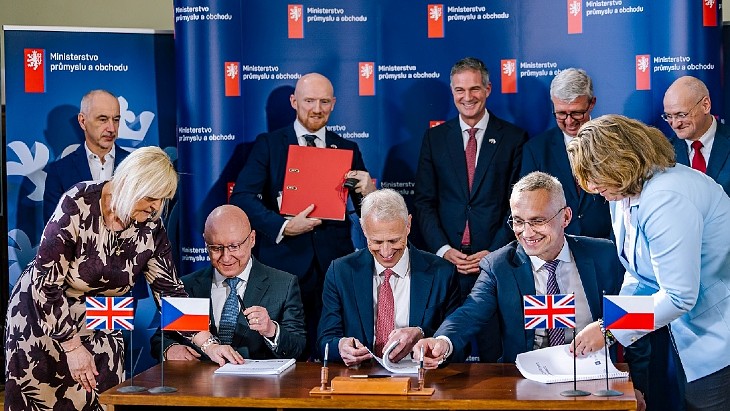
The early works contract allows preparation to start of site-specific documentation and materials for the licensing and permitting process, including for the environmental impact assessment and nuclear and construction permitting procedures, and related design work.
The engineering contract - which has been signed following a successful series of geological studies - does not include equipment supplies, "it is therefore not an investment decision or the start of construction", the signatories said.
Under the memorandum of understanding with the ministry, a working group will be established which will, in addition to looking into financing options, facilitate the continuation of intergovernmental cooperation between the Czech Republic and the UK and work on regulatory and legislative support and preparation of conditions for the construction project.
Daniel Beneš, Chairman of the Board and CEO of ČEZ, which has a 20% stake in Rolls-Royce SMR, said: "ČEZ's cooperation with Rolls-Royce SMR offers a unique opportunity for growth and prosperity in the field of nuclear energy, also thanks to our participation in the development of the technology. Thanks to the small modular reactor project, the Czech Republic and Czech industry can use and further deepen their traditional nuclear know-how. We are counting on small modular reactors alongside large nuclear power plants and renewable sources … equally important is the memorandum concluded with the state. State support is essential for such a large project, similar to the construction of new nuclear sources in Dukovany."
First Deputy Prime Minister and Minister of Industry and Trade Karel Havlíček said: "The Czech Republic must build its energy future on stable, safe and emission-free sources that will ensure affordable energy prices and the long-term competitiveness of the industry. Small modular reactors represent a technological opportunity with a European impact and at the same time a chance for Czech companies and research to join the top of the global nuclear industry."
Chris Cholerton, Rolls-Royce SMR CEO, said: "This important contract unlocks a significant programme of work at the Temelín site, which will be delivered alongside our strategic partner and shareholder, ČEZ … with contractual commitments now in place in both the UK and Czechia, Rolls-Royce SMR becomes the only company with multiple contractual commitments to deliver SMR units in Europe."
Background
The Rolls-Royce SMR is a 470 MWe design based on a small pressurised water reactor. It will provide consistent baseload generation for at least 60 years. Ninety percent of the SMR - measuring about 16 metres by 4 metres - will be built in factory conditions, limiting activity on-site primarily to assembly of pre-fabricated, pre-tested, modules which significantly reduces project risk and has the potential to drastically shorten build schedules.
In October 2024, Rolls-Royce SMR was selected by ČEZ to deploy up to 3 GW of electricity in the Czech Republic, and ČEZ took a 20% stake in Rolls-Royce SMR. The plan is for the first SMR to be deployed in the area of the Temelín site (which already has two gigawatt-scale VVER-100 units), with futher projects being developed for coal-fired power plant sites, including Tušimice.
The Czech Republic currently gets about one-third of its electricity from the four VVER-440 units at Dukovany, which began operating between 1985 and 1987, and the two units in operation at Temelín, which came into operation in 2000 and 2002.
The Czech government selected KHNP as its preferred bidder in July 2024 for two new units near the current Dukovany Nuclear Power Plant, about 200 kilometres southeast of Prague. The engineering, procurement and construction contract for the Dukovany units was signed in June 2025, for two APR-1000 units at a projected cost of CZK407 billion (USD18.6 billion). The aim is to start construction in 2029. In addition to the SMR project, two more large units at the Temelin Nuclear Power Plant are also being considered.
In June 2025 Rolls-Royce SMR was selected as the UK government's preferred technology for the country's first SMR project. A final investment decision is expected to be taken in 2029. In November the UK government announced that Wylfa on the island of Anglesey, North Wales, would be the site to host the three Rolls-Royce SMR units. It said the site - where a Magnox plant is being decommissioned - could potentially host up to eight SMRs.
Inner dome installed at Shidaowan unit 1
_12652.jpg)
The Hualong One reactor design features a double-layered containment building, the main function of which is to ensure the integrity and leak tightness of the reactor building, and it plays a key role in the containment of radioactive substances.
The inner dome of Shidaowan 1 - a hyperboloid structure composed of 70 wall panels, weighing 227.9 tonnes - was hoisted into position on top of the containment walls on 25 April.
China Huaneng said that the installation of the inner dome at Shidaowan 1 "marks the project's full transition from the civil construction phase to the equipment installation phase".
_fe06e4c8.jpg)
(Image: China Huaneng)
The company plans to construct four Hualong One reactors, in two phases, at Shidaowan with a total installed capacity of 4.8 GWe.
China's State Council approved the construction of units 1 and 2 of the Shidaowan plant in July 2023. First concrete for unit 1 was poured in July 2024 and that for unit 2 in May 2025.
"Once all four units are completed and put into operation, the base will generate 35 billion kilowatt-hours of electricity annually, enough to meet the annual electricity needs of 17 million three-person households," China Huaneng said. "This is equivalent to reducing standard coal consumption by 11.5 million tonnes and carbon dioxide emissions by 27.6 million tonnes annually."
The first of two demonstration Guohe One (CAP1400) reactors at the Shidaowan site was connected to the grid in November 2024. The CAP1400 is an enlarged version of the CAP1000 pressurised water reactor developed from the Westinghouse AP1000, with consulting input from the USA-based company. The design is intended to be deployed in large numbers across the country, as well as for export.
The Shidaowan site is already home to the demonstration High Temperature Gas-Cooled Reactor-Pebble-bed Module (HTR-PM), which entered commercial operation in early December 2023. The HTR-PM features two small reactors that drive a single 210 MWe turbine. It is owned by a consortium led by China Huaneng (47.5%), with China National Nuclear Corporation (CNNC) subsidiary China Nuclear Engineering Corporation (32.5%) and Tsinghua University's Institute of Nuclear and New Energy Technology (20%), which is the research and development leader.

No comments:
Post a Comment