Hungary: What will become of Orban and his system?
DW
30/04/2026
Outgoing Hungarian Prime Minister Viktor Orban and his Fidesz party are still reeling from their election defeat earlier this month. There is much speculation about what their political future looks like.
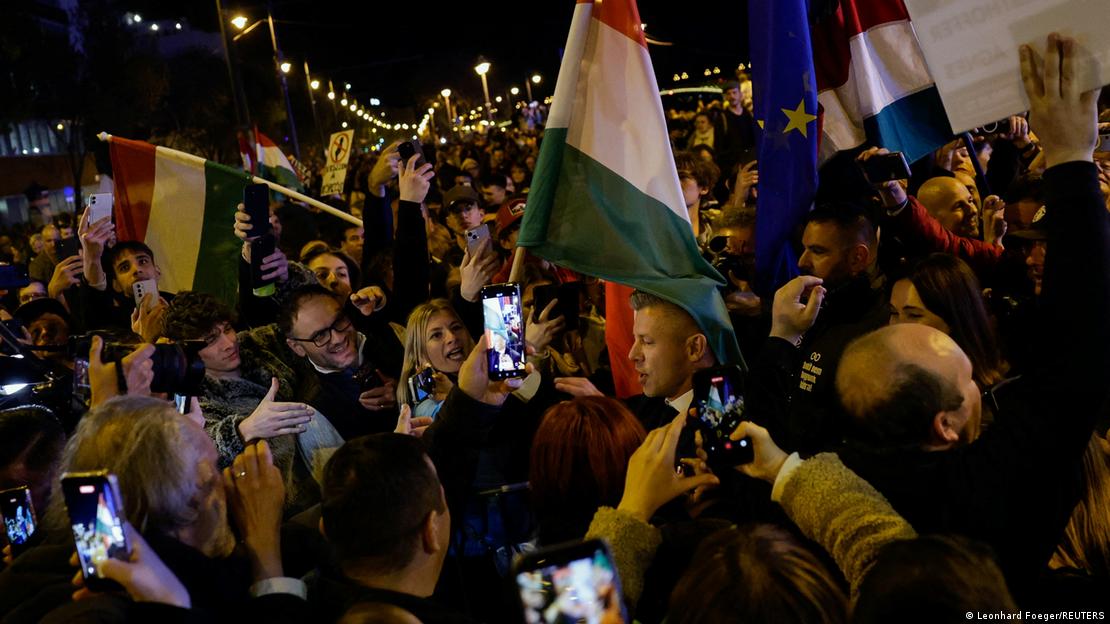
There were celebrations all over Hungary after Viktor Orban conceded defeat on April 12
Image: Leonhard Foeger/REUTERS
When Viktor Orban was narrowly voted out of office for the first time in 2002, he went through a deep personal crisis. "The homeland cannot be in the opposition!" he said at the time.
In other words, according to his image of himself, only he and his Fidesz party could truly represent the interests of the Hungarian nation; he was its sole legitimate representative. The statement left a deep impression on the Hungarian public.
It was the experience of 2002 that prompted Orban from 2010 to use his two-thirds majority to establish the System of National Cooperation (NER), intended to prevent a reoccurrence of his defeat. Not only did he tailor the electoral system to his party but he also created a vast clientelist system, a sophisticated surveillance apparatus and a massive propaganda machine to secure his power. This system helped him remain in power for 16 years.
That is likely why, up until the election on April 12, the defeat of his Fidesz party was unimaginable for Orban. When the results were announced in the evening, his defeat was so significant that he initially seemed almost speechless.
He disappeared from public life for a few days. Then he gave the only in-depth interview since election day, to Patriota, a YouTube channel that has been loyal to his party. In it, he spoke of the "pain and emptiness" that he had been filled with. Orban also announced that he would resist "the destruction of what we have built."
With regards to mistakes made while he was in government, he admitted that he regretted that the expansion of the Paks nuclear power plant, undertaken with Russian assistance, had not been completed. The journalist, a supporter, was visibly taken aback.
Much speculation in Hungarian society
What will now become of Orban and the system he has built over the past 16 years? Does the long-time autocrat have a chance of remaining in politics? Or is his career over? Will he leave the country, as rumors suggest? What will happen to his party, Fidesz, which was tailored entirely to him? What about the Orban dynasty, which has amassed immense wealth, and what about the oligarchs and tens of thousands of well-paid beneficiaries of the outgoing prime minister's regime?
These are the questions Hungarian society is asking right now. In search of answers, many media outlets are reporting on every single remark made by Orban and his allies, and every move made by his oligarchs and cronies. It shows how many Hungarians felt as if they were held hostage for years and how strong the desire is for a reckoning and systemic change.
In other words, according to his image of himself, only he and his Fidesz party could truly represent the interests of the Hungarian nation; he was its sole legitimate representative. The statement left a deep impression on the Hungarian public.
It was the experience of 2002 that prompted Orban from 2010 to use his two-thirds majority to establish the System of National Cooperation (NER), intended to prevent a reoccurrence of his defeat. Not only did he tailor the electoral system to his party but he also created a vast clientelist system, a sophisticated surveillance apparatus and a massive propaganda machine to secure his power. This system helped him remain in power for 16 years.
That is likely why, up until the election on April 12, the defeat of his Fidesz party was unimaginable for Orban. When the results were announced in the evening, his defeat was so significant that he initially seemed almost speechless.
He disappeared from public life for a few days. Then he gave the only in-depth interview since election day, to Patriota, a YouTube channel that has been loyal to his party. In it, he spoke of the "pain and emptiness" that he had been filled with. Orban also announced that he would resist "the destruction of what we have built."
With regards to mistakes made while he was in government, he admitted that he regretted that the expansion of the Paks nuclear power plant, undertaken with Russian assistance, had not been completed. The journalist, a supporter, was visibly taken aback.
Much speculation in Hungarian society
What will now become of Orban and the system he has built over the past 16 years? Does the long-time autocrat have a chance of remaining in politics? Or is his career over? Will he leave the country, as rumors suggest? What will happen to his party, Fidesz, which was tailored entirely to him? What about the Orban dynasty, which has amassed immense wealth, and what about the oligarchs and tens of thousands of well-paid beneficiaries of the outgoing prime minister's regime?
These are the questions Hungarian society is asking right now. In search of answers, many media outlets are reporting on every single remark made by Orban and his allies, and every move made by his oligarchs and cronies. It shows how many Hungarians felt as if they were held hostage for years and how strong the desire is for a reckoning and systemic change.
Widespread corruption and abuse of power
So far, Orban has refused to take any responsibility for the alleged abuse of power in his regime and shown no public remorse. During the campaign, he announced that he would remain a parliamentarian but would step down as head of Fidesz in case of an election defeat, all the while brushing off this eventuality.
Instead, Orban has indeed stepped down from his parliamentary seat, but not yet announced his resignation as party leader. He has offered to quit but underlined that he stands ready "for the community."
The party has said that it will hold a new leadership conference in June. The dilemma faced by Fidesz is that it would fall apart without Orban, as the party is completely centered on him. And yet with him it will retain the reputation of being a corrupt and autocratic party among all but its small core voter base.
In a video posted on Facebook, Orban himself announced his future plans in a way that was quite remarkable in semantic terms: "I am not needed in parliament right now but in the reorganization of the national side."
For many Hungarians, this is a continuation of Orban's long-standing story: That the part of the Hungarian population that supports him are the true Hungarians, but nobody else.
Many view the gesture of giving up his parliamentary seat as both shirking responsibility and an attempt to reassert dominance. Many feel Orban probably does not want to subject himself to the humiliation of having to hear criticism of himself and his system in parliament. At the same time, he apparently also considers it beneath his dignity to be just a lawmaker.
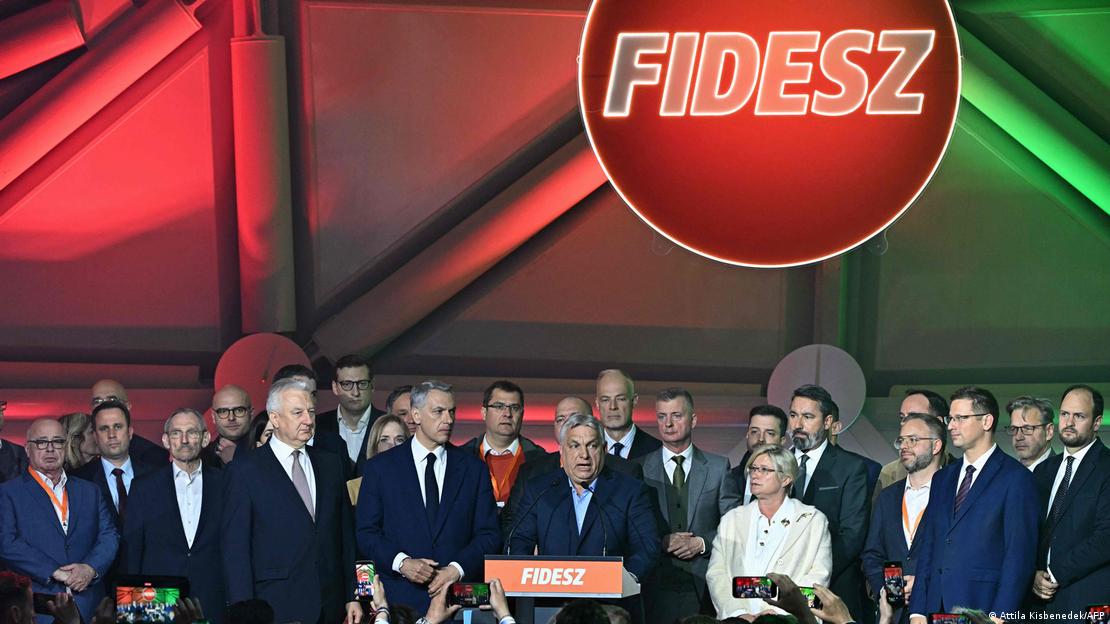
So far, Orban has refused to take any responsibility for the alleged abuse of power in his regime and shown no public remorse. During the campaign, he announced that he would remain a parliamentarian but would step down as head of Fidesz in case of an election defeat, all the while brushing off this eventuality.
Instead, Orban has indeed stepped down from his parliamentary seat, but not yet announced his resignation as party leader. He has offered to quit but underlined that he stands ready "for the community."
The party has said that it will hold a new leadership conference in June. The dilemma faced by Fidesz is that it would fall apart without Orban, as the party is completely centered on him. And yet with him it will retain the reputation of being a corrupt and autocratic party among all but its small core voter base.
In a video posted on Facebook, Orban himself announced his future plans in a way that was quite remarkable in semantic terms: "I am not needed in parliament right now but in the reorganization of the national side."
For many Hungarians, this is a continuation of Orban's long-standing story: That the part of the Hungarian population that supports him are the true Hungarians, but nobody else.
Many view the gesture of giving up his parliamentary seat as both shirking responsibility and an attempt to reassert dominance. Many feel Orban probably does not want to subject himself to the humiliation of having to hear criticism of himself and his system in parliament. At the same time, he apparently also considers it beneath his dignity to be just a lawmaker.
Fidesz will decide on the next party leader in June
Image: Attila Kisbenedek/AFP
Are oligarchs transferring funds?
The political scientist Daniel Rona recently predicted on the Hungarian news portal Telex that Orban would likely wait to see how things developed over the coming months before making a concrete decision on how to shape his political and personal future.
Investigative journalist Szabolcs Panyi wrote that Orban was considering going to the United States and applying for asylum there, but that is unlikely. This would destroy his work in Hungary, deal a fatal blow to his party and political community and also severely damage his family dynasty.
Orban's father and younger brother are two of the wealthiest business people in Hungary, involved predominantly in the mining and construction sectors. His eldest daughter Rahel and her husband Istvan Tiborcz, who are also among Hungary's richest individuals, emigrated to the US last year. The European Anti-Fraud Office (OLAF) investigated Tiborcz on several occasions based on alleged irregularities and conflicts of interest regarding state tenders. It forwarded recommendations to the Hungarian authorities and called for EU funds to be returned. In Hungary, the proceedings were shelved.
There are signs of movement among Orban's associates too. A few days ago, incoming Hungarian Prime Minister Peter Magyar accused the people many regard as Orban's cronies of transferring billions to foreign accounts in order to evade anti-corruption investigations and planned attempts to recover assets. Though there is no concrete evidence of this, Hungarian media outlets have reported on numerous financial transactions on the part of oligarchs, such as Orban's childhood friend Lorinc Meszaros, a businessman and former politician.
Many in Orban's party are still in a state of disbelief over their election defeat, and have turned to religion in an attempt to explain it. Outgoing Speaker of the National Assembly Laszlo Kover described it as a "temporary victory for satanic forces" but added that "in the end, victory belongs to Jesus Christ."
Zsolt Jeszenszky, a well-known influencer from the Orban camp, said that he thought the outgoing prime minister had "unintentionally committed idolatry" during a visit to India in early 2025, thereby "opening the door to evil spirits in his life."
Others have said that the defeat was caused by opportunistic profiteers in the Orban system. But few Fidesz loyalists have blamed corruption and abuse of power for the party's defeat.
This article was translated from German.
The political scientist Daniel Rona recently predicted on the Hungarian news portal Telex that Orban would likely wait to see how things developed over the coming months before making a concrete decision on how to shape his political and personal future.
Investigative journalist Szabolcs Panyi wrote that Orban was considering going to the United States and applying for asylum there, but that is unlikely. This would destroy his work in Hungary, deal a fatal blow to his party and political community and also severely damage his family dynasty.
Orban's father and younger brother are two of the wealthiest business people in Hungary, involved predominantly in the mining and construction sectors. His eldest daughter Rahel and her husband Istvan Tiborcz, who are also among Hungary's richest individuals, emigrated to the US last year. The European Anti-Fraud Office (OLAF) investigated Tiborcz on several occasions based on alleged irregularities and conflicts of interest regarding state tenders. It forwarded recommendations to the Hungarian authorities and called for EU funds to be returned. In Hungary, the proceedings were shelved.
There are signs of movement among Orban's associates too. A few days ago, incoming Hungarian Prime Minister Peter Magyar accused the people many regard as Orban's cronies of transferring billions to foreign accounts in order to evade anti-corruption investigations and planned attempts to recover assets. Though there is no concrete evidence of this, Hungarian media outlets have reported on numerous financial transactions on the part of oligarchs, such as Orban's childhood friend Lorinc Meszaros, a businessman and former politician.
Many in Orban's party are still in a state of disbelief over their election defeat, and have turned to religion in an attempt to explain it. Outgoing Speaker of the National Assembly Laszlo Kover described it as a "temporary victory for satanic forces" but added that "in the end, victory belongs to Jesus Christ."
Zsolt Jeszenszky, a well-known influencer from the Orban camp, said that he thought the outgoing prime minister had "unintentionally committed idolatry" during a visit to India in early 2025, thereby "opening the door to evil spirits in his life."
Others have said that the defeat was caused by opportunistic profiteers in the Orban system. But few Fidesz loyalists have blamed corruption and abuse of power for the party's defeat.
This article was translated from German.

INTERVIEW
Dismantling Orban’s legacy: the reforms that lie ahead for Hungary
After 16 years of illiberal governance under outgoing prime minister Viktor Orban, restoring the rule of law in Hungary is not just a political transition but a full-on regime change, says Balint Magyar, a former Hungarian education minister and author of a study on Orban-era state capture. It will also mean bringing some of Orban's high-profile loyalists to trial.
Issued on: 30/04/2026 -
FRANCE24
By: Sonya CIESNIK

Dismantling Orban’s legacy: the reforms that lie ahead for Hungary
After 16 years of illiberal governance under outgoing prime minister Viktor Orban, restoring the rule of law in Hungary is not just a political transition but a full-on regime change, says Balint Magyar, a former Hungarian education minister and author of a study on Orban-era state capture. It will also mean bringing some of Orban's high-profile loyalists to trial.
Issued on: 30/04/2026 -
FRANCE24
By: Sonya CIESNIK
Hungary's election winner Peter Magyar talks to the media after talks between parties on preparations for the first session of the Parliament in Budapest, Hungary on April 17, 2026. © Bernadett Szabo, Reuters
Following Viktor Orban’s election defeat on April 12, new Hungarian premier Peter Magyar has promised to seek justice for crimes committed by his predecessor's network of political allies and the oligarchs who supported them.
The corruption is well entrenched: Orban dominated Hungarian politics for years without any serious challenger, and there has never been another figure in the country’s modern history who amassed so much power in such a relatively short period of time.
From the media to the judicial system and from universities to local governments, Orban’s empire infiltrated every state institution. Nothing could be done in Hungary without political connections, one of Hungary’s wealthiest businessman told the Polish newspaper Gazeta Wyborcza in April, while asking to remain anonymous.
Magyar’s centre-right Tisza party won 141 seats in parliament out of 199 in the April elections, giving it a large majority to strengthen the rule of law and potentially unlock billions in funding from the European Union, which froze the allocation under Orban due to concerns over corruption and democratic backsliding.
Yet time is of the essence: Magyar has warned that oligarchs allied with Orban have begun siphoning off assets to the United States, the United Arab Emirates, Uruguay and "other distant countries”.
The Polish experience could provide some insight into what options exist for Hungary. After a liberal opposition bloc led by Donald Tusk came out ahead in October 2023 parliamentary elections, Tusk pledged as prime minister to reform Poland’s institutions following eight years of right-wing Law and Justice (PiS) party rule. He immediately fired high-profile figures and bypassed some of the legal obstacles left by the previous government.
FRANCE 24 spoke with Balint Magyar – a sociologist, former education minister and author of the book, “The Hungarian Octopus: The Post-Communist Mafia State” – who argues that Hungary is embarking on not just a change of government, but a full-on regime change.
Magyar has promised to go after corrupt officials who were part of the so-called Orban system. Does he risk falling into the very illiberalism he pledged to abolish in seeking a rupture from the Orban years?
Peter Magyar won 53% of the votes in the elections on April 12, which gives him a more than two-thirds majority in the parliament. It meant that Orban’s attempts to make election law more disproportionate backfired. Such a constitutional majority is enough to change any law.
Among Magyar’s promises during the elections was instituting a proportional electoral system. The incoming premier has also promised to limit the maximum time for future prime ministers to two terms – eight years total.
What happened was not a government change but a regime change. A government change means that basic values are shared by the competing parties. In a regime, the competing parties do not share the same political values.
Hungarians witnessed the first regime change in 1990 from a communist dictatorship to a liberal democracy.
The second regime change happened in 2010, from a liberal democracy to an autocracy. This is what Orban called “a revolution at the ballot boxes”. In 2011, he rushed a new constitution through the parliament without any consultation with the public (called the Fundamental Law of Hungary, the new constitution codified a new interpretation of history and ethno-nationalist principles).
Magyar’s victory represents the third regime change in Hungary’s recent history, from an autocracy – hopefully – back to a liberal democracy. The incoming premier has pledged to hold a referendum on accepting a new constitution.
How difficult will it be to prosecute high-placed officials like Peter Szijjarto, the minister of foreign affairs and trade, who reportedly leaked information on EU summit discussions to Russia?
Looking to turn the page on Orban’s tenure, Magyar has pledged to pursue officials and corporate leaders accused of corruption: during his campaign, he launched a programme called “Road to Prison”. This was not an ordinary type of corruption. If you look at the international scene, you can see charges brought against Poland's former deputy minister of justice in the Law and Justice government, Marcin Romanowski, or against Romanian politicians. These are minor cases compared to the scale of robbery of the state committed by the Orban clan’s politicians and oligarchs.
The Fidesz government operated like a mafia state. All contributing members of society were subordinated to it: it was a political enterprise which captured the state, the economy and the oligarchs. The mafia state had two motivations: monopolising political power and accumulating personal and family wealth. With the possibility of unilaterally appointing the heads of the controlling organisations and the presidents of the republic, central bank, constitutional court, chief attorney’s office and state account office, Orban could exercise direct coercion and blackmail over the whole society. As all these figures were subordinated to Orban, he could govern the state as a criminal organisation. Most of these actors and Orban-related oligarchs committed crimes, according to existing Hungarian legal code.
Magyar has called on all the leaders of the above-mentioned institutions to resign. If they don’t comply, he will use legal means to oust them from their positions.
Police have already begun investigations even though Magyar’s government isn’t in office yet. I don’t think rank-and-file loyalists will be prosecuted. What we will witness is the total collapse of the mafia-state organisation led by Orban.
Also, the difference between the Hungarian and Polish cases is that the Polish leader of the PiS party, Jaroslaw Kacznyski, was an autocrat but not a criminal, while Orban was an autocrat and a criminal at the same time.
There will be widespread legal procedures, although I have some doubt that stolen state assets will be recouped. (Wealthy Hungarians are leaving the country and transferring financial assets, according to the Financial Times.)
Orban has been voted out, but he once famously said in an interview with an Austrian tabloid that he "would like to tie the hands of the next government. And not only of the next, but of the following 10 governments." How big of a threat does he and Fidesz present to the incoming government?
Orban’s defeat in the latest elections represents not only a political, but a total moral collapse. There is a difference between a mafia state and a “classic” mafia. The positions within a classic mafia are informal positions: they can bribe public servants if needed, but they mainly operate outside the governmental bodies.
In the case of the mafia state, the positions are positioned within the state apparatus. After winning a constitutional majority, Magyar’s centre-right Tisza party can take back these political and administrative positions. Orban’s political-economic clan, therefore, faces an unavoidable collapse.
A national opinion poll published this week asked Hungarians for the main reason for Orban’s defeat. Some 49% responded that it was corruption, around 18% responded that it was the bad economic situation, and around 10% attributed the defeat to the lies of the government. This represents the dual nature of wide popular discontent: namely, the complete amorality and incapacity of Orban’s regime.
This interview has been lightly edited for length and clarity.
Following Viktor Orban’s election defeat on April 12, new Hungarian premier Peter Magyar has promised to seek justice for crimes committed by his predecessor's network of political allies and the oligarchs who supported them.
The corruption is well entrenched: Orban dominated Hungarian politics for years without any serious challenger, and there has never been another figure in the country’s modern history who amassed so much power in such a relatively short period of time.
From the media to the judicial system and from universities to local governments, Orban’s empire infiltrated every state institution. Nothing could be done in Hungary without political connections, one of Hungary’s wealthiest businessman told the Polish newspaper Gazeta Wyborcza in April, while asking to remain anonymous.
Magyar’s centre-right Tisza party won 141 seats in parliament out of 199 in the April elections, giving it a large majority to strengthen the rule of law and potentially unlock billions in funding from the European Union, which froze the allocation under Orban due to concerns over corruption and democratic backsliding.
Yet time is of the essence: Magyar has warned that oligarchs allied with Orban have begun siphoning off assets to the United States, the United Arab Emirates, Uruguay and "other distant countries”.
The Polish experience could provide some insight into what options exist for Hungary. After a liberal opposition bloc led by Donald Tusk came out ahead in October 2023 parliamentary elections, Tusk pledged as prime minister to reform Poland’s institutions following eight years of right-wing Law and Justice (PiS) party rule. He immediately fired high-profile figures and bypassed some of the legal obstacles left by the previous government.
FRANCE 24 spoke with Balint Magyar – a sociologist, former education minister and author of the book, “The Hungarian Octopus: The Post-Communist Mafia State” – who argues that Hungary is embarking on not just a change of government, but a full-on regime change.
Magyar has promised to go after corrupt officials who were part of the so-called Orban system. Does he risk falling into the very illiberalism he pledged to abolish in seeking a rupture from the Orban years?
Peter Magyar won 53% of the votes in the elections on April 12, which gives him a more than two-thirds majority in the parliament. It meant that Orban’s attempts to make election law more disproportionate backfired. Such a constitutional majority is enough to change any law.
Among Magyar’s promises during the elections was instituting a proportional electoral system. The incoming premier has also promised to limit the maximum time for future prime ministers to two terms – eight years total.
What happened was not a government change but a regime change. A government change means that basic values are shared by the competing parties. In a regime, the competing parties do not share the same political values.
Hungarians witnessed the first regime change in 1990 from a communist dictatorship to a liberal democracy.
The second regime change happened in 2010, from a liberal democracy to an autocracy. This is what Orban called “a revolution at the ballot boxes”. In 2011, he rushed a new constitution through the parliament without any consultation with the public (called the Fundamental Law of Hungary, the new constitution codified a new interpretation of history and ethno-nationalist principles).
Magyar’s victory represents the third regime change in Hungary’s recent history, from an autocracy – hopefully – back to a liberal democracy. The incoming premier has pledged to hold a referendum on accepting a new constitution.
How difficult will it be to prosecute high-placed officials like Peter Szijjarto, the minister of foreign affairs and trade, who reportedly leaked information on EU summit discussions to Russia?
Looking to turn the page on Orban’s tenure, Magyar has pledged to pursue officials and corporate leaders accused of corruption: during his campaign, he launched a programme called “Road to Prison”. This was not an ordinary type of corruption. If you look at the international scene, you can see charges brought against Poland's former deputy minister of justice in the Law and Justice government, Marcin Romanowski, or against Romanian politicians. These are minor cases compared to the scale of robbery of the state committed by the Orban clan’s politicians and oligarchs.
The Fidesz government operated like a mafia state. All contributing members of society were subordinated to it: it was a political enterprise which captured the state, the economy and the oligarchs. The mafia state had two motivations: monopolising political power and accumulating personal and family wealth. With the possibility of unilaterally appointing the heads of the controlling organisations and the presidents of the republic, central bank, constitutional court, chief attorney’s office and state account office, Orban could exercise direct coercion and blackmail over the whole society. As all these figures were subordinated to Orban, he could govern the state as a criminal organisation. Most of these actors and Orban-related oligarchs committed crimes, according to existing Hungarian legal code.
Magyar has called on all the leaders of the above-mentioned institutions to resign. If they don’t comply, he will use legal means to oust them from their positions.
Police have already begun investigations even though Magyar’s government isn’t in office yet. I don’t think rank-and-file loyalists will be prosecuted. What we will witness is the total collapse of the mafia-state organisation led by Orban.
Also, the difference between the Hungarian and Polish cases is that the Polish leader of the PiS party, Jaroslaw Kacznyski, was an autocrat but not a criminal, while Orban was an autocrat and a criminal at the same time.
There will be widespread legal procedures, although I have some doubt that stolen state assets will be recouped. (Wealthy Hungarians are leaving the country and transferring financial assets, according to the Financial Times.)
Orban has been voted out, but he once famously said in an interview with an Austrian tabloid that he "would like to tie the hands of the next government. And not only of the next, but of the following 10 governments." How big of a threat does he and Fidesz present to the incoming government?
Orban’s defeat in the latest elections represents not only a political, but a total moral collapse. There is a difference between a mafia state and a “classic” mafia. The positions within a classic mafia are informal positions: they can bribe public servants if needed, but they mainly operate outside the governmental bodies.
In the case of the mafia state, the positions are positioned within the state apparatus. After winning a constitutional majority, Magyar’s centre-right Tisza party can take back these political and administrative positions. Orban’s political-economic clan, therefore, faces an unavoidable collapse.
A national opinion poll published this week asked Hungarians for the main reason for Orban’s defeat. Some 49% responded that it was corruption, around 18% responded that it was the bad economic situation, and around 10% attributed the defeat to the lies of the government. This represents the dual nature of wide popular discontent: namely, the complete amorality and incapacity of Orban’s regime.
This interview has been lightly edited for length and clarity.