Friday, May 01, 2026

Netherlands request European assistance to contain wildfires

01.05.2026, DPA

Firefighters from Germany, Belgium and France have been deployed to the Netherlands on Friday to assist in efforts to contain a number of fires that broke out on military training grounds.

This marks the first time that the Netherlands has requested foreign assistance for combating wildfires, according to local authorities.

Some 30 firefighting vehicles from France and Germany are to be mainly deployed in the south-eastern region near Eindhoven, while 67 special firefighting forces have been sent from Germany.

A major fire broke out on Wednesday at a military training ground near the town of t'Harde, some 80 kilometres east of Amsterdam. 

The flames spread quickly and are still not under control, according to police. Further fires have since broken out at other military training sites, including in the south of the country.

The cause of the fires remains unclear, with experts assuming that exercises involving explosives may have sparked the fires due to the dry conditions.

Firefighting efforts have been hampered by severe drought and unusually high temperatures, according to the authorities. So far, no one has been harmed and there is no risk to the population at present.

Income gap widens as executive pay soars, Oxfam says

01.05.2026, DPA

Photo: Marcus Brandt/dpa

Executive pay around the world has risen sharply in recent years, while all other workers have had less and less money at their disposal, according to an analysis by Oxfam released on Friday.

The 1,500 highest-paid corporate executives received an average of around $8.4 million last year, Oxfam, an international confederation of aid and development organizations, said.

Adjusted for inflation, that amounted to an 11% increase in executive pay compared with 2024 and a 54% rise compared with 2019, according to Oxfam.

The calculations were based on data from 1,500 companies in 33 countries from the S&P Capital IQ database, which contains information on listed and private companies worldwide.

By contrast, the inflation-adjusted average income of the global workforce stood at $17,156 last year, Oxfam said. That was 0.5% higher than in 2024, but 12% lower than in 2019.

The figures are based on data from the UN's International Labour Organization (ILO) and the International Monetary Fund (IMF).

Gulf crisis could push millions into poverty

The decline in the number of people living in extreme poverty despite having work has also slowed significantly in recent years.

So-called working poverty fell by an average of 7% a year between 2000 and 2019. Since 2020, that rate has more than halved to 3%.

The current crisis in the Gulf could make the situation worse, the study's authors warned.

According to the report, the UN Development Programme has warned that, in a worst-case scenario, 32 million more people could fall into poverty as a result of the Iran war.

To address the problems, Oxfam called for countries to draw up realistic, time-bound plans to reduce inequality. These should include clear targets and regular reviews.

The organization also called for taxes on the super-rich, as well as stricter rules on lobbying and the financing of political campaigns by wealthy individuals.

Greenpeace slams German fuel tax cuts as new measures take effect

01.05.2026, 

Photo: Christoph Reichwein/dpa

By Sascha Meyer, dpa

Greenpeace has strongly criticized a fuel tax cut that took effect in Germany on Friday, arguing the measure is too expensive and will boost revenue for oil companies, while consumers continue to struggle with high energy prices caused by the Iran war.

Greenpeace mobility expert Marissa Reiserer called for the €0.17 ($0.19) tax cut per litre of petrol and diesel to be reversed as "quickly as possible."

She described the cap as a step in the wrong direction as it is likely to line the pockets of oil companies and benefit commuters with "gas-guzzling cars."

Instead, Reiserer urged for fuel consumption to be brought down permanently, arguing that this could be achieved by improving public transport and boosting electric vehicles.

The tax cut, which took effect at midnight, was approved by German lawmakers last month, as part of measures to ease the burden on consumers due to the Iran war. The cap is set to last until the end of June.

Oil prices have risen sharply because of the blockade of the Strait of Hormuz off the Iranian coast, which is crucial for the global oil trade. This has caused prices at the pump to surge across the world, reaching record highs in Germany last month.

Chancellor Friedrich Merz's government subsequently passed a law to ban petrol stations from raising prices more than once a day, but the restrictions failed to bring down prices.

On the first day of the new measures on Friday, the German automobile association ADAC's petrol station app showed prices below €2 in many places early on Friday, especially for E10 and in some cases for diesel. 

It is not yet clear whether the full tax rebate of about €0.17 will be passed on to consumers. Experts expect the rebate to appear at the pumps gradually, as the tax benefit only applies to fuel that left tank farms or refineries after midnight, not to the stocks already held by petrol stations.

A similar temporary cap was introduced in Germany following the start of Russia's full-scale invasion of Ukraine, though the government at the time, which included the Green Party, also introduced a monthly €9 rail pass that could be used on local transport nationwide, in a bid to incentivize motorists to switch to public transport.

The pass garnered widespread attention and popularity even beyond Germany.

Reiserer criticized the current conservative-led government for opting against reviving the concept, and instead returning to a fuel tax cut that she said had failed before.

She also pointed to the current Deutschlandticket rail pass, which applies on the same routes as the €9 pass but, at €63 a month, is considerably more expensive.

The ticket helps to bring down car trips, eases the burden on roads and consumers, supports the climate and helps to make Germany less dependable on oil imports, according to the expert.

Armand Zorn, a senior lawmaker from the Social Democrats, which are the junior partner in Merz's coalition, called on oil companies to pass on the tax cuts to consumers and bring down prices at the pump accordingly.

"This rip-off must stop, and quickly," he said, adding that the temporary tax cut lays the groundwork for providing targeted relief to commuters and businesses.

First dots on the road map to exiting fossil fuels
DW
04/30/2026


The message from inaugural talks on exiting fossil fuels was clear. It's not if, but when and how.


Image: Ivan Valencia/AP Photo/picture alliance

After days of talks in the first-ever gathering devoted to ditching the fossil fuels that are heating the planet, ministers, climate advocates and financial experts from more than 50 countries have agreed on a set of outcomes.

Held in the Colombian coastal city of Santa Marta, the conference laid the groundwork for continued cooperation between countries that want to move to a clean-energy future, and created momentum for more talks on an issue that is politically and economically sensitive.

Maina Vakafua Talia, minister for home affairs, climate change and environment in the Pacific state of Tuvalu told delegates at the talks hosted by Colombia and the Netherlands, that they were "making history."

"Multilateralism and international cooperation are not defined by a single process, but rather by recognizing the governance gaps. (...) even our greatest challenges can be overcome, and we can reach new horizons together," he said.

Finding common ground

The issue of how to swap coal, oil and gas — which are driving global temperatures and causing extreme weather such as drought, storms and heatwaves — for more electrification and a faster rollout of renewable energy, is complex. And there is no one-size-fits-all to making the shift.

Countries exporting coal, oil and gas face different challenges to those importing fossil fuels.

Colombia is a case in point. Its economy depends on coal exports, including to Germany and other parts of Europe. So if the nation wants to wind down the sector quickly, it will have to build create alternative sources of income and employment. Vulnerable groups would be among those most affected.

Simply shuttering the industry altogether would also be difficult for legal reasons, with mining companies potentially suing the state for compensation over lost revenue.

In short, moving away from coal is a structural transfor
mation that requires money, planning and a strategy for managing social consequences.

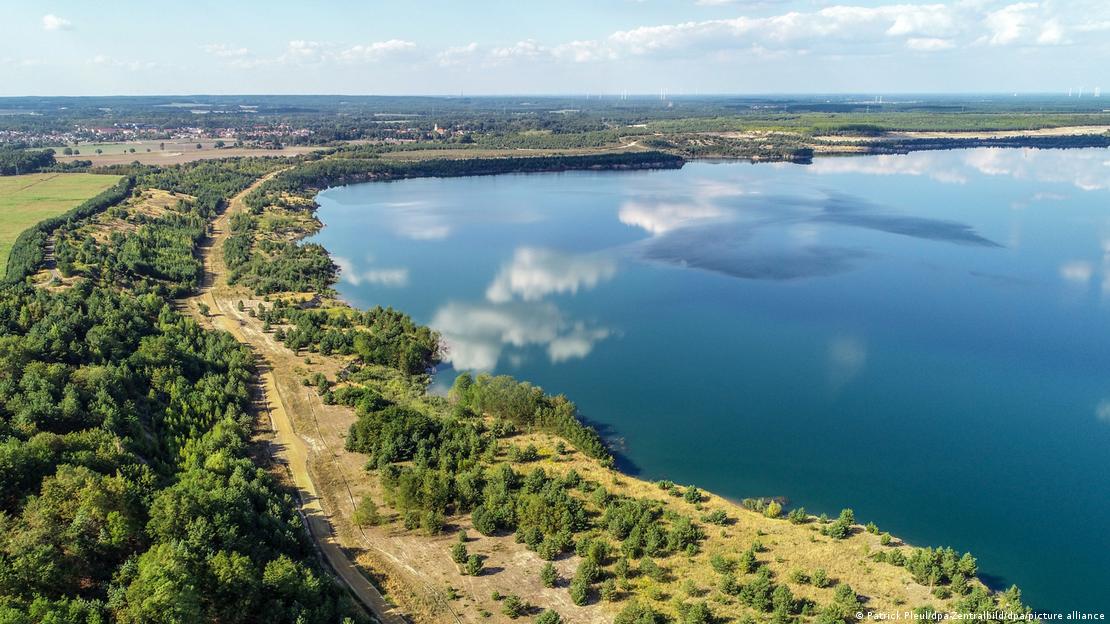
Some former lignite mines in Germany have already been transformed into lakes which also have recreational benefits
Image: Patrick Pleul/dpa-Zentralbild/dpa/picture alliance

Germany's Coal Commission could offer one model for how to get there. Established in 2019, the body brought all relevant stakeholders to the table and quickly drew up a plan to transition away from coal in a way it deemed both economically viable and socially fair. Germany plans to phase out coal-fired power generation completely by 2038.
Multilateralism under strain

Unlike the vast annual UN climate conferences which are not only attended by delegates from most countries in the world, but increasingly by fossil fuel lobbyists, the Santa Marta meeting was billed as a "coalition of the willing."

The hosts issued their invitation after last year's COP30 climate summit in Brazil saw the emergence of a broad alliance in favor of a road map to phase out fossil fuels.

The proposal was ultimately blocked by a number of countries. So those attending the talks in Santa Marta welcomed the chance to meet in a different forum.

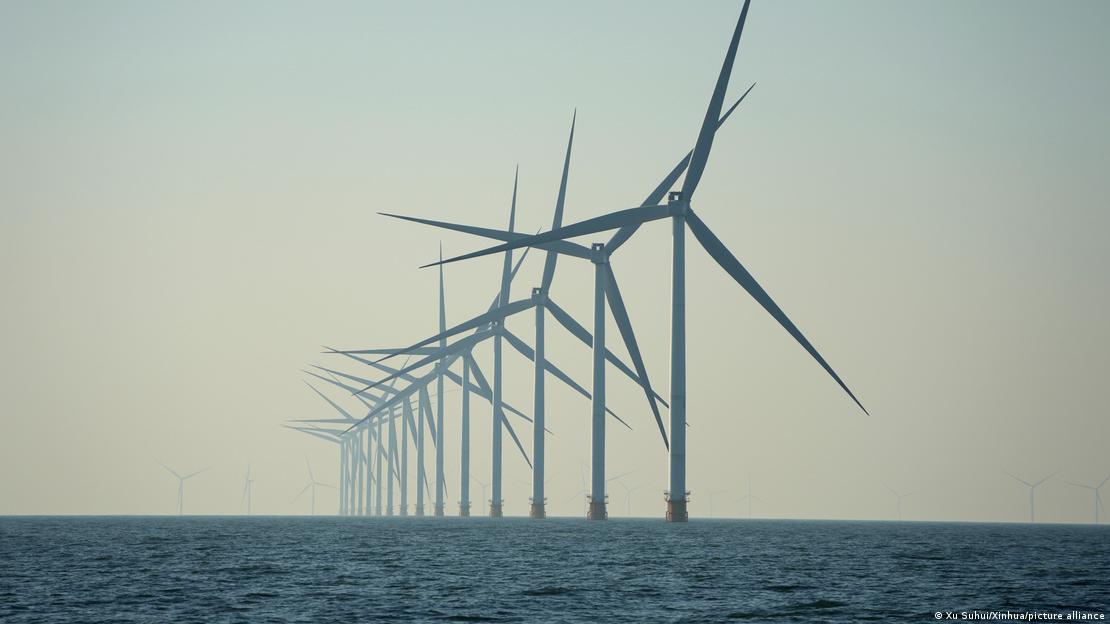
In light of the energy crisis and high fuel prices, many economists are calling for more independence from fossil fuels
Image: Xu Suhui/Xinhua/picture alliance

Former Irish President Mary Robinson, who is a prominent climate justice figure, said the talks felt more collaborative than the annual UN climate conferences.

"COPs are more formal, negotiators have their lines and they will not cross them and it's so different here," she told reporters.
Many ideas and the central question of money

France used the conference to present a detailed plan for how and when it intends to end its use of coal, oil and gas.

It is planning to reduce the share of fossil fuels in final energy consumption to 40% by 2030 and 30% by 2035. Coal is to be phased out by 2027, oil by 2045 and fossil gas by 2050. The French road map brings together existing climate and energy targets but does not contain new commitments.

NGOs have welcomed the plan but say it remains insufficient in light of the climate crisis. Last year, 91% of the planet recorded warmer than average surface air temperatures. Hotter conditions have been linked to prolonged heatwaves, wildfires, crop failure and water scarcity.

The talks in Santa Marta also made clear that financing the energy transition remains one of the central challenges, especially for developing countries facing high borrowing costs and limited access to capital.


Stientje van Veldhoven, the Dutch Minister for Climate and Green Growth, said affordable financing would be essential if the transition is to be implemented globally. The Netherlands has also called for the reduction in fossil fuel subsidies. Today, fossil fuels receive around $920 billion in subsidies worldwide.
Shoring up energy security in uncertain times

Colombia's left-wing president, Gustavo Petro, attended the talks and used the opportunity to challenge the global economic model underpinning fossil fuel consumption.

He also linked current conflicts to energy dependence, saying that "the wars we are seeing are driven by desperate geopolitical strategies around fossil resources."

Underlining the importance of the energy transition for Europe, EU climate chief Wopke Hoekstra said that "in around two months, Europe's fossil fuel import bill increased by over EUR 22 billion, without a single additional unit of energy."

He said a road map to transition away from coal, oil and gas should build on the goals agreed at the UN climate conference to triple renewable energy capacity and double energy efficiency by 2030. It should also include an end to new extraction and exploration and the decarbonization of transport, aviation and shipping.

Germany did not send a minister but was represented by Jochen Flasbarth, an experienced climate diplomat.

The German government remains divided over its path towards fossil fuel independence. While the environment ministry wants to accelerate the expansion of renewable energy, economy minister Katherina Reiche is backing policies that would prolong the role of fossil fuels.


A road map will take time


Cristian Retamal, associate researcher at Universitat Politecnica de Catalunya in Spain, said the spirit of the talks had been "quite constructive with a very positive mood," but that it is too soon to say how things will evolve.

"The real impact of this emerging coalition and envisioned efforts remain to be seen in the coming months and couple of years."

Delegates at what has also been called the TAFF conference say there will be no defining road map or treaty this year. Though some Global South countries would like to see something binding going forward.

"We need a fossil fuel treaty that creates the necessary architecture for a just transition,” said Cedric Dzelu, Ghana's technical director of the office of the minister for climate change and sustainability. "Past treaties and agreements too often fall short on policies and pledges, financing and equitable implementation."

Juan Carlos Monterrey, special representative for climate change at Panama's environment ministry said it will be a process.

"We must pave the way for a legal instrument that names what it phases out and how we finance it," he said. "The treaty will take time. We know this."

Still, he struck a determined tone.

"Economies built on fossil fuels are unraveling in real time. Fossil fuels are not just dirty. They are unreliable. They are dangerous. And they must end."

The next meeting is due to take place next year in Tuvalu. Scientists believe the small Pacific island state could disappear by 2100 as a result of rising sea levels.


Edited by: Tamsin Walker


Tim Schauenberg One of DW's climate reporters, Tim Schauenberg is based in Brussels and Münster.
Sudan's civil war: 'Genocide' in plain sight
Simone Schlindwein
DW
April 30, 2026

Experts estimate that Sudan's RSF militia may have massacred around 70,000 people in the city of el-Fasher in Darfur last October. A UN investigator told DW that the atrocities bear the hallmarks of genocide.

El-Fasher was the Sudanese army's last stronghold in Darfur. The RSF shared footage of their victory celebrations on Telegram, along with numerous videos showing the fighters' brutal actions
Image: Rapid Support Forces (RSF)/AFP

Her fingers are emaciated down to the bone. The ring she fiddles with nervously hangs loosely on her finger. Hassaina—as the 45-year-old Sudanese woman prefers to be called for security reasons—is deeply scarred, both mentally and physically.

It has been about six months since she and her four children survived the massacre in their hometown of el-Fasher in the embattled Darfur region of Sudan. They have since fled to Uganda, where they now live as refugees. The trauma runs deep: "I saw genocide with my own eyes and experienced it firsthand," Hassaina tells DW through tears.

War has been raging in Sudan for three years. Aid organizations estimate that hundreds of thousands of people have died in the fighting or as a result of the war. The violence reached a peak last October: The Rapid Support Forces (RSF) militia, which is fighting against the government army and allied militias, captured el-Fasher, the largest city in the Darfur region, after a long siege and carried out a massacre of immense proportions against the civilian population. It was a few days that completely changed Hassaina's life.

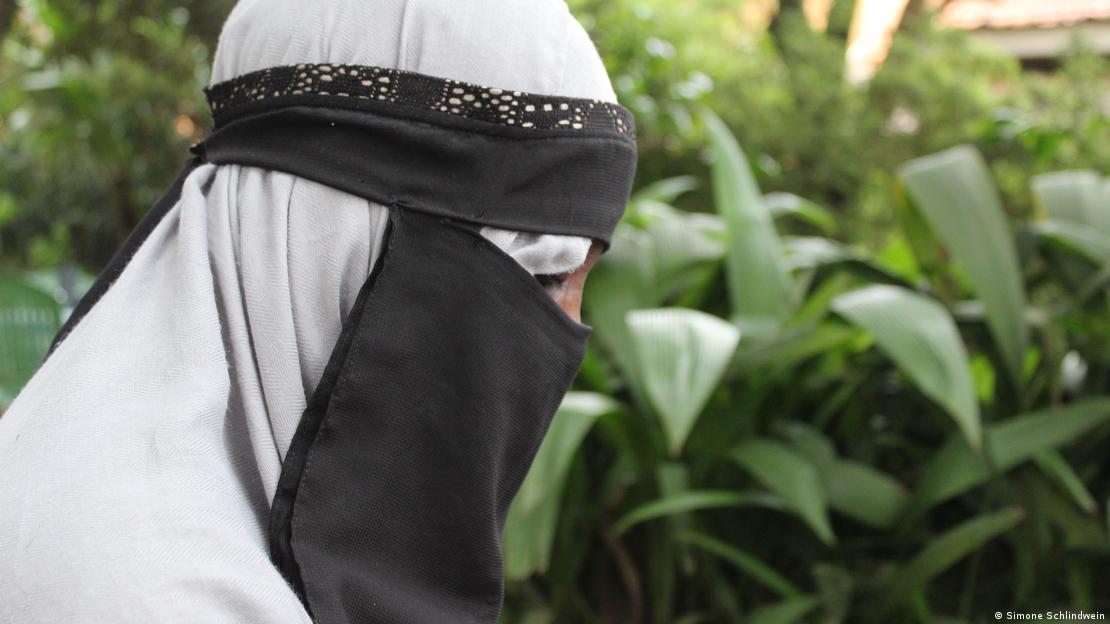
Many displaced people from Sudan, such as Hassaina, have reported atrocitiesImage: Simone Schlindwein

"The atrocities have a hallmark of genocide," concludes UN chief investigator Mohamed Chande Othman in an interview with DW. In February, after about three months of research, he presented his 30-page report to the UN Human Rights Council in Geneva and also submitted it to the International Criminal Court (ICC) in The Hague.

He based his conclusion on three key findings. "The first one is to have mass killings. Secondly, you find physical harm through torture and horrendous gender-based violence, which is really traumatic, as proven by the evidence that we have. And the third element is the long-term starvation through denial of humanitarian access, destruction of medical facilities."

The RSF siege of el-Fasher


The RSF had previously besieged el-Fasher for over 18 months. They shut down the internet and telephone networks. Not a single bean, grain of rice, or drop of gasoline got through the RSF roadblocks. And no one could escape. The reason for the siege: El-Fasher was home to the headquarters of the army's 6th Division, against which the RSF is fighting

At the start of the war, the soldiers had still managed to defend the city. Then the RSF cut off their supply lines. The population was declared the enemy. When the army units finally surrendered, the roughly 250,000 remaining residents were left defenseless at the mercy of the RSF.


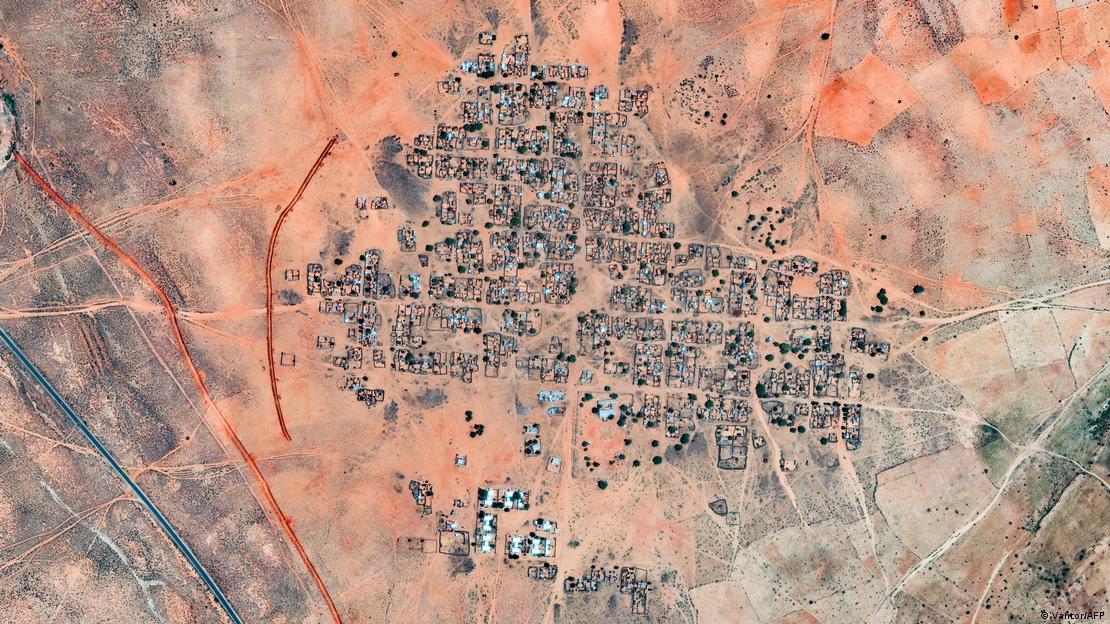
Hassaina and her family were among them. When the RSF began bombarding the city with artillery and drones on the night of October 25–26, 2025, Hassaina ran off with her teenage children; she lost sight of her husband, who had gone to organize help for an injured nephew. But the RSF fighters had previously used excavators to dig a 30-km (18-mile)-long trench around the city. Behind it, an earthen wall had been piled up—an insurmountable obstacle, Hassaina reports: "In the chaos, I fell into the trench and was buried under earth and corpses. I saw so many dead people around me."

Satellite images show how trenches have been dug around el-Fasher
Image: Vantor/AFP

In exchange for a ransom paid by a relative in Australia, Hassaina and her children finally regained their freedom and, after further twists and turns, made their way to a Ugandan refugee camp

The paramilitary group documented its crimes extensively: After the complete blackout of el-Fasher, the fighters used the internet, which they had restored, to post videos of their atrocities on their Telegram channel, accompanied by grandiose music. These videos show the militia's crimes up close: Aerial shots show off-road vehicles driving through the city. The trench is visible—as are thousands of people fleeing across the grassy landscape and being stopped by this trench: a death trap.

In one video, you can see RSF General Abu Lulu—clearly recognizable by his tousled curls, as confirmed by various media outlets and think tanks—shooting everyone in the trench who is still alive. Another video from the same day, filmed at the hospital in el-Fasher, shows fighters walking through the half-bombed building and executing everyone still alive in their beds or crouching on the floor—war crimes and crimes against humanity captured on camera.
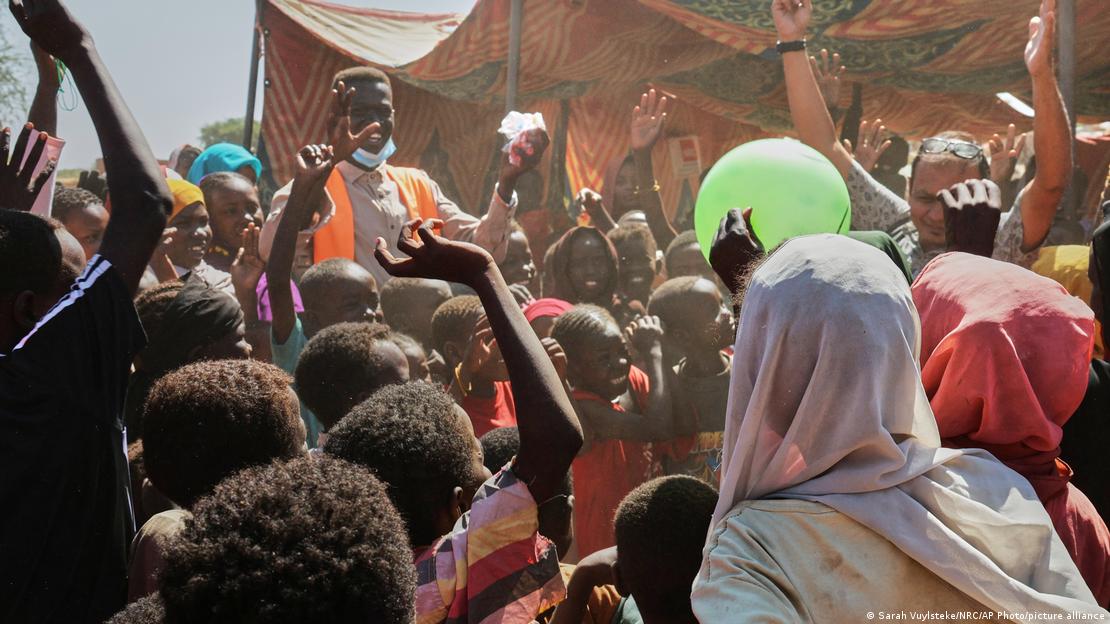
For many refugees from el-Fasher, Tawila was their first place of refuge (Photo courtesy of the Norwegian Refugee Council)
Image: Sarah Vuylsteke/NRC/AP Photo/picture alliance

Reports of mass rape


According to estimates by the International Organization for Migration (IOM), only about 100,000 people managed to flee the attacks on the day of the assault. Some, like Hassaina and her children, made it to the Tawila displacement camp 70 km to the southwest, where food.was provided.

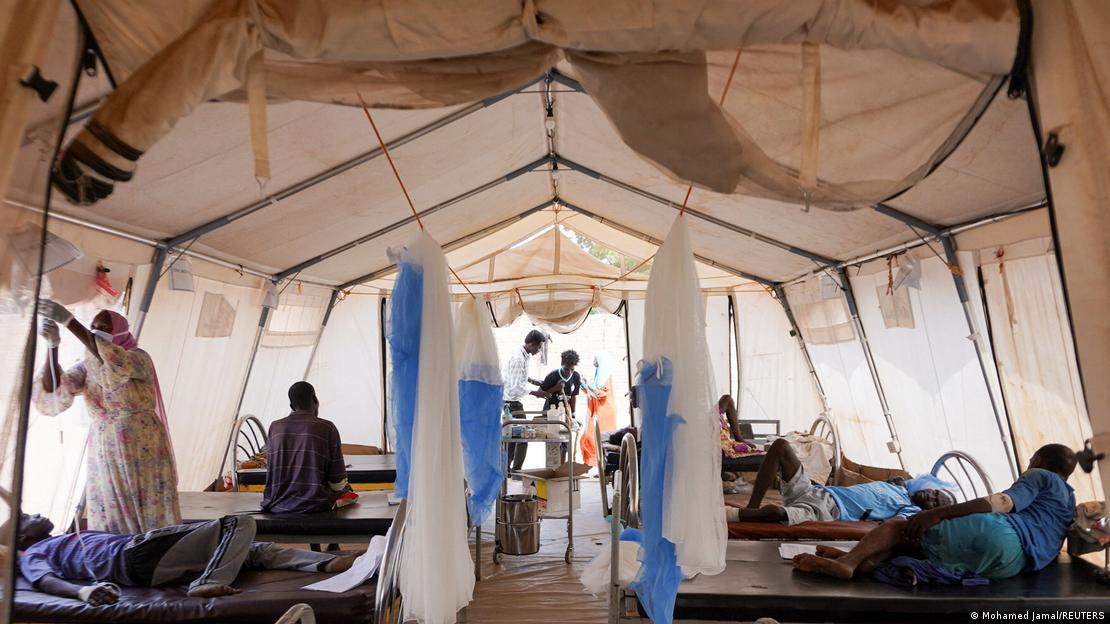
Bob Kitchen of the International Rescue Committee, one of the few aid organizations present, was also working there. The extent of the brutality inflicted on these people has deeply disturbed him. "Almost everyone that we spoke to had been raped." From infants to grandmothers, he told DW. "It was predominantly gang rape with very, very significant violence. We heard reports of tiny infants, six months old, being raped. We had very elderly women, 72, 75 years old, being raped all in front of their families. So there's very clear punishment involved in."

What took place in el-Fasher during the siege went largely unnoticed by the rest of the world. There were only sporadic reports in the media. A team of forensic scientists from the renowned Yale School of Public Health in the US tracked those events in real time using satellite imagery. In their latest analysis, the team was able to prove that the RSF had already destroyed the fields and farming villages in the surrounding area that fed the city in the run-up to the assault—and that the people were thus deliberately starved.

Many displaced people from El-Fasher had been abused and tortured
Image: Mohamed Jamal/REUTERS

From space, the forensic experts were also able to spot bodies and bloodstains on the dusty streets during those days in October when the RSF captured the city. They counted around 150 piles of bodies and numerous mass graves, according to Nathaniel Raymond of Yale University. His team is working to calculate the death toll based on estimates: "That left us with around 70,000 people presumed dead or missing," he told DW.

Following the largely overlooked siege of el-Fasher, the openly displayed massacres of October sparked an international outcry. Calls for investigations are growing. In Hassaina's eyes, the international community has made itself complicit. "The international community has let us down; it should have intervened during the siege to prevent worse from happening," she says through tears. "But nothing happened."

This article translated by Nico Fischer was originally written in German

Edited by: Chrispin Mwakideu
How Serbia's government controls much of the media

Sanja Kljajic in Novi Sad
DW
April 30, 2026

Since Serbia's ruling SNS party came to power, it has tightened its grip on the media. With an election expected soon, experts fear that authorities will try to eliminate the last pockets of independent reporting.

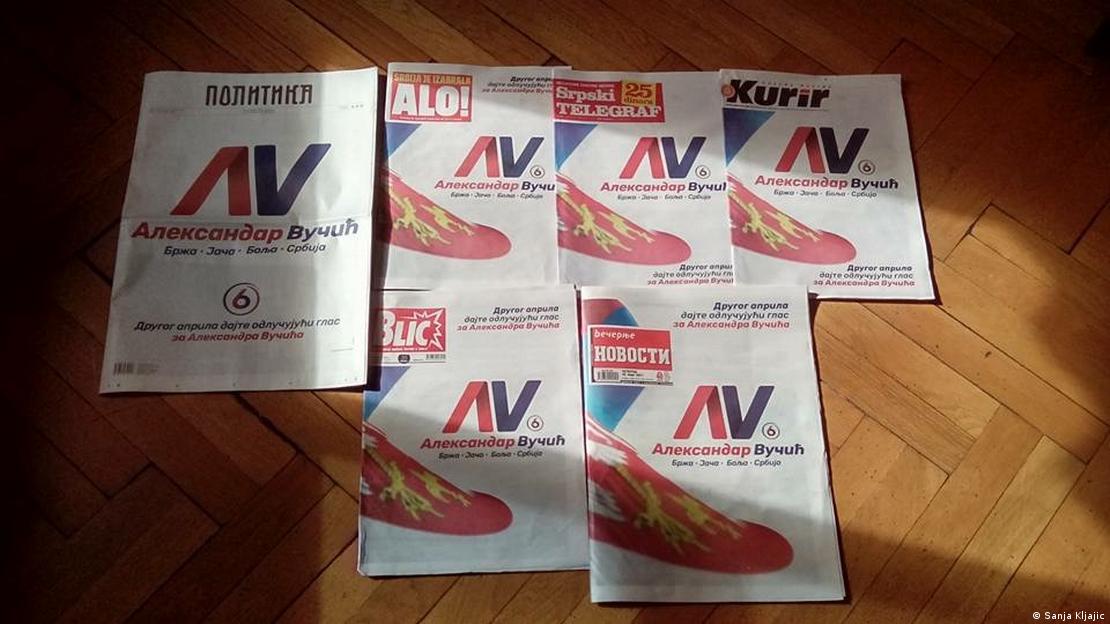
Aleksandar Vucic on the cover of two tabloid newspapers

Image: Rüdiger Rossig/DW


"Backsliding," "pressure," "political influence over editorial policy" — this is how numerous international reports describe the state of the media in Serbia.

Year after year, the international diagnosis of the health of Serbia’s media landscape remains the same: While the space for professional independent media is shrinking, the government's propaganda tools are becoming more developed and sophisticated.

"The main goal of the Serbian Progressive Party (SNS) after coming to power in 2012 was to place the entire media landscape under firm control. And they did this very systematically," journalist and media analyst Nedim Sejdinovic told DW.

The model, he says, was simple: Media outlets willing to cooperate with the authorities received financial and institutional support, while those that refused faced economic and political isolation.
Takeover of local and provincial outlets

One of the first steps was the takeover of the provincial public broadcaster in Vojvodina, where the entire management, along with editors and presenters of news programs, was replaced after the SNS came to power in the region.
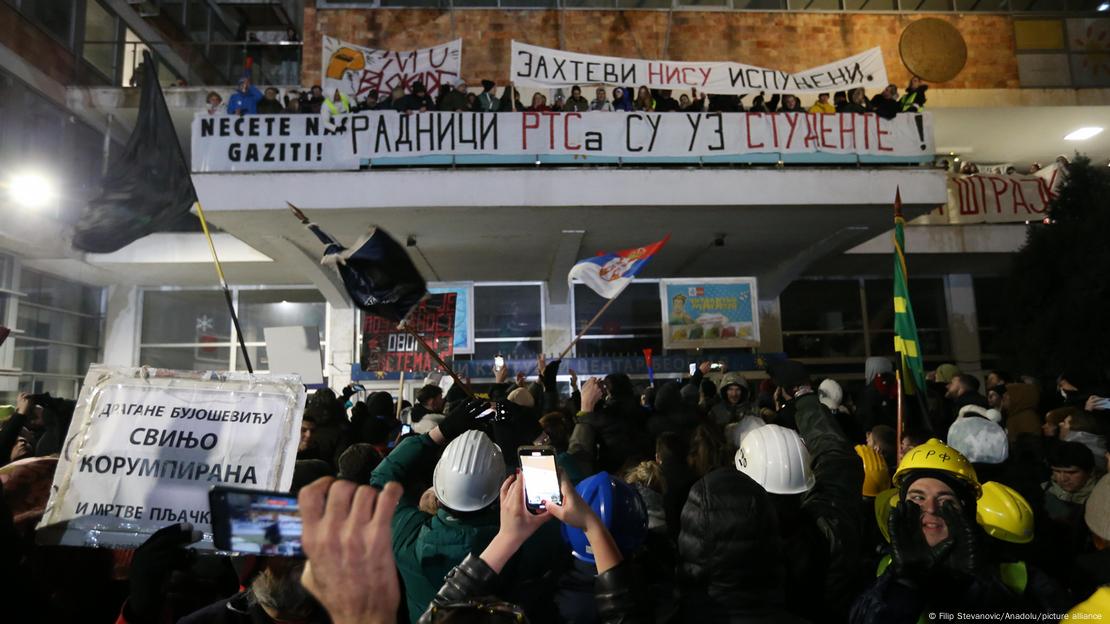
Thousands of Serbs gathered outside the premises of Serbia's public broadcaster RTS in Belgrade in January 2025 to demand objective reporting
Image: Filip Stevanovic/Anadolu/picture alliance

"But one of the most important elements of this media engineering was the purchase of media outlets, especially at the local level, by people who are part of the ruling elite, such as the family of (minister) Bratislav Gasic, or tycoons like Radojica Milosavljevic," said Sejdinovic.

"The result is that around 90% of media outlets are directly or indirectly linked to Aleksandar Vucic's regime," he added.

The role of public funding

Sejdinovic says that these media are sustained by public money, which is provided through several parallel channels. This has been confirmed by numerous watchdog reports.

The first channel is project co-financing, where public funds are allocated to media outlets through competitive calls to support media content that serves the public interest. According to analyses by BIRN and the Center for Sustainable Communities, around €120 million ($140 million) has been spent on this at the local, regional and state level over the past decade, with the majority going to media outlets that openly support the government.

The second, much larger and less transparent channel is state advertising, which analyses show is also largely directed toward the same pro-government outlets.

A third form of pressure comes from the market. "An atmosphere has been created in which even large private companies avoid advertising in independent media, so as not to damage their relationship with the authorities, and in a deregulated political and economic environment, that is necessary for doing business," said Sejdinovic.

The line between journalism and propaganda


In such a system, the line between journalism and propaganda is almost erased.

Critical voices are delegitimized and demonized, while scandals are reported without context and framed solely through the lens of government officials.

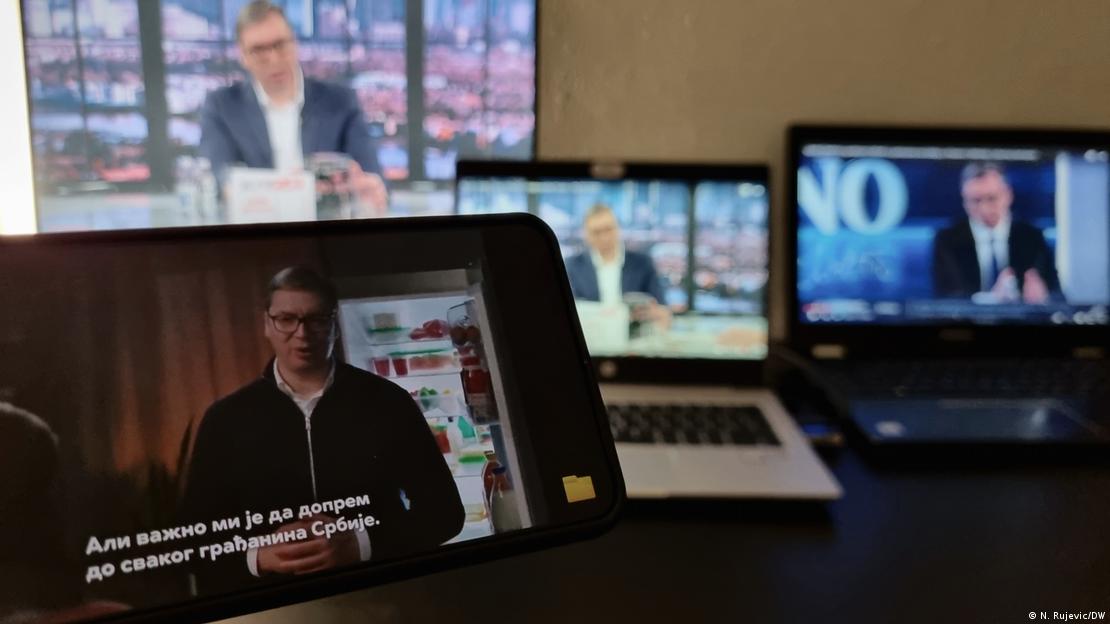
At the same time, the public space is saturated with the presence of President Vucic. His addresses are often broadcast live, interrupting regular TV and radio programs, while party rallies are aired simultaneously across national, regional and local TV stations.

President Aleksandar Vucic is a constant presence on television: His addresses are broadcast live, interrupting regular TV and radio programs
Image: N. Rujevic/DW

Viewers switching channels often encounter the same content: the same face, the same message.

The scale of control was also visible during the 2017 presidential campaign, when almost all daily newspapers carried front-page advertisements for then-Prime Minister Aleksandar Vucic — an unprecedented development in Serbia's modern political history.

The opposition rarely features in regular reporting, and dissenting voices are frequently labeled as "traitors," "foreign mercenaries" or "enemies of the state."

In this environment, the targeting and discrediting of government opponents have become routine.

From loyalists to 'super-loyalists'

Sejdinovic says that as the political crisis deepens, particularly following waves of protests over the past 18 months, control over the media is entering a new phase.

"SNS loyalists are now being replaced with super-loyalists," he explains.

Some pro-government media, he notes, previously limited themselves to positive coverage of the government and ignoring critical voices, but that was obviously not enough.

"Now the goal is to turn all media into a kind of primitive political weapon that will spread the most blatant lies, defame people, use crude language and create an atmosphere of deep political divisions in society," he told DW.
New outlets springing up

This trend is also reflected in the rapid emergence of new media outlets. The Association of Independent Electronic Media (ANEM) in Serbia has noted the registration of 78 new outlets since the beginning of 2026 alone.

During the 2017 presidential campaign, almost all daily newspapers carried front-page advertisements for then-Prime Minister Aleksandar Vucic
Image: Sanja Kljajic

"This is an expansion of the media machinery for spreading government propaganda," said Bojan Cvejic of ANEM. "Their texts are unsigned and almost identical, making them more like pamphlets than journalistic content, used for campaigns against critics," he told DW.
Serbia drops in the rankings

According to the latest World Press Freedom Index published by Reporters Without Borders, Serbia has dropped to 104th place and is now classified among countries with a "difficult situation" for media freedom.

The report highlights that despite some previous fluctuations in ranking, the overall environment for journalists in Serbia continues to deteriorate, marked by increasing political pressure, limited media pluralism and worsening conditions for independent reporting.

President Vucic is expected to call a parliamentary election soon, with many speculating that a poll could be held sometime between June and the end of the year.

Sejdinovic warns that the situation could deteriorate further, with the next phase potentially involving stronger pressure on the digital sphere, following patterns observed in other authoritarian systems.

"The problem of media freedom in Serbia is a political problem," concludes Sejdinovic. "It is difficult to resolve without a change of government, because this government, by its very nature, is essentially an opponent of professional journalism."

Edited by: Aingeal Flanagan

Sanja Kljajic Correspondent for DW's Serbian Service based in Novi Sad, Serbia

Iran war expands press crackdown, leaving information vacuum

Daniel Ameri
DW
01/05/2026

For many journalists in Iran, the truth is increasingly being treated as a security threat. Authorities are tightening an already repressive reporting environment, where information is strictly controlled.


The Iranian regime tightly controls the domestic narrative of the war
Image: AO/Middle East Images/IMAGO

Iran has long ranked among the world's most repressive countries for press freedom. In the 2026 World Press Freedom Index, Reporters Without Borders placed Iran 177th out of 180 countries, below Taliban-ruled Afghanistan, which ranked 175th.

But journalists and media watchdogs say the US-Israel war with Iran has pushed reporting conditions to an even more dangerous point.

Authorities in Iran have long tried to control the public narrative during moments of crisis. But according to journalists inside the country, wartime conditions have made that grip even tighter.

One journalist working for a well-known Iranian outlet told DW that the publication is now being more closely monitored and that editorial instructions are being passed down from above on how coverage should be handled.

According to this journalist, who asked to remain anonymous, the newspaper's website cannot be accessed from outside Iran. Only a limited number of outlets close to the security establishment appear to have reliable access to the global internet.

That account fits a broader pattern described by press freedom groups.

In March, Reporters Without Borders (RSF) reported that journalists in Iran were facing an information blackout at the same time as they were trying to report under dangerous wartime conditions. The group also said some reporters had received threatening phone calls from state-linked institutions.

RSF said access to information inside Iran has been "severely restricted," with reporters working under bombardment while also facing pressure from state institutions.


Selective internet access


The pressure on journalists has unfolded alongside severe internet restrictions that have sharply limited the flow of information out of Iran.

Reuters news agency reported on April 28 that Iran had entered the third month of an internet blackout, with the authorities introducing limited access for some businesses under a temporary scheme known as "Internet Pro."

According to the report, the blackout first began on January 8, briefly eased in February, and was reimposed after the war began on February 28.

In practice, that has created a two-tier information system. While much of the population has faced little or no normal access to the global internet, some journalists say a small number of media actors and institutions have been given exceptions.

Another Iranian journalist told DW that some colleagues had tried to collect names for access to so-called "white SIM cards," which reportedly allow freer access to the international internet for people approved by security agencies.

She said she refused, believing the arrangement was discriminatory and politically compromising. In her view, the expectation behind such privileges is clear: those who receive access are expected to stay within the boundaries of the state narrative.

Fear, censorship and propaganda


Journalists inside Iran say the pressure extends far beyond internet access. Some describe a climate in which even routine reporting has become risky, especially around sensitive sites or politically charged events.


A journalist based in Tehran told DW that independent reporting has become nearly impossible. In his account, even some credentialed reporters who tried to cover strike locations were briefly detained and had their footage deleted.

DW could not independently verify each of those individual cases, but the broader pattern matches what press freedom groups have described: a wartime environment in which access to information is narrowing and the cost of reporting is rising.

At the same time, state media have continued to frame unauthorized reporting as harmful to national security.

Journalists say domestic outlets are effectively confined to the official version of events and avoid publishing sensitive details from the ground, including the public mood and the full human impact of the war.

Yet some analysts argue that the state's propaganda effort is failing to convince much of the public. Behrouz Turani, a media expert and journalism trainer who has worked with several international outlets, said the Iranian regime's "media propaganda during this war has failed."

Turani told DW the messaging has often appeared clumsy and disconnected from people's lived reality. Rather than persuading the public, he argued, it has exposed the growing gap between official narratives and what many Iranians are experiencing.
Pressure on Iran's diaspora journalists

The crackdown has also extended to exiled journalists and political activists. Reuters reported on March 9 that Tehran had warned Iranians abroad who publicly backed the US and Israel that they could face legal consequences, including the confiscation of their property in Iran.

The report said the warning came from the prosecutor general's office and was directed at members of the diaspora who had expressed support online for the attacks on Iran.


That threat was reinforced later in March, when Iran's judiciary said people accused of spying, cooperating with "hostile states" or helping enemy targeting could face the death penalty and the confiscation of all assets under a law strengthened during the war.

Iranian authorities said the law could also apply to some media-related activity, including sharing images or videos deemed useful to hostile forces.
Iran's information vacuum

Iran's judiciary and security apparatus have for years pursued journalists, media outlets and ordinary citizens over reporting and public commentary. What many reporters describe now is not an entirely new system, but a much harsher version of an old one, leading to an information vacuum.

As independent reporting becomes harder and internet access remains restricted, the space for verified journalism shrinks.

That gives the state more room to promote its own version of events while making it harder for citizens, reporters and the outside world to understand what is really happening on the ground.

Edited by: Wesley Rahn
Belgium seeks nationalization of nuclear power plants

Muna Turki 
DW with AFP and dpa
April 30, 2026

Belgium is reversing its decadeslong phasing-out course, seeking more energy independence by reviving its nuclear plants.
In the 1990s, more than half of Belgian energy production was nuclear

IMAGO/alimdi

The Belgian government signed on Thursday a Letter of Intent to acquire Electrabel's (ENGIE) entire nuclear operations in the country.

Such a move would reverse the phase-out of nuclear energy legislation adopted in the early 2000s amid safety concerns.

Belgian Prime Minister Bart De Wever stated that the country is aiming to reduce its reliance on fossil fuels and gain greater autonomy in managing its own energy supplies.

A reversal of nuclear phase-out in Belgium

The negotiations will include all seven reactors ENGIE manages, including staff, assets and liabilities such as waste management.

"This government chooses safe, affordable, and sustainable energy," De Wever said of the plan. "With less dependence on fossil imports and more control over our own supply."

Of the seven reactors, only two are operational and generating electricity. The agreement would suspend the planned dismantling of the remaining facilities.

The nationalization plan comes after Belgium scrapped a two-decade old nuclear phase-out plans last year. In recent years, Belgium has also introduced attempts to extend the lives of the country's oldest reactors. Both moves were motivated by the surge in energy prices following the war in Ukraine.

In 2003, the Belgian Senate approved an act amid safety concerns prohibiting the building of new nuclear power plants and limiting the operating lifetimes of existing ones to 40 years.

According to the International Energy Agency (IEA), the share of electricity generated by the country's reactors has declined from a high of about 60% in the early 2000s to about 40% today.


Is Europe going back to nuclear?

In the last two months, the war in Iran has sent energy prices soaring across the world. This marks the second blow to the energy markets in Europe after the continent had largely transitioned away from Russian fossil fuels following Russia's invasion of Ukraine.

The ongoing blockade of the Strait of Hormuz has tightened supplies, sending Belgium's energy inflation up 10.6% in April, the Belga news agency reported.

Europe, which imports a large share of its energy, is attempting to revive homegrown nuclear power to stabilize its energy markets.

European Commission President Ursula von der Leyen said last month that Europe's turn away from nuclear power had been a "strategic mistake."

In a 2024 EU survey, about 56% of EU citizens believed that nuclear energy would positively affect their way of life over the next 20 years, while 35% held a negative view.


Edited by: Alex Berry
SPORTS WASHING FAIL

Saudi Arabia's public fund to withdraw LIV Golf funding
DW with SID, AFP, Reuters, dpa
April 30, 2026

Public Investment Fund cites "current macro dynamics" as it slashes funding for breakaway golf tour. LIV isn't the only casualty of changing Saudi "investment priorities" amid economic turmoil and war in the Middle East.

The Saudi PIF launched LIV Golf as a rival to the established US PGA Tour
 [FILE: Jul 29, 2022]
Image: Peter Foley/UPI Photo/Newscom/picture alliance

Saudi Arabia's sovereign wealth fund, the Public Investment Fund (PIF), confirmed on Thursday that it will be cutting funding for its breakaway LIV Golf tour at the end of the current golf season, citing a change in investment strategy and "current macro dynamics" amid the ongoing conflict in the Middle East.

The PIF launched LIV Golf in 2022 as a rival to the established US PGA Tour, which has organized professional golf across North America since 1968.

It followed similar billion-dollar Saudi sports investments across Formula 1, boxing, snooker, tennis, e-sports and football, with PIF purchasing a majority stake in Premier League club Newcastle United in 2021.

Last year, Saudi Arabia was awarded the rights to host the 2034 FIFA World Cup as it looks to diversify its economy, despite allegations of attempts to "sportswash" a democratic deficit and a poor human rights record.

In golf, LIV, backed by PIF to the tune of over $5 billion (€4.26 billion), managed to lure several top stars away from the PGA Tour with multi-million-dollar contracts, including major champions Brooks Koepka, Phil Mickelson and Dustin Johnson, leading to an acrimonious split in the sport.

As of September 2026, however, LIV will have to find alternative sources of funding after the PIF announced that it would be withdrawing financial support.


Saudi Arabia: Why is PIF cutting LIV Golf funding?

"PIF has made the decision to fund LIV Golf only for the remainder of the 2026 season," read a PIF statement.

"LIV Golf is transitioning ​from a foundational launch phase to a diversified, multi-partner investment model, with a formal process underway to attract long-term financial partners," the circuit said in a statement later on Thursday.

Signs of potential fractures in the relationship between PIF and LIV emerged earlier this month when US outlet ESPN obtained an email from LIV chief executive Scott O'Neil to staff in which he said the current season would continue "exactly as planned" but pointedly made no mention of the tour's future beyond 2026.

This week, a LIV tournament planned for June in New Orleans was postponed and is yet to be rescheduled, despite organizers voicing vague hopes that it could be rearranged for some point later this year and fueling speculation that the tour's financial foundations were under threat.

"The ⁠substantial investment required by LIV Golf over a longer term is no longer consistent with the current phase of PIF's investment strategy," read the PIF statement on Thursday. "This decision has been made in light of PIF's investment ​priorities and current macro dynamics."


Saudi sports investments on the retreat

PIF haven't elaborated on what exactly those "investment priorities" and "macro dynamics" are, but LIV Golf isn't the first casualty of an apparent reduction in Saudi sports investments amid an economic downturn exacerbated by the war in the Middle East.

Earlier this month, ⁠Yasir Al-Rumayyan, PIF's governor ​and LIV's main financial backer, presented a strategy for the Kingdom to cut back on international investments and focus on more domestic projects between 2026 and 2030 – which didn't mention sport.

"Whether due to the war or reasons related to economic feasibility, we continuously reassess our priorities," Al-Rumayyan told the state-owned Al Arabiya news channel two weeks ago, adding that PIF were reviewing "some deals and investments."

Last week, the Saudi Arabia Snooker Masters, one of the richest events on the World Snooker Tour with a $3 million total prize fund, was abruptly canceled after only two editions.

The week before that, PIF sold a 70% share in Saudi Pro League football club Al-Hilal worth €374 million, although slightly reduced transfer spending at Newcastle United is also linked to Premier League and UEFA financial restrictions.


Neom: Saudi mega-project also scaled back

More significantly, Saudi Arabia has also massively scaled back plans for "Neom" – a $500 billion desert redevelopment project championed by Crown Prince Mohammed bin Salman which envisaged the construction of a 170-kilometer (100-mile) long horizontal, futuristic megacity called "The Line."

Two years ago, however, Bloomberg reported that only 2.4 kilometers would be completed by 2030, housing fewer than 300,000 people rather than the initial target of 1.5 million. And, earlier this year, the 2029 Asian Winter Games were stripped from Neom and given to Almaty, Kazakhstan.

Now, LIV Golf has also felt the pinch and, according to US outlet MSN, some LIV players have already reached out to the US PGA Tour and the European DP World Tour about potential returns.

Such requests are unlikely to be viewed entirely favorably given the involvement of some breakaway players in a PIF/LIV-backed antitrust lawsuit against the PGA Tour.


Edited by: Rana Taha

Matt Ford Reporter for DW News and Fact Check
Opening Hormuz 'not a humanitarian gesture': Essential to keeping global food system operating

Issued on: 01/05/2026 - FRANCE24

Amid geopolitical volatility and economic fragility, François Picard is pleased to welcome John W.H. Denton, Secretary General of the International Chamber of Commerce. Denton is warning that "the Strait of Hormuz is about much more than oil and gas": we are drifting towards a food security crisis of global proportions. While headlines fixate on oil and conflict, Denton insists that "the sharpest issue at the moment is actually the deterioration of access to fertiliser", a development he links directly to "cataclysmic risk" for global food systems.