Wednesday, May 06, 2026

Human Spread Of Hantavirus Not Ruled Out On Cruise Ship


By Dominika Tomaszewska-Mortimer

Hantavirus victims on a ship in the Atlantic Ocean may have been infected prior to joining the cruise and human-to-human transmission on board cannot be ruled out – although it is rare – the World Health Organization (WHO) said on Tuesday.

The deadly disease outbreak has triggered an international public health response. Seven individuals of the 147 passengers and crew have been reported ill and three have died in what remains a fluid situation, WHO’s chief of Epidemic and Pandemic Preparedness and Prevention Dr Maria Van Kerkhove told reporters in Geneva.

“One patient is in intensive care in South Africa, although we understand that this patient is improving,” she said, while two patients still on board the ship, which is currently off the coast of Cabo Verde, are being prepared for medical evacuation to the Netherlands for treatment. 

Dr Van Kerkhove stressed that the situation is being closely monitored. As a precaution, passengers have been asked to remain in their cabins while disinfection and other public health measures are carried out. Medical teams from Cabo Verde are providing support on board the ship.

“The plan is, and our highest priority is, to medically evacuate these two individuals” to make sure that they receive the required care, she insisted. 

There are no other symptomatic patients on board. A third suspected case who reported a mild fever at one point “is currently doing well”, the WHO official said.

Spain cooperation

The ship is set to continue on to the Canary Islands. Ahead of arrival, Dr Van Kerkhove said that WHO is working with the Spanish authorities who “have said that they will welcome the ship to do a full epidemiologic investigation, full disinfection of the ship, and of course to assess the risk of the passengers”. 

Hantaviruses are carried by rodents and can cause severe disease in humans. Thousands of infections are estimated to occur each year. People usually get infected through contact with infected rodents or their urine, their droppings, or their sali

Discussing the suspected origins of the outbreak, Dr Van Kerkhove said that the initial patients, a husband and wife, boarded the boat in Argentina. 

“With the timing of the incubation period of hantavirus, which can be anywhere from one to six weeks, our assumption is that they were infected off the ship,” she said. “This was an expedition boat… many of the people on board were doing bird watching” and “seeing a lot of different wildlife.”

The cruise stopped at several islands off the coast of Africa, Dr Van Kerkhove continued, some of which “have a lot of rodents”. 

“There could be some source of infection on the islands as well for some of the other suspect cases,” she said. “However, we do believe that there may be some human-to-human transmission that’s happening among the really close contacts” such as the husband and wife and others who have shared cabins.

Past outbreak lessons

Transmission of infection between people is uncommon, but limited spread has been reported among close contacts in previous outbreaks of the Andes virus, which is part of the hantavirus group.

There are no specific treatments for hantavirus other than supportive care. 

“Typically, people will develop respiratory symptoms, so respiratory support is really important,” Dr Van Kerkhove said, stressing that some people require mechanical ventilation. Intensive care may be required, especially if the condition of patients deteriorates.

Directing her message at the people on the boat, where more than 20 nationalities are represented, the WHO official said: “We just want you to know we are working with the ship’s operators” and with the travellers’ countries of origin.

“We hear you. We know that you are scared,” she said. “We’re trying to make sure that the ship has as much information as they can…that you’re cared for and of course, that you get home safely.”


Hantavirus cruise highlights the environmental risks of ‘last chance tourism’, scientists warn

By Ruth Wright with AP
Published on 06/05/2026 - EURONEWS

Trips to Antarctica “need to be regulated appropriately, as you would with any of the world’s sensitive and precious ecological sites,” says one expert.

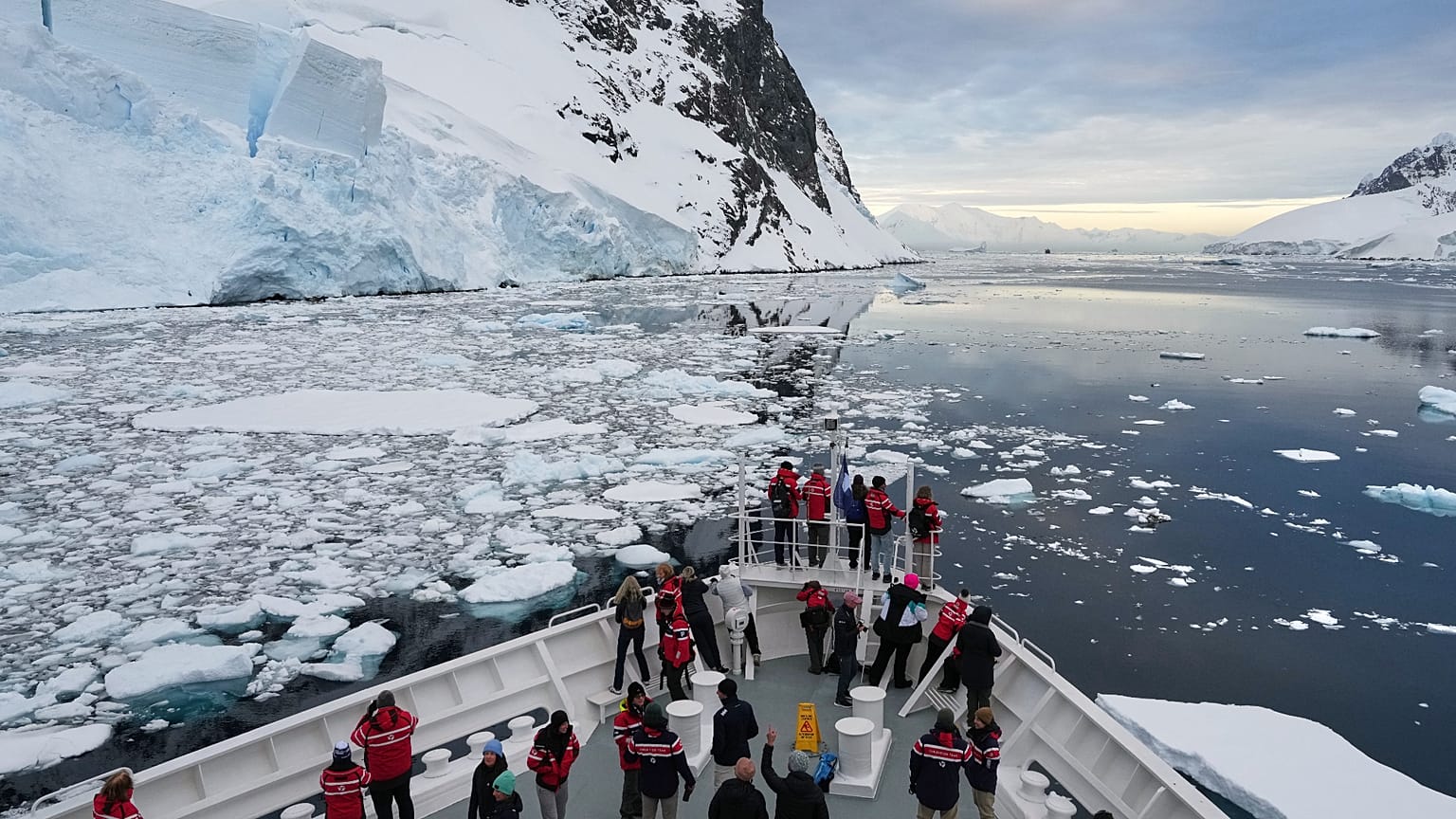
Some of the most remote destinations on Earth are irreversibly melting away, giving rise to 'last chance tourism' - an industry built around the desire to see places like Antarctica before they disappear.

But a deadly outbreak of the rare hantavirus aboard a Dutch cruise ship has experts warning that tourists can inadvertently contaminate very fragile ecosystems.

Hantavirus is confirmed to have killed two people and suspected to have killed another onboard the MV Hondius, a cruise ship which left Argentina on 1 April and visited Antarctica and several isolated islands.

The ship has been at the centre of an international health scare since Saturday, after it was revealed that the rare disease, generally spread from infected rodents, was at the centre of an outbreak onboard the "ice-strengthened cruise ship".

The 107-metre polar explorer vessel is currently off the coast of Cape Verde, awaiting the evacuation of passengers who require medical attention. From there, the ship is hoping to sail to the Canary Islands but local authorities have not yet granted permission for the boat to dock there.
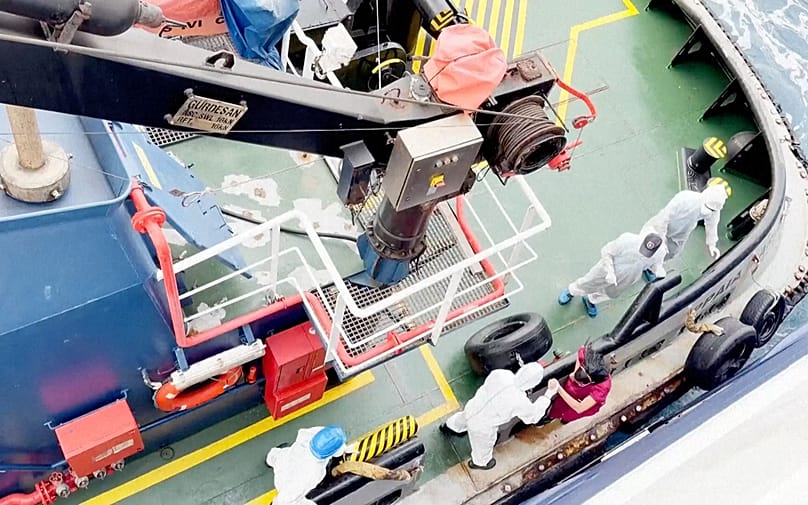
Health workers get off the Dutch-flagged MV Hondius, a cruise ship carrying nearly 150 people as it remains off Cape Verde on 4 May, 2026 Qasem Elhato via AP

The Antarctic Peninsula is one of the fastest-warming places in the world

Tourism to the bottom of the world is soaring. Experts warn that with more visitors comes an increased risk of contamination, illness and other damage to the continent.

While visitor numbers are still small – in part due to the high costs and time it can take – they are growing so fast that scientists and environmentalists are sounding alarms.

Most expeditions head to the Antarctic Peninsula, one of the fastest-warming places in the world. From 2002 to 2020, roughly 149 billion metric tons (164 billion tons) of Antarctic ice melted per year, according to the National Aeronautics and Space Administration.

A common route is to voyage south from Argentina toward Antarctica before heading north up the coast of Africa – the same route taken by the cruise ship MV Hondius.
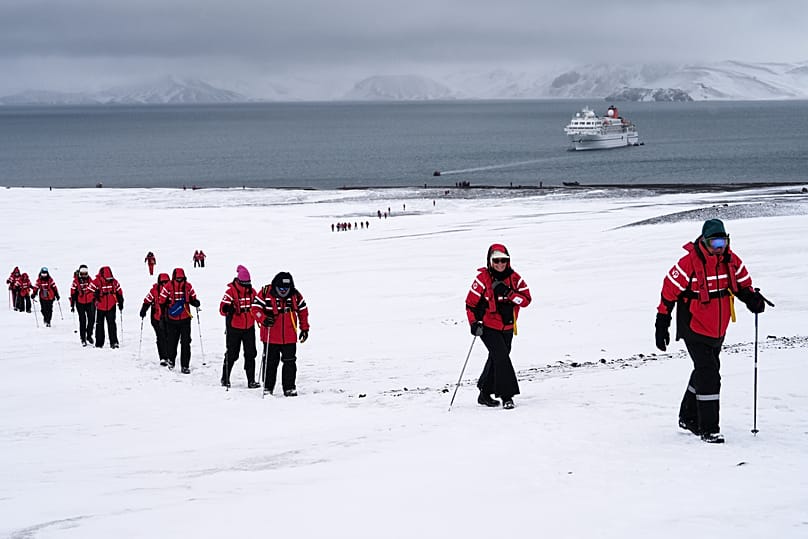
Passengers walk inside the volcano at Deception Island in Antarctica, Wednesday, Nov. 26, 2025. AP Photo/Mark Baker, File


Bird flu has spread to Antarctica


Officials have not indicated any evidence of contamination from the MV Hondius.

However, flocks of migratory birds brought avian flu from South America to Antarctica in recent years, according to the US Centers for Disease Control and Prevention.

That outbreak prompted the International Association of Antarctica Tour Operators and others to harden rules for tourists’ conduct and hygiene to protect visitors from being contaminated.

To protect the fragile ecosystem from invasive species large and microscopic, visitors are told to stay away from animals and to avoid touching the ground with anything but their feet.

“There are rules that people are bound by when they’re heading south,” Nielsen said, describing her five voyages as a former guide. Crews and passengers use vacuums, disinfectants and brushes to scrub shoes and equipment clear of bugs, feathers, seeds and microbe-carrying dirt.

“Between the tongues and the laces of the boots you can find a lot of things,” she said.

Cruise ships have been struck by outbreaks of diseases like norovirus, which can spread quickly in a ship's close quarters. In 2020, a COVID-19 outbreak on the Diamond Princess turned the cruise ship into an incubator for the then-mysterious virus.

Hantavirus usually spreads by inhaling contaminated rodent droppings.
Explosive growth of trips to the southern continent

In 2024, more than 80,000 tourists touched down on the vast ice-cloaked continent and 36,000 viewed from the safety of ships, according to data collected by the International Association of Antarctica Tour Operators.

The International Union of Concerned Scientists estimates that tourism to Antarctica has grown tenfold in the past 30 years.

That number could rise further in the next decade as costs fall with more ice-capable hulls hitting the water and technological advances, says Hanne Nielsen, a senior lecturer of Antarctic law at the University of Tasmania. Her colleagues at the university estimate the annual figure could triple or quadruple to over 400,000 visits in that time.

The Hondius' island hopping cruise

WHO is investigating possible human-to-human transmission on the cruise ship, said Dr. Maria Van Kerkhove, WHO’s director of epidemic and pandemic preparedness. Officials suspect the first infected person likely contracted the virus before boarding, she said, and officials have been told there are no rats on board.

Antarctica is governed by the Antarctic Treaty, which in 1959 enshrined the territory as a scientific preserve used only for peaceful purposes. A series of rules that followed “aim to ensure that all visits, regardless of location, do not adversely impact the Antarctic environment or its scientific and aesthetic values,” according to the treaty’s secretariat.

Companies and scientific ventures voluntarily comply with biosecurity guidelines and submit environmental impact assessments for Antarctic operations.
RelatedCruises have doubled in size since 2000: NGO calls for €50 tax to stem ‘out of control’ emissions

The treaty was written when tourism numbers were much lower, Christian said.

“Activity needs to be regulated appropriately, as you would with any of the world’s sensitive and precious ecological sites,” Christian said from Hiroshima, Japan, where she was preparing for an Antarctic Treaty Consultative Meeting. There she'll join calls to strengthen protections for Antarctica's penguins, whales, seabirds, seals and krill — tiny creatures at the base of the food chain.

For now, the lure of the frozen frontier continues to draw visitors.

“You can put a footprint in Antarctica and it’s still there 50 years later,” Christian said.


The Impact Of Climate Change On The Future Of Africa – OpEd


By 

Global climate change is often understood through a single narrative of widespread drought and inevitable land degradation. However, future climate policies must begin to anticipate strategic anomalies now emerging at the heart of the driest regions on Earth. A recent study led by Thierry Ndetatsin Taguela from the University of Illinois Chicago, published in the journal Nature in June 2025, projects that the Sahara will experience up to a 75 percent increase in rainfall during the summer by the end of the 21st century.

This finding fundamentally reshapes our perception of the climate crisis; rather than facing only increasing aridity, Africa’s landscape now stands on the brink of a complex geographical transformation in which rising humidity itself becomes a new challenge for regional stability. This phenomenon is not merely an ecological stroke of luck, but a massive shift that demands a complete reevaluation of infrastructure resilience and food security across the continent. A deep understanding of the physical mechanisms behind this paradox is therefore an essential prerequisite for any policy decisions moving forward.

This strategic preparedness must be rooted in a solid understanding of the thermodynamic laws that govern our atmosphere. Climate policy frameworks should focus on the reality that a warmer atmosphere is a far more energetic and moisture-laden atmosphere. Through the Clausius Clapeyron relationship, science establishes that the atmosphere’s capacity to hold water vapor increases by approximately 7 percent for every 1 degree Celsius rise in temperature. In Africa’s monsoon and coastal regions, this figure is not merely a technical statistic, but a representation of a powerful “thermodynamic forcing.” Warm air saturated with moisture does not only increase water volume linearly, but also exponentially amplifies storm intensity. This means that accumulated humidity will be released through increasingly extreme and destructive weather events, transforming precipitation patterns into a series of unpredictable flood events if national drainage systems and water management infrastructure are not urgently modernized.

However, this increase in global humidity is not evenly distributed by nature, creating a divided geographical reality in which new “winners” and “losers” emerge on Africa’s climate map. Based on an analysis of 40 climate models, rainfall is projected to increase by 24 percent in Southeastern Africa and 17 percent in south-central Africa. In contrast, southwestern West Africa faces the risk of drying, with a projected decrease in rainfall of around 5 percent.

This imbalance is driven by shifts in the Hadley circulation and the weakening of rising air movements that serve as the engine for storm cloud formation in the western region. From a geopolitical perspective, this disparity is highly dangerous; while one area is overwhelmed by destructive water surpluses, its neighboring region may suffer from famine due to drought. The potential for internal climate migration and cross-border resource conflicts becomes a real threat that must be mitigated through stronger intergovernmental coordination before this ecological imbalance reaches a critical tipping point.

In managing this new reality, water management must be viewed as an instrument of sovereignty, not merely a technical environmental concern. It is crucial to maintain a clear perspective that a 75 percent increase in rainfall in the Sahara will not transform the desert into a tropical forest overnight, given its historical baseline of only 76 millimeters of rainfall per year. As emphasized by Taguela in the Earth report in October 2025, this additional water can become either a blessing or a disaster depending on human intervention.

Without adequate reservoir construction and the strategic use of land slope characteristics for water conservation, this surge in extreme rainfall will only result in flash floods that wash away fertile topsoil. Agricultural policies must shift from a sole focus on drought resilience toward dynamic water flow management, including the development of crop varieties capable of surviving in water-saturated soils. Existing physical infrastructure largely designed for a drier past must be urgently overhauled to capture every drop of water as a long-term strategic reserve.

Ultimately, these findings serve as a warning for African leaders to prepare for a “New Normal” in which uncertainty is the only certainty that remains. The urgency of early adaptation is no longer negotiable—the projected wetter years must be used as a window of opportunity to build groundwater reserves and strengthen social protection systems for hundreds of millions of people who depend on rain-fed agriculture.

Africa’s future will no longer be defined solely by water scarcity, but by the institutional and societal capacity to manage climate volatility. Although the Sahara may appear to benefit from this shift, the continent’s long-term stability will depend on a collective vision to transform this climate anomaly into a foundation for new economic prosperity, aligned with the ever-changing rhythms of the Earth.

REFERENCES

  • Sitorus, L. A., Santoso, M. P. T., & Marsingga, P. (2025). Dampak Perubahan Iklim Terhadap Konflik Sosial Dan Kekerasan Gender: Studi Kasus Keamanan Manusia di Sub Sahara Afrika. Jurnal Ilmiah Wahana Pendidikan, 11(10. B), 167-188.

  • Tarumingkeng, R. C. (2024). Pengaruh Perubahan Iklim. RUDYCT e-PRESS: Bogor, Indonesia.

  • yang Adil, A. T. (2022). Beranjak dari Krisis menuju Perubahan.

Dairy Farms In California May Transmit H5N1 Virus Through Multiple Sources


By 

The H5N1 strain of highly pathogenic avian influenza H5N1 has been detected in over 700 herds of dairy cows in California, the largest dairy-producing state in the U.S. A study published in the open-access journal PLOS Biology led by Seema S. Lakdawala at Emory University School of Medicine, U.S. and Jason Lombard at Colorado State University, U.S. suggests that avian influenza (H5N1) is transmitted through multiple, previously unknown sources and that some H5N1 positive cows do not show clinical signs of infection.

H5N1 may spread on dairy farms through direct contact with unpasteurized milk, such as via contaminated milking equipment. However, the full picture of how the virus can be spread on farms with infected cows is unclear. In order to better understand transmission routes of avian flu on dairy farms, researchers took air, farm wastewater, and milk samples on fourteen dairy farms testing positive for H5N1 across two different California regions between October 2024 and January 2025. They tested all samples for the presence of virus and performed genome sequencing on detected virus to identify any genetic variants and mutations.

The researchers detected airborne virus from the exhaled breath of infected cows and in the dairy parlor, identified the presence of virus in the wastewater, and found a high prevalence of cows who tested positive for H5N1 despite being asymptomatic.

The extensive environmental contamination of infected dairy farms suggests a higher risk of viral spread from cows to humans and other animals. However, future studies are needed to validate these results as longitudinal sampling of individual cows was limited to only fourteen animals. Sampling across a larger sample of farms over a longer time period is also needed to support the findings.

Dr. Lakdawala notes, “Our data confirm the presence of infectious H5N1 virus in the air and reclaimed farm wastewater sites. In addition, we observed high viral loads and H5 antibodies in the milk of cows, including those without clinical signs, suggesting that multiple modes of H5N1 transmission likely exist on farms. These results identify additional sources of viral exposure for cows, peridomestic wildlife, and humans, highlighting the need for multiple mitigation strategies to reduce the spread of H5N1 within a herd and to humans.”

The authors add, “Detection of infectious virus in the air and waste streams on farms was surprising but highlights that there is a considerable amount of infectious virus on farms and multiple sources of infection exist.”

“Targeted interventions in the dairy parlors to reduce the amount of aerosols in the air and inactivation of sick milk prior to disposal will provide additional barriers to infection of farm workers and likely other farm animals.”

Iran War And Tariffs Are Affecting States’ Abilities To Combat Wildfires – OpEd


By 

According to a report from NPR last week, the US Forest Service likely won’t have enough in its aviation fuel budget to handle wildfires this year. The culprit? Rising oil prices. NPR reports that fuel costs for planes engaged in water-dropping missions during last year’s wildfires totaled $50 million, a cost that is likely to double this year. With the Forest Service’s reduced budget, this could mean fewer flying hours or the inability to deploy crews. But NPR’s story only grazes the surface of the impact of Trump’s policies on combating wildfires.

Rising oil prices don’t only affect aviation fuel. There is also the transport of personnel and equipment, including heavy machinery used for firefighting.  Wildfires can occur in remote areas, where access to water isn’t always guaranteed. Heavy engines can carry 750-850 gallons of water, and “Super Heavy” engines can carry up to 2,000 gallons. According to the National Interagency Fire Center, a single crew operating a Super Heavy wildland fire engine can suppress over five miles of fireline during a single work shift.

But a heavy engine, like the USDA Forest Service Type 3 Model 326, has between a 70 and 100-gallon diesel fuel tank and, on average, gets 3 to 8 miles per gallon. Plus, pumping water requires engines to run for hours, which consumes even more fuel. As of writing this, the cost of diesel has risen 53.7 percent since the start of the war — from $3.67/gallon to $5.64/gallon. To put this in perspective, the cost of filling a 70-gallon tank went from about $256 to almost $400. Local fire departments facing budget crunches may have to limit engine run time or decide which engines can be deployed based on their budgets.

And fire engines aren’t the only type of heavy machinery. Crews often use bulldozers to create firebreaks that prevent fires from spreading further. During the 2018 Camp Fire, which destroyed the town of Paradise, CA,  a single bulldozer driver cleared burnt vehicles from the evacuation route and saved a sheriff’s deputy and two nurses who had become trapped. A small dozer, such as a Caterpillar, has a 50-gallon diesel tank and uses 4 to 6 gallons/hour.

If the price of oil weren’t enough, then there are the costs associated with Trump’s tariffs. Disasters don’t adhere to political borders, and Canadian crews often participate in wildfire suppression near the US-Canada border. The US also often uses Canadian planes, parts, and equipment to fight wildfires. But Trump’s hostility toward Canada has included, earlier this year, threats to decertify planes from the country and a 50 percent tariff on aviation parts. With his trade policies, Trump has isolated the US, and the result may, in the future, place more pressure on localities if neighboring countries refuse to help — a very unlikely, if not entirely impossible, scenario.

The challenge of combating wildfires under Trump’s policies involves much more than just the cost of aviation fuel. And all these recent economic pressures are piled atop budget and staffing cuts and on the extent to which the administration has pursued immigration enforcement, even amongst firefighters during an active fire.

Ultimately, Trump’s various policies have real-life implications for Americans. His war with Iran and his trade war with the rest of the world have driven up the cost of combating wildfires, which will eventually be passed on to taxpayers. His policies also have the potential to slow response times and force firefighting agencies to base their operational decisions on the limitations of available resources, leading to more deaths and injuries for citizens and firefighters alike. 

The escalating price of another forever war and trade protectionism is being paid not just by the taxpayer, but by every community facing the direct threat of wildfires. And with the hot and dry summer season fast approaching, it’s going to get worse.

Judge Considers Request To Halt Controversial Bear Cull in Western Alaska


America Alaska Bear To Bathe Lake Riverbank Brown


By Yereth Rosen

(Alaska Beacon) — With the Alaska Department of Fish and Game poised to start culling bears in a program to boost the population of a depleted caribou herd, critics have asked a state judge to block the program before the shooting begins.

The Alaska Wildlife Alliance is seeking an injunction to prevent the department from resuming a controversial predator control program in 40,000 square miles of state land east of the Togiak National Wildlife Refuge and west of Katmai National Park and Preserve. The territory is used by the Mulchatna Caribou Herd. 

The alliance maintains that the predator control program the department seeks to pursue is no better than the program found unconstitutional last year by two state Superior Court judges, Andrew Guidi and Christina Rankin.

The Department of Fish and Game, however, argues that the constitutional violations the judges identified have been addressed and that the program is too important to Western Alaska subsistence hunters to delay. The department says it must remove bears from the area to give the Mulchatna herd a better chance to recover — and that the removal needs to happen soon, this spring, when the caribou are giving birth to calves that might be vulnerable to bear predation.

The parties were in court on Friday arguing their cases before a third Superior Court judge considering the matter, Adolf Zeman.

“The board has reinstated the exact same predator control program that was struck down by the court as unconstitutional for failure to consider bear population data,” Michelle Sinnott, the attorney representing the Alaska Wildlife Alliance, told Zeman at the hearing.

The only new information that the department has provided concerns caribou, information that is irrelevant to the question of whether bears are adequately protected, Sinnott said.

Kimberly Del Frate, the state attorney arguing on behalf of Fish and Game, told Zeman the bear-culling program, as designed by the department, will not harm the overall bear population.

“The bear removal itself is narrow and targeted,” and therefore does not threaten the sustained yield of the bear population, she said.

Further, an emphasis on Mulchatna herd health over bear numbers is justified, Del Frate argued. Past state Supreme Court rulings and state legislation shows that the concept of “sustained yield,” which is in the Alaska constitution and expresses the principle of managing natural resources for long-term health, is meant to be flexible, she said.

“It expressly allows for preferences among beneficial uses, such as a preference for prey species as a food source over other uses of predator species,” she said.

Zeman, at the conclusion of Friday’s hearing, promised a speedy decision.

“I understand that we’re time-sensitive here, so I will issue a decision here as soon as I can,” he said.

The bear-culling is planned for this month, when the caribou begin giving birth to their calves, said Patty Sullivan, a spokesperson for the Department of Fish and Game. There is not a firm start date, she said.

“Typically, we would start looking for signs of calving in the Mulchatna (area) during the first couple weeks of May. Exact timing varies from year to year depending on how and where calving is occurring. It’s fairly dynamic,” she said by email.

Critics of the program say it threatens populations of bears that use habitat in Katmai National Park and Preserve, among other sites.

The program was initially authorized by the Alaska Board of Game in 2022, and it started in 2023. From 2023 to 2025, the program killed 186 brown bears, five black bears and 20 wolves. Of that total, 11 brown bears were killed last spring, days after Rankin’s May 7, 2025, ruling that found the program legally void. The judge responded by issuing a restraining order against the department.

Both Guidi and Rankin had found that the Mulhatna predator control program, as approved by the Board of Game and carried out by the Department of Fish and Game, violated the constitution’s sustained yield provision by failing to assess population impacts on bears, as well as provisions requiring adequate public notice and participation.

The Board last July approved a revived Mulchatna predator control program; board members said it addressed issues raised by the earlier court rulings.

The Mulchatna herd population peaked at about 200,000 animals in the 1990s but is now down to about 15,000 animals, according to the Department of Fish and Game. Hunting was closed in 2021. The department’s goal is to bring the numbers up to between 30,000 and 80,000 animals, a population size that would support resumed hunting.

The department argues that predator control done to date has already helped the herd. But critics argue that the herd’s population has now stabilized and that factors other than bear predation — including habitat change, disease and past overhunting — are more likely causes of the population decline.


Remembering The Costs Of War – OpEd


May 6, 2026 
 MISES
By Dr. Wanjiru Njoya
Playlist advancing in 5 seconds
Ad ends in 57

April marks the time when the guns of war began to fall silent across the South in 1865, after four years of war. On April 9, General Robert E. Lee surrendered the Army of Northern Virginia. General Nathan Bedford Forrest stood down his cavalry on May 9. By June 23, General Stand Watie had surrendered the last of the Confederate soldiers still fighting, the First Indian Brigade which included his own Cherokee Braves.

When the guns fall silent, it does not suffice simply to forget about the war and move on. It is necessary to pause and reflect on what we can do to promote lasting peace.

As John V. Denson argues in The Costs of War: America’s Pyrrhic Victories, war is ever the greatest enemy of liberty. Denson reminds us that, “We need to understand the ‘total’ costs of war in order to appreciate the true dangers that war in general, and the New World Order in particular, pose to individual liberty.” The New World Order—whose dangers he highlights—is one in which “the United States is to become a permanent garrison state and also the world policeman…”

There are growing signs that the lessons of history are not being heeded. The USA is introducing automatic military draft registration. Under Germany’s new Military Service Modernisation Act, military service is being reintroduced:

The [German] law that came into force in January brings back conscription in principle, though it will be implemented only if not enough people sign up for the army voluntarily.

Germany’s Chancellor Friedrich Merz has said he wants to create Europe’s strongest conventional army.

As of January this year, all 18-year-olds in Germany are being sent a questionnaire asking if they are interested and willing to join the armed forces.

The questionnaire is mandatory for men and voluntary for women.

Denson does not argue in favor of pacifism or isolationism. He recognizes that war may be just when fought in defense of home and hearth. The point he emphasizes is that no matter how just a war may be, we must remember that it is inevitably deleterious to liberty. For example, Murray Rothbard regarded the Southern cause as just, but even so, we must recognize that when the South lay in ashes much more had been lost than the Southern bid for independence.

Lord Acton, in his letter to Robert E. Lee, wrote that, “I deemed that you were fighting the battles of our liberty, our progress, and our civilization; and I mourn for the stake which was lost at Richmond more deeply than I rejoice over that which was saved at Waterloo.” As Jefferson Davis, the Confederate President, put it, the cause that was lost was “not that of the South only, but the cause of constitutional government, of the supremacy of law, of the natural rights of man.”

One of the residual threats to liberty highlighted by Denson is the “abuse of the presidential powers regarding wars.” The convention seems to have arisen that the president has power to do whatever he deems necessary to police the world’s criminals and tyrants. Denson explains:

We have now reached a point in our history where it is strongly asserted that the president of the United States claims the power to declare a crisis and then send troops wherever he pleases without Congressional authority or approval. Shakespeare dramatized this same point with Mark Antony in Julius Caesar where he states: “Cry ‘Havoc!’ and let slip the dogs of war.”

Denson also highlights the danger posed by war propaganda, reminding us—in the words of US Senator Hiram Johnson—that, “When war is declared, truth is the first casualty.”

First comes the spin. For example, the Trump administration insists that their attack on Iran is not a war requiring congressional approval, but merely a “military operation.” Then follows the slander against any who dissent. In recent weeks the neo-conservative radio host, Mark Levin, has been calling anyone who disagrees with President Trump’s latest war a “traitor” to America. He believes any opinions that differ from his own are “anti-American.” Do people who warn against the dangers of war thereby become traitors to their country?

What is meant by love of country? In his book Capitalism and Freedom, the economist Milton Friedman offered some remarks that may shed some light on this issue. Readers will be aware that Murray Rothbard was no admirer of Friedman. He described Friedman as “a favorite of the Establishment,” a “Court Libertarian,” and a “statist.” But statist though he was, Friedman deserves some credit for reminding his statist followers that love of country and loyalty to a common heritage do not entail worship of government. Friedman rejected the notion that “free men in a free society” should view their government as synonymous with their country. He observed:

To the free man, the country is the collection of individuals who compose it, not something over and above them. He is proud of a common heritage and loyal to common traditions. But he regards government as a means, an instrumentality, neither a grantor of favors and gifts, nor a master or god to be blindly worshipped and served.

Although Friedman did not agree with the libertarian view of the state as inherently criminal and tyrannical, he argued that “the scope of government must be limited” and that “government power must be dispersed.” He favored decentralizing political power. He drew Rothbard’s ire for viewing the government as essentially well-intentioned, but he did at least recognize that good intentions do not mitigate harm. He wrote:

The power to do good is also the power to do harm; those who control the power today may not tomorrow; and, more important, what one man regards as good, another may regard as harm. The great tragedy of the drive to centralization, as of the drive to extend the scope of government in general, is that it is mostly led by men of good will who will be the first to rue its consequences.

That being the case, disagreeing with government policy certainly does not make one a traitor to his country. The historian Clyde Wilson argued, in Defending Dixie: Essays in Southern History and Culture, that even the Pledge of Allegiance, which is popularly seen as a way to express love of country, may be viewed as superfluous because “the virtuous do not need a Pledge and the rest will not honor it anyway.” Wilson argues that in that light, the pledge ironically amounts in reality to “a pledge of allegiance not to the country or people but to the federal government.” He remarked that:

Such pledges did not mark the early years of the United States. They were unknown until they were employed as coercive devices in the South during the War Between the States and Reconstruction.… The present Pledge was written in 1892 by Francis Bellamy, a defrocked Boston minister and Marxist… It was taken up and promoted by the National Education Association as a way to enforce conformity to “Americanism” among its captive students, especially the first and second generation immigrants.

Wilson, like Denson, is no pacifist. He remarked in his Defending Dixie essays that his direct forefathers on both sides of his family fought in every major war since America was founded, including the American Revolutionary War, the War for Southern Independence, and both World Wars. With that ancestry, Wilson is as good an authority as any on what counts as loyalty to America. His comment on the recent attack on Iran, in his essay “Marching to Persepolis,” is that it “fails every rule of Christian ‘just war’ theory. It trashes what little is left of the Constitution. And possibly worst of all, it is stupid.”


About the author: 
Dr. Wanjiru Njoya is the Walter E. Williams Research Fellow for the Mises Institute. She is the author of Economic Freedom and Social Justice (Palgrave Macmillan, 2021), Redressing Historical Injustice (Palgrave Macmillan, 2023, with David Gordon), “You Stole Our Land: Common Law, Private Property, and Rothbardian Principles of Justice” (Journal of Libertarian Studies, 28 (1): 91–119 (2024) and “Individual Liberty, Formal Equality, and the Rule of Law” (Palgrave Handbook of Classical Liberalism, forthcoming, 2026).
 
Source: This article was published by the Mises Institute