Wednesday, May 06, 2026

An All-American Retort To Israel’s Bombing Of Lebanon – OpEd

Mother and daughter at Lebanese-American protest in DC against bombing of Lebanon in 2006.
 Photo Credit: James Bovard

May 5, 2026 
By James Bovard

Israel’s bombing of Lebanon has reportedly killed more than a thousand civilians this year. Israel also drove out more than a half million civilians from southern Lebanon as part of an effort to confiscate or ravage that territory. The New York Times reports that Israel is “applying the Gaza model in Lebanon,” destroying entire towns and villages and leaving the rubble uninhabitable. Israel’s bombing has been so indiscriminate that even President Trump pretended to object. On Truth Social, Trump announced: “Israel will not be bombing Lebanon any longer. They are PROHIBITED from doing so by the U.S.A. Enough is enough!!!”

Trump’s assertion had as much effect as his boasts about how he already won the war against Iran. The Israeli military continues assailing Lebanon and Trump’s attention long since wandered back to his ballroom.

The latest attacks are reminiscent of Israel’s 2006 invasion of Lebanon, which also killed roughly a thousand civilians, as well as a few hundred Hezbollah fighters. With the Bush White House cheerleading all the way, Israel assailed Lebanon in response to Hezbollah’s seizure of two Israeli soldiers. Israel and Hezbollah had been exchanging bombs and missiles for years prior to Israel’s launching a bombing campaign that soon expanded to include much of Lebanon. The carnage was wildly popular on Capitol Hill, where the House of Representatives voted 410-8 in favor of a resolution endorsing Israeli military action. But the Israeli military didn’t do as well in south Lebanon as they did in the halls of Congress. Hezbollah thwarted the invasion in one of the biggest defeats for the Israeli military since the start of the Yom Kippur War in 1973.

On August 12, 2006, thousands of people gathered near the White House to protest U.S. support for the Israeli attacks on Lebanon. At that time, some American pundits were portraying Arabs as would-be terrorists waiting to wreak havoc on the United States.

But I saw plenty of demonstrators that day who looked more wholesome than your average political zealot of any persuasion. This photo I snapped of a mother and daughter marching along captured the all-American reality of many supporters of Lebanon. The mother is wearing traditional Lebanese garb and carrying both a U.S. flag and a Lebanese flag. The daughter is soaking up the scene while chomping on a popsicle. This is a pair that would have fit in with practically any American Fourth of July celebration. Perhaps they were typical of the nearly 700,000 Lebanese-Americans tabulated in the 2020 census.

There were plenty of Arab Americans at the protest who were confounded to see the U.S. government supporting the attacks on their kinfolks. One protestor held up a sign by the White House: “President Bush: You Can Stop Israeli Crimes in Gaza and Lebanon.” But it was impossible to exaggerate the president’s spinelessness. After an Israeli airstrike on an apartment building in Qana, Lebanon killed 28 civilians two weeks earlier, the New York Times reported: “Facing one of the most awkward moments in recent relations with Israel, Bush described the current Middle East crisis as part of a larger struggle between the forces of freedom and the forces of terror.” Bush refused to call for a ceasefire regardless of how many Lebanese children the Israelis killed in the name of anti-terrorism. And the U.S. government continued rushing more armaments to Israel to enable the carnage to continue.

The U.S. government has been perennially dragged into Lebanese quagmires since the Reagan era. In June 1982, a terrorist organization headed by Abu Nidal (the Osama bin Laden of the 1980s) attempted to assassinate the Israeli ambassador in London. Nidal’s forces had previously killed many Palestinian Liberation Organization (PLO) officials in numerous bomb and shooting attacks, since they considered Yasir Arafat a traitor for his stated willingness to negotiate with Israel. Prime Minister Menachem Begin of Israel exploited the shooting in London to send the Israeli Defense Forces (IDF) into Lebanon to crush the PLO. Yet, as Thomas Friedman noted in his book From Beirut to Jerusalem, “The number of Israeli casualties the PLO guerrillas in Lebanon actually inflicted [was] minuscule (one death in the 12 months before the invasion).”


Defense Minister Ariel Sharon told the Israeli cabinet that his 1982 “Operation Peace for Galilee” would extend only 40 kilometers into Lebanon. However, Sharon sent his tanks to Beirut, determined to destroy the PLO once and for all. As David Martin and John Walcott noted in their 1988 book, Best Laid Plans: The Inside Story of America’s War against Terrorism, the U.S. embassy in Beirut “sent cable after cable to Washington, warning that an Israeli invasion would provoke terrorism and undermine America’s standing in the Arab world, but not a word came back.”

The Palestinian Red Crescent estimated that 14,000 people, most of them civilians, were killed or wounded in the first month of the operation. When Palestinians fought back tenaciously, the IDF responded with indiscriminate bombing, killing hundreds of civilians. The Israelis cut off Beirut’s water and electricity supply and imposed a blockade. The IDF bombed the buildings housing the local bureaus of the Los Angeles Times, United Press International, and Newsweek. U.S. publications gave far more coverage to Israeli carnage against civilians back then than they have allotted in the current conflict.

U.S. troops were sent to Beirut to help buffer a cease-fire. After the U.S. military intervened against Muslims in the Lebanese Civil War, a Muslim truck bomber killed hundreds of U.S. Marines in October 1983. On the 20th anniversary of that attack in 2003, I wrote a Counterpunch article headlined, “The Reagan Roadmap for an Antiterrorism Disaster.” Reagan responded to the Marine barracks bombing by pulling U.S. troops out of Lebanon, one of the few bright spots in U.S. policy in that part of the world in the last half century.

It would be foolish to expect the Trump White House to show wisdom or courage in its Middle East policy. I have the same recommendation now that I had in a 1987 USA Today piece opposing deploying U.S. Navy to the Persian Gulf: “This is not our war, and there is no profit in U.S. intervention.” GTFO remains the best Middle East policy for America.

An earlier version of this article was published by the Libertarian Institute.

United Nations demands Israel 'immediately' release two Gaza aid flotilla activists

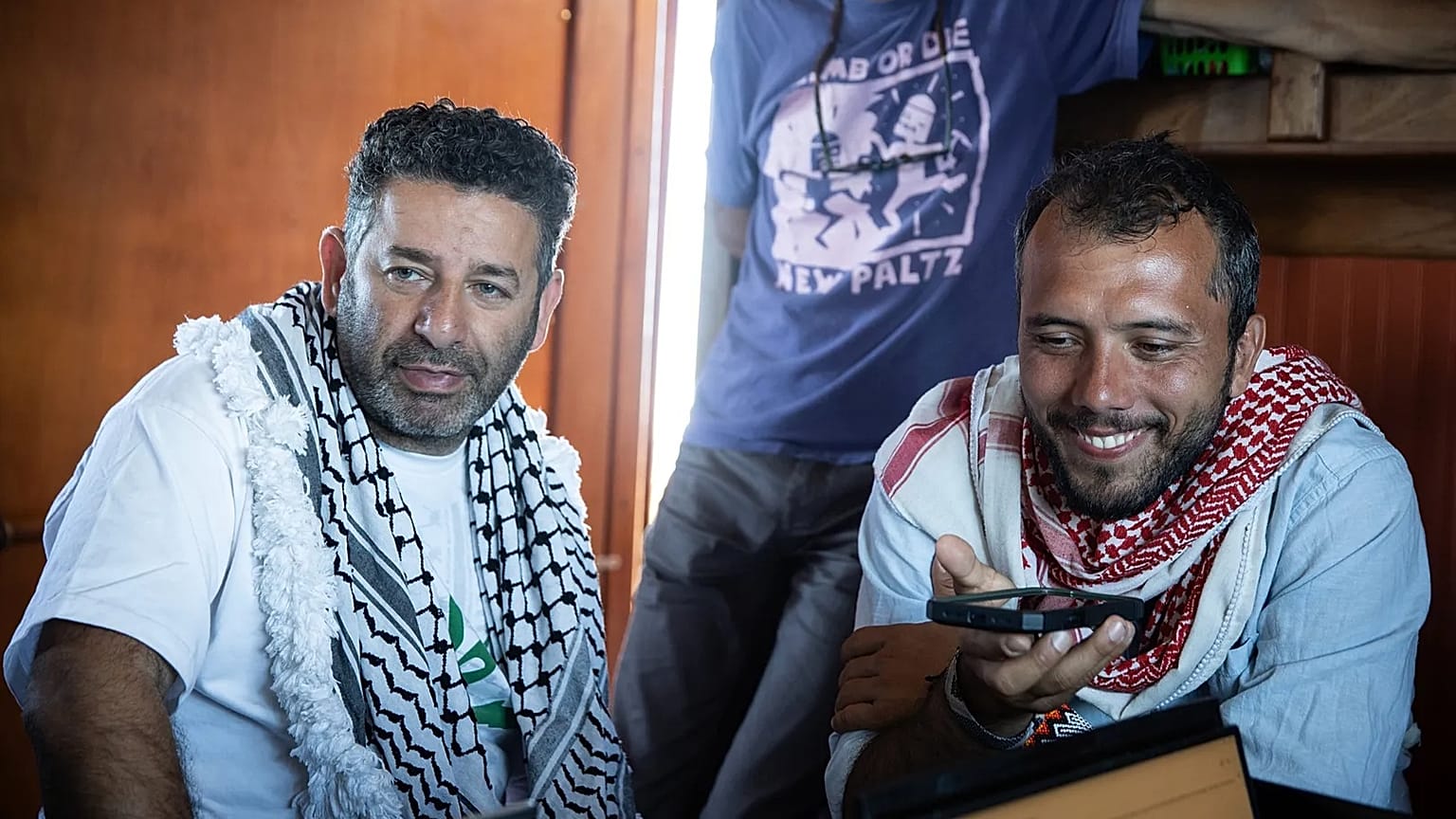
Saif Abukeshek and Thiago Ávila on the Greenpeace vessel Arctic Sunrise in the Mediterranean Sea, 18 April, 2026
Copyright AP Photo

By Gavin Blackburn
Published on 


The flotilla's vessels set sail from France, Spain and Italy with the aim of breaking Israel's blockade of Gaza and delivering humanitarian aid to the war-ravaged Palestinian territory.

The United Nations Wednesday called on Israel on Wednesday to immediately release two activists taken from a Gaza-bound aid flotilla and demanded an investigation into "disturbing accounts" they had been severely mistreated.

Spanish national Saif Abukeshek and Brazilian Thiago Avila, who are being held in a prison in Ashkelon, were among dozens of activists on a Gaza-bound flotilla intercepted by Israeli forces in international waters off the coast of Greece last Thursday.

"Israel must immediately and unconditionally release Global Sumud Flotilla members Saif Abukeshek and Thiago Avila, who were detained in international waters and brought to Israel where they continue to be held without charge," UN rights office spokesman Thameen Al-Kheetan said in a statement.

"It is not a crime to show solidarity and attempt to bring humanitarian aid to the Palestinian population in Gaza, who are in dire need of it.”

The flotilla's vessels set sail from France, Spain and Italy with the aim of breaking Israel's blockade of Gaza and delivering humanitarian aid to the war-ravaged Palestinian territory.

Representatives for Avila and Abukeshek have accused Israeli authorities of abusing the two men, who have been on hunger strike for the past six days.

Kheetan decried the "disturbing accounts of severe mistreatment", calling for an investigation and insisting "those responsible must be brought to justice."

"We call for an end to Israel's use of arbitrary detention and of broadly and vaguely defined terrorism legislation, inconsistent with international human rights law," he said.

"Israel must also end its blockade on Gaza, and allow and facilitate the entry of humanitarian assistance to the besieged Palestinian strip, in sufficient amounts," the spokesman said.

Israel's foreign minister said on Thursday that the activists intercepted from the flotilla would be taken to Greece.

Boats carrying activists and humanitarian aid for Palestinians in Gaza in Barcelona, 12 April, 2026 Copyright 2026 The Associated Press. All rights reserved.

"In coordination with the Greek government, the civilians who were transferred from the flotilla vessels to the Israeli vessel will be brought ashore in Greece in the coming hours," Gideon Sa’ar wrote in a post on X, thanking the Greek government "for its willingness to receive the flotilla participants."

"Israel will not allow the breach of the lawful naval blockade on Gaza," he wrote.

In the past, Israel has usually dismissed such aid flotillas as a publicity stunt by attention seekers.

Israel's Ambassador to the United Nations Danny Danon referred to the fleet of ships as "provocative."

EU countries need more 'targeted measures' to tackle soaring energy prices, says IMF's Helge Berger


By Marta Pacheco
Published on 

The International Monetary Fund (IMF) said vulnerable households should be the main target of energy price relief measures and urged EU governments to guarantee that these won't do "more damage than good".

European capitals have failed to provide targeted measures to shield suffering households and businesses from soaring energy prices, Helge Berger, Deputy Director at the International Monetary Fund told Euronews' Europe Today show, urging member states to focus on concrete solutions for the most vulnerable.

Apple podcast Spotify podcast Castbox podcast

"Most governments have, in some way or another, tampered with the energy prices, which is not the way it should be going. So as time passes, if the situation continues, we need to be more targeted," said Berger, who leads the IMF's European Department.

Berger said the main target should be vulnerable households and urged EU governments to guarantee that measures won't do "more damage than good" as he recognised a "mix of good and bad policies" put forward by EU member states since the US-led war against Iran sent energy prices through the roof.

According to the IMF, oil prices have surged by around 70%, while European gas prices remain roughly 45% above pre-war levels. Although less severe than the 2022 shock, the increases are still expected to weigh heavily on growth.

As a response, several EU governments have lowered energy taxes, making energy artificially cheaper and discouraging people from using less energy or switching to alternatives, Berger warned.

The IMF representative warned capitals against "dampening the price signal" that results from higher oil, natural gas, and electricity prices, but instead to focus on targeted support.

Untargeted measures are not the answer

During the Eurogroup meeting on Monday evening, the IMF informed finance ministers that around 70% of the total cost of the measures taken in 2022, following Russia’s invasion of Ukraine, were either not targeted or distorted prices, or both.

In the current energy shock, the IMF noted that 33% of electricity subsidies, if untargeted, could go to the 20% richest of the population, compared to 11% for the poorest.

This gap is even wider when it comes to transport-fuel subsidies, which the IMF identified as potentially benefiting the richest households (34%) rather than the poorest (9%) if the measures are untargeted.

The IMF also noted that energy efficiency gains and a cleaner energy mix have made Europe more resilient, with European households having 12% less cost over the past five years.

Eurogroup leader Kyriakos Pierrakakis said on Monday evening that expectations for a rapid normalisation of the crisis in the Middle East have not been confirmed, following the gathering of eurozone ministers.

"This is the difficult reality we are facing, and we must address it with realism and responsibility,” the Greek leader said.

He said the IMF recognised Europe’s "positive starting point”, citing a “robust labour market” with “historic" lowest unemployment, but stressed that the effects of the crisis are not evenly distributed.

"Net energy importers and economies with limited fiscal space obviously face greater pressure. This obliges us to act with caution, with well-designed and with targeted policies,” Pierrakakis added.

With the Iran war and the closure of the Strait of Hormuz, Europe's dependence on imported fossil fuels has exposed its vulnerability, but the continent's situation is not as bad as it was in 2022 when Russia invaded Ukraine, the IMF said.

Berger said the continent is more resilient today thanks to the higher share of renewables in its energy mix.

"Any increase in energy prices as well is still bad for the economy, but it isn't as bad as it used to be," he added.

Human Spread Of Hantavirus Not Ruled Out On Cruise Ship


By Dominika Tomaszewska-Mortimer

Hantavirus victims on a ship in the Atlantic Ocean may have been infected prior to joining the cruise and human-to-human transmission on board cannot be ruled out – although it is rare – the World Health Organization (WHO) said on Tuesday.

The deadly disease outbreak has triggered an international public health response. Seven individuals of the 147 passengers and crew have been reported ill and three have died in what remains a fluid situation, WHO’s chief of Epidemic and Pandemic Preparedness and Prevention Dr Maria Van Kerkhove told reporters in Geneva.

“One patient is in intensive care in South Africa, although we understand that this patient is improving,” she said, while two patients still on board the ship, which is currently off the coast of Cabo Verde, are being prepared for medical evacuation to the Netherlands for treatment. 

Dr Van Kerkhove stressed that the situation is being closely monitored. As a precaution, passengers have been asked to remain in their cabins while disinfection and other public health measures are carried out. Medical teams from Cabo Verde are providing support on board the ship.

“The plan is, and our highest priority is, to medically evacuate these two individuals” to make sure that they receive the required care, she insisted. 

There are no other symptomatic patients on board. A third suspected case who reported a mild fever at one point “is currently doing well”, the WHO official said.

Spain cooperation

The ship is set to continue on to the Canary Islands. Ahead of arrival, Dr Van Kerkhove said that WHO is working with the Spanish authorities who “have said that they will welcome the ship to do a full epidemiologic investigation, full disinfection of the ship, and of course to assess the risk of the passengers”. 

Hantaviruses are carried by rodents and can cause severe disease in humans. Thousands of infections are estimated to occur each year. People usually get infected through contact with infected rodents or their urine, their droppings, or their sali

Discussing the suspected origins of the outbreak, Dr Van Kerkhove said that the initial patients, a husband and wife, boarded the boat in Argentina. 

“With the timing of the incubation period of hantavirus, which can be anywhere from one to six weeks, our assumption is that they were infected off the ship,” she said. “This was an expedition boat… many of the people on board were doing bird watching” and “seeing a lot of different wildlife.”

The cruise stopped at several islands off the coast of Africa, Dr Van Kerkhove continued, some of which “have a lot of rodents”. 

“There could be some source of infection on the islands as well for some of the other suspect cases,” she said. “However, we do believe that there may be some human-to-human transmission that’s happening among the really close contacts” such as the husband and wife and others who have shared cabins.

Past outbreak lessons

Transmission of infection between people is uncommon, but limited spread has been reported among close contacts in previous outbreaks of the Andes virus, which is part of the hantavirus group.

There are no specific treatments for hantavirus other than supportive care. 

“Typically, people will develop respiratory symptoms, so respiratory support is really important,” Dr Van Kerkhove said, stressing that some people require mechanical ventilation. Intensive care may be required, especially if the condition of patients deteriorates.

Directing her message at the people on the boat, where more than 20 nationalities are represented, the WHO official said: “We just want you to know we are working with the ship’s operators” and with the travellers’ countries of origin.

“We hear you. We know that you are scared,” she said. “We’re trying to make sure that the ship has as much information as they can…that you’re cared for and of course, that you get home safely.”


Hantavirus cruise highlights the environmental risks of ‘last chance tourism’, scientists warn


By Ruth Wright with AP
Published on 06/05/2026 - EURONEWS

Trips to Antarctica “need to be regulated appropriately, as you would with any of the world’s sensitive and precious ecological sites,” says one expert.

Some of the most remote destinations on Earth are irreversibly melting away, giving rise to 'last chance tourism' - an industry built around the desire to see places like Antarctica before they disappear.

But a deadly outbreak of the rare hantavirus aboard a Dutch cruise ship has experts warning that tourists can inadvertently contaminate very fragile ecosystems.

Hantavirus is confirmed to have killed two people and suspected to have killed another onboard the MV Hondius, a cruise ship which left Argentina on 1 April and visited Antarctica and several isolated islands.

The ship has been at the centre of an international health scare since Saturday, after it was revealed that the rare disease, generally spread from infected rodents, was at the centre of an outbreak onboard the "ice-strengthened cruise ship".

The 107-metre polar explorer vessel is currently off the coast of Cape Verde, awaiting the evacuation of passengers who require medical attention. From there, the ship is hoping to sail to the Canary Islands but local authorities have not yet granted permission for the boat to dock there.

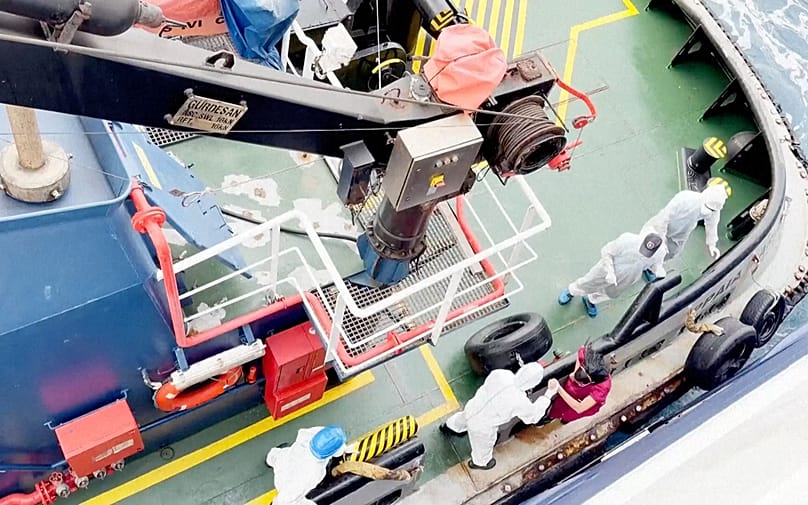
Health workers get off the Dutch-flagged MV Hondius, a cruise ship carrying nearly 150 people as it remains off Cape Verde on 4 May, 2026 Qasem Elhato via AP

The Antarctic Peninsula is one of the fastest-warming places in the world

Tourism to the bottom of the world is soaring. Experts warn that with more visitors comes an increased risk of contamination, illness and other damage to the continent.

While visitor numbers are still small – in part due to the high costs and time it can take – they are growing so fast that scientists and environmentalists are sounding alarms.

Most expeditions head to the Antarctic Peninsula, one of the fastest-warming places in the world. From 2002 to 2020, roughly 149 billion metric tons (164 billion tons) of Antarctic ice melted per year, according to the National Aeronautics and Space Administration.

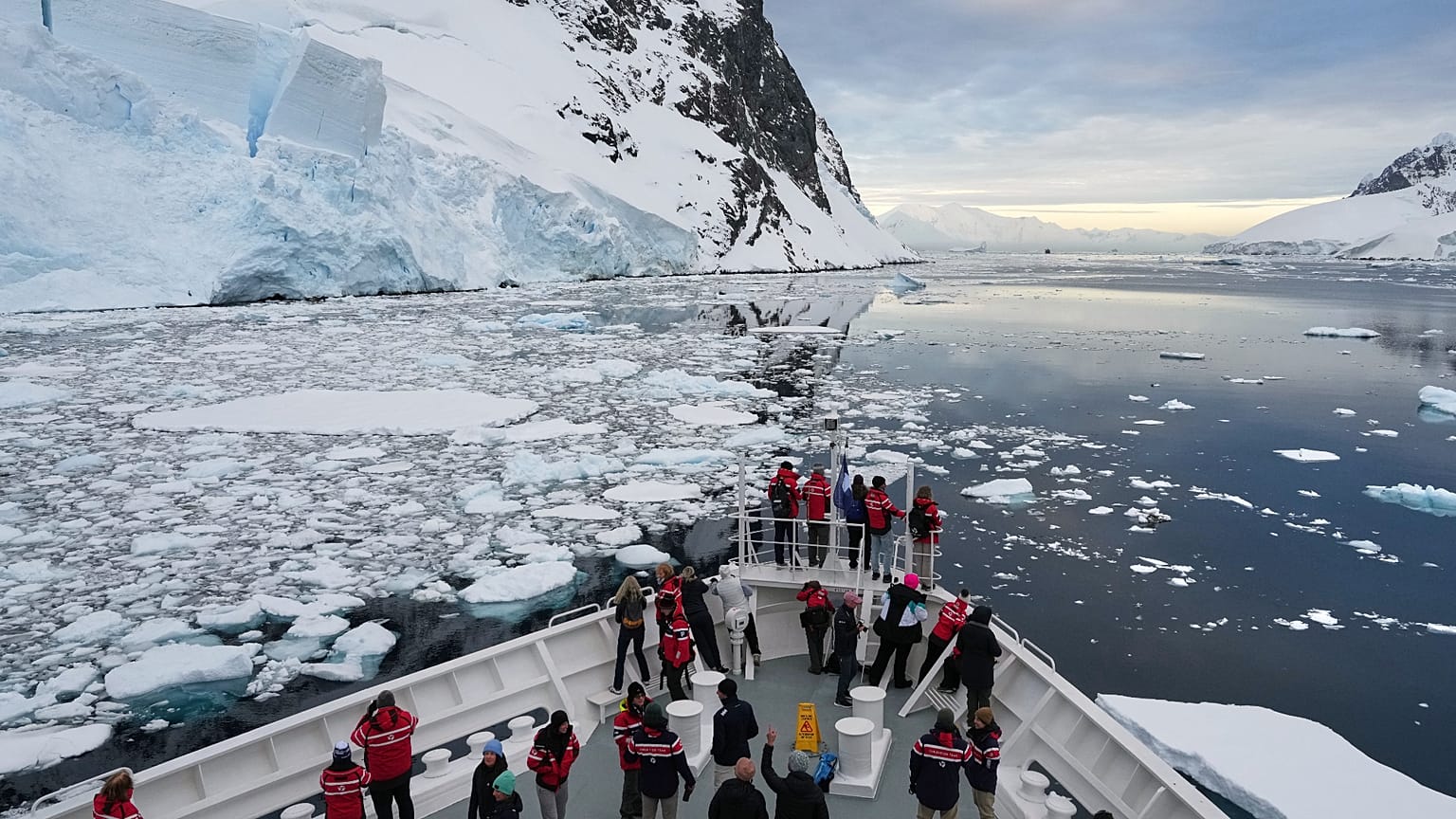
A common route is to voyage south from Argentina toward Antarctica before heading north up the coast of Africa – the same route taken by the cruise ship MV Hondius.

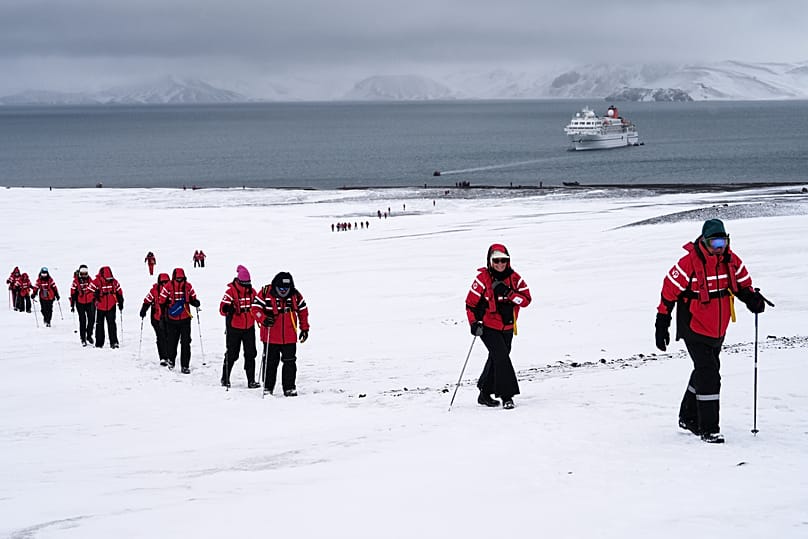
Passengers walk inside the volcano at Deception Island in Antarctica, Wednesday, Nov. 26, 2025. AP Photo/Mark Baker, File


Bird flu has spread to Antarctica


Officials have not indicated any evidence of contamination from the MV Hondius.

However, flocks of migratory birds brought avian flu from South America to Antarctica in recent years, according to the US Centers for Disease Control and Prevention.

That outbreak prompted the International Association of Antarctica Tour Operators and others to harden rules for tourists’ conduct and hygiene to protect visitors from being contaminated.

To protect the fragile ecosystem from invasive species large and microscopic, visitors are told to stay away from animals and to avoid touching the ground with anything but their feet.

“There are rules that people are bound by when they’re heading south,” Nielsen said, describing her five voyages as a former guide. Crews and passengers use vacuums, disinfectants and brushes to scrub shoes and equipment clear of bugs, feathers, seeds and microbe-carrying dirt.

“Between the tongues and the laces of the boots you can find a lot of things,” she said.

Cruise ships have been struck by outbreaks of diseases like norovirus, which can spread quickly in a ship's close quarters. In 2020, a COVID-19 outbreak on the Diamond Princess turned the cruise ship into an incubator for the then-mysterious virus.

Hantavirus usually spreads by inhaling contaminated rodent droppings.
Explosive growth of trips to the southern continent

In 2024, more than 80,000 tourists touched down on the vast ice-cloaked continent and 36,000 viewed from the safety of ships, according to data collected by the International Association of Antarctica Tour Operators.

The International Union of Concerned Scientists estimates that tourism to Antarctica has grown tenfold in the past 30 years.

That number could rise further in the next decade as costs fall with more ice-capable hulls hitting the water and technological advances, says Hanne Nielsen, a senior lecturer of Antarctic law at the University of Tasmania. Her colleagues at the university estimate the annual figure could triple or quadruple to over 400,000 visits in that time.

The Hondius' island hopping cruise

WHO is investigating possible human-to-human transmission on the cruise ship, said Dr. Maria Van Kerkhove, WHO’s director of epidemic and pandemic preparedness. Officials suspect the first infected person likely contracted the virus before boarding, she said, and officials have been told there are no rats on board.

Antarctica is governed by the Antarctic Treaty, which in 1959 enshrined the territory as a scientific preserve used only for peaceful purposes. A series of rules that followed “aim to ensure that all visits, regardless of location, do not adversely impact the Antarctic environment or its scientific and aesthetic values,” according to the treaty’s secretariat.

Companies and scientific ventures voluntarily comply with biosecurity guidelines and submit environmental impact assessments for Antarctic operations.
RelatedCruises have doubled in size since 2000: NGO calls for €50 tax to stem ‘out of control’ emissions

The treaty was written when tourism numbers were much lower, Christian said.

“Activity needs to be regulated appropriately, as you would with any of the world’s sensitive and precious ecological sites,” Christian said from Hiroshima, Japan, where she was preparing for an Antarctic Treaty Consultative Meeting. There she'll join calls to strengthen protections for Antarctica's penguins, whales, seabirds, seals and krill — tiny creatures at the base of the food chain.

For now, the lure of the frozen frontier continues to draw visitors.

“You can put a footprint in Antarctica and it’s still there 50 years later,” Christian said.


The Impact Of Climate Change On The Future Of Africa – OpEd


By 

Global climate change is often understood through a single narrative of widespread drought and inevitable land degradation. However, future climate policies must begin to anticipate strategic anomalies now emerging at the heart of the driest regions on Earth. A recent study led by Thierry Ndetatsin Taguela from the University of Illinois Chicago, published in the journal Nature in June 2025, projects that the Sahara will experience up to a 75 percent increase in rainfall during the summer by the end of the 21st century.

This finding fundamentally reshapes our perception of the climate crisis; rather than facing only increasing aridity, Africa’s landscape now stands on the brink of a complex geographical transformation in which rising humidity itself becomes a new challenge for regional stability. This phenomenon is not merely an ecological stroke of luck, but a massive shift that demands a complete reevaluation of infrastructure resilience and food security across the continent. A deep understanding of the physical mechanisms behind this paradox is therefore an essential prerequisite for any policy decisions moving forward.

This strategic preparedness must be rooted in a solid understanding of the thermodynamic laws that govern our atmosphere. Climate policy frameworks should focus on the reality that a warmer atmosphere is a far more energetic and moisture-laden atmosphere. Through the Clausius Clapeyron relationship, science establishes that the atmosphere’s capacity to hold water vapor increases by approximately 7 percent for every 1 degree Celsius rise in temperature. In Africa’s monsoon and coastal regions, this figure is not merely a technical statistic, but a representation of a powerful “thermodynamic forcing.” Warm air saturated with moisture does not only increase water volume linearly, but also exponentially amplifies storm intensity. This means that accumulated humidity will be released through increasingly extreme and destructive weather events, transforming precipitation patterns into a series of unpredictable flood events if national drainage systems and water management infrastructure are not urgently modernized.

However, this increase in global humidity is not evenly distributed by nature, creating a divided geographical reality in which new “winners” and “losers” emerge on Africa’s climate map. Based on an analysis of 40 climate models, rainfall is projected to increase by 24 percent in Southeastern Africa and 17 percent in south-central Africa. In contrast, southwestern West Africa faces the risk of drying, with a projected decrease in rainfall of around 5 percent.

This imbalance is driven by shifts in the Hadley circulation and the weakening of rising air movements that serve as the engine for storm cloud formation in the western region. From a geopolitical perspective, this disparity is highly dangerous; while one area is overwhelmed by destructive water surpluses, its neighboring region may suffer from famine due to drought. The potential for internal climate migration and cross-border resource conflicts becomes a real threat that must be mitigated through stronger intergovernmental coordination before this ecological imbalance reaches a critical tipping point.

In managing this new reality, water management must be viewed as an instrument of sovereignty, not merely a technical environmental concern. It is crucial to maintain a clear perspective that a 75 percent increase in rainfall in the Sahara will not transform the desert into a tropical forest overnight, given its historical baseline of only 76 millimeters of rainfall per year. As emphasized by Taguela in the Earth report in October 2025, this additional water can become either a blessing or a disaster depending on human intervention.

Without adequate reservoir construction and the strategic use of land slope characteristics for water conservation, this surge in extreme rainfall will only result in flash floods that wash away fertile topsoil. Agricultural policies must shift from a sole focus on drought resilience toward dynamic water flow management, including the development of crop varieties capable of surviving in water-saturated soils. Existing physical infrastructure largely designed for a drier past must be urgently overhauled to capture every drop of water as a long-term strategic reserve.

Ultimately, these findings serve as a warning for African leaders to prepare for a “New Normal” in which uncertainty is the only certainty that remains. The urgency of early adaptation is no longer negotiable—the projected wetter years must be used as a window of opportunity to build groundwater reserves and strengthen social protection systems for hundreds of millions of people who depend on rain-fed agriculture.

Africa’s future will no longer be defined solely by water scarcity, but by the institutional and societal capacity to manage climate volatility. Although the Sahara may appear to benefit from this shift, the continent’s long-term stability will depend on a collective vision to transform this climate anomaly into a foundation for new economic prosperity, aligned with the ever-changing rhythms of the Earth.

REFERENCES

  • Sitorus, L. A., Santoso, M. P. T., & Marsingga, P. (2025). Dampak Perubahan Iklim Terhadap Konflik Sosial Dan Kekerasan Gender: Studi Kasus Keamanan Manusia di Sub Sahara Afrika. Jurnal Ilmiah Wahana Pendidikan, 11(10. B), 167-188.

  • Tarumingkeng, R. C. (2024). Pengaruh Perubahan Iklim. RUDYCT e-PRESS: Bogor, Indonesia.

  • yang Adil, A. T. (2022). Beranjak dari Krisis menuju Perubahan.

Dairy Farms In California May Transmit H5N1 Virus Through Multiple Sources


By 

The H5N1 strain of highly pathogenic avian influenza H5N1 has been detected in over 700 herds of dairy cows in California, the largest dairy-producing state in the U.S. A study published in the open-access journal PLOS Biology led by Seema S. Lakdawala at Emory University School of Medicine, U.S. and Jason Lombard at Colorado State University, U.S. suggests that avian influenza (H5N1) is transmitted through multiple, previously unknown sources and that some H5N1 positive cows do not show clinical signs of infection.

H5N1 may spread on dairy farms through direct contact with unpasteurized milk, such as via contaminated milking equipment. However, the full picture of how the virus can be spread on farms with infected cows is unclear. In order to better understand transmission routes of avian flu on dairy farms, researchers took air, farm wastewater, and milk samples on fourteen dairy farms testing positive for H5N1 across two different California regions between October 2024 and January 2025. They tested all samples for the presence of virus and performed genome sequencing on detected virus to identify any genetic variants and mutations.

The researchers detected airborne virus from the exhaled breath of infected cows and in the dairy parlor, identified the presence of virus in the wastewater, and found a high prevalence of cows who tested positive for H5N1 despite being asymptomatic.

The extensive environmental contamination of infected dairy farms suggests a higher risk of viral spread from cows to humans and other animals. However, future studies are needed to validate these results as longitudinal sampling of individual cows was limited to only fourteen animals. Sampling across a larger sample of farms over a longer time period is also needed to support the findings.

Dr. Lakdawala notes, “Our data confirm the presence of infectious H5N1 virus in the air and reclaimed farm wastewater sites. In addition, we observed high viral loads and H5 antibodies in the milk of cows, including those without clinical signs, suggesting that multiple modes of H5N1 transmission likely exist on farms. These results identify additional sources of viral exposure for cows, peridomestic wildlife, and humans, highlighting the need for multiple mitigation strategies to reduce the spread of H5N1 within a herd and to humans.”

The authors add, “Detection of infectious virus in the air and waste streams on farms was surprising but highlights that there is a considerable amount of infectious virus on farms and multiple sources of infection exist.”

“Targeted interventions in the dairy parlors to reduce the amount of aerosols in the air and inactivation of sick milk prior to disposal will provide additional barriers to infection of farm workers and likely other farm animals.”