Wednesday, May 06, 2026

How Human Ecology Shapes Social Democracy – Analysis


May 5, 2026 
By Sandra Ericson


Human ecology offers a framework for understanding how social systems in Nordic countries and New York shape participation, trust, and collective well-being.

The United States is a nation of extraordinary wealth and extraordinary contradiction. Tens of millions of Americans live in material insecurity, while aggregate wealth continues to expand. Institutional trust remains fragile, and the systems meant to deliver stability—healthcare, housing, education—often do so unevenly. These are not random misfortunes. They are the predictable outcomes of a social order organized in particular ways, reflecting deeper assumptions about how individuals relate to one another and to the systems that govern their lives. The education system, in particular, can serve as a compass for shaping social systems.

Human ecology offers a way to understand these patterns and systems. It is the study of the relationship between human beings and the totality of their environment—biological, social, economic, and cultural. It asks not only what policies exist but also how entire systems of life are structured and how those structures shape human possibility over time. Culture does not merely influence human development abstractly—it shapes the brain at the neural level, organizing the architecture of attention, emotion regulation, moral reasoning, and social perception in patterns that persist into adulthood.

This perspective helps explain why Nordic societies have developed high levels of trust, equality, and social cohesion, while the United States continues to struggle with fragmentation and inequality. It also helps illuminate why new political movements in American cities are beginning to resonate with community-based ideas rooted in interdependence and shared well-being. The Global Bildung Network continues to connect educators, policymakers, and institutions working to integrate human development, civic participation, and social welfare into public life.

Human Ecology and the Foundations of Social Democracy

Nordic schools are not primarily understood as preparation for the labor market; they are understood as arenas for civic and human formation within the Bildung tradition of folk education. There, every student matters equally because society’s interest in every child is equal. American schools, by contrast, have long carried the dual burden of democratic aspiration and industrial sorting—simultaneously promising equality of opportunity while structuring themselves to reproduce economic hierarchy. This duality has become increasingly visible over time and shapes how educational systems function today.

Human ecology makes the structure underlying these outcomes visible. It frames individuals not as isolated actors, but as participants embedded within multiple, interacting systems—families, schools, economies, and governments—that shape their development and their life chances. From this perspective, social outcomes are not incidental. They are produced by the alignment—or misalignment—of these systems. Human communities flourish or fail based on how equitably they distribute resources, opportunity, and care.

Human ecology is the study of the relationship between human beings and the totality of their environment—biological, social, economic, and cultural. When applied in educational settings, it integrates this understanding into lived learning, allowing students to see how individual choices and collective systems interact in real time. Critically, this learning is experiential—lessons are lived in classroom and lab settings, not merely memorized—allowing students to understand interdependence as a practical reality rather than an abstract principle.

It cultivates what might be called ecological citizenship: the understanding that personal well-being and collective well-being are not competing values, but deeply entwined.

The Formative Window

The single most well-established finding in the science of human development is that childhood, from birth through adolescence, is the period during which the brain is most neuroplastic and most receptive to the values, habits of mind, and social identities that will define the person across a lifetime. Culture does not merely influence child development abstractly—it shapes the brain at the neural level, organizing the architecture of attention, emotion regulation, moral reasoning, and social perception in patterns that persist into adulthood.

These are not lessons that are easily replicated later in life. They gradually solidify into the cognitive and emotional infrastructure of the adult self, preparing it for independent living. This is one of the primary mechanisms by which cultures are formed. In this sense, efforts to cultivate more humanistic, ecologically grounded, and democratically oriented cultures are shaped in early life, through the thousands of daily interactions in which a child learns what kind of world they inhabit and what kind of person they are expected to become.

The Nordic Proof of Concept


This educational concept has been tested and validated across more than 150 years of Nordic history. The Nordic countries today rank among the world’s most equal, most trusting, and most consistently happy societies: Finland, Denmark, Iceland, Sweden, and Norway hold top spots in the 2025 World Happiness Report, and Denmark, Norway, and Finland rank first, fourth, and fifth, respectively, on the U.S. News Quality of Life Index. Citizens in Norway work an average of 27 hours per week and enjoy universal healthcare, free university tuition, and generous parental leave. These social outcomes were built over generations, beginning with a revolution in their education system. These developments also unfolded within relatively high-trust, socially cohesive societies, where shared norms and institutional continuity reinforced their effects over time. Norway’s 1936 Folk School Reform reflects the revolution’s long-term benefits for all the Nordic countries.

The 19th-century Danish theologian, poet, and philosopher Nikolai Frederik Severin Grundtvig watched an uneducated peasantry enter the democratic era unprepared for self-governance and concluded that no amount of Latin grammar or classical instruction would equip ordinary people for citizenship. What they needed was Bildung—a living education grounded in history, culture, and civic life. In 1844, the first folkehøjskole (folk high school) opened in Denmark, embodying this vision: no grades, no degrees, no formal credentials, but open discussion and treating every student as a whole person capable of self-directed growth. The schools spread rapidly across Scandinavia, becoming vital nodes in the labor movement, in cooperative economic organizing, and in the broad project of building participatory democracy from the ground up.


Bildung did not remain in the schools. Within five years of constitutional reforms in Norway, educational reforms followed, and when social democratic labor parties rose to power across Scandinavia in the 1930s, education reform was listed as a top priority alongside democratic rights and equal justice. Citizen-building didn’t stay in the schools but also became part of“third spaces” across towns throughout the region. By 1974, Norway’s curriculum had been reformed into an educational system designed for democracy. It imposed legal obligations on teachers to cultivate open-minded, participatory attitudes in their students. The result was not only a policy change but also a civilizational shift toward becoming a society that has learned, across generations, to govern itself from the inside out.

Finland today exemplifies this legacy in its educational outcomes. All Finnish teachers hold master’s degrees and are selected from the top third of university graduates. Despite spending 23 percent less per student than the United States—$11,212 annually versus $14,321—Finland ranks 8th globally in education, while the United States ranks 31st. When Finland first led the international PISA assessments in 2000, it did so with a school-to-school variance of only 8 percent—meaning even its weakest schools produced capable, flourishing students. The United States, by contrast, exhibits severe achievement gaps stratified by race and socioeconomic status, firmly structured into the education system by its reliance on local property-tax funding that concentrates resources in wealthy communities and starves poor ones.

The Roots of American Educational Failure

Understanding why American education has consistently failed to cultivate democratic, humanistic citizens in so many schools requires excavating its historical foundations. Horace Mann, the “father of American public education,” built the public school system influenced by three powerful forces: the emerging industrial age needing to grow a disciplined workforce; Calvinist Protestant theology, which prioritized moral self-regulation and hard work, deferring the benefits until later; and liberalism, which believed that civic life required literate, law-abiding citizens. Mann drew his structural model directly from Prussian compulsory schooling—a system designed by the Prussian state to produce obedient, productive subjects for industrial and military order. He imported its logic to Massachusetts and centralized oversight, standardized the curriculum, made attendance compulsory, and instituted professional teacher training through what were called the ‘normal’ schools.

Crucially, Mann also saw the public school as a mechanism of social control—a means of absorbing waves of Catholic immigrants, suppressing labor radicalism, and instilling in working-class children values of deference and non-rebellion. His 1848 Annual Report explicitly argued that common schooling would protect property and social order by shaping children before they could develop dangerous political consciousness. This ideological heritage—a confluence of religious orthodoxy, industrial capitalist requirements, and social order management—has never been fully transcended in the American educational tradition. It explains the persistent emphasis on rote learning, standardized measurement, competitive individual performance, and workforce preparation that defines American schooling today, and its persistent failure to cultivate the cooperative, democratic, and holistic civic formation that Grundtvig’s Bildung offered the Nordic countries.

The contrast in governing philosophy is notable. Where the Nordic model asks whether a child is flourishing as a full human being, the American model predominantly asks whether a student is meeting government benchmarks—a question shaped more by industrial production logic than by a broader philosophy of human development. The result is a society that produces workers and consumers far more reliably than it produces citizens engaged in shaping their own social and economic conditions.

The Transformation Only Education Can Deliver

Human ecology programs in U.S. public K–12 schools could address several of these systemic gaps. Graduates of a human ecology curriculum would enter adulthood with the tools to understand and navigate the local, state, and national systems shaping their lives and to recognize inequality as structural rather than natural. The social democratic principles at the curriculum’s core—such as interdependence, shared responsibility, equitable resource distribution—would be taught not as an ideology but as lived experience, practiced daily from kindergarten through high school graduation.

This concept gained national attention in the 1970s when Urie Bronfenbrenner at Cornell University began formalizing his human ecological model and presented its fullest early statement in his 1979 book, The Ecology of Human Development, which quickly influenced thinking about how programs and policies shape children’s environments. His work on Head Startin the 1960s and his later ecological systems theory framed laws, institutions, and social programs as broad national systems that powerfully shaped everyday settings like families and schools. He set up a template through the College of Human Ecology at Cornell University to enable and support multi‑level policy-thinking.

Bronfenbrenner’s model shifted thinking about both policy and human lives by showing how human development is shaped—from families and schools to workplaces, communities, and national culture. It contributed to ecological policy design by showing that laws, institutions, and social programs at the “outer” levels filter down into everyday settings, aligning across multiple levels rather than focusing only on individuals. For understanding human life, his policy template reframes people not as isolated actors but as players embedded in many dynamic systems over time, highlighting how historical events, economic cycles, and long‑term stress or support accumulate to influence people’s life chances and well‑being.

On the climate crisis, the case is especially compelling. Young people educated in place-based civic science, who learn to understand their local environment as a shared commons and connect it to global ecological challenges, develop what researchers identify as “a sense of belonging to something larger than themselves,” which buffers against despair and builds agency. Studies of adolescents engaged in environmental civic action confirm that collective, place-based learning builds young people’s conviction that coordinated effort can actually address the climate emergency. This kind of psychological agency is a key precondition for the political will that meaningful climate action requires, and it tends to emerge through sustained, lived learning rather than short-term messaging. It must be cultivated in schools, in schools where Human Ecology programs are core.

Learning environments that help students trace violence and inequality to structural exclusion and systemic forces cancan equip them with deeper analytical tools. Children educated to think ecologically understand that their prosperity is not in competition with others’—that the degradation of any part of the human system weakens the whole. On health, the effects are generational: because lessons are lived daily in family and community practice, socially beneficial values and healthy habits compound across generations, reducing the staggering medical and social costs the United States pays for homelessness, incarceration, public assistance, and social and civic fragmentation. Preventing these outcomes upstream is often more effective than addressing them after they emerge.

The Seed and the Harvest


History suggests that cultures do not change in election cycles. The Nordic countries did not become the world’s most equal and most genuinely democratic societies because of a single election or a single policy. They developed along this trajectory over generations, beginning with Grundtvig’s folk high schools in the 1840s, which emphasized education oriented toward cooperation, participation, and shared civic life. These developments also unfolded within relatively high-trust, socially cohesive societies, where shared norms and institutional continuity reinforced their effects over time. That orientation was formalized in law, education, and in the habits of civic life for more than a century. Its results, in happiness, health, equality, and democratic vitality, are widely recognized.

Mayor Zohran Mamdani’s New York is telling America that hunger for a better life exists in their city, too. Voters who turned out for free transit and rent freezes were not merely voting for policies; they were voting for a vision of life organized around human dignity and mutual responsibility. His election reflects a broader response to what American possibility might mean under changing conditions. But that vision cannot rest on a single gifted mayor. It requires a generation of citizens, educated to understand why it is right, why it works, and how to build it—not as followers of a charismatic leader, but as people who have known since childhood that they belong to one another.

The capacity to build such systems depends on how societies cultivate an understanding of interdependence, participation, and shared responsibility over time. These capacities are shaped across multiple domains—education, institutions, and civic life—rather than through any single reform. Planted early, these capacities can grow across generations. The children learning within these systems are not simply participants in the present—they are the conditions of the future. The question is not whether change is possible, but whether the systems that produce it are cultivated with intention.


Author Bio: Sandra Ericson is an author and retired educator. She chaired the Consumer Arts and Science Department at City College of San Franciscofor nearly three decades. She is a contributor to the Observatory.

Credit Line: This article was produced by Earth | Food | Life, a project of the Independent Media Institute. It is licensed under the Creative Commons Attribution-NonCommercial-ShareAlike 4.0 International License (CC BY-NC-SA 4.0).




PLAGUE SHIP

'Unconscionable to keep them on cruise ship': WHO's Gostin on hantavirus outbreak


Issued on: 06/05/2026 - FRANCE24
Play (07:32 min) From the show

François Picard is pleased to welcome Lawrence Gostin, author and director of the WHO Center on Global Health Law. His analysis highlights the legal and ethical dilemmas surrounding a cruise ship carrying suspected hantavirus cases off the coast of Cape Verde. Drawing direct parallels with the traumatic memory of cruise ships stranded during the Covid-19 pandemic, Gostin argues that the international community has already learned, at enormous human cost, the dangers of confining passengers at sea without adequate medical care or disembarkation plans.

"You can't really confine people on a ship," argues Gostin, "especially if there's a transmissible virus on board, and keep them there without medical care, without quarantine facilities. That's unacceptable."

At the heart of his intervention lies a sharp critique of political hesitation in moments of public health uncertainty. Gostin calls it ultimately "unconscionable" to leave potentially infected passengers isolated without proper treatment or quarantine infrastructure.

While acknowledging Cape Verde's limited medical capacities, Gostin emphasises that international law places obligations on wealthier jurisdictions capable of responding, arguing that Spain would be required to let them in: "The Canary Islands, which is a Spanish jurisdiction, certainly has advanced medical care and should be able to provide the medical intensive services that these sick passengers need."

Gostin frames the crisis within a broader framework of global health governance, scientific uncertainty and the fragile lessons inherited from Covid-19. His remarks also expand into a broader critique of cruise ship public health standards, warning that modern maritime tourism remains deeply vulnerable to infectious disease outbreaks ranging from hantavirus to norovirus.

Asked whether he himself would ever take a cruise, Gostin replies with understated candour: "I wouldn't be afraid, but I wouldn't put myself to that kind of exposure."

Produced by François Picard, Ilayda Habip and Guillaume Gougeon

'We don't know what we're dealing with': Canary Islands reject hantavirus cruise ship

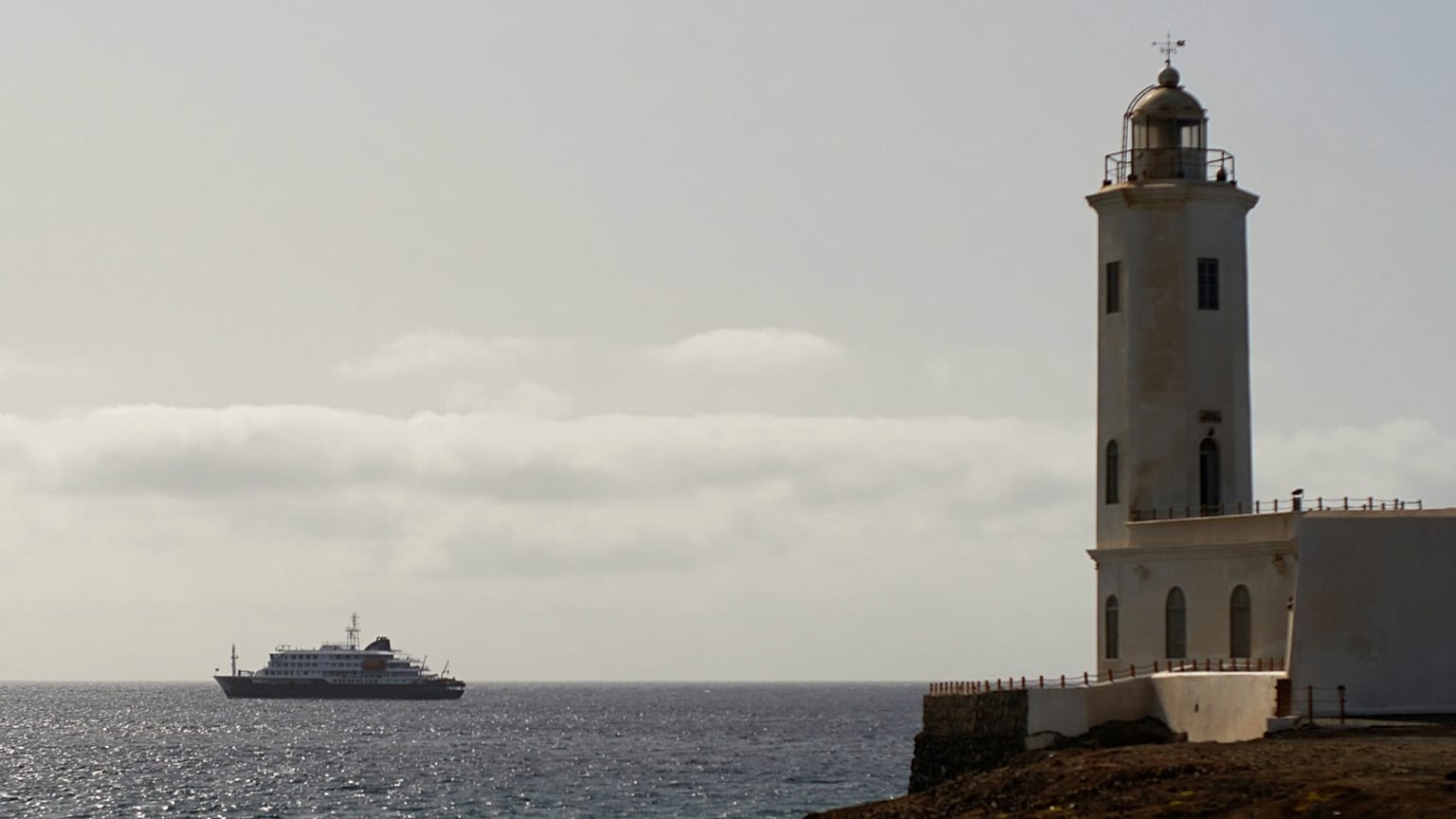
View of the cruise ship MV Hondius anchored in a port in Praia, Cape Verde, on Monday 4 May 2026.
Copyright Copyright 2026 The Associated Press. All rights reserved

By Rafael Salido & Maria Muñoz Morillo
Published on 

The Canary Islands reject the Spanish government's decision to transfer a cruise ship with a hantavirus outbreak to their territory, as health authorities coordinate a medical evacuation from Cabo Verde. South African authorities have detected the Andean variant, which is contagious between humans.


The president of the Canary Islands, Fernando Clavijo, rejected on Wednesday the Spanish government's decision to bring the cruise ship MV Hondius to the archipelago

The vessel, affected by a hantavirus outbreak on board, is currently anchored off Praia, the capital of Cabo Verde. The ship is expected to dock in Tenerife in three days.

"It is an improvisation by the Spanish government," Clavijo said in an interview on Spanish radio, in which he assured that there is insufficient information on the extent of the outbreak. "We have no medical report on how many patients are infected," he said.

The Canarian president has asked for an urgent meeting with the Spanish President Pedro Sánchez to ask him to reconsider the decision to bring the ship to the islands.

Sánchez has convened a meeting on the hantavirus crisis, which will be attended by the Minister of Interior, Fernando Grande-Marlaska, the Minister of Health, Mónica García, the Minister of Transport, Óscar Puente, and the Minister of Territorial Policy, Ángel Víctor Torres.

The World Health Organisation (WHO) has reported that 147 passengers and crew are on board the ship and that, for the moment, seven cases linked to the outbreak have been identified: two laboratory-confirmed and five suspected cases.

The toll includes three deaths, one patient in critical condition, and three people with mild symptoms. South African authorities have detected the Andean variant in several of those infected, a variant that is transmitted between humans.

The secretary general of the WHO, Tedros Adhanom Ghebreyesus, has stated that based on current information, the international organisation "assesses the risk to the general population is low".

Clavijo also questioned the Spanish government's decision, taken in coordination with the WHO and the European Union, to bring the ship to the Canary Islands.

"It is the Spanish government that decides to take it to the Canary Islands (...) Why can't they be treated in Praia?" said the regional president.

The WHO appealed to compliance with international law and the "humanitarian spirit" in asking Spain to take in the ship, and stressed that Cabo Verde does not have the necessary capacity to manage an operation of this magnitude. According to Pedro Sánchez's government, the transfer responds to humanitarian criteria.

The Ministry of Health has confirmed that Spain has also agreed to the urgent transfer of the ship's doctor, who is in a serious condition, on a medicalised plane to the Canary Islands.

The operation is part of the arrangements coordinated with the WHO and the European Centre for Disease Prevention and Control, which is assessing the epidemiological situation on the ship.

Clavijo has warned that the decision "does not convey peace of mind" to the Canary Islands population.

He also insisted that "the position of the Government of the Canary Islands" is to reject the operation as it has been proposed, considering that the necessary data to guarantee the health safety of the archipelago has not been provided.

The first hospitalised plane arrives in Cabo Verde

Cabo Verde has confirmed the arrival in the country of one of the two ambulance planes planned to evacuate three people affected by the outbreak detected on the cruise.

According to the country's Ministry of Health, "the sanitary evacuation of the three patients will be carried out in the next few hours, using two ambulance planes, in coordination with the competent national and international authorities".

The department specified that one of the aircraft is already in the country and that a second plane is expected to arrive, as well as a specialist doctor to assist the occupants of the ship.

The health authorities stressed that once the evacuation process is completed, the ship should resume its journey. The Ministry assured that the operation is being prepared "with maximum security and inter-institutional coordination", with the participation of all the entities involved, in order to guarantee its execution as soon as the necessary conditions are met.

What is the hantavirus?

Hantavirus refers to a group of viruses carried by rodents, primarily transmitted to humans through the inhalation of airborne particles from dried rodent droppings.

Contact with infected rodents or their urine, saliva, or droppings — especially when these materials are disturbed and become airborne — is the primary way it spreads.

The infection can lead to hantavirus pulmonary syndrome (HPS), characterised by headaches, dizziness, chills, fever, muscle pain and gastrointestinal problems, followed by the onset of respiratory distress and hypotension.

According to the WHO, symptoms of HPS typically appear two to four weeks after initial exposure to the virus.

However, symptoms may appear as early as one week and as late as eight weeks following exposure.


Hantavirus outbreak: Spain agrees to take in MV Hondius doctor in serious condition

Aerial view of the Dutch cruise ship MV Hondius anchored in the Atlantic off Cape Verde on 5 May 2026.
Copyright Copyright 2026 The Associated Press. All rights reserved

By Rafael Salido
Published on 

The Spanish government accepted the urgent transfer to the Canary Islands of the doctor from the MV Hondius, in serious condition due to hantavirus, as part of the operation coordinated with the WHO and the EU to treat the ship, which is currently sailing in the waters off Cape Verde. The doctor will be transported in a "hospitalised aircraft".

The Spanish government has agreed to take in the doctor from the luxury cruise ship MV Hondius, who is in serious condition due to an outbreak of hantavirus detected on board, as part of the humanitarian operation activated for the ship in the Canary Islands.

The doctor will be transferred the same day in a medicalised plane, following a formal request from the Dutch government, according to the Ministry of Health.

"As part of the operation, the government has also accepted the request from the Dutch government to take in the doctor from the MV Hondius, who is in a serious condition, and who will be transported to the Canary Islands today in a hospitalised plane," the health ministry announced via the X platform.

The decision comes after the World Health Organisation (WHO), in coordination with the European Union, asked Spain to receive the ship in compliance with international law and the "humanitarian spirit". The Hondius, which departed from Argentina, is currently in the waters of Cape Verde, where it arrived after detecting several cases of hantavirus during its Atlantic crossing.

Health has stressed that Cape Verde does not have the necessary capacity to manage an operation of this magnitude and that the Canary Islands are the closest point with sufficient resources.

In parallel to the transfer of the doctor in serious condition, the European Centre for Disease Prevention and Control (ECDC) is carrying out a thorough assessment of the boat to determine which people should be evacuated urgently in Cape Verde itself and which will continue to the Canary Islands.

The WHO reports that 147 passengers and crew are on board the ship and that, so far, seven cases linked to the outbreak have been identified: two laboratory-confirmed and five suspected cases. The toll includes three deaths, one patient in critical condition, and three people with mild symptoms.

According to the international agency, the first symptoms appeared between 6 and 28 April and were characterised by fever and gastrointestinal disorders, with a rapid progression in some cases to pneumonia, acute respiratory distress syndrome, and shock.

Apart from those with symptoms, the remaining passengers and crew will be examined and treated according to a common protocol developed by the WHO and the ECDC, once the ship arrives in the archipelago in an estimated three to four days.

This procedure includes specific health and transport circuits, "avoiding all contact with the local population and guaranteeing the safety of health personnel at all times", according to an official statement from the Ministry of Health.

The government has stressed that it will provide timely information on the details of the protocol and its implementation. The operation also includes the subsequent repatriation of passengers and crew members to their countries of origin, including several Spanish citizens, once the medical and epidemiological evaluations have been completed.

Tracking of a hantavirus-contacted flight

The WHO is tracing more than 80 passengers following a case of hantavirus on a flightto Johannesburg that included a woman who subsequently died from hantavirus. The victim, a Dutch national, had previously been evacuated from the island of St Helena after developing symptoms.

The international health agency confirmed that the 69-year-old woman was flown on 25 April on a plane operated by Airlink, carrying 82 passengers and six crew members. She died the next day in hospital, her infection with the virus was confirmed days later.

How is hantavirus transmitted?

Hantavirus is a group of viruses carried by rodents and transmitted to humans mainly by inhalation of particles from dried droppings, urine, or saliva. The risk increases when these materials are stirred up and become airborne or by direct contact with infected animals.

Infection can lead to hantavirus pulmonary syndrome, which starts with symptoms such as fever, headache, muscle aches, dizziness, chills, and gastrointestinal disorders. In later stages, it can progress to severe respiratory distress and hypotension, making severe cases a medical emergency.

The incubation period is usually between two and four weeks after exposure, but can range from one week to eight weeks.

There is no specific treatment and the virus can occur in different variants, with the American variant being the most severe. Human-to-human transmission is very rare and, when it has been described, requires very close and prolonged contact.


Hantavirus ship evacuees to be taken to Netherlands but timeline unclear, cruise line says

The MV Hondius cruise ship is anchored at a port in Praia, 4 May, 2026
Copyright AP Photo

By Gavin Blackburn
Published on 

The ship has been at the centre of an international health scare since Saturday after it was revealed that the rare disease was suspected of being behind the deaths of three of its passengers.


Two people who fell ill on a cruise ship hit by a hantavirus outbreak will be evacuated to the Netherlands, the vessel's Dutch operator said on Tuesday, without specifying when.

"The medical evacuation of two individuals currently requiring urgent medical care and the individual associated with the guest who passed away on 2 May, will occur using two specialised aircraft that are en route to Cape Verde," Oceanwide Expeditions said in a statement.

They would be taken to the Netherlands, it said, adding: "At this stage, we do not have an exact timeline."

Once the evacuated passengers are in transit to the Netherlands, the ship, the MV Hondius, will head for "the Canary Islands, either Gran Canaria or Tenerife, which will take three days of sailing."

The ship has been at the centre of an international health scare since Saturday after it was revealed that the rare disease, generally spread from infected rodents, typically through urine, droppings and saliva, was suspected of being behind the deaths of three of its passengers.

Health workers get off the Dutch-flagged MV Hondius off Cape Verde, 4 May, 2026 AP Photo

WHO operation

Meanwhile, the World Health Organisation said on Tuesday it was tracing people on a flight between the island of Saint Helena and Johannesburg, taken by one of the passengers who died on the MV Hondius.

A total of 82 passengers and six crew were on board the 25 April flight from the British island in the Atlantic Ocean, South African-based carrier Airlink told the AFP news agency.

They included a Dutch woman whose husband died of the virus on the ship and whose condition "deteriorated during a flight to Johannesburg," the WHO said in a statement.

She had left the ship in Saint Helena with "gastrointestinal symptoms" on 24 April, flew the next day and died upon arrival at the emergency department of a Johannesburg hospital on 26 April, the WHO said.

On 4 May, tests for hantavirus proved positive.

"Contact tracing for passengers on the flight has been initiated," the WHO said.

The WHO said it suspected that hantavirus may have spread between people on the cruise ship, which is anchored just off Cape Verde.

Besides the Dutch couple, a German passenger has also died. There are two confirmed and five suspected cases.

Saint Helena, home to around 4,400 people, said passengers from the MV Hondius had come ashore and some people on the remote South Atlantic island were being asked to isolate themselves.

A researcher and doctoral candidate prepares samples of inactivated material as part of hantavirus research in Albuquerque, 4 May, 2026 AP Photo

"Two passengers with minor symptoms came ashore and may have had some contact with members of our local community," the British overseas territory's government said in a statement.

"While the virus can be serious, no cases of this illness have been identified in St Helena and there is no significant cause for concern on the island at this time.”

The government said a full risk-based contact tracing process was under way to identify and notify such persons.

An All-American Retort To Israel’s Bombing Of Lebanon – OpEd

Mother and daughter at Lebanese-American protest in DC against bombing of Lebanon in 2006.
 Photo Credit: James Bovard

May 5, 2026 
By James Bovard

Israel’s bombing of Lebanon has reportedly killed more than a thousand civilians this year. Israel also drove out more than a half million civilians from southern Lebanon as part of an effort to confiscate or ravage that territory. The New York Times reports that Israel is “applying the Gaza model in Lebanon,” destroying entire towns and villages and leaving the rubble uninhabitable. Israel’s bombing has been so indiscriminate that even President Trump pretended to object. On Truth Social, Trump announced: “Israel will not be bombing Lebanon any longer. They are PROHIBITED from doing so by the U.S.A. Enough is enough!!!”

Trump’s assertion had as much effect as his boasts about how he already won the war against Iran. The Israeli military continues assailing Lebanon and Trump’s attention long since wandered back to his ballroom.

The latest attacks are reminiscent of Israel’s 2006 invasion of Lebanon, which also killed roughly a thousand civilians, as well as a few hundred Hezbollah fighters. With the Bush White House cheerleading all the way, Israel assailed Lebanon in response to Hezbollah’s seizure of two Israeli soldiers. Israel and Hezbollah had been exchanging bombs and missiles for years prior to Israel’s launching a bombing campaign that soon expanded to include much of Lebanon. The carnage was wildly popular on Capitol Hill, where the House of Representatives voted 410-8 in favor of a resolution endorsing Israeli military action. But the Israeli military didn’t do as well in south Lebanon as they did in the halls of Congress. Hezbollah thwarted the invasion in one of the biggest defeats for the Israeli military since the start of the Yom Kippur War in 1973.

On August 12, 2006, thousands of people gathered near the White House to protest U.S. support for the Israeli attacks on Lebanon. At that time, some American pundits were portraying Arabs as would-be terrorists waiting to wreak havoc on the United States.

But I saw plenty of demonstrators that day who looked more wholesome than your average political zealot of any persuasion. This photo I snapped of a mother and daughter marching along captured the all-American reality of many supporters of Lebanon. The mother is wearing traditional Lebanese garb and carrying both a U.S. flag and a Lebanese flag. The daughter is soaking up the scene while chomping on a popsicle. This is a pair that would have fit in with practically any American Fourth of July celebration. Perhaps they were typical of the nearly 700,000 Lebanese-Americans tabulated in the 2020 census.

There were plenty of Arab Americans at the protest who were confounded to see the U.S. government supporting the attacks on their kinfolks. One protestor held up a sign by the White House: “President Bush: You Can Stop Israeli Crimes in Gaza and Lebanon.” But it was impossible to exaggerate the president’s spinelessness. After an Israeli airstrike on an apartment building in Qana, Lebanon killed 28 civilians two weeks earlier, the New York Times reported: “Facing one of the most awkward moments in recent relations with Israel, Bush described the current Middle East crisis as part of a larger struggle between the forces of freedom and the forces of terror.” Bush refused to call for a ceasefire regardless of how many Lebanese children the Israelis killed in the name of anti-terrorism. And the U.S. government continued rushing more armaments to Israel to enable the carnage to continue.

The U.S. government has been perennially dragged into Lebanese quagmires since the Reagan era. In June 1982, a terrorist organization headed by Abu Nidal (the Osama bin Laden of the 1980s) attempted to assassinate the Israeli ambassador in London. Nidal’s forces had previously killed many Palestinian Liberation Organization (PLO) officials in numerous bomb and shooting attacks, since they considered Yasir Arafat a traitor for his stated willingness to negotiate with Israel. Prime Minister Menachem Begin of Israel exploited the shooting in London to send the Israeli Defense Forces (IDF) into Lebanon to crush the PLO. Yet, as Thomas Friedman noted in his book From Beirut to Jerusalem, “The number of Israeli casualties the PLO guerrillas in Lebanon actually inflicted [was] minuscule (one death in the 12 months before the invasion).”


Defense Minister Ariel Sharon told the Israeli cabinet that his 1982 “Operation Peace for Galilee” would extend only 40 kilometers into Lebanon. However, Sharon sent his tanks to Beirut, determined to destroy the PLO once and for all. As David Martin and John Walcott noted in their 1988 book, Best Laid Plans: The Inside Story of America’s War against Terrorism, the U.S. embassy in Beirut “sent cable after cable to Washington, warning that an Israeli invasion would provoke terrorism and undermine America’s standing in the Arab world, but not a word came back.”

The Palestinian Red Crescent estimated that 14,000 people, most of them civilians, were killed or wounded in the first month of the operation. When Palestinians fought back tenaciously, the IDF responded with indiscriminate bombing, killing hundreds of civilians. The Israelis cut off Beirut’s water and electricity supply and imposed a blockade. The IDF bombed the buildings housing the local bureaus of the Los Angeles Times, United Press International, and Newsweek. U.S. publications gave far more coverage to Israeli carnage against civilians back then than they have allotted in the current conflict.

U.S. troops were sent to Beirut to help buffer a cease-fire. After the U.S. military intervened against Muslims in the Lebanese Civil War, a Muslim truck bomber killed hundreds of U.S. Marines in October 1983. On the 20th anniversary of that attack in 2003, I wrote a Counterpunch article headlined, “The Reagan Roadmap for an Antiterrorism Disaster.” Reagan responded to the Marine barracks bombing by pulling U.S. troops out of Lebanon, one of the few bright spots in U.S. policy in that part of the world in the last half century.

It would be foolish to expect the Trump White House to show wisdom or courage in its Middle East policy. I have the same recommendation now that I had in a 1987 USA Today piece opposing deploying U.S. Navy to the Persian Gulf: “This is not our war, and there is no profit in U.S. intervention.” GTFO remains the best Middle East policy for America.

An earlier version of this article was published by the Libertarian Institute.