Friday, May 08, 2026

Resistance as Ideology: Iran’s Political Culture of Survival

May 8, 2026

With a history dating back well before the Christian era, the nation known to the West as Persia officially adopted its native name of Iran in 1935. Despite having survived centuries of historical challenges, the current aggressive and treacherous actions of the United States and Israel represent an unprecedented threat to its sovereignty.

In the 20th century, Iran defied America’s hegemonic ambitions in West Asia when, after millennia of authoritarian monarchical rule, the country underwent an historic popular revolution, deposed the Shah, felled a political apparatus thought unassailable, and birthed the Islamic Republic.

Since the 1979 Revolution, in which Iranians had the pluck to defy a superpower, Iran has been a torchbearer in the struggle against American and Israeli domination of the region. The West continues to be confounded by its revolutionary political experiment and by the Iranians who inspired it.

Iran’s ability, following the Revolution, to imagine an entirely new governmental system after 2,500 years of unbroken imperial rule was profound. In October of that year, the country transformed from an American-dependent monarchy to a sovereign Islamic republic with a written constitution and regularly held elections.

The structural consistency of the constitution was evidenced following the recent assassination of Supreme Leader Ayatollah Ali Khamenei during the U.S.-Israeli air strike of 28 February 2026.

The framers designed a complex-layered system to maintain institutional stability during such shocks. The swift transition of power within days of his death revealed that the political system is designed for survival through structured succession, rather than reliance on a single individual.

The Iranian constitution, anchored in Islamic principles, rejects foreign domination.  Its anti-imperialist foreign policy is affirmed throughout. Article 154, for example, states that the government “supports the just struggles of freedom fighters against the oppressors in every corner of the globe.”

Framed by this ideal, Iran’s first Supreme Leader, the Ayatollah Ruhollah Khomeini, made support for the just struggle of the Palestinians a central pillar of Iran’s foreign policy.  He declared that the revolution would be incomplete until the Palestinians were free from “arrogant” Israeli control.

For Iran, it matters not that Palestine is not a geographical neighbor or that Palestinians are of Arab, not Persian, ethnicity. Unlike its Arab neighbors, for example, who have remained passive during Israel’s genocide against their fellow Arabs, the Islamic Republic has distinguished itself by being the only major power to maintain consistent support for the Palestinians during Israel’s ongoing terror in occupied Gaza and in the West Bank.

Iran stands out as a remarkably steadfast nation, willing to endure heavy economic and security burdens to uphold its unwavering commitment to Palestine; a testament to prioritizing principle over self-interest.

The cost for Iran’s principled stand now includes the unprovoked devastating air war launched jointly by Israel and the United States on 28 February 2026, that killed Ayatollah Khamenei, members of his family and many senior officials. The war is the latest chapter in their sustained 47-year campaign targeting the country for its resistance and refusal to align with their interests.

Iran’s refusal to abandon its allies was demonstrated recently when a major dispute erupted in April over whether a U.S.-Iran two-week ceasefire included Lebanon.  Although immersed in war, it set aside its own national interests and demanded that the ceasefire encompass Lebanon and all fronts of the war. Tehran also stated that it would not engage in negotiations with Washington unless Israel entered into a ceasefire in Lebanon.

Iranians never suffer from memory fatigue. The nation’s cherished memory is deeply imbued in its history, literature, poetry and discourse.  Hence, recent infamy will forever be etched in Iran’s national lore and memory:  current wars; the assassination of the Supreme Leader; Minab school massacre; martyrdom of slaughtered Iranians; the bombing of beloved cultural heritage sites, such as the 14th century Golestan Palace in Tehran and 17th century Chehel Sotoun palace and garden in Isfahan.

Three historical events have shaped the collective memory of 93 million Iranians, each remembered as a U.S. betrayal and an attack on the country’s national sovereignty; traumas that continue to influence its foreign policy:

+ Overthrow of the democratically-elected government of Prime Minister Mohammad Mossadegh and restoration of Shah Mohammad Reza Pahlavi to the Peacock Throne in 1953;

+ Twenty-six years of American interventionism, Western cultural imperialism and repression under the rule of the Shah;

+ Iran-Iraq war, 1980-1988.

It should be noted that, underpinned by a policy of non-intervention, U.S.-Iran goodwill endured until the end of the Second World War. The confluence of Iran’s strategic location, growing geopolitical influence, Cold War tensions and growing competition over energy resources contributed to U.S. intrusion in the country’s affairs.

The turbulent history between the two began in 1951, when in March of that year, the Majlis (Iran’s parliament) elected Mossadegh prime minister, and voted to nationalize the British-controlled Anglo-Iranian Oil Company.

Between 1951 and 1953, Iranian nationalism reached its apogee, driven by Mossadegh’s widespread popular support, his landmark legislation to reclaim national control over the oil industry, and his strong opposition to foreign domination.

In a coup organized and financed by British and Americans, the democratic government of Iran was overthrown in August 1953.  Restored to power, the Shah solidified Western interests.  He reversed nationalization, awarding 40 percent shares of Iran’s oil industry to U.S. and British companies, essentially giving them control over exploration, production and refining. For the next 26 years, the Shah loyally fulfilled U.S. demands and interests.

Stripped of power, Mossadegh came to represent the independence and dignity of the nation. Hauled before a military tribunal in December 1953, he uttered the words that continue to resonate with Iranians:

I have had only one objective, and that was for the people of Iran to control their own destiny….my greatest sin is that I nationalized Iran’s oil industry and discarded the system of political and economic exploitation by the world’s greatest empire….I am well aware that my fate must serve as an example in the future throughout the Middle East in breaking the chains of slavery and servitude to colonial interests.

The Shah’s failure to preserve Iranian independence and national identity led to the impending 1979 Revolution.  Perceived erosion of the nation’s cultural and religious identity coupled with a lack of support for intellectual autonomy generated intense opposition.

Iranian political philosopher and novelist, Jalal Al-e Ahmad (1923-1969), addressed the imposed dependency and passive adoption of Western culture in his 1962 essay “Gharbzadegi;” a Persian term translated as Westoxification (gharb meaning West and zadegi, afflicted).

The Iranian mind, Al-e Ahmad argued, had been colonized by the seductiveness of Western modernity. Cultural integrity was being undermined, as Iranians became mere consumers of Western goods and technology.

Many Iranians found inspiration for the Islamic Revolution in the ideas of Al-e Ahmad and in scholars like Dr. Ali Shari’ati (1933-1976).

Akin to Al-e Ahmad, Shari’ati  highlighted Shi’ite Islam’s role in defining Iran’s cultural identity and in strengthening national unity against both Western cultural imperialism and the repressive Westernized Pahlavi ruling elite.

As I discussed in my book, Cultural Foundations of Iranian Politics, the Islamic Revolution was essentially an internal, anti colonial struggle, both political and social, in which all strata of Iranian society could unite.

It was Shi’ite Islam that gave expression to political and economic dissatisfaction, and it was religious leaders, generally kept out of government, who filled the political vacuum.  The ideology of the Revolution was constructed on a faith in traditions of the past, not as ideas and practices to overcome, but as a source of inspiration for the present and future.

That Washington, Tel Aviv and their Arab allies were intent on sabotaging the  Islamic Republic was reinforced by their support for Iraqi president, Saddam Hussein, during the Iran-Iraq War.  By the late 1980s, the U.S. military had become directly involved in the war.

Having survived the eight-year onslaught, largely without allies, Iran’s leadership committed to a doctrine of defense and national self-reliance, which included strengthening its military capabilities and ties to regional partners.

Persistent existential threats have been costly both economically and socially, forcing Iran to invest heavily to fortify its defenses:  underground “missile cities”—sprawling tunnel networks, located in nearly every province, to store a vast arsenal of ballistic and cruise missiles—drones, attack boats, and protected launch sites.

Under siege, the government has yet to fully implement the revolution’s social contract avowed in its constitution.  Clearly, there have been social costs.

The primary responsibility of a nation state is to protect its borders and to maintain sovereign control over its territory, while ensuring the security and well being of its people.  Although the Islamic Republic has succeeded in protecting its territory and preserving its national identity, it has curtailed basic rights.

There are numerous reports documenting the government’s abuse of political rights and civil liberties. The issue not addressed, however, is how to measure those abuses in a country that has had to be on guard since 1979. The true test for the Islamic Republic will be whether it relaxes its strict controls once foreign threats no longer exist.

For years, Israeli intelligence (Mossad) has been carrying out espionage, sabotage operations and assassinations of Iranian nuclear scientists and military commanders, including the political leader of Hamas, Ismail Haniyeh, in Tehran in July 2024.

During the June 2025 war, for example, Mossad appeared to have infiltrated the highest levels of Iran’s armed forces and had agents on the ground. Following the assault, Mossad director, David Barnea, released a rare statement, foreshadowing the spy agency’s activities inside Iran during the January 2026 demonstrations/riots and the current February war; saying that Israel “will [continue to] be there, like we have been there.”

The United States has, for decades, been grooming Israel to take on its military role in West Asia, in order to focus on weakening the global influence of Russia and China. Through initiatives like the Abraham Accords, Washington has sought to integrate Israel into the region to counter Iran and increase U.S. influence over Arab states.

For example, during the Biden administration, in May 2022, American forces and the Israeli Air Force conducted a month-long practice (dubbed “Chariots of Fire“) simulating a wide-scale attack on Iran’s nuclear facilities.  Reportedly, $1.5 billion was allocated for what was then a possible attack; that became reality in June 2025.

The February 2026 assault has unveiled the harsh realities of U.S.-Israel regional power dynamics; an alliance that has been disastrous for Iran, Palestine and for the entire region.

The war has also revealed that, for all its bravado, Israel is incapable of sustained warfare without direct American military aid and involvement.

Try as it might, the U.S. cannot force Israel onto and into a region it does not know, respect and where it does not belong.  Wars, expansion, apartheid and genocide make it clear that Zionism has no future in West Asia.

Like occupied Gaza and the West Bank, Iran, too, has been imprisoned.  For over a half century, Palestinians in Gaza have been incarcerated in an “open-air prison”  under Israeli armed guard; while Iran has been shackled by multilateral sanctions, isolated politically, and surrounded by U.S. military bases.

The Islamic Republic cannot return to its pre-war status.  It has every incentive now to finally end the 47-year sentence imposed on it by Washington and Tel Aviv in 1979.

The current American administration has displayed the same imperial hubris and insularity that led to the failed policies of the past. Far from deterring and weakening Iran, the war has strengthened internal unity. Crucially, it has reignited Tehran’s revolutionary fervor to counter U.S.-Israeli hegemony, defend Palestine and to secure a sovereign West Asia.

With a history defined by endurance, Iran has weathered centuries of internal strife and foreign intervention. A culture built on resistance does not forget its trials. Today, it is demonstrating that same perseverance, unyielding as it faces challenges to its sovereignty and forges a future free of external interference.

This first appeared on Thinking Palestine.

Dr. M. Reza Behnam is a political scientist who specializes in comparative politics with a focus on West Asia.  

‘I Don’t Hate the Americans’: Latest Lego Video Promotes Empathy Between People of US and Iran

‘Love for the people, but the system must cease... From Tehran to DC, we’re screaming for peace.”


A still from the latest video which seeks to forge solidarity between all the people suffering from the war against launched by the US and Israel against Iran.

(Photo: Screenshot/via social media)

Jon Queally
May 02, 2026
COMMON DREAMS

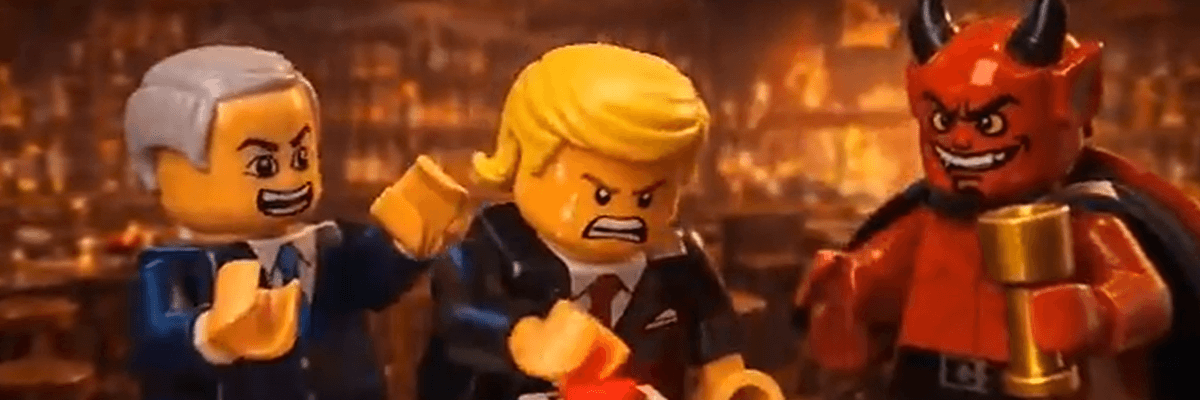
The creative team behind many of the viral sensations featuring Lego characters and storytelling critical of the war launched by US-Israeli forces against Iran two months ago, posted a new video on Saturday that seeks to forge solidarity between everyday Iranians and Americans suffering from the conflict, and who desperately want to see the fighting brought to an end.

“The Iranian AI Lego team has another video out,” said Trita Parsi, executive vice president at the Institute for Responsible Statecraft, a DC think tank focused on US foreign policy. “The music, lyrics, and imagery are all designed to appeal to disillusioned Americans.”


Iran Says YouTube Is Trying to ‘Suppress the Truth’ By Banning AI Lego-Style Videos Mocking US-Israeli War

With the video—featuring dramatic scenes from daily life in both Iran and the United States under the shadow of war—the makers behind it, said Parsi, “are doubling down on building bridges between Americans and Iranians while depicting the US government and ‘system’ as the real enemy.”

Touching on themes of shared empathy between people and a political system in the US that insulates the people in power, like US President Donald Trump and lawmakers in Congress, from the will of the voters, the chorus of the song states, “Same sun rising, but we’re living in hell; While the leaders are ringing the funeral bell.”

‘Love for the people, but the system must cease,“ the chorus continues, ”From Tehran to DC, we’re screaming for peace.“


The lack of peace, the music video argues, is not a reflection of what the American people want but comes from the leaders of the country, motivated by profits, wealth, and geopolitical power.

Your politicians are puppets, strings pulled by their greed,
Selling weapons to anyone, ignoring the need.
They sit in ivory towers, completely out of touch,
Making billions on bombs while the world suffers so much.
They point fingers at us; call us the axis of bad
While they fund the worst violence that the world ever had.

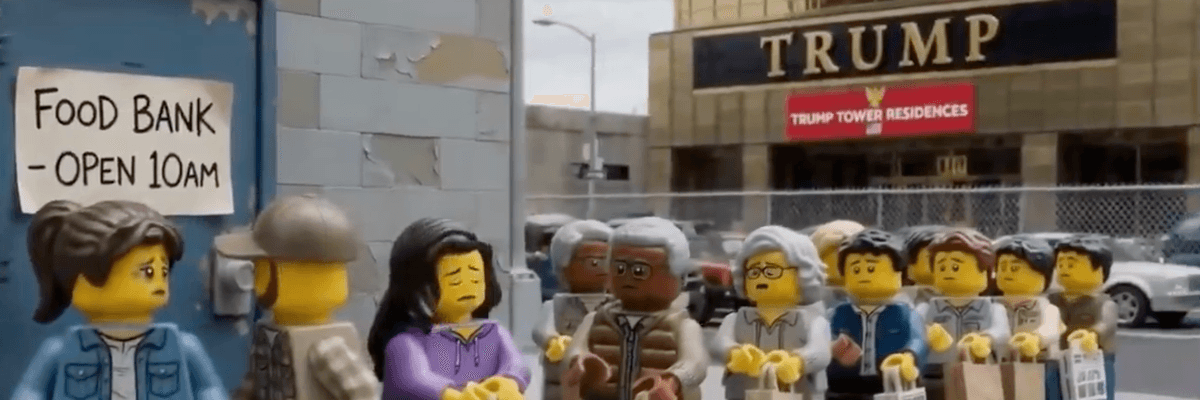
While the imagery shows Iranians suffering in food lines and terrified by US and Israeli bombs being dropped on cities, the message from the Iranian production team behind the video is that the people of Iran do not blame the people of America for the bad behavior of their government.

It’s not you, America. It’s the ones who lead you.
Listen to my heart...

I don’t hate the Americans who are living in fear,
To the working class people trying to make ends meet
To the students protesting, marching out on the street,
We are one and the same, just trying to survive,
Just trying to keep our cultures and our families alive.

I see you standing for justice, fighting the system of hate.
It’s your corrupt politicians that are sealing our fate.
I say love to the citizens from coast to coast,
You’re victims of the same machine that hurts us the most.

So I wrote this track to try to bridge the divide,
To lay down the weapons, to swallow the pride.
We don’t need another missile, no more tactical strikes.
We need conversations on what the future looks like.

My purpose is peace. Let the hostility cease.
Let the eagles and lions finally sit at the feast
From the Persian Gulf straight to the American Shore.
Let our generation be the one that finishes war.
Put the guns in the dirt. Let the healing begin
Because if we keep shooting, then nobody will win.

The “peace” the song concludes, is not for the benefit of “the leaders” waging the war, but for “the innocent souls” harmed by war and the “next in line” in future generations.

The new video on Saturday builds on a previous video from earlier in the week that represented a pivot away from simply ridiculing Trump and slamming the Israelis for their aggression by focusing more on trying to reach the American people who oppose the war and are also being harmed by it.


The earlier video released Thursday, noted Drop Site News, invokes “the 1953 CIA-backed coup against Prime Minister Mohammad Mosaddegh,” and “references the human cost of sanctions,” and “draws a parallel between Iranian and American working people”—all to break through possible barriers of understanding between civilians in the US and those living under the scourge of war in Iran.

“They want us to hate, they want a wall made of glass,” the song says. “But we’re both just the victims of a ruling class.”


‘The World Is Proud of You, Guido’: American Peace Activist Honored in Iranian Lego Video

“Your dignity stands taller than the place you stood, and it will live forever in our memory.”


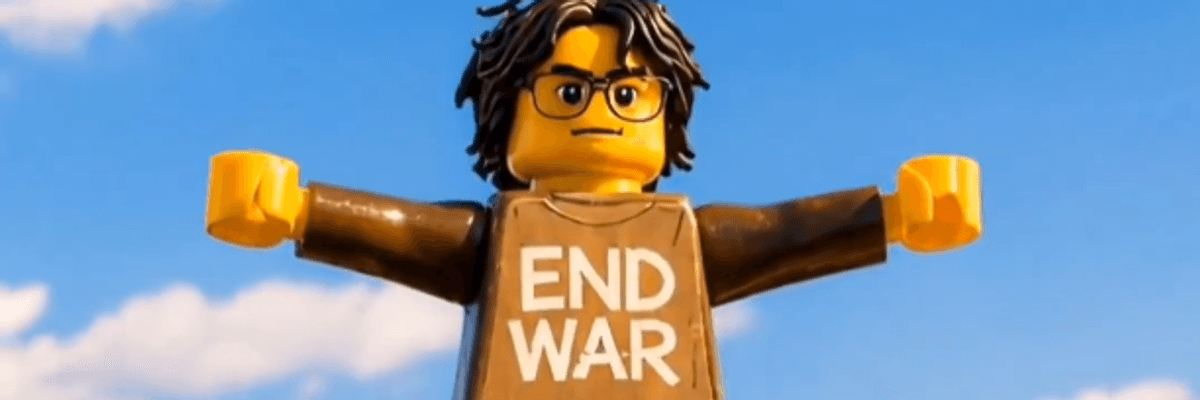
A still from a video produced by Explosive Media depicting peace activist Guido Reichstadter atop the Frederick Douglass Memorial Bridge, which he climbed to protest the war against Iran launched by US President Donald Trump.
(Photo: Screengrab/Explosive Media)


Common Dreams Staff
May 02, 2026

Explosive Media, one of the independent outfits generating the viral videos about the war in Iran, created a short piece on Saturday to honor the American father of two who climbed atop a bridge in the Washington, DC this weekend to demand an end to the conflict.

“In honor of Guido Reichstadter, the man who climbed the Frederick Douglass Memorial Bridge to make his voice of protest heard,” the group said in a post alongside the video short. “Your dignity stands taller than the place you stood, and it will live forever in our memory.”

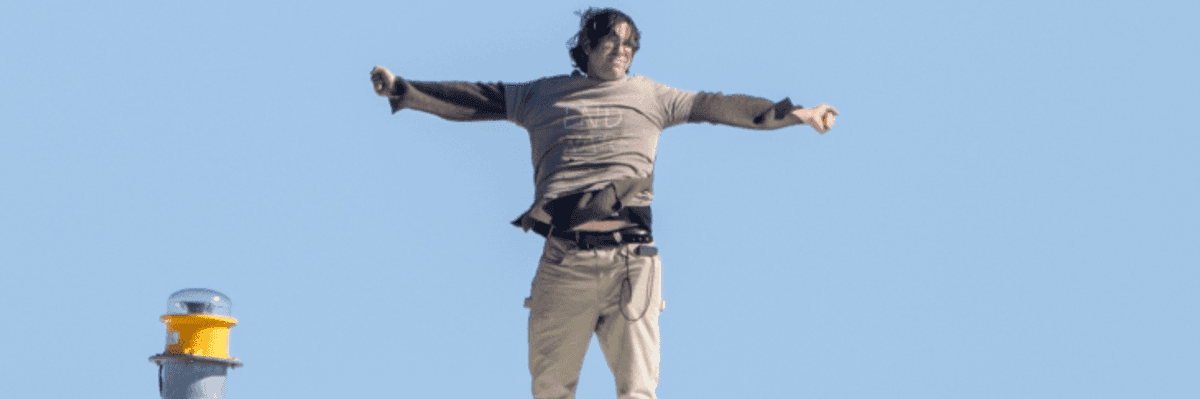
As Common Dreams reported, Reichstadter climbed the bridge wearing a t-shirt that simply read “End War” beginning on Friday afternoon, remained in protest overnight, and told one reporter he intends to remain “for a few days at least.”

In honor of Guido Reichstadter,
the man who climbed the Frederick Douglass Memorial Bridge to make his voice of protest heard.

Your dignity stands taller than the place you stood,
and it will live forever in our memory. 🫡🏔️ pic.twitter.com/WANYzS7kIh
— Explosive Media (@ExplosiveMediaa) May 2, 2026

Reichstadter said he climbed the 168-foot-tall bridge “because the government of the United States is engaged in acts of mass murder in my name. And I refuse to be complicit in that.”

“The world is proud of you, Guido,” Explosive Media said in a separate post on social media. “Soon, side by side, we will celebrate peace and victory together.”


‘I Refuse to Be Complicit’: Man Scales 168-Foot Bridge in DC Demanding End to Iran War

“I’m at the top of this bridge,” says Guido Reichstadter, “because the government of the United States is engaged in acts of mass murder in my name.”


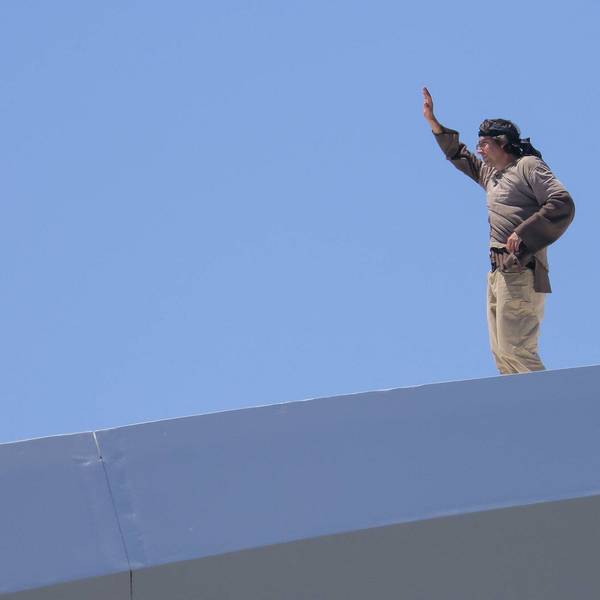
Guido Reichstadter scaled the Frederick Douglass Memorial Bridge in Washington, DC on Friday, May 1, 2026 in order to protest the Iran War started by the President Donald Trump just over two months ago.
(Photo: bystander video/screenshot/via Al-Jazeera)


Jon Queally
May 02, 2026
COMMON DREAMS

Forty-five-year-old social justice activist named Guido Reichstadter, on Saturday morning, was still perched atop the Frederick Douglass Memorial Bridge in Washington, DC, after first scaling the structure Friday afternoon in protest against President Donald Trump’s disastrous war against Iran, now in its third month, and the rapid and unregulated spread of artificial intelligence technology.

As Reichstadter, who described himself as the father of two children with master’s degrees in both math and physics, said in a video posted to social media on Friday: “Hi, my name is Guido Reichstadter, and I’m currently occupying the top of the Frederick Douglass memorial bridge in Washington, DC.”


‘A Beautiful Act of Profound Civil Disobedience’: Guido’s Bridge Protest Against Iran War Hits Day Five

“I’m calling on the people of the United States,” he continued, “to bring an immediate end to the Trump regime’s illegal war on Iran and the removal of the regime’s power through mass nonviolent direct action and non-cooperation.”

“I woke up on February 28th, and I found that hundreds of school children had been blown apart. I think there are many millions of Americans who reject the war in principle, but whose actions have not yet been sufficient to bring it to an end.”

In a separate video, he explained he was at the top of the bridge, which rises approximately 168 feet above the Anacostia River at its highest point, “because the government of the United States is engaged in acts of mass murder in my name. And I refuse to be complicit in that.”

While bridge traffic in both directions was closed at times on Friday and overnight, the bridge is reportedly open to traffic Saturday morning, though with some lane restrictions, as law enforcement said a “barricade situation” with the protester continued.

Reichstadter, who has staged high-profile protests in the past, spoke to Al-Jazeera via video stream on Friday to explain his actions and call for an end to the war that he says—and tens of millions of other Americans agree, according to polling—is a colossal failure by the Trump administration.


“I mean, it’s an atrocity, right?” he said when asked what motivated him. “I woke up on February 28th, and I found that hundreds of school children had been blown apart. I think there are many millions of Americans who reject the war in principle, but whose actions have not yet been sufficient to bring it to an end.”

Democratic members of Congress, both in the US House and Senate, have now brought several War Powers Resolutions to the floor in an effort to end the US attack on Iran, which now includes a naval blockade of the country, but Republican majorities in both chambers, backing Trump, have thwarted those efforts.


Poll after poll, meanwhile, shows that Reichstadter is completely correct in stating that millions of people “reject the war,” but still the war continues even after a 60-day deadline, according to the War Powers Act of 1973, which says the president must either end military operations or get the explicit approval of Congress, which came and went on Friday.

On Friday, a video showed Reichstadter wearing a t-shirt that read “NO WAR” and unfurling a large black banner along the side of the bridge’s central arch as part of the protest.

Before scaling the bridge, Reichstadter also spoke with journalist Ford Fisher to explain his motivations and what he hoped to accomplish with his one-person direct action:


- YouTubewww.youtube.com

Reichstatder stayed on the bridge overnight, even as fireworks exploded overhead from a nearby Major League Baseball game.


In his statement concerning AI, Reichstadter said he wanted to “urgently warn the people of the US and the world of the imminent danger we are in of crossing a point of no return towards the development of artificial intelligence, which poses the risk of catastrophic harm to humanity, including human extinction.”

“I call on the governments of the world to take immediate action to end this danger by permanently banning the development of artificial general intelligence and machine super intelligence,” he said. “I also call on the people of the world to exert all possible influence through nonviolent action to compel their governments to end this danger with all possible speed.”


Iran Wants to Know If Anyone Told Kids in Trump’s Oval Office About Minab Massacre

“Has anyone told these children that that bloodthirsty man killed more than 200 students just a few days ago?”


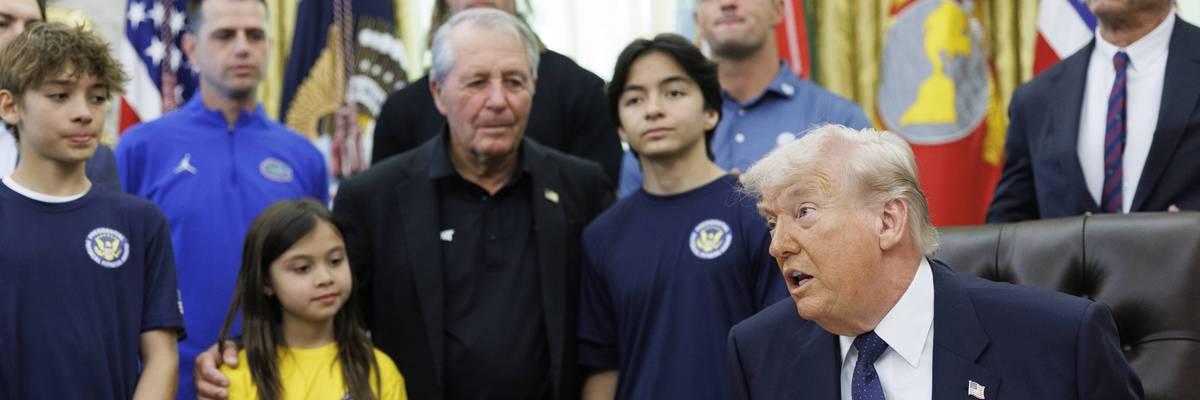
President Donald Trump speaks before signing a proclamation inside the Oval Office at The White House in Washington, on May 5, 2026. The memorandum is set to restore the Presidential Fitness Test Award, a competitive school-based fitness program last seen under the Obama administration.
(Photo by Tom Brenner for The Washington Post via Getty Images/Pool)

Jon Queally
May 06, 2026
COMMON DREAMS


The day after US President Donald Trump told young children in the Oval Office about the blowing up of strategic targets in Iran and described the graphic killing of Iranian protesters who were shot in the head by alleged snipers, a social media account with Iran’s foreign service on Wednesday inquired whether anyone had thought to mention the scores of students who were murdered earlier this year when US forces bombed a school in the city of Minab.

“Has anyone told these children that that bloodthirsty man killed more than 200 students just a few days ago?” asked the Embassy of the Islamic Republic of Iran in South Africa.


New Evidence Bolsters Claim That US Lied About Another Iran Airstrike Massacre


While the number of students killed in the Minab massacre—which took place on the very first day of US bombing—was put at “more than 100” by Amnesty International in a March report, the Iranian government has said 60 or more college students have been killed by US and Israeli forces during airstrikes on universities and research facilities since the attack ordered by Trump began on February 28.

Trump, during his remarks to the children and other gathered in the White House to mark a new physical fitness initiative by the White House, called the Iranians “sick people” who he absurdly claimed would have destroyed the entire Middle East, including Israel, with a nuclear weapon—which they don’t have—“within two weeks” if the US had not attacked when they did.


Trump, with no sense of irony, told the children, “we’re not going to let lunatics have a nuclear weapon.” The optics of Trump’s comments were not only seized by the Iranians to make a point about how the US military has conducted itself under his command.

“Trump unironically tells kids in America that Iran is full of ‘sick people’ who would’ve nuked them,” said journalist Fiorella Isabella, “as the entire world with a half a brain reminds him that the very first thing he and his Zionist ghouls did was order a double tap-strike on 180 school children in Minab.”
A Seriously Unwell Trump Is Losing Iran War for All the World to See

What makes the US president so pathetic is also what makes this moment in history so incredibly dangerous.


A Lego-style animated video posted by the Iranian company Explosive Media mocks US President Donald Trump and Israeli Prime Minister Benjamin Netanyahu on March 7, 2026.
(Image: Screenshot / Explosive Media)

Robert Reich
May 07, 2026
Inequality Media


We are witnessing what happens to a person who is consumed with the need to dominate but cannot.

Iran is unlikely to give in. It can withstand the economic pressure of a blockade better than Trump can withstand the political pressure that comes with rising gas prices (now nearly $4.50 a gallon, on average), soon followed by rising food prices.

His looming failure in Iran is not just a serious geopolitical defeat for the United States; it’s a personal crisis for Trump.

Those rising prices coupled with an increasingly unpopular war have increased the likelihood that Democrats will take back control of the House and even possibly the Senate in the upcoming midterms.

Here again, not just a political defeat for the Republican Party but a personal crisis for Trump.

His ego cannot accept a humiliating loss, as we saw after the 2020 election. His need to bully, dominate, and gain submission is so hardwired inside his insecure head that the defeats he’s now facing — to Iran and to Democrats — are already setting off explosions.

He’s posting more wildly than ever — attacking, insulting, ridiculing, threatening.

On Sunday, Trump posted that Democrats had “RIGGED the 2020 Presidential Election. GET TOUGH REPUBLICANS—THEY’RE COMING, AND THEY’RE COMING FAST! They’re no good for our Country, they almost destroyed it, and we don’t want to let that happen again!” He demanded that Republicans “approve all of the necessary Safeguards we need for Elections to protect the American Public during the upcoming Midterms.”

More of his posts are bizarre AI-generated paeans to himself, his godlike powers, his wished-for physique, and his self-image of omnipotence. On Friday night, he posted an AI-image of himself, JD Vance, Marco Rubio, and Doug Burgum, all shirtless and with young physiques, standing in the reflecting pool in front of the Lincoln Memorial, along with an unidentifiable woman in a bikini. Minutes later he posted an image of House Minority Leader Hakeem Jeffries holding a baseball bat, with a caption calling Jeffries “low IQ,” “a THUG,” and “a danger to our Country.” On Tuesday, he posted AI-images of Joe Biden on one knee with the caption “COWARDS KNEEL,” Barack Obama with the caption “TRAITORS BOW,” and himself with his fist raised and the caption “LEADERS LEAD.”

His mouth — never in control — is now in diarrheic mode. He’s even back to attacking the pope, accusing him of “endangering a lot of Catholics and a lot of people,” adding, “but I guess if it’s up to the pope, he thinks it’s just fine for Iran to have a nuclear weapon.”

His thin-skinned vindictiveness is beyond anything we’ve seen before, which is saying a lot. Last week, after German chancellor Friedrich Merz said the U.S. was “being humiliated by the Iranian leadership,” Trump repeatedly attacked and ridiculed Merz. The Defense Department then said it was pulling 5,000 troops out of Germany, and Trump said he was increasing tariffs on European cars and trucks to 25 percent (from 15 percent).

He’s becoming ever more obsessed with monuments to himself — his ballroom, his arch, his so-called “garden of heroes,” his Trump-embossed passports, his image on 24-karat gold commemorative coins, and his name plastered or etched all over Washington. His plans for self-monuments are becoming larger by the day, more grotesque, more grandiose, and more expensive. Senate Republicans just proposed $1 billion more for Trump’s ballroom, which, recall, was supposed to “cost taxpayers nothing.”

He has even directed the Treasury to announce that his own signature — yes, the same one that appears in a book of birthday greetings for Jeffrey Epstein — will replace the Treasurer’s on all new U.S. paper currency. This will be the first time in American history that a sitting president’s name will appear on circulating cash money.

His thirst for vengeance is exploding, too. Last week the Department of Justice launched another criminal case against former director of the FBI James Comey (whose earlier indictment was quashed by the courts) for posting a picture of seashells spelling out “86 47” on Instagram a year ago. Trump is also insisting that the Justice Department restart its criminal investigation of Jerome Powell and double-down against former Joint Chiefs of Staff Chair Mark Milley and others he considers “enemies.”

Facing the two monumental failures of Iran and control over Congress, Trump is fanatically seeking other ways to assert dominance. On Tuesday, his Education Department announced a civil rights investigation into Smith College over enrolling transgender students. Expect more of this.

Regardless of what happens in Iran, he’ll claim victory. That will be difficult to do convincingly when gas prices remain over $4 a gallon, but he’ll undoubtedly try.

What if Democrats win control of one or both chambers of Congress in the midterms and he claims they lost or cheated? The nation barely survived the last time Trump’s fragile ego faced a major loss.

We’ll also have to cope with Trump as a lame-duck president who can no longer dominate and gain submission as he did before. Will he try to remain president beyond his second term to avoid this?

The man is unwell. Seriously unwell. Lame-duck presidents fade away, but injured dictators can be dangerous.

Bragging of Wartime Iran Blockade, Trump Admits ‘We’re Like Pirates’

“We took over the cargo. We took over the oil. It’s a very profitable business,” said the American president, of seizing ships many thousands of miles away from US waters. No mention of what the war of choice against Iran is costing the US taxpayer.


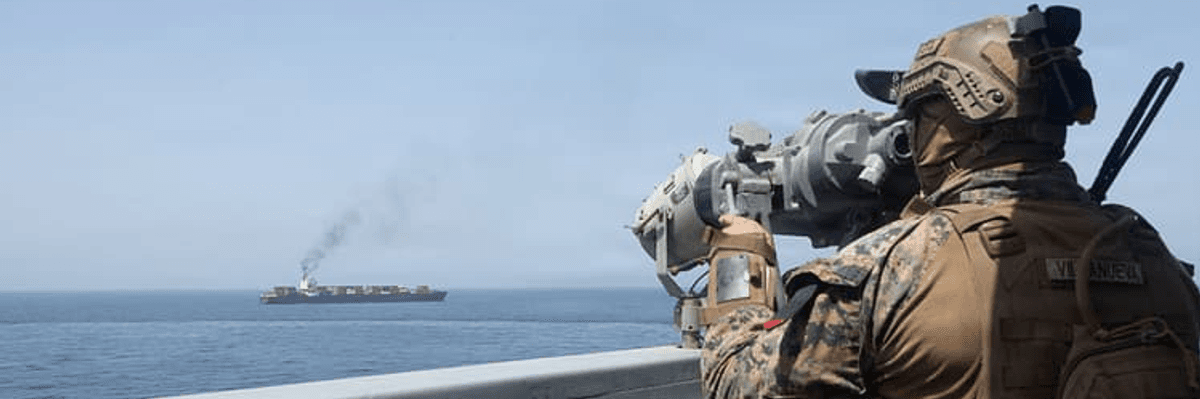
In this handout photo provided by US Central Command, US forces patrol the Arabian Sea near M/V Touska on April 20, 2026, after firing upon the Iranian-flagged vessel that the US accused of attempting to violate the US naval blockade of Iranian ports near the Strait of Hormuz.
(Photo: Handout by the US Navy via Getty Images)

Jon Queally
May 02, 2026
COMMON DREAMS


President Donald Trump on Friday night openly bragged about the US military acting “like pirates” in the world’s oceans as he described recent activities of the US Navy incapacitating vessels at sea and then taking their cargo.

“We took over the cargo. We took over the oil. It’s a very profitable business,” Trump said with a smile as the friendly crowd at the Forum Club in Palm Beach, Florida, cheered him on.

“We’re sort of like pirates, but we’re not playing games,” Trump added before calling the Iranian “bullies” who had to be confronted.


“The only good thing about Trump—only thing!—is that he sometimes says what we all know to be true,” said journalist Mehdi Hassan, “but don’t expect an American president to say, admit, out loud.”

In a social media post, the Iranian Embassy in New Zealand said: “No need to confess, President, the whole world already knows you. By the way, those who, with performative noise, constantly talk about ‘international law’ and ‘freedom of navigation’… don’t want to condemn piracy now?”

“The only good thing about Trump—only thing!—is that he sometimes says what we all know to be true, but don’t expect an American president to say, admit, out loud.”

While using the US military to seize the contents of ships may be profitable to somebody, it’s not entirely clear who that might be.

So far, the estimate for what Trump’s war of choice against Iran over the last two months has cost US taxpayers in the immediate term ranges from $25 billion, which is what the Pentagon itself said this week, to upwards of $100 billion. Over the long term, including the increased cost of gas and groceries due to the economic disruption and the care of veterans involved in the war, the costs of the war—which remains historically unpopular among the US public—could exceed $1 trillion.

Mark P. Nevitt, a retired US military lawyer and now an associate professor at Emory University School of Law, argues that the series of maritime blockades imposed by Trump on Iran has created a “legally surreal moment” in the ongoing conflict.

“The United States is simultaneously observing a ceasefire with Iran while enforcing a naval blockade—a belligerent wartime operation that has no legal basis in peacetime,” explained Nevitt in a column for Justice Security on Friday. “Normally, the imposition of a naval blockade ends a ceasefire, because a blockade is itself a belligerent act.”

While there are established legal frameworks for naval blockades during wartime, legal scholars have asserted from the outset of the war—when the US and Israel launched unprovoked bombings of Iran on Feb. 28—that the war itself is illegal under international law.

While the existence of the blockade, an overt act of war, means the US and Iran remain in active military conflict, Trump himself and the Pentagon made the untenable claim this week that because a tentative ceasefire is in place, the US is not engaged in war—thereby trying to sidestep a 60-day threshold under the War Powers Act of 1973 which mandates the president either get permission from Congress to continue the war or end military operations completely.

As Nevitt puts it, “the United States is neither fully at war nor fully at peace according to its own logic.”

In his assessment, which makes distinctions between maritime law under normal circumstances versus laws of war and blockades during active military conflict, Nevitt said the Pentagon’s position that it can enforce a total blockade of ships coming or going from Iranian ports by interdicting or boarding “sanctioned vessels of any flag state anywhere in the world is remarkably broad and lacks a sound legal basis in international law.”