Monday, April 27, 2026


Liberia Tables a Pragmatic Net Zero Proposal for the IMO

Marco Sylvester, the US Deputy Assistant Secretary for Transportation Affairs and IMO Secretary-General Arsenio Dominguez (IMO)

Published Apr 26, 2026 4:30 PM by The Maritime Executive


Liberia, supported by co-sponsors Argentina and Panama, is to present a new emissions proposal to the IMO Marine Environmental Protection Committee for consideration at the MEPC’s forthcoming 84th Session.

When the previous Net Zero Framework was presented last year, it heavily polarized IMO delegates and was met with stiff opposition, led by the United States. After one of the most contentious sessions in the IMO’s history, culminating in a vote on October 17 last year, the proposal failed to attract a decisive result, members voting instead for an adjournment to rework the framework for fresh presentation. The IMO takes pride in achieving broad-based consensus for the measures it proposes, knowing that unless this is achieved measures will lack moral force – necessary for effective implementation when international law lacks enforcement mechanisms.

The most obvious change in the Liberian draft is the removal of the proposed IMO fund into which fines for non-compliance were to be paid. This was seen by some member states as unnecessarily punitive, and weighted against smaller shipowners and tramp vessels. It was unclear how fines levied on “dirty” ships would be beneficially spent, and under whose oversight. In effect, it would have been a tax levied on shipping, but not directly on those who benefit from shipping services.

The Liberian proposal shifts away from a focus on penalties, and moves towards creating encouragements and incentives to speed adoption of improved, less polluting fuels. The proposal aligns targets to the availability of new fuels and take-up, and also aims to incentivize new methods of reducing emissions – not restricted to fuel types, but embracing well-to-wake emission reductions regardless of the energy source. It also supports emission-reducing technologies such as such as onboard carbon capture systems and wind?assisted propulsion, a key goal of shipowners’ associations. Targets would be set on a five-year cycle to reflect the availability of emission reduction fuels and technologies, but also to enable shipowners to plan changes to their fleet configurations in a cost-effective manner.

IMO delegates are anxiously waiting to see how United States representative Marco Sylvester, the US Deputy Assistant Secretary for Transportation Affairs, views the new proposals - and whether the new approach represents a basis on which negotiations and consensus-building can now be taken forward. While Sylvester appears to still be vehemently opposed, three previous opponents – Liberia, Argentina and Panama – are sponsoring the new proposal, and Saudi Arabia and other Gulf countries, which likewise had opposed the previous proposals, are now backing this pragmatic approach.

With a number of senior national representatives attending the MEPC session, discussion will inevitably extend to the situation in the Strait of Hormuz. The Traffic Separation Scheme in the Strait - which Iran is seeking to supersede by introducing controls and tolls - was adopted by the IMO with broad consensus approval in 1968. All nations who are signatories to the IMO’s Convention on Safety of Life and Sea are obliged to follow the 1968 Traffic Separation Scheme, and the convention has been signed by 164 nations, including the United States, Iran, Oman plus the remainder of the GCC countries. Singapore’s Foreign Minister Vivian Balakrishnan recently observed that even if states had not ratified the Convention on Safety of Life and Sea, freedom of transit passage was historically well-established and part of customary international law.


IMO Passes Major Reform of Ship Registration Process

Changed guidelines are expected to help fight fraud
IMO
File image courtesy to IMO

Published Apr 26, 2026 3:30 PM by The Maritime Executive


The International Maritime Organization (IMO) has moved to seal a regulatory gap that has enabled the rise of false flagging in the shipping industry, enacting new guidelines that will determine how ships are registered.

In recent years, the shipping industry has witnessed a significant surge in the number of ships flying a false flag, with Russia’s shadow fleet tankers being the main culprits. The shadow fleet employs many regulatory loopholes in order to circumvent sanctions on Russian crude oil, and one of the recently-adopted techniques is the falsification of flag registry status. 

According to the IMO, the number of ships flying a false flag has increased substantially over the period from April 2025 to April this year, with 529 ships falsely flying the flag of a country. During the period, nearly 40 member states had seen cases of their flags being fraudulently used without their knowledge or consent.

To deal with the rising problem and to streamline ship registration, the IMO’s Legal Committee has approved a new set of guidelines that are aimed at improving transparency and due diligence. The guidelines are intended to close a key regulatory gap, considering that currently there is no binding international framework to regulate the registration of ships.

The guidelines, which were approved during the just-concluded 113th session of the committee, will henceforth assist new and existing flag state ship registries in the process of registering of ships. Specifically, they will provide registries with practical measures to strengthen verification and due diligence, ensure accurate ownership records, and improve oversight of registration procedures.

“This is a welcome step towards ensuring due diligence in ship registration systems for the benefit of safety, protection of the marine environment and the well-being of seafarers, essential for the safety and security of international shipping. The guidelines will also aid in eliminating cases of fraudulent registration,” said Arsenio Dominguez, IMO Secretary-General.

In November last year, the Centre for Research on Energy and Clean Air (CREA) revealed that between January and September 2025, it was established that a total of 113 shadow vessels sailed under a false flag. The net effect of their activities enabled the transport of 11 million tonnes of oil valued at $5.4 billion.

The IMO reckons that African flags are the most notorious when it comes to false flags, accounting for more than half of all reported cases. Regulatory gaps including weak oversight, simplified procedures, lower fees and lighter compliance burdens have given rise to the use of false flags of countries like Malawi, Benin, The Gambia, Comoros, Guinea, Sierra Leone among others.

Report: Arctic Routes to Remain Peripheral, Especially for Boxships

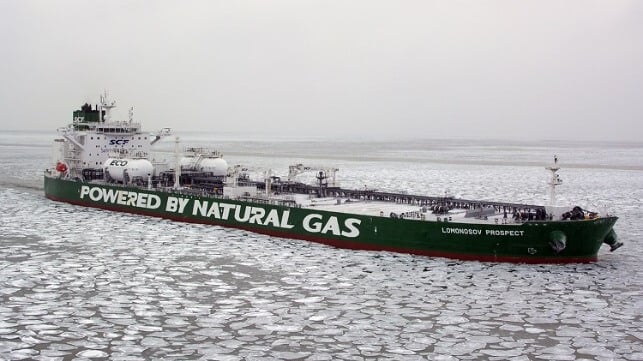
SCF Lomonosov Prospect tanker
File image courtesy SCF

Published Apr 26, 2026 4:30 PM by The Maritime Executive


In the past few years, there has been a lot of hype about the growing ship traffic along the Arctic routes. But recent analysis shows that whle Arctic shipping has indeed surged, growth remains uneven. In a new report, credit insurance firm Coface said that the commercial impact of Arctic shipping routes is likely to remain marginal within the next five years. Nevertheless, Arctic routing offer significant benefits for certain commodity flows.

With climate change opening up navigation in the Arctic, the region is being seen as a viable alternative to the traditional routes. Add to the fact that critical chokepoints are also increasingly facing disruptions due to geopolitical tensions and drought. These factors combined have raised the transport viability of the Arctic. Arctic routes also offer reduced sailing distances - up to 40% less between East Asia and Northern Europe.

While the Arctic shipping outlook appears favorable, Coface’s analysis indicates that the region’s routes will primarily attract the transport of raw materials. Arctic routes will particularly offer significant cost savings to liquid bulk shipping (crude oil, diesel or LNG). Dry bulk is another segment that is likely to find Arctic shipping competitive, but only when ships can operate without icebreaker support.

On the other hand, the Arctic is expected to remain uncompetitive for container shipping, despite the shorter distances. Operational constraints, the limited size of vessels and the specific costs of Arctic navigation prevent it, at this stage, from competing with the economies of scale of traditional routes.

Overall, only about 3.5 percent of trade between East Asia, Northern Europe and North America is likely to use Arctic routes in the short term. Thus, the overall impact of Arctic shipping in the global trade is expected to be minimal. However, industries linked to cereals, energy, metals and timber will benefit from the Arctic routes.

In the short term, Coface sees the value of Arctic routes as more political than commercial. “Until container transport becomes economically viable on a large scale, the Arctic routes are unlikely to radically disrupt the major balances of global trade,” Coface added.

These findings are corroborated by a new publication by Norway’s research organization Fram Center (High North Research Center for Climate and Environment). The study analyzed shipping traffic in the High Arctic between 2013 and 2022. Largely, the focus was comparing traffic in High-Arctic Large Marine Ecosystems (LMEs), consisting of major seas in the Arctic.

Vessels in the Barents Sea accounted for 74 percent of the total distance sailed in the High-Arctic LMEs in 2022. Vessels sailed 4.5 million nautical miles (nm) in the year than 10 years before, making the growth in the Barents Sea the largest. In contrast, traffic in the Northern Canadian Archipelago increased by only 2,000 nm, making the region to have the lowest share.

Remarkably, sailed distance tripled in the Kara Sea, with the LME becoming number two in 2022 traffic with a 7.8 percent share, followed by Baffin Bay with 7.3 percent. The Kara Sea exceptional performance could be explained by the steady increase in traffic of cargo ships. The launch of the Yamal Peninsula LNG project has seen a rise of crude oil and gas tankers of a size and type that had never been present in the Arctic before.

In the Barents Sea, fishing vessels constitute the biggest share of the traffic. This also applies to Baffin Bay, but in this region, there is a significant increase in small containerships, which serve settlements in Greenland and northern Canada. Bulk carrier traffic is also on the rise, owing to expansion of iron-ore mining on Baffin Island.


HD Hyundai Finalizes Its First International Contract for an Icebreaker

icebreaker
HD Hyundai finalized its first contract for an icebreaker to be built for Sweden (HD Hyundai)

Published Apr 22, 2026 5:17 PM by The Maritime Executive


The Swedish Maritime Authority and HD Hyundai Heavy Industries completed the contract for the construction of a new icebreaker to support operations in the Baltic. The vessel, which is critical for modernizing Sweden’s fleet, also marks the entry of South Korea’s shipbuilders into this segment of the international market.

HD Hyundai reports the contract is valued at $348.9 million for one icebreaker due for delivery in 2029. The vessel, which will be 126 meters (413 feet) in length, will be approximately 15,000 tons displacement. It will be a Polar Class 4 (PC4) icebreaker, meaning it can handle continuous ice breaking at approximately 1 to 1.2 meters (approximately 3 to 4 feet) in thickness.

Sweden had launched the project in October 2017, with the Maritime Authority submitting preliminary studies and recommending that its fleet of five vessels should be replaced by 2030. It worked with the Finnish Transport Agency and Aker Arctic Technology in Helsinki to develop the design. They said the vessel would be able to maintain a 32-meter (105-foot) wide channel. 

Plans called for the vessel to have the capability to be powered by methanol in the future. HD Hyundai reports it will utilize an electric propulsion system. The ship will be used to perform icebreaking as well as fleet operation support, towing operations, and ice management in the Baltic.

According to the Swedish Maritime Administration, its icebreakers are critical to keeping northern ports open, which otherwise could have to close for up to 130 days a year. It highlights the critical role of the maritime trade to the country’s economy while highlighting that five of its six vessels were built in the 1970s and 1980s. The age of the ships has become a challenge and requires additional maintenance to keep them in operation.

A tender was launched in 2025 with a total of four bids, one from Norway, two from Finland, and HD Hyundai from South Korea. In addition to price, which Sweden said was the most important factor, it also considered the delivery timetable and technological capabilities of the yard. In November 2025, HD Hyundai was selected as the winner of the tender.

The results of the tender, however, were challenged in the Swedish courts. The Administrative Court found in favor of the Maritime Administration, but that decision was appealed. The SMA reported on April 14 that the Court of Appeals had decided not to “grant leave,” meaning the lower court’s decision was final and cleared the way for the shipbuilding contract.

HD Hyundai is calling it a “breakthrough” and is in keeping with its plans to expand internationally for specialized vessels. The company is already citing the opportunities with the 2024 ICE Pact between the United States, Canada, and Finland, which projected a $9 billion investment to build 70 to 90 icebreakers over the next decade.

“We will expand into new export markets in the special-purpose vessel sector based on our technological prowess and business integration capabilities,” said HD Hyundai Heavy Industries President Joo Won-ho (Head of Warship and Medium-sized Vessel Business).

Last year, the EU announced it would provide more than $6 million for a program running between 2025 and 2029 to renovate and modernize Sweden’s state icebreakers. It is a joint project with Finland and Estonia to ensure the continued operations of the icebreakers. This winter, the Baltic saw some of its most challenging conditions, placing high demands on the icebreaker fleet as the ice expanded and slowed vessel movements.


Free public transport can help tackle the fuel prices crisis

AND CLIMATE CHANGE

Public support has also grown for other forms of Government help to tackle the energy crisis.

Scrapping fares on public transport is an ideal way to respond to the soaring fuel prices caused by the war in the Gulf, Fare Free London says.

Abolishing fares makes public transport more attractive to drivers, as well as giving instant support to public transport users, whose journeys are far less fuel-intensive.          

“Free public transport would reduce our dependence on fossil fuels, and on world markets where prices are set by events outside our control”, Pearl Ahrens of Fare Free London said.

The fuel price shock from the US-Israeli attack on Iran is likely to last a long time. The UK will be hit harder than any other country in the G20, the Organisation of Economic Cooperation and Development has said. And the EU has warned that cutting taxes on petrol could cause a fiscal crisis.

This terrible war should force a permanent rethink of the transport system, Fare Free London believes. The drastic changes necessitated by climate change are long overdue, and the war just adds to the urgency of addressing energy vulnerabilities now.

This is an opportunity to put in place policies that make our transport system more resilient to shocks – both fuel shortages and economic crises – and work towards a sustainable transport system in the longer term. Instead of cutting taxes on fuel, which is already heavily subsidised, we should try and save fuel by encouraging people to travel on public transport.  

In Asia, municipal authorities have turned to free public transport to shield people from the worst effects of the sharp increases in oil prices.

In Pakistan, the state of Punjab, the largest state in the country, with 125+ million population, and the capital, Islamabad, have made public transport free for a month. The Punjab Mass Transit Authority reckons that more than 800,000 passengers are benefiting from the policy each day, and the provincial government is considering expanding the bus fleet to cope.

In Australia, both the state of Victoria and the island of Tasmania have also made public transport free, temporarily.

Municipal authorities in Ho Chi Minh city, Vietnam – which has a population of 14.5 million, much more than London’s – are considering a permanent scheme.     

Free public transport as an emergency measure is not problem-free, but its implementation in UK cities would be a welcome relief from the costs of tickets. Evidence from Montpellier in France, where public transport has now been free for two years, is that a properly-managed scheme in a European city works very well.

In the run-up to the 7th May elections, more than 170 candidates have signed a pledge to “use our platforms to call for the extension of free public transport”. Fare Free London, together with Fare Free Yorkshire, Better Buses for West Yorkshire, West Yorkshire Needs a Tram, Tipping Point UK and the Greener Jobs Alliance, are backing the initiative.

The Government should help end our exposure to fossil fuel price shocks

The campaign chimes with shifts in public opinion, with households keen to break free from the cycle of fossil fuel price shocks for good, according to new polling.

Figures show that the ongoing conflict with Iran has prompted more than a third of adults to increase their interest in new technologies to cut their bills and reduce their exposure to volatile global markets.

Research by Survation for the End Fuel Poverty Coalition finds that 35% of the public have become more interested in home energy technology since the Iran conflict began. Of these people, 45% are now more interested in getting solar panels on their roofs, 36% would like more home insulation, 35% are more interested in the new plug in solar option and 26% are now more interested in getting a heat pump.

But with 60% saying such options are simply too expensive, the public is calling on the Government to act, with 71% wanting grants for insulation and 68% seeking support for solar panels and heat pumps.

With 83% of the public worried about energy bills and 44% saying they would be unable to afford the expected £228 annual increase in energy bills from 1st July, 73% want to see targeted support for households and 67% want to see help for all households with energy bills.

Heating Oil and LPG customers have already seen the cost of energy increase and as price rises loom for even more households from 1st July, a majority of the public (64%) believe that the energy industry is profiteering from the conflict in Iran and a  majority say that ending the Windfall Tax now would be the wrong thing to do.

Simon Francis, End Fuel Poverty Coalition coordinator said: “The public want to protect themselves from oil and gas price shocks for good, and the Government has both the means and the mandate to help them do it.

“Energy firms made £125bn in profits on their UK operations over the last five years and companies like BP are already expecting bumper profits from the fresh crisis. The Windfall Tax revenue raised by the Treasury should be going further to help households cut their bills for good.

“The Government’s Warm Homes Plan is the right vehicle, but now is the moment to make it even more ambitious and to ensure it comes with a guarantee that every upgraded home will see energy efficiency improve and bills come down.”

“A Trump Tax, plain and simple”

Three-quarters of the public (76%) hold Donald Trump responsible for energy bill increases set to hit UK households, while 65% also blame the energy industry directly. The anger runs deep enough that 63% of respondents agree the increases amount to a Trump Tax on their bills.

Robert Palmer, Deputy Director of Uplift, added: “People know they’re being hit with a Trump Tax, plain and simple. We’re facing higher energy bills, rocketing fuel prices and more expensive mortgages. Our dependence on fossil fuels is making all of us poorer. All except for the oil and gas bosses and their shareholders who – once again – are set to cash in at our expense.

“Now Trump is demanding that the UK doubles down on drilling. But we can’t drill our way out of this crisis. More drilling won’t take a penny off our bills, and would have no meaningful impact on the UK’s supply of gas. We’ve burned most of what was in the North Sea already.

“The only way to insulate ourselves from these risks is to press on with renewables, like wind, and upgrade our homes with solar power and heat pumps, so we can free ourselves from oil and gas and ensure we have a liveable planet. And this polling shows the public gets this, even if Donald Trump doesn’t.”


Image: c/o Labour Hub


“A showcase of working class solidarity and unity”

APRIL 23, 2026

Joe Rollin of Unite invites supporters to celebrate the centenary of the 1926 General Strike.

 Sick leave, maternity and paternity leave, paid holidays and safer workplaces – many of us take all of these for granted in our working lives. But these rights are not and were never guaranteed. They were hard won by trade unionists, standing together in their fight for change.

And we can trace the origins of these rights back to 100 years ago. On May 3rd 1926, the General Strike began, with 1.7 million workers across different industries walking out and bringing Britain to a standstill.

Steel workers to printers, dockers to transport workers and engineers to postal staff and many more: it was a lesson in what happens when workers who make up the backbone of the country stop working.

Public transport ground to a halt, deliveries of food, letters and other essential items stopped, newspapers weren’t printed and electrical services were cut off – these were just some of the effects.

Workers across the country had walked out in solidarity with coal miners, who faced devastating cuts to pay and conditions by mine owners who wanted them to work longer hours for less pay.

In short, ensuring the bosses still made profits at the expense of workers. If this sounds familiar, it is because it is a common theme behind strikes that happen today.

The words of the coal miners’ leader A. J. Cook, which are synonymous with the General Strike,  “Not a penny off the pay, not a minute on the day!” are still as important for workers now as they were in 1926.

While the General Strike started with momentum, it ended quickly. The Trades Union Congress – who had initially called for workers across key industries to go out – called it off after just nine days.

The government, led by Conservative Stanley Baldwin, used strike breaking tactics such as bringing in the army and asking for volunteers to get the country running again.

Unions were left struggling financially while in general the industrial action was viewed as divisive – volunteers, the majority of whom were upper and middle class, were seen as heroes by the Conservative government and right wing press. Striking workers viewed them as undermining the struggle for improvements to their rights.

The miners carried on striking for seven months, before eventually returning to work – many of them on worse conditions than they had worked under previously.

While it did not achieve its initial goals, the General Strike left a lasting impact and was extremely important in shaping the labour movement as we now know it.

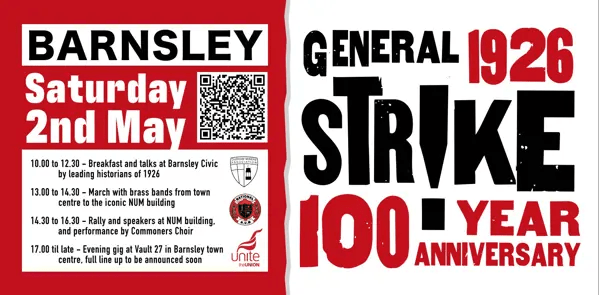
This is why Unite – the UK’s largest union – is marking the centenary of the General Strike with a memorable event in Barnsley on 2nd May.

Working with the Durham Miners Association and the National Union of Mineworkers, we are bringing together trade unionists, historians and artists for a march and rally – a celebration of working class pride.

This event will be followed by a gig at Barnsley’s Vault 27, which will see a stacked bill of raucous political bands and artists playing from 5pm. All funds raised from the concert will be donated to Unite’s strike fund to support our members who are currently involved in industrial disputes.

Marking the centenary of the General Strike is the perfect time to celebrate trade union history, remember those who stood together for their working rights and to use those lessons to fight for a better future. Because despite all the wins, the fight is far from over.

While the world of work is significantly different to how it was a century ago, thanks to the hard work of unions and our focus on collective organising, there is a huge amount still to be done.

Back in 1926, striking workers were dealing with falling living standards, unscrupulous bosses and profiteering from employers and the super-rich as they saw their own pay being cut and costs of essentials rise. We can easily see the parallels.

At this particular moment in history, it can feel like we are going backwards. Today, workers are still being penalised for crises out of their control, such as the war in the Middle East which is causing prices rises of food and fuel. The cost of living crisis has been going on for several years and shows no sign of abating – but corporations are profiting from the situation. Just look at BP crowing about its ‘exceptional’ oil trading results recently.

Food inflation up is 38 per cent while supermarkets rake in huge profits and some of their staff claim Universal Credit to supplement salaries too low to live on. Consumers are paying more than ever in their water bills to make up for company failings while their CEOs earn millions.

British workers are supposed to be content with wage stagnation, while those in the public sector in key roles have faced constant real-terms pay cuts leaving many struggling to afford the basics.

Food bank use is soaring – 655,000 people used Trussell Trust services for the first time in 2023-24 – a rise of more than a third since 2018-19.

This unacceptable situation cannot continue. A better world for workers is possible and Unite strives towards this every day.

We work hard to secure the best deals on pay and conditions for our members, as well as fight against the scourge of corporate greed and arguing for a wealth tax on the richest in this country.

Since 2021, we have put £620 million back into the pockets of those who deserve it the most – the workers.

But it was the workers who took part in the General Strike who initially showed there was power in the union and we must thank them.

It was because of them that industrial issues were brought to the forefront of public consciousness and workers’ rights became an important part of the political agenda.

The strike was a showcase of working class solidarity and unity. Collective action was at its heart. These remain very important tenets of the trade union movement today – trade unionists know this is our strength and it is something we will always celebrate.

For more information, see here.  

Joe Rollin is a senior organiser at Unite the union.

Images c/o Unite.

UK

One in four young women juggling multiple jobs, finds new analysis

APRIL 21, 2026

By the Women’s Budget Group

One in four young women in Great Britain have experiences of working in more than one job over the course of a tax year, according to new analysis by the Universities of Birmingham and Nottingham and the UK Women’s Budget Group that highlights the growing pressures facing young workers.

The research casts new light on the scale of the issue, as standard labour market statistics fail to capture the full extent of multiple jobholding and the risk to young women who do so in securing an income.

The trend reflects deeper structural problems in the UK labour market, including low pay, unpredictable hours, temporary contracts and weak enforcement of employment rights.

Together with the Young Women’s Trust, the academics and the Women’s Budget Group are now calling on the Government to deliver the Employment Rights Act in full and introduce targeted measures to address multiple jobholding among young women, warning that without intervention these patterns risk entrenching gender inequalities across women’s working lives.

Key findings

  • Young women (16–29) are the group most likely to work multiple jobs compared to older women and men, according to HMRC payroll data and self-reported survey data.
  • Innovative research linking the latest available payroll data from HMRC with the annual Survey of Hours and Earnings reveals that one in four (24.7%) young women in Great Britain were in multiple jobs within the 2018-2019 tax year compared to one in five men (20.2%).
  • This is backed by more recent self-reported data from the Understanding Society Survey, showing that one in ten young women in the UK reported holding more than one job at the same time in 2023-24. Among young men, by contrast, around one in fifteenreported having more than one job.
  • This is an increase on the previous year: in 2022-23, the multiple jobholding rate for young women in the UK was 7.7%, increasing to 10.6%, and from 5.5% to 6.8% for young men respectively.
  • The increase observed in this data suggests that payroll records are also likely to show rising multiple jobholding once updated figures are released by HMRC.
  • The analysis also finds a strong link between multiple jobholding and insecure work. More than a third (36%) of young women with multiple jobs were on a temporary contract in their main job in 2023-24,compared with a quarter (24%) of young women with only one job.
  • Hospitality stands out as a key sector for young multiple jobholders for both women and men. While around 12% of young women worked in hospitality overall in 2018-2019, this rises toaround 18%among young female multiple jobholders, reflecting the prevalence of short hours and insecure contracts.
  • Young women in customer-facing and insecure roles face heightened risks of sexual harassment. Young Women’s Trust research documents widespread experiences of  harassment, particularly in hospitality, and shows how power imbalances linked to insecure contracts silence young women.
  • Young women in multiple jobs are at particular risk of long-term pension disadvantage as many do not reach the £10,000 annual earnings threshold with any single employer required for automatic pension enrolment.

Dr Darja Reuschke, Associate Professor at City-REDI University of Birmingham, said: The data sources that are typically used to inform employment policies are seriously underreporting how common multiple jobholding really is. As a result, the issue has largely been overlooked.”

Emma Thackray, Senior Research and Data Officer at the Women’s Budget Group, said: “Young women are increasingly piecing together multiple insecure jobs just to get by – and this is rarely by choice. Too many roles offer low pay, short hours and little security, leaving young women vulnerable now and threatening their economic futures. We’re currently looking at an average 43% gender pensions gap, more than three times the gender pay gap. The Employment Rights Act is a crucial step forward to provide guaranteed hours provisions, but the Government must take multiple jobholding seriously and introduce targeted measures to protect women’s long-term financial security.”

Katharine Sacks-Jones, Chief Executive at Young Women’s Trust, said: “For too many young women, juggling multiple jobs isn’t a choice, it’s a necessity and it often comes at the cost of their wellbeing. Young women tell us they’re shattered, exhausted, and anxious. These jobs are often insecure, leaving young women waiting for ‘the call’ to let them know if they’re needed or not and fearing saying no to shifts in case they’re not offered more – even when they’re burnt out. And they’re often trapped – with no opportunities to develop or progress. As well as urgently needing the greater security that the Employment Rights Act promises, young women need routes from insecure work into jobs that fit their ambitions and potential.”

Based on these findings, the researchers together with the Women’s Budget Group and the Young Women’s Trust, call on the Government to:

  • Deliver ‘Make Work Pay’ policies in full under the Employment Rights Act, ending one-sided flexibility and ensuring enforceable rights to guaranteed hours, fair cancellation pay, and protection from unpaid trial shifts.
  • Reform pension auto-enrolment by lowering or removing earnings thresholds and extending coverage to workers aged 18+, addressing long-term financial insecurity for multiple jobholders.
  • Fulfil its commitment to abolish discriminatory youth rates for all adult workers. Young workers under 21 should be paid the National Living Wage.
  • Embed mental health protections in job quality and enforcement.
  • Strengthen protections against sexual harassment.
  • Recognise multiple jobholding as a structural labour market issue, particularly affecting young women, and embed it in policy design, evaluation and enforcement.
  • Improve labour market data and monitoring by expanding linked administrative data through HM Revenue and Customs and the Office for National Statistics to capture insecure, short-hours and multiple jobholding work.

The full report is available here. This research is part of a wider project headed by Dr Darja Reuschke at the University of Birmingham funded by the ADR UK, of which the Women’s Budget Group is a project partner.

The UK Women’s Budget Group is the UK’s leading feminist economics think tank, providing evidence and analysis on women’s economic position and proposing policy alternatives for a gender-equal economy.

Image: https://pxhere.com/en/photo/1453001 Licence: CC0 1.0 Public Domain Universal

‘We’ve had enough of experts’ – US-style


APRIL 22, 2026

Mike Phipps reviews American Carnage: How Trump, Musk, and DOGE Butchered the US Government, by Sasha Abramsky, published by OR Books.

Within days of taking office, President Trump empowered Elon Musk to make swingeing cuts to the US’s most important government agencies. The ‘Department of Government Efficiency’ (DOGE) was not a properly constituted government department, set by Congress. It was a shadow government agency, aimed at destroying government functionality.

For those on the receiving end, some of its operations were truly Orwellian. Workers at the Consumer Finance Protection Bureau were told not to come into the office, which was closed, and not to perform any work tasks. Eighteen days later they were required to fill out a Musk-mandated questionnaire listing what they had done over the previous week. Their limited answers would be used to justify their dismissal. Elsewhere, remote workers were instructed to return to offices with no furniture, where the heating and air conditioning had been turned off.

American Carnage follows eleven federal workers in eight different agencies following the moment they were fired. But tens of thousands of people were affected by the deletion of Congressionally mandated programmes deemed antithetical to the prejudices of the new government. Some were frog-marched out of the building; many lost hundreds of thousands of dollars in expected earnings, and were unlikely in late middle age to find new work. Some lost their vital medical insurance; many suffered extreme anxiety.

The breadth of destruction was vast. It hit services to disabled veterans, health care, cancer research, anti-corruption investigations and much more. The US Agency for International Development (USAID) was denounced by Musk as a “criminal organization”. Its termination would lead to millions of preventable deaths worldwide.

Many who lost their jobs had only just started: sacking probationary workers was easy, ‘low-hanging fruit’ for Musk’s eager, ignorant teams. They would get no severance pay or anything else. One woman who was recruited to a post at the National Oceanic and Atmospheric Administration and had to relocate from Pennsylvania to Boulder, Colorado, took a five-day road trip 2,000 miles out to her new job when she was told it had been deleted – along with her health insurance. She suffered from Crohn’s disease.

Some of the fired workers applied unsuccessfully for hundreds of jobs. One was told to tone down her USAID employment history, since in the new Trump era, potential employers would regard it as “toxic”.  

The human stories here are shocking. Many of the victims of this purge are now on medication, exhibiting symptoms akin to trauma. The firings also underline how precarious one’s existence in the US can be, with so much healthcare provision dependent on one’s easily terminated employment. But what’s especially galling is how little Congress did to defend the programmes which it had itself created – and the way many of the courts rolled over to let Trump do whatever he wanted.

What DOGE did was never about improving government efficiency. It was intended primarily to cow the civil service, to show those who kept their jobs the fate that could await them if they failed to comply with the new regime.

The project’s wide brief also allowed the incoming administration to break down the departmental barriers between different sets of data. Put bluntly, the information gathered from the Housing and Social Security Departments could be used by ICE to hunt down migrants. It also allowed Musk to harness huge amounts of data for his own tech empire.

Speaking in London recently about his book, Sasha Abramsky underlined some of the other consequences of the purge. Now that Trump is bombing Iran with no clear aim in a war that many say Israel has been trying to involve the US for decades, it’s obvious that the key expert energy analysts were simply no longer there to tell Trump about the likely consequences of his action – they had all been fired, courtesy of Elon Musk’s attack on the federal government.

Mike Phipps’ book Don’t Stop Thinking About Tomorrow: The Labour Party after Jeremy Corbyn (OR Books, 2022) can be ordered here.


How Do We Stop Farage and the Far Right?

APRIL 24, 2026

The David Renton interview

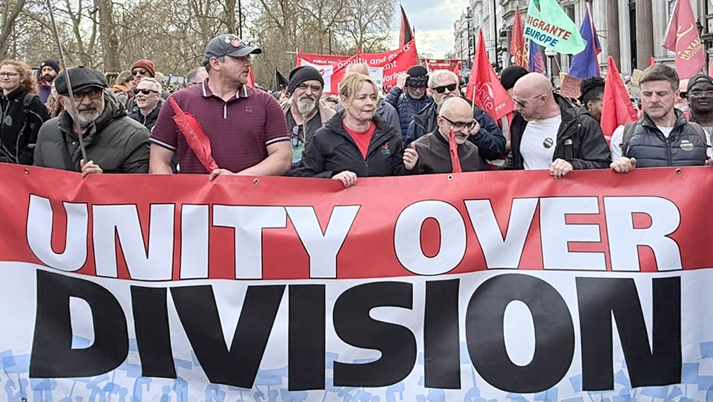
After the massive Together March in London, on 28th March 2026, it is  exactly the right moment for the Labour Left Podcast, introduced here by Bryn Griffiths, to interview David Renton and take a deep dive into the far right.

David Renton, our guest, is a barrister who specialises in trade union rights and free speech and he has appeared in the European Court of Human Rights. He is both a  socialist and a historian who writes for publications such as The London Review of BooksTribune, and Jacobin. His academic specialism has always made a big contribution – of around ten books  – to our understanding of fascism, racism and the extreme right.

The UNITE delegation led by Sharon Graham was part of the impressive trade union bloc on 28th March 2026. Photo: Bryn Griffiths

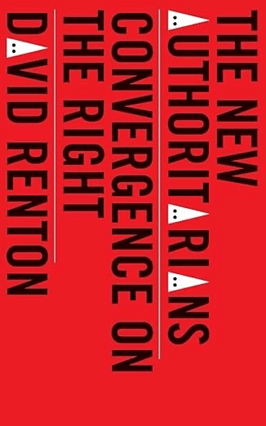
David Renton has written a powerful trilogy of books. His book on Fascism is an excellent primer on what fascism is and just as importantly what it isn’t.  Never Again is a history of Rock Against Racism and the Anti-Nazi League. Finally, The New Authoritarians brings us right up to date to help us grapple with the new forms the extreme right is taking today. In the podcast, David guides us through his three books to leave us with an excellent grounding in this subject.

The three books by David Renton discussed in the podcast.

The one-hour long Labour Left Podcast asks: what is a fascist? How can we understand the different forms the right wing takes today?  How can we build a modern anti-racist movement which will win? And finally, most notably, how do we stop Farage?  We hope the podcast will prove invaluable to the political tasks that we must face up to in the next few years.

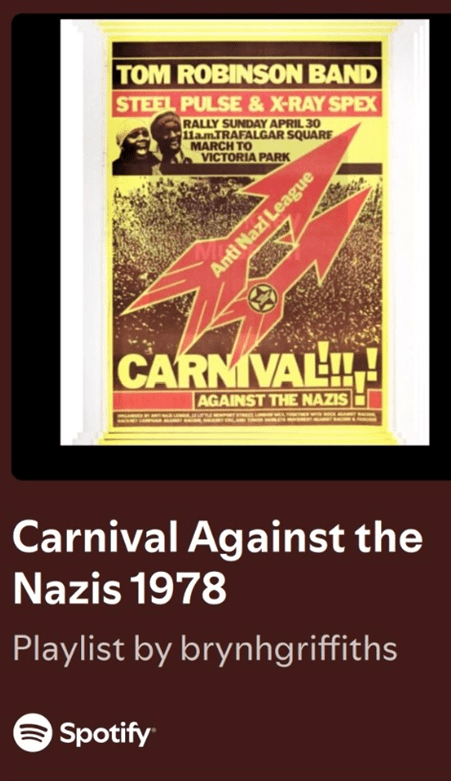
As we consider how we might defeat Farage today, we look back into the 1970s to consider what Rock Against Racism and the Anti-Nazi League might add to our contemporary tool box. To help you enjoy the 1970s, we’ve created a Rock Against Racism playlist on Spotify to accompany this episode – just search for ‘Carnival Against the Nazis 1978’ or click here.

Watch more Labour Left Podcasts

You can watch the podcast on YouTube, Apple Podcasts here, Audible here, Substack here and listen to it on Spotify here.  You can even ask Alexa to play the Labour Left Podcast. If your favourite podcast site isn’t listed, just search for the Labour Left Podcast and it should be there. 

If you enjoy the David Renton interview, take a look at the Labour Left Podcast back catalogue to hear guests such as Rachel Shabi explaining the truth about antisemitism; Jeremy Gilbert on Stuart Hall’s analysis of Thatcherism; Bernard Regan, of Palestine Solidarity, on Netanyahu’s genocide; Corinne Fowler talking about Britain’s history of slavery and colonialism; and Bell Ribeiro-Addy telling us about the fight against racism in Parliament.

If you appreciate what we are doing, please give us a like and a follow.  Every comment draws the podcast to a wider potential audience. Please, please, please share it with your friends as it gets the podcast to a wider audience.

Bryn Griffiths is an activist in Colchester Labour Party and North Essex World Transformed. He is the Vice-Chair of Momentum and sits on the Campaign for Labour Party Democracy’s Executive. 

Bryn hosts Labour Hub’s spin off – the Labour Left Podcast.  You can find all the episodes of the podcast here  or if you prefer audio platforms (for example Amazon, Audible Spotify, Apple, etc,) go to your favourite podcast provider and just search for the Labour Left Podcast.

Later this year David Renton will publish Comrade Delta: The 2013 Crisis in Britain’s Largest Far Left Party with Ebb Books.

Photomontage and photographs: Bryn Griffiths.