Thursday, April 30, 2026

How Iranian diplomats turned embassy accounts into viral meme machines

Memes, humour, and trolling of American politicians: This is how a handful of Iranian embassies have become superstars on “X”, attracting millions of views. But how did the old-fashioned and largely ignored accounts of Iran’s diplomats in South Africa, Thailand, and the United Kingdom suddenly turn into Gen Z-style viral feeds, with millions of views?


Issued on: 29/04/2026 -
By: The FRANCE 24 Observers


Iran’s embassy in Ghana published a meme on April 20, 2026 mocking US President Donald Trump by portraying him as Forrest Gump, central character in the 1994 film. Similar memes published by Iranian embassies have garnered hundreds of millions of views around the world. © Observers

When US and Israeli jets and missiles started attacking Iran on February 28, another battle – a propaganda war – opened up on social media. Official US accounts, including those of the Pentagon and the White House, started publishing clips of their attacks on Iran, mixed with footage from Hollywood films, video games, and cartoons.

Iran’s regime launched a counterattack online. Mocking and trolling posts from Iranian embassy accounts have targeted the US administration, notably President Donald Trump and Defence Secretary Pete Hegseth, and the broader war narrative promoted by the US government.

While the US administration’s combative messaging on the war with Iran has largely failed to gain traction online, the Iranian embassy's memes and humorous content have gone viral, sometimes attracting millions of views and reposts.

This meme of a toy steering wheel posted on X by Iran’s embassy in South Africa on March 23, 2026 mocks Donald Trump after he suggested in a post that he could share control of the Strait of Hormuz with Iran’s leadership. The meme gathered nearly 4 million views. © Observers


The embassy accounts were, until recently, little-followed feeds recycling statements from Iran’s foreign minister, other state officials, and routine embassy activity. In early March, they started reposting humorous tweets by other X users mocking the US’s war on Iran, and by the end of the month, they were posting humorous tweets of their own.


Reaction of of Iran’s diplomatic mission in Zimbabwe to a post by Trump that had set a deadline for Iran, to open the strait of Hormuz. © Observers


On March 23, Iran’s embassy in South Africa posted a photo of a toy steering wheel after Trump suggested the US could share control of the Strait of Hormuz with Iran. The post had 3.9 million views on X. On April 6, after Trump posted a message appearing to extend a deadline for Iran to open the strait before “Tuesday, 8:00 am Eastern Time”, the Iranian embassy in Zimbabwe posted a message with more than 6 million views, asking him to change it to between 1 and 2 pm.

Iran’s embassies have posted Internet-famous memes showing close knowledge of global pop culture, as well as references to popular films and series such as Friends and Pirates of the Caribbean, prompting British tabloid the Daily Mail to describe them as “jaw-dropping”.


.
 © Observers

The war emergency put younger diplomats in charge

Ali Pourtabatabaei, an Iranian journalist with inside knowledge of the Iranian administration, explains how this abrupt shift was decided and how it was implemented:

When the war started, the older generation of Iranian diplomats – who normally run these accounts – realised their point of view had no voice among non-Iranian audiences. So they turned to a younger generation of diplomats who understand social networks. This new generation was more easily granted freedom and authority during wartime to take control of these accounts.

For multiple reasons, this younger generation of Iranian diplomats has been trained more in public diplomacy and communication than in other areas. They are young and, naturally, more familiar with contemporary pop culture.

Another important point is that this new PR strategy was not applied to all accounts at once. One or two embassies started as a test, and when it proved successful, others followed.

© Observers

And despite what many might suspect, the diplomats behind these accounts are not based in Tehran in the same room; they are all located in their respective countries of assignment.

The combination of a wartime emergency and the very positive reaction they received on social media led to this shift, with permission granted to this younger generation to cross traditional diplomatic PR red lines.

Old clichés and outdated management no longer work

The embassies have also reposted satirical videos portraying Trump as an animated Lego character. The videos are produced by young Iranians, such as a group calling themselves “Explosive Media”. In an interview with the FRANCE 24 Observers, the group’s spokesperson confirmed the shift towards a younger generation:

When war breaks out, people become convinced that old clichés and outdated methods can no longer work.

Young people like us have taken charge, and with God's help and the inspiration he provides, we are able to produce work at a global standard across different fields.

I don’t think that, once the war started, a single group or team was suddenly created to take control of all these accounts.

According to a study by the “Institute for Strategic Dialogue”, in the first 50 days of the war, posts from Iran’s embassies and other official accounts collectively gained approximately 900 million views and 22 million likes, around 14 and 30 times more, respectively, than in the same period before the war.
How the Iran war is bringing back 'citizenship as a weapon'
DW
04/27/2026

Some Gulf states, trapped between Iran, Israel and the US in the current war, have started revoking the citizenship of locals considered "traitors." But is it about security — or a way to suppress political dissent?


Anti-government protests in Bahrain went from 2011 until 2013 and saw hundreds arrested and as many as 85 killed after a brutal crackdown
Image: Hasan Jamali/AP Photo/picture alliance

Jawad Fairooz found out that he no longer had a country while watching television.

"I was on a short trip to London," Fairooz, a former politician in Bahrain's parliament, told DW, "when the Ministry of Interior decided to revoke the nationality of people in the opposition. They read 31 names on TV. Mine was one. It was such a shock because I never called for the government to be overthrown."

That was in November 2012. Fairooz had resigned from parliament in protest at security forces killing demonstrators during the so-called Arab Spring. He was arrested, tortured, and then had his citizenship revoked. And he was not alone. Bahraini authorities would eventually withdraw citizenship from close to 990 people.

Made stateless, Fairooz applied for asylum, became a UK citizen and now runs the organization, Salam for Democracy and Human Rights. But he's worried that what happened to him is about to happen to many more Bahrainis, as a result of the Iran war.
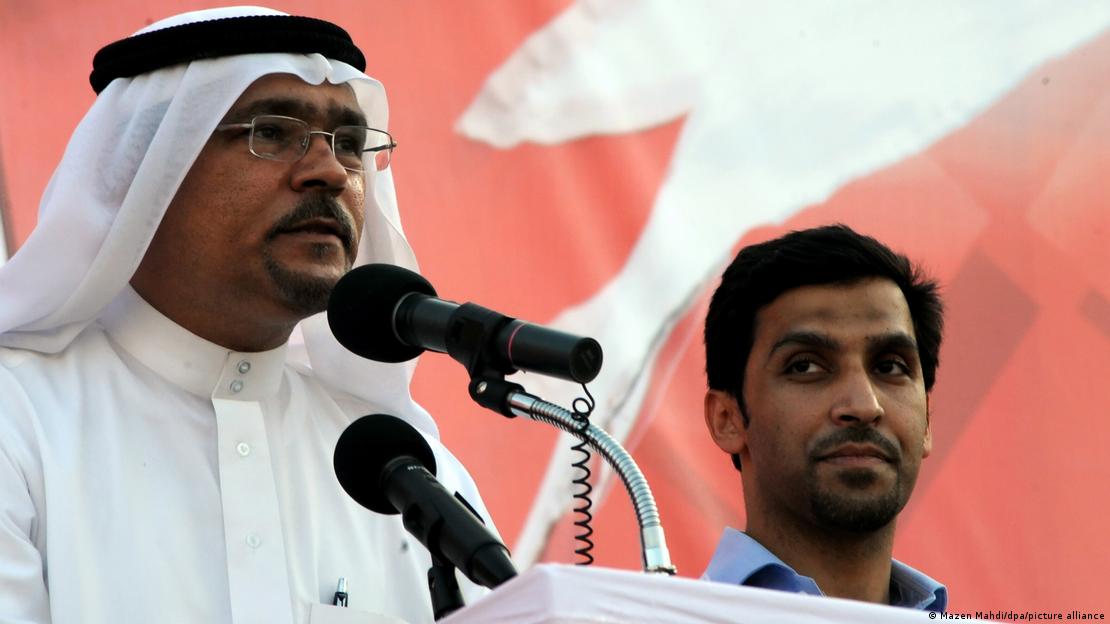
Jawad Fairooz, left, pictured in 2011 when he was in the opposition, says there are long-running attempts to bring about demographic change more supportive of the Sunni royal familyImage: Mazen Mahdi/dpa/picture alliance


Weaponizing citizenship

The war began in late February when Israel and the US attacked Iran. But besides Israel, it was Gulf states like Bahrain, Oman, the United Arab Emirates and Saudi Arabia that Iran targeted in response.

Politically, Bahrain is in a particularly difficult position. Like other Gulf states, the country is a monarchy and represses most political dissent. But in contrast to other Gulf countries, Bahrain's royal family are Sunni while estimates suggest the majority of the population — just over 50% — is Shiite.


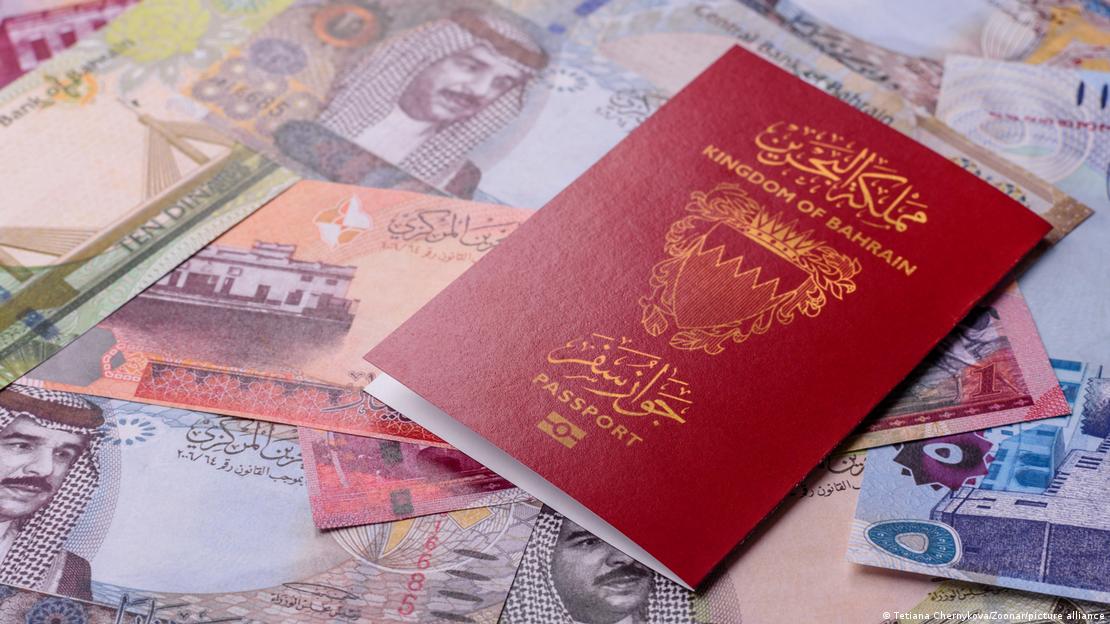
Fairooz says Bahrainis having their citizenship revoked are mostly Shia, while those being given citizenship are mostly Sunni, many who moved to Bahrain from elsewhere
Image: Tetiana Chernykova/Zoonar/picture alliance

Iran is a Shiite theocracy, and in March, there were as many as 250 arrests in Bahrain of people who allegedly posted anti-war messages online, expressed "sympathy" with Iran or participated in demonstrations. Bahrain says it also arrested spies working for Iran.

Then, in late April, the government said it would be reviewing the citizenship of anybody "disloyal" to the country. Fairooz believes Bahrain is weaponizing citizenship again for security reasons, but also because authorities know they can use it to suppress dissent.

"I am hearing about arrests of citizens perceived as siding with the enemy state," said another Bahraini who lives in the US but whose family remains in Bahrain, which is why they could only comment anonymously. "In particular, people of Persian, or mixed Arab and Persian descent, are being associated with Iran, regardless of their actual views on the conflict. These dynamics affect a range of communities — not only Shia minorities, but also Sunni citizens of Persian descent."

Kuwait could be one of the worst offenders. In March 2024, the Kuwaiti government launched a campaign to revoke citizenship and sources say it's highly likely that, since then, over 70,000 Kuwaitis have lost their nationality. The true number could be as high as 300,000 because dependents like wives, children or grandchildren also lose Kuwaiti citizenship.

If correct, that's almost one-fifth of the native population, as there are only around 1.56 million Kuwaiti citizens. In mid-April, Kuwait issued another set of changes to its citizenship law and over 2,000 more people lost Kuwaiti nationality.

"Kuwait's evolving nationality regime reveals how citizenship can be transformed ... into a political instrument of control," the research network Global Citizenship Observatory wrote in aFebruary 2026 report on Kuwait.

"It is potentially too early to identify if there is an increased trend related to the recent conflict with Iran," said Thomas McGee, the Observatory's expert on the Middle East. "What we are seeing now is a number of Gulf states potentially using the Iran war as justification to intensify existing citizenship and nationality controls, rather than inventing the practice from scratch."

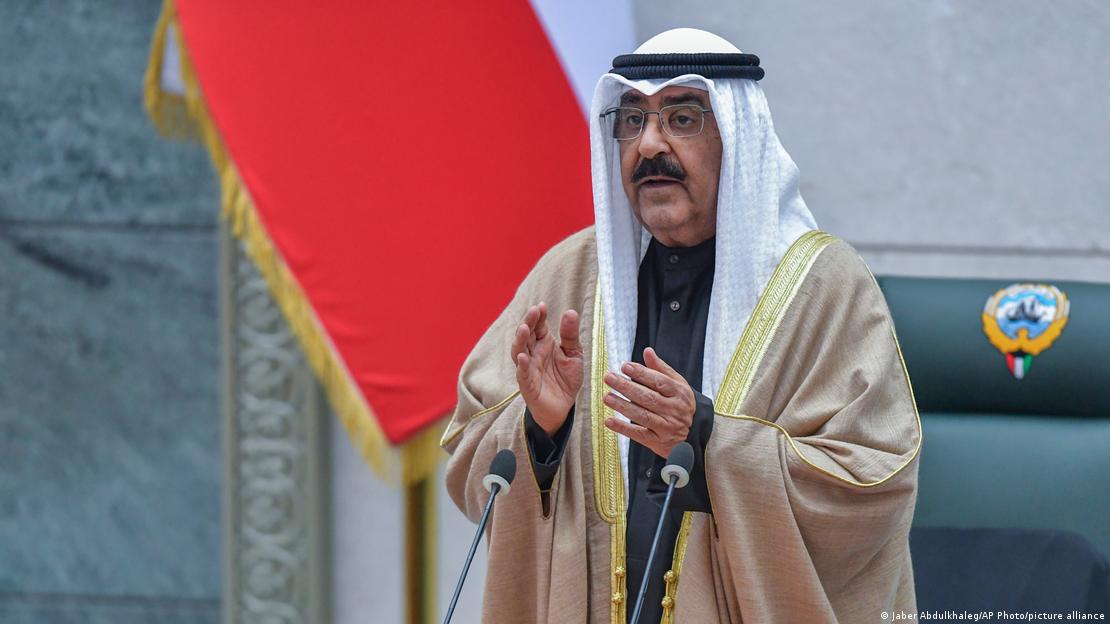
Kuwait's emir Meshal Al Ahmad Al Jaber Al Sabah says citizenship irregularities are changing the country, but his critics say new nationality rules are meant to regulate who has political power
Image: Jaber Abdulkhaleg/AP Photo/picture alliance

Another Gulf state, Oman, changed its citizenship laws in February 2025. Parts of the law say Omani nationality could be withdrawn if citizens "committed a verbal or physical offense against the Omani Sultanate or the Sultan himself," or joined an organization that might harm the country.

Rights activists argue that because there's no definition of those acts or organizations, the government can use the law against its opponents.

The UAE was recently accused of doing similar things to Iranians who live there. Some found their residency permits had been revoked. Emirati authorities denied this, saying the expats were part of their community — but media outlets like The New York Times interviewed Iranians who had had permits rescinded.

There are warnings of similar action in Iran. Last week, a politician there threatened to strip diaspora Iranians of citizenship if they were seen cooperating with "hostile countries."

Europe and US also use citizenship as a tool

This kind of activity is not limited to the Middle East. Last week in the US, the Trump administration again pushed its Justice Department to denaturalize hundreds of Americans and has issued new guidelines on vetting political opinions of people seeking residency.
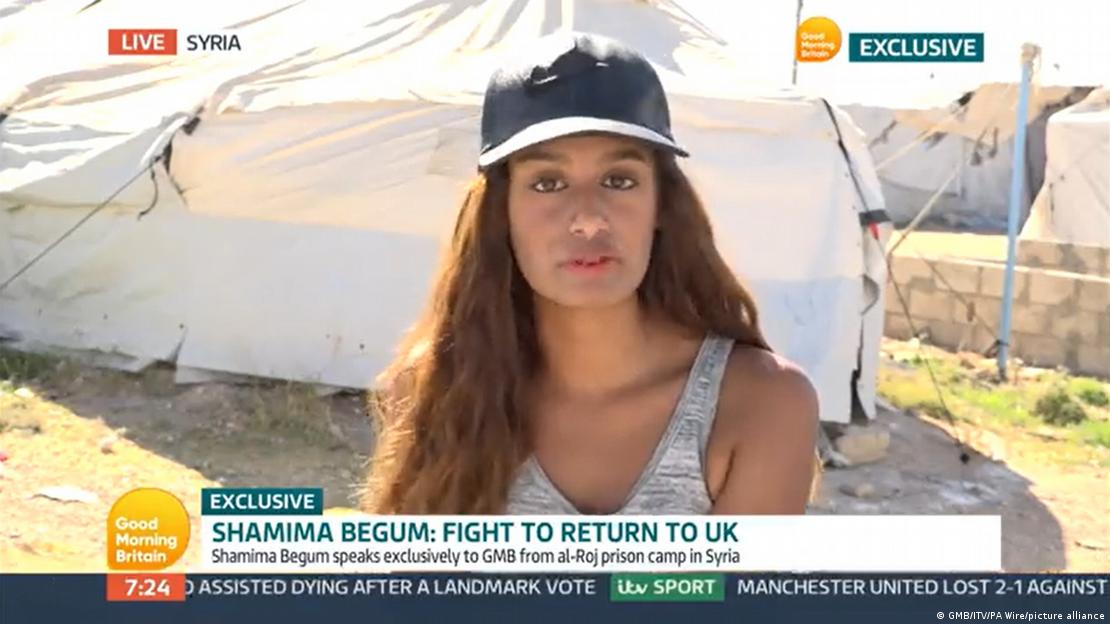
In the UK, there's been furious debate about the decision to strip Shamima Begum, who joined the extremist 'Islamic State' group in Syria at the age of 15, of British citizenship
Image: GMB/ITV/PA Wire/picture alliance

Last year, Human Rights Watch criticized a leaked working paper on migration by conservative political parties in Germany. This suggested dual nationals could be stripped of German passports if they were deemed "supporters of terrorism, antisemites and extremists."

Experts say citizenship is being weaponized because, over the past two decades, it's become more acceptable to treat it as a privilege, not a right.

This was not the case after World War II, when the Universal Declaration of Human Rights was first written. Article 15 says nationality is a fundamental human right, partly a response to the Nazis making tens of thousands of Jews and political opponents stateless with their 1933 "denaturalization law."

"States have been weaponizing citizenship for a long time," said Lindsey Kingston, a professor of international human rights at Webster University in the US state of Missouri. "But the nature of that weaponization is changing."

A 2022 study by the Global Citizenship Observatory and the Netherlands-based Institute on Statelessness and Inclusion, or ISI, found that in the two decades after the September 11, 2001, attacks in the US, "the use and scope of citizenship revocation on security grounds has expanded."

"Terror attacks like 9/11 prompted many people to rethink ideas about legal nationality," Kingston told DW. "People began to see citizenship as impermanent, something that had to be earned and continually justified."

Stripping a person of citizenship became more acceptable, she said, "even when it was in blatant violation of human rights laws."

Iran war's impact


While the weaponization of citizenship is not new, the Iran war seems to be making things worse, experts say.

The conflict has resulted in a slowing of reforms in Gulf countries, analysts at the US-based Carnegie Endowment for International Peace argued in early April. The war has upset "the fragile balance that had been emerging in the Gulf between controlled reform and political stability," they wrote.

This includes the weaponization of citizenship, observers say.

"Military conflict can be a catalyst," Luuk van der Baaren, a legal researcher at the European University Institute who focuses on citizenship law, confirmed. "A long-standing ground for citizenship stripping is treason and this logic is now being invoked in some Gulf countries." The same has been seen in Russia and Ukraine, he added.

Additionally, citizenship policies often follow strong regional patterns, the researcher told DW. "Countries tend to adopt similar approaches to their neighbors, which may explain recent changes across countries of the Arab Gulf."

Amal de Chickera, co-director of the ISI, believes it's important to look at the bigger picture.

"If you look at Bahrain, there was a spike in citizenship strippings post-2013, and then there was a lot of international pressure that the Bahraini government should right those wrongs," he explained. "And they did course correct, to a degree."

Now it seems Bahrain is going back to that practice. But, as de Chickera argued, that may not be surprising.

"I think a wider lens is needed," he said. "With Israel’s genocide of Palestinians, invasion of Lebanon and the US and Israeli attacks on Iran, with the way Western nations have doubled down to afford Israel a degree of impunity and their unwillingness to hold America accountable, we are seeing a shredding of international law."

The International Court of Justice in the Netherlands has been investigating Israel's conduct in Gaza since South Africa launched a case in December 2023, alleging that it amounts to genocide. Israel's conduct in the war has been found by many international rights organizations and a United Nations commission to be a genocide. Israel has denied this.

De Chickera thinks all that is connected: "In a world in which international law means nothing, the Bahraini government has probably calculated it can get away with this again."

Edited by: Rob Mudge
Cathrin Schaer Author for the Middle East desk.
Whale 'Timmy' reaches Denmark in rescue effort — in pictures

DW with dpa, AP, Reuters
30/04/2026

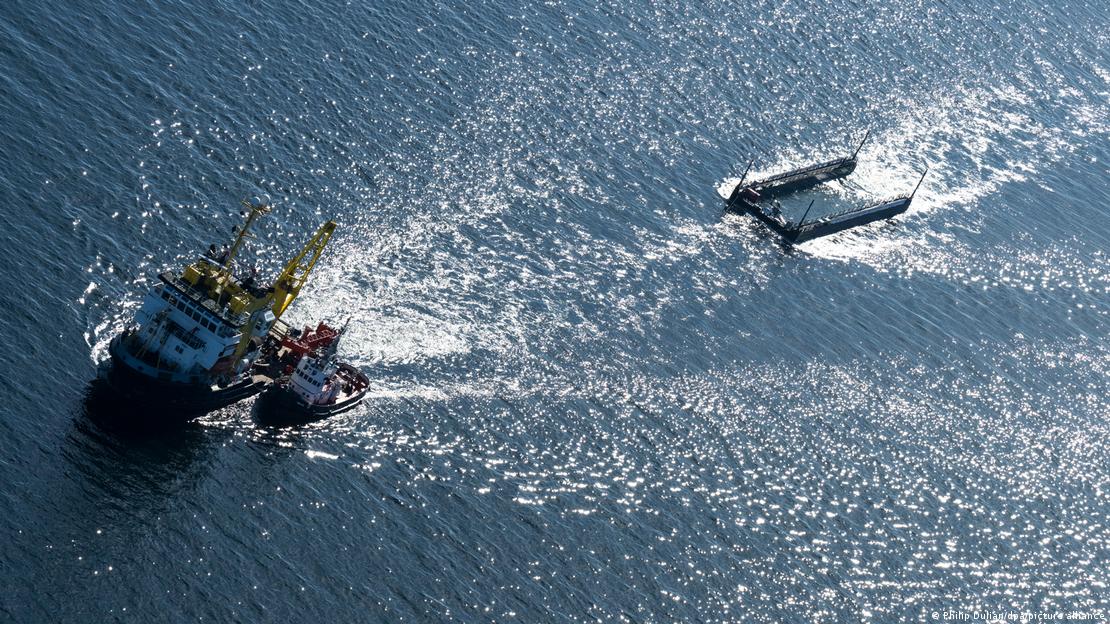
A barge carrying a humpback whale stranded in Germany for weeks has reached Danish waters on its journey to the North Sea.

The young humpback whale is being towed to the North Sea in a rescue attempt
Image: Philip Dulian/dpa/picture alliance

A barge carrying 'Timmy', the humpback whale stranded in Germany since early March, is expected to reach the open ocean by Friday.

The tugboat pulling the water-filled barge entered Danish waters Wednesday afternoon.

It was located between the Danish islands of Samso and Sjaelland at 2 a.m. German time (0000 GMT) on Thursday, according to the Vessel Finder tracking website.


The tugboat and barge containing the humpback whale has crossed into Danish waters
Image: Philip Dulian/dpa/picture alliance

Environment minister for the German state of Mecklenburg-Western Pomerania, Till Backhaus, said that if everything went well, the whale would be in the North Sea by Friday.

"The very worst is already behind him now," Backhaus told Germany's Bild newspaper on Wednesday.

Backhaus said the animal was "doing well" and had made sounds during the night.


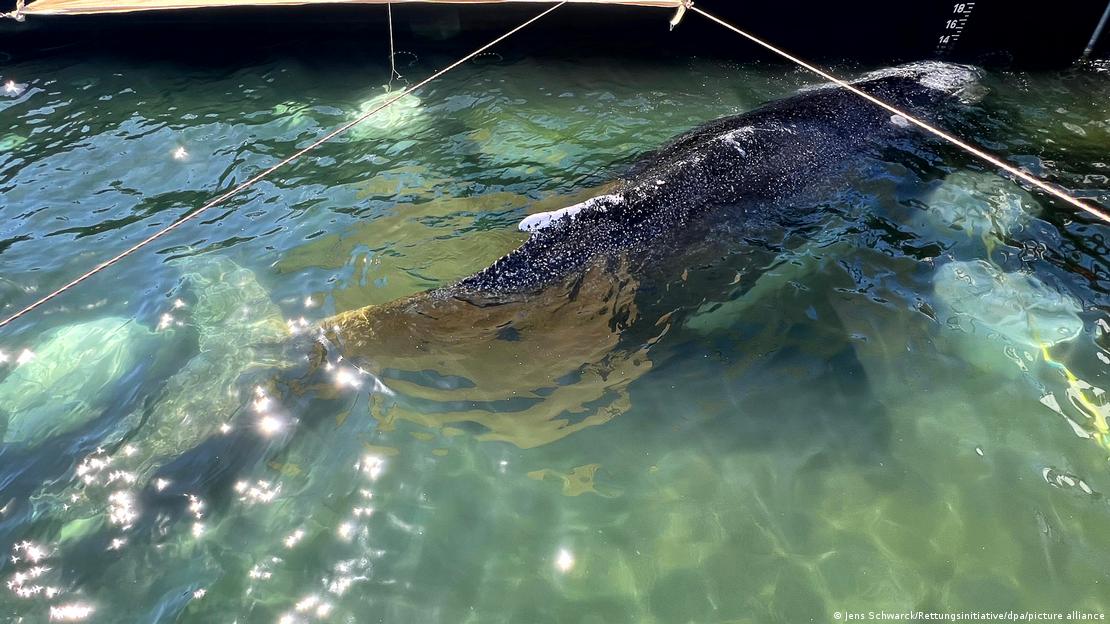
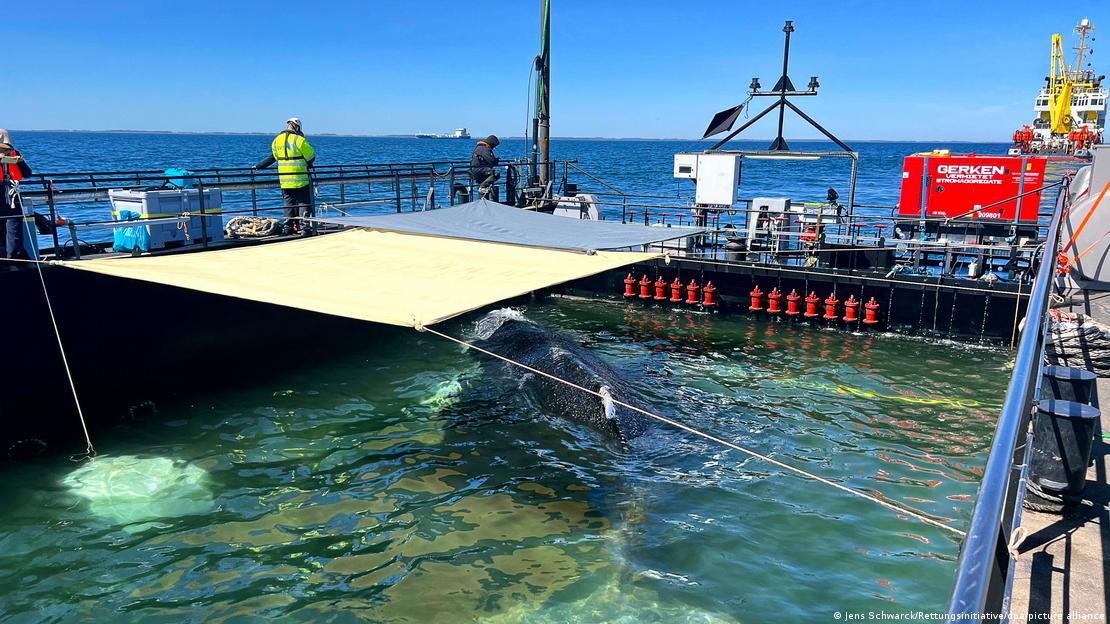
Rescuers managed to get Timmy onto the barge, has a water-filled hold and is usually used to carry other boats
Image: Jens Schwarck/Rettungsinitiative/dpa/picture alliance


Stranded whale Timmy was coaxed onto barge in complex rescue

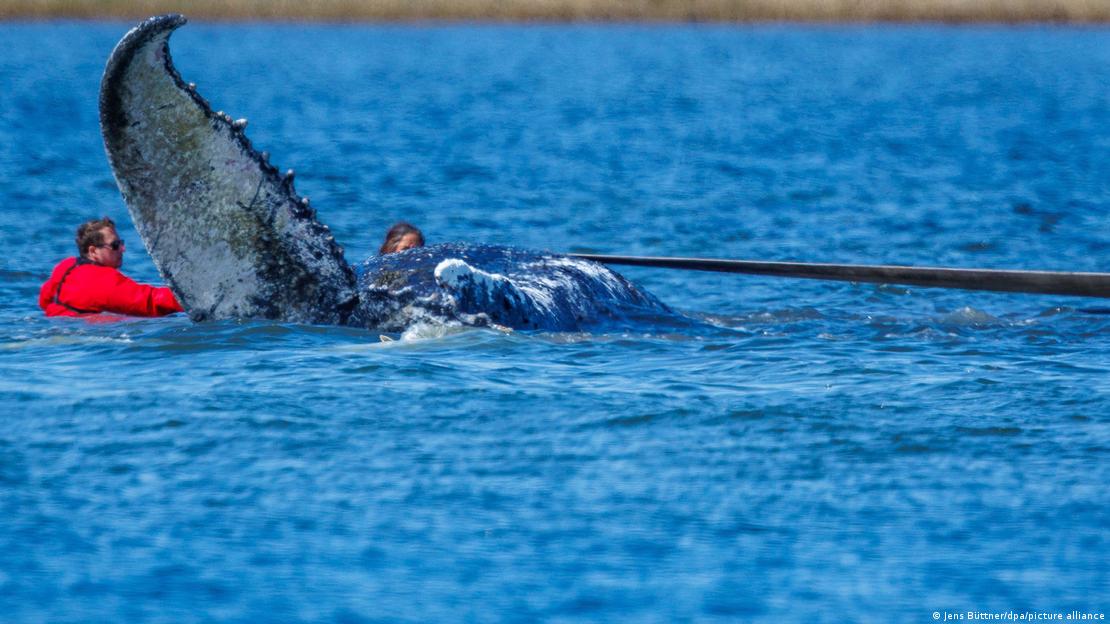
The whale, nicknamed 'Timmy' by Germany media, was towed from the shallows of the island of German island of Poel to the barge through a specially dredged channel on Tuesday.

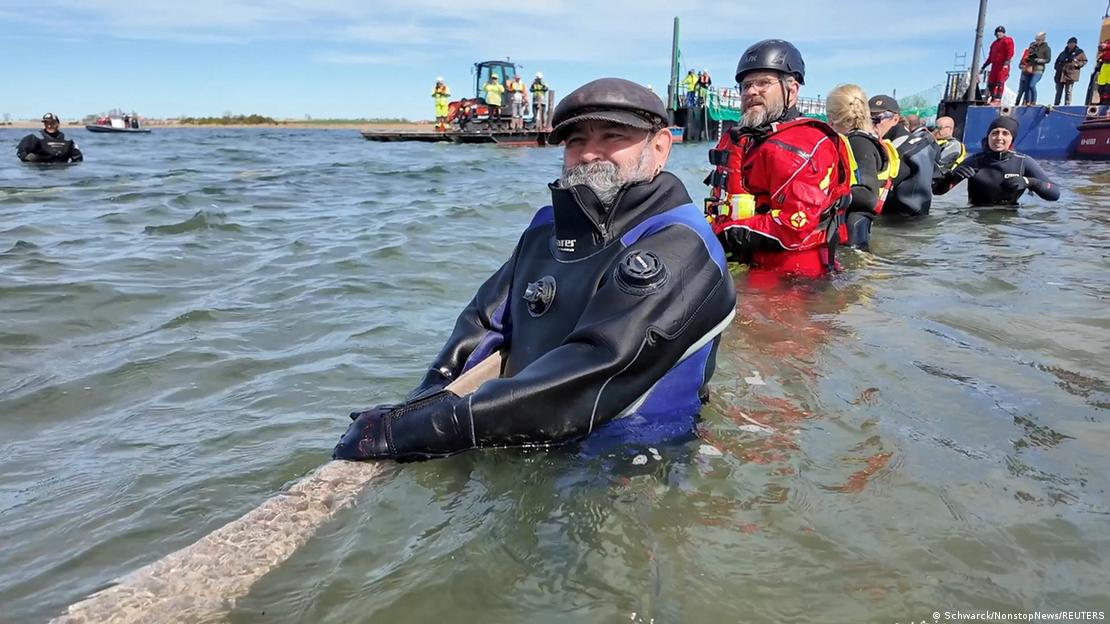
Rescuers then pulled the whale onto the specially converted freight barge using straps.

Rescuers guided Timmy from shallow waters through a specially dug channel
Image: Jens Büttner/dpa/picture alliance

"I'm truly relieved," Backhaus on Poel.

"I was even on the verge of jumping into the water to help him over the last few meters."

Rescuers pull Timmy the humpback (not visible) into the barge using straps
Image: Schwarck/NonstopNews/REUTERS

The young humpback was first spotted swimming near Germany's Baltic Coast on March 3, far from its natural habitat in the Atlantic Ocean.

Timmy's health deteriorated as the juvenile whale, thought to be between four and six years old, became repeatedly stranded in shallow waters.

The idea to coax the whale onto a barge and tow it to the North Sea was hatched after their initial attempt to save the whale with inflatable cushions and pontoons was unsuccessful.
Whale rescue attempt sparks heated debate

Some scientists warned that this latest attempt may be too much for the animal.
Some scientists have criticized this latest rescue attempt saying it will cause stress to the already sick whale
 Jens Schwarck/Rettungsinitiative/dpa/picture alliance

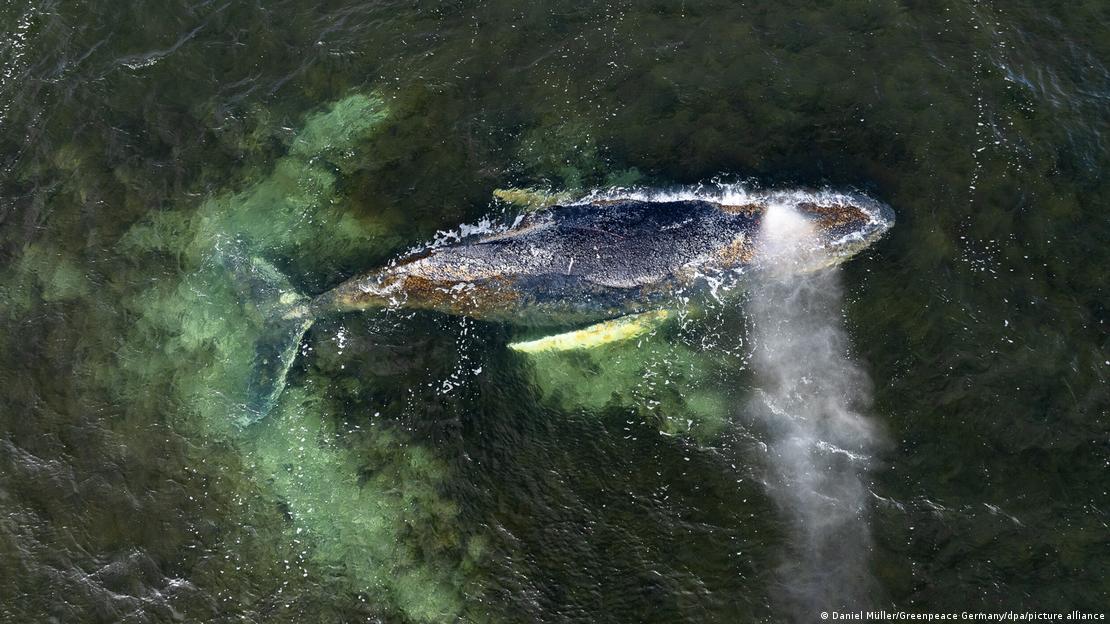
Thilo Maack, a marine biologist at Greenpeace, told the Associated Press earlier this month that efforts to save Timmy have caused the animal severe stress.

"I believe the whale will die very soon now," he said. "And I would also like to raise the question: What is actually so bad about that? Animals live, animals die. This animal is really, really very, very, very sick."
Whale specialists say Timmy the humpback's chance of survival are small
Image: Daniel Müller/Greenpeace Germany/dpa/picture alliance

The International Whaling Commission called the rescue "inadvisable."

It said the whale "appeared to be severely compromised" and "unlikely to survive."

The rescue initiative is being privately financed by two German multimillionaires.

Edited by: Zac Crellin
Kate Hairsine Reporter and senior editor

'Marine unicorns' aren't loving Arctic noise
DW
04/28/2026

Narwhals are fleeing Canada's far north. Researchers suspect a link to noise pollution from increasing ship traffic.

When the winter ice begins to melt, the speckled gray narwhals leave Baffin Bay and head toward the safe waters off Mittimatalik for the summer
Image: John E Marriott/All Canada Photos/picture alliance

For Alex Ootoowak, watching the speckled gray narwhals migrate in the icy waters of the Arctic during hunting season is a cherished childhood memory.

"It felt like a never-ending, looped-over scene of whales just constantly swimming past you all in the same direction, all migrating throughout the day, sometimes more than a day," said Ootoowak, who lives in Mittimatalik, also known as Pond Inlet, in Canada's far north. "You're always taught to be extra, extra quiet and careful […] because they're so sensitive."

The world's 80,000-plus narwhals mainly live in northeastern Canada and Greenland. For Ootoowak and others in Canada's Inuit communities, narwhal meat has been key to their survival for at least 1,000 years. It's an important source of protein, iron and vitamin C, and hunting is regulated by the government.


"This is our means of staying healthy and connected to the land and our culture," Ootoowak told DW. "It's not something we do just to kill and take animals for sport."
Narwhal numbers dwindling

But Ootoowak hasn't seen a migration like those of childhood for a long time. Over the last 20 years, hunters have noticed that the whales have become skinnier and harder to catch. By 2021, there were only about 2,000 left in the area — a 90% drop from more than 20,000 in the early 2000s.
Narwhal whale blubber and skin, sometimes eaten raw, is an important part of Inuit culture
Image: Yvette Cardozo/Visually/picture alliance

It's not clear why the whales are disappearing, and what's driving them away. Researchers suspect climate change may be playing a role, with the Arctic region warming four times faster than the rest of the planet.

"A whole host of things are changing — not just the ice, the water temperature, species, all the way from the bottom of the food chain all the way up," said Kristin Westdal, a marine mammal expert with Canadian marine conservation network Oceans North.

But she said the effects of climate change are gradual, and the drop in the whale population came over a relatively short time period. "And the only thing that changed that quickly in that habitat was the volume of ships coming through."

In 2015, a local mine run by a company called Baffinland opened a port nearby. Within two years, roughly 4 million tons of iron ore were shipped through the waters off Mittimatalik — and noise pollution increased dramatically.

Noise pollution may be driving whales away


Concerned about what the new noise was doing to the narwhals, Ootoowak and Westdal set up two listening stations in Milne Inlet, to the west of Mittimatalik. Within a couple of years, they were able to expand their acoustic monitoring program by collaborating with acoustics experts at the Scripps Institution of Oceanography, based in San Diego.

By lowering special microphones called hydrophones through holes in the ice and 800 meters (nearly half a mile) down into the water, they've listened to the Arctic seascape 24/7 — marine life like barking seals and clicking narwhals foraging for food, but also rumbling engines from growing ship traffic. And they've found that these ship noises may be behind the drop in narwhal numbers.
The long tusk of the male narwhal, roughly 2 meters (6 feet) in length, is often mistaken for a horn
Image: Visually/picture alliance

The monitoring team published a study in 2025 which found that "narwhals appear to either move away or stop vocalizing" when vessels came within 12 to 24 miles (20 to 40 kilometers). And the whales were responding to noises below the threshold of 120 decibels — like a loud thunderclap, or a roaring chainsaw — which is considered the disturbance threshold for midsized whales like the narwhal.

Hunters, too, have noticed that narwhals begin behaving differently when a ship is nearby.

"As soon as the ship starts their engines, they move away or stop feeding, stop doing their deep dives where they're feeding on fish at the bottom of the ocean," said Ootoowak. Whales, he said, have learned to avoid the heavily traveled shipping channel when boats are in the area.

Are narwhals heading to Greenland?

Ootoowak said it wasn't clear where the whales were going, but he has a theory. On a visit to northern Greenland in 2024, to the east across Baffin Bay — where narwhals usually spend the summer months — he spoke with local hunters who told him of whales that had started showing up in their waters, right around the time shipping increased off Mittimatalik.


"They said narwhals that were appearing were 'foreign' because they were longer and skinnier and behaved very different to their narwhal," said Ootoowak. The hunters, he added, said the whales were easier prey and tasted different, too.

Outi Tervo, a senior scientist at the Greenland Institute of Natural Resources, has also been researching narwhals and noise pollution. She has observed that noises from shipping and oil and gas exploration can cause narwhals to stop foraging for food, which lines up with Ootoowak's observation of seeing skinnier narwhals.

Tervo said she hasn't seen any evidence that the whales have relocated from Canada to Greenland, but said an increase in unfamiliar sounds could be pushing them to migrate.


For narwhals, who rely on echolocation to communicate and hunt, she said the ability to hear is what the ability to see is to humans. So just as bright headlights or a flashlight to the eyes would temporarily blind us humans, sounds that interfere with narwhal echolocation profoundly disrupt their activity and push them to be "ready to escape," she said.

Tervo said habitats for narwhals are limited, and they've adapted to life in the Arctic. "They can't swim to the Caribbean and spend the winter there," she pointed out. "So I do think that it's very important to take the needs of the animals into consideration and try to make some safe havens for them."

Noise a growing concern as Arctic opens up


The good news, however, is that the sound monitoring project spearheaded by Ootoowak and Westdal has raised awareness about noise pollution in Canada's Arctic.

The local mining company, Baffinland, has lowered its shipping speed to 9 knots and is using fixed routes. It's also agreed to stricter rules for when icebreakers can be deployed. Cruise ships have also been quick to get on board, agreeing to speed limits and no-go zones.
As ice retreats in the Arctic, the region is seeing increased maritime traffic
Image: Adrian Wyld/AP Photo/picture alliance

"I would say it's generally positive," said Ootoowak, pointing out that the 2025 hunt was the first time in a decade that people were happy with what they caught during the fall migration. "It's going to take some time working with industry, working with government to get these things moved forward into policy."

Westdal said stronger oversight, cooperation with local communities and much more data would be key to keeping noise pollution under control, especially as companies eye the increasingly ice-free waters of the Northwest Passage for international shipping.

"We are seeing a slow and steady increase of people showing interest and trying to get through there, whether it be cruise ships, pleasure vessels or the occasional commercial vessel," she said. "And I think that having policies and regulations in place in the Arctic is going to be really important in getting ahead of what's coming."

This article was based on an episode of Living Planet produced by Kathleen Schuster.

Edited by: Sarah Steffen
Martin Kuebler Senior editor and reporter based in Brussels, with a focus on environmental issues
Why Ghana walked away from a US health deal

DW
29/04/2026

Talks between Ghana and the US over a bilateral healthcare deal have stalled, after Accra voiced concerns regarding sensitive data sharing. Several African countries have pushed back on the deals, while some have signed.

Concerns over the sharing of sensitive health data have reportedly led Ghanaian officials to abandon a health deal worth millions of dollars proposed by the United States .

As part of the Trump Administration's "America First" strategy, which has shifted focus onto bilateral deals rather than multilateral aid, the new US model aims to transition funding responsibility for health commodities and services to Ghana.

This means Accra would have to increase its own investment in health systems. Previously, this was largely supported by US-contracted NGOs. However, since Trump's dismantling of USAID in 2025, there is far less development funding available.


However, a source told DW that Ghana would not sign a multi-year deal, reportedly worth around US$109 million (€93 million), because Ghana would have to waive key aspects of its health sovereignty. This includes sharing control over its health care decisions, data, and resources with US authorities.

Is the US-Ghana health deal dead?


For Ghana, this would violate domestic law, including the Data Protection Act and the Public Health Act. The deal also requires Ghana to bypass parliamentary ratification, a constitutional requirement for bilateral agreements.

A government source, who spoke anonymously to the AFP, said the deal is "dead" after US negotiators allegedly became "hostile" and piled "pressure" on Ghana, which pushed back on the demand for personal data. Additionally, the funds offered to Ghana are considerably less than those in similar proposed deals with Kenya and Nigeria, which were offered $2.5 billion and US$2.1 billion, respectively.

Ghana's government has yet to release an official statement on the deal, but Ghanaians who spoke to DW said they were concerned about the US demands for data sharing. "Sharing the health data of individuals is very critical," a young professional said, adding that it shouldn't be allowed.

"Health data is a personal document. What actually is making them ask for health data?"

Another man said he disagreed with sharing that information with other countries "because it might go against us."

Some African nations reject US health deals

The US has pursued a similar strategy in other African countries. According to the US State Department, at least 32 such deals worth about $20.6 billion have been signed under the America First Global Health Strategy with nations including Nigeria, Kenya, Rwanda, Uganda, Lesotho and eSwatini.

Some countries are treating the US strategy with suspicion. In February, Zimbabwe rejected a similar proposal, saying the terms threatened its autonomy, while a deal with Zambia has not moved forward after Washington demanded access to mineral rights and data.

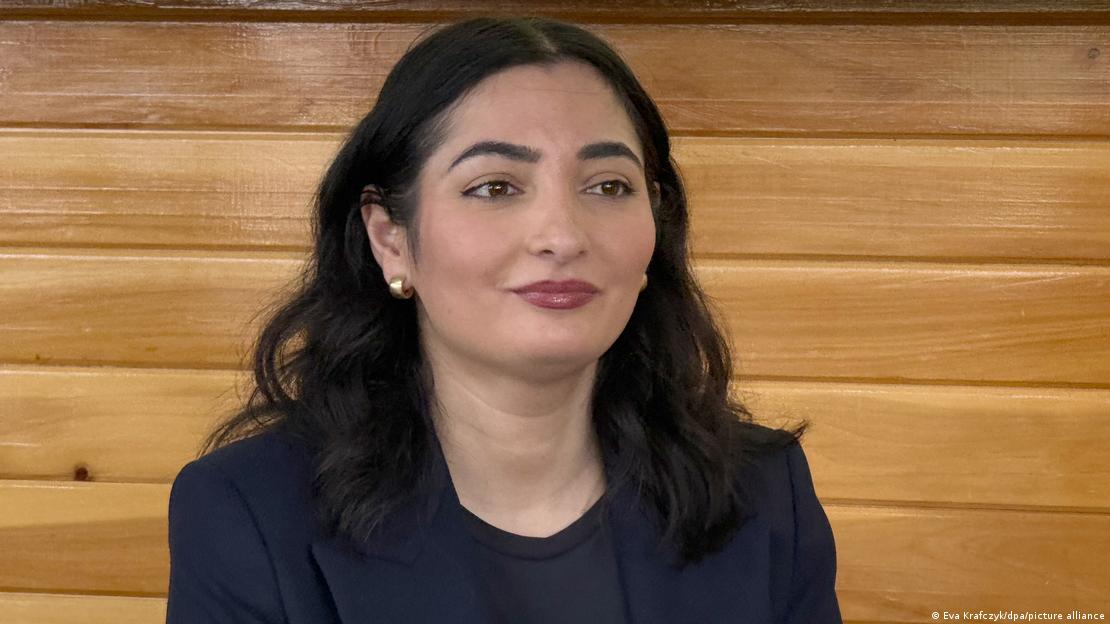
German Development Minister, Reem Alabali Radovan, who attended the World Health Summit in Nairobi, Kenya, said it was important for Germany to show it was a reliable partner
Image: Eva Krafczyk/dpa/picture alliance

Meanwhile, Kenya,which this week hosted the World Health Summit in Nairobi, initially agreed to such a bilateral proposal in December 2025. However, the the country's courts suspended the deal over concerns around personal data.

German minister seeks to reassure Kenya


Germany's Development Minister, Reem Alabali Radovan, was in Nairobi to reassure the East African nation of Germany's continued commitment to Kenya. She described Germany's relationship to Kenya, which has the biggest economy in East Africa, as "strong."

"We see a lot of potential when it comes to German investment, especially when it comes to health care and also Kenya as a strategic partner for us when it comes to multilateralism," Radovan told DW.

In contrast to the United States, Germany has continued to promote multilateral initiatives and institutions such as the World Health Organization , despite also cutting aid.

"The cuts from the US government, especially in the global health sector, are very painful," Radovan said. "We can see them looking at multilateral funds like Gavi and the Global Fund, which are combating malaria, HIV, and tuberculosis, and we cannot fill the gap alone."

She said Germany intends to place a strong focus on global health, vowing that Berlin would not pull out of it. "It's important to show our partners in the regions that we are a reliable partner, especially when it comes to African countries," she added.

Sella Oneko in Nairobi and Eric Egbeta in Accra contributed to this article

Edited by: Chrispin Mwakideu

Cai Nebe Producer, podcaster and editor for DW Africa
US top court weighs ending Syrians, Haitians protections


Rana Taha
DW with AFP, Reuters
29/04/2026


The Trump administration is appealing lower court orders that blocked it from immediately ending temporary protected status for people from Haiti and Syria.

Syrians have been granted protective status in the US since 2012, when the civil war was raging [FILE: Nov 6, 2023
]Image: GUILLERMO ARIAS/AFP

The US Supreme Court on Wednesday leaned toward ruling in favor of moves by the Donald Trump administration to strip Haitians and Syrians living in the country of humanitarian protections.

While hearing arguments in the case, several of the court's conservative justices appeared sympathetic toward moves to strip over 350,000 Haitians and 6,100 Syrians of the Temporary Protected Status (TPS) designation.
What to know about the TPS status for Syrians and Haitians

TPS gives migrants whose countries were struck by war, natural disaster or other catastrophes the right to live and work in the US as long as it is unsafe for them to return to their home countries.

The State Department currently advises against all travel to either Haiti or Syria, with a level 4 travel advisory, the highest level, for both countries.

Haitians earned the TPS designation after a major 2010 earthquake, whereas Syrians were added to the list in 2012 after their country descended into civil war.

The Trump administration has been trying to revoke the TPS designation of 13 of the 17 countries designated.

During his election campaign, Trump vowed to rescind TPS for Haitians, falsely claiming they were eating household dogs and cats in Ohio.

US Supreme court votes against second majoriy-Black district in Louisiana

Also on Wednesday, in a separate case related to voting rights, the Supreme Court sharply limited the use of race in drawing electoral districts, with the justices ruling in favor of a challenge to a map that creates a second majority-Black district in the southern state of Louisiana.

The decision could alter congressional maps nationwide in favor of the Republicans ahead of the November midterm elections.

The court's ruling found that the map in question amounted to an unconstitutional racial gerrymander.

Writing for the majority, Justice Samuel Alito said that compliance with the Voting Rights Act (VRA) "could not justify" the use of race in this case, arguing that Section 2 of the act does not require states to draw districts primarily on racial lines.

"That map is an unconstitutional gerrymander, and its use would violate the plaintiffs' constitutional rights," he said, referring to the group of non-Black voters who brought the case.

Justice Elena Kagan, one of the three liberal-leaning justices at the top court, warned in a dissent that the decision would have sweeping consequences, saying it risked letting states "systematically dilute minority citizens' voting power" without legal redress.

It is unclear how much the ruling would impact the November midterms, with a primary election slated for May 16 in white-majority Louisiana, where Black people make up roughly a third of the population.

Black people and other minorities tend to support Democratic candidates.

Both the Republicans and Democrats are trying to redraw electoral maps, in ways that could potentially shift the balance of power in the currently Republican-dominated Congress.

Edited by: Srinivas Mazumdaru
GENERALISMO BONESPURS


Trump threatens US troop cuts in Germany

The US has more forces in Germany than anywhere else in Europe.
DW with AP, Reuters
30/04/2026


Donald Trump says the US is considering a "possible reduction" of its forces in Germany just days after German Chancellor Friedrich Merz said the US was being "humiliated" by Iran's leadership.

US President Donald Trump has said the United States will shortly decide whether to cut its forces in Germany, where it maintains a major military presence.

"The United States is studying and reviewing the possible reduction of Troops in Germany, with a determination to be made over the next short period of time," Trump posted on his Truth Social platform on Wednesday afternoon, Washington time.

The US has more forces in Germany than anywhere else in Europe.

As of December 2025, more than 36,000 active service members were stationed in Germany, according to the US Defense Manpower Data Center.

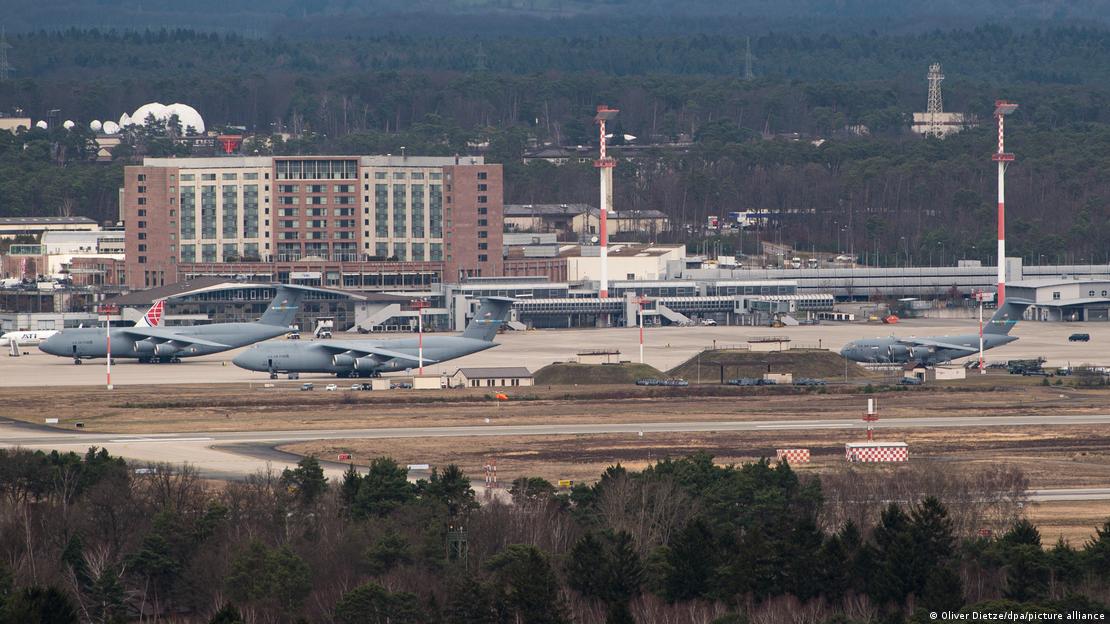
This includes personnel at Ramstein in southwestern Germany, regarded as the US's largest overseas air force base.

After Germany, which is home to five of the seven US garrisons in Europe, the United Kingdom and Italy have the biggest presence of US personnel on the continent.

The Ramstein base has also played a pivotal role in US operations in the Middle East
Image: Oliver Dietze/dpa/picture alliance


Why did Merz say Iran was 'humiliating' the US?


In the past months, news outlets have reported on rumors of possible US troop withdrawals from Germany.

However, Trump's Truth Social post comes just days after German Chancellor Friedrich Merz said that the US was being "humiliated" by Iran's leadership.

On Monday, Merz said the "Iranians are obviously very skilled at negotiating, or rather, very skillful at not negotiating, letting the Americans travel to Islamabad and then leave again without any result.

"An entire nation is being humiliated by the Iranian leadership, especially by these so-called Revolutionary Guards. And so I hope that this ends as quickly as possible."

After Merz's comments, Trump hit back on his Truth Social platform to say that Merz "doesn't know what he's talking about!"

German Foreign Minister Johann Wadephul later clarified Merz's comments in an interview with DW.

"It was addressing the behavior of Iran," Wadephul told DW's Berlin bureau chief Max Hoffmann in New York City.

"They are, as I said, misunderstanding their position and overplaying their role, so this is what the chancellor said," Wadephul stressed.

Edited by: Zac Crellin
Ecuador starts fracking in Amazon rainforest
DW with AFP, EFE
30/04/2026


Ecuador is pushing to increase its production of crude oil but faces a backlash from environmentalists and Indigenous groups.


Eduador is expanding its oil production in the Amazon
Image: Laurent Davoust/Zoonar/picture alliance


Ecuador has started fracking in the Amazon rainforest for the first time, state oil company Petroecuador said Wednesday.

The new hydraulic fracturing, or fracking, project is in the Amazonian province of Sucumbios on Ecuador's border with Colombia.

The fracking at a new well on Block 57 - Shushufindi Libertador represents "milestone " for oil production in the country, the Ministry of Environment and Energy said in a statement released on Wednesday.

The new well is in full production, producing more than 930 barrels a day, the ministry of said.

The project is being jointly conducted with a subsidiary of China's national petroleum corporation, CCDC.

What is fracking?


Fracking entails extracting natural gas and petroleum from subterranean bedrock.

It is criticized for using industrial quantities of water to break open rocks as well as causing chemical contamination and provoking micro-earthquakes.
Ecuador pushing to ramp up oil production

Ecuador's crude oil production fell to around 466,000 barrels a day in January 2026, a 13% drop from the same period a decade earlier. Analysts point to aging infrastructure and years of underinvestment as part of the problem.

Oil revenues make up a significant amount of Ecuador's export earnings.

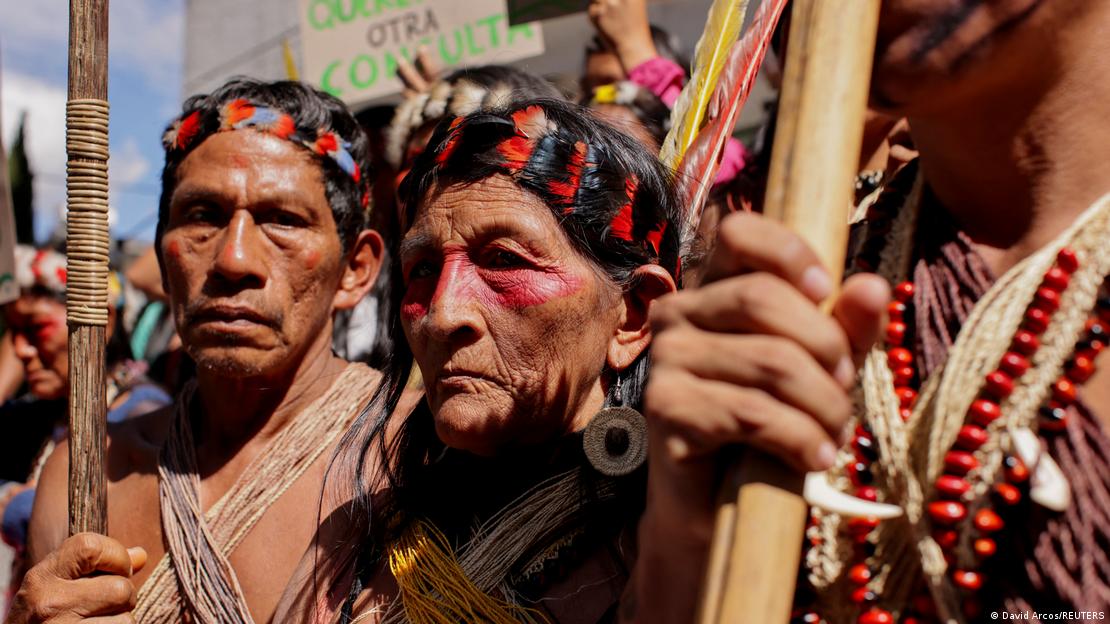
Government plans to expand oil exploration in Ecuador has led to Indigenous protest, like this one in 2025
Image: David Arcos/REUTERS

The government of President Daniel Noboa has promised more funds for oil exploration and infrastructure and to attract greater foreign oil investments.

At the same time, his government's push to expand oil exploration, particularly in the Amazon, has alarmed environmentalists and Indigenous leaders.

Edited by: Zac Crellin
Kate Hairsine Reporter and senior editor
North Korea faces food shortages as drought threatens crops
DW with AFP, Reuters
30/04/2026

The country's state-run news has said much of the country has been hit by an unusually severe drought. The largely isolated country, with a population of over 26 million, was already facing food shortages.


North Korea has long struggled with food shortages
Image: Jacky Chen/REUTERS

North Korea is rushing to shield its crops from a "severe" drought that has hit the country, its state news agency reported on Thursday.

The largely isolated country, with its lack of strong infrastructure, is particularly susceptible to the impacts of natural disasters.

North Koreans have long struggled with food insecurity due to extreme weather, worsened by sanctions, border closures, and limited farm inputs.
What did North Korea say about its drought?

"An unusual drought has recently persisted across much of the country, a phenomenon rarely seen in previous years," Pyongyang's official Korean Central News Agency (KCNA) said.

"Workers across various regions are concentrating all efforts on protecting early-season crops from the drought," it added.

KCNA reported that North Korean cities and counties were carrying out "repairs to the gates of reservoirs and waterways," and implementing "technical measures" to boost drought resistance of wheat and barley.

In February, UN Special Rapporteur on human rights, Elizabeth Salmon, had said that food shortages were already a key concern. UN agencies say millions in North Korea are undernourished and vulnerable to disasters such as droughts and floods.
North Korea is ramping up efforts to prevent a prolonged drought from damaging crop production ahead of the rice planting season
Image: Yonhap/picture alliance

Crop-protection measures

In another report, KCNA said North Korean Premier Pak Thae Song went for on-site inspections at farms in South Pyongan and North Hwanghae provinces to check on the "countermeasures to minimize drought damage."

Pak called for farm workers to identify and efficiently use all water resources available. He emphasized that a successful harvest hinged on overcoming this year's drought, KCNA said.

South Korea was also hit by a drought last year, affecting the Gangneung province. It also recorded its hottest summer. Both the north and the south had their hottest Junes on record.

North Korea's frequent power shortages also meant people lacked access to air conditioning to cool themselves down.

Climate change, caused primarily by human emissions of CO2, has increased the frequency and intensity of extreme weather.

Edited by: Alex Berry
Mahima Kapoor Digital journalist based in New Delhi
ROGUE CRIMINAL STATE
Israel stops Gaza-bound aid flotilla in international waters

Muna Turki 
DW with AFP and Reuters
30/04/2026

More than 20 ships were intercepted in a mission aimed at challenging the blockade of the Gaza Strip. Israel dismissed those on board as "attention-seeking agitators."


Ships set off in recent weeks from Marseille in France, Barcelona in Spain and Syracuse in Italy
Image: Joan Mateu Parra/AP Photo/dpa/picture alliance

Isreal has intercepted more than twenty aid ships with 175 activists on board, Israel's Foreign Ministry said on Thursday. The ships were on their way to the Gaza Strip before being stopped in international waters near Greece.

This flotilla mission carrying humanitarian aid to Palestinians in Gaza comes after a fleet of around 45 boasts was intercepted last year.

Palestinians and international aid bodies say supplies reaching the Gaza strip are not sufficient.

What do we know about the Gaza flotilla interception?

Israeli military boats seized 15 ships near Crete, hundreds of miles from Gaza, according to the mission organizer, Global Sumud Flotilla.

"Our boats were approached by military speedboats, self-identified as Israeli, pointing lasers and semi-automatic assault weapons ordering participants to the front of the boats and to get on their hands and knees," the organization said in a post on X.

"This is piracy," the group said in the statement. "This is the unlawful seizure of human beings on ‌the open sea near Crete, an assertion that Israel can operate with total impunity, far beyond its own borders, with no consequences," the group added.

Israel's UN envoy Danny Danon said the flotilla "was stopped before reaching our area," calling the flotilla members on board "attention-seeking agitators."

This spring flotilla mission included more than 50 boats, in what the organizers said was the largest coordinated civilian maritime action for the Palestinian territories to date.

Why was the international flotilla heading to Gaza?


Last year, the Freedom Flotilla missions were the most ambitious and largest maritime attempts to reach Gaza. The crew members were arrested on the way and later expelled by Israel.

"The goods on these flotillas do not meet the needs of the Palestinians in Gaza, but they draw international attention to what is happening in Gaza," Nathan Brown, professor of political science and international affairs at George Washington University, told DW at the time.

Israel set up the naval blockade on Gaza in 2007 after Hamas took over as Gaza's governing body. Israel argues the blockade is necessary to prevent the Islamist militant group, which is categorized as a terror organization by the US, EU and many others, from importing arms.

In the view of many human rights organizations and NGOs, however, the blockade constitutes collective punishment, which is illegal under international law.

Gaza's already dire humanitarian situation has further deteriorated since the start ofIsreal-Hamas war, which was triggered by the Hamas-led terror attacks of October 7, 2023, against Israel. Despite a declared ceasefire on October 25, Israeli attacks have continued to kill hundreds of Palestinians in the enclave.

UN officials and others have said that as part of its ongoing military campaign, Israel is committing war crimes, including ethnic cleansing and deliberate starvation. Some have warned of genocide and famine.

More than 72,000 Palestinians, including at least 21,000 children, are reported to have been killed since October 2023, according to the Gaza Health Ministry.


Edited by: Alex Berry