
DW
29/04/2026
Talks between Ghana and the US over a bilateral healthcare deal have stalled, after Accra voiced concerns regarding sensitive data sharing. Several African countries have pushed back on the deals, while some have signed.
Concerns over the sharing of sensitive health data have reportedly led Ghanaian officials to abandon a health deal worth millions of dollars proposed by the United States .
As part of the Trump Administration's "America First" strategy, which has shifted focus onto bilateral deals rather than multilateral aid, the new US model aims to transition funding responsibility for health commodities and services to Ghana.
This means Accra would have to increase its own investment in health systems. Previously, this was largely supported by US-contracted NGOs. However, since Trump's dismantling of USAID in 2025, there is far less development funding available.
However, a source told DW that Ghana would not sign a multi-year deal, reportedly worth around US$109 million (€93 million), because Ghana would have to waive key aspects of its health sovereignty. This includes sharing control over its health care decisions, data, and resources with US authorities.
Is the US-Ghana health deal dead?
For Ghana, this would violate domestic law, including the Data Protection Act and the Public Health Act. The deal also requires Ghana to bypass parliamentary ratification, a constitutional requirement for bilateral agreements.
A government source, who spoke anonymously to the AFP, said the deal is "dead" after US negotiators allegedly became "hostile" and piled "pressure" on Ghana, which pushed back on the demand for personal data. Additionally, the funds offered to Ghana are considerably less than those in similar proposed deals with Kenya and Nigeria, which were offered $2.5 billion and US$2.1 billion, respectively.
Ghana's government has yet to release an official statement on the deal, but Ghanaians who spoke to DW said they were concerned about the US demands for data sharing. "Sharing the health data of individuals is very critical," a young professional said, adding that it shouldn't be allowed.
"Health data is a personal document. What actually is making them ask for health data?"
Another man said he disagreed with sharing that information with other countries "because it might go against us."
Some African nations reject US health deals
The US has pursued a similar strategy in other African countries. According to the US State Department, at least 32 such deals worth about $20.6 billion have been signed under the America First Global Health Strategy with nations including Nigeria, Kenya, Rwanda, Uganda, Lesotho and eSwatini.
Some countries are treating the US strategy with suspicion. In February, Zimbabwe rejected a similar proposal, saying the terms threatened its autonomy, while a deal with Zambia has not moved forward after Washington demanded access to mineral rights and data.
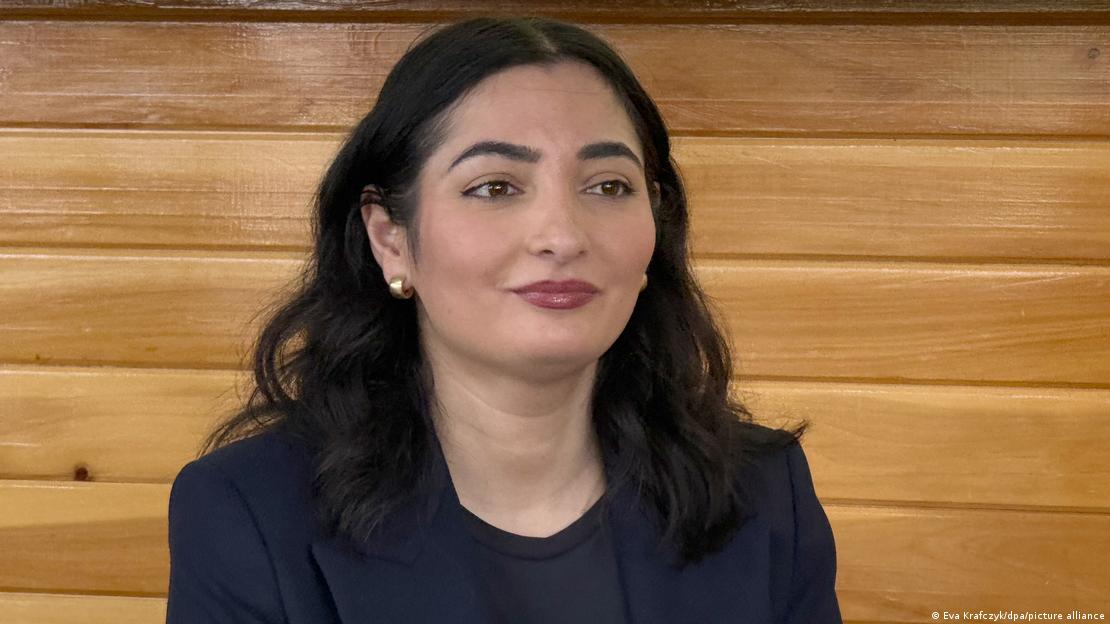
German Development Minister, Reem Alabali Radovan, who attended the World Health Summit in Nairobi, Kenya, said it was important for Germany to show it was a reliable partner
Image: Eva Krafczyk/dpa/picture alliance
Meanwhile, Kenya,which this week hosted the World Health Summit in Nairobi, initially agreed to such a bilateral proposal in December 2025. However, the the country's courts suspended the deal over concerns around personal data.
Meanwhile, Kenya,which this week hosted the World Health Summit in Nairobi, initially agreed to such a bilateral proposal in December 2025. However, the the country's courts suspended the deal over concerns around personal data.
German minister seeks to reassure Kenya
Germany's Development Minister, Reem Alabali Radovan, was in Nairobi to reassure the East African nation of Germany's continued commitment to Kenya. She described Germany's relationship to Kenya, which has the biggest economy in East Africa, as "strong."
"We see a lot of potential when it comes to German investment, especially when it comes to health care and also Kenya as a strategic partner for us when it comes to multilateralism," Radovan told DW.
In contrast to the United States, Germany has continued to promote multilateral initiatives and institutions such as the World Health Organization , despite also cutting aid.
"The cuts from the US government, especially in the global health sector, are very painful," Radovan said. "We can see them looking at multilateral funds like Gavi and the Global Fund, which are combating malaria, HIV, and tuberculosis, and we cannot fill the gap alone."
She said Germany intends to place a strong focus on global health, vowing that Berlin would not pull out of it. "It's important to show our partners in the regions that we are a reliable partner, especially when it comes to African countries," she added.
Sella Oneko in Nairobi and Eric Egbeta in Accra contributed to this article
Edited by: Chrispin Mwakideu

Cai Nebe Producer, podcaster and editor for DW Africa

No comments:
Post a Comment