It’s possible that I shall make an ass of myself. But in that case one can always get out of it with a little dialectic. I have, of course, so worded my proposition as to be right either way (K.Marx, Letter to F.Engels on the Indian Mutiny)
Thursday, April 30, 2026
Discovery is a glimpse into life 3,500 years ago
Story by Kathryn Emerson - BBC Radio Gloucestershire
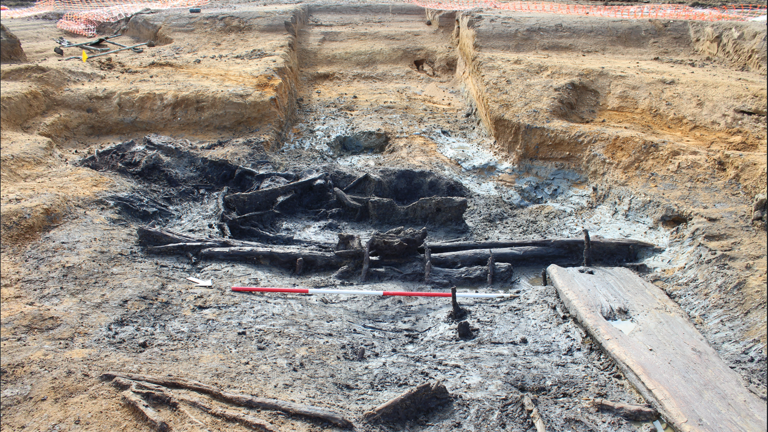
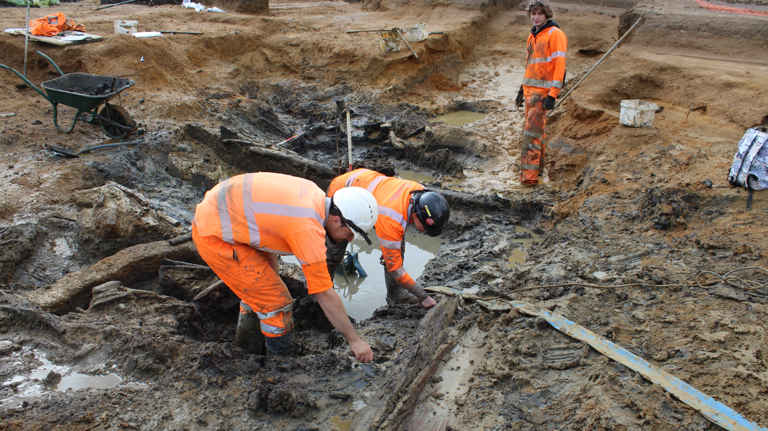
What first appeared to be bits of wood in the ground has now been revealed to be a rare glimpse into life during the middle Bronze Age.
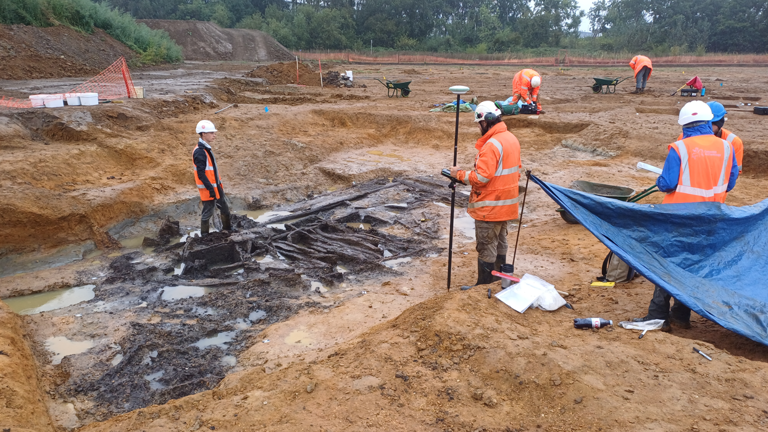
Archaeologists discovered the remarkably well-preserved timber structure, built more than 3,500 years ago for collecting water, near Gloucester.
Paolo Guarino, a post-excavation manager with Cotswold Archaeology, said the discovery stood out due to the rare preservation of organic material.
"It's not quite that often that we find wood," he explained. "Water-logged conditions are some of the best for the preservation of organic matter like timber."
The discovery was made during a routine archaeological excavation carried out ahead of a proposed housing development, just south of Gloucester, in an area where Roman and Anglo-Saxon finds have also been made.
Archaeologists identified the well has an upper platform made of "planks and roundwood", which connects to a log ladde descending into a lower chamber.
"One of the things we do wonder is why we have such a feature in an area that is now rich in streams and rivers," added Guarino.
"We know from pollen analysis that during the Middle Bronze Age there was a period of weather-warming. The fact we're finding more of these water holes suggests communities were digging them to access water near their settlements."
He added it is perhaps ironic that high water levels over time are what likely contributed to the well's preservation.
Workers across the world march for peace and better pay in May Day rallies
May Day rallies across the world brought workers out in force on Friday to protest rising energy prices caused by the US-Israeli war on Iran, with Turkish police arresting dozens of demonstrators trying to march to Taksim Square. Here's everything you need to know about the demonstrations taking place from Islamabad to Istanbul.
Workers across the world will march in May Day rallies Friday, calling for peace, higher wages and better working conditions as they grapple with rising energy costs and shrinking purchasing power tied to the Iran war.
The day is a public holiday in many countries, and demonstrations, some of which have turned violent in the past, are expected in many of the world's major cities.
“Working people refuse to pay the price for Donald Trump’s war in the Middle East,” the European Trade Union Confederation, which represents 93 trade union organisations in 41 European countries, said. “Today’s rallies show working people will not stand by and see their jobs and living standards destroyed.”
In the United States, activists opposing US President Donald Trump’s policies are planning marches and boycotts.
Here’s what to know about May Day.
Workers' unions traditionally use May Day to rally around wages, pensions, inequality and broader political issues.
Protests are planned from Seoul, Jakarta and Istanbul to most European Union capitals and cities across the United States.
Rising living costs linked to the conflict in the Middle East are expected to be a key theme in Friday's rallies.
In the Philippines' capital of Manila, protest organisers said they expect big crowds of workers.
“There will be a louder call for higher wages and economic relief because of the unprecedented spikes in fuel prices,” said Renato Reyes, a leader of the left-wing political group Bayan.
“Every Filipino worker now is aware that the situation here is deeply connected to the global crisis,” said Josua Mata, leader of the SENTRO umbrella group of labour federations.
In Indonesia, labour unions have warned against worsening economic pressures at home.
“Workers are already living paycheck to paycheck,” said Said Iqbal, president of the Indonesian Trade Union Confederation.
In Pakistan, May Day is a public holiday marked by rallies, but many daily wage earners cannot afford to take time off.
“How will I bring vegetables and other necessities home if I don’t work?” said Mohammad Maskeen, a 55-year-old construction worker near Islamabad.
Rising oil prices have fuelled inflation, which the government estimates at about 16 percent, in a country heavily reliant on financial support from the International Monetary Fund and allied nations.
Turkish police fired tear gas and arrested dozens of people holding May Day demonstrations in Istanbul.
Two groups were specially singled out in the city's European side after signalling their intention to march to Taksim square – the scene of several anti-government protests in the past – which was sealed off overnight by police.
In the Mecidiyekoy district, police were seen by AFP using tear gas on the crowd, which included members of a Marxist party, the HKP, who tried to push through while chanting "USA murderer, (Turkey's ruling party) AKP accomplice".
Police encircling the Besiktas neighbourhood stepped in – sometimes violently – whenever a chant was taken up by the demonstrators. AFP journalists reported seeing several protesters thrown to the ground.
Turkish media, including the opposition website Bir Gun, counted at least 57 arrests.
May 1 sees a major police deployment in Turkey every year, with a large area in the heart of Istanbul around Taksim Square sealed off.
Last year, protests moved to the Kadikoy area of the city and more than 400 people were arrested.
In Italy, the government approved nearly 1 billion euros in job incentives this week, aiming to promote stable employment and curb labour abuses ahead of May Day. The measures extend tax breaks to encourage hiring young people and disadvantaged women, and seek to address exploitation tied to platform-based work. Opposition parties dismissed the package as “pure propaganda”.
In Portugal, proposed labour law changes by the centre-right government sparked a general strike and street protests last year. There is still no deal after nine months of negotiations with unions and employers. Unions say the proposals would weaken workers’ rights, including by expanding overtime limits and reducing some benefits.
May Day carries special meaning this year in France after a heated debate about whether employees should be allowed to work on the country’s most protected public holiday – the only day when most employees have a mandatory paid day off.
Almost all businesses, shops and malls are closed, and only essential sectors such as hospitals, transport and hotels are exempt.
A recent parliamentary proposal to expand work on the day prompted major outcry from unions and left-wing politicians.
“Don’t touch May Day,” workers' unions said in a joint statement.
Faced with the controversy, the government this week introduced a bill meant to allow people staffing bakeries and florists to work on the holiday. It is customary in France to give lily of the valley flowers on May Day as a symbol of good luck.
“May 1 is not just any day,” Small and Medium-sized Businesses Minister Serge Papin said. “It symbolises social gains stemming from a century of building social rules that have led to the labour code we know in France. It is indeed a special day.”
Activists and labour unions are organising street protests and boycotts across the United States, where May Day is not a federal holiday.
May Day Strong, a coalition of activist groups and labour unions, has called on people to protest under the banner of “workers over billionaires”.
Voicing strong opposition to Trump's policies, organisers listed thousands of May Day actions across the country and are seeking an economic blackout through “no school, no work, no shopping”.
Demands include taxing the rich and putting an end to the Trump administration’s immigration crackdown.
While labour and immigrant rights are historically intertwined, the focus of May Day rallies in the US shifted to immigration in 2006. That’s when roughly 1 million people, including nearly half a million in Chicago alone, took to the streets to protest federal legislation that would have made living in the US without legal permission a felony.
May Day, or International Workers’ Day, dates back more than a century to a pivotal period in US labour history.
In the 1880s, unions pushed for an eight-hour workday through strikes and demonstrations. In May 1886, a Chicago rally protesting the police killing of two striking workers the day before also turned deadly when a bomb was thrown at police, who fired into the crowd in response.
Several labour activists – most of them immigrants and staunch anarchists – were convicted of conspiracy and other charges, despite the fact that the bomber had not been identified; four were executed.
Unions later designated May 1 to honour workers. A monument in Chicago’s Haymarket Square commemorates them with the inscription: “Dedicated to all workers of the world.”
May Day is now observed in much of the world from Europe to Latin America, Africa and Asia.
(FRANCE 24 with AP with AFP)
Several detained in attempted Workers' Day march on Istanbul’s Taksim
01.05.2026 dpa
Turkish police on Friday clashed with demonstrators attempting to march toward Istanbul’s iconic Taksim Square to mark International Workers' Day, after authorities had banned gatherings in the area, local media reported.
Riot police used tear gas and water cannon to disperse demonstrators, blocking roads leading to Taksim as part of heavy security measures, the Cumhuriyet daily wrote.
Footage broadcast by opposition Halk TV showed several people being forced into police vehicles. The Progressive Lawyers Association (CHD), a local lawyers' union, put the number of detained at more than 300, a figure which couldn't immediately be independently verified.
The Istanbul governor’s office had earlier announced that demonstrations and marches around Taksim Square and nearby areas would not be permitted, citing public order and security concerns.
Authorities also closed some metro stations and major roads in some parts of the city ahead of planned Workers' Day rallies, allocating two sites for celebrations on Istanbul's Asian side.
May Day rallies on Taksim, a symbolic site for Turkey’s labour movement and the scene of the 2013 Gezi Park protests, have effectively been banned since 2012.
(c) 2026 dpa Deutsche Presse Agentur GmbH
German trade unions to protest job and budget cuts on May Day
01.05.2026 dpa
Photo: Sebastian Willnow/dpa
Germany's trade unions plan to stage several hundred rallies across the country on Friday, the international labour day holiday known as May Day, to protest against job cuts and cuts to social benefits
"Our jobs first, your profits second" is the slogan for this year's events.
The main demands are the preservation of the eight-hour workday, social benefits and a secure state pension, as well as the introduction of higher taxes on large fortunes.
According to the trade unions, companies should only receive state funding if they also invest in Germany. Secure jobs and social security must take precedence over employers’ profit interests.
The main rally, featuring DGB trade union federation President Yasmin Fahimi, will take place in Nuremberg this year.
The Social Democrats' dual leadership will also be appearing, specifically in North Rhine-Westphalia: Finance Minister Lars Klingbeil is due to speak in Bergkamen, and Labour Minister Bärbel Bas in Duisburg, both in western Germany.
The European Parliament voted for a consent-based definition of rape. But what constitutes rape under criminal law still varies significantly across the bloc.
After decades of arguing, the European Parliament agreed on a common definition of rape
About half of all women in the European Union have been sexually harassed at least once since their 15th birthday, according to the European Council.
In response, the EU has launched several measures to better protect women and girls from sexual assault. On October 1, 2023, it acceded to the Istanbul Convention, the world's most comprehensive set of rules for combating gender-based violence. In 2024, the bloc adopted a directive that criminalizes sexual harassment in the workplace, cyberstalking, and the non-consensual distribution of intimate images across the EU.
The new EU Gender Equality Strategy specifically targets cyberviolence, deepfakes, and digital violence against women. European countries invest hundreds of millions of euros annually in projects focused on violence prevention and victim protection.
Swedish parliamentarians led the initiative to accept "only yes means yes" as common European definition
Image: Panama Pictures/IMAGO
Cross-party initiative in the European Parliament
However, when it comes to defining what actually constitutes rape under criminal law, the 27 EU member states have been unable to reach a consensus for decades. A cross-party initiative in European Parliament aimed to push the European Commission to redefine the legal framework for this.
"The legislative initiative aims to create a uniform EU-wide regulation that ensures that in sexual relationships, only 'yes' truly means 'yes' and that all rape laws in the EU are based on the principle of consent," Evin Incir, a member of the European Parliament representing the Swedish Social Democratic Party and one of the initiators of the latest push, told DW.
In future, Incir added, the decisive factor should be "the absence of consent" and "not the fact that women have to fight back or show bruises to prove they said 'no!'"
The document also calls for alignment with international standards and stronger support for victims across all member states, including access to justice, specialized services, and healthcare.
On Tuesday, April 28, 2026, it was approved by a large majority of 447 to 160 votes in the European Parliament.
Criminal law differences within the EU
Currently, criminal law definitions of what is considered rape vary considerably across Europe.
Their legal models can be broadly divided into three categories. In several EU countries, an act is only considered rape if the perpetrator uses or threatens to use physical force. In other countries, including Germany, Austria, and Poland, the so-called "no means no" model applies: Rape is considered a crime if the act is committed against the victim's recognizable will, meaning they actively refuses to consent.
The "only yes means yes" model, on the other hand, means that any sex without explicit, voluntary consent is defined as rape. This model was first introduced in Sweden but is also in effect in numerous other EU countries such as Belgium, Denmark, Croatia, Greece, Spain and the Netherlands. France joined in November 2025, in the wake of the Gisele Pelicot case, which shocked the entire country. The introduction of this law is also currently being discussed in the Czech Republic.
Convictions at court remain low as rapes are often not reported
Image: Suvee Subyen/COLOURBOX
Sweden pioneers legislation to stop rape
The prosecution rate for rape cases remains extremely low. Only a fraction of rape crimes is reported at all, and trials often pit one person's word against another's word. Also, clear evidence of rape is difficult to establish. Some estimates suggest that across Europe, only a low single-digit percentage of actual rapists are actually convicted.
In Sweden, the EU country that was the first to introduce the "only yes means yes" rule in 2018, the number of convicted rapists has risen significantly. This is likely also due Stockholm simultaneously introducing the criminal offense of "grossly negligent rape." Under this provision, perpetrators can now be convicted if they did not ensure beforehand that their partner is voluntarily participating in the sexual act.
Nevertheless, proving a rape case in court remains difficult, and the overall conviction rate remains low. Human rights organizations such as Amnesty International recognize the transition to the "only yes means yes" rule as an important step, also in terms of social change.
More European nations adopt similar rape laws
The "only yes means yes" rule was proposed for the second time as a Europe-wide standard. An earlier initiative failed in 2024 — in part due to France and Germany's obstruction in the European Council. The issue was less about a substantive rejection of the consensus principle and more about formal legal concerns.
Because rape is not explicitly listed in the EU treaties as a criminal offense with a cross-border dimension, countries have argued the EU lacks authority to establish a Europe-wide definition. Criminal law is considered one of the core areas of national sovereignty.
Germany and France expressed fears the European Commission would overstep its authority and that a corresponding directive could be overturned by the European Court of Justice.
"A lot has happened since 2024, when we first called for legislation on persistent rape," Swedish MEP Evin Incir told DW, highlighting that not only France has changed its position at the national level, but also Italy is currently working on a corresponding law.
Banned from playing football and sent into exile, Afghanistan's women's team has had to fight to regain international status. That newly awarded recognition is a "hard slap to the face" of the Taliban, a player told DW.
Afghanistan will now be allowed to compete in the world's top football tournaments
Image: Mosa'ab Elshamy/AP Photo/picture alliance
After years of fleeing, fighting, advocating and training, Afghanistan's women have won the right to compete for football's biggest prizes as their country's official national team.
An unprecedented decision made by world football's governing body, FIFA, in Toronto on Tuesday paves the way for the current squad to try to qualify for the Los Angeles Olympics in 2028 and then future World Cups and Asian Cups.
It is another huge step for a team who have had to fight for their right to play, with the Taliban-run football association refusing to sanction an Afghanistan national women's team.
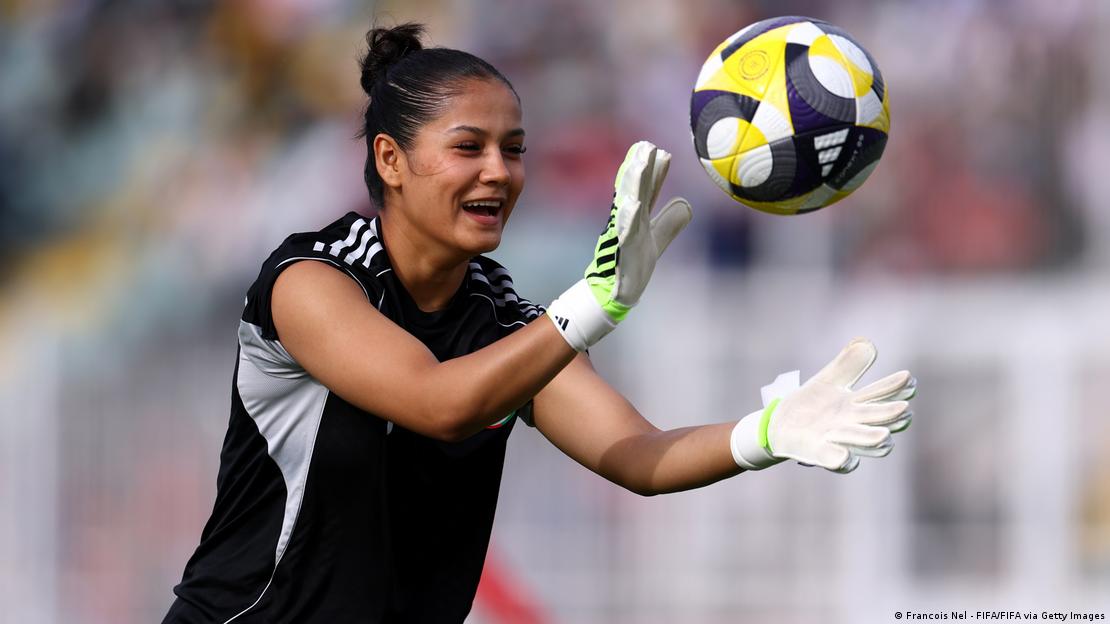
"It's something really huge for us, to show the world that Afghan women and girls are capable of doing amazing things," national team goalkeeper Elaha Safdari told DW. "It's a hard slap to the face of the Taliban and those people who were against us.
"We are just showing that we are capable of doing amazing things through sports. And of course, we are still raising our voice for all the voiceless who are back home." Afghan example may open the door for others
FIFA president Gianni Infantino said the amendment made at the organization's Council was "momentous." He said it meant FIFA can now "approve the registration of a national or representative team under exceptional circumstances where a Member Association is unable to do so."
"This is a powerful and unprecedented step in world sport," he added. "FIFA has listened to these players as part of its responsibility to protect the right of every girl and woman to play football and to represent who they are."
Goalkeeper Elaha Safdari now lives in Engand and plays club football for Rotherham United
Image: Francois Nel - FIFA/FIFA via Getty Images
Andrea Florence, the Executive Director of the Sport and Rights Alliance advocacy group, pointed out that the precedent set by this amendment "demonstrates that governing bodies can adapt their rules to protect human rights when extraordinary circumstances demand it."
This will likely open the door for other national teams, often women's ones, who are denied the opportunity to play by their federations. Big moment in Afghanistan and in exile
Khalida Popal, the former Afghanistan captain, who has become a figurehead for the new generation, sat next to Infantino when the news was announced as the current squad watched together online elsewhere.
"It means so much. The whole situation that Afghanistan women have is very emotional," she said. "This is our moment, this is our time and football is our voice and our platform."
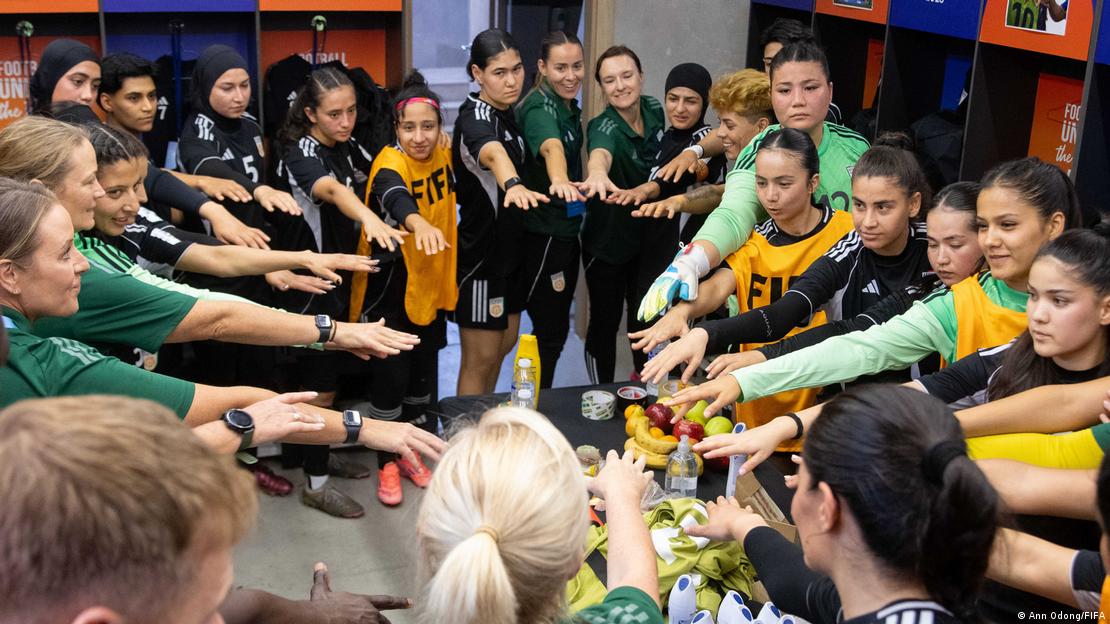
Afghanistan won one of their three games at the FIFA Unites Women's Series 2025 and forged team spiritImage: Ann Odong/FIFA
For Safdari and her teammates, this is a chance to look ahead and build on the momentum and team spirit forged at the tournament in Morocco, in which the Afghans were not recognized as a full national team.
"Our situation is quite different from other teams but I feel like that's a big strength for us," Safdari said. "We've been training hard, we've been aiming for this, and it's a new hope for us. It shows our resilience and it just shows that if we work hard, we can definitely achieve [our goals]."
ADVERTISEMENT
Fight not over until Taliban are out
But with the brutal repression of women continuing back home, Safdari and the other players know that their fight is not fully won while the Taliban remain in power. Nevertheless, Safdari and the rest of the squad enjoy a rare platform as Afghan women international athletes. Now that their stage is even greater, they remain determined to shout from it for those back home.
"First of all I [thought of] my parents, who are still back home. They've already heard the news and are just proud of how far that I came personally. It's really something for me to play for my country and make my people, my family and my parents proud.
"Of course, I've heard so many good things from friends and the people who are still back home. And we've seen how they were supporting us through this news on social media."
The squad, who are funded and supported by FIFA during international breaks, are set to get together in New Zealand for their first matches since the games in Morocco last October. They will play a match against the Cook Islands as part of an eight-day training camp before Olympic qualifiers are set to start, likely later this year. That will be followed, eventually, by World Cup and Asian Cup qualifiers and all sorts of other opportunities afforded to them by their new status.
"It sounds really great [to hear Afghanistan can compete in those tournaments] and I still cannot believe it that we are finally official and we can play qualifiers," Safdari said.
With the team having barely been in the same country, let alone played together in recent years, there is plenty of work to do to catch up. But for players like Safdari who have had to forge new lives in foreign lands at a young age while fighting for their right to play football, that is not a daunting proposition.
Iran crisis, World Cup tensions overshadow FIFA Congress in Vancouver Football officials gather in Vancouver on Thursday for FIFA’s 76th Congress, weeks before the expanded World Cup kicks off in North America. War in Iran, logistics and Russia’s ban top the agenda. Iranian federation officials left Canada abruptly, casting a shadow over the meeting.
Football's power brokers meet in Vancouver on Thursday as FIFA convenes its 76th Congress, a high stakes gathering less than two months before the biggest World Cup ever opens across Canada, Mexico and the United States
The Iran war, World Cup logistical headaches and the unresolved question of Russia's international ban are set to feature in discussions among roughly 1,600 delegates from more than 200 member associations.
Iran's absence is already threatening to overshadow the meeting.
Officials from the Iranian football federation (FFIRI) abruptly left Canada after landing in Toronto earlier this week, abandoning their onward trip to Vancouver.
Iranian media said FFIRI president Mehdi Taj – a former member of Tehran's Islamic Revolutionary Guard Corps (IRGC) – and two colleagues flew home after being "insulted" by Canadian immigration officers.
Canada, which designated the IRGC a terrorist organization in 2024, said Wednesday that individuals linked to the force were "inadmissible".
"While we cannot comment on individual cases due to privacy laws, the government has been clear and consistent: IRGC officials are inadmissible to Canada and have no place in our country," Canada's immigration agency said in a statement.
The episode adds fresh uncertainty to Iran's World Cup status, already clouded since the Middle East war erupted on February 28 with a wave of attacks by the United States and Israel.
Iranian football officials said last month they had suggested moving their three World Cup group games from the United States to co-hosts Mexico – a plan which was swiftly nixed by FIFA President Gianni Infantino.
Infantino told AFP that Iran will play at the World Cup "where they are supposed to be, according to the draw."
US Secretary of State Marco Rubio insisted last week that Iran's footballers would be welcome to compete at the tournament.
But Rubio warned that the United States may yet bar entry to members of the Iranian delegation with ties to the IRGC. Infantino under scrutiny
The FIFA boss heads into Thursday's meeting facing scrutiny following criticism over skyrocketing World Cup ticket prices and his close friendship with US President Donald Trump.
FIFA on Tuesday announced it had boosted World Cup financial distributions to nearly $900 million, up from the initial $727 million announced in December.
The move came after several World Cup-qualified teams reportedly warned that they risked losing money from competing at the sprawling tournament, citing the high cost of travel, taxes and overall operations.
Rights groups meanwhile have called for the football supremo to use his upcoming address to FIFA delegates to give assurances that World Cup visitors face no risk of being caught in the Trump administration's draconian immigration crackdown.
"FIFA President Gianni Infantino has yet to publicly outline how fans, journalists and local communities will be safe from arbitrary detention, mass deportations and crackdowns on free expression," Amnesty International's head of economic and social justice Steve Cockburn said Wednesday.
"This FIFA Congress should be the moment he does so, and the global football community must receive more than empty platitudes," Cockburn added in a statement.
Infantino is also facing calls to abolish the FIFA Peace Prize, which he awarded to Trump during last December's World Cup draw in Washington.
"We want to see (the prize) abolished," Norwegian football association president Lise Klaveness told reporters this week. "We don't think it's part of FIFA's mandate to give such a prize."
Thursday's Congress could also address the issue of Russia's ongoing ban from international football, which has been in force since the 2022 invasion of Ukraine.
Infantino spoke in favor of lifting the ban on Russia earlier this year.
"We have to (look at readmitting Russia). Definitely," Infantino told Britain's Sky News.
"This ban has not achieved anything, it has just created more frustration and hatred."
(FRANCE 24 with AFP)
Iranian football officials leave Canada before FIFA Congress due to airport 'insult'
A team of Iranian football officials left Canada before the start of this week's FIFA Congress due to the "inappropriate behaviour" of immigration officials at Toronto airport, Iranian media reported Wednesday. The Iranian federation's president is a former member of Iran's Revolutionary Guards, which is a designated terror group in Canada.
Top Iranian football officials left Canada before the start of the FIFA Congress because of the behaviour of officials during immigration checks at Toronto's international airport, Iranian media reported Wednesday.
The global football body's gathering of member nation representatives will be held this week in Vancouver, the British Columbia city which is also hosting seven matches in the World Cup that Canada will co-host with the United States and Mexico this summer.
The Iranian football federation (FFIRI) president, secretary general and deputy secretary general "returned to Turkey on the first flight due to the inappropriate behaviour of the immigration officials at the airport and the insult to one of the most honourable organs of the Iranian Armed Forces", several outlets reported, without providing further details.
In 2024, Canada designated Iran's Revolutionary Guards (IRGC) a terror group, barring its members from entering the country.
The Iranian federation's president Mehdi Taj is a former IRGC member.
The Iranian reports said the officials had travelled to Canada with "official visas" before turning around.
The incident underscores the practical and political obstacles surrounding Iran's participation at the World Cup, the most politically sensitive item on FIFA's agenda since the US and Israel launched a war against Iran in February.
Iran's qualification has not removed hurdles tied to travel, visas and security in a tournament staged in the United States, Canada and Mexico.
Immigration, Refugees and Citizenship Canada said it could not comment on specific cases due to privacy but added: "IRGC officials are inadmissible to Canada."
Doubts over Iranian team's attendance
While FIFA has insisted fixtures will proceed as scheduled, the delegation's withdrawal deepens doubts over whether Iranian players, officials and supporters will be able to move freely across borders during the tournament.
The officials – who had travelled to Canada to attend Thursday’s Congress in Vancouver – returned on the next available flight, according to the Tasnim report, which added that the incident involved an insult directed at one of the most decorated branches of Iran's armed forces.
FIFA has since contacted the Iranian delegation to express regret over the incident and indicated that president Gianni Infantino would arrange a meeting with them at the organisation’s headquarters, the report added. FIFA did not respond to a request for comment from Reuters. A source at the FIFA Congress told Reuters FIFA had sent a representative to mediate in Toronto but their efforts were in vain.
Doubts have risen over the Iranian team's attendance at the World Cup because of the Middle East war that began on February 28 with a massive wave of US-Israel attacks.
US Secretary of State Marco Rubio insisted last week that Iran's footballers would be welcome at the global spectacle.
But he warned that the United States may yet bar entry to members of the Iranian delegation it judged to have ties to the Revolutionary Guard, which is also designated a terrorist organisation by Washington and several other governments.
No one "from the US has told them they can't come", Rubio said.
'Visa issues'
Sources with direct knowledge of the matter told Reuters that the Iranian officials were also unable to attend Tuesday's Asian Football Confederation Congress, which was also held in Vancouver, due to visa issues.
“If it's like this in Canada where it's supposed to be easy, how is it going to be for the World Cup in the US?" a delegate at the AFC Congress told Reuters on condition of anonymity due to the sensitivity of the matter.
Concerns over security, travel restrictions and the broader geopolitical climate have prompted officials in Tehran to seek guarantees for the Iran team at the World Cup and, in some cases, explore the possibility of alternative venues for their matches in the United States.
FIFA has so far resisted any changes, reiterating that participating teams are expected to adhere to the established match schedule.
The Congress – bringing together more than 200 member associations – was already expected to focus on operational and financial questions linked to the first 48-team World Cup.
(FRANCE 24 with AFP and Reuters)
How Iranian diplomats turned embassy accounts into viral meme machines
Memes, humour, and trolling of American politicians: This is how a handful of Iranian embassies have become superstars on “X”, attracting millions of views. But how did the old-fashioned and largely ignored accounts of Iran’s diplomats in South Africa, Thailand, and the United Kingdom suddenly turn into Gen Z-style viral feeds, with millions of views?
When US and Israeli jets and missiles started attacking Iran on February 28, another battle – a propaganda war – opened up on social media. Official US accounts, including those of the Pentagon and the White House, started publishing clips of their attacks on Iran, mixed with footage from Hollywood films, video games, and cartoons.
Iran’s regime launched a counterattack online. Mocking and trolling posts from Iranian embassy accounts have targeted the US administration, notably President Donald Trump and Defence Secretary Pete Hegseth, and the broader war narrative promoted by the US government.
While the US administration’s combative messaging on the war with Iran has largely failed to gain traction online, the Iranian embassy's memes and humorous content have gone viral, sometimes attracting millions of views and reposts.
The embassy accounts were, until recently, little-followed feeds recycling statements from Iran’s foreign minister, other state officials, and routine embassy activity. In early March, they started reposting humorous tweets by other X users mocking the US’s war on Iran, and by the end of the month, they were posting humorous tweets of their own.
On March 23, Iran’s embassy in South Africa posted a photo of a toy steering wheel after Trump suggested the US could share control of the Strait of Hormuz with Iran. The post had 3.9 million views on X. On April 6, after Trump posted a message appearing to extend a deadline for Iran to open the strait before “Tuesday, 8:00 am Eastern Time”, the Iranian embassy in Zimbabwe posted a message with more than 6 million views, asking him to change it to between 1 and 2 pm.
Iran’s embassies have posted Internet-famous memes showing close knowledge of global pop culture, as well as references to popular films and series such as Friends and Pirates of the Caribbean, prompting British tabloid the Daily Mail to describe them as “jaw-dropping”.
Ali Pourtabatabaei, an Iranian journalist with inside knowledge of the Iranian administration, explains how this abrupt shift was decided and how it was implemented:
When the war started, the older generation of Iranian diplomats – who normally run these accounts – realised their point of view had no voice among non-Iranian audiences. So they turned to a younger generation of diplomats who understand social networks. This new generation was more easily granted freedom and authority during wartime to take control of these accounts.
For multiple reasons, this younger generation of Iranian diplomats has been trained more in public diplomacy and communication than in other areas. They are young and, naturally, more familiar with contemporary pop culture.
Another important point is that this new PR strategy was not applied to all accounts at once. One or two embassies started as a test, and when it proved successful, others followed.
And despite what many might suspect, the diplomats behind these accounts are not based in Tehran in the same room; they are all located in their respective countries of assignment.
The combination of a wartime emergency and the very positive reaction they received on social media led to this shift, with permission granted to this younger generation to cross traditional diplomatic PR red lines.
Old clichés and outdated management no longer work
The embassies have also reposted satirical videos portraying Trump as an animated Lego character. The videos are produced by young Iranians, such as a group calling themselves “Explosive Media”. In an interview with the FRANCE 24 Observers, the group’s spokesperson confirmed the shift towards a younger generation:
When war breaks out, people become convinced that old clichés and outdated methods can no longer work.
Young people like us have taken charge, and with God's help and the inspiration he provides, we are able to produce work at a global standard across different fields.
I don’t think that, once the war started, a single group or team was suddenly created to take control of all these accounts.
According to a study by the “Institute for Strategic Dialogue”, in the first 50 days of the war, posts from Iran’s embassies and other official accounts collectively gained approximately 900 million views and 22 million likes, around 14 and 30 times more, respectively, than in the same period before the war.
How the Iran war is bringing back 'citizenship as a weapon'
04/27/2026 Some Gulf states, trapped between Iran, Israel and the US in the current war, have started revoking the citizenship of locals considered "traitors." But is it about security — or a way to suppress political dissent?
Anti-government protests in Bahrain went from 2011 until 2013 and saw hundreds arrested and as many as 85 killed after a brutal crackdown
Image: Hasan Jamali/AP Photo/picture alliance
Jawad Fairooz found out that he no longer had a country while watching television.
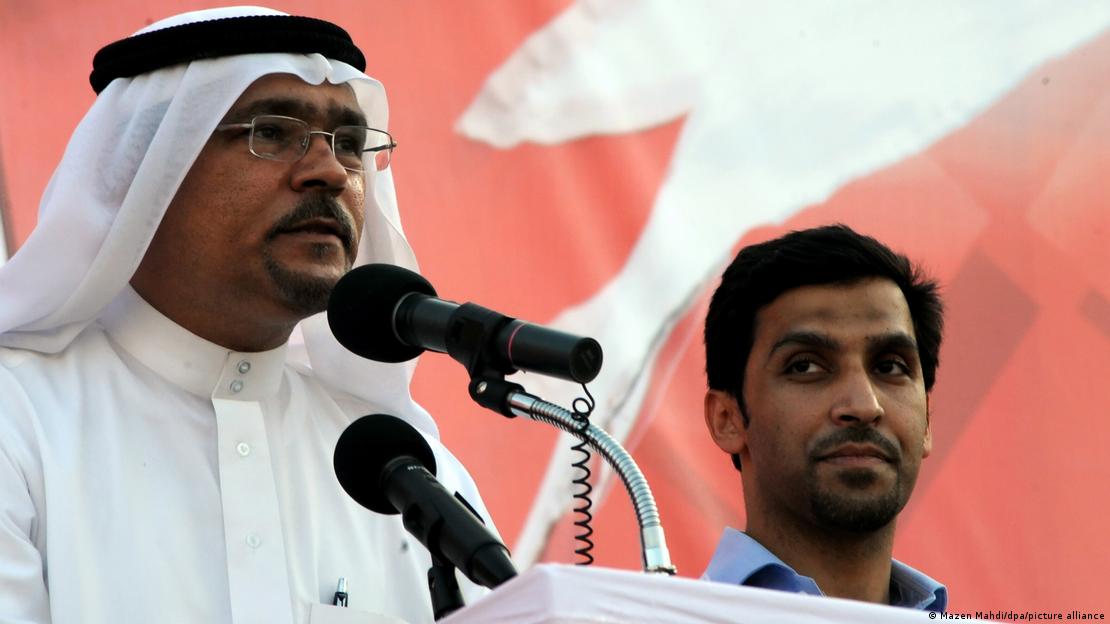
"I was on a short trip to London," Fairooz, a former politician in Bahrain's parliament, told DW, "when the Ministry of Interior decided to revoke the nationality of people in the opposition. They read 31 names on TV. Mine was one. It was such a shock because I never called for the government to be overthrown."
That was in November 2012. Fairooz had resigned from parliament in protest at security forces killing demonstrators during the so-called Arab Spring. He was arrested, tortured, and then had his citizenship revoked. And he was not alone. Bahraini authorities would eventually withdraw citizenship from close to 990 people.
Made stateless, Fairooz applied for asylum, became a UK citizen and now runs the organization, Salam for Democracy and Human Rights. But he's worried that what happened to him is about to happen to many more Bahrainis, as a result of the Iran war.
Jawad Fairooz, left, pictured in 2011 when he was in the opposition, says there are long-running attempts to bring about demographic change more supportive of the Sunni royal familyImage: Mazen Mahdi/dpa/picture alliance
Weaponizing citizenship
The war began in late February when Israel and the US attacked Iran. But besides Israel, it was Gulf states like Bahrain, Oman, the United Arab Emirates and Saudi Arabia that Iran targeted in response.
Politically, Bahrain is in a particularly difficult position. Like other Gulf states, the country is a monarchy and represses most political dissent. But in contrast to other Gulf countries, Bahrain's royal family are Sunni while estimates suggest the majority of the population — just over 50% — is Shiite.
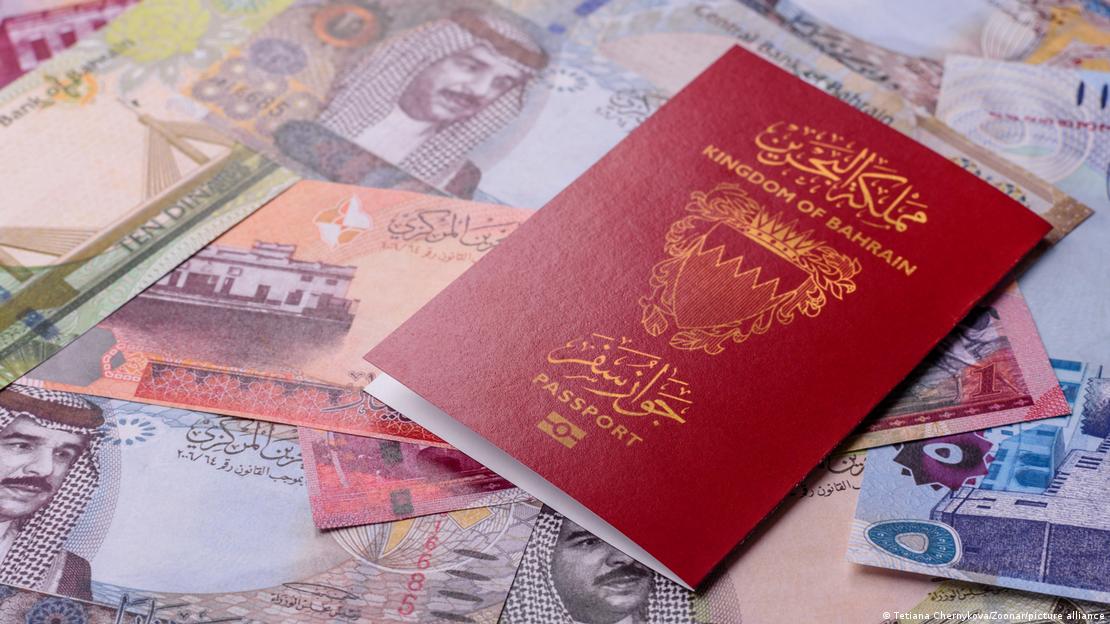
Fairooz says Bahrainis having their citizenship revoked are mostly Shia, while those being given citizenship are mostly Sunni, many who moved to Bahrain from elsewhere
Image: Tetiana Chernykova/Zoonar/picture alliance
Iran is a Shiite theocracy, and in March, there were as many as 250 arrests in Bahrain of people who allegedly posted anti-war messages online, expressed "sympathy" with Iran or participated in demonstrations. Bahrain says it also arrested spies working for Iran.
Then, in late April, the government said it would be reviewing the citizenship of anybody "disloyal" to the country. Fairooz believes Bahrain is weaponizing citizenship again for security reasons, but also because authorities know they can use it to suppress dissent.
"I am hearing about arrests of citizens perceived as siding with the enemy state," said another Bahraini who lives in the US but whose family remains in Bahrain, which is why they could only comment anonymously. "In particular, people of Persian, or mixed Arab and Persian descent, are being associated with Iran, regardless of their actual views on the conflict. These dynamics affect a range of communities — not only Shia minorities, but also Sunni citizens of Persian descent."
Kuwait could be one of the worst offenders. In March 2024, the Kuwaiti government launched a campaign to revoke citizenship and sources say it's highly likely that, since then, over 70,000 Kuwaitis have lost their nationality. The true number could be as high as 300,000 because dependents like wives, children or grandchildren also lose Kuwaiti citizenship.
If correct, that's almost one-fifth of the native population, as there are only around 1.56 million Kuwaiti citizens. In mid-April, Kuwait issued another set of changes to its citizenship law and over 2,000 more people lost Kuwaiti nationality.
"Kuwait's evolving nationality regime reveals how citizenship can be transformed ... into a political instrument of control," the research network Global Citizenship Observatory wrote in aFebruary 2026 report on Kuwait.
"It is potentially too early to identify if there is an increased trend related to the recent conflict with Iran," said Thomas McGee, the Observatory's expert on the Middle East. "What we are seeing now is a number of Gulf states potentially using the Iran war as justification to intensify existing citizenship and nationality controls, rather than inventing the practice from scratch."
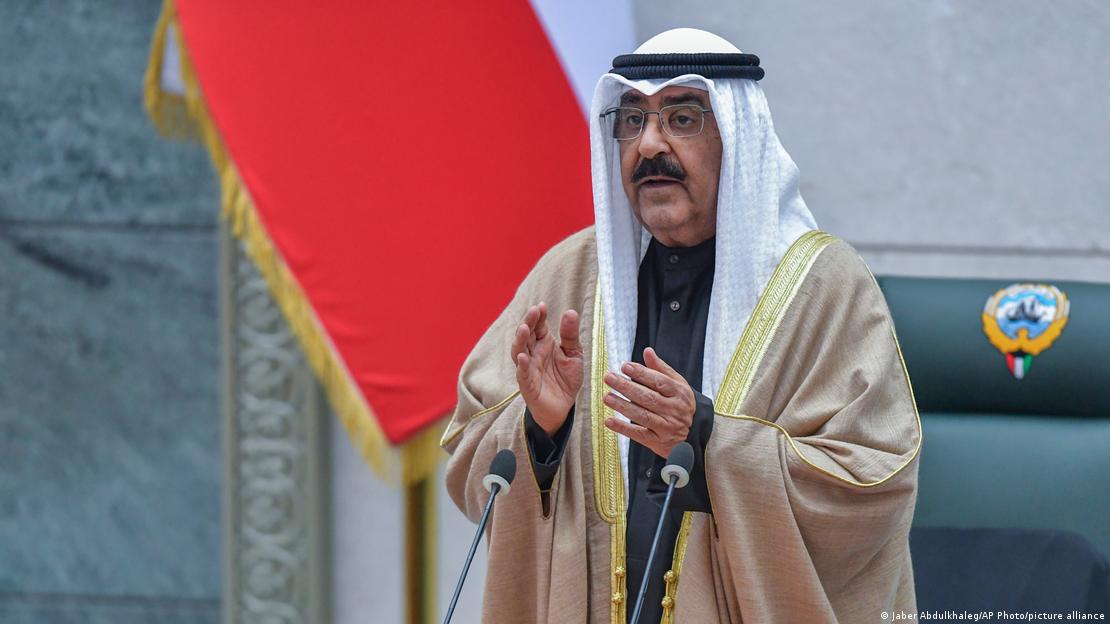
Kuwait's emir Meshal Al Ahmad Al Jaber Al Sabah says citizenship irregularities are changing the country, but his critics say new nationality rules are meant to regulate who has political power
Another Gulf state, Oman, changed its citizenship laws in February 2025. Parts of the law say Omani nationality could be withdrawn if citizens "committed a verbal or physical offense against the Omani Sultanate or the Sultan himself," or joined an organization that might harm the country.
Rights activists argue that because there's no definition of those acts or organizations, the government can use the law against its opponents.
The UAE was recently accused of doing similar things to Iranians who live there. Some found their residency permits had been revoked. Emirati authorities denied this, saying the expats were part of their community — but media outlets like The New York Times interviewed Iranians who had had permits rescinded.
There are warnings of similar action in Iran. Last week, a politician there threatened to strip diaspora Iranians of citizenship if they were seen cooperating with "hostile countries." Europe and US also use citizenship as a tool
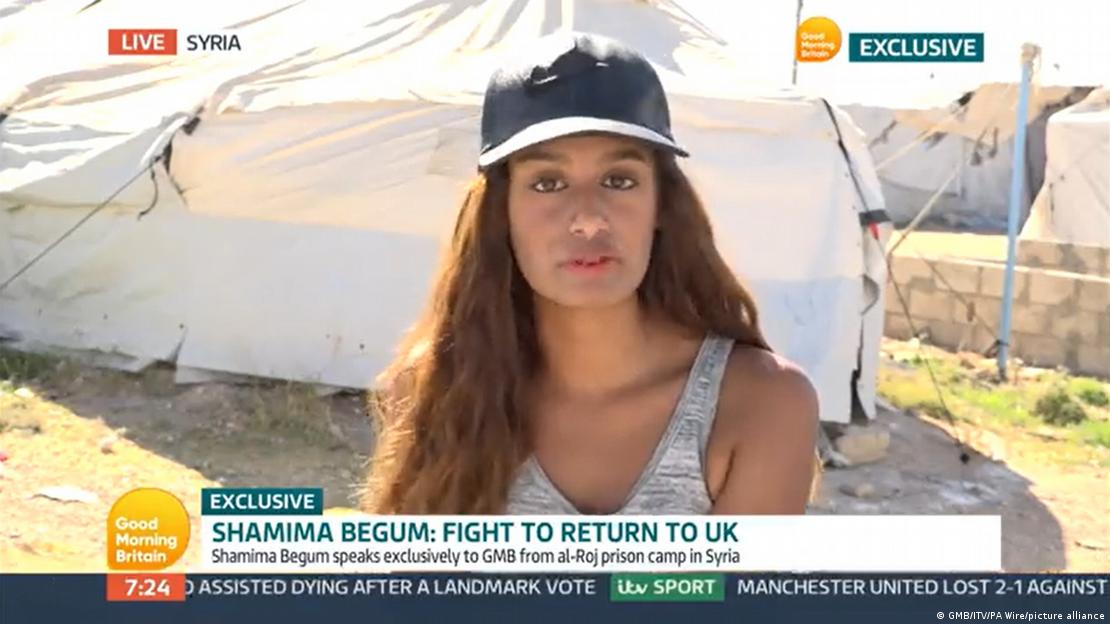
In the UK, there's been furious debate about the decision to strip Shamima Begum, who joined the extremist 'Islamic State' group in Syria at the age of 15, of British citizenship
Experts say citizenship is being weaponized because, over the past two decades, it's become more acceptable to treat it as a privilege, not a right.
This was not the case after World War II, when the Universal Declaration of Human Rights was first written. Article 15 says nationality is a fundamental human right, partly a response to the Nazis making tens of thousands of Jews and political opponents stateless with their 1933 "denaturalization law."
"States have been weaponizing citizenship for a long time," said Lindsey Kingston, a professor of international human rights at Webster University in the US state of Missouri. "But the nature of that weaponization is changing."
A 2022 study by the Global Citizenship Observatory and the Netherlands-based Institute on Statelessness and Inclusion, or ISI, found that in the two decades after the September 11, 2001, attacks in the US, "the use and scope of citizenship revocation on security grounds has expanded."
"Terror attacks like 9/11 prompted many people to rethink ideas about legal nationality," Kingston told DW. "People began to see citizenship as impermanent, something that had to be earned and continually justified."
Stripping a person of citizenship became more acceptable, she said, "even when it was in blatant violation of human rights laws." Iran war's impact
While the weaponization of citizenship is not new, the Iran war seems to be making things worse, experts say.
The conflict has resulted in a slowing of reforms in Gulf countries, analysts at the US-based Carnegie Endowment for International Peace argued in early April. The war has upset "the fragile balance that had been emerging in the Gulf between controlled reform and political stability," they wrote.
This includes the weaponization of citizenship, observers say.
"Military conflict can be a catalyst," Luuk van der Baaren, a legal researcher at the European University Institute who focuses on citizenship law, confirmed. "A long-standing ground for citizenship stripping is treason and this logic is now being invoked in some Gulf countries." The same has been seen in Russia and Ukraine, he added.
Additionally, citizenship policies often follow strong regional patterns, the researcher told DW. "Countries tend to adopt similar approaches to their neighbors, which may explain recent changes across countries of the Arab Gulf."
Amal de Chickera, co-director of the ISI, believes it's important to look at the bigger picture.
"If you look at Bahrain, there was a spike in citizenship strippings post-2013, and then there was a lot of international pressure that the Bahraini government should right those wrongs," he explained. "And they did course correct, to a degree."
Now it seems Bahrain is going back to that practice. But, as de Chickera argued, that may not be surprising.
"I think a wider lens is needed," he said. "With Israel’s genocide of Palestinians, invasion of Lebanon and the US and Israeli attacks on Iran, with the way Western nations have doubled down to afford Israel a degree of impunity and their unwillingness to hold America accountable, we are seeing a shredding of international law."
The International Court of Justice in the Netherlands has been investigating Israel's conduct in Gaza since South Africa launched a case in December 2023, alleging that it amounts to genocide. Israel's conduct in the war has been found by many international rights organizations and a United Nations commission to be a genocide. Israel has denied this.
De Chickera thinks all that is connected: "In a world in which international law means nothing, the Bahraini government has probably calculated it can get away with this again."
Edited by: Rob Mudge Cathrin Schaer Author for the Middle East desk.
Whale 'Timmy' reaches Denmark in rescue effort — in pictures
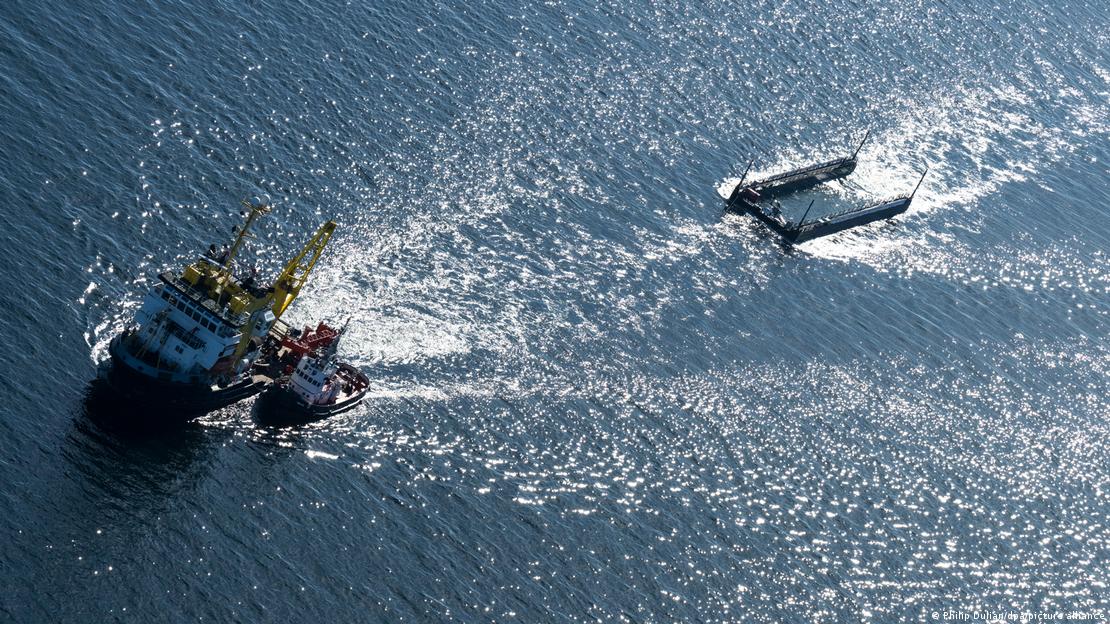
A barge carrying a humpback whale stranded in Germany for weeks has reached Danish waters on its journey to the North Sea.
The young humpback whale is being towed to the North Sea in a rescue attempt
Image: Philip Dulian/dpa/picture alliance
A barge carrying 'Timmy', the humpback whale stranded in Germany since early March, is expected to reach the open ocean by Friday.
The tugboat pulling the water-filled barge entered Danish waters Wednesday afternoon.
It was located between the Danish islands of Samso and Sjaelland at 2 a.m. German time (0000 GMT) on Thursday, according to the Vessel Finder tracking website.
The tugboat and barge containing the humpback whale has crossed into Danish waters
Image: Philip Dulian/dpa/picture alliance
Environment minister for the German state of Mecklenburg-Western Pomerania, Till Backhaus, said that if everything went well, the whale would be in the North Sea by Friday.
"The very worst is already behind him now," Backhaus told Germany's Bild newspaper on Wednesday.
Backhaus said the animal was "doing well" and had made sounds during the night.
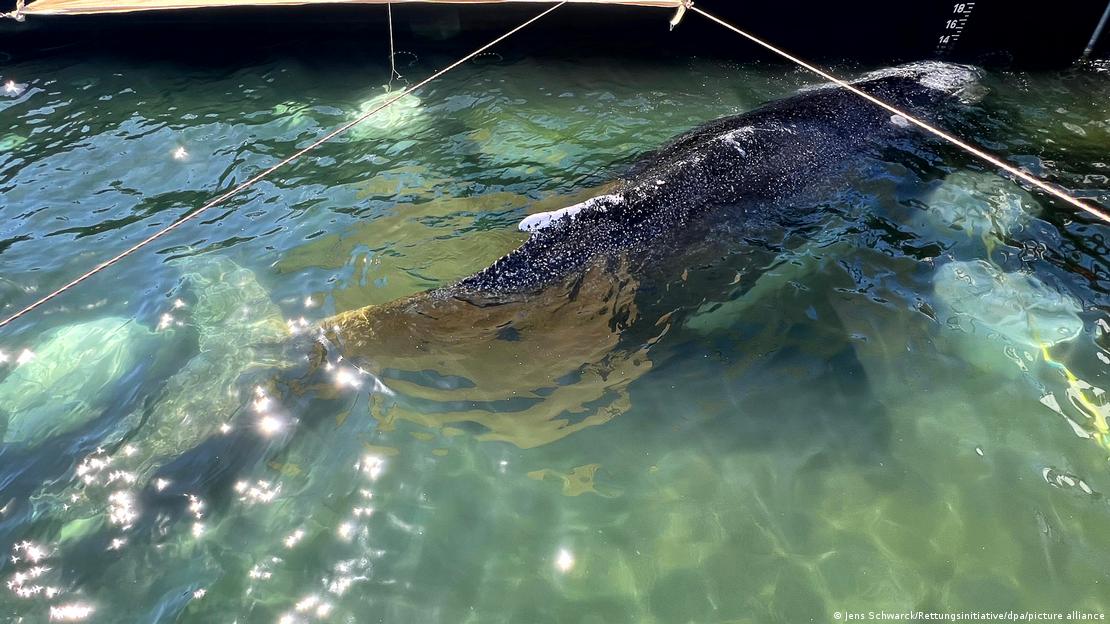
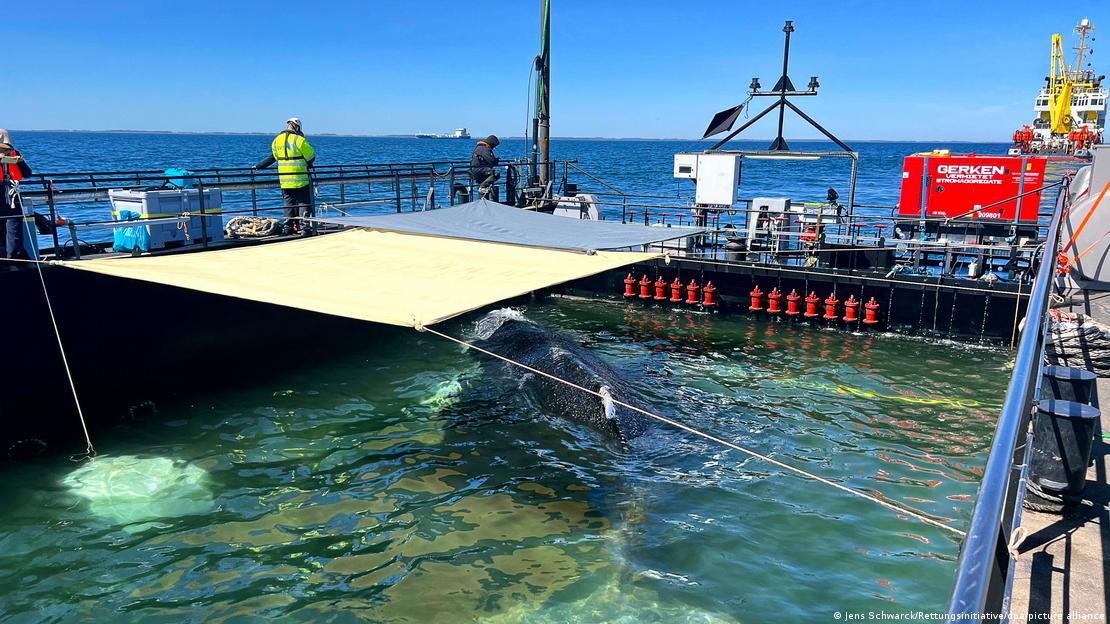
Rescuers managed to get Timmy onto the barge, has a water-filled hold and is usually used to carry other boats
Stranded whale Timmy was coaxed onto barge in complex rescue
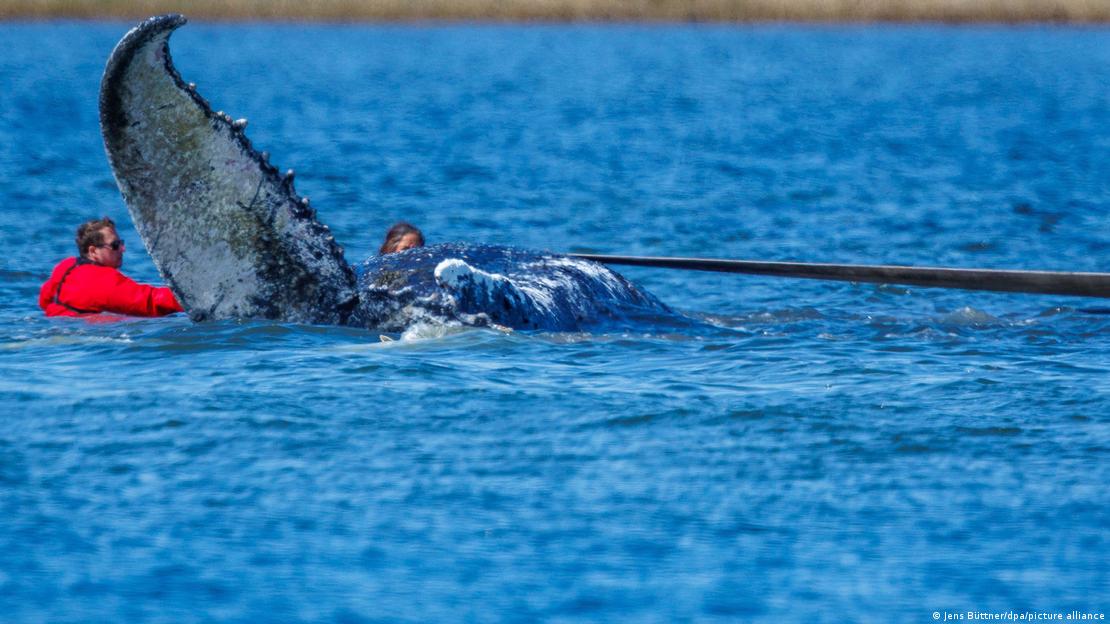
The whale, nicknamed 'Timmy' by Germany media, was towed from the shallows of the island of German island of Poel to the barge through a specially dredged channel on Tuesday.
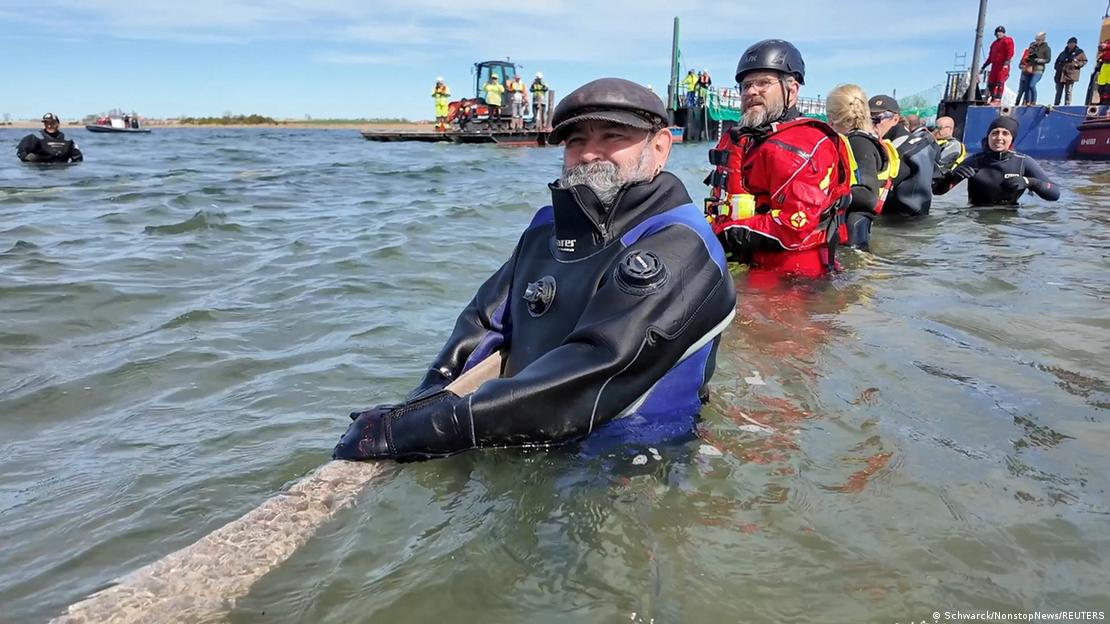
Rescuers then pulled the whale onto the specially converted freight barge using straps.
Rescuers guided Timmy from shallow waters through a specially dug channel
Image: Jens Büttner/dpa/picture alliance
"I'm truly relieved," Backhaus on Poel.
"I was even on the verge of jumping into the water to help him over the last few meters."
Rescuers pull Timmy the humpback (not visible) into the barge using straps
Image: Schwarck/NonstopNews/REUTERS
The young humpback was first spotted swimming near Germany's Baltic Coast on March 3, far from its natural habitat in the Atlantic Ocean.
Timmy's health deteriorated as the juvenile whale, thought to be between four and six years old, became repeatedly stranded in shallow waters.
The idea to coax the whale onto a barge and tow it to the North Sea was hatched after their initial attempt to save the whale with inflatable cushions and pontoons was unsuccessful. Whale rescue attempt sparks heated debate
Some scientists warned that this latest attempt may be too much for the animal.
Some scientists have criticized this latest rescue attempt saying it will cause stress to the already sick whale
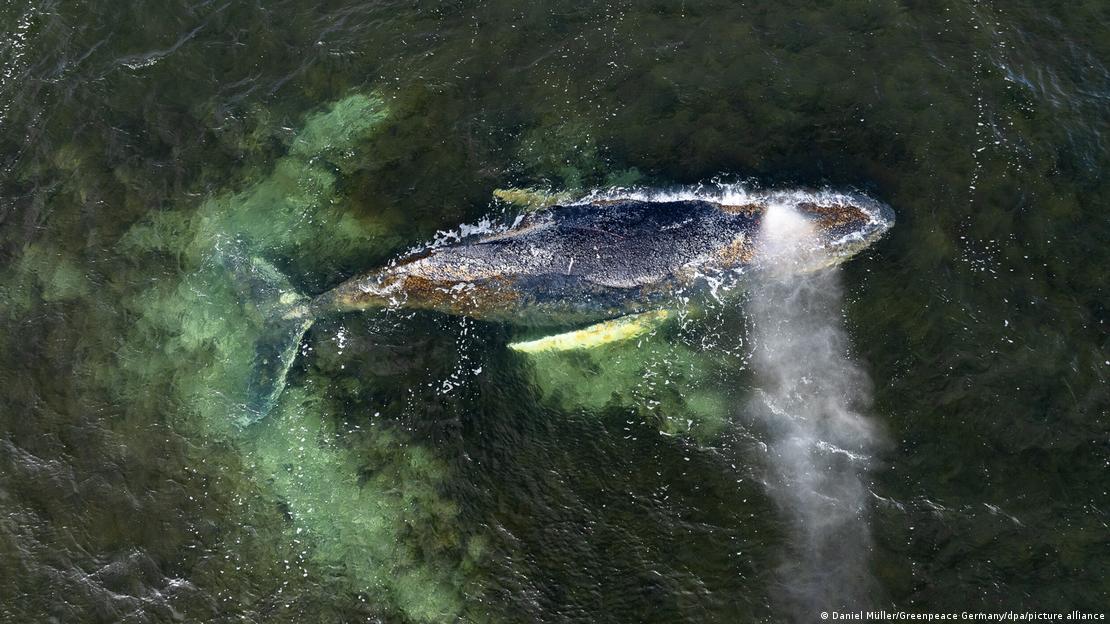
Thilo Maack, a marine biologist at Greenpeace, told the Associated Press earlier this month that efforts to save Timmy have caused the animal severe stress.
"I believe the whale will die very soon now," he said. "And I would also like to raise the question: What is actually so bad about that? Animals live, animals die. This animal is really, really very, very, very sick."
Whale specialists say Timmy the humpback's chance of survival are small
Image: Daniel Müller/Greenpeace Germany/dpa/picture alliance
The International Whaling Commission called the rescue "inadvisable."
It said the whale "appeared to be severely compromised" and "unlikely to survive."
The rescue initiative is being privately financed by two German multimillionaires.
Edited by: Zac Crellin Kate Hairsine Reporter and senior editor





 .
. .
.