Story by Kathryn Emerson - BBC Radio Gloucestershire
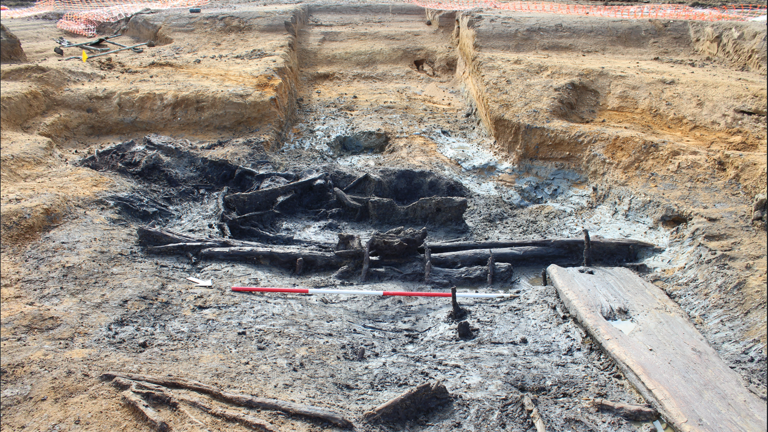
The remains of the 3,500-year-old watering hole were uncovered by archaeologists© Cotswold Archaeology
What first appeared to be bits of wood in the ground has now been revealed to be a rare glimpse into life during the middle Bronze Age.
Archaeologists discovered the remarkably well-preserved timber structure, built more than 3,500 years ago for collecting water, near Gloucester.
Paolo Guarino, a post-excavation manager with Cotswold Archaeology, said the discovery stood out due to the rare preservation of organic material.
"It's not quite that often that we find wood," he explained. "Water-logged conditions are some of the best for the preservation of organic matter like timber."

Paolo Guarino is part of the team that has been analysing the discovery© BBC
The discovery was made during a routine archaeological excavation carried out ahead of a proposed housing development, just south of Gloucester, in an area where Roman and Anglo-Saxon finds have also been made.
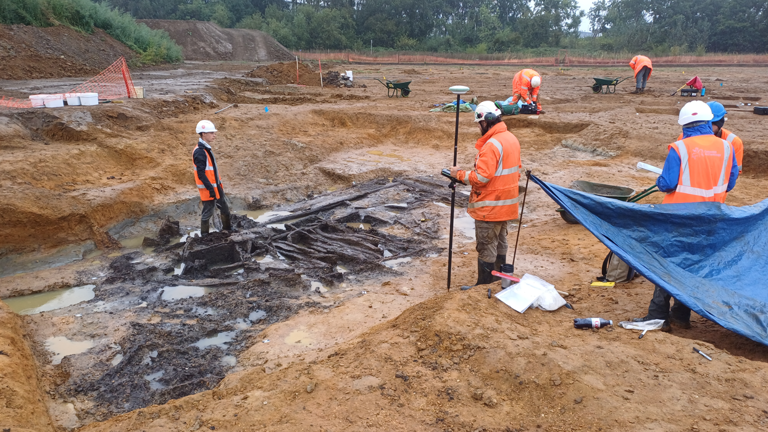
Archaeologists working across multiple digs at a development site near Gloucester© Cotswold Archaeology
Archaeologists identified the well has an upper platform made of "planks and roundwood", which connects to a log ladde descending into a lower chamber.
"One of the things we do wonder is why we have such a feature in an area that is now rich in streams and rivers," added Guarino.
"We know from pollen analysis that during the Middle Bronze Age there was a period of weather-warming. The fact we're finding more of these water holes suggests communities were digging them to access water near their settlements."
He added it is perhaps ironic that high water levels over time are what likely contributed to the well's preservation.
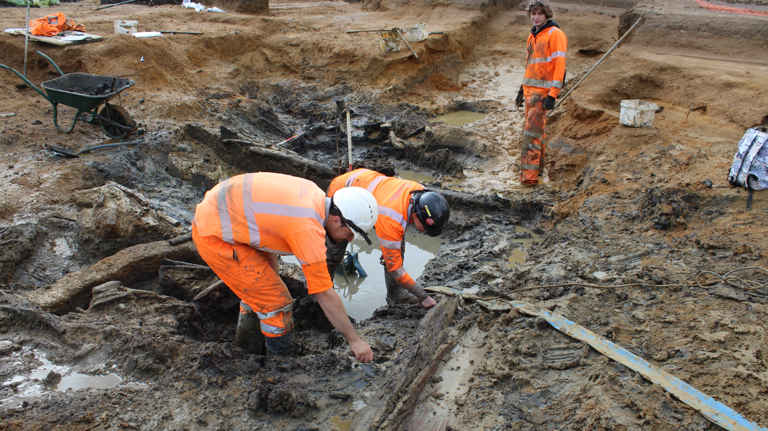
Archaeologists digging deeper into the well and discovering layered platforms© Cotswold Archaeology
Excavation work and analysis has now been completed, and the findings will be presented to developers and local councillors.
The results could lead to further archaeological investigations across a wider area.
Meanwhile the preserved timbers are being analysed by specialists, with some selected for conservation.

No comments:
Post a Comment