Monday, June 01, 2026

 Why does Trump want to transfer Cold War-era plutonium to nuclear start-ups?


The Trump administration has announced that it has selected several nuclear start-ups to participate in a project that would allow them to use plutonium stockpiles inherited from the Cold War. This plan has alarmed nuclear non-proliferation specialists.


Issued on: 30/05/2026 
FRANCE24
By: Sébastian SEIBT


File photo of a billboard of the Los Alamos Study Group taking aim at the US government's plans to ramp up production of plutonium cores taken near Bernalillo, New Mexico on February 17, 2021. © Susan Montoya Bryan, AP

Cold War-era nuclear technology is making a major comeback in the US. The Trump administration has selected several nuclear start-ups that could be granted the right to tap into stocks of military-grade plutonium that were produced until the early 1990s for use in nuclear weapons. This plutonium will then be repurposed as fuel to power small modular reactors.

Five companies, including the Franco-Italian small nuclear reactor specialist Newcleo, will enter into “advanced negotiations” with US authorities to use a portion of the 99 tons of plutonium that the US stores at several highly secure sites.

The selected start-ups will have to prove that they can safely handle and transport the highly unstable radioactive material, which could be used to develop dozens of new nuclear weapons.

Bulky plutonium stockpiles

In May 2025, President Donald Trump put the plutonium issue back on the table – much to the dismay of nuclear non-proliferation experts.

The US has struggled to find a solution for disposing of these stockpiles for decades. “Storing them costs money. We have to ensure they are kept secure and that the plutonium containers do not corrode. These are expenses for stockpiles that the United States doesn’t want anyway, since it no longer needs them for its nuclear arsenal,” explained Noah Mayhew, a non-proliferation and nuclear governance specialist at the Vienna Center for Disarmament and Non-Proliferation (VCDNP).

At the end of the Cold War, the US and Russia tried to find a way to make use of this plutonium by turning it into a source of energy. It did not work, and the plan was abandoned during Barack Obama’s second term. When Joe Biden came to the White House, he wanted to safely bury the stockpiles in New Mexico. The project, however, stalled because it was too expensive and complicated to implement during his term.

Trump’s return to the White House marked a 180-degree turn on the issue: Why not involve the private sector to find a solution for the plutonium that the government has been desperately trying to get rid of?

The start-up route seemed particularly promising to the new administration since Trump has an ambitious plan for nuclear renewal in the US.
American plutonium rather than Russian uranium?

Among the factors driving the move is AI’s voracious appetite for energy, according to some experts. “One of the main reasons for Donald Trump’s support of nuclear power is the US need to generate ever more electricity to meet the immense demands of the AI industry and its data centres,” explained Mayhew.

The nuclear start-ups selected by the White House all claim they have an urgent need for access to new fuel sources, particularly since the 2022 start of Russia’s full-scale invasion of Ukraine. “There is a geopolitical element to this story: indeed, the main supplier of enriched uranium, used as an energy source for these reactors, was Russia,” noted Chris Spedding from the University of Leicester’s Leverhulme Centre for Humanity in Space.

“The United States now wants to produce more electricity [through nuclear power] without having to buy enriched uranium from Russia. But at what cost?” asked Moritz Kütt, a physicist at the University of Hamburg and founder of the Hamburg Nuclear Disarmament Laboratory.

For Donald Trump, it’s time to “Make Plutonium Great Again". Except that “plutonium is one of the most toxic substances ever created, far more so than uranium. Inhaling even a tiny amount is enough to put you at risk of developing lung cancer,” noted Mycle Schneider, coordinator, editor and publisher of the World Nuclear Industry Status Report (WNISR).

Experts are sceptical of the idea of letting start-ups handle such substances. “It’s extremely difficult to handle, and very strict protocols will be needed to oversee this project,” said Spedding.

Another major proliferation risk, Kütt warns, is that obtaining separated plutonium for weapons is a much easier process than having to enrich uranium. It also doesn’t take much to create a bomb. “While the exact amount of plutonium needed to make a nuclear explosive is classified information, we can say that a mass the size of a melon is sufficient,” explained Schneider.
Proliferation risk

The plutonium stocks right now remain stationary and are stored in highly secure facilities, “but if we allow private companies access to it, we will automatically increase the number of transport routes and the number of people handling it, which will heighten the risk of it being lost or stolen,” warned Spedding.

International organisations such as the International Atomic Energy Agency (IAEA) might be able to help make the process more secure. But beyond security concerns, “the signal sent by the United States is really not a good one,” warned Mayhew. When it comes to nuclear disarmament, “selling plutonium that can be used to make weapons to private companies does not send the best message", he noted.

Spedding concurs. “Other countries might think that if the United States is using plutonium, why shouldn’t they do the same?” he explained.

The argument from start-ups seeking quick access to plutonium as an alternative to enriched uranium from Russia also fails to convince several non-proliferation experts. “It’s not like at gas stations, where you can freely choose the type of fuel for reactors,” noted Kütt. Converting plutonium into an energy source is also very costly and time-consuming. “Producing the very first kilowatt-hour from plutonium would take years, if not decades,” he asserted.

The Trump-style plan to “unlock plutonium” for nuclear start-ups appears poorly conceived and hastily put together, many experts warn.

Then there’s also the issue of a potential conflict of interest. In September 2025, Democratic Senator Edward Markey sent a letter to the US president saying he was concerned that US Energy Secretary Chris Wright is working in the interest of nuclear power company Oklo, of which he used to be a board member before resigning to join the Trump administration.

“I am concerned that your Administration is moving forward with plans to transfer plutonium to Oklo and allow it to build a reprocessing plant not because these proposals make sense for the United States, but because Oklo stands to benefit financially and Secretary Wright is acting in his former company’s interest,” wrote Markey.

This raises the question of whether the entire plan is primarily a major PR stunt for these start-ups, which will then be able to raise funds more easily from investors impressed by the White House’s official backing.

This article has been translated from the original in French.


Spent Nuclear Fuel Could Be America's Answer to Russia's Uranium Grip

  • BLSK Energy has signed a Cooperative Research and Development Agreement with Argonne National Laboratory to commercialize pyroprocessing, a high-temperature method capable of extracting reusable fuel from nuclear waste.
  • The U.S. holds approximately 95,000 tonnes of spent nuclear fuel -- a costly liability that pyroprocessing could turn into a low-cost, carbon-free energy source for advanced fast reactors.
  • BLSK aims to bring a pilot plant online by 2034 as the Trump administration pushes to reduce American dependence on Russian-controlled uranium supply chains.

Nuclear fuel is becoming a geopolitical battleground as the world increasingly turns to nuclear energy to contend with skyrocketing energy demand projections. The combination of an oil-based energy crisis emanating out of the Strait of Hormuz, the enormous and ballooning energy needs of artificial intelligence, and the urgent imperative of decarbonization is garnering a renewed interest in nuclear energy as a carbon-free, efficient, and round-the-clock power source.

Moreover, nuclear energy can be produced pretty much anywhere, making it a strategic option for energy independence and autonomy. But the production of nuclear fuel is tied up in a small number of supply chains, many of which are controlled by Russia. And global prices for uranium are rising quickly thanks to increased international demand. The World Nuclear Association projects that global uranium demand will increase 28 percent by 2030 and nearly double by 2040, causing increased competition for nuclear fuel in coming years. Homeshoring and nearshoring nuclear fuel supply chains has therefore become a paramount energy security interest for many nuclear-capable countries.

As the West regains an interest in nuclear energy, however, it may be too late for Europe and the United States to get a foothold in key uranium markets. "Russian and Chinese players have been very keen to secure access to resources in central Asia and Africa, creating a very aggressive competitive environment," Benjamin Godwin at Prism Strategic Intelligence told the Financial Times last year.

The United States is taking several simultaneous approaches to solving this issue, as the Trump administration aims to reestablish the U.S. as the global leader in nuclear energy. The country sits atop massive natural uranium deposits, and could one day become a major producer of nuclear fuel. However, building up those supply chains will take a lot of time, and increased nuclear fuel demand won’t wait. In the interim, there is another major source of uranium supplies that is already in the country’s possession: spent nuclear fuel.

The current administration has invested aggressively into research for recovering usable uranium from discarded nuclear fuel, kept in temporary storage facilities across the nation while they await the development of permanent nuclear waste sites. “Used nuclear fuel is an incredible untapped resource in the United States,” Assistant Secretary for Nuclear Energy Ted Garrish was recently quoted by World Nuclear News. “The Trump Administration is taking a common-sense approach to making sure we’re using our resources in the most efficient ways possible to secure American energy independence and fuel our economic growth.”

It seems that that investment is already paying off. This month, New York-based nuclear startup BLSK Energy announced a Cooperative Research and Development Agreement (CRADA) with Argonne National Laboratory (ANL) in Illinois to commercialize a cutting-edge nuclear fuel recovery method based on pyroprocessing technology.

“Pyroprocessing (or pyrochemical processing) is a high-temperature metallurgical process that could enable the reuse of nuclear fuel,” explained Interesting Engineering in a recent report. “When used with fast reactors, it could extract up to 100 times more energy from uranium.”

BLSK Energy aims to bring a pilot plant online by 2034 that would be capable of extracting nuclear material suitable for advanced fast reactors from nuclear waste. “The path ahead is ambitious but achievable,” said BLSK Energy managing director and co-founder Bruce Landrey.

If successful, the technology has enormous potential to turn a major liability into an incredible asset. The United States has accumulated approximately 95,000 tonnes (104,000 tons) of spent nuclear fuel. That fuel is radioactive and poses a major challenge for storage and safe disposal, all of which comes at a serious cost to taxpayers. Recycling that fuel for an inexpensive and climate-friendly energy source is therefore a major win-win.

By Haley Zaremba for Oilprice.com


Britain’s Nuclear Renaissance Faces Mounting Cost Pressures

  • Sizewell C and Hinkley Point C are expected to play a major role in expanding Britain’s nuclear generation capacity and reducing dependence on fossil fuels.

  • Both projects have faced concerns over delays and rising costs, with Hinkley Point C’s estimated price nearly doubling from its original forecast.

  • The U.K. aims to increase nuclear capacity to 24 GW by 2050, supported by large-scale reactors and emerging small modular reactor technologies.

The United Kingdom is focused on diversifying its energy mix away from fossil fuels to boost energy security and support decarbonisation aims. This includes expanding its nuclear power capacity with the development of two large-scale nuclear plants - Sizewell C and Hinkley Point C, as well as developing small modular reactors (SMR). However, its nuclear ambitions have not quite gone to plan, following years of delays and rising construction costs.

Sizewell C in Suffolk, eastern England, received its planning approval in 2022, was greenlit in 2025, and is expected to be operational by around the late 2030s. Investment for the development comes from the government, EDF Energy, Centrica, La Caisse, and Amber Infrastructure Limited. The project is expected to create 17,000 jobs during peak construction, including 7,900 in Suffolk. Once operational, the nuclear plant will produce up to 3.2 GW of clean electricity to power up to 6 million homes.

The government expects the plant to cost around £38 million to develop and says it could provide around £2 billion a year in savings from the electricity system, compared to using other low-carbon technologies. However, Sir Geoffrey Clifton-Brown, the chair of the public accounts committee, which oversees the work of the National Audit Office (NAO), warned that “Sizewell C is a project of exceptional scale, complexity and significance for taxpayers… Experience from comparable nuclear projects in the UK and overseas highlights their vulnerability to delays and cost overruns.”

To date, the French nuclear firm EDF has invested £1.1 billion for a 12.5 percent stake in the project, while the U.K. government has invested £14.2 billion as the majority stakeholder. The NAO fears that if not properly managed, construction could run significantly over budget, as seen with other nuclear developments in recent years. This would make the break-even time much longer for consumers footing the construction costs through their taxes. 

The NAO has, therefore, urged the government to mitigate the risk by using “close monitoring, greater transparency to parliament, and by securing value for money from the significant public and private investment”.

Lessons for building Sizewell C come from the construction of EDF’s Hinkley Point C plant, the first nuclear plant to be developed in the U.K. in over a decade. Hinkley Point C was approved by the U.K. government in 2013 and was greenlit in 2016. It is expected to begin operations in 2030, a year later than originally planned.

The project has faced several delays and price increases, the most recent of which was announced by EDF in February, adding a projected £2.16 billion. The plant is now expected to cost around £35 billion in total, almost double the original £18 billion 2016 estimate. EDF’s CEO, Bernard Fontana, said the new forecasts were “more realistic” and said that the 2030 launch of operations was “within a range that has not changed” since 2024, when it said operations would start between 2029 and 2031.

Once operational, Hinkley Point C is expected to provide around 7 percent of Britain’s electricity demand. While EDF’s two U.K. nuclear projects could help diversify the country’s energy mix and reduce reliance on fossil fuels, critics worry that the development of the two plants will face further delays and come in significantly over budget. EDF’s only other nuclear project using the same reactor type, at Flamanville in France, became fully operational in December after a delay of over 12 years; meanwhile, costs soared from an initial estimate of £2.85 billion to over £11.4 billion.

In 2025, the U.K. was deemed the “most expensive place in the world” to build nuclear power plants in a government review. This was largely owing to “overly complex” bureaucracy around the sector. Nuclear Regulatory Taskforce said that “radical reset” of the rules around nuclear power could save Britain “tens of billions” in costs and reverse the industry’s “decline” in recent years. This suggests that the government must work to streamline bureaucratic processes without compromising safety and consider other cost-cutting options to avoid cost increases in nuclear development.

At the time, the Taskforce chair, John Fingleton, stated, “Our solutions are radical, but necessary. By simplifying regulation, we can maintain or enhance safety standards while finally delivering nuclear capacity safely, quickly, and affordably.”

In 2024, the U.K. government announced a target to increase the country’s nuclear power capacity fourfold, to 24 GW by 2050. This will be achieved through the development of Sizewell C and Hinkley Point C, as well as through the deployment of innovative small-scale nuclear technologies. This is an ambitious target, but through the development of a wide range of nuclear technologies, it could be achievable.

The U.K. government has already published an Advanced Nuclear Framework for the deployment of innovative nuclear projects. Now, it must ensure that its regulatory frameworks and energy policies align with its nuclear power targets and help facilitate nuclear energy development. 

By Felicity Bradstock for Oilprice.com

US will send only used nuclear submarines to Australia under amended AUKUS defence deal

NEVER BUY USED*, ALWAYS BUY  NEW


The United States will only send used nuclear-powered submarines to Australia as part of an agreement to "streamline" the AUKUS defence deal in a move branded on Sunday as a "cost-effective" by Defence Minister Richard Marles. Australia is expected to receive at least three so-called "Virginia-class" nuclear-powered submarines from the United States within 15 years.


Issued on: 31/05/2026 -
By: FRANCE 24

The US Navy's USS Minnesota (SSN-783), a Virginia-class fast attack submarine, sails in waters off the coast of Western Australia on March 16, 2025. © Colin Murty, AFP

Australia will only receive used nuclear-powered submarines from the United States as part of an agreement to "streamline" the AUKUS deal, with the move branded on Sunday as a "cost-effective" measure by Defence Minister Richard Marles.

The two nations – together with the third partner in their security pact, Britain – met at Singapore's Shangri-La Dialogue, which brings together top defence officials and experts from about 45 countries.

Under the 2021 AUKUS deal, Australia is expected to receive at least three so-called "Virginia-class" nuclear-powered submarines from the United States within 15 years.

Australia had been expecting to receive two used submarines and one new one, but the countries announced Saturday that all three will now be in-service vessels from the US Navy stock.


When asked why Canberra was now receiving only used equipment, Marles, who is also deputy prime minister, told reporters on Sunday it would be more cost-effective.

"In the context of a very complicated endeavour, we need to place a premium on simplicity," said Marles, who added that the submarines will also be the same model.

READ MOREWhy does Trump want to transfer Cold War-era plutonium to nuclear start-ups?

"I cannot overstate the significance of that, both in terms of the submariners who are operating them, but also the people who are working on them to sustain those submarines," Marles said.

"It is definitely cost-effective. And to be clear, this is a very expensive programme... and so we are trying to find every cost-effective option as we walk down this path."

In a joint statement on Saturday, Marles, US Defense Secretary Pete Hegseth, and the UK Secretary for Defence John Healey confirmed the tweak to the submarine agreement.

"The deputy prime minister and secretaries welcomed the proposed approach to streamline Australia's acquisition of Virginia-class submarines (VCS), simplifying supply chain management, operational and maintenance requirements, and maximising cost efficiencies," the statement said.

"This approach would enable Australia to acquire three in-service VCS in lieu of a mixture of new and in-service VCS variants."

The US Navy has 24 Virginia-class vessels but American shipyards are struggling to meet production targets set at two new boats each year.

In the United States, critics have questioned why Washington would sell nuclear-powered submarines to Australia without stocking its own military first.

The AUKUS submarine programme lies at the heart of Australia's defence strategy and could cost up to US$235 billion over 30 years, according to government forecasts.

(FRANCE 24 with AFP)


*CANADA BOUGHT USED SUBMARINES FROM THE UK AND SPENT MILLIONS AND DECADES  REPAIRING THEM TO BE SEA WORTHY
Hungary’s Magyar threatens constitutional amendment if Orban-appointed president refuses to resign


Hungarian Prime Minister Peter Magyar on Monday threatened legal action and said the government would use its two-thirds parliamentary majority to amend the constitution to ​force President Tamas Sulyok from office. Sulyok, who was appointed under former prime minister Viktor Orban, has refused to resign before his term ends in 2029.


Issued on: 01/06/2026 
By: FRANCE 24

File photo of Peter Magyar speaking to the media in Budapest, Hungary, taken on April 13, 2026. © Denes Erdos, AP

Hungarian Prime Minister Peter Magyar said on Monday his government would launch legal proceedings to dismiss President Tamas Sulyok, an appointee of the previous nationalist administration, ​if he ‌sticks by his refusal to resign.

Magyar's centre-right Tisza party ousted Viktor Orban as prime minister in an April election and pledged to remove several figures appointed by Orban to key public positions over the ‌past 16 years, including the largely ceremonial head of state.

Magyar has repeatedly ⁠called on Sulyok – elected in early 2024 by lawmakers from Orban's Fidesz party – to step down, accusing him of failing to represent national unity on major issues ​and of serving the interests of Orban and his government. Sulyok ‌has consistently refused to resign.

"I have told the president that if he maintains his stance and does not resign, I will inform ... Tisza's lawmakers about our legislative proposals today and we will immediately ‌start the necessary procedures," Magyar said after meeting Sulyok.

“Hungary does not belong to Tamas Sulyok, nor to Viktor Orban. It doesn't belong to a single party or political system," Magyar said. “The constitution states quite clearly that the president showcases the unity of the nation and guards the democratic functioning of the state.”

The legislative process would take about a month and would involve "removing all the puppets" ​who took part in "dismantling the rule of law and democracy" under Orban's rule, Magyar said.

He said the government would use its two-thirds parliamentary majority to amend the constitution to ​force Sulyok from office, though gave no further details.

Sulyok, a 70-year-old former lawyer, reiterated on ​Monday his refusal to step down.

"The constitutional crisis that will ​follow (the legal action promised by Magyar) is going to deepen the division in society and will harm the international reputation of Hungary's democracy," ​Sulyok wrote on his Facebook page.
'Unlawful ultimatum'

Magyar on Monday also accused Sulyok of failing to perform his duty on a number of issues, including failing to speak out when Orban made dehumanising statements about his political opponents and critics, or when the previous government passed legislation banning the LGBTQ+ Pride event.

“It is in Hungary’s interest that this institution – the office of the president – regain the prestige that has been eroded by its silence and inaction,” Magyar said.

The president in Hungary, though a largely figurehead role, can refer ⁠laws back ​to parliament for reconsideration or forward legislation to the Constitutional Court, potentially slowing or blocking Magyar’s reform agenda.

Orban's Fidesz party accused Magyar, 45, of issuing an "unlawful ultimatum", and said Sulyok was fulfilling his lawful mandate, which runs until 2029, and could not be removed from office.

Sulyok previously served as head of Hungary's top court, a post to ⁠which he was also elected by Fidesz in 2016.

(FRANCE 24 with Reuters and AP)
REST IN POWER

French Resistance figure, philosopher Edgar Morin dies at 104

France's favourite intellectual Edgar Morin, a World War II Resistance member who dedicated his life to promoting critical thinking and combatting intolerance, has died at the age of 104, his wife said Saturday.

Issued on: 30/05/2026 - RFI

French sociologists and philosophers Edgar Morin smiles during an event on the occasion of his 100th birthday at the UNESCO headquarters in Paris, Friday, 2 July, 2021.
 AP - Michel Euler


"He is the grandfather of all French people and the memory of the last (20th) century," the left-wing Liberation newspaper wrote in a 2021 profile of the dapper philosopher who had a fondness for hats and silk cravats.

The son of secular Jewish immigrants, he trained as a sociologist but preferred to think of himself as a "humanologist" who fused elements of philosophy, psychology, ethnography and biology to try to understand the nature of humanity.

Outside of France he was best known as the inventor of cinema verité for his 1961 documentary with film-maker Jean Rouch Chronique d'un ete (Chronicle of a Summer) about the lives of ordinary young Parisians.

The unscripted discussions about class, race, colonialism and other weighty topics elicited by the simple question "Are you happy?" revolutionised documentary-making.

"It's one of the greatest, most audacious, most original documentaries ever made," a rapt New Yorker magazine declared in 2013.

For the French, Morin was above all an intellectual guide, who developed a holistic transdisciplinary approach to the big questions of our time.
War is a lesson in hatred

"What does it mean to be human? What is globalisation? What is life? These questions require us to connect knowledge that is currently scattered across fields of research," he told TV5 Monde channel in 2020, explaining his approach.

Well past his hundredth birthday, he continued to weigh in on current events, regaling his 220,000 followers on social media platform X with his thoughts on issues ranging from the 2022 heatwaves when he posted "Paris, 6pm, 40 degrees Celsius: Rise up, longed-for storm!" to the war in Ukraine when he wrote "war is a lesson in hatred".

"Until his final days, Edgar Morin remained attentive to the world, to others, and to the great human issues that nourished his thinking," his wife, Sabah Abouessalam Morin, said in a statement sent to AFP on Saturday.

French philospher Edgar Morin publishes novel at the the age of 102

"Today, the void he leaves behind is immense. But his courage, his loyalty to people and to ideas, his moral rigour and his hope continue to accompany us."

Morin was born Edgar Nahoum on 8 July, 1921 in Paris to Jewish parents who had immigrated from Greece. He always resisted being defined by his Jewishness, stressing that he was also "French, Mediterranean and a citizen of the world".

When he was 10, his mother, whom he adored, died – an event that his family tried to hide from her only child for weeks and which he described decades later as his "personal Hiroshima".
Free thinker

He took refuge in his studies and later in left-wing activism, joining the Communist Party.

After initially espousing pacifist resistance to the Nazis – one of two major errors of judgement that he later conceded, along with his initial post-war support for Soviet leader Joseph Stalin – he joined the Resistance under the pseudonym Edgar Morin.

With degrees in history, geography and law, he led the French military government's propaganda efforts in post-war Germany and later worked as a journalist before joining France's national research institute CNRS.

Ever the free thinker, he fell foul of his Communist comrades for writing in a newspaper seen as pro-American.

Morin was thrown out of the party, an event that instilled in him a deep wariness of indoctrination, which he set out in a book, "Autocritique", emphasising the need for people to constantly question their views.

But he remained a highly influential voice on the left.


Prolific writer

A prolific writer – he penned dozens of books, his last published in 2025 – his warnings about the climate emergency, unbridled capitalism and rising nationalism grew more urgent in his later years.

He was also sharply critical of Israel's treatment of Palestinians, declaring in a 2002 article that "The Jews of Israel, descendants of an apartheid named the ghetto, ghettoise the Palestinians" and that "the Jews who were humiliated, scorned and persecuted humiliate, scorn and persecute the Palestinians".

He was convicted of antisemitism over the article but cleared by France's highest appeal court in an affair that saw him accused by Jewish extremists of being a "self-hating Jew" but won him widespread sympathy among fellow academics.

In an interview with French radio in 2021 he lamented the "absence of awareness that we are marching towards the abyss" but said he was "not fatalistic".

(with AFP)
LGBTQ RIGHTS ARE HUMAN RIGHTS

Ghana parliament approves 'anti-LGBTQ' law, awaiting president's signature


Ghana's parliament on Friday approved one of the most repressive anti-LGBTQ laws in Africa, which is now awaiting ratification by President John Mahama.

HUMAN RIGHTS TRUMP RELIGIOUS RITES


Issued on: 30/05/2026 - 

Ghanaian Member of Parliament and sponsor of the Human Sexual Rights and Family Values Bill, Reverend John Ntim Fordjour, addresses the press on the day lawmakers vote on the bill, in Accra, Ghana, 29 May 2026. © Francis Kokoroko / Reuters

The law on sexual rights and family values imposes a penalty of up to three years' jail for people who engage in homosexual relations, and between three and five years for the promotion, sponsorship or intentional support of LGBT+ activities.

The bill was passed unanimously by parliament in 2024 but former president Nana Akufo-Addo did not sign it.

Under Ghana's constitution, draft legislation not signed by the president before the end of a parliamentary term automatically lapses and must be passed again by the new parliament.

The law approved Friday retains the previous bill's core provisions but includes exemptions

For example, lawyers can still represent LGBTQ clients without being penalised.

Similarly, the media will be able to address these issues and healthcare professionals will be able to provide care or psychological support to LGBT+ people without fear of reprisal.

One-third of world still criminalises consensual same-sex acts: report

Same-sex relationships are prohibited in Ghana – a conservative, deeply religious country with a Christian majority – by a law dating from the British colonial era, but there have been no prosecutions on these grounds to date.

Human rights groups and sever

al international organisations have condemned the bill.

In February 2025, Mahama said: "I believe in the principles and values that only two genders exist -- man and woman. And that marriage is between a man and a woman."

Around 60 countries in the world ban same-sex relations, about half of them are in Africa, according to the International Lesbian, Gay, Bisexual, Trans and Intersex Association (ILGA).

(with AFP)


Turkey enters political unknown after police raid opposition party headquarters

Issued on: 30/05/2026
RFI

Turkey's main opposition CHP was thrown into fresh disarray Saturday as court-installed leader Kemal Kilicdaroglu made his first visit to party headquarters since a controversial court ruling scrapped a 2023 party primary. Ozgur Ozel, the CHP leader ousted by the decision, called for an urgent congress, telling thousands at an Ankara rally that the party "cannot be run by an appointed leader".


Supporters of Turkish opposition party CHP protest in Istanbul, 24 May. © AP/Khalil Hamra

The 21 May court ruling has plunged the CHP, Turkey's oldest political party, into a crisis.

Three days after the order, riot police forced their way into the party's headquarters in Ankara, armed with pepper spray and batons, to remove CHP leader Ozgur Ozel – a key rival to President Recep Tayyip Erdogan.

The court said Ozel's 2023 election as party leader was marred by irregularities, and restored the former leader Kemal Kilicdaroglu.

In Turkey, elections are overseen by the Supreme Election Council, which certified Ozel’s win, and its rulings are constitutionally final.

It is just the latest move against the CHP, which scored a major victory over Erdogan's ruling AKP in the 2024 local elections and has since gained ground in the polls.
Party primary

Kilicdaroglu visited that party headquarters on Saturday to mark the final day of Eid, with a photo shared by his team on social media showing him seated at his desk with a copy of the party's bylaws placed prominently in front of him.

"I will bring a ballot box for party congress before you as soon as possible," Kilicdaroglu said in an address, without providing a precise date.

Ozel renewed his challenge to Kilicdaroglu to contest a party primary, saying he was willing to run "with whatever delegates he wants".

With crowds chanting "Traitor Kemal!", Ozel said the party congress must be held "immediately", urging Kilicdaroglu to "hold a congress at once, with whichever delegates you wish. Give the party an elected leader without delay. The CHP does not accept appointments."

He also demanded a primary election, saying that he would give up the party leadership if he received less than 85 percent support.

Turkey expert Gonul Tol, a senior fellow at United States think tank, the Middle East Institute told RFI that Kilicdaroglu is "a convenient opponent for [President Recep Tayyip] Erdogan, because he "lost every major election during his 13 years at the helm of the party."

Turkey riot police use tear gas to take opposition party HQ


'A broader campaign'

Ozel, 51, was elected leader at a party convention after 77-year-old Kilicdaroglu lost the 2023 presidential election. Ozel has revitalized the CHP, which now leads many opinion polls. Tol suggests Ozel's removal is part of a wider campaign.

"This is the latest step in Erdogan's broader campaign to weaken the opposition," said Tol.

“Last March, in another unprecedented move, authorities jailed Istanbul Mayor Ekrem İmamoglu – he is Erdogan's top political rival. And since then, the government has systematically targeted CHP mayors through court cases and corruption investigations,” she added.

Crackdown on Turkish opposition intensifies, with further arrests of mayors

Addressing protesters, Ozel vowed to flood the streets and squares in defiance of what he calls a judicial coup, while also appealing his removal.

Kilicdaroglu, meanwhile, is promising to restore order to the party and cleanse it of “corrupting forces”.

The government insists the judiciary is independent and denies any political agenda.

Erdogan has remained silent on the issue. Still, some observers see the opposition’s upheaval as part of Erdogan’s grander vision for Turkey’s future.

Political commentator Sezin Oney from independent Turkish media outlet Politikyol notes that Erdogan is eager to shape the post-Erdogan era.

"He wants to design the succession, most probably to have a close family member replacing him. So he wants to shape the whole [political] terrain accordingly."
'Opposition psyche'

Erdogan has ruled Turkish politics for almost 25 years, buoyed by both his political acumen and a fragmented opposition.

But in the past year, Ozel’s energetic leadership has powered over 100 mass rallies nationwide, even in Erdogan’s strongholds, as Ozel taps into rising public frustration over crackdowns on dissent and skyrocketing food prices.

The removal of Ozel as CHP leader is seen as a pivotal moment for Turkish democracy.

“Turkey is moving closer to a Russia-style system where the leader decides who the opposition will be and ensures no real surprise can emerge at the ballot box,” predicts Tol. “Why is Erdogan taking such a massive political and economic risk? Erdogan knows he cannot win genuinely free and fair elections anymore."

With Erdogan enjoying close ties with US President Donald Trump and the European Union increasingly looking to Turkey as a security partner, under the looming Russian threat, international reaction has been muted over the latest move against the opposition.

Turkey steps up as Europe's indispensable and uncomfortable defence partner

Speaking to tens of thousands of people at a rally in Izmir on Tuesday, Ozel vowed to escalate protests. Rumours are swirling that he could launch a new party.

One opinion poll found only 11 percent of respondents approved of the removal of Ozel. Yet the legal noose appears to be tightening, with reports suggesting his parliamentary immunity could be stripped and that he may soon join other top party members behind bars.

“We don't have the opposition in political representation form, but the people are there. The opposition psyche of the people is still there. So you cannot absolutely nullify the people or their political views,” said Oney.

“We don't know what's going to come out of it. We can make predictions, but it's something totally novel and new in Turkey, and Turkish history as well."

By: Dorian Jones

Israeli entities to be added to UN sexual violence list over alleged Palestinian detainee abuse

This year's United Nations report on sexual violence in conflict zones will include Israeli entities in an annex of entities responsible for or suspected of carrying conflict-related sexual violence, Israeli officials confirmed Thursday in comments slamming the decision. Last year's report said it had received "credible information" of sexual violence carried out by security forces in Israeli detention centres.


Issued on: 28/05/2026 - 
By: FRANCE 24

United Nations Secretary General Antonio Guterres listens during a UN Security Council meeting on the situation in the Middle East, and the Israel-Hamas war at the United Nations headquarters on November 29, 2023 in New York City. © Andrea Renault, AFP

Israeli entities are set to be added to a United Nations list of parties suspected of, or responsible for, sexual violence in armed conflict zones, Israel's ambassador to the UN Danny Danon said Thursday in comments slamming the decision.

Danon said that Israel is breaking all contact with UN Secretary-General Antonio Guterres, saying it was "outrageous" that the country is being blacklisted over alleged sexual violence.

"We are done with this secretary-general," Ambassador Danny Danon said in a video posted on X.

"The decision to blacklist Israel and accuse us of using sexual violence as a weapon of war is an outrageous decision," he said, referring to an upcoming report from Guterres' office.

WATCH MOREWe have documented cases of sexual violence in Israeli prisons, Palestinian activist says

The UN secretary-general's annual report on conflict-related sexual violence is customarily presented to relevant states ahead of publication.

Last August, the report warned that Israel could be added to the list, which also includes Palestinian militant group Hamas.

At the time, the UN cited "credible information" regarding sexual violence allegedly committed by Israeli security forces against Palestinian detainees in prisons and other detention centres, and saying UN inspectors had been denied access to the facilities.

Palestinians have for years reported what they describe as widespread physical and sexual violence against both men and women in Israeli detention centres.

A New York Times investigation published in early May spoke with 14 Palestinian men and women who alleged they had been sexually assaulted by Israeli settlers or members of the security forces.

The Israeli mission to the UN said in a statement it will have no contact with the secretary-general's office as long as Guterres serves as head of the organisation.

"The secretary-general and his team continue to spread lies against Israel," Danon claimed. "To put us and Hamas terrorists on the same list, that's unacceptable."

Guterres's spokesman said they were aware of Danon's remarks.

"For our part, the secretary-general's door remains open," Stephane Dujarric said.

Relations between the UN and Israel are fraught and have reached an all-time low since Israel launched its devastating war on Gaza following the Hamas-led terror attacks on October 7, 2023.

Israeli authorities have reproached Guterres and other UN officials for criticising its bombardment and ground invasion of the Palestinian territory, which health officials say have killed more than 72,000 Palestinians, including more than 900 during the US-backed ceasefire.

The UN chief was declared "personal non grata" in Israel in 2024.

(FRANCE 24 with AFP)
INTERVIEW

'Believing in peace is not naive' say Israeli and Palestinian 'brothers'


Palestinian peace activist Aziz Abu Sarah lost his brother during the First Intifada, while Israeli campaigner Maoz Inon's parents were killed in the Hamas attacks of 7 October, 2023. They could have become enemies, but instead they have chosen brotherhood, working together to push for peace in the region. They spoke to RFI about their new book, in which they advocate for reconciliation as the only way to end the cycle of violence.


Issued on: 29/05/2026 - RFI

Aziz Abu Sarah (left) and Maoz Inon have become "brothers" in the quest for peace between Israelis and Palestinians. © Anthony Ravera / RFI

The 7 October attacks on Israel by Hamas militants killed 1,200 people, mainly civilians, while 251 others were taken hostage. Israel's counter-offensive on Gaza has killed more than 70,000 people in the territory, according to its Health Ministry.

While a ceasefire came into effect in October 2025, there is still no durable Israel-Palestine peace deal, with both sides accusing the other of breaking the truce.

Meanwhile, Israeli settlers, backed by the country's army, continue to expand their occupation of Palestinian land in the West Bank, in defiance of international law.

Abu Sarah and Maoz Inon co-lead the organisation InterAct International. Their book The Future is Peace: A Shared Journey across the Holy Land, explores "how compassion and unity can pull humanity back from the precipice of blind hatred".


They spoke with RFI about their friendship, and their determination to push the international community to back peace.

RFI: In your book The Future is Peace, you write: “In the world we were born into, friendship between Israelis and Palestinians seems inconceivable. But the pain of loss did not turn us into enemies. On the contrary, it brought us closer together.”

You became friends in the aftermath of the 7 October attacks. Maoz, how did that happen?

Maoz Inon: I met Aziz for about 10 minutes in 2014. We were only connected on Facebook after that.

Then, after 7 October, Aziz reached out to offer his condolences and told me he stood with me and my family during that terrible moment. It genuinely felt like someone extending a hand to save me from drowning in an ocean of grief.

Over the past two years, we have walked this path together and written this book together. I lost my parents on 7 October. I lost childhood friends and people I had known my whole life. But I gained Aziz as a brother.

RFI: Aziz, why did you feel the need to contact Maoz after 7 October, when he was really just an acquaintance at that point?

Aziz Abu Sarah: Because I understand what loss means. I lost my brother when I was 10 years old, and there is nothing more painful, nothing that creates more anger, than losing a member of your family.

At that very dark moment, there was very little empathy around. I also knew what was going to happen in Gaza and the destruction that was coming. I felt it was important to reach out to Maoz, to share my sympathy and let him know I felt his pain.

He responded with the same empathy. He said he was mourning for the children of Gaza as well. If there were a little more empathy like that in the world today, I don’t think we would see so many wars.

RFI: So you now see each other as brothers?

Aziz Abu Sarah: Absolutely. We see each other as brothers and we love each other.

We didn’t start out calling each other brothers. It was Pope Francis who used that word when we met him at the Arena of Peace gathering in 2024. We told him we wanted to share our grief in order to create dialogue and bring peace to our peoples in the Holy Land.

He said: “I support you, Brother Maoz and Brother Aziz, in bringing peace to this land.”

Maoz Inon: And because it was a Catholic blessing, there’s no divorce possible now.
Pope Francis was the first to refer to Maoz Inon and Aziz Sarah as brothers, at the Arena of Peace meeting in Verona on 18 May, 2024. AP - Gregorio Borgia

RFI: To reach that point, you both had to reject the idea of revenge. Aziz, how did you make that journey?

Aziz Abu Sarah: It took time. It took me eight years. I was 10 when I lost my brother, Tayseer.

What changed me was learning Hebrew and meeting Israelis who were not settlers or soldiers. One of my teachers treated me kindly and as an equal. That made me realise the divide is not simply between Israelis and Palestinians.

The real divide is between those who want equality, justice and peace – and those who do not.

RFI: Maoz, is it easy to let go of revenge?

Maoz Inon: In the book, we draw on stories from the Bible, from Greek mythology, from ancient history, from other conflict zones and from our own lives. Again and again, we see revenge transformed into reconciliation.

Two days after our parents were killed, my younger brother asked my sisters and me to reject revenge completely and send a clear message that we did not want vengeance in our parents’ name.

We knew revenge would not bring them back. It would only lead to more violence and more bloodshed. To honour our parents properly, we had to continue their legacy and choose another path – a path of peace and reconciliation.

Israeli society has 'allowed trauma to take over' and 'cares only about revenge'

RFI: When you say that peace is our future, some people will see that as unrealistic given the reality in the Middle East today. What makes you both believe that peace is possible?

Aziz Abu Sarah: The only naïve people are those who still believe in war.

Since I was born, there have been at least 15 or 20 wars in the region – and I’m not that old. Have those wars made the Middle East better? No. The situation is far worse today because of them.

Believing in peace is not naïve. Believing in endless war is naïve.

I have seen what war does. The only rational thing is to believe that peace is the future. Every other option means accepting more death and accepting that the future will be just as terrible as the present – perhaps even worse.

RFI: Is peace the only possible outcome?

Maoz Inon: Yes. That is exactly what we show in the book.

We have studied conflicts around the world – in Europe, Rwanda, South Africa and Northern Ireland – and eventually all conflicts come to an end. History shows us that.

The Israeli-Palestinian conflict will also end one day. That's not simply wishful thinking. The question is: why not now? What can we do to bring this conflict to an end today?

RFI: It takes courage to choose peace. Do you see any peacemakers among today’s Israeli and Palestinian leaders?

Maoz Inon: Before Egyptian president Anwar Sadat visited Israel in 1977, Menachem Begin was not seen as a man of peace. He had led the Irgun militia during the British Mandate and spent most of his political life opposing reconciliation – whether with Germany or with Arab countries.

Two weeks before Sadat’s visit, almost nobody in Israel believed peace was possible.

But under pressure from the international community, Sadat came to Israel. Israeli children welcomed him waving both Egyptian and Israeli flags.

And Begin – a former militant – said: “We can avoid another war, but we cannot avoid peace. Peace will come.”

[Editor's note: Sadat, Begin and United States president Jimmy Carter signed the Camp David peace accords on 17 September, 1978 – framework agreements that led to the 1979 Egypt-Israel peace treaty, bringing decades of hostilities between Jerusalem and Cairo to an end.]

That shows people can change, even those associated with violence and war. But we need the international community. We need France and the European Union.

Europe seeks role in Gaza as pressure grows on Israel over fragile ceasefire

RFI: Does that mean the international community must stop being a spectator to repeated wars in the region?

Aziz Abu Sarah: Yes. The international community has to act, not just make empty statements.

Countries cannot claim to oppose war while supplying weapons and profiting from conflict.

That's one reason why we translated this book into French and English – because we are reaching out to the international community. Israelis and Palestinians cannot do this alone.

We need people to pressure their governments to do two things: first, support peace efforts with concrete action and funding, as the European Union did in Northern Ireland. And second, impose sanctions on those promoting violence and bloodshed – whether they are political leaders, generals, Hamas or members of the Israeli government.

If you promote death, you should not be treated as an ally.

This interview was adapted from an interview by RFI's Arnaud Pontus and has been edited for clarity.


ZIONIST IMPERIALISM

Frustration, anger as residents rush to flee Beirut's southern suburbs

01.06.2026, 

Photo: Marwan Naamani/dpa

By Weedah Hamzah, dpa

Lebanese Army troops were deployed on Monday at the entrances to Beirut's southern suburbs to organize traffic as residents rushed to leave the area amid fears of possible Israeli strikes.

Earlier Israeli Prime Minister Benjamin Netanyahu announced a decision to strike Beirut's southern suburbs, widely known as Dahiyeh, prompting anxiety among residents and disruptions to daily life.

"We are rushing and bringing kids from schools at the outskirts to leave immediately," Imad, a resident of the Bir al-Abed neighbourhood, told dpa. He expressed frustration at the situation, saying residents could no longer endure repeated escalations. He also lashed out at Hezbollah Secretary General Naeem Qassem. 

"The leaders of Hezbollah are hiding, but the people are paying the price."

Several schools in Beirut reportedly asked parents to collect their children following reports that Israel could target the capital. 

"The school sent me a message to come and take my children after the Israeli decision," said Hiba, a mother of two children who attend a private school in Beirut.

The municipality of Haret Hreik, one of the main districts in Beirut's southern suburbs, called on public and private schools to close until further notice as a precautionary measure.

Residents also reported drones flying at low altitude over Beirut's southern suburbs, further heightening tensions as many families left the area.

The developments came as military analysts discussed the implications of Israel's reported capture of the Beaufort Castle in southern Lebanon. 

Israeli media quoted military officials as saying control of the strategic hilltop provides observation and fire-control advantages but is unlikely on its own to alter the course of the conflict.

Israel orders strikes on Beirut ahead of UN meeting


Beirut (Lebanon) (AFP) – Israel said Monday it would once again target Beirut's southern suburbs, a Hezbollah stronghold mostly spared heavy attacks since April, as it stages its deepest incursion into Lebanon in two decades.

Issued on: 01/06/2026 - RFI

Israeli airstrikes hit targets on the outskirts of Tyre, southern Lebanon, on June 1 and Prime Minister Benjamin Netanyahu said they would soon resume on Beirut © KAWNAT HAJU / AFP

The UN Security Council is expected to hold an emergency meeting later Monday on Israel's expansion of its operations in Lebanon, and the European Union called on Israel to "stop its military escalation".

Iran, in stalled negotiations on an end to its wider war with the United States, said a Lebanon ceasefire remains a key condition for any deal.

Israel's Prime Minister Benjamin Netanyahu and Defence Minister Israel Katz said they had ordered strikes on Beirut's southern suburbs, a densely-populated area where Hezbollah holds sway.

"In light of the repeated violations of the ceasefire in Lebanon by the terrorist organisation Hezbollah and the attacks on our cities and citizens, Prime Minister Benjamin Netanyahu and Defence Minister Israel Katz have instructed the IDF to strike terror targets in the Dahiyeh district of Beirut," a joint statement said.

In a separate statement, Katz said there would be "no calm in Beirut" if Hezbollah attacks continued, and vowed to establish a military-controlled zone in the area of south Lebanon's Litani River.

Lebanon was dragged into the Middle East war on March 2 when Hezbollah fired rockets towards Israel in retaliation for the US-Israeli killing of Iran's supreme leader.

A truce to halt the fighting in Lebanon began on April 17, but has never been observed. Both Israel and Hezbollah accuse each other daily of violating the ceasefire, justifying their attacks by the other's alleged breaches.

'Vicious aggression'


Iranian foreign ministry spokesman Esmaeil Baqaei told a weekly press briefing Monday that "a ceasefire in Lebanon is an essential condition for any deal aimed at ending the war" with the US.

Lebanese President Joseph Aoun meanwhile said his country was facing "a vicious and reprehensible Israeli aggression", with the two nations set to hold a fourth round of US-hosted talks on Tuesday.

An AFP correspondent saw families with small children packed onto scooters with just a bag or two leaving the southern suburbs Monday, as others fled in cars full of belongings.

Hadi, a 24-year-old, said he had hoped for some stability during the truce.

"That feeling did not last long... Our fears intensified this morning after I received a series of messages about orders to bomb the southern suburbs, which caused widespread panic, and we immediately left the area," he told AFP by phone.

Beirut's southern suburbs and their surroundings have been struck twice since April 8, when a series of Israeli attacks across Lebanon killed hundreds in minutes.

"The Dahiyeh in Beirut is no different from the communities in northern Israel -- if there is no calm in the north, there will be no calm in Beirut," Katz's statement said.

Monday's Israeli order comes a day after its troops seized Beaufort castle, which commands sweeping views of south Lebanon, as the military expands its ground operations.

Israeli forces used the castle, also known as Qalaat al-Chakif, as a base during their previous two-decade occupation of southern Lebanon that ended in 2000.

Evacuation orders


"The capture of Beaufort is a dramatic stage and a dramatic shift in the policy we are leading," Netanyahu said in a video statement.

Katz said Israel planned to "to turn the Litani area into a zone under IDF security control, free of weapons and terrorists".

French President Emmanuel Macron, whose country requested the UN Security Council meeting, said Sunday that "nothing justifies the major escalation under way in south Lebanon".

On Monday, Israel's military issued evacuation orders for nine towns and villages in southern Lebanon's Sidon and Jezzine districts, far from the border with Israel, Lebanon's state-run National News Agency reported.

Hezbollah meanwhile claimed responsibility for a missile fired on Tiberias, around 30 kilometres (19 miles) inside Israel. The Iran-backed group also said it attacked Israeli forces inside Lebanon.

A senior US official told AFP on Sunday that US Secretary of State Marco Rubio had spoken with Aoun and Netanyahu about the ongoing diplomatic negotiations and had said that Hezbollah must be the first to cease attacks.

Military delegations from Lebanon and Israel held security talks in Washington on Friday and more US-brokered negotiations are planned for Tuesday and Wednesday.

"To advance those talks, the United States proposed a clear sequence: Hezbollah must stop all attacks on Israel. In return, Israel would refrain from escalation in Beirut," said the official, who spoke on condition of anonymity.

Lebanon's health ministry says Israeli attacks have killed more than 3,412 people in the country since March 2.

Twenty-six Israelis have been killed, 25 soldiers and one civilian contractor, over the same period.

© 2026 AFP


Lebanon PM condemns Israel's 'scorched-earth policy' as fresh strikes hit south


Lebanon's Prime Minister Nawaf Salam accused Israel in a televised address on Saturday of pursuing a “scorched-earth policy” following new Israeli strikes in the south of the country. A ceasefire between Israel and Tehran-backed Hezbollah officially took effect on April 17 but has not been observed.


Issued on: 31/05/2026 - 
By: FRANCE 24

Smoke rises after an Israeli air strike on the village of Kfar Tibnit in southern Lebanon on May 30, 2026. © AFP

Lebanon's prime minister accused Israel on Saturday of pursuing a "scorched-earth policy" in his country's south, urging a halt to the fighting as Israel carried out fresh air strikes and issued evacuation warnings for more than a dozen locations.

A day after Israeli Prime Minister Benjamin Netanyahu said his forces had advanced deeper into Lebanon, his counterpart Nawaf Salam warned the country was facing a "dangerous" escalation, and called for "a swift and real ceasefire".

In a televised address, Salam accused Israel of "pursuing a scorched-earth policy and collective punishment" by "destroying towns and villages, and forcing their inhabitants into exile".

This will bring "neither security nor stability" to Israel, he said.


Still, he defended his government's engagement with its southern neighbour, after military delegations from both countries held security talks in Washington on Friday, with more US-brokered negotiations planned next week.

Salam said the outcome of the negotiations was "not guaranteed", but called them "the least costly path for our country and our people".


Israel crosses the Litani River in Lebanon: What it means and why it matters

© France 24
01:54


A truce to halt the fighting between Israel and Tehran-backed Hezbollah officially took effect on April 17, but has never been observed. Both Israel and Hezbollah accuse each other of violating the ceasefire and justify their attacks by the other's alleged breaches.

A US statement issued after Friday's Israel-Lebanon talks made no mention of the truce, but said the "productive military-to-military discussions" would inform next week's political meeting.

Hezbollah vehemently opposes the direct talks.


Fresh attacks

Lebanon's state-run National News Agency (NNA) reported several Israeli attacks in the south Saturday, and the Lebanese military said two of its soldiers "were seriously wounded ... by a hostile Israeli drone" near the southern city of Nabatieh.

The Israeli military issued fresh evacuation warnings covering villages near Nabatieh and others in the east of the country.

WATCH MORE War in Lebanon: Cultural heritage at risk

Hezbollah said it launched multiple attacks targeting northern Israel Saturday, and had also clashed with Israeli soldiers in southern Lebanon.

In a statement, the group said it was confronting Israeli forces around the outskirts of the towns of Zawtar al-Sharqiyah, Yohmor al-Shaqif and Dibbine, adding the troops "had not yet succeeded in taking control of the towns".

The Israeli military told AFP that more than 20 rockets and drones were launched from Lebanon on Saturday.

Netanyahu announced on Friday that Israeli forces had advanced beyond the Litani River, which runs around 30 kilometres (20 miles) north of the Lebanon-Israel frontier, and were "hitting Hezbollah head on".

The Lebanese health ministry says that Israeli attacks have killed more than 3,371 people since March 2, when Hezbollah drew Lebanon into the Middle East war in support of its backer Iran.

Hezbollah said it attacked Israel in retaliation for the death of Iran's supreme leader in US-Israeli strikes when the war erupted on February 28.

Iran has insisted that any agreement to end the wider Middle East war also cover Lebanon.

(FRANCE 24 with AFP)


France requests emergency UN meeting amid Israeli advance in Lebanon

France has requested an emergency meeting of the United Nations Security Council after Israeli forces seized the medieval Beaufort castle in Lebanon, the French foreign minister said Sunday.


Issued on: 31/05/2026 - RFI

An Israeli flag and a Golani Brigade flag fly over the Beaufort Citadel in Lebanon, 31 May, 2026. © REUTERS - Stringer

"I have requested an emergency meeting of the United Nations Security Council because, while we recognise Israel's right, like that of all countries, to self-defence... nothing can justify the continuation of Israeli military operations in Lebanon and its ever-deeper occupation of Lebanese territory," French Foreign Minister Jean-Noël Barrot told BFMTV channel on Sunday.

French President Emmanuel Macron also called for an end to fighting and said "nothing justifies the major escalation under way in south Lebanon."

In a message on social media platform X after speaking with regional leaders, he said it was "essential" for an agreement to be reached quickly between the United States and Iran.

Israeli Prime Minister Benjamin Netanyahu vowed to push deeper into Lebanon after his military took over the medieval castle of Beaufort on Sunday, calling it a "dramatic shift" in the campaign against Hezbollah.

The Iran-backed militant group said on Sunday it targeted Israeli army positions and infrastructure in Shlomi and Nahariya in northern Israel, while air raid sirens blared in the Acre area.

Lebanon was dragged into the Middle East war on 2 March when Hezbollah fired rockets towards Israel in retaliation for the US-Israeli killing of Iran's supreme leader.

A truce to halt the fighting between Israel and Hezbollah began on 17 April, but has never been observed. Both sides accuse each other daily of violating the ceasefire and justify their attacks by the other's alleged breaches.

As fighting escalated in Lebanon, France said on Sunday it requested an emergency meeting of the United Nations Security Council.

Macron urges Israel to withdraw from Lebanon as Salam calls for €500m in aid

Israeli forces used the Beaufort castle, also known as Qalaat al-Chakif, as a base during their previous two-decade occupation of southern Lebanon that ended in 2000.

In a video statement released hours after the military took Beaufort, Netanyahu said "we have returned united, determined and stronger than ever".

"Now my directive is to deepen and expand our hold in places that were under Hezbollah's control. The capture of Beaufort is a dramatic stage and a dramatic shift in the policy we are leading."

Historic strongpoint

Israeli Defence Minister Israel Katz said troops had captured the historic strongpoint, which commands sweeping views of south Lebanon, as they expanded their ground operations.

"Forty-four years after the heroic Battle of Beaufort, and on this day commemorating the soldiers who fell in the First Lebanon War (1982), our troops have returned to the summit of Beaufort and once again raised the Israeli flag there," Katz said in a social media post.

In a shelter for the displaced in Sidon, southern Lebanon's largest city, Zeinab Fakih, from Nabatieh, told French news agency AFP they were very afraid.

"It is impossible for us to return to our home, because the city is in great destruction," she said, adding that the arrival of Israeli forces at the castle was "tragic".

The push to Beaufort came as the Israeli military issued a sweeping evacuation order to areas south of the Zahrani River, north of the Litani and around 40 kilometres from the border.

It said it was targeting "Hezbollah infrastructure in Tyre and several additional areas in southern Lebanon" as Lebanon's state-run National News Agency reported a series of strikes on the area.

Lebanese Prime Minister Nawaf Salam had accused Israel on Saturday of pursuing a "scorched-earth policy and collective punishment" in the south, urging a halt to the fighting.

Military delegations from Lebanon and Israel held security talks in Washington on Friday, with more US-brokered negotiations planned next week.

The Israeli army said Sunday that one of its soldiers had been killed a day earlier by a Hezbollah explosive drone, bringing to 25 the number of Israeli military deaths in Lebanon since early March.

The Lebanese health ministry says Israeli attacks have killed more than 3,371 people in the same period.

(with AFP)

Israel seizes Beaufort Castle in deepest Lebanon advance in 26 years

Israel seizes Beaufort Castle in deepest Lebanon advance in 26 years
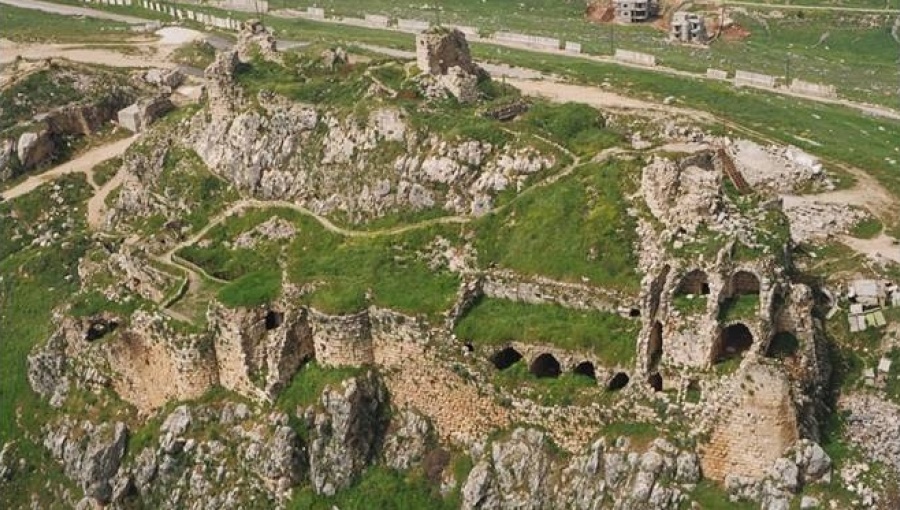
The 900-year-old Crusader fortress overlooking the Galilee Panhandle falls to the Golani Brigade; Netanyahu calls it "a dramatic shift in the policy we are leading" and orders troops to "deepen and expand" their hold / bne IntelliNewsFacebook
By Ben Arsi in Berlin May 31, 2026

Israeli forces have captured Beaufort Castle, the ancient Crusader fortress that dominates the ridge above the Litani River in southern Lebanon, as Israeli Prime Minister Benjamin Netanyahu orders IDF troops to expand operations into northern Lebanon.

Taking Beaufort Castle is Israel's deepest ground incursion into Lebanese territory in 26 years. Netanyahu immediately ordered troops to push further north and declared it "a dramatic change in the policy we are leading."

Israel has widened its Lebanon combat zone, ignoring a ceasefire deal and ordered residents to evacuate if it tries to set up a buffer zone on its northern border.

The IDF said it launched a ground operation in the Beaufort Ridge and Wadi al-Saluki stream area to destroy Hezbollah infrastructure and eliminate fighters, "as part of strengthening operational control in southern Lebanon and removing the direct threat to the Galilee Panhandle and Metula," as well as to "expand the forward defence line." One Israeli soldier was killed during the operation.

Defence Minister Israel Katz announced the capture of Beaufort on social media, posting a photograph of Israeli and Golani Brigade flags flying over the ruined medieval battlements.

"Under the guidance of Prime Minister Netanyahu and my direction, the IDF expanded its manoeuvre in Lebanon, crossed the Litani River and captured the Beaufort Ridge, one of the most important strategic points for the protection of our settlements in Galilee and the safety of our troops," he wrote.

He noted that the operation came 44 years after Israel first seized Beaufort during Operation Peace for Galilee in 1982.

"This is a clear message to our enemies: those who threaten Israeli citizens will lose their strategic assets one by one," he added. "The campaign is not yet over. The IDF is strong, and we are all determined to crush Hezbollah's power and complete the mission."

Netanyahu, releasing a video statement in front of an IDF photograph of the castle, said: "The capture of Beaufort is a dramatic stage and a dramatic shift in the policy we are leading. Now my directive is to deepen and expand our hold on areas that had been under Hezbollah's control." He added: "We returned to Beaufort stronger than ever."

Historically strategic castle

Beaufort Castle, described by UNESCO as one of the best-preserved examples of medieval castles in the Near East, sits on a steep cliff overlooking southern Lebanon and northern Israel, giving it long-standing strategic value for observation and control of surrounding valleys and movement routes.

Built by Crusaders around 1139, the fortress passed through many hands over nine centuries before the Palestine Liberation Organisation established a presence there in the 1970s and used it to shell northern Israel. Israel seized it in 1982, held it as a forward operating base for 18 years, and withdrew in 2000 under sustained Hezbollah pressure — a retreat that became one of the most contested episodes in Israeli military history.

Hezbollah established the ridge as a significant military asset after Israel's 2000 withdrawal, with the IDF saying "hundreds of projectiles were launched toward Israeli civilians and IDF soldiers" from the Beaufort area. The operation was focused on dismantling that infrastructure, established under Iranian direction.

"Our soldiers are writing a new chapter... by planting their flag at Beaufort Castle," the Israeli military's Arabic-language spokesman said.

Israeli military analysts were careful to separate the symbolic from the operational significance of the capture. Commentators assessing the move praised the achievement but added the caveat that it was a tactical rather than strategic advance. That reservation reflects Hezbollah's doctrine — articulated by its current leader Naim Qassem even before the October 7 terror attacks on Israel — that the organisation relies on diverse fire capabilities at every range and from deep inside Lebanon, meaning that even if the IDF reached Beirut, Hezbollah could continue firing at the Israeli home front. Under that doctrine, the loss of a strategic ridge does not end the group's capacity to fight or its willingness to retaliate.

The wider operation

The Beaufort capture is part of a broader Israeli advance north of the Litani River that began earlier this week. Soldiers crossed the Litani River's 90-degree bend, just across from the border community of Metula, and advanced toward the castle. Israeli troops were also operating near Nabatieh, a major Hezbollah stronghold in southern Lebanon. The operations come despite the ceasefire formally announced on April 17 — which has been repeatedly violated by both sides — and despite a 45-day ceasefire extension agreed on May 17.

Hezbollah responded to the May 30 advance with one of its heaviest barrages on Israel since the April ceasefire, prompting school closures across northern Israel and driving the Galilee Medical Center in Nahariya to move operations underground. Lebanese Prime Minister Nawaf Salam condemned the escalation as "dangerous and unprecedented," calling for an immediate ceasefire and accusing Israel of a scorched-earth policy.

The next round of US-mediated Pentagon talks between Israeli and Lebanese military delegations is scheduled for June 2-3 — a diplomatic track that is now operating in the shadow of Israeli forces planting flags on a medieval hilltop fortress for the second time in four decades.