Wednesday, June 03, 2026

‘Major Warning Sign of What’s to Come’: Number of Young Kids Without Health Insurance Surges

“Many more parents of young children enrolled in Medicaid themselves will be at higher risk of losing coverage as work reporting requirements and added red tape come along in 2027.”


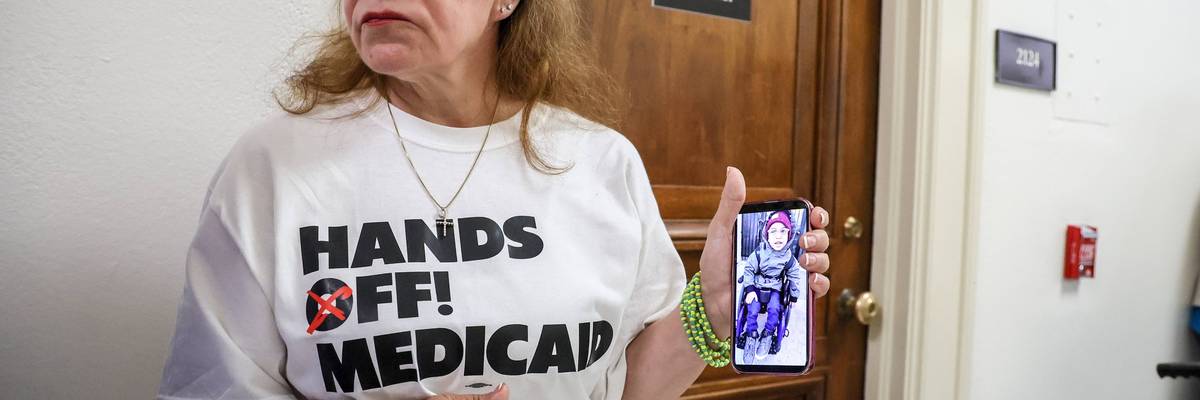
A demonstrator holds up a picture of her grandson, who has Cerebral Palsy, as she questions Republican lawmakers on May 13, 2025 in Washington, DC.
(Photo by Jemal Countess/Getty Images for Protect Our Care)

Jake Johnson
Jun 02, 2026
COMMON DREAMS

The number of young children without health insurance in the US rose sharply between 2022 and 2024 and is set to continue surging as the Trump administration implements work reporting requirements and other changes expected to kick millions—adults and kids—off Medicaid.

A report published Monday by the Center for Children and Families (CCF) at Georgetown University’s McCourt School of Public Policy found that nearly 220,000 additional children under the age of six were uninsured in 2024, a 23% increase from 2022. During that period, the total share of young children without health insurance rose to 5.3%—the highest rate in almost a decade.

The new report argues the rising uninsured rate among young children is “at least in part” attributable to the unwinding of pandemic-era protections that allowed people to remain on Medicaid without undergoing routine eligibility checks. The analysis found that Texas, Florida, and Georgia accounted for more than half of the increase in young children without insurance between 2022 and 2024.

Elisabeth Wright Burak and Aubrianna Osorio, researchers at CCF, wrote that “these data provide a major warning sign for what’s to come, as states grapple with the onslaught of Medicaid cuts from [the 2025 Republican budget law] and new coverage restrictions.”

One in 4 children in the US have at least one parent who was born abroad,” the researchers wrote. “For these children, the vast majority of whom are citizens, harsh anti-immigration policies and rhetoric are already leading to missed doctor appointments, on top of the ongoing fear, uncertainty, and overall stress that can compromise healthy development of young children. Fears of safety and separation have made more parents afraid to enroll their eligible, citizen children in programs like Medicaid and [Supplemental Nutrition Assistance Program], exposing children and families to additional financial risk and food insecurity.”

“Many more parents of young children enrolled in Medicaid themselves will be at higher risk of losing coverage as work reporting requirements and added red tape come along in 2027,” they added. “We know as parents lose coverage, their children are also at grave risk of losing access to health care through the ‘unwelcome mat’ effect.”

CCF’s report came as the Trump administration rolled out a new rule that will dictate how states implement Medicaid work reporting requirements included in the 2025 Republican budget law, which contains around $900 billion in cuts to Medicaid over the next decade.

Advocates warned the rule will result in millions of people, including many children, losing coverage by creating onerous bureaucratic barriers to obtaining and keeping Medicaid coverage. CCF estimated last week that, as of April 2026, roughly 2 million fewer children were enrolled in Medicaid and the Children’s Health Insurance Program compared to January 2025, the start of President Donald Trump’s second White House term.

“This is terrible news because when child enrollment in Medicaid and CHIP goes down, the child uninsured rate goes up,” wrote Joan Alker, CCF’s executive director. “And the child uninsured rate was already going up when President Trump took office, yet we have heard nothing about this from them. Federal officials should be scrambling to figure out the root cause of this coverage loss for children as income eligibility levels did not change and the unemployment rate has been inching upward since President Trump took office.”
‘Absolutely Crazy’: Horror as Trump Moves to Dismantle Crucial Ocean Monitoring System

“Blinding the public to climate change won’t make it go away. It will only accelerate its profound consequences.”


Researchers prepare to deploy a glider instrument into the ocean.
(Photo by Rebecca Travis/Woods Hole Oceanographic Institution)

Julia Conley
Jun 02, 2026
COMMON DREAMS

In what a number of scientists suggested was the Trump administration’s latest effort to stop tracking the changing climate in hopes of convincing the public that the climate emergency isn’t happening, the National Science Foundation announced Monday that it was dismantling a crucial deep-ocean monitoring system that for years has helped researchers understand the impacts of the crisis on the world’s oceans.

The NSF said it plans to send ships this month to remove more than 900 instruments, part of a project called the Ocean Observatories Initiative. The project collects data on temperatures, currents, and the ocean’s absorption of carbon dioxide off the coasts of Oregon, Alaska, Washington, and North Carolina, as well as in the Irminger Sea between Iceland and Greenland.

A spokesperson for NSF told The New York Times that the dismantling of the initiative will help the NSF in “prioritizing support for evolving scientific priorities and emerging technologies as well as a deliberate approach to smart life cycle management within its portfolio of research infrastructure.”

The reasoning given for the shuttering of the project, said Tara Blume, a journalist at Oklahoma City NBC affiliate KFOR, was “a master class in obfuscation and doublespeak.”

Genevieve Guenther of the group End Climate Silence shared her own interpretation of why the $368 million ocean observation system is being discontinued, despite the fact that it had been set to collect data for 25 years.

“We need to track ocean currents to assess how close we are to climate tipping points that will essentially destroy the world as we know it,” said Guenther. “The GOP doesn’t want us to be able to do that. That’s why they’re dismantling ocean monitoring.”


Scientists have used data gathered by moorings, robotic vehicles, and other instruments that transmit the information to research laboratories, to study changes in the Atlantic Meridional Overturning Current (AMOC), a current system that moves warm water northward and cools the Arctic and Northern Atlantic regions while absorbing carbon dioxide deep into the ocean and keeping it out of the atmosphere.

Data gathered at the observation station in the Irminger Sea has been key to understanding AMOC, which scientists fear is gradually weakening due to planetary heating and could ultimately collapse, likely causing major global weather changes.

“This is absolutely crazy,” said David Doniger, a senior strategist and attorney at the Natural Resources Defense Council’s climate and energy department. “Wouldn’t you want to know if the ocean currents are changing? Wouldn’t you want to know ocean temperatures? These things affect everything from fishing to hurricanes.”


Following the announcement that the stations will be dismantled in the coming weeks, said Blume, “science gasps for breath.”

President Donald Trump has attempted several times to shut down or drastically reduce the budget of the Ocean Observatories Initiative, which costs $48 million annually to run. Congress has restored the program’s funding.

The dismantling of the program comes months after the Environmental Protection Agency repealed the “endangerment finding,” which for years had underpinned the department’s environmental regulations; after the administration closed down the National Center for Atmospheric Research, which had gathered data on hurricanes and extreme weather to help improve forecasts; and after the National Aeronautics and Space Administration released a statement on record-breaking temperatures in 2024 and 2025—without any mention of the climate crisis or climate change.

“Blinding the public to climate change won’t make it go away. It will only accelerate its profound consequences,” said clinical researcher Iris Gorfinkel.

According to the Trump administration, said historian Nick Kapur, “apparently climate change doesn’t exist if you prevent scientists from measuring it.”
Markey Demands Trump Cancel Plan to Give Private Companies Enough Plutonium to Build 2,000 Nuclear Bombs

“Only Trump’s get-rich-quick bros would come up with this corrupt and moronic scheme,” wrote Democratic Sen. Ed Markey.


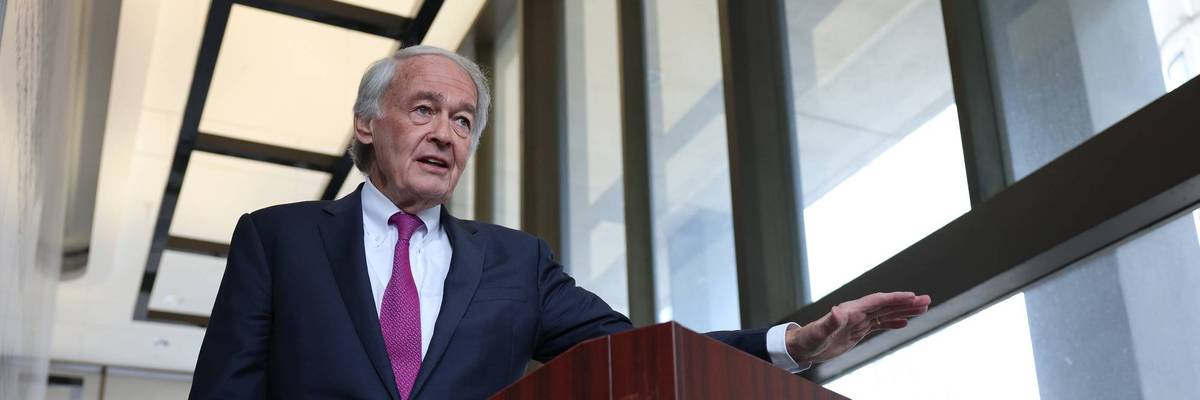
Sen. Ed Markey (D-Mass.) spoke out against Trump’s challenges to judicial law during a press conference held at the John F. Kennedy Federal Building.
(Photo by Jessica Rinaldi/The Boston Globe via Getty Images)


Jake Johnson
Jun 02, 2026
COMMON DREAMS

A prominent US senator on Tuesday implored President Donald Trump to cancel his administration’s plan to give private companies enough plutonium to build around 2,000 nuclear bombs, warning the move raises “serious weapons proliferation concerns” along with potentially massive safety issues and conflicts of interest.

“If implemented, this would be the first time the US government has made weapons-grade plutonium available to private companies,” Sen. Ed Markey (D-Mass.) wrote in a letter to Trump. “I urge you to cancel this misguided scheme.”

The New York Times reported last week that the US Department of Energy currently has “more than 50 tons of surplus plutonium left over from nuclear weapons programs, and the agency had previously been planning to dilute much of that material and bury it.”

But last May, Trump signed an executive order halting the dilution program and instructing his energy secretary to “establish a program to dispose of surplus plutonium by processing and making it available to industry in a form that can be utilized for the fabrication of fuel for advanced nuclear technologies.”

Last Tuesday, the Energy Department said it has entered into “advanced negotiations” with five nuclear energy companies—Oklo, Flibe Energy, Exodys Energy, Shine Technologies, and Standard Nuclear—to potentially distribute the Cold War-era plutonium.

Markey noted in his letter that Energy Secretary Chris Wright previously served on the board of Oklo, a California-based nuclear technology company whose stock price jumped in response to the department’s announcement.

“I am concerned that your administration is moving forward with plans to give plutonium to Oklo not because this makes
sense for the United States, but because Oklo stands to benefit financially and Secretary Wright is acting in his former company’s interest. Secretary Wright’s close ties to the company present an appearance of impropriety.”

The senator also expressed opposition to the plan on its merits, warning that “the transfer of weapons-usable plutonium to private industry would increase the risk of nuclear weapons proliferation, including to rogue states or terrorists.”

“Your plan—which would provide US companies with plutonium from US military stocks and subsidize them both to reprocess plutonium domestically and export reprocessing technology—would reverse our successful nonproliferation policy,” Markey wrote. “The United States cannot effectively discourage other countries from using plutonium for civil purposes if we use it ourselves.”


Nuclear experts have raised similar concerns about the Trump administration’s plan to transfer weapons-grade plutonium into the hands of private, for-profit corporations.

“Plutonium-based fuels and reprocessing have a poor track record when introduced in civilian nuclear energy programs,” Ernest Moniz, a nuclear physicist who headed the Energy Department during the Obama administration, wrote last year, warning that transfer schemes such as the one put forth by Trump would “produce new radioactive waste streams that must be managed” and “elevate the risk of a safety or security incident at a nuclear facility.”

In a social media post last week, Markey condemned the Trump administration’s plan in scathing terms, writing that “using plutonium for nuclear power is stupid and dangerous.”

“This material is used in nukes, and it’s too unsafe for widespread commercial use. Do we want Iran using plutonium in its reactor? No,” Markey wrote. “Only Trump’s get-rich-quick bros would come up with this corrupt and moronic scheme.”

‘Harmful to American Workers’: Warren, Sanders Lead Charge Against Trump Crypto Scheme for 401Ks

“This would strip long-held investor protections from retirement savers and encourage the use of more risky, complex, and expensive investments.”


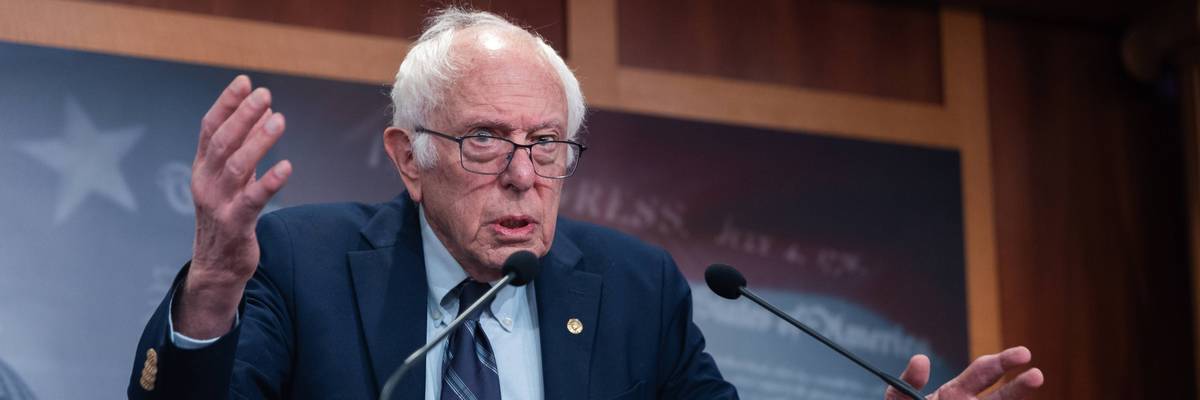
Sen. Bernie Sanders (I-Vt.) speaks at an impromptu press conference on recent election results, in Washington DC, United States on November 5, 2025.
(Photo by Nathan Posner/Anadolu via Getty Images)


Brad Reed
Jun 02, 2026
COMMON DREAMS

Two progressive US senators are leading the charge against a new Trump administration scheme that would allow Americans’ retirement funds to invest in cryptocurrencies.

As reported by The Guardian on Tuesday, Sens. Bernie Sanders (I-Vt.) and Elizabeth Warren (D-Mass.), along with Rep. Bobby Scott (D-Va.), sent a letter to the US Department of Labor (DOL) warning against enacting a proposed rule change that would allow 401(k) investments to include crypto.


Cryptocurrencies have long proven to be volatile assets that have been involved in multiple fraud schemes, which the FBI estimates cost Americans more than $20 billion in 2025 alone.

“This would strip long-held investor protections from retirement savers and encourage the use of more risky, complex, and expensive investments,” states the letter. “The proposed rule is harmful to American workers.”

Offering an example of the dangers of investing in crypto, the letter cites President Donald Trump’s personal meme coin, whose value has cratered since its peak in January 2025.

The push to let 401(k)s invest in crypto has also drawn criticism from Americans for Financial Reform (AFR), which on Monday released a white paper outlining how the plan would put Americans’ retirement savings at risk while also serving as a boon to the private equity industry.

Oscar Valdés Viera, senior policy analyst for private equity and capital markets at AFR, accused the DOL of handing over US retirement savings to “the worst Wall Street predators and crypto scammers.”

“This proposal would use 401(k)s to bail out a struggling industry and advance the administration’s push to embed crypto deeper into the financial system,” Valdés Viera explained. “Driving workers into the arms of private equity firms and crypto insiders would let the president’s Wall Street and crypto cronies pocket billions at the expense of families’ retirement security.”

Democracy Defenders Fund (DDF) last week noted that Trump and his family, who have major ties to the cryptocurrency industry, would stand to personally profit from the DOL’s proposed rule change.

“President Trump stands to benefit if ordinary people can use their employer-sponsored retirement plans to invest in crypto,” said Virginia Canter, chief counsel and director of ethics and anti-corruption at DDF. “The administration claims the proposed rule would ‘relieve regulatory burdens,’ but it looks more like self-dealing.”

In addition to allowing 401(k)s to invest in cryptocurrencies, the proposed DOL rule change would also allow them to invest in private credit assets, which are typically loans negotiated with non-bank lenders.

Benjamin Schiffrin, director of securities policy for Better Markets, said on Tuesday that letting 401(k)s invest in these assets would be a similarly risky bet to letting them invest in crypto.

“This is exactly the wrong approach at the wrong time,” said Schiffrin. “There could hardly be a proposal more dangerous to Americans’ retirement security. Investors already in private credit are currently running for the exits. DOL’s proposal means that one day millions of Americans with 401(k)s may have to do the same.”


Israel Keeps Killing Lebanese Civilians Despite Trump’s De-Escalation Claim

“The more Netanyahu prevents the war with Iran from ending, the more obvious it becomes that he convinced Trump to start it.”


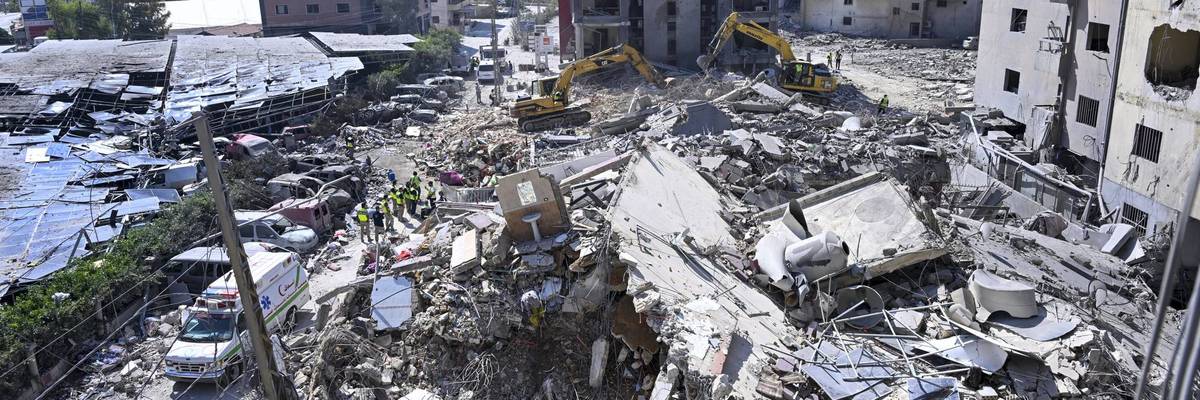
An aerial view of buildings and a parking area opposite the Jabal Amel Hospital, the largest hospital in the city of Tyre, Lebanon, on June 2, 2026, shows damage from an Israeli strike.

(Photo by Houssam Shbaro/Anadolu via Getty Images)


Jessica Corbett
Jun 02, 2026
COMMON DREAMS

The death toll from Israel’s assault on Lebanon continued to rise on Tuesday despite President Donald Trump’s claims of de-escalation following Monday phone calls with Israeli Prime Minister Benjamin Netanyahu and an intermediary for Hezbollah.

The Lebanese Ministry of Public Health said Tuesday that “the cumulative toll of the aggression from March 2 to June 2 has reached 3,468 dead and 10,577 injured,” even amid a ceasefire agreed to in April. The deal stemmed from Trump and Netanyahu’s illegal war on Iran, and Israel initially claimed it did not include Lebanon.

Ben-Gvir Says Israel ‘Will Not Allow’ Trump to Make a Peace Deal With Iran as IDF Kills Dozens in Lebanon

After Iran on Monday reportedly halted talks with the US over Israel’s attacks on Lebanon, Trump said on his Truth Social platform that due to his phone calls, Israeli troops “have already been turned back” from Beirut, and Hezbollah “agreed that all shooting will stop—That Israel will not attack them, and they will not attack Israel.”

However, Netanyahu said later Monday that “I spoke this evening with President Trump and told him that if Hezbollah does not stop attacking our cities and civilians, Israel will strike terrorist targets in Beirut. This position remains unchanged.”

According to Axios reporting contested by a senior Israeli official, one US source summarized Trump’s remarks to Netanyahu as follows: “You’re fucking crazy. You’d be in prison if it weren’t for me. I’m saving your ass. Everybody hates you now. Everybody hates Israel because of this.”

Another source said that Trump was “pissed” and at one point yelled at the prime minister, “What the fuck are you doing?”

While “the story has understandably been met with considerable skepticism,” wrote Trita Parsi, executive vice president of the Quincy Institute for Responsible Statecraft, there are “a few important counterexamples—particularly from Trump’s second term—that suggest the Axios story is not entirely implausible.”

“What is also plausible, however, is that Trump will once again fail to sustain the pressure and, by that, allow for Netanyahu’s potential retreat to prove temporary,” Parsi predicted.


Republican Congressman Thomas Massie (Ky.), a libertarian who recently lost his reelection primary to a Trump-backed challenger, responded to the reporting on social media: “It’s all talk. Just withhold foreign aid to Israel for a month, and they’ll stop bombing their neighbors—instant peace, the Strait of Hormuz can be opened, and gas drops $2 a gallon. Israel has been, and continues to be, the biggest welfare recipient from American taxpayers.”

Massie also said that “the more Netanyahu prevents the war with Iran from ending, the more obvious it becomes that he convinced Trump to start it.”

Progressive Democratic Congresswoman Ilhan Omar (Minn.) similarly said late Monday: “The lesson Israel has learned, time and again, is that it can commit genocide and other atrocities with near-total impunity. Now it’s exporting the Gaza playbook to Lebanon. Israel’s war in Lebanon is killing thousands and displacing over a million. NO MORE US AID TO ISRAEL.”

Citing Lebanon’s National News Agency (NNA) on Tuesday, Al Jazeera cataloged Israel’s killings since Trump’s de-escalation claims:
Two Syrians were killed in an Israeli attack on a plant nursery where they were working in the town of Jebchit in the Nabatieh governorate, NNA said on Tuesday.

Israeli drone strikes hit a motorcycle on Martyr Sabra Street in Toul and a car in the Dhi’at al-Arab neighborhood of Ansar, killing two people, NNA said.

The third strike hit a car near the village of Harouf, killing one person.

Separately, an Israeli drone strike hit a car on the road linking the southern town of Marjayoun with the city of Nabatieh, killing James Karam, a dentist from the nearby Christian municipality of Qlayaa, along with his daughter and son, NNA reported.

Those deaths followed Israel’s Monday airstrike in the southern village of Marwaniyeh, which killed six members of the Hassan Abdullah family, according to the Lebanese Civil Defense. Palestine Chronicle reported that “rescue teams worked throughout the night and into Tuesday morning to recover victims trapped beneath the rubble of the destroyed building. Three additional people were pulled from the debris during the operation.”


Also on Monday, Israel attacked the Jabal Amel Hospital in Tyre, killing at least four people and injuring dozens more.

Dr. Abdinasir Abubakar, the World Health Organization (WHO) representative in Lebanon, said Tuesday that the hospital is one of the few operating in the country’s south, and the attack “caused significant damage... to the emergency department and intensive care unit.”

“Six hospitals have not yet resumed maternity delivery services and are currently providing only emergency room care,” he noted. “For pregnant women and newborns, delays in care can mean the difference between life and death.”

WHO has verified nearly 200 attacks on healthcare facilities and workers in Lebanon over the past three months. Calling for such attacks “to stop” and “active protection for healthcare,” Abubakar stressed that “these attacks kill and maim, they also deprive people of the health services they need.”


Israel hit Jabal Amel Hospital after a strike near Hiram Hospital the previous day, according to Doctors Without Borders, which supports both facilities. Omar Ebeid, the organization’s project coordinator in southern Lebanon, said Tuesday that “these repeated attacks reflect a grave failure to protect the medical mission and underscore the urgent need to safeguard civilians, medical staff, health facilities, and continuous access to lifesaving care.”

Faced with a rising death toll and Israeli forces’ destruction of civilian infrastructure, The Associated Press reported, “another round of talks between Israel and Lebanon began Tuesday in Washington, where Lebanese negotiators are set to seek a full ceasefire that will prevent future attacks.”

Satellite Analysis Shows ‘Overt Territorial Ambitions’ of Israel in Gaza

“The idea of occupation, control, and pushing borders forward has become the core of the Israeli security doctrine,” said one Palestinian analyst.


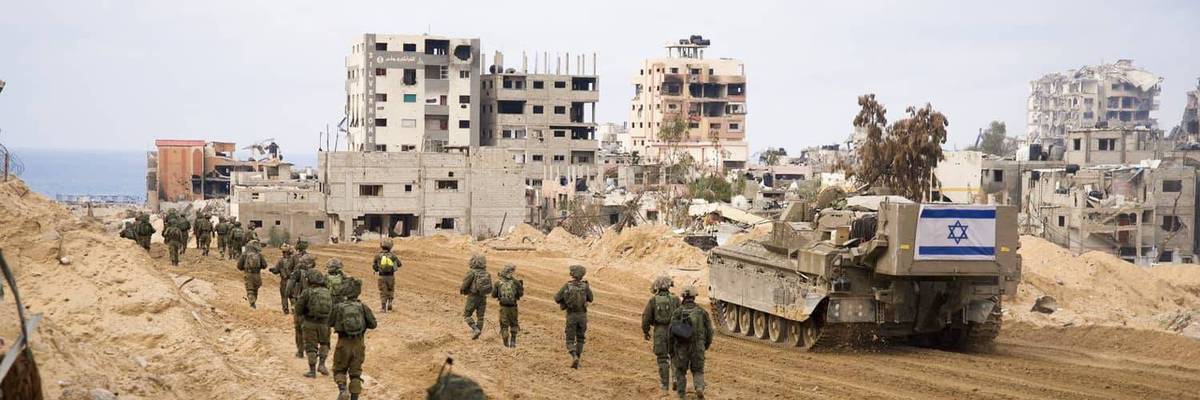
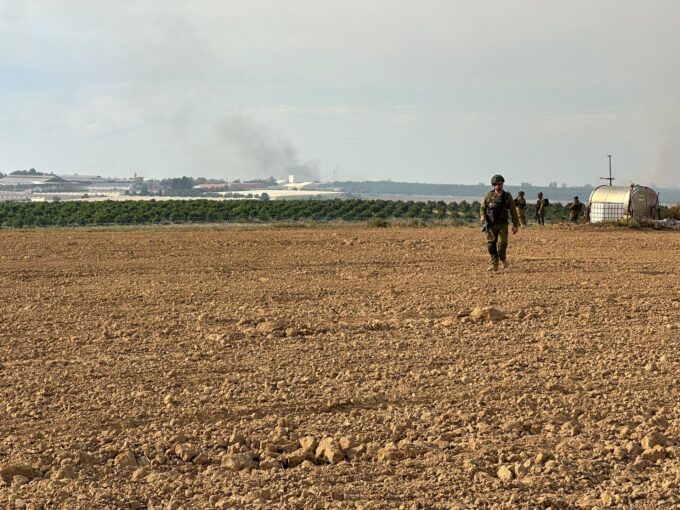
Israel Defense Forces troops are seen in Gaza in this 2024 IDF photo.
(Photo: Israel Defense Forces)


Brett Wilkins
Jun 03, 2026
COMMON DRAMS

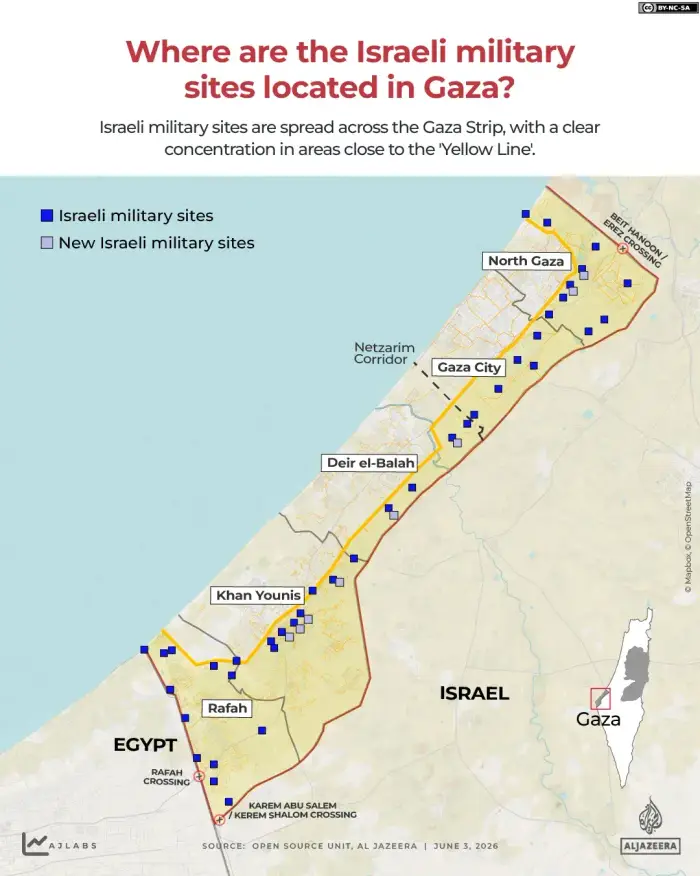
Instead of leaving Gaza as required under the ceasefire deal it signed last October, satellite images published Wednesday by Al Jazeera show that Israel is quietly building dozens of heavily fortified permanent military bases around the entire inner perimeter of the coastal strip, a move critics fear is preparation for the ethnic cleansing of Palestinians and possible Israeli resettlement.

Al Jazeera’s Open Source Unit analyzed satellite data through May 2026 and identified 40 Israel Defense Forces (IDF) outposts inside the Gaza Strip that were all built after the October 2025 ceasefire between Israel and Hamas took effect, with another base under construction.

Observers say the network of IDF bases inside Gaza is meant to facilitate Israeli Prime Minister Benjamin Netanyahu’s stated goal of taking 70% or more of the Palestinian exclave.

Combined with Israel’s ever-expanding so-called “yellow line,” the satellite imagery reveals at least “a systematic effort to build a sustainable, long-term military infrastructure rather than temporary observation posts,” according to Al Jazeera.


(Image by Al Jazeera Open Source Unit/Creative Commons)

As Al Jazeera reported:
The geographical distribution of these 40 military outposts reveals a deliberate strategy of encirclement. The bases, connected by a network of earthen berms, trenches, and internal military roads, tightly surround Palestinian population centres from multiple directions.

This suffocating architecture severely restricts the ability of civilians to move freely or access their lands, particularly in areas abutting the Israeli deployment lines.

The expanding occupation stands in direct violation of the United States-brokered October 2025 ceasefire agreement, which was based on a 21-point peace plan proposed by President Donald Trump. The framework demanded an end to the hostilities, the immediate entry of aid, the disarmament of Hamas, and a phased Israeli withdrawal.

However, “the idea of occupation, control, and pushing borders forward has become the core of the Israeli security doctrine,” Palestinian political analyst Abdullah Aqrabawi said.

In early 2024, Netanyahu—who is wanted by the International Criminal Court for alleged crimes against humanity and war crimes in Gaza—declared that Israel would establish “full security control” over Gaza. In April 2025, he announced the creation of the so-called Morag Corridor, describing it as an additional security corridor dividing Gaza and signaling that Israel was “cutting up the Strip” to increase pressure on Hamas, which led the October 7, 2023 attack on Israel.

Last week, Netanyahu told an audience at a youth military academy that “we are now in 60% of the Gaza Strip, more or less.” When the crowd interrupted with chants of “100%! 100%!,” the prime minister replied: “Wait, let’s go in order. First 70%. Let’s start with that.”

Israeli Defense Minister Israel Katz said last year that IDF troops were “expanding to crush and clean” Gaza while “seizing large areas that will be added to the security zones of the state of Israel for the protection of fighting forces and the settlements,” a reference to plans by far-right members of Netanyahu’s government and leaders of the settler movement for the ethnic cleansing and illegal Israeli recolonization of the Palestinian enclave.

Israel first colonized Gaza following its seizure during the 1967 Six-Day War; its settlements were dismantled in 2005 under then-Prime Minister Ariel Sharon amid stalled peace negotiations during the Second Intifada, or Palestinian uprising.

Katz and other Israeli leaders advocate for a US-backed “voluntary migration” plan for Gaza’s Palestinians. However, critics call voluntary migration a euphemism for ethnic cleansing, given the unwillingness of most Palestinians to leave Gaza, most of whose inhabitants are the descendants of people forcibly expelled from other parts of Palestine during the establishment of the modern state of Israel in the late 1940s.

As Israel seizes more and more of Gaza, its forces continue killing Palestinians there despite the truce. The Gaza Ministry of Health said Wednesday that at least 119 Palestinians were killed in Gaza in May, the highest monthly total recorded this year. Those slain by IDF troops include 19 children and 10 women, with Israeli soldiers saying that indiscriminate killings of Palestinian civilians continue along the ever-shifting yellow line.

According to Gaza’s Government Media Office, Israel has violated the ceasefire more than 3,005 times, resulting in more than 900 Palestinians killed and nearly 2,800 others injured since last October. Since October 2023, more than 250,000 Palestinians have been killed or wounded, including thousands of people who are missing and presumed dead and buried beneath rubble.

Wednesday’s Al Jazeera report follows another analysis published last week by the network using satellite imagery to show Israel’s erasure of large swaths of southern Gaza, including cities, towns, farmland, and even cemeteries in what the article’s authors called an Israeli effort at “erasing geography and memory.”

“Satellites photograph the destroyed buildings, but they cannot document the feeling of a human searching for their home to no avail,” Palestinian journalist Muhannad Qishta said. “The hardest thing is not the destruction itself, but the stories buried beneath it.”

Beyond the Yellow Line: Israel Seizes More of Gaza


 June 2, 2026

Photograph Source: IDF Spokesperson’s Unit photographer – CC BY-SA 3.0

While eyes remain peeled on Israel’s increasingly violent and expanding campaign in Lebanon, the government of Prime Minister Benjamin Netanyahu is proving ever more predatory with the Gaza Strip.  With aggrandizing impunity, more territory is being acquired for familiar reasons: Hamas is on the run and needs to be crushed further (the organisation is proving oddly resilient and contradictory to Israeli objectives here); Palestinian autonomy, even in so small an area, would be a future threat to Israel unless heavily invigilated and policed; and, well, there is that old desire to ethnically cleanse the territory.

Speaking at a conference on May 28, Netanyahu outlined his plans for further seizures.  “We are currently squeezing Hamas; we now control 60% of the territory of the Strip – you know this.  We were at 50, we moved to 60.  My directive is to move to…” (at that point, an enthusiastic voice in the crowd interjected with “100”).  Not wishing to state it that obviously, the PM went on to say that the IDF would “go step by step.  First of all, 70.  Let’s start with that.  We’re pressing them from all sides, we’ll deal with the remnants.”

On May 27, the Israeli Defence Minister Israel Katz wrote on his X account that the government “had pledged to eliminate everyone who led the October 7 massacre, and that is what we will do.”  The agenda of elimination in the Strip is an ongoing one, with the announced killing of Hamas military commander Mohammed Odeh giving him a certain febrile glee. “The fourth commander of the Hamas terror organization’s military wing in Gaza was eliminated yesterday and sent to meet his partners in the depths of hell.”  Hamas would never be allowed to “rule Gaza civilly or militarily.”  Katz also went further, suggesting with heavy ominousness that the “plan for voluntary emigration from Gaza” would commence “at the proper time and in the proper manner”.

The fact that the IDF had already gobbled territory to a hefty proportion of 60% had already breached the terms of the US-brokered ceasefire effective since October 10, 2025.  (The original amount was 53%).  In mid-May, Netanyahu, in remarks made at the Mercaz Harav Yeshiva on the occasion of the 59th anniversary of the unification of Jerusalem, boasted that Israel had, over the previous two years “shown the world what immense power is inherent in our people, in our state, in our army, in our heritage.”  The most important thing was breaking “the barrier of fear. We brought our hostages home, to the very last one.  Today we control 60 percent.”

This should have come as a surprise, but such breaches and violations are common fare in Israel’s singular interpretation of ceasefires.  (Pro-Israeli critics naturally overlook this, seeing, instead, a stubborn Hamas outfit that refuses to disarm while committing its own complement of ceasefire violations.)  The ceasefire in Gaza has proven a particularly bloody one for Palestinians, with 738 having perished since October last year.  In January, Haaretz was already reporting on the westward shift of the Yellow Line.  According to Laurie Bouvier, a geographic information systems expert working for Doctors Without Borders (MSF), the 60 percent figure was an accurate one, and likely to change given ongoing expansion with new yellow blocks identified in such neighbourhoods as Zeitoun in Gaza City.

The Hamas-run government media office described Netanyahu’s promise of seizing 70% of territory as “a dangerous escalation”.  According to its head, Ismail al-Thawabta, “any attempt to impose a new reality of occupation in Gaza is null and illegitimate”.

From New York, the United Nations spokesperson Stéphane Dujarric also added the views of the organisation by stating that, “One hundred percent of Gaza should be for the Palestinian people”. The UN had “been calling on Israel to pull back from its occupation from the so-called yellow line, and that will continue to be our position.”

The United Nations children’s agency UNICEF has expressed concerns the seizure of even more land by the Israeli forces will only worsen a situation where food, water and hygiene are lacking.  UNICEF spokesman Salim Oweis, speaking from Gaza to reporters based in Geneva, noted how people had “been crammed into around 40 percent of the space”.  They were “sheltering among broken buildings, rubble and mounting solid waste”.  The suffering this was causing children was becoming “widely apparent: children with respiratory infections, acute watery diarrhea, and more than half of all households reporting skin diseases.”

This will only be seen by the Israeli authorities as another sob story, the needless tearjerker disseminated by international organisations and commentators who should know better.  There is an agenda to implement with necessary ruthlessness, Palestinian officials to kill along with their families, political emasculation of Palestinian will to achieve and, ultimately, a Strip cleansed of Arabs in favour of the Jewish state’s bright and noble citizens.

Binoy Kampmark was a Commonwealth Scholar at Selwyn College, Cambridge. He lectures at RMIT University, Melbourne. Email: bkampmark@gmail.com


The Theater of Punishment

June 2, 2026

Image Source: משטרת ישראל-לשכת גיוס – CC BY-SA 4.0

The treatment of the flotilla activists by Israel’s National Security Minister Itamar Ben Gvir was shocking only to those who continue to clothe colonial violence in the soft language of security. There is now a mountain of evidence before humanity: Gaza has become not merely a place under siege but a geography of calculated despair, where starvation and bombardment have been converted into instruments of political management. The activists aboard the flotilla were not armed combatants, nor were they soldiers threatening invasion. They were international volunteers, human rights advocates, doctors, parliamentarians, and organisers attempting to break the siege imposed on Gaza. Their journey was political, moral, and humanitarian. Yet the Israeli state met them with humiliation, detention, and theatrical violence.

Ben Gvir understood precisely the symbolic function of his actions. The politics of the Israeli far right is not merely about security; it is about pedagogy. The violence must be seen and the humiliation must circulate publicly. Domination must constantly reproduce itself through spectacle. The public degradation of Palestinians and their allies is central to the ideological machinery of the Israeli far right. Every arrest becomes a lesson in obedience, every beating becomes a message, every detention becomes a declaration that resistance, even symbolic resistance, will be met with overwhelming force.

The flotilla activists entered a geography already transformed by blockade and devastation. Gaza today is not merely occupied territory; it is a laboratory of punishment. For years, Israel has controlled the movement of food, medicine, fuel, electricity, and people into the strip. The blockade has produced not security but social suffocation. International organisations have repeatedly warned about catastrophic humanitarian conditions. Yet the siege continues because it serves a political purpose: to fragment Palestinian life and break collective morale.

When activists attempted to challenge this order through the flotilla, Ben Gvir and his allies responded as colonial powers often do when confronted by moral witness. The activists were presented not as human beings motivated by conscience but as enemies of the state. Their detention was accompanied by taunts and intimidation. The aim was not merely to stop the flotilla but to discourage future acts of solidarity. This pattern is older than the present crisis. Colonial systems survive not only through military superiority but through rituals of domination. The British Empire practiced it in India and Kenya, French colonial authorities employed it in Algeria, and South African apartheid institutionalised it with bureaucratic precision. Humiliation becomes part of governance.

Ben Gvir’s rhetoric reveals the depth of this political culture. He speaks of Palestinians not as a people with rights but as a demographic threat to be controlled and contained. In this worldview, solidarity itself becomes criminal. Humanitarianism is recast as terrorism. International law becomes an inconvenience. The flotilla activists were therefore dangerous not because they carried weapons but because they carried testimony. They threatened to expose the architecture of siege before a global audience. Their mere presence undermined the carefully manufactured narrative that Gaza’s suffering is unavoidable collateral damage rather than a political choice. What Ben Gvir fears most is not armed resistance alone. He fears political imagination and the possibility that ordinary people across the world may see Palestinians not through the language of security briefings but through the language of shared humanity. And so, the brutality directed at the flotilla activists was not an aberration. It was entirely consistent with the ideological world that Ben Gvir inhabits: a world in which domination must constantly reproduce itself through force, humiliation, and fear.

The Politics of Erasure

Long before the flotilla activists were detained and brutalised, Ben Gvir directed his fury toward one of the most important Palestinian political prisoners of the modern era: Marwan Barghouti (born 1959).

Marwan Barghouti occupies a singular place in Palestinian political life, not because he is untouched by political contradiction but because he embodies the continuity of a national struggle that many powerful actors wish to erase. To many Palestinians, he represents a figure capable of unifying fragmented political tendencies. Emerging from the ranks of Fatah during the First Intifada, Barghouti became associated with grassroots political mobilisation and the demand for national liberation. Even among those who disagree with aspects of his political strategy, there is widespread recognition of his symbolic importance. Israel understands this symbolism well. That is why Barghouti’s imprisonment since 2002 has never been merely judicial. It is deeply political.

Ben Gvir’s hostility toward Barghouti reflects a broader Israeli strategy: the systematic destruction of Palestinian political leadership. Colonial systems frequently attempt to criminalise leadership because organised political consciousness poses a threat greater than spontaneous unrest. A people without leadership can be fragmented. A people without political memory can be managed.

Barghouti’s imprisonment became a site through which the Israeli far right could perform its politics of vengeance. Ben Gvir repeatedly advocated harsher prison conditions for Palestinian detainees. Under his political influence, there were intensified crackdowns on prisoners’ rights, restrictions on family visits, and punitive measures designed not simply to incarcerate but to degrade. Reports from Palestinian prisoners and human rights organisations have described conditions marked by isolation, overcrowding, physical abuse, and psychological pressure. Prison raids became spectacles of domination. Books were confiscated. Collective punishment intensified. The prison, in this system, is not only a place of detention; it is an instrument of colonial management.

Barghouti’s case reveals something essential about Ben Gvir’s worldview. He does not merely oppose Palestinian armed groups, but he opposes Palestinian political existence itself. This is why figures like Barghouti are so threatening. Barghouti speaks the language of national liberation. He invokes anti-colonial traditions familiar across Asia, Africa, and Latin America. His political symbolism connects Palestine to a wider history of struggle against occupation and racial domination. For Ben Gvir, such figures must be broken psychologically. Their dignity must be shattered publicly. Their image must be transformed from political leader into criminal inmate.

Yet history offers many examples of imprisoned leaders becoming more powerful symbols through incarceration. Nelson Mandela spent twenty-seven years in prison under apartheid South Africa. States imprison those they fear politically. Barghouti’s endurance has therefore become deeply symbolic. His imprisonment is not simply about one man. It represents the broader Palestinian condition under occupation: confinement, fragmentation, and the attempt to erase political agency.

In 2025, Ben Gvir posted a 13-second video clip of him taunting a very gaunt Barghouti in a prison and said, ‘You won’t win. Whoever messes with the nation of Israel… we will wipe them out’. A dignified Barghouti tried to interject several times to hold his own. The clip showed the desperation of Ben Gvir, trying to overcome the man who had helped draft the Prisoner’s Document in 2006 that called for the revitalisation of Palestinian politics, and which continues to circulate today. The prison cell can become a school of resistance. The attempt to erase memory can instead strengthen it. Barghouti remains, despite years of imprisonment, a reminder that Palestinian political identity has survived every attempt at fragmentation.

The Long History of Israeli Fascistic Politics

To understand Ben Gvir, one must move beyond the comforting fiction that he is an aberration. He is not an interruption in Israeli political history, but is one of its logical outcomes. Ben Gvir did not emerge from nowhere. He is the product of decades of radicalisation within sections of Israeli society shaped by settler colonialism, militarisation, and ethno-nationalist ideology.

As a young man, Ben Gvir was associated with the banned Kach movement founded by Rabbi Meir Kahane. Kahanism openly advocated Jewish supremacy and the expulsion of Palestinians from historic Palestine. Even the Israeli state once regarded Kach as too extreme, banning it as a terrorist organisation. But ideas once considered fringe have steadily migrated into the political mainstream. Ben Gvir built his career through provocation. He became known for inflammatory rhetoric, public incitement, and confrontational appearances in Palestinian neighbourhoods. For years he cultivated the image of a militant street activist who viewed compromise as weakness.

One infamous episode occurred in 1995 when Ben Gvir appeared on Israeli television holding the emblem from Prime Minister Yitzhak Rabin’s car. ‘We got to his car’, he declared, ‘and we’ll get to him too’. Weeks later Rabin was assassinated by a far-right Israeli extremist opposed to the Oslo Accords.

This history matters because it reveals the political atmosphere from which Ben Gvir emerged: a culture in which hatred against Palestinians, and often against peace advocates themselves, became normalised. Over time, Israeli politics shifted steadily rightward. Settlement expansion accelerated. Military occupation hardened. The peace process collapsed into ritualised diplomacy disconnected from realities on the ground. Within this environment, figures like Ben Gvir gained legitimacy. His rise also reflects deeper structural realities. Colonial systems frequently generate extremist political formations because domination requires ideological justification. Violence must be moralised and inequality must be rationalised. Ben Gvir provides precisely this ideological function. He transforms structural violence into nationalist virtue. His political language relies heavily on fear. Palestinians are depicted not as a colonised population but as existential enemies. Human rights organisations are portrayed as traitorous. International criticism becomes evidence of conspiracy.

This is not unique to Israel. Similar political patterns can be observed globally. From Narendra Modi’s Hindutva nationalism in India to the authoritarian ethnonationalism visible in parts of Europe and the Americas, contemporary far-right movements rely on a politics of permanent fear. Minorities become scapegoats, and dissent becomes treason.

What makes Ben Gvir especially dangerous is not merely his rhetoric but his access to state power. As National Security Minister, he has influence over policing, prison administration, and internal repression. The extremist street politics of previous decades have now entered the machinery of governance.

This transformation carries grave consequences. The treatment of the flotilla activists and of prisoners like Marwan Barghouti are not isolated incidents. They are symptoms of a broader political trajectory in which cruelty itself becomes policy. Yet history also reminds us that systems built upon permanent domination eventually confront crises of legitimacy. Colonial regimes often appear invincible until suddenly they do not. French Algeria seemed permanent. South African apartheid appeared deeply entrenched. Portuguese colonialism in Africa looked immovable. Repression contains contradictions, violence generates resistance, and humiliation produces solidarity.

The global outrage over Gaza, the continued symbolic power of Palestinian prisoners, and the persistence of international solidarity movements all indicate that the Palestinian struggle remains profoundly alive. Ben Gvir represents the hardening edge of a political project attempting to preserve domination through fear. But fear alone cannot produce justice, legitimacy, or peace. And that is ultimately the tragedy of the present moment: a political class incapable of imagining coexistence except through the language of force. The flotilla activists understood this, and so does Marwan Barghouti. Millions across the world understand it as well. The question now is whether the international system will continue to normalise such brutality, or whether global public opinion will finally recognise that what is unfolding is not merely a conflict between two equal sides, but a struggle over the basic meaning of freedom, dignity, and humanity itself.
Vijay Prashad is the Director of Tricontinental: Institute for Social Research. His most recent book (with Grieve Chelwa) is How the International Monetary Fund Suffocates Africa (from Inkani Books).