Thursday, June 11, 2026

International Lawyers Decry US Aggression Against Cuba, Urge Solidarity With Its People

“Those who remain silent in the face of this growing unlawfulness and aggressiveness assume a grave responsibility,” said the head of the International Association of Democratic Lawyers.


People protest the internationally condemned US blockade of Cuba and the Trump administration's military threats against the socialist nation, in Brussels on February 7, 2026.
(Photo by Peter Mertens/X)

Brett Wilkins
Jun 10, 2026
COMMON DREAMS

An international group of leftist lawyers on Tuesday condemned the US blockade, sanctions, and war threats against Cuba, and the mounting repression of solidarity with the long-suffering Cuban people.

The International Association of Democratic Lawyers (IADL) held a virtual press conference “to condemn escalating United States measures against Cuba and to call for renewed international action in defense of international law, Cuban sovereignty, and the rights of the Cuban people.”

“The United States continues to threaten Cuba while imposing unilateral coercive economic measures designed to destabilize the country and facilitate regime change,” IADL noted. “In recent months, restrictions on fuel shipments have further intensified the hardships faced by the Cuban people, with severe consequences for daily life.”

“For more than three decades, the United Nations General Assembly has overwhelmingly called for an end to the US blockade of Cuba, with the United States and Israel consistently standing alone in opposition to the international consensus,” the group added. “While these annual resolutions represent a powerful condemnation of the blockade, symbolic measures alone are insufficient. International law imposes obligations on states to act in the face of ongoing violations.”

Speakers at the press conference warned that the Trump administration’s recent actions—including war threats and a deadly fuel blockade—are serious violations of international law that threaten the rights and well-being of millions of Cubans.

“The illegality of the blockade is not in doubt. What is at stake today is the impunity that allows it to continue,” IADL general secretary Micòl Savia said. “What is at stake is the complete disregard of the United States for international law and collective institutions and their contempt for the common values of humankind.”

“The actions of successive US administrations against Cuba make it very clear that they do not consider themselves bound by the principles of sovereign equality, peaceful coexistence, and self-determination that form the foundation of the international legal order,” she continued.

“Another dimension of the blockade and sanctions against Cuba is the pressure imposed on third countries,” Savia said. “The threat of punishment against institutions, banks, companies, and individuals that seek to establish commercial, financial, or diplomatic relations with Cuba is an intervention not only against Cuba, but also into the sovereign sphere of other countries.”

“This shows how broad and arbitrary the sanctions policy has become as a tool of coercion,” she added. “The threat of sanctions against companies from third countries that trade with Cuba violates their sovereignty.”

Speakers at the event excoriated the Trump administration’s escalating war threats and politically motivated indictment of former Cuban President Raúl Castro, a hero of his country’s successful revolution against a US-backed dictatorship.

“Cuba is now under the direct threat of [a] US imperialist war of aggression after a long period of economic and financial blockade,” said Filipino jurist Edwin De La Cruz of the Amistad Philippines-Cuba Friendship Association and National Union of People’s Lawyers.

“Serious transgressions on Cuba’s sovereignty, from failed efforts to foment unrest among the population, to the personal assault on the integrity of Comrade Raúl Castro by [President] Donald Trump intensified, with a threat of armed invasion tweeted by Donald Trump himself,” he continued.

“Cuba and the Philippines share a common history of US imperialist domination. We share a common enemy and a common struggle,” De La Cruz noted, pointing to the so-called Spanish-American War, in which the United States conquered both countries, along with Puerto Rico and Guam, from Spain under the false pretense of a Spanish attack on the battleship USS Maine. The US colonized the Philippines from 1898-1946, except for a brief period of Japanese occupation during World War II.

Deborah Jackson, president of the US group National Conference of Black Lawyers, called the Castro indictment “a transparently political prosecution that serves no legitimate law enforcement purpose.”

Castro—who served as Cuba’s president for a decade after his older brother, Fidel Castro, stepped down in 2008—was indicted by the US Department of Justice (DOJ) last month for his alleged role in the 1996 shoot-down of planes operated by Brothers to the Rescue, a counter-revolutionary group founded by a CIA-trained operative and Bay of Pigs veteran, after repeated warnings that they had violated Cuban airspace.

Critics noted Trump’s ongoing campaign of illegal boat bombings in the Caribbean Sea and Pacific Ocean, as well as the long history of US state terrorism against Cuba and support for the perpetrators of attacks carried out by right-wing Cuban exiles, including the 1976 bombing of a commercial flight with 73 people aboard.

Jackson said the charges against Castro “are clearly invalid... attempts to criminalize legitimate acts of self-defense by a sovereign nation” that “have been brought nearly three decades after the incident in question against a 94-year-old former head of state who will never be extradited to the United States.”

Kerry McLean, an international human rights attorney with the National Lawyers’ Guild in the United States, warned that “the indictment of Castro, a foreign leader and former head of state, threatens a repeat of the illegal abduction on January 3, 2026 of Venezuela’s president and his wife.”

Trump ordered the invasion and arrest of President Nicolás Maduro and Cilia Flores on dubious drug trafficking, illegal weapons possession, and narco-terrorism charges. The DOJ has since admitted that the cartel which Trump claimed was led by Maduro does not, in fact, exist.

McLean added that the US invasion of Venezuela—during which more than 75 people, including 32 Cuban members of Maduro’s security team, were killed—violated the UN Charter, a treaty that, under the US Constitution, is “the supreme law of the land.”

Speakers at the IADL event also decried US efforts to intimidate, investigate, and criminalize solidarity organizations.

“Like the designation of Cuba as a ‘state supporter of terror’ and the designations of many of the leading organizations and figures of the Cuba solidarity movement, these organizations and individuals are designated and targeted to impose state terror on the Palestine and Cuba solidarity movements, divide people from their homelands, and blunt the effectiveness of any opposition to US imperialism,” IADL deputy general secretary Charlotte Kates said.

“The aim of such designations is not only to prohibit financial transactions, but to isolate those organizations and individuals that the US views as key networks of solidarity against imperialism and to prevent meaningful action to bring its crimes to an end,” she contended.

Savia said, “Those who remain silent in the face of this growing unlawfulness and aggressiveness assume a grave responsibility, particularly when such conduct is carried out by one of the most powerful and heavily armed states in the world.”

“By letting these policies continue unabated,” she added, “and by applying double standards and selectivity while granting widespread impunity to rich and powerful states, they contribute to the erosion of the international legal order and pave the way for a world without the rule of law.”

8,000+ Italian Medical Professionals Sign Open Letter Decrying US Blockade of Cuba

“Italy is indebted to Cuba,” the letter states. “Every day of silence has a cost in human lives.”



Members of the Cuban medical mission to Calabria pose for a photo with their Italian colleagues in Cosenza, Italy on May 23, 2025.
(Photo: Misión Médica Cubana en Calabria/X)


Brett Wilkins
Jun 10, 2026

As of Wednesday, more than 8,000 Italian medical and scientific professionals have signed an open letter acknowledging their indebtedness to Cuban doctors and condemning the tightening of the 65-year US embargo on Cuba by President Donald Trump as he threatens “take” the island.

“Over the decades, Cuba has built a health system that was considered an international model, capable of guaranteeing universal access to care even in limited resource conditions. Since 1963, more than 600,000 Cuban health workers have served in more than 160 countries, including Italy,” states the letter addressed to Italian Prime Minister Giorgia Meloni and Health Minister Orazio Schillaci.

“That system is currently in a state of collapse,” the letter continues. “Survival in childhood cancers has fallen from 80% to 65% due to the lack of first-line drugs.”

The publication notes that “96,000 people—almost 1% of the population—including 11,000 children are on the waiting list for surgery. If the situation does not change, the list could affect 160,000 patients by the end of 2026. Over 300 pediatric surgeries per week are compromised by shortages of drugs, oxygen, anesthetics, and consumables.”

“The crisis has its roots in a combination of factors that have progressively worsened,” the letter continues. “The tightening of the economic embargo during the first Trump administration, Covid-19, and, since January 2026, the near-total blockade of energy supplies following the Venezuelan crisis have deprived the island of fuel, electricity, and access to international drug and medical device markets.”

A report published in April by researchers at the Center for Economic Policy and Research confirmed an “unprecedented increase” in Cuba’s infant mortality rate, which soared 148% between 2018 and 2025.

Report co-author Joe Sammut said that “the blockade has had a particularly dire effect on Cuba’s healthcare infrastructure, with frequent power outages” exacerbated by the US oil blockade “interrupting the use of critical equipment for the treatment of patients, including incubators for premature babies, and ventilators to help sick newborns breathe.”

The United Nations General Assembly has overwhelmingly condemned the broader US embargo—which Cuba’s government says has cost the island’s economy more than $1 trillion over seven decades—33 times.

“The collapse of a health system is not just a local tragedy: It is a violation of fundamental human rights that requires a response from the global community, beyond any political assessment of the Cuban regime,” the Italian letter argues.

“Italy cannot remain indifferent or silent, also because it is indebted to Cuba for the help received during the Covid-19 pandemic and for the current work of Cuban doctors in the Calabria Region to guarantee the functioning of the local health service,” the publication adds.

The Trump administration has been pressuring Italy to curb its use of Cuban doctors, who are essential to Calabria’s healthcare system.

“It is the duty of the global health community—doctors, researchers, institutions, scientific journals—but also of the civil community to act without ambiguity, in compliance with the fundamental principles of humanitarian law,” the letter concludes. “Every day of silence has a cost in human lives.”


 Nuclear News


China Unveils Nuclear-Powered Floating Hub for Zero-Emission Shipping

  • Jiangnan Shipyard — a subsidiary of state-owned China State Shipbuilding Corporation — unveiled a nuclear-powered floating logistics hub at the Posidonia International Shipping Exhibition in Greece, designed to serve as a container transshipment terminal, energy production centre, and vessel charging station.

  • The platform's core power source is a molten salt reactor, supplemented by solar and wind, capable of producing hydrogen, ammonia, and synthetic green fuels for both terminal operations and support vessels.

  • The concept builds on Jiangnan's 2023 nuclear containership design — which received DNV approval in principle — and comes after the company secured manufacturing and installation licences from China's nuclear safety authorities earlier this year.

China has proposed a large offshore logistics platform powered by nuclear energy that would function as both a cargo transfer hub and a refuelling/charging centre for ships, according to the South China Morning Post.

The concept, unveiled by Jiangnan Shipyard, combines port infrastructure, energy generation, and cargo handling into a single floating facility aimed at reducing emissions in maritime transport. The project was presented at the Posidonia International Shipping Exhibition in Greece.

The SCMP writes that the platform would rely on a molten salt reactor as its primary energy source, supplemented by renewable technologies including solar and wind power. It would also feature systems for hydrogen production, synthetic green fuels, and electricity distribution. According to the company, the facility could generate clean power and fuels such as ammonia for both terminal operations and electric support vessels.

Jiangnan argues that molten salt reactor technology offers significant safety benefits because it is resistant to conventional meltdown scenarios and the coolant solidifies quickly if released, limiting the potential impact of leaks.

Designed to support international shipping lanes, coastal transport links, and cargo transshipment, the floating hub could also be replicated at other strategic ports thanks to its modular design.

The proposal builds on Jiangnan's ongoing work in nuclear-powered shipping. In 2024, the company revealed plans for a large container vessel powered by a thorium-based molten salt reactor. Meanwhile, Chinese scientists have continued advancing the technology, recently demonstrating a successful conversion of thorium into uranium fuel within a molten salt reactor system. Thorium is widely viewed as a more abundant alternative to conventional uranium fuel.

By Zerohedge


World Nuclear News


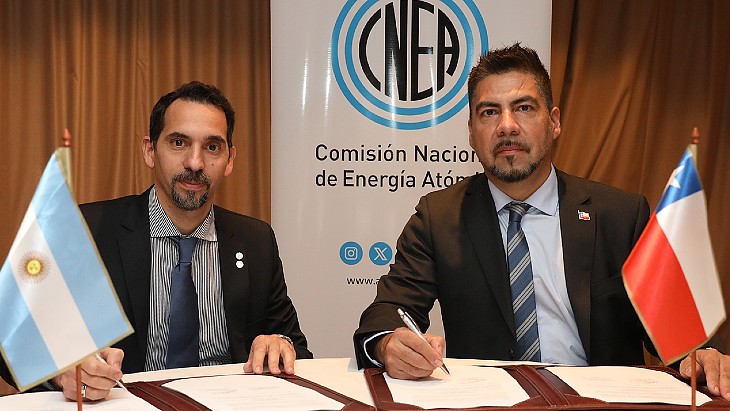
Chile and Argentina sign nuclear cooperation agreement


Collaboration between Chile and Argentina will focus on research reactors, radiopharmaceuticals, applications of nuclear technology in health, agriculture, industry and mining as well as other areas.
 
(Image: CCHEN)

The two countries have had agreements on cooperation in the area of peaceful uses of nuclear technology dating back to 1976.

This latest agreement was signed by representatives of Argentina's National Atomic Energy Commission (CNEA) and the Chilean Nuclear Energy Commission (CCHEN).

It was signed for the Argentine side by CNEA President Martin Porro, who called it "an important milestone in the field of bilateral and regional cooperation, given that the Chilean Nuclear Energy Commission is an institution with which we have been working closely for years on a wide variety of issues, including within the framework of International Atomic Energy Agency initiatives such as the Latin American Research Reactor Network".

Richard Gonzalez, acting executive director of Chile's CCHEN, said: "We are very pleased to have consolidated and finalised this cooperation and mutual collaboration agreement. This will boost science and technology in our country … working in collaboration with the CNEA allows us to enhance our technological development in Chile."

The form of cooperation set out in the agreement includes information exchange technical visits and joint research and technological development projects and programmes.

The two organisations said the areas covered are: research reactors and their applications; radiopharmaceuticals; applications of nuclear technology in health, agriculture, industry and mining; nuclear and radiological safety; human resource training; used fuel management; modernisation and management of technological aging, especially of nuclear reactors; and scientific and technical assistance in nuclear power.

Argentina has three nuclear reactors generating about 7% of its electricity. Its first commercial nuclear power reactor began operating in 1974. It had been developing the CAREM25 small modular reactor, but work on that has been halted under the current government. Uranium exploration and some mining was carried out from the mid-1950s, but the last mine closed in 1997 for economic reasons. It also has a long history with research reactors, including the RA-10 research reactor which is currently under construction.

The Chilean Nuclear Energy Commission has operated the RECH-1 research reactor since 1974. This reactor is located at La Reina Nuclear Centre in Santiago. It is a 5 MW pool-type reactor using low-enriched uranium fuel assemblies, light water as moderator and coolant, and beryllium as reflector. The main use of the RECH-1 reactor is the production of radioisotopes, mainly for medicine. In addition, irradiation of samples is carried out for chemical analysis and geological material, for purposes of determining age and preparing radioactive tracers. Chile does not have any nuclear energy plants, but there have been various proposals to develop some in the past.

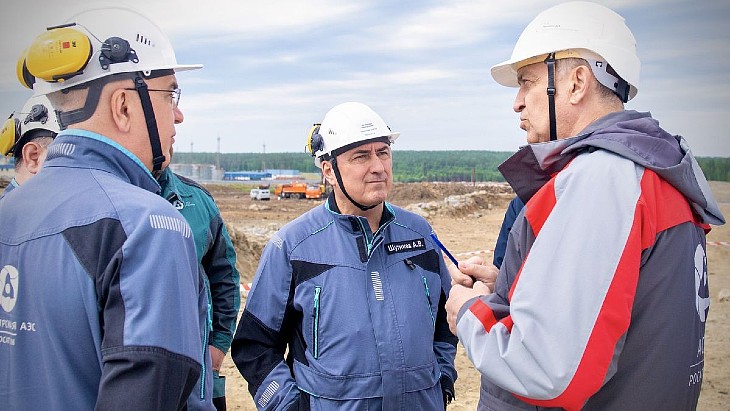
BN-1200 targeted for construction start in 2027


Site clearance work has been taking place for the proposed sodium-cooled fast neutron BN-1200 reactor at Beloyarsk Nuclear Power Plant.
 
(Image: Rosatom)

The unit, which will be the fifth at the site in Russia's Sverdlovsk region, will become the world's largest fast-neutron reactor.

The sodium-cooled BN-series fast reactor plans are part of Rosatom's project to develop fast reactors with a closed fuel cycle whose mixed-oxide (MOX) fuel will be reprocessed and recycled. In addition to the BN-600 reactor at Beloyarsk unit 3, which began operation in 1980, the 789 MWe BN-800 fast reactor at Beloyarsk unit 4 entered commercial operation in October 2016. This is essentially a demonstration unit for fuel and design features for the larger BN-1200, which will be unit 5 at Beloyarsk.

Details of the proposed construction timelines came during a visit to the site by Rosenergoatom CEO Alexander Shutikov (see picture above), where he heard that 1.4 million cubic metres of waste soil and vegetation have been cleared from the site.

Site preparation for drilling and blasting operations and site planning are scheduled to be ready this summer, reported Yuri Nosov, director of the power plant.

And Shutikov said: "Our primary focus now is completing the design documentation for submission to the Main Directorate of State Expertise of Russia, with the goal of receiving a conclusion on the design documentation for the main construction period by the end of 2026. The next step is to obtain a licence to construct the power unit in the spring of 2027."

He said the target for first concrete was by the end of 2027. When the preliminary phase for construction of the unit was launched in July last year by Rosatom Director General Alexei Likhachev, 2034 was reported as the target date for completion.

Rosatom says the service life of the BN-1200 power unit will be at least 60 years. Its design uses technical solutions that have proven themselves in the operation of the BN-600 and BN-800 reactors, but also features innovations. For example, the BN-1200 will have four instead of three loops for the circulation of liquid sodium, like its predecessors; the volume of the in-reactor storage facility will be increased to allow the unloading of fuel assemblies from the reactor directly into the used fuel pool, eliminating the intermediate drum for used assemblies; and the turbine condensers will be cooled using a chimney-type evaporative cooling tower.

In April last year Russia's nuclear regulator Rostechnadzor gave the go-ahead for the BN-1200 reactor. The licence was issued after the consideration of a package of documents covering the safety of the power unit and its compliance with technical regulations, federal rules and standards and legislation, Rosatom said.

It says that the fourth generation units "have the potential to radically transform the nuclear energy industry, primarily through a new level of safety, an expanded fuel mix, and a significant reduction in radioactive waste" and contributing to a closed nuclear fuel cycle.


Japan, Kazakhstan extend cooperation on fast reactors

The Japan Atomic Energy Agency and Kazakhstan's National Nuclear Centre have agreed to a new phase of their joint core safety experiments of fast reactors, which focus on severe accident mitigation measures for demonstration fast reactors.
 
The signing of the memorandum of cooperation in in Almaty, Kazakhstan, on 3 June (Image: NNC RK)

The Japan Atomic Energy Agency (JAEA) and the National Nuclear Centre of the Republic of Kazakhstan (NNC RK) have been advancing the phased EAGLE Projects on core safety experiments of fast reactors since the early 2000s and implemented three phases: EAGLE-1, EAGLE-2, and EAGLE-3. It is aimed at advancing the safety of sodium-cooled fast reactors, including the investigation of phenomena associated with severe accidents involving core melt. The project includes studies of molten core material behaviour and its interaction with sodium coolant and structural materials through both in-pile and out-of-pile experiments. In-pile tests are conducted at NNC RK's unique IGR research reactor, while out-of-pile studies are performed at the EAGLE test-bench.

About 200 preparatory tests have been carried out, along with two intermediate-scale and nine full-scale reactor experiments, as well as more than 65 out-of-pile tests at the EAGLE test-bench. The EAGLE-1, EAGLE-2, and EAGLE-3 experimental programmes have been successfully completed, confirming that molten fuel is promptly discharged from the core in the event of a severe accident. In addition, with the support of Marubeni Utility Service Ltd, analytical and computational studies were performed to prepare the next phase of the EAGLE programme (the Post-EAGLE-3 project).

NNC RK Director General Erlan Batyrbekov and JAEA President Masanori Koguchi have now signed a memorandum of cooperation to undertake a fourth-phase cooperative research project - EAGLE-4 - and to promote core safety experiments toward the implementation of fast reactors while further strengthening collaboration between both institutions.

The EAGLE-4 project includes several in-pile experiments, twelve out-of-pile experiments, and a series of small-scale tests. The main objectives of this new phase are to test fuel assemblies for advanced Japanese Generation IV reactors, conduct research at the IGR reactor and other NNC RK facilities, and provide the scientific basis for the safety assessment of advanced nuclear technologies.

JAEA said it will conclude in coming months an implementation arrangement that defines the detailed specifications of the core safety tests to be implemented under the EAGLE-4 project and will proceed with the cooperative research with NNC RK.

NNC RK said it is in discussions with JAEA on the continuation of the EAGLE-4 project through to 2031.

Fast neutron reactors offer the prospect of vastly more efficient use of uranium resources than in conventional power reactors, as well as the ability to burn actinides. Fast reactors have operated in various countries since the 1950s, with some producing electricity commercially.

JAEA has a history of operating sodium-cooled fast reactors, such as Monju in Fukui Prefecture and the Joyo experimental fast reactor in Ibaraki Prefecture. However, the development of fast reactors in Japan was halted when the government decided to decommission Monju in 2016, following a series of problems, including leakage of sodium coolant in 1995.

In the strategic roadmap for fast reactor development adopted by Japan's Cabinet in December 2018, a policy was defined to assess the efficacy of various types of fast reactors to be developed following a technological competition among private-sector corporations. The roadmap was subsequently revised by the Cabinet decision on 23 December 2022, at which time two decisions were taken: firstly, to select a sodium-cooled fast reactor as the target of the conceptual design of the demonstration reactor, set to get under way in fiscal 2024; and secondly, to select a manufacturer to serve as the core company in charge of the fast reactor's design and requisite R&D which would proceed with technology development in accordance with the goals and policy directions established by the government.

In collaboration with domestic companies, JAEA is conducting research and development towards the implementation of fast reactors, including the conceptual design of a demonstration fast reactor and the development of severe accident mitigation technologies. A demonstration fast reactor is planned to operate by 2050.

Tanzania's stalled $1bn uranium project Mkuju River gains momentum after talks with Russian partners

Tanzania's stalled $1bn uranium project Mkuju River gains momentum after talks with Russian partners
/ bne IntelliNewsFacebook
By Brian Kenety June 10, 2026

Tanzania’s long-delayed Mkuju River uranium project has gained renewed political and investment momentum following President Samia Suluhu Hassan’s visit to Russia, with officials signalling that implementation is moving closer to full-scale development.

The project, which has been stalled for more than a decade, is being developed in Tanzania's Ruvuma region by Mantra Tanzania Limited, a subsidiary of Uranium One Group, which is wholly owned by Russia's state nuclear corporation Rosatom.

Uranium One was formerly a publicly traded Canadian uranium company, but it was acquired by Rosatom through its subsidiary Atomredmetzoloto (ARMZ) and taken private in 2013. According to the company, Mkuju River is a “world-class uranium development project” with the Nyota deposit among the largest uranium projects globally with a resource reserve of 152 million tonnes of ore.

Last year, Hassan signed a deal with Rosatom to build a $400mn uranium processing plant as part of a $1.2bn, 20-year plan to extract and process 300,000 tonnes of Tanzania’s massive reserves.

The newly revived Mkuju River project was effectively put on hold after the 2011 Fukushima nuclear accident triggered a prolonged downturn in uranium prices, making many planned uranium developments commercially unviable.

Improving uranium market fundamentals and renewed global interest in nuclear power, including across Africa, have since revived investor interest in the project.

Speaking to The Citizen, Minister for Minerals Anthony Mavunde said talks held in Moscow reinforced commitments between Tanzanian and Russian stakeholders involved in the project, which is central to the East African country’s ambitions to become a significant uranium producer.

“The visit has added significant momentum to the project,” the minister said, adding that key preparatory stages were already complete and that implementation was expected to accelerate.

Mantra Tanzania has previously commissioned a pilot uranium-processing facility to test extraction technology and support the design of the main industrial plant. The company has also issued tenders for infrastructure works at the site.

"Rosatom offers its cutting-edge uranium processing technologies to develop the distinctive geological potential of Tanzania. As with all our partners, we intend to advance cooperation with the country on the basis of equality and mutual understanding," Alexey Likhachev, Director General of Rosatom, said in a statement in July 2025.

"In doing so, Rosatom consistently adheres to the principles of sustainable development while strictly upholding high environmental and social standards. We are delighted to assist Tanzania in taking a pivotal step toward integrating into the global nuclear energy landscape."

Financing discussions are ongoing with Russian and Tanzanian lenders as developers seek capital for construction. Questions remain over long-term funding as the project’s special mining licence approaches expiry in 2028. Officials say renewal is possible under existing legal provisions.

As IntelliNews reported, Tanzania and Russia in June also agreed to expand cooperation in geological research, technical training and mining capacity building, building on long-standing Soviet-era ties.

Tanzania’s renewed focus on uranium comes amid a global shift towards low-emission energy sources, with the International Atomic Energy Agency recognising the country’s development potential and the World Nuclear Association listing it among countries with viable uranium resources.

According to project feasibility studies, Mkuju River could produce more than 4,000 tonnes of uranium annually, potentially positioning Tanzania as one of Africa’s leading producers.

Africa is an important source of uranium for the global nuclear industry, with mines in Namibia, Niger and South Africa accounting for about 14% of world uranium production, according to the World Nuclear Association.

Namibia remains the continent's largest producer, producing 8,000 tonnes annually, and the world's third-largest uranium supplier after Kazakhstan and Canada.

New uranium projects advance across the continent

Meanwhile, Aura Energy (ASX: AEE, AIM: AURA) is targeting a final investment decision (FID) for its Tiris uranium project in Mauritania by the end of 2026 after signing a memorandum of understanding (MOU) with a “major international nuclear utility” and advancing multiple funding options.

The Australian miner said in an update on June 2 that the non-binding MOU covers potential investment, uranium offtake and technical collaboration linked to the Tiris project, which would become Mauritania’s first uranium mine and the country’s first new mine in two decades.

Canada-based uranium developer Global Atomic Corporation (TSX: GLO, OTCQX: GLATF, FRANKFURT: G12) said last month it had secured renewed political backing from Niger’s military-led government for the Dasa uranium project, as the West African state seeks to strengthen mining investment and expand trade links following its post-coup diplomatic realignment.

Global Atomic said on May 26 that members of its executive team, led by chief executive Stephen Roman, met Niger President General Abdourahamane Tiani, Prime Minister Ali Lamine Zeine and Mines Minister Ousmane Abarchi during a visit to Niamey and the Dasa project site.

Niger's uranium mining sector had historically been dominated by French nuclear fuel company Orano S.A. (EPA: ORA), formerly Areva. But the country has continued to reposition its mining and foreign investment relationships since a July 2023 military coup, which triggered tensions with Western governments and regional bloc ECOWAS.

In December 2025, a Memorandum of Cooperation was signed between the Nigerien state company Timersoi National Uranium Company (TNUC) and Uranium One, intended to develop Russian cooperation in uranium mining. Under this partnership, the parties plan to obtain the necessary permits, conduct geological exploration of prospective deposits, and ultimately establish new uranium mining operations at those sites.

Issoufou Tsalhatou, Secretary General of TNUC, stated: "Niger has large-scale plans for developing its uranium mineral resource base and is interested in attracting Russian partners who have reference experience and competencies in managing mining projects based on safety principles. This approach establishes a solid foundation for the successful implementation of projects to develop the country's strategic resources."

Nuclear expansion underpins uranium demand outlook

Growing investment in nuclear power is helping to support uranium markets globally. While South Africa remains Africa's only nuclear power producer through the Koeberg plant, countries including Egypt, Ghana, Kenya, Nigeria and Rwanda are examining nuclear generation as part of their long-term energy strategies.

Egypt's El Dabaa nuclear project, being built by Russia's Rosatom, is expected to become Africa's second operational nuclear power programme and reflects broader interest in nuclear energy as a low-carbon source of baseload electricity. This trend has contributed to stronger long-term demand expectations for uranium and renewed interest in new mining projects such as Mkuju River.

The renewed investment push comes as utilities in Europe, Asia and North America seek to secure future uranium supply outside traditional markets following geopolitical disruptions and tightening global inventories. Uranium prices have strengthened sharply since 2021, supporting new project development across Africa’s mining sector.

Spot uranium prices climbed from below $30 per pound in 2020 to above $100/lb in early 2024 — the highest levels in more than 15 years — before easing back into the $70–80/lb range during 2025 and 2026. The rally has been driven by growing reactor demand, supply disruptions in major producing countries such as Niger and Kazakhstan, and increased long-term contracting activity by utilities seeking to secure future fuel supply.

Singapore’s nuclear question

Singapore’s nuclear question
/ Nicolas HIPPERT- UnsplashFacebook
By IntelliNews June 11, 2026

Surviving in a resource-scarce island city-state demands pragmatic realism. For Singapore, energy security on the densely populated island city-state has always been an issue.

And as revealed in a recent report by The Straits Times, Singapore has been looking long and hard into energy sources the island can still explore.

In a regulatory and technical milestone revealed in the same report, a recent study conducted by Singaporean authorities in collaboration with Swedish nuclear pioneer SKB International, has concluded that no major technical showstoppers would prevent the republic from safely storing high-level radioactive waste deep down and within its borders.

This research was originally commissioned back in 2023 by the Energy Market Authority (EMA) and the National Environment Agency (NEA), and the findings point to a calculated step forward. The data in the report backs a policy shift with the Singaporean government confirming that it will undergo a comprehensive country assessment by the United Nations' nuclear watchdog, the International Atomic Energy Agency (IAEA), in 2027. This assessment will have 19 critical operational parameters that will officially determine the nation’s capability to safely deploy nuclear reactors by as early as 2040.

The Olympic pool

For decades, the primary psychological and logistical barrier to nuclear adoption in Singapore has been a simple question of geometry: where do you put the waste on such a small island. The SKB International study directly addresses this question by breaking down the actual physical footprint of nuclear byproducts into a stark, highly humanised baseline comparison.

A standard 1-gigawatt (1GW) conventional large-scale reactor capable of powering roughly 700,000 homes produces approximately 370,000 litres of nuclear waste per year. To the average citizen, that volume sounds staggering. In reality, it fills just one-seventh (14.2%) of a single Olympic-sized swimming pool.

When placed in the context of a national landfill, the space constraints dissolve further. Singapore’s active Semakau Landfill has a volumetric capacity exceeding that of 11,000 Olympic-sized swimming pools. Only 5% of that annual nuclear byproduct is classified as high-level waste, such as spent uranium fuel rods containing plutonium-239, which carries a 240,000-year radiation decay timeline.

And given that the study verified that these compact waste isolation frameworks are fully compatible with Small Modular Reactors (SMRs), the advanced, lower-capacity systems (up to 300MW) that Singapore is actively monitoring for urban deployment, by translating complex nuclear physics into manageable spatial dimensions, the report shifts the domestic debate from a structural impossibility to a question of strict technical execution.

Granite shield

The geological foundation of Singapore’s nuclear ambitions lies right underneath its urban sprawl. Mark Lim, Chairman of the IEEE Nuclear and Plasma Sciences Society’s Singapore chapter, confirmed via The Straits Times that the city-state is uniquely positioned due to its well-characterised, remarkably stable bedrock. The central core of the island is anchored by the Bukit Timah granite formation, which stretches from Woodlands and Sembawang down through Bukit Batok, complemented by massive granite reserves on Pulau Ubin.

This specific granite is an exceptional natural vault. It is hard, dense, and highly impermeable, qualities that naturally block groundwater, and prevent any potential radionuclide migration. However, the EMA has urged strict caution. Because the SKB study was an initial desktop review, the state must now transition to intensive, physical on-site field surveys. Future exploratory drilling must prove that target granite sectors are completely unfractured and free of minor fault lines. In deep borehole storage, even a microscopic fracture path could allow groundwater to interact with containment canisters, making field verification the ultimate technical hurdle.

Navigating the psychology of density

Yet while the engineering parameters might look promising, nuclear energy specialists stress that the steepest challenge facing the Cabinet is not geological, but social. Matthew Chew, nuclear competency and strategy lead at engineering consultancy HY, pointed out in The Straits Times that Finland’s Onkalo repository, the world’s first operational deep granite tomb, set to go live later this year, took four decades of continuous public engagement, site selection disputes, and legislative ratifications to materialise. Finland succeeded because it built deep institutional trust with its population over generations.

Given Singapore’s extreme population density, introducing radioactive storage sites will require an unprecedented, highly transparent public education campaign. To mitigate localised anxieties and "Not In My Backyard" (NIMBY) types, early infrastructure designs suggest that any future disposal facility would likely be placed completely away from high-density residential zones. Instead, the repositories would be carved deep beneath less-developed state land sectors or hidden under a smaller but dedicated offshore island.

This careful management of information, holding onto the 2023 SKB findings until aligning them with the upcoming 2027 IAEA milestone, demonstrates the Singaporean government's signature risk-mitigation strategy. As the nation prepares to come under IEA scrutiny next year, the administration isn't just preparing a technical defence of its granite; it is beginning the delicate process of proving to global inspectors and its own citizens that a modern, high-tech city-state can safely master the atom.

China’s Nuclear Power Capacity Has Nearly Doubled Since 2016 – Analysis


By


From 2016 to 2024, China’s nuclear generation capacity increased 76% (24 GW), based on our International Energy Statistics (IES) data. According to the International Atomic Energy Agency’s Power Reactor Information System (PRIS), China added an additional 1.1 GW of nuclear power capacity in 2025 and 2.2 GW in 2026 (through May). China is continuing to build out its nuclear generating capacity and has 36 reactors under construction, accounting for more than 49% of total world nuclear construction, according to PRIS. 

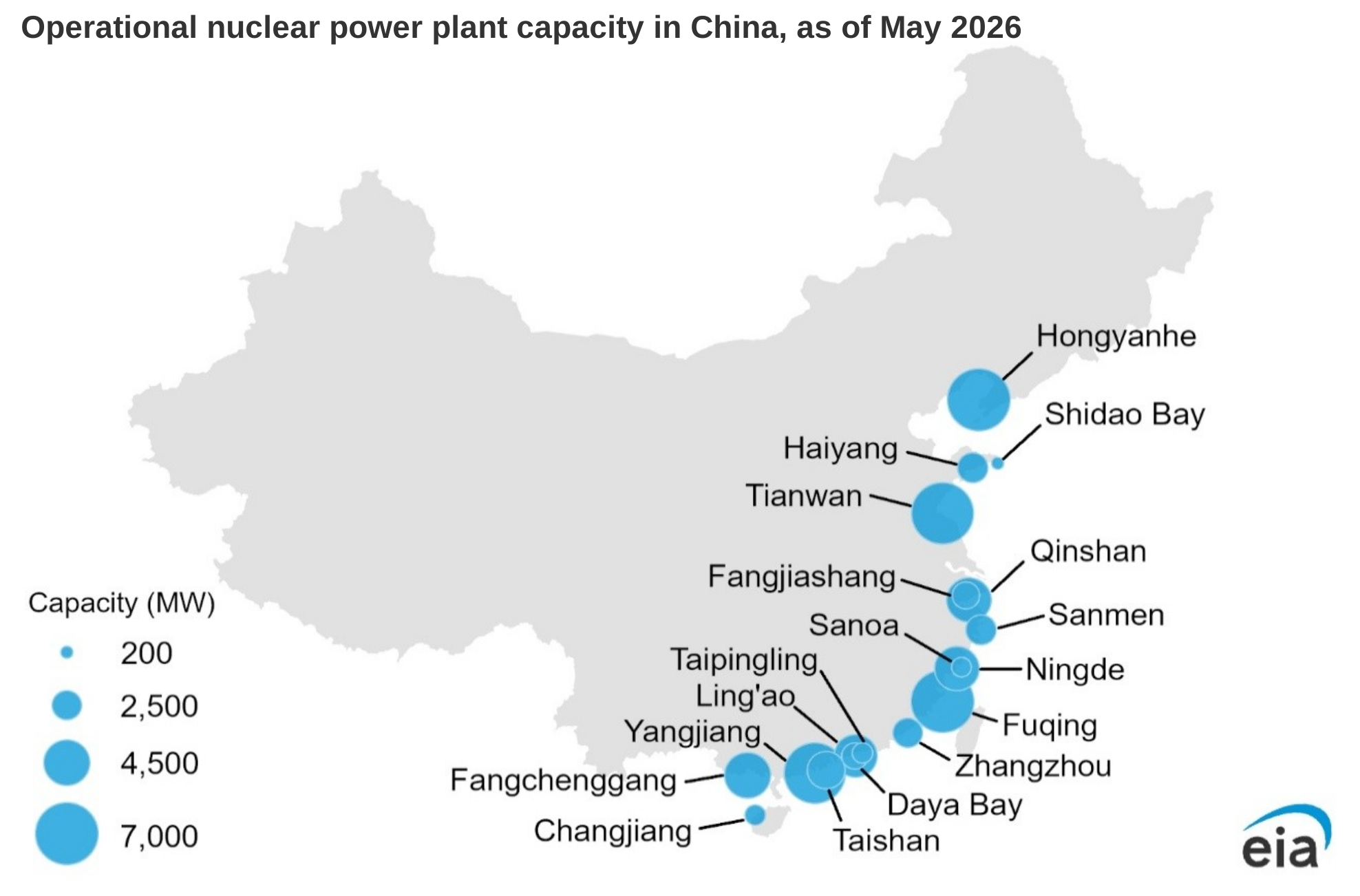
China’s nuclear fleet is concentrated near population centers in the eastern part of the country, along the Pacific Ocean coastline from the Liaoning province in the north to the Hainan province in the south. According to IAEA’s PRIS, China’s existing nuclear fleet mostly consists of pressurized water reactors

Operational nuclear power plant capacity in China, as of May 2026
Data source: U.S. Energy Information Administration, World Bank, Global Energy Monitor, Global Nuclear Power Tracker, and International Atomic Energy Agency Note:  MW=megawatts

As of May 2026, China had 60 operational reactors with 58.7 GW of total capacity installed at 18 different sites. China has also implemented strategies to help rapidly expand its nuclear power plant fleet. 

Nuclear projects in China use a standardized project management approach for design, licensing, and construction for multiple reactor technologies. Reactors are built in batches of 6 to 10 reactors to take advantage of economies of scale. China is also building up a nuclear supply chain with a focus on domestic manufacturing of the main plant components to decrease reliance on foreign nuclear vendors. 

Additionally, China’s average build time for nuclear power plants is below the global average. According to the World Nuclear Industry Status Report, 2022 the average build time for a nuclear power plant in China between 2012 and 2021 was six years, compared with a global average construction time of about nine years. More recent reporting in 2024 similarly indicates that Chinese firms built reactors both inside and outside of China in five to seven years. 

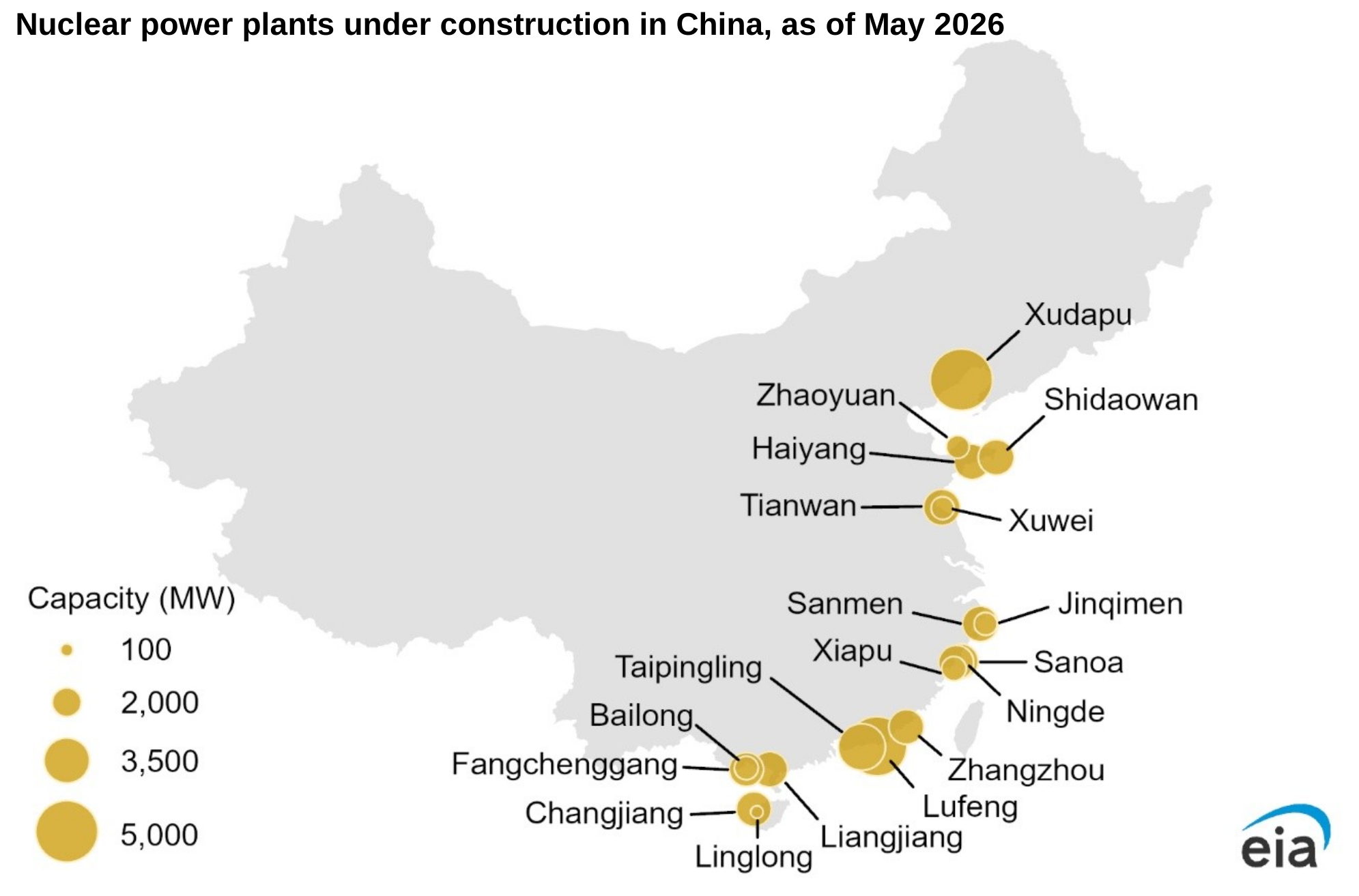
China started construction of six new reactors in 2025 and two new reactors, Xuwei-1 and Taipingling-4 in 2026 through May. China has also commissioned two new units so far in 2026: Sanao-1 and Taipingling-1. In total, China has 36 reactors under construction across 19 sites which will add about 38.9 GW of additional capacity

Nuclear power plants under construction in China, as of May 2026
Data source: U.S. Energy Information administration, World Bank, Global Energy Monitor, Global Nuclear Power Tracker, and International Atomic Energy Agency  Note:  MW=megawatts

China is building its first small modular reactor (SMR), the Linglong-1, a domestically designed 100 MWe pressurized water reactor that can be used for power generation, water desalination, and district heating. The project is intended to demonstrate commercial operation and is expected to start operation in the first half of 2026. The Linglong-1 uses the ACP100 SMR design, a modular design, allowing certain components to be built in a factory and installed onsite. 

  • Principal contributors: Slade Johnson, Jonathan Russo
  • Source: This article was published by EIA

About EIA

The U.S. Energy Information Administration (EIA) collects, analyzes, and disseminates independent and impartial energy information to promote sound policymaking, efficient markets, and public understanding of energy and its interaction with the economy and the environment.

View all posts by EIA →