Showing posts sorted by relevance for query KXL PIPELINE. Sort by date Show all posts

Saturday, July 23, 2022

Despite efforts to scapegoat Biden, Keystone XL Pipeline wouldn’t mean cheaper gas


Ted Williams
The Spectrum
Fri, July 22, 2022 

Pipeline used to carry crude oil is shown at the Superior, Wis., terminal of Enbridge Energy. The sponsor of the Keystone XL crude oil pipeline said last summer that it's pulling the plug on the contentious project, after Canadian officials failed to persuade the Biden administration to reverse its cancellation of the company's permit.

”A report that the Biden administration is weighing greater imports of Canadian oil is putting a renewed focus on the canceled Keystone XL pipeline and whether it would have made any difference with today’s tight oil supply.” -- Energywire

Ever since boycotts started blocking Russian petroleum products, social media has been rife with memes that blame rising gasoline prices on “the cancellation of the Keystone Pipeline.”

Example: “Sooo, if shutting down Russia’s pipeline(s) will hurt their economy, wouldn’t shutting down ours hurt our economy? Asking for a buddy.”

Most of the criticism comes from people who recycle truthiness. Former vice president Mike Pence: “Gas prices have risen across the country because of this administration's war on energy — shutting down the Keystone Pipeline.” Republican Rep. Jim Jordan: “Biden shut off the Keystone Pipeline.”

Here’s what really happened: No one shut down, canceled, or shut off the Keystone Pipeline. It is fully operational, daily delivering 590,000 barrels of tar-sands oil in Canada to U.S. refineries.

What some pipeline advocates think is the “Keystone Pipeline” is a 1,700-mile “shortcut” called Keystone XL, or KXL. It would have sliced through Montana, South Dakota, Nebraska, Kansas and Oklahoma to the Texas Gulf Coast, delivering 830,000 barrels of tar sands oil per day. Many residents of those states fought fiercely against the pipeline cutting through their land.


Now, “Build the Keystone Pipeline” has become a social-media mantra, as if the United States could so decree. It is the Canadian firm, TC Energy, formerly TransCanada, that officially terminated the project once President Biden withdrew its permits.

Even if construction on the pipeline began tomorrow, KXL could not be up and running in less than five years. The KXL pipeline was a project developed by a foreign company that would have delivered foreign oil products to mostly foreign markets.

When President Trump re-permitted KXL in 2017, his own State Department reported that it would not lower gasoline prices. The price of oil is set by the global market and certainly not by U.S. presidents. What’s more, the project was just about dead for a number of reasons, including litigation from aggrieved property owners whose land TC Energy seized by eminent domain.

We should also remember that rendering gasoline from tar-sands oil, the planet’s dirtiest petroleum, is far more polluting and energy-intensive than conventional refining. Some carbon content is burned off in a process that belches greenhouse gases and generates toxic waste called petcoke, which is dumped around the United States in piles six stories high. Petcoke billows through neighborhoods and infiltrates schools and houses even when windows are shut.


Bitumen, basically asphalt, continues to be strip-mined from what used to be Canada’s boreal forests in Alberta. Too thick to be piped, it’s spiked with volatile liquid condensate from natural gas and thus converted to a toxic tar-sands cocktail called ”dilbit,” short for diluted bitumen.

Dilbit, sent through the existing Keystone pipeline, contains chloride salts, sulfur, abrasive minerals and acids, and must be pumped under high pressure. It’s murder on pipes.

In addition to greenhouse gases and petcoke, tar-sands waste products include lakes, rivers, fish, wildlife and people. Between 1995 and 2006, when tar-sands extraction was accelerating, Alberta’s First Nations suffered a sudden 30 percent increase in cancer rates.

KXL, if built, also threatened the world’s largest aquifer — the Ogallala. Anyone who thinks Nebraska lacks water should visit Green Valley Township, where I encountered Ogallala water so close to the surface it flowed along dirt roads and ditches. Pintails, mallards, and widgeon billowed out of them. But parts of the aquifer are now depleted, and a major dilbit spill could finish those parts off.

In 2011 a pipeline representative named Shawn Howard assured me that ramming a dilbit pipe through the Ogallala aquifer would be risk free.

“Why,” he demanded, “would we invest $13 billion in a pipeline and put a product in it that was going to destroy it like these activists are trotting out? It makes absolutely no business sense.”

The existing Keystone pipeline has ruptured 22 times, including spills in 2017 and 2019 that fouled land and water with 404,000 gallons of dilbit. Business sense, as the oil industry consistently reminds us, is an attribute more often desired than possessed.

Ted Williams is a contributor to Writers on the Range, writersontherange.org, an independent nonprofit dedicated to spurring conversation about the West. He writes about fish, wildlife and the environment for national publications.


This article originally appeared on St. George Spectrum & Daily News: Writers on the Range: 'Keystone Pipeline' wouldn't make gas cheaper

Monday, January 25, 2021

WE OWN TRANS MOUNTAIN, KENNEY BET AGAINST IT

Canada's Trans Mountain pipeline sees fortunes shine after KXL's demise

WITH TAXPAYERS MONEY 

By Rod Nickel and Steve Scherer
© Reuters/DENNIS OWEN FILE PHOTO: 
Steel pipe for Canadian government’s Trans Mountain Expansion Project lies at a stockpile site in Kamloops

WINNIPEG/OTTAWA (Reuters) - The expansion of Canada's government-owned Trans Mountain pipeline assumes greater importance for the oil sector after the cancellation of rival Keystone XL reduced future options to carry crude, potential buyers say.

Trans Mountain Corp, a government corporation, is spending C$12.6 billion ($9.9 billion) to nearly triple capacity to 890,000 barrels per day (bpd), a 14% increase from current total Canadian capacity.

Prime Minister Justin Trudeau's government bought the 68-year-old pipeline in 2018 when previous owner Kinder Morgan faced legal hurdles to expand the 1,150-kilometre (715-mile) line running from Alberta to the British Columbia coast. Ottawa has always said it would find new owners.

This week, U.S. President Joe Biden revoked the presidential permit for TC Energy's Keystone XL pipeline (KXL), undoing efforts by former President Donald Trump to build the line that would have supplied U.S. refiners with 830,000 bpd of Canadian oil.

That decision has made the case for completing Trans Mountain's expansion stronger.

"This pipeline is even more valuable now," said Joe Dion, chief executive of Western Indigenous Pipeline Group, one of several First Nations groups interested in buying Trans Mountain.

"Everybody thought Trudeau wasn't going to get things done in Canada, and he's the one who successfully got a pipeline over Trump."

Trans Mountain takes on more strategic importance with KXL cancelled, but it does not mean his group would pay more for it, Dion said.

Trans Mountain has completed 22% of the expansion project, called TMX, which is scheduled for service in December 2022. Suncor Energy Inc, Canadian Natural Resources Ltd and BP PLC are among the committed shippers who have secured 80% of its additional capacity long-term.

"All eyes are on TMX," said Delbert Wapass, executive chair of Project Reconciliation, a First Nations coalition that hopes to buy 51% this year.

Sharing Trans Mountain's profits would help improve living conditions on First Nations, he said.


Canadian companies have long struggled to secure top price for their crude as pipeline congestion forced them to sell at a discount.

However reduced fuel demand due to pandemic travel lockdowns and advancing pipeline expansions have eased the flow. Even without KXL, Canada may have surplus export pipeline capacity once TMX enters service, said Matt Taylor, director of infrastructure research at investment bank Tudor Pickering Holt, who expects modest oil production growth to 2025.

Ottawa plans to sell the pipeline once there are fewer risks to completion and consultations wrap up with First Nations, said Finance Ministry spokeswoman Katherine Cuplinskas. TMX has faced stiff opposition over spill concerns.

A second government source said it bought Trans Mountain for its strategic importance, as its Pacific Ocean connection enables shippers to move oil to Asia, as well as the United States, which buys most Canadian crude.


Now its importance is even greater, the source said.

Enbridge Inc, which runs North America's Mainline oil network, also stands to gain from KXL's demise. It intends to sell long-term contracts for most of the Mainline's capacity, pending regulator approval, rather than continue to ration it on the spot market.

KXL's cancellation frees up long-term commitments by shippers who may now sign Mainline contracts, Taylor said.


Farmers are concerned about higher long-term rail volumes following the cancellation of the Keystone XL Pipeline. Jackie Wilson reports.

($1 = 1.2710 Canadian dollars)

(Reporting by Rod Nickel in Winnipeg and Steve Scherer and Julie Gordon in Ottawa; Editing by Marguerita Choy)

Wednesday, January 27, 2021

Canada’s Trans Mountain pipeline sees fortunes shine after KXL’s demise

January 25, 2021 Reuters

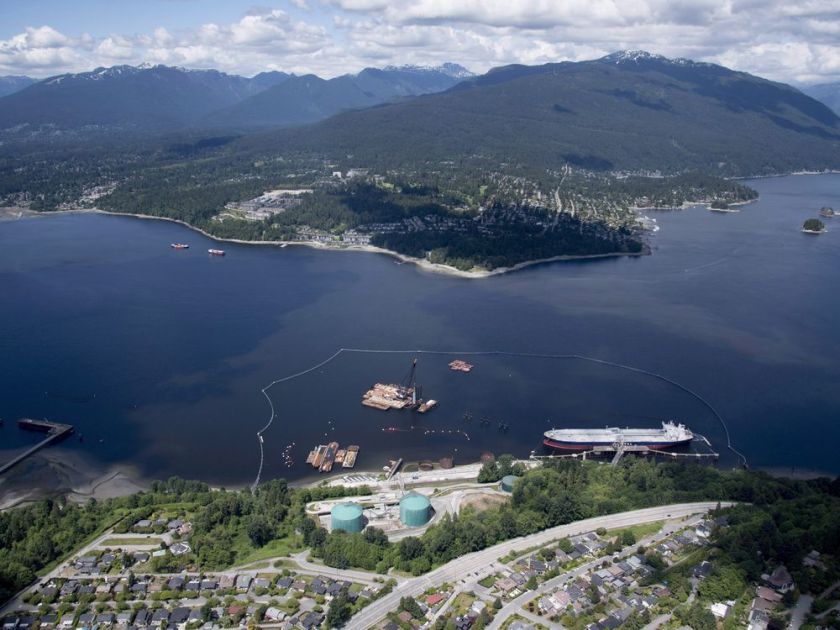
A aerial view of Kinder Morgan's Trans Mountain marine terminal, in Burnaby, B.C.The expansion of Canada’s government-owned Trans Mountain pipeline assumes greater importance for the oil sector after the cancellation of rival Keystone XL reduced future options to carry crude, potential buyers say.

Trans Mountain Corp, a government corporation, is spending C$12.6 billion ($9.9 billion) to nearly triple capacity to 890,000 barrels per day (bpd), a 14% increase from current total Canadian capacity.

Prime Minister Justin Trudeau’s government bought the 68-year-old pipeline in 2018 when previous owner Kinder Morgan faced legal hurdles to expand the 1,150-kilometre (715-mile) line running from Alberta to the British Columbia coast. Ottawa has always said it would find new owners.

This week, U.S. President Joe Biden revoked the presidential permit for TC Energy’s Keystone XL pipeline (KXL), undoing efforts by former President Donald Trump to build the line that would have supplied U.S. refiners with 830,000 bpd of Canadian oil.

That decision has made the case for completing Trans Mountain’s expansion stronger.

“This pipeline is even more valuable now,” said Joe Dion, chief executive of Western Indigenous Pipeline Group, one of several First Nations groups interested in buying Trans Mountain.

“Everybody thought Trudeau wasn’t going to get things done in Canada, and he’s the one who successfully got a pipeline over Trump.”

Trans Mountain takes on more strategic importance with KXL cancelled, but it does not mean his group would pay more for it, Dion said.

Trans Mountain has completed 22% of the expansion project, called TMX, which is scheduled for service in December 2022. Suncor Energy Inc, Canadian Natural Resources Ltd and BP PLC are among the committed shippers who have secured 80% of its additional capacity long-term.

“All eyes are on TMX,” said Delbert Wapass, executive chair of Project Reconciliation, a First Nations coalition that hopes to buy 51% this year.

Sharing Trans Mountain’s profits would help improve living conditions on First Nations, he said.

Canadian companies have long struggled to secure top price for their crude as pipeline congestion forced them to sell at a discount.

However reduced fuel demand due to pandemic travel lockdowns and advancing pipeline expansions have eased the flow. Even without KXL, Canada may have surplus export pipeline capacity once TMX enters service, said Matt Taylor, director of infrastructure research at investment bank Tudor Pickering Holt, who expects modest oil production growth to 2025.

Ottawa plans to sell the pipeline once there are fewer risks to completion and consultations wrap up with First Nations, said Finance Ministry spokeswoman Katherine Cuplinskas. TMX has faced stiff opposition over spill concerns.

A second government source said it bought Trans Mountain for its strategic importance, as its Pacific Ocean connection enables shippers to move oil to Asia, as well as the United States, which buys most Canadian crude.

Now its importance is even greater, the source said.

Enbridge Inc, which runs North America’s Mainline oil network, also stands to gain from KXL’s demise. It intends to sell long-term contracts for most of the Mainline’s capacity, pending regulator approval, rather than continue to ration it on the spot market.

KXL’s cancellation frees up long-term commitments by shippers who may now sign Mainline contracts, Taylor said. 

Tuesday, January 26, 2021

Posthaste: Don’t write off Canadian pipeline companies just yet — there is plenty of growth left post-KXL


© Provided by Financial Post Steel pipe to be used in the oil pipeline construction of the Canadian government’s Trans Mountain Expansion Project lies at a stockpile site in Kamloops, British Columbia.


Good morning!

Canada’s pipeline sector was shaken up by U.S. President Joe Biden’s decision to nix TC Energy Corp.’s Keystone XL pipeline, but don’t write off the industry — and TC Energy — just yet, analysts say.

RBC Dominion Securities Inc. analyst Robert Kwan argues that a decade-long cliffhanger surrounding KXL’s construction was weighing down on TC Energy’s stock and its cancellation ‘cleans up the story’, as it allows investors to focus on the company’s other businesses.


“From a financial perspective, we calculate a modest reduction in EPS (earnings per share) associated with ceasing the booking of capitalized interest, partially offset by not recording non-controlling interest expense associated with the Alberta government’s funding,” Kwan wrote in a note for clients on the weekend.

The Alberta government had committed $1.5 billion to the project last year, with another $6 billion in loan guarantees.

While the analysts’ optimistic notes present a less than bleak picture, the industry now has one less route to the market. Expect environmental groups to turn their attention to the federally-funded Trans Mountain pipeline and Enbridge Inc.’s Midwest pipelines such as Line 3 and Line 5.

Citibank notes that Canadian oil producers don’t need any increase in pipeline capacity, at least over the next two years.

“We remain WCS (Western Canada Select benchmark) bulls and do not see President Biden’s cancellation of KXL as a material headwind to our 2-year view,” wrote Prashant Rao, analyst at Citibank.

However, if Enbridge’s Line 3 expansion and Trans Mountain expansion fails to materialize, “we see the potential for a return to Canada’s historic egress crunch come 2023, but note that Alberta’s authority to resume issuing production quotas remains in the background throughout,” Rao added.

Scotiabank analyst Robert Hope believes that while the KXL cancellation could impact TC Energy’s growth prospects, it also removes a large equity funding requirement and should help the company de-lever.

“TC Energy’s shares have under-performed its peers since the fall, which we attribute to the loss of KXL, but also a flow of funds from TC Energy, which we view as the lowest risk name in the energy (space), into companies with more torque to higher oil prices,” Hope noted. “We view TC Energy as a high quality name at an attractive valuation at a 2021 PE of 13.5x and free cash flow yield of 10.2 per cent. With KXL behind them we believe the narrative on the shares could improve.”

TC Energy’s shares closed $56.39 on Friday, stable after closing at $56.57 per share a day before Biden’s executive order killed the project. Scotiabank has a 12-month target price of $69 on the stock, albeit lower than the $72 per share previously.

BMO Capital Markets also remains optimistic about the prospects of Canadian midstream companies such as Enbridge, TC Energy and Gibson Energy Inc., with the caveat that greater focus on carbon reduction could see profit margins being squeezed over the long term.

“The more aggressive carbon-reduction Net Zero (1.5°C) scenario appears to be already reflected fully in the share prices of GEI (Gibson), ENB, and TRP, but points to 20 per cent downside from current levels for the other midstream companies,” such as Keyera Corp., Inter Pipeline Ltd. and Pembina Pipeline Corp.

“That said, we view the most damaging Net Zero scenario as somewhat of an unrealistic outcome given it would require significant cost and change in societal preferences,” BMO analyst Ben Pham wrote in a note.

Also remain on the look out for consolidation news. Calgary-based investment bank Peters & Co. expects mergers to continue to play a larger role in TC Energy’s growth path, as the company aims to maintain its 5-7 per cent annual growth path.

In addition, the new Biden Administration’s efforts to restrict U.S. production, such as the temporary bans of new oil and gas leasing, could curtail American crude energy production, providing an opening for Canadian fossil fuel products.

“Against a backdrop where we could see U.S. natural gas demand move higher driven by environmental regulations(e.g., coal-to-gas switching), this has the potential to be positive for Canadian production, particularly natural gas,” RBC’s Kwan said.

Sunday, April 04, 2021


Opinion: With Keystone cancelled, we must resuscitate Northern Gateway


THEY NEVER GIVE UP 
THIS ROUTE GOES THROUGH CONTESTED INDIGENOUS LANDS

Special to National Post 4/3/2021

U.S. President Joe Biden’s Day 1 decision to cancel the Keystone XL (KXL) pipeline is still being heavily litigated in the American press — and is now in the courts, with 21 states’ attorneys general filing suit. Even Democratic governors and senators like Joe Manchin are writing letters asking for a reversal of the decision due to its negative economic, environmental and strategic consequences.
© Provided by National Post The Enbridge Edmonton Terminal.

For the Americans, the country’s recent loss of energy independence combined with the cancellation of KXL and the Texas blackouts highlighted the fragility of energy supply and, stunningly, has increased essential imports from Russia, and OPEC states that don’t share its democratic values.

For Canada, however, the KXL cancellation has generated a different debate. Being dependent on the whims of U.S. politics for our largest and most valuable export is a strategic vulnerability. It hinders our ability to make sovereign decisions, which hinders our ability to make progress on the economy and the environment. It is time to change that. We need to build Canadian-controlled access to global energy markets. This means building the necessary infrastructure immediately.

The Trans Mountain (TMX) pipeline showed Canada that it’s possible to forge a public-private partnership on essential energy infrastructure that protects the public interest in balancing the economy and the environment. That pipeline is an important first step in giving Canadian energy companies direct access to growing Asian markets. Building the shelved Northern Gateway pipeline is the critical next step. It would offer a number of key benefits to Canadians.

First, it would expand Canada’s global economic reach and create thousands of jobs at a critical time for the economy. Canada thrives on supplying essential resources globally, and our growing and more efficient energy sector is now strong enough to move away from being reliant on the U.S.

As the U.S. oil industry is in free fall, Alberta has emerged as the most competitive major oil producer in the free world, hitting its all-time record oil production last quarter. Canada has more reserves than Russia, China and the U.S. combined. With our leaner and cleaner production positioned to grow another 25 per cent over the next decade, by 2030, Canada is expected to account for one-quarter of the entire free world’s oil production.

National infrastructure is a prerequisite to meeting these targets and growing our economy. When the U.S. cancels a project like KXL due to its own domestic politics, Canada cannot be seen as helpless. We have to act decisively to replace the lost capacity. Northern Gateway will add back 65 per cent of the oil that would have flowed through the KXL pipeline by 2025. It will also pivot that supply away from the U.S. to high-demand Asian markets, buttressing our sovereign economic and strategic relevance across Asia.

Second, Canada leads global energy markets with the best environmental, social and governance practices in the world, including methane regulation, water use and local stakeholder engagement — all while leading the world in decarbonizing oil production.

Since the Kyoto Accord, Alberta has reduced emissions per barrel by over 40 per cent. The average Canadian barrel is now cleaner than a barrel from California. Our recent projects are even better, and the latest study from researchers at the University of Calgary, University of Toronto and Stanford University found that, since 2018, oilsands emissions have been reduced far faster than initial models indicated, with our pace of decarbonization increasing.

Canadian barrels are getting cleaner, and this comes with cost savings that make our production leaner. This cleaner and leaner production is a double threat to state dictatorships that control 80 per cent of global reserves and place far lower value on ethical production commitments.

Third, we need to increase our ability to export our leaner and cleaner energy to Asian markets. Asia has 3.4 billion people who live in energy poverty. They need real solutions right now. With the right infrastructure, Canada can meet the needs of the emerging Asian middle class with cleaner Canadian energy solutions. Asia is the most important growth market for energy in the world and will take all of Northern Gateway’s 525,000 barrels per day the moment it is completed.

By the end of the decade, if Northern Gateway were built, Canada could be exporting five million barrels per day — 3.6 million to the U.S. and 1.4 million to Pacific tidewater. This pivot from our over-dependency on the U.S. will direct 30 per cent of our supply to key Asian markets, buttressing our commercial relevance and, with it, our soft power and diplomatic influence, particularly with China and India.

Canada can do this if we follow the model set by TMX. Following the government’s acquisition of TMX, a federal court decided that there had been insufficient Indigenous consultations and inadequate studies on how to minimize the impact of coastal tankers on marine life.

This led the government to conduct best-in-class consultations and marine studies, which in turn let the pipeline proceed. Like ports, airports and other public infrastructure, TMX showed that the government can play an essential role in funding and building essential Canadian energy infrastructure.

When TMX is completed in 2022, the government can use the assembled expertise and the proceeds from its subsequent sale to help finance Northern Gateway, and add best practices on tankers and Indigenous ownership to the original plan. This is a perfect moment to demonstrate to the world that Canada has the will and the capacity to build our own sovereign infrastructure to access markets and defend our economic and strategic interests globally.

Canada can meet Asia’s growing need for energy while leading the world in decarbonizaton, ethical production and environmental regulation. Building Asia-facing infrastructure is key to economic growth, jobs and our strategic relevance in that part of the world. Canada can do more in the world, and the world needs more of what we have to offer. Following TMX with Northern Gateway is an opportunity worth pursuing.

National Post

David Knight Legg is chairman of the ESG Working Group of the Province of Alberta and CEO of Invest Alberta Corporation. Adam Waterous is founder and managing partner of Waterous Energy Fund, a deep value, special situations investor in established North American oil and gas assets.

Friday, February 21, 2025

Tariffs could force ‘rebalancing away’ from U.S. for oil exports: Cenovus
February 20, 2025


Cenovus Energy logos are on display at the Global Energy Show in Calgary, Alta
 THE CANADIAN PRESS/Jeff McIntosh

The threat of U.S. tariffs on Canadian energy won’t affect planned spending by Cenovus Energy Inc., but the company says such levies may prompt a “rebalancing away from the United States” when it comes to where it ships its oil.

U.S. President Donald Trump’s plan to slap widespread tariffs on U.S. imports of Canadian goods is on hold until March. Trump had previously signed an executive order that would impose a 10 per cent tax on Canadian energy products, along with 25 per cent tariffs on all other goods.

Speaking on Cenovus’s fourth-quarter earnings call on Thursday, president and CEO Jon McKenzie said the tariffs could affect “so many of the variables that impact our cash flow,” including oil prices.

“But there’s also knock-on impacts on the price of condensate, the price of natural gas, which are all inputs to our business,” McKenzie told analysts.

He added U.S. refining margins and foreign exchange rates could also take a hit if the tariff threat comes to pass.

“So when you look at the spectrum of all the things that impact our cash flow, it’s really not clear to us who’s going to pay which portion of the tariff, as well as what the overall impact would be to the company,” he said.


“If we are in a world, unfortunately, in March where tariffs do come, we will watch those price signals and react accordingly.”

That could include a pivot when it comes to where oil products transported along the Trans Mountain pipeline are exported, said Geoff Murray, executive vice-president of commercial for Cenovus.

“I think we would see ... a rebalancing away from the United States and the balance to head globally,” he said.

There has generally been a 50/50 split between California and Asia for deliveries of oil transported along the pipeline, said Murray.

“Without tariffs, that continues unabated. Should tariffs show up, that would obviously look to an economic reason for rebalancing,” he said.

“We expect that would obviously drive as much volume as possible through Trans Mountain, perhaps beyond the contracted capacity, provided that volume can find a home out the dock, and then it would preferentially head globally, rather than to California.”

Asked if the tariffs would affect Cenovus’s spending plans for 2025, McKenzie said the company has already limited its capital spending to “fairly modest levels” and is in the process of completing a few major projects.

“I don’t think there’s anything on the tariff side that would change any of our operating plans this year or in the near future,” he said.

McKenzie highlighted milestones associated with a few of its projects in the fourth quarter, including the mechanical completion of the Narrows Lake pipeline.

The 17-kilometre pipeline connecting its Narrows Lake oilsands reservoir to its Christina Lake main processing facility is expected to result in up to 30,000 barrels per day of additional production from the site, starting in mid-2025.


Mechanical work was also completed on the concrete gravity structure and topsides for the West White Rose project off the coast of Newfoundland.

West White Rose, a multi-billion-dollar extension of the existing White Rose offshore oilfield, is now 88 per cent complete and on pace to produce its first oil in 2026, McKenzie said.

On Thursday, the Calgary-based company reported its fourth-quarter profit and revenue fell compared with a year ago as it saw lower oil and natural gas prices.

Cenovus said it earned $146 million or seven cents per diluted share for the quarter ended Dec. 31, down from $743 million or 32 cents per diluted share in the final three months of 2023.

Cenovus said its adjusted funds flow amounted to 87 cents per diluted share in its latest quarter, down from $1.08 per diluted share a year earlier.

Revenue totalled $12.8 billion, down from $13.1 billion a year earlier.

Total upstream production for the quarter amounted to 816,000 barrels of oil equivalent per day, up from 808,600 a year earlier. Downstream throughput amounted to 666,700 barrels per day, up from 579,100 in the fourth quarter of 2023.

Cenovus’s net debt at the end of 2024 was $4.6 billion, an increase of around $420 million from the previous quarter. It was also above the company’s target of $4 billion, a milestone it had previously reached in its second quarter.

McKenzie said the net debt increase reflected a weakened Canadian dollar, a temporary buildup in inventory of around 22,000 barrels per day, along with its share buyback program.

Sammy Hudes, The Canadian Press

This report by The Canadian Press was first published Feb. 20, 2025.


Canada Revives Old Oil Pipeline Ideas Amid U.S. Trade Spat
  WAR


By Tsvetana Paraskova - Feb 19, 2025

The heavy dependence on the United States for Canadian oil exports has rekindled talk about resuscitating previously abandoned Alberta-to-coast pipeline projects that would give Canada access to more markets.

Over the past decade, only one pipeline made it through all the protests.

With tariffs and trade war back on the table for Canada’s economy, politicians and pipeline industry executives say that the narrative has shifted.


The U.S. tariff threat was a wake-up call for Canadian policymakers that the federal and provincial governments may have too hastily scrapped over the past decade Alberta-to-coast pipeline projects that could have diversified Canada’s oil and gas exports.

Everyone in Canada agrees that energy exports are the biggest leverage the country has in a trade war with its neighbor to the south.

Canada supplies around 60% of all U.S. oil imports. The oil province of Alberta alone supplies 56% of all U.S. oil imports—twice as much as Mexico, Saudi Arabia, and Iraq combined, Alberta Premier Danielle Smith says.

But the heavy dependence on the United States for Canadian oil exports has rekindled talk about resuscitating previously abandoned Alberta-to-coast pipeline projects that would give Canada access to more markets.

Over the past decade, only one pipeline made it through all the protests. The Trans Mountain Expansion Project, after it was abandoned by Kinder Morgan and purchased by the federal government, tripled the capacity of the original pipeline to 890,000 bpd from 300,000 bpd to carry crude from Alberta’s oil sands to British Columbia.

For other projects, it’s all just talk for now. No company is officially proposing reviving any scrapped pipeline plan, but politicians outside of Alberta have started to realize that things could change as the rules of the game have changed.

There has been talk of the scrapped projects Energy East, which would have delivered oil from Alberta east to Ontario and Quebec shores, and of Northern Gateway, which would have run from north of Edmonton in Alberta to Kitimat on British Columbia’s North Coast.

These two projects were scrapped between 2016 and 2017. Back then, Canada’s federal government led by Justin Trudeau was rejecting oil and gas projects on environmental grounds. In addition, green activists’ opposition in provinces other than Alberta was killing off many attempts of Alberta-based oil producers and pipeline operators to have pipelines built to Canada’s shores—and not only those going straight south to the biggest refining centers in the U.S.

With tariffs and trade war back on the table for Canada’s economy, politicians and pipeline industry executives say that the narrative has shifted.

Earlier this month, Canada’s Industry Minister, François-Philippe Champagne, said that the country may need an Alberta-East Coast pipeline.

“Things have changed … you cannot be in the past,” Champagne told CTV in an interview on February 9.

“We cannot be dependent,” the minister said.

Canadians have increased their support for Alberta-to-coast pipelines. Public support to revive Energy East has jumped to 65% from 58% since 2019, with support in Quebec growing from 33% to 47%, a new poll from the non-profit Angus Reid Institute showed last week.

Northern Gateway (Alberta to B.C.) generates the support of a slight majority of Canadians, with one-quarter opposing it. Notably, Northern Gateway generates 55% support in British Columbia, with 32% opposition, the polling showed.

Among all Canadians, the majority, 63%, believe the economy would greatly benefit from the expansion of oil and gas pipeline capacity, according to the poll.

Compared to 18 months ago, Canadians are now also nearly twice as likely to emphasize economic growth as a key factor in deciding energy policy, with a corresponding decline in the importance of environmental concerns, a separate Angus Reid Institute poll found last week.


Canadian federal Natural Resources Minister Jonathan Wilkinson said earlier this month that Canada should consider a West-East pipeline as U.S. President Donald Trump’s tariffs threats exposed a “vulnerability” in Canada’s energy infrastructure.

“There are some vulnerabilities that we did not actually believe existed. We should be reflecting on the vulnerabilities and deciding whether there are some things we should do,” Wilkinson said.

Pipeline giants, however, are less enthusiastic—they had to cancel projects due to too much regulatory burden, opposition at federal and provincial level, and environmental campaigns against pipelines.

Enbridge, which had its Northern Gateway proposed pipeline scrapped by the federal government in the 2010s, says that Canada needs real change in many aspects of its regulatory and approval processes.


“For us to be willing to seriously consider reinvesting in a project like that, whether it's east or west or just west, we need to see real change on numerous fronts,” Enbridge’s president and CEO Greg Ebel said on the Q4 earnings call this month.


“We would need to see real legislative change at the federal and provincial government level that specifically identifies major infrastructure projects like Northern Gateway as being in the national interest and therefore legally required,” Ebel said.

Permitting changes and federal and provincial support for more energy would also help the potential revival of pipeline plans, the executive added, noting that there have been positive comments from Canada’s policymakers since the U.S. tariff threats.

“They're saying the right things, but it's going to take real actions, laws, regulation to attract the capital in our view,” Ebel concluded.

By Tsvetana Paraskova for Oilprice.com


Monday, February 01, 2021

Once united in support of Biden, environmentalists and unions clash over pipelines

Laura Sanicola and Nia Williams 
Reuters
Updated Sun., January 31, 2021
FILE PHOTO: Nathan Phillips marches with other protesters out of the main opposition camp against the Dakota Access oil pipeline near Cannon Ball

By Laura Sanicola and Nia Williams

NEW YORK (Reuters) - Environmentalists and labor unions that threw their support behind U.S. President Joseph Biden now find themselves on the opposite sides of a battle over the construction of big pipeline projects between Canada and the United States.

The United States is the world's largest producer of oil and gas. Biden's administration aims to transition the U.S. economy towards net-zero carbon emissions by 2050, and his initial moves towards that goal included cancelling a permit for the Keystone XL crude oil pipeline (KXL) and reducing oil-and-gas leasing.

The reaction from Biden's supporters, however, illustrates the challenge of managing the impact of the energy transition on different communities.

While climate activists celebrated KXL's demise, labor unions, reeling from the global oil downturn, have mobilized to keep ongoing projects from being derailed.

Mike Knisely, secretary and treasurer of the Ohio State Building and Construction Trades Council, which endorsed Biden, said he has been leaning on state officials to talk to the president about how his rapid-fire climate announcements are affecting his union membership's support.

"I tell them they need to get back with Biden and ask if this all really has to happen on Day Two of the new administration," Knisely said. "I just get so frustrated that there's almost no common ground (on pipelines) with the environmental community."

Climate groups have had successes in recent years, persuading large investors to reduce holdings in fossil fuel industries, as well as lobbying banks to shun investment in Arctic drilling.

But Biden was endorsed by a number of key labor unions that work on pipelines, refineries and other energy installations, including the International Teamsters and North America's Building Trades. Those unions celebrated the victory of a pro-labor president, but opposed the Keystone move, and are lining up against threats to the other pipelines.

Environmentalists see Biden as an ally in the battle to wean the United States off fossil fuels and stymie imports of carbon-intensive heavy crude from Canada's vast oil sands. They are intensifying efforts to shut three other pipelines: Enbridge Inc's Line 3 and Line 5, and Energy Transfer's Dakota Access Pipeline (DAPL).

Unlike KXL, these three lines are all currently in service. The Enbridge lines deliver crude oil and fuels from Canada, while DAPL sends crude from North Dakota to the Midwest and Gulf Coast.

Legal and regulatory battles threaten all three pipelines.

A White House spokesman said the Biden administration is reviewing a court decision last week that upheld orders for a lengthy environmental review for DAPL. He declined to comment on the two Enbridge pipelines.

Enbridge is more than doubling Line 3's capacity to 760,000 barrels per day (bpd), a project supported by Minnesota's Governor Tim Walz, a Democrat.

To be sure, not all unions backed Biden. Phillip Wallace, business representative for Pipeliners Union 798 in Minnesota, said his union, which supported former President Donald Trump, was concerned the new administration may try to stop the project.

"We have got full construction going right now in Minnesota and I am worried that this new administration could throw a monkey wrench in our gears," Wallace said. His union is planning on rallies to support construction once COVID-19 restrictions ease.

On Friday, environmental protesters halted construction on a Line 3 work site in Minnesota by locking themselves to each other between barrels of concrete, one of several disruptions so far this year that has resulted in dozens of arrests.

"If KXL can't pass the climate test for Biden, Line 3 certainly can't," said Winona LaDuke, executive director of Honor the Earth, an indigenous environmental group.

Unions are also ramping up support for Enbridge's Line 5 pipeline, which runs under the Straits of Mackinac, where Lakes Huron and Michigan meet, and ships 540,000 bpd of light crude and propane. Activists want to decommission the 68-year-old line, while Enbridge is trying to upgrade it to protect the straits.

Enbridge last week received a state permit to build a tunnel to house the line; it still needs permission from the U.S. Army Corps of Engineers.

In November, Michigan Governor Gretchen Whitmer revoked the pipeline's easement in the straits and ordered the pipeline shut. The United Steelworkers, who endorsed Biden, have been trying to drum up support with legislators to keep the line running.

"The USW strongly supports both the Line 5 replacement segment project and the continued operation of the existing pipeline," it told Reuters in a statement. "Hundreds of USW members and their communities depend on the good, family-sustaining jobs Line 5 supports."

(Reporting by Nia Wiliams in Calgary and Laura Sanicola in New York; Additional reporting by Valerie Volcovici in Washington and Devika Krishna Kumar in New York; Editing by Marguerita Choy)

Originally published Sun., January 31, 2021, 11:06 p.m.

Thursday, June 24, 2021

WATER IS LIFE
Enbridge’s Lake Pipeline Tunnel Faces Long Environmental Review


Enbridge’s Lake Pipeline Tunnel Faces Long Environmental Review


Robert Tuttle
Wed, June 23, 2021

(Bloomberg) -- Enbridge Inc.’s embattled plan to build a tunnel under the Straits of Mackinac for its Line 5 oil pipeline will need a more thorough review from the U.S. Army Corps of Engineers, the latest setback for the project opposed by Michigan Governor Gretchen Whitmer.

The Army Corps said Wednesday that the project will require an environmental impact statement, which is lengthier than a simple environmental assessment. The EIS is appropriate because it could “significantly” affect the quality of the “human environment,” Jaime Pinkham, acting assistant secretary for the Army for Civil Works, said on the agency’s website.

The requirement is a victory for environmentalists and indigenous groups that now will gain more time to oppose Line 5. The Canadian pipeline giant is facing mounting opposition and hurdles for its two key projects to upgrade conduits that haul crude from the oil sands to U.S. refineries. They are crucial for producers in Alberta that have struggled for years with a shortage of export pipelines, and have seen projects such as TC Energy Corp.’s Keystone XL get scrapped.

The decision “will lead to a delay in the start of construction on this important project. Enbridge will continue to work with the USACE on its review of our application and towards a successful conclusion to this process which began when we filed our permit application in April 2020,” Calgary-based Enbridge said in a statement.

Earlier this month, more than 200 protesters were arrested in Minnesota after they clashed with law enforcement at a pump station for Enbridge’s Line 3, which the company is expanding.

For Line 5, Enbridge is seeking to construct a tunnel under the lake bed as it fights off an order from Whitmer to shut down the pipeline entirely. The governor says that the line is a threat to the Great Lakes, but Enbridge and the government of Canada argue that Line 5 is an essential conduit of light crude for refineries in the U.S. Midwest, as well Ontario and Quebec.

Last year, Whitmer revoked an easement for the line and ordered it shut by May 12, which Enbridge defied, arguing that the governor didn’t have the authority to shut the line. The dispute is currently before a federal judge and in court-ordered mediation.

The fight has soured relations between the U.S. and Canada months after President Joe Biden, a Whitmer ally, angered Canadians by revoking a permit to the build cross-border Keystone XL pipeline. While the Keystone decision was disappointing, the continued operation of Line 5 is “nonnegotiable,” Canada’s Natural Resources Minister Seamus O’Regan has said.

“Governor Whitmer stood with the people as she raised the alarm on the risks associated with the Line 5 pipeline,” Jane Kleeb, chair of the Nebraska Democratic Party and founder of the Bold Alliance, said in an email. “It is our hope Pres. Biden applies the same standard to reviewing and ending the KXL pipeline to other pipelines that are all risk and no reward.”

The Line 5 tunnel project received a permit in January from the Michigan Department of Environment Great Lakes and Energy. Other state and federal permits are still under regulatory review.

In both cases, Enbridge has argued that the pipeline upgrades will make the lines environmentally safer. Line 3 was built in the 1960s, and Line 5 in the 1950s.

More stories like this are available on bloomberg.com

Subscribe now to stay ahead with the most trusted business news source.

Monday, January 25, 2021

WAIT, WHAT?
Without Keystone XL, Canada set for record crude exports to the U.S.

Jeff Lagerquist
Mon., January 25, 2021

Record volumes of Canadian crude are expected to flow to American refineries in the years following Joe Biden’s decision to nix a long-awaited and controversial cross-border pipeline project. The all-but-certain death of Keystone XL is another blow to the battered oil patch, but experts predict the expansion of other lines will be enough to support strong U.S. demand for Canada’s heavy crude.

Biden revoked TC Energy’s (TRP.TO)(TRP) construction permit hours after taking office last week, ending a four-year reprieve for the project granted by his predecessor Donald Trump in 2017. Biden’s move makes good on a campaign trail promise to kill the project, and recalls a similar decision by President Barack Obama, who issued an executive order in 2015 to halt the pipeline’s construction.

Jackie Forrest, executive director of the ARC Energy Research Institute, said what appears to be the final pass of the 12-year-old Keystone XL political football is less important to the Canadian energy sector than strong underlying trends for U.S. demand and other pipeline expansions currently in the works.

“The U.S. Gulf Coast is very short of heavy crude. There has been a big fall off of Venezuelan and Mexican supply. They’re paying even more for heavy oil than they were ten years ago relative to light oil,” she said in an interview.

On the Canadian supply side, she said annual oil sands production growth is trending lower as more pipeline capacity is expected to come online. Several expansionary projects are underway, including Enbridge’s (ENB.TO)(ENB) Line 3, and of the government-owned Trans Mountain pipeline. The projects, which face their own opposition challenges, are slated for completion in late of 2021 and late 2022, respectively.

“Both of those seem like they’re going to occur. If they do, then there’s probably ample takeaway capacity for some time out of Western Canada. We also have 400,000 barrels per day (bpd) of partly-used crude-by-rail capacity right now,” said Forrest. “The thing that KXL would have offered is that direct connection to the Gulf Coast.”

Canada produces about five million bpd, and exports roughly 3.8 million of those to the United States, according to data from Natural Resources Canada. Canadian oil accounts for nearly half of America’s total oil imports.

Analysts expect U.S.-bound Canadian oil to rise to between 4.2 million and 4.4 million bpd over the next few years. According to Rystad Energy, pipeline expansions currently in progress will add more than 950,000 bpd of export capacity for Canadian producers before 2025.

Tudor Pickering Holt & Co. sees new pipeline capacity “drastically outpacing” new crude supply in Western Canada as producers in the region put off expansion plans due to high costs and low oil prices.

“KXL was not necessary,” the Texas-based investment bank wrote in a note to clients last week.

Rory Johnston, market economist and managing director at Price Street, has long-insisted that Canada needs just two out of three projects, between KXL, Line 3, and Trans Mountain, in order to effectively ease the pipeline congestion that has long-plagued Western Canadian oil.

“We could have a healthy egress situation with just Line 3 and TMX being built,” he said. “I think the feeling of loss from the Keystone XL expansion is going to be much greater than the actual economic consequences of the cancellation.”

Rachel Ziemba, an adjunct senior fellow at the Center for a New American Security, said while crude imports to the U.S. from Canada remain down year-over-year, she sees weekly shipment figures pushing higher. She expects that trend to accelerate once the world’s largest economy begins to recover from the massive demand hit brought on by the COVID-19 pandemic.

“I wouldn’t treat the Keystone XL rejection as necessarily meaning the U.S. is trying to rid itself of Canadian oil,” she said.

Johnston agrees. He said it’s worth noting that the new U.S. administration has not made decisive announcements about other cross-border pipeline projects, which he sees as carrying less political symbolism than Keystone XL.

“If their intent was to create a general veto across all pipelines crossing the border, you would have seen more commentary on it by now,” he said.

Tuesday, December 01, 2020

Canadian indigenous deal with KXL oil pipeline took years, aims to unlock long-term wealth

Rod Nickel
Mon, November 30, 2020

Canadian First Nations leaders speak to the news media at the National Press Theatre in Ottawa


By Rod Nickel

WINNIPEG, Manitoba (Reuters) - TC Energy Corp's sale of a C$1 billion ($769 million) stake in Keystone XL (KXL) to a Canadian indigenous group is the result of over three years of pressure from a tiny Saskatchewan First Nation that demanded part ownership of the long-delayed oil pipeline, rather than short-term payments for allowing it to be built through its lands.

Natural Law Energy's (NLE) planned investment was billed by TC as the biggest-ever indigenous investment in an oil project, highlighting how some communities are seeking to share in the industry's profits while others oppose it.


Adding indigenous support may help efforts by Canada and TC to convince U.S. President-elect Joe Biden not to revoke the permit of the $8-billion Keystone XL when he takes office as he has promised.


If they are successful, millions of dollars will flow over a generation into indigenous communities to help youth afford university or pay for business investments, said Chief Alvin Francis of Nekaneet First Nation in Saskatchewan, one of five involved in NLE.

"It's about making life better for all of our youth," Francis said.

"If I could meet Joe Biden I’d say, 'This a chance for you to change my First Nation's view of the world.'"

TC proposed KXL 12 years ago and the project has since run into a steady series of legal and political obstacles, opposed by some U.S. tribes, landowners and environmental activists.


Nekaneet, a community of about 540 people, has never been involved in a deal of this scale, having previously developed a strip mall.

It joined four First Nations - Ermineskin, Akamihk, Louis Bull Tribe and Little Pine - to form NLE. The coalition has attracted interest from banks in financing TC's project, given that much of its shipping capacity is already under contract, said NLE director Brian Mountain. He declined to identify the banks.

"What we're doing is creating intergenerational wealth," Mountain said.

NLE is talking with Alberta Indigenous Opportunities Corp, a provincial corporation, about guaranteeing some of the loans, he said.

Spokespeople for Canada's six big banks declined to comment or did not respond. There is precedent for banks supporting indigenous investments in energy, such as a C$545 million bond issue for two bands in 2017 to invest in a Suncor Energy Inc storage facility.

Financing is set to close in the third quarter next year, likely well after Biden clarifies his position on KXL, easing risk for the First Nations, said Ken Coates, a professor of public policy at University of Saskatchewan.


Francis said while there is risk Biden will quash KXL, he is optimistic his position will soften.

LONG-TERM DEAL

He said he asked TC in 2017 for a benefits-sharing agreement that would last KXL's lifetime. TC balked, but in late 2019 it contacted Francis and asked if Nekaneet would buy a stake.


That began a year of negotiations and development of the coalition.

Under the deal, TC would give NLE a stake and pay it a prescribed annual return in exchange for NLE raising funds and investing them in KXL, Mountain said.

NLE would use the proceeds to repay loans for its investment and provide cash to its First Nations for 30 years.

The payments will be based on KXL's revenues. Mountain and TC declined to estimate the payments' value and TC did not confirm NLE's account of the deal's structure, saying it was confidential.

For TC, the investment allows the company to tie up less of its own capital, after recently selling a stake in its Coastal GasLink pipeline to private equity.

The partnership reflects TC's commitment to sharing KXL's benefits with indigenous communities in both Canada and the United States, company spokesman Terry Cunha said.

Some oppose new pipelines for the toll fossil fuels have on the environment.

"Destroying the planet to make money is unconscionable, no matter who is making the money," said Steve Volker, lawyer for U.S.-based Indigenous Environmental Network.


($1 = 1.3000 Canadian dollars)


(Reporting by Rod Nickel in Winnipeg; Additional reporting by Nichola Saminather and Maiya Keidan in Toronto; Editing by Denny Thomas and Marguerita Choy)

Wednesday, September 30, 2020

KENNEY'S BOONDOGGLE

TC Energy lays off staff in Canadian gas operations and projects division

FORMERLY TRANS CANADA PIPELINES
BUILDERS OF THE KXL PIPELINE

@CTVRyanWhite Wednesday, September 30, 2020

TC Energy confirmed Tuesday that 'staffing changes' have been made in its Canada Gas Operations & Projects team (file)

CALGARY -- Restructuring at Calgary-based TC Energy Corporation has resulted in the loss of jobs.

The move comes after the company, formerly known as TransCanada Corporation, signed a memorandum of understanding with Natural Law Energy which represents four First Nations in Alberta and one in Saskatchewan.

The deal, which is expected to be finalized later this year, will see Natural Law Energy purchase an equity stake in the Keystone XL pipeline.

"Our Canada Gas Operations & Projects team is implementing a new structure to ensure the optimal skill sets to navigate the next tranche of our expansion and operations," said TC Energy in a statement released Tuesday afternoon. "TC Energy continually reviews our organizational structure and processes to ensure we continue to deliver safe and reliable services while meeting the needs of our customers. As ordinary course of operating our business, staffing changes are made as required to remain competitive and optimize our operations."

TC Energy has not disclosed how many positions were cut as a result of the staffing changes.

Alberta's opposition NDP says the layoffs are a direct result of missteps by the provincial government and are calling on the UCP to release how many TC Energy employees lost their jobs.

“Jason Kenney and the UCP gave TC Energy $7.5 billion dollars [sic] with no strings attached," said NDP MLAs Irfan Sabir and Deron Bilous in a statement released Tuesday afternoon. "The layoffs today are a devastating example of Jason Kenney’s failure to create jobs and spur economic growth. Jason Kenney and the UCP lost 50,000 jobs before the pandemic. Now even more people are wondering how they’re going to pay their bills, put food on their table, and support their families." 
 

"Albertans deserve to know where their $7.5 billions [sic] went, what will happen if this project fails completely, and how many more jobs will be lost while rich shareholders and profitable corporations fill their pockets at the expense of Albertans,” said Irfan.

According to the NDP, the cuts at TC Energy included layoffs in management.


TC Energy implementing staffing changes, doesn't confirm how many employees being laid off


by Jeff Slack

POSTED SEP 30, 2020 

CALGARY (660 NEWS) — Calgary-based TC Energy, working on the Keystone XL pipeline, says staffing changes are being made to remain a competitor in the market.

In an email statement to 660 NEWS, the pipeline firm said its “Canada Gas Operations and Projects team is implementing a new structure to ensure the optimal skill sets to navigate the next tranche of our expansion and operations”

“TC Energy continually reviews our organizational structure and processes to ensure we continue to deliver safe and reliable services while meeting the needs of our customers.”

“As ordinary course of operating our business, staffing changes are made as required to remain competitive and optimize our operations,” the statement finishes.

TC Energy did not confirm how many people were being let go from the company.

Opposition Energy Critic Irfan Sabir accused the UCP government of giving billions of dollars to the company without limitations.

“This was supposed to be jobs and get products to market,” he said.

“Instead, the Keystone XL project is embroiled in legal and political uncertainty and political uncertainty and the company itself is laying off people right here in Calgary.”

“We don’t know how many people are laid off and that’s not okay. Jason Kenney needs to immediately instruct his Labour Minister, Jason copping to release the number of people laid off.”

TC Energy signed a memorandum of understanding with Canadian Indigenous communities on Tuesday, that will allow them to pursue an ownership interest in the Keystone XL pipeline project.

The final agreement between TC Energy and Natural Law is expected to be completed in the fourth quarter of 2020, formalizing its participation in Keystone XL.

In March, the company approved construction of the US$8-billion project to transport up to 830,000 barrels per day of oil from Alberta to Nebraska after the Alberta government agreed to invest about US$1.1 billion as equity and guarantee a US$4.2-billion project loan.

– With files from the Canadian Press


TC Energy layoffs add to oil patch woes amid low demand


EMMA GRANEY ENERGY REPORTER
GLOBE & MAIL
PUBLISHED SEPTEMBER 29, 202


Pipes intended for construction of the Keystone XL pipeline are shown in Gascoyne, N.D. in 2015. ALEX PANETTA/THE CANADIAN PRESS

Calgary-based TC Energy Corp. has laid off line workers and managers in its natural gas division as the industry continues to shed jobs in the face of low demand and declining revenues as a result of the pandemic.

TC Energy would not provide the number of employees affected, but said in an e-mail its Canadian gas operations and projects team is being restructured. The move is the latest in a series of job and capital expenditure cuts in the energy sector as companies try to protect their bottom lines.

The Canadian Association of Petroleum Producers says more than 28,000 production jobs have been lost across the country in 2020. In the oil field service sector, the Canadian Association of Oilwell Drilling Contractors estimates its members have slashed their work forces by between 20 per cent and 50 per cent this year.

Some of the companies that have reduced their work forces this year include Ovintiv Inc. – formerly Canadian energy giant Encana – which laid off workers across its North American operations over the summer. Total Energy Services Inc. and STEP Energy Services Ltd. cut jobs in the spring.

Energy companies were already facing pressures before the pandemic, largely because of depressed oil prices. Husky Energy Inc., for example, laid off hundreds of employees late last year, followed a few weeks later by Perpetual Energy Inc., which slashed its work force by 25 per cent.

This week’s job cuts at TC Energy are restricted to the company’s natural gas operations. That includes a 93,300-kilometre network of natural gas pipeline, which supplies more than 25 per cent of natural gas consumed daily across North America to heat homes, fuel industries and generate power.

In Canada, the company is pursuing a pipeline expansion in northwest Alberta that will run southeast toward Rocky Mountain House. The expansion would add around 350 kilometres of new pipeline to its existing natural gas system. Work planned for the project this year has been delayed as the company awaits federal government approvals.

TC Energy said in September it remained committed to the project and would refine the construction schedule and advance construction planning in anticipation of an approval.

The overhaul at TC Energy comes days after the company’s long-time president and chief executive officer Russ Girling announced his retirement, surprising the market.

Mr. Girling led TC Energy through a period of unprecedented growth, including the development of its liquids-pipeline business, expansion of its power-generation portfolio and its US$13-billion acquisition of Columbia Pipeline Group in 2016.

For a decade he also led the charge to get the Keystone pipeline expansion built, despite reams of legal challenges and regulatory hurdles along the way.

The pipeline received a boost in March when the Alberta government agreed to contribute US$1.1-billion to gain an ownership stake that it plans to sell back to the company after commercial operations begin. It will also guarantee US$4.2-billion of debt related to the 1,947-kilometre pipeline.

Kavi Bal, spokesperson for Alberta’s Energy Minister Sonya Savage, said Tuesday the changes made by TC Energy are not related to the Keystone XL project. While the province now has a direct financial interest, it does not decide the day-to-day operations or management of TC Energy, he said.

Also on Tuesday, Natural Law Energy – comprising the Maskwacis Nations, Saddle Lake Cree Nation and Nekaneet First Nation – signed a memorandum of understanding with TC Energy to pursue an equity interest in Keystone XL “and other potential related midstream and power projects.”

Your time is valuable. Have the Top Business Headlines newsletter conveniently delivered to your inbox in the morning or evening. Sign up today.

Monday, January 18, 2021

Indigenous-Led Movement Credited With 'Huge Victory' as Biden Plans to Rescind Keystone XL Permit on Day One

"Our communities have been fighting KXL for over a decade, tooth and nail, in the dirt and in the courts."

Published on Monday, January 18, 2021 
by
Shawnee Rae (age 8) was with a group of Native American activists from the Sisseton-Wahpeton tribe who protested the Keystone XL pipeline project in Watertown, South Dakota.

Shawnee Rae (age 8) was with a group of Native American activists from the Sisseton-Wahpeton tribe who protested the Keystone XL pipeline project in Watertown, South Dakota. (Photo: Michael S. Williamson/The Washington Post via Getty Images)

President-elect Joe Biden is reportedly planning on the day of his inauguration to rescind a federal permit allowing construction of the Keystone XL pipeline in the United States, a move environmentalists said would represent an immense victory for the planet attributable to years of tireless Indigenous-led opposition to the dirty-energy project.

CBC News reported Sunday that "the words 'Rescind Keystone XL pipeline permit' appear on a list of executive actions supposedly scheduled for Day One of Biden's presidency," which begins with his swearing-in on Wednesday. The withdrawal of the Keystone XL permit is among several environment-related actions Biden plans to take via executive order during his first day in office, a list that includes rejoining the Paris climate accord.

"A huge victory for Lakota and Indigenous front liners and Water Protectors. None of this would have been possible without their sacrifices," Nick Estes, a citizen of the Lower Brule Sioux Tribe and an assistant professor of American studies at the University of New Mexico, tweeted in response to Biden's reported plan for Keystone XL, a sprawling $8 billion tar sands project that the Trump administration repeatedly sought to advance amid legal challenges and widespread grassroots resistance.

Kendall Mackey, Keep It in the Ground campaign manager for 350.org, said in a statement late Sunday that preventing construction of the Keystone XL pipeline in the U.S. would be a "momentous sign" that Biden "is listening, taking action, and making good on his promises to people and the planet."

"This decision to halt the Keystone XL pipeline on day one in office sets a precedent that all permitting decisions must pass a climate test and respect Indigenous rights," said Mackey. "We expect the administration to make similar announcements on Dakota Access Pipeline and Line 3. We celebrate this great victory and the powerful movement to keep fossil fuels in the ground."

"By ensuring that Keystone XL is reversed," Mackey continued, "Biden is standing on the side of tribal nations, farmers, ranchers, and many communities whose livelihoods would be wrecked by this dirty pipeline."

News of Biden's Inauguration Day plan was met with howls of protest from right-wing Canadian politicians such as Alberta Premier Jason Kenney, who issued a statement Sunday threatening legal action if Biden follows through on yanking the permit for Keystone XL, owned by Canada-based company TC Energy. Last March, as Common Dreams reported, the government of Alberta committed around $1.1 billion USD to the pipeline project.

"I am deeply concerned by reports that the incoming administration of President-elect Joe Biden may repeal the presidential permit for the Keystone XL border crossing," Kenney tweeted, a response that was immediately panned by climate activists.

In a last-ditch effort to rescue its long-delayed Keystone XL project, TC Energy is reportedly "committing to spend $1.7 billion on solar, wind, and battery power to operate the partially completed 2,000-mile pipeline system between Alberta, in western Canada, and Texas," according to the Wall Street Journal.

The attempt to brand Keystone XL as an environmentally friendly and sustainable energy project was swiftly ridiculed, with one journalist accusing TC Energy of a "desperate" effort to put "lipstick on its pig."

Dallas Goldtooth, Keep It in the Ground campaign organizer for the Indigenous Environmental Network, said in response to Biden's plan to rescind the pipeline permit that "our communities have been fighting KXL for over a decade, tooth and nail, in the dirt and in the courts."

"We formed an immensely powerful, unlikely alliance of voices and we never gave up," said Goldtooth. "I will wait for the ink to dry before I fully celebrate, but shit this feels good."