Showing posts sorted by relevance for query TIME CRYSTAL. Sort by date Show all posts

Monday, August 16, 2021

What the heck is a time crystal, and why are physicists obsessed with them?

Some of today’s quantum physicists are tinkering with an esoteric phase of matter that seems to disobey some of our laws of physics.


BY RAHUL RAO | UPDATED AUG 13, 2021  POPSCI
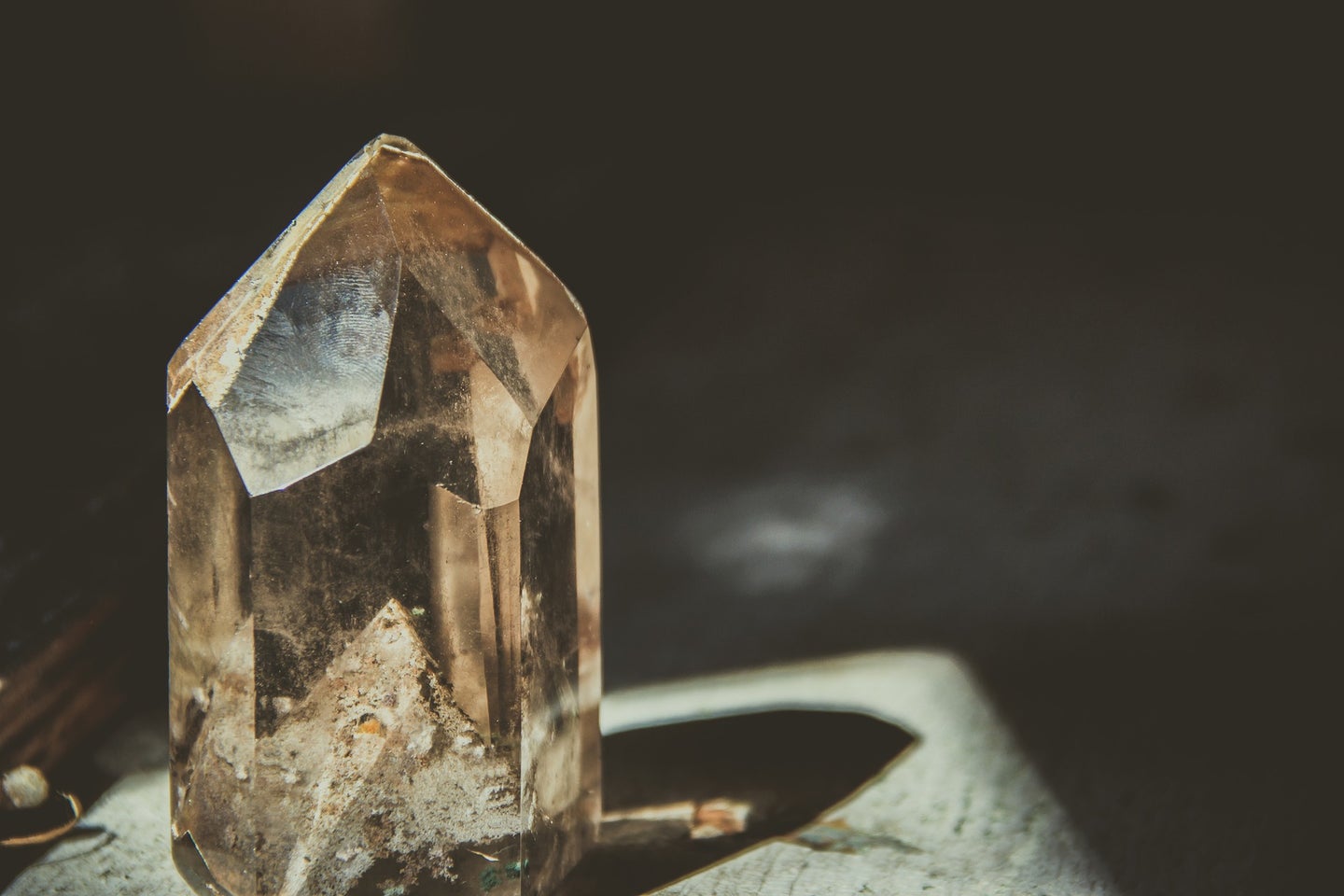
In the last few years, physicists around the world have been constructing another state of matter: a “time crystal.”. Pixabay

You’re probably quite familiar with the basic states of matter—solid, liquid, gas—that fill everyday life on Earth.

But those three different sorts of matter that each look and act differently aren’t the whole of the universe—far from it. Scientists have discovered (or created) dozens of more exotic states of matter, often bearing mystical and fanciful names: superfluids, Bose-Einstein condensates, and neutron-degenerate matter, to name a few.


In the last few years, physicists around the world have been constructing another state of matter: a “time crystal.” If that seems like B-movie technobabble, it’s technobabble no longer. Using a quantum computer, a few researchers have created a time crystal that, they think, firmly establishes time crystals in the world of physics.

The researchers haven’t yet formally published their research, but last month, they posted a preprint (a scientific paper that has yet-to-be peer-edited) on the website ArXiV.

So what exactly is a time crystal? It might sound like the critical component that makes a time machine tick, some sort of futuristic power source, or perhaps an artifact of a lost alien civilization. But, to scientists, a time crystal is actually something more subtle: a curiosity of the laws of physics.

What defines any bog-standard crystal—such as a diamond, an emerald, or even an ice cube—is that the crystal’s atoms are somehow arranged in repeating patterns in space. There’s three dimensions of space—and a fourth dimension, time. So physicists wondered if a crystal’s atoms could be arranged in repeating patterns in time.

In practice, that works something like this. You create a crystal whose atoms start in one state. If you blast that crystal with a finely tuned laser, those atoms might flip into another state—and then flip back—and then flip again—and so forth, all without actually absorbing any energy from the laser.

If you step back, what you’ve just created is a state of matter that’s perpetually in motion, indefinitely, without taking in any energy.

That’s no small feat. It beats against one of classical physics’ most sacred tenets: the second law of thermodynamics. That law states that the amount of entropy, or disorder, always tends to increase. Think of it like a vase, teetering at the edge of a table. The universe wants to push that vase over and make it shatter across the floor. To piece it back together, you have to put in the energy.

Time crystals are actually a rather new idea, having first been theorized by Nobel-winning physicist Franck Wilczek in 2012. Not all physicists accepted that theory at the time, with some claiming that the second law of thermodynamics would rear its legalistic head.

Naturally, determined researchers found loopholes. In 2016, physicists at the University of Maryland managed to bodge together a crude time crystal from a collection of ytterbium atoms. Other groups have created time crystals inside diamonds.

[Related: In photos: a rare glimpse inside the heart of a quantum computer]

But these latest time-crystal-tinkerers did something different. They turned to Google and used a quantum computer: a device that takes advantage of the quirks of quantum mechanics, the seemingly mystical sort of physics that guides the universe at the tiniest scales. Instead of using bits of silicon like everyday, “classical” computers, quantum computers operate directly with atoms or particles. That allows physicists to do experiments which can be agonizingly difficult with traditional computers, since quantum physics—which allows particles to be multiple things at one and for particles to interact at seemingly impossible distances—gets quite esoteric.

“The ability to simulate the rules…becomes so much harder” with traditional computers, says Gabriel Perdue, a quantum computer researcher at Fermilab, a national lab in suburban Chicago that focuses on high-end particle physics.

But, by arranging particles in a quantum computer’s processor, it’s possible to literally study systems of tiny particles as if they are building blocks. That’s a powerful ability, and it’s not something you’ll see much in the non-quantum world.

“We don’t compute, you know, how far a baseball goes…by building miniature baseball players and doing simulations,” says Perdue. But doing something quite similar on a very small scale, he says, is what the researchers used Google’s quantum computer to do to make their time crystal.

In this case, physicists could take atoms, rearrange them, then pulse them with a laser to drive a time crystal. That setup has allowed researchers to create a time crystal that’s bigger than any time crystal before it. While many previous time crystals were short-lasting and unravelled within a few back-and-forth flip cycles, the scientists behind this latest time crystal effort are marvelling at the stability of what they’ve created.

“The thing that is most exciting here, for me,” says Perdue, “it’s a demonstration of using a quantum computer to really simulate a quantum physics system and study it in a way that is really novel and exciting.”

So, could these time crystals indeed lead to a new wave of nascent time machines?

Probably not. But they might help make quantum computers become more robust. Engineers have struggled for years to create something that could serve as memory in quantum computers; some equivalent to the silicon that underpins traditional computers. Time crystals, physicists think, could serve that purpose.

And this experiment, Perdue says, is also a demonstration of the power of quantum computers to do science. “The same platform that makes it easy for you to simulate some cool algorithm,” he says, “works just as well, and I would argue even better, for simulating these kinds of systems.”

Thursday, February 01, 2024


Dortmund physicists develop highly robust time crystal


The team led by Dr. Alex Greilich has published its findings in the journal Nature Physics


 NEWS RELEASE 

TU DORTMUND UNIVERSITY

Dr. Alex Greilich 

IMAGE: 

DR. ALEX GREILICH WORKS AT THE CONDENSED MATTER RESEARCH FOCUS OF THE DEPARTMENT OF PHYSICS AT TU DORTMUND UNIVERSITY.

view more 

CREDIT: TU DORTMUND UNIVERSITY


A team from TU Dortmund University recently succeeded in producing a highly durable time crystal that lived millions of times longer than could be shown in previous experiments. By doing so, they have corroborated an extremely interesting phenomenon that Nobel Prize laureate Frank Wilczek postulated around ten years ago and which had already found its way into science fiction movies. The results have now been published in Nature Physics.

Crystals or, to be more precise, crystals in space, are periodic arrangements of atoms over large length scales. This arrangement gives crystals their fascinating appearance, with smooth facets like in gemstones. As physics often treats space and time on one and the same level, for example in special relativity, Frank Wilczek, physicist at the Massachusetts Institute of Technology (MIT) and winner of the Nobel Prize in Physics, postulated in 2012 that, in addition to crystals in space, there must also be crystals in time. For this to be the case, he said, one of their physical properties would have to spontaneously begin to change periodically in time, even though the system does not experience corresponding periodic interference.

That such time crystals could be possible was the subject of controversial scientific debate for several years – but quick to arrive in the movie theater: For example, a time crystal played a central role in Marvel Studios’ movie Avengers: Endgame (2019). From 2017 onwards, scientists have indeed succeeded on a handful of occasions in demonstrating a potential time crystal. However, these were systems that – unlike Wilczek’s original idea – are subjected to a temporal excitation with a specific periodicity, but then react with another period twice as long. A crystal that behaves periodically in time, although excitation is time-independent, i.e. constant, was only demonstrated in 2022 in a Bose-Einstein condensate. However, the crystal lived for just a few milliseconds.

The Dortmund physicists led by Dr. Alex Greilich have now designed a special crystal made of indium gallium arsenide, in which the nuclear spins act as a reservoir for the time crystal. The crystal is continuously illuminated so that a nuclear spin polarization forms through interaction with electron spins. And it is precisely this nuclear spin polarization that then spontaneously generates oscillations, equivalent to a time crystal. The status of the experiments at the present time is that the crystal’s lifetime is at least 40 minutes, which is ten million times longer than has been demonstrated to date, and it could potentially live far longer.

It is possible to vary the crystal’s period over wide ranges by systematically changing the experimental conditions. However, it is also possible to move into areas where the crystal “melts”, i.e. loses its periodicity. These areas are also interesting, as chaotic behavior, which can be maintained over long periods of time, is then manifested. This is the first time that scientists have been able to use theoretical tools to analyze the chaotic behavior of such systems.

What looks like a flame is the measurement of the new time crystal: Each point corresponds to an experimental value, resulting in different views of the periodic dynamics of the nuclear spin polarization of the time crystal.

CREDIT

Alex Greilich/TU Dortmund University


Monday, March 17, 2025


Crystallizing time


Washington University in St. Louis

time crystals 

image: 

WashU physicists shine a microwave laser into a chunk of diamond to create a time quasicrystal, a new phase of matter that repeats precise patterns in time and space.

view more 

Credit: Chong Zu laboratory, Washington University in St. Louis


In their ongoing efforts to push the boundaries of quantum possibilities, physicists in Arts & Sciences at Washington University in St. Louis have created a new type of “time crystal,” a novel phase of matter that defies common perceptions of motion and time.

The WashU research team includes Kater Murch, the Charles M. Hohenberg Professor of Physics, Chong Zu, an assistant professor of physics, and Zu’s graduate students Guanghui HeRuotian “Reginald” GongChangyu Yao, and Zhongyuan Liu. Bingtian Ye from the Massachusetts Institute of Technology and Harvard University’s Norman Yao are also authors of the research, which has been published in the prestigious journal Physical Review X

Zu, He, and Ye spoke about their achievement and the implications of catching time in a crystal.

What is a time crystal?

To understand a time crystal, it helps to think about familiar crystals such as diamonds or quartz. Those minerals owe their shape and shine to their highly organized structures. The carbon atoms in a diamond interact with each other to form repeated, predictable patterns.

Much like the atoms in a normal crystal repeat patterns in space, the particles in a time crystal repeat patterns over time, Zu explained. In other words, they vibrate or “tick” at constant frequencies, making them crystalized in four dimensions: the three physical dimensions plus the dimension of time.

What makes a time crystal special?

Time crystals are like a clock that never needs winding or batteries. “In theory, it should be able to go on forever,” Zu said. In practice, time crystals are fragile and sensitive to the environment. “We were able to observe hundreds of cycles in our crystals before they broke down, which is impressive.”  

Time crystals have been around for a little while; the first one was created at the University of Maryland in 2016. The WashU-led team has gone one step further to build something even more incredible: a time quasicrystal. “It’s an entirely new phase of matter,” Zu said.

How is a time quasicrystal different from a time crystal?

In material science, quasicrystals are recently discovered substances that are highly organized even though their atoms don’t follow the same patterns in every dimension. In the same way, the different dimensions of time quasicrystals vibrate at different frequencies, explained He, the lead author of the paper. The rhythms are very precise and highly organized, but it’s more like a chord than a single note. “We believe we are the first group to create a true time quasicrystal,” He said.

How are time quasicrystals created?

The team built their quasicrystals inside a small, millimeter-sized chunk of diamond. They then bombarded the diamond with beams of nitrogen that were powerful enough to knock out carbon atoms, leaving atom-sized blank spaces. Electrons move into those spaces, and each electron has quantum-level interactions with its neighbors. Zu and colleagues used a similar approach to build a quantum diamond microscope.

The time quasicrystals are made up of more than a million of these vacancies in the diamond. Each quasicrystal is roughly one micrometer (one-thousandth of a millimeter) across, which is too small to be seen without a microscope. “We used microwave pulses to start the rhythms in the time quasicrystals,” Ye said. “The microwaves help create order in time.”

What are the potential uses of time crystals or quasicrystals?

The mere existence of time crystals and quasicrystals confirms some basic theories of quantum mechanics, so they’re useful in that way, Zu said. But they might have practical applications as well. Because they are sensitive to quantum forces such as magnetism, time crystals could be used as long-lasting quantum sensors that never need to be recharged.

Time crystals also offer a novel route to precision timekeeping. Quartz crystal oscillators in watches and electronics tend to drift and require calibration. A time crystal, by contrast, could maintain a consistent tick with minimal loss of energy. A time quasicrystal sensor could potentially measure multiple frequencies at once, creating a fuller picture of the lifetime of a quantum material. First, researchers would need to better understand how to read and track the signal. They can’t yet precisely tell time with a time crystal; they can only make it tick.

Because time crystals can theoretically tick forever without losing energy, there’s a lot of interest in harnessing their power for quantum computers. “They could store quantum memory over long periods of time, essentially like a quantum analog of RAM,” Zu said. “We’re a long way from that sort of technology, but creating a time quasicrystal is a crucial first step.”


Learn more about quantum science at WashU

Much of the quantum research at WashU is taking place through the Center for Quantum Leaps, a signature initiative of the Arts & Sciences Strategic Plan. Launched in 2022, the CQL is working to pursue novel research in the areas of astrophysics, quantum devices, and quantum computing algorithm development. Read more about WashU’s quantum quest.

Thursday, August 05, 2021

Google May Have Created an Unruly New State of Matter: Time Crystals


Time crystals really don't like to play by the rules. 

That could be a good thing for quantum computing.

BY CAROLINE DELBERT
AUG 4, 2021

VICTOR DE SCHWANBERG/SCIENCE PHOTO LIBRARYGETTY IMAGES

Scientists say they've placed an elusive time crystal inside a quantum computer.

Time crystals violate some laws of physics—notably, Isaac Newton's first law of motion—in much the same way that many quantum phenomena do.

Quantum computers are built in supercooled chambers called cryostats.

Scientists from around the world claim to have harnessed a time crystal inside a quantum computer. If true, their discovery—as outlined in a July 28 pre-print research paper—could change the world virtually overnight with a limitless, rule-breaking source of energy that would bring quantum computers into the now.

As The Next Web astutely points out, this could be "the most important scientific breakthrough in our lifetimes." But to understand why, let's first examine the complicated connection between time crystals and quantum computing.

What Is a Time Crystal?

A time crystal is a special phase of matter that changes constantly, but doesn't ever appear to use any energy. This, scientists say, means it violates Isaac Newton's first law of motion, which deals with inertia—the resistance an object has to a change while in motion. A rolling marble doesn't stop unless other forces act upon it, for instance. But from experience, you know that it will eventually stop due to forces like friction. If your marble were a time crystal, though, it would literally never stop.

🤯KEEP NERDING OUT

Scientists Catch Time Crystals Interacting


Time crystals, therefore, act more like superconducting materials (such as mercury or lead). Superconductivity is a quantum phenomenon in nature wherein certain materials conduct direct current electricity without any energy loss if they are cooled below a certain temperature. They also expel magnetic fields, according to the U.S. Department of Energy.

Once again, that means time crystals break the rules; this time, it's the second law of thermodynamics, which states that disorder, or entropy, will always increase. Put another way: the universe is always moving toward change. But time crystals are big-time rule-breakers that don't like change, meaning their disorder remains stable over time. In fact, that makes time crystals a wholly new phase of matter.

Why does that matter? It basically means that time crystals can oscillate between forms without ever using any energy. In a Schrödinger's Cat scenario, for instance, the radioactive atoms would decay and not decay, kill the cat and not kill the cat, back and forth one million times over without using any energy. This really could go on forever (apologies to the cat), hence the name "time crystal."
Time Crystals, Meet Quantum Computing

There's a reason we bring up Schrödinger's Cat: time crystals could be a game-changer for quantum computers, which physicists often seen as the natural next step in terms of computing power—they work at the most essential molecular and even particulate level, after all. They also capitalize on ideas like the passage of electrons around solid materials (literally what electricity is!), and represent a huge challenge for computer scientists to puzzle over. Think of quantum computing like the "going to Mars" of computing.

And on a more practical level, there are ways in which quantum computers offer special access to ideas that traditional electronic computers simply cannot manage. This is also where time crystals come into play, if peer review shows that Google's research is valid.
This content is imported from YouTube. You may be able to find the same content in another format, or you may be able to find more information, at their web site.


Electronic computers, like the one you may be reading this story on, use logical gates that switch on and off, so everything in your computer relies on just two states: on and off, light and dark, 1s and 0s, the whole binary system. Introducing qubits (quantum bits, which are often a single atom of an element with a carefully controlled electron) muddies the waters, both by adding more possible states than just on and off, and by adding an entire basis of uncertainty that complicates the picture.

Why would scientists want a complicated, less predictable form of computing? Well, a lot of questions scientists must ask themselves i​​nvolve more than two binary outcomes. This, in turn, translates into mathematical computing challenges for traditional computers.

Think about choosing a number between 1 and 100. A traditional computer would register that value in a binary format, of course, but also would register the number itself as a binary that's on or off. There are 99 other binaries representing the other numbers you didn't choose. It's a lot of variables to keep track of for something quite simple.

Now imagine the number between 1 and 100 is actually the outcome of something like animal breeding, or a plan for a warp drive. In reality, there are thousands, millions, or even more possibilities. Instead of trying to "force" a binary-based computer to do the work in an awkward way, a quantum computer might help scientists more naturally represent what happens.

This is where time crystals also offer even more promise than quantum qubit computing alone. Time crystals are stable, but pulsate at interesting intervals, meaning they might help scientists study things like repeating patterns or random numbers—with similar implications in the natural sciences and beyond.

How Did Scientists Create a Time Crystal?

For this research—which, notably, has not yet been peer-reviewed for publication in an academic journal—a group of over 100 scientists from around the world collaborated with Google Quantum AI, a joint initiative between Google, NASA, and the nonprofit Universities Space Research Association. Its goal is to expedite research on quantum computing and computer science.

In the paper, the scientists describe building a special microscopic rig where a time crystal is surrounded by superconducting qubits—special particles that are the bread and butter of quantum computing.

The quantum computer sits inside a cryostat, which is a temperature-controlled supercooling chamber that keeps all the materials at the right, extremely low temperature for advanced states like superconducting or time crystals (nuclear fusion also relies on cryostats as a way to keep equipment at the right temperature for containing fusion's extraordinary heat).

This would be, Quanta Magazine reports, the first fully successful demonstration of a time crystal. That's a pretty big deal, considering how difficult quantum computers are to build and maintain. In large part, that's because qubits are unstable, acting differently when they're under observation than when they're left alone. Time crystals, meanwhile, are stable.

It's not surprising that Google is leading the charge toward powerful quantum computing, themselves named after the mathematical term for a 1 followed by 100 zeros: a googol. But what will come of one of the world's largest and most omnipresent companies having the most cutting-edge computing technology ever seen? It might take a time crystal-powered quantum computer to make that prediction.

Tuesday, July 09, 2024


A time crystal made of giant atoms


Researchers from TU Wien (Vienna, Austria) and Tsinghua University (Beijing, China) have created an extremely exotic state of matter. Its atoms have a diameter a hundred times larger than usual


VIENNA UNIVERSITY OF TECHNOLOGY

Rydberg 

IMAGE: 

A RYDBERG ATOM HAS AN ELECTRON WHICH IS FAR AWAY FROM THE NUCLEUS

view more 

CREDIT: TU WIEN


A crystal is an arrangement of atoms that repeats itself in space, in regular intervals: At every point, the crystal looks exactly the same. In 2012, Nobel Prize winner Frank Wilczek raised the question: Could there also be a time crystal – an object that repeats itself not in space but in time? And could it be possible that a periodic rhythm emerges, even though no specific rhythm is imposed on the system and the interaction between the particles is completely independent of time?

For years, Frank Wilczek's idea has caused much controversy. Some considered time crystals to be impossible in principle, while others tried to find loopholes and realise time crystals under certain special conditions. Now, a particularly spectacular kind of time crystal has successfully been created at Tsinghua University in China, with the support from TU Wien in Austria. The team used laser light and very special types of atoms, namely Rydberg atoms, with a diameter that is several hundred times larger than normal. The results have now been published in the journal "Nature Physics".

Spontaneous symmetry breaking

The ticking of a clock is also an example of a temporally periodic movement. However, it does not happen by itself: Someone must have wound the clock and started it at a certain time. This starting time then determined the timing of the ticks. It is different with a time crystal: according to Wilczek's idea, a periodicity should arise spontaneously, although there is actually no physical difference between different points in time.

"The tick frequency is predetermined by the physical properties of the system, but the times at which the tick occurs are completely random; this is known as spontaneous symmetry breaking," explains Prof Thomas Pohl from the Institute of Theoretical Physics at TU Wien.

Thomas Pohl was in charge of the theoretical part of the research work that has now led to the discovery of a time crystal at Tsinghua University in China: Laser light was shone into a glass container filled with a gas of rubidium atoms. The strength of the light signal that arrived at the other end of the container was measured.

"This is actually a static experiment in which no specific rhythm is imposed on the system," says Thomas Pohl. "The interactions between light and atoms are always the same, the laser beam has a constant intensity. But surprisingly, it turned out that the intensity that arrives at the other end of the glass cell begins to oscillate in highly regular patterns."

Giant atoms

The key to the experiment was to prepare the atoms in a special way: The electrons of an atom can orbit the nucleus on different paths, depending on how much energy they have. If energy is added to the outermost electron of an atom, its distance from the atomic nucleus can become very large. In extreme cases, it can be several hundred times further away from the nucleus than usual. In this way, atoms with a giant electron shell are created – so-called Rydberg atoms.

"If the atoms in our glass container are prepared in such Rydberg states and their diameter becomes huge, then the forces between these atoms also become very large," explains Thomas Pohl. "And that in turn changes the way they interact with the laser. If you choose laser light in such a way that it can excite two different Rydberg states in each atom at the same time, then a feedback loop is generated that causes spontaneous oscillations between the two atomic states. This in turn also leads to oscillating light absorption." All by themselves, the giant atoms stumble into a regular beat, and this beat is translated into the rhythm of the light intensity that arrives at the end of the glass container.

"We have created a new system here that provides a powerful platform for deepening our understanding of the time crystal phenomenon in a way that comes very close to Frank Wilczek's original idea," says Thomas Pohl. "Precise, selfsustained oscillations could be used for sensors, for example. Giant atoms with Rydberg states have already been successfully used for such techniques in other contexts."

Friday, September 05, 2025


Physicists create a new kind of time crystal that humans can actually see


University of Colorado at Boulder

Time crystal 

image: 

The stripes in a time crystal as seen under a microscope.

view more 

Credit: Zhao & Smalyukh, 2025, Nature Materials


Imagine a clock that doesn’t have electricity, but its hands and gears spin on their own for all eternity.

In a new study, physicists at the University of Colorado Boulder have used liquid crystals, the same materials that are in your phone display, to create such a clock—or, at least, as close as humans can get to that idea. The team’s advancement is a new example of a “time crystal.” That’s the name for a curious phase of matter in which the pieces, such as atoms or other particles, exist in constant motion.

The researchers aren’t the first to make a time crystal, but their creation is the first that humans can actually see, which could open a host of technological applications.

“They can be observed directly under a microscope and even, under special conditions, by the naked eye,” said Hanqing Zhao, lead author of the study and a graduate student in the Department of Physics at CU Boulder.

He and Ivan Smalyukh, professor of physics and fellow with the Renewable and Sustainable Energy Institute (RASEI), published their findings Sept. 4 in the journal "Nature Materials."

In the study, the researchers designed glass cells filled with liquid crystals—in this case, rod-shaped molecules that behave a little like a solid and a little like a liquid. Under special circumstances, if you shine a light on them, the liquid crystals will begin to swirl and move, following patterns that repeat over time.

Under a microscope, these liquid crystal samples resemble psychedelic tiger stripes, and they can keep moving for hours—similar to that eternally spinning clock.

“Everything is born out of nothing,” Smalyukh said. “All you do is shine a light, and this whole world of time crystals emerges.”

Zhao and Smalyukh are members of the Colorado satellite of the International Institute for Sustainability with Knotted Chiral Meta Matter (WPI-SKCM2) with headquarters at Hiroshima University in Japan, an international institute with missions to create artificial forms of matter and contribute to sustainability.

Crystals in space and time

Time crystals may sound like something out of science fiction, but they take their inspiration from naturally occurring crystals, such as diamonds or table salt.

Nobel laureate Frank Wilczek first proposed the idea of time crystals in 2012. You can think of traditional crystals as “space crystals.” The carbon atoms that make up a diamond, for example, form a lattice pattern in space that is very hard to break apart. Wilczek wondered if it would be possible to build a crystal that was similarly well organized, except in time rather than space. Even in their resting state, the atoms in such a state wouldn’t form a lattice pattern, but would move or transform in a never-ending cycle—like a GIF that loops forever.

Wilczek’s original concept proved impossible to make, but, in the years since, scientists have created phases of matter that get reasonably close.

In 2021, for example, physicists used Google’s Sycamore quantum computer to create a special network of atoms. When the team gave those atoms a flick with a laser beam, they underwent fluctuations that repeated multiple times.

Dancing crystals

In the new study, Zhao and Smalyukh set out to see if they could achieve a similar feat with liquid crystals.

Smalyukh explained that if you squeeze on these molecules in the right way, they will bunch together so tightly that they form kinks. Remarkably, these kinks move around and can even, under certain conditions, behave like atoms.

“You have these twists, and you can’t easily remove them,” Smalyukh said. “They behave like particles and start interacting with each other.”

In the current study, Smalyukh and Zhao sandwiched a solution of liquid crystals in between two pieces of glass that were coated with dye molecules. On their own, these samples mostly sat still. But when the group hit them with a certain kind of light, the dye molecules changed their orientation and squeezed the liquid crystals. In the process, thousands of new kinks suddenly formed.

Those kinks also began interacting with each other following an incredibly complex series of steps. Think of a room filled with dancers in a Jane Austen novel. Pairs break apart, spin around the room, come back together, and do it all over again. The patterns in time were also unusually hard to break—the researchers could raise or lower the temperature of their samples without disrupting the movement of the liquid crystals.

“That’s the beauty of this time crystal,” Smalyukh said. “You just create some conditions that aren’t that special. You shine a light, and the whole thing happens.”

Zhao and Smalyukh say that such time crystals could have several uses. Governments could, for example, add these materials to bills to make them harder to counterfeit—if you want to know if that $100 bill is genuine, just shine a light on the “time watermark” and watch the pattern that appears. By stacking several different time crystals, the group can create even more complicated patterns, which could potentially allow engineers to store vast amounts of digital data.

“We don’t want to put a limit on the applications right now,” Smalyukh said. “I think there are opportunities to push this technology in all sorts of directions.”

Tuesday, September 23, 2025

New type of time crystals discovered


An exotic quantum phenomenon manifests itself under conditions where one would not normally expect it, show scientists at TU Wien (Vienna)


Vienna University of Technology

Time crystal 

image: 

Correlations between quantum particles result in a rhythmic signal – without the need for an external beat to set the tempo.

view more 

Credit: TU Wien


Nature has many rhythms: the seasons result from the Earth's movement around the sun, the ticking of a pendulum clock results from the oscillation of its pendulum. These phenomena can be understood with very simple equations.

However, regular rhythms can also arise in a completely different way – by themselves, without an external clock, through the complex interaction of many particles. Instead of uniform disorder, a fixed rhythm emerges – this is referred to as a ‘time crystal’. Calculations by TU Wien (Vienna) now show that such time crystals can also be generated in a completely different way than previously thought. The quantum physical correlations between the particles, which were previously thought to be harmful for the emergence of such phenomena, can actually stabilise time crystals. This is a surprising new insight into the quantum physics of many-particle systems.

Space crystals and time crystals

When a liquid freezes, the particles change their spatial order: In the liquid, they move wildly and randomly, with no structure. When the liquid freezes, a crystal forms in which the individual particles are located in very specific places in a very regular pattern. A liquid looks the same everywhere, it has the same properties everywhere and in every direction, it is completely symmetrical. In a crystal, however, this symmetry is broken: suddenly there is a regular structure, there is a direction that differs from other directions.

Can this kind of symmetry breaking also occur in time? Is it possible that a quantum system is initially disordered in time, that every point in time is the same as every other, but that a temporal order nevertheless emerges?

Quantum fluctuations: harmful or useful?

“This question has been the subject of intensive research in quantum physics for over ten years,” says Felix Russo from the Institute of Theoretical Physics at TU Wien, who is conducting research for his doctoral thesis in Prof. Thomas Pohl's team. In fact, it has been shown that so-called time crystals are possible – systems in which a temporal rhythm is established without the beat being imposed from outside.

“However, it was thought that this was only possible in very specific systems, such as quantum gases, whose physics can be well described by mean values without having to take into account the random fluctuations that are inevitable in quantum physics,” says Felix Russo. “We have now shown that it is precisely the quantum physical correlations between the particles, which were previously thought to prevent the formation of time crystals, that can lead to the emergence of time-crystalline phases.”

The complex quantum interactions between the particles induce collective behaviour that cannot be explained at the level of individual particles – similar to how the smoke from an extinguished candle can sometimes form a regular series of smoke rings; a phenomenon whose rhythm is not dictated from outside and which cannot be understood from single smoke particles.

Particles in the laser lattice

“We are investigating a two-dimensional lattice of particles held in place by laser beams,” says Felix Russo. “And here we can show that the state of the lattice begins to oscillate – due to the quantum interaction between the particles.”

The research offers the opportunity to better understand the theory of quantum many-body systems – paving the way for new quantum technologies or high-precision quantum measurement techniques.