US targets Iranian desalination plants
IRAN IS FACING A HISTORIC DROUGHT
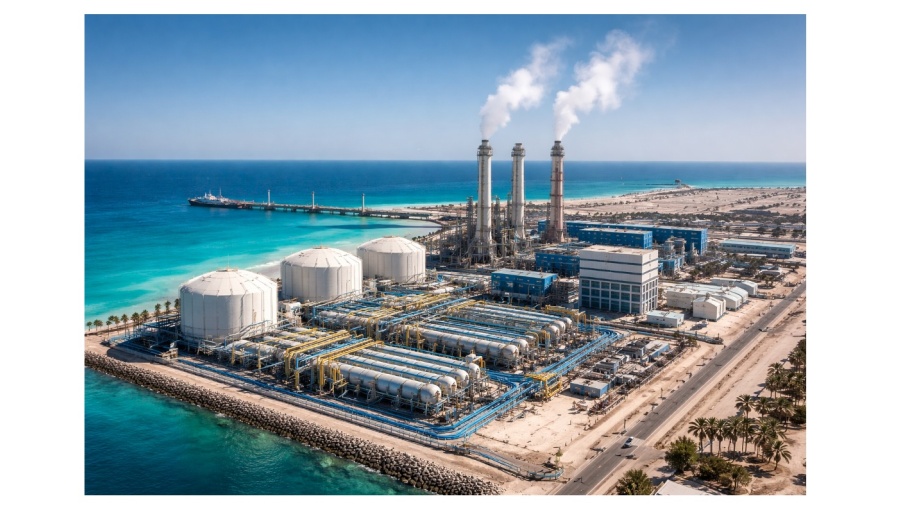
The CIA considers drinking water a "strategic commodity" in the Middle East, where countries rely on desalination plants for water supply. If military hostilities continue to escalate, water could become the geopolitical commodity that decides the war between the US and Iran. And the first Iranian plants have been targeted by US missiles.
A US missile struck a freshwater desalination plant on Iran’s Qeshm Island, disrupting water supplies in 30 villages, in what Iranian Foreign Minister Abbas Araghchi called move a “blatant and desperate crime" on March 7.
"Attacking Iran's infrastructure is a dangerous move with grave consequences. The US set this precedent, not Iran," he said in a post on X.
Israel also hit a desalination plant in Bahrain the next day as the war entered its ninth day, expanding the conflict to new types of targets across the region. Hundreds of desalination plants sit along the Persian Gulf coast.
The desalination plants are vulnerable to attacks, and their destruction could have severe consequences, such as forcing Riyadh to evacuate within a week if the Jubail desalination plant is damaged. The UAE operates at 1,533% water stress -- a measure of how much freshwater a country uses compared with how much renewable freshwater it has available each year.d. Saudi Arabia at 974%. Kuwait gets 90% of its drinking water from desalination plants. Oman 86%. Saudi Arabia 70%.
Iran has attacked a power station in the UAE that keeps a desalination plant running, and targeting these plants could put Persian Gulf countries in an impossible situation, making water a potential geopolitical commodity in the conflict.
From the 1970s onward, the oil money bought a solution: desalination plants. Today, the region relies on nearly 450 facilities to stop everyone going thirsty.
Beyond the obvious need to provide clean water for the population to drink, the whole region’s economy is entirely dependent on desalinization for industry and agriculture.
In Kuwait, about 90% of drinking water comes from desalination, along with roughly 86% in Oman and about 70% in Saudi Arabia. Desalination remains a relatively cost-effective technology to transform sea water into drinking water but the vulnerability of the installations is the power generators that run the plants.
Major Gulf desalination plants | ||||
Country | Plant | Location | Capacity (m³/day) | Strategic importance / comments |
Saudi Arabia | Ras Al-Khair | Eastern Province | 1,036,000 | One of the largest desalination plants in the world; supplies Riyadh via pipelines; loss would create a major national water crisis |
Saudi Arabia | Jubail Desalination Plant | Jubail | 800,000–1,000,000 | Critical industrial and municipal supply hub linked to Saudi petrochemical complex |
Saudi Arabia | Shuaibah | Near Jeddah (Red Sea) | 880,000 | Key water source for Jeddah, Mecca and Taif; highly strategic for religious tourism infrastructure |
Saudi Arabia | Yanbu | Yanbu | 550,000 | Supplies western Saudi industrial and port zones |
UAE | Taweelah | Abu Dhabi | 909,000 | Largest reverse-osmosis desalination plant globally; core water supply for Abu Dhabi |
UAE | Jebel Ali Complex | Dubai | 2,100,000 (combined) | One of the largest desalination complexes in the world; supplies most of Dubai’s population and industry |
UAE | Fujairah | Fujairah | 591,000 | Major water and power complex; supports east coast population and port logistics |
Qatar | Ras Abu Fontas Complex | Doha | 1,000,000 (combined) | Primary water supply for Doha metropolitan area |
Qatar | Umm Al Houl | South of Doha | 614,000 | Integrated power and desalination plant supplying much of Qatar’s national grid and water system |
Kuwait | Shuwaikh | Kuwait City | 454,000 | One of Kuwait’s main water production facilities; urban critical infrastructure |
Kuwait | Doha West | Kuwait | 568,000 | Major desalination and power generation complex |
Kuwait | Az-Zour North | Southern Kuwait | 486,000 | New large desalination facility central to Kuwait’s long-term water strategy |
Oman | Barka | Barka | 281,000 | Major supplier for Muscat metropolitan area |
Oman | Sohar | Sohar | 250,000 | Supports northern industrial corridor and port infrastructure |
Bahrain | Al-Dur | Southern Bahrain | 218,000 | Largest desalination facility in Bahrain; critical to national water supply |
source: bne IntelliNews | ||||
Power stations are the key vulnerability
Under international law, the desalination plants are protected, but the power stations that run them are the main vulnerability.
Last week, the Fujairah F1 power and water complex in the UAE, and at Kuwait’s Doha West desalination plant were affected after nearby port attacks threw out debris from intercepted drones. However, so far there is little evidence Iran is intentionally targeting water treatment sites, AP reports.
About 100mn people live in the countries belonging to the Gulf Cooperation Council — Saudi Arabia, Kuwait, Bahrain, Qatar, the United Arab Emirates and Oman — all now under Iranian attack. Kuwait, Qatar and the UAE are, for all practical purposes, completely dependent on the desalination plants, particularly for metropolises such as Dubai. Saudi Arabia, and especially its capital, Riyadh, also relies heavily on them.
The Kingdom of Saudi Arabia (KSA) could be brought to its knees if the Jubail desalination plant is destroyed. Located on the Persian Gulf coast of Saudi Arabia, it supplies Riyadh, via a roughly 500-kilometer-long pipeline system, with more than 90% of its drinking water.
“Riyadh would have to evacuate within a week if the plant, its pipelines, or associated power infrastructure were seriously damaged or destroyed,” according to a 2008 memo from the US embassy in the kingdom released by Wikileaks. “The current structure of the Saudi government could not exist without the Jubail desalinization plant,” the memo stated, Bloomberg reports.
Since the US massively outguns Iran, its most obvious tactic is to hunker down and hit soft targets like airports and water. The Dubai airport was hit early in the morning on March 7, while people were still in the terminal, although no one was reportedly injured. Now the first desalination plants are being hit.
There is now a well-established tradition of taking out power stations in a war, starting with the 1999 Nato-bombing campaign of Serbia and Montenegro during the Kosovo War, and more recently, Russian President Vladimir Putin’s attempt to freeze Ukraine into submission by destroying 80% of Ukraine’s generating capacity.
Water reserves
Over the past two decades, Gulf states have invested heavily in strategic water reserves to reduce their vulnerability to disruptions in desalination plants and energy infrastructure. Because most countries in the region obtain 60–100% of their drinking water from desalination, governments have recognised that any interruption to coastal production facilities could quickly create a humanitarian crisis in major cities. As a result, large storage reservoirs and aquifer systems have been built to ensure emergency supplies.
Saudi Arabia has constructed some of the region’s largest surface water storage systems, particularly around major urban centres such as Riyadh, Jeddah and the Eastern Province. These systems are linked to the country’s extensive desalinated water pipeline network, which transports water hundreds of kilometres inland from Red Sea and Gulf desalination plants. Riyadh’s strategic water storage programme, completed in phases over the past decade, created one of the largest urban water storage systems in the world, designed to ensure that the capital can continue operating for several days even if desalination plants or pipelines are disrupted.
Other Gulf states have pursued similar strategies but adapted them to their geography. The UAE has developed one of the region’s most sophisticated solutions through the Liwa Strategic Water Reserve project in Abu Dhabi. Instead of relying solely on surface reservoirs, desalinated water is injected into underground aquifers, creating a massive strategic reserve that can be pumped back to the surface during emergencies. This system alone can provide several months of emergency water supply to Abu Dhabi if desalination plants are interrupted.
Qatar accelerated its own water security investments after the 2017 Gulf diplomatic crisis, when the country became concerned about supply vulnerabilities. Doha subsequently launched the Mega Reservoirs Project, one of the largest water infrastructure programmes in the region, consisting of giant storage reservoirs capable of supplying the country for up to two weeks without desalination output.
Kuwait, Oman and Bahrain have also expanded their storage networks, though their smaller land area and infrastructure systems limit how much water can be stored.
Despite these improvements, the region remains structurally dependent on desalination plants located along its coastlines. While strategic reserves can provide a short-term buffer, prolonged disruptions to desalination capacity would still pose significant challenges for the Gulf’s rapidly growing urban populations and energy-intensive economies.
Major Gulf strategic water reserves | ||||
Country | Strategic water reserve capacity (m³) | Approx. days of national supply | Main reserve systems | Strategic notes |
Saudi Arabia | 12–13mn | 2–3 days nationally (longer regionally) | Riyadh Strategic Water Storage, Jeddah reservoirs, Jubail storage tanks | Large pipeline network distributes desalinated water inland; Riyadh has one of the world’s largest urban water storage systems |
UAE | 26mn | 90 days in Abu Dhabi; 7–10 days elsewhere | Liwa Strategic Water Reserve (aquifer storage), Dubai emergency reservoirs | Abu Dhabi stores desalinated water underground in aquifers creating one of the largest strategic water reserves globally |
Qatar | 2.3mn | 7 days historically; expanded to 14 days | Mega Reservoirs Project (Umm Slal, Rawdat Rashid etc.) | One of the largest water security projects in the Gulf, built after the 2017 blockade |
Kuwait | 2–3mn | 5–7 days | Shuwaikh, Doha and Mutlaa storage reservoirs | Heavy reliance on desalination means reserves are critical for crisis resilience |
Oman | 1–1.5mn | 5–7 days | Barka, Sohar and Muscat storage reservoirs | Mix of desalination and groundwater systems |
Bahrain | 0.5–0.7mn | 3–5 days | Al Dur and national reservoir network | Smallest strategic reserves in the GCC due to limited land area |
source: bne IntelliNews | ||||

No comments:
Post a Comment