Cefor: Machinery Damage and Fires Drive Increase in Claim Cost
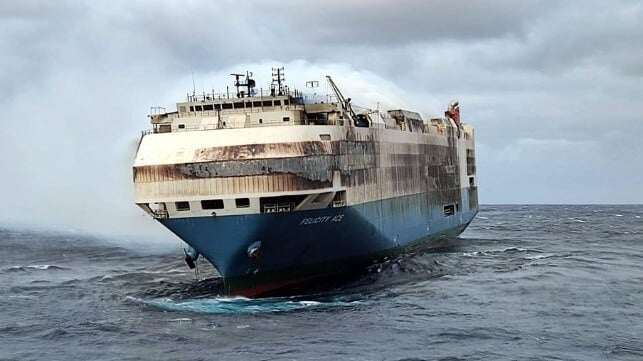
Machinery damage and fires continue to dominate as the leading causes of elevated claim costs in the Nordic marine insurance market, according to the Nordic Association of Marine Insurers (Cefor). Cefor members underwrite Hull and Machinery for about 31% of the world fleet, including 3,538 vessels of more than 20,000 gross tons.
2025 is the third consecutive year to record an increase in claims above $10 million, according to the year’s report by published this week. Notably, total losses on vessels with values above $10 million have also been on the increase. This is rather unusual as total losses historically have occurred on low-value vessels.
These substantial losses have seen claim cost per vessel increase by 33 percent in 2024 and 2025 compared to 2021. In 2025, there were 13 claims of above $10 million, slightly lower than 18 reported in 2024. Fires dominate these high value losses, constituting 7 out of the 13 claims in 2025. In six of the past 10 years, fires accounted for 40- 70% of the costliest losses, increasingly affecting even younger vessels.
The frequency of machinery claims is also 30% higher in the period from 2022-2025 compared to prior years. Cefor said that the rise in machinery damage could be seen in the context of an ageing fleet. It is also coded as human error, which could be linked to crew shortages. 7 out of 18 claims above $10 million in 2024 were machinery claims, the same number as the total count over the previous six years.
But even as fires and machinery damage drive up claims cost, inflation is another silent factor. Following the pandemic, inflation rates in major economies have been on the rise. As a result, steel prices, the cost of spare parts and labor costs have all surged, influencing repair costs.
“Bottom line is the claims environment is now costlier. We call for loss prevention, focus on manning, regulatory action on fire safety, and focus on reserving under inflationary pressure,” commented Cefor.

No comments:
Post a Comment