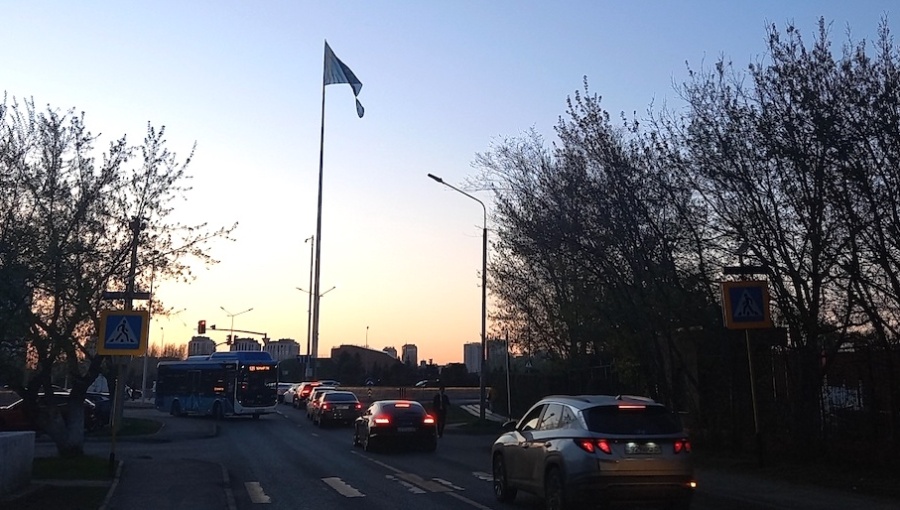
Central Asian governments pledged to step up efforts to tackle air pollution, with officials calling for deeper regional cooperation and greater international support at a ministerial dialogue in Kazakhstan’s capital.
Officials warned that air pollution, compounded by climate change, poses growing risks across Central Asia, where aging industrial infrastructure remains a major challenge. At the same time, car use has increased rapidly as populations become more affluent.
The meeting, the second high-level regional policy dialogue on clean air measures, brought together environmental ministers following an inaugural session held in Tashkent in 2024.
Kazakhstan’s Ecology Minister Yerlan Nyssanbayev said the country is tightening environmental regulation and pushing industry to modernise.
“Air quality is a key element of environmental safety, sustainable development, and the quality of life of our citizens,” he said, noting that major industrial firms are transitioning to integrated environmental permits.
Around 20 enterprises have already received such permits, with more in the pipeline, as part of a broader decade-long industrial upgrade set to begin next year.
However, Nyssanbayev stressed that domestic efforts alone would not be sufficient.
“We are joining forces and developing programs, but I call on international organisations to take a more active role,” he said. “Without attracting external financial resources, it will be very difficult to achieve all the set targets.”
He added that the region faces “a heavy legacy from the Soviet era — outdated technologies that require time and substantial investment to replace.”
Uzbekistan’s presidential adviser on environmental issues Aziz Abdukhakimov outlined measures taken to curb pollution in the capital.
“Starting from April 1, 2026, an indefinite moratorium has been introduced on the creation of new industrial zones in Tashkent. The use of motor fuel below AI-92 grade has been banned,” he said. “An ecological transport system has been launched, providing for vehicle regulation based on emission levels.”
He added that more than 100 enterprises had been suspended for environmental violations, while dozens of energy-intensive facilities are being relocated outside the city.
“Metallurgical plants have been relocated to industrial zones in the Jizzakh region equipped with new technologies,” Abdukhakimov said.
World Bank environment director Valerie Hickey said improving air quality was closely tied to economic transformation.
“Cleaning the air is not only about saving lives, it is about modernising the economy. It ensures that products manufactured in Central Asia can be exported to premium markets,” she said.

No comments:
Post a Comment